



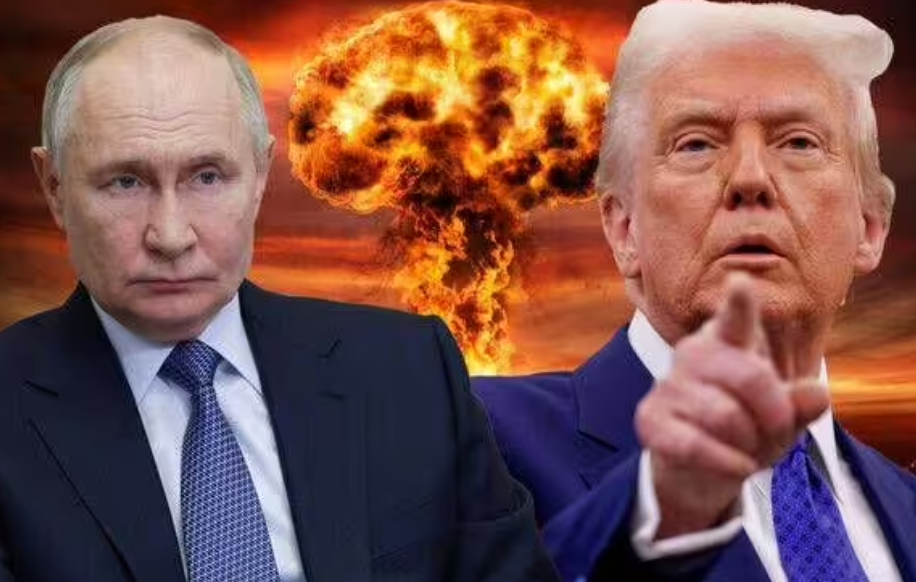

In a dramatic turn, European leaders consider bolstering their nuclear capabilities independently of the US amid President Trump's unpredictable actions. His increasing threats toward NATO and a push for expansionist policies have ignited urgent discussions among European nations to reevaluate their defense strategies against Russia without American involvement.
Multiple senior European officials have engaged in intense and productive talks, with some seeing this as a potential pivot toward France and the UK for nuclear options or even developing their own arsenals. "We're navigating the protection of Europe, nuclear deterrence with or without the United States," a senior official revealed, hinting at the shifting defense paradigm.
This exploration roots from Trump’s erratic relations with Europe and Vladimir Putin's resilience in testing NATO boundaries. Canada has similarly reconsidered its US ties, looking to China as a more stable partner—a move that reflects broader geopolitical realignments.
The urgency escalates as global leaders meet at the Davos World Economic Forum, confronting Trump's threats over Greenland—a Danish territory and NATO member. Trump's initial tariffs proposal was scrapped following a framework on Arctic security with NATO, yet he maintained his ambition to control Greenland, vowing not to use force but critiquing NATO's role.
French President Emmanuel Macron is set to address France's nuclear posture soon, highlighting France and the UK’s position as NATO’s non-US nuclear powers. France holds 290 nuclear warheads, while the UK maintains about 225. By contrast, the US controls 3,700, historically extending deterrence to allies based on trust—a trust now in question.
Emma Belcher, an arms control expert, emphasized, "Extended deterrence hinges on belief in US commitments." As that confidence wanes, Europe moves toward independent nuclear discussions.
European leaders have floated various strategies: enhancing France’s arsenal, reallocating bombers, and reinforcing NATO’s eastern borders. While some view these as negotiation tactics, others see genuine desperation for a strategic shift. Finland’s Foreign Minister insisted NATO can independently tackle nuclear challenges but remains open to solutions.
France's Macron is expected to clarify his nuclear strategy stance, potentially influencing Europe’s future. Meanwhile, Trump controversially invited Putin to join his proposed Board of Peace—a NATO alternative that costs $1 billion to join, intensifying tensions with nations like Denmark over Greenland.
Putin responded favorably, eyeing collaboration with strategic partners and affirming ties with Palestinians. Trump's initiative showcases his goal for universal participation from influential leaders, challenging established alliances and questioning NATO's cohesion as Trump seeks to reshape global dynamics.
Key Takeaways
European leaders reassess nuclear strategies amid waning US trust.
France and the UK poised as central nuclear players in Europe.
Trump's controversial policies strain traditional NATO alliances.


Adapted by ASEAN Now from The Express 026-01-21

