




Iran launched a fresh wave of missile and drone attacks early Thursday targeting Israeli territory and U.S. military bases in the region, escalating a conflict that has already killed more than 1,000 people across multiple countries and rattled global energy markets.
Air-raid sirens wailed in Tel Aviv and Jerusalem as Israel reported multiple incoming missile barrages. Iranian state television said strikes also targeted American bases. Israel’s military said it began a “large-scale wave of strikes” against infrastructure in Tehran, while also carrying out targeted attacks in Lebanon against the Iranian-backed Hezbollah militant group. Explosions were reported in several areas of the Iranian capital soon after.
Get the latest headlines in your email 
Fury over sunken warship
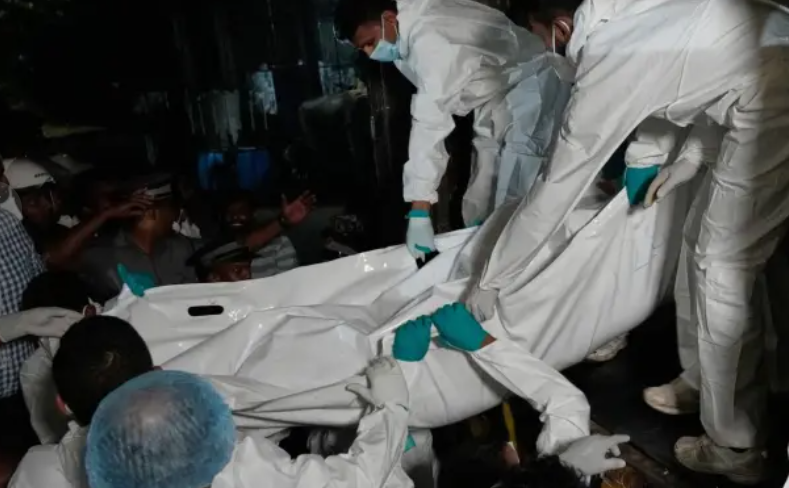
The renewed fighting follows the sinking of the Iranian frigate IRIS Dena by a U.S. submarine Tuesday night in the Indian Ocean. The Pentagon said a torpedo struck the vessel, killing at least 87 Iranian sailors. Sri Lankan authorities said 32 crew members were rescued, while its navy recovered dozens of bodies.
Iranian Foreign Minister Abbas Araghchi condemned the strike as “an atrocity at sea,” saying the ship had been operating in international waters.
“Mark my words: The U.S. will come to bitterly regret the precedent it has set,” Araghchi wrote on social media, adding that the vessel had recently participated in exercises hosted by the Indian navy.
The incident marked one of the deadliest direct confrontations between U.S. and Iranian forces in years and further widened a conflict that began Saturday when the U.S. and Israel launched coordinated strikes on Iran.
Calls for violence
In a rare and fiery clerical statement, Ayatollah Abdollah Javadi Amoli called for violence against the United States and Israel during remarks broadcast on Iranian state television.
“The shedding of Zionist blood, the shedding of Trump’s blood,” he said, declaring that fighting “oppressive America” was a religious duty. Such explicit calls for violence from a senior Shiite cleric are unusual and underscored the depth of anger within parts of Iran’s leadership.
The conflict has already claimed the life of Iran’s supreme leader, Ayatollah Ali Khamenei, who was killed in the opening strikes of the war, along with dozens of senior commanders. Iranian authorities are now scrambling to appoint a successor, only the second time since the 1979 Islamic Revolution that the country has faced such a transition.
Expanding battlefield
Since the war began, clashes have spread beyond Iran and Israel. Hezbollah has exchanged fire with Israeli forces in Lebanon, while Iran has launched missiles toward Gulf states hosting American troops. Israeli strikes have hit Beirut’s southern suburbs and other parts of Lebanon, killing several people, according to Lebanese officials.
The U.S. and Israel have said their attacks are aimed at degrading Iran’s missile arsenal and nuclear infrastructure. Some leaders have also suggested that weakening or toppling Iran’s government is an objective, though official goals and timelines have shifted repeatedly, signaling an open-ended campaign.
U.S. Defense Secretary Pete Hegseth declined to specify how long operations would last.
“You can say four weeks, but it could be six. It could be eight. It could be three,” Hegseth said at a Pentagon briefing. “Ultimately, we set the pace and the tempo.”
American and Israeli officials say the frequency of Iranian missile launches has declined as strikes have taken out launchers and stockpiles. Israel has eased some domestic restrictions, allowing certain workplaces to reopen if bomb shelters are nearby, though schools remain closed.
Rising casualties and oil shock
Iran’s Foundation of Martyrs and Veterans Affairs said more than 1,045 people have been killed in Iran since fighting began. Eleven people have died in Israel, and six U.S. service members have been killed.
The violence has also reverberated through global markets. Prior attacks have targeted the Gulf of Oman and the Strait of Hormuz, through which roughly a fifth of the world’s oil supply passes. Brent crude prices have climbed about 15% since the conflict began, after an initial spike earlier in the week briefly subsided.
Early Thursday, oil prices resumed their ascent amid fears that continued attacks on shipping lanes or energy infrastructure could further disrupt supply.
Leadership uncertainty in Tehran
As fighting intensifies, Iran’s political future remains uncertain. Potential candidates to replace Khamenei range from hard-liners advocating confrontation with the West to more pragmatic figures favoring diplomacy. Mojtaba Khamenei, the late leader’s son, has long been mentioned as a possible successor, though he has never held elected office.
In a sign of tightening internal control, Iran’s judiciary chief warned that anyone cooperating with “the enemy” would be treated as an enemy of the state.
Meanwhile, Israeli Defense Minister Israel Katz warned that Iran’s next supreme leader would be “a target for elimination” if he continues to threaten Israel and its allies.
With missile exchanges continuing and rhetoric hardening on both sides, the conflict shows little sign of easing — and risks drawing in more countries across an already volatile region.
Join the discussion? 
Already a member? 
 Adapted by ASEAN Now · Source · 05.03 2026