



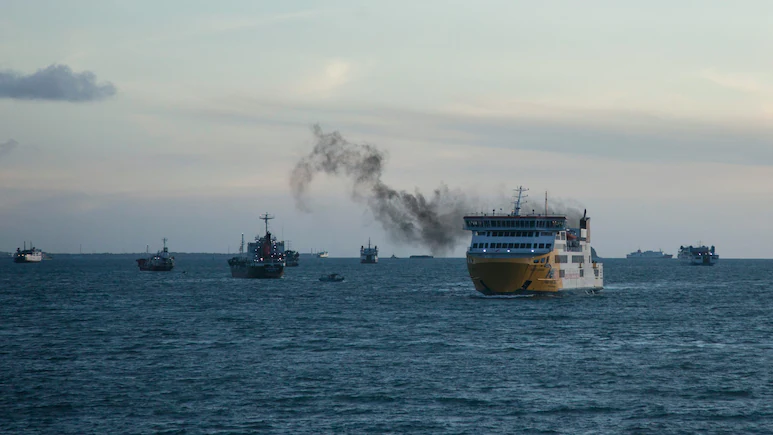

Iran has indicated that only “non-hostile” vessels will be allowed to pass through the strategically critical Strait of Hormuz, according to a report citing a communication to international shipping authorities.
Get today's headlines by email 
In a letter circulated to members of the International Maritime Organization (IMO), Iran’s foreign ministry said ships could continue transiting the waterway if they coordinated with Iranian authorities and were not linked to countries it considers hostile.
Conditions Set for Transit
The communication reportedly stated that vessels associated with the United States, Israel or other parties involved in military actions against Iran would not qualify for what it described as “innocent” or “non-hostile” passage.
The report, first published by the Financial Times, has not been independently verified.
Impact on Global Energy Supply
The Strait of Hormuz is a vital route for global energy shipments, with roughly one-fifth of the world’s oil and liquefied natural gas typically passing through the narrow channel.
Since the escalation of conflict involving Iran, shipping traffic through the strait has been severely disrupted, contributing to volatility in global energy markets and concerns over supply shortages.
Iran said its actions were “necessary and proportionate” measures aimed at preventing adversaries from using the route to support military operations.
Strategic and Legal Implications
The restrictions outlined by Tehran could have significant implications for international shipping and maritime law, particularly regarding the principle of free navigation through key waterways.
The International Maritime Organization, based in London, oversees global maritime safety and security and includes 176 member states. Its role may become increasingly important as tensions affect shipping routes.
Ongoing Tensions
The announcement comes amid heightened regional tensions following recent military strikes and retaliatory actions involving Iran and its adversaries.
With access to the Strait of Hormuz now uncertain for some vessels, the situation remains fluid, and further developments could have far-reaching consequences for global trade and energy markets.
Join the discussion? 
Already a member? 
 Adapted by ASEAN Now. Source 25 March 2026