



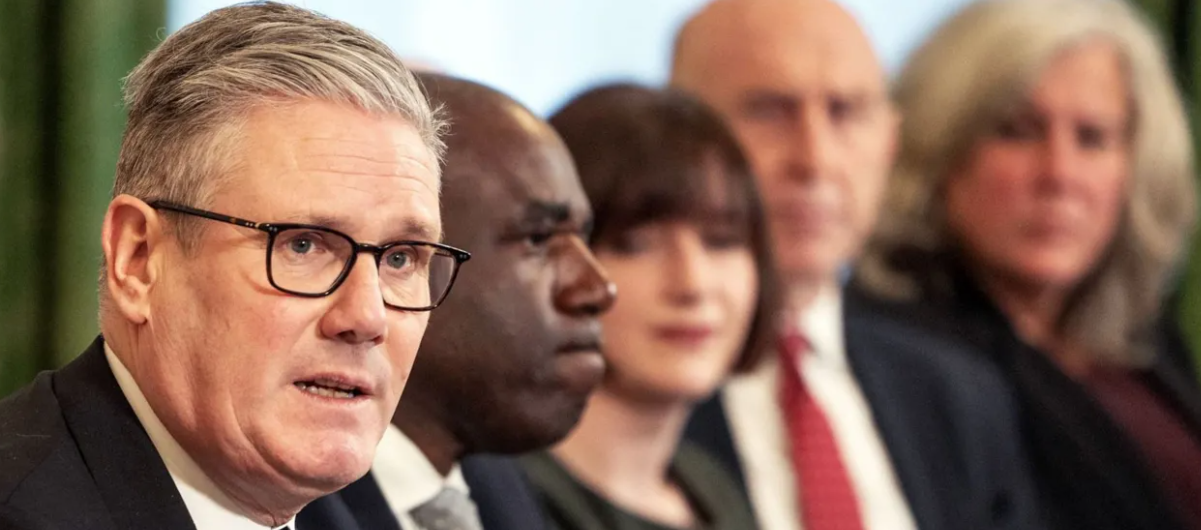

Starmer navigates turbulent political waters, securing temporary stability.
Monday was a tumultuous day for Sir Keir Starmer as Prime Minister. Facing calls for resignation, Scottish Labour leader Anas Sarwar almost delivered a decisive blow to his leadership. Yet, in a strategic comeback, Deputy Prime Minister David Lammy and other cabinet members swiftly rallied behind Starmer, showcasing a united front.
The dramatic events unfolded in a day filled with speculation and intrigue. Many believed Starmer might not survive the crisis, with even some Downing Street officials doubting his ability to continue. As tension escalated, Sarwar was poised in Glasgow, prepared to publicly call for Starmer’s resignation. However, Lammy's timely support, followed by a cascade of endorsements from ministers and MPs, shifted the tide.
For now, Starmer retains his position, but the stability of his leadership hangs in the balance. Future challenges loom large, with the May elections on the horizon and the critical Gorton and Denton by-election. These events could become defining moments for Starmer’s tenure, testing his political resilience and party loyalty.
The shadow of Wes Streeting, Health Secretary, and perceived leadership hopeful, looms over the political landscape. Streeting’s release of communications with Lord Mandelson without parliamentary approval fueled speculation about his ambitions, straining relations within the cabinet. Streeting maintains his support for Starmer, yet his actions hint at underlying tensions and potential rivalries.
Other potential leadership contenders in the Labour ranks include Angela Rayner, Shabana Mahmood, John Healey, and Ed Miliband. Despite murmurs of their candidacies, none seem ready to directly challenge Starmer’s authority at present.
The recent resignations within Starmer’s inner circle, including Chief of Staff Morgan McSweeney, have added to the uncertainty. The departure of key figures weakens Starmer's team, making forthcoming appointments crucial for his leadership. Decisions about new staff could be pivotal, potentially redefining the direction and structure of his administration.
Starmer is also under increasing pressure to adapt his political agenda. Calls for a bolder, more left-wing approach are growing louder, reflecting dissatisfaction among some Labour MPs. His recent victories within the Parliamentary Labour Party (PLP), while significant, could be tested by future policy decisions and reforms, such as those related to the SEND system.
His ability to balance the diverse factions within his party while delivering on policy promises will be critical. The scepticism from some MPs suggests that any faltering in these efforts could reignite leadership debates.
As Starmer navigates these complexities, his focus remains on addressing key national issues and maintaining Labour's momentum. His speech at the PLP meeting emphasized his commitment to fight for the country he loves and to oppose the agendas posed by rival factions.
In conclusion, while Keir Starmer has weathered this immediate storm, the road ahead is fraught with challenges. Vigilant of internal and external pressures, his leadership will continually be tested. How he maneuvers through these turbulent waters will define not only his future but also the trajectory of the Labour Party in the approaching months.
Key Takeaways:
Starmer solidifies position with cabinet support amidst crisis.
Streeting's actions stir speculation about leadership ambitions.
Upcoming elections and policy challenges may impact stability.


Adapted by ASEAN Now from Source 2026-02.10

