




Large-scale missile test seen as signal during US-South Korea military drills and wider global conflict
North Korea fired a volley of about 10 ballistic missiles on Saturday in what analysts believe could be one of the country’s largest single missile displays in recent years.
Don’t miss the latest headlines from Thailand and around the world. Get the Asean Now Briefing newsletter, delivered daily. Sign up here.
According to the South Korean Joint Chiefs of Staff, the missiles were launched from the Sunan district of Pyongyang at approximately 1:20pm local time.
The projectiles travelled roughly 350 kilometres before falling into waters in the East Sea, also known internationally as the Sea of Japan.
South Korea’s military said it was closely monitoring the situation and was prepared to respond to any further escalation.
Missiles monitored by Japan
Authorities in Japan also tracked the launches.
The Japan Coast Guard said the missiles landed outside the country’s exclusive economic zone, meaning they did not violate Japanese territorial waters.
Officials from the Japanese Ministry of Defense reported that the missiles reached an altitude of about 80 kilometres and travelled approximately 340 kilometres before splashing down.
While no damage or injuries were reported, the launches raised concerns across the region about the potential for further military demonstrations by Pyongyang.
Timing linked to military drills
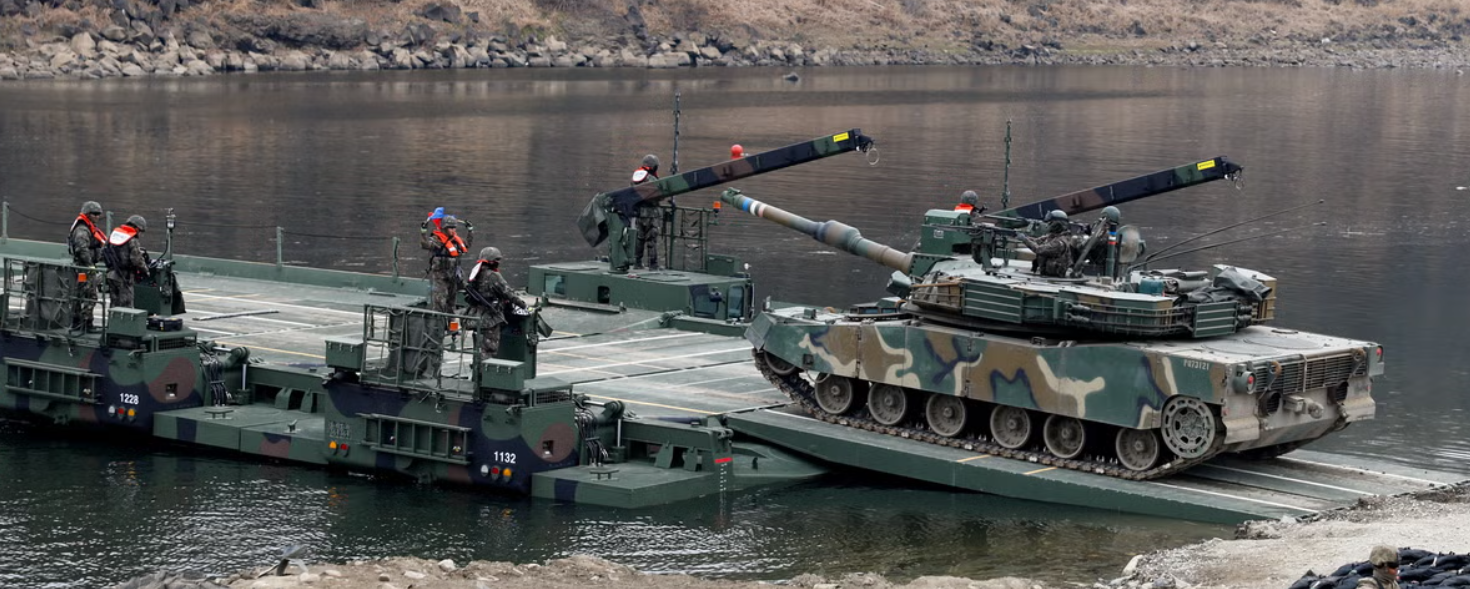
The missile barrage occurred during the annual joint military exercises conducted by the United States and South Korea.
These drills, known as Freedom Shield, run from 9 to 19 March and involve thousands of troops.
The exercises are largely computer-simulated command-post drills designed to test joint operational readiness between the two allies. They are accompanied by a field training programme called Warrior Shield, which involves practical manoeuvres and defensive scenarios.
North Korea routinely criticises these exercises, describing them as rehearsals for an invasion.
Both United States and South Korea reject that accusation, saying the drills are defensive and necessary given Pyongyang’s continued expansion of its nuclear and missile capabilities.
Analysts see wider geopolitical message
Some experts believe the timing of the missile launches also reflects broader global tensions.
Leif-Eric Easley, a professor at Ewha Womans University in Seoul, said Pyongyang may be drawing lessons from the recent military operations involving the United States and Israel against Iran.
According to Easley, North Korea has been investing heavily in strengthening its naval capabilities in recent years, possibly with assistance from Russia.
However, the rapid destruction of much of Iran’s naval capacity during recent operations has likely caught the attention of North Korean leadership.
Easley suggested the missile launches were intended to demonstrate that the country could still inflict serious damage if its own military forces came under attack.
Perceived opportunity during global conflict
Analysts also note that some U.S. military assets have reportedly been redeployed from the Korean Peninsula to the Middle East due to the conflict involving Iran.
That shift could create an opportunity for Pyongyang to apply political pressure on Seoul, even if it does not intend to initiate a direct military confrontation.
Rather than escalating into immediate conflict, Easley suggested North Korea may instead focus on propaganda aimed at increasing political divisions within South Korea over the role of American forces in the region.
Diplomatic signals and rhetoric
The launches come amid renewed discussion about potential diplomatic engagement between Washington and Pyongyang.
According to reports from Yonhap News Agency, South Korean Prime Minister Kim Min Seok recently indicated that Donald Trump remains open to meeting North Korean leader Kim Jong Un during a future visit to China.
At the same time, Pyongyang has sharply criticised the joint military drills.
Kim Yo Jong, the influential sister of Kim Jong Un, warned that such exercises undermine regional stability during a period when global security structures are already under strain.
North Korea’s foreign ministry has also condemned the recent U.S.-Israeli military actions against Iran, publicly voicing support for Tehran’s leadership.
Continuing tensions on the peninsula
Missile launches remain a common tactic used by Pyongyang to demonstrate military capability and political resolve.
While the latest test did not directly threaten neighbouring countries, it highlights the persistent volatility surrounding the Korean Peninsula.
With major military exercises under way and global conflicts affecting strategic calculations, analysts warn that tensions in the region could continue to fluctuate in the coming months.
Join the discussion? 
Already a member? 
 Adapted by ASEAN Now · Source · 14.March 2026