



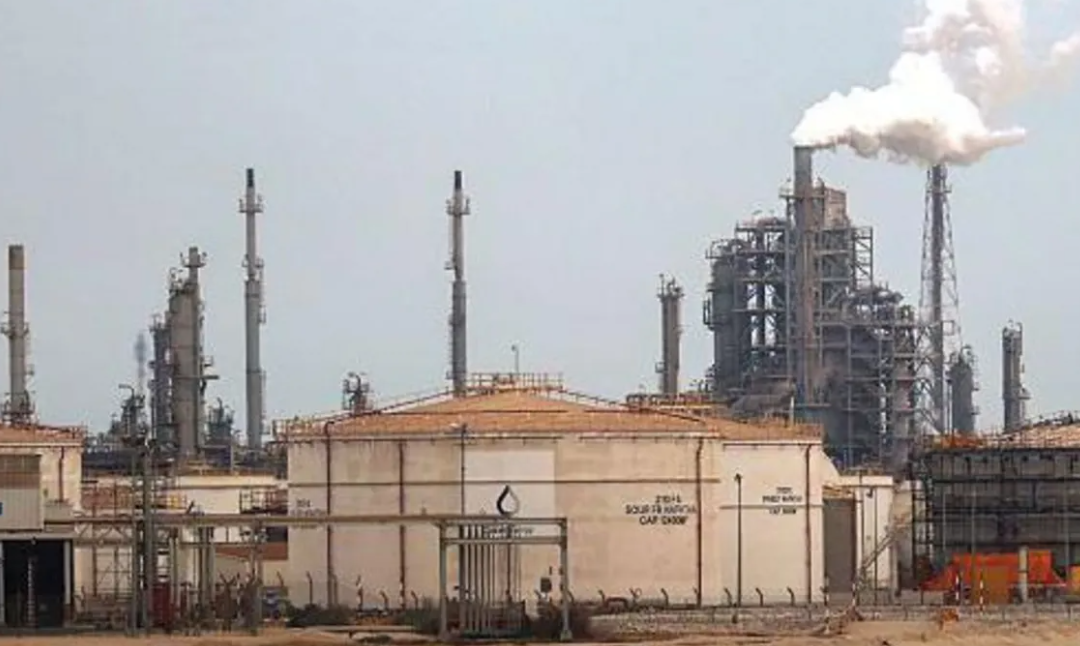

Prices spike as conflict threatens global energy supply
Oil prices have surged to their highest level in more than two years after a senior Qatari official warned that oil and gas production across the Gulf could soon grind to a halt if conflict in the region continues.
Brent crude rose more than 9% on Friday to above $93 a barrel, marking its highest level since autumn 2023. The sharp jump followed comments from Qatar’s energy minister, Saad al-Kaabi, who warned that the escalating crisis in the Middle East could have severe consequences for global energy supplies.
Get the latest headlines in your email 
The region plays a central role in the world’s oil and gas market, and any disruption quickly feeds through to global prices. Higher crude costs typically translate into more expensive fuel, heating and transport, which can in turn push up the price of goods and services.
Qatar warns of potential halt to Gulf production
Speaking to the Financial Times, Kaabi said the conflict could soon force oil and gas exporters across the Gulf to stop production entirely.
He warned the consequences could be severe for the global economy.
“The economies of the world could be brought down,” he said.
Qatar itself is a major exporter of oil and liquefied natural gas (LNG), supplying energy to countries around the globe. Earlier this week QatarEnergy announced it had already halted LNG production after what it described as military attacks on its facilities.
The company has declared “force majeure”, a clause that allows suppliers to suspend contractual obligations when circumstances beyond their control prevent deliveries.
Kaabi suggested other energy exporters in the region could soon be forced to follow suit if the conflict continues.
Even if hostilities stopped immediately, he added, restoring normal production levels could take weeks or even months.
Strait of Hormuz disruption fuels market fears
The conflict has also raised serious concerns about shipping through the Strait of Hormuz, one of the most critical energy transit routes in the world.
Around a fifth of the world’s oil supply normally passes through the narrow waterway each day. However, traffic through the strait has largely halted since the conflict between the United States, Israel and Iran intensified last weekend.
Any prolonged disruption could have a major impact on global energy markets, particularly for countries heavily dependent on imported oil.
Large economies such as China, India and Japan rely significantly on crude shipments that normally pass through the strait.
Some Gulf producers have limited alternatives. Saudi Arabia and the United Arab Emirates operate pipelines that allow some oil exports to bypass the strait, but analysts say these routes cannot fully replace normal shipping volumes.
Analysts warn of wider economic risks
Energy analysts say the situation now presents a significant risk to the global economy if the conflict continues.
Jorge Leon, an analyst at Rystad Energy, said the world may be on the brink of a wider energy shock.
“I think we’re on the edge of trying to understand whether this will be a short energy crisis with limited implications, or the beginning of a massive economic and energy crisis,” he said.
Leon warned that if the conflict continues for more than two weeks, the chances of serious disruption to global energy systems would increase sharply.
If Gulf exporters are unable to ship oil abroad, they will be forced to store production instead. Once storage facilities reach capacity, producers may have little choice but to shut down wells and halt output.
Depending on available storage, that point could arrive within days or a few weeks.
Oil prices rising above $100 a barrel is now considered a realistic possibility, Leon said, although the duration of any price spike would be crucial.
If prices remain high for an extended period, governments could respond by releasing emergency reserves, as many did following Russia’s full-scale invasion of Ukraine.
Impact likely to be felt through energy costs
Some analysts believe a complete shutdown of Gulf oil and gas production remains an extreme scenario.
Lindsay James, an investment strategist at Quilter, said market movements suggest investors still expect shipping through the Strait of Hormuz to resume relatively quickly.
However, she warned the risk of prolonged disruption grows the longer the conflict continues.
For households, the immediate effect is likely to be felt mainly through higher energy costs rather than a broad surge in inflation.
Fuel prices and heating costs could rise, putting pressure on household budgets and slowing economic growth if elevated energy prices persist.
Join the discussion? 
Already a member? 
 Adapted by ASEAN Now · Source · 06.03 2026