



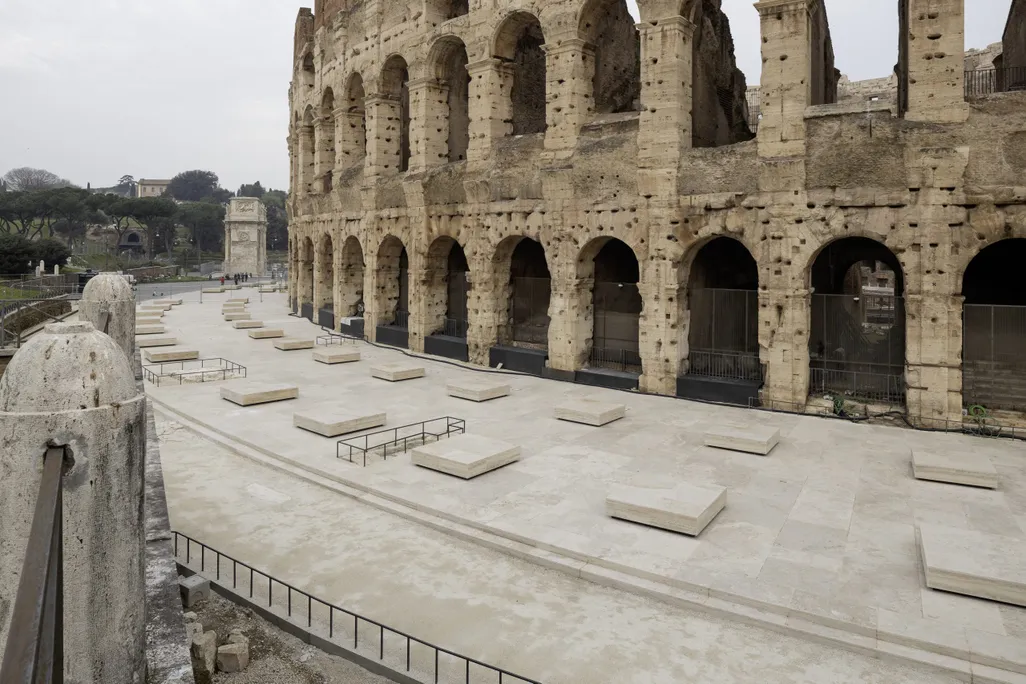

Visitors to the Colosseum can now see where massive columns once rose outside the ancient amphitheater, following the completion of a project aimed at illustrating its original layout.
Get today's headlines by email 
Architects this month unveiled a new piazza featuring low travertine marble slabs placed precisely where monumental pillars once stood. The columns previously supported two tall arcades along the structure’s southern side, creating a shaded approach for crowds entering the arena.
Built in the first century C.E., the amphitheater — formally known as the Flavian Amphitheatre — drew large gatherings for gladiator contests and other public spectacles. The arcades, supported by columns reaching about 164 feet high, once sheltered spectators from the sun as they assembled before moving through the arches toward their seating sections.
Over time, earthquakes and unstable foundations caused these architectural elements to collapse, leaving little visible trace of the towering structures.
Design Inspired by Ancient Foundations
The recent installation seeks to recreate a sense of those vanished features without reconstructing them directly.
Italian architect Stefano Boeri, who designed the new piazza, said the marble blocks sit exactly on the locations where the original pillars were anchored. The intention, he said, is to help visitors understand the scale and spatial proportions of the arcades that once framed the amphitheater’s entrance.
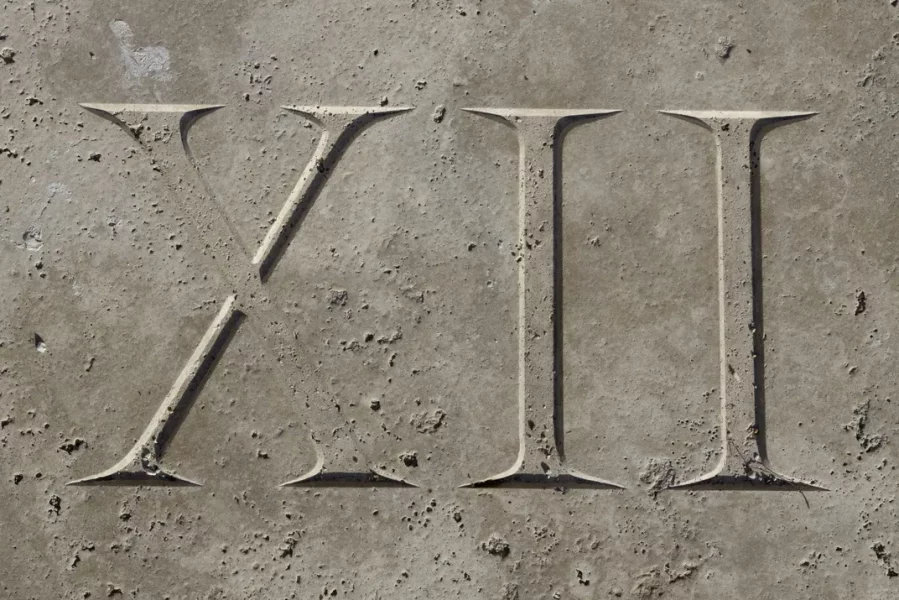
The slabs are made from travertine marble taken from the same quarries used in the Colosseum’s original construction. Alongside them are engraved numerals marking seating sections, echoing the way ancient visitors navigated the stadium to reach their designated areas.
Architect Giorgio Donà described the work as a collaborative effort involving archaeologists, researchers and technical specialists. The project, he said, aims to give Rome and international visitors a new vantage point for understanding the monument and its historical context.
Beyond illustrating the structure’s past, planners also see the area as a functional public space. Boeri said the slabs can serve as places where visitors rest while exploring the site, offering a new gathering area without altering the surviving historic fabric.
Linked to Metro Construction
The project was funded through compensation linked to construction of new subway stations beneath the area.
Rome’s underground expansion has long posed difficulties because of the city’s dense archaeological layers. Construction teams working on the stations carried out extensive excavations before building began.
According to project officials, these digs uncovered remains including military barracks, a thermal bath complex and dozens of ancient wells. Some of these discoveries are now displayed inside the new metro stations.
The initiative reflects ongoing efforts to balance modern infrastructure with preservation in one of the world’s most historically complex urban landscapes.
For visitors to the Colosseum, the newly installed marble markers provide a subtle but tangible reminder of the amphitheater’s former grandeur — indicating the scale of architectural features that once towered above crowds entering one of the Roman Empire’s most famous venues.
Join the discussion? 
Already a member? 
 Adapted by ASEAN Now. Source 26 March 2026