



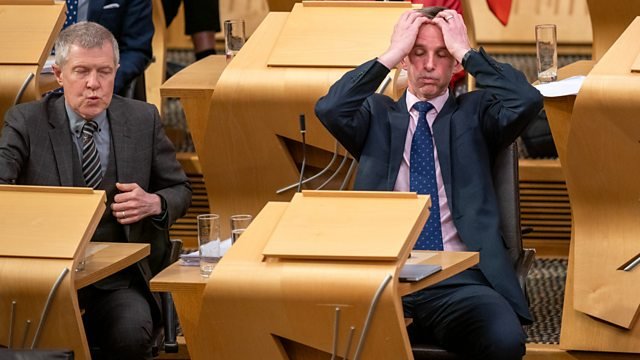

Members of the Scottish Parliament have voted against legalising assisted dying, rejecting proposals that would have made Scotland the first part of the UK to allow the practice. The bill, introduced by Liam McArthur of the Scottish Liberal Democrats, was defeated by 69 votes to 57 following an emotional and closely watched debate at Holyrood.
Get today's headlines by email 
The proposed legislation would have allowed terminally ill, mentally competent adults to seek medical assistance to end their lives. It included provisions requiring patients to make two formal declarations and undergo medical assessments to ensure they were not being coerced.
Concerns over coercion and safeguards
However, opponents repeatedly raised concerns that vulnerable individuals could feel pressured into choosing assisted death. Jeremy Balfour warned that the bill risked opening a “pandora’s box” and argued there could be no adequate protection against coercion.
Other critics highlighted the need to prioritise improvements in palliative care, with some questioning whether patients could truly make a free choice without access to high-quality end-of-life support.
Ruth Maguire, who has been diagnosed with cancer, said the decision could not be considered voluntary if proper care options were lacking, while Pam Duncan-Glancy urged lawmakers to focus on making it “easier to live than to die”.
Supporters argue for choice and dignity
Backers of the bill argued it would provide compassionate options for those experiencing severe suffering at the end of life. McArthur pointed to cases of patients enduring extreme pain and said the legislation offered a carefully regulated framework.
Supporters also stressed that assisted dying and improved palliative care were not mutually exclusive, with Alex Cole-Hamilton describing the proposal as containing strong safeguards.
Some MSPs shared personal experiences during the debate. George Adam spoke about his wife’s condition, saying individuals facing unbearable suffering should have the option to choose how they die.
Political divisions and outcome
MSPs were given a free vote, meaning they were not required to follow party lines. Although the bill had passed an earlier stage by a narrow margin, several lawmakers who had initially supported further debate ultimately voted against it in the final decision.
John Swinney, Scotland’s First Minister, had already indicated his opposition and later said he was relieved by the outcome.
The vote marks the third attempt to legalise assisted dying in Scotland since devolution, but the first to reach such an advanced stage in the legislative process.
Debate set to continue
Despite the defeat, campaigners on both sides said the issue would remain part of public debate. McArthur described himself as “devastated” and suggested some MSPs might later regret their decision.
Advocacy group Dignity in Dying said the result was a setback for those seeking greater choice at the end of life. In contrast, Care Not Killing welcomed the outcome, arguing the bill posed risks to vulnerable people.
The result leaves assisted dying illegal across Scotland, while separate proposals continue to be considered elsewhere in the UK.
Join the discussion? 
Already a member? 
 Adapted by ASEAN Now. Source 18 March 2026