



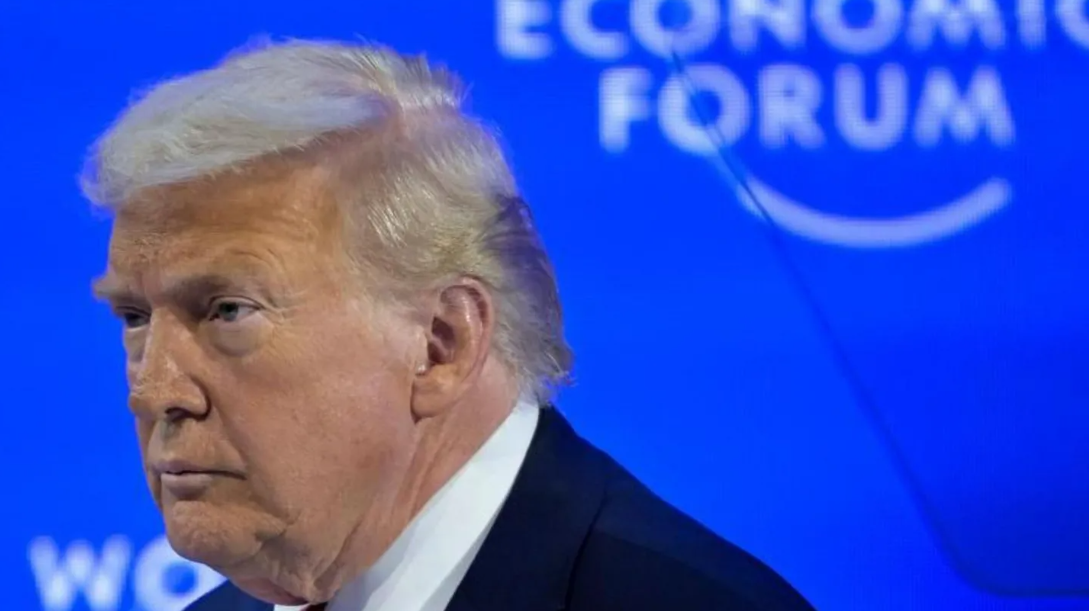

US President Donald Trump has announced a new 10% global tariff after the Supreme Court rejected his previous import taxes. The court's decision, which Trump criticized as "terrible," struck down most of the global tariffs announced by the White House last year.
Get the latest headlines in your email 
The Supreme Court ruled 6-3 that Trump overstepped his powers, a significant win for businesses and US states challenging the duties. This ruling could lead to billions in tariff refunds and has created further uncertainty in global trade.
In a speech from the White House, Trump stated that refunds would likely face prolonged legal battles. He expressed intentions to use other laws to continue his tariff strategy, claiming these tariffs promote US investment and manufacturing.
"We have alternatives - great alternatives, and we'll be a lot stronger for it," Trump asserted.
The legal battle centered on import taxes implemented last year on goods from nearly every country. Initially targeting Mexico, Canada, and China, the tariffs expanded to include many more countries, declared during a "Liberation Day" event last April.
The White House had relied on the 1977 International Emergency Economic Powers Act (IEEPA), which gives the president authority to "regulate" trade during emergencies. However, the measures faced backlash from firms affected by the sudden tax increases, fearing higher prices.
Challenging states and businesses argued that the IEEPA does not mention "tariffs" and was not intended to allow the president unchecked power over taxes and trade deals. Chief Justice John Roberts sided with this interpretation.
Roberts stated, "When Congress has delegated its tariff powers, it has done so in explicit terms and subject to strict limits." He emphasized that if Congress intended to provide such extraordinary tariff powers, it would have indicated so clearly.
Join the discussion? 
Already a member? 
 Adapted by ASEAN Now · Source · 20 Feb 2026
-
 2
2
-
 2
2