



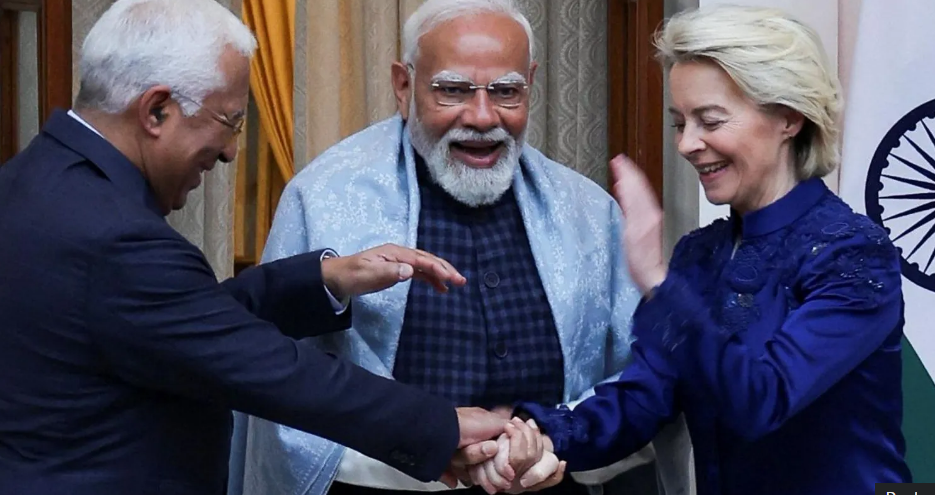

The India-EU trade deal, dubbed the "mother of all deals," is rocking the global trade stage. But lurking in the background is the shadow of Donald Trump’s unpredictable tactics, propelling nations toward strategic alliances.
As the European Union remains India's largest trade partner, clocking $142.3bn in goods in 2024, it's a testament to their robust relationship. Yet, this long-awaited trade pact had been stuck in a negotiation rut for two decades. Why the sudden breakthrough? Enter Donald Trump. His aggressive tariff moves have stirred a global buzz, pushing countries to secure alliances elsewhere.
The United States slapped a harsh 50% tariff on Indian goods over their continued oil dealings with Russia. In a similar vein, EU countries also faced Trump's tariff threats over political disagreements, like his ambitious
Greenland acquisition plans. Trump's whims have prompted India and the EU to seek shelter with each other, stepping into a potent trade partnership. Michael Kugelman from the Atlantic Council points to Trump's erratic moves as a catalyst for India and the EU pushing through their differences to secure this landmark agreement.
Global dynamics continue to shift. Canadian Prime Minister Mark Carney, having warned of a "rupture" in international order, recently engaged with China, irking Trump. UK’s Keir Starmer is also pursuing fresh ties with Beijing. The India-EU deal is just one stone in the shifting geopolitical mosaic, declaring independence from Trump's economic grip.
Despite the triumph, obstacles lie ahead. The trade pact, while concluded in negotiations, faces the scrutiny of legal reviews and the demanding process of ratification by member states and the European Parliament. Experts express concern about complex issues like intellectual property rights and carbon emissions, which could stall progress.
European and Indian business communities have celebrated the deal. Fredrik Persson, president of BusinessEurope, calls it a vital "first step," emphasizing that diligence in implementation is crucial.
Meanwhile, Chris Philp's critique of the government's control over immigration amplifies the pressing narrative. Trump’s heavy-handed approach has amassed international criticism, driving nations like India and the EU to adapt and shield themselves through collaborative partnerships.
Mark Linscott, a senior trade adviser, highlights unresolved issues that could challenge the execution of this ambitious deal. From intellectual rights to agriculture and sustainability, these are hurdles yet to be tackled.
The geopolitical chessboard is realigning. For India, partnering with the EU is a strategic move to counterbalance China's trade dominance, a feat envisaged with US backing initially. The EU, too, sees India as a vital ally in its bid to reduce dependency on China. Their cooperation sends a clear signal: cooperation is the answer to global uncertainties.
As Modi and Ursula von der Leyen exchanged agreements, they declared a unified vision against weaponized trade. This partnership isn't just about commerce; it's a blueprint for shared prosperity in a volatile world, buffering against the tempestuous trade climate ushered in by the Trump administration.
US Treasury Secretary Scott Bessent’s critical remarks are telling—this deal rattles Washington. His comments about the EU "financing the war against themselves" by trading with India reflect the tension. India's longstanding ties with Russia for military hardware remain a sticking point, but they don't overshadow potential EU market access.
The India-EU trade agreement, amid Trump's tariffs, is a clever geopolitical maneuver, positioning both powers to wield influence through collaboration. As negotiations transition to ratification, the world watches and waits.
Key Takeaways
India-EU deal disrupts Trump's trade influence.
Global dynamics are realigning amid US tariff tensions.
Legal and political hurdles remain post-negotiation.


Adapted by ASEAN Now from Source 2026-01-27


-
 1
1
-
 2
2
-
 1
1