



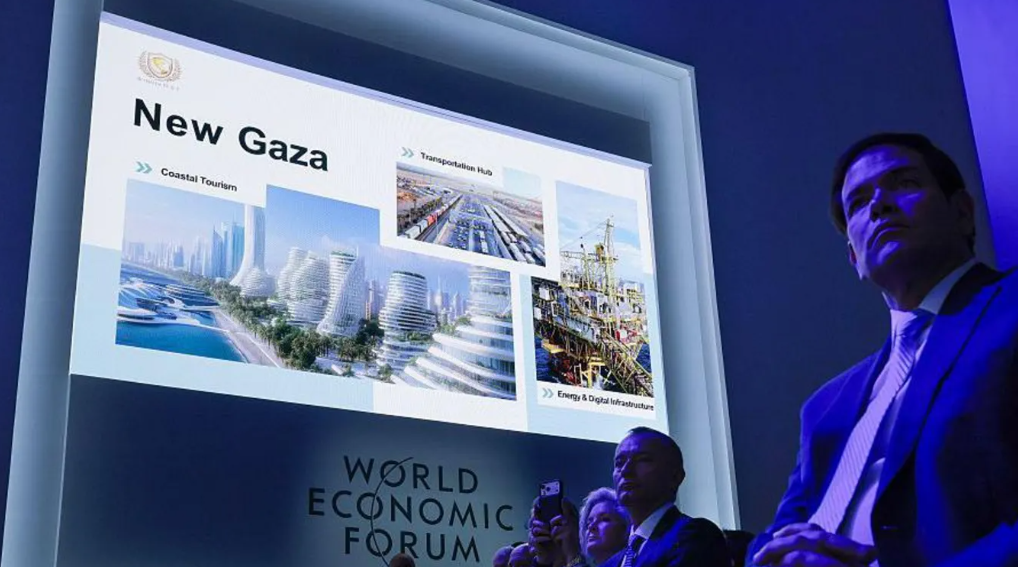

In a dramatic announcement, the US has revealed transformative plans for "New Gaza," aiming to rebuild the devastated Palestinian territory with modern infrastructure and skyscrapers along the Mediterranean coast. This ambitious project was unveiled at the World Economic Forum in Davos as part of President Trump's newly established Board of Peace initiative, designed to end the long-standing conflict between Israel and Hamas.
President Trump expressed confidence in the plan's success, stating, "We're going to be very successful in Gaza." His son-in-law, Jared Kushner, who played a key role in brokering the current ceasefire, presented detailed slides of the proposed master plan. This vision includes phased development of new residential, agricultural, and industrial areas for Gaza's 2.1 million residents.
The blueprint envisions coastal tourism developments with 180 tower-blocks and zones dedicated to industry, advanced manufacturing, and agriculture. Kushner emphasized the scale of the task, noting that 90,000 tonnes of munitions have been dropped on Gaza, leaving behind 60 million tonnes of rubble to clear. The proposal initially considered a split between a "free zone" and "Hamas zone" but ultimately aimed for a unified redevelopment effort.
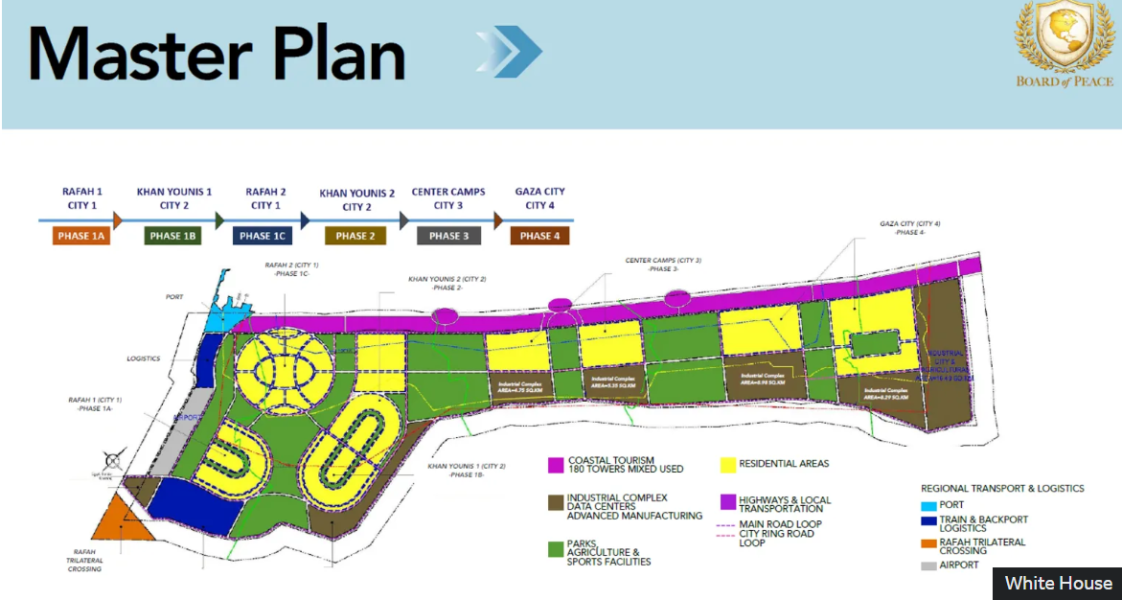
A critical component of the US plan involves the construction of a new seaport and airport near the Egyptian border, along with a "trilateral crossing" at the convergence of Egyptian and Israeli borders. The redevelopment phases will start in Rafah and extend north to Gaza City, creating over 100,000 permanent housing units, 200 education centers, and 75 medical facilities.
Kushner expressed optimism about completing "New Rafah" within two to three years, emphasizing the importance of demilitarization. Hamas has faced pressure to disarm as part of the peace agreement, a condition identified as vital for stimulating investment and further development.
Last year's suggestion by President Trump that Palestinians be relocated provoked global criticism. However, current plans focus on rebuilding in place and attracting international investment. A Washington conference is set to further explore private sector involvement and funding opportunities.
The ceasefire between Israel and Hamas remains fragile. Recent Israeli strikes have killed over 477 Palestinians, with Hamas blaming Israel for undermining peace efforts. Humanitarian conditions in Gaza are dire, with almost 1 million lacking adequate shelter and 1.6 million facing severe food insecurity, according to the UN.
In Davos, Israeli President Isaac Herzog commended Trump's efforts but underscored the need for Hamas to vacate Gaza entirely. Palestinian Authority President Mahmoud Abbas advocated for full implementation of the peace plan, including Israeli withdrawals and a role for the PA in Gaza's administration.
Ali Shaath, head of the National Committee for the Administration of Gaza (NCAG), announced the opening of the Rafah border crossing, marking a significant step towards reconnecting Gaza with neighboring regions.
Despite the grand plans, skeptics question whether the initiative can overcome deep-rooted political and security challenges. The war, triggered by a deadly Hamas attack in 2023, has resulted in massive casualties, heightening the need for a viable resolution.
The proposed redevelopment offers a potential path forward, but achieving lasting peace and stability in the region depends on cooperation from all parties involved, particularly regarding the demilitarization of Gaza.
Key Takeaways
US reveals extensive plans to rebuild Gaza with modern infrastructure and ensure regional stability.
Success depends on Hamas disarmament and international investments to drive economic growth.
Humanitarian challenges persist amid ongoing geopolitical tensions and reconstruction efforts.


Adapted by ASEAN Now from BBC 026-01-22

