
Skip to content
View in the app

A better way to browse. Learn more.

ASEAN NOW

A full-screen app on your home screen with push notifications, badges and more.

To install this app on iOS and iPadOS
  1. Tap the Share icon in Safari
  2. Scroll the menu and tap Add to Home Screen.
  3. Tap Add in the top-right corner.
To install this app on Android
  1. Tap the 3-dot menu (⋮) in the top-right corner of the browser.
  2. Tap Add to Home screen or Install app.
  3. Confirm by tapping Install.

Dutch flood lessons for Bangkok as risks mount

Bangkok's flood debate could draw useful lessons from the Netherlands, where protection combines huge sea defences with plans that deliberately make space for rising rivers.

In an early July Facebook post, Prof Dr Suchatvee Suwansawat, leader of the Thai Kao Mai Party, warned that Bangkok was "a million per cent certain to sink below sea level if water continues to be managed in the same way". He said the assessment reflected data and views gathered from numerous experts.

Sea barriers protect vulnerable Dutch land

The Netherlands faces a similar challenge as a low-lying river delta. Rijkswaterstaat, its infrastructure and water-management authority, says about 60% of the country would be at risk of flooding without protective systems.

The country strengthened its approach after the 1953 North Sea flood, when a severe storm and exceptionally high water breached dykes. Seawater flooded coastal areas, killing 1,836 people and inundating about 150,000 hectares.

That disaster accelerated the Delta Works, a network of dams, storm-surge barriers and other controls designed to protect land and population centres from the sea.

At Krimpen aan den IJssel, the Hollandsche IJsselkering protects some of the Netherlands' lowest terrain, which reaches about 6.76 metres below Normaal Amsterdams Peil, or NAP, the Dutch elevation reference level.

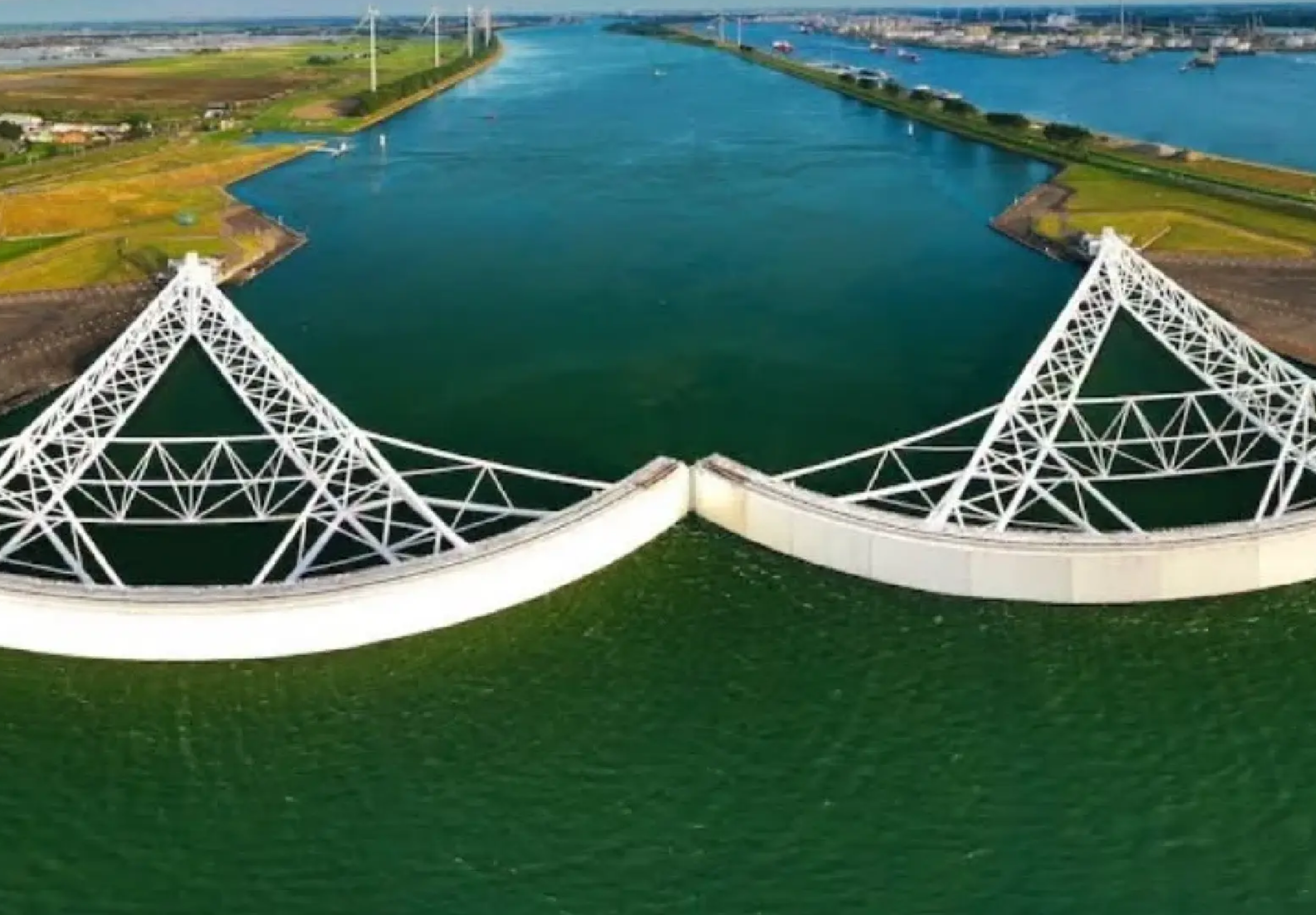
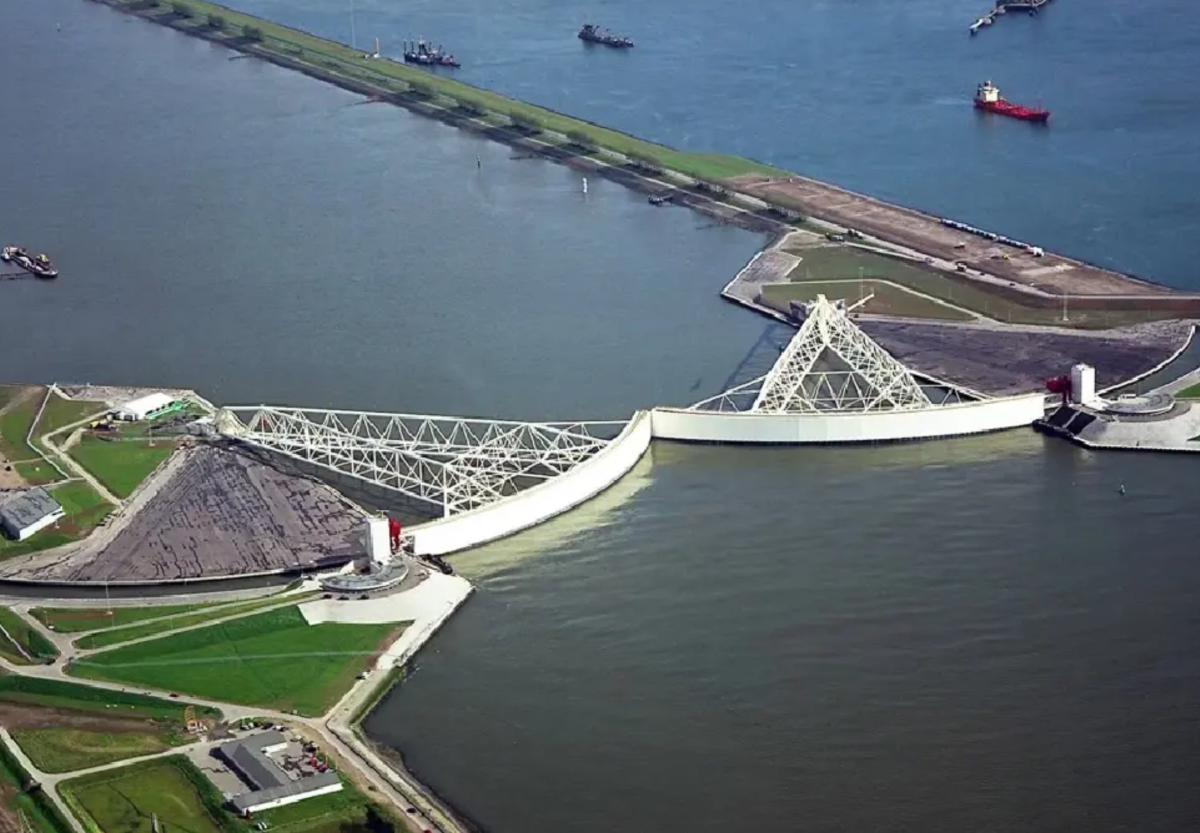
Near Rotterdam, the Maeslant Barrier has two automatically closing gates, each 210 metres wide and 22 metres high. It is designed to withstand storm surges reaching five metres above NAP.

Making room for high rivers

The Dutch system does not rely solely on ever-higher dykes. High river levels in 1993 and 1995 helped prompt the Room for the River programme, based on allowing excess water to go somewhere safely.

Defences were moved inland in some locations, floodplains lowered, new channels excavated and designated areas adapted to receive floodwater. Rijkswaterstaat says the programme covered 39 projects at 34 locations along the IJssel, Waal, Nederrijn and Lek rivers.

One example is Noordwaard, a 4,450-hectare area designed to take higher river flows. When water reaches a predetermined level, it can enter the area and pass through it, reducing pressure elsewhere. The project includes pumping stations, hydraulic structures and numerous bridges, while also creating space for nature and biodiversity.

Flood defence is a permanent task

Dutch authorities treat flood management as a connected national system, rather than a collection of individual construction projects. Dykes, canals, barriers, pumps, forecasts, maintenance and land-use planning are managed together.

The National Delta Programme coordinates central government, provinces, local authorities and water bodies on flood risk, freshwater shortages and increasingly extreme weather.

The Netherlands is now developing Room for the River 2.0 for both high and low river flows. Its experience suggests Bangkok's choices extend beyond the height of flood barriers to deciding where water can safely be stored, channelled and managed.
IMG_4087.png

Picture courtesy of The Nation

Join the discussion? Create account. orange.png


image.png

30 September 2026

User Feedback

Recommended Comments

VocalNeal Star Member

VocalNeal

Advanced Member

This topic came up post 2011. My Dutch mate was even thinking of importing gates that rise up when flooded.

ikke1959 Diamond Member

ikke1959

Advanced Member

Before Willem Alexander became king of the Netherlands, he has offered help to Thailand for the waterproblems. Thailand however rejected the help as they could manage themselves. The deltaworks took several decades to be finished, so for a solution now probably it is too late for Bangkok. Even in Indonesia they are bulding a new capital, but that takes years too. It is common that Thailand is always doing things last minute but that can be a problem now

digger70 Ruby Member

digger70

Advanced Member
7 hours ago, Georgealbert said:

The country strengthened its approach after the 1953 North Sea flood, when a severe storm and exceptionally high water breached dykes. Seawater flooded coastal areas, killing 1,836 people and inundating about 150,000 hectares.

Yea ,I vaguely remember that flood I was about 7 yrs old then, the flood waters did get close to were we lived in Rijsbergen Noort Brabant.

Building Dykes and what not in Los to prevent/manage the water is nearly impossible in Los it would take years to do and it would cost more then Los can afford

I think that was the reason that they didn't take advise /help from our Dutch engineers.

riverhigh Silver Member

riverhigh

Advanced Member

"Dutch authorities treat flood management as a connected national system, rather than a collection of individual construction projects. Dykes, canals, barriers, pumps, forecasts, maintenance and land-use planning are managed together."

Agree 100% with the above. As long as the Thai national government does not accept responsibility and continues to shift blame on municipalities, no progress will made on solving the flooding problem, This is a national problem not a minor municipality level problem.

Peterphuket Platinum Member

Peterphuket

Advanced Member

Now that the rainy season has begun, as a Dutchman I see the same reports every year promoting the Dutch method for preventing flooding.

But I wouldn’t be at all surprised if, once again this year, it all comes to nothing.

Year after year, after year, after year….

And if I’m right, it might be wise of AN not to report on it next year.

Create an account or sign in to comment

Account

Navigation

Search

Search

Configure browser push notifications

Chrome (Android)
  1. Tap the lock icon next to the address bar.
  2. Tap Permissions → Notifications.
  3. Adjust your preference.
Chrome (Desktop)
  1. Click the padlock icon in the address bar.
  2. Select Site settings.
  3. Find Notifications and adjust your preference.