Skip to content
View in the app

A better way to browse. Learn more.

Thailand News and Discussion Forum | ASEANNOW

A full-screen app on your home screen with push notifications, badges and more.

To install this app on iOS and iPadOS
  1. Tap the Share icon in Safari
  2. Scroll the menu and tap Add to Home Screen.
  3. Tap Add in the top-right corner.
To install this app on Android
  1. Tap the 3-dot menu (⋮) in the top-right corner of the browser.
  2. Tap Add to Home screen or Install app.
  3. Confirm by tapping Install.

Thailand News

All the latest news stories from Thailand are written in English. Fresh news and stories from around the kingdom brought to you daily.
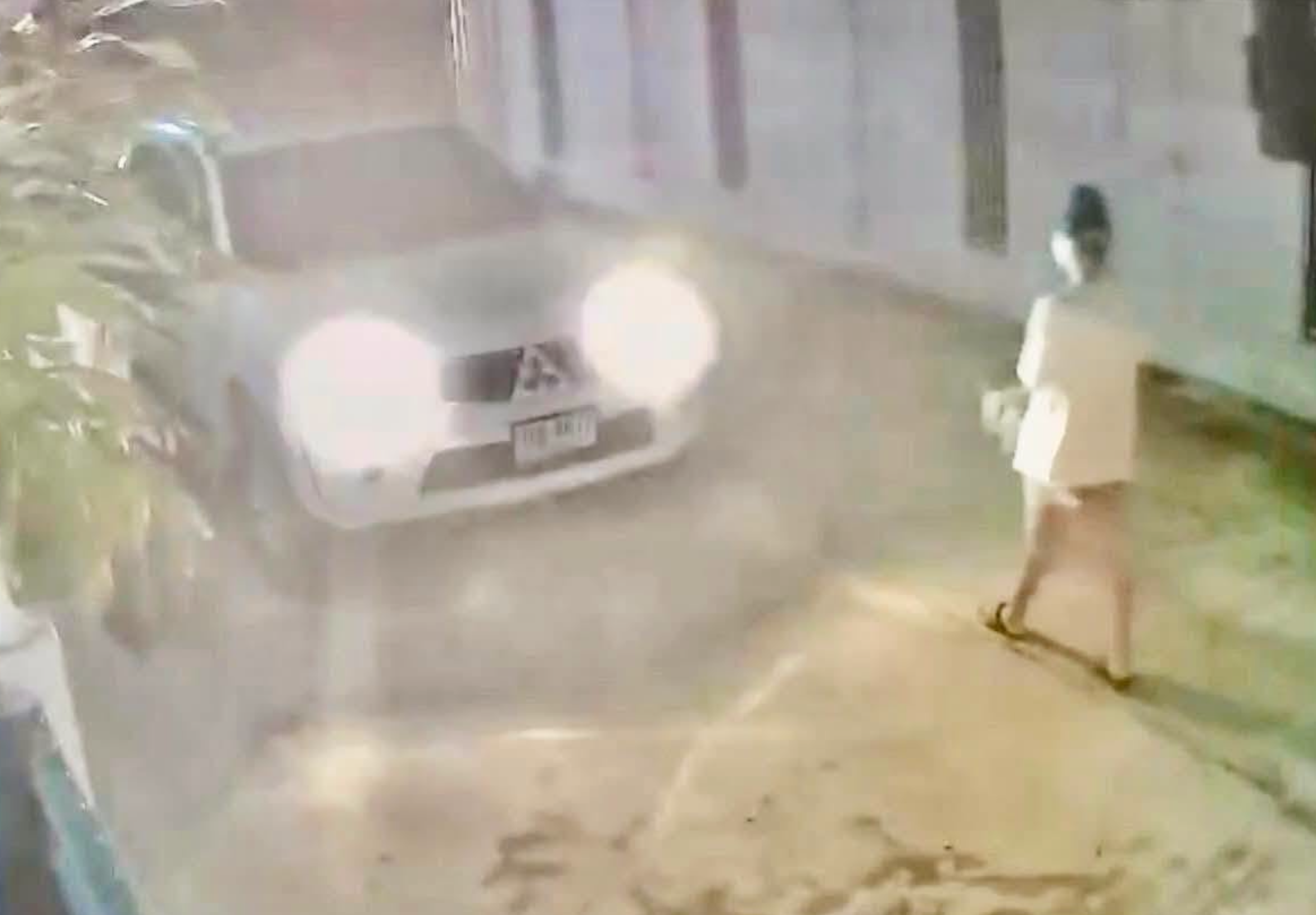
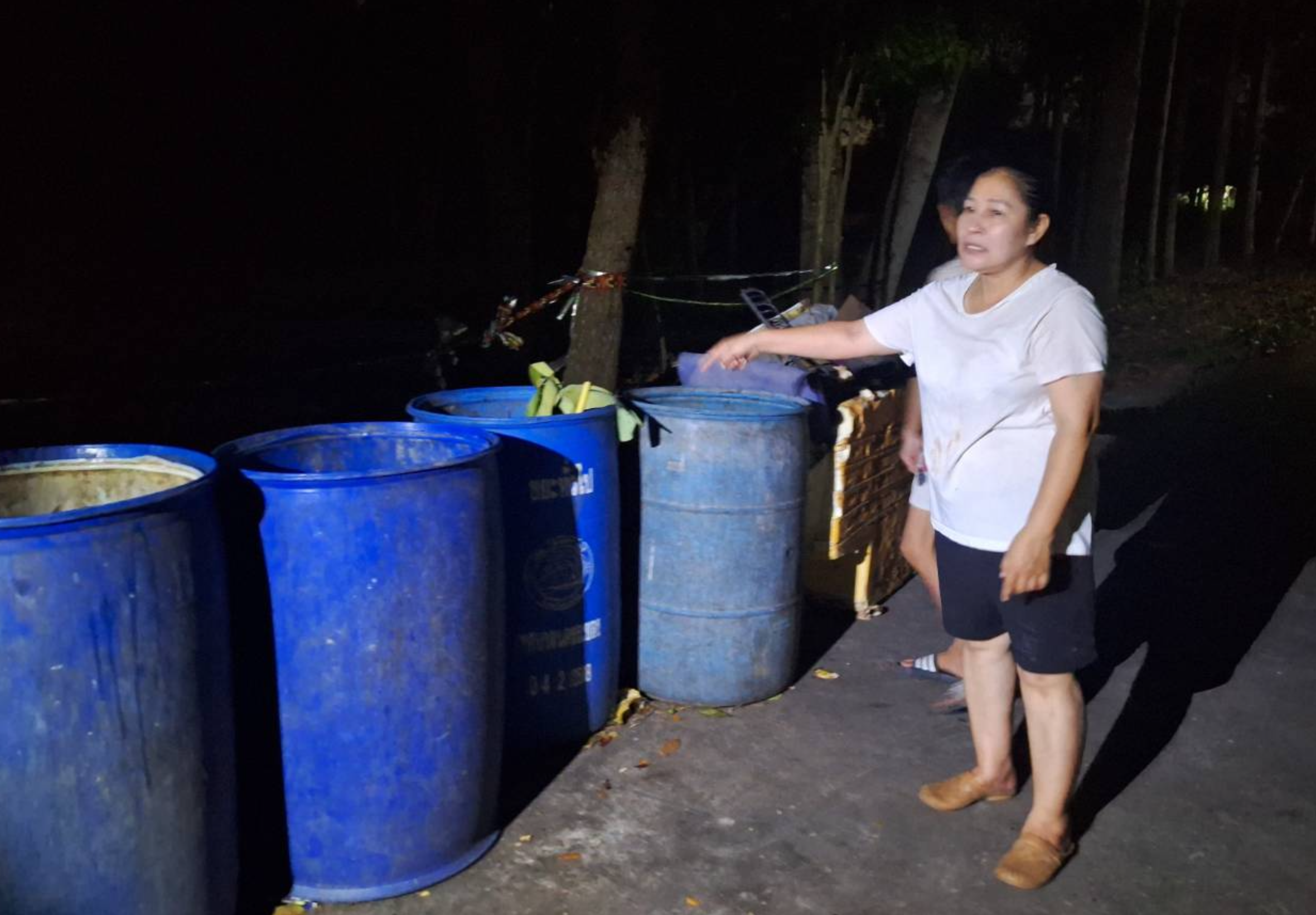
Responders surrounded and captured an injured bull after it became aggressive and charged at people and vehicles, on Sukhumvit Road in Sattahip, Chon Buri, during the early hours of 28 June 2026. The animal, which had been earlier struck by a vehicle, caused panic among motorists and pedestrians as it repeatedly attempted to gore anyone who approached and ran into live traffic.

Get today's headlines by email

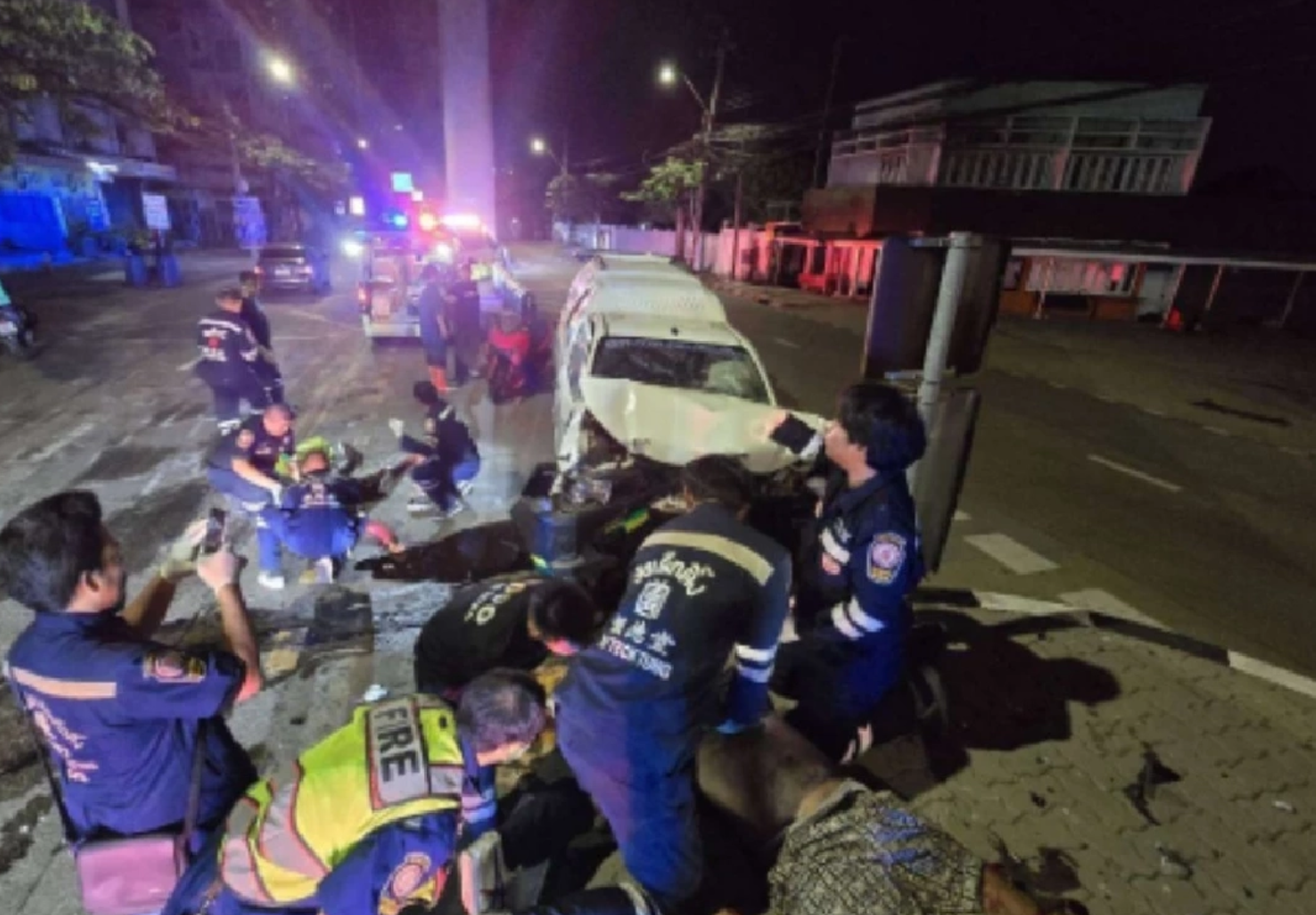
The rescue centre of the Sawang Rojanathammasathan Sattahip Foundation received the emergency call at 12.10am. It was reported that a bull had been hit by a vehicle, was injured and behaving aggressively near the foot of the flyover at a Junction on the inbound Pattaya section of Sukhumvit Road in Sattahip district.

The foundation requested support from the Disaster Prevention and Mitigation Unit of Khet Udomsak Municipality, with personnel joining the operation. At the scene, officers found a grey Toyota Avanza, registration from Bangkok, with damage to the left front after colliding with the bull.


Pictures courtesy of Responders

The driver, Flight Lieutenant Wattanachai Linidta, 76, a retired Royal Thai Air Force officer, was uninjured and remained at the scene to provide a statement to police.

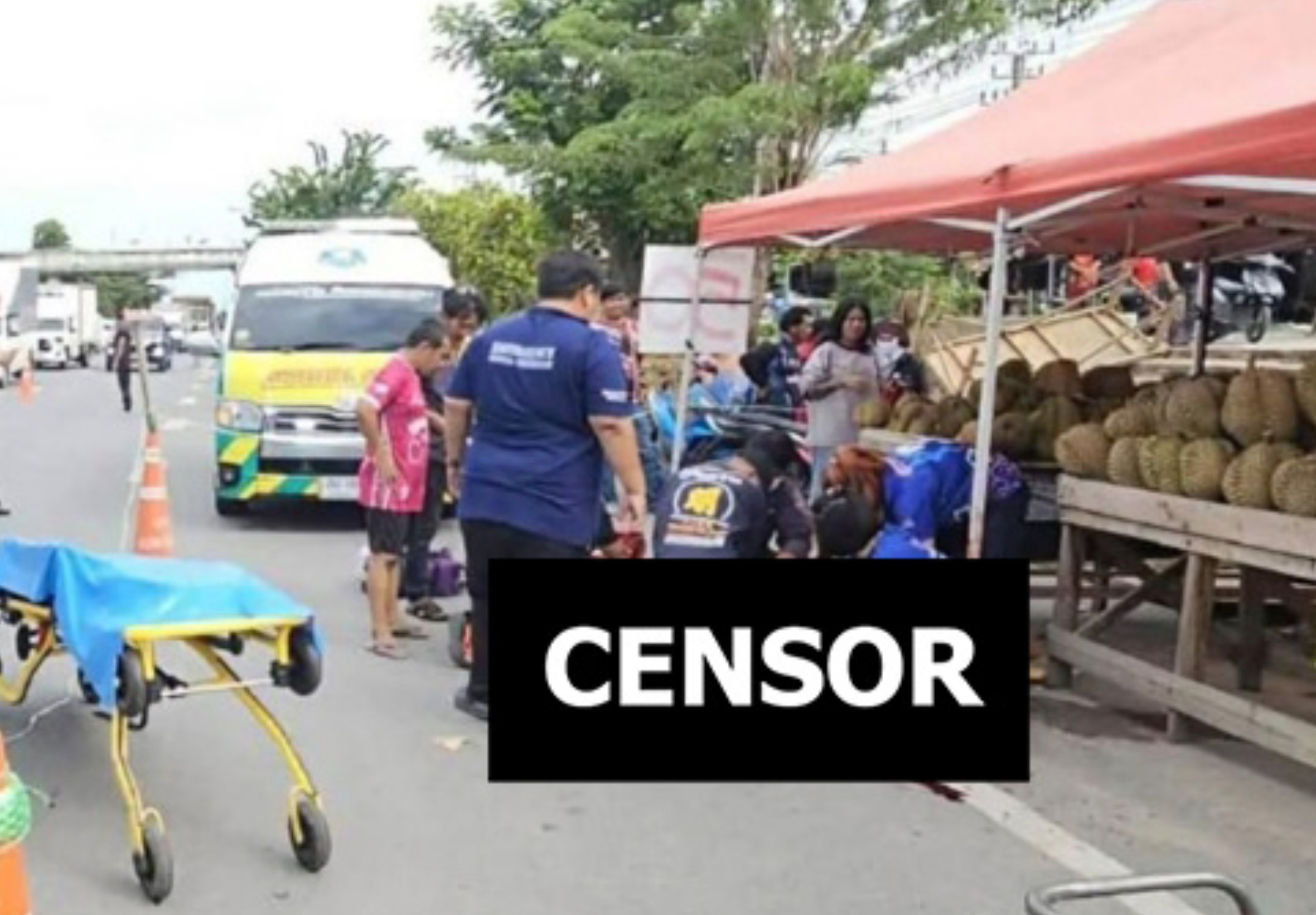
The injured white bull, estimated to be two to three years old, had multiple wounds, was bleeding from its nose and chest, and was limping. The animal appeared frightened and repeatedly charged at people while trying to escape the cordon, eventually running into the middle of the busy road, knocking two off a motorcycle and forcing motorists to brake suddenly to avoid further collisions.


Emergency personnel sealed off possible escape routes before an  officer successfully lassoed the bull. Startled by the rope, the animal became even more aggressive, using its horns to ram a rescue vehicle and causing further damage before fleeing down an embankment, where it fell and was finally restrained.

No one was seriously injured during the operation, although two vehicles sustained damage. After the situation was brought under control, officers coordinated with the duty officer at Sattahip Police Station to take custody of the bull while efforts continue to locate its owner. The owner will be asked to collect the animal for treatment and compensate members of the public for the damage caused.

AQMFtGu1dvC7QjlRJy-PUee7ZMDtqpEF2_e6S0lCwHQJfwK_5TL8ABPPZ7F5rrnwu9K6-wYlHL6bUNmEQpbzQtIgAknuoodT4dryhitGjw.mp4

Join the discussion?

Already a member?

Adapted by ASEAN Now 28 June 2026
Georgealbert
Georgealbert
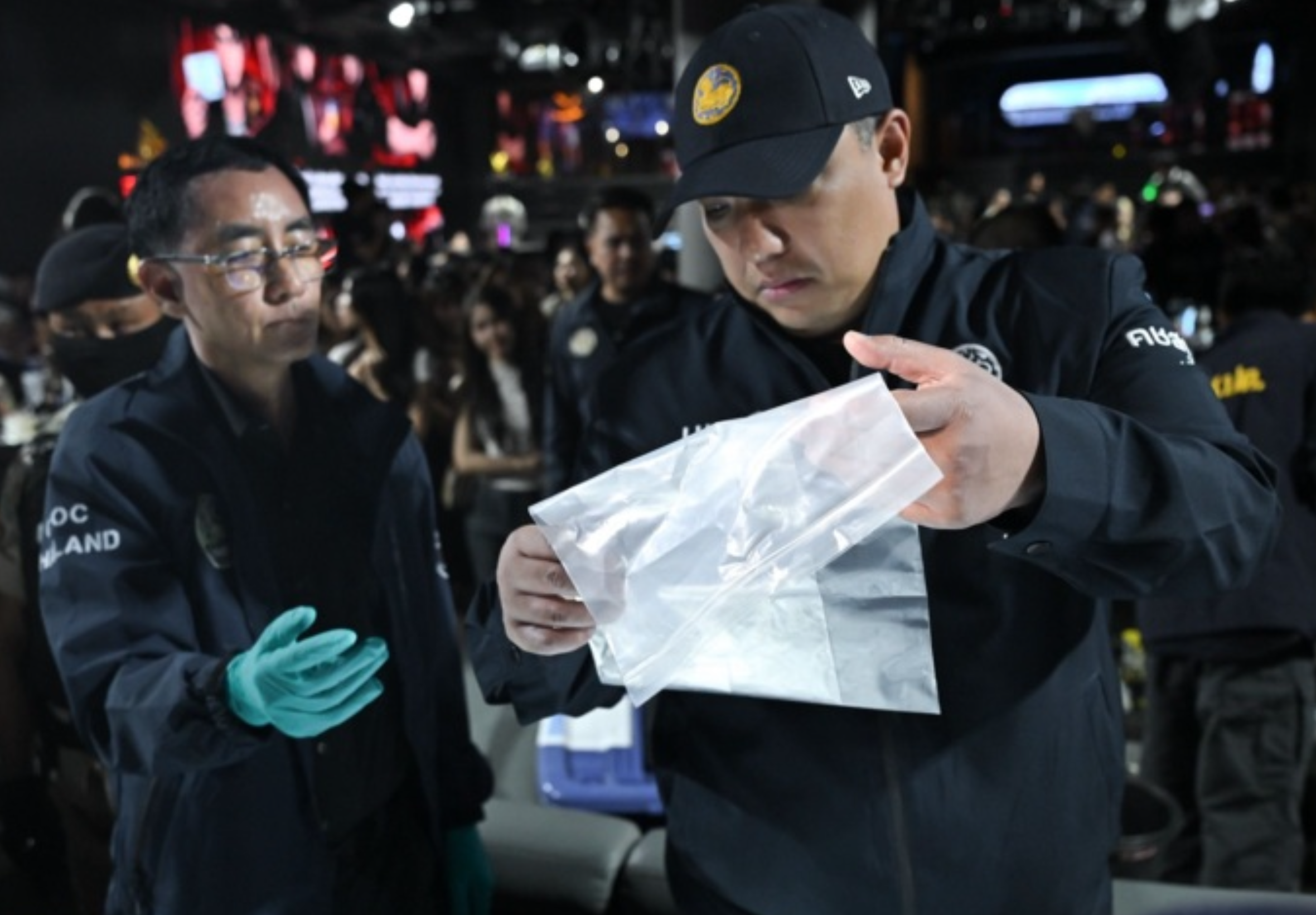
Thai customs officials have arrested a Turkish passenger at Suvarnabhumi Airport after discovering more than 12 kilogrammes of cocaine concealed inside coffee bags and chocolate packaging. The drugs, which officials estimate have a street value of around 36 million baht, were allegedly smuggled into Thailand on a flight from Sao Paulo/Guarulhos International Airport in Brazil.

Get today's headlines by email

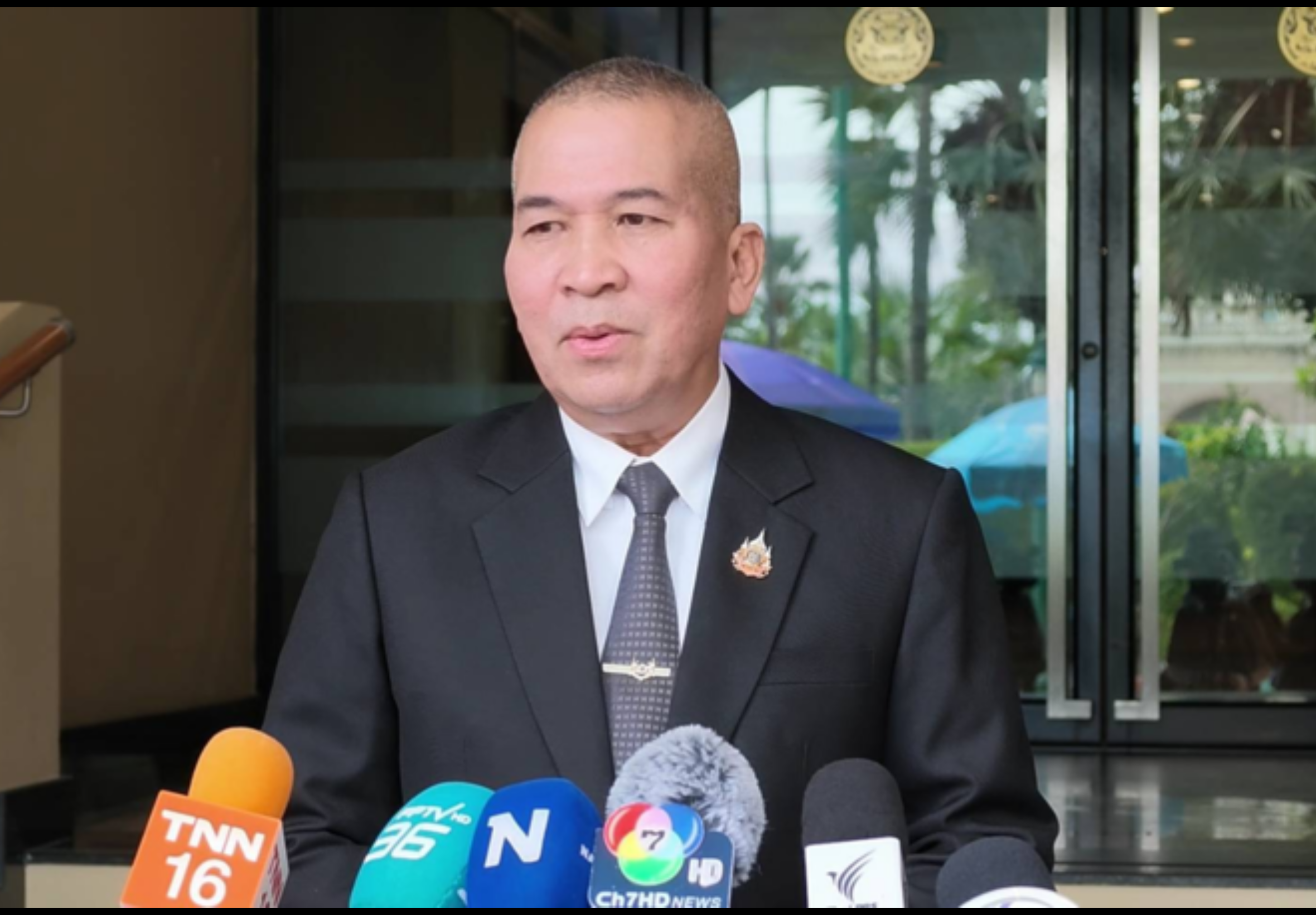
The arrest was announced by Customs Department director-general Phantong Loykulnanta, who said the operation formed part of the government’s urgent policy to combat transnational drug trafficking. The operation was carried out on June 25, by the department’s Investigation and Suppression Bureau in cooperation with the Airport Interdiction Task Force.

Officials searched the passenger’s luggage after his arrival from Brazil and allegedly found the cocaine hidden inside food packaging. Customs officers seized the drugs, detained the suspect and transferred him to investigators from the Narcotics Suppression Bureau for further legal proceedings.

Authorities said the investigation is now being expanded to identify any wider trafficking network connected to the case. Officials believe international criminal groups continue to exploit global air travel routes to transport narcotics into Thailand.


Under Thai law, cocaine is classified as a Category 2 narcotic. Those convicted of importing or exporting narcotics for commercial purposes face charges under the Customs Act B.E. 2560 and the Narcotics Code, with penalties of up to 15 years’ imprisonment, a fine of up to 1.5 million baht, or both.

The Customs Department said the seizure highlights ongoing efforts to strengthen border security against organised drug trafficking. Authorities have increased inspections using advanced scanning technology, K-9 detection dogs, intelligence analysis and closer cooperation with domestic and international law enforcement agencies.

From October 1, 2025, to June 25, 2026, customs officials seized narcotics and psychotropic substances in 214 cases. The total estimated value of the seized drugs exceeded 692 million baht.

Crystal methamphetamine, commonly known as “ice”, remained the most frequently seized drug by number of cases, quantity and value. Postal and express parcel deliveries accounted for more than 76.6% of all drug-related cases detected during the nine-month period, while officials also reported increasing attempts to smuggle newer psychotropic substances including zopiclone and etomidate.

The Nation reported that The Customs Department said it will continue expanding investigations in every case to dismantle the transnational criminal organisations behind drug trafficking. Officials also urged the public to report suspicious activity to help prevent narcotics from spreading in Thailand.


Pictures courtesy of The Nation

Join the discussion?

Already a member?

Adapted by ASEAN Now Nation 28 June 2026
Georgealbert
Georgealbert
A 20-year-old male elephant used for tourist rides killed its mahout and injured an Omani tourist after becoming agitated in Phang Nga on 27 June.

Get today's headlines by email

The fatal attack occurred in Moo 2, Song Phraek subdistrict, Mueang district, after the elephant, named Plai Thongkham, reportedly became distressed during a tour carrying two foreign tourists. Authorities said the elephant attempted to enter a stream, but its mahout used a hook to prevent it from doing so.

According to witnesses, the elephant became aggressive, throwing one of the tourists from its back. The injured tourist, a 33-year-old man from Oman, was taken to Phang Nga Hospital for treatment.

The elephant then ran about 100 metres from the stream before throwing its mahout, 32-year-old Chaiyan Pradapsri from Prasat district, Surin province, to the ground. It subsequently attacked him with its trunk and feet, causing fatal injuries. Officials said he suffered extensive fractures and a broken neck.


Following the attack, Plai Thongkham fled into nearby forest. Local officials, including Song Phraek subdistrict headman Boonrong Sawatdichai, police from Thung Kha Ngok Police Station, officers from the Phang Nga Provincial Livestock Office, and forensic physician Dr Montri Thanakit attended the scene to investigate.

Witness accounts suggested the elephant’s aggression may have been triggered after being prevented from entering the water, although authorities have not confirmed the exact cause of the attack. Authorities are continuing their investigation into the circumstances surrounding the incident.

The Phang Nga Provincial Livestock Office has assembled a team equipped with tranquiliser guns and sedatives to locate and subdue Plai Thongkham. Officials said the elephant remains agitated, raising concerns that it could pose a further risk to people in the area if not safely captured.


Pictures courtesy of Daily News

Join the discussion?

Already a member?

Adapted by ASEAN Now Dailynews 28 June 2026
Georgealbert
Georgealbert
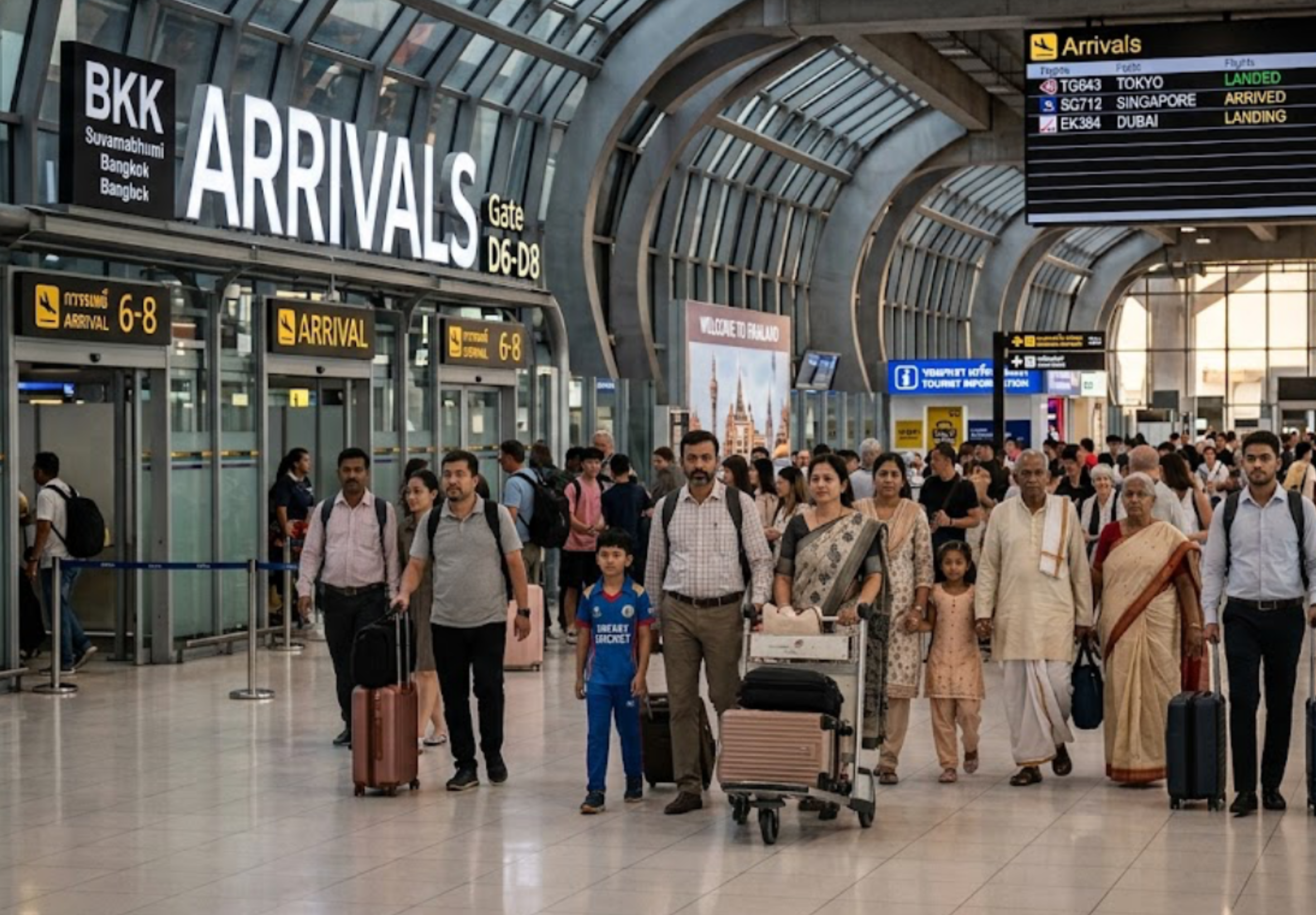
Airports of Thailand (AOT) has sharply reduced its passenger growth forecast for the 2026 fiscal year to possibly below one per cent, citing global economic uncertainty and geopolitical tensions, while maintaining expansion plans to meet long-term demand.

Get today's headlines by email

The revised forecast marks a significant downgrade from AOT’s earlier projections of six per cent growth, later cut to around three per cent. The latest reduction follows the impact of conflict in the Middle East, which has driven up aviation fuel prices, increasing operating costs for airlines.

AOT president and chief executive officer Paweena Jariyathitipong said the company’s six airports handled 552,119 flights during the first eight months of the fiscal year, covering October 2025 to May 2026. This represented a 1.38 per cent increase compared with the same period a year earlier.

Passenger numbers reached 90.98 million, up 2.76 per cent year-on-year, including 55.2 million international travellers and 35.7 million domestic passengers.

Despite the weaker outlook for this year, AOT expects passenger numbers to recover modestly in fiscal 2027, forecasting growth of around two per cent. Total passenger traffic is expected to increase from approximately 126 million to between 128.5 million and 129 million, provided the situation in the Middle East remains stable, even if oil prices stay elevated.

AOT remains confident about the long-term prospects for aviation. The company cited forecasts from the International Civil Aviation Organisation (ICAO), the International Air Transport Association (IATA), Airports Council International (ACI), and global consultants, which project worldwide passenger numbers will rise by around 20 per cent over the next 20 years from the current five billion travellers. Thailand is expected to be among the five countries benefiting most from this growth as much of the expansion is forecast to occur across Asia.

To prepare for future demand, AOT is continuing a 300 billion baht infrastructure investment programme across its six airports, aiming to increase annual capacity to 160 million passengers by 2034. The initial investment will be funded through passenger service fee revenue rather than borrowing to avoid increasing public debt.

Expansion projects include new terminal developments at Suvarnabhumi Airport, which is expected to accommodate 70 million passengers annually once eastern and southern extensions are completed between 2031 and 2033. Don Mueang Airport will add a third passenger terminal and a Junction Terminal to raise capacity to 40 million passengers a year.

Chiang Mai Airport is reviewing plans for a new passenger terminal, while Phuket Airport is designing an expansion scheduled for 2028 to 2031 to ease congestion. Hat Yai Airport is preparing a master plan after exceeding its current terminal capacity, and Chiang Rai Airport is drafting terms of reference for a terminal upgrade project.

The ThaiNewsRoom reported that AOT is also restructuring its organisation to improve efficiency. Operating expenses rose by only two per cent during the first two quarters of fiscal 2026, below the typical annual increase of eight to 10 per cent. The company is also expanding non-aviation revenue by developing more than 2,000 rai of land around its airports for hotels, logistics facilities, electric vehicle charging stations and other aviation-related businesses.


Picture courtesy of TNR

Join the discussion?

Already a member?

Adapted by ASEAN Now Thainewsroom 28 June 2026
Georgealbert
Georgealbert
A Swiss man who moved to Thailand to care for his mother with Alzheimer’s disease has gone on to establish a dementia care facility in Chiang Mai, offering long-term support for international residents at a fraction of the cost of comparable care in Europe and North America.

Get today's headlines by email

Martin Woodtli, 65, relocated his mother from Switzerland to Chiang Mai in 2003 after years of caring for her following an Alzheimer’s diagnosis. After his father, who had been her primary caregiver, developed depression and later died by suicide, Woodtli became solely responsible for her care and began searching for alternatives.

Dissatisfied with the institutional atmosphere and high costs of Swiss care facilities, Woodtli chose to return to Chiang Mai, where he had previously worked with Doctors Without Borders during the 1990s. He believed Thailand’s culture of respect for older people and a more personal care environment could improve his mother’s quality of life.

Woodtli moved into a house with his mother and employed three caregivers recruited through local hospitals to provide round-the-clock support. He said the new environment helped his mother become more comfortable and socially engaged, developing her own style of communication despite the progression of her illness.


Within a year, Woodtli used money inherited from his father to establish Baan Kamlangchay, a dementia care home located in a residential neighbourhood outside Chiang Mai city centre. Interest in the facility grew after a Swiss documentary filmmaker recorded the story of Woodtli and his mother in 2003, leading families from Switzerland and Germany to make enquiries.

Today, Woodtli and his Thai wife operate the facility, which cares for around 10 residents living with Alzheimer’s disease or other forms of dementia. Residents, whom Woodtli refers to as guests, live across eight separate houses integrated into a local Thai community rather than in a single institutional building.

According to Thai civil registration data, Chiang Mai recorded 160,958 foreign residents in 2025, representing around 9% of the province’s approximately 1.8 million residents. The city’s international airport, lower living costs and long-stay visa options have contributed to its popularity among retirees and overseas residents.

Baan Kamlangchay operates as a registered company in Thailand and provides accommodation, daily assistance and supportive care through trained caregivers. Residents access medical services through local healthcare providers when required, as there are no on-site medical staff.

The cost of care starts at approximately US$2,900 per month, including accommodation, meals and 24-hour support. By comparison, nursing home care in the United States averaged about US$112,420 annually, on 2024 data, while dementia care in Swiss nursing homes was estimated at 89,756 Swiss francs per year.

Caleb Johnston, an associate professor of human geography at Newcastle University in the United Kingdom, described the movement of people to Thailand for care and palliative support as a small but growing trend. He said lower costs, a large caregiving workforce and an expanding private care sector were attracting international clients, though families must also consider the impact of distance from established social networks and long-term friendships.

At Baan Kamlangchay, each guest is supported by a dedicated team of three caregivers working rotating shifts, with one caregiver sleeping in the same room at night. The facility also includes shared dining areas, an activity centre with a swimming pool and a small convenience store that allows residents to interact with local villagers and maintain a sense of independence.

Anke Blomberg, whose mother Gerda has lived at Baan Kamlangchay for eight years, said she chose the facility after finding care homes in Germany impersonal. After visiting Chiang Mai with her mother for a month, she decided the environment and level of care were suitable and now visits twice each year.

Woodtli said many residents remain at the facility for years and stay until the end of their lives. His own mother lived at Baan Kamlangchay until her death in 2006.


Picture courtesy of Businessinsider

Join the discussion?

Already a member?

Adapted by ASEAN Now Businessinsider 28 June 2026
Georgealbert
Georgealbert
Thailand has officially opened its state-owned railway network to private operators for the first time, allowing companies to apply for track access to run passenger, tourism and freight train services. The move follows the publication of the State Railway of Thailand’s 2026 Network Statement and is intended to make use of unused track capacity while creating new transport options, strengthening logistics and generating additional revenue for the state.

Get today's headlines by email

The policy is being implemented under Section 70, Paragraph Two of the Rail Transport Act, B.E. 2568 (2025). It comes after years of government investment in dual-track and new railway lines that significantly expanded the national rail network. However, the State Railway of Thailand (SRT) has been unable to purchase enough rolling stock to fully utilise the increased capacity, leaving many track slots unused outside peak periods.

The 598-page Network Statement provides private operators with detailed technical information, infrastructure specifications, access conditions, timetable allocation procedures and routing guidelines. Under Section 73 of the Act, track-sharing agreements will not be treated as traditional Public-Private Partnerships, avoiding lengthy approval processes and instead operating under simplified contracts.

Fixed Track Access Charges have also been introduced. Passenger services will pay 44 baht per carriage per kilometre, with a minimum of four carriages per train. Tourism services will pay 77 baht per carriage per kilometre, while freight operators will be charged 0.2065 baht per tonne-kilometre based on gross tonnage. An example provided by the authorities shows that a four-carriage tourist train travelling from Bangkok to Hua Hin, a distance of 229 kilometres, would pay about 70,532 baht in track access fees for a single journey.

Pichet Kunadhamraks, director-general of the Department of Rail Transport, described the initiative as a major turning point for Thailand’s transport sector. He said the policy would diversify travel options, modernise the logistics industry and improve returns on public infrastructure investment. Acting SRT governor Anan Phonimdang added that increased competition should encourage investment throughout the logistics sector while lowering costs and improving service standards for passengers.

The Nation reported that the policy is now entering its final regulatory stage, with the Cabinet considering appointments to a new Rail Transport Slot Allocation Committee. The independent body will oversee timetable allocation and prevent scheduling conflicts. The SRT said all access decisions will comply with Section 68 of the Rail Transport Act, ensuring neutrality, transparency and non-discrimination. The full 2026 Network Statement is now available for public download through the SRT’s official website.


Picture courtesy of The Nation

Join the discussion?

Already a member?

Adapted by ASEAN Now Nation 28 June 2026
Georgealbert
Georgealbert
Thailand’s Ministry of Public Health has launched a strict crackdown on the use of forged cannabis prescription forms after uncovering evidence of identity fraud and the online sale of fake documents used to obtain cannabis for recreational purposes.

Get today's headlines by email

On 27 June 2026, the Department of Thai Traditional and Alternative Medicine, working with police and security agencies, announced it would pursue criminal action against individuals, cannabis retailers, healthcare facilities and medical professionals involved in forging medical certificates and controlled herbal medicine prescription forms, known as Form P.T.33 (PorThor 33 / ปท.33)

The investigation found that fake P.T.33 forms were being used to sell cannabis flowers to members of the public without medical examinations or professional consultations. Officials also discovered cases where healthcare practitioners had allegedly signed blank prescription forms, allowing retailers to add details later and use them as false evidence when submitting mandatory cannabis usage reports under Form P.T.28.

Dr Thewan Thanirat, Deputy Director-General of the Department of Thai Traditional and Alternative Medicine, said the ministry had instructed enforcement officers to file criminal complaints against those responsible. Cannabis retailers producing fraudulent P.T.33 forms for commercial sales could face prosecution for document forgery, while healthcare professionals found to have participated could face disciplinary action for professional misconduct.

Authorities said offenders would face prosecution under the Criminal Code, while professional licences could be suspended or revoked. Cases involving healthcare practitioners will also be referred to the relevant professional councils to consider disciplinary penalties, including suspension or permanent revocation of licences.

Dr Peeracha Kookasemkit, Director of the Medical Cannabis Division, said the department is strengthening oversight by introducing digital verification and electronic databases to monitor controlled cannabis prescriptions more closely. The upgraded system will allow officials to verify document reference numbers instantly and trace prescriptions back to the issuing doctor and healthcare facility.

The digital system is designed to detect irregularities such as duplicate document numbers, invalid reference codes and doctor names that do not match official records. Officials believe the enhanced checks will make it more difficult to produce or use fraudulent prescriptions.

Khaosod reported that Dr Peeracha stressed that controlled cannabis must only be used under proper medical supervision for genuine treatment purposes. He urged members of the public and business operators who encounter fake medical certificates or improperly issued P.T.33 forms to report them through the Traffy Fondue application or by calling the department’s hotline on 02-257-7042, so authorities can bring offenders before the courts.


Picture courtesy of Khaosod

Join the discussion?

Already a member?

Adapted by ASEAN Now Khaosod 28 June 2026
Georgealbert
Georgealbert
The Transport Ministry is accelerating plans to establish Udon Thani as a regional aviation hub, with Thai Vietjet also preparing to increase its domestic flight schedule by 50 percent. The expansion forms part of a wider government strategy to strengthen economic growth, boost tourism and improve links between Thailand’s Northeast and international markets.

Get today's headlines by email

Deputy Transport Minister Phattrapong Phattraprasit has held discussions with Thai Vietjet executives on upgrading regional airports into full-scale aviation hubs. The meeting included deputy chief executive officer for commercial and customer relations Pinyot Pibulsonggram, deputy chief executive officer for corporate relations Sayada Benjakul, and representatives from the Department of Airports. Talks focused on improving passenger convenience and strengthening regional air connectivity.

Thai Vietjet plans to increase its domestic services from 98 to 147 flights per week, covering return routes between Bangkok and key regional airports. The expanded network will include Udon Thani, Khon Kaen, Nakhon Si Thammarat, Krabi, Surat Thani and Ubon Ratchathani, with the aim of improving travel links while supporting local economies.

A key objective is to develop Udon Thani into the Northeast’s international aviation gateway. Thai Vietjet is preparing direct services to Hanoi and Ho Chi Minh City in Vietnam, Taipei in Taiwan, Kuala Lumpur in Malaysia, and Tokyo and Osaka in Japan. The airline says the new routes are intended to support trade, investment and tourism with neighbouring countries.

The carrier is also studying the feasibility of launching direct cross-border services on the Udon Thani-Ho Chi Minh City and Krabi-Ho Chi Minh City routes. If approved, both services are expected to begin operating in 2027.

In addition, Thai Vietjet has formed a strategic partnership with EZY Airlines to connect Udon Thani with Hanoi, Da Nang and Ho Chi Minh City. Those services are scheduled for launch during the fourth quarter of 2026, with the goal of expanding market share and supporting future aviation industry growth.

The nation reported that Phattrapong also encouraged the airline to consider additional domestic routes linking secondary cities, including services to Ranong and Trang, as well as cross-regional flights such as Khon Kaen-Hua Hin and Chiang Mai-Hua Hin. Plans are also being developed to attract direct international flights from Malaysia, Hong Kong and Singapore to Hua Hin, improving the readiness of regional airports to welcome more overseas visitors.


Picture courtesy of The Nation

Join the discussion?

Already a member?

Adapted by ASEAN Now Nation 28 June 2026
Georgealbert
Georgealbert
The Anutin government is facing two major Constitutional Court cases that could have significant political and economic consequences for Thailand. One case challenges the government’s decision to use an emergency decree to borrow 400 billion baht for the energy crisis, while the other questions whether barcode and QR code technology used during the February 8 general election compromised ballot secrecy. Together, the cases test both the government’s exercise of executive power and confidence in the electoral process.

Get today's headlines by email

The first case focuses on the Emergency Decree authorising the Ministry of Finance to borrow up to 400 billion baht to address the impact of the energy crisis and support Thailand’s energy transition. The petition was filed by 133 members of the House of Representatives, most from the opposition, through the House Speaker. They argue the government should have pursued the borrowing through the normal parliamentary process rather than relying on emergency powers under Section 172 of the Constitution.

Following its meeting on June 24, the Constitutional Court ruled that sufficient evidence had been submitted and that the case involved a question of law, bringing the inquiry to a close. The court will hold its oral statement, consultation and vote on Thursday, July 9, 2026, at 9am. The government maintains that geopolitical conflict, new forms of warfare and volatile global energy prices created an unavoidable urgent necessity, making immediate borrowing essential to strengthen energy security and invest in future infrastructure, energy storage, smart grids and clean energy systems.

The court’s decision could have broad consequences. If the decree is upheld, the government will be able to continue its energy and economic programmes while reinforcing its ability to respond quickly to external shocks. If it is ruled unconstitutional, projects linked to the borrowing could be delayed or returned to Parliament, potentially weakening investor confidence and increasing political pressure on Prime Minister Anutin Charnvirakul. A narrower ruling could require revisions to parts of the borrowing plan while allowing other measures to proceed.

The second case stems from 22 petitions submitted through the Ombudsman concerning the Election Commission’s use of barcodes and QR codes on ballot papers during the February 8, 2026 general election. Petitioners argue the technology could allow ballots to be traced to individual voters, undermining the constitutional principle of secret voting. On June 24, the Constitutional Court ordered further expert testimony and additional study before reaching a decision.

The Election Commission has defended the system, stating that the codes were introduced solely to prevent counterfeit ballots, stop ballot rotation and improve the speed and accuracy of vote counting. It insists the codes are not linked to voters’ identities. The eventual ruling is expected to establish an important precedent for the future use of digital technology in Thai elections.

The Nation reported that Prime Minister Anutin now faces two separate constitutional challenges that could shape his administration’s political standing. The July 9 ruling on the emergency borrowing decree will provide the first major legal test of the government’s use of executive powers, while the ballot-code case will continue to examine confidence in the election that brought the government to office.


Picture courtesy of The Nation

Join the discussion?

Already a member?

Adapted by ASEAN Now Nation 28 June 2026
Georgealbert
Georgealbert
A 26-year-old Myanmar man died after falling from the third floor of a hostel in Bang Phli, Samut Prakan, in the early hours of 27 June. Police believe he may have been attempting to climb across balconies to reach a woman staying in the neighbouring building, although the exact circumstances remain under investigation.

Get today's headlines by email

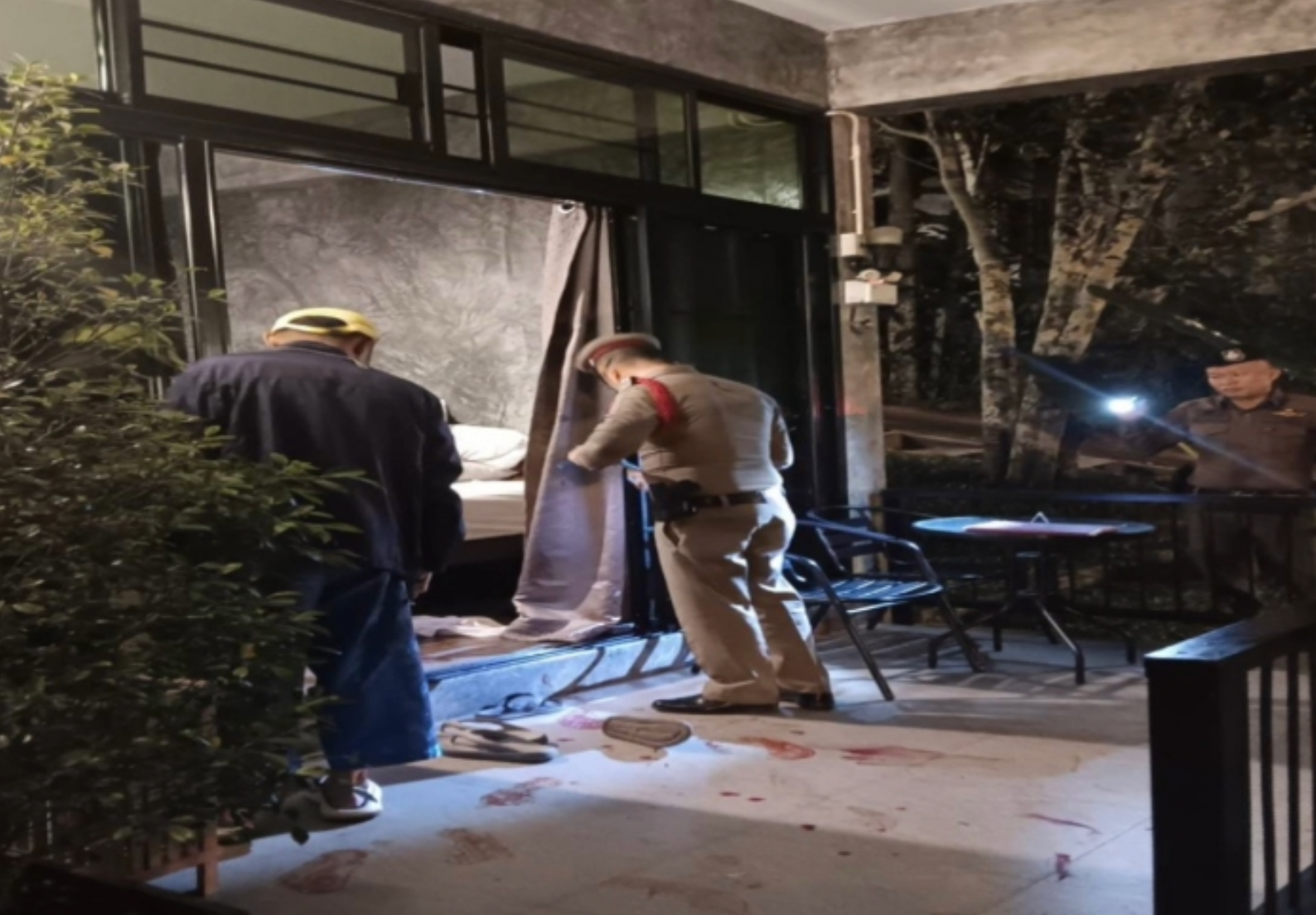
Police were called to the hostel at 1.05am on 27 June after reports that a man had fallen from height. Officers and rescue volunteers found the body of Ah Toe, 26, a Myanmar national, lying in a pool of blood on a walkway between two hostel buildings. He was wearing only grey boxer shorts, and a hanger containing women’s underwear was found near his body.

A 39-year-old Thai woman, who was staying in a third-floor room, told police she heard an unusual noise coming from her rear balcony. When she went to investigate, she saw the deceased attempting to climb onto her balcony. She immediately shut the door, and moments later heard the sound of him falling to the ground. She then alerted the hostel owner and police.


Investigators found that the deceased was staying in a hostel directly opposite the woman’s building, with the two balconies separated by approximately 1.5 metres. A friend of the deceased told officers that before the incident the victim had been drinking beer alone, while two other friends had already gone to bed. The friend also said the deceased had recently experienced problems with his girlfriend.

NBT reported that police have questioned witnesses and are examining evidence to establish the exact cause of the incident. Their initial assessment is that the deceased may have been attempting to climb between the buildings to reach the woman, or may have had another purpose, before losing his footing and falling from the third floor. Officers said further investigation is required before any conclusions are reached.


Pictures courtesy of NBT

Join the discussion?

Already a member?

Adapted by ASEAN Now NBT 28 June 2026
Georgealbert
Georgealbert
Thailand is preparing to digitise its cannabis export procedures after the government revealed that cumulative exports of controlled herbal products have exceeded 2.566 billion baht. The move is intended to simplify export applications, reduce paperwork and speed up processing for businesses shipping cannabis and other controlled herbal products overseas.

Get today's headlines by email

On 27 June 2026, deputy government spokeswoman Ploythalay Laksameesaengchan said the government is continuing to modernise public services through digital technology to improve efficiency for citizens and businesses. The initiative aims to reduce administrative duplication, improve data sharing between government agencies and make international trade more efficient.

The Department of Thai Traditional and Alternative Medicine (DTAM) is preparing to connect its DTAM Next platform with the Customs Department’s National Single Window (NSW) system. The integration will allow exporters to submit the Phor Thor 32 export notification form electronically for every shipment of controlled herbal products, including cannabis.

The NSW is Thailand’s central platform for exchanging electronic export documents and data. According to the government, cumulative exports of controlled herbal products have reached 2.566 billion baht, with total export volumes exceeding 201,658 kilograms, demonstrating continued growth in the sector.

Once the systems are linked, exporters will be able to complete Phor Thor 32 applications entirely through the DTAM Next platform. Previously, businesses were required to prepare paper documents and submit them in person.

Application data will be transferred automatically to the Customs Department’s NSW system. Officials say this will reduce paperwork, shorten processing procedures, improve data accuracy, help prevent document forgery and enable exporters to track the status of their applications more conveniently.

The department currently issues around 100 to 200 Phor Thor 32 certificates each month. It expects the digital system to eliminate the use of more than 1,200 to 2,400 paper documents annually while reducing travel and administrative costs for exporters.

Khaosod reported that processing times are also expected to fall significantly. Applications that currently take five to seven working days, including document delivery, are expected to be completed within one to two working days through the electronic platform, allowing businesses to better plan exports and manage their operations more efficiently.

Join the discussion?

Already a member?

Adapted by ASEAN Now Khaosod 28 June 2026
Georgealbert
Georgealbert
Authorities have confirmed that a privately owned male lion being kept at a house in Rayong is legally registered, but have ordered the owner to strengthen safety measures and improve noise control following complaints from local residents.

Get today's headlines by email

The complaints came from residents in Village 3, Thepphak Community, Phe subdistrict, Mueang Rayong district, who reported concerns about a male lion being kept at a home in the middle of the community. They feared the animal could pose a serious danger if it escaped and said its roaring during the night was causing anxiety and disturbing their sleep.

On 26 June 2026, Arun Pongphaitoon, Director of the Wildlife Conservation Division at Protected Areas Regional Office 2 (Si Racha), joined officials from the Department of Provincial Administration, Ban Phe Municipality, village leaders and other relevant agencies to inspect the property after receiving the complaints.

Officials found that the owner possessed all required legal documentation for the lion. The animal had been microchipped and officially registered in accordance with government regulations. A detailed inspection of the enclosure concluded that it was highly secure and robust enough to prevent the lion from escaping.


However, inspectors found that parts of the enclosure did not have a roof. They advised the owner to install additional steel structures to seal all openings and consider fitting electric fencing around the perimeter to further improve safety for the surrounding community.

Officials also instructed the owner to ensure emergency equipment, including an electric baton, fire extinguisher and warning system, remained readily available. They confirmed these items had already been provided appropriately.

Despite the official assessment, local residents said they remained worried because lions are dangerous animals and any unexpected incident could have severe consequences. They called for regular inspections to ensure safety standards continue to be met.

The inspection also addressed complaints about the lion’s roaring during the night. Although the owner had already built a soundproof room, officials recommended further improvements to increase its effectiveness and reduce the impact on nearby residents.

The Daily News reported that authorities said they will closely monitor the owner’s progress and conduct a follow-up inspection to ensure all recommended improvements have been completed.


Pictures courtesy of Daily News

Join the discussion?

Already a member?

Adapted by ASEAN Now Dailynews 28 June 2026
Georgealbert
Georgealbert
Thailand’s immigration system holds detailed records of foreign arrivals and overstayers but continues to struggle to consistently act on that information, meaning some long-term overstayers are only detected during raids, at departure points or after unrelated criminal investigations. The gap between digital records and enforcement has become a recurring issue, with known violations sometimes left unaddressed for months or years despite being visible in official systems.

Get today's headlines by email

On paper, Thailand operates a highly data-driven immigration regime. The Immigration Bureau collects fingerprints and facial images on entry, and since May 2025 all arrivals must complete the Thailand Digital Arrival Card, replacing the paper TM6 form. Long-stay visitors must submit 90-day address reports, while landlords are required to notify authorities via the TM30 system when foreigners move in. From 2026, officials say a centralised database will automatically calculate permitted stays and flag overstayers when no departure record exists.

However, enforcement remains largely passive. System alerts do not automatically trigger immediate intervention, meaning overstayers are typically identified only when they attempt to leave the country, during police raids, after public tips, or when linked to other offences. As a result, individuals can remain formally flagged as overstayers without any direct enforcement action for extended periods.

In June 2026, police in Pattaya detained a 40-year-old British man accused of throwing acid at an apartment caretaker, seriously injuring her. Officers later found he had overstayed since February, with the immigration breach only identified during the criminal investigation. In a separate case in Udon Thani the same month, a foreign couple were arrested over the death of a two-week-old infant, with checks revealing both had overstayed since March. In both cases, overstaying was not the initial trigger for detection.

Structural limitations add to the problem. Officials have reported that the biometric system reached a ceiling of 50 million records, forcing manual processing of around 17 million arrivals in 2023 and 2024. A replacement system, budgeted at around 3 billion baht and expected to take 29 months, is under development. Until then, gaps in integration and processing continue to limit real-time tracking.

From January to May 2026, authorities denied entry to 29,490 foreigners, revoked 668 student visas for misuse, and arrested 14,161 overstayers and illegal workers. Immigration raids were carried out across 190 high-risk zones, with Chonburi province, including Pattaya, recording 147 operations. Detention centres in Bangkok were also holding more than 600 foreigners awaiting deportation, the highest figure in five years. In May 2026, the government scrapped the 60-day visa exemption for 93 countries as part of a wider security drive.

Enforcement has been described as cyclical, intensifying under some administrations and easing under others. A 2018 crackdown pledge by then immigration chief Surachate Hakparn was followed by reduced enforcement during and after the COVID-19 period from 2020 to 2023 as tourism recovery took priority. Arrivals fell by around 7% in 2025, the first annual decline outside the pandemic years, amid shifting rules and security concerns. Penalties include fines of 500 baht per day, capped at 20,000 baht, and re-entry bans ranging from one to ten years.

The Thaiger reported currently that reforms are focused on completing database upgrades, improving links with police and Interpol systems, and shifting towards continuous administrative enforcement rather than periodic crackdowns. Until then, Thailand will continue to hold detailed records of overstayers while relying on inconsistent triggers to act on them.


Picture courtesy of The Thaiger

Join the discussion?

Already a member?

Adapted by ASEAN Now TheThaiger 28 June 2026
Georgealbert
Georgealbert
A member of one of Thailand’s wealthiest brewing families, Siranudh “Psi” Scott, is facing a lawsuit from his mother in a dispute that has drawn attention to Thailand’s “ungrateful child” law. The case involves allegations, family conflict, and a claim to recover valuable land assets, with the pair due to appear in court on 8 July after mediation failed.

Get today's headlines by email

Siranudh Scott, a fourth-generation member of the billionaire family behind the Singha beer empire, is being sued by his mother, Chiranuj Bhirombhakdi. The dispute escalated after he made public allegations in May that he had been sexually abused by his older brother and a babysitter. Following these claims, his mother argued that he damaged the family’s reputation and is seeking to reclaim land worth millions of dollars that had been gifted to him by his late grandfather.

The legal action is based on Thailand’s “ungrateful child law”, a 1908 provision that allows parents to revoke gifts if children are deemed neglectful, abusive, or responsible for serious reputational harm. The law is intended to protect parents from neglectful children and reflects the strong emphasis on family obligation and hierarchy in Thai society. In this case, it has brought renewed scrutiny to how the law is applied in disputes involving wealth and reputation.

Siranudh has publicly criticised the legislation, saying it reflects outdated expectations of obedience within families. “Looking at the fine print, this law is an attempt to kind of silence any damage done to a family name. Anything remotely damaging to the name is considered disobedient possibly by the law,” he told AFP. He added, “It has really no place in a liberal society that places importance on the welfare of children.”

His mother filed the lawsuit in February, and legal representatives have said the court is seeking an amicable resolution aimed at reuniting the family. The Bhirombhakdi family is ranked as Thailand’s 15th richest by Forbes, with an estimated net worth of $1.75 billion. Most cases under the filial piety provision are typically resolved through mediation, particularly within wealthy families, according to legal experts.

The Daily Mall reported that anthropology professor Jiraporn Laocharoenwong of Chulalongkorn University said the Thai term for ingratitude carries a stronger moral meaning than in English, referring to a breach of care and obligation rather than simple ungratefulness. Lawyers also note that children have limited legal routes to sue parents under Thai custom except in criminal matters. The court hearing is scheduled for 8 July after two rounds of mediation failed.

Join the discussion?

Already a member?

Adapted by ASEAN Now Dailymail 27 June 2026
Georgealbert
Georgealbert
Labour officials in Chon Buri, working with security agencies, carried out a coordinated inspection in Bo Win, Si Racha district, on 25 June 2026, resulting in the arrest of 12 Chinese nationals found working illegally across multiple sites. The operation targeted five high-risk establishments under a wider anti-trafficking and forced labour prevention plan. Authorities reported that some of the workers attempted to flee during the raids, including running into nearby wooded areas and hiding inside premises.

Get today's headlines by email

The inspection was led by officials from the Chon Buri Provincial Employment Office, including Phuwakon Tosingsakorn, with support from Naratip Sutthitham, Kornsak Janthong, and officers from the Internal Security Operations Command in Chon Buri. The operation formed part of the fiscal year 2026 action plan to prevent forced labour, illegal employment, and human trafficking in the province. The team inspected five workplaces in total, focusing on construction and food service businesses.

Officials confirmed that the sites employed 35 Thai workers, 47 Myanmar workers, and 12 Chinese workers who were found to be working legally with valid permits. However, a separate group of 12 Chinese nationals (9 men and 3 women) were discovered working without authorisation. Their roles included construction supervision, procurement of building materials, cooking, and customer service duties in Chinese-run restaurants.


Picture courtesy of แจ็ค โพธิ์แดง

During the raid, workers at a construction site reportedly scattered in panic, with some escaping into nearby forested areas while abandoning personal belongings. At one Chinese restaurant, a cook was found attempting to hide beneath a preparation table after noticing officers entering the premises. At another restaurant, customers were observed sitting in groups playing cards while waiting for food service.

Authorities detained all 12 individuals and transferred them to Bo Win Police Station for prosecution under Section 8 and Section 101 of the Foreigners Working Management Emergency Decree BE 2560 (2017), as amended. A separate charge was filed against one Chinese female employer for hiring undocumented foreign workers under Section 9 and Section 102 of the same law. Complaints were also lodged against four additional employers for further investigation and legal proceedings.

Officials said the case remains under investigation as authorities work to identify all responsible employers and ensure compliance with labour regulations across the region.

AQOvI8W3Db4da00-s8vsI2-xWcWWFfChj44-KeqNfWAlPLl9-6RcU2pL57UEuQE7mEYbM4cGnLgPgDvJVWXthMIeK0MyBw5IwhF4Y9_UdQ.mp4

Join the discussion?

Already a member?

Adapted by ASEAN Now แจ็ค โพธิ์แดง 27 June 2026
Georgealbert
Georgealbert
Mae Sai customs officers in Chiang Rai have seized more than 23 million baht in cash concealed inside parcel boxes in a Myanmar-registered car attempting to cross into Tachileik, Myanmar. The money was discovered during an inspection at the first Mae Sai border checkpoint, leading to the arrest of the driver and the launch of legal proceedings.

Get today's headlines by email

The vehicle was searched on June 23, 2026, in the outbound vehicle lane around 20 metres from the Thai-Myanmar border. The driver, a 31-year-old Myanmar national, had already completed outbound passport procedures with Chiang Rai immigration officers before customs officers carried out the inspection.

During the search, officers found Thai 1,000-baht banknotes worth a total of 23,023,000 baht hidden inside two cardboard boxes labelled as fish-strip and potato products. Authorities said the cash had been concealed inside the boxes in an apparent attempt to move the money across the border without detection.


Officials stated that the cash had not been authorised by an exchange-control officer and had not been declared to customs before leaving Thailand. Under Thai law, anyone transporting currency out of the kingdom must comply with customs declaration and exchange-control requirements.

The cash was seized as evidence and the driver was arrested for further investigation. Authorities said the alleged offence involved an attempted smuggling of Thai currency out of the country without completing the required customs procedures.

The Nation reported that the case is being pursued under Sections 242 and 252 of the Customs Act B.E. 2560, together with Section 80 of the Criminal Code and Sections 8 and 8 bis of the Exchange Control Act B.E. 2485. Investigators will continue examining the circumstances surrounding the attempted transfer of the funds and what additional individuals were involved.


Pictures courtesy of The Nation

Join the discussion?

Already a member?

Adapted by ASEAN Now Nation 27 June 2026
Georgealbert
Georgealbert
A man was killed after being attacked by an elephant while collecting dung at a palm oil plantation in Ao Luek district, Krabi, Thailand, on 25 June 2026. The victim, identified as Somchai, 49, from Ao Luek Tai in Krabi, was found unconscious at the scene with multiple injuries before later dying at Ao Luek Hospital.

Get today's headlines by email

Police at Ao Luek station received a report of a person injured by an elephant at a plantation in Moo 6, Ao Luek Tai subdistrict, Ao Luek district. Emergency responders from the Sawang Krabi Ao Luek Rescue Unit and the municipal emergency medical team in Laem Sak were sent to the location.

At the scene, rescuers found Somchai lying unconscious beside a female elephant identified as Pang Chao Saen, aged around 30 years. The elephant was tied up at the plantation site. Emergency teams moved the animal away before providing first aid to the victim and transporting him to hospital, where he was later pronounced dead. He suffered multiple severe injuries.

Initial police investigations found that Somchai worked as a farmer and general labourer. Before the incident, he had gone to the plantation to collect elephant dung for use as compost fertiliser. At the time, the elephant’s mahout was not present.

Investigators believe the victim approached too closely to the elephant while it was unattended by its handler. The animal is thought to have become startled or threatened, leading it to attack the man.

Police and rescue workers secured the area while ensuring the elephant was restrained and moved away so that medical assistance could be safely given. Officers have since begun collecting statements from the mahout to establish the full sequence of events.

Naewna reported that further inquiries are ongoing to determine the precise circumstances leading up to the attack and whether additional safety measures are required at the plantation.


Picture courtesy of Naewna

Join the discussion?

Already a member?

Adapted by ASEAN Now Naewna 27 June 2026
Georgealbert
Georgealbert
The Thai government is moving forward with legislation to restructure the Ministry of Tourism and Sports by separating tourism affairs from sports administration and integrating tourism functions with the Ministry of Culture, according to Deputy Prime Minister Pakorn Nilprapunt. Mr Pakorn, who oversees the Office of the Public Sector Development Commission (OPDC), said the draft legislation has been completed and was sent to the cabinet secretariat for circulation among agencies to gather comments on administrative arrangements. The move represents a formal step in the government’s plan to reorganise tourism governance at ministerial level.

Get today's headlines by email

He said the consultation process is expected to take no longer than one month, after which the bill will be submitted to the cabinet, likely next month or in August. The proposal involves separating tourism responsibilities from the existing combined ministry structure and reallocating tourism functions to align with the Ministry of Culture. The current Ministry of Tourism and Sports oversees both sectors, and the proposed change would establish a clearer administrative division between them.

Under the draft plan, agencies currently under the Ministry of Tourism and Sports would be reassigned depending on their functions, with tourism-related bodies moving under the new structure linked to the Culture Ministry. The cabinet secretariat will circulate the draft to relevant agencies to collect feedback on administrative arrangements before final approval. No additional public statements or opposition details were provided in the report.

The Bangkokpost reported that following the one-month consultation period, the draft is expected to be returned to the cabinet for consideration, with submission likely next month or in August. If approved, the restructuring would proceed through legislative approval and administrative implementation stages. Further details on transitional arrangements have not yet been announced.

Join the discussion?

Already a member?

Adapted by ASEAN Now Bangkokpost 27 June 2026
Georgealbert
Georgealbert
Thai Navy units have conducted an annual fire-fighting drill involving an oil tanker scenario at Sattahip Naval Base in Chon Buri, aimed at strengthening emergency response capabilities. The exercise focuses on rapid intervention during shipboard fires, improving rescue readiness for both naval and civilian vessels, and reducing potential loss of life, property and marine environmental damage. Officials said the training supports round-the-clock maritime rescue preparedness across operational units.

Get today's headlines by email

According to Rear Admiral Parat Rattanachai Phan, spokesperson for the Royal Thai Navy, the exercise was carried out by the Amphibious and Logistic Support Fleet as part of the fiscal year 2026 training programme on 25 June 2026 at Laem Tien Pier within Sattahip Naval Base. The drill featured HTMS Chula and HTMS Rad and was designed to test crew readiness and operational procedures under realistic emergency conditions. It also included inspections of firefighting equipment, onboard safety systems and operational manuals.


Picture courtesy of Amarin

Training scenarios covered initial situation assessment, fire suppression, search and rescue operations in confined and low-oxygen spaces, first aid for injured or unconscious personnel, and coordination with relevant agencies in the event of a real emergency. A further key focus was managing oil spill risks linked to maritime fires, including containment and initial clean-up measures to minimise environmental impact on marine resources, fisheries, tourism and coastal communities. The Royal Thai Navy emphasised that the exercise strengthens interoperability and ensures a unified standard of response across all three naval areas.

Amarin reported that the Royal Thai Navy said similar drills will be conducted across all operational regions under its responsibility during fiscal year 2026. The aim is to ensure consistent preparedness, improved coordination and faster response times for maritime emergencies nationwide. The programme is intended to build public confidence in the navy’s ability to assist in disasters at sea and protect national maritime interests.


Join the discussion?

Already a member?

Adapted by ASEAN Now Amarin 27 June 2026
Georgealbert
Georgealbert
A 27-year-old second runner-up of Miss Thailand Phuket 2026 has filed a police complaint alleging sexual assault and attempted rape by a prominent pageant sponsor at a hotel in Rayong on 26 June 2026. The complaint was lodged at Nikhom Phatthana Police Station and relates to an alleged incident that took place on the evening of 25 June 2026.

Get today's headlines by email

According to the complainant, she travelled to Rayong to meet and thank sponsors who had supported her pageant activities. She said she met a Thai man identified only as “Mike” aged in his 50s, who is a well-known durian farm owner in Nikhom Phatthana district and a major sponsor of the pageant. She stated she trusted him as a senior figure in the industry.

The woman alleged that Mike offered to book her a hotel room in Nikhom Phatthana district as she was due to film a tourism commercial in Ban Chang district the following day before travelling to Nakhon Ratchasima for another pageant commitment. She claimed that while she was taking a shower, he entered the bathroom naked and attempted to force himself on her. She said she defended herself using Muay Thai techniques, striking him with a knee to the groin and punching him in the face, causing him to flee the room.

The complainant further alleged that when she sought help from hotel staff, the response was inadequate. She said police were called and she was briefly treated as if she were intoxicated and causing a disturbance, despite reporting injuries sustained during the incident.

Hotel staff later met investigators and said they initially believed the pair were husband and wife. They added that once the woman requested emergency medical assistance, staff realised the seriousness of the situation and followed appropriate procedures. The hotel stated it prioritises guest safety.

Khaosod reported that police are reviewing CCTV footage and interviewing witnesses as part of their investigation. No charges have been announced. Mike denied the whole incident and is threatening to sue her for defamation.

Join the discussion?

Already a member?

Adapted by ASEAN Now Khaosod 27 June 2026


Georgealbert
Georgealbert
Police have arrested a 46-year-old Australian man at Suvarnabhumi Airport after he attempted to flee Thailand, in connection with the disappearance and murder of a 17-year-old Thai girl whose body was found on 27 June 2026, inside a suitcase abandoned beside railway tracks in Pattaya.

Get today's headlines by email

The suspect, identified publicly by Thai police as Mr. Simon Peter Carman, was detained while attempting to buy a ticket to return to Australia. He has denied any involvement in the killing and maintains he is innocent despite what police describe as strong CCTV evidence. He currently faces a charge of abducting a minor under the age of 18 for indecent purposes.


The arrest followed a joint investigation by Pattaya City Police and Nong Prue Police, who traced the suspect’s movements using CCTV footage collected along his suspected escape route.

According to investigators, the victim, Miss T, 17, from Kalasin province, disappeared after entering a condominium on Jomtien Second Road with Carman at 3.34am on June 25. CCTV footage showed the pair holding hands as they entered the building and went to Room 20 on the 15th floor. Police say the teenager was never seen leaving the condominium alive.

Further CCTV footage recorded at around 9.34pm the same day allegedly showed Carman dragging a large black suitcase from the building. He loaded it onto a Yamaha Aerox motorcycle bearing Prachuap Khiri Khan registration. Police later used CCTV tracking him riding along Sukhumvit Road towards Soi Chaiyapruk 2 and then onto a road running parallel to the railway tracks.


Investigators said the suspect disappeared from CCTV coverage for more than nine minutes before returning to the condominium on the same motorcycle without the suitcase. Police believe the victim’s body was disposed of during that period.

A body concealed inside a black suitcase was later discovered beside railway tracks behind Pattaya Floating Market in Bang Lamung district, Chon Buri. Police from Pattaya and Nong Prue coordinated efforts under senior officers, analysing CCTV footage and other evidence to identify and locate the suspect.


Pictures courtesy of ฉลาม นิวส์

Officers tracked Carman to Suvarnabhumi Airport, where he was arrested before boarding a flight. Authorities are continuing to question him while forensic specialists gather additional evidence to support the case. The investigation remains ongoing as officers continue to examine forensic evidence and complete the case file for legal proceedings.

AQNBb6JGZVfZQuABgpVQXz7nrv8u57OgrcO2FjquaLhDQLgFepf41yByHtek7wYc7a-sIDNVk5UGKJQxA5JJ1ZSuWRJLCTPsATKWaAAwRw.mp4

Related story

Foreigner-linked-to-suitcase-body-probe-in-Pattaya

Join the discussion?

Already a member?

Adapted by ASEAN Now ฉลาม นิวส์ 27 June 2026
Georgealbert
Georgealbert
Thai Tourist Police Commissioner Pol Lt Gen Saksira Pueak-am and Mr Wu Jian, Minister Counsellor and Consul General of China in Thailand, inspected safety measures in Pattaya, Chon Buri, aimed at strengthening tourist confidence across the coastal resort city. The visit covered key coastal safety points including Laem Bali Hai Pier and Ta Waen Beach on Koh Larn, where lifeguard readiness and operational procedures were reviewed. They also presented support items to lifeguards and volunteer responders working along the shoreline.

Get today's headlines by email

Following the inspections, the delegation held a coordination meeting with tourism network partners at Tourist Police Station 4, Subdivision 2, Division 1, focusing on integrated safety measures for both domestic and international visitors in the Pattaya tourism zone. The group also took part in a formal roll-call ceremony designed to reinforce public confidence among visitors and tourism operators.

Officials observed demonstrations of a mobile drone operations vehicle and an AI-based surveillance camera system deployed in the Walking Street area, designed to improve real-time monitoring and incident response capabilities. Authorities said these systems are intended to strengthen safety standards across Pattaya’s tourism infrastructure, particularly in high-traffic areas, while supporting confidence among Thai and foreign tourists, including visitors from China.


Pol Lt Gen Saksira and Mr Wu Jian emphasised continued cooperation between Thai authorities and Chinese representatives in promoting safer travel environments, particularly in coastal tourism destinations where water-related activities remain a key attraction. Officials said the measures form part of broader efforts to upgrade safety systems and enhance coordination among law enforcement, local agencies, and tourism stakeholders ahead of peak visitor periods.

The Daily News reported that the inspection forms part of ongoing efforts to improve safety infrastructure and coordination across Pattaya’s tourism sector ahead of peak seasons. Authorities indicated continued joint initiatives and monitoring to maintain safety standards for visitors and to support sustained tourism confidence in the region.


Pictures courtesy of Daily News

Join the discussion?

Already a member?

Adapted by ASEAN Now Dailynews 27 June 2026
Georgealbert
Georgealbert
Thailand is to deploy a 46-member Urban Search and Rescue (USAR Thailand) team and three K9 dogs to Venezuela after two powerful earthquakes devastated areas around the capital, Caracas, leaving thousands feared dead and prompting a major international relief effort.

Get today's headlines by email

Deputy Interior Minister Jeseth Thaiseth chaired a meeting at the National Disaster Prevention and Mitigation Command Centre on June 25, where he instructed officials to monitor the situation in Venezuela around the clock and prepare the deployment. The team will be sent to support rescue operations if requested as part of the international response.

The earthquakes struck, with a magnitude 7.2 quake occurring about 160km west of Caracas, followed less than a minute later by a magnitude 7.5 tremor, according to the US Geological Survey. The powerful quakes caused widespread destruction, flattening buildings, trapping people beneath rubble and triggering strong aftershocks.

USAR Thailand brings together personnel from the Department of Disaster Prevention and Mitigation, Department of Medical Services, Bangkok Metropolitan Administration, Engineering Institute of Thailand under Royal Patronage, Foundation for Environmental and Social Development, and NPC Safety & Environmental Services Co., Ltd. The team has been evaluated under the United Nations INSARAG External Classification (IEC) system and is ready to undertake overseas rescue missions immediately upon request.

The US Geological Survey’s predictive modelling indicated the final death toll was likely to reach the thousands, with a substantial probability of exceeding 10,000. A missing persons website shared on X by opposition leaders listed more than 10,000 people as unaccounted for.

The ThaiNewsRoom reported that countries including the United States, China, India, the European Union, Spain, Italy and most Latin American nations have offered assistance. US Secretary of State Marco Rubio said the United States was immediately deploying search and rescue teams, medical resources and humanitarian aid, while President Donald Trump described the disaster as “devastating” and pledged US support.

The UN’s Venezuela human rights mission urged the government to lift restrictions on social media, describing access to information as “a matter of life and death” as emergency responders continued searching for survivors. Rescue operations are continuing, with international teams expected to arrive in the coming days as authorities assess the full scale of the disaster.


Picture courtesy of TNR

Join the discussion?

Already a member?

Adapted by ASEAN Now Thainewsroom 27 June 2026
Georgealbert
Georgealbert
The “Bangkok Hilton” nickname refers to Bang Kwang Central Prison in Nonthaburi, Thailand, a maximum-security men’s facility widely associated with severe conditions and long-term sentences. The term has become a shorthand used by foreign media and visitors, often as a dark joke, despite generally not being used by Thai’s locally.

Get today's headlines by email

The label “Bangkok Hilton” was popularised after a 1989 Australian television mini-series starring Nicole Kidman, which depicted a fictional Bangkok prison. It was later reinforced by a 2004 BBC documentary titled The Real Bangkok Hilton. Bang Kwang itself lies on the Chao Phraya River around 11 kilometres north of central Bangkok in Nonthaburi.

It was developed between the late 1920s and early 1930s after land was acquired under the reign of King Chulalongkorn (Rama V), and opened to house serious offenders, including life sentences and death row prisoners.

Conditions at Bang Kwang have contributed to its reputation. Designed for around 3,500 inmates, it has held up to 8,000 at times. For decades, new prisoners wore leg irons for three months, with death row inmates previously shackled permanently until the practice ended in 2013. The prison economy includes a “chit system”, where food and basic needs beyond one free daily bowl of rice and vegetables must be purchased or traded internally.

Bang Kwang is Thailand’s main death row facility. The last execution by firing squad took place in December 2002, with the country’s last execution occurring in June 2018 by lethal injection. While executions remain legal, they are rare and subject to lengthy appeals and royal pardon processes.


Foreign prisoners have included Warren Fellows, jailed for heroin trafficking in 1978 and released in 1990 after a royal pardon, and Jonathan Wheeler, who served over 18 years of a 50-year sentence. Alan John Davies became the first European sentenced to death in Thailand in 1995 before later returning to the UK under amnesty. Sandra Gregory’s case is often misattributed, though she served time at Klong Prem women’s prison, not Bang Kwang.

Release pathways often depend on royal pardons issued during national occasions or prisoner transfer treaties. Thailand has 37 such agreements, and 1,082 foreign prisoners have been transferred home since 1990. The first treaty was signed with France.

Drug laws remain central to prison populations. Cannabis was decriminalised in June 2022 but reclassified in June 2025 for medical use only under prescriptions valid for 30 days. Serious drug offences still carry long sentences or death penalties, with a Malaysian man sentenced to death for heroin trafficking in March 2025.

TheThaiger reported that access to Bang Kwang is restricted to families, lawyers, embassies and approved visitors, though reforms have introduced video calls and reduced shackling. Overcrowding persists, and the “Bangkok Hilton” nickname continues despite growing official scrutiny of prison conditions.


Pictures courtesy of TheThaiger

Join the discussion?

Already a member?

Adapted by ASEAN Now TheThaiger 27 June 2026
Georgealbert
Georgealbert
A 63-year-old construction worker from Nakhon Nayok has died after falling from a 14-storey hospital construction project at Chiang Rai Prachanukroh Hospital in Chiang Rai. The man was found trapped on scaffolding between the fourth and fifth floors after the fall and was initially taken to intensive care before later dying from his injuries.

Get today's headlines by email

Police at Muang Chiang Rai Police Station received reports of the incident on the afternoon of 26 June 2026. Officers were notified that a worker had fallen from the upper levels of a major construction site for the hospital’s new international cardiovascular and vascular health services centre. Emergency responders and rescue teams from the Siam Chiang Rai Foundation were dispatched to the scene alongside provincial officials.

The worker, identified as a 63-year-old male from Muang district, Nakhon Nayok province, reportedly fell from the upper structure of the 14-storey building while scaffolding was being installed along the side of the project. He landed on an already completed section of scaffolding between floors four and five, where he was found unconscious by rescue personnel.

He was urgently transported to the hospital’s intensive care unit immediately after the rescue. However, medical staff confirmed that he later died due to the severity of injuries sustained from the fall, which shocked fellow workers on site.

The hospital director, Dr Somsak Apayapiboon, confirmed the incident and said the patient had been admitted to ICU following the incident. Senior provincial officials, including Chiang Rai Governor Choochip Phongchai and Nangs Jittraat Mheetongthanakorn, chair of the advisory committee to the Minister of Public Health, attended the scene. Authorities coordinated with the victim’s relatives, who are based in central Thailand, to arrange next steps and ensure entitlement to any compensation and welfare support.

The construction project, located beside Ruam Chit Thawai Kham Road, is valued at 766,080,000 baht. It is scheduled to run from September 2023 until September 2026. The 14-storey structure, comparable in height to the hospital’s emergency building, is a prominent feature in Chiang Rai city and remains under active construction with significant machinery, materials, and workforce on site. Manager Online reported that an investigation into the cause of the incident is to be carried out by authorities.


Picture courtesy of MGR

Join the discussion?

Already a member?

Adapted by ASEAN Now MGRonline 27 June 2026
Georgealbert
Georgealbert

Account

Navigation

Search

Search

Configure browser push notifications

Chrome (Android)
  1. Tap the lock icon next to the address bar.
  2. Tap Permissions → Notifications.
  3. Adjust your preference.
Chrome (Desktop)
  1. Click the padlock icon in the address bar.
  2. Select Site settings.
  3. Find Notifications and adjust your preference.