Skip to content
View in the app

A better way to browse. Learn more.

ASEAN NOW

A full-screen app on your home screen with push notifications, badges and more.

To install this app on iOS and iPadOS
  1. Tap the Share icon in Safari
  2. Scroll the menu and tap Add to Home Screen.
  3. Tap Add in the top-right corner.
To install this app on Android
  1. Tap the 3-dot menu (⋮) in the top-right corner of the browser.
  2. Tap Add to Home screen or Install app.
  3. Confirm by tapping Install.

Thailand News

All the latest news stories from Thailand are written in English. Fresh news and stories from around the kingdom brought to you daily.
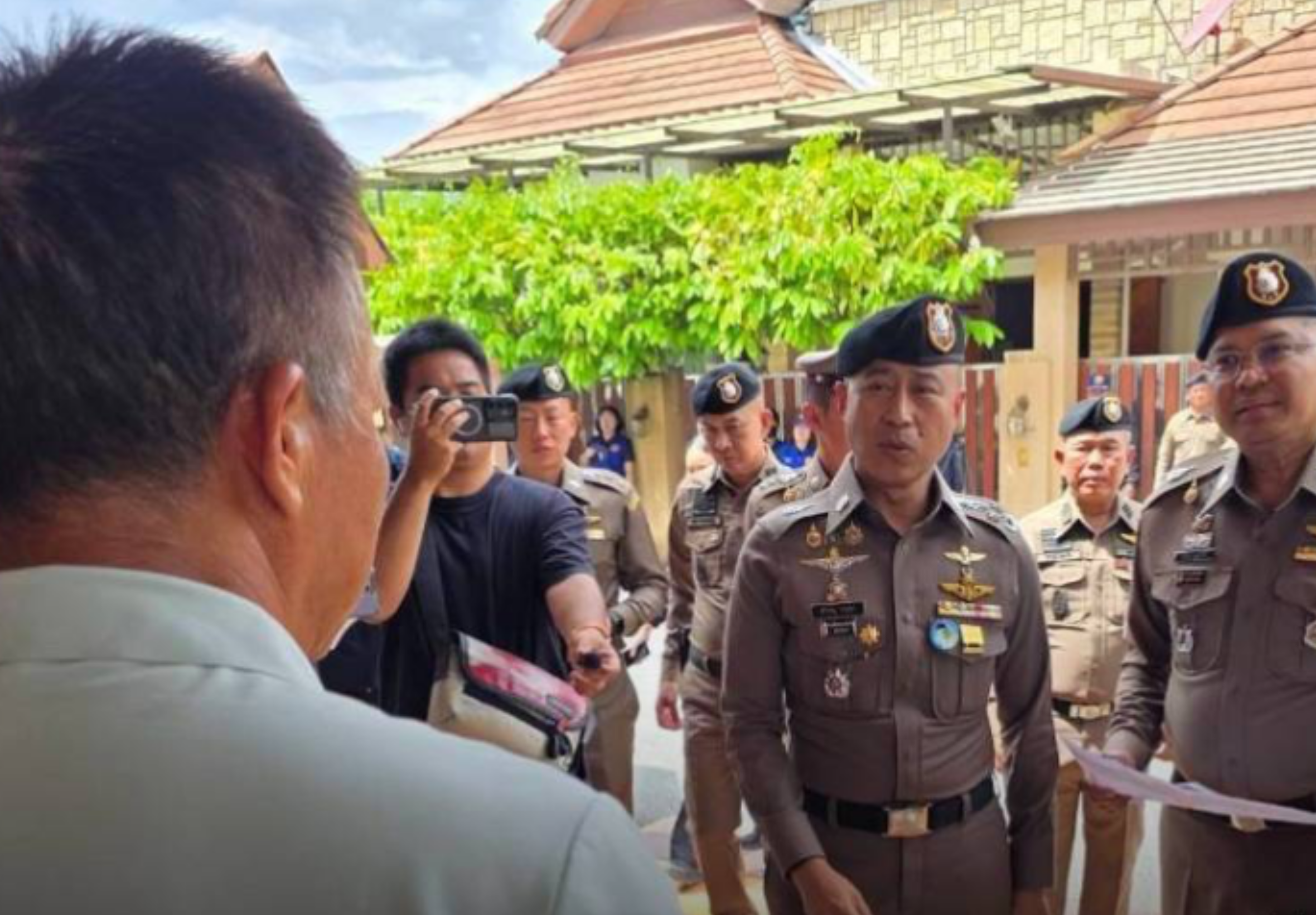
Thai police and administration officials have arrested a Chinese man wanted on an Interpol red notice, alleging he spent more than three decades in Thailand, even improperly obtaining Thai nationality and an identity card.

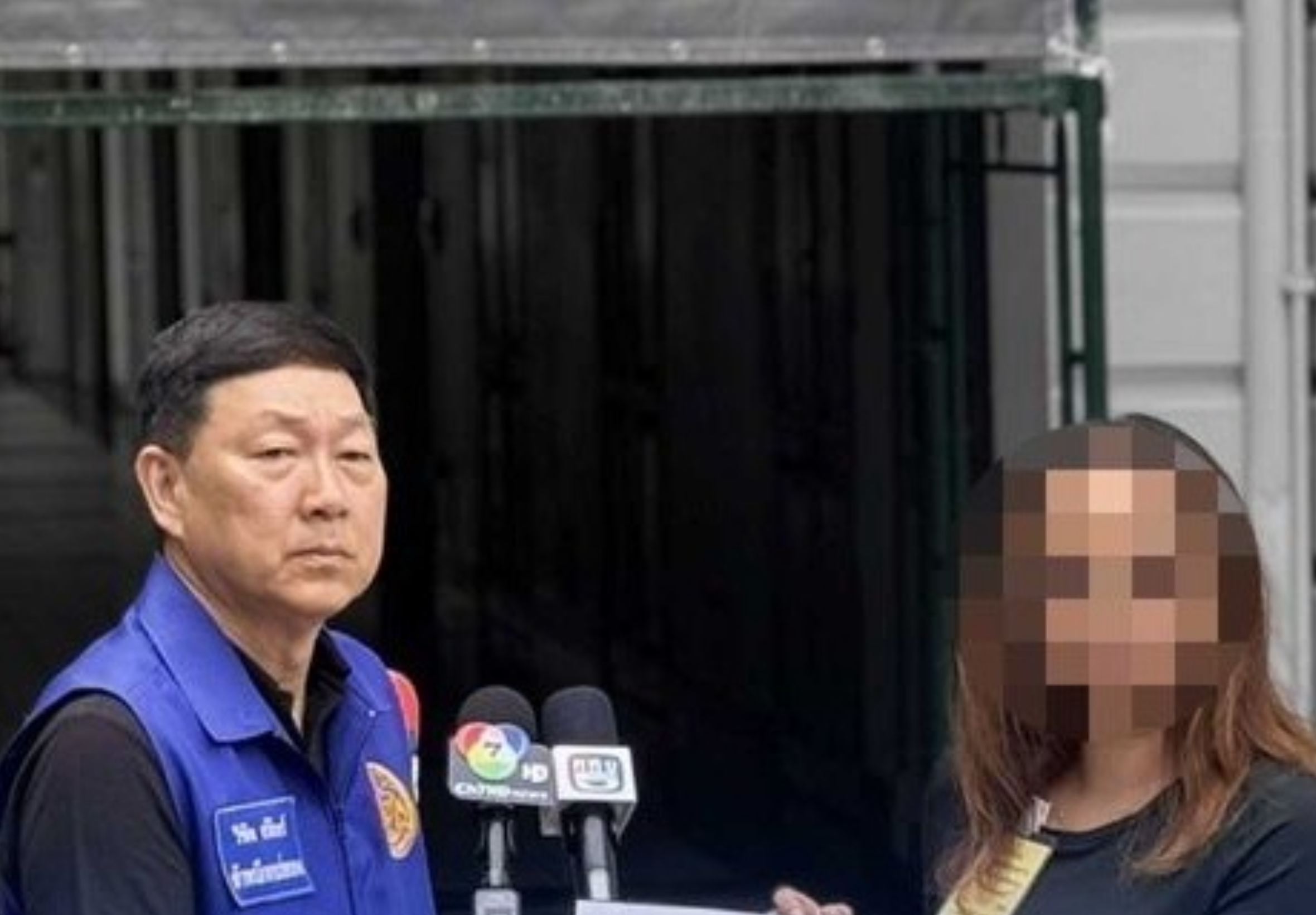
The suspect, named as Suchat Surachai, also known as Mr Zhu Zhishan, was arrested at a house in Nong Prue, Bang Lamung district, Chonburi, on 13 September. He was taken to Bang Lamung Police Station for further legal action.

Police said the operation was ordered by Pol Gen Samran Nuanma, deputy national police chief, and led by Pol Lt Gen Noppasin Poolsawat, attached to the Office of the National Police Chief, alongside police, administrative officers and the DOPA N.I.C.E. registration-security unit.

China seeks extradition

According to Pol Gen Samran, Chinese authorities contacted Thailand through the Ministry of Foreign Affairs seeking checks and extradition proceedings for Mr Zhu, who is wanted in connection with an alleged intentional assault and death, in Taizhou, Zhejiang province, on 19 January 1990.


Authorities said he subsequently fled China and is believed to had entered Thailand, about 36 years ago. The current investigation suggested the Interpol red notice for Mr Zhu, for murder, could be the same person as Suchat Surachai, who had acquired Thai citizenship unlawfully and held a Thai passport.

Police said a Pattaya Provincial Court arrest warrant, number 509/2569, had also been issued. The Office of the National Police will consider China's extradition request under the relevant legal procedures.

Thai nationality revoked

The Department of Provincial Administration said its retrospective checks found that Suchat had been entered into the Thai nationality system improperly through a highland population status-registration process in Phop Phra district, Tak province.

He received his first Thai identity card on 1 November 2001, officials said. The department has since revoked the nationality entry and associated registration records, and filed a complaint for legal proceedings.

During questioning, the suspect reportedly told officers that obtaining the Thai identity card in Phop Phra had cost about 50,000 baht. Investigators will examine who received the money, whether any officials or other people were involved, and whether similar arrangements were used for others.

Property and businesses under review

After obtaining Thai status, the suspect allegedly lived and worked in Thailand, initially as a guide and in tourism businesses before settling in Pattaya. Police said he has a Chinese wife and twin children.

Investigators found links to several companies and said he held 17 plots of property in Bang Lamung worth more than 100 million baht, as well as several cars and motorcycles. Officials will now examine how the assets were acquired and their legal status.


Pictures courtesy of Daily News

Join the discussion?


14 September 2026
Georgealbert
Georgealbert
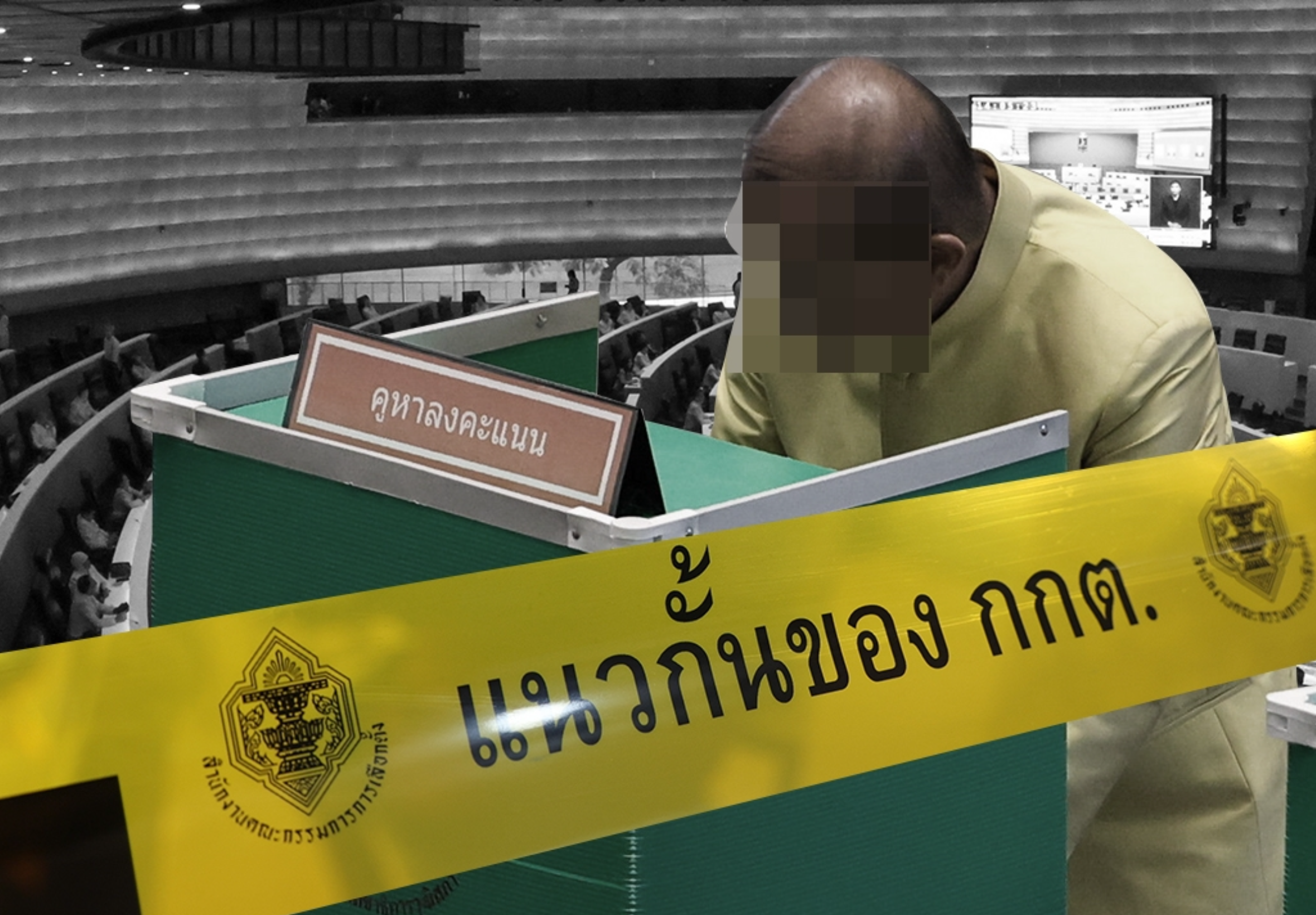
Thailand's Election Commission (EC) is due to decide on 14 September whether to take a major Senate election collusion case to court, after two internal panels reached opposite conclusions over allegations involving 229 people.

The case concerns the complex indirect election of Thailand's 200 senators on 26 June 2024 at Impact Forum, Muang Thong Thani. The EC's 26th investigation panel recommended action against 138 current senators, 21 ministers, MPs and Bhumjaithai Party executives, 20 people described as being in the party's network, and 50 reserve senators and other candidates.

An unusual indirect election system

The Senate was chosen through "self-selection and cross-selection" among 20 occupational groups. Candidates needed at least 10 years of relevant knowledge, expertise or experience, and first passed district and provincial rounds before reaching the national vote.

Each group produced 10 senators, while the public did not vote directly. The multi-stage process attracted criticism for its complexity and for the way candidates voted for one another across occupational groups.

Civil-society groups iLaw and We Watch, along with former EC commissioner Somchai Srisutthiyakorn, raised concerns about alleged vote lists, recruited applicants, organised meetings and voting patterns. Pattarapong Suphakson, known as Lawyer Aun, filed complaints after failing to progress beyond the district round in Buri Ram on 9 June 2024, submitting alleged lists, photographs and information about local organisation.

Two panels, sharply different findings

The Department of Special Investigation began examining complaints from Senate candidates on 10 February 2025. On 5 March, the Special Case Board, chaired at the time by Deputy Prime Minister Phumtham Wechayachai, voted 11-4 to accept alleged secret-society and money-laundering offences as a special case.

On 18 March, the EC formed its 26th central investigation panel (Panel26) with DSI officers. It examined documents and heard more than 700 witnesses nationwide. DSI formally brought allegations of Senate-election collusion on 25 April and reconstructed events at Impact, under a framework approved by then justice minister Pol Col Thawee Sodsong.

Panel 26 concluded on 17 July 2025 that the EC should petition the Supreme Court against all 229 people. It cited alleged digital evidence, including mobile phone cell-site data and Google Maps travel records, as well as purported voting lists and other physical evidence.

Witness accounts cited by the panel alleged secret planning meetings, an offline programme to calculate cross-voting, accommodation for voters around Impact, payments ranging from 10,000 to 200,000 baht, and threats to follow voting lists. They also alleged that elected senators later met at a hotel in the Rang Nam area and signed undated resignation letters. These remain allegations.

A second formed panel (Panel 36) reviewed the case in August 2025 and recommended dismissing all complaints, saying the evidence was insufficient for criminal action or removal of Senate rights.

Possible outcomes on 14 September

The seven EC commissioners may follow Panel 26 and send cases to the Supreme Court, dismiss all allegations as Panel 36 proposed, or pursue only individuals for whom they consider the evidence clear.

If the Supreme Court accepts a case, accused senators could be suspended from their duties, according to the reported possible scenario. A further constitutional case concerning dissolution of a political party could also follow.

The Constitutional Court ruled on 21 January 2026 that Phumtham and Thawee had not committed serious ethical breaches, finding no evidence of unlawful interference in the DSI's work.

Join the discussion?


14 September 2026
Georgealbert
Georgealbert
Thailand's Interior Ministry has expanded its investigation into Gan Chabad Co., Ltd. from a Jewish cemetery in Chachoengsao to land holdings, company structures and possible nominee arrangements involving dozens of linked businesses.

The inquiry began at a cemetery in Samet Tai subdistrict, Bang Khla district, and now involves the Commerce Ministry, Department of Special Investigation and Anti-Money Laundering Office. No finding of wrongdoing has been made against Gan Chabad, its directors or Rabbi Yosef Chaim Kantor.

Cemetery licence and land ownership

Deputy Interior Minister Polapee Suwunchwee visited the cemetery on September 11. Officials confirmed that the land was bought by Gan Chabad, which was licensed to operate the site when it opened about four to five years ago.

The licence was not renewed, although burials reportedly continued afterwards. Authorities are examining whether that amounted to a legal breach.

Polapee said three shareholders connected to the cemetery were born in Israel but later gained Thai citizenship. As Thai citizens, they were legally entitled to own land.

The wider case has attracted public attention during debate over some Israeli and Jewish community activities in Thailand. This includes opposition to a planned Jewish New Year event at Chabad Patong in Phuket, while activist Sondhi Limthongkul and the Reclaim Thailand group demonstrated outside the Israeli Embassy, calling for closer checks on foreigners accused of ignoring Thai laws and customs.

Up to 40 companies under examination

Gan Chabad was registered in March 2008 with capital of 30 million baht. Its stated business purposes include cemetery and crematorium services and property management.

According to a senior Interior Ministry source, the network linked to its directors may reach 40 companies, with combined turnover said to exceed 4 billion baht. The businesses reportedly include The Kosher Place (Thailand) Co., Ltd., tourism firms serving Israeli visitors, and businesses helping people travelling to Thailand for rehabilitation after illness or conflict-related experiences.

Investigators are seeking to establish whether the companies were legally formed and whether Thai nationals may have been used as nominees for foreign investors. Gan Chabad's three authorised directors hold Thai citizenship, making it a Thai legal entity; nominee concerns are being considered separately in relation to other firms.

Rabbi's citizenship process questioned

Kantor, a Gan Chabad founder and senior Chabad rabbi, has lived in Thailand since 1993. He and family members later received Thai citizenship, reportedly because of long residence and contributions to Thailand rather than marriage to Thai nationals. One of his sons is reportedly a Gan Chabad director.

Nation TV programme Khao Khon Khon Khao raised questions about the basis for those approvals. It noted that the Nationality Act BE 2508 (1965) generally requires 80,000 baht monthly income, three years of tax records, permanent residence and five consecutive years on a Thai house register, although exceptions can apply.

Join the discussion?


14 September 2026
Georgealbert
Georgealbert
Thailand says it has evidence that Cambodian forces has used the area around the Preah Vihear temple, a UNESCO World Heritage site, for military purposes, and has called for the material to be independently assessed.

Air Chief Marshal Prapas Sornchaidee, director of the Joint Information Centre on the Thailand-Cambodia Situation, said on Saturday, September 12, that Thailand was prepared to provide coordinates, timings, aerial images and other supporting information for an impartial review.

Thai evidence includes weapons images

According to Prapas, the evidence presented by Thailand includes aerial photographs, coordinates and pictures of weapons allegedly found in the temple area. These include anti-tank rocket-propelled grenades, small arms and positions for anti-aircraft weapons.

Thailand says there is also information indicating military activity in the area, alongside allegations that weapons were fired from the World Heritage zone at Thai forces.

Prapas said the Thai side did not want findings based solely on either country's allegations. Instead, it wanted the evidence examined against international standards.

"World Heritage sites should not be used as military bases or as shields for military operations," he said. "If there are allegations that weapons were fired from such an area, the sequence of events should be examined - who fired, from where, when and at what target."

Protected status is not automatically lost

Prapas said the presence of troops or weapons at Preah Vihear would not automatically remove its legal protection or allow an attack on the location.

The 1954 Hague Convention for the Protection of Cultural Property in the Event of Armed Conflict requires parties to avoid using cultural property and its immediate surroundings in ways likely to expose it to damage during hostilities, except in narrowly defined cases of military necessity.

He said any response to weapons being fired from the area would have to be judged on the facts and applicable law at the time. Authorities would need to consider whether the site had become a military objective, whether other options were available and what precautions could limit damage to cultural heritage.

Those considerations are further set out in the 1999 Second Protocol to the Hague Convention, including rules on imperative military necessity and precautions during attacks.

Full timeline needed to assign blame

On responsibility for any damage to the temple, Prapas said investigators would need to examine the entire chain of events rather than focus only on images of destruction afterwards.

This would include establishing who brought troops and weapons into the area, who fired from which position and when, and what the responding side was targeting.


Picture courtesy of The Nation

Join the discussion?


13 September 2026
Georgealbert
Georgealbert
The wife of an Israeli man buried at a Jewish cemetery in Bang Khla district, Chachoengsao, has appealed to Deputy Interior Minister Pholphee Suwanchawee to allow her to take his body for cremation.

Pakawan Srisai said her husband was the third body buried at the cemetery and that cremation had been his stated wish before he died. She said she has hospital documents properly confirming the cause of death.

Cremation request after removal order

On 12 September, Pakawan contacted reporters after learning that authorities had ordered bodies to be removed from the cemetery site. She said she was worried about the rushed move and felt sorry for her husband.

She said she had tried to contact the company involved, which told her it would arrange a new burial location. The company also said it would cover the cost of removing her husband's body for cremation.

"I am ready to take my husband's body to be cremated. Please help me," she said in her appeal to Pholphee.

Bang Khla district officials are now pressing ahead with the administrative order to remove the bodies within the time remaining under the directive. The company said it could not act immediately because of the weekend and the need to carry out religious rites.

Health teams disinfect cemetery area

Meanwhile, the public health division of Samed Tai Subdistrict Administrative Organisation sent a team in protective clothing to spray disinfectant around the cemetery.

The operation was intended to prevent the spread of disease and protect sanitation and public safety for people living nearby.

The first body whose family has indicated it wants it removed remains subject to coordination between the company and relatives. Outstanding questions include whether the remains should be cremated or reburied, while some people involved in the decision are still minors.

Relevant agencies are collecting information for a progress report to the deputy interior minister at a meeting scheduled for 13 September 2026. Officials have been instructed to follow legal procedures and to avoid confrontation with local residents.


Picture courtesy of Daily News

Related stories

Jewish-cemetery-burials-ordered-to-be-removed

Chachoengsao-rejects-Jewish-cemetery-permit-extension


Join the discussion?


13 September 2026
Georgealbert
Georgealbert
Thailand has ranked third in the world for digital nomads and fourth for retirees in the Rumavi Global Relocation Index 2026, which assessed 192 countries and territories.

Deputy government spokeswoman Lalida Persvivatana said on 12 September that the government wants to use the results to encourage foreigners with spending power to remain in Thailand for longer.

Thailand trails Malaysia in Southeast Asia

Thailand was placed behind Malaysia and Portugal in Rumavi's digital nomad category, receiving a score of 75.4. In the retirement ranking, Thailand scored 74.3, behind Malaysia, Panama and Portugal.

It ranked second among ASEAN countries in both categories, with Malaysia ahead in each. Lalida cited reporting by Vietnam's VnExpress International and Malaysia's The Star, saying the results underlined Thailand's potential for people looking to live and work abroad, rather than simply take short holidays.

Cost, banking and internet score highly

Thailand's best scores were for affordability, at 96.9, currency and banking at 91.8, and digital infrastructure at 89.4. It also received 78 points for both healthcare quality and the cost of accessing healthcare.

For foreigners weighing up a move, the rankings offer a broad comparison rather than a guarantee of individual costs or services.

Rumavi's country assessment identified weaker areas for Thailand, including English-language accessibility, business opportunities and the rule of law.

Government targets longer, higher-value stays

Lalida said digital nomads and retirees were an economic opportunity because of their purchasing power. Longer stays could spread income throughout the year to accommodation providers, restaurants, transport operators and healthcare businesses, she said.

"The goal is not simply to make people around the world want to visit Thailand, but to make people with the means to do so want to stay longer. Ranking third worldwide for digital nomads and fourth for retirees is therefore an opportunity Thailand must turn into income and economic value," Lalida said.

The government plans to improve digital infrastructure and conditions for remote workers, while developing the wellness economy, care for older people and higher-value services for retirees. The Nation has reported that this forms part of a wider shift towards tourism value and spending per visitor rather than arrival numbers alone.

Join the discussion?


13 September 2026
Georgealbert
Georgealbert
The son of British-Nigerian businessman and influencer Igho Ubiribo has challenged earlier reports that his father died after a penile filler procedure in Thailand, saying key questions remain unanswered.

Junior Ubiribo's claims, reported by Nigerian news website Vanguard, have not been independently verified. There is no independent evidence that Igho Ubiribo was murdered, nor confirmation of the injuries or missing property alleged by his son.

Son challenges earlier account

Earlier reports linked Igho Ubiribo's death to a pulmonary embolism, a blood clot that blocks blood flow to the lungs, after he reportedly underwent a filler injection procedure intended to enlarge his penis.

Junior Ubiribo disputed that explanation, saying: "my father was killed in March". He said he did not accept reports that his father died as a result of the procedure carried out in Thailand.

He further alleged that his father suffered serious injuries, including losing one eye and sustaining a deep wound to his forehead. Junior questioned how those injuries occurred and whether they were related to the treatment.

The son also raised concerns over his father's assets, alleging that property and belongings, including a gun and watches, disappeared after his death. He alleged that Igho Ubiribo's wife took the items.

Junior said his father did not deserve what happened and called for a full investigation rather than acceptance of the account previously reported.

It remains unclear whether the death was connected to homicide, as alleged by the son. Further information from the relevant authorities and other people involved will be required before the circumstances can be established.

Clinic says he was a regular patient

Officials from the Department of Health Service Support (DHSS) and the Food and Drug Administration (FDA) inspected the clinic where Ubiribo received the injection on 7 September 2026.

Clinic management said he had been a regular patient since 2024 and had undergone five penile enlargement injection procedures. The first four took place between 2024 and 2025.

For the fifth treatment, on 5 March 2026, the clinic said Ubiribo received 40cc of filler injected into his penis. The doctor had advised splitting the treatment into two sessions, but he reportedly asked for it to be completed in one session.

The clinic said staff gave post-treatment care instructions after every procedure and followed up on his condition. It said Ubiribo had not reported any problems connected with the treatments, and that he signed a consent form before each procedure.

Related story

Thailand-penis-enlargement-procedure-linked-to-influencers-death

Join the discussion?


13 September 2026
Georgealbert
Georgealbert
Thailand's wildlife enforcement officers are using social-media monitoring and undercover work to trace trafficked animals, from monkeys and hornbills to elephant ivory and living coral. The Department of National Parks, Wildlife and Plant Conservation (DNP) says the trade is increasingly arranged online, with Thailand a key regional hub because of its own wildlife, proximity to rare species and transport links by land, sea and air.

Nawee Changpirom, who leads a DNP raid unit, said officers have found leopards, hornbills and even an anteater during their work.

"We even found living corals hidden in a ceiling," he told AFP

Illegal wildlife trafficking is among the world's most widespread and profitable forms of organised crime, alongside weapons, drugs and human trafficking, and is run by cross-border cartels.

Tracking sellers online and undercover

The DNP created its dedicated Wildlife Crime Intelligence Unit (WCU) in 2023. Its three permanent staff track and intercept illegal purchases, with social media now the "key channel" for the trade, according to WCU director Polawee Buchakiet.


Sellers may say an animal needs to be "rehomed" rather than openly advertising it for sale. They also use tightly cropped photographs to prevent investigators identifying their location.

Undercover officers then gather evidence needed for court warrants. One officer, identified only as Tee, said he has climbed electricity poles dressed as a repairman to photograph courtyards, and posed as a land surveyor to look through windows from neighbouring plots.

Tee, 43, said cases in which sellers could not be found, or animals were dead or too ill by the time officers arrived, still troubled him. Smuggled animals can be weakened by transport, stressed by separation from their habitat and family groups, and exposed to unfamiliar diseases.

"I wonder to myself if we could have done something to get there sooner," he said. "Whether they are big or small, all animals' lives are precious."

Airport seizure highlights risks to animals

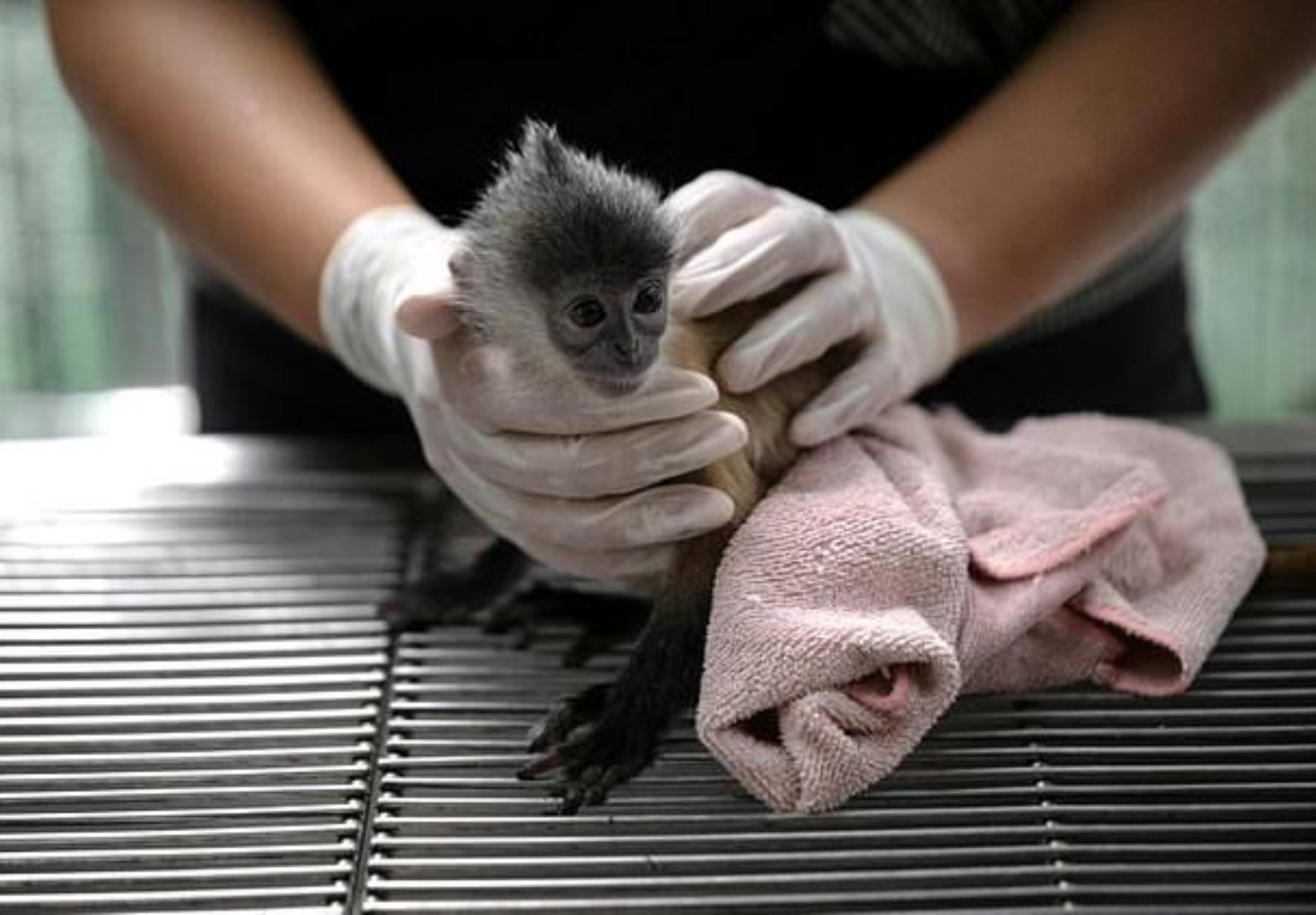
A six-month-old leaf monkey was intercepted in luggage at Bangkok's Suvarnabhumi Airport while bound for India, where demand for exotic pets has been growing. A second monkey in the same bag died after it was rescued.

DNP vet Thanawadee Phaichana said many smuggled animals arrive in poor condition, with some given sedatives or mild anaesthetic to stop them moving or making noise.

Animals recovered in and around Bangkok are initially treated at the DNP's small facility before transfer to a sanctuary. Older, healthier animals may eventually be returned to the wild, but younger animals often struggle to gain the skills needed to survive there.

Penalties and enforcement gaps

Wildlife traffickers face up to 10 years in prison for offences involving protected species, rising to 15 years for endangered species. For foreign residents and visitors, that is a practical warning against buying animals advertised online or accepting wildlife products whose legal origin cannot be established.

A recent raid rescued a leaf monkey, a gibbon and hundreds of turtles, while airports have seen multiple interceptions. However, the unit faces staff and funding shortages, and difficulties obtaining cooperation from social-media companies; officers posing as buyers sometimes use their own money, Nawee said.

In 2019, a Thai court dismissed the case against suspected trafficking kingpin Boonchai Bach. The Supreme Court later sentenced him to prison, but he remains at large.

Nawee said the most meaningful change would be an end to the exotic pet trade: "These are wild animals, they don't belong in a cage."


Pictures courtesy of Daily Mail

Join the discussion?


13 September 2026
Georgealbert
Georgealbert
A Chinese man has been taken for questioning after a 28-year-old Thai woman alleged that he held her inside a Pattaya condominium for more than three hours, assaulted her and tried to force her to remove her clothes.

The woman, identified as Ms Beam, filed her complaint with Pattaya City Police on 12 September 2026. She said the incident happened at a condominium on Thappraya Road in Pattaya, Chonburi.

According to her statement, her mobile phone had gone missing and she suspected that a younger female acquaintance had taken it. She later received information that she should go to the condominium if she wanted it returned.

Woman says she was held alone in room

Ms Beam said she travelled to the building with her older sibling, who is a ladyboy. When they arrived outside the room, she alleged that the Chinese man inside suddenly opened the door and pulled both into the room.


Her sibling managed to break free and escape, but Ms Beam said she was held inside alone.

She told police that the man appeared intoxicated and attempted to make her remove her clothes in order to commit an indecent act. When she resisted, she said he assaulted her, leaving her injured.

The woman also alleged that the man showed her more than 30 items resembling "Port K heads". The report did not specify what the items were.

She said an acquaintance later came to the condominium and helped negotiate her release. Ms Beam then went directly to Pattaya City Police Station to make a report.

No passport produced during police action

Following the complaint, Pattaya police investigators and patrol officers went to the condominium with building management staff and brought the Chinese man to Pattaya City Police Station for questioning.

Police said he resisted being taken into custody, making the operation difficult. Initial checks found that he was unable to produce travel documents or a passport.

Investigators are continuing to question all parties, to establish the facts. They are also preparing to seek court approval to search the condominium room for illegal items and to proceed under the law.


Pictures courtesy of Naewna

Join the discussion?


13 September 2026
Georgealbert
Georgealbert
Thailand's Tourism Authority (TAT) is intensifying promotions, events and airline partnerships from September to December in pursuit of 2.7 trillion baht in tourism revenue during 2026.

The agency's best-case forecast is now 32.6-32.7 million foreign arrivals, just below its 33 million target. TAT governor Thapanee Kiatphaibool said reaching 33 million would exceed the previous year's visitor total.

TAT's revenue target comprises 1.6 trillion baht from overseas visitors and 1.1 trillion baht from domestic tourism. Thailand reported 2025 tourism receipts of 2.6 trillion baht, while Thapanee has set a growth goal of at least 7% this year.

Value over visitor numbers

Thapanee said tourism had performed slightly below expectations because of pressures since the start of 2026, but TAT now sees a better outlook. Its earlier worst-case forecast was 28-31 million arrivals if the conflict continued for more than five to six months.

TAT's final-four-month "Year of Transformation" programme is intended to prioritise visitor spending and experiences over sheer numbers. Its four pillars are to rebalance source markets; develop experience platforms under the "Healing is the New Luxury" theme; build growth through Life Economy and Festival Economy initiatives; and bring public and private sectors together.

Domestic campaigns include "365 days of Thais travelling in Thailand" and: "Instant happiness from travelling in Thailand: fill up on Thailand and let your heart heal".

For 2027, the tourism and sports minister has given TAT a target of 3 trillion baht in tourism receipts, close to the level recorded before the pandemic in 2019. "If we draw on Thailand's strengths, such as health tourism, I am confident we can achieve the 3 trillion baht revenue target in 2027," Thapanee said.

New flights for the winter season

Riyadh Air launched its Riyadh-Bangkok route on September 2, arriving in Bangkok the following day. The Boeing 787-9 Dreamliner service, Riyadh Air's 14th route, has 290 seats and initially operates three times weekly, rising to seven flights a week in October.

TAT estimates the initial schedule adds about 3,840 inbound seats monthly. The direct link avoids a change in Doha, Dubai or Abu Dhabi and targets Saudi family, luxury, wellness and medical travellers. Saudi visitors stay 10-12 days and spend around 110,000 baht per person, TAT said.

TAT's wider Middle East target is 850,000 visitors in 2026. It also noted demand spreading from Bangkok, Phuket and Pattaya to Krabi, Phang Nga, Koh Samui and Chiang Mai.

October routes include LOT Polish Airlines Warsaw-Bangkok, Virgin Atlantic London Heathrow-Phuket, Belavia Minsk-Bangkok, and services linking Kuala Lumpur, Ho Chi Minh City, Fukuoka and Xishuangbanna with Thai cities. December brings Loong Air Xi'an-Krabi, seasonal SAS Copenhagen services to Krabi and Phuket, Sunclass Stockholm-Krabi, and Norse Atlantic London Gatwick-Phuket.

Festivals and major events

TAT's calendar includes Nakhon Phanom's illuminated boat procession and Royal Barge Procession rehearsals on October 21-22. November features the Royal Barge Procession on November 6, Loy Krathong, Maha Loy Krathong in Ayutthaya, Vijit Thailand, Vijit Chao Phraya, Neramit Amphawa, the Udon Thani International Horticultural Expo, the Global Wellness Summit on November 10-13, and the Bangkok marathon on November 28-29.

December events include Wonderfruit on December 3-7, Tomorrowland Thailand on December 11-13, the Spartan Super World Championship and Trifecta Weekend in Chiang Rai, Sakon Nakhon's star procession, food and light festivals, and the Amazing Multi-Race Festival final.


Picture courtesy of The Nation

Join the discussion?


13 September 2026

Georgealbert
Georgealbert
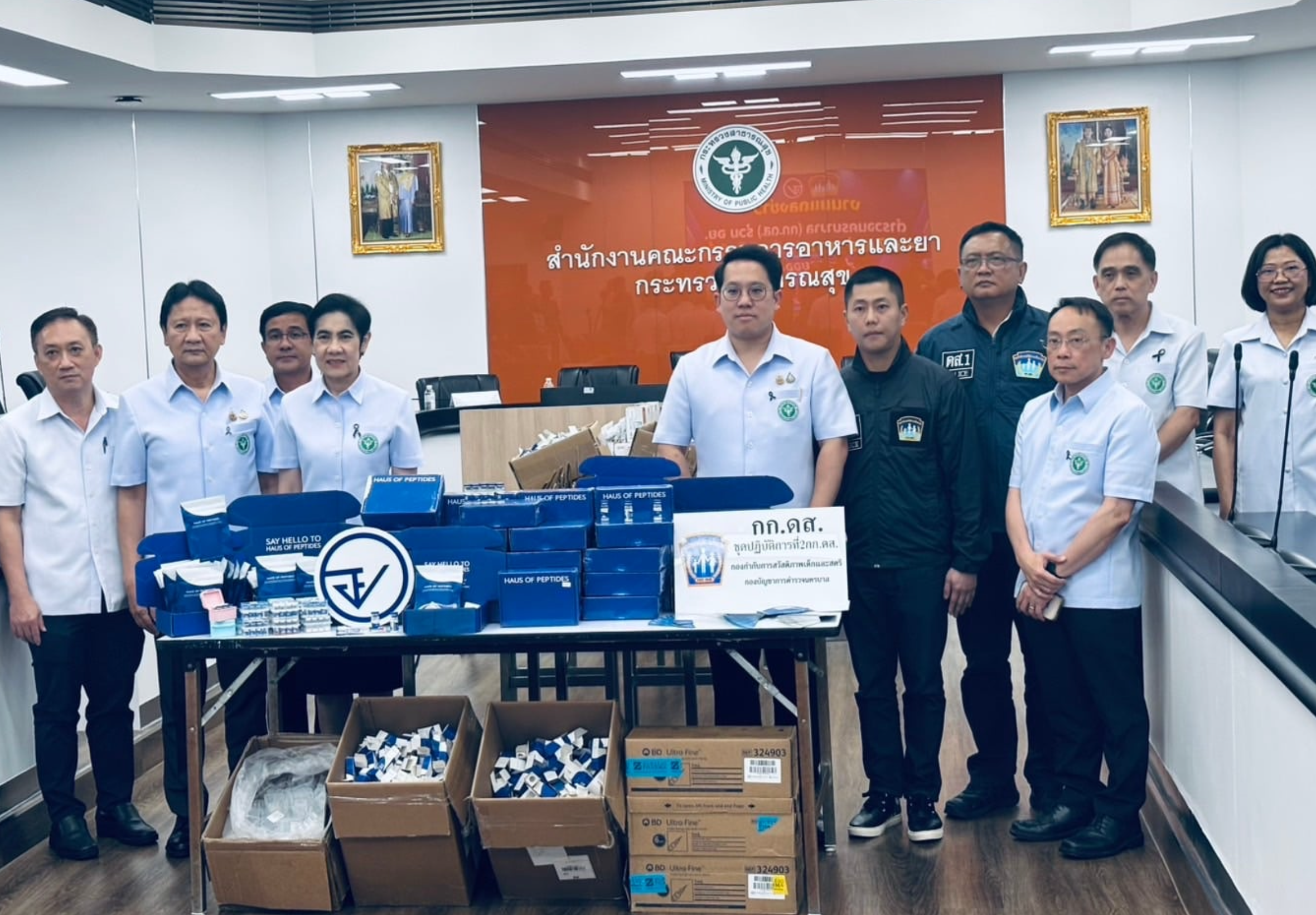
Thai police and Food and Drug Administration officers have seized alleged illegal peptide injections marketed as slimming or appetite-control pens, worth more than 52 million baht, during a raid on a house in Bang Yai, Nonthaburi.

The September 11 operation followed a complaint from a parent concerned after her daughter injected herself with a branded slimming pen. Investigators later found the product being widely offered on social media and said it had not been registered with the Thai FDA.

Metropolitan Police Bureau commissioner Pol Lt Gen Siam Boonsom and deputy commissioner Pol Maj Gen Phallop Aemla led the operation with officers from the D.S. police division and Ministry of Public Health and FDA officials.

Health Minister Pattana Promphat, Permanent Secretary for Public Health Dr Somruek Jungsaman and FDA secretary-general Supatra Boonserm were also involved in the inspection.

More than 52m baht in products seized

Officers searched a house in Sao Thong Hin subdistrict, Bang Yai district, and seized a large quantity of products. They included peptide injection products, distilled water intended for mixing with medicine, insulin needles, documents explaining how to use the products and alcohol swabs.

Authorities put the value of the seized goods at more than 52 million baht.

The injections were described by officials as illegal peptide medicines, commonly promoted online as appetite-control or weight-loss pens. The inquiry began after the parent asked D.S. police to determine whether the pen used by her daughter was dangerous or unsafe.

Claimed sales of 100 boxes a day

Police said the operation had allegedly been running for around one year. A house had been rented as a base, while migrant workers were hired to pack products and send them through private delivery firms.

Investigators said the group shipped an average of 100 boxes each day, charging 2,900 baht per box. That would produce daily sales of 290,000 baht and monthly income of more than 8 million baht from the illegal medicine sales, police said.

The alleged offence is selling modern medicines without a licence under the Drug Act of 1967. The penalty is up to five years in prison and a fine of up to 10,000 baht.


Picture courtesy of Daily News

Join the discussion?


13 September 2026

Georgealbert
Georgealbert
A woman in Nong Bua Lamphu is attracting nationwide attention after an old Thai identity card indicated she was born in 1896 - which will make her 130 on 18 September 2026.

Saen Mangkharat, known locally as Great-Grandmother Saen, lives in Ban Yang Luang Phatthana, Moo 10, Kut Chik subdistrict, Mueang Nong Bua Lamphu district. A Facebook page run by Phra Ajarn Abhinan Suchitto published her story and an image of the card, which gives her date of birth as 18 September 1896.

A life spanning six Thai reigns

Phra Ajarn Abhinan said Saen was originally from Maha Sarakham before moving to the Nong Bua Lamphu area when it was still part of Udon Thani province.

That account matches the area's administrative history. Nong Bua Lamphu became a province on 1 December 1993, when several districts were separated from Udon Thani.


The monk said he had heard villagers speak of an elderly resident aged over 100, so he visited Saen and asked to see her identification documents. The old card he was shown recorded the 1896 birth date.

On that basis, Saen was born late in the reign of King Chulalongkorn, Rama V, and has lived through the reigns of Rama VI, Rama VII, Rama VIII, Rama IX and the present monarch, Rama X.

Documents needed to confirm the age

The identity card alone does not amount to internationally recognised verification of Saen's age. People claiming extreme longevity normally need records spanning their life, including birth evidence, household registration, family documents and official records from different periods.

LongeviQuest, an organisation that checks records of people aged over 110, says a single identity document is not enough to validate such a claim. The fully verified world longevity record remains that of Frenchwoman Jeanne Calment, who died in 1997 aged 122 years and 164 days.

If Saen's 18 September 1896 birth date were formally confirmed, she would exceed that record by more than seven years. There has so far been no report that the Department of Provincial Administration, public health authorities or an age-verification organisation has begun a formal process.


Pictures courtesy of Facebook Phra Ajarn Abhinan Suchitto

Join the discussion?


13 September 2026
Georgealbert
Georgealbert
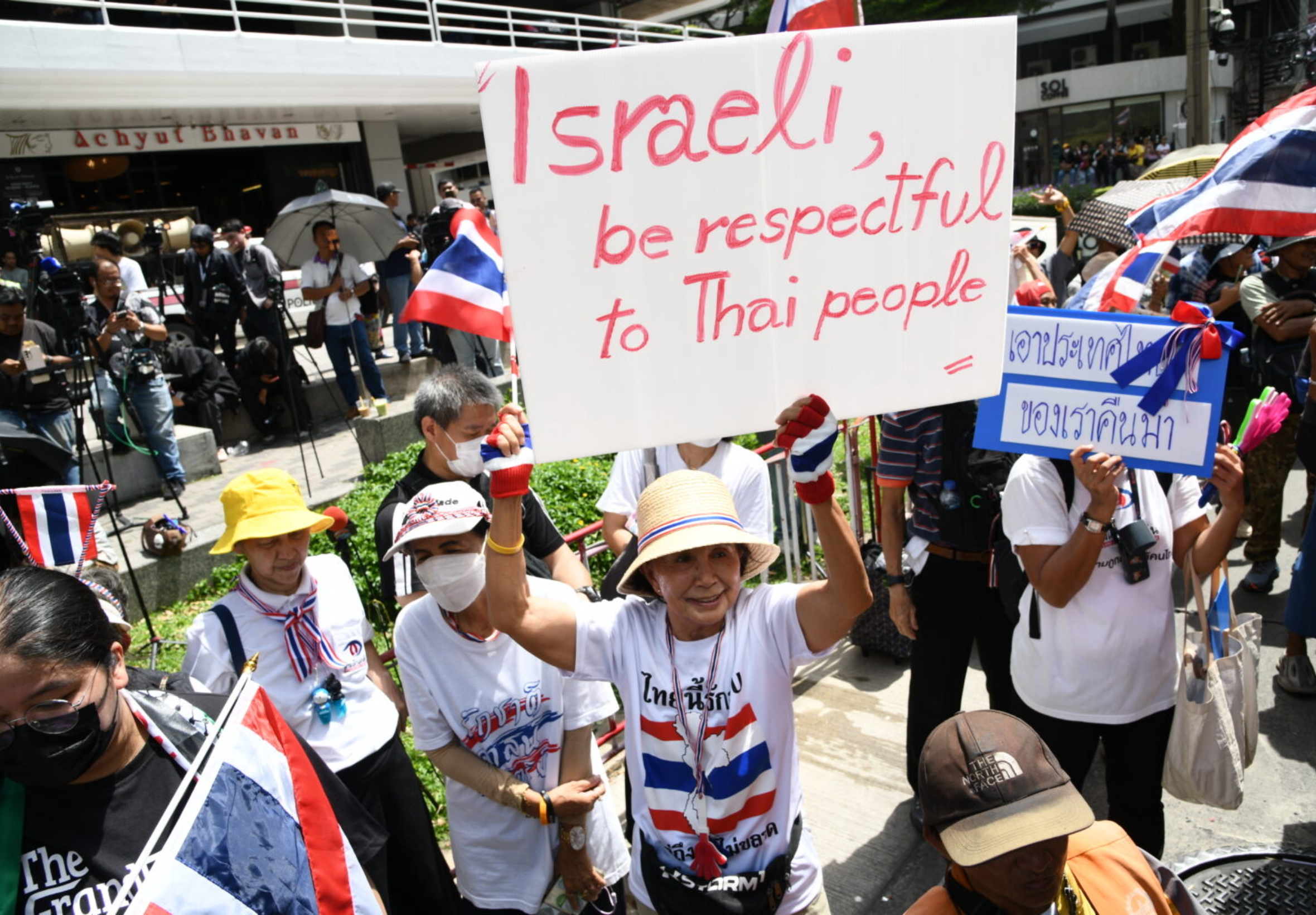
Two anti-Israel protests have been held outside the Israeli embassy in Bangkok over the past two weeks, drawing groups with sharply different motivations, according to an analysis by Khaosod English senior staff writer Pravit Rojanaphruk.

Pravit said concern over Israeli conduct in Gaza, the occupied West Bank and Iran had converged with suspicion towards what some Thai critics call "grey Israeli" visitors and expatriates. The term is used by critics alleging disrespectful behaviour, opaque business dealings or attempts to gain excessive economic influence.

He said some Thais fear Israelis could become entrenched in property, tourism and other businesses, or undermine Thai sovereignty. These are perceptions held by some protesters, rather than findings yet established.

Different groups, common protest

Pravit described two strands among demonstrators: Thai ultranationalists focused on alleged "grey Israeli" activity, and others whose objections centre on Israel's military actions and treatment of Palestinians.

He cited claims that Israeli expatriates, including some who have acquired Thai citizenship, are involved in building a large Chabad House in central Bangkok, expanding cemeteries and operating businesses in Phuket. Critics quoted in the analysis argue that Israeli interests are effectively behind accommodation, transport, restaurant and tour businesses in some areas, with limited benefit for local people.

The analysis linked the mood partly to high-profile cases involving Israeli tourists accused of brash or culturally insensitive behaviour. It also placed the protests in the context of Thai economic stagnation, xenophobia and a history of concerns about foreign influence.

Gaza and West Bank concerns

Pravit also pointed to international reporting on the Gaza war and violence in the occupied West Bank as a major factor shaping opinion.

He noted that the UK government had warned Israel over tenders for more than 1,200 housing units in the E1 area near Jerusalem, which Britain considers a "red line". The UK has said settlement expansion could fragment the West Bank and weaken prospects for a contiguous Palestinian state and a two-state solution.

According to the analysis, Britain is considering restrictions on goods and services from West Bank settlements and limits on British firms financing, supporting or advertising settlement projects. Israel has warned that unilateral British sanctions could harm diplomatic ties, and has threatened retaliation. Israel denies the allegations and has closed the British consulate in Jerusalem.

Pravit also cited a Channel 4 News report saying the UN had recorded nearly 2,000 Palestinians injured by Israeli forces or settlers this year, with 85 killed, while three Israelis had been killed.

Potential diplomatic impact

The Thai-Cambodian conflict had also heightened fears of outside threats. Veteran activist and former Yellow Shirt leader Sondhi Limthongkul, who co-led anti-Cambodia protests last year that attracted about 10,000 people, led Thursday's anti-Israel rally, attended by an estimated 300 to 400 demonstrators.

Pravit said a larger mobilisation in coming weeks could prompt the Thai government to try to appease protesters, potentially affecting Thai-Israeli relations. He added that Israel's ambassador to Thailand, Alona Fisher-Kamm, would play an important role in handling the issue.

Join the discussion?


13 September 2026
Georgealbert
Georgealbert
A one-year-old child allegedly lost a finger at a Bangkok hospital after a nursing assistant used scissors to remove tape securing an IV line, according to the child's parent. The child was taken for emergency treatment and underwent two operations, with doctors reportedly able to reattach the finger.

The incident, reported to the media on 12 September, has prompted questions over procedures for removing IV equipment from very young patients. The hospital has not been named in the account, and further information from hospital officials and relevant authorities is needed to establish exactly what happened.

Injury allegedly happened before discharge

The child had been admitted with flu-like symptoms and remained in hospital for 10 nights, the parent said. A doctor examined the child on the morning of the planned discharge and said the child had recovered and could return home.

Before leaving, the parent waited for the IV line to be removed. Because the patient was so young, tape had been wrapped around the child's wrist to keep the IV line in place.

A nursing assistant arrived carrying scissors and cotton wool to remove the tape, according to the parent. The assistant allegedly placed the scissors close to the child's index finger while trying to cut material around the IV needle.

The parent said the assistant tried several times to cut through the material but initially could not do so. Blood then began to flow heavily, and the parent said it became apparent that the scissors had cut through the child's finger rather than only the gauze.

Child required two operations

The child was immediately taken for further medical treatment and had two operations to reattach the finger. Doctors reportedly succeeded in reattaching it.

However, the parent said the child suffered severe pain after the injury, cried continuously and could not sleep. The child also reportedly developed breathing difficulties and required mechanical ventilation.

The case is based on the parent's account, rather than a formal finding on what occurred. It has nevertheless raised public concern about safeguards and standards of care when IV lines are removed from young children, as well as what support the hospital may provide to the child and family.

No formal statement has yet been issued by the hospital.


Picture courtesy of Khaosod

Join the discussion?


13 September 2026
Georgealbert
Georgealbert
Thailand is expecting about 250,000 Chinese visitors during the 2026 Golden Week holiday period, with tourism revenue forecast at 11.5 billion baht.

The Tourism Authority of Thailand (TAT) said the projected arrivals between September 25 and October 7 would be 24% higher than in the same period last year. Revenue is expected to rise 37%, suggesting higher spending per visitor.

TAT governor Thapanee Kiatphaibool said China's travel market was showing clearer signs of recovery ahead of the National Day holiday, widely known as Golden Week.

Longer holidays could mean longer stays

This year's travel window covers both the Mid-Autumn Festival and China's National Day holiday, creating a 13-day break for many travellers.

TAT expects the average Chinese trip to Thailand to increase from around eight days to 13 days as visitors combine the two holidays. The longer stays could encourage travellers to visit more destinations and spend more during their trip.

Advance bookings for Thailand travel in October have risen 16%, while searches for flights from China to Thailand are up 24%, according to TAT. Shanghai, Guangzhou, Chengdu, Hangzhou and Chongqing are among the main departure cities.

Thailand has also become more price-competitive for Chinese travellers after the baht weakened by around 9.8% against the yuan.

TAT targets higher-value Chinese market

Thapanee said the stronger revenue growth compared with visitor numbers presented an opportunity to move the Chinese market towards higher-value and higher-quality tourism.

TAT will use the holiday period to step up promotion through its Amazing Thailand, Mid-Autumn (Nihao Month) 2026 campaign. Activities will include mega familiarisation trips for key opinion leaders, Thai cultural experiences, special privileges for Chinese tourists and cooperation with market partners.

The campaign is intended to reinforce confidence in Thailand as a quality and safe destination, while encouraging longer stays, greater spending and repeat visits. TAT also hopes to maintain the momentum through Chinese New Year 2027.

China remains one of Thailand's most important tourism markets, although Chinese travellers now have more destination choices and are increasingly willing to take longer-haul trips. TAT said Thailand's task was no longer simply to attract the largest possible number of arrivals, but to give visitors stronger reasons to stay longer, spend more and return.

Join the discussion?


13 September 2026
Georgealbert
Georgealbert
Gulf Development and Singtel Group have formed a strategic partnership to develop new submarine cable links between Thailand and Singapore, with their first joint project expected to be operating by 2030.

The companies said the agreement will support rising regional demand for cloud computing, artificial intelligence, data centres and digital services. It also supports Thailand's stated ambition to become a leading digital and AI economy in Southeast Asia.

The partnership combines Gulf's infrastructure development experience and expanding digital business portfolio with Singtel's submarine cable infrastructure and services operations.

First project will be the VTS Cable System

The first initiative will see the partners participate in the Vietnam-Thailand-Singapore, or VTS, Cable System. The subsea link is intended to strengthen Thailand's connection to Singapore, one of the region's main digital connectivity gateways.

Singtel Singapore and AIS, Gulf's Thai associate and Thailand's leading telecommunications operator, will contribute market knowledge, connectivity capabilities and customer reach to develop and commercialise the system.

The VTS Cable System is scheduled to be operational by 2030. Its capital requirements will be spread over several years.

Gulf and Singtel may also consider investments in terrestrial cable networks and further subsea cable systems in future.

Gulf chief executive Sarath Ratanavadi said the partnership was an important step in the company's digital infrastructure strategy.

"Together, we are creating a platform that strengthens submarine cable connectivity between Thailand and Singapore while supporting Thailand's ambition to become a leading digital and AI economy in Southeast Asia," he said. "With our complementary strengths, we aim to build critical infrastructure that enables digital growth and creates long-term value for the economies and communities we serve."

Longer-term implications for Thailand users

For foreigners living in Thailand, including remote workers, digital businesses and companies operating regional services, the project is principally a longer-term infrastructure development rather than an immediate change to home or mobile internet packages.

More international cable capacity and route diversity can help support the cloud platforms, data centres and online services used by businesses and consumers. However, the announcement includes no details on retail prices, service plans or customer availability.

Thailand has been attracting investment in data centres, cloud services and digital platforms, while demand for digital and AI infrastructure is accelerating. The companies said stronger international links will be important to that growth.

Singtel group chief executive Yuen Kuan Moon said Thailand and Singapore were "two of Southeast Asia's most important digital economies".

"Our partnership with Gulf brings together our expertise in digital infrastructure and submarine cable systems to meet the growing demand for cloud, AI, data centre and digital services," he said.

The companies said the deeper links would serve enterprises, cloud providers, hyperscalers and digital platforms seeking resilient, diverse and high-performance connectivity. The deal builds on Gulf and Singtel Group's existing telecommunications and data-centre collaboration in Thailand and could open further opportunities across Southeast Asia.

Join the discussion?


13 September 2026
Georgealbert
Georgealbert
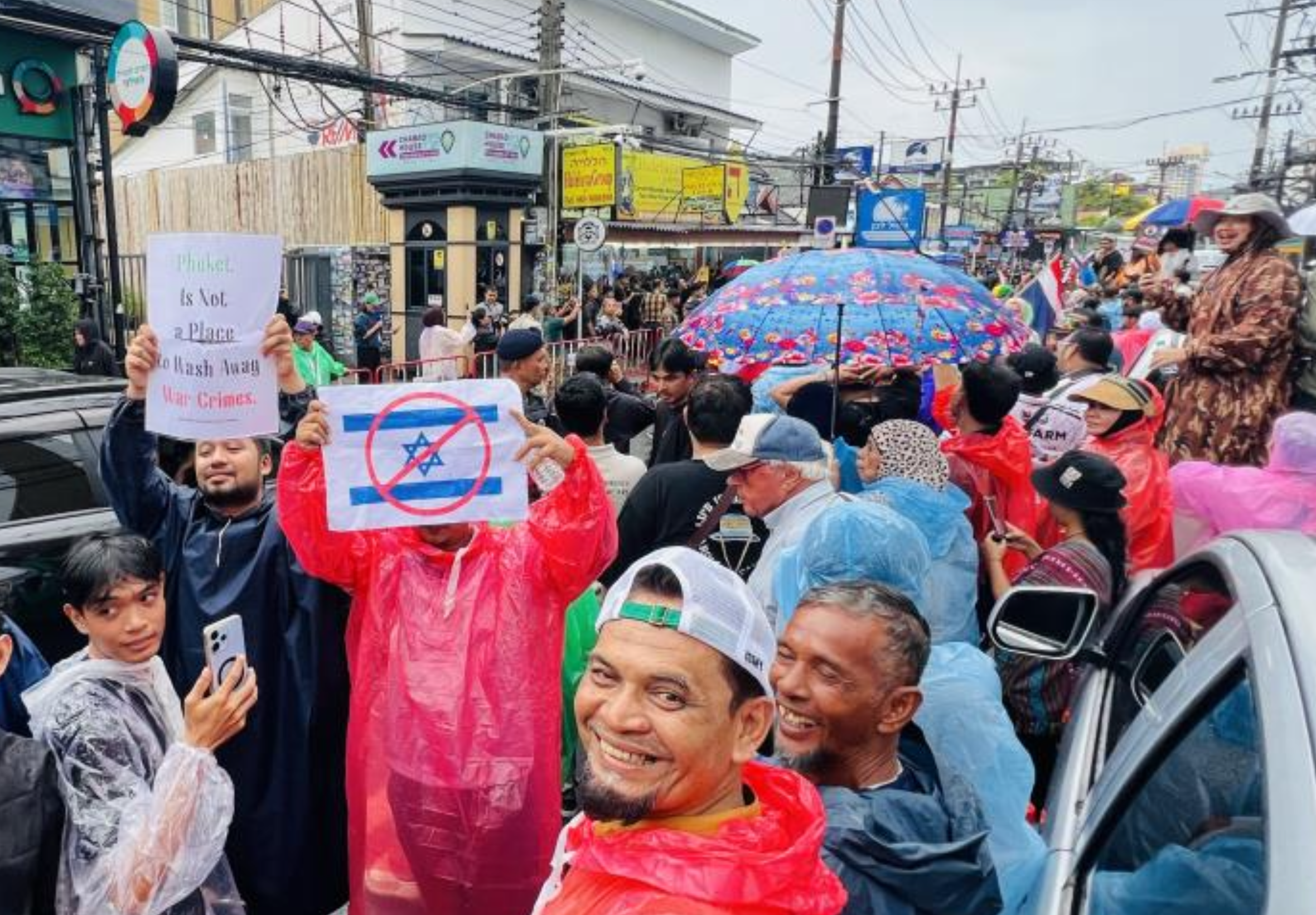
More than 500 people gathered in Patong, Phuket, on 11 September 2026 to oppose a planned  Rosh Hashanah event.

The protesters, organised under the name Save Phuket, marched to Chabad Patong and declared their action a victory after the building remained closed throughout the rally. Police were present to manage the march and maintain security.

March from Dolphin Circle

The Protect Phuket Land group joined 10 Phuket civil-society networks in the Save Phuket coalition for the gathering at Dolphin Circle on Patong Beach.

Organisers said they opposed the Rosh Hashanah event, the establishment of Chabad in Thailand and Israeli tourists whom they alleged had displayed aggressive behaviour. Residents of Phuket and nearby provinces were among the crowd, reported to number more than 500.


Protest leaders used loudspeakers to urge Patong residents to join them before the group left the Dolphin Circle intersection at 4pm. Participants carried campaign placards and shouted out calls.

Police and protest leaders accompanied the procession as it travelled towards Chabad Patong.

Rally held outside Chabad

At the Ratcha Uthit 200 Pi Road intersection, about 50 metres from the building, officials explained rally rules to the organisers. A protest representative said the rally would finish at 6pm, with a stage set up beside the road opposite Chabad Patong.

Following discussions with authorities, the march was allowed to continue to the designated location outside the premises. Protesters continued shouting towards the building, saying they wanted to show that Phuket people did not want the Rosh Hashanah event or Chabad operating in Thailand.

At 5pm, Tae Achiwa arrived and addressed the crowd. He called on Phuket residents to unite against the event and said Israeli people should hold New Year celebrations and a ritual described as a cleansing of sins in their own country.

At 6pm, the crowd sang the songs We Fight and the Thai national anthem before organisers declared victory and ended the protest.

Building remained closed

Manager Online reported that Chabad Patong's doors remained shut during the demonstration. No staff members or tourists attending the festival were seen outside, according to the report.

Curtains were closed across all floors of the five-storey building, although lights remained on. The report suggested people may have entered the building earlier in the day before the march arrived.


Pictures courtesy of Manager Online

Related story

Phuket-limits-Chabad-Patong-Rosh-Hashanah-event

Join the discussion?


12 September 2026
Georgealbert
Georgealbert
A French national teaching at a language school in a Rayong shopping centre has been arrested after allegedly working without a valid permit.

Officials from the Rayong Provincial Employment Office said the teacher could not produce a work permit when inspectors visited the school on 11 September. The employer was also charged with employing a foreigner without the required permission.

The inspection was part of a crackdown by the office division responsible for checking foreign workers and protecting job seekers. Officers visited two language schools located in major shopping centres in the province.

Checks at two Rayong language schools

At the first school, inspectors found seven staff members: four Thai employees and three South Africans. Officials said all employment documents and work permits were in order.

The second school had five employees - three Thais, one Bangladeshi national and the French teacher. According to officials, the French national was unable to show a valid work permit during the inspection.

The teacher was subsequently charged with working as a foreigner without a work permit under Thailand's foreign worker employment law.

He was taken to investigators at Muang Rayong Police Station for further legal proceedings. No further details about the teacher or school were released.

What foreign teachers should take from the case

For foreign residents and visitors considering paid work in Thailand, including language teaching, the case is a reminder that a visa alone does not normally authorise employment. Foreigners must have permission to work for the particular employer and role before starting work.

Employers also face legal exposure if they hire a foreign national who does not hold the required work authorisation. This can be relevant to schools, tutoring centres and businesses which use overseas staff, including those working in shopping-centre language schools.

Foreign teachers changing schools or taking on additional classes should ensure their work permission covers the new employment arrangement.


Picture courtesy of Khaosod

Join the discussion?


12 September 2026
Georgealbert
Georgealbert
Thailand has reclaimed its position as Southeast Asia's second-largest aviation market by scheduled airline seat capacity in September, overtaking Vietnam after two months in third place.

Figures from UK aviation analytics company OAG put Thailand's scheduled capacity at 6.6 million seats this month, 0.2% lower than in September last year. Vietnam recorded 6.4 million seats, despite much stronger annual growth of 9.2%.

The margin is slim, at roughly 200,000 scheduled seats. Indonesia remains ASEAN's largest aviation market, with 10.8 million seats, up 7.3% year on year.

Across Southeast Asia, airlines are offering 48 million scheduled seats in September, a 2% increase from a year earlier.

Vietnam led during July and August

Vietnam moved ahead of Thailand in July and stayed there in August. It had 7.27 million scheduled seats in August, up 10% from a year earlier, while Thailand had 7.19 million, down 1.7%.

Vietnam's rise was supported by domestic travel demand. Domestic capacity increased 13.8% to more than 4.7 million seats.

Thailand's capacity, meanwhile, fell at Don Mueang Airport, where Thai AirAsia reduced scheduled seats by 23.4% year on year. The carrier had already cut capacity earlier in the year as higher fuel costs linked to conflict in the Middle East added pressure to operations.

Thai Airways plans winter route increases

Thailand's return to second place this month does not include Thai Airways' planned expansion for the 2026/27 winter timetable, running from October 25 to March 27.

The national carrier will operate 66 routes during the winter schedule. Bangkok-Munich services will increase to 10 flights a week, Bangkok-Paris to 14, Bangkok-Hong Kong to 35 and Bangkok-Vientiane to 21 weekly flights.

AirAsia was ASEAN's largest airline by scheduled seat capacity in September, with 2.38 million seats, although that was 15.7% below last year. Vietnam Airlines ranked second with 2.25 million seats, up 10.7%, followed by Lion Air with 2.23 million seats, down 9.3%.

Join the discussion?


12 September 2026
Georgealbert
Georgealbert
A 17-year-old girl reported missing on August 24 has been found safe at a restaurant in Bangkok's Bueng Kum district, 16 days after leaving home and becoming unreachable.

Police found her on September 9 after establishing that she had travelled alone through several provinces in eastern Thailand before reaching the capital. Investigators said there was no sign she had been lured away or that a romantic relationship was involved.

Instead, officers believe she had been travelling without a clear destination while dealing with serious personal problems and emotional distress.

Search led police to Bueng Kum

Initial searches by her family did not produce a clear indication of where she had gone. The Mirror Foundation had pursued possible leads for around two weeks before police stepped up their efforts.


A breakthrough came when a motorcycle taxi rider said he recognised the teenager and remembered taking her somewhere. He could not recall precisely where he had dropped her off, but investigators retraced likely destinations using his account.

That work eventually led officers to the restaurant in Bueng Kum, where she was found.

The girl had reportedly slept outside convenience stores and in other well-lit areas, as well as using inexpensive daily rental rooms. She also kept a diary about her experiences while away from home.


Picture courtesy of Matichon

Relatives and search teams had become increasingly worried because she had enough money to support herself for only a short period. Her actions were considered unusual, as she was normally focused on her studies and had not previously displayed this type of concerning behaviour.

Restaurant owner offered work and shelter

The restaurant owner said the girl had appeared outside the premises late at night with nowhere to sleep. The owner gave her money, a place to stay and work at the restaurant for 500 baht per day.

She had initially wanted to work for two days. However, she stayed longer after saying she wanted to save 15,000 baht to bring back to her family.

After finding her, officers learned that she had come close to taking her own life. She was returned to her family and referred to a multidisciplinary team, which will assess the circumstances surrounding her disappearance.


Join the discussion?


12 September 2026
Georgealbert
Georgealbert
A former teacher from Khon Kaen, convicted in three cases involving sexual offences against girls, died in Bangkok Special Prison before the Court of Appeal was due to rule in one of the cases on 11 September 2026.

Corrections officials informed judges at Criminal Court courtroom 609 that Pichai Manadee had died while in custody. The court postponed reading the appeal judgment and ordered prison authorities to produce documents formally confirming his death.

Court awaits official proof of death

The appeal hearing concerned case number A.113/2568, brought by prosecutors from the Office of Special Litigation, Criminal Case Division 4.

Pichai charges included taking a child aged under 15 away from parents or guardians for indecent purposes, raping a child under 15 who was not his spouse regardless of consent, taking a child away for indecent purposes, and inducing or encouraging a child to behave improperly.

The court did not read the Appeal Court ruling after prison staff reported his death. It will first examine the formal evidence supplied by the Department of Corrections.

Three cases brought lengthy prison terms

On 27 March 2025, the Criminal Court found Pichai guilty of taking a child under 15 for indecent purposes and raping a child under 15.

He was originally sentenced to five years for each offence. The terms were reduced by half after his guilty plea was considered beneficial to the proceedings, leaving two years and six months for each count, or five years in total.

The court refused to suspend the sentence, citing the victim's age, Pichai's experience as a retired civil-service teacher, and his previous record for sexual offences.

That sentence was ordered to run consecutively with penalties in two earlier cases: one year and 15 days for indecent acts against a child aged over 15 but under 18, and inducing or encouraging a child to behave improperly or commit obscene acts; and 12 years for raping a child under 15.

Arrest followed Khon Kaen resort investigation

Pichai was arrested on 17 May 2024 after the Pavena Hongsakul Foundation for Children and Women and police from the Anti-Trafficking in Persons Division expanded an investigation into a Khon Kaen resort.

The investigation concerned allegations that girls aged under 15 and under 18 had been brought to the resort for commercial sex. Officials assisted three girls: one aged 12 and two aged 17. The girls told investigators that Pichai had paid for sex, leading to the prosecution.

Join the discussion?


12 September 2026
Georgealbert
Georgealbert
Bangkok police have arrested a 51-year-old Thai man after CCTV footage allegedly showed him entering a private koi pond and sexually abusing fish at a home in the Thung Song Hong area.

The suspect, identified as Sutthichai, also known as Tong, was detained on 10 September after police traced him to Lak Si. The case remains under investigation, with officers considering possible charges including animal cruelty, property damage, committing an indecent act and trespassing at night.

CCTV prompted complaint

Police said the alleged incident occurred outside the house on 7 September. Footage showed a man arriving by bicycle at 8.30pm, looking around the property, exposing himself and attempting to catch koi swimming in the pond.

At 8.38pm, he was recorded undressing, climbing into the pond and sexually abusing the fish before putting them back into the water, police said.

The housekeeper and homeowner then found the man, who left on his bicycle. The owner, Bobby, gave chase but fell in his flip-flops and suffered injuries. He later made a report at Thung Song Hong Police Station.


Investigators believed the suspect was local because he had escaped by bicycle. Officers found Sutthichai walking in Lak Si on the afternoon of 10 September, reportedly still wearing the clothes seen on the night of the alleged offence. He attempted to flee but was caught and detained.

During questioning, police said Sutthichai admitted the acts. He told officers he had gone to wash but became aroused after seeing the fish, and said he had abused them twice.

Owner says koi had been dying

Sutthichai told police he had no money to go out and no partner. He said he had committed similar acts involving other fish, choosing koi rather than pleco fish because plecos have spines and caused him more pain.

He also said he had previously been jailed by Bang Khen police after abusing a dog, and had carried out similar acts with a doll found in rubbish. He admitted using drugs, telling police he could not afford to buy them and had used drugs he found.

Bobby said he had kept the koi for seven to eight years. He had often seen Sutthichai walking nearby and occasionally stopping to wash, but had not been concerned.

The homeowner said koi had been dying one or two at a time, with bent bodies, which he initially believed was caused by fish fighting. Although the home had CCTV, he rarely checked it until the afternoon of 7 September, when Sutthichai threw a sex toy beside the pond. The housekeeper disposed of it and the camera was redirected towards the pond.

Bobby said he later found Sutthichai near Lak Si and called a patrol unit, but the man ran across a road and escaped before police subsequently tracked him down.


Pictures courtesy of Amarin

Join the discussion?


12 September 2026
Georgealbert
Georgealbert
A 28-year-old Hong Kong national has died after falling from a hotel in Tambon Bang Khen, Mueang Nonthaburi, in the early hours of 11 September 2026.

Police are examining the circumstances of the death, including accounts from hotel staff that the man had said he had been left without money after being extorted by a masseur.

The man was identified as Mr Chan Sing Lam, 28, from Hong Kong. He had been staying at the hotel since 30 August and had been due to check out on 12 September.

Police called to hotel

At about 1.43am, Nonthaburi City Police Station received a report that a foreign man had fallen from a height at a hotel in the Bang Khen area of Nonthaburi province.

Officers from the Nontree 122 patrol unit attended with rescue workers. Mr Chan was found lying in a pool of blood on the ground near the entrance to the hotel lobby and was pronounced dead at the scene.

The report also states that the Nontree 121 patrol officer informed senior officers, while investigators and an on-duty doctor from the Central Institute of Forensic Science were called to inspect the room and gather evidence.

Staff heard glass breaking

Hotel staff and witnesses told police that Mr Chan had earlier said a masseur had extorted all of his money and challenged him to make a police complaint. They said he did not report the matter to police.

About 30 minutes before the fall, Mr Chan had reportedly came down to ask hotel employees for paper and a pen, saying he wanted to write a message. He then returned to his room.

While staff were eating in the hotel dining room, they heard the sound of glass breaking. They ran outside and found Mr Chan had fallen from the building.

Forensic officers conducted a detailed examination of the room to establish the cause of the fall. Police have not announced a final finding.

f you or anyone you know is in emotional distress, please contact the Samaritans of Thailand 24-hour hotline: 02 713 6791 (English), 02 713 6793 (Thai) or the Thai Mental Health Hotline at 1323 (Thai). Please also contact your friends or relatives at this time if you have feelings of loneliness, stress or depression. Seek help.


Picture courtesy of Amarin

Join the discussion?


12 September 2026
Georgealbert
Georgealbert
The Thai wife of French national Kevin Dimino submitted a formal appeal on 11 September against his deportation order, after he was detained on an allegation that he posed a threat to national security.

Jindarat, was accompanied by Akkarawut Kraisrisombat, also known as Tae Acheeva, leader of the Thai Mai Thon (Thais Won't Stand for It) group. The appeal concerns action taken by Prime Minister and Interior Minister Anutin Charnvirakul.

Appeal deadline and detention concerns

Akkarawut said he supports the existence of deportation laws but wants procedures to be clear, fair and realistic.

He said Dimino was allegedly facing deportation over a confrontation with some Israelis and a traffic violation, despite being held on the national-security allegation.

The deportation order specifies that an appeal must be lodged within seven days. Akkarawut questioned how Dimino, while in custody, could gather witnesses and evidence needed to challenge the decision.

He argued that Dimino should be released from detention to collect evidence, demonstrate his innocence and complete the appeal process.

Wife says she fears for her safety

Jindarat, who owns a zoo, spoke tearfully after meeting Interior Ministry officials. She said she was in deep distress and had submitted evidence intended to clarify the circumstances.

"Today, we have presented all the evidence to clarify the situation, demonstrating that Kevin's actions were entirely aimed at protecting his wife from threats and harassment by a group of Israeli individuals," she said. "He was simply defending his wife; why must he face such treatment?"

She alleged that she had received threatening messages during the previous two to three days, including threats to come to Koh Samui and rape and kill Dimino.

Jindarat asked whether the government or other relevant agencies could guarantee her safety and ensure the threats would end if her husband were deported. If authorities could provide that assurance, she said she might accept the outcome, so she could return to running her business and caring for the zoo.

She said she currently had too little time even to look after the animals because she was occupied with her husband's paperwork.

If her safety could not be guaranteed, Jindarat said she was prepared to move to another country. She said she wanted the government to clarify its intended course of action rather than keep Dimino detained without concrete answers.

Officials offer no clarity, wife says

Jindarat said her discussions with Interior Ministry officials had produced no clear explanation. The matter was being passed between officials, she said, with staff stating only that the directive had come from the Prime Minister.

Related stories

Samui-zoo-owners-wife-fights-deportation-order

Thailand-cites-public-order-in-Koh-Samui-deportations

Join the discussion?


12 September 2026
Georgealbert
Georgealbert
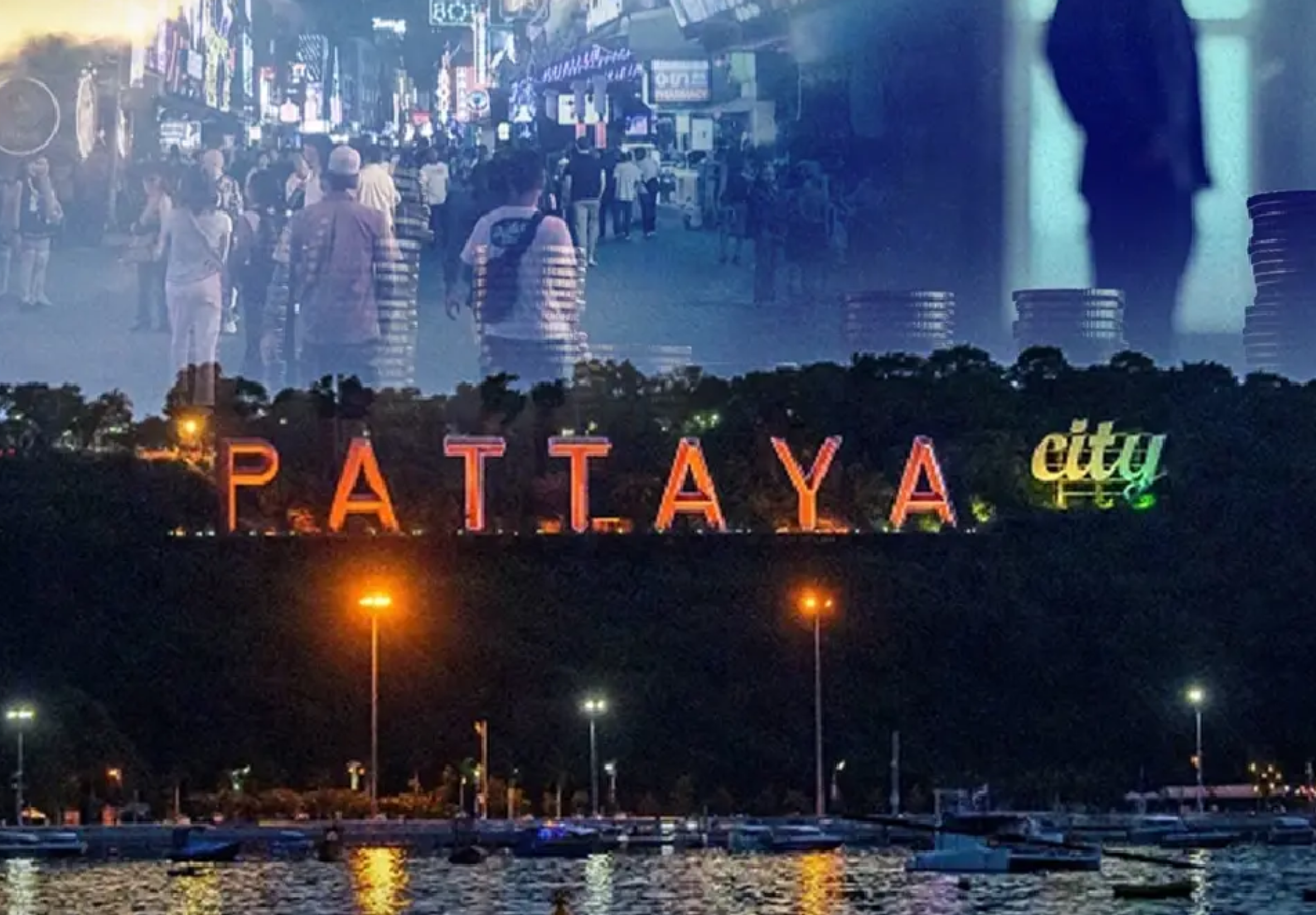
Concerns over foreign nationals using Thai nominees to run businesses and hold property in Pattaya have prompted Chonburi officials to promise tougher enforcement against unlawful investors of any nationality.

The issue was examined by The Truth Investigation TV programme on Thursday, September 10, which questioned whether Thailand had become a base for transnational criminal gangs and foreign mafia networks. It said the problem extended beyond Pattaya and could spread to other major tourist destinations.

The report alleged that some so-called "grey" foreign nationals had entered Thailand to operate businesses and acquire real estate through Thai nominees. It also said some had become influential figures or members of foreign mafia networks, while encroaching on state and forest land.

Claims focus on Pattaya's Indian investment

The programme portrayed Pattaya as a city whose former mix of international visitors, including Western tourists seen as high spenders, had changed significantly. It said Indian tourists now made up many of those seen on the streets.

However, it stressed that Indian visitors themselves were not the problem and said their spending power was no lower than that of European or American tourists.

Its concern was the reported growth of Indian-owned capital in Pattaya's commercial areas, particularly in service and entertainment businesses. The news team visited Pattaya Second Road and Walking Street, where it reported that most restaurants and entertainment venues were owned by Indian businesspeople, with staff soliciting customers on the streets.

Yodchai Puengporn, a Chonburi MP for the People's Party, said Pattaya had been among the first destinations for foreign nominee investment. He described the figures as alarming and said Indian capital was entering many service and entertainment businesses, while investors were buying properties, buildings and homes to cater to visitors from the same country.

Yodchai compared the situation with China's former "zero-dollar tour" model, where tourism spending did not genuinely reach the Thai economy. He also cited pressure on Thai businesses, unlawful migrant employment and large-scale environmental damage.

Officials cite checks and lawful investment

Issara Charoenchasri, deputy governor of Chonburi, acknowledged that Pattaya was driven by foreign investment. He said the province welcomed investors from anywhere in the world provided they operated legally, held work permits and had passed immigration checks.

He estimated Indian capital accounted for about 10% of investment in the area. But he said authorities would take strict, decisive action against any investor found deliberately evading the law or using Thai nominees, not only Indian investors.

Government agencies were continually coordinating inspections of migrant labour and business operations, Issara said, to balance "the economy and security". He urged operators to use Thai law as their principal guide in protecting national and Thai interests.

Yodchai urged the government to address Thailand's tourism image urgently before Vietnam took market share and attracted high-quality tourists. He said Thailand was having to receive several times more visitors to generate the same revenue.


Picture courtesy of The Nation

Join the discussion?


12 September 2026
Georgealbert
Georgealbert

Account

Navigation

Search

Search

Configure browser push notifications

Chrome (Android)
  1. Tap the lock icon next to the address bar.
  2. Tap Permissions → Notifications.
  3. Adjust your preference.
Chrome (Desktop)
  1. Click the padlock icon in the address bar.
  2. Select Site settings.
  3. Find Notifications and adjust your preference.