Skip to content
View in the app

A better way to browse. Learn more.

ASEAN NOW

A full-screen app on your home screen with push notifications, badges and more.

To install this app on iOS and iPadOS
  1. Tap the Share icon in Safari
  2. Scroll the menu and tap Add to Home Screen.
  3. Tap Add in the top-right corner.
To install this app on Android
  1. Tap the 3-dot menu (⋮) in the top-right corner of the browser.
  2. Tap Add to Home screen or Install app.
  3. Confirm by tapping Install.

Thailand News

All the latest news stories from Thailand are written in English. Fresh news and stories from around the kingdom brought to you daily.
Travellers flying with Thai AirAsia will need to double-check their departure airport after the airline temporarily suspended all nine of its domestic routes from Bangkok’s Suvarnabhumi Airport.

The changes will remain in place until September 30, with all affected services operating instead from Don Mueang International Airport. Thai AirAsia said it plans to resume flights from Suvarnabhumi on October 1.

Temporary network changes

The airline said the move forms part of a wider adjustment to its flight network following a sharp rise in aviation fuel costs and slower travel demand during the middle of the year.

Earlier this year, Thai AirAsia also reduced its average flight capacity by 30% during May and June for the same reasons.

The routes affected by the temporary suspension from Suvarnabhumi are:

Chiang Mai
Phuket
Buri Ram
Chiang Rai
Hat Yai
Khon Kaen
Nakhon Si Thammarat
Surat Thani
Udon Thani

Although flights from Suvarnabhumi have been suspended, services on all nine routes continue to operate from Don Mueang, which remains Thai AirAsia’s main operating base.

What it means for travellers

For foreign tourists, expats and business travellers, the most important change is the departure airport rather than the destination. Anyone with an existing booking should check their itinerary carefully to ensure they travel to Don Mueang instead of Suvarnabhumi.

Bangkok’s two main airports are around 40 kilometres apart and travel times between them can vary considerably depending on traffic. Passengers connecting from international flights arriving at Suvarnabhumi should allow extra time if they need to transfer to Don Mueang for a domestic AirAsia service.

Travellers are also advised to confirm airport details before arranging transport or accommodation, particularly if they booked flights before the network changes were announced.

Fuel costs and softer demand

Thai AirAsia said the temporary suspension reflects a combination of sharply higher aviation fuel prices and weaker travel demand, prompting the airline to adjust its operations during the current period.

The carrier expects to restore its Suvarnabhumi domestic services from October 1, ending the temporary relocation of the nine routes to Don Mueang.


Picture courtesy of The Nation

Join the discussion?


29 July 2026
Georgealbert
Georgealbert
Thailand’s tourism strategy is set for a significant shift, with the government pledging to prioritise higher-value visitors and more meaningful travel experiences instead of simply chasing record arrival numbers.

Tourism and Sports Minister Surasak Phancharoenworakul outlined the new direction during a meeting with the Tourism Authority of Thailand (TAT) board and senior executives on Monday, 27 July. The seven-point policy is designed to promote sustainable tourism while strengthening the industry’s long-term resilience.

For foreigners living in or visiting Thailand, the strategy suggests a greater emphasis on improving the overall travel experience rather than expanding visitor numbers. While there are no immediate changes to visas or entry rules, travellers could see increased promotion of lesser-known destinations, more international flight options and a growing calendar of major events.

Spreading tourism beyond the hotspots

A central objective is to distribute tourism income more evenly across the country. The government plans to encourage visitors to explore secondary cities and 55 designated local communities, helping spread economic benefits beyond traditional destinations such as Bangkok, Phuket and Pattaya.

The minister also announced several initiatives aimed at encouraging travel throughout the year rather than concentrating demand during the peak season.

Among them is the Thai Tiew Thai Plus, or Co-pay, project, intended to stimulate domestic tourism while supporting local operators nationwide. The Fly Thai All the Feelings campaign, delivered in partnership with six domestic airlines, will offer discounted fares across 400,000 seats for Thai travellers to help offset rising travel costs linked to global oil price volatility.

Meanwhile, the Thailand Air Connect project will see TAT work more closely with airlines and marketing partners to maintain stable flight schedules while increasing both commercial and charter flight capacity to Thailand.

Tomorrowland and organisational change

The government also reaffirmed its commitment to hosting Tomorrowland Thailand between 2026 and 2030 as part of its ambition to establish the country as a global events hub. Officials estimate the festival could generate between THB3.458 billion and THB5.301 billion in net economic value each year, attracting at least 127,500 international visitors alongside at least 22,500 Thai attendees.

For international visitors, the continued focus on major events could mean more large-scale festivals and entertainment options alongside traditional tourism attractions.

The minister also instructed TAT to oversee a smooth transition as the organisation moves under the Ministry of Culture. Although TAT will remain responsible for its existing functions under the Tourism Authority of Thailand Act, it has been tasked with ensuring there is no disruption while both ministries work together to define future responsibilities.

The remaining policies focus on strengthening TAT’s governance, improving transparency and ensuring the organisation is prepared to respond to changing global conditions. According to the minister, combining domestic tourism support, international events and stronger organisational management will help deliver sustainable growth and wider economic benefits across Thailand.


Picture courtesy of The Nation

Join the discussion?


29 July 2026
Georgealbert
Georgealbert
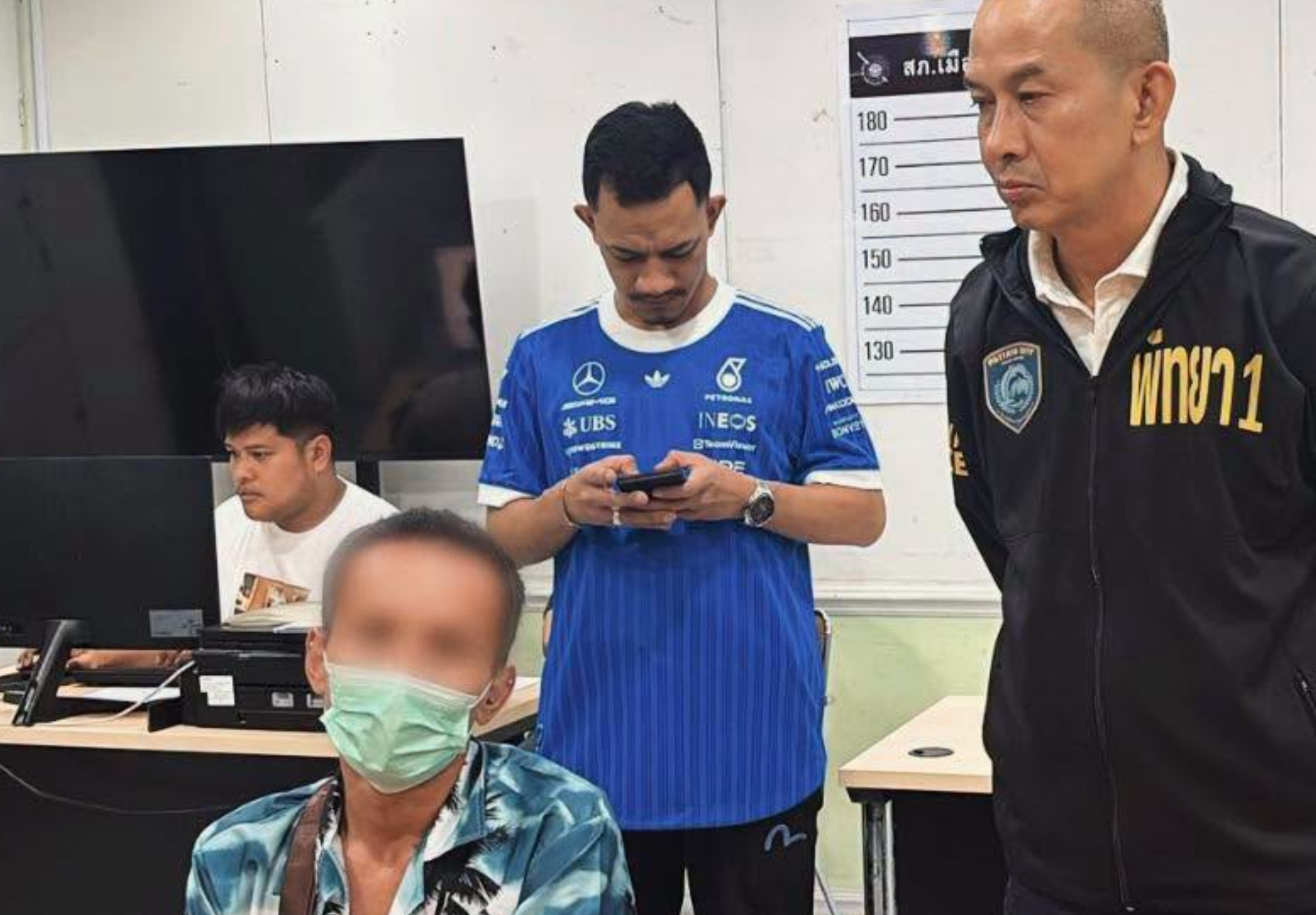
Pattaya police have arrested a Chinese man and a Thai woman after seizing 69 vape pods containing etomidate during a raid at a house in Nong Prue, Bang Lamung district, Chonburi.

The operation took place at about 8pm on 27 July 2026 at a property in Soi Map Yai Lia 21. Police said the raid formed part of the government's drug-prevention and suppression policy and was aimed at a network dealing in narcotics and controlled substances.

Two suspects held after house search

The suspects were named as 37-year-old Chinese national Mr Tao Yang and 20-year-old Sunisa.

Police also seized an iPhone 15 Plus and an iPhone 16 Pro Max from the property, along with the 69 "pod K" vape heads said to contain etomidate.


The raid was carried out by Pattaya City Police investigators, led by Police Captain Phubes Ruamsap, deputy investigation inspector at Pattaya City Police Station. The operation was overseen by Major General Phongphan Wongmanithet, Chonburi Provincial Police commander, alongside provincial and Pattaya police commanders.

Allegations include controlled substance and vape sales

Police said both suspects face allegations of jointly possessing a Category 2 psychotropic substance, etomidate, for sale, and attempting to sell it without permission. Officers said the alleged offences were carried out for commercial purposes and risked spreading the substance among the public.

They also face allegations under the Consumer Protection Act in connection with the sale of electronic cigarettes, which the law prohibits from being sold, and under the Customs Act.

The pair and the seized items were handed to investigators at Nong Prue Police Station for legal proceedings. Police said they are continuing their investigation to identify and locate other people believed to be involved in the network.


Pictures courtesy of ฉลาม นิวส์

Join the discussion?


29 July 2026
Georgealbert
Georgealbert
Thai police have issued an arrest warrant for a former Myanmar employee over the killing of a 64-year-old former Thailand beach tennis player and sports club owner at his home in Nong Prue, Chon Buri.

The suspect, Mr Zaw Thet Lwin, 29, is believed to have travelled to Mae Sot district in Tak province, where police fear he may be preparing to leave Thailand.

Former employee named in murder warrant

The victim, known as "Coach Nat", was found dead at his residence in Nong Prue, Bang Lamung district, on 26 July. Police said he had been strangled and attacked with a knife.

On 28 July, Nong Prue police obtained a warrant from Pattaya Provincial Court for Mr Zaw Thet Lwin on a charge of murder.

Investigators said the suspect was a former employee of the victim who had been dismissed one to two weeks before the killing.

Police traced a transfer of 37,500 baht from the victim's iPad to Mr Zaw Thet Lwin's bank account at 4am on the day of the killing. The suspect then transferred a further 10,000 baht, which investigators believe may have been used to fund his escape.

CCTV footage tracks motorcycle escape

Provincial Police Region 2 deputy commissioner Major General Chokchai Ngamwong led the investigation which identified the financial transfers.

CCTV footage reportedly showed the suspect leaving the victim's house at 4.35am. He was seen riding a motorcycle to a room in Pattaya, where police believe he changed clothes, collected belongings and left in the early hours of the same morning.

Officers have seized the motorcycle for examination.

Investigators from Provincial Police Region 2 and Chon Buri police later tracked the suspect to Mae Sot, near Thailand's western border. Authorities are continuing efforts to locate him and return him to face legal proceedings before he can leave the country.


Picture courtesy of Daily News

Related story

Former-thai-tennis-player-found-dead-in-Pattaya

Join the discussion?


29 July 2026
Georgealbert
Georgealbert
Koh Samui will introduce rotating water supplies for seven days from 3 August after drought reduced available production well below daily demand, the Provincial Waterworks Authority (PWA) Samui branch has announced.

The move follows a continuing decline in raw-water levels, leaving the island unable to produce enough tap water for residents and businesses. The PWA made the announcement on 28 July 2026.

Daily shortfall reaches 18,000 cubic metres

According to the authority, Samui's main available water supply for tap-water production, from the pipeline system from the mainland, is now about 16,000 cubic metres a day.

Average demand on the island is 34,000 cubic metres a day, creating a daily shortfall of 18,000 cubic metres. The rotating supply system is intended to spread the limited water available across all areas as fairly as possible.

The PWA has divided its service areas into a yellow zone and a red-green zone, with water to be supplied on a rotating schedule during the seven-day period.

It has asked households and businesses to store water ahead of days when their area is not being supplied, and to use only what is necessary.

Residents and tourism businesses affected

Some communities have already reported weak water pressure or no running water for several consecutive days. This has affected household use, cooking and hygiene, while some families have faced extra costs buying water from private tanker operators.

For foreign residents, long-stay visitors and holidaymakers on Samui, the immediate practical concern is to check with accommodation providers, landlords or local management offices about the supply timetable and whether water storage is available.

Restaurants, hotels, resorts and tourism operators are also facing higher costs for obtaining reserve water. Businesses have raised concerns that a prolonged shortage could affect visitor confidence and Samui's reputation as a tourism destination.

The PWA has not stated whether the rotating supply arrangements will continue beyond the initial seven-day period.

Join the discussion?


29 July 2026
Georgealbert
Georgealbert
Over one year after a deadly rocket attack destroyed a petrol station in Thailand’s Sisaket province, the government has ruled that the business owner is not entitled to compensation from the state’s disaster relief fund.

The PTT petrol station in Kantharalak district was hit by BM-21 rockets on July 24 last year during cross-border fighting, leaving eight people dead and 13 injured. While financial assistance has been provided to victims and their families, the owner of the destroyed business has been told the damage falls outside the scope of government compensation.

Business owner left without state support

On July 22, station owner Kamonrat Phonsertalert joined relatives of those killed and local residents at a merit-making ceremony marking the first anniversary of the attack.


Kamonrat has spent the past year seeking financial assistance after estimating her losses at around 14 million baht. In interviews with Thai media last August, she said the trauma of the attack required psychological treatment and that she remained responsible for supporting her employees despite losing the business.

She also explained that her insurance policies provided only limited protection. One policy excluded damage caused by war, while another covered only structural damage to buildings. After failing to secure compensation through other channels, she submitted a petition to Parliament asking for assistance similar to that received by the victims’ families.

Government cites relief regulations

Speaking at a press conference, Prime Minister’s Office spokesperson Ratchada Thanadirek said the claim did not qualify under the regulations governing the government’s disaster relief fund.

According to Ratchada, the destroyed property was part of a private business, meaning any compensation should come from the relevant insurance companies and PTT, the station’s parent company, rather than the state.


Pictures courtesy of Khaosod

She added that government funding had been distributed fairly and in accordance with the rules covering assistance for those affected by the attack.

The anniversary ceremony also highlighted the lasting impact on survivors and bereaved families. Busaba Khamwang, whose child was among those killed, told Khaosod English that no financial payment could ever replace the loss of a loved one. Survivor Komsan Prachan said it was his first visit back to the station since losing his wife and children in the attack, adding that compensation could never erase what had happened.

AQOypyni1zRfRRfM2RVC0sIK1NOn6lEynDKXM9fdpvQ_rvPEcjCGK8XzcOMjmI_-GsH9-3gcMwGJrepuPDcrDBdea40jLCJQw9eMJpoDqA.mp4

Join the discussion?


29 July 2026
Georgealbert
Georgealbert
Russian siblings Diana Nazimova, 22, and Roman Nazimova, 17, have been missing since leaving their home in Huay Yai, Bang Lamung, in the early hours of 26 July. Police are examining CCTV footage showing their motorbike meeting another bike before both vanished.

The pair left at about 4am on a black Honda ADV 160, registration 4 Kor Sor 6379 Chon Buri. Roman was riding and Diana was the passenger, according to Huay Yai Police Station investigators.

Their mother, 40-year-old Zarina Naqzimova, gave further evidence to police on 28 July through an interpreter. She said the siblings had left in their normal clothes, carrying only their mobile phones, and she believed they were going to a convenience store. She reported that she received a safety alert from one of their phone.


CCTV trail leads towards motorway 7

Police said the siblings greeted a security guard as normal when they left Bristol Park village in Moo 7, Huay Yai. At 4.02am, their motorbike was recorded passing Soi Wat Thung Lahan, heading towards Ban Amphur.

At 4.21am, CCTV captured the bike near traffic lights beneath the bridge on the Map Ta Phut-Najomtien motorway 7, around six to seven kilometres from their home.


The motorbike travelled towards the toll point before Diana briefly got off and stood beside it, then got back on. They then rode the wrong way down to the frontage road, where the pair stopped to speak with people on another motorbike.

Police said the bikes remained together about two minutes, with two people on each motorcycle when they left.

Between 4.31am and 4.33am, the siblings' bike was seen travelling with the unidentified motorcycle towards Wat Yang Yai. A third bike was reportedly following about 100 metres behind before the group disappeared from CCTV coverage.


Police check possible reported debt claim link

Investigators have also received a tip from the public, that the Honda ADV 160 may have been seen with a man identified only as Mr P. The man allegedly told the witness that he was holding the vehicle as security over a 60,000-baht debt.

Police are trying to locate the man and check whether the bike was the missing siblings' vehicle and whether the claim is connected to their disappearance.

Officers said they had not ruled out any possibility, such as the pair had been under surveillance, were lured to the area, family/friend problems or other criminal activity.


Their mother said she bought a home in Huay Yai in 2018 and brought her children to live with her in 2021. The siblings attend a school in Pattaya and, she said, they speak Russian and English but not Thai.

Authorities stated that the investigation into the disappearances is ongoing.


Pictures courtesy of Daily News

AQN4wx-X50X0HTkWl9oJ7Ab2YCOnyDAESTtscfns3kqjOPsGi10l9dL7kC66ihxz-KBgkDndD8Weaka8Jd7_kTbBzGvvTyTZFeeaGoiRnw.mp4
Video courtesy of พัทยา จุดเกิดเหตุ

Join the discussion?


29 July 2026
Georgealbert
Georgealbert
Thailand’s schools are grappling with the lasting effects of children’s increased reliance on smartphones and tablets, as educators warn that habits formed during the Covid-19 pandemic are proving difficult to reverse.

The debate comes amid growing concern over the impact of excessive screen time on children’s mental health, learning and behaviour. Unicef says nearly half of young people under 25 have participated in online gambling, while 33% are addicted to cyber gaming. Meanwhile, the Thai Health Promotion Foundation estimates that 98.2% of Thai children are now screen addicts.

Schools seek balance rather than bans

Wilaiwan Anmak, director of Lat Pla Khao Phitthayakhom School in Bangkok, said only around 10% of families at her school had reported problems linked to excessive gaming or mobile phone use. In those cases, teachers work closely with parents to address the issue.

She said students are generally allowed to bring their own devices to school, but mobile phones are prohibited during lessons unless teachers specifically require them for research or classroom activities.

Wilaiwan explained that the pandemic fundamentally changed students’ relationship with technology.

“During the pandemic, students needed smartphones or tablets for online learning. Once schools returned to normal, it became much harder to reverse that dependence because digital devices had already become part of education,” she said.

She added that, as a public school with limited resources, requiring students to surrender their phones would create practical problems if devices were lost or damaged.

The school also monitors social media disputes between students, using student volunteers to alert teachers before disagreements escalate. According to Wilaiwan, prompt intervention through discussion and mediation has prevented serious violence linked to online conflicts.

Rather than rejecting technology altogether, she said the school is embracing artificial intelligence, with both students and teachers encouraged to use AI to improve learning and classroom efficiency.

Early years focus on development

Janana Srivardhana, director and licensee of Jananan Kindergarten, said her school has long limited children’s exposure to screens because research links excessive screen time to emotional regulation problems, aggression, impatience and increasingly self-centred behaviour.

Parents are asked to disclose their children’s screen habits during admissions, although Janana said children’s behaviour often reveals whether those answers are entirely accurate.

She said the school’s long-standing no-screen philosophy was disrupted during Covid, when digital learning became unavoidable. After the pandemic, Jananan Kindergarten returned to banning mobile phones while introducing interactive boards only for its oldest pupils preparing to move into primary education.

Teachers use the technology to encourage participation and confidence rather than passive viewing of videos or online content.

Janana stressed that consistency between home and school is essential, urging parents to limit children’s screen time outside the classroom so children receive the same guidance in both environments.

She and Wilaiwan both said parents ultimately play a crucial role because they are the ones providing children with digital devices. Wilaiwan also urged adults to help young people distinguish reliable information from misinformation and to develop safe digital habits before considering broader restrictions on social media.


Picture courtesy of Bangkokpost

Join the discussion?


28 July 2026
Georgealbert
Georgealbert
Health authorities in Chiang Mai have warned that HIV infections continue to rise across the province, with the virus increasingly affecting the wider community rather than remaining concentrated within traditionally recognised high-risk groups.

According to the Chiang Mai Provincial Public Health Office, the province has recorded around 23,900 cumulative HIV infections, with approximately 700 new cases each year - the equivalent of almost two new infections every day.

Wider spread across communities

Officials say the pattern of infection has changed, with increasing concern over migrant workers and ethnic minority communities. These groups often face obstacles to accessing healthcare, including language barriers, limited entitlement to treatment, missing identification documents and fears of stigma, factors that can discourage testing and delay treatment.

Health officials also reported an HIV prevalence of 3.6% among ethnic minority men engaged in sex work, highlighting continuing gaps in prevention programmes and healthcare access.

Young people aged between 15 and 24 have also emerged as a growing concern. Nationally, authorities say 49% of new HIV infections occur within this age group, a trend linked to changing sexual behaviour, limited awareness of prevention measures and restricted access to youth-friendly health services.

Adults aged 25 to 49 continue to account for the largest share of new infections, reflecting their high levels of social and sexual activity. Officials say this group remains a priority for education campaigns, routine HIV testing and easier access to treatment.

Digital dating and prevention

The Provincial Public Health Office also pointed to changing behaviour in the digital age. Local data shows that 61.9% of men who have sex with men (MSM) in Chiang Mai use dating applications to meet people they have not previously known for sexual encounters, a practice that health officials say may increase the risk of HIV transmission as well as other sexually transmitted infections, including mpox.

Authorities are calling for broader public education through digital platforms, more inclusive healthcare services and continued efforts to reduce HIV-related stigma. They also want wider availability of HIV testing together with pre-exposure prophylaxis (PrEP), post-exposure prophylaxis (PEP) and prompt treatment.

Health officials stress that reducing new infections will depend on improving access to healthcare for marginalised communities while encouraging regular testing, greater awareness and early treatment across all sections of society.

Join the discussion?


28 July 2026

Georgealbert
Georgealbert
Thailand’s Cabinet is set to consider new regulations that would require power banks, lithium batteries and nickel-based batteries sold in the country to meet mandatory Thai Industrial Standards (TIS) certification before reaching consumers.

The proposal, prepared by the Industry Ministry, aims to improve product safety following repeated incidents involving batteries catching fire or exploding, causing injuries and property damage.

If approved, the new rules are expected to come into force by the middle of 2027 after a transition period for manufacturers and importers.

New safety checks before products reach the market

Industry Minister Varawut Silpa-archa said he will submit a draft ministerial regulation to the Cabinet designating nickel-based batteries, lithium-based batteries and power banks as controlled products.

Under the proposal, any such products manufactured, imported or sold in Thailand would have to receive TIS certification before they could be legally marketed.

The ministry says the move reflects the growing use of rechargeable batteries in mobile phones, laptops, power banks and other portable electronic devices, while updating Thailand’s regulations to match current technology and international safety practices.

The revised standards are based on the internationally recognised IEC 62133 standard and separate requirements for different battery types. They include TIS 62133 Part 1-2022 for nickel-based batteries and TIS 62133 Part 2-2022 for lithium-based batteries. The ministry also plans to update TIS 2879-2024, which covers power banks, to align the overall framework.

What it means for consumers and foreigners

For foreigners living in or visiting Thailand, the proposed changes are unlikely to affect day-to-day use of existing devices, but they should improve confidence when buying new power banks from Thai retailers in the future.

Once the regulations take effect, consumers should expect certified products to carry clearer safety information and warning labels. The tougher standards will also require products to pass tests covering over-discharge protection, vibration resistance, high-temperature tolerance and heat generated during repeated charging.

Varawut said businesses would be given time to adapt their production, import procedures and licensing arrangements. Existing licence holders would also be able to apply for extensions where necessary, although these would not extend beyond one year after the new standards come into force.

Raising standards across the industry

The Industry Ministry believes the new rules will reduce the number of substandard products on the market while encouraging manufacturers and importers to upgrade production processes to international standards.

Officials also expect the measures to strengthen Thailand’s battery, electronics and future energy supply chains, improve confidence in Thai-made products and reduce the long-term costs associated with accidents caused by poor-quality batteries.

The ministry said it will step up public information campaigns, assist businesses with the transition and increase inspections to prevent low-quality products from entering the Thai market.

Join the discussion?


28 July 2026
Georgealbert
Georgealbert
Thailand’s Cabinet has approved a one-year extension of the country’s reduced 7% value-added tax (VAT) rate, keeping the current rate in place until 30 September 2027 in a move aimed at supporting household spending and maintaining economic stability.

The decision was approved in principle at the Cabinet meeting on 27 July, following a proposal from the Ministry of Finance. Government spokesperson Ratchada Thanadirek said the extension will take effect from 1 October 2026, immediately after the current measure expires on 30 September 2026.

VAT to remain at 7%

Under the draft Royal Decree issued under the Revenue Code, VAT will remain at 6.3%, excluding local tax, or 7% including local tax, on the sale of goods, the provision of services and all imports.

Thailand’s standard VAT rate under the law is higher, but successive governments have repeatedly extended the temporary reduced rate for many years as part of broader economic support measures.

According to Ratchada, maintaining the current rate is intended to reduce pressure from the rising cost of living, encourage consumer spending and help strengthen confidence in Thailand’s economy. She said the government also expects the measure to support private sector investment and create a more favourable business environment.

The measure is also expected to provide continuity for retailers, hospitality businesses and service providers that rely on domestic spending and international visitors, sectors that remain important contributors to Thailand’s economy.

The Cabinet’s approval is for the draft decree in principle. Once it comes into force, the reduced VAT rate will remain effective from 1 October 2026 until 30 September 2027.

Join the discussion?


28 July 2026
Georgealbert
Georgealbert
Thailand will enforce a ban on alcohol sales for two consecutive days this week to mark the Buddhist holidays of Asalha Bucha Day and Buddhist Lent Day, with many shops, convenience stores and restaurants prohibited from selling alcoholic drinks, unless in areas falling under current exemptions.

The restriction begins at 12.01am on Wednesday, July 29, and remains in force until midnight on Thursday, July 30. The Royal Thai Police have reminded businesses across the country that anyone selling alcohol outside the legal exemptions could face up to six months in prison, a fine of up to 10,000 baht, or both.

What visitors and expats need to know

For foreigners living in or visiting Thailand, the ban means alcohol will not be available from supermarkets, convenience stores, liquor shops or ordinary restaurants, unless exempt, during the two-day period. Anyone planning to buy beer, wine or spirits should do so before the restriction comes into effect.

The temporary prohibition is part of Thailand’s long-standing observance of major Buddhist religious holidays. While the rules apply nationwide, a number of exemptions introduced under the 2025 Prime Minister’s Office notification remain in place.

Alcohol sales are still permitted at licensed hotels, within passenger terminals at international airports, and at entertainment venues operating under the Entertainment Places Act. The exemptions also extend to venues operating in a similar manner to entertainment businesses in tourist areas formally designated by the Public Health Minister on the recommendation of the Interior Minister.

A further exemption covers officially designated venues hosting major national or international events involving large gatherings, provided they have been approved by the Public Health Minister following a recommendation from the Tourism and Sports Minister.

These exemptions apply to major tourist destinations such as Pattaya, Phuket, Bangkok and Chiang Mai, where entertainment districts and nightlife zones contribute significantly to local economies. In these tourist areas, licensed venues in designated entertainment zones are allowed to serve alcohol, provided they comply with all licensing requirements and operating conditions.

Enforcement across Thailand

Authorities stressed that the exemptions apply only to properly licensed premises or officially designated locations. Ordinary restaurants, wholesalers, retailers and convenience stores are not automatically exempt and must meet the relevant legal requirements.

Asalha Bucha Day falls on July 29, the full moon day of the eighth lunar month, and is a public holiday for government offices, banks and much of the private sector. Buddhist Lent Day follows on July 30, marking the first waning moon of the same lunar month. It is a government holiday, although banks and many private businesses continue operating unless employers choose to grant additional leave.

The Royal Thai Police have assigned inspection teams to monitor compliance across the country.

Join the discussion?


28 July 2026
Georgealbert
Georgealbert
The Chinese embassy has called on Thai authorities to investigate allegations that excessive force was used against a Chinese national during a confrontation with event staff at a book festival in Bangkok.

The embassy said it had been informed of the incident at the International Novel Festival 2026, held at Samyan Mitrtown, and noted that organiser GMM TV Co., Ltd. had acknowledged that “excessive force was used” during the altercation. The embassy urged Thailand to establish the facts promptly, take appropriate action and said it would provide assistance to the Chinese citizen within the scope of its duties.

Dispute over seating escalated

The confrontation took place during a special meet-and-greet event with artistes, where organisers had imposed strict seating rules. Each attendee was entitled to one assigned seat, with reserving or transferring seats prohibited.

According to reports from Thai media, the dispute began after the Chinese attendee occupied a seat that had briefly been vacated by a Thai participant intending to save it for a friend. It was also reported that the Chinese woman had purchased a reservation through a booking service, which would have breached the event’s rules.

Staff reportedly spent between 10 and 20 minutes attempting to resolve the matter, showing photographic evidence that she had not been in the original queue and repeatedly asking her to leave. Thai reports said she ignored the requests, remained focused on her mobile phone and shook off a staff member’s arm.

The situation turned physical when staff attempted to remove her and blocked her camera while she was filming. Thai accounts say the woman then kicked a female staff member in the leg, prompting other staff members to restrain her, describing it as a standard safety response to violent behaviour.

Conflicting accounts fuel online backlash

A different version of events quickly spread on Chinese social media, where users claimed the woman had arrived at 6am and possessed evidence proving her place in the queue. According to those accounts, staff refused to examine the evidence before using force, including grabbing her phone, pressing on her neck and dragging her away.

Chinese social media users also claimed she kicked staff only in self-defence before being thrown to the ground by what was described as a long-haired male security guard, leaving her clothing torn and official merchandise damaged.

The incident triggered widespread criticism online in China, with calls to boycott Thai artistes and demands for an apology and punishment. Rumours also circulated that organisers planned legal action against the woman for damaging Thailand’s tourism image.

Thai attendees disputed many of those claims, sharing videos they said showed only female staff were involved, rather than a male security guard. They also questioned claims that the woman had been waiting since 6am, noting that the shopping centre did not open until 10am. They argued the footage showed the woman resisted staff and kicked a female employee before both fell to the ground.

The Chinese embassy has asked Thai authorities to clarify what happened, while the differing accounts circulating online underline the importance of awaiting the outcome of any official investigation before drawing conclusions.

Related story

GMMTV-suspends-guard-after-Chinese-fan-clash-backlash

Join the discussion?


28 July 2026
Georgealbert
Georgealbert
Three Indian tourists have been rescued by Thai police after being kidnapped, tortured and held for ransom for five days in Pattaya in what investigators believe is a new form of scam targeting foreign visitors.

The rescue took place at around 4pm on 27 July after officers from Pattaya City Police, Chonburi Immigration, Nong Prue Police and investigators from all three agencies surrounded a townhouse in Moo 13, Nong Prue, Bang Lamung district. Members of the Pattaya Indian Association also assisted the operation.

Police said the suspected kidnappers fled on motorcycles moments before officers entered the property. Inside, they found three Indian men bound with their hands tied behind their backs and their mouths taped shut.

Victims lured by cheap Thailand tour

The victims were identified as Himanshu, 23, Ahis, 24, and Meghid, 26. All three had visible injuries, including severe bruising to both ankles, which they said had been repeatedly beaten with a wooden object. One victim had also been sprayed with paint to resemble blood.


According to the victims, they had each paid around 70,000 baht for a seven-day tour of Thailand. After arriving at Suvarnabhumi Airport at 5am on 21 July, they took a taxi to Pattaya, where they were collected one at a time on motorcycles on Sukhumvit Road and taken to the townhouse.

Through an interpreter, the men told police they were tied up by five men, believed to be four Pakistani nationals and one Indian national. They alleged they were suspended upside down, beaten, denied food and water, and prevented from using the toilet while being forced to telephone relatives in India to demand a ransom.

The kidnappers allegedly used satellite phone connections routed through the United Arab Emirates to contact family members and demanded a total of 7 million Indian rupees, equivalent to about 2.5 million baht, in exchange for the men’s release.


Pictures courtesy of Amarin

After being freed, the three men immediately contacted relatives in India to tell them they had been rescued safely.

Police hunting five suspects

Pol Col Napatphong Kositsuriyamanee, chief of Chonburi Immigration Police, said the operation began after relatives in India contacted Thai authorities fearing the men had been abducted. He said tracing the victims proved difficult because the calls were made using telecommunications routed through the UAE.

Police believe five suspects were involved - four Pakistani nationals and one Indian national - but all escaped before officers entered the house. Investigators are continuing efforts to identify and arrest them.

Authorities believe the case may represent a new scam model in which victims are lured to Thailand with inexpensive package tours before being kidnapped and held for ransom.

AQNVmxOX_ETMPa7IyUJwQSvMAcBCEZNYgqRbc9WtTCRWg7wU5c74qXBH3kmMtGlwkBaAM-nNWBXIKuU07dWaMopdBYSOiMcfCzEXn7ZZvQ.mp4

Join the discussion?


28 July 2026
Georgealbert
Georgealbert
A Qatari tourist is accused of injuring five people during a violent outburst that began inside a cannabis shop in Hua Hin, Prachuap Khiri Khan, before spilling onto the street and ending with members of the public restraining him.

The incident took place on the evening of 26 July and prompted a response from Hua Hin Police. Witnesses said the man damaged property, assaulted shop staff and attacked several people nearby, including a disabled flower seller using a wheelchair.

Violence spread beyond the shop

A 20-year-old witness, Sujitra, who recorded video of the incident, told reporters she was working in a nearby nail salon when she heard shouting from the cannabis shop across the road.

She said she then saw the foreign man violently assaulting another man before turning on a motorcyclist who had arrived to collect his girlfriend. The suspect then allegedly grabbed flowers from a wheelchair-bound woman selling them on the street corner and punched her in the face, causing her to fall from her wheelchair.

According to witnesses, the man continued to another nearby restaurant before several members of the public intervened. It reportedly took five people to restrain him due to his large build while they waited for police to arrive.

Shop employee says attack was unprovoked

One of the injured cannabis shop employees said he had finished work and went downstairs after hearing shouting. As soon as he opened the door, he was allegedly slapped across the left side of his face without any warning or conversation.

He said a passer-by on a bicycle who attempted to intervene was also assaulted before the suspect attacked the disabled flower seller.

The employee added that the same man had visited the shop two days earlier without displaying any unusual behaviour. Staff believe the violence may have followed an argument with another customer inside the shop, reportedly involving a religious disagreement, before the situation escalated.

The employee said he had received treatment at hospital and intended to pursue legal action. Around five people were reported injured in the incident.

The case also highlights continuing public scrutiny of Thailand’s cannabis industry, particularly where disputes or disorder occur at licensed cannabis shops, although no evidence has been presented that cannabis use itself caused the suspect’s behaviour.

AQP1jPuD3NHgrYzTxgH-xJEbiXt4QnznbZOKVoYMVRwEg6SfTPcQwUmp-cVjptchA-uk1adq_S_dvSRlx8I5ksGSbb8-gnfgTBKvO1UORw.mp4

AQOcxfYFjnoHOFAeJw-8xNCFpXXyXKUqCouefHjqK99e1qJDM7y_SkVJ8fm1Kg1nC7FNyFRCeEjwz269YO0hHbDucfc5Y-io1Im33GrIJA.mp4

Join the discussion?


28 July 2026
Georgealbert
Georgealbert
A Koh Samui animal park owner says she received threatening messages after displaying a “Free Palestine” flag at her attraction, including an alleged threat from an Israeli tourist over her political views.

The dispute centres on Samui Exotic Park, located in Mae Nam Soi 1 on Koh Samui. In a social media post, the park said a man contacted the business after noticing a Palestinian flag and message displayed at the venue.

Owner describes threatening messages

According to the owner, the man first asked whether the park had put up a Palestinian flag. After she confirmed that it had, she alleges he responded with offensive remarks about Palestinians and threatened violence against people in Gaza.

The owner said she decided to display the flag after becoming frustrated with what she described as repeated problems involving some foreign visitors. She alleged these included taking food without paying, entering restricted areas without permission and mishandling animals at the attraction.

In her social media post, she stressed that the park welcomes visitors of every nationality but expects everyone to respect its rules.

“This is Thailand,” she wrote, adding that paying an entrance fee does not entitle customers to behave however they wish.

One-star review campaign alleged

The owner also claimed that, following the exchange, the attraction became the target of multiple one-star reviews on Google Maps posted by groups of tourists all from a certain nationalities.

Samui Exotic Park said it remains open as normal and is prepared to deal with any further developments.

The allegations have not been independently verified, and the social media posts reflect the owner’s account of events. Authorities have not made any statement yet.

Join the discussion?


28 July 2026
Georgealbert
Georgealbert
Thai customs officers have seized 100 kilograms of dried cannabis flowers concealed inside a shipment of young coconuts destined for the United Kingdom, authorities announced on 27 July 2026.

The Department of Customs said officers from Laem Chabang Port Customs Office inspected an export consignment declared as 1,656 boxes of young coconuts weighing a total of 16,560 kilograms. The shipment was listed for export to the UK.

During the inspection, officers discovered dried cannabis flower buds hidden among the declared cargo. The seized cannabis weighed 100 kilograms and was valued at 1,000,000 baht.

The entire shipment was confiscated and legal proceedings have been initiated.

Concealed inside export shipment

According to the Customs Department, the case involves allegedly submitting, or allowing another person to submit, incorrect customs declarations and documentation in an attempt to evade legal restrictions under the Customs Act B.E. 2560 (2017).

Authorities also cited Section 46 of the Protection and Promotion of Traditional Thai Medicine Knowledge Act B.E. 2542 (1999), together with the Ministry of Public Health’s 2025 notification designating cannabis as a controlled herb. The regulation came into force following the notification dated 23 June 2025.

Officials have not released details of the exporter or whether any arrests have been made.

The seizure is another reminder that while cannabis remains available under tightly regulated conditions within Thailand, exporting cannabis products without complying with Thai law and the import laws of the destination country can lead to serious criminal offences.

Business operators involved in Thailand’s cannabis industry should also be aware that cannabis laws differ significantly between countries. Products that may be legally cultivated or sold under Thai regulations cannot automatically be shipped overseas, and import restrictions in destinations such as the United Kingdom remain subject to local legislation.

Thai authorities have increased scrutiny of cannabis-related exports since tighter domestic controls were introduced in 2025, with customs inspections focusing on preventing illegal international shipments.


Picture courtesy of Komchadluek

Join the discussion?


28 July 2026
Georgealbert
Georgealbert
A 27-year-old trailer lorry driver was killed instantly after a massive steel plate slipped from an excavator and crushed him at a construction site in Pathum Thani on Monday afternoon.

The fatal workplace incident happened on 27 July at a Royal Irrigation Department floodgate construction project in Moo 7, Sala Khru subdistrict, Nong Suea district. Police from Nong Suea Police Station, investigators and Ruamkatanyu Foundation rescue workers attended the scene after receiving reports that a worker had been struck by a heavy object.

Steel plate falls during loading operation

The victim was identified as 27-year-old Phakphum, who had driven an 18-wheel trailer to the site to collect and transport large steel plates as part of the construction project.

According to his 25-year-old wife, Pornthip, her husband had parked the lorry and was changing its battery while waiting for the load to be prepared. At the same time, an excavator was lifting a large steel plate onto the trailer.

She said the lifting mechanism or attachment suddenly failed, causing the heavy steel plate to break free and fall onto her husband. Workers nearby rushed to help, but he died at the scene from the severity of his injuries.


Picture courtesy of Naewna

Police secured the area to preserve evidence before the body was removed to the HRH Princess Maha Chakri Sirindhorn Medical Centre at Srinakharinwirot University, Khlong 16, for a post-mortem examination.

Investigation into safety procedures

Pornthip said her husband had been the family’s sole breadwinner and leaves behind two young children. Speaking through tears, she said the sudden loss had left the family facing severe financial hardship and that they hoped to receive appropriate compensation and support.

Investigators have summoned the excavator operator, the construction site supervisor and witnesses for questioning. Police are also coordinating with engineering safety authorities and representatives of the Royal Irrigation Department to examine the lifting equipment, machinery and safety procedures in place at the site.

The investigation will determine whether negligence contributed to the fatal incident and whether criminal charges should follow. Construction remains one of Thailand’s higher-risk industries, and serious workplace accidents involving heavy machinery are periodically reported.

AQNWMDel57QotzTFuETmjnBKlSyK6TeiUjfvsrN0k6Giypxt5SK6V6WP3zVzKLblJpSEezsyh4z1raoprdSXXGUEuYzoxeCABCe7Lw9FDw.mp4

Join the discussion?


28 July 2026
Georgealbert
Georgealbert
A video appearing to show a foreign couple engaging in sexual activity on a beach in Phuket has gone viral on Thai social media, prompting widespread criticism and calls for authorities to take action.

The footage, shared by the Phuket Times Facebook page on 27 July, reportedly shows the incident taking place at Tri Trang Beach in Patong, Kathu district, during the evening. The page captioned the clip: “Phuket - the atmosphere got the better of them. Thinking it was their own private paradise! Foreign tourist couple showing off their love on Tri Trang Beach with no concern for anyone else.”

The video, filmed by a bystander before being uploaded online, appears to show a man and woman, believed to be foreign tourists, engaging in sexual activity on the public beach.

Social media backlash

The footage quickly attracted strong reactions from Thai social media users, many of whom condemned the couple’s behaviour as inappropriate for a public place.

Comments included references to Phuket’s long-standing tourism slogan “Island of Love, Beach of Paradise”, while others called for those involved to be arrested, deported and barred from returning to Thailand. Those views were expressed by social media users and do not reflect any official position.

No government agency or police authority has publicly confirmed the identities of those in the video, verified the circumstances of the incident or announced whether any legal action would be taken.

What it means for foreign visitors

For foreigners living in or visiting Thailand, the incident is a reminder that behaviour considered private elsewhere can attract criminal penalties if it takes place in public.

Public indecency and acts deemed offensive to public morals can fall under Thai law, with police able to investigate incidents captured on video or reported by witnesses. Foreign nationals found to have committed offences may face prosecution and, depending on the circumstances and the outcome of any legal proceedings, could also face immigration consequences.

The case has also highlighted how quickly incidents involving tourists can spread on social media in Thailand, often drawing significant public attention before authorities have issued any official statement.

Join the discussion?


28 July 2026
Georgealbert
Georgealbert
Thai police have dismantled an Chinese-led credit card skimming network that used dried fruit souvenir shops in Chiang Mai and Bangkok as a front, after investigators linked the operation to more than 1,200 Chinese victims who lost an estimated 29 million baht.

The case, announced on July 27 by the Central Investigation Bureau (CIB), followed a request for assistance from the Chinese Embassy in Thailand after Chinese authorities uncovered a criminal network operating across China, the United States and Thailand.

Senior officers said the investigation began after China’s Ministry of Public Security (MPS) and Shanghai police identified a scheme in which credit card details belonging to Chinese nationals were stolen and later used to buy goods and withdraw cash in the United States.

Souvenir shops used as a front

Investigators found that all of the victims had previously travelled to Thailand, particularly Chiang Mai and Bangkok, where they had used UnionPay credit cards to pay for purchases.


Police traced the suspected activity to three dried fruit and souvenir shops: CM Yummy Fruit Dried and Fruit Dried Shop in Chiang Mai’s Suthep area, and Yaowarat Fruit Dry in Bangkok’s Yaowarat district.

The businesses were registered by Chinese national Chao Ji, 42, together with three Thai nationals: Salinee, 33, Jittra, 32, and Theerapat, 32.

On July 22, officers from the Economic Crime Suppression Division, together with police and immigration officers in Chiang Mai, searched six locations, including the three shops and three associated residences.


They seized 11 computer keyboards fitted with concealed magnetic stripe readers, three electronic card payment (EDC) terminals, five computers, 18 IP CCTV cameras with a server, and 21 additional items of evidence.

Hidden skimmers and PIN recording

Employees told investigators they had been instructed to swipe every UnionPay card twice. The first swipe was through a modified computer keyboard fitted with a hidden skimming device, while the second processed the genuine payment through the shop’s normal payment terminal.

If customers questioned the extra swipe, staff allegedly claimed it was needed to receive a 32% promotional discount.


Pictures courtesy of Khaosod

Police also found an unusually large number of CCTV cameras positioned above payment counters to record customers entering their PINs. Tests carried out by investigators showed that card data captured by the hidden readers was immediately transmitted through the Line messaging application installed on shop computers.

According to police, Chao Ji admitted ordering the modified keyboards from China and said the stolen card details and PINs were sent via Line to an associate in the United States, where counterfeit cards were allegedly produced and used to purchase electronics, luxury goods and withdraw cash before profits were shared among members of the network.

The four suspects have been charged with jointly possessing equipment intended to obtain electronic card data for the purpose of forging or altering payment cards, an offence under Thailand’s electronic payment card laws.


Join the discussion?


28 July 2026
Georgealbert
Georgealbert
A 28-year-old Thai woman arrested at Japan’s Fukuoka Airport after methamphetamine was allegedly discovered hidden inside coffee sachets will learn on July 31 whether Japanese prosecutors intend to file charges, Thailand’s Office of the Narcotics Control Board (ONCB) has confirmed.

The woman, Juthathip, travelled from Bangkok’s Don Mueang Airport to Japan on July 11 with her 28-year-old boyfriend, Sarawut, and another friend. According to her family, all three worked carrying goods on behalf of Thai residents living in Japan.

She was arrested after arriving at Fukuoka Airport on the morning of July 12 when Japanese authorities allegedly found crystal meth, commonly known as “ice”, concealed inside coffee packets in her luggage.

Her parents, Thanasak, 53, and Kanyavee, 45, have insisted their daughter may have been an unwitting courier after accepting a package from an unknown sender. They have appealed to Thai authorities to investigate whether an organised network is using unsuspecting travellers to transport illegal drugs overseas.

Prosecutors to decide on July 31

Areephak Ngernbamrung, Deputy Secretary-General and spokesperson for Thailand’s ONCB, said Japanese investigators must first complete scientific testing to confirm both the type and quantity of the suspected drugs before deciding how to proceed.

The ONCB said it currently knows only that methamphetamine was allegedly concealed in coffee sachets, while the exact quantity has not yet been confirmed.

Japanese authorities are investigating two alleged offences: importing methamphetamine and violating customs laws. The woman has remained in custody since July 13 and was transferred to prosecutors shortly after her arrest.

Her detention was due to expire on August 2, but because that falls on a Saturday, prosecutors are expected to announce their decision on Friday, July 31. If charges are filed, she will remain in custody while the case proceeds, with a court ruling expected within around two months. If prosecutors decline to prosecute, she would be deported to Thailand immediately.

According to the ONCB, cases involving drug importation for commercial purposes can carry a maximum sentence of life imprisonment under Japanese law, although courts typically impose prison terms of around five to ten years depending on the circumstances.

Warning for international travellers

The ONCB said it has remained in regular contact with Japanese police through existing cooperation channels but stressed it cannot yet determine whether the Thai woman was an innocent victim or knowingly involved. That decision rests entirely with Japanese investigators and prosecutors.

Officials also said there is currently no evidence linking the case to a wider network operating in Thailand. Investigators are separately examining a Line account using the name “ing ing”, which allegedly contacted couriers offering transport work, although the ONCB said it was too early to conclude whether it is connected to this or any other case.

For foreigners and expats living in Thailand, the case is another reminder of the risks of carrying parcels or luggage for other people across international borders. Thai authorities warned that drugs are frequently concealed inside everyday items such as coffee sachets, powdered creamer and food supplement packaging, often resealed after being tampered with. Travellers should never transport items whose contents they cannot personally verify, as customs authorities in many countries hold passengers legally responsible for everything inside their luggage.


Related story

Thai-woman-arrested-at-Japan-airport-after-ice-found-in-parcel

Join the discussion?


28 July 2026
Georgealbert
Georgealbert
A South Korean man has been arrested in Bangkok after a video showing him directing traffic in the middle of a busy Thong Lo road led police to discover he had overstayed his visa for years.

The 51-year-old was filmed standing in the middle of Soi Thong Lo 15 on Friday, July 24, wearing only black shorts and trainers while attempting to direct vehicles. The unusual scene caused confusion among motorists and briefly disrupted traffic as drivers slowed to avoid hitting him.

Viral Bangkok traffic video leads to arrest

The footage was shared on TikTok by user @prachaya62 with the caption “#Thisisthailand #Thonglonumberone #crazysergeant” and quickly spread across Thai social media.

In the video, the man can be seen standing in the roadway, gesturing to vehicles before later collecting a white shirt hanging on a traffic cone. He then put on the shirt and returned to the pavement.

No accidents or injuries were reported.

Thai media later identified the location as Soi Thong Lo 15 and reported that the man was staying at a hotel in nearby Soi Thong Lo 16.


Picture courtesy of TikTok/ @prachya62

Residents and motorcycle taxi riders told reporters that they were familiar with the man and regularly saw him in the area. They said he was usually dressed neatly and visited local restaurants.

Some residents claimed the man’s unusual behaviour occurred after he had used cannabis, although police have not confirmed any connection.

They also said they had never seen him behave violently or attack anyone, while acknowledging that standing in the road created a safety risk for both himself and other road users.

Visa rules remain a key issue for foreigners

Police arrested the South Korean national on July 25 after the video attracted widespread attention. Officers said he had overstayed his visa for years and was being held pending legal proceedings and deportation.

The case highlights a reminder for foreigners living in or visiting Thailand that visa conditions remain strictly enforced. An overstay can lead to legal action, detention, fines, and possible deportation, depending on the circumstances.

The South Korean man’s case began with a public disturbance in one of Bangkok’s busiest neighbourhoods, but ended with an immigration issue that will have serious consequences for his future stay in Thailand.

video_624623574409544212-Ll1mGQsu.mp4

Join the discussion?


28 July 2026
Georgealbert
Georgealbert
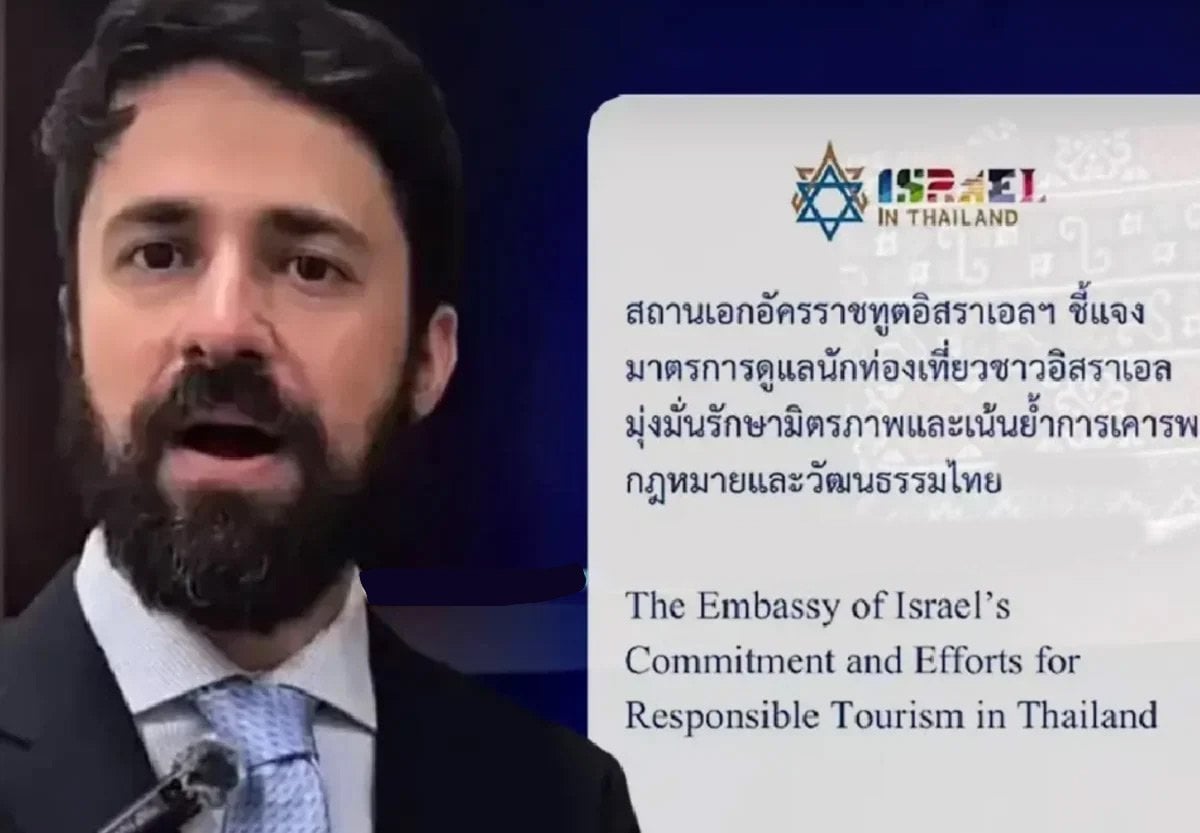
Phuket authorities have inspected a Chabad House in Patong as part of an investigation into its licences, fundraising activities, land ownership and business structure, while stressing the checks are intended to ensure compliance with Thai law rather than restrict religious freedom.

The inspection took place on Sunday, 26 July, led by Phuket Vice Governor Khettarat Chansilp. Officers from the provincial police, the Internal Security Operations Command (ISOC), local administrative organisations and other government agencies also took part.

Licences and fundraising under review

Officials found the premises operating as a restaurant and club under existing licences. According to the inspection, the building includes a dining area registered as a food establishment, holds a Type 2 liquor licence, and also contains areas used for Jewish religious services, banquet functions, accommodation for religious leaders and rooftop activities.

Authorities also discovered donation boxes inside the building.

The site’s caretaker told officials that contributions are used for charitable purposes.

Provincial authorities have instructed the relevant agencies to determine whether the fundraising complies with Thai law. No findings of wrongdoing have been announced, and the review remains ongoing.

At the same time, officials confirmed the premises are used for Jewish religious ceremonies. They emphasised that Thailand’s Constitution guarantees freedom of religion, provided religious activities comply with the law and do not affect national security, public safety or public order.

Ownership investigation continues

Beyond the inspection of the building itself, Phuket has ordered an investigation into the land ownership and shareholder structure of entities connected with the property.

Authorities said they will examine whether there is evidence of illegal land ownership, nominee shareholder arrangements or any other legal violations. They added that legal action will be taken if offences are identified.

The provincial government said the inspection forms part of wider efforts to ensure businesses and organisations operate within the law while respecting the constitutional rights and freedoms of all groups.

The review does not affect the legal right of individuals to practise their religion, and officials were careful to state that the same legal standards will be applied equally to all establishments, regardless of faith or organisation.


Picture courtesy of Khaosod

Related story

This-is-Israeli-territory-Phuket-widens-business-probe

Join the discussion?


28 July 2026
Georgealbert
Georgealbert
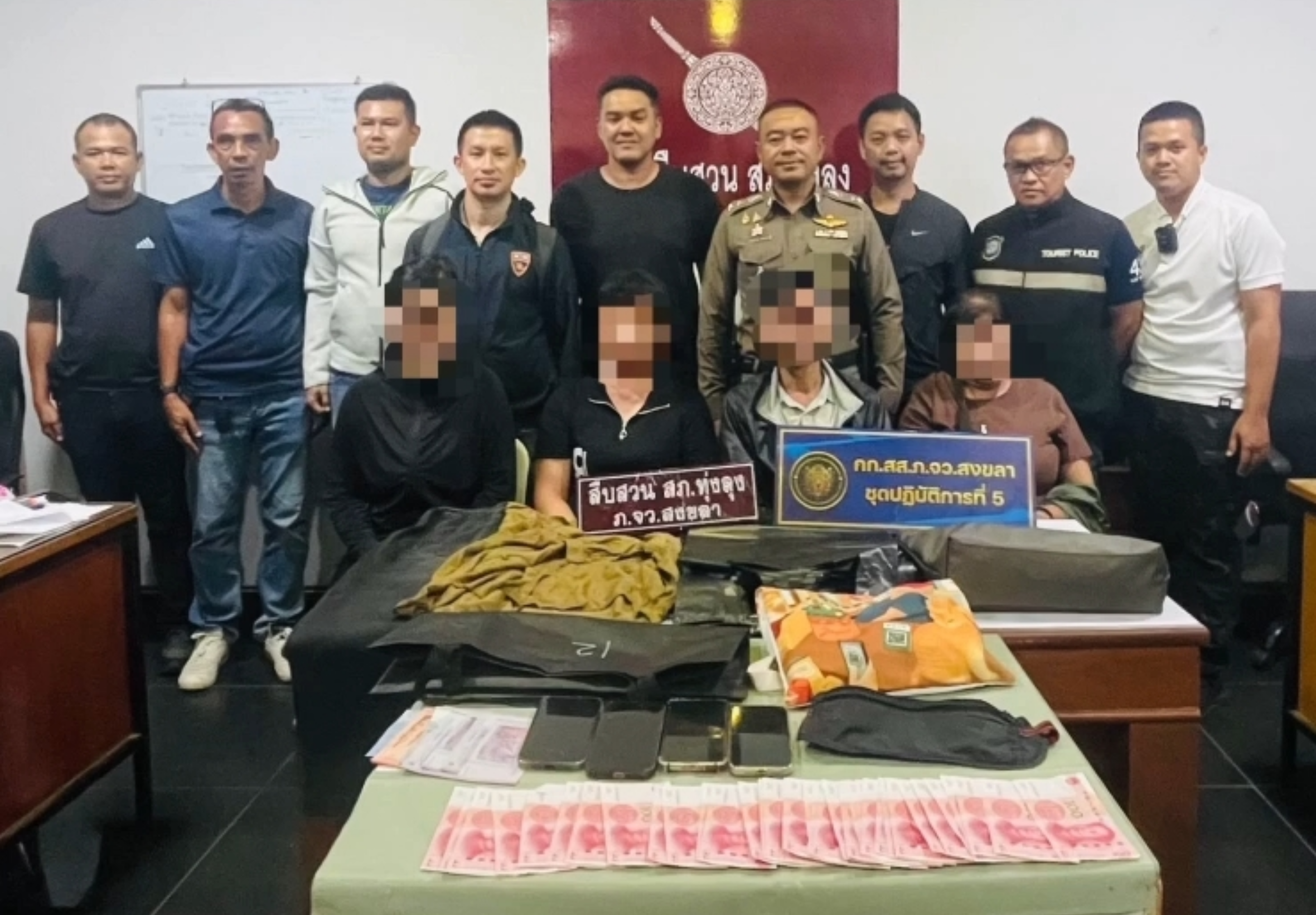
Four ladyboys have been arrested in connection with the violent robbery of an Australian tourist in Pattaya, more than seven months after the alleged attack took place.

Tourist Police announced the arrests on Monday, 27 July 2026, following a lengthy investigation into the incident involving 53-year-old Australian national Mr Rajinish.


Police said the robbery occurred on 27 December 2025 when Mr Rajinish reported that a group of ladyboys attacked him and stole his belongings in the resort city.

Months-long investigation

After receiving the complaint, investigators from Pattaya Police Station and the Tourist Police Division examined CCTV footage and gathered witness statements to identify those responsible.


On 29 June 2026, the Pattaya Provincial Court issued arrest warrants for four suspects on charges of jointly committing robbery at night and jointly assaulting another person, causing physical and mental harm.

Officers from Tourist Police Subdivision 4, Group 2, Tourist Police Division 1 spent several weeks tracking the suspects. Police said some had left Pattaya while others had remained in the city.


The four suspects were arrested at separate locations:

● Peerapong, 19, outside a condominium in Pattaya.
● Phimphisa, 20, outside a condominium in Pattaya.
● Chanachai, 20, outside a restaurant in Maha Sarakham province.
● Phongsakorn, 18, at a residence in Ratchaburi province.

According to police, all four admitted they were the people named in the arrest warrants and seen in CCTV footage from the scene. However, they denied the specific charges against them.

The suspects have since been handed over to investigators to face legal proceedings.


Pictures courtesy of Daily News

What this means for foreign visitors

The case underlines the continued focus by Thai authorities on crimes involving foreign tourists, particularly in Pattaya, where maintaining visitor confidence is seen as crucial to the local economy.

While most visits to Pattaya are trouble-free, police continue to advise tourists to be cautious when approached by strangers, especially late at night and in nightlife areas. Visitors who become victims of crime are encouraged to report incidents immediately, with CCTV footage frequently proving vital in identifying suspects, as it did in this investigation.

AQNDFIAkx-8hBkRJlY-vbl9BO1xMgtEhTaNiu4dABjuKzwEIZTl9k0x5-8xyTM2EHKCWW5ttFb8Xo6n930EvDYAB2aGK2YM1rp2E1uW3gg.mp4

Join the discussion?


28 July 2026

Georgealbert
Georgealbert
A massage worker in Hat Yai has warned others in the industry to stay vigilant after she narrowly escaped an alleged attempted rape at knifepoint by a customer who had booked her through a mobile application.

The woman, identified only as Ms B, said the attack took place late on 20 July in the centre of Hat Yai municipality, Songkhla province. She shared her account with Thai media on 27 July in the hope of alerting fellow massage workers and encouraging police to track down the suspect.

Quick thinking foils alleged attacker

According to Ms B, the man, believed to be between 30 and 35 years old, had arranged a massage appointment before accompanying her to her room. As was her normal practice, she asked for payment before providing the service.

The customer claimed his phone battery had run out and asked to charge it before transferring the money. However, Ms B said she noticed the device still showed a 74% charge and told him to wait downstairs instead.


Picture courtesy of Daily News

She alleges that at that point the man pulled out a folding knife with a blade of about four inches, held it to her neck and threatened to slit her throat if she called for help. She said he then attempted to force her to have sex.

Faced with what she described as a life-threatening situation, Ms B said she remained calm and told the man that she was living with HIV and had given birth less than a month earlier. According to her account, the claim caused the suspect to lose his nerve. He got dressed and prepared to flee.

As he ran down the stairs from the second floor, Ms B chased after him, threw a piggy bank at him and shouted for help. Despite her efforts, the man escaped.

CCTV captures suspect

Security camera footage from the night of the incident reportedly shows a man wearing a white T-shirt and black sports shorts entering the building with Ms B at 10.42pm before running away in apparent panic at 10.49pm.

Ms B has handed the CCTV footage and other evidence to the media and is appealing to police to identify and arrest the suspect.


Join the discussion?


28 July 2026
Georgealbert
Georgealbert

Account

Navigation

Search

Search

Configure browser push notifications

Chrome (Android)
  1. Tap the lock icon next to the address bar.
  2. Tap Permissions → Notifications.
  3. Adjust your preference.
Chrome (Desktop)
  1. Click the padlock icon in the address bar.
  2. Select Site settings.
  3. Find Notifications and adjust your preference.