



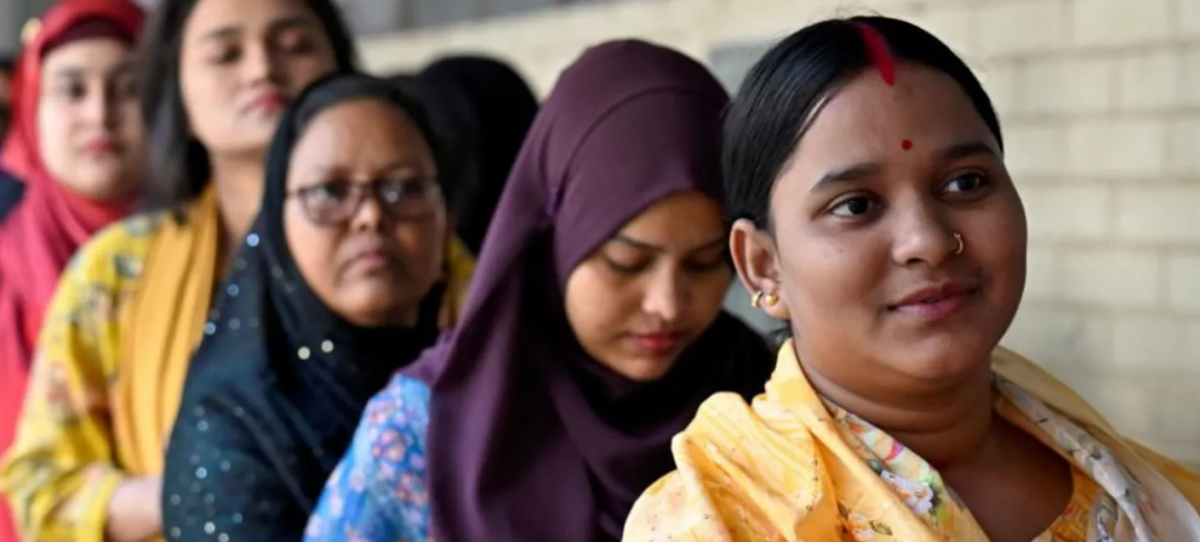

Bangladesh counts votes after Hasina's ousting
Bangladesh is witnessing its first election since student-led protests ousted Prime Minister Sheikh Hasina in 2024. Over 2,000 candidates are contesting 300 parliamentary seats, but none from the banned Awami League, once led by Hasina, now exiled in India.
Get the latest headlines in your email 
The election sees the centre-right BNP pitted against a coalition led by Jamaat-e-Islami, joined by a party from the student uprising. Results are awaited, with hopes for a democratic revival after past elections favoured Hasina.
Hasina was convicted and sentenced to death for a crackdown that killed 1,400 protesters. She denies wrongdoing and questions the election's legitimacy. Despite the Awami League's absence, voters express newfound electoral freedom.
Eligible voters exceed 120 million, many casting ballots in a referendum for constitutional reform to fix the political system. Nobel laureate Muhammad Yunus, interim leader, declared this a new beginning after a long "nightmare."
Turnout hit 49% by 2 PM local time, amid heavy police and military presence ensuring security. Key figures, Tarique Rahman of the BNP and Jamaat’s Shafiqur Rahman, voted in Dhaka, confident in the election's course.
Tarique Rahman, once an exile in London, aims for prime minister, promising reforms and a "rainbow nation." He criticizes Jamaat for religious politicking, yet Jamaat is seen as a serious contender despite previous minor roles.
Jamaat's candidate, Shafiqur Rahman, leads a campaign for justice and anti-corruption, detached from dynastic politics. Though their chances are slim, Jamaat's grassroots efforts have gained traction, appealing to a modernized support base.
However, women's participation lags, with few female candidates from Jamaat and the BNP, despite women's leading role in the protests. With turmoil from the past unresolved, Bangladesh awaits the election outcome, signaling a potential shift in its political landscape.
Key Takeaways
Bangladesh holds crucial election post-Hasina.
Voter turnout shows desire for change and reform.
Women's representation remains low despite key protest roles.
Join the discussion? 
Already a member? 
 Adapted by ASEAN Now · Source · 12 Feb 2026