



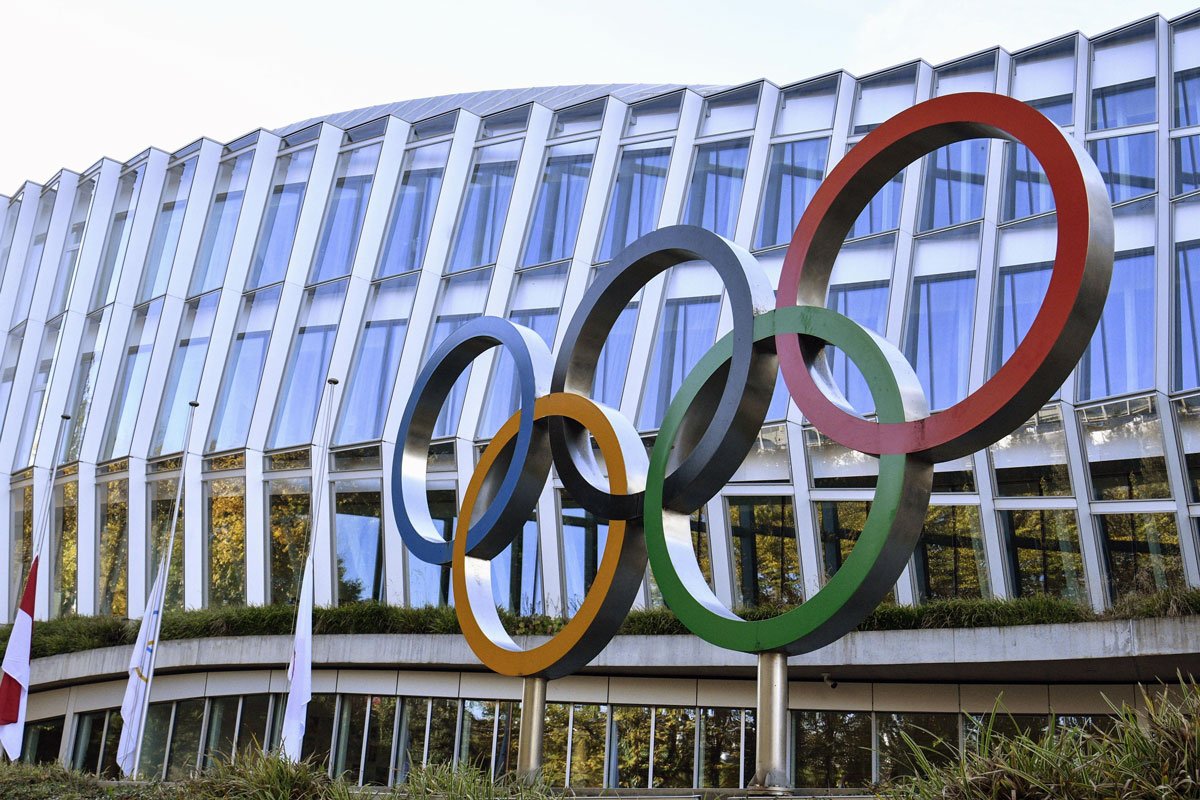

The International Olympic Committee has barred transgender women from competing in women’s events at the Olympic Games under a new eligibility policy adopted Thursday.
The rule limits participation in female categories at Olympic competitions to biological females. The policy will apply to all IOC events, including both individual and team sports.
IOC adopts new eligibility rule
Under the framework, athletes competing in women’s categories must undergo a gene test once during their career to determine eligibility. The screening looks for the SRY gene, a DNA segment typically found on the Y chromosome and associated with male sex development before birth.
The IOC said the change aims to “protect fairness, safety and integrity” in women’s sport.
Policy ahead of Los Angeles Olympics
The rule will take effect for the 2028 Summer Olympics in Los Angeles.
IOC President Kirsty Coventry said the policy reflects the narrow margins that determine results at elite competition.
She said the organisation concluded it would not be fair for athletes born male to compete in female Olympic categories. Coventry, a two-time Olympic swimming champion, launched a review on protecting the female category shortly after taking office.
The IOC had previously allowed international sports federations to set their own rules on transgender participation. Several governing bodies had already introduced restrictions in recent years.
Before the 2024 Summer Olympics in Paris, federations overseeing athletics, swimming and cycling had barred transgender women who had undergone male puberty from women’s events.
Debate over eligibility and biology
The IOC document states that people born male experience several testosterone surges during development, including in the womb, early infancy and adolescence.
According to the organisation’s research, these differences create physical advantages in sports involving strength, endurance or power. The document estimates male performance advantages of about 10–12% in many running and swimming events and more than 20% in throwing and jumping disciplines.
In explosive power activities such as punching sports, the difference can be significantly higher, the report said.
The gene test approved by the IOC may involve saliva samples, cheek swabs or blood tests and is intended to provide what the organisation described as the most accurate and least intrusive method currently available.
The policy does not apply retroactively and does not affect grassroots or recreational sports programmes.
Impact on athletes and reactions
It remains unclear how many transgender women compete at the Olympic level. No athlete who transitioned from male competed in the women’s category at the Paris Games.
The most prominent example was Laurel Hubbard of New Zealand, who competed in weightlifting at the 2020 Summer Olympics in Tokyo but did not win a medal.
The policy also affects athletes with differences in sex development (DSD), including South African runner Caster Semenya, whose long-running legal challenge to eligibility rules reached the European Court of Human Rights.
The issue has been widely debated in international sport and was also addressed politically in the United States. Donald Trump signed an executive order titled “Keeping Men Out of Women’s Sports,” which threatened funding cuts for organisations allowing transgender athletes in women’s competitions.
The IOC decision is likely to face criticism from human rights advocates and activist groups concerned about mandatory gender screening.
Join the discussion? 
Already a member? 
 Adapted by ASEAN Now. Source 27 March 2026