



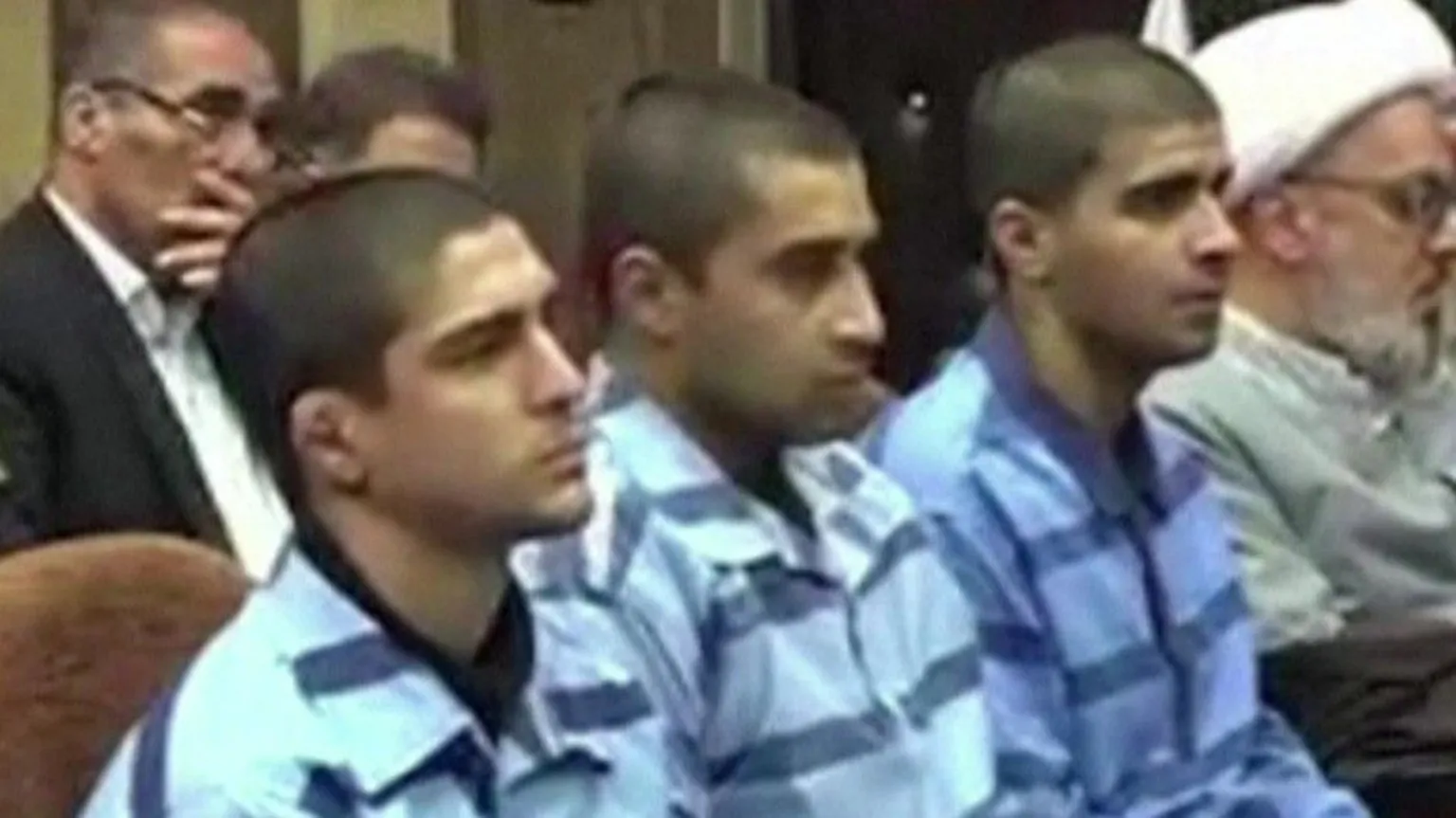

Iran has carried out the first known executions linked to recent anti-government protests, hanging three men convicted of قتل police officers during unrest earlier this year, according to state media. Among those executed was teenager Saleh Mohammadi, who was reported to be a member of Iran’s national wrestling team. The executions were carried out on Thursday in Qom province after the country’s Supreme Court upheld the sentences.
Get today's headlines by email 
Iran’s semi-official Tasnim News Agency reported that Mohammadi, along with Mehdi Ghasemi and Saeed Davoudi, had been found guilty of killing two police officers in separate incidents.
First executions tied to protests
The men were also convicted of “moharebeh”, or waging war against God, a charge frequently used by Iranian authorities in cases involving political dissent and protest activity.
The executions mark the first hangings directly connected to the wave of protests that began in December and intensified in January.
Rights groups raise concerns
Human rights organisations have strongly criticised the process leading to the executions. They allege the men were forced to confess under torture and were denied fair trials.
The protests themselves were met with a severe crackdown by Iranian authorities. According to the US-based Human Rights Activists News Agency, thousands of people were killed during the unrest.
The demonstrations, which spread across all 31 provinces and reached around 180 cities and towns, were initially triggered by economic grievances, including currency collapse and rising living costs. They later evolved into broader calls for political reform.
Additional execution draws international reaction
The hangings came a day after Iran executed Kouroush Keyvani, a dual national convicted of spying for Israel.
Sweden’s foreign minister criticised the case, stating that the legal process leading to the execution had not met acceptable standards.
Keyvani was reportedly detained during last year’s brief conflict between Iran and Israel, though details surrounding his arrest remain limited.
Ongoing tensions and international scrutiny
The executions have drawn renewed attention to Iran’s handling of dissent and the use of capital punishment in politically sensitive cases.
Earlier in the year, Donald Trump warned that “strong action” could follow if protesters were executed, while Iran’s Foreign Minister Abbas Araghchi had said there were no plans for such measures at the time.
In at least one other case, a detained protester reportedly facing execution was later released on bail, with authorities denying that a death sentence had been issued.
The broader situation in Iran remains difficult to assess, with communications heavily restricted during the protests. Activists say the scale and severity of the crackdown were unprecedented in recent years.
The developments come amid ongoing regional tensions following military strikes involving Iran, the United States and Israel, further complicating the international response.
Join the discussion? 
Already a member? 
 Adapted by ASEAN Now. Source 20 March 2026