Skip to content
View in the app

A better way to browse. Learn more.

ASEAN NOW

A full-screen app on your home screen with push notifications, badges and more.

To install this app on iOS and iPadOS
  1. Tap the Share icon in Safari
  2. Scroll the menu and tap Add to Home Screen.
  3. Tap Add in the top-right corner.
To install this app on Android
  1. Tap the 3-dot menu (⋮) in the top-right corner of the browser.
  2. Tap Add to Home screen or Install app.
  3. Confirm by tapping Install.

Become a member

Become a member

World News

Fresh news brought to you daily from around the world. Hot news, breaking stories as they happen.
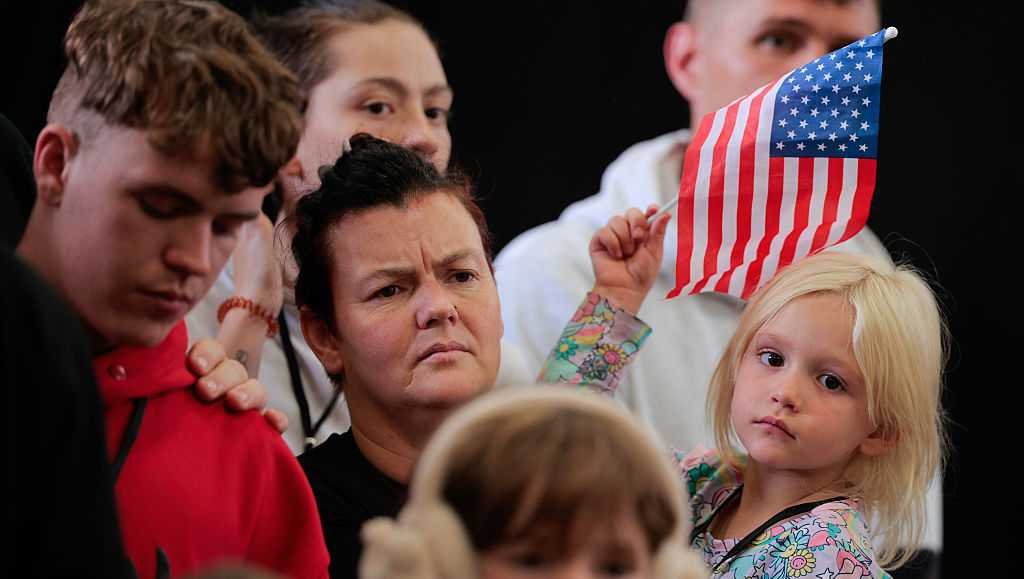
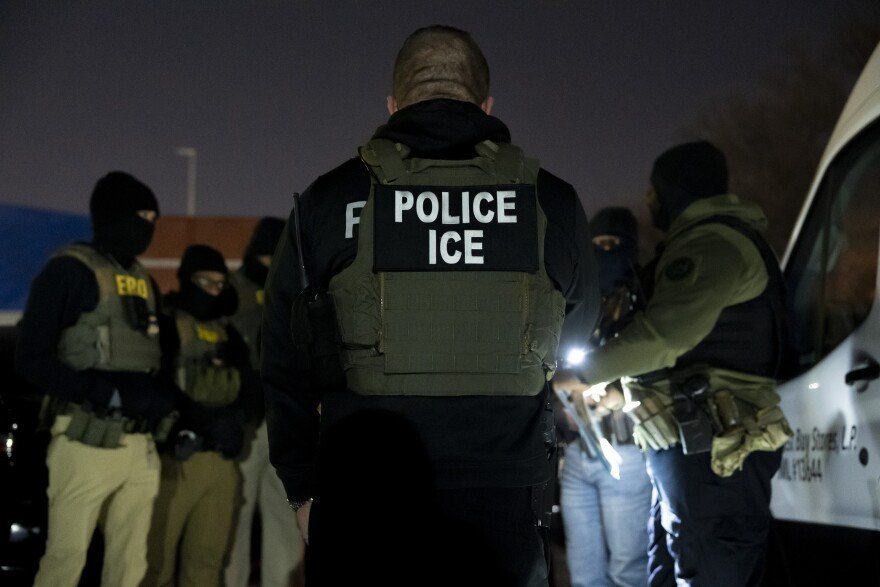
Farah, a 21-year-old gay woman from Morocco, found herself back in hiding after being deported by the US to Cameroon, where homosexuality is illegal. Violence from her family forced her to flee Morocco initially. Although a US immigration judge granted her protection, Farah was deported under the Trump administration’s third-country deportation policy.

Get the latest headlines in your email

This policy aims to pressure undocumented migrants to leave the US and includes deporting individuals to countries they have never visited. Farah faced this situation despite her legal protection, raising concerns about due process and international law violations.
Farah recounted how she and her partner first escaped Morocco for Brazil with the hope of reaching the US. They journeyed through six countries, seeking asylum at the US border. However, just days before a scheduled hearing, Immigration and Customs Enforcement (ICE) suddenly deported her to Cameroon, where she was detained alongside other non-Cameroonian deportees.
Critics argue these deportations violate legal rights. Alma David, an immigration lawyer, highlighted that deportees were not clearly informed of their rights or options. The International Organization for Migration (IOM) has been accused of not providing sufficient alternatives for those deported.
The US has agreements with countries such as Cameroon, Ghana, and Rwanda, offering financial incentives to accept third-country deportees. Reports indicate that the Trump administration spent $40 million to deport approximately 300 migrants under these agreements.
After returning to Morocco, Farah lives in fear of being discovered by her family. She expressed frustration at being seen as a threat, emphasizing the significant contributions of immigrants to the US. Despite her ordeal, she remains hopeful for a better future.
Farah’s story highlights a complex immigration issue, drawing attention to the challenges faced by asylum seekers under current policies.

Join the discussion?

Already a member?


  Adapted by ASEAN Now · Source · 22 Feb 2026
ASEAN NOW News
ASEAN NOW News
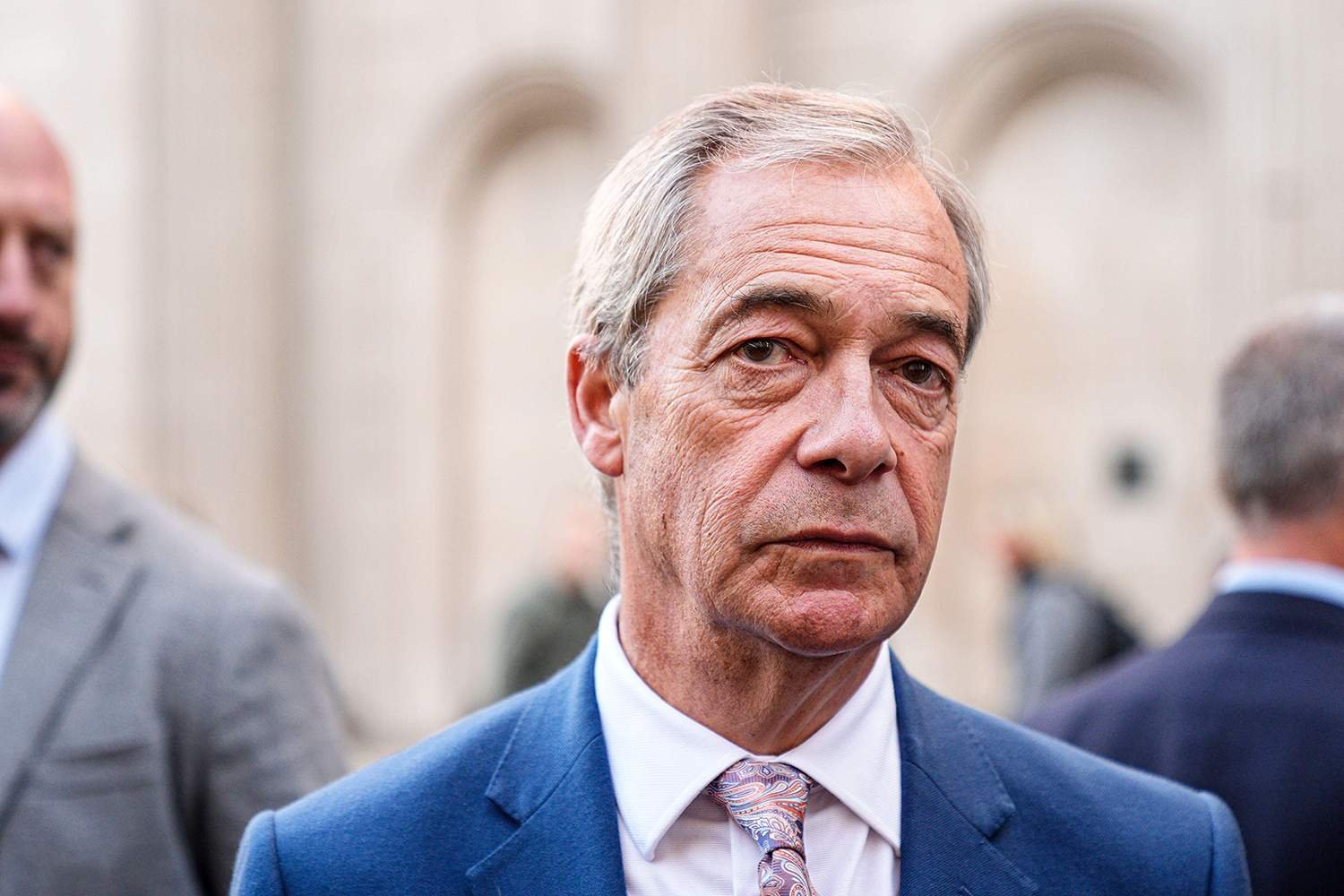
Reform UK intends to create an agency similar to the US ICE to deport up to 288,000 individuals annually, according to Zia Yusuf, the party’s new home affairs spokesperson. This includes plans to end indefinite leave to remain (ILR) status.

Get the latest headlines in your email

Yusuf will detail that ILR holders would shift to a renewable five-year work visa with a high salary threshold. He argues these changes are crucial for securing borders and ensuring public safety.

The Labour party criticizes these plans as divisive, saying they target individuals who have legally settled and contribute to the community. Labour Chair Anna Turley condemned the policies, highlighting Britain’s values of diversity and tolerance. Turley described the proposals as a direct attack on settled families and fundamentally un-British.

Yusuf will outline Reform UK's intention to withdraw from the European convention on human rights, imposing a legal duty on the home secretary to deport illegal migrants. The proposed UK Deportation Command would manage these operations, but experts warn of significant costs given the current detention capacity of about 2,500 spaces.

Reform UK also plans to redraw the mandate of the Prevent program to focus on Islamist extremism. Yusuf will advocate for broader stop and search powers and propose ending diversity initiatives within police forces. He intends to introduce a zero-tolerance approach to Islamist extremism, including measures against the Muslim Brotherhood.

The party also aims to preserve British culture, proposing measures to ban the conversion of churches into mosques. Yusuf emphasizes that maintaining Christian heritage is essential for national identity.

Labour has offered different changes to ILR, suggesting an extension of eligibility requirements from five years to ten. They have criticized former Prime Minister Boris Johnson for policies that increased migration, arguing that granting ILR leads to a lifetime of state dependency, though ILR holders make up a small percentage of universal credit claimants.


Join the discussion?

Already a member?


  Adapted by ASEAN Now · Source · 22 Feb 2026
ASEAN NOW News
ASEAN NOW News
Nemesio Oseguera Cervantes, known as "El Mencho," was killed by Mexican security forces, confirmed by Mexico’s defense ministry. His death led to widespread violence, with torched vehicles and blocked highways across multiple states.

Get the latest headlines in your email

El Mencho, aged 59, was the leader of the Jalisco New Generation Cartel, Mexico’s most powerful criminal organization. Though less globally recognized than the Sinaloa cartel, his group is infamous for extreme violence and a significant arsenal. The US offered $15 million for his capture due to his alleged drug trafficking activities, including cocaine and fentanyl.

US Deputy Secretary of State Christopher Landau praised the development, labeling El Mencho one of the most ruthless kingpins. Landau noted the operation's success as significant for Mexico, the US, and the world, reflecting pressure from US President Donald Trump over border concerns.

El Mencho was killed during a special forces operation in Tapalpa, Jalisco. The military, with support from air force and intelligence, attempted to capture him. The confrontation resulted in the deaths of four cartel members on site and three en route to Mexico City, including El Mencho. Three military personnel were injured.

The US provided intelligence that assisted in the operation. The Joint Interagency Task Force-Counter Cartel, which collects intelligence on drug cartels, contributed to the raid.

The operation ignited chaos across eight Mexican states, including Jalisco, Guanajuato, and more. Violent roadblocks with burning vehicles were reported, and footage showed smoke rising over Puerto Vallarta. In Guadalajara, panic erupted with vehicles set ablaze and chaos spreading in the city, a 2026 World Cup host.

Jalisco Governor Pablo Lemus Navarro urged citizens to stay indoors. Public transport was paused, and a warning against travel was issued.

The US embassy in Mexico City advised US citizens in affected areas to shelter in place due to ongoing violence. The Canadian government issued similar warnings.

Airlines canceled flights due to the unrest. Landau emphasized not losing resolve despite terror responses.

Mexican President Claudia Sheinbaum assured coordination among state governments and advised citizens to stay informed and calm, maintaining that activities continue normally in most areas.

Join the discussion?

Already a member?


  Adapted by ASEAN Now · Source · 22 Feb 2026
ASEAN NOW News
ASEAN NOW News
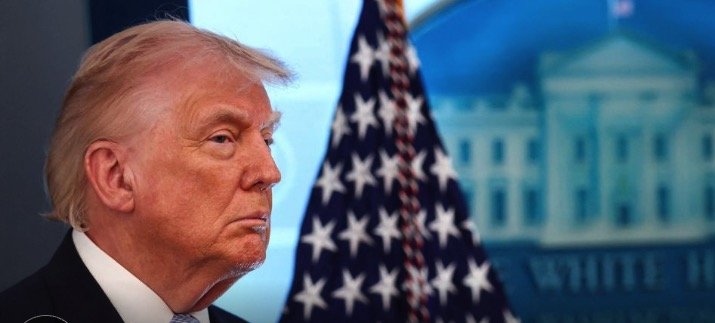
US President Donald Trump is puzzled by Iran's resilience despite increased US military pressure. Special Envoy Steve Witkoff revealed that Trump wonders why Iran hasn’t "capitulated" amid the buildup in the Middle East.

Get the latest headlines in your email

During a Fox News interview on Saturday, Witkoff mentioned Trump's curiosity after he warned Iran of limited military action if no agreement was reached regarding its nuclear program. The US and European allies suspect Iran of aiming to develop nuclear weapons, a claim Tehran denies.

Anti-government protests occurred at Iranian universities over the weekend. These are the largest since January's crackdown, which reportedly resulted in thousands of deaths. Witkoff stated that although Trump understands his options, he is puzzled by Iran's lack of cooperation under intense US military presence.

Iranian Foreign Minister Abbas Araghchi expressed hope for a diplomatic resolution, describing negotiations as "a win-win game." He told CBS News that elements of a potential deal are being discussed. Araghchi mentioned that a draft agreement would be submitted to Witkoff shortly.

On 17 February, US and Iranian officials engaged in indirect talks in Geneva, Switzerland, and reported progress. Oman, mediator of the talks, announced a new round of negotiations in Geneva on Thursday. Omani Foreign Minister Badr Albusaidi expressed optimism for finalizing the deal on social media.

Despite advancements in talks, Trump stated on Thursday that the outcome would be clear within ten days, hinting at either a deal or military action.

The US has significantly increased its military presence in the region. This includes deploying the USS Gerald R Ford, USS Abraham Lincoln, destroyers, combat ships, and fighter jets.

BBC-verified footage showed protests at Tehran’s Sharif University of Technology. Demonstrators clashed with government supporters, also seen at other Tehran universities and Ferdowsi University in Mashhad. Some protesters displayed the pre-1979 Lion and Sun flag, chanting "Javid Shah" ("long live the king").

Counter-protests involved burning US and Israeli flags and clashes between opposing groups, particularly at Amirkabir University of Technology. Students gathered in memory of those killed in previous government crackdowns.

The US-based Human Rights Activists News Agency (Hrana) confirmed at least 7,015 deaths during the recent protests, including 6,508 protesters and 226 children. They are investigating additional deaths. Iranian officials reported 3,100 fatalities, claiming most were security personnel or bystanders.

President Trump has historically backed the protesters, previously suggesting US support was imminent.

Join the discussion?

Already a member?


  Adapted by ASEAN Now · Source · 22 Feb 2026


ASEAN NOW News
ASEAN NOW News
In a recent interview with the BBC, Ukrainian President Volodymyr Zelensky asserted that Vladimir Putin has effectively initiated World War Three. During their meeting in Kyiv, Zelensky conveyed strong defiance, maintaining that Ukraine would ultimately triumph in the conflict. He opposed any ceasefire that involves ceding strategic ground to Russia, emphasizing the importance of resisting Putin's demands.

Get the latest headlines in your email

Zelensky argued that Putin's actions aim to impose a new way of life globally and change people's chosen paths. He dismissed Russia’s demands for Ukraine to hand over control of 20% of eastern Donetsk and additional territory in the south, viewing this as a compromise of Ukraine’s sovereign rights and the abandonment of its citizens.

The Ukrainian leader also challenged the idea that territorial concessions could lead to lasting peace. He expressed concerns that satisfying Putin's current demands would only provide a temporary pause before Russia resumes its aggressive policies. European partners have estimated a three to five-year recovery period for Russia, but Zelensky believes it could be quicker, raising fears of future territorial ambitions.

Despite US pressure, particularly from President Donald Trump, who has leaned towards encouraging Ukraine to make concessions, Zelensky insists on Ukraine's right to defend its land and independence. Trump’s approach, which some analysts and diplomats see as aligning with Putin’s views, has led to increased debate over the effectiveness of territorial concessions.

Zelensky emphasized the necessity of strong military and economic measures to counter Russia's strategy. He reiterated that victory for Ukraine translates to a broader win for the world by halting Russian expansion. His vision of victory involves not only reclaiming Ukrainian lands but also upholding global justice and security.

The Ukrainian president stressed the importance of consistent support from Western allies, pointing out that institutional assurances from bodies like the US Congress are pivotal, given the fluid nature of political leadership. This approach underscores the need for structured, long-term security arrangements beyond the tenure of any single president.

When asked about plans for potential elections in Ukraine amidst ongoing conflicts, Zelensky highlighted the complexities involved. He stated that while technical adjustments could be made to hold elections under martial law, security guarantees are essential first. The challenge of conducting credible elections with millions displaced and regions under occupation was significant, suggesting resistance to immediate electoral processes without adequate preparation and support.

Zelensky concluded by emphasizing the global dimension of Ukraine's struggle, urging continued international cooperation and support to ensure stability not only in Ukraine but across the world.

Join the discussion?

Already a member?


  Adapted by ASEAN Now · Source · 22 Feb 2026
ASEAN NOW News
ASEAN NOW News
An armed man was killed by Secret Service agents after breaching the secure perimeter of Donald Trump's Mar-a-Lago residence early Sunday morning. The individual was reported missing earlier that day by his family in North Carolina. The Moore County Sheriff's Office confirmed they had handed this information over to federal authorities.

Get the latest headlines in your email

Upon his arrival at Mar-a-Lago, the man was seen carrying a shotgun and a fuel can at the north gate. Secret Service spokesperson Anthony Guglielmi stated that agents observed him unlawfully entering the property. Palm Beach County Sheriff Ric Bradshaw reported that agents ordered him to drop the items, which he initially complied with for the gas can, but then he raised the shotgun, prompting agents to act.

This incident is part of a series of assassination attempts against Trump. In July 2024, Trump was shot in the ear during a rally in Pennsylvania, which resulted in a bystander's death and injuries to two others. The shooter in that incident was killed on the scene by security forces. Another attempt was foiled when a rifle was discovered at Trump International Golf Club; the person responsible was later sentenced to life in prison.

Following the Mar-a-Lago incident, Treasury Secretary Scott Bessent criticized the political left, alleging they have contributed to normalizing violence, as reflected in the recent attempts on Trump's life. He stressed that this trend of political violence must end.

This incident highlights the ongoing issue of political violence in the United States, which has been brought to the forefront by other recent high-profile incidents, such as the arson attack on Pennsylvania Governor Josh Shapiro's mansion and the fatal shootings of a Democratic lawmaker and her husband in Minnesota.

Join the discussion?

Already a member?


  Adapted by ASEAN Now · Source · 22 Feb 2026
ASEAN NOW News
ASEAN NOW News
Pakistan has carried out multiple overnight air strikes on Afghanistan, reportedly killing at least 18 people, including women and children. The attacks targeted seven alleged militant camps and hideouts near the Pakistan-Afghanistan border following recent suicide bombings in Pakistan.

Get the latest headlines in your email
Islamabad stated the strikes focused on camps of the banned Tehreek-i-Taliban Pakistan and its affiliates, actions justified as a "retributive response" to terror attacks, such as the one on a Shia mosque in Islamabad. Pakistan accuses the Afghan Taliban of sheltering these militants and failing to act against them, claiming conclusive evidence of their activities.

The Taliban condemned the strikes, calling them a blatant violation of Afghanistan's territorial integrity and international law. They warned of an appropriate response and criticized Pakistan's military intelligence operations. The Taliban claimed the strikes targeted civilian areas in Nangarhar and Paktika provinces, causing numerous casualties.

In Nangarhar's Girdi Kas village, a resident, Shahabuddin, reported that 18 members of his family were killed, out of 23 affected. Meanwhile, in Paktika's Bermal and Urgun districts, a guesthouse and religious school were targeted but were reportedly empty at the time, resulting in no casualties there.

These strikes come after a fragile ceasefire was agreed upon last October following deadly border clashes. Mediated by Saudi Arabia, the ceasefire had temporarily eased tensions after one of the worst bouts of fighting since the Taliban's return to power in 2021.

The renewed conflict underscores the volatility of the 1,600-mile (2,574 km) mountainous border shared by Pakistan and Afghanistan, as both nations face complex geopolitical and security challenges. The international community closely monitors the situation, with concerns about escalating violence and its broader implications.

The Taliban's defense ministry stated that these attacks signify a failure in Pakistan’s intelligence and security strategies. They emphasized the need for international intervention to prevent further breaches of Afghan sovereignty.

Meanwhile, Pakistan maintains its stance of defensive action, citing security threats posed by militants allegedly operating from Afghan territory. Relations between the two countries remain strained as they navigate accusations and counter-accusations of harboring terrorist elements.

The situation highlights the intricate web of regional politics and the difficulty in achieving lasting peace amidst longstanding rivalries and mistrust. Both countries are urged to engage in dialogue to address security concerns and avoid further escalation.

Join the discussion?

Already a member?


  Adapted by ASEAN Now source 22 Feb 2026
ASEAN NOW News
ASEAN NOW News
Germany’s ruling Christian Democratic Union (CDU) has backed a proposal to ban social media use for children under 14. The proposal, passed at a party conference in Stuttgart, also advocates for stricter digital verification for teenagers and imposes fines on platforms that fail to enforce these limits. The CDU seeks harmonization of age standards across the European Union.

Get the latest headlines in your email
Countries such as Spain, Greece, France, and Britain are exploring similar restrictions, following Australia's example. Last year, Australia became the first country to enforce social media access limits for children.

The movement to increase regulations on social media companies in Europe could lead to tensions with the United States. President Donald Trump has warned of tariffs and sanctions against EU countries that implement measures impacting US tech firms.

The CDU motion urges the federal government to set a legal age limit of 14 for social network use, with additional protections up to age 16. The Social Democrats, coalition partners with the CDU, also support these restrictions. This bipartisan pressure increases the likelihood of federal government action. However, media regulation in Germany is a state responsibility, requiring states to cooperate for national consistency.

At Cardinal Frings Gymnasium in Bonn, students shared their views on the potential ban. Moritz, 13, feels parents should decide on social media use, though he agrees with restrictions for those under 12. Emma, another student, finds the idea "unusual" but acknowledges her daily use of Snapchat and Instagram. Ella, 12, understands the addictive nature of platforms like TikTok.

Teacher Till Franke noted that while students may initially struggle with a ban, they would eventually adapt to new communication methods.

Join the discussion?

Already a member?


  Adapted by ASEAN Now · Source · 21 Feb 2026
ASEAN NOW News
ASEAN NOW News
Ukraine's foreign ministry has criticized Hungary and Slovakia for what it calls "ultimatums and blackmail" concerning energy supplies. Both countries threatened to cut electricity to Ukraine unless Kyiv resumes Russian oil flows. Hungary has also threatened to block a €90bn Ukrainian war loan.

Get the latest headlines in your email
Kyiv maintains that supplies were halted due to a Russian drone strike on January 27, which damaged pipeline equipment. Hungary and Slovakia, heavily reliant on the Druzhba pipeline, accuse Ukraine of delaying its restart without evidence. The Ukrainian Foreign Ministry stated, "Ultimatums should be sent to the Kremlin, not Kyiv."

In Kyiv, powerful explosions were reported early Sunday following warnings of a potential ballistic missile attack. Officials advised residents to seek shelter, and air defence units responded to detected drones over the region. Fortunately, no immediate casualties were reported.

In Lviv, explosions claimed the life of a policewoman and injured at least 15 others. The incident began after a police response to a break-in report, leading to two blasts. Lviv’s mayor described it as an “act of terror.”

Former UK Prime Minister Boris Johnson urged the deployment of noncombat troops to Ukraine to show Western solidarity. Speaking before the fourth anniversary of Russia’s full-scale invasion, Johnson emphasized that such a move would signal a firm commitment to Ukraine’s freedom.

Meanwhile, Ukraine targeted a Russian missile factory, wounding 11 individuals. The attack involved Ukrainian-made FP-5 “Flamingo” missiles on the Votkinsk plant. In response, Russia suspended flights in the nearby region.

In Paris, approximately 2,000 people marched to support Ukraine. Demonstrators called for the confiscation of frozen Russian assets and reaffirmed strong support for Ukraine among the French public. European Parliament member Raphael Glucksmann highlighted unwavering backing for Ukraine.

President Volodymyr Zelenskyy expressed that there are still real opportunities to end the war with dignity. After peace talks in Geneva with Russia and the US, he called for another round of negotiations. Zelenskyy suggested a high-level meeting involving leaders like Trump and Putin to address critical issues effectively.

Zelenskyy emphasized Ukraine's readiness to engage in discussions and tackle the most challenging topics. He believes that a leaders’ format could be pivotal in resolving the conflict.

Join the discussion?

Already a member?


  Adapted by ASEAN Now · Source · 21 Feb 2026
CharlieH
CharlieH
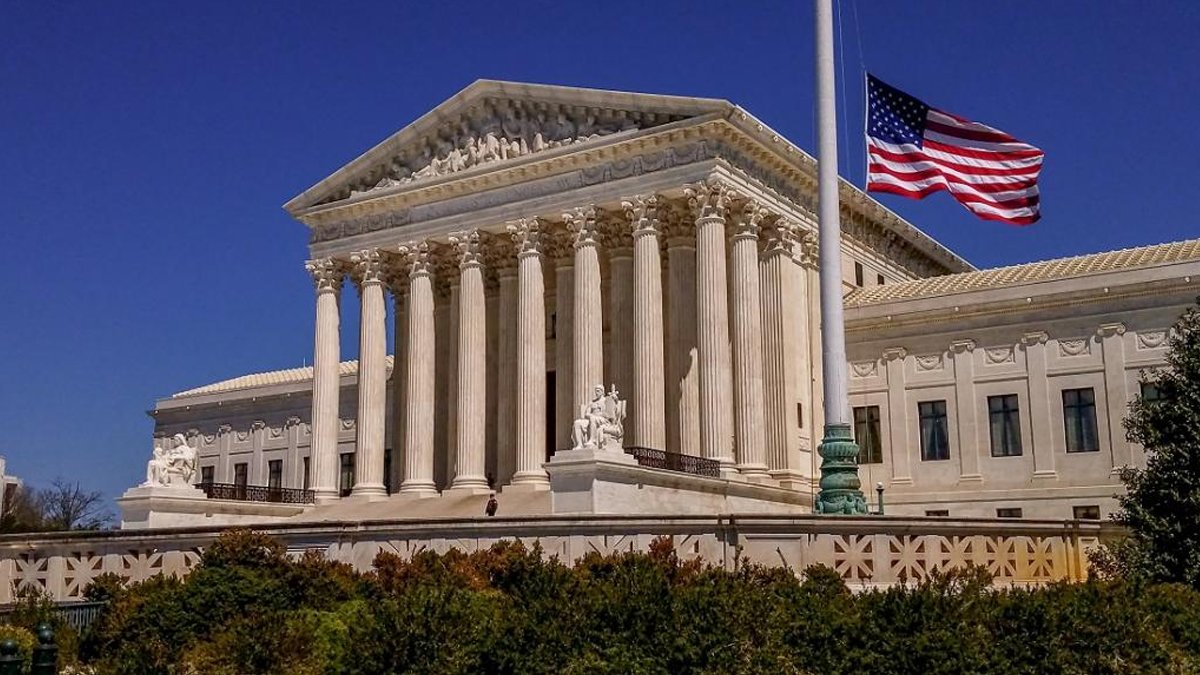
The recent Supreme Court ruling striking down President Donald Trump's tariff policy has revealed cracks in his authority, according to experts. Professor Rajneesh Narula of International Business Regulation suggests that this decision could intensify domestic pressure on Trump.

Get the latest headlines in your email
The court deemed it unconstitutional for the president to unilaterally set and change tariffs. In response, Trump announced a 10% levy, quickly increasing it to 15% on imports, despite the ruling. This move highlighted Trump's intention to find workarounds to maintain his economic strategies.

Narula, an expert in global trade policy, noted that Trump's tariff initiatives have strained US consumers more than achieving intended foreign impacts. He remarked that the tariffs failed to deliver promised outcomes, and there’s a growing need for acknowledgment of this reality.

Trump expressed disappointment with the Supreme Court decision, labeling it "deeply disappointing" and the justices as "absolutely ashamed". He contended that the ruling was incorrect but insisted that "very powerful alternatives" remain.

Narula pointed out that many Americans believed tariffs would reduce prices and bolster the domestic economy, which hasn't occurred. He suggested that the Supreme Court's decision could spark broader resistance to Trump's economic policies, undermining his perceived supremacy.

A YouGov poll showed 60% of Americans approve of the court's decision, with only 23% in opposition. Furthermore, Pew Research Center found that most Americans expect the tariff policy to have negative effects on both the country and themselves.

The ruling has prompted discussions about Trump's domestic power dynamics. As domestic resistance builds, Narula believes it might shape and constrain Trump's authority further. He emphasized that while immediate changes might be minimal if Trump pursues workarounds, the underlying policy foundation is beginning to show signs of weakness.

Despite fierce reactions and attempts to circumvent the legal obstacles, Trump's presidency faces potential challenges as public sentiment shifts and legal constraints tighten, questioning the future viability of his tariff strategy.

Join the discussion?

Already a member?


  Adapted by ASEAN Now · Source · 21 Feb 2026
ASEAN NOW News
ASEAN NOW News
In a deeply disturbing case, a couple from Uttar Pradesh, India, has been sentenced to death for the sexual abuse of 33 minors, some as young as three years old. Over a decade, they produced and sold explicit content of these children to buyers in 47 countries through the dark web.

Get the latest headlines in your email
Ram Bhawan, 50, orchestrated the operation from a rented room in Chitrakoot while employed as a junior engineer in the state's irrigation department. His wife, Durgavati, 47, allegedly assisted him by threatening the victims' families into silence. The couple exploited these children over the years, creating over 200,000 videos, as detailed in their trial which concluded in Banda.

For a decade, the couple targeted young boys from Banda and Chitrakoot districts, drawing them in with gifts like mobile phones, chocolates, and watches before subjecting them to abuse. Ram Bhawan used the promise of small favors to trap his victims and then manipulated them using the footage, maintaining their silence through threats.

The Central Bureau of Investigation (CBI), supported by Interpol, carried out a detailed investigation, uncovering a digital network used to distribute the materials. Three mobile numbers connected to the dark web led investigators to the couple. A search resulted in the discovery of a pen drive with 34 videos and 679 explicit images.

The systematic nature of their crimes, combined with the psychological and physical harm inflicted on the victims, was thoroughly documented. Many victims needed medical attention for injuries, while some continue to suffer from trauma. This evidence was crucial in leading to the sentencing handed down by the special court under the Protection of Children from Sexual Offences Act (POCSO).

Judge Pradeep Kumar Mishra, in a 163-page judgment, applied the "rarest of rare" doctrine. His decision to issue the death penalty was based on the heinous nature of the crimes and the lack of any possibility for reformation. The judgment emphasized the gravity and widespread impact of the couple's offences.

Furthermore, the Uttar Pradesh government has been instructed to pay ₹10 lakh (£8,177) in compensation to each victim. The court ordered the cash seized from the couple's home to be equally distributed among the victims, recognizing the need for restitution alongside punitive measures.

This case has not only drawn attention to the horrifying details of the crimes but has also highlighted systemic issues surrounding child abuse and exploitation. It underscores a rigorous approach to addressing and punishing such criminal acts to uphold justice and protect vulnerable populations.

The sentencing reflects a strong message from the Indian judiciary about the severe consequences for those involved in child exploitation and aims to deter similar offenses in the future.

Join the discussion?

Already a member?


  Adapted by ASEAN Now · Source · 21 Feb 2026
ASEAN NOW News
ASEAN NOW News
Canada welcomed the US Supreme Court's decision to strike down President Donald Trump's global tariffs, though celebrations were brief. These tariffs, including those related to fentanyl impacting Canada, China, and Mexico, were deemed "unjustified," according to Canada's Trade Minister Dominic LeBlanc.

Get the latest headlines in your email
LeBlanc emphasized ongoing challenges, particularly concerning tariffs on steel, aluminum, and automobiles, which Trump intends to maintain. He also highlighted the upcoming review of the Canada-US-Mexico trade agreement (USMCA), a crucial part of the North American trade landscape involving over 500 million people.
The Supreme Court's ruling has limited impact on Canadian tariffs, as 85% of trade under these "fentanyl" tariffs was already exempt due to USMCA. However, Canada's position on new 10% global tariffs, which Trump plans to raise to 15%, remains cautious.
Despite the new global tariffs, the White House confirmed that USMCA exemptions will continue. Beyond tariffs, the USMCA review presents a key issue. Discussions must occur this summer to decide on extending the deal, first established in the early 1990s. While integrated economies have benefited, there are uncertainties.
During a visit to Mexico, LeBlanc reaffirmed commitment to the trilateral trade agreement. However, the Trump administration has shown interest in bilateral deals instead of renewing USMCA.
LeBlanc plans to meet US Trade Representative Jamieson Greer to progress on review talks before the July 1 deadline. This marks the first formal trade discussion after a hiatus last October, stemming from a Canadian ad opposing tariffs.
Greer noted challenges in negotiations with Canada compared to Mexico, citing trade barriers like restrictions on US wine and spirits and irritants such as Canada’s Online Streaming Act, affecting US media companies.
Amidst negotiations, Canada is diversifying trade beyond the US, which currently accounts for 75% of its exports, with ambitions to double non-US exports by 2035.
Canadian business leaders maintain that uncertainty persists. Dennis Darby, CEO of Canadian Manufacturers & Exporters, emphasized the importance of a successful USMCA renewal to prevent trade disruptions, advocating for predictable, rules-based trade on both sides of the border.

Join the discussion?

Already a member?


  Adapted by ASEAN Now · Source · 21 Feb 2026
ASEAN NOW News
ASEAN NOW News
The US Supreme Court has ruled that President Donald Trump exceeded his authority by imposing global tariffs using the International Emergency Economic Powers Act (IEEPA). In a 6-3 decision, the court affirmed that such tariffs could not be applied without Congress’s authorization.

Get the latest headlines in your email

Trump's original tariffs targeted goods from China, Mexico, and Canada, citing fentanyl trafficking as an emergency. Later, he expanded these levies to nearly every country, claiming the US trade deficit posed a significant threat. However, the court emphasized that creating taxes is a power reserved for Congress and that IEEPA was not intended for revenue generation.

New Temporary Tariffs
In response to the court ruling, Trump signed a proclamation under Section 122 of the 1974 Trade Act, allowing a new 10% global tariff on imports, subsequently raised to 15%. Section 122 permits a temporary tariff for up to 150 days, after which Congress must intervene. However, the law may allow the president to let tariffs lapse and reintroduce them by declaring a new emergency, as noted by the Cato Institute.

The administration is also exploring tariffs under Section 301 of the Trade Act of 1974, which authorizes tariffs on countries with discriminatory trade practices. Additionally, Section 232 of the Trade Expansion Act of 1962, used by Trump in his first term, allows for tariffs on imports that threaten national security after an investigation.

Treasury Secretary Scott Bessent stated that combining Section 122 tariffs with enhanced Section 232 and Section 301 tariffs would ensure continued tariff revenue. This strategy seeks to compensate for the revenue loss from the IEEPA tariffs.

Refunds and Legal Implications
While the Supreme Court deemed the IEEPA tariffs unlawful, it offered no guidance on refunds. Trump predicts extended litigation over potential refunds. Larger companies might benefit more from refunds due to the complex claims process, leaving smaller businesses at a disadvantage.

Over a thousand businesses have already requested tariff refunds, with numbers expected to increase. Illinois Governor JB Pritzker urged the White House to issue $1,700 refund checks to affected households. Trump previously hinted at the possibility of rebate checks.

Current Tariff Landscape
The new tariffs, effective February 24, apply to all imports into the US. Countries with existing trade deals, such as the UK, India, and the EU, are not exempt from these tariffs under Section 122. The Trump administration expects these countries to continue honoring their trade agreements.

Certain goods, including critical minerals, energy products, pharmaceuticals, and items under the USMCA agreement, are exempt from the new taxes. Informational materials, donations, and personal baggage are also exempt.

Trump has retained tariffs on low-cost goods by eliminating the de minimis exemption, which allowed goods valued at $800 or less to enter the US duty-free.

Future Considerations
The tariffs aim to address international payment issues and rebalance American trade, according to the White House. The strategy reflects Trump’s emphasis on leveraging tariffs to boost the US economy by channeling revenue into the Treasury.

The ongoing trade and tariff dynamics highlight the complex interplay between executive actions, legislative powers, and international trade relations. As the situation evolves, businesses and consumers alike face uncertainty regarding the financial implications and potential refunds.

Join the discussion?

Already a member?


  Adapted by ASEAN Now · Source · 21 Feb 2026
ASEAN NOW News
ASEAN NOW News
Students across multiple universities in Iran have staged significant anti-government protests. These are the largest demonstrations since last month's severe crackdown by authorities.

Get the latest headlines in your email
The BBC has verified footage of protests at Sharif University of Technology in Tehran on Saturday. Clashes erupted between demonstrators and government supporters.

A sit-in took place at Shahid Beheshti University in Tehran, with other rallies reported in the north-east. Students were honoring thousands killed during mass protests in January.

Parallel to these events, the US has increased its military presence near Iran. President Donald Trump is considering a limited military strike. The US and European allies suspect Iran is moving towards developing a nuclear weapon, a claim Iran denies.

US and Iranian officials met in Switzerland and reported progress in talks to curb Iran's nuclear program. Despite this, Trump stated the world would know "over the next, probably, 10 days" whether a deal would be reached or military action taken.

Footage shows hundreds of protesters marching peacefully at Sharif University, waving Iranian flags and chanting "death to the dictator," referring to Supreme Leader Ayatollah Ali Khamenei.

Pro-government supporters staged a rival rally nearby, with scuffles breaking out between the groups. Verified photos also show a peaceful sit-in at Shahid Beheshti University and protests at Amir Kabir University of Technology.

In Mashhad, students chanted "Freedom, freedom" and "Students, shout for your rights." Additional protests were reported with calls for more rallies on Sunday. It is unclear if any demonstrators were arrested.

Last month's protests, originating from economic grievances, evolved into the largest since the 1979 Islamic Revolution. The US-based Human Rights Activists News Agency (Hrana) confirmed at least 6,159 people killed, including protesters, children, and officials.

Iranian authorities reported over 3,100 deaths, claiming most were security personnel or bystanders attacked by "rioters."

The protests coincide with Iran's preparation for a potential conflict with the US. While some exiled opposition groups urge Trump to strike, others oppose foreign intervention. Disinformation campaigns on social media highlight these conflicting narratives.


Join the discussion?

Already a member?


  Adapted by ASEAN Now · Source · 21 Feb 2026
ASEAN NOW News
ASEAN NOW News
US President Donald Trump has indicated he is contemplating a limited military strike on Iran to pressure its leaders into negotiating an agreement to limit their nuclear program. This statement came in response to a journalist's query shortly after officials suggested the possibility of military action.

Get the latest headlines in your email

Trump remarked on Thursday that the world would likely know "over the next, probably, 10 days" if a deal would be reached or if military action would ensue. Recently, the US has been bolstering its military presence in the region.

US and European allies suspect Iran is progressing towards developing a nuclear weapon, a claim Iran denies. Meetings between US and Iranian officials in Switzerland have shown progress, with Iran's Foreign Minister, Abbas Araghchi, stating that Iran is preparing a draft agreement to present to US Special Envoy Steve Witkoff soon.

Amid these talks, American forces have increased their presence near Iran, including deploying the USS Gerald R Ford and USS Abraham Lincoln, along with additional destroyers, combat ships, and fighter jets.

Satellite images reveal Iran has fortified military sites, while Supreme Leader Ayatollah Ali Khamenei has issued warnings on social media, noting the danger of US warships approaching Iran.

Trump's discussions with journalists occur frequently, often leading to varying statements. He tends to keep his plans secret to maintain strategic ambiguity. "I'm not going to talk to you about that," he told a reporter when asked about potential action, stating, "We're going to make a deal or get a deal one way or the other."

Trump has yet to specify the military objectives, despite being presented with various options for potentially prolonged campaigns. Previously, Trump used deadlines strategically to create an element of surprise, as seen during Operation Midnight Hammer last July, which involved striking Iranian nuclear facilities.

Potential strikes could occur during a challenging period domestically, with growing disapproval of Trump's handling of immigration and the economy. A protracted conflict with Iran might alienate parts of Trump's base that preferred his campaign promise to avoid foreign entanglements.

Join the discussion?

Already a member?


  Adapted by ASEAN Now · Source · 20 Feb 2026
ASEAN NOW News
ASEAN NOW News
NASA is poised to send a crew around the Moon in early March, marking humanity's furthest voyage into space in over 50 years. The Artemis II mission will feature a 10-day journey around the Moon's far side, paving the way for future lunar landings.

Get the latest headlines in your email

The launch is targeted for March 6 (March 7 in the UK), following a successful "wet dress rehearsal" at the Kennedy Space Center in Florida. This critical test involved fueling the rocket and conducting a countdown sequence.

NASA's Lori Glaze expressed growing excitement, noting, "The Moon is calling us and we're ready." The first rehearsal in February ended early due to a hydrogen fuel leak, but NASA has since addressed the issues with seals and filters.

The Artemis II crew includes Americans Reid Wiseman, Victor Glover, Christina Koch, and Canadian Jeremy Hansen. Following the rehearsal's success, the crew will enter quarantine in preparation for the mission.

They will embark on the mission aboard NASA's Space Launch System (SLS), a 98-meter-tall mega Moon rocket, which previously flew without a crew in November 2022 during the Artemis I mission. The astronauts will be housed in the Orion capsule, situated atop the rocket, which is roughly the size of a minibus.

Their mission begins with orbiting Earth for a day. If systems are confirmed to be functioning properly, they will then travel to the Moon. The journey will take approximately four days, during which the crew will orbit 6,500-9,500 km above the lunar surface, studying and photographing the Moon.

After completing their lunar flyby, the crew will commence a four-day journey back to Earth, concluding with a splashdown in the Pacific Ocean. A successful mission will clear the path for Artemis III, where astronauts are expected to set foot on the lunar surface.

NASA has set an ambitious target for a lunar landing by 2028. Elon Musk’s company SpaceX is under contract to build the Artemis III lander. Due to delays with its Starship rocket, NASA has asked SpaceX for a streamlined return-to-Moon plan. Concurrently, NASA has requested Blue Origin, owned by Jeff Bezos, to present an accelerated lunar plan for Artemis III.

As these developments unfold, the US is under international pressure to reach the Moon, with China aiming for a lunar landing by 2030. Both nations are targeting the Moon's south pole for their landings, competing for optimal spots to establish lunar bases.

Join the discussion?

Already a member?


  Adapted by ASEAN Now · Source · 20 Feb 2026
ASEAN NOW News
ASEAN NOW News
The UK government is contemplating legislation to remove Andrew Mountbatten-Windsor from the royal line of succession. Defence Minister Luke Pollard told the BBC this action would prevent Andrew from ever becoming King and is deemed necessary, regardless of the police investigation's outcome.

Get the latest headlines in your email

Despite being stripped of his titles last October due to his connections with Jeffrey Epstein, Andrew remains eighth in line to the throne. On Thursday, Andrew was released under investigation, 11 hours after being arrested on suspicion of misconduct in public office, which he denies.

Pollard confirmed that the government is working with Buckingham Palace to ensure Andrew is not "a heartbeat away from the throne." He hopes the proposal will receive cross-party support, but it will proceed only after the police investigation concludes.

On Friday, unmarked police vehicles were observed at Royal Lodge, Andrew’s residence. Thames Valley Police, responsible for the arrest, is expected to continue searches at the property until Monday.

The proposal follows support from MPs, including those from the Liberal Democrats and SNP. Some Labour MPs, critical of the monarchy, are skeptical about the necessity of the move due to the low likelihood of Andrew ascending to the throne.

Introducing such legislation would require an act of Parliament, needing approval from MPs and peers, and royal assent from the King. It would also need backing from the 14 Commonwealth countries where King Charles III is head of state, such as Canada, Australia, and New Zealand.

The last significant change to the line of succession was in 2013 with the Succession to the Crown Act, and the last removal due to abdication was in 1936 with Edward VIII.

Liberal Democrat leader Sir Ed Davey emphasized that police should conduct their investigation without interference. He noted that Parliament would need to address the issue, ensuring Andrew can never become King.

The SNP, led by Westminster leader Stephen Flynn, expressed support for Andrew's removal from succession if legislation is necessary.

Join the discussion?

Already a member?


  Adapted by ASEAN Now · Source · 20 Feb 2026
ASEAN NOW News
ASEAN NOW News
US President Donald Trump has announced a new 10% global tariff after the Supreme Court rejected his previous import taxes. The court's decision, which Trump criticized as "terrible," struck down most of the global tariffs announced by the White House last year.

Get the latest headlines in your email

The Supreme Court ruled 6-3 that Trump overstepped his powers, a significant win for businesses and US states challenging the duties. This ruling could lead to billions in tariff refunds and has created further uncertainty in global trade.

In a speech from the White House, Trump stated that refunds would likely face prolonged legal battles. He expressed intentions to use other laws to continue his tariff strategy, claiming these tariffs promote US investment and manufacturing.
"We have alternatives - great alternatives, and we'll be a lot stronger for it," Trump asserted.

The legal battle centered on import taxes implemented last year on goods from nearly every country. Initially targeting Mexico, Canada, and China, the tariffs expanded to include many more countries, declared during a "Liberation Day" event last April.

The White House had relied on the 1977 International Emergency Economic Powers Act (IEEPA), which gives the president authority to "regulate" trade during emergencies. However, the measures faced backlash from firms affected by the sudden tax increases, fearing higher prices.

Challenging states and businesses argued that the IEEPA does not mention "tariffs" and was not intended to allow the president unchecked power over taxes and trade deals. Chief Justice John Roberts sided with this interpretation.

Roberts stated, "When Congress has delegated its tariff powers, it has done so in explicit terms and subject to strict limits." He emphasized that if Congress intended to provide such extraordinary tariff powers, it would have indicated so clearly.

Join the discussion?

Already a member?


  Adapted by ASEAN Now · Source · 20 Feb 2026
ASEAN NOW News
ASEAN NOW News
The Balearic Islands' parliament is preparing to debate a proposed ban on non-residents purchasing homes in Majorca, Minorca, Ibiza, and Formentera. This proposal, put forward by the political party Més per Mallorca, will be reviewed on February 24.

Get the latest headlines in your email

MP Lluís Apesteguia stated that the proposed ban would prioritize homes for residents, discouraging speculative investment in the region's property market. He affirmed that this restriction complies with EU rules and existing case law.

Apesteguia emphasized the importance of making housing accessible to locals rather than being dominated by investment funds. He questioned whether homes should cater primarily to investors or local residents, as reported by the Majorca Daily Bulletin.

The rising interest from foreign buyers in the Balearic Islands and other popular Spanish holiday destinations has led to increased property prices, prompting local protests. Sebastià Sagreras, representing the People's Party of the Balearic Islands, announced that the party would oppose the ban.

Marc Pons, former president of Menorca's council, acknowledged EU regulations might hinder the proposal, suggesting the need for alternative solutions to the housing issue.

Vox spokesperson Manuela Cañadas criticized the proposal as "demagogic," according to the Majorca Daily Bulletin.

According to real estate publication Idealista, the Balearic Islands are Spain's most expensive province for property. The report highlighted 25 municipalities experiencing record resale prices, with Ibiza’s Sant Joan de Labritja at the top. The average price per square meter there is £7,830 (€8,959).

Majorca also saw significant price increases, with Colonia de Sant Pere experiencing a 37.5% rise. Idealista noted the islands' enduring attractiveness to international buyers, offering luxury, a Mediterranean lifestyle, and solid investment potential.

Apesteguia stressed that the current market makes housing unattainable for most local citizens. He stated that the bill aims to ensure homes are primarily for residents, not just investors.

Tourism and investment are crucial to the Balearic economy, but local needs are a growing concern among policymakers. The ongoing debate highlights the challenge of balancing economic development with ensuring affordable housing for residents.

As this proposal reaches parliament, it continues to spark discussions about the future of housing in the Balearic Islands and how best to address both the desires of international investors and the needs of local populations.

Join the discussion?

Already a member?


  Adapted by ASEAN Now · Source · 20 Feb 2026
ASEAN NOW News
ASEAN NOW News
Donald Trump has directed the Pentagon and other US agencies to release government files related to UFOs and extraterrestrial life. He made the announcement on his Truth Social platform, citing public interest in the subject.

Get the latest headlines in your email

The announcement came after Trump accused former President Barack Obama of disclosing "classified information." Obama had suggested during a podcast interview that aliens might exist. Trump told reporters on Air Force One, "I don't know if they're real or not," and noted he might help Obama by declassifying the information.

In his social media post, Trump instructed government agencies to release files related to "alien and extraterrestrial life, unidentified aerial phenomena (UAP), and unidentified flying objects (UFOs)." He described these topics as highly complex and important.

Obama later clarified his stance, stating he had not seen evidence that aliens have contacted Earth. However, he emphasized that "statistically, the universe is so vast that the odds are good there's life out there."

Trump mentioned he does not have a personal opinion on the existence of extraterrestrial visitors. He acknowledged that while he seldom discusses the topic, it fascinates many people.

Speculation grew when Lara Trump, Trump's daughter-in-law, suggested he was ready to speak on the issue. She mentioned on a podcast that the president had a speech prepared about aliens which he would deliver at an appropriate time.

White House Press Secretary Karoline Leavitt, when asked about this, responded with laughter, stating, "A speech on aliens would be news to me."

Interest in unidentified flying objects and possible government secrets about extraterrestrial life has increased recently. This public curiosity was reignited after leaked Navy videos showed unknown objects, prompting discussions about their origins and implications.

The topic of UFOs remains a subject of widespread intrigue. Many people believe the government possesses undisclosed information about extraterrestrial encounters. The release of these files could potentially shed light on long-held mysteries regarding UFOs and alien life.

Trump's decision to release these files underscores a growing demand for transparency regarding unidentified phenomena. As the files become public, they are expected to stimulate further debate and investigation into the existence of extraterrestrial beings.

Join the discussion?

Already a member?


  Adapted by ASEAN Now · Source · 20 Feb 2026

ASEAN NOW News
ASEAN NOW News
Andrew Mountbatten-Windsor's arrest, while seemingly catastrophic for the Royal Family, may ultimately strengthen their position. Since Andrew's controversial 2019 interview with Emily Maitlis, Prince William has reportedly been displeased with his uncle's actions, seeing them as a blemish on the family.

Get the latest headlines in your email


William's desire to distance Andrew from the Royal Family has been evident, particularly during a tense interaction at the Duchess of Kent's funeral. King Charles expressed his concern over Andrew’s arrest for suspected misconduct, emphasizing the need for a thorough investigation.

While anti-monarchy group Republic views this incident as a potential turning point, allies of King Charles, such as broadcaster Jonathan Dimbleby, argue it could fortify the monarchy. Charles's decisive actions last October, stripping Andrew of titles and military honors, demonstrate a clear intent to separate the Royal Family from Andrew's personal issues.

The Epstein scandal has long cast a shadow over the Royals. However, focusing the current investigation solely on Andrew could draw a critical line between him and the rest of the family, helping them to regain public confidence.

King Charles's consistent reference to his brother as "Andrew Mountbatten-Windsor" signals a deliberate distancing from the controversies associated with him. This strategy may allow the Royal Family to cleanly separate their identity from Andrew's, potentially emerging from the scandal with renewed strength.

In conclusion, while Andrew's legal troubles present immediate challenges, they also offer an opportunity for the Royal Family to reinforce their integrity and resilience. The outcome of the investigation could serve as a pivotal moment, helping them navigate past this adversity with unity and clarity.

Key Takeaways
Andrew’s arrest poses challenges but may strengthen the Royals.
King Charles's swift actions serve to distance the family from controversy.
Drawing a line between Andrew and the Royals could enhance their public image.

Join the discussion?

Already a member?


  Adapted by ASEAN Now · Source · 19 Feb 2026
ASEAN NOW News
ASEAN NOW News
As tensions between the US and Iran escalate, the deployment of significant US military assets, including the USS Abraham Lincoln carrier strike group, signals more than diplomatic maneuvering. The movement of another carrier, the USS Gerald R Ford, towards the Middle East, along with other military reinforcements, suggests that Washington is preparing a range of military options.

Get the latest headlines in your email


These deployments could serve as diplomatic leverage but also indicate that indirect negotiations between Tehran and Washington might be at an impasse, potentially leading to military action if neither side shifts its stance.

The critical question arises: why does Iran, facing the world’s most powerful military and its strongest regional ally, remain defiant? The answer lies in the US's stringent conditions for negotiations, which Tehran views as tantamount to surrender.

From Tehran's perspective, the US demands—including ceasing uranium enrichment, limiting missile range, and halting support for regional groups—are not just negotiation points but core components of Iran’s security framework. These elements are fundamental to what Iran terms its "Axis of Resistance," a network aimed at deterring threats and exerting regional influence.

Iran’s ballistic missile program compensates for its outdated air force and limited access to advanced military technology. The nuclear program, although officially peaceful, is considered crucial for its deterrent value. Mastery of uranium enrichment grants Iran a "threshold capability" that offers strategic leverage, as it signifies potential capacity for weaponization pending a political decision.

Iran’s leadership, notably Supreme Leader Ali Khamenei, views accepting US conditions as potentially more dangerous than enduring a limited conflict. While a military confrontation, however damaging, may be survivable, yielding its strategic deterrence would fundamentally weaken Iran's defense posture and regional stature.

Yet, the risks of military engagement are multifaceted. A US campaign would likely target Iran's leadership and security apparatus, impacting the Islamic Revolutionary Guard Corps and potentially destabilizing domestic control. The resulting power vacuum from key leadership losses could destabilize the country further, especially amid lingering public discontent following violent crackdowns on protests.

For Washington, while the military might exists to meet objectives, war is inherently unpredictable. Miscalculations could escalate conflict beyond initial plans, destabilizing the region and creating unforeseen challenges. Previous conflicts have demonstrated how quickly wars can spiral, complicating goals and management.

Internally, Iran faces significant economic pressures from ongoing sanctions, inflation, and economic stagnation. Escalating tensions further strain the economy, risking public backlash if livelihoods are threatened. Tehran’s defiance serves to project strength locally while signaling resilience to international pressures, although this stance potentially limits diplomatic flexibility.

Ayatollah Khamenei confronts stark choices between the "worst" option, strategic surrender, and what may appear as the "best of the worst," engaging in limited military confrontation. Publicly, Iran seems to lean towards the latter, despite the profound dangers involved.

Both nations face substantial uncertainties with risks of miscalculation. A conflict could redefine regional stability and power dynamics, affecting global interests. As the situation develops, the stakes remain high for Tehran and Washington, encapsulating a complex interplay of geopolitical aspirations and the harsh realities of potential warfare.


Key Takeaways
Rising US-Iran tensions with military assets deployed in the Gulf.
Iran resists US demands, seeing them as threats to its core security.
The potential for conflict introduces significant regional and global risks.

Join the discussion?

Already a member?


  Adapted by ASEAN Now · Source · 19 Feb 2026
ASEAN NOW News
ASEAN NOW News
Members of Donald Trump's Board of Peace have announced over $7 billion in aid for Gaza as part of a relief package aimed at reconstruction and stability. The announcement came during the board's inaugural meeting in Washington, amidst concerns from Western allies that the board could overshadow the United Nations.

Get the latest headlines in your email

This relief effort is part of the second stage of a US-brokered ceasefire, focusing on Hamas's disarmament and rebuilding Gaza. However, current indications suggest Hamas is not moving towards disarming, with its influence in Gaza reportedly extending.

Israeli Prime Minister Benjamin Netanyahu has stated that Gaza’s reconstruction is contingent on demilitarization. The conflict began with a Hamas-led attack on Israel in October 2023, which led to a strong military response. The ensuing conflict has left Gaza’s infrastructure severely damaged, with an estimated $70 billion worth of destruction.

Countries such as the UK, Canada, France, and Germany have opted not to join the Board of Peace, wary of its potential to bypass the UN. Addressing these concerns, Trump assured that the US intends to work closely with the UN, emphasizing the importance of stability investments.

Key contributors to the relief package include Kazakhstan, UAE, and Saudi Arabia. The UN is set to provide $2 billion for humanitarian aid, while FIFA will contribute $75 million towards soccer-related projects in the region.

Efforts are underway to establish a new transitional Palestinian police force, with 2,000 applications already received. This force, backed by the International Stabilisation Force, aims to maintain security and disarm non-state groups such as Hamas.

Despite the plans, skepticism remains regarding Hamas's disarmament. Success in this area is crucial, as reconstruction and governance require a stable security environment supported by the local population. Hamas has indicated that disarmament would require Israeli withdrawal from Gaza.

Trump’s approach, combining investment and development strategies, is seen as unconventional. His administration touts it as "new thinking" in conflict resolution. Meanwhile, questions persist about sustaining Gaza’s development amidst ongoing political divisions.

Key Takeaways
Trump’s Board announces $7bn aid for Gaza reconstruction.
Disarmament of Hamas is essential yet challenging.
International cooperation is crucial for Gaza’s future stability.

Join the discussion?

Already a member?


  Adapted by ASEAN Now · Source · 19 Feb 2026
ASEAN NOW News
ASEAN NOW News
Andrew Mountbatten-Windsor has been released under investigation after his arrest for suspected misconduct in public office. Thames Valley Police arrested him in Norfolk and conducted searches at properties in both Berkshire and Norfolk.

Get the latest headlines in your email

King Charles III emphasized the importance of letting "the law take its course" and expressed full support and cooperation with the police. The investigation scrutinizes Andrew's ties to the late Jeffrey Epstein, alongside accusations of sharing confidential information.

This arrest is Andrew's first, and he has consistently denied any wrongdoing. Thames Valley Police confirmed a detailed investigation is now in progress.

Earlier this month, separate allegations surfaced regarding a woman allegedly brought to the UK by Epstein for a meeting with Andrew in 2010. This matter is still being evaluated.

After his arrest at Sandringham, Andrew was seen leaving the police station looking subdued. Thames Valley Police alerted the Home Office in advance of the arrest.

While this arrest is unrelated to sexual offence allegations, it highlights serious concerns about misconduct in public office. The situation remains under careful watch as the investigation unfolds.

Thames Valley Police have concluded their searches in Norfolk but continue to assess all aspects related to the allegations, ensuring a thorough approach to the case. They remain committed to uncovering the truth and upholding justice.

Key Takeaways
Andrew investigated for public office misconduct.
King Charles fully supports the police investigation.
Arrest not linked to any sexual offence allegations.

Join the discussion?

Already a member?


  Adapted by ASEAN Now · Source · 19 Feb 2026
ASEAN NOW News
ASEAN NOW News
President Donald Trump has issued a stark warning, stating the world has "probably 10 days" to see if a deal with Iran can be reached before potential military action. At the inaugural Board of Peace meeting in Washington, Trump emphasized the urgency, warning of consequences if a meaningful agreement isn't secured.

Get the latest headlines in your email

Negotiations between US and Iranian officials have recently shown progress in Switzerland. Special Envoys Steve Witkoff and Jared Kushner, Trump's son-in-law, reportedly had productive discussions. However, Trump acknowledged the difficulties in dealing with Iran's nuclear program, reiterating his hope for a diplomatic resolution.

The White House's increased military presence in the Middle East includes the USS Abraham Lincoln aircraft carrier. Despite this buildup, the UK has not permitted the US to use its bases for potential strikes on Iran.

Iran has bolstered its military defenses, with Supreme Leader Ayatollah Ali Khamanei issuing warnings to US forces via social media. US intelligence has observed Iran reinforcing its military sites, heightening tensions.

Congressional opposition to potential military action is growing. Democrat Ro Khanna and Republican Thomas Massie plan to invoke the 1973 War Powers Act to force a vote, aiming to curtail presidential powers in committing to armed conflict. Past attempts to limit such powers have faced resistance, as seen with Senate Republicans blocking a similar resolution regarding Venezuela.

Khanna cautioned against catastrophe, pointing out Iran's complex society and military capabilities. The idea is to prevent unnecessary risks to US troops in the region.

The Board of Peace, originally aimed at resolving the Israel-Hamas conflict, now appears to extend beyond, possibly sidelining the UN. As the deadline approaches, global attention focuses on whether diplomacy will prevail or if the region could face further instability.

Key Takeaways
Trump sets 10-day deadline for deal with Iran.
Military tensions rise, UK withholding base support.
Congress seeks to limit executive military action.

Join the discussion?

Already a member?


  Adapted by ASEAN Now · Source · 19 Feb 2026
ASEAN NOW News
ASEAN NOW News

Account

Navigation

Search

Search

Configure browser push notifications

Chrome (Android)
  1. Tap the lock icon next to the address bar.
  2. Tap Permissions → Notifications.
  3. Adjust your preference.
Chrome (Desktop)
  1. Click the padlock icon in the address bar.
  2. Select Site settings.
  3. Find Notifications and adjust your preference.