Skip to content
View in the app

A better way to browse. Learn more.

ASEAN NOW

A full-screen app on your home screen with push notifications, badges and more.

To install this app on iOS and iPadOS
  1. Tap the Share icon in Safari
  2. Scroll the menu and tap Add to Home Screen.
  3. Tap Add in the top-right corner.
To install this app on Android
  1. Tap the 3-dot menu (⋮) in the top-right corner of the browser.
  2. Tap Add to Home screen or Install app.
  3. Confirm by tapping Install.

Become a member

Become a member

World News

Fresh news brought to you daily from around the world. Hot news, breaking stories as they happen.
The family of a US college student who disappeared while on a trip to Spain has issued an urgent appeal for information, as police continue their investigation in Barcelona. James “Jimmy” Gracey, a 20-year-old student at the University of Alabama, was last seen in the early hours of Tuesday morning outside the Shoko nightclub in the Port Olímpic area of Barcelona.

Get today's headlines by email

According to relatives, a friend saw him at around 03:00 local time. He was later reported missing after failing to return to his accommodation that morning.

Last seen near city nightclub
His family said he was wearing a white shirt, dark trousers and a chain with a gold cross. He is described as approximately 6ft 1in tall and weighing around 175 pounds.

Police investigation under way
Authorities in Spain have launched a search, led by the Mossos d'Esquadra. Officials confirmed they are investigating but have not released further details about the circumstances of his disappearance.

Gracey’s mother said his mobile phone had been recovered after being stolen, though it is now in police possession.
The US State Department said it could not comment on the case, citing privacy considerations.

Family describes ‘out of character’ disappearance
In a statement, the family described Gracey as “kind, responsible, and devoted,” adding that it was highly unusual for him not to remain in contact.

“He is completely out of character for not checking in with family and friends,” they said, urging anyone with information to come forward.

Gracey, who is from Elmhurst, Illinois, had travelled to Spain to visit friends studying abroad. His father has since travelled to Barcelona to assist with the search.

University officials said they are in contact with those close to the student and are offering support where possible.

Growing concern among friends and community
Friends and fellow students have also voiced concern, describing him as reliable and supportive. At university, he is involved in student life, including leadership roles within a fraternity.

His disappearance comes amid heightened awareness of risks faced by young travellers overseas. Last year, another American student went missing during a spring break trip abroad and has not been found.

Authorities have advised that, in such cases, families should contact local police as well as US diplomatic services when a citizen cannot be reached.

The search for Gracey is ongoing, with his family continuing to appeal publicly for information that could help locate him.

Join the discussion?

Already a member?


Adapted by ASEAN Now. Source 19 March 2026
webfact
webfact
A United States Navy warship believed to be transporting additional Marines to the Middle East has been tracked approaching a key maritime chokepoint near Singapore, according to ship monitoring data. The amphibious assault ship USS Tripoli was observed nearing the Strait of Malacca on Tuesday, based on Automatic Identification System (AIS) data. The vessel appeared off the coast of Singapore, a busy shipping hub at the edge of the South China Sea.

Get today's headlines by email

Naval vessels do not always broadcast their location, but may activate tracking systems when passing through congested waterways to reduce the risk of collision.

Vessel movement tracked near Singapore
Maritime tracking data indicated the ship had travelled from Okinawa through the South China Sea, maintaining a speed of around 22 miles per hour.

Marines deployed for potential operations
Reports suggest the vessel is carrying personnel from the 31st Marine Expeditionary Unit, a forward-deployed unit based in Okinawa, Japan.

The unit comprises around 2,200 personnel and is designed for rapid deployment across a range of operations, including evacuations, amphibious assaults and crisis response missions.

Officials familiar with the deployment said the Marines were being sent to the Middle East, although specific details about their destination and role have not been disclosed.

US Central Command has previously stated that approximately 50,000 American troops are already stationed in the region amid the ongoing conflict with Iran.

Capabilities of the assault ship
The USS Tripoli is one of the US Navy’s largest amphibious vessels, measuring nearly 850 feet in length and displacing about 45,000 tonnes.

It functions similarly to a small aircraft carrier, capable of operating advanced aircraft such as F-35 stealth jets and MV-22 Osprey tiltrotor aircraft. The ship is also equipped to deploy landing craft and troops directly onto shore.

Typically, such vessels operate as part of a broader amphibious ready group, often accompanied by transport dock ships including the USS New Orleans and the USS San Diego. However, it remains unclear whether those accompanying ships are part of the current deployment.

Strategic context
The movement of additional US forces comes amid heightened tensions in the Middle East, where conflict involving Iran has led to an increased American military presence.

While US officials have not publicly outlined the mission of the incoming unit, Marine Expeditionary Units are typically deployed to provide flexible, rapid-response capabilities in volatile environments.


Join the discussion?

Already a member?


Adapted by ASEAN Now. Source 19 March 2026
webfact
webfact
An 11-year-old boy in the United States has been charged with first-degree murder following the death of his five-year-old brother, in a case described by legal experts as highly unusual. Prosecutors in Colorado confirmed that the child faces a first-degree murder charge, along with an aggravated juvenile offender sentence enhancement. The case is being handled by the 18th Judicial District Attorney's Office.

Get today's headlines by email

The younger boy died on 10 March at a home in Centennial, Colorado, a suburb of Denver. Authorities said the 11-year-old was subsequently taken into custody.

Rare charge against a minor

Officials from the Arapahoe County Sheriff's Office confirmed the arrest but have released few details about the circumstances surrounding the death.

Limited information released
Investigators have not disclosed the cause of death or further information about the alleged incident. Prosecutors said such details remain confidential due to laws protecting juvenile records.

The boy is currently being held at the Marvin W. Foote Youth Services Center.

Authorities emphasised that while the allegations are serious, the accused remains a minor and is entitled to legal protections under the juvenile justice system.

Legal and community impact
Legal analysts say it is extremely rare for a child as young as 11 to face a first-degree murder charge, which typically requires proof of intent.

One expert noted that children of that age are often considered not to have the mental capacity required to meet the legal threshold for such a charge. Even having an 11-year-old testify in court can be uncommon, as judges may need to determine whether the child understands the meaning of giving evidence under oath.

Local officials acknowledged the emotional toll of the case. In a statement, Sheriff Tyler Brown said the incident had deeply affected the wider community.

He added that cases involving the deaths of children are among the most challenging for investigators and can have a lasting impact on families, schools and neighbourhoods.

Ongoing investigation
The case remains under investigation, with no further details released about what led to the younger child’s death. Authorities have urged the public to respect the privacy of the family involved, as the legal process continues.


Join the discussion?

Already a member?


Adapted by ASEAN Now. Source 19 March 2026

webfact
webfact
Senior US intelligence officials have told lawmakers that Iran’s governing system remains in place but has been significantly weakened by recent military strikes, offering the first public assessment since the conflict escalated. During a congressional hearing, Tulsi Gabbard said the Iranian regime was “intact” but “largely degraded” following attacks on its leadership and military infrastructure.

Leadership under pressure
Her remarks came as she appeared alongside senior figures including John Ratcliffe and heads of other intelligence agencies to outline global threats facing the United States.

Gabbard noted that damage inflicted during recent strikes had weakened Iran’s operational capacity, particularly in its military and command structures. However, she indicated that the core governing system continues to function.

The hearing marked the first time US intelligence leaders have publicly addressed the situation since the war began in late February.

Dispute over ‘imminent threat’
The session also highlighted divisions within the US government over whether Iran posed an immediate danger prior to the conflict.

Gabbard declined to directly answer questions from Democratic Senator Jon Ossoff about whether she had assessed Iran as an imminent threat before the strikes. Instead, she said that determination ultimately rests with the president.

Her position contrasted with comments from Joe Kent, who resigned a day earlier. In his resignation letter, Kent stated that Iran had not presented an imminent threat to the United States and criticised the decision to go to war.

Ratcliffe disagreed with that assessment, telling lawmakers that Iran had long posed a danger and represented an immediate threat at the time of the strikes.

Nuclear programme and military damage
Gabbard said US and Israeli operations had “largely destroyed” Iran’s military capabilities and inflicted serious damage on its nuclear infrastructure.

She added that intelligence agencies believe Iran is attempting to recover from that damage but continues to fall short of its international nuclear obligations.

In prepared remarks, she had initially described Iran’s nuclear enrichment programme as “obliterated,” though she did not include that wording in her spoken testimony. When questioned by Senator Mark Warner, Gabbard said time constraints led her to shorten her statement.

Strait of Hormuz concerns
Officials also confirmed that US intelligence had long anticipated the risk of Iran targeting the Strait of Hormuz, a critical global shipping route.

Gabbard said the intelligence community had assessed that Iran would likely attempt to disrupt traffic through the waterway in the event of conflict. She added that the Pentagon had taken precautionary steps based on those assessments.

Ratcliffe told lawmakers that the president receives regular intelligence briefings and that military planners had prepared for potential attacks on US-linked energy infrastructure across the region.

Ongoing scrutiny
Lawmakers from both parties used the hearing to question the intelligence basis for the war and the extent to which officials were involved in decision-making.

Senator Angus King asked whether intelligence leaders were present when final decisions were taken, though Ratcliffe said he could not point to a single defining moment.

The hearing comes amid continuing debate in Washington over the justification for the conflict and its wider implications, as well as concerns about escalating tensions in the region.

Join the discussion?

Already a member?


Adapted by ASEAN Now. Source 19 March 2026
webfact
webfact
China’s ability to withstand a major energy shock is being tested as the war involving Iran disrupts oil shipments through one of the world’s most critical maritime routes. The conflict has effectively halted tanker traffic through the Strait of Hormuz, a key passage for global النفط flows, triggering shortages and driving up prices. Countries across Asia that rely heavily on Gulf energy supplies have been forced into emergency measures, highlighting the scale of disruption.

Get today's headlines by email

Since strikes by the United States and Israel on Iran in late February, oil markets have been thrown into volatility. Prices have surged to near $120 per barrel at times, as attacks on infrastructure and shipping intensified.

Oil disruption shakes global markets
Roughly a fifth of the world’s oil passes through the Strait of Hormuz, making its disruption particularly significant. The shortage has forced countries to search for alternative suppliers or draw down strategic reserves.

The impact has been especially severe in parts of Asia. The Philippines has introduced shorter working weeks to reduce fuel consumption, while Indonesia is attempting to conserve limited reserves that could otherwise run out within weeks.

China’s exposure and reserves
As the world’s largest oil importer and second-largest consumer after the United States, China depends heavily on foreign crude to power its economy.

The country consumes an estimated 15 to 16 million barrels of oil per day, much of it used in transportation. A significant portion of these imports comes from Gulf producers, including Saudi Arabia and Iran.

Despite sanctions, Iran has remained a major supplier of discounted crude to China, with reports suggesting Beijing purchases a large share of Tehran’s exports.

However, China has spent years building up strategic reserves. Estimates suggest stockpiles could range from around 900 million to over 1 billion barrels, providing a buffer equivalent to several months of imports. In addition, tens of millions of barrels of Iranian oil are currently stored in tankers near the South China Sea.

Authorities have also reportedly taken steps to conserve supply, including limiting fuel exports to prioritise domestic needs.

Shift towards energy resilience
China’s longer-term strategy has focused on reducing dependence on imported fossil fuels. The country has rapidly expanded renewable energy, becoming a global leader in wind, solar and hydropower.

According to official data, more than a third of China’s electricity came from non-fossil sources in 2025, with clean energy capacity continuing to grow. Oil now accounts for only about a fifth of total energy consumption.

The rise of electric vehicles has further reduced reliance on oil. With EVs making up a substantial share of new car sales, some consumers are less exposed to fluctuations in global fuel prices.

Uncertain outlook
Analysts say China’s combination of large reserves and diversification into renewable energy has placed it in a stronger position than many of its regional neighbours.

However, continued disruption to global supply chains — particularly if the Strait of Hormuz remains closed — could still strain the system over time.

While Beijing appears better prepared than most, the unfolding crisis is likely to test the resilience of even the most robust energy strategies as the conflict continues.

Join the discussion?

Already a member?


Adapted by ASEAN Now. Source 19 March 2026


webfact
webfact
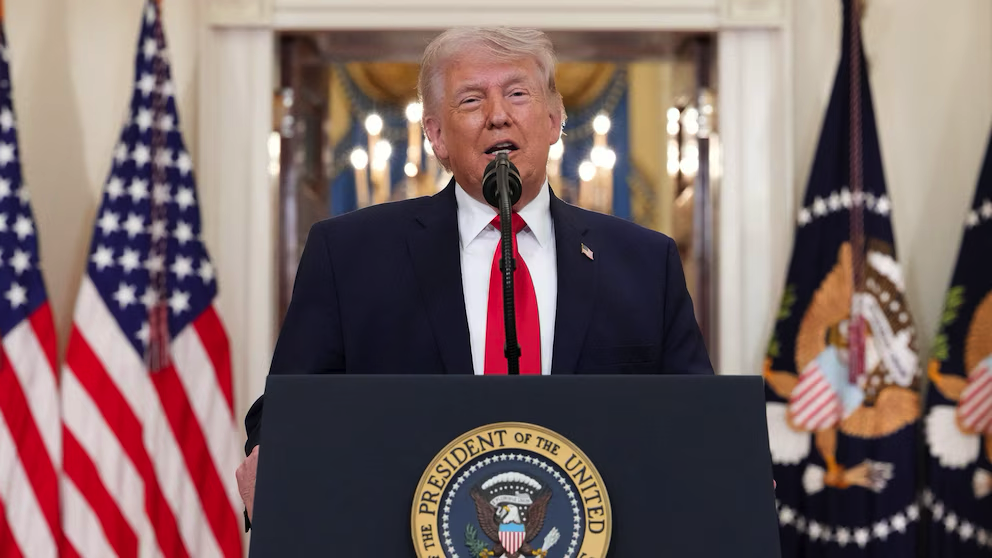
Donald Trump has warned that the United States could target Iran’s vast South Pars gas field if Tehran continues strikes against energy infrastructure in Qatar, marking a sharp escalation in rhetoric as tensions intensify across the Gulf. In a social media post, Trump said Washington would “massively blow up the entirety” of the South Pars field if Iran persisted in attacking Qatari facilities. The warning followed a series of missile strikes by Iran on Qatar’s major energy hub, which caused significant damage but no reported casualties.

Get today's headlines by email

Qatar confirmed that Iranian missiles struck Ras Laffan Industrial City, home to one of the world’s largest liquefied natural gas export terminals. Officials described the damage as extensive, with emergency teams deployed to contain fires at the site.

Strikes hit major energy facilities
The attack came after Israel targeted Iran’s South Pars gas field, the world’s largest natural gas reserve shared between Iran and Qatar. It marked the first known strike on Iran’s gas production infrastructure since the conflict began in late February.

Trump denied any prior knowledge of the Israeli operation, stating that the United States had not been involved and that Qatar had no warning of the attack.

Rising tensions and military considerations
The developments underscore a widening regional conflict, with both sides increasingly targeting energy infrastructure. Iran’s Islamic Revolutionary Guard Corps has warned it could extend attacks to oil and gas facilities in other Gulf states, including Saudi Arabia and the United Arab Emirates.

Meanwhile, reports indicate the United States is considering deploying additional forces to the Middle East, raising concerns that the conflict could broaden further.

Global markets have reacted sharply. Oil prices rose significantly following the latest attacks, reflecting fears of prolonged disruption to supply chains. The Strait of Hormuz — a critical route for global oil and gas shipments — has seen a steep decline in tanker traffic amid ongoing threats.

International calls for restraint
European leaders have urged de-escalation. Emmanuel Macron called for an immediate halt to strikes on civilian infrastructure, particularly energy and water facilities, following discussions with regional leaders.

Germany’s foreign minister warned that continued disruption to energy supplies could trigger a severe global crisis, while Gulf states also expressed alarm at the growing risks to energy security.

The United Arab Emirates described attacks on energy sites as a “serious escalation,” warning of environmental and economic consequences. Qatar condemned the Israeli strike on South Pars as “dangerous and irresponsible” and has expelled Iranian diplomatic staff in response to Tehran’s actions.

Risk of wider conflict
Iranian officials have vowed retaliation, with President Masoud Pezeshkian warning that attacks on energy infrastructure could have “uncontrollable consequences” extending beyond the region.

The conflict has already had a significant impact on global energy markets, with oil prices climbing sharply since the outbreak of hostilities. Analysts warn that continued disruption — particularly in the Strait of Hormuz — could have far-reaching effects on inflation, trade and global economic stability.

As both sides signal readiness to escalate further, diplomatic efforts are intensifying to prevent a broader regional crisis.

Join the discussion?

Already a member?


Adapted by ASEAN Now. Source 19 March 2026
webfact
webfact
The cost of applying for a UK passport online could rise above £100 for the first time, under new plans announced by the Home Office. If approved by Parliament, the proposed changes would see the standard online application fee for adults increase from £94.50 to £102. Fees for children would also rise, from £61.50 to £66.50.

Get today's headlines by email

The government said the increase is intended to move the passport system closer to full cost recovery, meaning users rather than taxpayers would cover more of the service’s expenses.

Broad increases across services
The proposed changes, expected to take effect from 8 April, would apply across a range of application methods.

For postal applications within the UK, adult fees would rise from £107 to £115.50, while child applications would increase from £74 to £80.

Premium services would also become more expensive. The one-day fast-track option, commonly used for urgent travel needs, would increase from £222 to £239.50.

Applicants based overseas would face higher charges as well. Online applications from abroad would cost £116.50 for adults, up from £108, and £75.50 for children, up from £70.

For paper applications submitted overseas, adult fees would rise to £130 from £120.50, while children’s applications would increase from £82.50 to £89.

Government justification
According to the Home Office, the fees help cover the cost of processing passport applications, providing consular assistance to British nationals overseas, and managing border services for UK citizens.

Officials said the move reflects a broader policy of reducing reliance on public funds for such services.

The department also advised travellers to apply well in advance of planned trips, particularly during peak periods such as school holidays when demand can increase processing times.

Recent rises and processing times
The latest proposal follows a series of recent increases, with passport fees rising by 9% in 2023 and a further 7% in 2024.

Processing times in the UK are typically up to three weeks, although delays can occur during busy periods.

If the new pricing structure is approved, it would mark another step in a gradual increase in passport costs, with the standard online application crossing the £100 threshold for the first time.

Join the discussion?

Already a member?


Adapted by ASEAN Now. Source 19 March 2026
webfact
webfact
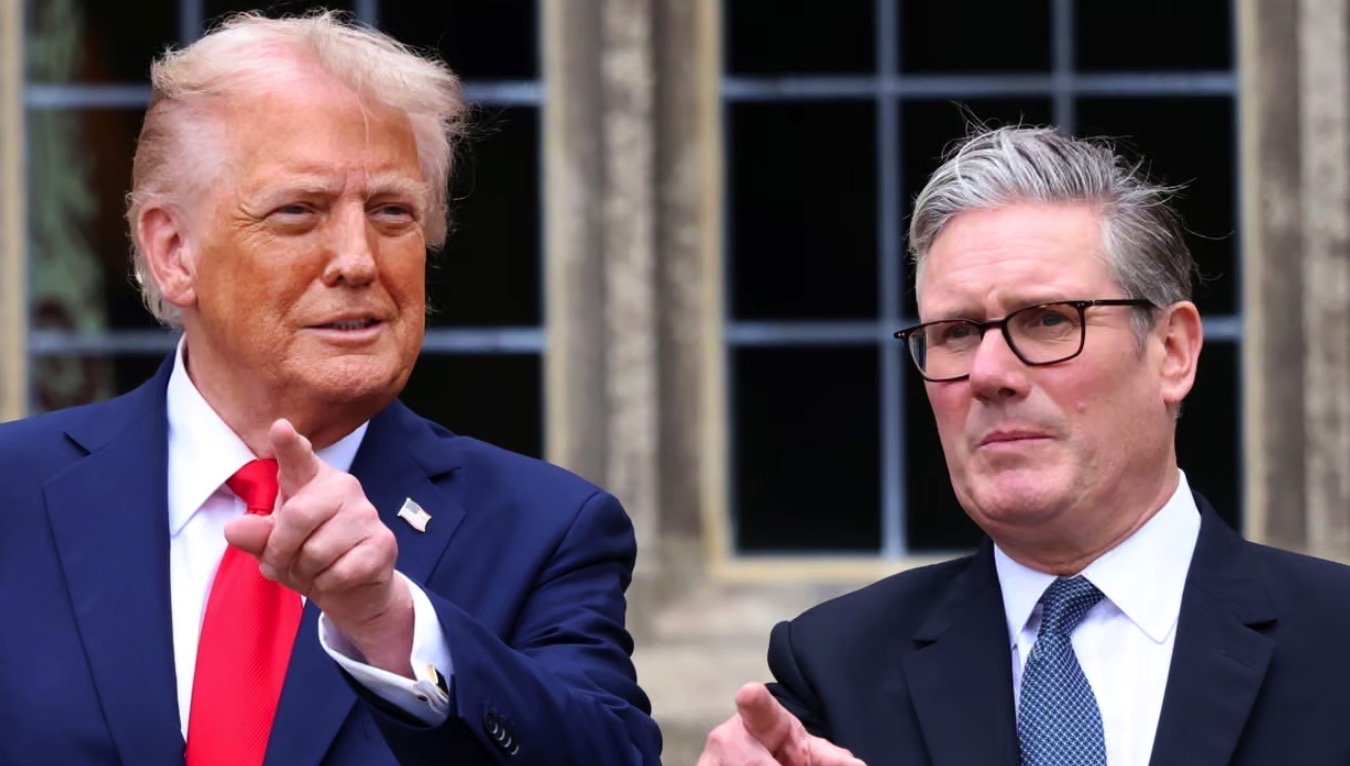
Prime Minister Keir Starmer has refused to say whether he personally discussed Peter Mandelson’s past association with Jeffrey Epstein before appointing him as the UK’s ambassador to the United States, as pressure mounted in Parliament over the handling of the decision. Facing repeated questions during Prime Minister’s Questions, Starmer did not confirm whether any direct conversation had taken place with Mandelson. Instead, he acknowledged the appointment had been a mistake and reiterated an apology to victims linked to Epstein.

Get today's headlines by email

The issue was raised by Conservative leader Kemi Badenoch, who challenged the prime minister over whether he had personally vetted Mandelson regarding his relationship with the convicted sex offender.

Commons confrontation
Badenoch accused Starmer of avoiding scrutiny and relying on staff rather than exercising direct oversight. She questioned how the prime minister could claim he had been misled if he had not spoken directly to Mandelson before making the appointment.

In response, Starmer said: “This was my mistake in making the appointment, and I've apologised to the victims of Epstein.” He added that the process had since been reviewed and strengthened following advice from an independent standards adviser.

However, he did not directly address whether a personal conversation with Mandelson had taken place, instead turning to criticise Badenoch over her stance on the conflict involving Iran.

Documents raise concerns
The exchange follows the release of official documents indicating that Starmer had been warned about potential “reputational risk” linked to Mandelson’s past association with Epstein.

The files, published after MPs voted to make them public, included references to a 2019 report suggesting Epstein had maintained a close relationship with Mandelson. The documents also noted claims that Mandelson had stayed at Epstein’s residence in 2009 while the financier was in custody.

Mandelson was removed from his ambassadorial role last year after further details about the relationship emerged. Starmer has previously said he was unaware of the full extent of the connection at the time of the appointment.

Questions over vetting process
Reports have suggested that Starmer did not personally question Mandelson, instead delegating inquiries to his then chief of staff, Morgan McSweeney, who later resigned amid the fallout.

Mandelson has denied misleading the prime minister, saying he answered written questions about his contact with Epstein “truthfully and fully” and does not recall being asked directly about the matter in person.

A spokesperson for Downing Street said after the Commons session that the correct procedures had been followed at the time and that a formal interview with the prime minister was not required under existing rules.

Political tensions persist
The row underscores ongoing political tensions over accountability and transparency in senior appointments, with opposition figures continuing to press for clarity over the vetting process.

While Starmer has accepted responsibility for what he described as an error of judgement, questions remain over how the appointment was handled and whether sufficient checks were carried out before Mandelson took up the diplomatic post.

Join the discussion?

Already a member?


Adapted by ASEAN Now. Source 19 March 2026
webfact
webfact
Sadiq Khan has called on the Labour Party to adopt a clear pledge to rejoin the European Union ahead of the next UK general election, intensifying debate over Britain’s long-term relationship with the bloc. In remarks that diverge from the current government line, the London mayor said rejoining the EU was ultimately “inevitable” and argued that steps towards closer economic integration should begin before voters next go to the polls.

Get today's headlines by email

In an interview with the Italian newspaper la Repubblica, Khan said the UK should seek to rejoin both the EU customs union and single market within the current parliamentary term, which is expected to run until 2029.

Push for closer ties with Europe
He pointed to what he described as the economic, social and cultural consequences of Brexit, adding that more recent global pressures — including US tariffs and the war involving Iran — had compounded the cost-of-living challenges facing households.

“The facts have changed. The evidence has changed,” Khan said, suggesting that the UK’s long-term trajectory would lead back towards EU membership.

However, he stopped short of explicitly stating whether such a move would require another public referendum.

Government rejects shift
Downing Street has repeatedly ruled out rejoining either the customs union or the single market, maintaining that the government’s position on Brexit remains unchanged.

Khan’s intervention drew swift criticism from political opponents. A spokesperson for the Conservative Party said the comments highlighted divisions within Labour, arguing that Prime Minister Keir Starmer was “in office but not in power”.

The statement also referenced other senior Labour figures, including Angela Rayner, suggesting policymaking was being driven by multiple voices within the party.

Wider political debate
Khan also voiced support for reconsidering aspects of the government’s proposed asylum measures, aligning himself with other Labour figures who have raised concerns about stricter migration policies.

His comments come amid broader political disagreement over Brexit’s long-term impact. Critics across parties have argued that leaving the EU has harmed the UK economy, while supporters continue to back independence from European institutions.

John Major recently said Brexit had failed to deliver on key promises, though he added that full re-entry to the EU was unlikely in the near term.

Other political voices have taken varied positions. The Green Party has expressed support for eventual rejoining, while Reform UK has said it would oppose any move to re-enter European economic structures.

Long-term outlook uncertain
Khan’s remarks highlight growing debate over whether the UK should revisit its post-Brexit arrangements, particularly as economic pressures and geopolitical tensions evolve.

While there is no immediate shift in government policy, the issue is likely to remain a point of contention in the run-up to the next general election, with differing visions emerging across the political spectrum.


Join the discussion?

Already a member?


Adapted by ASEAN Now. Source 19 March 2026
webfact
webfact
Health authorities have issued a rare nationwide alert following a fast-moving meningitis outbreak in Kent that has claimed two lives and left dozens of suspected and confirmed cases. The UK Health Security Agency (UKHSA) warned healthcare providers across England to remain vigilant for symptoms, as officials attempt to contain what has been described as an unusually rapid spread of infection.

Get today's headlines by email

A 21-year-old university student and a sixth-form pupil from a local school have died amid the outbreak. Authorities say around 20 cases have now been identified, including both confirmed and suspected infections.

Deaths and rising case numbers
The cluster is believed to be linked to a nightclub in Canterbury, with cases also reported among students at both the University of Kent and Canterbury Christ Church University.

Health officials say the speed at which the disease has spread is highly unusual. UKHSA chief executive Susan Hopkins said investigations are ongoing to determine the cause, including the possibility of a “super-spreader” event.

Vaccination and treatment efforts
In response, a targeted vaccination campaign has begun, focusing on approximately 5,000 students at the University of Kent. Hundreds of doses were administered in the first phase, with further clinics planned.

Authorities have also distributed around 2,500 courses of antibiotics across Kent. General practitioners nationwide have been advised to prescribe antibiotics to anyone who visited the nightclub between 5 and 7 March, as well as to certain student groups.

Officials emphasise that antibiotics remain the most effective immediate treatment, while vaccination is being used to prevent further spread.

Impact on students and community
The outbreak has had a noticeable impact on university life in Canterbury, with some students choosing to leave the area amid concerns about infection.

Vaccination centres have been set up on campus, with health workers operating large-scale clinics reminiscent of the Covid-19 response. Students have been urged to take precautions, monitor symptoms and seek medical advice if needed.

Families of those affected have described how symptoms initially resembled common illnesses such as flu, before rapidly worsening.

Wider monitoring and response
Cases linked to the outbreak have also been reported beyond the UK, including a patient in France who is said to be in stable condition after travelling from England.

UK Health Secretary Wes Streeting said the situation was not a nationwide outbreak but required a coordinated national response due to the speed of transmission.

Prime Minister Keir Starmer described the situation as “deeply difficult” for affected families and said efforts were under way to trace contacts and limit further infections.

Health officials continue to monitor the situation closely, warning that while meningitis cases occur each year, the pace and scale of this outbreak are particularly concerning.

Join the discussion?

Already a member?


Adapted by ASEAN Now. Source 19 March 2026
webfact
webfact
A senior Republican lawmaker has issued a subpoena to Attorney General Pam Bondi, compelling her to testify before Congress about the Justice Department’s handling of documents linked to convicted sex offender Jeffrey Epstein.
The move was announced on Tuesday by James Comer, chair of the House Oversight Committee, after a bipartisan vote earlier this month backed a request for Bondi to appear before lawmakers. Several Republicans joined Democrats in supporting the motion, highlighting growing cross-party concern over the issue.

Get today's headlines by email


Questions over document release
In a letter accompanying the subpoena, Comer said the committee is seeking clarity on how the Department of Justice has managed its review and release of materials connected to Epstein and his associates.
Lawmakers are particularly focused on compliance with the Epstein Files Transparency Act, which was passed last year and requires the department to make relevant documents public.
“As Attorney General, you are directly responsible for overseeing the Department’s collection, review, and determinations regarding the release of files,” Comer wrote, adding that Bondi’s testimony would provide crucial insight into the process.

Tensions with lawmakers
The subpoena follows a contentious congressional hearing last month, during which Bondi declined to answer several questions about the files. The exchange drew criticism from members of both parties, including Thomas Massie, a Republican who has been vocal in pushing for greater transparency.
Massie, who co-led efforts to pass the legislation alongside Ro Khanna, said he had lost confidence in Bondi’s leadership following the hearing.

Expanding investigation
The Oversight Committee’s inquiry has widened to include other prominent figures linked to Epstein. Subpoenas have already been issued to Bill Clinton and Hillary Clinton as part of the ongoing investigation.
Separately, lawmakers are also examining the role of Howard Lutnick, the U.S. commerce secretary, who has acknowledged visiting Epstein’s private island in 2012. Lutnick has denied any knowledge of wrongdoing and has not been accused of misconduct.
A closed-door briefing involving Bondi and Deputy Attorney General Todd Blanche is expected to take place, with further public testimony anticipated in the coming weeks.

Mounting political pressure
Bondi has faced increasing scrutiny from both Democrats and some Republicans over the Justice Department’s approach to the Epstein case, particularly regarding the release of millions of documents.
The controversy dates back months, with critics arguing that earlier disclosures contained little new information. Epstein died in custody in 2019 while awaiting trial on federal sex trafficking charges, leaving many questions unresolved and fuelling continued political and public interest.

The latest subpoena signals that pressure on the Justice Department is unlikely to ease, as lawmakers push for greater transparency and accountability in one of the most high-profile cases in recent years.
META: A congressional committee has subpoenaed Attorney General Pam Bondi to testify over the Justice Department’s handling of Epstein-related documents.

Join the discussion?

Already a member?


Adapted by ASEAN Now. Source 19 March 2026
webfact
webfact
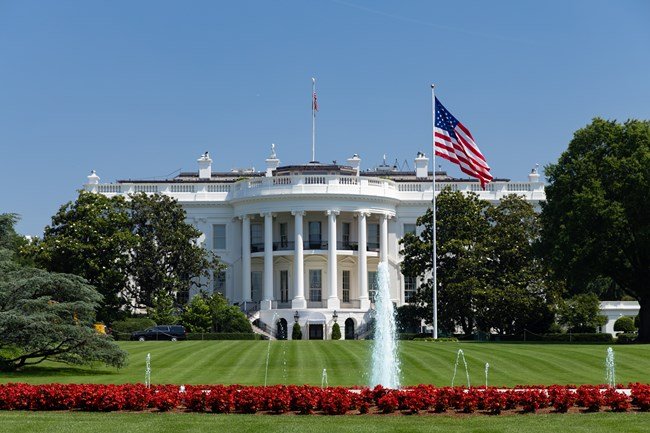
A U.S. federal judge has raised fresh concerns over the legality of President Donald Trump’s plan to construct a large ballroom at the White House, as he considers a renewed effort by preservation groups to halt the project. During a hearing on Tuesday, Richard Leon of the U.S. District Court expressed scepticism about the legal arguments presented by the Justice Department in defence of the $400 million development. He pointed to inconsistencies in the administration’s reasoning, describing the case as marked by “shifting theories” from the outset.

Get today's headlines by email

The planned ballroom, a 90,000-square-foot venue intended for state functions and major events, is being built on the site of the demolished East Wing. Construction began in October and is expected to continue through 2028, with most funding reportedly coming from private donors.

Dispute over legal authority
However, the National Trust for Historic Preservation has challenged the project in court, arguing that it violates federal requirements. The group says the administration failed to seek congressional approval and did not carry out mandated reviews or allow for public consultation.

Lawyers representing the preservationists accused the government of providing inconsistent explanations about who holds authority over the project. Attorney Thaddeus Heuer told the court officials had created confusion over several months before now, arguing that construction has progressed too far to be stopped.

Government defends project
In response, Justice Department lawyer Yaakov Roth maintained that the project rests on both public and private authority, describing it as having a “dual source of funding and dual source of authority.”

Judge Leon appeared unconvinced, calling that interpretation a “brazen” reading of the law. He emphasised the symbolic importance of the White House, describing it as an “iconic” national landmark and noting that the president acts as a steward rather than an owner of the property.

Ongoing legal battle
The courtroom exchange follows an earlier ruling in which Leon declined to block construction, citing procedural shortcomings in the preservationists’ initial complaint. He invited the group to revise its case, leading to the current legal challenge.

In his previous opinion, Leon noted that the administration had initially suggested constitutional grounds for the project before later abandoning that argument, further complicating the legal landscape.

The preservation group has now filed an updated complaint, again seeking to stop the construction. Government lawyers have urged the court not to intervene, citing national security considerations and practical difficulties in halting work already underway.

Decision expected soon
The dispute has drawn criticism from historians, preservation advocates and some lawmakers, particularly over the demolition of the East Wing and the perceived bypassing of established procedures.

Judge Leon indicated that he aims to issue a decision by the end of the month, which could determine whether construction continues or faces further legal obstacles.

Join the discussion?

Already a member?


Adapted by ASEAN Now. Source 18 March 2026
webfact
webfact
A U.S. federal judge has ordered the Trump administration to reinstate operations at Voice of America (VOA), reversing a move that had sidelined much of the government-funded broadcaster and placed hundreds of employees on administrative leave. In a ruling issued on Tuesday, Royce C. Lamberth directed the U.S. Agency for Global Media (USAGM) to submit a plan within a week to restore VOA’s broadcasting capacity. The outlet has been operating with only a limited staff since President Donald Trump signed an executive order last year effectively shutting down large parts of its operations.

Get today's headlines by email

The judge ruled that the administration’s actions to drastically reduce VOA’s workforce and programming were unlawful. More than 1,000 employees had been placed on leave, leaving the organisation functioning at what officials described as the “statutory minimum” level required by Congress.

Court rejects shutdown decision
Lamberth described the decision as “arbitrary and capricious,” stating that authorities failed to properly consider legal requirements governing VOA’s mandate, including its obligation to broadcast in specific languages and regions.

“Defendants have provided nothing approaching a principled basis for their decision,” he wrote in his judgement.

Leadership dispute and legal challenge
The ruling follows an earlier decision by Lamberth that Kari Lake, who had been selected by Trump to lead USAGM, lacked the authority to implement the shutdown because she had not been confirmed by the Senate.

Her actions, taken in response to the president’s directive, were central to the legal challenge brought by VOA staff. The case was supported by journalists including Patsy Widakuswara, the broadcaster’s White House bureau chief.

Widakuswara welcomed the ruling, saying staff were ready to rebuild the organisation and restore its global reach after months of disruption.

Administration response and next steps
Lake has previously criticised the court’s intervention and indicated that the decision would be appealed. Meanwhile, Trump has nominated Sarah Rogers, a State Department official, to lead USAGM, though the appointment requires Senate approval.

It remains unclear how quickly VOA can return to full operations, given the scale of the workforce reductions and programming cuts implemented over the past year.

Global broadcaster with long history
Founded during the Second World War, Voice of America has long served as a U.S.-funded international broadcaster, delivering news to audiences in countries with limited press freedom.

Before the shutdown, VOA operated in dozens of languages and reached hundreds of millions of people worldwide. The court’s ruling is expected to pave the way for the restoration of those services, though officials have acknowledged that rebuilding capacity and trust may take time.

Join the discussion?

Already a member?


Adapted by ASEAN Now. Source 18 March 2026
webfact
webfact
A shooting at Holloman Air Force Base has left one person dead and another injured, prompting a temporary lockdown of the military installation, officials said. The incident occurred on Tuesday evening near a convenience store on the base, located in southern New Mexico. Authorities responded after reports of an active shooter at approximately 5:30 p.m., according to a statement from the 49th Wing, the unit stationed at the base.

Get today's headlines by email

Following the initial reports, base officials swiftly implemented a lockdown as emergency personnel moved to secure the area. The wounded individual was transported for medical treatment, though their condition has not been disclosed.

Lockdown and emergency response
Military authorities later confirmed that the situation had been contained and that there was no ongoing threat. The lockdown was subsequently lifted once security teams determined the base was safe.
“Emergency personnel are responding to the situation, and there is no threat at this time,” the statement said.

Limited details released
Officials have not yet released the identities of those involved, nor have they provided further information about the circumstances surrounding the shooting. It remains unclear what led to the incident or whether any suspects are in custody.

The base convenience store where the shooting occurred has been closed indefinitely, according to a social media update from base authorities.

Key military installation
Holloman Air Force Base covers an area of roughly 93 square miles and plays a significant role in U.S. national security operations. It is home to the 49th Wing, which includes combat-ready personnel and supports a range of military missions.

The base is situated near the city of Alamogordo and is a major employer and strategic site in the region.

Investigation ongoing
Authorities have not said whether the shooting is being treated as an isolated incident or part of a broader investigation. Additional details are expected as officials continue to gather information.

The shooting adds to concerns about security incidents at military facilities, though officials emphasised that there is currently no wider danger to personnel or the surrounding community.

Join the discussion?

Already a member?


Adapted by ASEAN Now. Source 18 March 2026

webfact
webfact
A growing diplomatic rift between the United States and the United Kingdom over the war in Iran is casting uncertainty over a potential state visit by King Charles III to Washington. The tensions follow increasingly sharp criticism from U.S. President Donald Trump directed at British Prime Minister Keir Starmer, raising concerns in London about whether the visit should proceed as planned.

Get today's headlines by email

Earlier this year, Starmer had sought to cultivate a positive relationship with Trump, even presenting him with an invitation from the monarch for a second state visit to the UK. The move was widely seen as part of a broader strategy to maintain close ties with Washington and secure favourable outcomes on issues such as trade and security.

Strategy of engagement under strain
However, that approach now appears under pressure. Trump has publicly criticised Starmer’s leadership and questioned Britain’s reliability as an ally, remarks that have unsettled political figures in the UK.

Dispute over military support
The dispute stems largely from Britain’s reluctance to fully back U.S. military efforts against Iran. While the UK declined to allow the use of its bases for offensive operations—citing legal concerns—it did participate in defensive actions after its assets in the region came under attack.

Trump has since alternated between dismissing Britain’s offers of support and criticising London for not doing enough. He has also voiced frustration over the UK’s hesitation to contribute naval forces to secure the Strait of Hormuz, a key shipping route disrupted by the conflict.

Concerns over royal visit
Amid the escalating rhetoric, some British lawmakers have urged caution over the proposed visit by King Charles, which had been expected to coincide with celebrations marking the 250th anniversary of U.S. independence.

Emily Thornberry, a senior Labour MP, warned that the monarch could face embarrassment if tensions persist, suggesting the trip might need to be reconsidered or delayed.

Officials have not confirmed details of the visit, and Downing Street has declined to comment on future royal engagements.

Political reactions and shifting positions
The row has also prompted shifts in domestic political positions within the UK. Nigel Farage, initially supportive of joining U.S.-led military action, has since argued against British involvement in another foreign conflict.

Similarly, Conservative leader Kemi Badenoch, who had earlier backed participation, later criticised the tone of exchanges between Washington and London, describing the dispute as unproductive.

Uncertainty over next steps
Despite the tensions, Trump has indicated he expects King Charles to visit the United States soon, though no firm timeline has been announced.

Analysts say the situation places the British government in a difficult position—balancing the risk of diplomatic embarrassment against the potential fallout of postponing a high-profile visit.

As relations between the two allies come under strain, the decision on whether to proceed with the royal visit may hinge on whether both sides can stabilise ties in the coming weeks.

Join the discussion?

Already a member?


Adapted by ASEAN Now. Source 18 March 2026

webfact
webfact
Iran has launched missiles carrying cluster-type warheads at Tel Aviv, in what it described as retaliation for the killing of senior official Ali Larijani, marking a further escalation in the ongoing conflict with Israel and the United States. Iranian state media reported that the overnight strikes killed at least two people, bringing the total number of fatalities in Israel since the war began to at least 14.

Get today's headlines by email

According to a statement from Iran’s Islamic Revolutionary Guard Corps, the attack involved Khorramshahr-4 and Qadr missiles, both capable of deploying multiple warheads over a wide area. Israeli officials have previously accused Iran of using such munitions, which disperse smaller explosives mid-air and are difficult to intercept.

Retaliation following high-profile killing
The strikes came days after Iran confirmed the death of Larijani, who had been a central figure in national security decision-making. He was killed in an Israeli strike, alongside his son and deputy, Alireza Bayat.
The killing followed the earlier death of Iran’s Supreme Leader Ali Khamenei, further destabilising the country’s leadership during wartime.

Nuclear concerns and calls for restraint
In a separate development, Iran reported that a projectile struck near the Bushehr nuclear power plant but caused no damage or injuries. Rafael Grossi, head of the International Atomic Energy Agency, urged all sides to exercise maximum restraint to avoid the risk of a nuclear incident.

The United States and Israel have said that curbing Iran’s nuclear ambitions is a central objective of their military campaign, which began in late February.

Hardening positions on both sides
Iran’s new supreme leader, Mojtaba Khamenei, has reportedly rejected proposals to reduce tensions or agree to a ceasefire. According to officials, he said it was not the right time for peace and insisted that Iran would continue its resistance until its adversaries accepted defeat.

The conflict has already caused heavy casualties across the region. A U.S.-based monitoring group estimates that more than 3,000 people have been killed in Iran since the fighting began, while Israeli strikes have also caused significant loss of life in Lebanon.

Global impact and economic pressure
The war continues to disrupt global energy supplies, with the Strait of Hormuz—a key route for oil shipments—largely closed. Prices have surged sharply, raising concerns about inflation and economic instability worldwide.
U.S. President Donald Trump has criticised allied nations for declining to assist in securing the waterway, though he has also said Washington could act independently.

European Union foreign policy chief Kaja Kallas called for diplomatic solutions, warning of potential food, energy and fertiliser crises if the conflict persists.

Widening regional and global disruption
Iran has expanded its response beyond Israel, targeting Gulf states that host U.S. bases. Thousands of missile and drone attacks have reportedly struck infrastructure across the region, including ports, airports and oil facilities.
The United States military said it had carried out strikes on Iranian coastal positions to counter threats to shipping.

The broader fallout is being felt across global industries. Airlines have warned of rising fuel costs and potential route cuts, while international shipping faces severe disruption. Aid agencies, including the World Food Programme, have cautioned that prolonged conflict could push tens of millions of people into acute hunger.

As fighting shows no sign of easing, the escalation in attacks and leadership losses is raising fears of a prolonged and increasingly destabilising regional war.

Join the discussion?

Already a member?


Adapted by ASEAN Now. Source 18 March 2026
webfact
webfact
US President Donald Trump has sharply criticised the BBC, accusing it of producing misleading coverage as a legal dispute between the two sides continues.
Speaking at the White House, Mr Trump described the broadcaster in strongly critical terms while responding to questions about a defamation lawsuit he has filed over a television documentary.

Get today's headlines by email

Legal dispute over documentary
The case centres on an episode of the BBC’s Panorama programme broadcast in 2024, which drew controversy over its portrayal of comments made by Mr Trump following the 2020 US presidential election.
The programme was criticised for suggesting that the then former president had encouraged supporters to storm the US Capitol in January 2021 after losing the election to Joe Biden.
Mr Trump has denied that characterisation and launched a lawsuit seeking $10bn (£7.5bn) in damages.
The BBC has since filed a motion to dismiss the case, arguing against the claims made in the lawsuit.

BBC response and internal fallout
The controversy surrounding the programme led to significant internal repercussions at the broadcaster.
Director-general Tim Davie resigned following criticism that the documentary may have selectively edited footage of Mr Trump’s remarks.

BBC chairman Samir Shah also issued an apology, acknowledging what he described as an “error of judgment” in how the material had been presented.
He said the editing created the impression that Mr Trump had made a direct call for violent action, a characterisation that has been strongly disputed by the former president and his supporters.

Trump’s latest criticism
Mr Trump renewed his criticism of the BBC while hosting Irish Prime Minister Micheál Martin in the Oval Office.
He told reporters that footage used in the documentary had been manipulated and claimed that artificial intelligence may have been used to generate certain clips. He did not provide evidence to support that claim.

The US president also criticised the BBC’s reporting on the ongoing conflict involving the United States and Iran, describing it as inaccurate.
According to Mr Trump, coverage of the war did not reflect what he characterised as US military success.

Broader tensions with media
Mr Trump has frequently criticised media organisations, both in the United States and internationally, accusing them of bias and misrepresentation.
His use of the term “fake news” has been a recurring feature of his political rhetoric, often directed at outlets he considers critical of his administration.

The latest comments come as tensions remain high between the White House and sections of the media over coverage of both domestic and international issues.

Ongoing proceedings
It remains unclear how the legal case between Mr Trump and the BBC will proceed.
When asked about the lawsuit, Mr Trump said he would wait to see how the situation develops.

The dispute highlights broader questions about media accountability, editorial standards and the use of footage in political reporting, particularly in cases involving high-profile public figures.

Join the discussion?

Already a member?


Adapted by ASEAN Now. Source 18 March 2026

ASEAN NOW News
ASEAN NOW News
U.S. President Donald Trump has said the United States no longer needs assistance from allies to protect the Strait of Hormuz, reversing an earlier appeal for international support as tensions with Iran escalate. Speaking at the White House, Trump said, “We don’t need any help, actually,” just a day after urging other nations to join efforts to safeguard the strategic waterway, a key route for global oil shipments.

Get today's headlines by email

The shift follows a muted response from U.S. partners, with several European leaders declining to participate in military operations linked to the conflict.

Allies hesitant to join effort
France’s president, Emmanuel Macron, said his country would not take part in efforts to reopen the strait during the current hostilities, though it could assist after fighting ends. Germany’s defence minister, Boris Pistorius, also distanced Berlin from involvement, saying the conflict was not one his country had initiated.

The reluctance highlights divisions within Western alliances as Washington seeks support for its campaign against Iran, launched alongside Israel in late February.

‘America First’ approach under scrutiny
The situation is being seen as a test of Trump’s long-standing “America First” foreign policy, which emphasises reduced reliance on international alliances. The president has frequently criticised what he views as unequal burdens within partnerships such as NATO.

A White House spokesperson said the administration would continue to prioritise U.S. national security “with or without” allied backing, pointing to ongoing military operations in the region.

Trump had previously suggested that multiple countries were prepared to assist, but no formal coalition has been announced. His change in stance comes as efforts to rally international support appear to have stalled.

Strategic and economic stakes
The Strait of Hormuz remains a critical chokepoint for global energy supplies, and recent attacks have disrupted shipping, contributing to rising fuel prices. The economic impact has added domestic pressure on the administration ahead of upcoming congressional elections.

Republican Senator Lindsey Graham indicated tensions behind the scenes, saying Trump was deeply frustrated by the lack of allied support and warning of broader consequences for both Europe and the United States if the route remains unstable.

Strained diplomatic relations
The dispute reflects broader strains between Washington and its European allies. Critics say the administration’s approach has complicated coalition-building, particularly as the military campaign began without extensive prior consultation.

Diplomats have suggested that trust has been weakened in recent months, making cooperation more difficult. Some also questioned whether foreign naval deployments would be sufficient to secure the strait, given the nature of the threats involved.

Despite differences, officials on both sides acknowledge the importance of maintaining stability in the region. However, it remains uncertain whether the U.S. will renew efforts to build a coalition or continue to act independently.

Join the discussion?

Already a member?


Adapted by ASEAN Now. Source 18 March 2026
webfact
webfact
A federal judge has struck down an Arkansas law mandating the display of the Ten Commandments in public school classrooms, marking a significant development in an ongoing legal battle over religion in U.S. education. In his ruling, U.S. District Judge Timothy L. Brooks concluded that the requirement violated constitutional principles, stating there was no valid justification for placing religious texts in a wide range of academic settings.


Get today's headlines by email

The law, passed in 2025, required all public elementary and secondary schools in Arkansas to prominently display the Ten Commandments in classrooms and libraries. It was challenged by a group of families from diverse religious and nonreligious backgrounds, who argued it breached the separation of church and state.

Court ruling challenges constitutionality
In his written judgment, Brooks said that displaying the Ten Commandments—even with historical context—could not be justified in subjects such as science, languages or vocational classes. He added that there was no constitutional framework under which such a mandate could stand.

The decision effectively blocks enforcement of the law, although it remains unclear whether the ruling applies statewide or only to the specific school districts involved in the lawsuit.

A spokesperson for the American Civil Liberties Union (ACLU) of Arkansas, which supported the legal challenge, said the judgment made clear the measure was unconstitutional and warned schools against proceeding with displays.

Political response and appeal plans
Arkansas Governor Sarah Huckabee Sanders said the state would appeal the decision, pledging to defend what she described as Arkansas’s values.
The legislation is part of a broader push by Republican lawmakers, including Donald Trump, to expand the presence of religious content in public schools. Similar laws have been enacted in other states, including Louisiana and Texas, prompting a wave of legal challenges.

Wider legal battles across states
In Louisiana, a comparable law requiring Ten Commandments displays recently cleared a legal hurdle after a federal appeals court lifted a previous block, allowing implementation to move forward. Governor Jeff Landry has since instructed schools to comply, although some institutions remain cautious due to ongoing litigation.

Meanwhile, in Texas, a similar mandate has been partially enforced. While some school districts have installed the displays, others have been prevented from doing so following court injunctions. Legal proceedings are still ongoing, with federal appeals judges reviewing the case.

Debate over religion in public education
The issue has reignited a long-standing debate in the United States over the role of religion in government institutions. Supporters argue that the Ten Commandments hold historical and cultural significance, while critics maintain that mandatory displays in public schools violate constitutional protections.

The Arkansas ruling adds to a patchwork of legal decisions across the country, increasing the likelihood that the matter could ultimately be decided by the U.S. Supreme Court.

Join the discussion?

Already a member?


Adapted by ASEAN Now. Source 18 March 2026
webfact
webfact
The death of senior Iranian official Ali Larijani in an Israeli airstrike has deepened uncertainty within Iran’s leadership, removing a key strategist at a pivotal moment for the country. Larijani, who served as secretary of Iran’s Supreme National Security Council, played a central role in shaping decisions on defence, diplomacy and national security. Though not a military commander, he was widely regarded as one of the Islamic Republic’s most influential policymakers, particularly in managing tensions with the United States and Israel.

Get today's headlines by email

His death follows the reported killing of Iran’s Supreme Leader Ali Khamenei in late February, compounding a growing leadership crisis. In recent weeks, multiple senior officials and commanders have been killed, suggesting a sustained effort to weaken Iran’s governing structure during wartime.

Leadership vacuum amid ongoing conflict
State media confirmed Larijani’s death as Israel intensified strikes targeting key figures. His loss leaves a significant gap in decision-making at a time when Iran faces overlapping internal and external pressures.

Despite his reputation as a hardliner, Larijani was often described domestically as a pragmatic figure, combining ideological commitment with a measured, technocratic approach. He was involved in diplomatic efforts, including engagement linked to Iran’s long-term co-operation agreement with China, while maintaining scepticism toward Western powers.

Three major crises left unresolved
At the time of his death, Larijani was overseeing several critical challenges. Chief among them was the ongoing war, where he had advocated for a prolonged conflict and potential expansion across the region, including threats to disrupt shipping through the Strait of Hormuz.

He was also managing a wave of domestic unrest that had escalated from economic discontent into broader anti-government protests. Authorities responded with a crackdown that reportedly resulted in thousands of deaths.

In addition, Larijani was involved in navigating Iran’s nuclear programme and stalled indirect negotiations with Washington, both of which have been disrupted by recent hostilities.

Shift towards military influence
His removal raises questions about how these crises will now be handled. Analysts suggest power could shift further toward the armed forces, particularly as the government struggles to maintain continuity.

Iran’s president, Masoud Pezeshkian, has indicated that military units may be granted broader authority to act if senior leadership is incapacitated. This could lead to faster decision-making but potentially with less central coordination.

Meanwhile, signs of uncertainty over succession persist. Public appearances by the new supreme leader, Mojtaba Khamenei, have been limited, and official announcements have been delayed, fuelling speculation over internal stability.

Risk of further escalation
In the immediate aftermath, Iran’s military leadership has signalled a strong response. Army chief Amir Hatami warned of “decisive” retaliation, raising the prospect of further escalation in the conflict.

While Iran has demonstrated resilience, including through disruptions to global energy markets, continued strikes and leadership losses could undermine its ability to respond effectively over time.

The death of Larijani is therefore seen as more than the loss of a single official. It highlights mounting pressure on Iran’s leadership and increases the risk of instability, both in the conduct of the war and within the country itself.

Join the discussion?

Already a member?


Adapted by ASEAN Now. Source 18 March 2026

webfact
webfact
Members of the Scottish Parliament have voted against legalising assisted dying, rejecting proposals that would have made Scotland the first part of the UK to allow the practice. The bill, introduced by Liam McArthur of the Scottish Liberal Democrats, was defeated by 69 votes to 57 following an emotional and closely watched debate at Holyrood.

Get today's headlines by email

The proposed legislation would have allowed terminally ill, mentally competent adults to seek medical assistance to end their lives. It included provisions requiring patients to make two formal declarations and undergo medical assessments to ensure they were not being coerced.

Concerns over coercion and safeguards
However, opponents repeatedly raised concerns that vulnerable individuals could feel pressured into choosing assisted death. Jeremy Balfour warned that the bill risked opening a “pandora’s box” and argued there could be no adequate protection against coercion.

Other critics highlighted the need to prioritise improvements in palliative care, with some questioning whether patients could truly make a free choice without access to high-quality end-of-life support.

Ruth Maguire, who has been diagnosed with cancer, said the decision could not be considered voluntary if proper care options were lacking, while Pam Duncan-Glancy urged lawmakers to focus on making it “easier to live than to die”.

Supporters argue for choice and dignity
Backers of the bill argued it would provide compassionate options for those experiencing severe suffering at the end of life. McArthur pointed to cases of patients enduring extreme pain and said the legislation offered a carefully regulated framework.

Supporters also stressed that assisted dying and improved palliative care were not mutually exclusive, with Alex Cole-Hamilton describing the proposal as containing strong safeguards.

Some MSPs shared personal experiences during the debate. George Adam spoke about his wife’s condition, saying individuals facing unbearable suffering should have the option to choose how they die.

Political divisions and outcome
MSPs were given a free vote, meaning they were not required to follow party lines. Although the bill had passed an earlier stage by a narrow margin, several lawmakers who had initially supported further debate ultimately voted against it in the final decision.

John Swinney, Scotland’s First Minister, had already indicated his opposition and later said he was relieved by the outcome.

The vote marks the third attempt to legalise assisted dying in Scotland since devolution, but the first to reach such an advanced stage in the legislative process.

Debate set to continue
Despite the defeat, campaigners on both sides said the issue would remain part of public debate. McArthur described himself as “devastated” and suggested some MSPs might later regret their decision.

Advocacy group Dignity in Dying said the result was a setback for those seeking greater choice at the end of life. In contrast, Care Not Killing welcomed the outcome, arguing the bill posed risks to vulnerable people.

The result leaves assisted dying illegal across Scotland, while separate proposals continue to be considered elsewhere in the UK.

Join the discussion?

Already a member?


Adapted by ASEAN Now. Source 18 March 2026
webfact
webfact
Israeli airstrikes in Beirut have killed at least six people and wounded more than 20 others, according to Lebanese authorities, as Israel intensifies its campaign against the Iran-backed group Hezbollah. Lebanon’s health ministry said the casualties resulted from strikes in central districts of the capital early on Wednesday, marking a further expansion of Israeli operations beyond the city’s southern suburbs.

Get today's headlines by email

The attacks struck multiple areas across Beirut in the early hours. An airstrike at around 1:30 a.m. hit the Zuqaq al-Blat district, destroying several floors of a residential building. A separate strike in the nearby Basta area caused heavy damage to at least two floors of another building.

Central districts targeted overnight
No advance warning was reported for either of these attacks, which together accounted for the six fatalities and 24 injuries cited by officials.
Later, at approximately 5:30 a.m., a more powerful strike levelled an entire building in the Bachoura neighbourhood, close to the city centre. The Israeli military had issued a warning ahead of that attack, identifying the site as a Hezbollah-linked facility. No immediate casualties were reported from that strike.
Expanding scope of strikes
While Israeli operations in Beirut have largely focused on the southern suburbs, which are considered a stronghold of Hezbollah, there have been a growing number of strikes in central areas since the conflict widened earlier this month.

Explosions were also reported overnight in the southern outskirts of the capital, where heavy bombardment lit up the skyline.

The escalation follows the broader regional conflict that intensified on 2 March, when Hezbollah entered the war in support of Iran.

Rising toll across Lebanon
Lebanese authorities say more than 900 people have been killed nationwide since the start of the latest hostilities, with over one million residents displaced.

Further strikes were reported outside the capital. In the eastern city of Baalbek, four people were killed, while additional attacks in southern Lebanon left 10 dead across three locations, according to state media citing the health ministry.

Israel has also reported casualties among its forces, stating that two soldiers were killed during operations in southern Lebanon. However, there have been no confirmed civilian deaths in Israel linked to Hezbollah’s rocket and drone attacks.

Ongoing regional tensions
The continued exchanges highlight the intensifying confrontation between Israel and Hezbollah, raising concerns about further escalation across the region.

As strikes extend deeper into Beirut, the risk to civilians and infrastructure in densely populated areas remains a growing concern.

Join the discussion?

Already a member?


Adapted by ASEAN Now. Source 18 March 2026
webfact
webfact
John Roberts has warned that personal hostility directed at judges poses a serious risk to the judicial system, calling for an end to such attacks. Speaking at an event in Houston, the head of the US Supreme Court said criticism of court rulings was both expected and healthy but warned that remarks targeting judges personally could have dangerous consequences. “The problem sometimes is that the criticism can move from a focus on legal analysis to personalities,” Roberts said. “That, frankly, can be quite dangerous.”


Get today's headlines by email

Although Roberts did not name individuals, his comments come shortly after renewed criticism from Donald Trump, who has repeatedly attacked judges over rulings affecting his administration.

Concerns over rising rhetoric
The president recently criticised James Boasberg, who blocked subpoenas tied to an investigation involving Federal Reserve Chair Jerome Powell. Trump called for disciplinary action against the judge and questioned the integrity of others involved in similar cases.

Roberts stressed that while judges’ decisions should be open to scrutiny, personal attacks undermine the role of the judiciary. “Judges around the country work very hard to get it right,” he said, adding that their rulings remain subject to public and legal challenge.

Tensions between courts and executive
The remarks highlight ongoing tensions between the judiciary and the executive branch. Since returning to office, Trump and allies have criticised several court decisions that have slowed or blocked elements of his policy agenda.

In previous instances, Trump has even called for the impeachment of judges whose rulings he opposed. Roberts has publicly pushed back on such suggestions, stating that impeachment is not an appropriate response to disagreement over legal decisions.

Recent rulings and criticism
Despite ideological alignment in some cases, the Supreme Court has not consistently ruled in Trump’s favour. In a recent decision, the court struck down his administration’s global tariff measures, finding them unlawful.

Following that ruling, Trump criticised several justices, including Neil Gorsuch and Amy Coney Barrett, both of whom he had appointed during his first term.

Roberts’ comments underline concerns about the tone of political discourse surrounding the courts, as debates over judicial independence and accountability continue in the United States.

Join the discussion?

Already a member?


Adapted by ASEAN Now. Source 18 March 2026

webfact
webfact
Joe Kent, director of the National Counterterrorism Center, has resigned from his post in protest over the ongoing conflict with Iran, arguing the country did not pose an immediate threat to the United States. In a resignation letter published on social media, Kent said he could not support the war, claiming it had been driven by external pressure rather than clear national security concerns. “I cannot in good conscience support the ongoing war in Iran,” he wrote, adding that he believed the threat from Tehran had been overstated.

Get today's headlines by email

Kent, who served under Director of National Intelligence Tulsi Gabbard, argued that the decision to engage militarily had been influenced by pro-war messaging and lobbying efforts linked to Israel. He described what he called a “misinformation campaign” that he said contributed to shaping US policy.
He warned that the situation risked repeating past conflicts, drawing comparisons with the Iraq war and cautioning against prolonged military engagement.

Kent also praised aspects of Donald Trump’s earlier foreign policy, including targeted operations against militant leaders and efforts to avoid extended conflicts. However, he accused the current administration of departing from that approach.

Background and political profile
A former special forces warrant officer, Kent has extensive military experience. His wife, Shannon Kent, a US Navy cryptologic technician, was killed in a bombing in Syria in 2019.

Following her death, Kent entered politics and ran twice for Congress in Washington state, though he was unsuccessful in both attempts.

His political career drew controversy due to links with far-right figures and his support for disputed claims about the 2020 US election and the January 6 Capitol attack.

Reaction from the White House
President Trump responded to the resignation during a White House event, saying he had reviewed Kent’s statement and disagreed with his assessment of Iran.

Trump said he considered Iran a significant threat and suggested Kent’s views demonstrated poor judgement on national security. He added that it was “a good thing” Kent had stepped down, describing him as weak on security.

The resignation comes amid heightened tensions surrounding the Iran conflict, which has increasingly dominated US foreign policy and sparked debate within political and security circles.

Join the discussion?

Already a member?


Adapted by ASEAN Now. Source 18 March 2026

webfact
webfact
Volodymyr Zelensky is due to visit the United Kingdom on Tuesday for talks with Prime Minister Keir Starmer, where the two leaders are expected to sign a new defence agreement focused on countering drone threats. According to Downing Street, the partnership will combine Ukraine’s battlefield experience with the UK’s industrial capabilities to develop and produce drones and related technologies.

Get today's headlines by email

The planned agreement reflects the growing importance of drones and electronic warfare in modern conflicts. Officials say the collaboration will aim to strengthen Ukraine’s defences against Russia while also enhancing the UK’s own preparedness for future security challenges.

Focus on evolving battlefield threats
As part of the initiative, Britain will contribute £500,000 towards the creation of an artificial intelligence centre of excellence in Kyiv. UK Defence Secretary John Healey said it was increasingly vital to draw on Ukraine’s experience in adapting to rapidly changing battlefield conditions.

Starmer also highlighted the broader implications of the conflict, stating that drone warfare and technological innovation had become central to both national security and economic resilience.

Continued support for Ukraine
During the visit, the two leaders are also expected to discuss ongoing military and political support for Ukraine as it continues to resist Russia’s full-scale invasion, now entering its fourth year.

Zelensky has been touring European capitals in recent weeks, seeking to maintain international backing at a time when global attention has been partly diverted by the ongoing conflict involving the United States, Israel and Iran.

In a recent address, the Ukrainian president said strengthening air defences remained a priority and emphasised the need for sustained pressure on Russia to move towards peace.

Expanding international cooperation
The UK-Ukraine partnership is also expected to involve cooperation with third countries, as part of wider efforts to improve global security and counter emerging threats.

Ukraine has increasingly positioned itself as a leader in countering low-cost drone attacks, having developed tactics using mass-produced interceptor drones to defend its airspace.

Ukrainian military specialists have recently been deployed to countries including Qatar, the United Arab Emirates and Saudi Arabia to share expertise on defending against drone strikes, particularly those linked to Iran.

The agreement to be signed in London is seen as part of a broader push to formalise that expertise into long-term defence cooperation.

Join the discussion?

Already a member?


Adapted by ASEAN Now. Source 17 March 2026
webfact
webfact

Account

Navigation

Search

Search

Configure browser push notifications

Chrome (Android)
  1. Tap the lock icon next to the address bar.
  2. Tap Permissions → Notifications.
  3. Adjust your preference.
Chrome (Desktop)
  1. Click the padlock icon in the address bar.
  2. Select Site settings.
  3. Find Notifications and adjust your preference.