



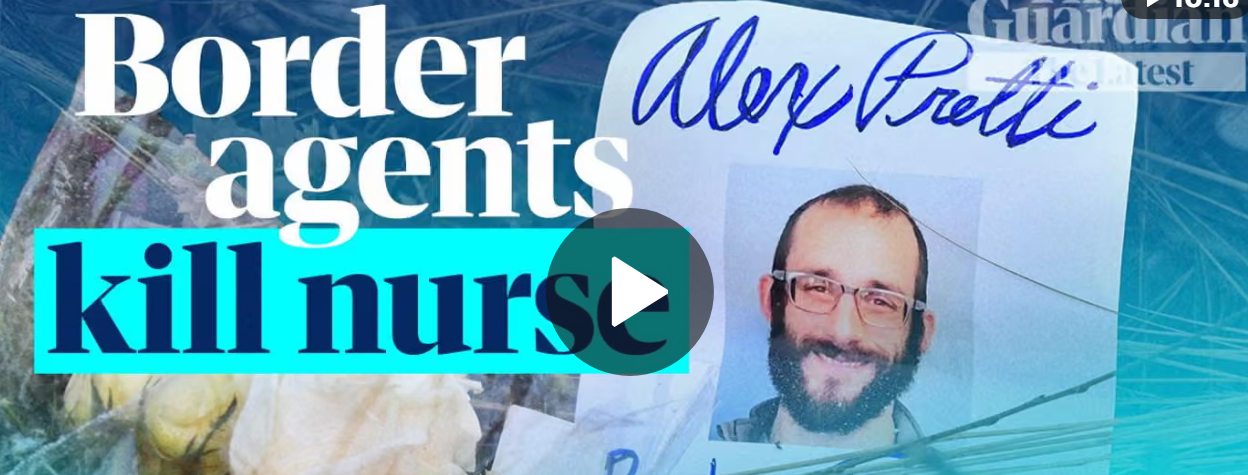

The fatal shooting of Alex Pretti by Border Patrol agents in Minneapolis has sparked intense debate over federal response tactics during protests. Pretti, a 37-year-old ICU nurse, was shot and killed after being pinned down on a cold street. A video shows agents retrieving a gun from Pretti's holster before firing point-blank, leaving him dead on the sidewalk.
Opinions among policing experts are sharply divided. Some claim the shooting amounts to "murder," while others withhold judgment pending clarification on the threat perceived by the officer who fired. Chuck Wexler of the Police Executive Research Forum stresses the urgent need to uncover why agents felt it necessary to use lethal force.
This incident has resurfaced concerns about whether immigration enforcement officers are sufficiently trained for protest scenarios. Former Boston police commander Tom Nolan criticized the prevailing use of heavy-handed tactics by federal agents, showcasing a broader pattern of inadequacy in protests.
The issue extends beyond Minneapolis. Jason Houser, a former DHS counterterrorism official, noted the lack of centralized command and poor coordination with local law enforcement. He emphasized that agents are often thrust into high-stress situations without adequate preparation, which compromises their ability to handle such encounters safely.
Despite requests for comment, DHS has remained silent, though officials have previously stated their aim to de-escalate tensions as they navigate President Trump’s aggressive immigration policies. Gregory Bovino, Border Patrol commander, stated that the involved agent, with eight years of service, had extensive training as a range safety officer.
The confrontation began as Pretti filmed officers and intervened for a person on the ground. Experts like criminologist Tod Burke and use-of-force witness Mickie McComb argue that, once disarmed, there was no longer a justification for deadly force. McComb insists, “If you disarm him and he’s not reaching for a weapon, you can’t use deadly force.”
David Klinger, a former police officer, highlighted the complex dynamics officers face. He noted, “This was tense, this was uncertain, this was rapidly evolving.” His comments underscore the chaotic nature of such incidents and the need for careful examination of how decisions were made.
The controversy has led to renewed calls for rigorous investigation. The unusual decision for DHS to lead the investigation, typically falling under FBI jurisdiction, has added to the complexity, especially after Minnesota state investigators faced barriers accessing the scene with a warrant.
As the situation unfolds, the case of Alex Pretti highlights systemic issues within federal enforcement during protests. The broader implications reverberate across national discussions about police practices and accountability, emphasizing the need for reform and better training standards.
Ultimately, understanding the decisions made during Pretti’s confrontation and addressing identified shortcomings could prevent future tragedies and build trust in law enforcement.
Key Takeaways:
Experts clash over labeling Pretti’s shooting as "murder" or justified!
Training gaps and coordination failures spotlighted in federal actions!
Calls grow for thorough investigation and reform in enforcement tactics!


Adapted by ASEAN Now from Source 2026-01-26

