



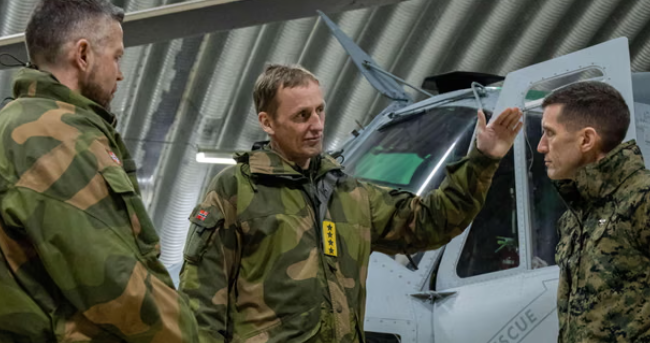

Norwegian Defence Chief Highlights Potential Russian Threats
General Eirik Kristoffersen, Norway's chief of defence, has issued a stark warning about the possibility of a Russian invasion aimed at protecting nuclear assets in the far north. While Russia does not show conquest ambitions akin to those in Ukraine, its nuclear arsenal on the Kola Peninsula, near the Norwegian border, presents a strategic vulnerability.
Kristoffersen outlined the importance of these nuclear resources, suggesting their protection could lead to aggressive actions by Moscow. "We don’t take that off the table," he stated, referencing scenarios where Russia might act to safeguard its second-strike capabilities. This highlights the broader strategic calculations that shape tensions in the region.
In a comprehensive interview with the Guardian, Kristoffersen also criticized remarks made by former U.S. President Donald Trump concerning Greenland. He dismissed Trump’s assertions about allied roles in Afghanistan and emphasized Norway's significant contributions, including frontline missions and substantial sacrifices.
The geopolitical landscape has shifted significantly, especially with Russia's invasion of Ukraine. Norway has responded by bolstering its defenses and strengthening alliances with Sweden and Finland, who have joined NATO. Kristoffersen stressed the dual nature of the threats, combining traditional military risks with modern hybrid tactics.
Despite these challenges, Norway maintains open lines of communication with Russia, particularly regarding search and rescue missions in the Barents Sea. Kristoffersen has advocated for a military hotline between the nations to avoid accidental escalations, noting that recent airspace violations were likely due to pilot inexperience rather than intentional aggression.
Regarding the Svalbard archipelago, Kristoffersen confirmed Norway's adherence to the 1920 treaty prohibiting its militarization. He dismissed Russian accusations of stealth militarisation as unfounded, asserting that Moscow does not genuinely believe in these claims, but uses them for propaganda purposes.
Addressing Trump’s broader comments on Greenland, Kristoffersen found the claims of military designs by China and Russia "very strange." He reinforced that Norway’s intelligence services have a comprehensive view of Arctic activities, focusing on traditional Russian operations rather than new threats in Greenland.
French President Emmanuel Macron has added to the dialogue, urging European nations to stand firm against intimidation and strategic pressures. Macron described a "Greenland moment," warning that perceived threats could lead to increased dependency without proper resistance.
Kristoffersen’s insights underline the complexities involved in maintaining Arctic security, particularly given the growing geopolitical tensions. By advocating for preparedness, strong alliances, and channels of communication, Norway seeks to manage these challenges while preventing unnecessary escalations.
As the Arctic continues to be a focal point of strategic interest, the role of nations like Norway, with its balanced approach of resilience and diplomacy, becomes crucial. The broader international community watches closely, recognizing that developments in this region have significant implications for global stability.
Key Takeaways:
Norway warns of potential Russian moves to protect nuclear assets.
Emphasis on strong NATO alliances and Arctic security preparedness.
Open communication with Russia crucial in managing tensions.


Adapted by ASEAN Now from Source 2026-02.10

