



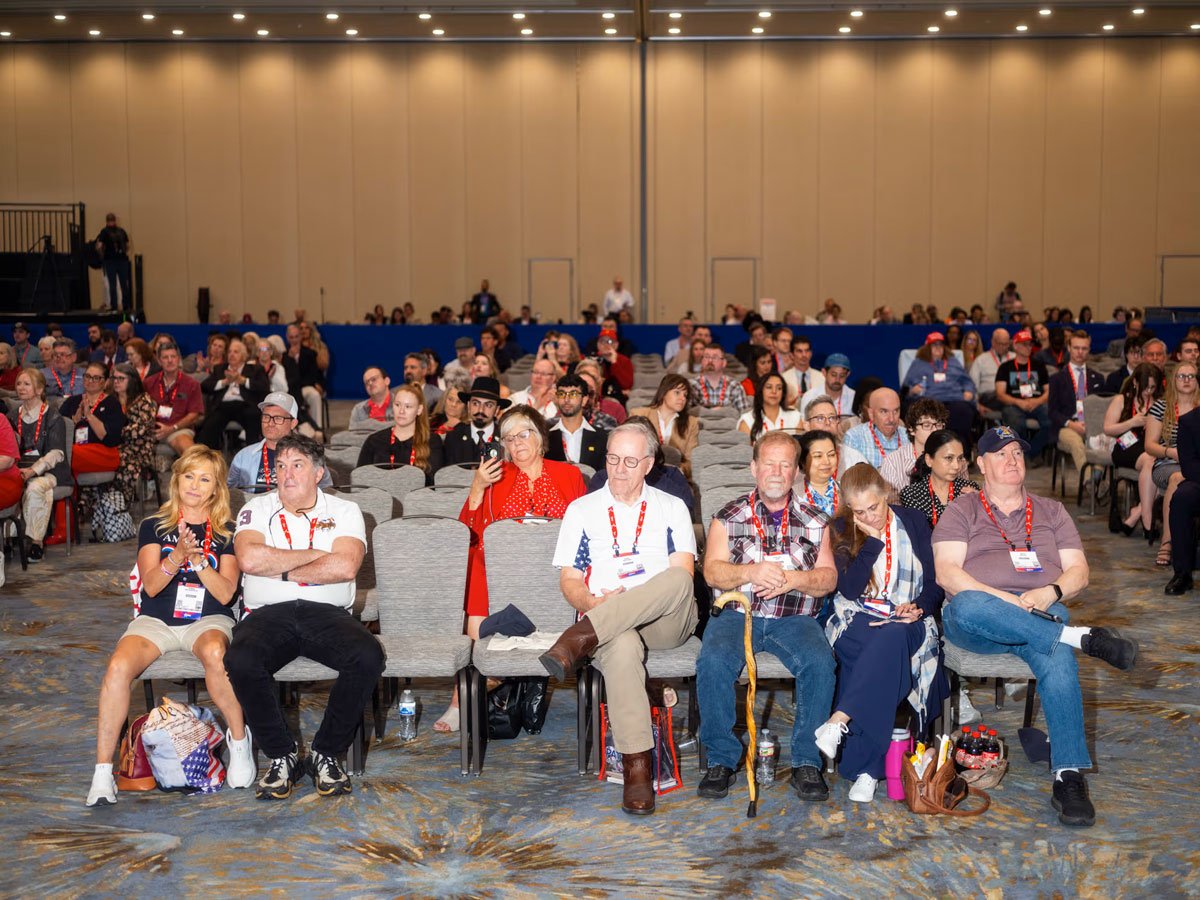

Supporters of Donald Trump attending the Conservative Political Action Conference expressed strong loyalty to the US president while voicing concern about the impact of the war with Iran.
Get today's headlines by email 
Many activists said they trusted Trump’s decision to launch military action but hoped the conflict would end quickly and avoid deeper US involvement.
Attendees said the best outcome would involve a short campaign, falling fuel prices and no deployment of American ground troops. Some also said they hoped the Iranian public would overthrow the country’s leadership.
Support for Trump mixed with unease
However, several participants acknowledged uncertainty over how the conflict might develop.
Kyle Sims, a Republican strategist from Texas, said he supported Trump’s handling of the war but had mixed feelings about the broader consequences.
He said economic pressures, including high grocery prices, remain a major concern for many Americans.
Sims added he opposed sending US troops into Iran and warned against repeating long military campaigns similar to those in Iraq and Afghanistan.
War exposes divisions among Republicans
The conflict has also highlighted differences within the Republican Party, where some factions question the risks of military escalation.
Participants at CPAC said internal divisions could affect the party’s prospects in the upcoming midterm elections.
Ron Eller, a Republican congressional candidate from Mississippi, said rising fuel costs were already causing political tension.
He noted that filling his truck recently cost about $120, reflecting the economic strain many voters are experiencing.
According to Eller, economic concerns could influence voting behaviour in the midterm elections because many voters prioritise their household finances.
He said stabilising energy markets and reopening shipping routes such as the Strait of Hormuz would help ease pressure.
Calls to avoid a prolonged war
Several speakers warned that an extended conflict could erode public support.
Mercedes Schlapp said Americans do not want a prolonged war, raising the issue during a panel discussion about Iran.
Some participants argued that the preferred outcome would be a domestic uprising inside Iran rather than direct US intervention to change the government.
Former White House adviser Steve Bannon told conference attendees that Americans should support Trump but also weigh the potential costs of the conflict.
Bannon said the war could escalate to the point where US forces might be required to operate near strategic areas such as the Strait of Hormuz.
Strong backing remains among activists
Despite the concerns, many activists voiced unwavering support for the president.
Douglas Hoyt, a Trump supporter from West Virginia, said he fully trusted the president’s decisions and would continue backing him.
Public figures also defended the administration’s actions. Actor Dean Cain argued that Iran had long been hostile toward the United States and said military action was necessary to address the threat.
Another speaker, Reza Pahlavi, urged continued pressure on Iran’s leadership and called on supporters not to abandon the campaign.
Pahlavi, the son of Iran’s last monarch, said the current leadership in Tehran was weakening and urged Western supporters to maintain their approach.
Some attendees acknowledged that higher fuel prices could test public patience.
Angela Paxton, a state senator in Texas, said voters may tolerate economic pressure temporarily if they believe the conflict serves a broader national purpose.
But she warned public backing could weaken if the war drags on.
Join the discussion? 
Already a member? 
 Adapted by ASEAN Now. Source 29 March 2026