Skip to content
View in the app

A better way to browse. Learn more.

ASEAN NOW

A full-screen app on your home screen with push notifications, badges and more.

To install this app on iOS and iPadOS
  1. Tap the Share icon in Safari
  2. Scroll the menu and tap Add to Home Screen.
  3. Tap Add in the top-right corner.
To install this app on Android
  1. Tap the 3-dot menu (⋮) in the top-right corner of the browser.
  2. Tap Add to Home screen or Install app.
  3. Confirm by tapping Install.

Thailand News

All the latest news stories from Thailand are written in English. Fresh news and stories from around the kingdom brought to you daily.
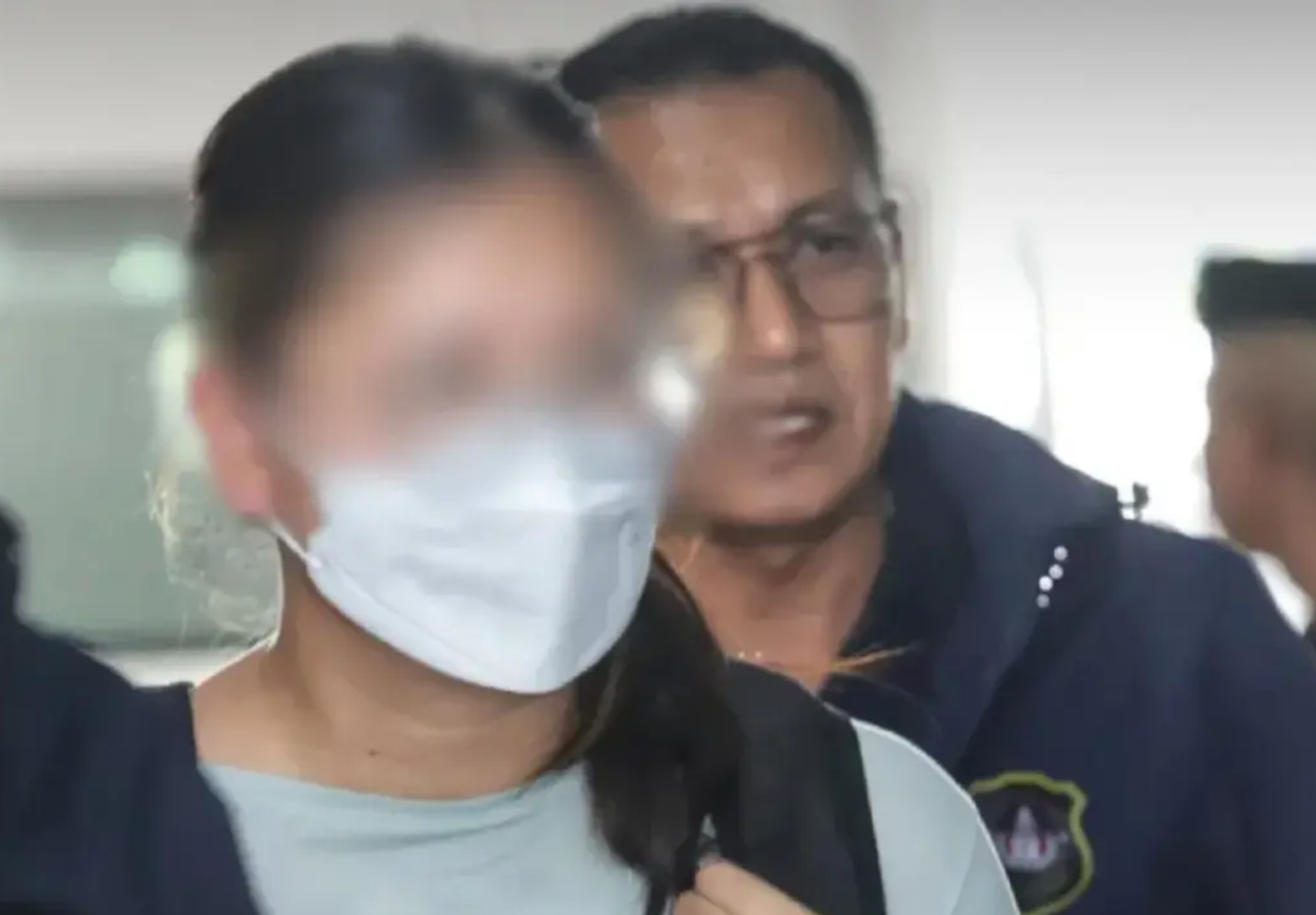
Tourist Police have arrested a 36-year-old Indian man in Pattaya for allegedly working as a fortune teller without a permit and charging tourists for supposed bad-luck rituals.

Mr Singh was detained at a coffee shop in Pattaya on 16 July after officers said they found him reading palms, examining faces and predicting visitors' fortunes. He admitted that he had been working as a fortune teller, police said.

The operation followed complaints from residents and tourists about South Asian men, particularly Indians, approaching people at beaches, restaurants and coffee shops while dressed like religious figures or wearing religious head coverings.

Claims of bad luck and costly rituals

According to Tourist Police, the group would tell tourists they were facing misfortune or had poor luck, before offering fortune-telling services and ceremonies intended to remove the problem.

Officers said the suspected tactic included giving people red thread, sacred cloth or papers marked with lucky numbers to build trust. They would then demand a "teacher's fee" from 199 baht, followed by offers of additional karma-cleansing ceremonies costing thousands of baht.


Police said some people who refused were allegedly pressured or intimidated into paying.

At 1.20pm on 16 July, Tourist Police investigators entered the Pattaya coffee shop after observing and recording Mr Singh providing readings to tourists. They then checked his passport and work permit.

Police said he did not hold a work permit. Two tourists who had used his services told officers that he had approached them claiming they were facing bad luck, then charged each of them a 199-baht fee. Both transferred 200 baht each to him.

He then allegedly offered a further karma-removal ceremony for 1,900 baht, but the tourists declined because they did not have enough money.

Charges follow nationwide crackdown order

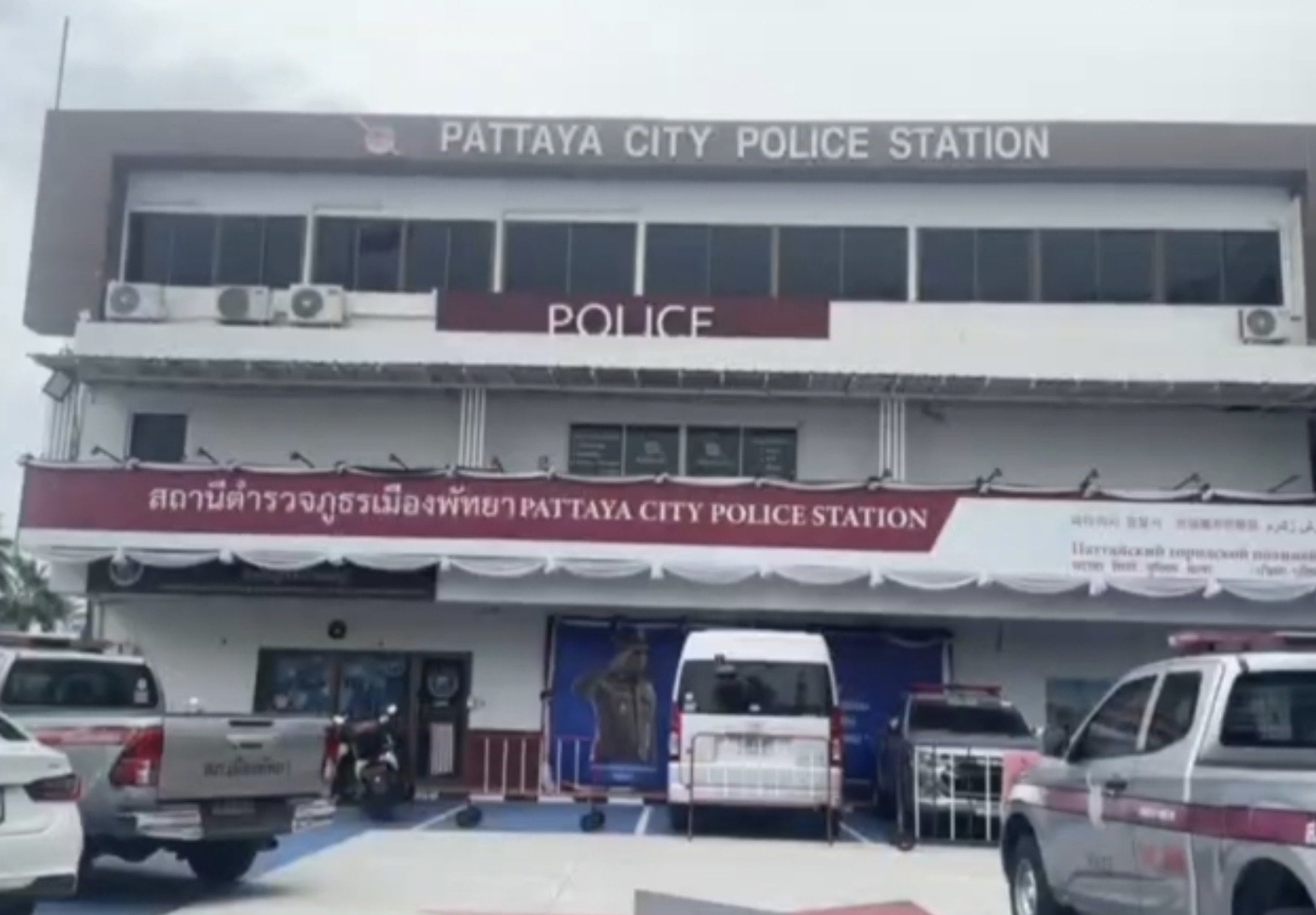
Mr Singh was charged with working as a foreigner without permission and working without a work permit. He was handed to investigators at Pattaya City Police Station for legal proceedings.

The arrest came after national police chief Pol Gen Kittirat Phanphet ordered police units nationwide to intensify an "examine, mobilise and sweep" operation targeting foreigners illegally employed in Thailand and transnational crime.

Tourist Police commissioner Pol Lt Gen Saksira Pheuk-um had instructed an investigation team led by Pol Col Man Rotthong and Pol Lt Col Piyapong Raksa to investigate complaints in Pattaya.


Pictures courtesy of Amarin

Advice for tourists and expats

For foreign visitors and residents, the case is a reminder to be cautious when strangers approach with unsolicited warnings about bad luck, karma or a need for cleansing rituals. Such approaches can occur in busy tourist areas, including beaches and cafes.

Tourist Police advised people not to hand over money or be persuaded into rituals, and to report suspicious approaches through the 24-hour Tourist Police hotline on 1155.

AQNtcfzOk0Ke1qFPcLU9HbDkWxSyMBslB20s3hrTLk9uLwoXKhEMaB6Bq_Ks3R4jUoX-QyzIaQIVL6xIeixPB-9X4NDlG1Cj7mYM0zSorA.mp4

Join the discussion?


17 July 2026
Georgealbert
Georgealbert
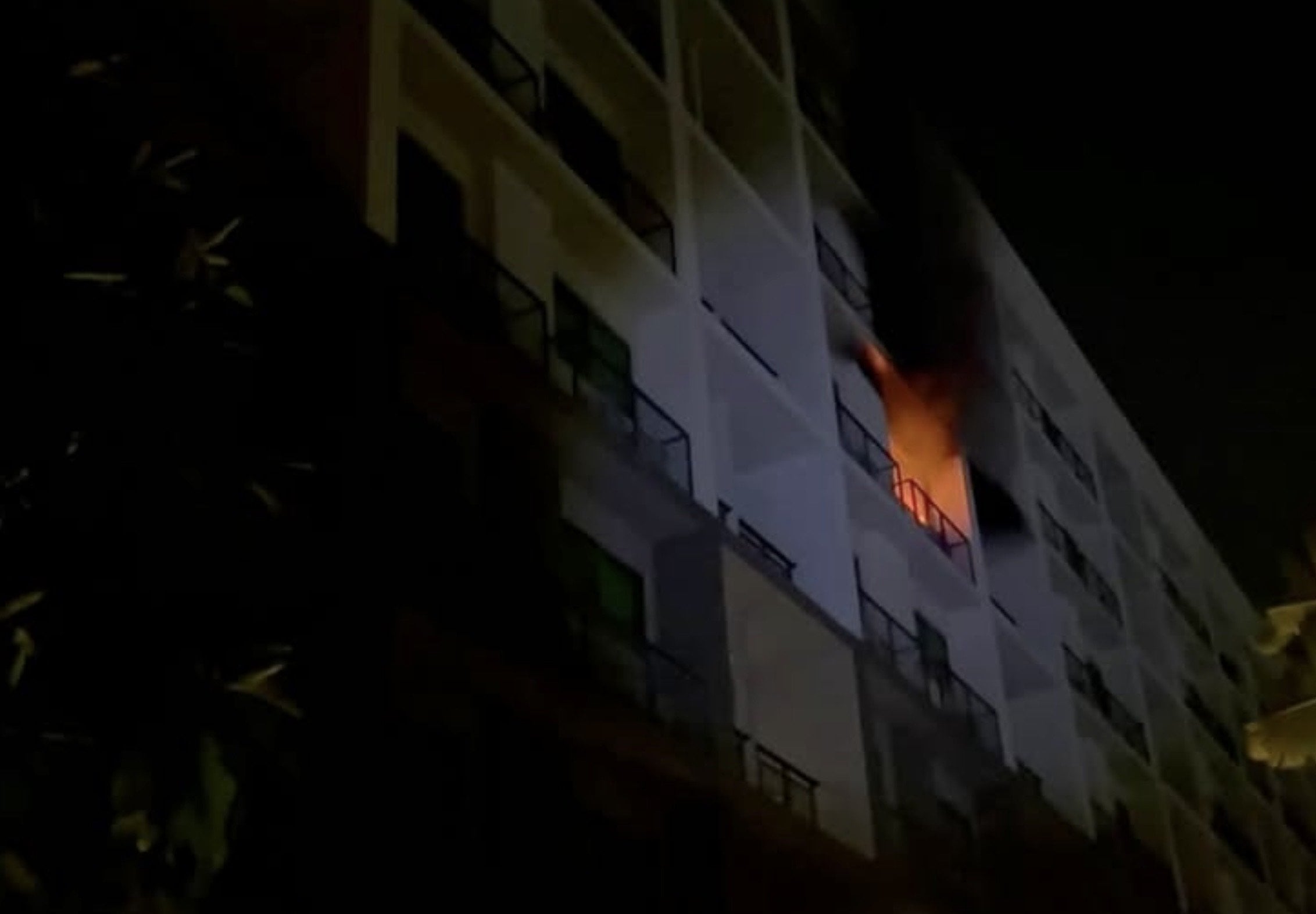
A foreign man has drawn widespread attention after videos showed him dancing outside the fire-damaged Rong Bear Na Lat Phrao club in Bangkok, where people died in a blaze on July 12.

Footage shared by the Facebook page News Itsara showed the man outside the Lat Phrao venue, as journalists covering the ongoing fire investigation watched and filmed him.

The clips prompted mixed reactions on Thai social media. Some users suggested he may have been paying tribute to those who died, while others questioned his behaviour and called for authorities to speak with him. Neither explanation has been confirmed.

Videos show two visits

In the July 14 footage, the man wore a black shirt under a red vest, black shorts and black boots, along with a rabbit-ear headband. He carried a black backpack and wore a waist bag, with music playing from a Bluetooth speaker attached at his waist.


He was filmed dancing while walking along the pavement outside the nightclub.

News Itsara posted further footage on July 15 showing the man returning for a second consecutive day. On that occasion, he wore white clothing and again danced along the footpath as music played from his speaker.

The video also showed him sprinkling water outside the venue from a bottle he was carrying. According to the Facebook page, he faced the nightclub, blew a kiss before leaving, and continued making the gesture as he walked away.


Pictures courtesy of News Itsara

The page described his actions as a performance and ritual, although the man's purpose has not been independently confirmed.

Mourners have left offerings

The man was one of many people to visit the nightclub after the fire. Flowers, food and drinks have been placed outside by visitors who believe the offerings honour those who died in the tragedy.

Online reaction to the videos was divided. Some commenters said the man's conduct was peaceful and did not disrupt the public, while others wanted officials to speak to him.

For foreign residents and visitors, the episode is a reminder that actions at sites connected to deaths or major accidents can quickly attract public scrutiny in Thailand, particularly when journalists and mourners are present. The report did not identify the man, give his nationality, or say whether authorities had approached him.


Join the discussion?


17 July 2026
Georgealbert
Georgealbert
Phuket marine authorities have started a crackdown on illegal jet ski operations, fining 23 operators on its first day as part of a drive to improve tourist safety and confidence.

The July 15 operation followed complaints about jet ski services and enforcement at tourist sites received by Deputy Transport Minister Sanphet Bunyamanee during an inspection visit to Phuket.

Sanphet instructed the Phuket Regional Marine Office to urgently bring operators under control, increase inspections and enforce the law more strictly. He said the aim was to raise safety standards and improve tourists' confidence in marine services.

Maximum fines for unlicensed vessels

Officers from the Phuket Regional Marine Office and Marine Police carried out inspections both ashore and at sea on July 15, 2026.

They found 23 offenders operating vessels without the required boat-use licences, which is an offence under Section 9 of the Navigation in Thai Waters Act.


Each offender received the maximum administrative fine of 10,000 baht.

The authorities have described the action as the start of a wider effort to organise and regulate Phuket's jet ski sector. Inspections will continue and are due to be extended to other major tourism areas, according to Sanphet.

What it means for visitors and residents

Jet skis remain a common sight at Phuket beaches, particularly in busy tourist zones. For foreign visitors and expats using rental services, the campaign is intended to target operators rather than customers, but it should place greater emphasis on properly licensed vessels and compliance with marine rules.

The government says the wider campaign is designed to improve safety, reduce the exploitation of tourists and reinforce Thailand's international reputation for marine tourism.

Sanphet said regulation of jet ski services would combine higher service standards with firm law enforcement. The Phuket operation, he added, was only the beginning.


Pictures courtesy of The Nation

Join the discussion?


17 July 2026
Georgealbert
Georgealbert
Thailand is considering a THB2.45 billion tourism stimulus package that could offer 500,000 travel co-payment entitlements, discounts on 400,000 domestic airline seats and support for international flights.

Tourism and Sports Minister Surasak Phancharoenworakul presented the three proposals after the first meeting of the Joint Public and Private Sector Consultative Committee on Tourism at the ministry's Government Complex offices on Wednesday, July 15.

None of the measures is available yet. They must be approved by the main joint public-private committee and the Cabinet, while funding would need to be allocated from the central budget.

Hotel and travel spending co-payments

The largest project, Thai Travel Thai Plus, is a revised version of the former We Travel Together scheme. It would provide 500,000 entitlements, with the government paying 50% of eligible tourism spending and travellers meeting the other half.

Each traveller could receive up to five entitlements. The state contribution for accommodation would be capped at THB3,000 per entitlement, with a further coupon worth up to THB500 for other qualifying expenses.

The scheme would apply in all 77 provinces and cover hotels and other accommodation, restaurants, attractions, OTOP shops, spas and health-massage businesses, one-day tours, car hire, public transport and boat hire.

It would require THB1.75 billion from the 2026 and 2027 fiscal years. Authorities estimate it could create THB32.046 billion in economic activity and THB1.6 billion in tax revenue.

For foreign residents and visitors, the key point is that eligibility rules have not yet been announced. Previous domestic tourism subsidy schemes have generally been aimed at Thai participants, so foreigners should not assume they will qualify unless the eventual terms specifically include them, but it not expected.

Domestic fares and international flight support

A second proposal, Fly Thai All the Feeling, would provide airline discount codes for 400,000 seats on domestic services operated by six airlines.

Passengers flying to major tourism cities would receive THB400 off per flight, while travel to secondary cities would attract a THB600 reduction. The first-come, first-served scheme would need THB200 million and is expected to support at least 200,000 trips where travellers use the benefit for return travel.

The third project, Thailand Air Connect: Connecting the World to Amazing Thailand, would allocate THB500 million for joint marketing campaigns with scheduled airlines and charter operators.

It aims to support at least 600 flights and bring in at least 487,000 overseas visitors, including 87,000 charter-flight passengers and 400,000 visitors through scheduled airline promotions. Authorities project at least THB23.166 billion in tourism revenue.

If approved, Thai Travel Thai Plus could begin issuing entitlements towards the end of 2026.


Picture courtesy of The Nation

Join the discussion?


17 July 2026
Georgealbert
Georgealbert
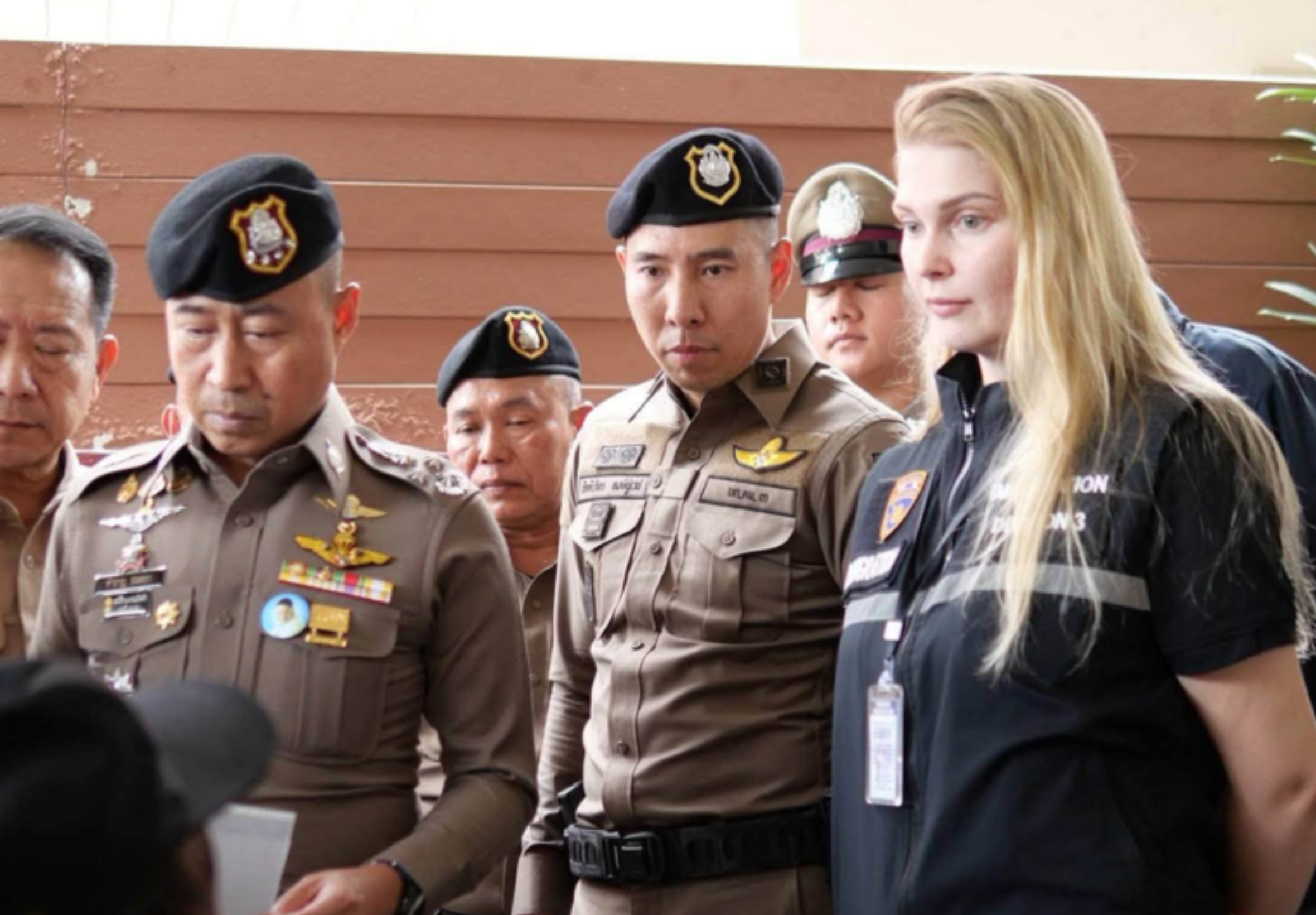
Thai immigration police have arrested a Chinese woman, identified only as "Madame Zheng", at a condominium in Bangkok's Huai Khwang district after Chinese authorities sought her return over an alleged bribery case in Shanghai.

The woman, whose real name was withheld, was found living with her two children after China cancelled her passport. She is accused of paying more than 1 million yuan, in bribes connected with business interests and advertising rights.

Chinese embassy sought her arrest

The operation followed coordination between Thailand's Immigration Bureau and the Chinese embassy in Bangkok. Chinese authorities had issued an arrest warrant for Madame Zheng in an economic case involving bribing an employee who was not a state official.

According to the authorities, she allegedly paid the bribes to secure business advantages and obtain exclusive advertising arrangements for her company in Shanghai. She later left China, after which her passport was revoked.


Immigration Bureau chief Pol Lt Gen Phanumart Boonyalak said investigators from the bureau's Investigation Division 4 traced her to an upscale condominium in Huai Khwang, an area with a substantial Chinese resident population.

Police applied to cancel her permission to remain in Thailand under Section 12(7) of the 1979 Immigration Act. The provision covers foreign nationals wanted under arrest warrants issued by officials of another country.

Search warrant executed at condo

Immigration investigators and officers from the Central Investigation Bureau's Special Operations Division, commonly known as the Commando unit, then obtained a court search warrant for the condominium room.

Madame Zheng was taken into custody without resistance inside the property. Officers said she was informed of her rights and of the order revoking her permission to stay in the kingdom.

She has been transferred to Immigration Bureau Investigation Division 3 for detention under legal procedures. Thai authorities are coordinating with Chinese representatives to hand her over for further prosecution in Shanghai.

The case is a reminder that an overseas arrest warrant or the cancellation of a passport can have immediate immigration consequences here. Thai immigration authorities can revoke permission to stay where a foreign national falls within prohibited-person provisions of the Immigration Act, separately from any eventual criminal proceedings in the country seeking their return.


Pictures courtesy of Naewna

Join the discussion?


16 July 2026
Georgealbert
Georgealbert
UK health officials have reported two Zika virus cases linked to travel to Thailand in the first half of 2026, as imported infections in Britain rise above last year's total.

The UK Health Security Agency (UKHSA) said nine Zika cases had been recorded in the UK so far this year, compared with seven throughout 2025. The cases are thought to have been acquired abroad, with Indonesia the most commonly reported exposure location, accounting for four cases.

Thailand was second, with two cases. Single cases were linked to Malaysia, the Maldives and Singapore.

The figures do not indicate that Zika is spreading locally in Thailand. However, they are a reminder for tourists, expats and other foreign residents that mosquito-borne illnesses remain a practical health risk in tropical areas.

Why Zika matters in Thailand

Zika is usually passed on through the bite of an infected mosquito, although it can, in rare cases, be sexually transmitted. There is currently no vaccine.

Many people infected with the virus may have mild symptoms or none at all. Symptoms can include fever, headache, sore eyes, joint swelling and rash.

The greatest concern is during pregnancy. Health officials warn that Zika infection can cause severe brain damage in developing foetuses. The UKHSA advises people who are pregnant or trying to conceive to speak to a doctor, nurse or travel clinic before planning a trip.

For foreigners living in Thailand, the same basic precautions apply beyond a short holiday: use insect repellent, cover exposed skin and use a treated mosquito net where necessary. Mosquito activity can be especially troublesome around standing water and during the early morning and late afternoon, depending on the species.

Other mosquito-borne illnesses rising

The UKHSA's latest travel-health update also highlighted chikungunya, dengue and malaria among travellers returning to Britain.

There were 59 chikungunya cases reported between January and June 2026, double the total recorded in the first half of 2024. Sri Lanka accounted for the largest number of those infections.

Dengue cases also continued to rise, reaching 34 in June alone and 137 during the first six months of 2026. Dengue can cause fever, headache, pain behind the eyes, muscle and joint pain, nausea, swollen glands and a rash. Severe dengue can involve abdominal pain, persistent vomiting, rapid breathing, and blood in vomit or stool.

Thailand's tropical climate means residents and visitors should take mosquito prevention seriously, even if they have lived in the country for years. Dr Hilary Kirkbride, consultant epidemiologist and head of travel health at UKHSA, said people who have previously visited a country do not have the same natural protection as permanent residents and should take precautions each time they travel.

She advised travellers to check TravelHealthPro for destination-specific vaccine and medication guidance, including antimalarial tablets where appropriate.

Join the discussion?


16 July 2026
Georgealbert
Georgealbert
Thailand's government has held talks with the Motion Picture Association (MPA) of the United States on expanding film and entertainment cooperation, as it seeks to establish the country as an Asian content-production hub in the AI era.

Deputy Prime Minister and Commerce Minister Suphajee Suthumpun met Urmila Venugopalan, the MPA's Asia-Pacific president and managing director, at the Naree Samosorn Building at Government House on 14 July. Venugopalan was in Thailand for the Thailand Success Stories Seminar.

Culture Minister Sabida Thaised, Tourism and Sports Minister Surasak Phancharoenworakul, Suphajee's advisory chairman Virasak Kowsurat, and political deputy secretary-general to the prime minister Commander Worawit Techasupakorn also attended.

US studios have invested about US$1 billion

The MPA thanked the Thai government for its continued support for US-Thai collaboration in film and entertainment, and praised Thailand's cash-rebate scheme for foreign productions, which it said has helped attract overseas investment.

Suphajee said MPA members have invested around US$1 billion in film and content production in Thailand. She said this reflected confidence in Thai filming locations and local content, including the country's culture, tourism, food and identity.

The expansion of international production could mean more work and business opportunities across the creative sector, including production services, hospitality, transport and location support.

However, the discussions did not announce any new visa arrangements, work-permit rules or investment incentives.
Expo figures exceed original targets

The meeting also reviewed the Thailand Character & Content Expo 2026, held from 9 to 12 July. More than 20,000 people attended, exceeding the original target of 8,000, while business-matching negotiations generated more than 600 million baht, also above target.

Suphajee said the event demonstrated how content can be developed into characters, merchandise, games, series, art toys and lifestyle products, while linking with fan communities to increase the value of intellectual property. She said this followed the direction of the global entertainment industry.

The two sides also discussed making Thailand easier to use as a filming base. The MPA proposed that the government oversee approvals and facilitation from the beginning to the end of a project, to give foreign investors and content producers greater confidence.

The government regarded this as important and said it was ready to continue pushing the work forward.

AI copyright protection under discussion

AI-related intellectual-property and copyright protection was another major issue, particularly deepfakes and rapidly growing copyright infringement in several countries. The United States is advancing the No FAKES Act to address such concerns.

Suphajee said Thailand already has copyright and intellectual-property laws, but should consider updating legislation related to AI technology to meet international standards. The aim, she said, is to assure creators and investors that content produced in Thailand will receive appropriate protection.

Thailand continues to use cash rebates as its principal incentive for foreign film shoots. The government is reviewing the broader incentives system, including how it can better support employment, domestic materials and services, knowledge transfer and long-term economic value. Any changes remain under study and discussion by relevant agencies.

Join the discussion?


16 July 2026
Georgealbert
Georgealbert
Bangkok's Prawet animal shelter, which houses around 200 dogs and 300 cats, is expanding its adoption work and improving facilities as the city seeks to manage its stray-animal population.

The Bangkok Metropolitan Administration's BKK Adopter programme, launched online in early 2026, currently lists about 50 dogs and 30 cats available for homes. Shelter staff say prospective owners, including foreign residents, must be prepared for the space, cost and long-term commitment involved.

From rabies quarantine to animal welfare

Established in 1997 in Prawet district, the shelter was initially a rabies quarantine facility. Officials soon found that Bangkok's stray-animal problem also involved neglect and violence, while complaints led to inspections and the capture of animals unable to coexist safely in their communities.

The 13-rai shelter sits in south-eastern Bangkok on the Samut Prakan border, behind sound-dampening walls. Improvements completed around 2024 brought redesigned facilities, divided zones and better screening procedures, according to Dr Pacharaorn Somboonvijitr, chief of the Dog Control and Shelter Subdivision at the Public Health Veterinarian Office Health Department.


The site has an admission and registration office, preliminary veterinary treatment, a lawn for dogs to walk and play, and areas where visitors can meet animals before adopting. Separate kennels accommodate dogs and cats awaiting homes, as well as newly admitted animals suspected of rabies or requiring behavioural work.

Dr Anchalee Thueansukhon, a veterinarian who has worked at Prawet for 15 years, said the main complaints concern aggressive animals, suspected rabies, violent cases requiring work with NGOs, and pets abandoned by owners.

Adoption requires a lifelong commitment

Animals are meant to stay at Prawet temporarily, receiving sterilisation and vaccination. Those needing longer-term care are sent to a larger shelter in Uthai Thani province, although animals whose behaviour improves may return to Prawet to await adoption.

Puppies and kittens are usually the most sought-after animals, Dr Anchalee said, but dogs older than six months are trained to sit, stay close, give a paw and wait. The BKK Adopter listings also include newborn animals taken in with their mothers.


Pictures courtesy of Jetjaras Na Ranong

Applicants must complete questionnaires reviewed jointly by shelter staff and NGOs. They must show they have adequate space, meet welfare standards and can afford to care for the animal for its entire life.

This is particularly relevant for newcomers to Thailand considering adopting a pet. Beyond food, owners need time for care and play, and should consider practical matters such as suitable housing and the ability to keep the animal long term.

The shelter has also received owners wanting to leave their animals there, but Dr Pacharaorn said priority is given to genuine strays that cannot live safely in communities. Where intake is not possible, animals are sterilised, vaccinated and returned to their original areas.

Dogs released under the scheme have an "N" marked on an ear to show they have been neutered, while cats receive registered numbers tattooed on their bellies. Officials say removing territorial animals can create space for new strays, whereas sterilised animals help prevent population growth.

"We have limited capacity, and the owners must uphold their responsibilities," Dr Pacharaorn said.


Join the discussion?


16 July 2026
Georgealbert
Georgealbert
A Chinese woman has been arrested at a Pai resort after police said she repeatedly caused trouble by pulling the hair of Thai people and foreign tourists in the northern tourist town.

Su Qi, a Chinese national, was detained at Belle Villa Pai Resort in Mae Hong Son province at 1pm on 15 July. Pai police worked with immigration and tourist police officers after obtaining a court warrant for her arrest.

The operation was led by Pol Lt Patcharawadee Phadungyat, deputy investigation inspector at Pai Police Station.

Police are pursuing a charge relating to using force against another person, as well as conduct considered bullying, intimidating, harassing, humiliating or causing annoyance.

Pharmacy complaint prompted court warrant

The arrest followed an alleged assault inside a pharmacy in Pai district, where a woman was buying medicine with her husband and child.


Police said Su Qi allegedly approached the woman without reason and pulled her hair. The pharmacy owner, angered by the alleged behaviour, collected CCTV footage and handed it to the victim.

The woman then lodged a formal complaint with Pai police. Investigators used the available evidence to seek a court warrant, leading to the arrest at the resort. Su Qi was taken to investigators for further legal proceedings.

Reports of earlier incidents

Investigators said the Chinese woman had allegedly been involved in several previous incidents in Pai, targeting both Thai residents and overseas visitors by pulling their hair.

Police had reportedly been called out to deal with her behaviour on several occasions. However, no victims had previously made formal complaints, meaning officers were unable to take the case further at the time, police said.

Pai is a busy destination for international tourists, long-stay travellers and foreign residents, particularly during the cooler months. The case is a reminder that foreigners who are assaulted or harassed should make an official police report if they want authorities to pursue the matter.

Where possible, victims should retain CCTV footage, photographs, medical records and witness details. In this case, the pharmacy's camera footage and the victim's complaint were central to police obtaining a warrant.


Pictures courtesy of SiamRath

Join the discussion?


16 July 2026
Georgealbert
Georgealbert
Delhi Customs officers have arrested three passengers arriving from Bangkok and Phuket after seizing 6.37kg of suspected hydroponic cannabis at Indira Gandhi International Airport.

The suspected drugs were found in three separate cases, concealed in aircraft lavatories, beneath seats and inside a passenger's baggage. Officials said that all three arrests followed Advance Passenger Information System (APIS) profiling.

Hydroponic cannabis is a high-potency form of the drug cultivated in nutrient-rich water rather than soil.

Cannabis hidden in aircraft lavatories and seats

In the largest seizure, an Indian passenger arriving from Bangkok was stopped after passing through the Green Channel. Officers found nothing suspicious in the passenger's baggage, but searched the aircraft and discovered four sealed packets in the two rear lavatories.

The packets contained 3.47kg of suspected hydroponic cannabis, according to Customs. The passenger later admitted concealing them in the lavatories, officials said.


A second passenger, arriving from Phuket was also intercepted through APIS profiling. After finding no contraband in the luggage, officers searched the aircraft and found six sealed packets beneath seats in Row 12.

The packages contained about 1.5kg of suspected hydroponic cannabis, including packaging. Delhi Customs said the passenger admitted hiding them beneath the seats.

Bangkok passenger held over baggage haul

The third case involved another Indian passenger who arrived from Bangkok and had also crossed the Green Channel. During X-ray screening, Customs officers identified suspicious images in the passenger's baggage.

A search uncovered two vacuum-sealed packets containing around 1.4kg of suspected hydroponic cannabis.

All three passengers were arrested under Section 43(b) of India's Narcotic Drugs and Psychotropic Substances Act. The suspected cannabis was seized under Section 43(a), while investigations continue into links to staff at the airport, believed to be involved in the assisting two of the suspects.


Pictures courtesy of Delhi Customs

For foreign residents, tourists and other travellers departing Thailand, the cases underline the risks of carrying cannabis across an international border. Products may be bought or used legally in some circumstances within Thailand, but travellers should not assume they can take them abroad.

Thailand has repeatedly warned that cannabis and cannabis products cannot be taken out of the country without permission. This applies whether items are in checked bags, cabin luggage or concealed elsewhere on an aircraft.

Travellers should check both Thai export rules and the laws at their destination before flying. India has strict narcotics legislation, and this case also shows that passenger information can be used for pre-arrival customs screening.

AQMz6iNhsNxsGEWcZdDWL9Rd55AP0DmaD150DEYGQorISSks7bYaKYUtLF6YAojeFODUZi7_z5ZEWu5zAZm59nppnJP1ocEdL7sT_1-aXg.mp4

Join the discussion?


16 July 2026
Georgealbert
Georgealbert
Prime Minister Anutin Charnvirakul has ordered nationwide inspections of entertainment venues and public buildings within 30 days after the deadly fire at Rong Beer Na Ladprao in Bangkok.

The blaze had claimed 32 lives, prompting the government to review entertainment venue laws, zoning rules, licensing, operating hours and regulations on live performances.

Mr Anutin, who is also interior minister, said many existing regulations were outdated and did not reflect present-day conditions. He said provincial governors nationwide, including Bangkok governor Chadchart Sittipunt, had been instructed to carry out comprehensive inspections.

Safety checks and immediate closures

The Interior Ministry will lead the inspections alongside the Bangkok Metropolitan Administration (BMA), local authorities, Royal Thai Police and other agencies.

Checks will cover fire prevention systems, emergency exits, building capacity and compliance with safety rules. Venues found to be in breach of legal or safety standards will be ordered to stop operating immediately until problems have been fixed, with results to be made public.

For foreign residents and visitors, the campaign could mean temporary closures of bars, pubs, clubs and other entertainment sites while inspections are carried out. The government has not announced any immediate changes to venue opening hours or licensing rules, but customers may see stricter enforcement of existing requirements.

Mr Anutin said the proposed legal review must balance social conditions, culture and tradition with the need for people to earn a living. However, he said many problems arose not from gaps in the law, but from operators knowingly breaking rules in pursuit of higher profits.

"Those who knowingly break the law should be prepared for the consequences," he said.

Licensing and zoning under review

Rong Beer Na Ladprao is a central focus of the investigation. Preliminary findings indicated that it was licensed as a restaurant but operated in a way consistent with an entertainment venue, raising questions over whether it had avoided stricter licensing and safety requirements.

Police said investigators were preparing possible charges against the venue owner and business partner once forensic evidence and witness testimony had been completed.

Mr Anutin also questioned whether restrictions on venue locations were workable in modern Bangkok. Existing rules prohibit venues from operating near schools or temples.

"Times have changed," he said. "We are studying how the law should be adjusted.”

"Current rules prohibit venues from being located near schools or temples, but where in Bangkok is more than two kilometres away from a temple or a school? The regulations need to be reconsidered."

Governor Chadchart said Bangkok's zoning system may no longer match reality. The capital currently has only three designated entertainment zones: Patpong in Silom, the New Phetchaburi area including RCA, and Ratchadaphisek Road.
The BMA will discuss possible reforms with the Interior Ministry, including changes to the zoning framework. While City Hall can introduce stricter local rules, they would still need Interior Ministry approval.

Join the discussion?


16 July 2026
Georgealbert
Georgealbert
Pattaya police are examining CCTV footage to identify a man suspected of stealing approximately 70,000 baht in foreign cash from a Turkish tourist at a shopping centre in South Pattaya.

The alleged theft took place late at the mall. Investigators at Pattaya City Police Station are also checking whether the suspect had accomplices or may be linked to similar offences.

The victim, 31-year-old Turkish tourist Hanife Hilal GOK, told police that a man approached her and began a conversation before asking to see her cash. After showing her money, she later found that 1,000 euros and US$900 were missing.

CCTV shows man matching suspect description
Police reviewing cameras inside and around the shopping centre found footage of a man in the area at about the time of the alleged crime.

He was described as a foreign national, tall and of average build, fair-skinned and sporting a beard. He was wearing a black-and-white patterned cap, a black T-shirt, black shorts, a black cross-body bag and black trainers.

Investigators are now tracing his movements and gathering further evidence. They are examining whether he acted alone, as well as any possible connections to cases involving similar methods.

Pattaya City Police have contacted relevant agencies, including Immigration, to check travel information that could help establish the suspect's identity. Officers are also checking hotels and accommodation near the shopping centre.

Practical warning for visitors and residents

The case highlights a risk for tourists and foreign residents carrying several currencies in busy public places. Police said offences of this kind can rely on building trust and distracting a victim before cash is taken.

Visitors should avoid displaying large amounts of cash or handing money to strangers who ask to inspect it. Where possible, travellers may wish to keep currencies separated and use hotel safes or other secure storage rather than carrying all their spending money at once.

Anyone who saw the man described by police, or has information that could assist the investigation, is asked to contact Pattaya City Police Station. Businesses in the area with relevant CCTV footage may also be able to help officers establish the suspect's route.Police have not said whether a suspect has been identified or arrested.

AQN2UgRHAYuEg9IxgE1myrsJXWp7CCgboF3_4ET1zbGzeYtMh19Zlka1-25utFuTDvciGv-cAiB_S6tsk0QGF-fnzCmtG7joosNEZlMAJA.mp4

Join the discussion?


16 July 2026
Georgealbert
Georgealbert
Lao authorities have arrested two Lao nationals wanted by Thailand over an alleged heroin-smuggling network linked to the arrest of a 26-year-old Thai Airways cabin crew member at Melbourne Airport on 25 June.

Sayan, also known as Thao Sayan Buarapha, and Nan Buarapha were detained in Laos following coordination between Thailand's Office of the Narcotics Control Board (ONCB), the Department of Special Investigation (DSI) and Lao authorities. A third Lao suspect, Un, also known as Thao Un Naowarat, remains at large.

The three are wanted under warrants issued by the Criminal Court on Ratchadaphisek Road in Bangkok at the DSI's request. They face allegations including conspiracy to commit serious narcotics offences, possessing heroin for sale and attempting to export heroin. The allegations have not been tested in court.

Link to Melbourne luggage case

The investigation concerns heroin concealed in luggage and sent from Laos through Thailand for delivery to Australia and Taiwan. Authorities say the drugs entered Thailand across the Mekong River in Loei province before being moved onwards to Bangkok.

The case became public after the Thai Airways employee, identified only as Mina, was arrested by Australian authorities at Melbourne Airport. Investigators allege she had been asked to carry 12 elephant-pattern embroidered bags to a recipient in Australia.

Thai police have detained several other people in connection with the case. They include a delivery rider, Uthai, who took a parcel to Meena's condominium; Nuntawat, a friend accused of helping dispose of an elephant-pattern bag; and Ekkawit, alleged to be behind a Line account named "Rin Rin" which communicated with the rider.

A woman identified as Chantra, who allegedly used the Facebook account "Rose Rose", is accused of contacting Meena to arrange the luggage delivery. Australian authorities are also being asked to assist with enquiries into a Thai woman known as "Dear", named as the intended recipient in Australia.

Laos continues wider investigation

Areepak Ngernbumrung, deputy secretary-general and ONCB spokesperson, said the two arrests followed effective bilateral cooperation. She said Sayan and Nan may not immediately be transferred to Thailand because Lao authorities want to pursue their own investigation into major drug cases and identify the wider transnational network.

Authorities said the two detainees were linked to earlier heroin seizures in Bangkok, including in the Rang Nam, Lak Si, Bang Khen and Ramkhamhaeng areas.

DSI investigators said evidence gathered over the past two to three years indicated that Sayan, Nan and Un allegedly worked with a Thai-Lao married couple, Uthit and Thatsaphon, in trafficking heroin and yaba. They said drugs were allegedly handed over beneath a fig tree on the Thai bank of the Mekong in Loei, concealed in items including silk and bag linings.

The case is a reminder not to carry luggage, parcels or items for acquaintances or online contacts, particularly on international flights. Travellers are responsible for what is in their bags, and drug offences in Thailand and destination countries can carry severe consequences.

Related story

Thai-flight-attendant-held-over-heroin-at-Melbourne-airport

Join the discussion?


16 July 2026
Georgealbert
Georgealbert
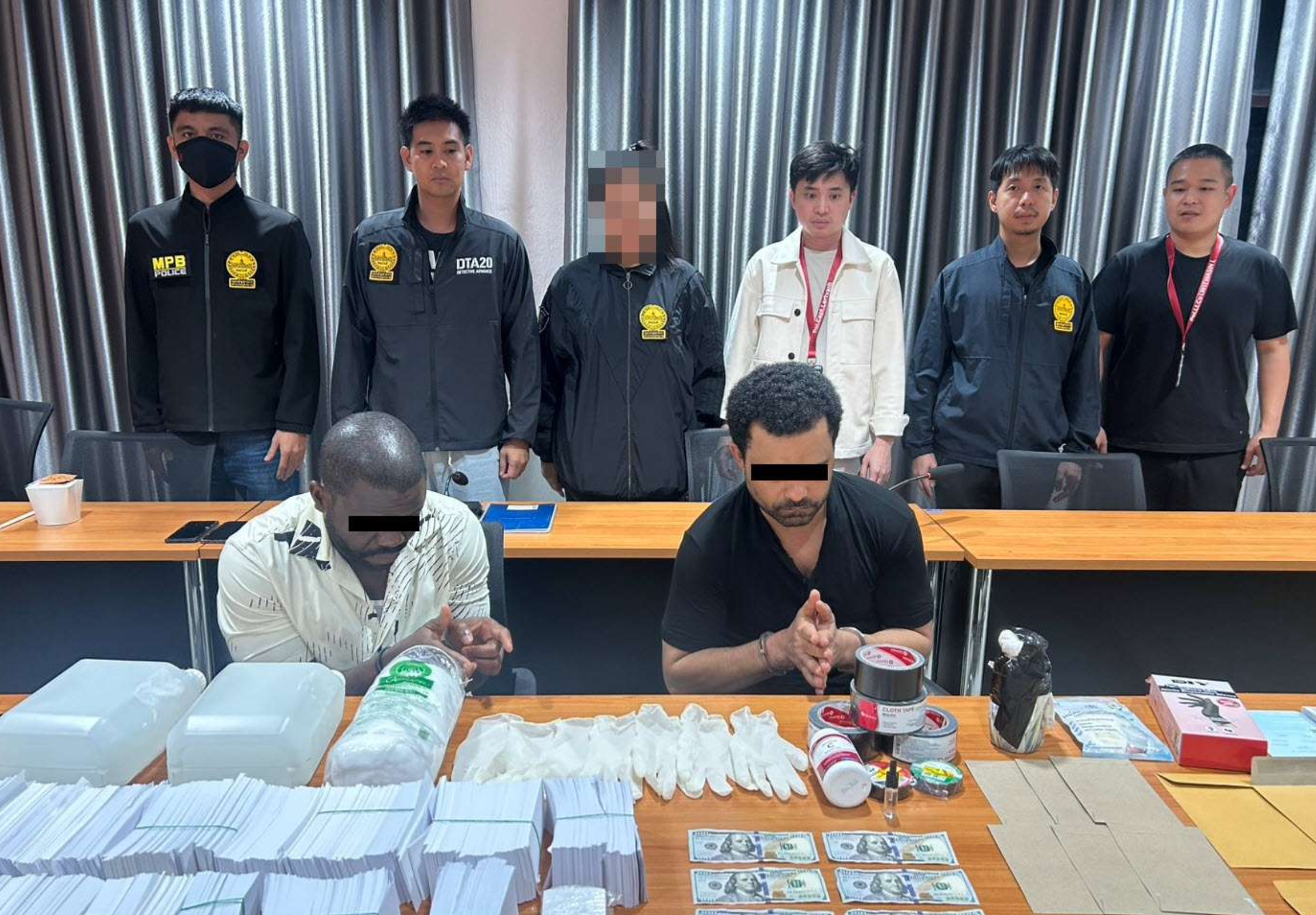
Tourist Police have arrested seven foreign men in Bangkok's Khlong Sam Wa district after checks allegedly found four had overstayed their permission to remain and three had no travel or identity records.

The operation took place on 14 July 2026 on Pracha Ruam Chai Road, in front of The One Cargo Co Ltd in Sai Kong Din Tai subdistrict. The men - six Nigerians and one Senegalese national - were taken to Min Buri Police Station for legal proceedings.

Four allegedly overstayed by hundreds of days

Police said the four men accused of overstaying had remained in Thailand beyond their permitted dates by between 782 and 1,052 days.

They were named as Senegalese national Christian Tounkara, 33, accused of overstaying by 913 days; Nigerian national Monday Akachukwu Anikpe, 28, by 856 days; Chineze Emmanuel Onyechere, 45, by 1,052 days; and Mazi Ejiofor Edochie, 45, by 782 days.

All four were charged with being foreign nationals staying in the Kingdom after their permission had expired.

The other three men, all Nigerian nationals, were identified as Emeka Frank Uzoije, 42; Emmanuel Kelechi Ewulu, 33; and Ikechkuwu Prince Umunna, 47. Police said checks found no personal identification documents or records of their entry to Thailand, and charged them with entering and staying in the Kingdom without permission.

Checks followed intelligence gathering

Tourist Police commissioner Lieutenant General Saksira Pheuk-um said the operation followed government policy and instructions from national police chief Police General Kittirat Phanphet to speed up checks on foreigners living in Thailand unlawfully.

Investigators had received information that a group of foreign nationals was staying in Khlong Sam Wa without apparent work or a fixed address. Officers then mounted the operation under the Tourist Police Division 1 command.

Colonel Piyapong Ensarn, superintendent of Tourist Police Division 1's Sub-Division 1, said police were instructed to investigate and arrest foreign nationals suspected of breaking the law, including people who might use Thailand as a base for offences.

He said the wider focus included offences against property, life and physical safety, as well as romance scams, fraud and exploitation of residents or tourists. Police did not allege that the seven men arrested in this case were involved in such offences.

Tourist Police said they would intensify checks of foreign nationals, particularly where officers have grounds to investigate. Foreigners who move address, change visa status or use agents for immigration applications should ensure their records and documents remain in order.

Join the discussion?


16 July 2026
Georgealbert
Georgealbert
Thai anti-trafficking police have arrested the 28-year-old manager of a well-known Muay Thai gym in Rayong over allegations that underage male fighters were supplied for paid sexual services. Officers say the youngest alleged victim identified during the operation was 13.

Police are also seeking a Norwegian man said to have financially supported the gym, following allegations that six children were sexually abused by the foreign national.

The arrest was announced on 15 July by the Anti-Trafficking in Persons Division (ATPD), acting under orders from Pol Lt Gen Natsak Chaowanasa, commissioner of the Central Investigation Bureau, and Pol Maj Gen Witthaya Sriprasertphap, commander of the ATPD.

The suspect, identified as Naruebeth, whose surname was withheld, was arrested under Criminal Court warrant No. 3772/2569, dated 7 July 2569. He faces a human-trafficking charge involving the improper exploitation of children aged over 15 but under 18 for prostitution, as well as allegations connected to managing a prostitution business.

Undercover inquiry at Rayong gym

Police said investigators had received information that people running a Muay Thai training camp in Rayong were forcing child fighters to provide sexual services to men.

An undercover officer reportedly joined the gym as a student to investigate. Police said the camp had around 30 Thai and foreign male and female fighters, ranging in age from under 18 to 35.
According to police, the manager allegedly said he could arrange child fighters for customers, with prices starting from 2,000 baht.

He allegedly claimed the children involved were troublesome or came from families with problems and wanted money for leisure, and sent photographs through Line before customers made a choice.

Officers said he provided names and photographs of more than 15 fighters allegedly available for sexual services.

At one location, police carried out a controlled operation and rescued three alleged victims aged under 18. At the gym, officers screened 12 children for possible trafficking victim status after finding 15 boys and young people aged 11 to 19 gathered there without parents present.

Norwegian financial backer sought

The 12 children gave broadly similar accounts, police said. They alleged that when a Norwegian man who supported the gym's operating costs visited, a secretary known as "B" would call boys to meet him privately in a reception room.

They alleged sexual abuse, including acts described as swinging, was carried out and photographs and video clips were recorded. The children said payments ranged from 500 to 5,000 baht, with further support allegedly including mobile phones, school uniforms and household expenses for poorer families.

Some children also alleged that the gym owner knew what was happening but did not intervene. Police said some families were aware but did not report the matter because of the financial support received.

A multi-agency team concluded that six children were victims of sexual abuse by the foreign man, police said. Investigators are now expanding the inquiry and trying to locate him.

For foreign parents and guardians considering Muay Thai camps for children in Thailand, the case is a reminder to check safeguarding arrangements, supervision and accommodation before enrolling a young person. The allegations remain under investigation.


Picture courtesy of Daily News

Join the discussion?


16 July 2026
Georgealbert
Georgealbert
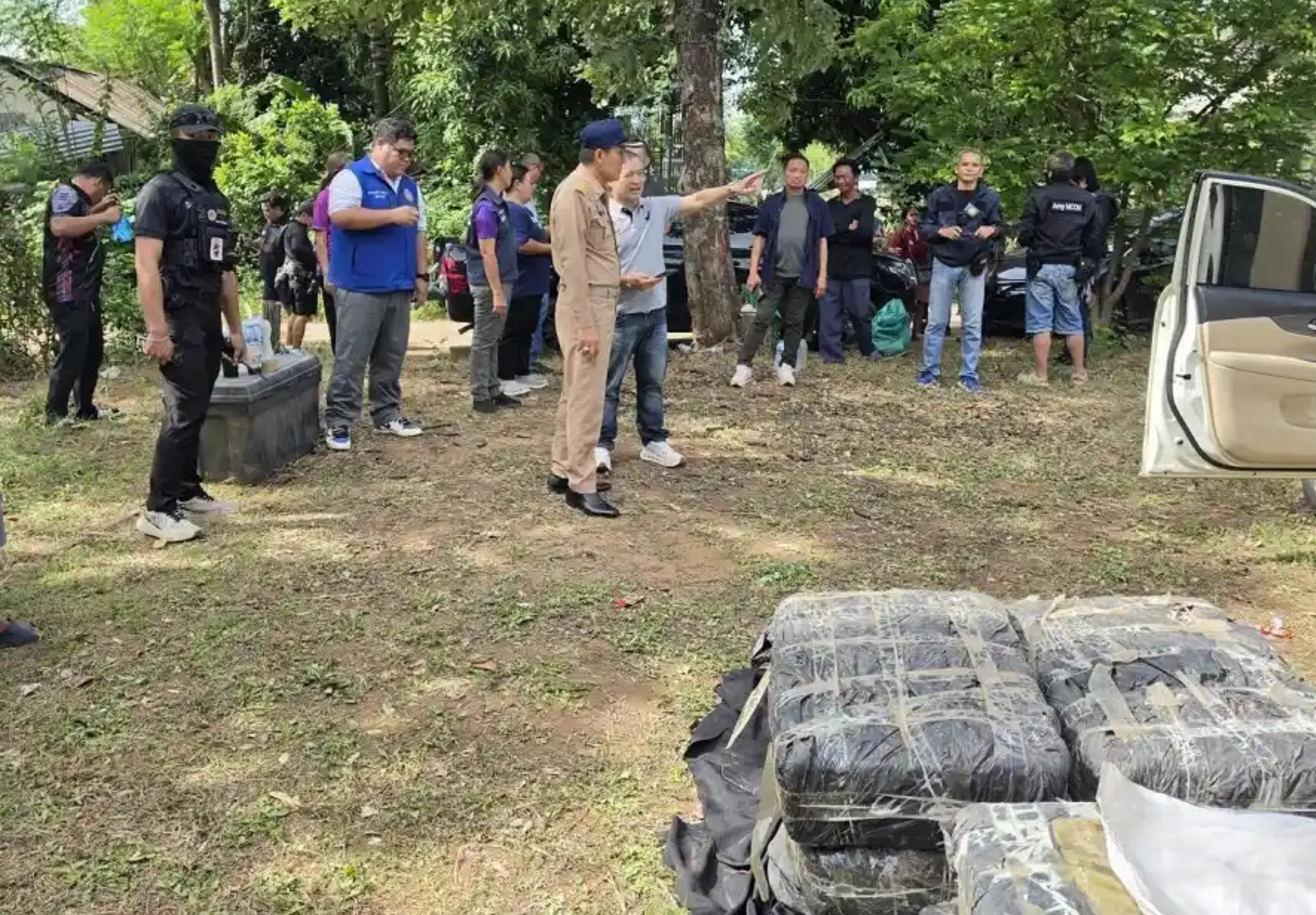
Customs officers at Laem Chabang Port in Chonburi seized cannabis flower and kratom powder worth nearly 18 million baht from three shipping containers on 15 July. The consignments were destined for Turkey and the Netherlands, while one kratom shipment had arrived from Indonesia without an import permit.

The first container, inspected at 10.30am, held 350kg of cannabis flower concealed in boxes of medical masks. The shipment had been declared as rubber gloves and was due to be sent to Turkey.

The Office of the Narcotics Control Board (ONCB) put its domestic value at about 3.5 million baht, saying the price could rise by 20 to 30 times if it reached foreign markets. Customs law provides for fines of 30,000 to 100,000 baht per kilogram, officials said.

Phanu Limwongyut, director of the Laem Chabang Port Customs Office, joined the operation with Chonburi deputy governor Khwanruen Srichan, customs control director Lt Chaiyat Kranlert and Ronakrit Bamrungsuksawat, head of investigation and suppression at the ONCB's Region 2 office. Sriracha public health officials, the Department of Thai Traditional and Alternative Medicine, district administrators and Laem Chabang police also took part.


Cannabis hidden in bedding rolls

At about 1.30pm, officers examined two further containers at a private port in Thung Sukhla, Sriracha district.

One container had been declared as pillowcases and polyester fibre and was bound for the Netherlands. X-ray screening identified suspicious objects, and officers found cannabis flower in clear plastic bags, wrapped again in black plastic, hidden inside numerous bedding rolls.

Tests using a reagent confirmed the material was cannabis. Each bundle of bedding contained 60 one-kilogram bags, with the container holding 1,160 packages weighing a net 1,160kg. Officials valued the load at about 11.6 million baht.


Pictures courtesy of Amarin

The third container was declared as 1,120 packages of kratom powder, or Mitragyna speciosa, from Indonesia, weighing about 27,000kg and valued at 2.7 million baht.

Officials said the owner had applied for permission to import the kratom, but the goods arrived before customs could issue the permit. The shipment was therefore seized.

The case is a reminder for foreign residents, visitors and businesses that Thailand's cannabis rules do not make cross-border transport straightforward. Taking cannabis overseas, sending it by freight or carrying it across an international border can breach export, import and destination-country rules, even where products may be available within Thailand.

Kratom products may also require the appropriate import documentation. Customs said all three consignments would be handed to investigators at Laem Chabang Police Station for legal proceedings.


Join the discussion?


16 July 2026
Georgealbert
Georgealbert
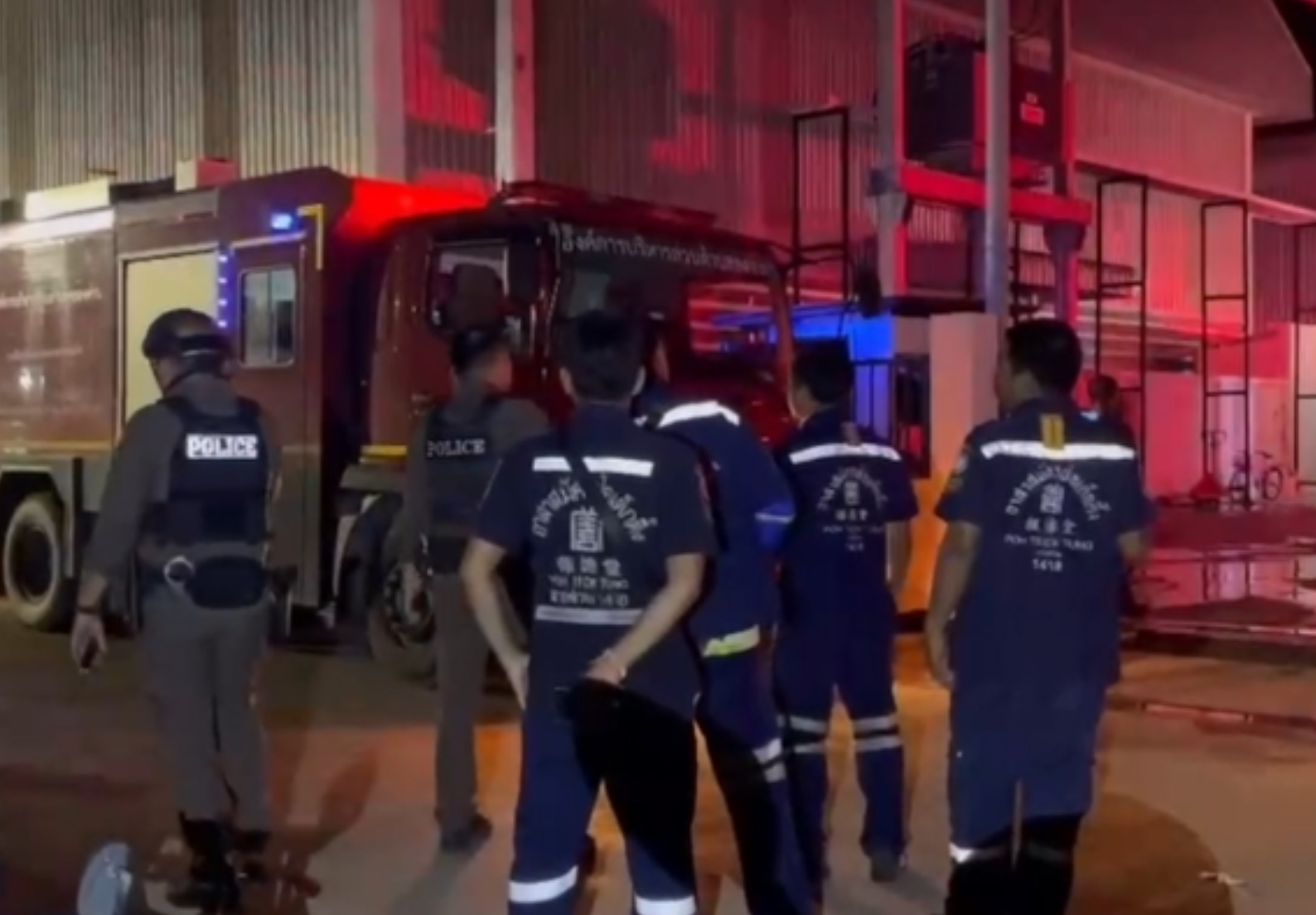
Thirty-three people have now died following the fire at the venue in Lat Phrao, Bangkok, police said on 15 July. More than 70 people were injured, while investigators are examining CCTV footage, the building's licensing and the venue's electrical system.

The latest death was Din, a lead singer, who died at Rajavithi Hospital at 5.56pm, 15 July2026. Police said all 33 victims have now been formally identified, and the bodies of 31 have been released to relatives.

Sixteen injured people remain in a red-category critical life threatening condition.

CCTV footage under review

Pol Maj Gen Kiatikul Sonthanee, commander of Metropolitan Police Division 2, gave the update after a three-hour meeting at Phahonyothin Police Station involving agencies connected to the investigation.

Forensic officers have examined footage from 16 cameras inside the venue. The preliminary review showed smoke appearing at the ceiling above the stage, on the side nearest the right-hand entrance, at about 11.49pm.

According to police, flames appeared around 15 seconds later, at about 11.50pm. The period from the first visible smoke to the fire taking hold was just over one minute.

The forensic division is continuing to examine physical and scientific evidence to establish the cause of the blaze. Police have not yet stated what started it.

Electrical upgrade request examined

Police said electricity authority records showed the venue's owner had requested a higher electricity supply because the existing system was insufficient. The application, made about two months after the business opened, sought an increase from 30/100 amps to 200 amps.

The new system had not yet been installed, police said. Investigators are checking documents and other supporting evidence.


Picture courtesy of Daily News

A total of 96 witnesses have been questioned so far: the owner, 26 employees, 56 relatives of those killed or injured, 10 officials involved in examining the scene, and three civil engineering specialists.
The venue was originally licensed as a restaurant. Officials involved in issuing the licence and building inspectors have been called to give evidence, while police await further paperwork from the district office.

Exit-door claims not settled

Police are also investigating claims that exit doors were locked. They said media reports and witness accounts do not yet match, and key witnesses will be called for further clarification. As the investigation continues, police will give updates when further details are determined.

Phahonyothin Police Station's assistance centre remains open around the clock for reports, the return of property and support for bereaved families and others affected. Police said they would gather evidence quickly and pursue everyone involved under the law.

AQNb-re-AyeCM4mf-99WJsZkXCs3LYGWi4WggIrF0joO54lGI8GdXviU5Ffe9kEQqxASOCOZWqO_mmdbi5K1XeLG2m9Mdt6vuiVVkOf3ZA.mp4
Video taken from accommodation over incident

Related story

Fire-kills-at-least-27-in-Bangkok-pub

Join the discussion?


16 July 2026
Georgealbert
Georgealbert
Thai immigration police have searched a house in Sam Khok, Pathum Thani, which they say was used to register and stage offices for 27 alleged nominee companies involving Taiwanese clients.

The operation at the detached property in Moo 4, Sam Khok subdistrict, was only reported on 15 July and was said to have taken place on 14 May 2026. Officers found what they described as a front accounting office and mock company offices.

Alleged Thai shareholder nominees

Police said a suspect detained at the scene and identified only as Mr T, admitted he was paid between 12,000 and 15,000 baht per company to arrange their registration. The companies were registered with Thai shareholders holding 51% and Taiwanese shareholders holding 49%.

According to investigators, 17 Taiwanese clients were involved. Mr T allegedly used unemployed acquaintances and motorcycle delivery riders as named Thai shareholders, allowing them to hold shares on behalf of others in an attempt to evade the law.


The search was authorised by the Pathum Thani Provincial Court. It was ordered by Pol Maj Gen Songprod Sirisukha, chief of Immigration Division 3, and involved officers including Pol Col Chinwut Tangwonglert, Pol Col Nattakit Meesuk, Pol Lt Col Peerapat Khaikhlung, Pol Maj Supangkarn Montripisan, Pol Lt Col Rawisak Suriyaphak, Pol Capt Chatchanok Suwanthara and Pol Capt Suwit Suthat.

Sam Khok police and the provincial employment office also joined the operation.

Accounts moved more than 130m baht

During further checks, police found that some of the companies had bank accounts linked to an online complaint-reporting system. Those accounts showed unusual turnover of more than 130 million baht in only five months, police said.

Officials seized company documents, rubber stamps and passports for legal proceedings. Immigration police said they would widen the investigation as part of a wider effort against transnational crime.

For foreigners living in Thailand or planning to establish a business here, the case underlines the risks around nominee shareholding arrangements. Thailand restricts foreign participation in certain businesses, and simply registering a company with a 51% Thai shareholding does not necessarily show that Thai shareholders genuinely control their stakes.

Foreign investors should ensure that any Thai business partners are genuine investors with real involvement, rather than people whose names have been used solely to satisfy ownership requirements. Expats dealing with local companies may also face disruption if a supplier, agent or business partner later comes under scrutiny over its ownership structure.


Picture courtesy of Daily News

Join the discussion?


16 July 2026
Georgealbert
Georgealbert
A 17-year-old woman has been reported missing in Pattaya after telling friends she was due to meet an older foreigner at Central Pattaya shopping mall to watch a movie.

Nong Tong disappeared at the weekend and has not been contacted by friends or relatives since, according to her sister, Pinanong Lansettha. Her family has reported her missing to police and launched an online appeal for information.

Ms Lansettha said the family did not know the identity or nationality of the man her sister planned to meet.

"We don't know who she was meeting or where he was from," she told the Daily Mail. "I think she met him online through an app."

Family and friends appeal for information

In a social-media post, Ms Lansettha asked people to help find her younger sister, saying she had been unable to contact her for three days.

"None of her close friends or family have been able to reach her or see her," she wrote. "I'm very worried about her. Please help keep an eye out for her."

Friends said her sudden disappearance was out of character. One said Nong Tong normally spoke with her every day but was no longer online.

Another local woman said she had seen the teenager with foreigners at the Stone House pub at around the time she vanished, recalling that their tables had been beside each other.

Ms Lansettha said her sister did not work in Pattaya's bars or on the street because of her age, but worked independently and had gone to meet an older foreigner before contact was lost.

Anyone with information is being urged by the family to contact them or police.

Disappearance follows Pattaya murder charge

The case comes weeks after another 17-year-old, Tunchanok Donhomla, was found dead in a suitcase beside railway tracks in Pattaya.

Australian truck driver Simon Carman, 46, has been charged over her death and is being held at Pattaya Remand Prison. He denies murdering Ms Donhomla, saying he acted in self-defence after she allegedly pulled a knife and demanded money.

Police allege Carman met Ms Donhomla on the street, took her to his condominium, strangled her and put her body in a holdall. CCTV reportedly showed him riding a scooter the following evening with a suitcase strapped to the back.

He was arrested at Bangkok airport carrying a Jetstar boarding pass. Police allege he was attempting to flee on a flight to Perth, while Carman said he was returning to Australia to collect a replacement bank card and intended to come back to Thailand within days to "sort it all out".

Like Ms Donhomla, Nong Tong had travelled to Pattaya from a rural province seeking work. In both cases, friends raised the alarm after the teenagers stopped answering calls and messages.
Pattaya's informal nightlife economy

Prostitution is illegal in Thailand but remains widely tolerated in Pattaya's nightlife areas, where many women meet foreign tourists for work. The two teenagers were said to have worked independently rather than through bars, where age checks can make employment difficult for under aged.


Picture courtesy of Daily Mail

Related story

Aussie-faces-murder-charges-in-Pattaya

Join the discussion?


16 July 2026
Georgealbert
Georgealbert
Pattaya City Police have ordered an internal fact-finding inquiry after a group of Kuwaiti tourists alleged they were given questionable receipts after paying cash traffic fines in the resort city.

Get today's headlines by email

Three officers named in the complaint have been temporarily transferred to the Pattaya City Police operations centre while the investigation proceeds. The order took effect on 15 July 2026, and remains in place until changed.

The tourists, aged around 20 to 30, said they had travelled in Pattaya during the past month when uniformed police officers stopped them for traffic offences. They accepted that they had broken traffic rules and did not object to being prosecuted, according to the complaint.

Complaint centres on receipts

Their concern arose after officers allegedly collected fines in cash and issued receipts. When the tourists later checked the documents, they were reportedly told that they were not receipts issued by a police station.

The group also claimed they had been stopped several times and received receipts of a similar kind on each occasion.

The inquiry was ordered by Pol Lt Col Kosala Ngamphong, deputy superintendent for investigations at Pattaya City Police, who is acting superintendent of the station.

A three-member committee has been appointed to gather evidence and examine the allegations. It is chaired by Pol Lt Col Siriwat Katchamat, deputy superintendent for crime suppression at Pattaya City Police.

Pol Lt Col Amonthep Maima, traffic inspector at Pattaya City Police, is a committee member, alongside Pol Capt Ittiporn Tangchuthaveesap, deputy inspector for investigations, who will serve as member and secretary.

Officers moved during investigation

The three officers named in the allegations have been assigned temporarily to the Pattaya City Police operations centre, with Pol Lt Col Siriwat responsible for supervising their duties.

Police said the transfers were intended to ensure a transparent inquiry and prevent any effect on normal official work. If the investigation finds wrongdoing, those involved will face both disciplinary action and criminal proceedings, police said.

For foreigners driving or riding in Pattaya, the complaint does not change the requirement to comply with Thai traffic laws or pay valid penalties. However, visitors who are fined may wish to retain all paperwork and, if they have doubts about a receipt, seek clarification from the relevant police station rather than relying solely on a document handed over at the roadside.

Related story

Kuwaiti-tourists-allege-cash-fine-racket-in-Pattaya

Join the discussion?


15 July 2026
Georgealbert
Georgealbert
A British-born Buddhist monk has become the first person born overseas to receive Thailand's senior ecclesiastical rank of Somdet Phra Ratchakhana.

Get today's headlines by email

His Majesty the King elevated Ajahn Jayasaro, now known by the title Somdet Phra Maha Phatcharayanamuni, alongside seven other senior monks in a royal command published by the Royal Gazette on Tuesday, July 14.

The eight monks were recognised for their virtue and major service to Buddhism. For foreigners living in Thailand, the appointment is a notable recognition of the long-standing international presence within the country's Buddhist monastic tradition.

From the Isle of Wight to Thai forest monasteries

Ajahn Jayasaro was born Shaun Michael Chiverton on January 7, 1958, on the Isle of Wight in England. His interest in truth and the meaning of life led him to travel through several countries before he encountered Buddhist teachings and arrived in Thailand in 1978.

He became a disciple of Phra Bodhinyanathera, better known as Luang Por Chah Subhaddo of Wat Nong Pah Pong in Ubon Ratchathani. Luang Por Chah was a leading Thai Forest Tradition meditation master and helped establish foundations for spreading Buddhism among foreigners.

In 1980, Ajahn Jayasaro was ordained first as a novice and then as a monk, with Luang Por Chah as his preceptor. He continued his Dhamma studies and forest meditation practice.

Between 1997 and 2002, he served as abbot of Wat Pah Nanachat in Warin Chamrap district, Ubon Ratchathani. The monastery remains an important centre for foreign monks studying and practising in Luang Por Chah's lineage.

Royal recognition after decades in Thailand

Ajahn Jayasaro received special royal permission to become a naturalised Thai citizen in 2020. In 2024, he was raised to deputy Somdet Phra Ratchakhana, under the title Phra Phrom Phatcharayanamuni.

His latest elevation makes him the first overseas-born monk to reach the Somdet Phra Ratchakhana rank in Thailand. He currently lives at Ban Rai Thawsi Monastic Residence in Nakhon Ratchasima province.

The other monks elevated by the King were Phra Phrom Wachiramongkhon, now Somdet Phra Yannawachiramongkhon; Phra Phrom Wachirathibodi, now Somdet Phra Maha Wachirathibodi; Phra Phrom Wachiramuni, now Somdet Phra Sutthatsana Wachiramuni; and Phra Phrom Wachirakon, now Somdet Phra Phuttha Wachirakon.

Also elevated were Phra Phrom Dilok, now Somdet Phra Maha Wachirakhun Dilok; Phra Phrom Moli, now Somdet Phra Wachirarattanamoli; and Phra Phrom Sitthi, now Somdet Phra Wachirasitthathachan.

A bridge for Thai and international Buddhists

Somdet Phra Maha Phatcharayanamuni has given Dhamma talks, led meditation training and produced written works intended to make Buddhist teaching accessible to Thais and foreigners. His best-known work, "Uppalamani", compiles the life and spiritual practice of Luang Por Chah.

For expatriates and visitors interested in meditation or the Thai Forest Tradition, his career also highlights the established links between Thailand's monasteries and international Buddhist communities.


Picture courtesy of The Nation

Join the discussion?


15 July 2026
Georgealbert
Georgealbert
Thai Immigration Bureau investigators have arrested 16 Chinese nationals found hiding inside a restaurant in Bangkok’s Din Daeng district during a crackdown on illegal immigration and are expanding their investigation into the suspected cross-border smuggling network.

Get today's headlines by email

The operation took place at 7pm on July 13, 2026, under the direction of Immigration Bureau Commissioner Pol Lt Gen Phanumas Boonyalak, supported by deputy commissioners Pol Maj Gen Phanthana Nutchanart and Pol Maj Gen Thanit Thaiwatcharamat, together with Pol Maj Gen Phanop Worathanatchakul, commander of the Immigration Bureau Investigation Division. Officers from Investigation Division 2, led by Pol Col Phisit Sri-on and Pol Lt Col Ratchakrit Rumchan, carried out the raid after receiving intelligence that a large group of Chinese nationals was hiding at a restaurant in the area.

Investigators found 16 Chinese nationals staying on the second and third floors of the building, which had been converted into accommodation. A 52-year-old man identified as Mr Likuan was allegedly managing the premises, charging between 350 and 500 baht per day for accommodation, including three meals daily.

Police charged Mr Likuan with providing accommodation, concealing or assisting foreign nationals to evade arrest. Most of the remaining suspects were found without passports and were charged with entering and remaining in Thailand without permission. One individual was separately charged with overstaying a visa.

During initial questioning, most of the suspects reportedly admitted entering Thailand illegally through natural border crossings from neighbouring Myanmar, Laos, Cambodia and Malaysia before travelling by road to Bangkok. They told investigators they had contacted brokers who claimed they could arrange travel documents and transport back to China, and that they had been instructed to remain at the property for about 15 days while waiting.

Immigration officers said their preliminary investigation found no indication that the suspects were victims of human trafficking. All 16 foreign nationals were transferred to investigators from the Immigration Bureau Investigation Division for legal proceedings while officers continue gathering evidence.

Authorities are now expanding the investigation to identify brokers, accommodation providers and others suspected of involvement in the network responsible for smuggling foreign nationals into Thailand. Officials said the operation demonstrated the effectiveness of intelligence-led investigations in disrupting illegal immigration networks.

The Immigration Bureau reaffirmed its commitment to tackling illegal immigration and transnational crime under its policy of “No Entry, No Stay and No Escape”. Members of the public with information about suspicious foreign nationals or suspected illegal activity are encouraged to contact their local Immigration Office or the Immigration Bureau hotline on 1178.

Join the discussion?


15 July 2026

Georgealbert
Georgealbert
Former MP and senator Suradet Yasawat has called for the owners of a Lat Phrao bar and relevant state officials to face criminal, civil and disciplinary action following a fire on the night of 12 July that reportedly claimed 30 lives.

Get today's headlines by email

Speaking on 14 July, Suradet, a former deputy leader of the Palang Pracharath Party, offered condolences to the families of those killed. He said the tragedy showed that authorities had not seriously addressed recurring fire-safety failures at entertainment venues.

He compared the case with the 2009 Santika Club fire and the 2022 Mountain B Club fire, saying Thailand had already had two chances to learn from similar disasters but had failed to do so.

Safety failures under scrutiny

Suradet said mass casualties in such fires commonly arise because people cannot escape in time. He cited blocked or unusable emergency exits, inadequate building structures and safety systems, sealed buildings with poor ventilation, and the absence of fire sprinklers.

He said large indoor entertainment venues of 500 square metres or more, or buildings meeting certain height conditions, are required to install sprinkler systems. Some smaller venues may be licensed as restaurants or single-storey buildings, potentially leaving them outside older building-law sprinkler requirements.
However, he argued that sprinklers or equivalent automatic fire-suppression systems were essential because venues face risks from ceilings, combustible materials, alcohol and delayed evacuation.

The former MP also questioned why circuit breakers did not operate in the event of an electrical short circuit, and whether construction materials met safety standards.

For foreign residents and visitors, the case is a reminder that venue licensing does not necessarily indicate that an entertainment site meets every modern fire-safety expectation.

People going out in Bangkok or elsewhere in Thailand may wish to note visible exits and avoid overcrowded venues, particularly those with enclosed interiors.

Calls for owners and officials to be investigated

Suradet said operators must ensure their businesses meet safety standards, but claimed that some venues had been allowed to operate despite shortcomings. He called for scrutiny of officials involved in issuing licences and carrying out inspections, including whether improper benefits had been involved.

He said accountability should not end with limited compensation, adding that the value of every life could not be measured.
According to Suradet, owners or operators could potentially face charges including negligence causing death, punishable by up to 10 years in prison and a fine of up to 200,000 baht; negligence causing serious injury, carrying up to three years in prison or a 60,000-baht fine, or both; and negligent fire causing danger to life or property, carrying up to seven years in prison or a 140,000-baht fine, or both.

He said the local district office director and relevant staff should be investigated under building-control laws, while local police could also face scrutiny under Section 157 of the Criminal Code if they were found to have neglected their duties.

Suradet said enforcement must apply nationwide, not only in Bangkok, and urged provincial governors, district chiefs and police commanders to inspect entertainment venues more rigorously.


Picture courtesy of Amarin

Related Story

Fire-kills-at-least-27-in-Bangkok-pub

Join the discussion?


15 July 2026
Georgealbert
Georgealbert
Kuwaiti tourists have alleged that uniformed police officers in Pattaya repeatedly demanded cash traffic fines of 2,500 to 5,000 baht away from police stations, issuing receipts they were later told were fake.

Get today's headlines by email

The group made their complaint to local reporters on the evening of 14 July, after spending the past month holidaying in Pattaya. They supplied video said to have been secretly recorded during negotiations, along with cash-receipt slips they said were handed to them.

Tourists accept offences but question the process

Speaking through an interpreter, the visitors said they understood Thailand's laws, including rules for riding motorcycles, and accepted that they should face lawful action for genuine traffic offences. Thailandreal estate

However, they said the enforcement process was unclear. They alleged that they were stopped between two and five times on some nights, usually after midnight, and were each asked to pay fines ranging from 3,500 to 5,000 baht.

According to the tourists, officers took them to secluded locations rather than allowing them to pay at a police station. They claimed an unidentified man collected the money while officers stood nearby, and that cash was the only payment method accepted.
They said they were warned that their motorcycles could be seized if they did not pay.

Receipts said to resemble shop slips

The group said they asked to settle fines at a police station but were firmly refused. They were also allegedly not permitted to pay at an impound area somewhere in Pattaya, although they said they could not remember its location.

They claimed they were told they would have to pay towing and storage charges in cash. If they wanted a receipt, they said, an additional 500 baht was demanded.


The receipts they received allegedly resembled those issued by small shops, although they listed the alleged offence and fine amount. When the visitors later showed the slips to other officers, they said they were told the documents were fake.

They further alleged that, after a minor collision in which some fell from their motorcycles, two or three members of the same group of officers again took them away and imposed fines in a similar manner, despite the tourists saying they did not know what offence they had committed.

Call for police inquiry

The visitors said they had travelled to Pattaya many times and had previously considered the city safe because of its policing against crime. This year, they said they had become more afraid of police than criminals.

For foreign visitors and expatriates, the complaint is a reminder to ask for clear details of any alleged offence and official payment procedure. Anyone facing a traffic fine should seek to pay through recognised official channels and retain all documentation, particularly if a cash-only demand or an unofficial-looking receipt raises concerns.

The tourists said they wanted senior local and national police commanders to investigate the allegations, establish the facts and take firm action if wrongdoing is found. They said they did not want Pattaya's image as a tourist destination damaged.


Pictures courtesy of SiamChon

Join the discussion?


15 July 2026
Georgealbert
Georgealbert
A Chiang Mai karaoke venue has refunded almost 150,000 baht to two British nationals after they complained to police about a series of charges following a night out.

Get today's headlines by email

The venue's owner agreed to return the full amount after online criticism, according to the latest report. The business had maintained that the men were charged for services actually used and at its stated rates.

The complaint was made by the wife of one of the men and their lawyer. Police at Chiang Mai City Police Station arranged further questioning and talks between the parties shortly after midnight on 13 July 2026, before the refund was made.

How the disputed bill arose

The case dates back to 28 June, when a British man living with his wife in Hang Dong district took a British friend for food and drinks in the Nimmanhemin area. They later went to a karaoke venue at Chiang Mai's old city moat.


Picture courtesy of Manager Online

The wife said both men were heavily intoxicated. She said they initially used the venue and paid less than 1,000 baht, but staff encouraged them to stay when they tried to leave.

According to her account, her husband threatened he would call police before they were finally able to leave. The pair then took a tuk-tuk to drop the friend at his hotel, with the driver meant to take her husband home to Hang Dong.

She alleged, however, that the driver took him back to the same karaoke venue while he was so drunk he was barely conscious.

The following day, the couple found several charges of more than 120,000 baht on the husband's credit card and about 26,000 baht on another account belonging to his wife.

They said financial institutions had indicated there were several transactions within a short period. Some transactions reportedly involved some transfers to a PromptPay account held in an individual's name rather than the venue's name.

Venue disputes the allegation

The karaoke business told investigators that the two tourists had used its services and invited a large number of female staff to drink at their table. It said the charge was 700 baht per person per hour, over around four to five hours.

The complainants questioned why multiple charges of differing amounts had been made rather than one normal payment. They also raised concerns that the husband's card, which they said had a 50,000-baht limit, was charged above that amount, and that the wife's card was also used.

They have asked police to examine the tuk-tuk driver's role, citing mobile phone route data which they said showed the vehicle travelling around several parts of the city before returning to the karaoke venue.

Investigators are still gathering statements, banking records and other evidence to determine whether legal action is warranted.

For foreign residents and visitors, the case underlines the importance of checking card transactions promptly after a night out, particularly where alcohol is involved. The report also said members of the public want police and local authorities to check whether karaoke venues have the required operating licences, amid concern that inflated prices could damage Chiang Mai's reputation.


Join the discussion?


15 July 2026
Georgealbert
Georgealbert

Account

Navigation

Search

Search

Configure browser push notifications

Chrome (Android)
  1. Tap the lock icon next to the address bar.
  2. Tap Permissions → Notifications.
  3. Adjust your preference.
Chrome (Desktop)
  1. Click the padlock icon in the address bar.
  2. Select Site settings.
  3. Find Notifications and adjust your preference.