Skip to content
View in the app

A better way to browse. Learn more.

ASEAN NOW

A full-screen app on your home screen with push notifications, badges and more.

To install this app on iOS and iPadOS
  1. Tap the Share icon in Safari
  2. Scroll the menu and tap Add to Home Screen.
  3. Tap Add in the top-right corner.
To install this app on Android
  1. Tap the 3-dot menu (⋮) in the top-right corner of the browser.
  2. Tap Add to Home screen or Install app.
  3. Confirm by tapping Install.

Thailand News

All the latest news stories from Thailand are written in English. Fresh news and stories from around the kingdom brought to you daily.
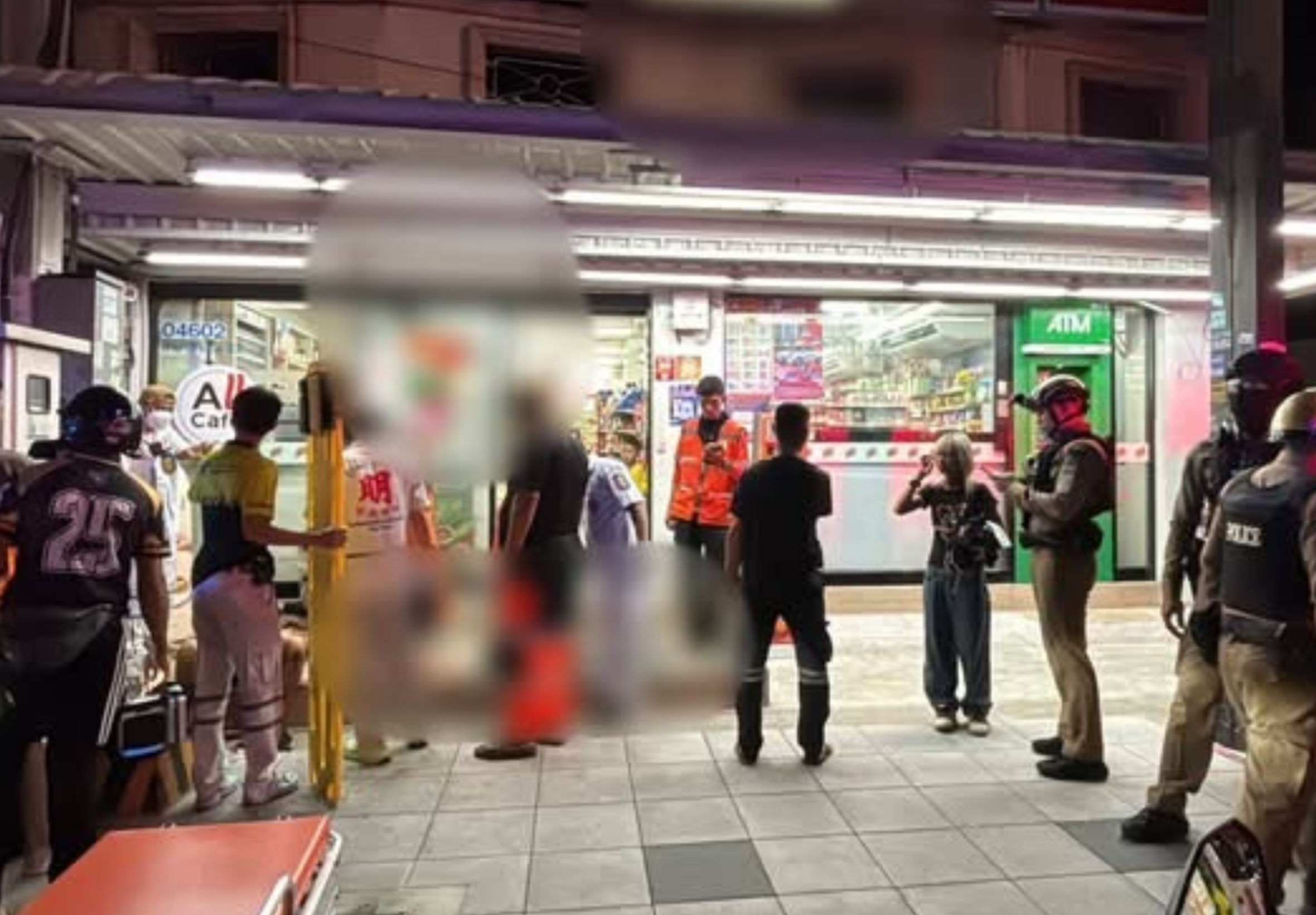
A 35-year-old man from Krabi was rushed back to hospital after collapsing in a pool of blood outside a Pattaya convenience store on 2 August, having reportedly left medical treatment before his knife wound had been fully treated.

The man, identified only as Sadayu, told rescuers he had been assaulted at Jomtien Beach earlier that evening. Police are investigating and plan to question him further once he is able to give a detailed account.

Man found outside shop

At about 10pm, the Sawang Boribun Thammasathan Pattaya rescue centre received a report that a seriously injured man was seeking help outside a convenience store at the entrance to Soi Chaloem Phrakiat 22, Pattaya.

Rescuers coordinated with officers from Pattaya Police Station before attending the scene. A large number of local residents and tourists had gathered outside the shop.


Sadayu was found lying on the ground in an exhausted condition, with a serious wound to his back caused by a sharp object. Blood was still seeping from the injury and he was breathing weakly, rescuers said.

They found that the wound had received initial first aid before he reached the convenience store. Rescue workers controlled the bleeding and arranged for his urgent transfer to hospital, amid concerns that further blood loss could become life-threatening.

He had left hospital before treatment was finished

In a brief statement, Sadayu said he had been assaulted in the Jomtien Beach area before Pattaya officials took him to hospital. He did not provide further details about the cause of the attack or what happened beforehand.

Rescue officials said they had established that he was attacked during the early evening at Jomtien Beach and had already been taken to hospital. However, he left the hospital while treatment of his injuries was still ongoing.

He then walked towards the entrance to Soi Chaloem Phrakiat 22, where he lost strength and collapsed outside the shop. Passers-by spotted him and alerted the authorities.

Police seek attacker and motive

Pattaya police are examining the reported assault in the Jomtien Beach area and will conduct a fuller interview with the injured man. Investigators are seeking to establish the reason for the attack and identify the person responsible.


Pictures courtesy of SiamChon

Join the discussion?


3 August 2026
Georgealbert
Georgealbert
Thailand's Foreign Ministry has rejected claims by UN Special Rapporteur Tom Andrews that Thailand started the conflict with Cambodia, saying escalation followed what it called indiscriminate Cambodian attacks on civilian areas in Thailand.

In a clarification issued on Saturday, August 1, the ministry also challenged Andrews's figures of 650,000 internally displaced people in Cambodia and 900,000 Cambodian migrant workers returning from Thailand. Andrews had made the remarks in his end-of-mission statement following an official visit to Cambodia from July 20 to 31, 2026.

Thailand disputes displacement and worker figures

The ministry said the conflict and its consequences had not been caused by Thailand. It said some people included in the reported 650,000 were Cambodians who had lived in areas opened by Thailand as temporary humanitarian shelters in the late 1970s.

According to Thailand, they did not return to Cambodia once conditions improved, despite repeated formal protests to Cambodia. The ministry therefore described them as people encroaching on Thai territory, rather than internally displaced persons.

It said the right of return should not be used for political purposes or propaganda, while adding that Cambodia had responsibility for protecting citizens displaced within its territory. This included their life and safety, plus access to shelter, food, clean water, sanitation and essential public-health services.

On the claimed 900,000 returning Cambodian workers, Thailand said the group included both legally employed people and those who had entered or worked in the country illegally. It said they returned voluntarily after Cambodia's government called on citizens to come home, and insisted Thailand had never had a policy of expelling Cambodian workers.

Call for UN impartiality

The ministry said Thailand had worked with the UN Human Rights Council's special procedures and had submitted explanations that were officially recorded. It urged the UN body to maintain independence, impartiality and objectivity, using credible and verifiable information from all sides.

Thailand said it was ready to rebuild relations with Cambodia if there was genuine cooperation. Both sides should implement the Joint Statement of December 27, 2025, reduce tensions and avoid actions or allegations that could create further friction, misunderstanding or weaken trust, it said.

The ministry added that continued bilateral engagement could allow border-security matters to be resolved peacefully.

JIC warns against one-sided accounts

ACM Prapas Sornchaidee, assistant commander-in-chief of the Royal Thai Air Force and director of the Joint Information Centre on the Thai-Cambodian Situation, said the dispute had moved beyond military issues into the international information arena.

"The most dangerous thing today is not bullets, but distorted information," he said, warning that one-sided accounts could create global misunderstanding within minutes while verifying facts could take days.

Prapas said Thailand would use documents, evidence, photographs and verifiable information rather than respond to alleged falsehoods with misinformation. "We ask only that the same standards be applied to every country," he said.

He urged Thai citizens to check information before sharing it, saying Thailand's roughly 70 million people could contribute to public diplomacy through responsible posts, translations and explanations. Thailand remained prepared to let all parties examine its evidence and to work through bilateral mechanisms and international law, he said.


Picture courtesy of The Nation of ACM Prapas Sornchaidee

Join the discussion?


3 August 2026
Georgealbert
Georgealbert
Thailand's Department of Business Development has begun tougher checks on company changes involving foreign investors, shareholders, directors and authorised signatories, under a new order taking effect from August 1.

The measure is intended to stop Thai nationals being used as nominee shareholders, while the government says legitimate foreign investment will continue to be supported.

Prime Minister's Office deputy spokesperson Lalida Periswiwatana said Order No. 2/2569 on the Central Registry of Partnerships and Companies closes a gap in the previous system. Until now, screening focused mainly on the point at which a company was first registered.

Under the new approach, scrutiny will also apply when an existing company changes its shareholders, directors or authorised signing arrangements. Authorities believe such changes could previously have been used to bypass initial registration checks.

Extra evidence for foreign-linked investment

Cases involving foreign investors or people with signing authority must now include a letter explaining the investment. They must also provide three months of bank statements from both the Thai investor making the investment and the representative or legal entity receiving it, in line with established criteria.

The documents are intended to allow officials to examine where investment funds came from and whether the stated investor has the financial capacity to make the investment. The government says this should improve transparency and reduce the use of nominee shareholders.

For foreigners setting up, buying into or restructuring a Thai company, the practical effect is likely to be more paperwork and closer attention to funding trails. This is particularly relevant where Thai shareholders are involved in an investment connected to a foreign national or foreign business.

Lalida said the objective was fair competition and protection for honest businesses, rather than restricting legally conducted foreign investment.

Land and shareholder records also targeted

The government is also working to link information held by the Department of Business Development, Land Department and other agencies. This is intended to improve inspections, prevent companies being used for illegal land ownership and check shareholder identities against the civil registration database.

From August 1, the Department of Business Development will place a disclaimer on copies of shareholder lists. It will state that the documents are records held by the registrar, not certificates confirming the current shareholder position.

Current ownership must instead be established from the shareholder register that companies are legally required to maintain.

Thailand currently has more than one million active legal entities. Of those, 119,116 companies have foreign shareholders holding no more than 49.99%, according to Lalida.

She stressed that the figure is used for risk assessment and screening only, and does not mean all such companies are nominee structures or involved in illegal activity. Any action will be considered case by case, based on evidence and facts.

"The government affirms its commitment to promoting a transparent, fair, and competitive investment climate, ready to facilitate both Thai and foreign investors conducting business legally, while simultaneously preventing the use of Thai nationals as proxies and actions that exploit the country's economic system, in order to build long-term confidence for businesses and the public," she said.


Picture courtesy of TNR

Join the discussion?


3 August 2026
Georgealbert
Georgealbert
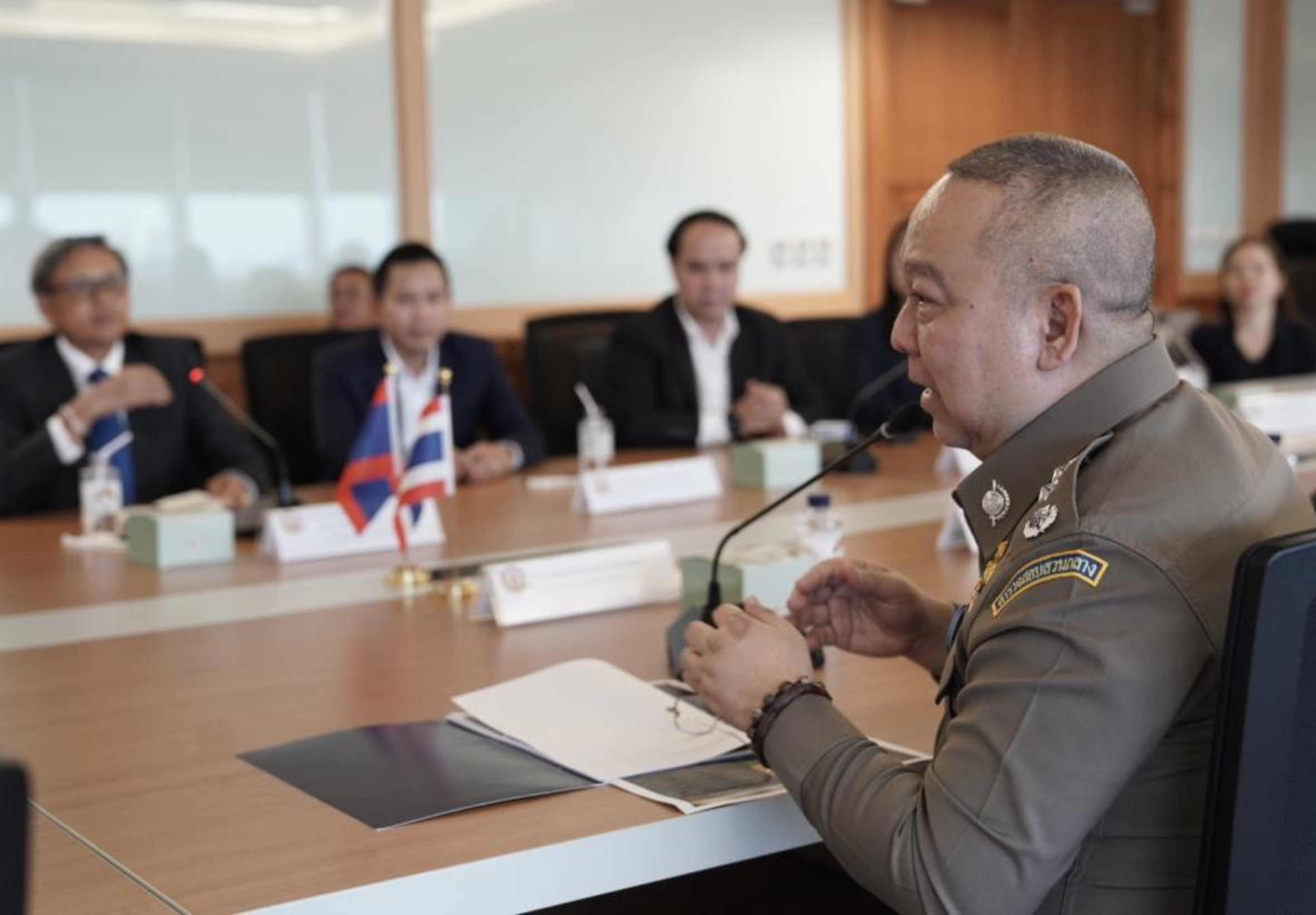
Representatives of Laos and Lao Development Bank (LDB) have asked Thailand's Central Investigation Bureau (CIB) to examine social-media allegations that the bank was involved in laundering money for scam networks and illegal businesses.

The request was discussed in Bangkok on 31 July 2026, when delegates from Laos' National Coordination Committee on Anti-Money Laundering and Countering the Financing of Terrorism, alongside LDB representatives, met senior Thai police officers.

They met Lieutenant General Nattasak Chaowanasai, commissioner of the Central Investigation Bureau (CIB), and Major General Saruti Kwangsopha, the bureau's deputy commissioner. The meeting concerned possible legal action against people behind three social-media accounts.


Claims link bank to scam and gambling groups

According to the Lao delegation, posts on the three accounts alleged that LDB had helped launder money through payment gateway channels for scammer groups, online gambling operations and other illegal businesses.

The allegations have caused damage to the bank, its executives and Laos, the delegation said.

Lt Gen Nattasak said the CIB had assigned officers to gather evidence and establish the facts. Investigators will consider whether the online activity amounts to an offence under Thai law.

If wrongdoing is found, police will proceed through the legal process, he said. No finding on the facts of the allegations against LDB was announced following the meeting.


Picture courtesy of Thaitabloid

Join the discussion?


3 August 2026
Georgealbert
Georgealbert
Thailand's personal income-tax base remains heavily concentrated among a relatively small number of earners, with only 5.14 million of 12.57 million people who filed returns for the 2024 tax year required to pay tax.

Budget Committee data, based on P.N.D. 90 and P.N.D. 91 returns filed in 2025, have put government revenue collection under fresh scrutiny as Thailand considers how to make its revenue structure more balanced and sustainable.

Most filers had no tax liability

Of the 12.57 million people who submitted personal income-tax returns, 7.43 million - or 59.1% - had no tax liability. Their net income fell within the 0-150,000 baht bracket, which is exempt from tax under Thai law.

Those who did pay tax represented 40.9% of all filers. The figures highlight how small the pool of actual personal income taxpayers is, both compared with total tax filers and the wider working-age population.

Total calculated personal income tax for the period was 278.18 billion baht. Tax refunds for overpayment came to 46.99 billion baht.

Higher earners carry much of the burden

The data show that the burden is particularly concentrated among people at the highest income levels.

Just 30,000 filers had net income above 5 million baht. That group represented only 0.2% of all filers, yet paid 71.52 billion baht in tax - 25.7% of all personal income tax collected.

When they are combined with filers earning net income between 2,000,001 and 5,000,000 baht, another 0.8% of filers, just 1% of people filing returns accounted for 50.1% of personal income-tax revenue.

The figures underline the challenge for the government: most people remain below the taxable threshold, while a small high-income group supplies a substantial share of revenue from personal income tax.

The government faces a broader fiscal challenge in expanding the number of taxpayers while managing the national budget and seeking a more sustainable revenue structure.

Join the discussion?


3 August 2026
Georgealbert
Georgealbert
A German-Turkish tourist has been reported missing after losing contact with his family since 23 July, shortly after travelling from Bangkok to Chiang Mai.

The man has been identified as 32-year-old Ali Karakoyunlu, who is also known as Ali Apostolakis. His family and former girlfriend are appealing for information after attempts to contact him through several messaging platforms and his Thai mobile number brought no response.

A Facebook user, Suppanat Essie, said she had the family's permission to publish his details. She said a missing-person report has been made and Chiang Mai Tourist Police have been asked to help with the search.

Journey from Japan to Chiang Mai

In an update, Suppanat said Ali's sister, Kubra, contacted her through Instagram on 29 July and provided details of his last known movements.

According to Kubra, Ali left Japan at 8.55am on 20 July and arrived in Thailand at 2pm the same day. He then travelled by train from Bangkok to Chiang Mai on 21 July.

The family lost contact with him two days later, on 23 July. Relatives and Suppanat have since tried reaching him through Line, Facebook, Instagram, Telegram and his Thai number.

They said the phone has sometimes been switched off, while at other times it has rung without being answered.

Police have found no preliminary record of Ali being admitted to a hospital in Chiang Mai. Officers have also been unable to locate accommodation bookings made under his name in the province.

Embassy coordination now needed

Suppanat said she has also contacted the Mirror Foundation, a Thai non-governmental organisation involved in a range of social issues.

She added that Ali's family must now coordinate through the Turkish embassy so that the relevant embassies can formally work together on the case.

Suppanat has urged anyone who may have seen Ali, or knows where he may be, to come forward.


Picture courtesy of Facebook Suppanat Essie

Join the discussion?


3 August 2026
Georgealbert
Georgealbert
Thailand has prepared a draft cannabis control law that would limit cannabis and its extracts to medical treatment under professional supervision, or authorised research. The Department of Thai Traditional and Alternative Medicine (DTAM) expects the proposal to go to the cabinet soon after completing public consultation.

The bill is intended to address regulatory gaps that emerged after cannabis was removed from Thailand's narcotics list in June 2022. In the absence of a comprehensive law, recreational use expanded rapidly and authorities introduced a series of ad hoc measures, while earlier attempts to pass wider legislation did not succeed.

For foreigners living in or visiting Thailand, the key point is that this remains a draft rather than an enforceable new law. However, if approved, it would substantially change the position for people who currently buy cannabis products from retail outlets, particularly those seeking them for non-medical purposes.

One framework for cannabis businesses

Dr Thewan Thaneerat, DTAM deputy director-general, said the proposed law would establish a single framework for cultivation, production, imports, exports, sales and public health protection.

Anyone wishing to cultivate, produce, import, export or sell cannabis would need a three-year licence issued by the DTAM. The proposed exemptions cover the sale of roots, branches, stems, leaves and seeds, as well as medical practitioners using cannabis to treat patients under existing laws.

This could be particularly relevant to foreign-run or foreign-connected businesses in Thailand's cannabis sector, as the draft would place their activities within the same licensing framework. It would also affect travellers considering bringing cannabis products out of the country, as export activity would require a licence.

Limits on sales, use and promotion

The bill would ban sales to people under 20, pregnant women and breastfeeding mothers. Sales would also be prohibited in temples, schools, dormitories, public parks, zoos and amusement parks.

Advertising, promotional activity and marketing involving cannabis flowers, resin and smoking devices would be banned, with the stated aim of discouraging recreational consumption.

Producing, importing, exporting or selling cannabis without a licence, or selling it to prohibited groups, would carry possible prison terms and fines. Unauthorised cannabis use would also be punishable by fines, although the draft details reported did not specify the proposed penalties.

Committee led by public health minister

The proposal would establish a national cannabis committee, chaired by the public health minister, to oversee national policy and regulation.

Cannabis decriminalisation was a flagship policy of the Bhumjaithai Party under Anutin Charnvirakul, who was public health minister at the time.

DTAM director-general Dr Pongsathorn Phokphermdee said the department submitted the completed draft to Public Health Minister Pattana Promphat on July 20 for cabinet review.

Join the discussion?


3 August 2026
Georgealbert
Georgealbert
META DESCRIPTION:

Picture courtesy of Manager Online

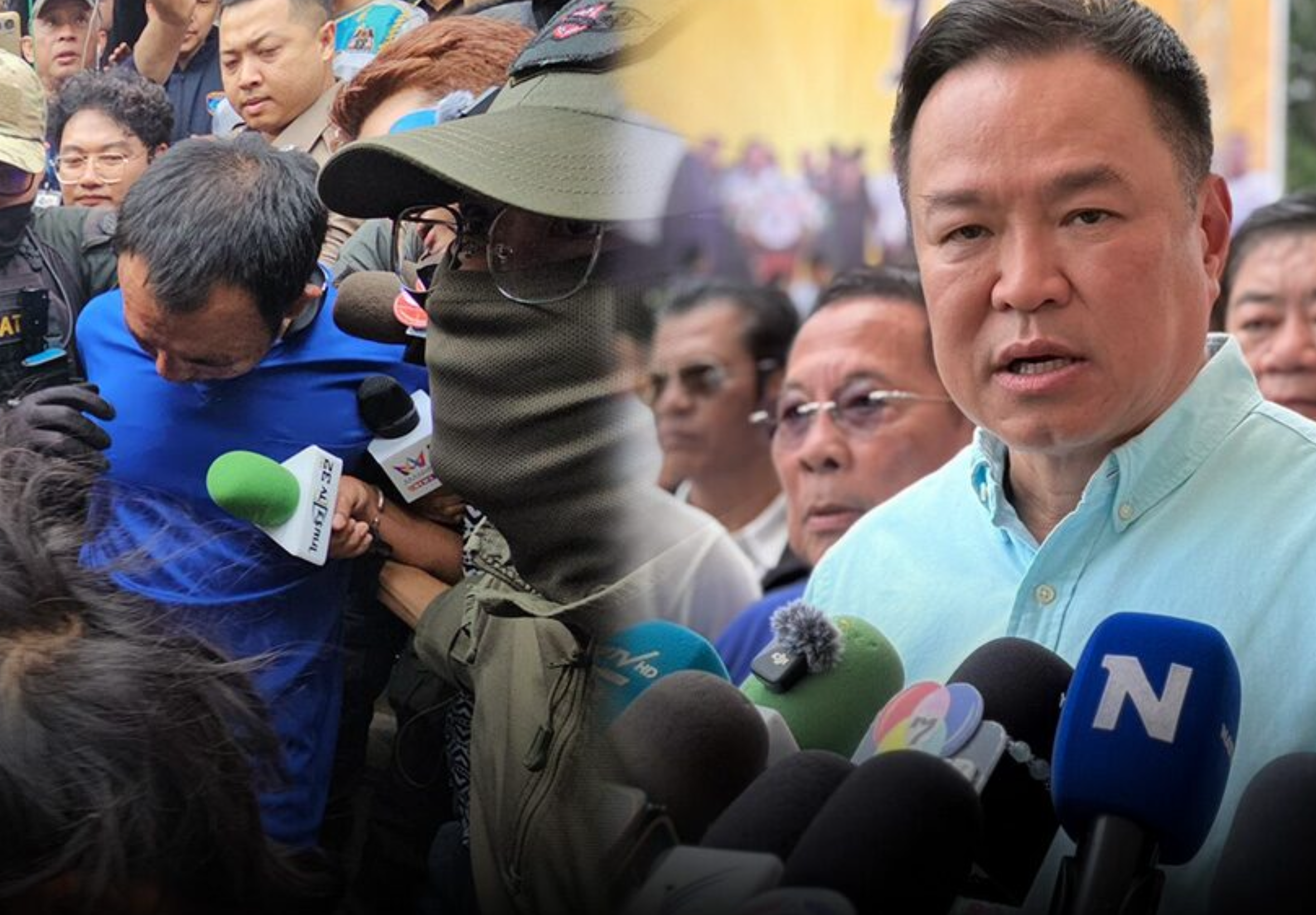
Police recovered five bodies buried in an overgrown coconut grove in Bang Lamung district, Chonburi: two Russian siblings and a Thai mother, father and child.

The discovery led to the arrest of a main suspect and accomplices, and prompted renewed scrutiny of how high-risk former prisoners are monitored after release, as well as the ease with which police-style equipment can reportedly be bought online. He had been released from prison about two months before the killings.

Concerns over post-release monitoring

The suspect had previous convictions involving firearms, taking a minor away and attempted murder. It argues that he should have been considered at high risk of reoffending after leaving prison.

Thailand's Act on Measures to Prevent Recidivism in Sexual or Violent Offences, referred to as the JSOC law, came into force in 2023. It provides for measures including supervision, electronic monitoring, emergency detention and monitoring for up to 10 years in certain cases.

However, it is alleged that there was no warning to local police after the suspect moved to Chonburi, no probationary checks and no active system to track his behaviour during the roughly 60 days after his release.

It also raises questions over whether prison risk assessments were shared in time for prosecutors to seek court-ordered preventive measures before release. Claims concerning operational failures have not been independently addressed by authorities.

Police disguise allegedly used to control victims

The offender posed as a police officer and used handcuffs and a communications radio to detain the victims. This may have made the victims less likely to resist or call for help.

Police insignia, police-style vests, handcuffs and other equipment can be openly obtained through e-commerce platforms without identity or eligibility checks. There are calls on the Digital Ministry and Royal Thai Police to tighten oversight of such items.

For foreigners living in or visiting Chonburi's tourist areas, including nearby Pattaya, the case is a reminder to verify the identity of anyone claiming to be an official. Visitors who are stopped or approached in unusual circumstances can ask to see official identification and, where possible, contact 191 or their embassy or consulate for help.

Missing-person reports under focus

The Thai victims' relatives had filed missing-person reports more than a month before the bodies of the victims were found. They have criticised investigators for initially treating the cases as routine missing-person reports rather than linking them to a possible wider criminal pattern.

The case exposes gaps spanning prison release procedures, probation resources, regulation of official-looking equipment and the handling of missing-person investigations.

Join the discussion?


3 August 2026
Georgealbert
Georgealbert
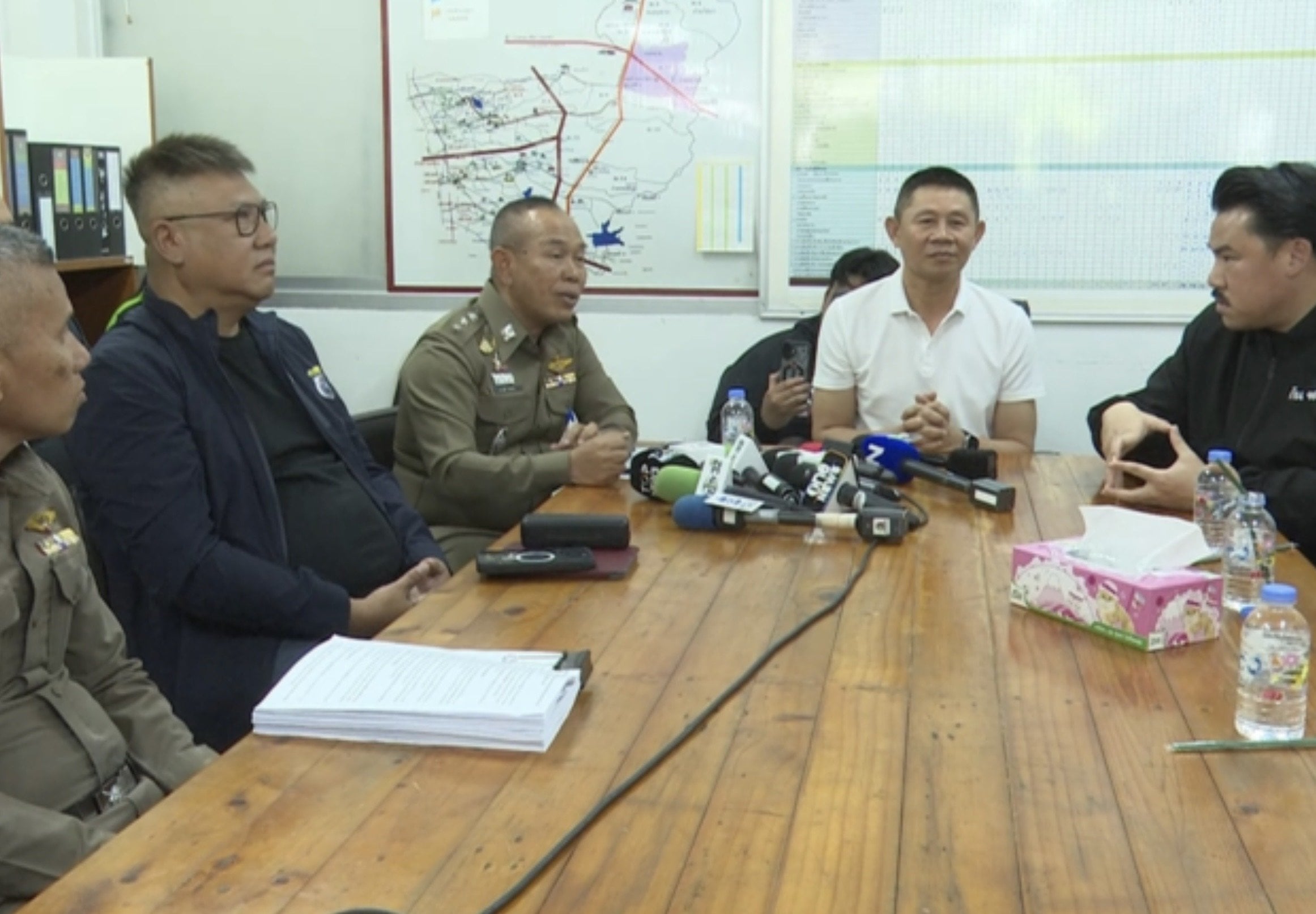
Chon Buri police have apologised to relatives of a father, mother and child found murdered, acknowledging failures in communication and a severe shortage of CCTV coverage around Huai Yai. Officers insisted, however, that they never stopped investigating and rejected claims that suspect "Pong" had worked as a police informant.

The clarification followed a meeting lasting almost an hour between relatives, social campaigner Kan Jomphalang, and senior provincial and Huai Yai police officers on 2 August. The family had questioned why the search for the three victims appeared to have made little progress.

Police explain early lines of inquiry

Pol Col Wasurat Chaitheeraphat, deputy commander of Chon Buri Provincial Police, said investigators visited the victims' home after relatives raised the alarm. They found lights left on, someone feeding the dogs and a pickup truck still parked there, while a motorcycle was missing.

Police also found documents relating to informal loans. This led investigators initially to consider whether the family might have fled debt, he said.

Huai Yai police chief Pol Col Warawut Nitayawan offered condolences and accepted that information had not been communicated clearly to relatives. He said officers would improve progress updates, while maintaining that the investigation itself had continued throughout.

Police also denied allegations that Pong was an informant or had acted as their "source". Phasakorn said Pong had been imprisoned since 2018 and asked why police would have jailed him if he had been working for them.

One camera on a 20km road

Police said the area where victims' bodies were buried is a 20-kilometre road serving the largely forested, hilly area and has only one CCTV camera, positioned outside Huai Yai Police Station.

Requests for more cameras from local authorities have not received support, police said, leaving a major blind spot for investigators. Kan Jomphalang urged responsible agencies to act and said he would consider helping provide cameras.

Police also said they are checking outstanding missing-person cases and checking on reports that the alleged killers may have had more than five victims. They said no additional evidence or reports have yet been received, but online claims were being investigated.

Evidence taken from victims' home

On the day the family were reported missing investigators and forensic officers examined the family's single-storey rented home in Ban Thung Kha Tai, Moo 2, Huai Yai, Bang Lamung. A bronze-gold four-door Chevrolet Colorado pickup was parked outside and was later removed by tow truck for further examination at Huai Yai Police Station.

Neighbours said the family usually dried fish at a shop in front of the house. They described the area as isolated, with scattered homes and dense forest, and called for more patrols; a regular police checkpoint reportedly ended around six years ago.

Relatives said they had initially feared debt collectors were involved. The victims' grandmother said the 18-year-old had not been involved with drugs, while acknowledging her daughter had previously been arrested with 20 methamphetamine pills but had not reoffended after serving her sentence.


Picture courtesy of Amarin

Related stories

Russian-siblings-bodies-recovered-in-chon-buri-forest

Pattaya-court-denies-bail-to-four-murder-suspects

Join the discussion?


2 August 2026

Georgealbert
Georgealbert
Two police officers were killed and three were injured when a gunman opened fire on an investigation team in Tak Bai district, Narathiwat, on 2 August.

The officers were conducting a search linked to a narcotics case at Ban Bueng Chalam in Phrai Wan subdistrict when they came under gunfire. The attacker escaped and was believed to still be carrying a rifle.

Pol Maj Gen Prayong Kotsakha, commander of Narathiwat Provincial Police, went to the scene to oversee the response, according to the Narathiwat Public Relations Office.

Security forces launch search operation

The two dead officers were members of the Tak Bai Police Station investigation unit. Three injured officers were taken to hospital for treatment; no further details on their conditions were released by authorities.


Police secured the area and are collecting evidence. A joint operation involving police, military personnel and administrative officials has been launched to surround, search and track down the gunman.

Authorities said security measures and surveillance had been stepped up in and around the area to prevent a further attack and bring the suspect before the law.

The shooting occurred during an operation targeting a suspected drug case. Officials did not identify a suspect or give a possible motive.

The authorities have asked members of the public to report suspicious people or behaviour immediately. Reports can be made to officials or to the Internal Security Operations Command Region 4 Forward Command hotline on 1341.


Pictures courtesy of SiamRath

Join the discussion?


2 August 2026
Georgealbert
Georgealbert
The high-profile murder investigation in Chon Buri involving two Russian siblings has reignited calls for Thailand to resume executions for the most serious crimes.

The case, which also involves further allegations against the suspect, has prompted strong public reaction.  The crimes has again placed Thailand's capital-punishment laws under scrutiny, while the debate now extends beyond the immediate investigation.

Thailand's law and long pause

Thailand's last execution was carried out by lethal injection on June 18, 2018. The death penalty remains legal, but the country had gone eight years and one month without an execution.

Capital punishment can apply to aggravated murder, murder during a robbery or robbery resulting in death, terrorism, certain national-security crimes and some military offences in wartime or other circumstances set out in law.

Major drug production, importation and trafficking cases can also carry the penalty, although amendments have restricted it to especially severe narcotics offences.

A death sentence does not mean an immediate execution. Courts can reduce penalties to life imprisonment or another sentence after considering the circumstances, and courts often impose life terms instead.

Those sentenced to death may appeal, take a case to the Supreme Court where permitted, and petition for a royal pardon. Many prisoners remain on death row for years, while some sentences are commuted to life imprisonment.

Thai law bars the death penalty for those aged under 18 when an offence was committed, as well as pregnant women, women who have recently given birth, and people considered mentally unsound.

A possible path towards practical abolition

Thailand is among 53 countries that still retain capital punishment. It is nevertheless approaching the status described as "de facto abolitionist", used for states that keep the penalty in law but have not used it for a long period.

Under Amnesty International's general criteria, a country normally needs 10 years without executions and a credible policy or practice showing it will not resume them. Thailand would reach 10 years on June 18, 2028, if no executions take place, though the designation would still depend on government policy.

Such status does not automatically bring trade, legal or diplomatic benefits, but may strengthen a country's human-rights standing. The current public pressure could therefore affect whether Thailand continues its practical pause or reverses course.

By the end of 2025, 113 countries had abolished the death penalty for all crimes and 145 had abolished it in law or practice. Amnesty recorded at least 2,707 executions in 17 countries during 2025, up 78% from 2024, excluding China, whose figures are state secrets.


Picture courtesy of Komchadluek

Join the discussion?


2 August 2026


Georgealbert
Georgealbert
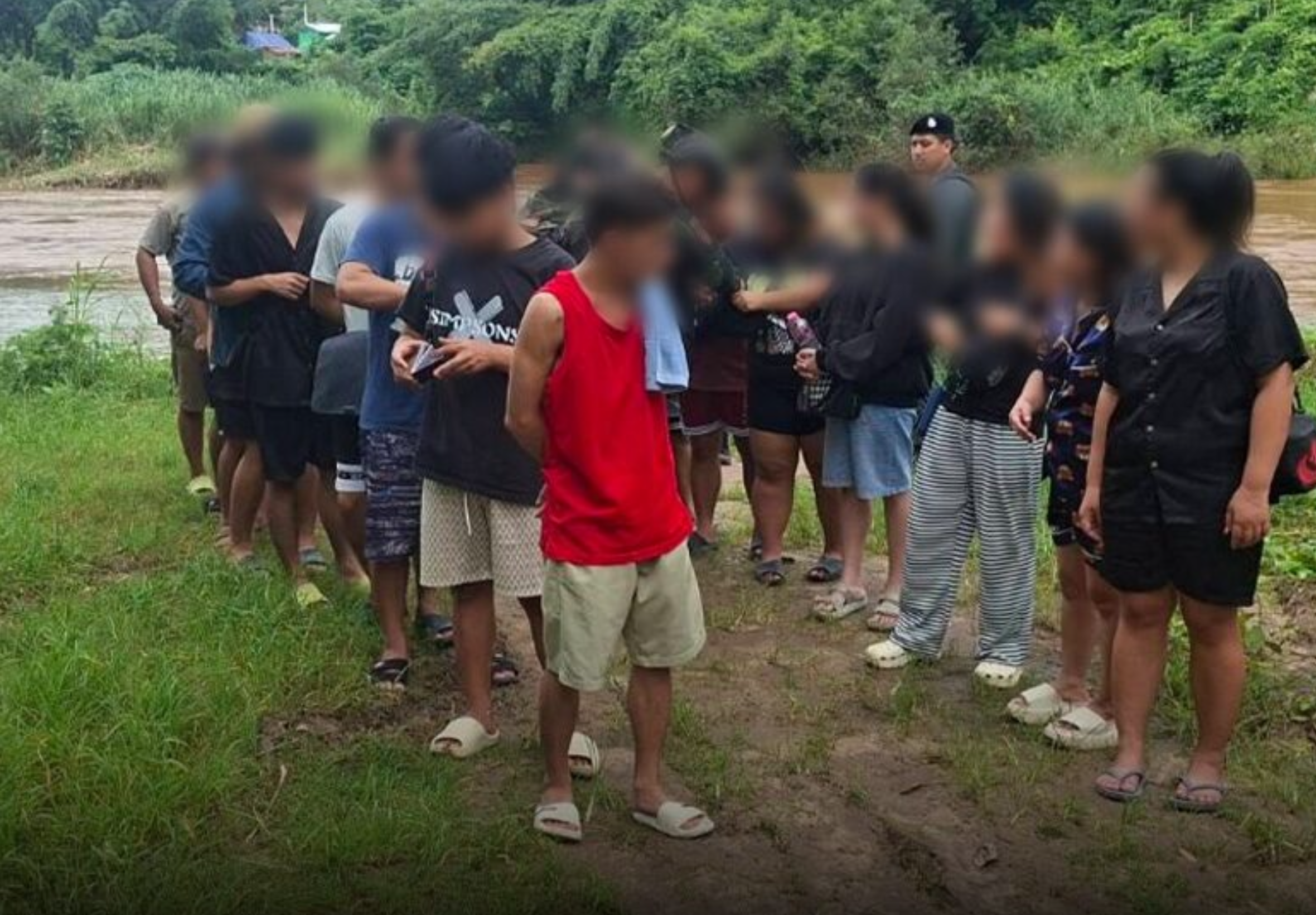
Eighteen Filipino nationals have entered Thailand from Myanmar's Myawaddy area after reportedly being released from territory controlled by the Democratic Karen Benevolent Army (DKBA), also known as the Buddhist Karen army.

Thai soldiers and Border Patrol Police found the group at about 11am on 1 August as they crossed into Ban Huai Nam Nak, Moo 4, Phop Phra district, Tak province. The location is near the Thai-Myanmar border west of Mae Sot.

The group comprised nine men and nine women. All were detained after crossing outside an approved border checkpoint and entering the kingdom without permission.

Six months of appeals for help

Reports said the Filipinos had sought assistance for more than six months through Ms Jay Krittiya, a coordinator with a civil-society network assisting victims of human trafficking.

The organisation had reportedly contacted senior DKBA officers to seek the group's release and return to the Thai side of the border.

Their release comes as Myanmar authorities have increased action against groups linked to online scam operations, according to the report. Scam compounds and trafficking networks operating near the Thai-Myanmar frontier have drawn sustained concern because foreign nationals can be recruited or held there against their will.

Thai police take custody

After initial questioning, soldiers from Infantry Company 423, under the Ratchamanu Task Force control headquarters, and Border Patrol Police Company 346 transferred the 18 Filipinos to Phop Phra Police Station for legal proceedings.

Officials treated the crossing as an immigration offence because the group entered Thailand outside an authorised channel. However, the civil-society network wants those involved to undergo Thailand's National Referral Mechanism, or NRM, screening process before any prosecution.

The NRM process is intended to assess whether a person may be a victim of human trafficking. The network said it did not want the Filipinos prosecuted before that screening had taken place.


Picture courtesy of Matichon

Join the discussion?


2 August 2026
Georgealbert
Georgealbert
Philippine Airlines (PAL) has denied that a homeless man found injured beneath the BTS Ploenchit stairway in Bangkok was one of its former pilots.

In a statement issued on Friday, 31 July 2026, the airline said Captain Larry Malpaya remains an active Philippine Airlines pilot and was not the person featured in Thai media and social-media reports.

"The information is false. Captain Larry Malpaya is currently still serving as a pilot for Philippine Airlines and is not the person mentioned or shown in the reports," PAL said, according to the Philippine News Agency.

The airline has asked Thai PBS World to immediately correct its report and related social-media posts, saying this was necessary to stop false information spreading further.

Identity and nationality still unconfirmed

The injured man had been widely described online as a former captain from a major Philippine airline who had fallen on hard times and was living on Bangkok's streets. Some posts claimed he was Filipino and suggested financial losses from share trading had led to his circumstances.

The Mirror Foundation, which arranged help for the man, said it had not published claims about his profession or nationality because he was not in a condition to provide reliable information. It said the online reports originated from an account by a member of the public who had spoken to him.

Hospital care and identity checks

Mirror Foundation said the man is now receiving close care from doctors, nurses and hospital social workers. It said hospital social-work staff would lead efforts to establish his correct identity, including his name, family address, occupation, social circumstances and nationality, before coordinating any longer-term support.

Foundation workers said they had seen an infected wound and behaviour that raised concerns about possible mental-health problems. They said local people had reported that he often spoke to himself, although workers did not personally observe this.

They also said he had asked someone to buy bitter melon capsules to treat a wound believed to be linked to diabetes, and had sometimes removed dressings shortly after they were applied. Police were contacted to arrange treatment under the Mental Health Act, and the man did not refuse medical care when police and an ambulance arrived.

The foundation said urgent physical treatment was prioritised, followed by psychiatric assessment if needed. It will assist with identifying the man and coordinating with authorities once his condition improves.

Questions over delayed treatment

Mirror Foundation said it was concerned that the man had apparently remained in poor physical condition for more than a week before reaching hospital, despite being visible to passers-by and receiving attention from agencies.

It called for scrutiny of whether Thailand's support system is responding quickly enough when vulnerable people are found on the streets with obvious injuries or illness.


Picture courtesy of Amarin
Related story

Former-Philippine-airlines-captain-found-ill-under-BTS

Join the discussion?


2 August 2026
Georgealbert
Georgealbert
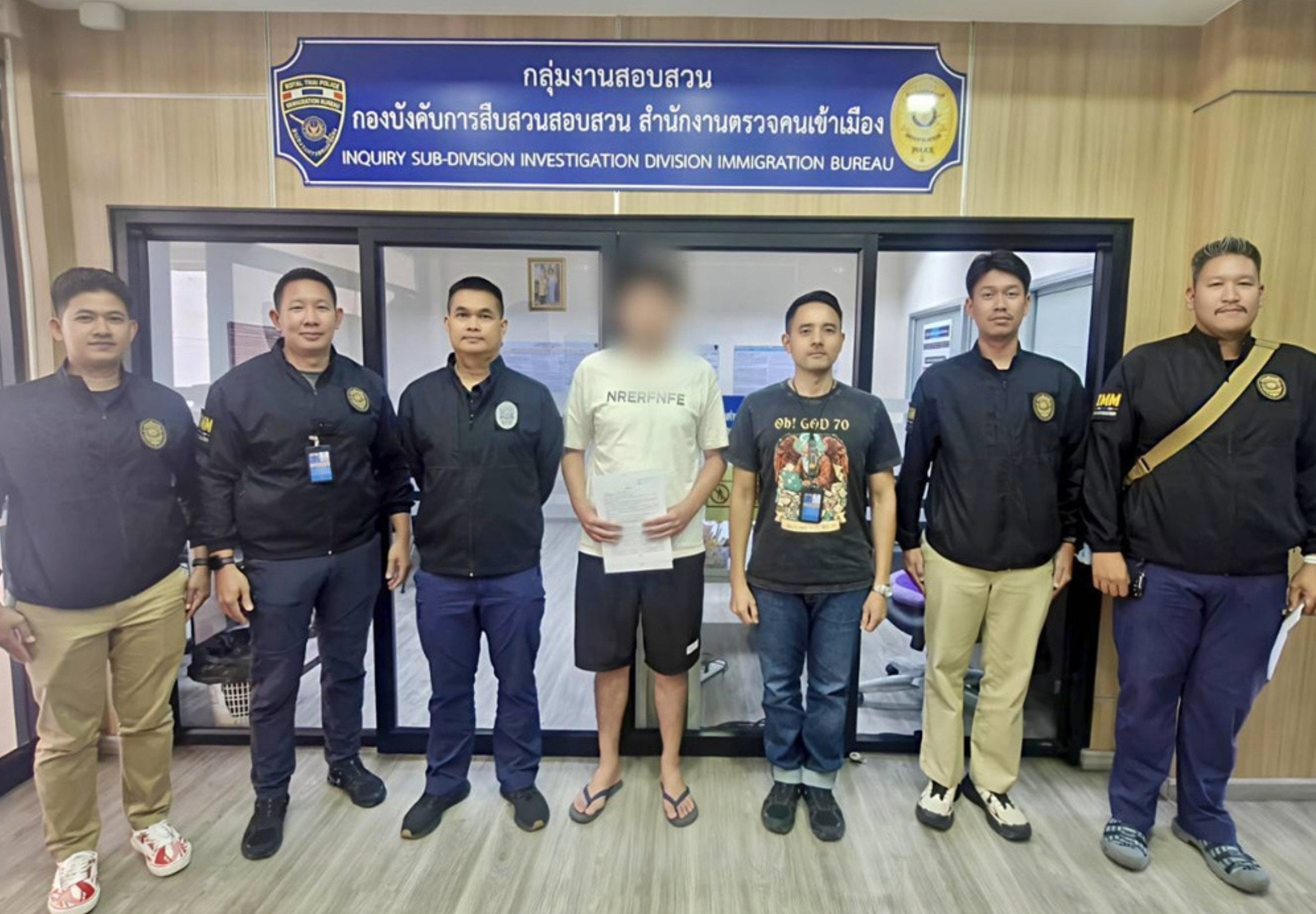
Thai immigration police have arrested a 27-year-old Chinese national at a housing estate in Samut Sakhon, alleging he had overstayed by 132 days while wanted in Shenzhen on a fraud case.

The man, identified only as Mr X, was detained on 31 July 2026 at about 6pm. Police said he was the subject of an arrest warrant issued by the Ministry of Public Security's Longgang district in Shenzhen, Guangdong province, dated 15 September 2023.

Arrest at Rama 2 housing estate

The operation was led by Pol Col Chuwong Uthaisang, superintendent of the Immigration Bureau's fugitive suppression division, alongside Pol Lt Col Witthaya Thongphueng and Pol Maj Churinnat Sota.

Investigators said they had learned that Mr X was staying at a village development on Rama 2 Road in Bang Nam Chuet, Mueang Samut Sakhon district. Officers went to the property, identified themselves as police and checked his travel documents.

The inspection found that he had entered Thailand through the immigration checkpoint at Don Mueang Airport on 21 December 2025. He had been granted permission to remain in the kingdom until 20 March 2026, police said.

He had not left Thailand by that date, leaving him with an overstay recorded as 132 days.

Police said Mr X was accused of remaining in Thailand after his permission had ended. The Chinese warrant concerns an alleged fraud offence.

Case handed to immigration investigators

Officers said Mr X was informed of the allegation against him and of his legal rights before being transferred to investigators at the Immigration Bureau's investigation division for legal proceedings.

Thai authorities will also coordinate the relevant procedures connected to the warrant issued by authorities in the People's Republic of China.

Immigration police said the arrest reflected their efforts to pursue foreign nationals wanted under overseas warrants and those allegedly breaking Thai law after entering the country. The operation forms part of the stated policy that Thailand must not be used as a hiding place for transnational criminals.

Join the discussion?


2 August 2026
Georgealbert
Georgealbert
Thailand's economy faces mounting pressure from global trade tensions, higher energy and shipping costs, and an influx of lower-priced Chinese goods, according to an analysis published on 30 July 2026.

The analysis argues that the effects are now reaching workers, farmers and small businesses, as companies cut costs, reduce operating hours and close unprofitable production lines or branches.

Political parties are meanwhile competing over the annual budget and short-term cash-distribution proposals aimed at stimulating the economy and retaining support among lower-income voters.

Pressure on factories and household incomes

The analysis cites data from the Fiscal Policy Office and leading research bodies as indicating a worrying outlook for Thai GDP growth in 2026. It identifies Middle East tensions as a major driver of higher global energy and freight costs.

It also points to the US-China tariff dispute, saying excess Chinese production is being sold into Thailand at low prices, placing pressure on domestic manufacturers. Small and medium-sized factories are said to be increasingly unable to absorb their costs, leading some to shut down.

According to feedback from business operators reported by the Bank of Thailand, large companies are moving towards "lean organisation" strategies to protect profits. These can include consolidating production lines, closing loss-making branches, cutting working hours and laying off staff.

Daily-paid workers and farmers reliant on spending linked to the industrial sector are among those most exposed when activity slows, the analysis says.

Low inflation can mask weak demand

It describes what it calls "technical deflation" in the cost-of-living dimension. Despite higher external energy costs, domestic core inflation is reportedly growing by less than 0.5 percent.

It argues this is not simply because goods have become naturally cheaper, but because many consumers have less money to spend. Market traders and neighbourhood shops are said to be lowering prices to preserve sales and compete for the limited cash available to working households.

The central problem, it says, is a continuing decline in purchasing power at the grassroots level rather than external shocks alone.

Cash handouts face fiscal constraints

The government policy described as "Thai Chuai Thai Plus" is presented in the analysis as an attempt to inject short-term funds into the economy. However, it argues that cash handouts may offer only temporary relief and cannot shield lower-income households from wider trade-war pressures on Thai production.

It also highlights public debt approaching 66.4 percent of GDP and the risk that the 2027 national budget could be delayed or poorly targeted.

The analysis concludes that longer-term measures are needed to protect Thai industry from foreign competition and improve workforce skills as global manufacturing locations shift. How the government handles those issues could become a significant political test before the next election.


Picture courtesy of SiamRath

Join the discussion?


2 August 2026
Georgealbert
Georgealbert
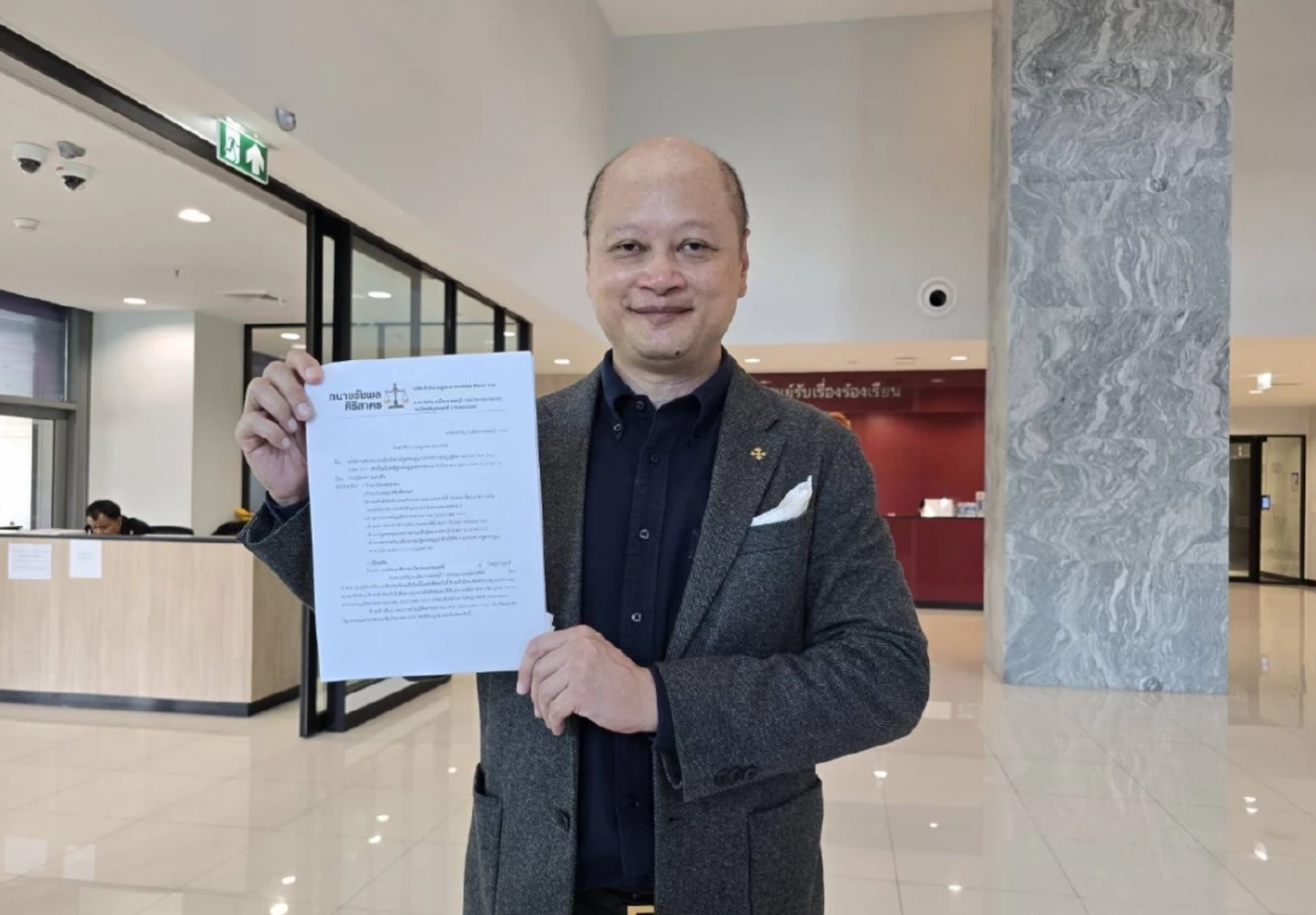
Thai lawyer Ratchaphon Sirisakorn has asked the Office of the Ombudsman to seek a Constitutional Court ruling on a measure that would withhold annual vehicle tax stickers from motorists with unpaid traffic-ticket fines.

He submitted the request at the Ombudsman's Office at the Government Complex on Chaeng Watthana Road on 31 July 2026, also urging the Ombudsman to recommend delaying a memorandum of understanding, or MOU, involving the Transport Ministry, Royal Thai Police and Department of Land Transport.

Challenge over car tax and traffic fines

Ratchaphon said the arrangement stems from an amendment to Section 141/1 of the Road Traffic Act, announced in 2017 and in force since 21 June that year. Its principle is that people who do not pay ticket fines will not receive a vehicle tax sticker.

He argued that a motorist who has paid the annual vehicle tax should receive the sticker, while traffic fines should be dealt with separately. In his view, police already have the power to bring unpaid-fine cases before a court rather than use the car tax process as leverage.

"Officials must take the case to court, not force the withholding of a tax sticker," he said, describing the measure as akin to "hitting below the belt".

Ratchaphon said the approach could conflict with Section 26 of the Constitution, which requires laws to respect the rule of law and restricts the removal of public rights. He warned against a wider expansion of such measures, suggesting it could lead to people being denied welfare cards, driving licences or identity cards.

He stressed that his complaint was not intended to help people avoid legitimate fines. Changing the law would require action at Act level, he said, and could not be done simply by the minister, police or Land Transport Department.

Ratchaphon noted that motorists can submit written objections to a ticket. If officials maintain that action should proceed after an objection, he said the person must pay the fine.

He said he had 60 days to submit the matter through the Ombudsman before it could go to the Constitutional Court. If the court finds the provision unconstitutional, it could no longer be enforced; if the MOU is not delayed, he said, authorities would continue enforcing it under the law.

Lawyer urges drivers to settle valid tickets

Ratchaphon urged people with tickets to consider whether they had actually committed the offence. He cited camera-issued tickets for speeding and crossing solid road lines as cases where the evidence can be clear.

Some motorists have 40 to 50 outstanding tickets, he said. Those who have genuinely broken traffic rules should pay, he added, because violations can inconvenience or endanger others.

He questioned why the tax sticker measure was needed when prosecutors can already take non-payment cases to court. He also said previous schemes allowing motorists with large fine debts to clear them at reduced rates, combined with training, had been a constructive approach.

Related story

hailand-links-traffic-fines-to-annual-tax-discs-from-August

Join the discussion?


2 August 2026
Georgealbert
Georgealbert
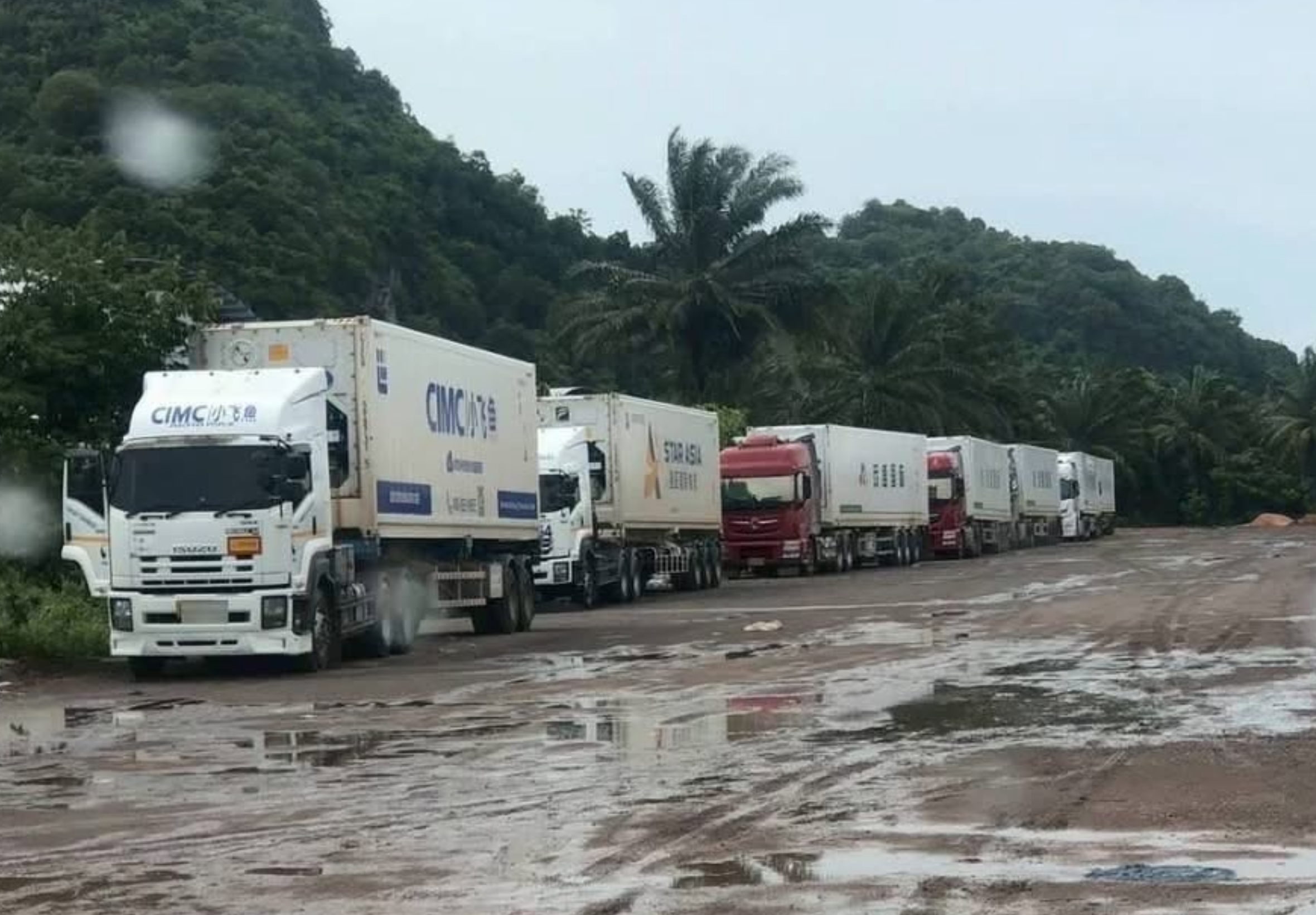
Chinese-registered container trucks have reportedly been seen as far south as Nakhon Si Thammarat, prompting fresh questions over whether foreign vehicles are operating beyond routes permitted under regional transport agreements.

Dashcam footage said to have been circulated on 31 July in truck-driver groups showed a tractor unit with red Chinese lettering travelling on Asian Highway AH2, Highway 41, in Tha Phra, Nakhon Si Thammarat. The material was highlighted by the Ru Than Chin Epic Fury page, citing the Team Ngarn Hua Lak Sai Banthoeng Facebook page and Facebook user A Tha Maka.

The report follows the interception of foreign- or Chinese-registered lorries allegedly travelling outside approved cross-border routes in Lang Suan district, Chumphon, in late July.

Questions over permitted routes

The Cross-Border Transport Agreement, or CBTA, initially covers Thailand, Myanmar, Laos, Cambodia, Vietnam and China, specifically Yunnan and Guangxi Zhuang Autonomous Region.

Approved Thai routes are the North-South, East-West and Southern economic corridors. According to the report, these do not extend to the lower South as far as Nakhon Si Thammarat. Each country has a quota of 500 permits; China has used its full allocation, while Thailand has registered about 200 vehicles.

Truck operators have questioned why Thai vehicles are checked over tax-disc displays while foreign trucks are allegedly able to pass. Thongyu Kongkhan, president of the Land Transport Federation of Thailand, told media that Chinese goods were being transported almost entirely by Chinese vehicles through nominee companies, warning Thai operators would face serious difficulties without an effective response.

Claims of price pressure and nominee firms

It is alleged that Chinese capital has bought or leased warehouse sites in the Eastern Economic Corridor provinces of Chonburi, Rayong and Chachoengsao, as well as Bang Na-Trat, Bang Phli and Wang Noi, to distribute imported goods directly to consumers.

It further alleges that Thai shareholders or employees are used as 51% nominee holders to avoid the Land Transport Act, allowing imports of Chinese truck brands including Sinotruk, FAW and Foton. It puts their cost at 1.8-2.2 million baht each, against 3.5-4 million baht for Japanese or Thai brands.


Freight rates have been cut to 20-25 baht per kilometre, compared with Thai standard rates of 35-45 baht, leaving Thai lorries idle and operators facing non-performing loans with leasing firms.

Chinese-brand trucks registered in Thailand reportedly rose from about 6,000 in 2023 to 8,473 in 2024. The federation says the real figure, including alleged nominee vehicles, had exceeded 10,000. Registrations are projected at 15,000-18,000 in 2025-26, driven by Chinese electric trucks, price competition and tax incentives.

Sticker allegations resurface

There are also reports that revives allegations of highway "sticker" payments. Viroj Lakkhanaadisorn, described in the report as a former Move Forward Party MP and quoted as a People’s Party list MP, previously said more than 200,000 trucks were involved in a system worth 10-20 billion baht annually.

He said stickers bearing the message "If driving impolitely, please report..." had reappeared on driver-side doors or windscreens, allegedly making vehicles easier for weigh-station and highway police staff to identify. Such stickers can facilitate overloaded vehicles, GPS evasion and unlawful operations.


Picture courtesy of Manager Online

Join the discussion?


2 August 2026
Georgealbert
Georgealbert
Bangkok bus captain Thitipha Khongming, known as Gigi, has attracted nationwide attention for using a personal megaphone to tell taxis to stop occupying bus stops. Her interventions at major transit points have gone viral, and traffic police have now helped clear vehicles from more stops, at least temporarily.

Gigi drives route No. 104, which runs between Pak Kret district in Nonthaburi and Mor Chit 2 Bus Terminal in Bangkok. Although she is widely described as a bus driver, she and colleagues at Thai Smile Group say the official title is "bus captain", while fare conductors are known as "bus hostesses".

Megaphone warnings for obstructing taxis

Gigi has become one of Thailand's most recognisable public transport workers through her blunt reminders to taxi drivers that bus stops are reserved for buses.

In one viral clip, reportedly filmed at a stop outside Central Lat Phrao shopping mall last Sunday, she tells a taxi driver: "Have you finished (sending passengers)? If yes, please leave the bus stop. Please put yourself in other people's shoes."


Picture courtesy of Thitipha Khongming Facebook

She has also warned particularly uncooperative drivers that their registration plates could be photographed and sent to the Land Transport Department, the state agency overseeing public taxi operations.

Her usual confrontations are at Chatuchak Park and Central Lat Phrao, both important Bangkok interchange points for commuters. In another Facebook post, alongside a photograph of the Chatuchak bus stop, Gigi wrote: "The bus stop is for buses. Why does the bus have to make way for vans, Grab (cars) and taxis?"

The approach appears to be effective, with taxi drivers shown moving on quickly when they hear her over the megaphone.

What it means for passengers

For foreign residents and visitors who use Bangkok buses, especially around Mor Chit, Chatuchak and Lat Phrao, blocked stops can mean buses must pull into traffic rather than the designated kerbside area. That can make boarding and alighting more difficult, particularly for older passengers, families or those carrying luggage.

The police action may provide some short-term relief at affected stops, but Gigi's own campaign has focused on the everyday problem of taxis, vans and ride-hailing cars waiting in spaces intended for buses.

After the footage gained traction online and Gigi appeared on several news programmes, traffic police stepped in to help remove taxis from more bus stops. On Friday, she thanked the officials and taxi drivers who had cooperated.

However, her July 24 message remained directed at those who refuse to move: "Anybody parking at bus stops can be sure they will meet me."


Join the discussion?


2 August 2026
Georgealbert
Georgealbert
Five people have been arrested in Songkhla after police stopped two vehicles carrying three Chinese nationals allegedly heading towards the Malaysian border after entering Thailand illegally.

Two people who later approached immigration officers to seek the Chinese men's release were also detained after police said an investigation linked them to the cross-border smuggling operation.

Vehicles stopped on Asian Highway 2

The arrests took place on Asian Highway 2 in Tha Chang, Bang Klam district, Songkhla. Immigration Police Region 6, tourist police and Bang Klam police jointly stopped two suspicious vehicles.

The two Thai drivers, identified only as 39-year-old Thaweewit and 46-year-old Athit, were arrested along with the three Chinese passengers found concealed in the cars.


Police said the drivers admitted they had been hired by a broker for 30,000 baht to collect the three men and take them to a hotel in Sadao district, near the Thai-Malaysian border.

Through an interpreter, the Chinese nationals said they had crossed into Thailand from Cambodia through a natural border crossing in Sa Kaeo province. They said they had then been moved in stages by vehicle and intended to continue to Malaysia for illegal work.

Alleged brokers approached officers

While officers were preparing arrest records and screening potential victims at Songkhla Immigration, a 31-year-old Malaysian man, identified as Mohmad, and a 38-year-old Vietnamese woman, named Nguyen Thi Than, approached the arresting team.

Police said the pair attempted to negotiate and offer money for the release of the three Chinese men.

Lt Col Pongsiri Phithak, the Songkhla Immigration inspector leading the arrest team, delayed the discussion while investigators checked telephone records and other technological evidence, police said.

The investigation allegedly showed that the Malaysian and Vietnamese suspects were the brokers who directed pick-up and drop-off locations and were due to take over the operation to move the Chinese nationals into Malaysia. Both were arrested at the immigration office.

The four alleged facilitators - the two Thai drivers, Malaysian man and Vietnamese woman - were charged with jointly providing shelter, concealing or otherwise assisting foreigners who entered Thailand illegally to evade officials.

The three Chinese nationals were charged with entering and remaining in Thailand without permission. All seven suspects, along with the two vehicles, were handed to Bang Klam police for legal action. Officers said they would also pursue a wider investigation and possible asset seizures.

Immigration Police Region 6 spokesman Pol Col Charoenphong Khantiloh said members of the public can report suspected migrant smuggling or foreign nationals breaking the law on Immigration Bureau hotline 1178, weekdays from 8.30am to 4.30pm.

The operation followed national instructions from police chief Pol Gen Kittirat Phanphet, relayed through deputy police chief Pol Gen Samran Nuanma, who heads the police centre targeting illegal immigration.


Pictures courtesy of Naewna

Join the discussion?


2 August 2026
Georgealbert
Georgealbert
The Bank of Thailand (BoT) will impose daily limits on digital transfers and payments by children and teenagers after finding a steep rise in young people's accounts being used by fraudsters as mule accounts.

The central bank said accounts owned by under-18s and linked to criminal activity rose from 3,371 in January 2025 to 5,741 in March this year, a 70.3% increase. Those accounts were connected to cases involving combined losses of 185 million baht.

Chayawadee Chai-anant, the BoT assistant governor for corporate relations, said intelligence gathered with law enforcement agencies showed criminal networks were increasingly exploiting deposit and e-money accounts held by young people.

New daily limits for young account holders

The standard limits will vary by age and account type:

Children aged 10-12: e-money transfers or payments limited to 3,000 baht a day.

Young people aged 12-15: digital transactions from bank deposit accounts limited to 5,000 baht a day.

Young people aged 15-18: digital transactions from bank deposit accounts limited to 10,000 baht a day.

Commercial banks must introduce the new limits by September. E-money providers have until October, Ms Chayawadee said.

The BoT has worked with the Thai Bankers' Association and e-money service providers on standardised limits based on customer profiles. The aim is to match ordinary spending patterns while making it harder for criminal groups to use youth accounts to move money.

Higher limits can be requested

Banks and e-money operators must tell customers before changing an account's limit. They must also offer accessible ways to request a higher limit, including through mobile apps, call centres and branches.

For foreign residents with children holding Thai bank or e-money accounts, the change may affect everyday payments, online purchases and transfers. Families expecting to make larger legitimate payments should check their provider's process for increasing the daily ceiling once the measures take effect.

The central bank said many young people had become involved unknowingly, either by opening accounts for others or allowing someone else to use their account. Both actions are criminal offences under the Emergency Decree on Measures for the Prevention and Suppression of Technology Crimes.

Parents urged to warn children

The BoT hopes the measures will reduce the risk of children and teenagers being scammed or persuaded to hand control of their accounts to criminals.

It has urged parents to explain that opening an account for another person, or letting another person use an existing account, is illegal. Ms Chayawadee said the central bank would keep monitoring the issue and adjust its approach as criminal groups change tactics.

Join the discussion?


2 August 2026
Georgealbert
Georgealbert
A 21-year-old man was found dead in a room behind a shop in Soeng Sang, Nakhon Ratchasima on 29 July 2026, with the cause initially unknown. Relatives later found a Malayan krait, known in Thai as ngu thap samingkhla, hiding in a corner of the room and believe he may have been bitten while asleep.

Rescuer unit Soeng Sang said it was notified by Soeng Sang Hospital at about 8.17am after the man's death. The victim was found lying in his bedroom, where belongings were scattered around the room.

The shop owner told responders that CCTV footage last showed the man at about 11pm. The following morning, the owner found him while preparing to open the business.

Police, a hospital doctor and rescue workers examined the scene but found no obvious signs of anything unusual. The body was taken to Soeng Sang Hospital for an initial examination.

No visible bite mark found

Hospital staff reportedly found no external injuries or other visible abnormalities on the man's body. However, foam was seen around his mouth when the body arrived at the hospital.

The doctor advised that the body should be transferred to Maharaj Hospital for a full post-mortem examination. Relatives declined, believing at the time that the death might have been linked to an existing health condition and saying they did not question the cause.

They were also told that determining the cause through a detailed autopsy could take a further two days and that collecting the body afterwards involved complicated paperwork. The family therefore took the body for normal religious rites.

When relatives and the shop owner returned to clear the victim's personal belongings, they found a Malayan krait in the room. They suspect it may explain the death, although no formal post-mortem has confirmed a snakebite as the cause.

The shop paid tribute to the man, who worked there, describing him as diligent and humble.

Small bites can be dangerously easy to miss

The Malayan krait is among Thailand's most dangerous venomous snakes. Its venom affects the nervous system, progressively weakening muscles and potentially causing respiratory paralysis if treatment is not received in time.

Its small fangs can leave a tiny wound that may cause little or no pain, swelling or redness. Reported symptoms can include drooping eyelids, blurred vision, slurred speech, difficulty swallowing saliva and foaming at the mouth before breathing problems develop.

For foreigners living in Thailand, particularly those in rural areas or accommodation close to vegetation, the case is a reminder not to dismiss an unexplained mark or sudden weakness after possible contact with a snake. Anyone who suspects a bite should go to hospital immediately, even if the wound does not hurt.

Medical advice is to remain calm and keep movement to a minimum, which may slow venom spread. Do not cut the wound or use unproven traditional treatments. Patients may need close observation in hospital for at least 24 hours.


Join the discussion?


2 August 2026
Georgealbert
Georgealbert
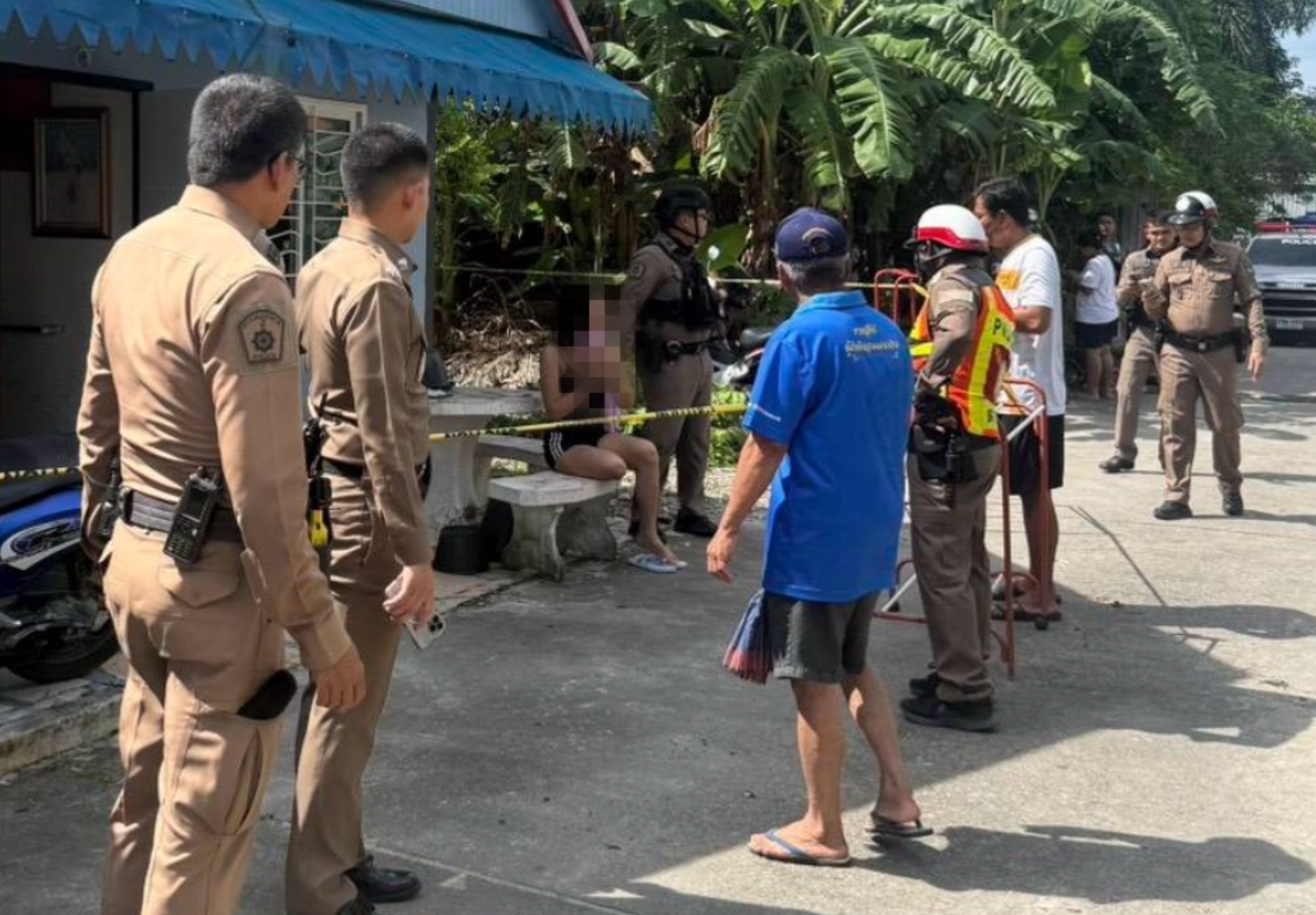
A 36-year-old woman has been detained following the death of her 74-year-old mother-in-law at a house in Chalong, Phuket, on 1 August 2026.

Police said the two women had been involved in a serious argument inside the home before the older woman was attacked with a knife. A neighbour reportedly witnessed the incident and alerted police.

The victim, identified as Chantra, 74, was found dead inside the property with multiple wounds from a sharp object. There was a large amount of blood on the floor, police said.

Suspect found in bathroom

Pol Maj Charuwit Khunchareon, an investigating officer at Chalong Police Station, received the murder report at 9.15am. He informed Pol Col Surasak Jaidee, superintendent of Chalong Police Station, before travelling to the scene with officers and relevant agencies.

Initial inquiries indicated that Chantra had been at home with her daughter-in-law, Sriwan, 36, when the pair began arguing intensely.

Police said Sriwan allegedly assaulted Chantra, causing her to fall, before using a knife to inflict injuries to her body and face. Investigators said the victim was then decapitated during the attack.

When officers arrived, they found Sriwan hiding in the house bathroom and took her into custody immediately. She was later taken for legal proceedings.

Forensic examination under way

Investigators, forensic officers and an on-duty doctor examined the scene and carried out an initial examination at the house.

Police are continuing to establish the cause of the dispute and the motive for the killing before proceeding with the case under Thai law.


Picture courtesy of ThaiRath

Join the discussion?


2 August 2026
Georgealbert
Georgealbert
Pattaya Provincial Court has refused bail for four suspects in murder cases involving two Russian siblings and a family of three, citing the severity of the allegations and the possibility that they could flee.

The decisions were issued on 1 August after police brought suspects before the court in connection with the two linked investigations. The court said the alleged crimes carry high penalties and that investigators opposed temporary release.

Russian siblings case

The first case concerns two Russian siblings who disappeared along with their Honda ADV  motorcycle. Police later found the motorcycle buried.

The two suspects named in the court proceedings were Thana Kerdthong, known as Pong, 43, and Thongchai Srinil, 39. Investigators from Huay Yai Police Station sought their first period of detention at Pattaya Provincial Court.

The allegations include jointly committing premeditated murder to obtain or retain benefits arising from another offence, or to conceal another offence. The suspects also face accusations of jointly committing night-time robbery, wearing police uniforms, and jointly possessing firearms and ammunition.

The court rejected their bail requests, noting that they had been arrested under warrants, the case carries severe penalties and the alleged conduct was serious. It also accepted investigators' concern that the suspects could abscond if released.

Family-of-three murder case

The court also refused bail in a second case involving the alleged killing and burial of a father, mother and child.

The charges with the additional two suspects, “Ball” and “Fluke” include jointly committing premeditated murder to obtain or retain benefits arising from another offence, or to conceal another offence, as well as jointly committing night-time robbery, wearing police uniforms or identification and jointly possessing firearms and ammunition.

The court gave similar reasons for refusing temporary release in this case, pointing to the high potential penalties, the seriousness of the alleged circumstances and investigators' objections over the risk of flight.

Prison officers later took the suspects to Pattaya Remand Prison.

Further questioning continues

Police have also summoned Chatchanan Paen-iam, known as Fluke, for further questioning, saying there were important issues still requiring investigation. Officers did not disclose further details to the media.

Regarding some news reports suggesting that the suspects may be involved in the murder of more than five people, is currently under investigation. The police have not yet confirmed any facts and are in the process of meticulously looking at all details and evidence.

AQOPxyH4S5JWsZQbzI4putYNSRZCUci38zq5SCD_aaBvEMWFg0xCgLlaIgsnfhy0_PgRPu-3Wjwpazzay6OURV1hPTuPuxDGhRC2-aZaug.mp4

Related story

Russian-siblings-bodies-recovered-in-chon-buri-forest

Join the discussion?


1 August 2026


Georgealbert
Georgealbert
Prime Minister Anutin Charnvirakul has vowed that Thailand will not let those responsible for the deaths of two Russian siblings and three members of a Thai family escape serious punishment.

Anutin said police had been ordered to prepare a tight, accurate case file and work with prosecutors to move the case forward as quickly as possible. He traveled to Chonburi to visit the site to reinforce those instructions.

The prime minister said the case had deeply shocked Thai people and damaged Thailand's international image, particularly because foreign nationals were among the victims.

"Please believe that I will never let this go," he said. "It must be proportionate to what they have done, because it is not just two deaths, it is five deaths."

Courts will decide punishment

Anutin was responding to public calls for the suspects in the killings of the Russian siblings and the Thai family to face the death penalty.


He said anger over the case was understandable and that he shared the public's feelings, but stressed that it was for the courts to determine the sentence. The government's role, he said, was to ensure investigators assembled the strongest possible case so that offenders could receive the maximum punishment allowed.

Thailand's legal process had been followed when the alleged offenders were previously released after completing their sentences, he said. However, he added that repeated offending after release, particularly in a murder case, should lead to severe penalties.

The prime minister said police must be especially thorough and cautious in their investigation, while the Office of the Attorney General should be asked to cooperate in bringing the case to court without delay.

Assistance for Russian victims' family

Anutin said the mother of the two Russian tourists was already in Thailand and that officials would provide her with as much assistance as possible.

This would include coordinating arrangements connected with the case and returning the bodies of the victims to their home country, he said. Thailand also needed to show its regret over what had happened and restore confidence among people overseas that such crimes would not happen again.

Tourism and police agencies told to act

The prime minister said all relevant agencies, including the Ministry of Tourism and Sports, would need to be involved. The ministry is promoting Thailand and working on registrations for guides, shops and visitor services, he said, while domestic security remained a police responsibility.

He said the authorities must both investigate the alleged use of police identification and expand the inquiry into the circumstances behind the killings.

AQPtcilb3TsXwFjkFmpytv0xj8BpxKXW-9l9AhFsOWzizwKG3DDNmzFxmHsgrxnqtGXRCg1LDTVBfeAoiPsgxHGAb77AudTCoANiKGAaug.mp4

PM arrival and visit to burial site

AQNd0DAAGUgvwvpGFHiwnuFCtMhCyH3iSkD295_yx6s1hlznyLPWB1z1tFlqc6_0iRMl2QzHdCGlQO3QUhTajh4nr4hVyMooOJ2TS2bbGTMxSdukc7S4P52TiNrL1D0UF7UXrKr8U1GnFFXKIjCFVGdu8FND.mp4

Related story

Russian-siblings-bodies-recovered-in-chon-buri-forest

Join the discussion?


1 August 2026
Georgealbert
Georgealbert
Thai cyber police have arrested five suspects linked to an alleged Vietnamese-led scam and gold-laundering network which police say defrauded 18 Thai victims of more than 12 million baht.

Fourteen gold bars valued at more than 1.7 million baht were seized when two Vietnamese nationals were allegedly preparing to sell them at a gold shop on July 25, police said at a briefing on July 31.

Police said the group moved money from scam victims through bank accounts, converted it into gold bars and then sold the gold for cash. Arrest warrants have been issued for seven people: three Vietnamese and four Thai nationals. Five suspects have been detained, while one Thai and one Vietnamese suspect remain at large.

Utility scam led to 1.8 million baht loss

The investigation began after a 61-year-old man was targeted on July 9 by callers posing as electricity authority staff, according to Police Lieutenant General Surapol Prembutr, commissioner of the Cyber Crime Investigation Bureau.


The victim was told that a transformer needed replacing and that he could claim back a transformer insurance payment. He was asked to add the callers on Line, then later spoke with them by video call and scanned a QR code they sent.

The scammers allegedly instructed him to open his banking app, change its menu language to English and follow their directions. When one-time password codes arrived on his phone, he was told they were queue numbers and asked to disclose them. Three transfers, totalling 1,799,400 baht, were subsequently made from his account.

For foreign residents, the case is a reminder that genuine utility providers and banks do not ask customers to reveal OTP codes or follow banking instructions from unsolicited callers.

Money allegedly converted into gold

Investigators traced the victim's transfers to an account belonging to Rung Rueang Sri Mongkol Limited Partnership and to an account in the name of Narisa. Police said Narisa withdrew cash at a bank counter in a Rangsit shopping centre in Pathum Thani before passing it to other members of the network.


Money in the company account was allegedly used in 22 transactions to buy gold bars from a shop in Sam Phran, Nakhon Pathom, worth a combined 5 million baht. Thai members of the group then collected the gold and allegedly passed it to Vietnamese organisers, who sold it at another gold shop in a Nonthaburi shopping centre for more than 4 million baht in cash.

Police identified the two Vietnamese suspects arrested while allegedly attempting to sell gold as 29-year-old Nguyen Dinh Sang and 25-year-old Thi Thuydung Trinh. Officers seized 14 gold bars weighing 27.5 baht-weight, cash of 66,500 baht, three mobile phones and two cars.


Pictures courtesy of Matichon

Police also named Thai suspects Narisa, 32; Phaitool, who was arrested on Kheha Romklao 37 Road in Lat Krabang, Bangkok; 29-year-old Sitthichat; and 34-year-old Wasuphat. Sitthichat and Wasuphat were found at a hotel on Sukhumvit Road in Noen Phra, Mueang Rayong.

The Vietnamese suspects told police they had been sent to Thailand to supervise Thai operatives buying gold, and personally controlled or carried out gold sales to prevent cash being taken by Thai accomplices. Immigration records showed both had entered Thailand repeatedly over several years, most recently late last year.

AQM5FbQaPKmXUc-Bd2LTJ9EM-AdYKRpMyIB4DnMlTNtfmEsVr9U3DYjPqBkFG1fn7SLXMukg2sHyETOAFI9GxDgvTig2Ti0b31EN_auL9A.mp4

Join the discussion?


1 August 2026
Georgealbert
Georgealbert

Account

Navigation

Search

Search

Configure browser push notifications

Chrome (Android)
  1. Tap the lock icon next to the address bar.
  2. Tap Permissions → Notifications.
  3. Adjust your preference.
Chrome (Desktop)
  1. Click the padlock icon in the address bar.
  2. Select Site settings.
  3. Find Notifications and adjust your preference.