Skip to content
View in the app

A better way to browse. Learn more.

Thailand News and Discussion Forum | ASEANNOW

A full-screen app on your home screen with push notifications, badges and more.

To install this app on iOS and iPadOS
  1. Tap the Share icon in Safari
  2. Scroll the menu and tap Add to Home Screen.
  3. Tap Add in the top-right corner.
To install this app on Android
  1. Tap the 3-dot menu (⋮) in the top-right corner of the browser.
  2. Tap Add to Home screen or Install app.
  3. Confirm by tapping Install.

Thailand News

All the latest news stories from Thailand are written in English. Fresh news and stories from around the kingdom brought to you daily.
A 29-year-old British man allegedly attacked a 65-year-old American with a wooden pestle in Udon Thani on 3 April, in what police say was an attempted robbery. The victim sustained a head wound requiring four stitches and injuries to his eye after being struck multiple times at his home in Nong Wua So district. The suspect was later arrested after fleeing the scene and hiding nearby.

Get today's headlines by email

The accused, identified as Brandon Lee Wilson, had previously attended a two-week agricultural training course at the property, run by the victim’s Thai wife, 55-year-old Porntip Sebring. The couple operate a 22-rai farm under the Khok Nong Na model and host foreign students annually. Wilson had visited in November 2025 and was believed to have left Thailand, but resurfaced days before the attack after reportedly causing problems in Buriram and overstaying his visa.

According to Porntip, Wilson arrived at their home, carrying a black backpack and asked to stay. Her husband, Ray Alan Sebring, refused and declined to assist with visa sponsorship, citing legal concerns and told him to leave. Shortly after Porntip left the house, she received a video call from her husband showing him bleeding from the head.

Ray Sebring later told her that Wilson re-entered the house armed with a pestle and demanded motorcycle keys, vehicle documents, and cash. When he refused, Wilson allegedly threatened him before striking him repeatedly on the head and face. Despite his injuries, Sebring managed to restrain Wilson, disarm him and strike back before the suspect pleaded for his life and fled.

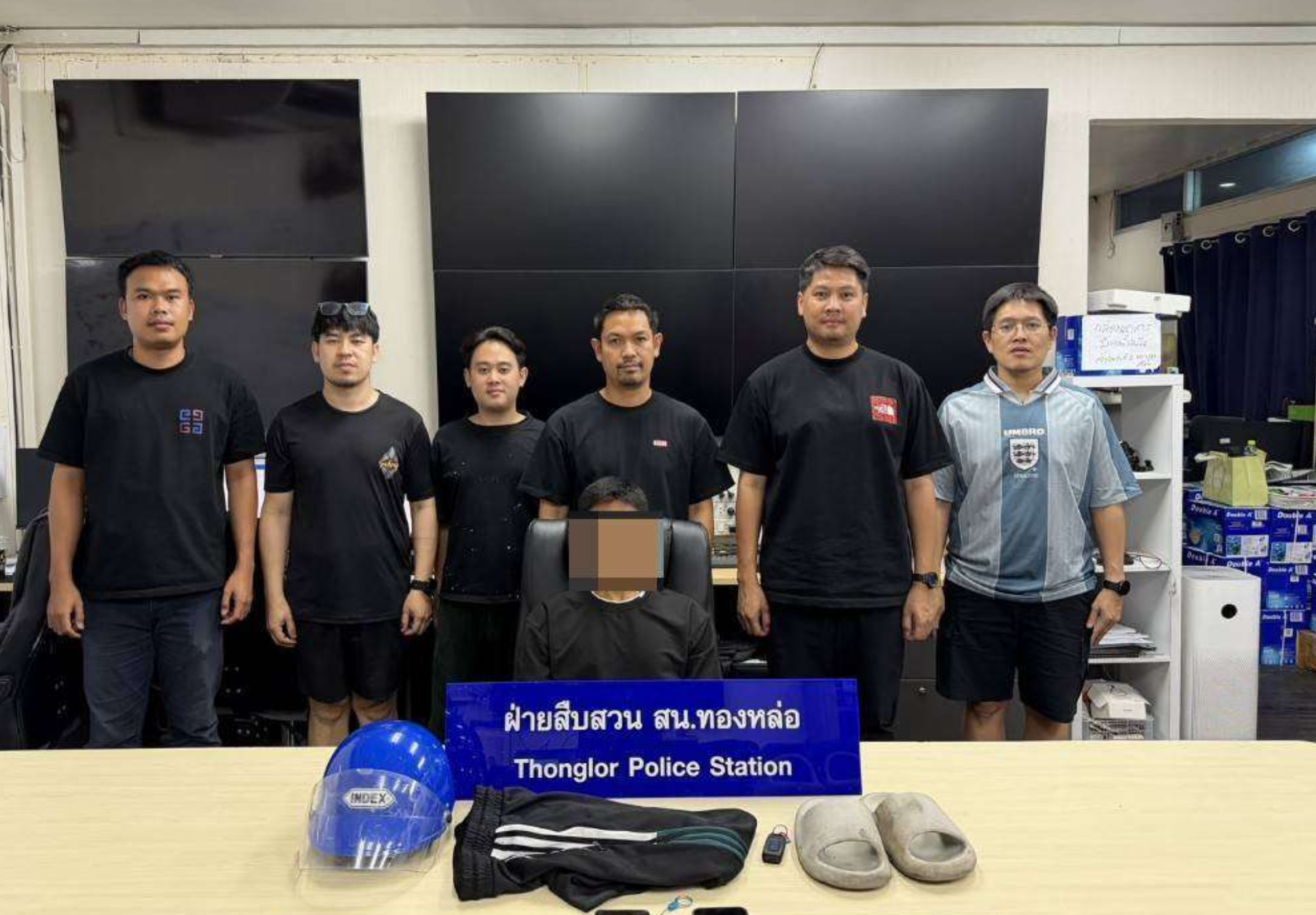
Police located Wilson the following morning hiding in a rubber plantation about 200 metres from the property. He was taken into custody and faces charges of night-time trespass and causing bodily harm. Authorities said additional charges may be filed pending further investigation.

Porntip said she felt deeply betrayed, stating she had treated Wilson like family during his time as a student. She confirmed the couple would pursue legal action to the fullest extent and expressed concern for their safety if he were allowed to remain in Thailand.

Police confirmed the suspect admitted knowing the victims and returning to seek accommodation, but said the dispute escalated into violence. Investigators are continuing to examine the case and any further offences linked to the suspect’s actions.

Daily News reported that authorities will proceed with legal action while reviewing Wilson’s immigration status. The case may also prompt closer scrutiny of overstaying foreign nationals and safety measures for rural training centres hosting international visitors.

Join the discussion?

Already a member?

Adapted by ASEAN Now Dailynews 5 Apr 2026
Georgealbert
Georgealbert
Rajavithi Hospital has successfully carried out the first two robot-assisted heart surgeries within Thailand’s Public Health Ministry system, marking a significant step in advancing the country’s medical capabilities. Both operations were completed without complications, with patients experiencing smaller incisions and faster recovery times. Officials say the milestone will help raise treatment standards and expand access to specialised care.

Get today's headlines by email

Dr Nutthapong Wongwiwat, director-general of the Department of Medical Services, said the initiative forms part of a broader policy to promote high-value medical services as a new economic driver. The programme aims to improve surgical precision, reduce complications and strengthen Thailand’s position as a regional medical hub. The achievement represents the first successful use of robotic technology for cardiac surgery within the ministry’s network.


The hospital built on earlier experience with robot-assisted lung surgery between 2023 and 2025, during which more than 60 procedures were completed safely. Dr Wittawat Pibul, head of cardiac and thoracic surgery, said this foundation ensured readiness in personnel, systems and technical expertise. Additional support came from Assistant Professor Cheng-Hon Yap, a cardiac surgeon from University Hospital Geelong in Australia, who advised on minimally invasive and robotic techniques.

The two patients treated included one with a congenital atrial septal defect and another with severe mitral valve stenosis. Both procedures were carried out successfully following extensive preparation and team training. The patients were discharged within two days and four days respectively, with no post-operative complications reported.

Surgeons Dr Wiput Kojaranjit and Dr Kasisak Luangpathomaram said robotic technology allows operations to be performed through very small incisions with high precision. This reduces tissue damage, limits blood loss and enables faster recovery compared with conventional surgery. The success also reflected close coordination among surgeons, anaesthetists, nurses and multidisciplinary teams involved in patient care.

Officials said the development is not only about introducing new technology but also about establishing a national centre of excellence in robotic heart surgery. The long-term goal is to widen access to advanced treatment while creating a training hub for medical personnel, particularly in regional hospitals. This could reduce reliance on overseas training as more facilities develop robotic capabilities.

The Nation reported that Rajavithi Hospital plans to expand the use of robotic surgery in the next phase, offering it as an additional option for patients requiring heart procedures. With many patients still waiting for surgery, the hospital aims to increase capacity and improve outcomes through wider adoption of the technology.


Pictures courtesy of The Nation

Join the discussion?

Already a member?

Adapted by ASEAN Now Nation 5 Apr 2026
Georgealbert
Georgealbert
Authorities on Koh Phangan have shut down two illegal daycare centres run by foreign nationals, arresting multiple suspects and removing children from unlicensed facilities. Police confirmed the raids took place on April 4, targeting operations caring for young children without proper permits. Officials warned that such unregulated services pose safety risks and will face continued enforcement.

Get today's headlines by email

The first raid took place at a house in Moo 7, where 13 young children from foreign families were being cared for. Israeli nationals Tahel Cherone Edri, 34, identified as the owner and Rotem Mitrany, 45, a teacher, were arrested alongside Myanmar staff member Hsu Sanda Pyae Sone, 28. They face charges including operating a childcare business without a licence and failing to report foreign employees to authorities.

A second operation in the same area uncovered another daycare with 10 children aged between two and five. Owner Anat Vekstein Kimiagar, 40 and local teacher Kulthida, 28, were charged with running an unlicensed childcare facility. All suspects from both locations have been handed over to Koh Phangan police for further legal action.

The raids follow previous crackdowns on illegal foreign-run daycare centres on the island. In March 2024, authorities took action against similar operations involving an American woman and an Israeli man accused of running unlicensed childcare services. Officials said these repeated cases highlight ongoing concerns about regulatory compliance among foreign-operated businesses.

Authorities stressed that unlicensed daycare centres can pose risks to children’s safety due to the lack of oversight, standards, and accountability. They reiterated that all childcare providers must comply with Thai law, including licensing requirements and proper reporting of foreign workers.

Khaosod reported that officials indicated that enforcement efforts will continue as part of broader measures to ensure child safety and regulatory compliance on Koh Phangan. Police have not disclosed further details on the legal proceedings but confirmed investigations are ongoing.

Join the discussion?

Already a member?

Adapted by ASEAN Now Khaosod 5 Apr 2026
Georgealbert
Georgealbert
A burned body reduced to almost a skeleton has been discovered in overgrown grassland in Sai Thong Watthana district, Kamphaeng Phet province, with police investigating the possibility of a homicide concealed by fire. The remains were found at around 10:00 a.m. on 4 April 2016 after firefighters extinguished a blaze in dense vegetation near a temple and a kindergarten. Authorities have yet to confirm the identity of the deceased and are awaiting forensic results.

Get today's headlines by email

Police Lieutenant Damrong Subinmit, deputy investigator at Sai Thong Watthana Police Station, attended the scene alongside rescue workers after receiving reports of the discovery. The body was located in a ditch beneath a forested area beside Kaew Sri Wilai Temple and Sai Thong Kindergarten School in Moo 10, Thung Sai subdistrict. Firefighters had been tackling a grass fire that initially broke out on the evening of 3 April and reignited the following day.

Mr Wallop Boonkerd, 48, an administrative staff member at the kindergarten and the first person to find the remains, said the area had been burning intermittently. After calling the municipal fire department to control the flames, he discovered the skeletal remains and alerted police and village leaders. At the time, there was no immediate information about missing persons in the village.


Monks at the nearby temple reported that a man Pichai Maniprai, also called Num, aged 51, had been staying there temporarily but had disappeared earlier. He had left behind clothing and personal belongings at the monk’s quarters. Although monks could not confirm the identity of the remains, they noted his unexplained absence.

Relatives of the missing man, including his aunt Mrs Thitima Mahakaraket, 59, arrived at the scene and expressed confidence that the remains belong to Pichai. She stated he had been missing for nearly two weeks and had last contacted family members to request tobacco and alcohol be brought to the temple. She also said he had a history of alcohol use and epilepsy.

Police have not ruled out any possibilities and emphasised that identification must be confirmed through forensic comparison with relatives. Officers noted that if the death occurred at the site, someone nearby might have detected a foul odour due to the proximity of the temple and school. Investigators are working to determine whether the fire was used to conceal a crime.

ThaiRath reported that the remains have been sent to Sawanpracharak Hospital in Nakhon Sawan province for forensic examination to establish identity and cause of death. Authorities are continuing to gather evidence and interview local residents as the investigation progresses.


Pictures courtesy of ThaiRath

Join the discussion?

Already a member?

Adapted by ASEAN Now ThaiRath 5 Apr 2026
Georgealbert
Georgealbert
Thai AirAsia and Thai AirAsia X are suspending selected domestic and international routes for the summer 2026 schedule as rising jet fuel costs begin to impact operations. The suspensions affect multiple routes between April and October 2026, with passengers being notified and offered changes or credit options. The move reflects growing strain on Thailand’s aviation sector as fuel prices surge.

Get today's headlines by email

The airline confirmed that several routes will be temporarily halted, including Suvarnabhumi to Narathiwat from April 21 to October 24, and Don Mueang to Xi’an from May 11 to October 23. Other affected routes include Hong Kong to Okinawa from May 7 to October 24, and Phuket to Chennai and Kochi across similar timeframes. Thai AirAsia X will also suspend Don Mueang to Shanghai from April 17 to October 24, and Don Mueang to Riyadh from April 14 to May 30.

The disruptions come amid a worsening global oil crisis linked to tensions in the Middle East, which has driven aviation fuel costs sharply higher. Jet A-1 prices have risen from around US$80 per barrel before the conflict to more than US$140 per barrel. Fuel previously accounted for about 30 percent of per-flight costs, meaning the increase has significantly raised operating expenses.

AirAsia’s official travel notice page states that affected passengers are being contacted via email and SMS. Customers are being offered options to change flights or receive credit accounts for future travel. The airline has not indicated permanent cancellations, describing the suspensions as temporary adjustments to manage costs.

The route cuts highlight wider challenges facing airlines as fuel prices climb and margins tighten. Carriers globally are reassessing networks, frequencies, and capacity to remain financially viable under current conditions. For Thailand, which relies heavily on tourism and aviation connectivity, the changes may affect travel plans during the busy summer period.

The Nation reported that the duration of the suspensions will likely depend on fuel price trends and geopolitical developments. Airlines are expected to continue monitoring costs closely, with further schedule adjustments possible if prices remain elevated. Passengers are advised to check flight status regularly and stay updated through official airline communications.

Join the discussion?

Already a member?

Adapted by ASEAN Now Nation 5 Apr 2026
Georgealbert
Georgealbert
Thai authorities have raided a Chinese-run factory in Samut Prakan, seizing 11.9 tonnes of chemicals linked to the production of etomidate, a substance used in so-called zombie e-cigarettes. One Chinese national, identified only as Mr Huang, was arrested during the operation in Bang Bo district on 4 April. Officials said the seizure could prevent the production of up to 504,000 illicit vape units worth about 900 million baht.

Get today's headlines by email

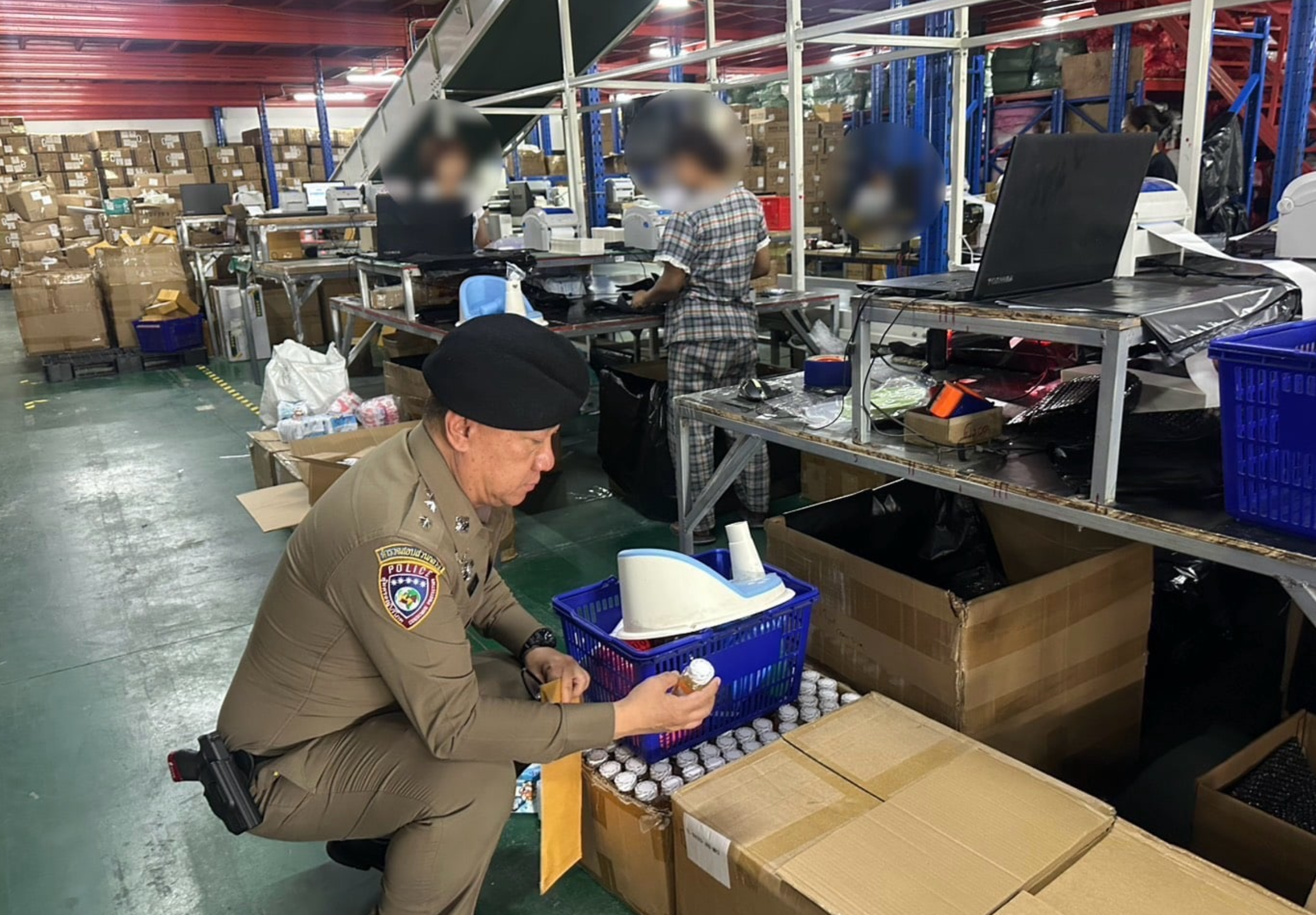
The raid was led by the Office of the Narcotics Control Board (ONCB) following an investigation into a network suspected of manufacturing etomidate for use in e-cigarettes. Officers found 42 litres of liquid etomidate, 1 kilogramme of crystalline etomidate, 140 bottles of precursor chemicals and other substances including ethanol, hydrochloric acid, p-toluenesulfonic acid, glycerin and additional chemicals. The total volume of seized materials was approximately 11.9 tonnes.

The investigation began earlier in 2026 after authorities detected increased chemical purchases and suspicious activity by a Chinese network operating in central Thailand. The group was found to have rented a factory in Samut Prakan and set up a front company. Thai officials cooperated with Chinese authorities and the National Narcotics Control Commission (NNCC) to trace the network’s operations across Thailand, China and Vietnam.

Coordinated raids across the three countries led to the arrest of multiple suspects. Chinese authorities detained Mr Liang, another alleged member of the network, along with 38 additional suspects and seized large quantities of etomidate from a factory in China. Vietnamese authorities also raided a production site, arresting one suspect and confiscating 1.8 kilogrammes of etomidate.

Officials warned that etomidate-laced e-cigarettes, commonly referred to as zombie vapes, are sold in Bangkok for between 1,800 and 2,000 baht per unit. Under Thai law, producing, importing, exporting, selling or possessing etomidate without permission carries penalties of up to seven years in prison and a fine of up to 700,000 baht. Offences committed for commercial purposes can result in prison terms of one to 15 years and fines between 100,000 and 1.5 million baht.

Authorities have also cautioned warehouse owners and landlords to carefully screen tenants, warning they could face legal consequences if their premises are used for illegal activities. The ONCB urged the public to report suspicious behaviour via its 24-hour hotline.

Daily News reported that investigators are expected to expand the case to identify further links in the transnational network. Authorities in Thailand, China and Vietnam have indicated that joint operations will continue to disrupt the production and distribution of illicit substances.


Picture courtesy of Daily News

Join the discussion?

Already a member?

Adapted by ASEAN Now Dailynews 5 Apr 2026
Georgealbert
Georgealbert
Thailand has shifted its national tourism strategy towards a “Quality Tourism” model, focusing on higher-spending visitors as global economic pressures force a downward revision of its 2026 targets. The Tourism Authority of Thailand (TAT) confirmed international arrivals are now set to reach between 30 million and 34 million, an 18 per cent reduction from earlier forecasts.

Get today's headlines by email

The adjustment follows first-quarter data showing 9.31 million foreign arrivals between 1 January and 31 March 2026. Despite strong recovery figures, officials identified a widening gap between tourist volumes and spending levels. This trend has been attributed to more cautious behaviour among travellers amid a cooling global economy and ongoing logistical constraints, including limited flight capacity.

China remained Thailand’s largest source market in the first quarter with 1.49 million visitors, followed by Malaysia with 960,000, Russia with 726,000, India with 626,000 and South Korea with 412,000. However, TAT governor Thapanee Kiatphaibool noted that revenue growth is lagging behind visitor increases. She stated, “We are seeing a trend where tourism revenue is expanding at a slower rate than the increase in visitor numbers,” highlighting the need to prioritise “spending per trip” over total arrivals.

In response, the TAT is placing greater emphasis on long-haul markets such as the United Kingdom, Germany and the United States, which are considered key drivers of higher tourism revenue and industry stability. The agency has also revised its domestic travel forecast down by 3 per cent to 206 million trips. Total tourism revenue for 2026 is projected to reach 2.58 trillion baht.

The strategic shift includes a marketing overhaul aimed at promoting Thailand’s safety, value for money and premium travel experiences. Thapanee said the industry must adapt to a “quality-first” approach to remain competitive amid geopolitical uncertainty, particularly in the Middle East and fluctuating fuel prices. Digital platforms will play a central role in communicating these high-end offerings to targeted audiences.

The Nation reported that Thailand’s tourism sector faces continued challenges from constrained flight capacity and economic stagnation in key Western markets. Officials believe the pivot towards higher-value tourism is essential to sustain revenue and maintain competitiveness in an increasingly fragile global environment.


Picture courtesy of The Nation

Join the discussion?

Already a member?

Adapted by ASEAN Now Nation 5 Apr 2026
Georgealbert
Georgealbert
Authorities in southern Thailand are investigating a Malaysian-owned logistics company after around 100,000 litres of diesel were discovered stored on its premises in Sadao district, Songkhla. The fuel was found following complaints from local residents and reports on social media alleging stockpiling. Officials say the case may involve illegal fuel storage and possession of untaxed imported fuel.

Get today's headlines by email

The case came to light after online posts claimed a transport operator running trailer trucks between Thailand and Malaysia had been storing significant quantities of diesel at a yard on Kanchanavanich Road. Songkhla Governor Rattasat Chidchu ordered a joint inspection involving provincial energy officials, district authorities, police, customs and excise officers.

During the inspection, authorities found about 100,000 litres of diesel in total, including approximately 50,000 litres stored underground and 35,000 litres in above-ground containers within the truck yard. When questioned, the site operator was unable to produce documents proving legal authorisation to store the fuel or records showing its origin. Police subsequently filed charges against both the caretaker and the company owner under the Fuel Control Act of 1999.

Investigators believe the diesel was transported from Malaysia by the company’s own trucks before a recent fuel price increase. The fuel was then reportedly transferred into storage tanks for use in the firm’s transport operations. Officials suspect the practice may have been aimed at avoiding higher fuel costs.

Authorities warned that similar practices could be taking place among other Malaysian-owned logistics firms operating in Sadao and the nearby Hat Yai district. The discovery has raised concerns about potential tax evasion and regulatory breaches within cross-border transport operations in the region.

Khaosod reported that officials have indicated that inspections will now be expanded to other operators across Songkhla province. Further legal action may follow depending on the outcome of the investigation and verification of fuel sources.


Picture courtesy of Khaosod

Join the discussion?

Already a member?

Adapted by ASEAN Now Khaosod 5 Apr 2026
Georgealbert
Georgealbert
The Royal Thai Navy has confirmed plans to procure a new frigate as part of its 2026 fiscal budget, with a total project value of 17 billion baht. Officials said the acquisition aims to strengthen the navy’s three-dimensional combat capabilities, covering surface warfare, anti-submarine operations and air defence. The vessel will also support non-combat missions, including humanitarian assistance, disaster relief and maritime search and rescue.

Get today's headlines by email

Rear Admiral Parach Rattanachaiyaphan, the navy’s spokesperson, stated on 3 April that the procurement complies with the Government Procurement and Supplies Administration Act 2017 and related Ministry of Finance regulations. The project aligns with the navy’s long-term strategy for 2017–2037, revised in 2023, which sets a requirement for eight frigates. Currently, only four operational frigates meet the required capability standards.

The programme includes not only the vessel itself but also associated systems, spare parts, tools, training, testing and full lifecycle support. The navy has also incorporated an Integrity Pact framework into the process, requiring bidders and independent observers to commit to transparency and anti-corruption measures throughout procurement and contract execution.

The project follows a complex approval history. On 10 August 2025, the House of Representatives approved a budget of 17.5 billion baht for one frigate, despite an initial proposal for two vessels worth 35 billion baht. Earlier attempts to secure funding were rejected during the 2024 budget review due to insufficient clarity on procurement details and concerns over risks similar to those seen in the submarine programme.

Efforts to reintroduce the project in the 2025 budget also failed to gain cabinet approval, delaying progress until the 2026 fiscal cycle. The navy has emphasised that building frigates domestically is a key objective, aiming to revive Thailand’s shipbuilding industry and ensure that public funds generate local economic benefits from the outset.

Thailand’s current fleet includes four capable frigates: HTMS Bhumibol Adulyadej, the newest vessel built in South Korea; HTMS Taksin and HTMS Naresuan, originally constructed in China but later refitted with Western weapon systems; and HTMS Rattanakosin, a sister ship of HTMS Sukhothai. The navy maintains that at least eight frigates are required to adequately patrol the country’s 320,000 square kilometres of maritime territory.

The Standard reported that the navy must finalise procurement details, select contractors, and ensure compliance with transparency measures as the project progresses. Independent observers will monitor each stage, from bidding to delivery, as the government seeks to build public confidence in large-scale defence spending.

Join the discussion?

Already a member?

Adapted by ASEAN Now TheStandard 5 Apr 2026
Georgealbert
Georgealbert
A 59-year-old Australian man, who has not been named by authorities, was safely detained by police after climbing over a third-floor hotel balcony in Pattaya on 4 April 2026, threatening to jump in an apparent attempt to gain attention from his missing partner. The incident alarmed hotel staff, tourists and nearby residents before officers intervened and brought the situation under control without injuries. Authorities confirmed the man was safely pulled back into his room after a tense negotiation.

Get today's headlines by email

Police from Pattaya City Police Station, led by Pol Capt Wuttikorn Plodprong, responded at around 10.30am to reports of a foreign national attempting to jump from a building. The incident took place at a four-storey hotel in Soi Buakhao, Pattaya, Chonburi province. Officers and tourist police worked together to calm the man, who had been climbing out and over of the balcony area since about 8.00am.

Witnesses said the man briefly appeared to cooperate and attempted to climb back inside. However, upon noticing police presence, he became agitated and again threatened to jump, forcing officers to act quickly. Police and hotel staff eventually restrained him and brought him to safety.


Initial findings suggest the man was distressed after his Thai ladyboy partner left the room earlier that morning and did not return or respond to his calls and messages. Authorities believe his actions were intended to attract his partner’s attention. Police also noted it was reported that he has displayed similar behaviour on multiple previous occasions.

Following the incident, Pattaya City Police coordinated with Chonburi Immigration and relevant agencies to determine further action. Officials are expected to assess his mental state while considering legal and administrative steps, including possible revocation of his permission to stay, due to his behaviour. The case has highlighted concerns over tourist welfare and mental health issues in busy resort areas.

Daily News reported that authorities stressed the importance of early intervention and cooperation between hotel staff and law enforcement to prevent escalation. Investigations will continue as officials decide on appropriate next steps for the individual.


Pictures courtesy of SiamChon

Join the discussion?

Already a member?

Adapted by ASEAN Now Dailynews 5 Apr 2026
Georgealbert
Georgealbert
The Fuel Fund Board has approved an increase in diesel prices, with the retail price of B7 diesel rising to 50.54 baht per litre and B20 diesel to 45.54 baht per litre, effective 5 April 2026. The decision follows a reduction in subsidy rates aimed at easing the financial burden on the state Oil Fuel Fund. The adjustment will have an immediate impact on transport costs and the wider economy.

Get today's headlines by email

At a meeting on 4 April 2026, the board agreed to cut the subsidy for B7 diesel by 2.61 baht per litre, reducing it from 20.71 baht to 18.10 baht per litre. Subsidies for B20 diesel were also reduced by 2.61 baht per litre, from 22.22 baht to 19.61 baht per litre. These measures are intended to reduce the fund’s daily outflow from 1,708.75 million baht to 1,496.72 million baht.

The move comes amid rising global energy costs and increasing pressure on Thailand’s fuel subsidy system. Authorities have been attempting to balance consumer price support with the need to maintain the liquidity and stability of the Oil Fuel Fund. The latest adjustment reflects efforts to align domestic fuel prices more closely with market conditions.

Amarin reported that the price increase is expected to affect logistics, transportation, and consumer goods prices, as diesel is widely used across multiple sectors. Businesses and consumers face higher operating and living costs as a result. Government officials have indicated that subsidy reductions are necessary to prevent further financial strain on the fund.

Further adjustments may depend on global oil price movements and the financial position of the Oil Fuel Fund. Authorities are expected to continue monitoring the situation and may introduce additional measures if necessary to manage the ongoing energy cost pressures.

Join the discussion?

Already a member?

Adapted by ASEAN Now Amarin 5 Apr 2026
Georgealbert
Georgealbert
Taxi drivers in Phuket have announced a one-day strike on 6 April, citing rising fuel costs and falling fares due to competition from ride-hailing applications. The action is expected to disrupt transport services across the island, with more than 4,000 drivers from taxi, van and green-plate hire services involved.

Get today's headlines by email

On 3 April, Watee Wasanarungruang, president of the Phuket Yellow-Red Taxi Club (Ror Yor 6), said members are struggling to survive on daily earnings of just 100 to 200 baht. He criticised app-based operators and investors for generating significantly higher incomes while traditional drivers face mounting expenses and declining passenger numbers.

Drivers said tourism has dropped by around 70 percent since the start of ongoing conflicts, further reducing demand. At the same time, fuel prices have risen sharply, forcing drivers to spend much of their income on diesel, with some unable to afford basic living costs after refuelling.

The group also raised concerns about aggressive price competition from ride-hailing apps, which they claim are undercutting fares to unsustainable levels. For example, trips from Patong to Phuket town have fallen from over 400 baht to around 200 baht, despite high fuel consumption due to the island’s mountainous terrain.

Taxi operators estimate that more than 6,000 app-based vehicles, including cars and motorcycles, are now operating in Phuket. They allege that many of these are unlicensed, contributing to oversupply and lower fares across the market.

The drivers are calling on the government to intervene, particularly on fuel pricing, and to enforce stricter regulations on illegal transport services. Watee urged the Department of Land Transport and local authorities to apply existing laws more rigorously, including penalties and licence checks.

He also called on police to prioritise action against illegal vehicles rather than focusing on foreign motorcycle users, arguing that unlicensed operators knowingly break the law and undermine legitimate businesses.

Matichon reported that more than 2,000 to 3,000 drivers have already signed a petition and a large gathering is planned to submit formal demands to the Phuket governor. Drivers want the issue treated as a provincial priority to protect licensed operators and taxpayers.

Join the discussion?

Already a member?

Adapted by ASEAN Now Matichon 4 Apr 2026
Georgealbert
Georgealbert
Police have arrested two suspects accused of illegally trading a protected spectacled langur for 90,000 baht in a sting operation in Bangkok. Officers from the Natural Resources and Environmental Crime Suppression Division (NED) detained a 36-year-old man, Jiratip (surname withheld), and a 31-year-old woman, Nannaphat, in a car park at Kanlapaphruek Market in Bang Khae district on 2 April 2026. The animal was found inside a yellow basket, in a Toyota Fortuner registered in Bangkok.

Get today's headlines by email

The arrests followed intelligence that a protected wildlife species was being offered for sale at a high price. Officers arranged an undercover purchase, transferring a 10,000 baht deposit before setting a meeting point for delivery at the car park. When the suspects arrived and handed over the langur, officers identified themselves and made the arrests, seizing all items as evidence.

During questioning, both suspects confessed to the charges of possessing and trading a protected wild animal without permission. Jiratip told investigators he had purchased the spectacled langur from a neighbouring country and had no documentation to prove its origin or legality. Authorities confirmed the species is protected under Thai law, making its trade and possession illegal without proper permits.

Following the arrests, officers expanded the investigation by searching the suspects’ residence in Samut Songkhram province for additional evidence. The operation was conducted under the direction of Pol Maj Gen Anek Taosuphap, commander of the division, with support from senior officers including Pol Col Aphisan Chaiyarat and Pol Lt Col Pathompong Thongjamroon.

The seized langur has been handed over to the Department of National Parks, Wildlife and Plant Conservation for care. Authorities are continuing to investigate possible links to a wider wildlife trafficking network, particularly involving cross-border smuggling.

Thaitabloid reported that the suspects have been transferred to investigators at the division for legal proceedings. Officials said further action will be taken in accordance with wildlife protection laws, while efforts to trace the source of the animal and any accomplices remain ongoing.

Join the discussion?

Already a member?

Adapted by ASEAN Now Thaitabloid 4 Apr 2026
Georgealbert
Georgealbert
Six foreign women were detained by police in Phuket for working without permits at the Russian-speaking kindergarten Litti Kids in Rawai. The arrests were made during inspections targeting illegal businesses, with authorities warning of fines and possible deportation for those involved. The employer may also face significant penalties and restrictions on hiring foreign staff.

Get today's headlines by email

Officials visited the kindergarten as part of a wider campaign to identify businesses using nominee Thai shareholders to bypass the Foreign Business Act. However, the arrests were made under the Alien Employment Decree, not for ownership violations. Police confirmed the women were unable to present valid work permits during the inspection.

Authorities did not disclose the names or nationalities of the detained workers and the official name of the employing company was withheld. Under Thai law, both employees and employers are liable if foreign staff work without permits. Workers face fines of 5,000 to 50,000 baht and deportation, while employers can be fined 10,000 to 100,000 baht per illegal worker and risk a three-year ban on hiring foreign staff for repeat offences.

The inspection was part of a broader crackdown on foreign-run businesses in Phuket, with Russian-speaking enterprises receiving particular attention. Of eight businesses inspected, at least half were linked to Russian-speaking operators and catered to that market segment. Additional checks related to nominee use were conducted at Seven Home real estate agency in Cherng Talay, CUTANA Rental in Kamala, ThaiGoRent in Karon and an unnamed motorbike rental in Wichit, though no arrests were reported in those cases.

Authorities have repeatedly cited illegal employment and unlicensed business operations as key reasons for tightening migration controls. These measures include stricter enforcement and proposed changes such as limiting visa runs and ending the 60-day visa exemption.

The detained women now face legal proceedings that could result in fines and deportation. Officials confirmed that enforcement efforts will continue across Phuket, with further inspections expected as part of ongoing efforts to ensure compliance with labour and business laws.


Picture courtesy of Phuket Provincial Police

Join the discussion?

Already a member?

Adapted by ASEAN Now PhuketInsta 4 Apr 2026
Georgealbert
Georgealbert
Police have arrested a 37-year-old man accused of carrying out a brutal acid attack on his former girlfriend in Ayutthaya, leaving her permanently disfigured. The suspect, identified as Surachai, also known as Bird, was detained on 3 April at a monastic retreat in Nakhon Luang district after evading capture for nearly a year. He faces a charge of causing grievous bodily harm.

Get today's headlines by email

The arrest follows an incident on 9 April 2024 in Bang Pa-in district, where Surachai allegedly threw acid at his 38-year-old ex-partner, Namfon, in front of a residential estate. The attack left her with severe facial and body injuries, requiring more than three months of hospital treatment. Authorities say the assault was motivated by anger after the victim attempted to distance herself from him.

After the attack, the victim sought assistance from Pavena Hongsakul, president of the Pavena Foundation, who coordinated with Bang Pa-in police to pursue legal action. Evidence was gathered leading to an arrest warrant issued by Ayutthaya Provincial Court on 13 April 2024. The victim was also referred to Yanhee Hospital, where she received reconstructive treatment free of charge under the care of Dr Supoj Samritwanichcha.


Investigators traced the suspect back to Ayutthaya, where he had been hiding at a monastic site known locally as Pho Kae Ngern Larn. Police moved in and apprehended him without incident. During questioning, Surachai reportedly confessed, stating he had premeditated the attack and waited for the victim before carrying it out and fleeing the area.

Police records indicate the suspect has a history of criminal behaviour, including gambling addiction and previous convictions for theft and fraud. He had allegedly deceived temples by borrowing kitchen equipment and failing to return it, causing losses of around 30,000 baht, with similar offences reported at no fewer than four temples.

Thaitabloid reported that the suspect has been transferred to Bang Pa-in Police Station for further legal proceedings. Authorities have confirmed that the case will proceed in accordance with the law, while support for the victim continues through medical and social assistance channels.


Pictures courtesy of Thaitabloid

Join the discussion?

Already a member?

Adapted by ASEAN Now Thaitabloid 4 Apr 2026
Georgealbert
Georgealbert
A 65-year-old British man died after losing control of his motorcycle and crashing into a utility pole on Soi Na Mueang (Mapprachan Bon 1), in Pong, Chonburi, on the evening of 3 April 2026. Emergency responders were unable to revive him despite prolonged efforts at the scene.

Get today's headlines by email

Rescue workers from the Sawang Boriboon Thammasathan Pattaya unit were alerted to the accident at approximately 20:00. The crash occurred in the Pong subdistrict of Bang Lamung district, prompting volunteers to attend the scene immediately.

On arrival, responders found the man unconscious beside his motorcycle with severe injuries and no vital signs. Cardiopulmonary resuscitation was performed, but the attempts were unsuccessful and a doctor later confirmed death at the scene.


Initial examination indicated the victim had suffered a broken neck. He was later identified as Mr Perkins, aged 65, a British national. Nearby, authorities found a black Yamaha motorcycle bearing Chonburi registration. The front of the vehicle was heavily damaged, consistent with a high-impact collision with the utility pole.

Police documented the scene, collecting photographic evidence as part of their investigation. Officers have begun inquiries to determine the exact cause of the crash, including whether speed, road conditions or loss of control were contributing factors.

Investigators are continuing to examine the circumstances surrounding the crash and will proceed in accordance with legal procedures. Further details are expected once the inquiry is complete and any contributing factors have been fully assessed.


Pictures courtesy of SiamChon

Join the discussion?

Already a member?

Adapted by ASEAN Now SiamChon 4 Apr 2026
Georgealbert
Georgealbert
Thailand recorded a slight decline in international tourist arrivals in the first quarter of 2026, with figures from the Ministry of Tourism and Sports showing a 2.29% year-on-year drop. Between January 1 and March 29, the country welcomed 9,174,586 foreign visitors. The slowdown reflects softer demand during late March, particularly across key travel markets.

Get today's headlines by email

The five largest source markets during the period were China with 1,468,333 visitors, followed by Malaysia with 947,123, Russia with 714,424, India with 614,016 and South Korea with 409,331. Despite the overall decline, these markets continued to dominate inbound tourism. Weekly data showed further weakness toward the end of the quarter.

From March 23 to 29, Thailand recorded 630,102 foreign arrivals, a drop of 45,305 visitors or 6.71% compared with the previous week. This equated to an average of 90,014 arrivals per day. The leading visitor markets for that week were Malaysia, China, India, Russia and the United Kingdom.

Natreeya Taweewong, permanent secretary of the ministry, said travel demand softened during this period as short haul markets concluded the Eid al Fitr holiday. At the same time, long haul travel entered the end of its peak season, contributing to the dip in arrivals. These seasonal factors played a key role in the overall decline.

However, she noted that demand from long haul markets has begun to show signs of improvement. This has been partly driven by travellers shifting to more direct flight routes from Europe to Thailand. The change in travel patterns may help stabilise arrivals in the coming months.

VNexpress reported that authorities expect visitor numbers to remain stable. Support measures include efforts to attract Chinese tourists and improve the country’s safety image through the “Trusted Thailand” programme. The government is also encouraging airlines to increase flight capacity to Thailand. These combined measures are aimed at supporting recovery and maintaining steady tourism flows. Officials will continue to monitor trends closely as the sector moves beyond the traditional high season.

Join the discussion?

Already a member?

Adapted by ASEAN Now VNexpress 4 Apr 2026
Georgealbert
Georgealbert
Two Taiwanese men have been arrested at Don Mueang airport in Bangkok after allegedly attempting to smuggle protected wildlife out of Thailand, authorities said on 3 April 2026. The suspects, aged 25 and 32, were detained while preparing to board a flight to Kaohsiung. Officials discovered three live protected animals concealed on their bodies: two Asian small-clawed otters and one slow loris.

Get today's headlines by email

The arrests took place at about 03:45 during a joint operation involving wildlife checkpoint officers, environmental crime police, airport authorities and airline staff. The men were taken into custody along with the animals and handed over to investigators from the Natural Resources and Environmental Crime Division. Authorities confirmed the suspects are facing charges under Thailand’s Wildlife Preservation and Protection Act of 2019.

The charges include illegal possession of protected wildlife and attempting to export protected species without permission. The seized animals are classified as protected under Thai law, which strictly regulates their possession and transport. Wildlife trafficking remains a persistent issue in the region, with airports often used as transit points for illegal exports.

Atthaphon Charoenchansa, director-general of the Department of National Parks, Wildlife and Plant Conservation, said Natural Resources and Environment Minister Suchart Chomklin had ordered authorities to pursue the case strictly. He added that officials would expand the investigation to identify any wider trafficking network linked to the suspects. The directive reflects ongoing efforts to tackle transnational wildlife crime.

Authorities have also been instructed to tighten inspections at airports and border checkpoints nationwide. Increased scrutiny is expected as officials attempt to prevent similar smuggling attempts. The case highlights continued enforcement efforts against illegal wildlife trade in Thailand.

Khaosod reported that further investigations are ongoing to determine whether the suspects were acting independently or as part of a larger network. Officials have not yet released additional details about the origin or intended destination of the animals beyond the planned flight. Legal proceedings against the suspects are expected to follow under the law.


Picture courtesy of Khaosod

Join the discussion?

Already a member?

Adapted by ASEAN Now Khaosod 4 Apr 2026
Georgealbert
Georgealbert
West Ham United have reached an initial agreement with the Tourism Authority of Thailand to feature an “Amazing Thailand” slogan on the front of their home shirts for the 2026/2027 season. The deal is currently valued at around 10 million pounds per year, though the final amount may depend on whether the club avoids relegation from the Premier League this season. Relegation to the Championship would significantly reduce the sponsorship value.

Get today's headlines by email

The agreement comes as the English Football League prepares to ban gambling sponsors from appearing on the front of shirts from next season. West Ham are replacing Boylesports, an Irish betting firm, as part of this shift. The club, which expects to record a loss of approximately 104 million pounds this year compared to revenue of about 57 million pounds last year, is under financial pressure to remain in the top flight.

Manager Nuno Espirito Santo, appointed last September after Graham Potter was dismissed, is under increasing pressure as the season nears its conclusion. With seven matches remaining, West Ham have 29 points from seven wins, eight draws and 16 defeats, placing them just one point behind Tottenham Hotspur in 17th position. The club is among four teams, alongside Leeds, Nottingham Forest and Tottenham, battling to avoid relegation, while Burnley and Wolverhampton are considered highly likely to drop.

Nuno has relied heavily on captain Jarrod Bowen, while attackers including Crysencio Summerville, Callum Wilson, Taty Castellanos and Pablo Pereira de Jesus have rotated in the starting lineup. The future of several players may depend on whether the club remains in the Premier League, with relegation likely to trigger squad changes.

The sponsorship deal is seen as a strategic move to promote Thai tourism globally, regardless of the league in which West Ham compete. However, the club’s league status will influence the exposure and commercial value of the partnership. Tottenham Hotspur, also at risk of relegation, could face similar scrutiny if they fail to maintain their top-flight position.

The ThaiNewsRoom reported that West Ham’s immediate focus remains on securing enough points to stay in the Premier League before the season concludes in May. The outcome of the relegation battle is expected to play a decisive role in finalising the financial terms of the Thai sponsorship agreement.


Picture courtesy of TNR

Join the discussion?

Already a member?

Adapted by ASEAN Now Thainewsroom 4 Apr 2026
Georgealbert
Georgealbert
A South Korean national accused of leading an illegal loan shark network has been arrested in Thailand, following an international manhunt linked to thousands of victims and millions in losses. Thai police apprehended Tae Won Bae, 65, on 3 April in Pathum Thani province, where he had been hiding after fleeing South Korea. Authorities say the group charged extortionate interest rates of up to 154 percent per year, affecting more than 9,000 victims and causing losses of around 355 million baht.

Get today's headlines by email

The arrest followed an earlier crackdown by Busan Metropolitan Police in South Korea, who dismantled an illegal lending operation run by a father and son targeting migrant workers. The group allegedly provided loans to foreign workers, including undocumented labourers, under exploitative terms that violated South Korean financial protection laws. Investigators identified another six members, all of whom have been arrested and charged under laws governing loan business registration and financial consumer protection.

Police identified Tae Won Bae as the key figure behind the operation, responsible for planning and directing activities before fleeing to Thailand. He reportedly left his son in charge of continuing operations in South Korea. South Korean authorities coordinated with the International Criminal Police Organisation (INTERPOL), issuing a Red Notice to track and locate the suspect internationally.

Thai officers from the Consumer Protection Police Division acted on the request and located Bae near a Korean language school in Khlong Luang district. Upon arrest, he confessed to being the individual named in the South Korean warrant. Immigration authorities have since revoked his permission to stay in Thailand and begun deportation proceedings.

The case highlights ongoing concerns over illegal lending networks exploiting vulnerable migrant workers with limited access to formal financial services. Authorities in South Korea have intensified enforcement efforts against such operations, citing widespread financial harm and abuse. Cooperation between international law enforcement agencies was key to locating and detaining the suspect abroad. Thaitabloid reported that Bae is expected to be deported to South Korea, where he will face prosecution under national laws.

Join the discussion?

Already a member?

Adapted by ASEAN Now Thaitabloid 4 Apr 2026
Georgealbert
Georgealbert
Thailand is preparing to formally cancel the 2001 Memorandum of Understanding (MOU 44) with Cambodia, marking a major policy shift that could reopen long-running disputes over maritime claims and undersea resources. The move follows more than two decades of deadlock, with no agreement reached on maritime boundaries. Prime Minister Anutin Charnvirakul confirmed the decision will be included in the government’s policy statement to Parliament.

Get today's headlines by email

The new Cabinet is scheduled to take the oath of office on April 6, 2026, with its first meeting the same day to approve the policy statement for delivery on April 9-10. Anutin had pledged to cancel MOU 44 during his campaign ahead of the February 8, 2026 election. He reiterated his stance after meeting senior defence officials on March 31, stating clearly that the agreement would be scrapped.

MOU 44 extends from land boundary marker 73 in Khlong Yai district, Trat, to the continental shelf, covering areas believed to hold valuable resources. However, negotiations between Thailand and Cambodia have failed to define a maritime boundary since the 1970s. Thai military officials have consistently argued that any resource-sharing must be tied to final boundary demarcation, not handled separately.

Critics in Thailand have warned that MOU 44 could weaken territorial claims, particularly regarding Cambodia’s Line 266, which cuts across Koh Kood. On land, disputes persist around boundary markers, including marker 72, which has disappeared, leaving a contested area of around 286,098 square metres. The issue traces back to the 1907 Siam-France treaty, which originally defined the boundary.

Tensions have also centred on a sediment-trapping dam built by Cambodia in 1997, which Thailand says has caused the loss of about 3,000 square metres of land while expanding nearby areas in Koh Kong by around 30,000 square metres. Although part of the dam was dismantled, Thai authorities say the work was incomplete and further dredging is required. Reports indicate that efforts to remove the remaining structure stalled after intervention by Cambodian Senate President Hun Sen.

Cambodia has so far shown little public reaction to Thailand’s plan to cancel MOU 44, possibly because the agreement has yielded no tangible progress. However, Hun Sen has strongly opposed any move to cancel MOU 43, which governs land boundaries and requires both sides to avoid altering disputed areas. Thai military sources argue that recent operations have already moved beyond its framework.


The Nation reported that the Thai government may turn to international law to resolve maritime claims while addressing the unfinished dam issue. On land, any revision or replacement of MOU 43 would need to reflect current security conditions. With both maritime and land disputes unresolved, tensions along the Thai-Cambodian border are likely to continue.

Join the discussion?

Already a member?

Adapted by ASEAN Now Nation 4 Apr 2026

Georgealbert
Georgealbert
A concrete mixer truck crashed through a barrier and fell from a U-turn bridge onto Bangna-Trat Highway in Samut Prakarn on Friday afternoon, leaving the driver critically injured and blocking two lanes of traffic. The accident occurred at around 3pm on April 3 at kilometre 31 on the Chon Buri-bound side of the road. All traffic in the area was closed following the incident, causing significant disruption.

Get today's headlines by email

Police from Bang Bo station, along with rescue workers from Ruamkatanyu Foundation and Bang Bo Hospital, responded to the scene. The white-and-red Hino concrete mixer, registered in Bangkok, was found badly mangled after the crash. The driver, identified only as Jom, 61, had been ejected from the vehicle and was given first aid before being transferred to hospital in critical condition.


A red Toyota Yaris travelling in the left lane was also damaged when debris and a drum from the falling truck struck it. The 49-year-old driver told investigators he saw something falling from above before the cement truck crashed down in front of him. No further injuries from the secondary vehicle were reported.


The cause of the crash remains under investigation, with authorities expected to examine whether mechanical failure, driver error or road conditions contributed to the crash. Officials have not yet confirmed how the truck breached the bridge barrier.

The incident led to the closure of all lanes in the affected area, creating heavy congestion along one of the region’s key transport routes. Traffic police worked to manage diversions and clear the wreckage, though delays persisted into the evening. The Bangkokpost reported that authorities are continuing their investigation and are expected to review safety measures on U-turn bridges along the route.


Join the discussion?

Already a member?

Adapted by ASEAN Now Bangkokpost 4 Apr 2026
Georgealbert
Georgealbert
Thailand is facing what officials describe as its most severe energy crisis on record, as global diesel prices (Singapore FOB) surge to nearly 300 US dollars per barrel, triple the standard rate of 92 dollars. The sharp rise is placing extreme pressure on the state Fuel Fund, which is now running a deficit of nearly 50 billion baht and risks collapse within two months. Authorities warn that without urgent intervention, the subsidy mechanism supporting fuel prices could fail.

Get today's headlines by email

The Energy Ministry confirmed on 3 April 2026 that the current price volatility far exceeds previous peaks, including the Russia-Ukraine conflict when diesel reached 150 dollars per barrel. The Fuel Fund, which has a credit line of 150 billion baht, is being rapidly depleted as the government attempts to cushion domestic consumers from global price shocks. Officials say the pace of spending means available funds may last only a short period.

In response, the government is negotiating with oil refineries to reclaim what it describes as “windfall profits” generated by elevated refining margins and a so-called war premium. A benchmark refining margin of 2.43 baht, based on a five-year average, is being used to determine excess earnings that could be redirected to support the public. Major refiners including PTT and Bangchak have indicated preliminary cooperation, with a final decision on measures expected on Monday, 6 April.

Authorities have also introduced fuel price increases over the past days to prevent hoarding and cross-border smuggling. Officials say gradual adjustments are necessary to avoid sudden price shocks that could destabilise supply and demand. At the same time, the government continues to subsidise liquefied petroleum gas at a cost of 30 million baht per day to help control food prices and ease pressure on household expenses.

The Nation reported that Prasert Sinsukprasert, permanent secretary for Energy, described the situation as “a moment of unprecedented gravity” and said efforts are focused on balancing public protection with market stability. The government is considering whether to apply general price reductions or target support at the transport sector and vulnerable households.


Picture courtesy of The Nation

Join the discussion?

Already a member?

Adapted by ASEAN Now Nation 4 Apr 2026
Georgealbert
Georgealbert
A Russian man has been found living rough on Jomtien Beach in Pattaya, Chonburi province, prompting calls for urgent assistance from local authorities. The man was discovered by local reporters in a weakened condition, sleeping along the beachfront without proper shelter or resources. His situation highlights immediate concerns about welfare and support for vulnerable individuals in tourist areas.

Get today's headlines by email

Initial inquiries revealed that the man has no accommodation and is facing financial hardship, leaving him unable to sustain himself. As a result, he has been forced to sleep on the beach, relying on minimal means to survive. His physical condition was described as exhausted, raising concerns about his health and safety.

A local news team who visited the scene, provided basic assistance, including food, drinking water and a small amount of money to help ease his immediate difficulties. While this support offered temporary relief, it does not address the underlying issues surrounding his situation. The case has since drawn attention to gaps in social welfare coverage for foreigners experiencing hardship.

Authorities are now being urged to intervene and assess the man’s circumstances more thoroughly. This includes verifying his legal status in Thailand and determining appropriate forms of assistance under existing regulations. Relevant agencies in Pattaya have been asked to coordinate efforts to ensure that any support provided is both suitable and sustainable.

The incident also reflects a broader issue within popular tourist destinations, where economic vulnerability can affect both locals and foreign nationals. Without structured intervention, individuals in such conditions may continue to fall through the cracks of existing support systems. The situation underscores the importance of cooperation between local authorities, social services and immigration officials.

Officials are expected to investigate the case and decide on next steps, which will include working with the embassy and may include welfare assistance or other forms of support in line with legal frameworks. The outcome will likely depend on the man’s personal circumstances and eligibility for aid. Observers hope the case will prompt more proactive measures to identify and assist those in similar conditions.


Picture courtesy of ฉลาม นิวส์

Join the discussion?

Already a member?

Adapted by ASEAN Now ฉลาม นิวส์ 4 Apr 2026
Georgealbert
Georgealbert
Thailand’s household debt rose to 16.44 trillion baht in the fourth quarter of 2025, pushing the debt-to-GDP ratio up to 86.7% and highlighting ongoing financial strain in the household sector. The increase reflects continued reliance on borrowing, particularly for consumption, as incomes recover unevenly and living costs remain high.

Get today's headlines by email

Data from the Bank of Thailand show total household debt reached 16,443,669 million baht at the end of the fourth quarter, up from 16,329,846 million baht in the third quarter, an increase of 113,823 million baht. While the rise was modest, underlying trends point to growing vulnerability, with more borrowing directed towards day-to-day expenses rather than income-generating activities.

The debt-to-GDP ratio rose from 86.4% in the previous quarter, although on a seasonally adjusted basis it edged down slightly to 86.3% from 86.6%. Despite this, the overall picture indicates sustained pressure on households, with limited financial resilience amid economic uncertainty.

Commercial banks remained the largest source of household debt, with loans totalling 6,087,986 million baht, showing minimal growth as lending standards tightened. Debt owed to specialised financial institutions increased to 4,550,212 million baht, reflecting continued reliance on state-backed lenders, particularly among lower-income groups.

More significant increases were seen outside the core banking system. Debt through savings cooperatives rose sharply to 2,534,882 million baht, while borrowing from other financial institutions climbed to 2,438,225 million baht. Credit card, leasing and personal loan debt reached 1,953,096 million baht, indicating rising dependence on short-term financing.

Pawnshop debt also increased to 121,339 million baht, signalling tighter liquidity conditions for some households. In contrast, borrowing linked to securities firms and asset management companies declined slightly, suggesting reduced leverage and slower debt restructuring activity.

A breakdown by purpose shows that personal consumption debt remained dominant at 12.72 trillion baht, rising by more than 100 billion baht. Property-related borrowing increased only marginally to 5.73 trillion baht, while vehicle loans fell to 1.31 trillion baht and education loans edged down to 668,887 million baht.

Debt used for occupational or income-generating purposes declined slightly to around 2.90 trillion baht, reinforcing concerns that borrowing is increasingly being used to manage living costs rather than to support future earnings.

The data suggest that households are under continued financial strain, with growing reliance on non-bank and short-term credit channels as access to traditional lending becomes more constrained. This trend raises concerns about long-term financial stability and the ability of households to absorb further economic shocks.

The Nation reported that policymakers are expected to monitor both the level and composition of household debt closely, as the structure of borrowing remains a key risk to Thailand’s broader economic outlook.

Join the discussion?

Already a member?

Adapted by ASEAN Now Nation 4 Apr 2026
Georgealbert
Georgealbert

Account

Navigation

Search

Search

Configure browser push notifications

Chrome (Android)
  1. Tap the lock icon next to the address bar.
  2. Tap Permissions → Notifications.
  3. Adjust your preference.
Chrome (Desktop)
  1. Click the padlock icon in the address bar.
  2. Select Site settings.
  3. Find Notifications and adjust your preference.