





Thailand’s Department of National Parks, Wildlife and Plant Conservation has announced stricter controls on the possession of 10 high-risk wild animal species, with immediate effect. The new measures aim to strengthen public safety, standardise approval processes nationwide and enhance animal welfare standards.
Get today's headlines by email 
On 12 February 2026, Director-General Atthaphon Charoenchansa said the department had issued a new regulation to intensify oversight of “Category A controlled wildlife”, a group comprising species considered dangerous or potentially harmful to life and property. The updated measures are designed to align enforcement more closely with the Wildlife Preservation and Protection Act B.E. 2562 (2019).
The 10 species listed under Category A include large carnivores such as cheetahs, lions and jaguars. The list also covers great apes including mountain gorillas, gorillas, chimpanzees, bonobos, Sumatran orangutans and Bornean orangutans, as well as green anacondas.
Officials will conduct comprehensive inspections of premises where such animals are kept, assessing suitability for the animals’ behavioural needs, lifetime welfare provisions and specialist veterinary care for dangerous species. Owners must also secure consent from nearby residents and communities to confirm that facilities will not adversely affect public safety.
Strict escape prevention systems are required, alongside emergency response plans, rescue equipment and high-performance warning systems. Possession must comply with other relevant laws, including town planning, public health and local regulations.
If premises fail to meet standards, officials may order corrective action within a specified timeframe. Failure to comply could result in non-recognition of possession status and the immediate seizure or confiscation of the animals.
Holders of valid possession certificates who breach welfare regulations face penalties of up to six months’ imprisonment, a fine of up to 50,000 baht, or both. In cases where an animal escapes due to unforeseen circumstances, owners must notify authorities within 24 hours to enable prompt response.
ThaiRath reported that the department stated that the regulation takes effect immediately to safeguard public safety and improve animal welfare nationwide. Category B controlled wildlife, covering 57 species deemed less dangerous, will continue to be regulated under the existing 2022 framework.
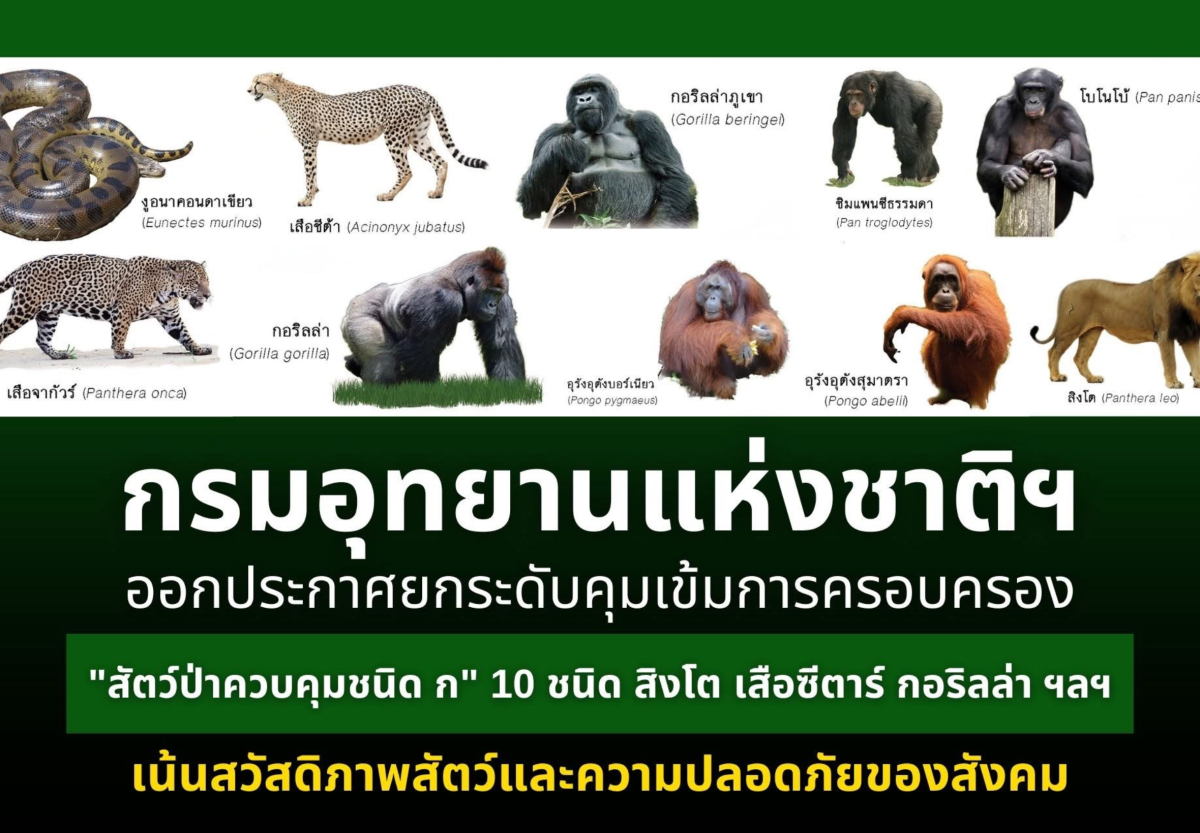
Picture courtesy of Department of National Parks, Wildlife and Plant Conservation
Key Takeaways
• Thailand has imposed stricter controls on 10 Category A wild animal species with immediate effect.
• Owners must meet enhanced welfare, safety and legal compliance standards or face seizure and penalties.
• Breaches can result in up to six months’ imprisonment, a 50,000 baht fine, or both.
Related Stories
Lion-seized-after-escaping-and-attacking-child-in-Kanchanaburi
Illegal-lion-and-liger-seized-from-home-in-Songkhla
Join the discussion? 
Already a member? 
 Adapted by ASEAN Now Thairath 14 Feb 2026
Recommended Comments
Create an account or sign in to comment