



Skip to content
View in the app

A better way to browse. Learn more.

Thailand News and Discussion Forum | ASEANNOW

A full-screen app on your home screen with push notifications, badges and more.

To install this app on iOS and iPadOS
  1. Tap the Share icon in Safari
  2. Scroll the menu and tap Add to Home Screen.
  3. Tap Add in the top-right corner.
To install this app on Android
  1. Tap the 3-dot menu (⋮) in the top-right corner of the browser.
  2. Tap Add to Home screen or Install app.
  3. Confirm by tapping Install.

Woman Dies After Centipede Bite in Si Racha

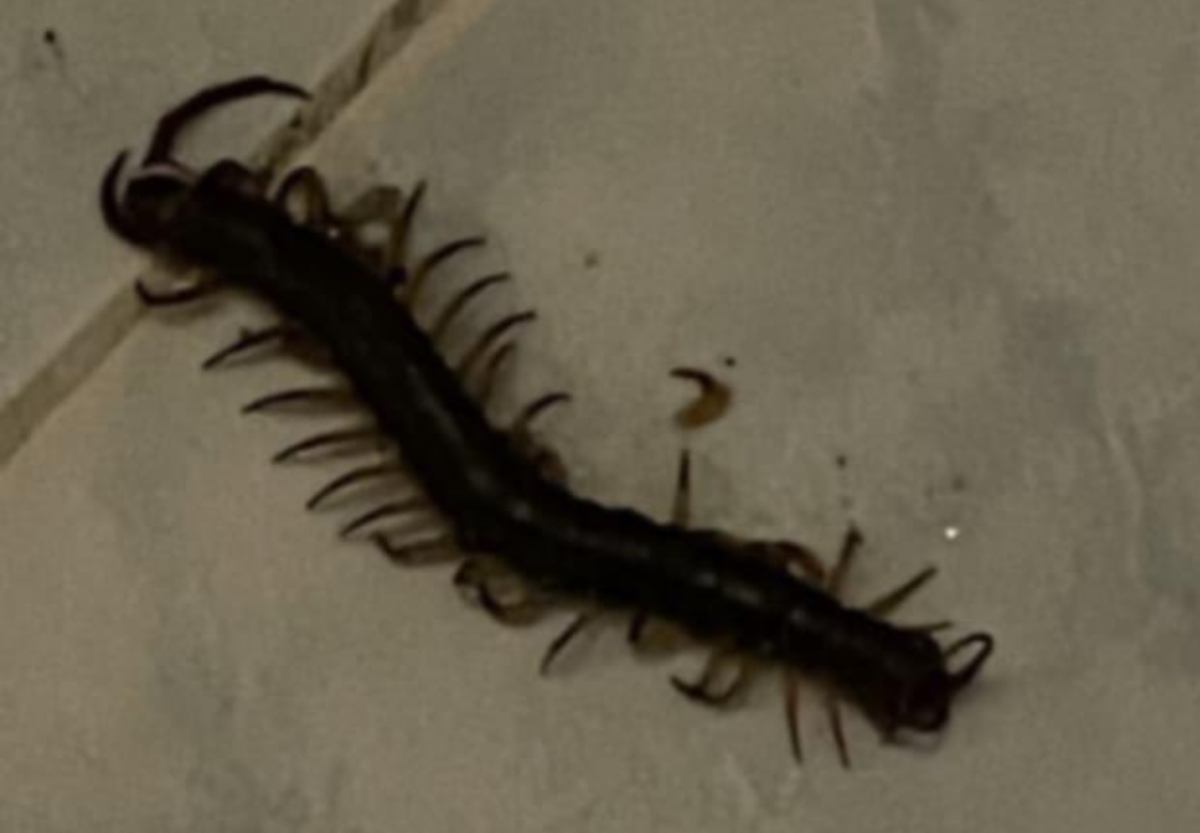
A 42-year-old former factory worker died after being bitten by a centipede in Si Racha, Chon Buri, with her partner claiming they could not afford treatment after discovering her social security coverage had expired.

Get today's headlines by email image.png

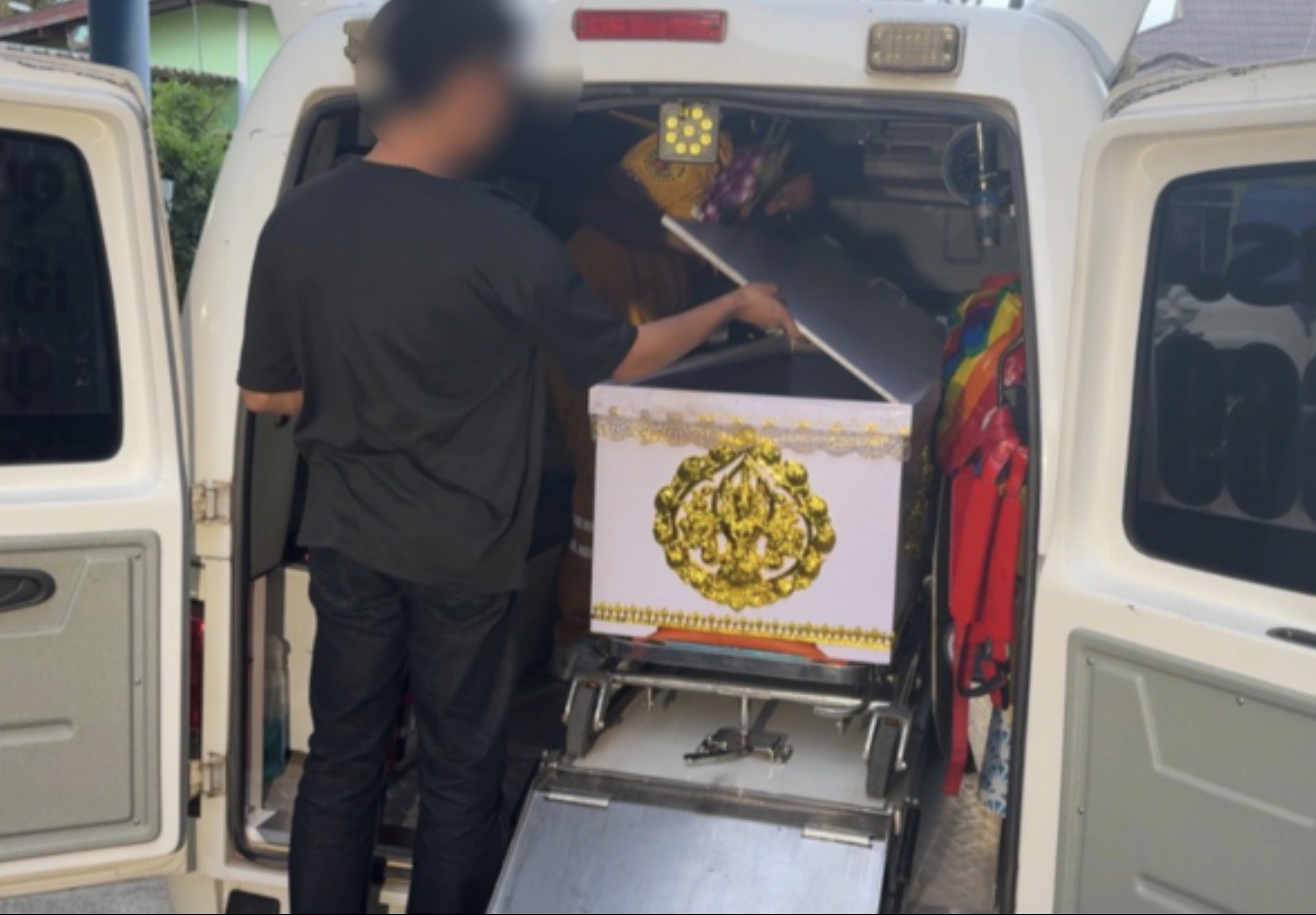
On 4 June 2026, rescue volunteers from the Pure Yiang Tai Foundation in Si Racha were alerted to a death at a rented room in Soi Alliance-Mab Hin Soi 6, Moo 6, Bo Win subdistrict, Si Racha district. Police from Bo Win Police Station attended the scene and found the body of Mrs Uthai, 42, a traditional Thai massage therapist who had previously worked in a factory.

She was found lying on her back with rigid legs and darkened lips. Investigators reported no signs of assault or theft.

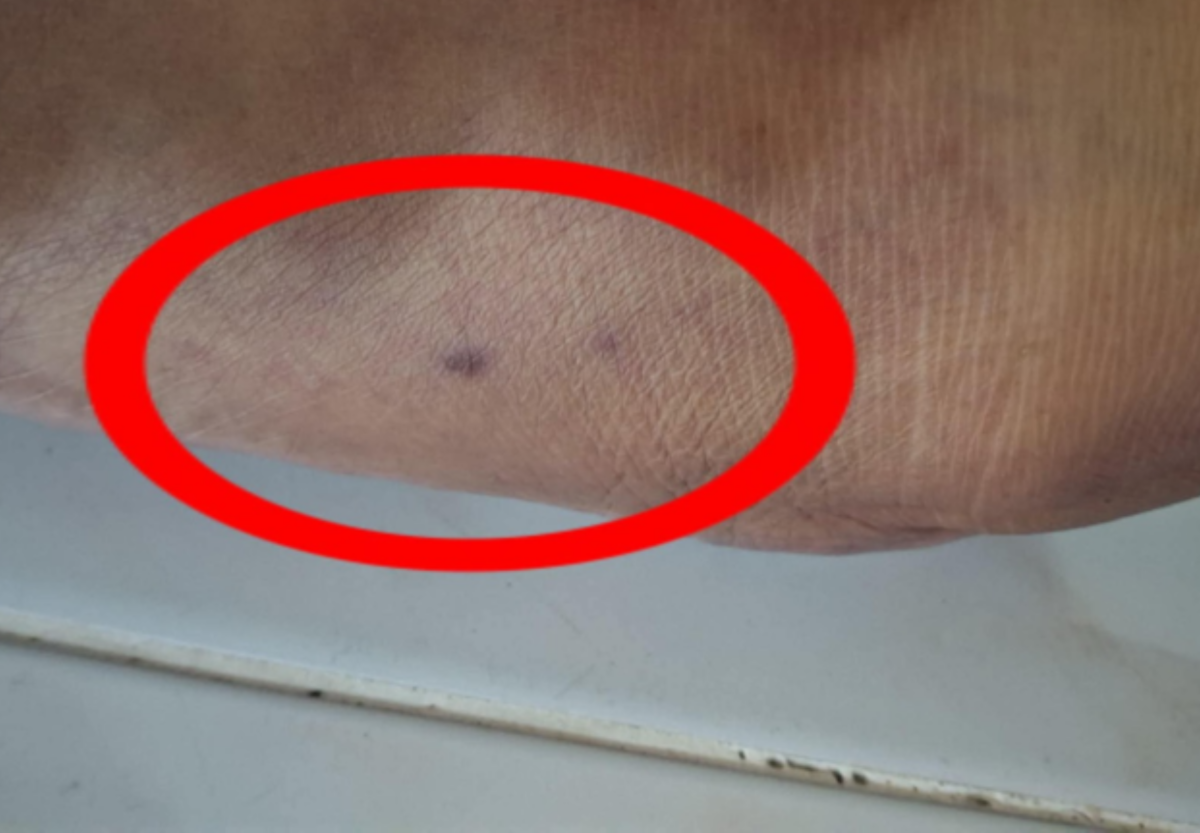
Her boyfriend, Mr Wutthinan, 27, a security guard, said he was working a night shift when he learned that she had been bitten by a centipede at the massage shop where she worked. He collected her and took her to a private hospital because she believed she still had social security coverage from her former factory job.
IMG_3980.png

According to Mr Wutthinan, hospital staff checked her details and found that her social security entitlement had expired. He said staff asked how they wished to proceed, explaining that treatment at the private hospital would incur significant costs. He said he could not afford the fees and intended to use Thailand’s 30-baht healthcare scheme at a state hospital.

As it was late at night, the couple instead bought antihistamine and pain relief medication from a convenience store before returning home. Mr Wutthinan later returned to work and last spoke with her by telephone shortly before 5am. When she failed to answer further calls later that morning, he asked her sister to check on her and was subsequently informed that she had died.
IMG_3979.png

Pictures courtesy of Amarin

He said Mrs Uthai had a history of high blood pressure and allergic reactions to venomous animals, having previously required hospital treatment after a similar incident. He questioned whether the private hospital had provided sufficient advice and said the family would discuss possible next steps.

The hospital stated that the patient arrived between 1am and 2am complaining of foot pain and swelling after a centipede bite. Staff said she was alert and able to communicate normally. After checking her social security status, they found that her entitlement had ended and informed the couple of two nearby state hospitals when asked for recommendations. The hospital said the patient and her partner then chose to leave.

Amarin reported that authorities have sent the body for further examination to determine the exact cause of death. Family members later confirmed they did not wish to pursue legal action and said the initial death reported listed the cause of death as “unknown”. They planned to return her body to her home village of Ban Wang Ta Thao in Na Yang Klak subdistrict, Thep Sathit district, Chaiyaphum province, for funeral rites.

Join the discussion? image.png

Already a member? image.png

image.png Adapted by ASEAN Now Amarin 7 June 2026

User Feedback

Recommended Comments

Ralf001 Star Member

Ralf001

Advanced Member
7 minutes ago, PoorSucker said:

Yes it is but not in Thai

Not Thai bank acccounts.

SiSePuede419 Platinum Member

SiSePuede419

Advanced Member
On 6/7/2026 at 4:10 AM, Georgealbert said:

He said he could not afford the fees and intended to use Thailand’s 30-baht healthcare scheme at a state hospital.

As it was late at night, the couple instead bought antihistamine and pain relief medication from a convenience store before returning home.

Instead of going straight to the state hospital, because easy.

I think I spotted the problem. 😀

Ray60 Explorer Member

Ray60

Member

an injection would cause significant costs ?

bmontague Rookie Member

bmontague

Member
22 hours ago, daveAustin said:

Total b'llox. How's about the same sort of thing happening in the world's so-called richest nation? Hazard to think there are more unnecessary deaths in the US through being turned away than anywhere. If you live here and think Thailand is 3rd world, might want to open your eyes and move around.

I

22 hours ago, daveAustin said:

Total b'llox. How's about the same sort of thing happening in the world's so-called richest nation? Hazard to think there are more unnecessary deaths in the US through being turned away than anywhere. If you live here and think Thailand is 3rd world, might want to open your eyes and move around.

I believe your statement is not correct. I believe more deaths occur in the UK due to lack of service. Deaths in the UK are more often due to lack of service than in the USA. The main areas for this are in asia and developing nations.

United Kingdom: The Royal College of Emergency Medicine (RCEM) estimates that long emergency department waiting times and delays in transferring patients to hospital wards were associated with thousands of excess deaths in 2025. The risk of death increases significantly for every hour a patient is left on a hospital trolley

wensiensheng Platinum Member

wensiensheng

Advanced Member
22 hours ago, Liverpool Lou said:

Yet another inaccurate, thinly disguised Thai-bash.

This patient could have lived if she had gone to one of the two public hospitals that were recommended well she could get treatment for B30 after she indicated her preference over the private hospital and chose to leave.

The hospital did its job, at the time she presented herself at the private hospital, this was not an emergency situation in which all hospitals are obliged to provide initial life-saving treatment, she was lucid and communicative. The private hospital in question recommended two state hospitals but the couple decided not to take that advice and instead to buy medication from a 7-Eleven and do nothing the following day either about having her examined even though they were a were of her blood pressure issues and susceptibility to allergic reactions from venomous bites.

It was certainly a strange decision to leave a private hospital and instead go to 7-11. Hardly comparable in terms of treatment available.

I also wonder why she/they thought that the social security from her former job would still be active?

Jingthing Legendary Member

Jingthing

Advanced Member
1 hour ago, Chongalulu said:

They didn’t present as an immediate emergency- they then left of their own accord and had available 2 government hospitals which would have treated her immediately. They didn’t bother and went to 7-11 thereby confirming that there was no emergency,even in their own eyes . So no refusal at the private hospital treatment an emergency. Look in the mirror for the one with a deficient IQ.Duh..(sic)

OK snookums, here's the rub.

It comes down to whether a relevant medical history was taken and if not why not

The couple were not medical experts.

Hospital staff should be.

Allergies and anaphalactic shock should have been at the top of their minds.

The news articles fails to say exactly what happened at the hospital related to that history.

pacovl46 Platinum Member

pacovl46

Advanced Member
On 6/7/2026 at 1:36 AM, dinsdale said:

Could've lived if they went to a government hospital. Being that she had a history of anaphylaxes there's a high likelihood she died of anaphylactic shock. A jab at the local hospital (even a clinic) would have saved her life. Difficult to understand why they didn't do this.

Well, anaphylaxis usually becomes a problem very quickly and by that I mean within minutes and not hours after the fact…..

richard_smith237 Star Member

richard_smith237

Advanced Member
5 minutes ago, pacovl46 said:
On 6/7/2026 at 6:36 AM, dinsdale said:

Could've lived if they went to a government hospital. Being that she had a history of anaphylaxes there's a high likelihood she died of anaphylactic shock. A jab at the local hospital (even a clinic) would have saved her life. Difficult to understand why they didn't do this.

Well, anaphylaxis usually becomes a problem very quickly and by that I mean within minutes and not hours after the fact…..

Not quite....

The onset of anaphylaxis can vary after a bee sting, centipede bite, medication, or food exposure etc for

- Most cases: within 5 to 30 minutes (most common)

- Many cases: within 1 to 2 hours

- Rarely: symptoms can be delayed for several hours

- Biphasic reactions: a second wave of anaphylaxis can occur 1 to 72 hours later (most commonly within 8-12 hours), even after the person initially seems to recover.

Thus - there is plenty of scope for this to be a 'delayed response' to the centipede bite - although, it blood pressure issue was also reported - the fatality could be a combined reaction.

dinsdales comment holds fast - she could have lived had she gone to a government hospital instead of home.

The couple really should have highlighted the anaphylaxis and blood pressure issues to the staff at the hospital.

I wonder, did the even go to the ER or the regular outpatient department ? - IF ER, surely the admitting staff and nurses would be asking such questions for basic first aid treatment ?? (clearly they didn't).

Nick Carter icp Star Member

Nick Carter icp

Advanced Member
4 hours ago, sahibji said:

Now that's a shame. Surely the hospital should treat a person and the government should have policy in place so that every citizen gets the basic health treatment.

There was a public hospital that she could have gone too , she choose not to go

bannork Star Member

bannork

Newsman
1 hour ago, wensiensheng said:

It was certainly a strange decision to leave a private hospital and instead go to 7-11. Hardly comparable in terms of treatment available.

I also wonder why she/they thought that the social security from her former job would still be active?

Regarding your first paragraph, perhaps at that time, the lady didn't feel ill enough to go to a state hospital.

If the hospital doesn't consider the case an emergency, there is often a long waiting time before you see a doctor, especially in the middle of the night.

Social Security is valid for three months once monthly payments cease, usually due to leaving a job. Many people don't know or consider this. The contributor can continue the Social Security coverage indefinitely by paying themselves, around 400 baht a month.

Nick Carter icp Star Member

Nick Carter icp

Advanced Member
21 hours ago, Jingthing said:

Splitting hairs. They couldn't pay. They wouldn't treat without payment. Therefore -- refused treatment. Duh.

If private hospitals allowed people to use the hospital without paying then private hospitals would be full of non paying patients and public hospitals would be empty

richard_smith237 Star Member

richard_smith237

Advanced Member
Just now, Nick Carter icp said:

If private hospitals allowed people to use the hospital without paying then private hospitals would be full of non paying patients and public hospitals would be empty

That's a false choice. Nobody is arguing that private hospitals should provide all care for free.

Private hospitals make most of their money from elective and planned healthcare, not emergency walk-ins. Requiring them to stabilise a patient in a genuine medical emergency wouldn't suddenly empty public hospitals or fill private hospitals with non-paying patients.

A person having a heart attack, severe allergic reaction, stroke, or other life-threatening emergency should be treated at the nearest capable hospital. Once stabilised, arrangements for payment or transfer can be made. The alternative is accepting that people may die in the car park because they can't produce a credit card quickly enough. That's not a healthcare system most people would want to defend.

Additionally: Under Thailand's Universal Coverage for Emergency Patients (UCEP) scheme, patients with qualifying life-threatening emergency conditions are entitled to emergency treatment at the nearest appropriate hospital, including private hospitals, without upfront payment. The hospital is expected to provide emergency care and stabilisation, with costs later handled through the reimbursement system.

This UCEP framework was specifically designed to prevent patients from being denied critical emergency treatment because of payment concerns. Private hospitals are reimbursed through government mechanisms for eligible emergency cases.

The only caveat in this example is whether a centipede bite qualifies under UCEP depends on the patient's condition. A simple painful bite may not qualify, but anaphylactic shock from a bite or sting is a genuine medical emergency and would typically meet the criteria for emergency treatment IF that had been discussed or checked at the time.

ftpjtm Silver Member

ftpjtm

Advanced Member
On 6/7/2026 at 12:07 PM, daveAustin said:

Total b'llox. How's about the same sort of thing happening in the world's so-called richest nation? Hazard to think there are more unnecessary deaths in the US through being turned away than anywhere. If you live here and think Thailand is 3rd world, might want to open your eyes and move around.

Not to defend the US medical insurance system which could use vast improvement;

But in the US any ER will treat any patient regardless of whether or not they have the ability to pay. Many people who don't have medical insurance use the ER exclusively for this reason, when a clinic would have been a more sensible place to seek treatment. And any legal resident who is truly indigent can receive government sponsored insurance FOC.

In contrast, as a foreign resident, I have been to Thai public hospitals who have always demanded payment prior to treating me. Yes, it was very inexpensive and I gladly paid, but I doubt I would have received treatment without paying.

wensiensheng Platinum Member

wensiensheng

Advanced Member
18 minutes ago, bannork said:

Regarding your first paragraph, perhaps at that time, the lady didn't feel ill enough to go to a state hospital.

If the hospital doesn't consider the case an emergency, there is often a long waiting time before you see a doctor, especially in the middle of the night.

Social Security is valid for three months once monthly payments cease, usually due to leaving a job. Many people don't know or consider this. The contributor can continue the Social Security coverage indefinitely by paying themselves, around 400 baht a month.

Yes, appreciate that she probably didn’t feel badly enough to want go to a government hospital. Unfortunately she must have taken a turn for the worse. With hindsight, a bad decision, particularly given her history.

I guess she wasn’t knowledgeable enough about the social security rules and paid the ultimate price.

pacovl46 Platinum Member

pacovl46

Advanced Member
49 minutes ago, richard_smith237 said:

Not quite....

The onset of anaphylaxis can vary after a bee sting, centipede bite, medication, or food exposure etc for

- Most cases: within 5 to 30 minutes (most common)

- Many cases: within 1 to 2 hours

- Rarely: symptoms can be delayed for several hours

- Biphasic reactions: a second wave of anaphylaxis can occur 1 to 72 hours later (most commonly within 8-12 hours), even after the person initially seems to recover.

Thus - there is plenty of scope for this to be a 'delayed response' to the centipede bite - although, it blood pressure issue was also reported - the fatality could be a combined reaction.

dinsdales comment holds fast - she could have lived had she gone to a government hospital instead of home.

The couple really should have highlighted the anaphylaxis and blood pressure issues to the staff at the hospital.

I wonder, did the even go to the ER or the regular outpatient department ? - IF ER, surely the admitting staff and nurses would be asking such questions for basic first aid treatment ?? (clearly they didn't).

I'm not disputing that she would've lived, if they had gone to the other hospital, but anaphylactic shock in mist cases happens within the first few minutes and 6 or 7 hours later seems a massive stretch in my book. While it can happen, it's extremely rare.

A friend of mine is allergic to bee venom and he's got about a minute before he passes out after getting stung. Seen it first hand.

Ralf001 Star Member

Ralf001

Advanced Member
2 hours ago, wensiensheng said:

It was certainly a strange decision to leave a private hospital and instead go to 7-11. Hardly comparable in terms of treatment available.

7/11 was obviously closer than the government hospital 1.3km away !

wensiensheng Platinum Member

wensiensheng

Advanced Member
1 hour ago, richard_smith237 said:

That's a false choice. Nobody is arguing that private hospitals should provide all care for free.

Private hospitals make most of their money from elective and planned healthcare, not emergency walk-ins. Requiring them to stabilise a patient in a genuine medical emergency wouldn't suddenly empty public hospitals or fill private hospitals with non-paying patients.

A person having a heart attack, severe allergic reaction, stroke, or other life-threatening emergency should be treated at the nearest capable hospital. Once stabilised, arrangements for payment or transfer can be made. The alternative is accepting that people may die in the car park because they can't produce a credit card quickly enough. That's not a healthcare system most people would want to defend.

Additionally: Under Thailand's Universal Coverage for Emergency Patients (UCEP) scheme, patients with qualifying life-threatening emergency conditions are entitled to emergency treatment at the nearest appropriate hospital, including private hospitals, without upfront payment. The hospital is expected to provide emergency care and stabilisation, with costs later handled through the reimbursement system.

This UCEP framework was specifically designed to prevent patients from being denied critical emergency treatment because of payment concerns. Private hospitals are reimbursed through government mechanisms for eligible emergency cases.

The only caveat in this example is whether a centipede bite qualifies under UCEP depends on the patient's condition. A simple painful bite may not qualify, but anaphylactic shock from a bite or sting is a genuine medical emergency and would typically meet the criteria for emergency treatment IF that had been discussed or checked at the time.

Interesting information, most of which I didn’t know.

I suspect that in this case when the women presented at ER, she pretty much seemed and felt ok. The reason why I think that is that she herself decided that some over the counter medicines from 7:11 would be sufficient.

Although she had a known history of allergic reaction, if she presented only mild symptoms, then the private hospital might well have legitimately not deemed her case as an emergency.

Clearly the lady herself did not deem it an emergency otherwise she would have rushed to the government hospital.

It’s a sad thing that someone lost their life, but I’m having a hard time saying that the private hospital was in the wrong here.

Jingthing Legendary Member

Jingthing

Advanced Member

Someone mentioned that the hospital was not at fault because she didn't present as being in anaphylactic shock and anaphylactic shock always sets in very quickly. This is mostly true. I had to look this up but in rare cases it can occur hours after the triggering event. I've experienced anaphylactic shock myself from a bee sting and the symptoms hit within minutes and I even rapidly blacked out but saved at a hospital.

So in light of this I'm adjusting my opinion. Intake people at hospitals can't really be expected to make judgements based on rare circumstances. ALSO, this makes the decision of the couple to go home and take antihistamines more reasonable. Another twist on this not being black and white.

Ralf001 Star Member

Ralf001

Advanced Member
1 hour ago, richard_smith237 said:

This UCEP framework was specifically designed to prevent patients from being denied critical emergency treatment because of payment concerns. Private hospitals are reimbursed through government mechanisms for eligible emergency cases.

The only caveat in this example is whether a centipede bite qualifies under UCEP depends on the patient's condition. A simple painful bite may not qualify, but anaphylactic shock from a bite or sting is a genuine medical emergency and would typically meet the criteria for emergency treatment IF that had been discussed or checked at the time.

Yeah likely she did not qaulify.

image.png

Nick Carter icp Star Member

Nick Carter icp

Advanced Member
2 hours ago, richard_smith237 said:

That's a false choice. Nobody is arguing that private hospitals should provide all care for free.

Private hospitals make most of their money from elective and planned healthcare, not emergency walk-ins. Requiring them to stabilise a patient in a genuine medical emergency wouldn't suddenly empty public hospitals or fill private hospitals with non-paying patients.

A person having a heart attack, severe allergic reaction, stroke, or other life-threatening emergency should be treated at the nearest capable hospital. Once stabilised, arrangements for payment or transfer can be made. The alternative is accepting that people may die in the car park because they can't produce a credit card quickly enough. That's not a healthcare system most people would want to defend.

Additionally: Under Thailand's Universal Coverage for Emergency Patients (UCEP) scheme, patients with qualifying life-threatening emergency conditions are entitled to emergency treatment at the nearest appropriate hospital, including private hospitals, without upfront payment. The hospital is expected to provide emergency care and stabilisation, with costs later handled through the reimbursement system.

This UCEP framework was specifically designed to prevent patients from being denied critical emergency treatment because of payment concerns. Private hospitals are reimbursed through government mechanisms for eligible emergency cases.

The only caveat in this example is whether a centipede bite qualifies under UCEP depends on the patient's condition. A simple painful bite may not qualify, but anaphylactic shock from a bite or sting is a genuine medical emergency and would typically meet the criteria for emergency treatment IF that had been discussed or checked at the time.

We re talking bout the woman in question who was quite able to get to a public hospital , but she choose not to go

Jingthing Legendary Member

Jingthing

Advanced Member
1 minute ago, Nick Carter icp said:

We re talking bout the woman in question who was quite able to get to a public hospital , but she choose not to go

OK.

It was reasonable for both the hospital and couple to conclude that it wasn't a life-threatening emergency. They were both wrong. Things like that happen every day.

Yes, in case it's not clear enough already, I've changed my mind.

Ethical, intelligent people should feel free to change their mind when presented with new information or persuasive enough arguments.

I don't blame either the hospital or the couple for this tragedy.

Ralf001 Star Member

Ralf001

Advanced Member
26 minutes ago, Nick Carter icp said:

We re talking bout the woman in question who was quite able to get to a public hospital , but she choose not to go

The public hospital is less than 5 mins away on scooter.

I guess that slurpee from the 7 was much more important!

Jingthing Legendary Member

Jingthing

Advanced Member
6 minutes ago, Ralf001 said:

The public hospital is less than 5 mins away on scooter.

I guess that slurpee from the 7 was much more important!

As she wasn't in shock, I reckon they would have probably just given her antihistamine and sent her home anyway.

Nick Carter icp Star Member

Nick Carter icp

Advanced Member

Doing websearch and she may have read this ? :

How to Treat a Centipede Bite

Most centipede bites can be safely managed at home: [1, 2]

  • Wash the area: Clean the wound thoroughly with soap and warm water.

  • Apply ice: Wrap an ice pack in a cloth and place it on the bite for 10 minutes on, and 10 minutes off, to reduce pain and swelling.

  • Medication: Take over-the-counter pain relievers or antihistamines to manage discomfort and itching.

  • Keep it clean: Apply a topical antibiotic ointment and keep the site covered to prevent bacterial infection

GammaGlobulin Star Member

GammaGlobulin

Advanced Member
On 6/7/2026 at 6:33 AM, Celsius said:

3rd world country

So is the USA, in terms of health care....

As everybody in the world knows.

Ralf001 Star Member

Ralf001

Advanced Member
43 minutes ago, Jingthing said:

As she wasn't in shock, I reckon they would have probably just given her antihistamine and sent her home anyway.

Which the article mentions she bought from a local convenience store.

Nick Carter icp Star Member

Nick Carter icp

Advanced Member
1 hour ago, Jingthing said:

As she wasn't in shock, I reckon they would have probably just given her antihistamine and sent her home anyway.

Cant even criticise hospital with being called an antistamite

Chongalulu Platinum Member

Chongalulu

Advanced Member
6 hours ago, Jingthing said:

OK snookums, here's the rub.

It comes down to whether a relevant medical history was taken and if not why not

The couple were not medical experts.

Hospital staff should be.

Allergies and anaphalactic shock should have been at the top of their minds.

The news articles fails to say exactly what happened at the hospital related to that history.

It’s not the hospital job to be mind readers - there was no immediate emergency and they were told the couple were going to make a short journey to a government hospital. They didn’t bother ,not considering it an emergency themselves.

J Branche Gold Member

J Branche

Advanced Member

Unfortunately I have a similar story that could have been much worse.

Boy was able to eat Shrimp 1 year before. One year later visited ate shrimp and start complaining of swelling. Parents bought Antihistamine. About 1 hour later he was complaining about shortness of breath. Luckily they took him to the local government hospital which treated him for a seafood allery.

Jingthing Legendary Member

Jingthing

Advanced Member
1 hour ago, Chongalulu said:

It’s not the hospital job to be mind readers - there was no immediate emergency and they were told the couple were going to make a short journey to a government hospital. They didn’t bother ,not considering it an emergency themselves.

I changed my opinion later in the topic.

Create an account or sign in to comment

Account

Navigation

Search

Search

Configure browser push notifications

Chrome (Android)
  1. Tap the lock icon next to the address bar.
  2. Tap Permissions → Notifications.
  3. Adjust your preference.
Chrome (Desktop)
  1. Click the padlock icon in the address bar.
  2. Select Site settings.
  3. Find Notifications and adjust your preference.

