



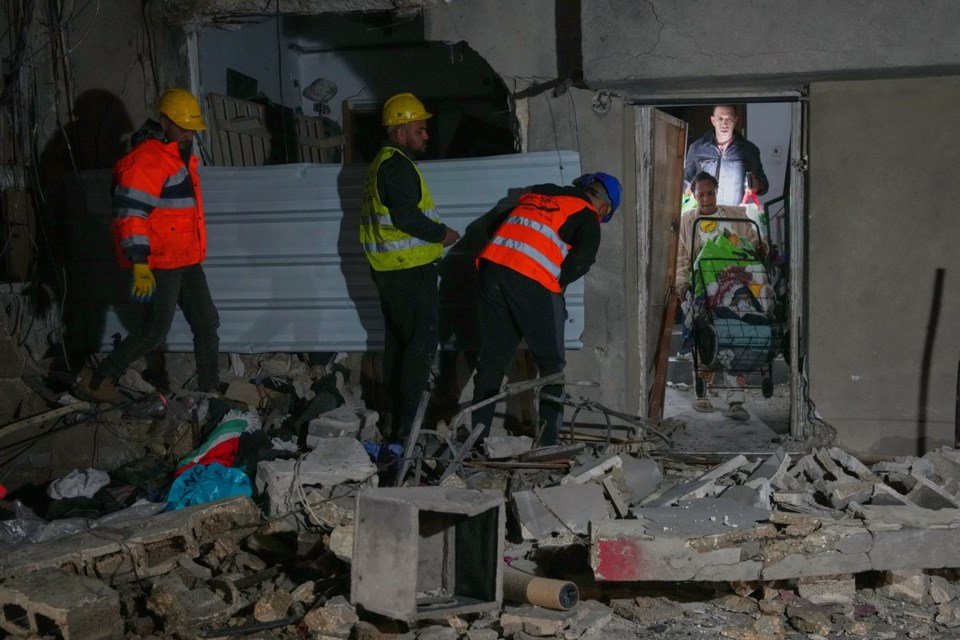

Israel’s military said a missile was launched from Yemen toward its territory early Saturday, marking the first reported attack from the country since the latest regional conflict intensified.
Get today's headlines by email 
Air-raid sirens sounded around Beer Sheba and areas near Israel’s main nuclear research facility. The alerts came during a night of repeated warnings as missiles from Iran and the Lebanese group Hezbollah continued to target Israeli areas.
The Iran-backed Houthi movement, which controls Yemen’s capital Sanaa, had not immediately confirmed responsibility for the launch.
Missile alert from Yemen
Until now, the Houthis had largely stayed outside the war. The group has maintained an uneasy ceasefire with Saudi Arabia following years of conflict that began when Riyadh intervened in Yemen in 2015 in support of the country’s internationally recognized government.
Shipping and regional risks
The potential involvement of the Houthis raises concerns about renewed attacks on vessels in the Red Sea, a key route for global trade.
During the earlier phase of the Israel–Hamas war, Houthi fighters launched missiles and drones at shipping in the area. Those attacks disrupted a corridor through which roughly $1 trillion in goods passed each year before the conflict.
Between November 2023 and January 2025, the group targeted more than 100 merchant ships, sinking two vessels and killing four sailors.
Any renewed campaign against shipping could further disrupt global trade already strained by tensions around the Strait of Hormuz, the narrow entrance to the Persian Gulf that carries a significant share of the world’s oil and gas supplies.
Iran recently signaled it would allow humanitarian and agricultural shipments through the strait. Ali Bahreini, Iran’s ambassador to the United Nations in Geneva, said the move aimed to ensure aid could pass without delay.
Israel strikes Iranian nuclear sites
The developments followed Israeli strikes on Iranian nuclear facilities hours after Israel warned it could expand its campaign against Tehran.
Iranian state media reported attacks on the Shahid Khondab Heavy Water Complex in Arak and a yellowcake uranium processing facility in Yazd Province. Authorities said there were no casualties or contamination risks.
Yellowcake is a processed uranium concentrate used as a step toward enrichment, while heavy water is used in certain nuclear reactors.
Israel’s military said the facility in Yazd handles raw materials used in enrichment, describing the strike as a major setback for Iran’s nuclear program.
Iran responded with missile attacks against Israel, one of which killed a 52-year-old man in Tel Aviv. Sirens also sounded in Jerusalem and other areas across the country.
Rising military and diplomatic pressure
The conflict has widened beyond Israel and Iran. Iranian strikes on Prince Sultan Air Base reportedly wounded at least ten U.S. service members and damaged several aircraft.
Meanwhile, the United States has increased its military presence in the region, sending Marines and paratroopers as a precaution.
Donald Trump has continued to push for broader regional diplomacy, including normalization between Israel and Saudi Arabia through the Abraham Accords.
Diplomatic efforts are ongoing, with mediators including Pakistan and Turkey attempting to facilitate talks between Washington and Tehran. Foreign ministers from the Group of Seven have also called for an immediate halt to attacks on civilian areas and infrastructure.
Despite these efforts, the fighting has intensified across several fronts. Reports of airstrikes, missile launches and explosions continued overnight in both Israel and Iran, underscoring fears the conflict could widen further.
Join the discussion? 
Already a member? 
 Adapted by ASEAN Now. Source 28 March 2026