



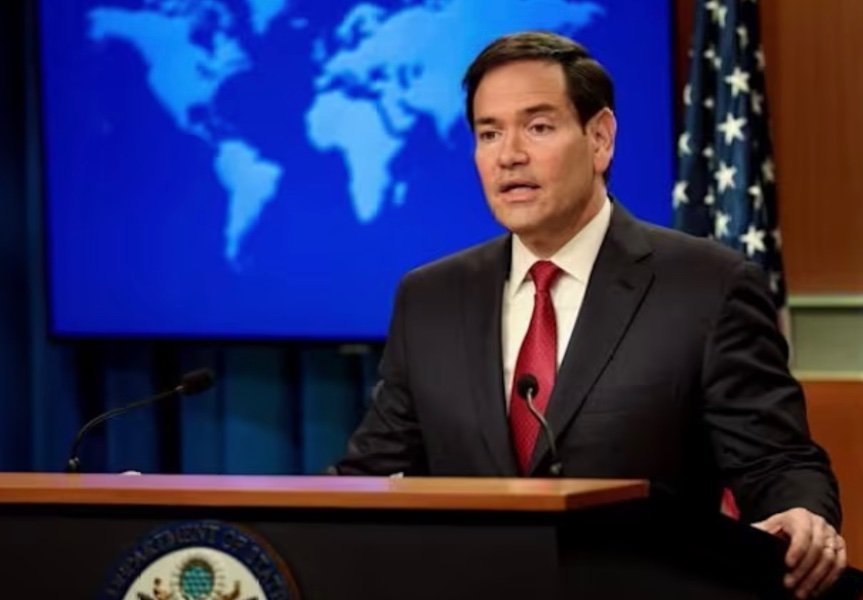

Marco Rubio said the United States expects its military campaign against Iran to conclude within weeks, saying operations are progressing faster than anticipated.
Get today's headlines by email 
Speaking after a meeting of foreign ministers from the Group of Seven in France, the U.S. secretary of state said Washington’s objectives were largely on track.
Unclear path to negotiations
“We expect this to finish in the next couple of weeks,” Rubio told reporters, adding that the campaign was ahead of schedule.
U.S. officials had previously suggested the operation could last four to seven weeks. With the conflict entering its fourth week, Rubio’s timeline broadly matches earlier expectations. He also said the timeframe involved “weeks, not months.”
The war began on 28 February after the United States and Israel launched coordinated operations against Iranian targets.
Rubio said Washington has received indirect messages suggesting a willingness from Tehran to discuss ending the conflict, though it remains unclear who would represent Iran in potential negotiations.
Several senior Iranian figures have been killed since the war began, complicating diplomatic channels.
“There have been exchanges of messages and indications from the Iranian system, whatever’s left of it, about a willingness to talk,” Rubio said. He added that the United States is still waiting for clarification about who would participate in talks and what issues would be addressed.
Donald Trump has said Iran wants negotiations, a claim Iranian officials have rejected.
According to U.S. officials, Washington has presented a proposed framework to end the conflict through intermediaries, including contacts through Pakistan.
Steve Witkoff, Trump’s special envoy, said the United States has submitted a 15-point proposal to Tehran and is awaiting a response.
“We have a 15-point deal on the table,” Witkoff said, adding he remained hopeful talks could take place within days.
Trump also said he had temporarily delayed a threatened strike on Iranian power plants to allow diplomatic efforts to continue.
Tensions around Hormuz
The conflict has intensified tensions around the Strait of Hormuz, a key shipping route for global energy supplies.
About one-fifth of the world’s oil and liquefied natural gas typically passes through the narrow waterway linking the Persian Gulf with international markets.
Iran has threatened to impose fees on ships using the route, and reports suggest some vessels may already be paying for secure passage.
The potential disruption has pushed oil prices higher and raised fears of wider economic consequences if traffic through the strait remains restricted.
In a joint statement following the G7 meeting, foreign ministers stressed the need to restore safe and unrestricted navigation through the waterway.
Allies weigh response
Rubio said United Kingdom officials were leading efforts to form a coalition to help secure shipping in the strait once the conflict ends.
The initiative would involve cooperation among Western and regional partners to maintain freedom of navigation.
However, several U.S. allies have resisted calls from Washington to send naval vessels to escort ships through the waterway during the conflict.
Many governments argue that ending the fighting remains the most effective way to restore stability.
The G7 statement also called for an immediate halt to attacks on civilians and critical infrastructure, warning that such strikes cannot be justified under international law.
Although the communique did not name any country directly, its language appeared to refer largely to Iranian missile and drone attacks on civilian sites across the region, including airports, residential buildings, energy facilities and diplomatic missions.
Join the discussion? 
Already a member? 
 Adapted by ASEAN Now. Source 28 March 2026