



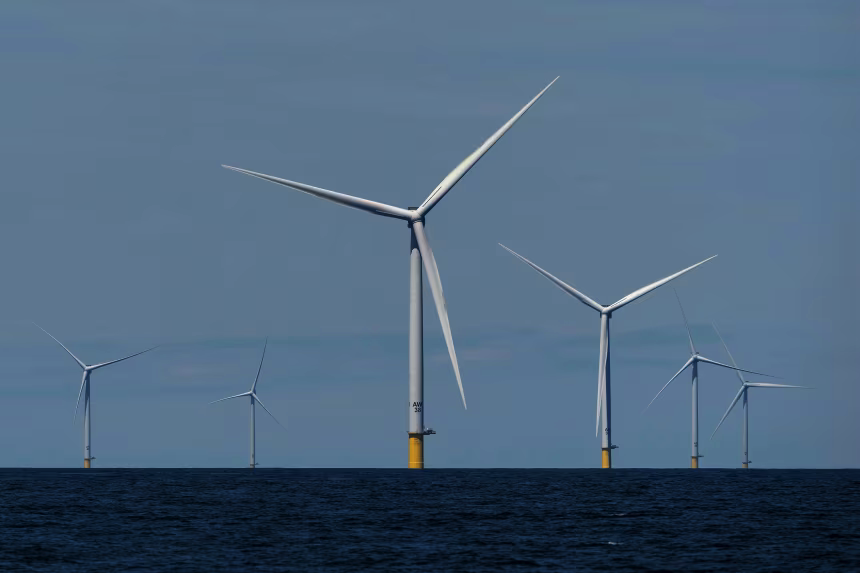

The administration of Donald Trump has agreed to pay nearly $1bn in taxpayer funds to French energy firm TotalEnergies in exchange for abandoning planned offshore wind projects in the United States.
Get today's headlines by email 
The deal marks a significant shift in policy, with the government effectively compensating a company to halt renewable energy developments before construction begins.
Wind Projects Scrapped
The payment will reimburse TotalEnergies for federal leases it purchased to develop two offshore wind farms off the coasts of New York and North Carolina. The funds will be issued through the US Department of Justice.
Together, the projects had the potential to generate more than four gigawatts of electricity, enough to supply large numbers of homes and businesses.
Instead, the company said it would redirect investment towards fossil fuel developments in the US, including a liquefied natural gas facility in Texas, oil drilling in the Gulf of Mexico and shale projects elsewhere.
TotalEnergies chief executive Patrick Pouyanné said the decision reflected the administration’s stance that offshore wind was not in the country’s interest.
Policy Shift on Renewable Energy
The agreement follows earlier action by the Interior Department, led by Doug Burgum, which halted approvals for new renewable energy permits. That move effectively stalled offshore wind projects in early development stages.
Officials have argued that offshore wind is costly and less reliable than other forms of energy. Burgum said the focus should instead be on “dependable” power sources to reduce costs for consumers.
However, critics point out that wind energy does not rely on fuel and can offer stable pricing compared with fossil fuels, whose costs fluctuate.
Concerns Over Energy Supply
The decision has raised concerns among energy experts about future electricity supply, particularly as demand rises from data centres, electrification and population growth.
Elizabeth Klein, who previously led offshore energy management efforts under the Biden administration, warned that cancelling the projects could deepen energy shortages and drive up prices, especially along the US East Coast.
Industry groups also criticised the move, arguing that removing planned renewable capacity could increase costs for consumers at a time when energy prices are already under pressure.
Wider Industry Implications
The settlement may set a precedent for other developers. Several companies have indicated they could seek reimbursement if prevented from proceeding with offshore wind projects.
Among them is RWE, which has invested heavily in offshore wind leases in US waters.
The total value of undeveloped offshore wind leases across US coasts exceeds $5bn, raising the prospect of further payouts if similar agreements are reached.
Uncertainty Ahead
It remains unclear whether additional deals are under discussion. The Interior Department has not confirmed whether negotiations are ongoing with other firms.
The agreement highlights the administration’s broader shift away from renewable energy in favour of fossil fuel development, a move that supporters say will strengthen energy security but critics argue could undermine long-term supply and pricing stability.
Join the discussion? 
Already a member? 
 Adapted by ASEAN Now. Source 24 March 2026