kwilco
Advanced Member
-
Joined
-
Last visited
Everything posted by kwilco
-
No, it isn't – it's just stupid foreigners who don't know how to drive in Thailand.
-
What is Putin singing now? https://www.facebook.com/share/v/1AD1henBtU/
-
ah...I see!
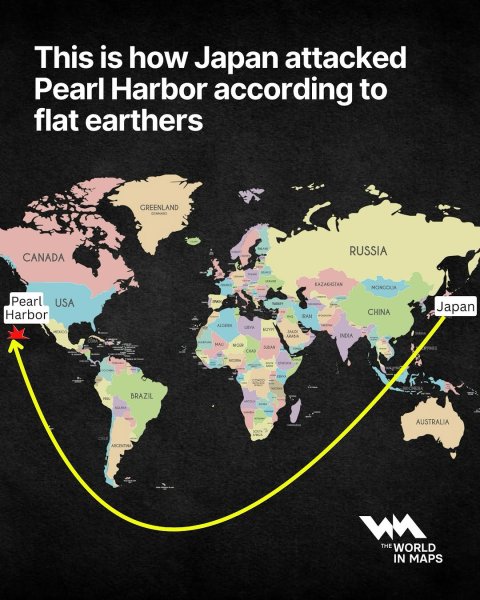
-
Cuba, Mexico, Taiwan and GREENLAND are now pooping themselves. One person who is NOT is Putin. Just like Putin, this is "not a war"
-
So according to Trump, it's "Mission Accomplished". - Where have we heard that before?
-
not necessary – if you disagree, go educate yourself and then come back with a counterargument – Sealioning is the tool of those with no argument.
-
"The Knowledge?" - would be some mystical solution sought by conspiracy theorists – science is the systematic study of the structure and behaviour of the physical and natural world through observation, experimentation, and the testing of theories against the evidence obtained. Totally absent from conspiracy theories.You have no idea! Gravity attracts from all directions to a centre. Nothing to do with density, it's to do with mass - I guess you don't know the difference.Trump's new oil company – MON = "My oil now"Cuba has a massive right-wing electorate in Florida – they are votes he needs and have established an anti-Cuba lobby for years; they are very powerful and one of the few right-wing ethnic minorities. I'm sure Trump will have done a deal with them of some sort. Cuba gets all its oil from Venezuela, so they have effectively shut the country off. This will give the US a much bigger foothold in the Caribbean. Also worth bearing in mind that TRinidad and Tobago steal all the oil in their wells, which comes from Venezuela – doubt if Trump will allow that to continue, as it's HIS oil now.One wonders when someone showed Trump where Venezuela was on a map.Cuba is next.......Lest we forget the original topic behind all the deflection – we now know who is a conspiracy theorist of this forum – so what do we do about them? Some say, "Sure, you’re entitled to your opinion—but without reason, logic and evidence, it’s not an opinion; it's just noise."The irony of flat-Earth and conspiracy movements is that they rely on the internet to spread ideas that reject the very science that makes the internet possible. Global networks, satellites, fibre optics, radiophysics, and computer science—products of the rigorous scientific method—are used to argue against established scientific realities like a spherical Earth. In effect, they trust science enough to tweet, stream, and upload, but not enough to accept the conclusions that same science has repeatedly demonstrated.A Have you lived in London? Do you understand the "ambulance" system in Thailand?What you describe happens on Thai roads every holiday – NY and Songkhran.... - it is proved to be pretty much insignificant, as there has been no change for the past quarter of a century. basically, all they do is catch a few offenders who stroll into their net – they do nothing to prevent the offences as they have already been committedNo, we're not – explain that comment! Are you trying to suggest that Egyptians were less evolved than we are today? - Egyptians were not less evolved than modern humans; they were fully modern humans with complex societies and sophisticated technologiesthis guy talks clearly on the psychology of being stupid. https://www.facebook.com/share/v/1AYfQ3pkrn/Panama!This is definitely NOT about drugs – Venezuela has a very small part of the US drugs market. It IS about oil – a commodity that still has huge value despite being replaced in many fields by sustainable energies. It is still essential for stuff like plastics and, of course, Trump's retrogressive attitude to global warming. We also need to be concerned about the geopolitical aspects of this in view of the US's past performances in regime change. A fragmented world is what Trump wants.he didn't dare do this to PutinThis is going to involve Cuba sooner or laterThere is a huge amount of misinformation (and misunderstanding) in this thread, much of which simply highlights how poorly informed many foreigners in Thailand are about road safety in the Kingdom. To start with, accident numbers during the so-called “7 dangerous days” are usually the same as, or slightly lower than, the rest of the year. Singling out one issue and presenting it as a “solution” to Thailand’s long-standing road safety problems is neither logical nor supported by evidence. These problems have existed for decades and cannot be fixed by simplistic explanations. Road safety is complex. It is built around multiple interdependent factors, and when any of them are ignored, the result is predictably high crash and injury rates. Injuries themselves are typically classified as: Minor Serious Fatal To understand road safety properly, you need a range of statistics, not cherry-picked numbers. Meaningful indicators include: Deaths per 1 million inhabitants Serious injuries per 1 million inhabitants Minor injuries per 1 million inhabitants Deaths per 10 billion vehicle kilometres Deaths per 100,000 registered vehicles Registered vehicles per 1,000 inhabitants Without this broader context, comparisons are largely meaningless. The Five Pillars of Road Safety (The “5 Es”) Effective road safety systems are built on five core pillars. You cannot pick and choose between them — all must be addressed together. Having a driving licence does not make someone an expert in road safety, particularly not in Thailand. For more than 30 years Thailand has produced various “Road Safety Action Plans” based on these principles (with limited success), but without addressing all five, meaningful improvement is unlikely. 1. Education This goes far beyond a one-off driving test. Road users must be taught how to share the road safely, and that education must continue throughout a driver’s life. Countries like the UK ran long-term public safety campaigns in the 1960s and 70s — smart, memorable, non-condescending ads that genuinely changed behaviour (many will remember the “elephant in the fog”). In Thailand, the first group needing serious education is arguably the police themselves. 2. Enforcement Enforcement is essential, but Thailand faces the added challenge of entrenched corruption, bribery, and selective application of the law. No amount of new legislation helps if laws are not reasonable, consistently applied, and supported by a competent legal system. Police and courts must be properly trained and insulated from corruption for enforcement to work. 3. Engineering This is the most commonly ignored pillar when people criticise Thai road safety. It has two major components: A. Vehicle Engineering Modern vehicle safety is a combination of: Passive safety (seatbelts, airbags, vehicle structure) Active safety (braking, handling, stability control, traction control) These systems are now deeply interconnected and heavily computerised. Examples include: ABS Electronic Stability Control (ESC) Traction control Side-impact protection Airbags Overall vehicle dynamics and reliability Roadworthiness inspections are vital — yet in Thailand they are largely unenforced. B. Road Engineering Road design and construction play a massive role in safety: Junctions, bridges, camber, drainage, and surface quality Barriers and medians (e.g. Armco), and removal of roadside hazards Clearing vegetation and billboards that obstruct sightlines Proper use of road markings, signage, bollards, and speed control Traffic calming and forgiving road design Separation of different road users where appropriate A good example is U-turns: they exist not because drivers demand them, but because the road design allows them. This is fundamentally an engineering and cost-cutting issue, not just a driver behaviour issue. 4. Emergency Response What happens after a crash often determines whether someone lives or dies. The time between injury and treatment is critical. Thailand still has no effective universal emergency response system. Ambulance standards vary wildly, equipment is inconsistent, and first responders may range from volunteers in pickup trucks to partially equipped ambulances. Paramedic training is often inadequate. 5. Evaluation Finally, effective systems measure what works and what doesn’t. In countries with mature road safety frameworks, every major road project or safety campaign is evaluated for its impact on accidents, injuries, local communities, and the environment. Thailand may nominally have such bodies, but in practice their impact is negligible. Statistics are incomplete, poorly collected, and often fail to align with international standards. Road safety policy is too often reduced to baseless political statements rather than evidence-based action. In short, Thailand’s road safety problems are systemic. Focusing on isolated issues — especially during holiday periods — may make for easy headlines, but it does nothing to address the real causes.In Thailand, the general blood alcohol limit is 0.05% (50 mg/dL), but it's much stricter for newer drivers, those under 20, or with temporary licenses, who face a 0.02% (20 mg/dL) limit, with penalties including fines, jail time, and license suspension for violations