Skip to content
View in the app

A better way to browse. Learn more.

Thailand News and Discussion Forum | ASEANNOW

A full-screen app on your home screen with push notifications, badges and more.

To install this app on iOS and iPadOS
  1. Tap the Share icon in Safari
  2. Scroll the menu and tap Add to Home Screen.
  3. Tap Add in the top-right corner.
To install this app on Android
  1. Tap the 3-dot menu (⋮) in the top-right corner of the browser.
  2. Tap Add to Home screen or Install app.
  3. Confirm by tapping Install.

Thailand News

All the latest news stories from Thailand are written in English. Fresh news and stories from around the kingdom brought to you daily.
The Royal Thai Air Force has visited Sweden to review progress on its Gripen E/F fighter jet procurement programme, as the first aircraft enters the production line to replace ageing F-16 jets based in Nakhon Ratchasima.

Get today's headlines by email

On 13 May 2026, Air Chief Marshal Seksan Kantha, Commander-in-Chief of the Royal Thai Air Force and chairman of the Thai-Swedish government joint project committee, led a delegation to Stockholm for talks with the Swedish Defence Materiel Administration (FMV). The meeting focused on monitoring progress of the first phase of the Gripen E/F procurement programme and strengthening future defence cooperation between Thailand and Sweden.

The Thai delegation also met Ms Eva Hagwall, FMV Deputy Director General, as part of discussions linked to the procurement agreement signed between the two governments. The project forms part of Thailand’s long-term plan to modernise its air combat fleet and replace older F-16A/B aircraft stationed at Wing 1 in Nakhon Ratchasima province.

Thailand signed the first procurement contract for four Gripen E/F fighter jets in August 2025 under the programme known as “Peace Burapha 1”. The deal, worth 19.5 billion baht, was signed with FMV and Swedish defence company Saab.

The first phase of the programme covers the 2025-2029 budget period, with deliveries scheduled to begin in 2029. A second phase is planned for the 2028 fiscal year and will include the purchase of four additional aircraft. The overall programme aims to procure a full squadron of 12 Gripen E/F fighter jets.

Reports indicate that the first Gripen E/F aircraft ordered by Thailand has now officially entered production at Saab’s facility in Linkoping, Sweden. The development marks a key milestone in the programme as Thailand moves ahead with plans to modernise its air force capabilities.

The procurement project comes as the Royal Thai Air Force continues to monitor regional security developments and maintain operational readiness. In recent months, Thai F-16 aircraft have been deployed on patrol and airspace protection missions near the Myanmar border following reports of armed conflict close to Thai territory.

Amarin reported that defence observers say the Gripen E/F programme will play a significant role in the future structure of Thailand’s air combat capability, although deliveries remain several years away. Further updates on production progress and delivery schedules are expected as the project advances towards the planned 2029 handover.


Picture courtesy of Amarin

Join the discussion?

Already a member?

Adapted by ASEAN Now Amarin 14 May 2026
Georgealbert
Georgealbert
Chinese detainee Mingchen Sun, 31, remains on a ventilator after collapsing shortly after arriving at Pattaya Remand Prison, with doctors now suspecting he overdosed on personal medication before entering custody.

Get today's headlines by email

Thailand’s Department of Corrections issued an update on 13 May confirming that Sun, who is facing charges related to firearms and explosives, had regained consciousness and could follow medical instructions. However, he still required respiratory support and was being fed liquid nutrients through a nasal tube.

Doctors at Pattaya Bhattamakun Hospital said Sun was admitted on 11 May after suffering a medical emergency during the prison intake process. Medical staff carried out blood tests, a chest X-ray and a brain CT scan to identify the cause of his condition.

Hospital staff initially suspected an overdose of prescribed medication. During treatment, doctors inserted a nasal tube to clear his digestive system and reportedly found blue liquid inside his stomach before administering antidote medication. Officials said his condition improved afterwards, with increased movement and better responses.

Laboratory tests found no trace of illegal drugs in Sun’s urine. Further blood analysis has been sent for detailed testing for alcohol, benzodiazepines, pesticides, cyanide and other substances. Officials expect the results to be available by Friday or sometime next week.

The Department of Corrections said doctors believed Sun had consumed an excessive amount of medication before arriving at the prison because he became critically ill within two hours of entering the facility. Authorities stressed that all medicines are banned from entering the prison unless approved and inspected by prison medical staff.

Security measures around the hospital have been tightened while Sun remains under treatment. Pattaya Remand Prison has deployed correctional officers to monitor him closely and requested additional support from officers at Royal Thai Police Bang Lamung Police Station and the Provincial Police Region 2 special operations unit. Officers are maintaining round-the-clock security at the hospital.

The Department of Corrections said it was continuing to manage the detainee in line with humanitarian and international detention standards. Officials have not released further details about the medication allegedly involved or the exact circumstances leading up to the collapse.

Daily News reported that authorities are expected to await the outcome of the detailed toxicology tests before making any further statements about the cause of the incident.


Picture courtesy of Daily News

Related stories

Chinese-gun-suspect-collapses-in-Pattaya-jail

Navy-officer-questioned-over-rifle-sales-in-Chon-Buri

Chinese-man-held-over-possible-Pattaya-terror-plot

Join the discussion?

Already a member?

Adapted by ASEAN Now Dailynews 14 May 2026
Georgealbert
Georgealbert
Thailand’s 2nd Army Region said Cambodian soldiers fired 11 shots along the O Smach border area on 13 May 2026, but assessed the incident as a disciplinary lapse rather than a deliberate military action. The gunfire occurred across several locations near the Thai-Cambodian frontier during the early evening and prompted Thai authorities to increase border monitoring.

Get today's headlines by email

According to the 2nd Army Region, the shooting began near Hill 278 east of Chong Chom before continuing along the eastern side of the road leading into O Smach. Reports stated that each location saw only one or two shots fired, with a total of 11 rounds discharged.

Thai military officials said preliminary investigations indicated the gunfire was likely caused by Cambodian troops acting without discipline. Authorities stressed that the shots were fired intermittently and did not appear to form part of a coordinated military operation.

The army said the shooting pattern did not suggest tactical intent because the rounds were scattered across multiple points and lacked any identifiable target. Officials added that there was no sustained burst of fire or indication of an attempt to escalate tensions along the border.

The incident followed earlier reports describing gunfire along the Or Samet line, where Cambodian troops were initially suspected of testing defensive positions. The border area has remained sensitive due to ongoing security concerns and increased monitoring by Thai forces.

Thai security forces said the overall situation remained under control and was being closely supervised by officials on the ground. No casualties or damage were reported following the exchange.

The 2nd Army Region has ordered units stationed along the Thai-Cambodian border to maintain heightened surveillance measures and continue monitoring developments around the clock. Officials said the additional precautions were intended to prevent any incident that could affect border security.

Amarin reported that military authorities have not indicated that further action will be taken against Cambodian forces at this stage. Monitoring operations are expected to continue as both sides assess the events surrounding the shooting near O Smach.

Join the discussion?

Already a member?

Adapted by ASEAN Now Amarin 14 May 2026
Georgealbert
Georgealbert
Thailand’s Cabinet has approved a draft exchange of letters between the Thai and Dutch governments allowing the Netherlands to purchase land and buildings on Soi Ruam Rudi in Bangkok for use as the new residence of the Dutch ambassador to Thailand.

Get today's headlines by email

Deputy government spokeswoman Lalida Periswiwatana said after the Cabinet meeting at Government House at 2pm on May 12 that ministers had agreed in principle to the proposed exchange of letters between the government of the Kingdom of Thailand and the government of the Kingdom of the Netherlands.

The Embassy of the Netherlands informed Thai authorities of its intention to buy two plots of land, including buildings, on Soi Ruam Rudi in Lumphini subdistrict, Pathum Wan district, Bangkok. The property will be used as the new ambassador’s residence to better support current diplomatic duties.

Lalida said the Dutch government already owns more than 15 rai of land in Thailand. Under Cabinet rules, any additional land purchase by the Netherlands must receive case-by-case approval based on criteria previously established by the Cabinet.

The draft exchange of letters outlines the rights of both countries to acquire ownership of land, buildings and condominium units for use as residences or offices for embassies and consulates. It also includes exemptions from relevant taxes, duties, fees and service charges on the basis of reciprocity.

Relevant agencies, including the Treasury Department, the Department of Public Works and Town & Country Planning, the Department of Lands, the Department of Provincial Administration, the Bangkok Metropolitan Administration and the Royal Thai Police, reviewed the request and raised no objections.

Authorities considered the location suitable for use as an ambassador’s residence, citing appropriate security measures and no significant issues involving land ownership or encumbrances.

Lalida said the approval would allow the Netherlands embassy to adjust its property use in line with its diplomatic mission. She added that Thailand would benefit under the principle of reciprocity should it seek to acquire additional property in the Netherlands in future.

“This is a diplomatic process based on law, suitability and the mutual interests of both countries. It reflects Thai-Dutch relations moving forward steadily on the basis of trust and reciprocity,” Lalida said.

The approval comes as the Netherlands prepares to reshape its diplomatic presence in Bangkok, including plans to sell its long-standing embassy compound on Wireless Road and relocate embassy operations to Dusit Central Park.

The Nation reported that the current Wireless Road site, covering more than 20 rai, is regarded as one of Bangkok’s most valuable embassy plots and has attracted attention from property analysts and conservation groups. The newly approved Soi Ruam Rudi purchase forms part of a broader shift in Dutch diplomatic property use in Thailand.


Picture courtesy of The Nation

Join the discussion?

Already a member?

Adapted by ASEAN Now Nation 14 May 2026
Georgealbert
Georgealbert
Thai immigration police and local officers raided an illegal Chinese poker casino operating from a pool villa in Pattaya late on 13 May 2026, arresting 16 Chinese nationals and seizing gambling equipment, cash and mobile phones.

Get today's headlines by email

The operation took place at around 11pm at a two-storey house located at 243/15 Soi Khao Noi, Nong Prue, Bang Lamung district, Chon Buri. Officers from Chon Buri Immigration, Tourist Police Pattaya, Nong Prue police station and local administration units surrounded and searched the property after receiving intelligence that it was being used as a private gambling venue for Chinese players.


Police said the upper floor of the villa had been converted into a casino. Officers found groups of Chinese nationals gathered around poker tables when the raid began. As authorities entered the property, several suspects attempted to flee, with three men jumping from a second-floor window.

The three injured men were treated by rescue workers from the Sawang Boriboon Pattaya Foundation before being taken to hospital. Authorities later confirmed all suspects had been detained.

In total, officers arrested 16 Chinese nationals, including 13 men and three women. Seized items included poker tables, playing cards, chairs, gambling chips, a banknote counting machine, 93,000 baht in cash and more than 20 mobile phones. Officers also found food and drinks prepared for players inside the villa.

The raid followed orders from Pol Gen Kittirat Phanphet, the national police chief, who directed agencies to intensify a three-month crackdown on transnational crime and illegal foreign activities under the operations known as “X-ray, Mobilise and Sweep” and the wider campaign “Dig Out the Roots”.


Pictures courtesy of SiamChon

According to investigators, Chon Buri Immigration officers had monitored the property for some time after receiving reports that the venue catered exclusively to VIP gambling clients. Authorities then planned an undercover operation using a female police officer disguised as a food delivery rider to gain access to the house.

Police said a Chinese man opened the gate after the delivery arrived but allegedly shouted a warning when officers identified themselves, prompting gamblers upstairs to panic and try to escape. Despite the attempted escape, all suspects were eventually taken into custody.

The 16 Chinese nationals and all seized evidence were transferred to investigators at Chon Buri Immigration for legal proceedings on charges of illegal gambling. Authorities also confirmed they would begin procedures to revoke the suspects’ visas and deport them from Thailand.

AQNmwNu_iR58Bkhn5mTyfNC_fyFWHG112AOhuf8lFxS8UJ0qhDUbGYkPLUSUB1C5dGZ4YWjV5a6SFnSyl5mV7ZgT0HDaqOeTsqWvE2v8kA.mp4

Join the discussion?

Already a member?

Adapted by ASEAN Now SiamChon 14 May 2026
Georgealbert
Georgealbert
Assistant Professor Dr Noppadol Kannika, a member of Thailand’s National Police Policy Committee, has called for new national security laws to tackle modern threats including foreign influence operations, cyber attacks and economic espionage. Speaking on May 13, he suggested Thailand should begin debating whether severe offences involving threats to national sovereignty and national security should carry the death penalty under strict legal safeguards.

Get today's headlines by email

Noppadol warned that modern conflicts no longer begin with tanks or missiles but through information warfare, online influence campaigns, financial networks and covert interference. He said Thailand faced growing risks from cyber operations, disinformation campaigns, lobbying networks, strategic land acquisitions and attempts to shape public opinion through digital platforms and social divisions.

He argued that countries without strong laws against espionage and foreign interference could gradually lose sovereignty from within. According to Noppadol, threats could emerge through the manipulation of data, media, social narratives and economic influence, eventually weakening public trust, damaging state institutions and creating divisions in society.

The academic and former adviser to the Ombudsman also raised concerns about state officials allegedly abusing their authority to issue land rights, citizenship documents and permits that enable foreign-linked nominee structures. He warned that strategic areas including border zones, tourist destinations, special economic zones and areas near critical infrastructure could become vulnerable to money laundering, transnational influence networks and economic domination if left unchecked.

Noppadol stressed that Thailand should focus on identifying suspicious patterns rather than targeting foreigners as a whole. He cited examples such as unusual land ownership structures through Thai nominees, rapid demographic changes, closed business communities linked to foreign capital and opaque financial transactions.

He pointed to countries including the United States, China and the United Kingdom, which have introduced laws addressing foreign influence operations, cybersecurity threats, economic espionage and strategic sabotage. Noppadol said Thailand should study democratic legal frameworks abroad and adapt them to suit the Thai context while protecting civil liberties and the rule of law.

The proposal also highlighted the growing importance of combating hybrid threats and influence operations in the digital era. Noppadol said modern warfare increasingly focused on controlling ideas and public perception rather than territory, warning that societies could be destabilised without citizens realising they were being targeted.

He emphasised that any future legislation must remain under judicial oversight and respect human rights to avoid being misused for political purposes. Despite raising the possibility of capital punishment for severe acts against national security, he acknowledged that many democratic countries preferred imprisonment and transparency measures over the death penalty.

The Daily News reported that Thailand is now expected to face further public debate over how to balance national security, sovereignty and civil freedoms as concerns grow over foreign influence and strategic economic control.


Picture courtesy of Daily News

Join the discussion?

Already a member?

Adapted by ASEAN Now Dailynews 14 May 2026
Georgealbert
Georgealbert
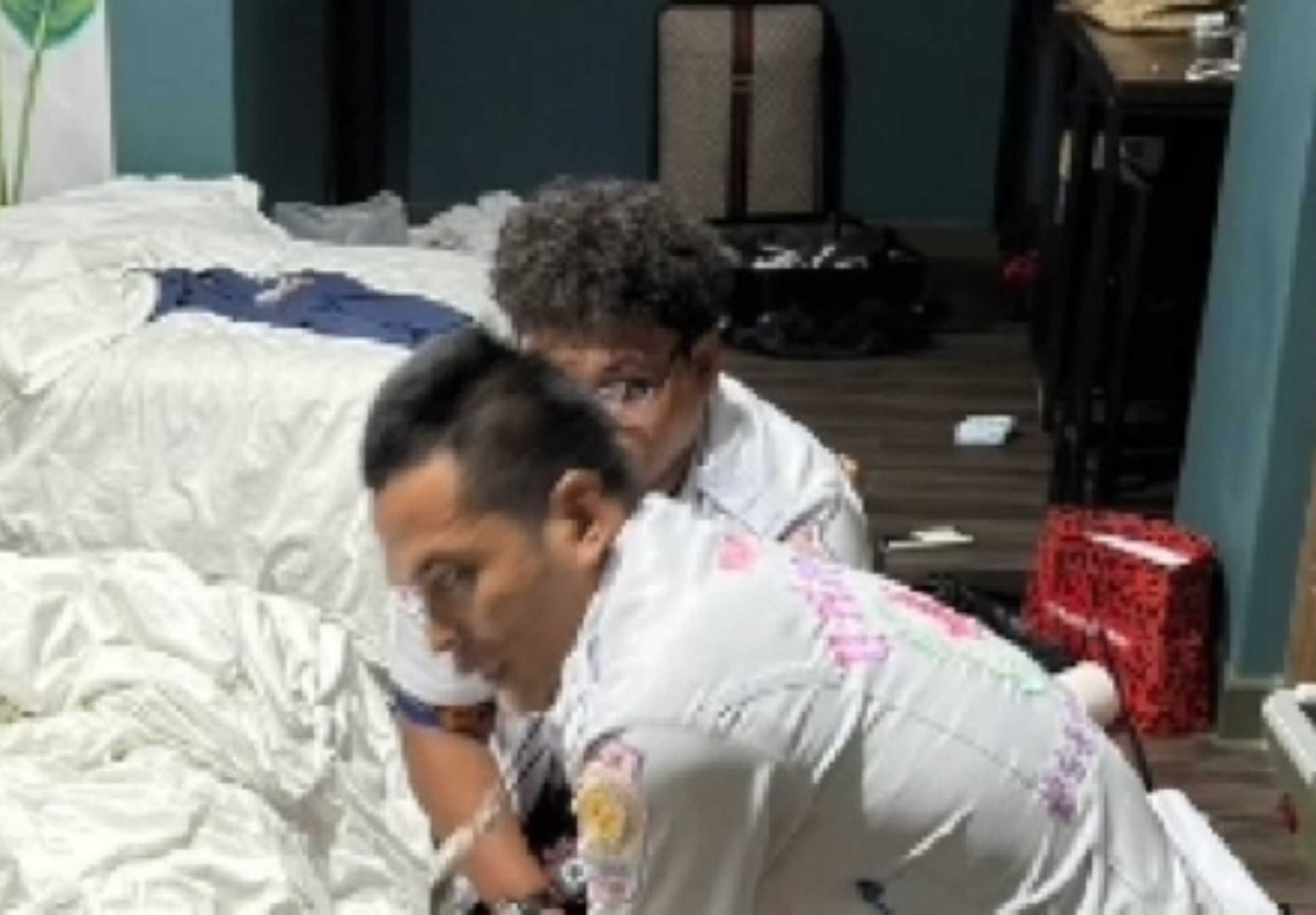
Thai police launched a major operation on Koh Phangan on May 13, raiding 32 companies suspected of using Thai nominees to illegally hold land on behalf of foreign investors. More than 300 officers took part in the coordinated crackdown, which targeted businesses linked to land ownership worth more than 150 million baht.

Get today's headlines by email

The operation was led by Pol General Samran Nualma, deputy national police chief, alongside Pol Lieutenant General Noppasilp Poolsawat, commissioner attached to the Office of the National Police Chief. Officers from specialist police units, immigration police, Provincial Police Region 8, Surat Thani police, Krabi police and Koh Phangan Police Station were deployed across 32 locations on the island.


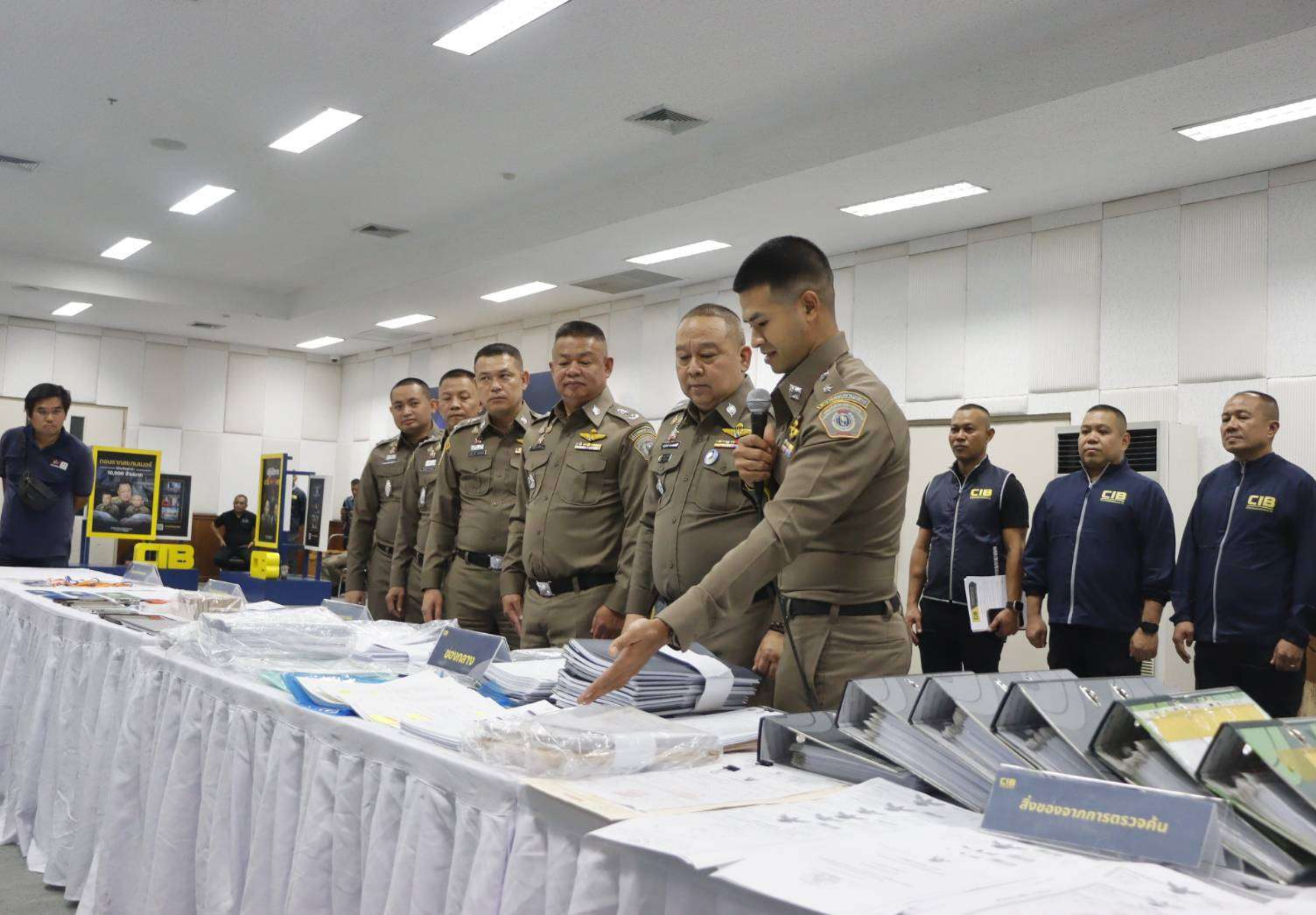
Authorities said the companies under investigation collectively hold 37 land title deeds. Officers seized corporate documents, shareholder records, company registration papers, land deeds, lease agreements, financial records, bank account details and evidence of international money transfers. Digital evidence and computer equipment were also confiscated during the searches.

Police are also pursuing four suspects linked to alleged illegal foreign business operations and nominee shareholding arrangements. The group includes one foreign national and three Thai nationals accused of helping foreign investors circumvent Thai ownership laws.

The raids targeted luxury villas, commercial premises and a law office suspected of coordinating nominee arrangements for foreign property ownership. One of the main sites searched was a luxury villa complex in Moo 7 of Koh Phangan subdistrict, consisting of around six villas owned by a company now under investigation.


Pictures courtesy of Daily News

The crackdown came on the same day as Prime Minister Anutin Charnvirakul’s inspection visit to Surat Thani and follows wider investigations by the Department of Special Investigation and the Department of Business Development. Authorities are reviewing more than 11,400 companies in Surat Thani province.

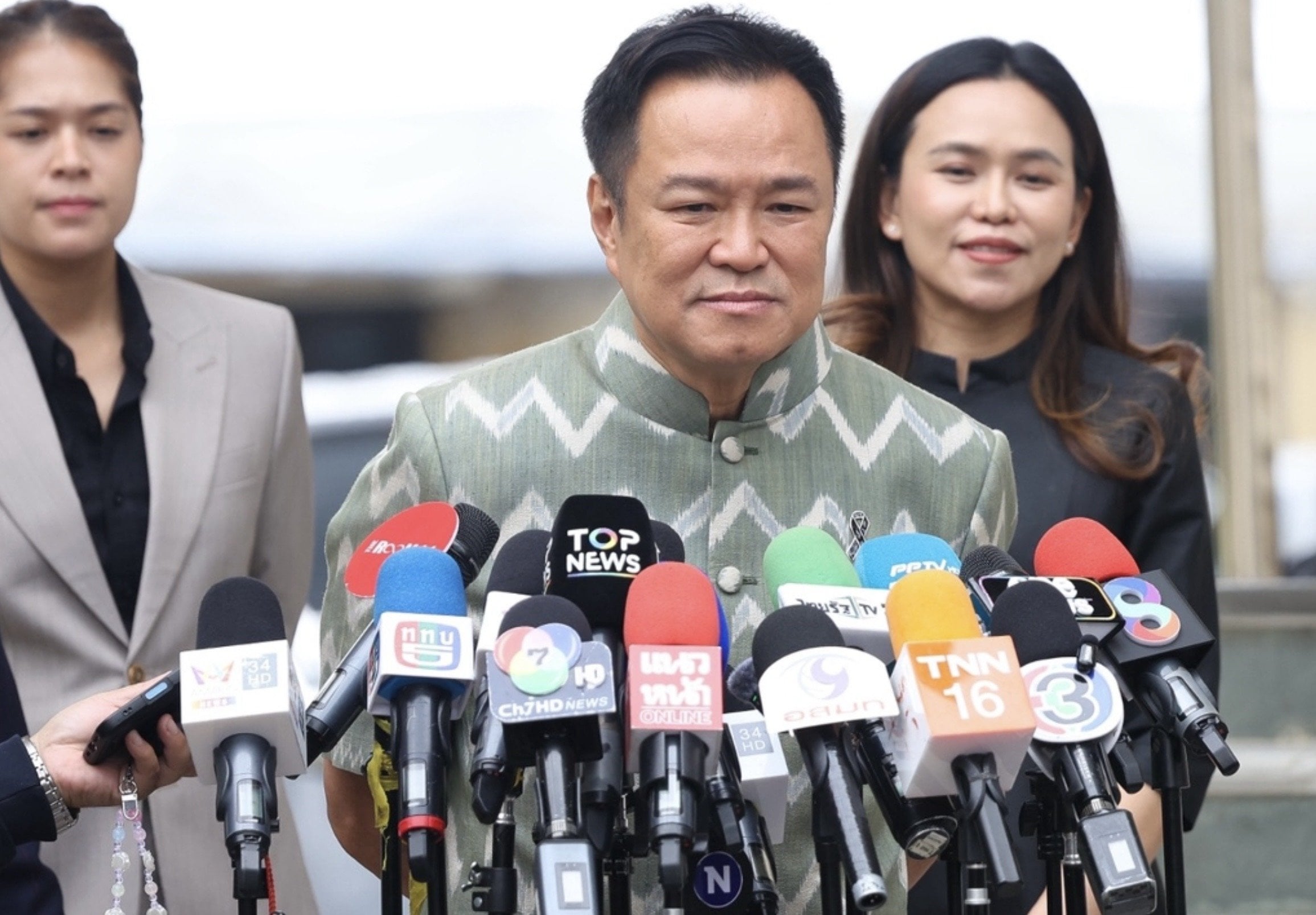
The Prime Minister later joined a raid an alleged illegal pool villa and ordered an investigation into the financial transactions after discovering that an Israeli national was owning it using a Thai national as a nominee.

Anutin Charnvirakul arrived at the residence in Moo 7, Ban Cholok Lam, Koh Phangan Subdistrict, Surat Thani Province, where a villa company is located. He gathered with accompanying ministers and government officials responsible for the Koh Phangan area for a discussion in front of a pool villa that had been reportedly illegally constructed.

Investigators are examining whether foreign investors used Thai nominees to control land, tourism businesses and hotels in violation of the Foreign Business Act. Officials are also checking whether some hotels operated without licences and whether foreign nationals were working illegally or in occupations reserved for Thai citizens.

According to Department of Business Development figures, 3,213 of Koh Phangan’s 4,761 registered companies involve foreign investment, representing around 67% of all registered firms on the island. Israeli investors account for 22% of those companies, followed by French investors at 13% and British investors at 11%.

Daily News reported that authorities said investigations will continue into financial transactions, company ownership structures and the legitimacy of shareholder investments. The government said legal foreign investment remains welcome but warned that nominee structures, illegal land ownership and unlicensed business operations will face stricter enforcement.


Related story

Anutin-targets-nominees-on-Koh-Phangan

Join the discussion?

Already a member?

Adapted by ASEAN Now Dailynews 14 May 2026
Georgealbert
Georgealbert
The Thai-Cambodian border conflict and subsequent border closures have caused an estimated THB180 billion loss in import-export trade over the past year, according to the Thailand-Cambodia Business Council. The disruption has also forced around 30% of border businesses to close and has affected Thai investments in Cambodia worth between US$4 billion and US$5 billion.

Get today's headlines by email

Voratat Tantimongkolsuk, chairman of the Thailand-Cambodia Business Council, told Thansettakij that the economic damage extended across trade, investment and border economies in both countries. He said both Thailand and Cambodia had publicly downplayed the impact because neither side wanted to appear weakened by the prolonged dispute.

The losses have been linked not only to the border restrictions but also to wider global economic pressures, including the Russia-Ukraine war, conflict in the Middle East, tariff disputes and concerns over scam gangs, all of which have affected trade and travel confidence.

Thai businesses operating in Cambodia have reportedly started downsizing, suspending operations or selling assets, particularly in the retail, garment manufacturing, hotel, restaurant and border service sectors. Businesses along the border have faced a severe shortage of customers as cross-border activity slowed.

A report by the Trade Policy and Strategy Office under Thailand’s Ministry of Commerce found that about 30% of border businesses had already closed because they could no longer absorb operating costs. Transport firms, trading companies, restaurants and hotels were among the hardest hit.

Many companies have also paused recruitment and reduced warehouse and salary expenses in an effort to remain operational for as long as possible. Voratat said the prolonged uncertainty was creating mounting pressure on operators and workers on both sides of the border.

The conflict has also created opportunities for competing regional exporters. Data from the first two months of this year showed goods from Vietnam, Malaysia and Singapore increasingly replacing Thai products in the Cambodian market despite higher transport costs.

According to Voratat, Singapore’s trade value with Cambodia rose by more than 200%, while Vietnam increased by more than 20% and Malaysia by about 30-40%. He said anti-Thai goods sentiment in Cambodia had further reduced demand for products from Thailand.

Voratat urged both governments to revive negotiations quickly and reduce conditions driving the dispute. He said unresolved issues could be given extended negotiation timeframes while agreements already within reach should be implemented immediately to restore confidence in trade and investment.

The Nation reported he also warned that rising public sentiment in both countries over perceived unfairness could increase political pressure and make compromise more difficult. Voratat said continued conflict would further harm businesses, workers and both economies unless talks resumed soon.

Join the discussion?

Already a member?

Adapted by ASEAN Now Nation 14 May 2026
Georgealbert
Georgealbert
A police sergeant in northeastern Thailand is set to face charges for allegedly detaining and abusing his girlfriend. Pol Col Sirichai Srichaipanya announced that charges, including detention, physical assault, and computer crimes, will be filed this week. The latter charge involves the distribution of explicit photos of the victim online.

Get today's headlines by email

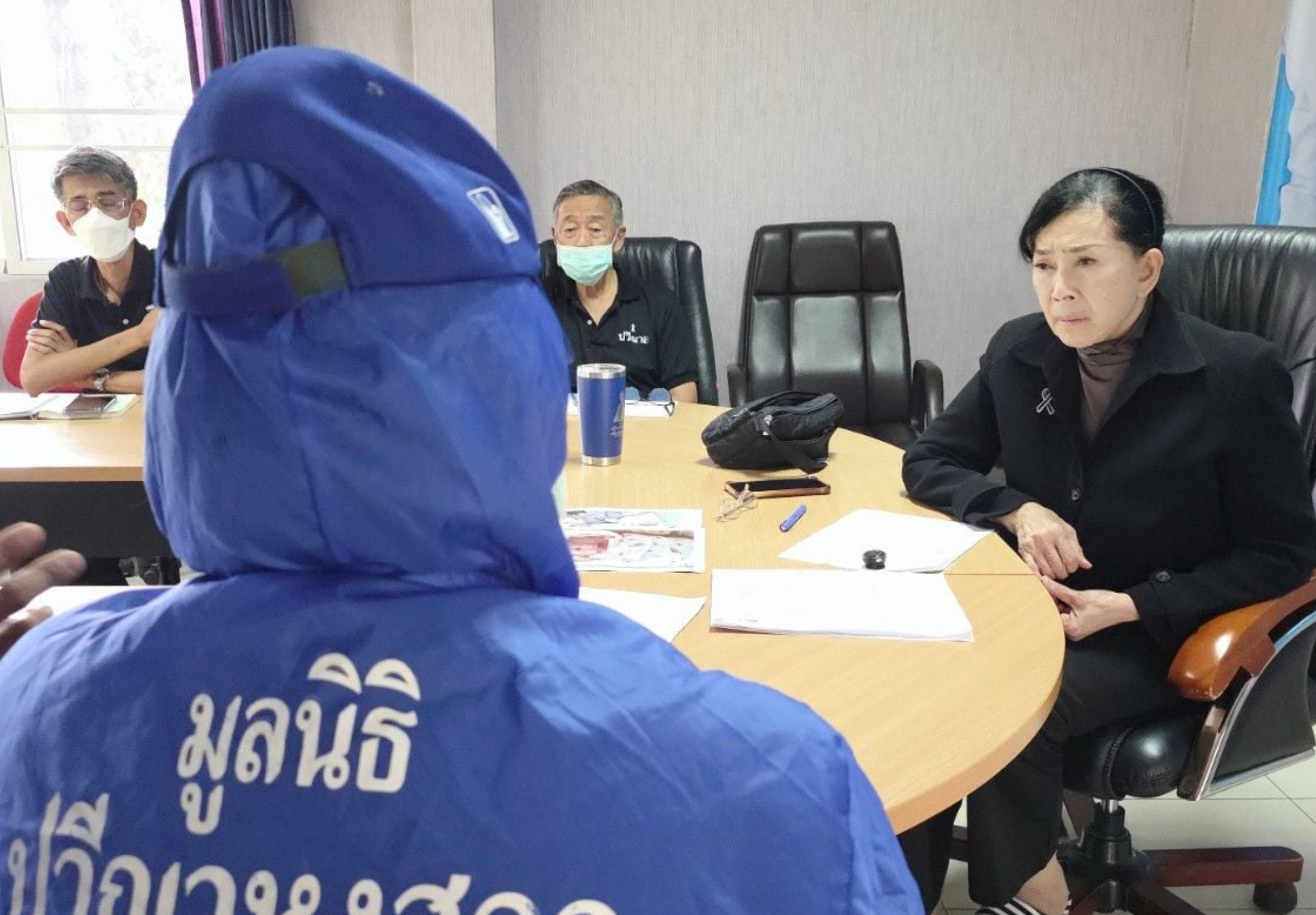
The allegations emerged from a complaint by a 28-year-old practical nurse who claims the sergeant held her for four days starting April 30. Seeking refuge, she reached out to the Pavena Foundation for Children and Women. The foundation's head, Pavena Hongsakula, revealed that the sergeant tested positive for drugs and the victim is currently in their care due to safety concerns.

Ms. Pavena suggested the sergeant should be transferred back to Bangkok, separating him from local authority influence. Authorities are taking the accusations seriously, and the case highlights ongoing challenges in addressing domestic violence and misconduct within law enforcement.

The charges are expected to proceed this week, with heightened attention from both the police force and social services. The outcome may influence policies on handling similar cases in the future, with potential calls for stricter oversight.

Join the discussion?

Already a member?

  Adapted by ASEAN Now · Bangkok Post · 13 May 2026
snoop1130
snoop1130
A Burmese girl, identified as Namwhan, has been taken under temporary protection after reports of abuse by her mother in Chachoengsao, Thailand. The situation surfaced when neighbors reached out to social media influencer, Chalida "Ton Or" Palamart, who visited Namwhan’s home with officials from the Chachoengsao Provincial Shelter for Children and Family on May 12.

Get today's headlines by email

At the visit, Ton Or observed Namwhan with a shaved head and visible injuries. Further examination revealed multiple bruises, with Namwhan reporting ongoing abuse at the hands of her mother. Despite having two older sisters, Namwhan claimed she was the sole target of violence, alleging her mother routinely beat her, shaved her head, and provided spoiled or insufficient food.

Namwhan described an incident where her mother attempted to cut her ears with scissors, showing investigators recent wounds she attributed to her mother. Her mother, however, denied serious abuse, suggesting the injuries resulted from food allergies and admitting only to physical discipline.

Though Namwhan expressed fear of returning home, she shared aspirations of supporting her family financially in hopes of receiving her mother’s affection. Currently, she is under temporary care at the Chachoengsao shelter. However, the shelter is authorized to keep her for only three months, compelling officials to explore permanent safety and support solutions beyond this period.

Join the discussion?

Already a member?

  Adapted by ASEAN Now · The Thaiger · 13 May 2026
snoop1130
snoop1130
A grilled squid vendor became the unexpected star of the Tha Muang Plant Festival in Kanchanaburi, Thailand, after a viral TikTok video drew crowds to his stall, selling out his stock before 8pm. Originally seeing sparse attendance, the vendor's video on May 11 showed a nearly deserted fairground and neighboring stalls closing despite the event still having two days left.

Get today's headlines by email

Having worked in markets for years, the vendor shared surprise at his situation, saying, “I’ve been selling at markets for years and I’ve never seen anything like this.” Though initially met with skepticism online, the post intrigued enough people to visit the festival, transforming a disappointing day into a successful one.

This unexpected influx underscored wider economic concerns discussed in the video’s comments, where users noted the saturation of festivals and financial constraints affecting consumer spending. Many highlighted how multiple events vie for the same audience amid economic pressures, leading to smaller crowds.

Looking forward, vendors and event organizers may need to consider adjusting strategies to adapt to changing consumer behaviors and crowded event calendars. This festival's experience might prompt festival organizers to innovate and find new ways to attract visitors through unique offerings or synchronized scheduling.

Join the discussion?

Already a member?

  Adapted by ASEAN Now · Bangkok Post · 13 May 2026
snoop1130
snoop1130
The Bangkok Metropolitan Administration (BMA) is addressing its debt management and operations at Chatuchak Weekend Market. The outstanding debt to the State Railway of Thailand amounts to 1.338 billion baht in unpaid land rental fees. This includes a court-ruled 672 million baht sum, with 605.7 million in principal rent and 66.4 million in interest up to June 2022.

Get today's headlines by email

The BMA is also liable for a 5 percent interest on the principal, adding up to 101.3 million baht from June 2022 to October 2025, along with monthly compensation payments of 14.1 million baht, totaling 564.7 million baht over three years and four months. Bangkok Governor Chadchart Sittipunt affirmed the administration's commitment to repaying debt upon agreement on accurate figures.

Governor Sittipunt clarified that while the BMA has budget reserves, the case remains under appeal. The appeal seeks adjustments related to interest accrued during the COVID-19 crisis. Furthermore, the BMA plans to transfer market management back to the State Railway of Thailand, attributing the decision to their limited market operation expertise.

A proposal for the market to serve as a “soft power gateway” to boost tourism is under consideration. Earlier this year, BMA officials worked on enhancing financial management by accelerating overdue payments from vendors and preparing for a potential handover or new operational agreement.

Join the discussion?

Already a member?

  Adapted by ASEAN Now · Khaosod · 13 May 2026
snoop1130
snoop1130
Thailand’s Civil Aviation Authority (CAAT) announced stricter regulations for drone operations effective May 17, 2026. Drone pilots will need approved training, electronic registration, and online permits for medium-risk flights. The updated rules aim to balance innovation with safety in the growing drone sector.

Get today's headlines by email

These regulations overhaul the Ministry of Transport’s 2015 rules, now requiring specific protocols for drones up to 25 kilograms involved in commercial activities such as cinematography and surveying. Pilots must conduct risk assessments and receive CAAT approval before missions. Training will cover aviation law and air traffic rules, essential for the rapidly growing commercial drone use.

Operators will need to register drones electronically and display identification numbers clearly on the aircraft. The online system will manage flight plans, requiring details like flight purpose, coordinates, and pilot information. Additional measures, such as risk management plans, may be required for approval.

The shift includes mandatory training and assessment, highlighting the commitment to airspace safety. Permit validity will increase to five years, with full digital submissions. Existing permit holders can operate until permits expire, but must adopt new rules for specific category flights.

The expansion of Thailand’s drone industry in logistics and media underscores the need for these regulations, aimed at safeguarding airspace while encouraging technological advancements.

Join the discussion?

Already a member?

  Adapted by ASEAN Now · The Nation · 13 May 2026
snoop1130
snoop1130
The Thai Cabinet has approved, in principle, an amendment to the Alien Business Act, which will exempt foreign investors from needing special permission to engage in eight service sectors in Thailand. This change aims to boost foreign investment by simplifying the process for foreigners in industries such as telecommunications, financial administration, and oil drilling. The move is expected to enhance Thailand's competitiveness and attract more international business activity.

Get today's headlines by email

This decision reflects a shift in policy, acknowledging that Thai businesses can now effectively compete against foreign counterparts. The exempted sectors also include domestic debt guarantee, space leasing for electronic equipment, and select brokerage and lending activities. Deputy government spokesperson Patdarasm Thongsaluaykorn noted that these changes signal confidence in the local business landscape's readiness for increased competition.

Experts believe that this legislative change could significantly improve Thailand's attractiveness to foreign investors. By removing bureaucratic barriers, the government aims to facilitate easier and more efficient market entry for international businesses. This could lead to increased foreign capital inflow, fostering economic growth and diversification.

Moving forward, the proposed amendment will likely undergo further review before implementation. Stakeholders from various industries may provide input to ensure that the amendments align with national economic goals. The government will monitor the effects of this policy change closely, adjusting as necessary to ensure balanced growth and competition.

Join the discussion?

Already a member?

  Adapted by ASEAN Now · Thai PBS · 13 May 2026
snoop1130
snoop1130
A video capturing a confrontation between a foreign man and a Thai man has gone viral, showing the foreigner slapping the Thai man before a street fight ensued. The clip, shared by the user “Mai Tong Pood,” documents the brief altercation which unfolded on the evening of May 12. The conflict was reportedly initiated when the foreigner began antagonizing the Thai man.

Get today's headlines by email

Kritsada, a 27-year-old rider who filmed the incident, relayed that the Thai man had parked his vehicle when the foreigner approached and allegedly "began causing trouble." Despite the absence of audible dialogue, Kritsada perceived an element of provocation from the foreigner's side. Initially, the Thai man attempted to defuse the situation by not retaliating.

The confrontation seemed to subside with both men parting ways, but the foreign man reportedly returned, further provoking the Thai man. This escalation eventually led to the physical altercation captured on video. Social media reacted with criticism toward the foreign man’s conduct, while some users commended the Thai man’s initial restraint.

Currently, details regarding the brawl's location or any legal proceedings remain undisclosed. The incident has sparked widespread debate online concerning appropriate behavior and respect for cultural differences.

AQNHg9YmRIOQGLzy2Q4tB73LcD6TYGMhO1ihqWRV6XcDbwSOigqrlxSBzXcQR9V86yNVaqHHIWPhnDeyS5nQoS0SHYbwd_zE58t41KP0kQ.mp4

Join the discussion?

Already a member?

  Adapted by ASEAN Now · The Thaiger · 13 May 2026
snoop1130
snoop1130
Siranudh “Psi” Scott, an environmentalist and heir of the Singha beer brand, released a voice recording detailing alleged sexual abuse by his brother, Sunit “Pi” Scott. This comes after Pi publicly denied the accusations. The recording, made public today, expands on claims Psi made earlier this week regarding abuse during their teenage years.

Get today's headlines by email

Psi, formerly a national park ranger and conservation activist, posted an emotional video on social media on May 9, revealing sexual assault by both a babysitter and allegedly, his older brother. He renounced his identity as an heir to the Singha beer family in the video, claiming family awareness of the incidents without action. Psi is also involved in a legal dispute with his biological mother over property rights, which compounds the family tensions.

In response, Pi released a video statement on May 12, denying the sexual abuse allegations. He admitted to frequent childhood arguments and teasing with his brother but firmly rejected the notion of sexual misconduct. Pi asserted continued family support for Psi, particularly in mental health matters, despite Psi severing communication with them. Additionally, Pi described the property dispute as arising from alleged property damage under Psi's care, with legal steps initiated by their mother.

In today's revelation, Psi shared a portion of a recorded conversation where he alleges Pi forced him into sexual acts during childhood. Pi, in the recording, admits ignorance of the wrongfulness at the time but claimed previous attempts at resolution. Nevertheless, Psi dismissed these explanations, expressing betrayal and trauma due to the incidents.

No further comments have been made by Pi since the release of the recording. His wife, actress Lapassalan “Mild” Jiravechsoontornkul, supported his statement by sharing land documents and announced plans for legal action against defamatory online commentary.

AQN0t8elNoCKUJ3UxY4eEjnTN8JA4vEvpZ_kLS86udnTuP4pm-GNHlubhGBmdftgD6TMjnXYg1yU8JGDs8sg9oystTe7iYwmHN91HxOTaw.mp4

AQOsj43Uq-ZjArUC-X90XCB7Vt0FM2ch3vID-SzURW7lmyvtUGBxH1QujlC9fe5xxYFdRZdBKU_FB20Ge8LmIMNvhXyOoWpfeJJrUL4ufA.mp4

AQPBi5jj6E3P9qOLwAogLQ1_iV07KS-vHlqAt-yjp4tg_pbQDTbVQGiZDg2TQ9WFmsJrFwNmnqZPqvMRvH_JV5yNo4evpt0SUzJAj1ZV3g.mp4

Join the discussion?

Already a member?

  Adapted by ASEAN Now · The Thaiger · 13 May 2026
snoop1130
snoop1130
A Royal Thai dress exhibition, under the patronage of Princess Sirivannavari Nariratana Rajakanya, has commenced at the Musée des Arts Décoratifs in Paris. Featuring over 200 items, the event highlights royal garments, Thai textiles, and contemporary designs, running from May 13, 2023, to November 1, 2026. This exhibition celebrates 340 years of Thai-French diplomatic relations and 170 years since formal ties were established in 1856.

Get today's headlines by email

The event is a collaborative effort among the Sustainable Arts and Crafts Institute of Thailand, the Queen Sirikit Museum of Textiles, the Royal Thai Embassy in Paris, and the Musée des Arts Décoratifs. Among the showcased items are royal garments, accessories, traditional craftwork, and contemporary pieces by Thai designers. Unique creations by French designer Pierre Balmain, in partnership with Lesage, also feature prominently.

Highlighting the evolution of royal Thai dress, the exhibition reflects clothing as a form of cultural representation on the global stage. It showcases garments worn by notable figures like Queen Sirikit and Princess Sirivannavari, and the eight styles of chud Thai phra rajaniyom, expressing Thailand's rich cultural heritage.

Khaosod reports that this exhibition supports Thailand's initiative to propose chud Thai phra rajaniyom for UNESCO’s Lists of Intangible Cultural Heritage in 2026. Additionally, Thailand’s Ministry of Culture has formally proposed the chud Thai for UNESCO consideration, with a review expected in 2026.

Join the discussion?

Already a member?

  Adapted by ASEAN Now · The Thaiger · 13 May 2026
snoop1130
snoop1130
An American man, Joseph Frances Chinnock, was detained in Chiang Mai on May 12 following a tip-off from the FBI. Wanted in the US on serious charges of assault and stalking, Chinnock, also known as Joseph Kelly, was deemed a significant threat by US authorities. The US Embassy revoked his passport, prompting Thai police to act swiftly after receiving FBI information.

Get today's headlines by email

Chinnock, 58, had entered Thailand using a Privilege Entry visa on March 23, 2026. Thai Immigration Police initiated action to revoke his visa upon discovering his entry status. Investigators tracked him to a condominium in the Suthep subdistrict of Chiang Mai, where he was arrested around 10 pm. He was detained and taken to Chiang Mai Immigration for further proceedings.

This arrest is part of broader efforts by Thailand's national police, led by chief Kittirat Phanphet, to clamp down on illegal foreign networks. The initiative targets transnational crime and aims to prevent Thailand from being a hub for illegal activities. The Immigration Police maintain databases on foreign nationals involved in such networks and coordinate with international agencies for intelligence sharing.

Chinnock will be handed over to Immigration Police investigators for legal action. The crackdown includes collaborating with Interpol, foreign police agencies, and encouraging public reporting of suspicious activities. Authorities urge anyone with relevant information to reach out through police hotlines and websites.

Join the discussion?

Already a member?

  Adapted by ASEAN Now · The Thaiger · 13 May 2026
snoop1130
snoop1130
A 30-year-old Indian tourist died after collapsing inside an entertainment venue on Pattaya Walking Street in Chon Buri during the early hours of 12 May 2026, prompting an emergency response from rescue workers and medical staff. Efforts to revive the man with CPR in front of shocked tourists and venue employees were unsuccessful, and he was pronounced dead at the scene. Police have launched an investigation and are awaiting post-mortem results to determine the exact cause of death.

Get today's headlines by email

At 3.30am, rescuers from the Sawang Boriboon Thammasathan Foundation in Pattaya were called to a venue on Walking Street, after reports that a foreign tourist had lost consciousness. Medical staff from Pattaya City Hospital were also dispatched to the scene.

Rescue workers found the man lying unconscious on the floor. He was wearing long jeans trousers and no shirt, and had a head injury. Special affairs officers from Pattaya City were performing CPR in an attempt to revive him while other tourists looked on, but he was later pronounced dead at the scene.

Witnesses told police the tourist had arrived at the venue with a group of friends and appeared to be behaving normally earlier in the evening. Before the incident, he reportedly sat resting at a table for a short period.

Friends later attempted to wake him to leave the venue, but he did not respond. Staff members were alerted and helped carry him downstairs to wait for emergency services before rescue workers began attempts to save his life. Police from Pattaya City Police Station inspected the scene and recorded evidence. Officers have not yet confirmed the cause of death.

Authorities said the body would be sent for a post-mortem examination to determine whether the man died from an underlying medical condition or from injuries caused by a fall and impact to the head. Investigators are continuing enquiries in line with legal procedures.

The incident caused alarm among tourists and staff in the busy nightlife district, which attracts large numbers of visitors each night. No further details about the victim’s identity were released. Officials are expected to await the results of the autopsy before confirming the exact circumstances surrounding the death. Police have not announced whether any additional witnesses will be questioned.


Picture courtesy of ที่นี่ พัทยา

Join the discussion?

Already a member?

Adapted by ASEAN Now ที่นี่ พัทยา 13 May 2026
Georgealbert
Georgealbert
A British tourist has warned travellers heading to Thailand not to pack vapes in their luggage after her partner was fined 40,000 Thai Baht, during a family holiday. Sara shared her experience on TikTok after she and her partner were stopped twice by Thai police within three days for using electronic cigarettes on a beach.

Get today's headlines by email

Thailand welcomed more than 1 million British visitors in 2025 for the first time since the Covid-19 pandemic, with many tourists drawn by the country’s warm climate, street food and beaches. However, Thai law bans all e-cigarettes and vaping products, including nicotine-free devices, and authorities can impose heavy penalties on those caught possessing or using them.

Sara said police approached the couple while they were vaping on sunbeds at the beach. She claimed officers confiscated the devices, they had brought with them for the holiday and ordered them to accompany police for questioning.

She said: “I’m in Thailand, and in the past three days, I’ve had two run-ins with the police. If you’re thinking about vaping in Thailand, just don’t do it. It’s not worth it. We didn’t realise how strict it was on vaping out here.”

According to Sara, her partner was taken to a police station while she remained outside with their three children. She alleged officers intended to hold him overnight before taking him to court the next morning, but he eventually paid a 40,000 Thai Baht fine instead.

Thailand has outlawed all e-cigarettes since 2014. The ban covers refillable pod kits, disposable vapes, e-liquids, heated tobacco products and accessories, with no exemption for tourists or personal use.

Authorities can impose fines of up to 30,000 Thai Baht and prison sentences of up to one year for possession or use. Selling or dealing in vaping products carries penalties of up to 600,000 Thai Baht and prison terms of up to three years.

Importing vaping products into Thailand can result in fines worth up to four times the value of the goods in addition to a 30,000 Thai Baht penalty. Offenders could also face prison sentences of up to 10 years.

The Daily Mirror reported that the warning comes as increasing numbers of British tourists prepare for summer holidays abroad. Thai authorities have repeatedly enforced vaping laws against both residents and visitors, with confiscation, fines and arrests possible even for first-time offenders.

ScreenRecording_05-12-2026 15-33-28_1.mp4

Join the discussion?

Already a member?

Adapted by ASEAN Now Mirror 13 May 2026
Georgealbert
Georgealbert
Five Myanmar nationals were arrested after police raided an optical shop in central Chiang Mai following an undercover investigation into alleged illegal employment.

Get today's headlines by email

Tourist Police in Chiang Mai, working with the Chiang Mai Provincial Employment Office, inspected the eyewear and vision-testing shop in the Huay Kaew area of Chiang Mai on May 12. Officers arrested five people, including the business owner and staff members, all of whom were Myanmar nationals.

The investigation began after officers entered the shop posing as customers seeking an eye examination. Staff allegedly refused service and advised them to visit another shop instead, claiming that “the doctor could not communicate in Thai”. Authorities described the behaviour as inappropriate given that the business was operating in Thailand.

Police said the shop had been promoting its services on Facebook, advertising eyeglass frames and lenses starting at 799 baht alongside full eye-testing services. Investigators found the business had been operating for more than two months before the raid took place.

Authorities charged the suspects with being foreign nationals working without permission or working beyond the scope of their legal entitlement. The suspect identified as the owner and managing director also faces an additional charge for employing foreign nationals who allegedly did not possess valid work permits.

The operation forms part of ongoing inspections by Thai authorities targeting businesses suspected of violating labour and employment laws, particularly in sectors serving tourists and the public. Officials have increased enforcement efforts in major tourist destinations, including Chiang Mai, amid concerns over unlicensed work and regulatory compliance.

The arrests could lead to further scrutiny of similar businesses operating in the province, especially those advertising professional services online. Authorities have not released additional details about the suspects or confirmed whether further inspections are planned in connection with the case.

The Daily News reported that all five suspects were taken into custody and transferred for further legal proceedings. Investigators are expected to continue examining the business operations and employment arrangements linked to the shop.

AQN69S66AMoJfKHjL81PcVJQMlpnEXFYRUjFX1Q6bP5GLvFCLKoZddUJNJxI0_ShZ9-UMruJaa35XWu5I9FguTsf6iugjNkPfyz_atrjPQ.mp4

Join the discussion?

Already a member?

Adapted by ASEAN Now Dailynews 13 May 2026
Georgealbert
Georgealbert
Thailand’s Narcotics Suppression Bureau (NSB) has joined forces with job placement agencies and South Korean authorities to crack down on drug trafficking networks operating among undocumented Thai workers. Officials announced the formation of a joint task force aimed at intercepting narcotics at the source, dismantling transnational criminal groups and restoring confidence in Thai workers travelling abroad.

Get today's headlines by email

The measures were outlined during a meeting on May 11, 2026, attended by Pol. Lt. Col. Suriya Singhakamol, Secretary-General of the Office of the Narcotics Control Board (ONCB), Mr. Somchai Morakotsriwan, Director-General of the Department of Employment, and Mr. Kanisorn Phapirannon, Director of the Narcotics Suppression Bureau. Representatives from South Korea, the EPS (HRD Korea) Centre in Thailand, the Thai Overseas Employment Administration Division and Suvarnabhumi Airport Immigration Checkpoint also attended.

Mr. Kanisorn said more than 100,000 Thai workers are currently in South Korea, including around 34,000 legal workers and between 150,000 and 160,000 undocumented workers. He reported that South Korean authorities seized more than 2 million methamphetamine pills and over 200 kilogrammes of crystal meth in 2024, with more than 70% allegedly smuggled through Thailand.

Officials also warned of a growing tactic involving undocumented workers using legal workers to open so-called “mock accounts” and “mock SIM cards” to conduct illegal financial transactions linked to narcotics trafficking. Authorities said these methods are increasingly being used by organised crime networks operating across borders.

Pol. Col. Suriya stated that the Department of Employment is considering introducing drug testing as part of health checks for E-9 visa applicants heading to South Korea. The ONCB will also deploy testing teams and officers to carry out random drug tests during pre-departure training sessions and at Suvarnabhumi Airport.

Authorities said screening procedures for passengers and baggage will be intensified on routes to South Korea, Japan and Israel. Any traveller found involved in wrongdoing on the day of departure will be immediately prevented from travelling and could face criminal prosecution.

The meeting also agreed to establish a trilateral task force involving the ONCB, Department of Employment and Immigration Bureau to analyse databases of visa overstayers. Officials will coordinate with Thai labour volunteer networks in South Korea to strengthen intelligence sharing and monitoring efforts.

Thaitabloid reported that the Thai government said all measures are intended to ensure workers travelling to South Korea are qualified and drug-free, while maintaining Thailand’s international image. Authorities stressed that the new measures will not affect eligibility requirements for E-9 visas, and the ONCB will immediately begin random inspections and educational workshops for workers.


Picture courtesy of Thaitabloid

Join the discussion?

Already a member?

Adapted by ASEAN Now Thaitabloid 13 May 2026
Georgealbert
Georgealbert
Thailand’s Cabinet has approved a request by the United States government to purchase a house and land in Chiang Mai for use as the new residence of the US Consul General. The decision, announced on May 12, 2026, highlights the long-standing diplomatic relationship between Thailand and the United States, which has continued for more than 190 years.

Get today's headlines by email

Deputy Government Spokesperson Lalida Pherdsriwattana said the Ministry of Foreign Affairs submitted the proposal for Cabinet consideration. The property is located in Chang Phueak subdistrict, Mueang district, Chiang Mai province, and covers 1 rai and 87.6 square wah. It includes a two-storey residential building with approximately 725 square metres of living space.

Officials confirmed the property has no mortgage or other legal obligations attached to it. Relevant agencies also determined that the location is suitable and secure for use as the residence of the US Consul General in Chiang Mai.

The approval followed existing Cabinet rules requiring foreign governments that already own more than 15 rai of land in Thailand to seek Cabinet approval before purchasing additional land. The United States government already exceeds that threshold, meaning the proposed purchase and transfer of ownership required specific authorisation.

Thailand and the United States previously exchanged diplomatic letters covering the acquisition of land and buildings for diplomatic or consular purposes. According to the government, this existing framework covers the latest purchase, meaning no new agreement was required. The buyer will also receive exemptions from taxes, duties and related fees under the terms of the earlier agreement.

Lalida said the United States remains an important partner for Thailand in security, trade, investment, economic cooperation and regional affairs. She added that the establishment of a new consul residence in Chiang Mai reflects the strategic importance of northern Thailand, particularly Chiang Mai and the upper northern region, in international cooperation.

She said the move was not only about securing accommodation for consular operations, but also represented a sign of confidence and close relations between the two countries. The new residence is expected to support consular work, public services and cooperation efforts across northern Thailand more effectively.

Amarin reported that the property transfer process is expected to proceed following Cabinet approval and completion of the legal ownership procedures between the two governments.

Join the discussion?

Already a member?

Adapted by ASEAN Now Amarin 13 May 2026
Georgealbert
Georgealbert
Thailand’s Department of Lands has stepped up efforts to crack down on illegal nominee landholding arrangements used by foreign nationals to acquire land through Thai citizens or company structures. Authorities warned that offenders could face imprisonment, fines and compulsory land sales under existing laws.

Get today's headlines by email

The tougher measures include stricter checks before and after land registration, along with closer cooperation between government agencies to monitor suspicious transactions. Officials said the campaign is intended to protect national interests, ensure fairness in land ownership and prevent attempts to evade Thai property laws.

Under Thai law, foreigners may own land only in limited circumstances. These include inheritance as a statutory heir, residential purchases made under investment conditions permitted by law, or ownership allowed under specific legislation such as Board of Investment promotion rules.

Authorities said some foreign nationals have attempted to bypass restrictions by using Thai nominees or establishing companies to disguise foreign ownership. In response, the Department of Lands has introduced more proactive screening measures before registration takes place.

Officials will examine the source of funds and relationships between parties in cases where a Thai national is suspected of holding land on behalf of a foreigner. In Thai-foreign marriages, the Thai spouse must confirm that the money used to purchase the land is genuinely personal property.

Where companies are suspected of acting as nominee structures, officials will investigate shareholding arrangements, actual business income, investment funding sources and the intended use of the land. The department said the aim is to prevent firms being used as fronts for illegal ownership.

The crackdown also extends beyond registration. Authorities will monitor land use patterns, advertising activity and public behaviour in target areas where foreigners may appear to present themselves as the true owners of land.

If complaints or suspicious information emerge, a fact-finding committee will be established immediately. The department also plans to monitor legal entities with foreign shareholders every three months to track changes in investment and landholding patterns.

The Department of Lands said the operation will rely on data-sharing with the Department of Business Development, the Anti-Money Laundering Office, the Department of Special Investigation and other agencies to improve detection and enforcement efforts.

If investigations find no wrongdoing, monitoring will continue. However, where nominee ownership or other illegal conduct is identified, legal proceedings will begin immediately and cases may also be referred to the Ministry of Interior for further consideration.

The Nation reported that officials stressed the measures are not intended to discourage foreign investment, but to ensure fair and transparent enforcement of Thai law while safeguarding the national interest.

Join the discussion?

Already a member?

Adapted by ASEAN Now Nation 13 May 2026
Georgealbert
Georgealbert
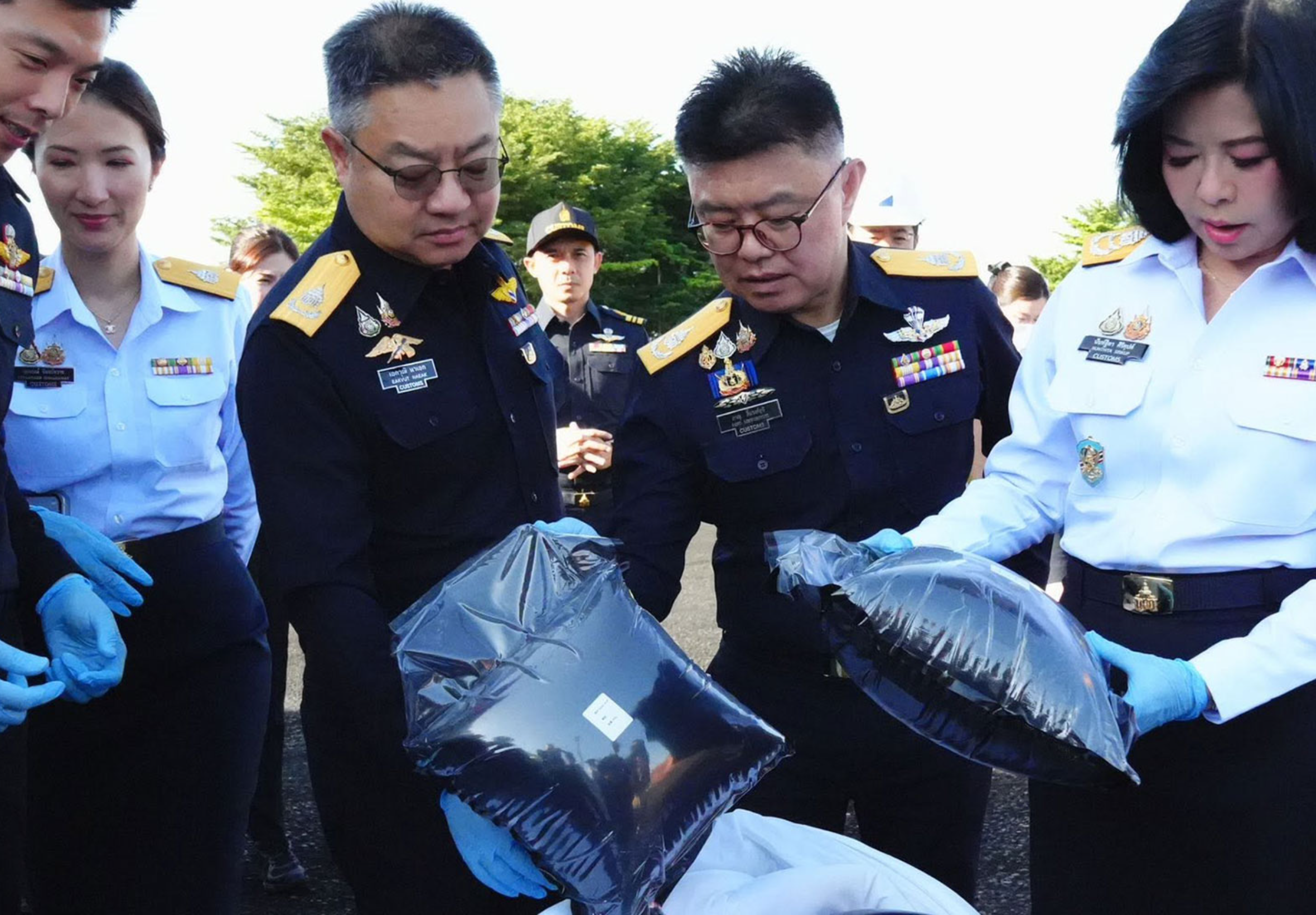
Omani Customs officials arrested a Thai woman after allegedly discovering almost 4.4 kilogrammes of cannabis concealed in her luggage at Muscat International Airport. According to Oman Customs, officers intercepted 4,384 grammes of marijuana during an inspection at the airport.

Get today's headlines by email

The drugs were reportedly hidden carefully inside the passenger’s suitcase, prompting customs officers to carry out a detailed search after suspicious items were detected during X-ray screening.

Footage released by Oman Customs on its official X account showed the suspect arriving at a customs checkpoint wearing a long pink dress and white hijab. She was carrying a handbag and black backpack while pulling a pink suitcase through the inspection area.

During the search, officers uncovered multiple packages of cannabis wrapped in a yellow courier plastic bag. The video also showed packets of seaweed snacks and laundry detergent packed inside the suitcase, although authorities did not confirm whether additional cannabis packages had been concealed within those items.


Picture and video courtesy of Oman Customs

Officials stated that a total of 12 cannabis packages weighing almost 4.4 kilogrammes were seized during the operation. Oman Customs described the concealment method as highly organised and said the seizure demonstrated the continued vigilance of customs authorities in preventing illegal drugs from entering the Sultanate of Oman.

The woman was identified only as a Thai national passenger. Authorities have not released her name, further personal details, or information about any formal charges filed against her.

Under Omani law, drug smuggling offences can carry severe penalties, although officials have not confirmed what legal action the woman may face following the arrest. Oman Customs also did not disclose where the passenger had travelled from before arriving in Muscat.

The released footage focused on the customs inspection process, showing officers examining the luggage after the suspicious contents were detected by scanning equipment. The seizure has since drawn attention online after the video was shared widely on social media platforms.

Investigations are expected to continue as Omani authorities examine the origin of the cannabis and whether any wider smuggling network may have been involved.

ScreenRecording_05-12-2026 18-39-48_1.mp4

Join the discussion?

Already a member?

Adapted by ASEAN Now Timesofoman 13 May 2026
Georgealbert
Georgealbert

Account

Navigation

Search

Search

Configure browser push notifications

Chrome (Android)
  1. Tap the lock icon next to the address bar.
  2. Tap Permissions → Notifications.
  3. Adjust your preference.
Chrome (Desktop)
  1. Click the padlock icon in the address bar.
  2. Select Site settings.
  3. Find Notifications and adjust your preference.