Skip to content
View in the app

A better way to browse. Learn more.

Thailand News and Discussion Forum | ASEANNOW

A full-screen app on your home screen with push notifications, badges and more.

To install this app on iOS and iPadOS
  1. Tap the Share icon in Safari
  2. Scroll the menu and tap Add to Home Screen.
  3. Tap Add in the top-right corner.
To install this app on Android
  1. Tap the 3-dot menu (⋮) in the top-right corner of the browser.
  2. Tap Add to Home screen or Install app.
  3. Confirm by tapping Install.

Thailand News

All the latest news stories from Thailand are written in English. Fresh news and stories from around the kingdom brought to you daily.
The Civil Court has ordered Kasikornbank (KBank) to pay 1 million baht in compensation after ruling that the bank failed to detect suspicious late-night transactions linked to a scam that cost Thai-British actress Charlotte Austin 4 million baht in 2024.

Get today's headlines by email

The judgment, delivered on Wednesday, relates to a lawsuit filed by Miss Charlotte Co Ltd, the company that manages the Phuket-born actress’s assets and financial interests. The court found that while the bank could not have identified the first transfer as suspicious, it should have recognised two consecutive transfers made after midnight as unusual and implemented stronger safeguards.

Charlotte Austin, then aged 25 and the fifth runner-up in Miss Grand Thailand 2022, became one of Thailand’s first high-profile victims of organised scam gangs. On 7 December 2024, she received a video call from a man claiming to be an official from the Department of Special Investigation, who falsely accused her of involvement in money laundering connected to the Stark Corporation scandal.

The scammer instructed her to transfer 4 million baht so authorities could verify her innocence. While being kept on a continuous video call, she completed three transfers through the KBank mobile banking application, including two after midnight.

In May last year, the Criminal Court sentenced four people involved in the scam to prison terms ranging from six to seven years.

Miss Charlotte Co Ltd sought 4 million baht in damages, arguing that KBank had breached its obligations under its deposit agreement by failing to identify clearly unusual, high-risk transactions or issue warnings that could have prevented the losses.

Kasikornbank argued that its fraud prevention and transaction monitoring systems met industry standards and that the transfers were processed according to its normal detection criteria.

The court ruled that the initial 2 million baht transfer, made at 5pm, appeared to be a normal transaction and could not reasonably have been identified as fraudulent. However, it found that the second and third transfers, totalling 2 million baht and made consecutively after midnight, should have triggered stronger monitoring and intervention by the bank.

The court also concluded that Charlotte Austin had been negligent by transferring money to the scammers, and ruled that responsibility for the losses should be shared equally between the parties. As a result, KBank was ordered to pay 1 million baht in compensation, together with annual interest of 5% from 8 December 2024, reimburse court fees proportionate to the successful claim, and pay 20,000 baht in legal costs.

Manager Online reported that Lawyer Nitithorn “Lawyer James” Kaewto said the ruling establishes an important precedent for businesses in the entertainment industry and members of the public seeking to hold financial institutions accountable for their handling of suspicious transactions, particularly those occurring late at night. The judgment is also consistent with the amended emergency decree introduced in April 2025, which requires responsibility for financial fraud losses to be shared according to each party’s level of negligence.

Join the discussion?


12 July 2026
Georgealbert
Georgealbert
The Office of the Narcotics Control Board (ONCB) has reiterated that cannabis is not freely available in Thailand, stressing that cannabis sales are now subject to stricter controls under the Ministry of Public Health’s Controlled Herbal Products (Cannabis) Notification B.E. 2568 (2025). The agency warned that cannabis flowers may only be sold to members of the public who hold a valid medical prescription issued by an authorised healthcare professional, while illegal exports remain subject to severe penalties.

Get today's headlines by email

ONCB Deputy Secretary-General and spokesperson Areepak Ngernbumrung said the Ministry of Public Health remains the primary regulator of cannabis, but the ONCB continues to monitor its use, issue public warnings and protect communities, particularly children and young people, from inappropriate cannabis use. The announcement follows tighter government efforts to strengthen oversight of cannabis products and prevent misuse.

Under the latest regulations, anyone wishing to study, research, export, sell or commercially process cannabis flowers must first obtain a licence under Section 46 of the Protection and Promotion of Thai Traditional Medicine Knowledge Act. Licensed operators must maintain records of product sources, intended use and stock levels, and report them to the registrar. Cannabis flowers may only be sold or exported if they originate from cultivation sites certified under Good Agricultural Practices (GAP) by the Department of Thai Traditional and Alternative Medicine.

Export licence holders must notify authorities before every commercial shipment. Licensed businesses may only sell cannabis flowers to other licensed operators, except when supplying members of the public who possess a medical prescription issued by an authorised practitioner, including doctors, Thai traditional medicine practitioners, folk healers, pharmacists or dentists. Prescriptions may cover treatment for a maximum of 30 days.

The notification also prohibits businesses from selling cannabis for smoking on their premises, except where administered as part of medical treatment by authorised practitioners. Sales through vending machines, online platforms or computer networks are banned, as is all advertising. Cannabis flowers may not be sold in temples or religious venues, registered dormitories, public parks, zoos or amusement parks.

Areepak warned that anyone illegally selling, processing or exporting cannabis flowers, including supplying people without a valid prescription, risks prosecution under Section 78 of the Protection and Promotion of Thai Traditional Medicine Knowledge Act B.E. 2542 (1999). Offenders face up to one year in prison, a fine of up to 20,000 baht, or both.

She also highlighted penalties for smuggling cannabis out of Thailand without customs clearance or attempting to evade inspection. Offenders face up to 10 years’ imprisonment, a fine of four times the value of the goods including duties, or both, with the cannabis confiscated. Since 17 June 2026, the Customs Department has also imposed an additional administrative penalty of 30,000 baht per kilogram of seized cannabis.

Amarin reported that the ONCB further reminded travellers that while Thailand permits cannabis use under specific medical and health regulations, many countries still classify cannabis as a serious narcotic. The agency urged travellers to comply with the laws of their destination countries and encouraged the public to report suspected illegal cannabis sales or drug activity through the ONCB’s 24-hour hotline on 1386, with all reports treated confidentially.


Picture courtesy of Amarin

Join the discussion?


12 July 2026
Georgealbert
Georgealbert
A UK inquest has concluded with an open verdict after finding it was not possible to determine how a 25-year-old British man died while staying at a hostel in Bangkok, following conflicting medical evidence from post-mortem examinations carried out in Thailand and the UK.

Get today's headlines by email

Liam White, from Maghull, Merseyside, was found dead on January 13 this year at Hostel 24 Backpackers 50 in Bang Chak, Bangkok. The joiner had been staying in a shared dormitory after booking into the hostel three days earlier. An inquest heard that he had been out the night before he was found dead.

The findings emerged during a hearing at Bootle Town Hall on Wednesday 8 July 2026, where assistant coroner Elizabeth Wheeler reviewed evidence from both countries. A record of the inquest showed that a post-mortem examination conducted in Thailand concluded Mr White died from natural causes, identifying cardiac failure associated with infective pneumonia as the cause of death.

However, a second post-mortem carried out in the UK reached a different conclusion, stating that the cause of death should be recorded as unascertained. The conflicting medical findings meant the coroner could not determine, on the balance of probabilities, how Mr White died.

In her written findings, Ms Wheeler noted several inconsistencies between the two examinations. She said the Thai post-mortem recorded cerebral oedema and a brain haemorrhage but did not explain why these findings were not included in the cause of death. She also noted that while the Thai examination described Mr White’s heart as enlarged, the UK pathologist found it to be within normal limits.

The inquest also heard that the UK post-mortem did not identify the lung infection reported by Thai pathologists. In addition, the Thai examination detected morphine and codeine in Mr White’s blood, although the concentrations were not recorded.

Ms Wheeler stated: “These drugs can be additive and cause respiratory depression - especially if there was a chest infection.”

She added: “Given the uncertainties and contradictions in the medical evidence, it is therefore not possible to say on the balance of probabilities what the medical cause of death is. It is therefore not possible to say how Mr White probably came by his death.”

The Mirror reported that the coroner therefore recorded an open conclusion. Mr White’s funeral had taken place at West Lancashire Crematorium in Burscough on January 31 following the repatriation of his body to the UK. A GoFundMe campaign established after his death raised GBP5,000 to help his family meet repatriation costs.

Join the discussion?


12 July 2026
Georgealbert
Georgealbert
Thailand’s Commerce Ministry is preparing to launch a nationwide programme encouraging participating restaurants and vendors to sell rice-and-side-dish meals and other ready-to-eat dishes for no more than 40 baht per plate, with government financial support to help offset ingredient costs. The proposal is intended to reduce living costs, particularly for salaried workers, while allowing restaurants to join the scheme voluntarily.

Get today's headlines by email

Announced on 11 July 2026, the initiative is tentatively named the Khao Kaeng Thai Chuay Thai (Thai Helps Thai Rice-and-Side-Dish Programme). Deputy Prime Minister and Commerce Minister Suphajee Suthumpun said the project would build on the existing Thai Help Thai Plus programme as part of broader government efforts to ease household expenses during a period of rising living costs.

Under the proposal, participating restaurants would offer selected ready-to-eat meals meeting agreed quality and portion standards for a maximum price of 40 baht per serving. A typical meal would consist of rice served with at least two side dishes.

To help businesses manage costs, the government plans to provide subsidies for cooking ingredients. Officials are considering support packages worth 3,000 baht, 5,000 baht or 10,000 baht for each participating restaurant.

The Commerce Ministry expects to begin the pilot with 100,000 restaurants drawn from a network of around 250,000 eateries already affiliated with the ministry or taking part in the Thai Help Thai Plus programme. The pilot is expected to run for at least three months and could begin immediately after receiving Cabinet approval.

The Department of Internal Trade is finalising the proposal before submitting it to the Cabinet during the third week of July. Suphajee stressed that participation would be entirely voluntary and that the government would not impose price controls on restaurants.

Instead, businesses choosing to join the programme would receive financial assistance in return for providing affordable meal options. Participating restaurants would also receive official signs to display outside their premises, making it easier for customers to identify outlets offering the subsidised 40-baht meals.

Khaosod reported that if the pilot proves successful, the Commerce Ministry plans to expand the programme by increasing the number of participating restaurants across the country. The results of the initial three-month trial will help determine whether the scheme becomes a longer-term measure to support consumers and food businesses.

Join the discussion?


12 July 2026
Georgealbert
Georgealbert
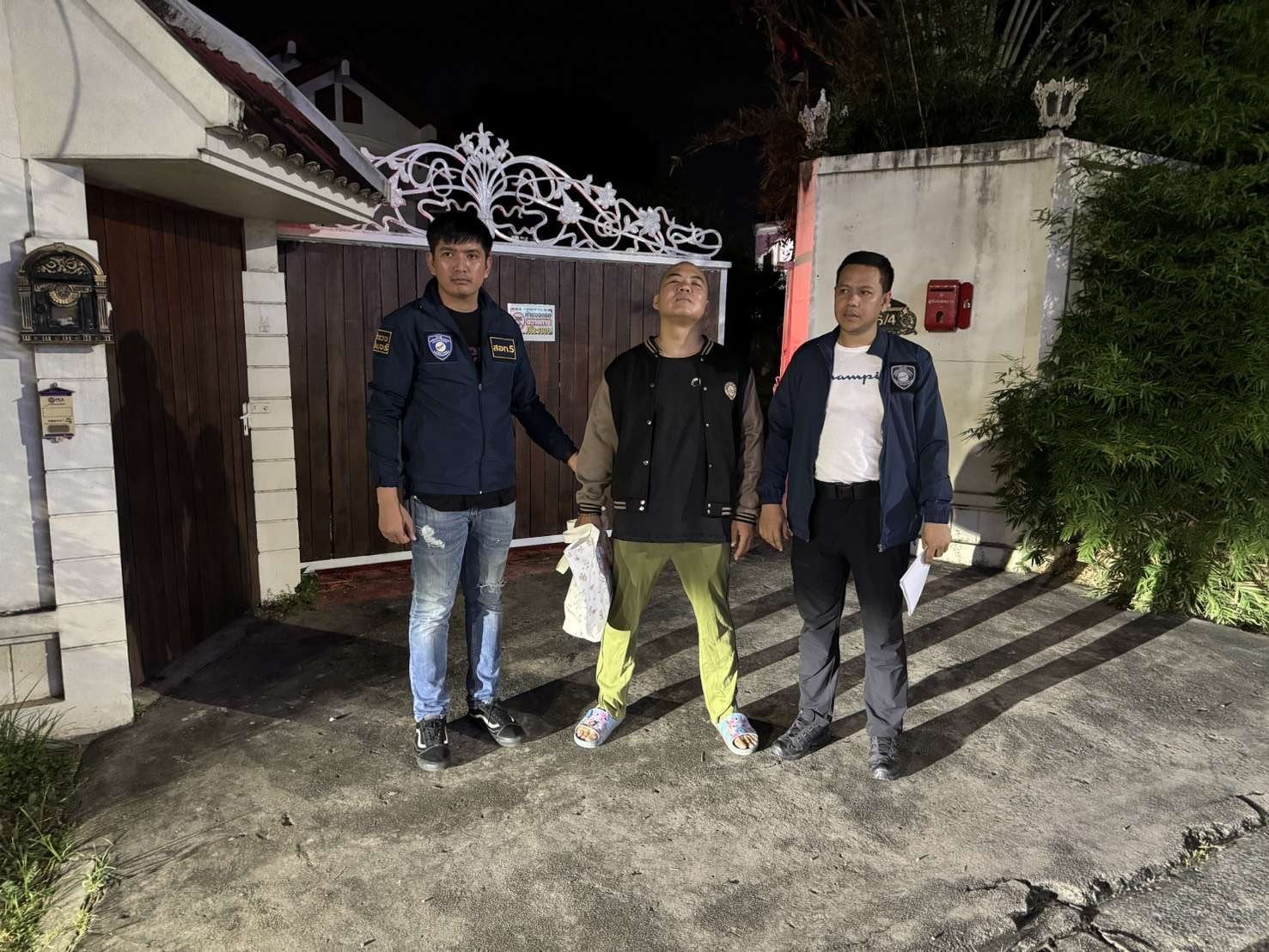
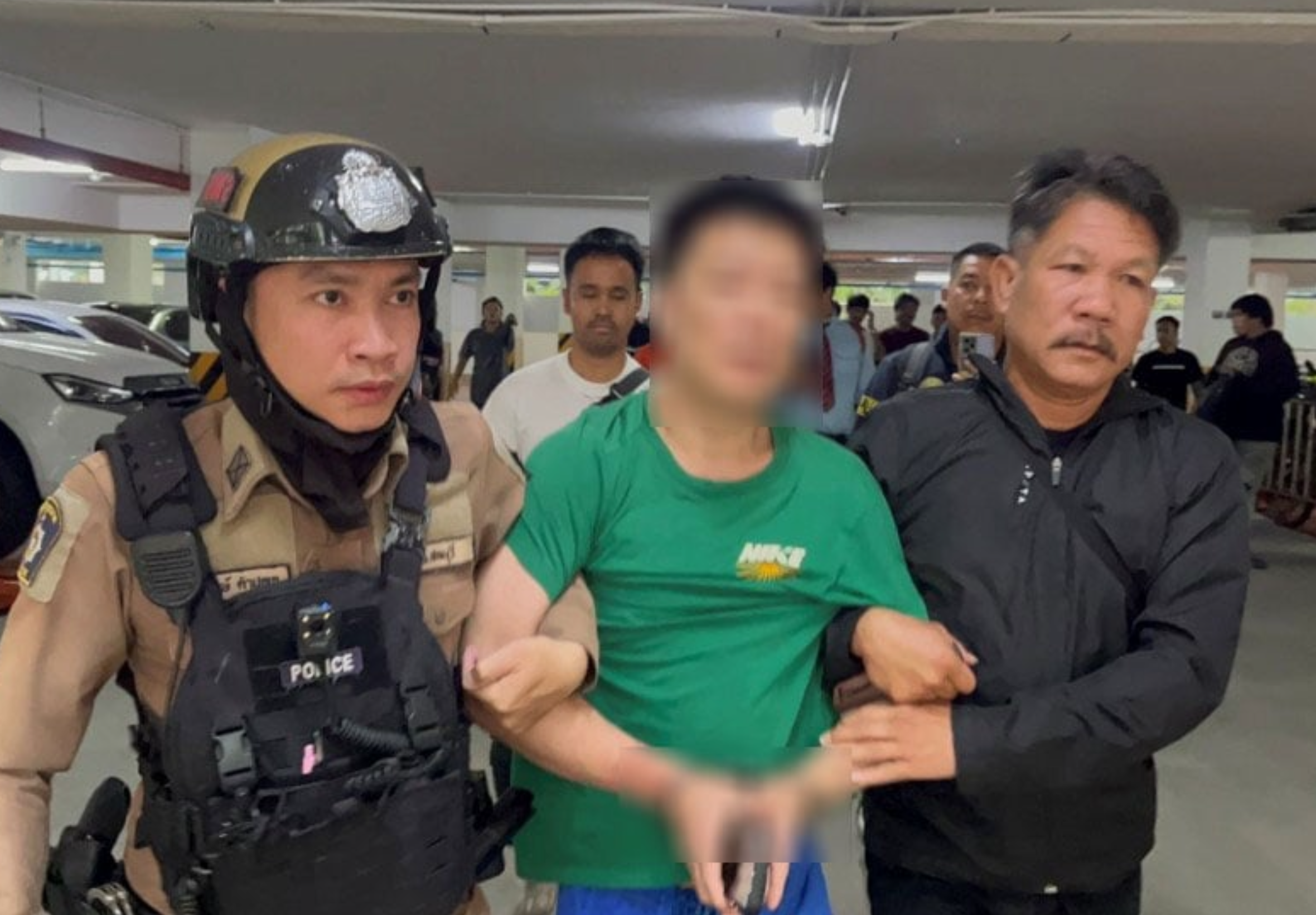
A 59-year-old Chinese national has been arrested by Bangkok police after allegedly stealing a South Korean tourist’s wallet at Wat Pho and using the victim’s credit cards to make unauthorised purchases.

Get today's headlines by email

Police from Phra Ratchawang Police Station arrested Mr. Xiangliang Kong, 59, under an arrest warrant on charges of theft at a public place of worship and unlawful use of another person’s electronic payment card in a manner likely to cause damage to the cardholder or the public.

The arrest was carried out under the direction of Pol. Col. Phawat Watthanasuphat, superintendent of Phra Ratchawang Police Station, with investigators led by Pol. Lt. Col. Paisan Dechkanya. Officers detained the suspect outside a hotel in Soi Inthamara 45, Bangkok.

Police said the case began on 5 July 2026 at about 1.30pm when a South Korean tourist reported that a wallet had been stolen while visiting Wat Phra Chetuphon Wimon Mangkhalaram, commonly known as Wat Pho. The victim told officers the suspect later used the stolen credit cards and attempted to make further purchases at various shops, causing financial losses.

Investigators reviewed CCTV footage from the temple area and identified the suspect’s movements. The evidence was submitted to investigators, who obtained an arrest warrant before officers tracked the suspect to the hotel.

According to police, when officers first confronted the suspect and presented the warrant, he denied being the person shown in the CCTV footage. After investigators showed him the surveillance images, he reportedly insisted the individual in the footage was “older” than he was, but police proceeded with the arrest.

Officers later searched the suspect’s hotel room and seized 21 items as evidence. These included the clothing allegedly worn during the offence and a black Tommy Hilfiger backpack, plus a Samsung A16 and Samsung Galaxy Z Fold 5 mobile phones, a black Montblanc wallet, a brown Delvaux wallet, and cash in several currencies.

The cash recovered included 29,860 baht, three Malaysian 100-ringgit notes, three Vietnamese 2,000-dong notes, two Vietnamese 1,000-dong notes, one Japanese 2,000-yen note, two Australian 50-dollar notes, two Indian 20-rupee notes, and one South Korean 1,000-won note.

Khaosod reported that the suspect and all seized items were handed over to investigators at Phra Ratchawang Police Station for further legal proceedings. Police said the case will now continue through the criminal justice process.


Picture courtesy of Thaitabloid

Join the discussion?


12 July 2026
Georgealbert
Georgealbert
Hobart’s Museum of Old and New Art (MONA) has announced plans to establish an “unconventional and unique” version of its renowned museum in Bangkok, marking its first major international expansion. The project will be developed on the banks of the Chao Phraya River in partnership with Thai real estate company Asset World Corp (AWC), which is majority-owned by billionaire Charoen Sirivadhanabhakdi. The two organisations signed a memorandum of understanding in Bangkok to begin the collaboration.
City& Local Guides

Get today's headlines by email

Bangkok already hosts major contemporary art venues, including the Bangkok Art Biennale, and the new museum aims to build on the city’s growing reputation as a regional cultural hub. Leigh Carmichael, chief executive and creative director of MONA subsidiary DarkLab, said the project would bring the creative spirit of the Hobart museum into a new setting while respecting the local cultural landscape.

“It will be unconventional and unique, and will present work by leading international artists while also creating opportunities for meaningful dialogue with Thai artists, audiences and cultural traditions,” Mr Carmichael said.

MONA was founded by entrepreneur David Walsh and opened in 2011 in bushland overlooking Tasmania’s River Derwent. The museum has gained international recognition for its provocative exhibitions, including its well-known wall of vulvas installation, and is also the creative force behind Hobart’s annual Dark Mofo festival, which features the city’s nude winter solstice swim.

According to Mr Walsh, the partnership follows years of studying how museums operate and offers an opportunity to apply those lessons in one of the world’s leading tourism destinations. It is understood that AWC and MONA first connected during a Tasmanian government trade and investment mission in 2025.

Tasmanian Premier Jeremy Rockliff welcomed the agreement, describing it as a defining moment for Tasmania’s cultural and economic future. Speaking in Bangkok, he said the project would generate economic and cultural opportunities for Tasmania while strengthening ties with Thailand.

“MONA has transformed Tasmania, attracting visitors from around the world and helping establish the State as a globally recognised creative destination,” Mr Rockliff said. He added that the Bangkok project places Tasmania at the forefront of the global cultural landscape and praised David Walsh, Leigh Carmichael and the MONA team for their work.
City& Local Guides

The Daily Mall reported that the announcement comes shortly after MONA completed another major development in Hobart. In June, the museum opened a new library housing David Walsh’s personal collection following more than four years of construction. The extension, which cost more than $100 million, includes an R-rated section and original handwritten David Bowie lyrics, and required the excavation of rubble equivalent to eight Olympic swimming pools.

Join the discussion?


12 July 2026
Georgealbert
Georgealbert
Palaeontologists in Thailand have identified a new species of plant-eating dinosaur from fossils discovered in Kalasin Province in the country’s north-east. The dinosaur, named Uragasaurus kalasinensis, is believed to have lived around 150 million years ago during the Late Jurassic period and measured up to 20 metres in length.

Get today's headlines by email

The discovery marks the first confirmed member of the Mamenchisauridae family of sauropod dinosaurs found in Thailand. These long-necked herbivores are best known from fossil discoveries in China and are recognised for their exceptionally long necks, which likely enabled them to feed on vegetation at different heights.

The fossil that led to the identification of the new species was a dorsal vertebra, a bone from the middle or upper back, recovered from the Phu Noi fossil site. A CT scan revealed distinctive features, including a Y-shaped arrangement of supporting bones known as laminae and a unique air-cavity structure that set the specimen apart from all previously known dinosaurs.

Dr Apirat Nilphanaphan of Mahasarakham University, the study’s lead author, said the specimen formed part of a large fossil collection from a site first identified in 2008 after a local resident found fragments resembling serpent scales. Further surveys uncovered dinosaur teeth, bones and numerous other fossils, with more than 90% of material excavated from Phu Noi consisting of dinosaur remains.

Dr Nilphanaphan said that the fossil’s unique characteristics confirmed it represented a previously unknown species. He said the air-cavity structure was “unlike any other dinosaur in the world… That’s what sets it apart”.

The researcher also described his reaction to the discovery, saying he smashed his keyboard after realising the team had identified a new species. He added that he felt both “exhilarated and relieved” after confirming the findings.

The research was published in the journal Nature earlier this week. The discovery further expands Thailand’s growing record of significant dinosaur finds and highlights the scientific importance of the Phu Noi fossil site.

Komchadluek reported that Scientists are expected to continue studying fossils from the site to learn more about the region’s prehistoric ecosystems. The announcement follows another major discovery in May, when researchers identified the long-necked herbivore nagatitan from remains found in Thailand. Measuring 27 metres (88ft) in length and weighing about 27 tonnes, it is the largest dinosaur ever discovered in South-East Asia.

Related story

Thai-palaeontologists-uncover-massive-dinosaur-species-in-Chaiyaphum


Join the discussion?


12 July 2026
Georgealbert
Georgealbert
Thai authorities have held Hong Kong activist Zhang Xin Yan just hours before she was due to fly to Canada under a refugee resettlement arrangement. The 55-year-old Chinese national is being held at the Immigration Detention Centre in Suan Phlu, Bangkok, according to Sunai Phasuk, senior adviser at Human Rights Watch Thailand.

Get today's headlines by email

Zhang is among several Hong Kong democracy campaigners living in exile who are wanted by Hong Kong authorities on national security charges. Her detention has raised concerns that she could face deportation despite holding refugee status recognised by the United Nations High Commissioner for Refugees (UNHCR).

Zhang moved to Thailand in 2014 after fleeing persecution linked to her participation in Falun Gong, a spiritual movement banned in China. After the Chinese Embassy in Thailand confiscated and revoked her passport during an attempted renewal, she was left without valid travel documents and was granted UNHCR refugee status in 2016.

She is one of 19 overseas-based activists named in arrest warrants issued by Hong Kong police in July 2025 on allegations of subversion under the Beijing-imposed National Security Law. Rewards ranging from HK$200,000 to HK$1 million have been offered for their capture.

Thai immigration police arrested Zhang on 7 May 2026 on charges of overstaying her visa and working without permission. She was placed in immigration detention while authorities prepared deportation proceedings, although the type of visa she previously held has not been made public.

At the time, Sunai warned that any forced return to China could expose Zhang to serious risk and would potentially violate international law as well as Thailand’s law on the prevention of torture and enforced disappearance. If deported, she could become the first person charged under Hong Kong’s National Security Law to be returned and imprisoned.

Following her detention, Zhang contacted Canada-based independent journalist Sheng Xue, who helped organise efforts to secure her resettlement. Yuan Gongyi, founder of the Hong Kong exile parliament, also arranged legal assistance for her in Thailand.

According to Sheng, the Canadian embassy in Thailand completed an interview, medical examination and biometric data collection before booking Zhang on a flight from Bangkok to Vancouver on 8 July. Sheng later alleged on X that Thai authorities halted the departure under pressure from the Chinese Communist Party, writing that Zhang feared she could be forcibly repatriated in the coming days and face “extremely brutal persecution” if returned.

The Bangkokpost reported that Thai authorities have not publicly commented on the allegations or confirmed whether Zhang will be deported. Her immediate future remains uncertain as she continues to be held in immigration detention.


Picture courtesy of Bangkok Post

Related story

Authorities-detain-Chinese-activist-Zhang-Xin-Yan-in-Bangkok

Join the discussion?


11 July 2026
Georgealbert
Georgealbert
CP Group has requested termination of the high-speed rail contract linking three airports, citing its inability to obtain investment promotion approval from the Board of Investment (BOI) and issue the notice to proceed (NTP) for construction. The request has been submitted to the State Railway of Thailand (SRT), with the matter expected to be considered by the Eastern Economic Corridor Policy Committee by August 2026.

Get today's headlines by email

A meeting of the SRT board on July 9, 2026, reviewed options for resolving issues surrounding the three-airport high-speed rail project. The public-private partnership involves the SRT and Asia Era One Co Ltd, with CP Group as the major shareholder.

Negotiations to amend the joint investment contract began in 2021 after the Cabinet approved the principle of contract changes on October 19, 2021, to reduce the impact of the Covid-19 pandemic. Discussions continued through several governments, but no agreement was reached.

SRT governor Anan Phonimdaeng said after the board meeting that CP had formally sent a letter requesting termination of the joint investment contract. The company cited its inability to apply for and receive a BOI investment promotion certificate, along with its inability to issue the NTP required for construction to begin.

The next step will be for the SRT to submit the matter to the Eastern Economic Corridor Policy Committee for review by August 2026. The Eastern Economic Corridor Office (EECO) has scheduled a meeting of the joint investment contract management committee for July 15, 2026, to discuss the proposed mutual termination between EECO, the SRT and CP.

Anan said a key issue following any contract termination would be negotiations over management of the Airport Rail Link, as its operation is connected to the wider agreement. If the main contract ends, the private operator’s right to manage train services would also end.

The current train-operation contract is scheduled to expire on September 30. The SRT is preparing contingency plans to ensure passengers are not affected and may need to negotiate with the private operator on a temporary management arrangement, although legal details remain under review.

The Nation reported that the SRT is also examining Asia Era One Co Ltd’s investment claims and whether compensation would be required if the contract is terminated. Initial reviews indicate that expenses and revenue, including interest, would need to be offset before a final figure can be determined.

Join the discussion?


11 July 2026
Georgealbert
Georgealbert
Police in Udon Thani have arrested a 27-year-old French-Thai woman accused of running a prostitution ring that exploited underage girls, including a 13-year-old, after a sting operation on 10 July 2026. The suspect allegedly used an X account to advertise modelling services while secretly selling sexual encounters, taking commissions of 200-500 baht per booking. Victims reported being forced to work while ill or menstruating, and subjected to physical assault if they refused.

Get today's headlines by email

The case emerged when three victims—aged 18, 17, and 13—approached the Anti-Human Trafficking Centre at Udon Thani Provincial Police with complaints. The 18-year-old, a vocational college student, said she met the suspect through their shared landlady in March 2026 and was initially recruited under the pretence of entertainment industry work. She admitted to having previously worked independently but claimed the suspect began coercing her and the 13-year-old after they moved into her circle.

The 13-year-old victim told police she had run away from home seeking restaurant work and was recruited through the older victim. She stated the suspect posted her photographs on X offering services at 1,500 baht per booking, taking a 200-300 baht commission. She alleged she was forced to see clients even when feverish and during her menstrual period, with the suspect instructing her to use tampons. A video shown to police allegedly depicts the suspect and four to five others assaulting the girl for refusing to accept a booking.

The 17-year-old victim, a student working part-time, said she was pressured into accepting just two or three bookings but was charged a 500 baht "waste of time" fee when she declined assignments. All three victims said they fled to another dormitory but continued receiving threatening messages, prompting them to seek police protection.

Police conducted a sting operation by contacting the suspect via X and selecting a 15-year-old girl at a price of 2,000 baht. Officers paid the girl and waited in an apartment bathroom before emerging to question her. When the suspect arrived to collect her 500 baht commission, police arrested her and charged her with human trafficking, procurement for prostitution of minors under 15 and between 15 and 18, profiting from others' prostitution, and removing minors from their parents.

The suspect reportedly confessed without remorse, claiming she had five girls aged 13-23 under her management and that taking commissions was standard practice. She admitted to hitting the 13-year-old twice on the head but claimed others joined in, justifying the assault by saying the girl "lacked manners". She expressed public remorse and offered herself as a cautionary example, stating: "It is true you get money, but it is not worth it."

Daily News reported that police have brought all five identified victims for interviews with a multi-disciplinary team to screen them as trafficking victims. Authorities are coordinating with parents and families to provide further support and assistance. Breakingnews alerts


Picture courtesy of Daily News

Join the discussion?


11 July 2026
Georgealbert
Georgealbert
Authorities in Kanchanaburi have ordered an immediate halt to construction of a Chinese-backed ore processing plant after discovering that building work had begun without a construction permit. The suspension was announced on 9 July 2026 following mounting public concern over the project’s potential environmental impact and its proximity to an important irrigation canal.

Get today's headlines by email

The decision follows protests by more than 1,000 residents of Nong Khao Subdistrict in Tha Muang District, who oppose the development over fears that wastewater and chemicals used in ore processing could leak into the nearby canal. Residents say the waterway supplies local tap water systems, the Provincial Waterworks Authority’s Phanom Thuan facility, and agricultural communities across Kanchanaburi and neighbouring Suphan Buri province.

Udon Pheng-aram, mayor of Nong Ya Dok Khao Municipality, said the company had applied to establish the factory and had completed the legally required public consultation process. However, he said the municipality had approved only land preparation work and had not granted permission for construction of the ore processing plant itself.

“The construction of buildings without approval is considered unauthorized,” the mayor said.

As a result, the municipality has ordered all construction activity at the site to stop with immediate effect. Officials confirmed that no construction permit for the ore processing plant has been signed or issued.

The proposed development has attracted widespread opposition from local communities, with residents warning that any chemical spill or leakage could contaminate water supplies and affect both households and farming areas across several districts.

Udon said any future application for a construction permit would require careful consideration because of the site’s proximity to the canal, which serves as a key source of water for the surrounding region. He reiterated that only land preparation had been authorised and that no approval had been given for the construction of processing buildings.

Khaosod reported that the suspension means work on the project cannot continue unless the company secures the necessary approvals through the proper legal process. Authorities are expected to review any future permit application while taking into account environmental issues, regulatory requirements and concerns raised by local communities.

Join the discussion?


11 July 2026
Georgealbert
Georgealbert
Thai authorities have arrested a suspected drug trafficking coordinator linked to a transnational heroin network involving flight attendant Mina, who was caught carrying heroin hidden in elephant-pattern tote bags in Australia on 25 June.

Get today's headlines by email

On 9 July, officers from the Narcotics Suppression Bureau, supported by Metropolitan Police investigators and Phayao provincial police, arrested 41-year-old Ekkawit, known as Pheng, in Chiang Kham district, Phayao province. Investigators identified him as the operator of a Line account using the avatar name Rin Rin, which they believe was used to coordinate parts of the trafficking network.

During questioning, Ekkawit admitted he worked as a seasonal farmer but said he was paid to help coordinate operations and conceal heroin inside elephant-pattern bags to avoid detection. He told investigators he received around 100,000 baht for each shipment.

Police said Ekkawit used Line to instruct Uthai, a hired courier who was previously arrested, to collect drug packages in Phayao province. Uthai travelled by bus and rented accommodation near a bus terminal using cash while waiting to receive the package.

After receiving the bag, Uthai travelled by bus to Ayutthaya province. Investigators said he then hired a black sedan to deliver the drug-filled bag to Mina beneath a condominium in Bangkok’s Bang Na district, while another bag was delivered to Soi Suea Yai Uthit.

Financial investigations found transfers totalling more than 1 million baht into the bank account of Uthai’s wife. The transfers were made in two transactions worth 200,000 baht and 800,000 baht.

Authorities said the investigation has helped identify the structure of the wider trafficking operation. Investigators identified four main parts of the network, including Ekkawit’s role in directing couriers in Thailand, arranging concealment methods and handling payments.

A Facebook account named Rose Rose was identified as allegedly contacting Mina directly to recruit her to carry the package to Australia. Authorities also identified a Thai woman known as Dear as the intended recipient in Australia.

Investigators believe a major financier based in Laos controlled the operation and owned the heroin, directing shipments into Thailand while remaining outside the country. The Office of the Narcotics Control Board and the Department of Special Investigation are gathering evidence to seek arrest warrants for suspected masterminds based in Laos.

Thai authorities are also working with Australian police to exchange information and support efforts to dismantle the network. The Department of Special Investigation has previously sought arrest warrants for four people, including three Lao nationals and one Thai national, linked to the movement of heroin from Laos into Thailand through Loei province.

The Standard reported that Ekkawit has been transferred from Phayao to the Narcotics Suppression Bureau headquarters for further questioning as investigators continue expanding the case. Authorities are continuing to trace financial routes and identify other people involved in the network.

Related stories

Myanmar-heroin-linked-to-Thai-airways-hostesss-arrest

Man-arrested-in-Phitsanulok-over-Australian-heroin-case

Thai-flight-attendant-held-over-heroin-at-Melbourne-airport

Join the discussion?


11 July 2026
Georgealbert
Georgealbert
Customs officials and police arrested a Thai woman and a Filipino national at Phuket International Airport on 9 July 2026 after they were caught attempting to smuggle more than 32 kilograms of cannabis flower out of Thailand. The operation took place at the international departures terminal in Mai Khao Subdistrict, Thalang District, as part of ongoing efforts to prevent the illegal export of cannabis through the country’s airports.

Get today's headlines by email

The first arrest was made at about 11:00 when customs officers inspected a black Pierre Cardin suitcase belonging to 18-year-old Philippine national Levannah Chelsea Guzman. Officers discovered 14 vacuum-sealed packages containing cannabis flower with a combined weight of 14.5 kilograms, including packaging.

Police said Guzman admitted ownership of both the suitcase and its contents. She was charged with attempting to export goods without completing customs procedures, along with offences under Thailand’s Narcotics Code, the Traditional Thai Medicine Wisdom Protection and Promotion Act, the Ministry of Public Health’s Controlled Herbs (Cannabis) Notification and other related laws.

At around 13:00, officers carried out a second inspection involving a green SWISH NAVY suitcase belonging to Thai national Penpitcha Phutsiang. The search uncovered 16 vacuum-sealed packages containing cannabis flower weighing 17.6 kilograms, including packaging.

According to police, Phutsiang also admitted ownership of the suitcase and the seized cannabis. Following the arrests, both women were handed over to investigators at Sakhu Police Station for further legal proceedings.

The operation was conducted jointly by customs officers at Phuket Airport and officers from Sakhu Police. Authorities said the arrests form part of intensified enforcement measures aimed at preventing cannabis from being illegally exported through Thailand’s international airports.

Officials said customs officers are continuing to strengthen baggage inspections and enforcement activities as part of wider efforts to detect and intercept attempts to smuggle cannabis overseas. The latest arrests underline the continued focus on outbound passenger screening following previous attempts to export cannabis through Thai airports.

Khaosod reported that the investigation will now continue under the relevant customs and narcotics laws, with both suspects facing legal proceedings.


Picture courtesy of Khaosod

Join the discussion?


11 July 2026
Georgealbert
Georgealbert
Indonesia’s President Prabowo Subianto hosted former Thai prime minister Thaksin Shinawatra and members of his family at his private residence in South Jakarta, where they discussed regional and global developments. The meeting brought together three members of the Shinawatra family who have each served as Thailand’s prime minister.

Get today's headlines by email

Thaksin was accompanied by his daughter, former prime minister Paetongtarn Shinawatra, and his sister, former prime minister Yingluck Shinawatra. According to Cabinet Secretary Teddy Indra Wijaya, the discussions took place in a warm and cordial atmosphere and reflected the longstanding friendship between the two sides.

During the informal meeting, Prabowo and Thaksin exchanged views on strategic global developments and regional dynamics. Teddy said such discussions help strengthen Indonesia’s ties with prominent figures while expanding cooperation and enhancing the country’s standing on the global stage.

The meeting follows growing ties between Prabowo and the Shinawatra family in recent years. In March, Prabowo appointed Thaksin to the advisory board of Indonesia’s state investment fund, Danantara. Indonesian officials said at the time that the inclusion of prominent international advisers was intended to boost investor confidence.

Thaksin served as Thailand’s prime minister from 2001 until he was removed in a military coup in 2006. Although he no longer holds a formal government position, he remains one of Thailand’s most influential political figures.

Paetongtarn Shinawatra served as Thailand’s prime minister from 2024 to 2025 before being removed from office by the Constitutional Court. Yingluck Shinawatra served as prime minister from 2011 until she was removed by a court ruling in 2014, shortly before another military coup.

The gathering highlights Prabowo’s continued engagement with influential political figures from across the region. While no specific agreements or joint initiatives were announced, Indonesian officials presented the meeting as part of broader efforts to strengthen international relationships and promote cooperation.

The discussions also underline the enduring political influence of the Shinawatra family despite changes in Thailand’s leadership. The informal nature of the meeting suggests it was intended to maintain dialogue on regional and international issues rather than produce formal policy outcomes.

Khaosod reported that future interactions between Indonesia and prominent Thai political figures are likely to remain closely watched, particularly as Jakarta continues to build international partnerships through both official and informal diplomatic engagement.


Picture courtesy of Khaosod

Join the discussion?


11 July 2026
Georgealbert
Georgealbert
Three former crew members of the Thai cargo ship Mayuree Naree have filed a lawsuit against the vessel operator, Precious Shipping Co., over alleged labour rights violations and unfair dismissal following a deadly attack in the Strait of Hormuz.

Get today's headlines by email

The lawsuit was filed on Friday, 10 July 2026, at the Central Labour Court in Bangkok by Panithi Tumkaew, Noppadon Wongsuvan and Surades Manpuen. They are also suing two affiliated companies and the ship’s captain.

The Mayuree Naree was struck by a projectile north of Oman on 11 March, killing three crew members. The remaining 20 crew members were rescued and returned to Thailand about a week later.

The former sailors’ lawyer, Kunpat Singhathong, said the lawsuit alleges the defendants put the crew at risk by allowing the vessel to sail through the Strait of Hormuz despite security threats.

Kunpat said the three men were dismissed before completing their nine-month employment contracts after the attack left the vessel unable to operate. He said they received compensation equal to two months’ salary, which he described as inadequate because the men have since been diagnosed with post-traumatic stress disorder.

Panithi, who had worked for Precious Shipping for more than a decade, said his wife encouraged him to seek medical treatment after noticing changes in his behaviour. He said loud noises cause him to become startled, he cannot currently work, and he needs medication.

The three former crew members are seeking compensation of more than one million baht each. Precious Shipping did not respond to requests for comment.

The company previously issued a statement on 3 July after the remains of the three crew members killed in the attack were repatriated to Thailand. It expressed condolences to the victims’ families and said it remained committed to providing assistance, care and support.

The Strait of Hormuz has become a major concern for seafarers following the Iran conflict, which has disrupted a key shipping route handling about one fifth of global crude oil and liquefied natural gas trade.

International Maritime Organization Secretary-General Arsenio Dominguez said seafarers and their families continue to bear the human cost of the conflict.

The Daily Mall reported that the case will now proceed through the Central Labour Court, while concerns continue over the safety and welfare of Asian seafarers working in conflict-affected areas.


Picture courtesy of Daily Mall

Join the discussion?


11 July 2026
Georgealbert
Georgealbert
A South African man has been arrested at Suvarnabhumi Airport after Thai customs officers seized 17.53 kilogrammes of heroin concealed inside food and supplement packaging during a transit journey to Madagascar. The drugs, with an estimated value of 7.3 million baht, were discovered as part of intensified efforts to prevent Thailand being used as a transit hub for international drug trafficking.

Get today's headlines by email

Customs Department Director-General Phanthong Loykulnan said the operation followed a government policy led by Prime Minister and Interior Minister Anutin Charnvirakul and Deputy Prime Minister and Finance Minister Dr Ekniti Nitithanprapas, who have made drug prevention and suppression a national priority. The policy includes stricter enforcement measures to stop transnational trafficking networks from using Thailand as a transit country.

As part of the enhanced strategy, the Customs Department has strengthened inspections of passengers and baggage at airports, border checkpoints and postal facilities across the country.

On 9 July 2026, officers from the Customs Investigation and Suppression Division, working with the Airport Interdiction Task Force (AITF), identified a high-risk passenger through intelligence analysis. The traveller had arrived from Kuala Lumpur International Airport in Malaysia, transited through Suvarnabhumi Airport, and was due to continue to Addis Ababa in Ethiopia before reaching Ivato International Airport in Madagascar.


The operation was divided into two teams. One team examined the passenger’s checked baggage at the Transfer Baggage Terminal after X-ray images revealed suspicious contents, while a second team located the passenger and escorted him, together with his luggage, for a detailed inspection before boarding his onward flight.

Officers found heroin hidden inside packets of coffee, green tea and several brands of dietary supplements. Chemical testing using ONCB051 Marquis Reagent produced a purple colour, confirming the substance was Category 1 heroin. Authorities seized a total of 17.53 kilogrammes, including packaging.

The suspect was taken into custody and handed to investigators for legal proceedings. Authorities said the alleged offence involved importing a Category 1 narcotic into Thailand, in violation of the Customs Act B.E. 2560 and the Narcotics Code. Investigators are also expanding their inquiry to identify other members of the trafficking network in Thailand and overseas.

AEC10News reported that Phanthong said the arrest demonstrated the effectiveness of the Customs Department’s risk analysis and close cooperation between agencies in disrupting international drug trafficking. He added that the department remained committed to preventing Thailand from being used as a transit route and to protecting society from the threat of illegal drugs.


Pictures courtesy of AEC10News

Join the discussion?


11 July 2026
Georgealbert
Georgealbert
Proposed amendments to Thailand’s Hotel Act and Immigration Act have drawn criticism from members of parliament, despite passing their first reading in parliament. The changes are intended to reduce duplicate reporting requirements for foreign visitors staying temporarily in the country, but critics argue they fail to close existing loopholes because illegal accommodation providers would remain outside the system.

Get today's headlines by email

The amendments, proposed by the cabinet and a Bhumjaithai Party MP, seek to simplify the notification process for those responsible for reporting foreign guests. Under the draft legislation, the responsibility would rest primarily with the householder, property owner or hotel manager, who must notify authorities within 24 hours through electronic channels. Foreign visitors would no longer be required to submit duplicate notifications themselves, except in cases considered necessary for national security or public safety.

Opposition parties argued during the parliamentary debate that the definitions of the three groups responsible for reporting remain unclear. They said the proposals do not cover all types of accommodation available in Thailand, particularly unregistered properties, leaving significant gaps in enforcement.

Official records show that of Thailand’s 20,000 legally registered accommodation providers, only 50-60% have submitted information on foreign guests to the Immigration Bureau. Opposition MPs and some members of the governing coalition have therefore urged the government to speed up amendments to the Hotel Act, with several draft proposals already prepared to expand the law to cover a broader range of property types.

Thienprasit Chaiyapatranun, president of the Thai Hotels Association, said the version debated in parliament would apply only to licensed hotels, leaving illegal accommodation providers beyond regulatory scrutiny. He noted that licensed hotels are already required to report foreign guest details to the Immigration Bureau, while many other accommodation types are not subject to the same obligation.

Mr Thienprasit said this makes it more difficult for authorities to trace the whereabouts of foreign nationals staying in non-hotel properties. He added that while the proposed amendments would reduce administrative duplication for businesses and support law enforcement, the government’s wider objective of improving oversight and security would only be achieved by bringing illegal accommodation providers into the reporting system.

Bangkokpost reported that lawmakers also questioned the proposed definitions of a householder and the owner of a dwelling. They noted that many property owners now rely on management companies or intermediary booking platforms to handle guest reservations, arguing the revised legislation should clearly identify which party is legally responsible for reporting guest registrations to the Immigration Bureau.

Join the discussion?


11 July 2026
Georgealbert
Georgealbert
A 16-year-old musician from Phuket has taken a major step towards her ambition of becoming an international artist after receiving four yeses from the judges during her audition on America’s Got Talent (AGT) in the United States.

Get today's headlines by email

Rattikarn “Praew” Amloy, who performs under the stage name Nene Royal, impressed the judging panel with a performance of Zombie by The Cranberries, combining vocals with guitar. During her audition, she said she had travelled to the competition with her father and described the AGT stage as the biggest audience she had ever performed before. She also revealed that she had taught herself to play the guitar from the age of seven.

Nene has built her reputation as a street performer in Phuket, regularly appearing with her band, Ozone, at Naka Night Market. The group performs rock music for both Thai and international visitors, with overseas tourists inspiring them to cover songs by internationally recognised rock bands.

According to Phuket Times, the band’s performances attracted a loyal following among foreign visitors, with some tourists reportedly travelling to the market specifically to watch Nene perform live. Before her AGT appearance, however, she was less well known among audiences throughout the rest of Thailand.


Picture courtesy of Amarin

Nene has already received recognition for her musical talent. In 2023, she finished as first runner-up in the 14th Overdrive Guitar Contest and later became a featured artist for Enya Music. Following news of her AGT success, Thai social media users praised her vocal ability, guitar skills and stage confidence.

Speaking after her audition aired, Nene thanked supporters across Thailand for their encouragement.

“I would like to thank all the Thai people who have always supported and cheered me on. I never thought that so many Thai people would show interest in me and give me so much encouragement after appearing on AGT.

“People shared and liked my video. Thank you so much. Thank you to everyone in Thailand, thank you for your support.

“My dream is to become a world-class artist, to tour, and to write songs for everyone to listen to. Thank you for following and supporting me. Thank you all so much.”

Amarin reported that the Facebook page Poetry of B*tch also highlighted the support Nene has received from her family, reporting that her father built a rehearsal room at their home in Phuket for her and her bandmates.

Her father said became emotional watching his daughter perform on one of the world’s biggest talent show stages and said years of supporting her had been worthwhile. He encouraged both Thai and international audiences to continue supporting her as she progresses to the next round of the competition.


Join the discussion?


11 July 2026
Georgealbert
Georgealbert
Thailand’s Department of Special Investigation (DSI), together with the Ministry of Justice and multiple government agencies, announced on 10 July the results of coordinated raids at five locations on Koh Samui and Koh Phangan, as part of an investigation into suspected nominee companies allegedly used by foreign nationals to own land and operate restricted businesses. Investigators said they uncovered luxury villa developments, land holdings and corporate structures worth billions of baht linked to the probe.

Get today's headlines by email

Justice Minister Pol Lt Gen Rutthaphol Naowarat and DSI Director-General Pol Maj Yutthana Praedam announced the results at Koh Samui Tourist Police Station in Surat Thani. The operation followed information supplied by the Department of Business Development, which referred 34 companies for investigation over suspected breaches of the Foreign Business Act 1999.

The first target was a Chinese-owned luxury villa development in Bo Phut, already registered as DSI Special Case No. 93/2026. The project covers more than 14,000 square metres and was found to include 15 land plots totalling 97 rai, 3 ngan and 88.4 square wah, with an estimated land value of 1.567 billion baht.

Investigators said the development, valued at around 1.6 billion baht, may ultimately be worth several billion baht, while company assets exceed 1.692 billion baht and bank transactions total more than 1.987 billion baht, mainly from overseas transfers. Six related companies hold combined assets of more than 2.324 billion baht.


Investigators also searched a law office linked to Special Case No. 94/2026. The office is suspected of helping establish nominee structures for foreign investors and is connected to more than 150 registered companies. DSI said 101 of those companies own property and other assets valued at around 795 million baht, while the office itself owns five land plots in Bo Phut worth more than 100 million baht and has assets exceeding 300 million baht. Officers seized land deeds, contracts, financial records and company documents during the search.

The remaining searches targeted businesses linked to Israeli nationals. These included a wellness and yoga retreat on Koh Phangan with assets exceeding 100 million baht, where authorities are checking whether the required health and hotel licences were obtained.

Another target was a hotel company on Koh Samui with registered capital of 45 million baht, land holdings of 2 rai and 2 ngan, and assets exceeding 2 billion baht.

A fifth company involved in construction and accommodation rental has assets of more than 330 million baht and is linked to several related companies sharing the same registered address.

Authorities said evidence recovered includes shareholder records, land ownership documents, property sale agreements, construction contracts, financial transactions and information on additional property developments near Samui International Airport. Investigators are examining whether ownership structures were concealed through multiple corporate entities and whether Thai shareholders genuinely financed their investments.

Daily News reported that Justice Minister Rutthaphol stressed the operation targets those using corporate structures to evade Thai law rather than legitimate foreign investors who comply with legal requirements. He said DSI will pursue all individuals and companies found to have violated the law and expand the investigation to all connected parties in order to protect fair competition, land resources and Thailand’s economic security.


Pictures courtesy of Daily News

Join the discussion?


11 July 2026
Georgealbert
Georgealbert
A People’s Party (PP) MP has accused the government of failing to properly regulate cannabis following its decriminalisation, arguing that widespread illegal exports expose major weaknesses in Thailand’s oversight system.

Get today's headlines by email

Speaking during a House session on 9 July, PP Bangkok MP Bhuntin Noumjerm criticised Prime Minister Anutin Charnvirakul, who, as public health minister, led the 2022 policy to decriminalise cannabis and reclassify it as an economic crop. He said Thailand still lacks comprehensive legislation governing the cultivation, sale, use and advertising of cannabis, leaving significant regulatory gaps.

Bhuntin cited more than 3,000 illegal cannabis export cases involving over 30,000kg seized during the past nine months. He argued these figures reflected a policy failure rather than isolated criminal activity by smugglers.

The opposition MP questioned how the prime minister would account to parliament for what he described as failures arising from a policy he had championed. He also asked whether authorities could trace seized cannabis to its source, identify those profiting from the trade, or operate a central database linking farms, retailers, inventories, transport and export checkpoints.

Bhuntin said that without accurate information on how much cannabis is being cultivated, held in stock, consumed domestically and exported, the government could not claim the situation was under control. He stressed that he was not accusing the prime minister, any political party or any individual of involvement in cannabis smuggling.

Instead, he said lawmakers had a responsibility to question why a policy originally promoted to support an economic crop and herbal medicine had become a growing burden for customs officials and law enforcement agencies.

Responding on behalf of the government, Justice Minister Pol Lt Gen Rutthapon Naowarat said the Office of the Narcotics Control Board had stepped up enforcement efforts. He said authorities had seized 5,119kg of cannabis during the past three months as part of the intensified crackdown.

The Bangkokpost reported that the parliamentary debate highlights continuing political scrutiny of Thailand’s cannabis policy nearly four years after decriminalisation. Questions over regulation, enforcement and oversight are expected to remain under discussion as the government faces calls to strengthen the legal framework governing the cannabis industry.

Join the discussion?


11 July 2026
Georgealbert
Georgealbert
Thailand’s tourism sector continues to feel the impact of a sharp decline in Chinese visitors, despite China regaining its position as the country’s largest source market in 2026. Between 1 January and 4 July 2026, Thailand welcomed 16,210,890 foreign visitors, down 3.11 percent year on year, generating 782.57 billion baht in tourism revenue, according to the Ministry of Tourism and Sports.

Get today's headlines by email

China accounted for 2,654,728 arrivals during the period, ahead of Malaysia with 2,109,956, followed by India with 1,239,023, Russia with 1,022,483 and South Korea with 596,673. In one recent summer week, Thailand received 83,492 Chinese visitors compared with 78,306 Malaysians, highlighting how closely the two markets now compare despite China’s population of 1.4 billion and Malaysia’s 35 million.

The shift follows a difficult year for Thailand’s tourism industry in 2025. Chinese arrivals fell from around 6.73 million in 2024 to approximately 4.47 million, a decline of about 34 percent. Total international arrivals also dropped 7.23 percent to 32.97 million, marking Thailand’s first annual decline outside the pandemic years.

As China weakened, Malaysia became Thailand’s largest source market for 2025 with around 4.52 million visitors. Malaysia’s strong performance is supported by its shared land border with Thailand, extensive road and air links, and regular short-break, shopping and medical travel. However, Malaysian visitors stay for fewer than five days on average, compared with more than nine days for the average international visitor, resulting in lower spending per traveller despite higher visitor volumes.

Malaysia has also emerged as Thailand’s strongest regional tourism competitor. The country recorded 42.2 million foreign arrivals in 2025, surpassing Thailand’s 32.97 million to become Southeast Asia’s most-visited destination. At the same time, Malaysia is targeting seven million Chinese visitors in 2026 through visa-free entry, expanded flights to smaller Chinese cities and marketing campaigns on Douyin, Weibo and RedNote.

The Ministry of Tourism and Sports expects arrivals to increase through mid-July, supported by school holidays in China and Europe. Officials also pointed to stronger demand from short-haul markets including China and Hong Kong, alongside long-haul visitors from France, Germany and the Netherlands.

The Thaiger reported that Thailand’s tourism industry remains cautious about the pace of recovery. Tourism operators have reduced their 2026 forecast for Chinese arrivals from nine million to seven million, citing safety concerns linked to scam networks and rising travel costs. The Tourism Authority of Thailand has also revised its overall forecast for 2026 to between 30 million and 34 million international arrivals.


Join the discussion?


11 July 2026
Georgealbert
Georgealbert
Thailand’s tourism growth has been linked to a rise in foreign travellers becoming homeless in Bangkok, with charities reporting more stranded visitors unable to return home after losing access to money. An investigation published by “The Disclosed” on June 24, 2026, highlighted a growing humanitarian challenge involving tourists affected by scams, job losses and poor financial preparation.

Get today's headlines by email

The Bangkok Community Help Foundation said it had assisted around 45 homeless foreign nationals over an eight-month period. The figure only includes people who requested help or were referred by foreign embassies, with support groups warning that the actual number may be higher.

Many affected travellers arrive in Thailand attracted by visa-free entry policies and the country’s affordable lifestyle. Friso Poldervaart, co-founder of the Bangkok Community Help Foundation, said some visitors arrive without enough savings, insurance protection or a return ticket.

“The entry restrictions in Thailand are a little bit too lax at the moment. It’s very easy to enter for a long time. They’re not asking for a return ticket and insurance, plus usually doesn’t ask whether you have enough funds. A lot of people come completely unprepared,” Poldervaart said.


Picture courtesy of The Nation

The Issarachon Foundation said many stranded foreigners became homeless after falling victim to romance scams or cryptocurrency fraud. In some cases, international banks froze their accounts after detecting suspicious activity, requiring customers to appear in person in their home countries before funds could be released.

Without access to money, some travellers cannot afford flights home and overstay their visas. Once undocumented, they are unable to legally work, rent accommodation or access public healthcare services.

Adchara Saravari, Secretary-General of the Issarachon Foundation, said the trend was a new challenge for government authorities. She also highlighted cases involving retirees who sold assets in their home countries to settle in Thailand but later lost their financial security.

The Centre of Dreams shelter, operated by the Bangkok Community Help Foundation, has become a support centre for stranded foreigners as well as Thai citizens. It currently assists people from countries including Germany, the United States and Japan.

One resident, identified as “Jane”, a 57-year-old American whose real name was changed for privacy reasons, said she faced homelessness after losing her remote counselling job three to four weeks after arriving in Thailand. She had previously worked on Wall Street and spent five years working online before moving abroad.

“Right before I found Centre of Dreams, I wasn’t really thinking I was going to make it,” Jane said. She described suffering from malnutrition and dehydration before receiving help.

Support organisations said there is no formal social safety net for non-citizens in Thailand. They continue coordinating with families, airlines and foreign consulates to arrange assistance and repatriation, while embassies often have limited authority and funding to provide free flights.

The Nation reported that as Thailand continues promoting international tourism, charities and advocates are calling for greater cooperation between Thai authorities, foreign governments and diplomatic agencies to address cases involving stranded visitors.


Join the discussion?


11 July 2026
Georgealbert
Georgealbert
An Indian tourist was rushed to hospital after being pulled unconscious from the sea at Kamala Beach in Phuket on 10 July 2026. Lifeguards performed cardiopulmonary resuscitation (CPR) before emergency responders transported him to Patong Hospital for urgent treatment.

Get today's headlines by email

Police said the incident was reported at about 1.30pm after lifeguards stationed at Kamala Beach alerted authorities that a foreign tourist had got into trouble in the sea, near the public park area of the beach in Kathu district. Emergency medical services were immediately dispatched, while officers brought an automated external defibrillator (AED) to assist with the rescue attempt.

The victim was identified as 36-year-old Indian national Mr Devesh Yadav. When rescuers arrived, he was unconscious and unresponsive, prompting lifeguards and bystanders to begin CPR before he was taken to hospital.


According to a preliminary police investigation, Mr Yadav had been using a surfboard attached to his arm with a safety leash. Authorities believe he may have panicked and inhaled seawater before getting into difficulty and falling into the water.

Lifeguards quickly pulled him from the sea, administered CPR and coordinated with emergency medical personnel to ensure he received further treatment at Patong Hospital.

Khaosod reported that the rescue highlights the rapid response by lifeguards and emergency services at Kamala Beach. Police said the circumstances surrounding the incident remain under investigation as officers continue to gather evidence and establish what led to the tourist getting into difficulty.


Pictures courtesy of Khaosod

Join the discussion?


10 July 2026
Georgealbert
Georgealbert
The Central Investigation Bureau (CIB) has arrested a 60-year-old Thai taxi driver for allegedly transporting three Chinese nationals who had entered Thailand illegally. The arrest took place on 8 July 2026 on Asia Road outbound between kilometre markers 17 and 18 in Khlong Suan Plu subdistrict, Phra Nakhon Si Ayutthaya district.

Get today's headlines by email

The driver, identified as Jirawat, was charged with knowingly helping foreign nationals who had entered the Kingdom in violation of immigration laws by providing transport, shelter, concealment or assistance to avoid arrest. The three Chinese passengers were charged with entering and staying in Thailand without permission.

Police seized a yellow Toyota Corolla taxi, a Vivo mobile phone and a vehicle key as evidence. The suspects were taken to Phra Nakhon Si Ayutthaya Police Station for further legal proceedings.

The operation involved officers from the Highway Police Division, Immigration Bureau, Natural Resources and Environmental Crime Division, and Crime Suppression Division. Authorities had been monitoring suspected networks involved in transporting Chinese nationals who entered Thailand illegally and were moving from Bangkok towards Ayutthaya.


Officers reported spotting the taxi travelling at speed and changing lanes suddenly, prompting them to stop and inspect the vehicle. During the inspection, police found three Chinese passengers who could not present passports or any documents allowing them to remain in Thailand.

Jirawat told officers that on 6 July 2026 he had been contacted by a Thai man known as Chat, who asked him to assist with transporting three Chinese nationals from Sa Kaeo province to a resort in Bangkok. He said he later received instructions to pick them up from Luang Phaeng Resort and take them to Ayutthaya for a payment of 1,000 baht per person.


Pictures courtesy of Amarin

The driver admitted he knew the passengers did not have passports or travel documents and agreed to transport them. He said payments were to be transferred through another individual known as Mei, who was based in northern Thailand.

The three Chinese nationals told police through an interpreter that they had crossed into Thailand through a natural border route from Cambodia into Sa Kaeo province. They said their intended destination was Myanmar and that a broker was arranging all expenses.

Amarin reported that authorities will continue investigating the wider network believed to be involved in illegal border crossings and human transportation. The arrested individuals remain under legal action while police gather further evidence.


Join the discussion?


10 July 2026
Georgealbert
Georgealbert
A 15-year-old boy is facing repair costs of more than 1.3 million baht after a BMW he bought using his own income was badly damaged in a crash in Bangkok. His family said the woman driving the vehicle has not contacted them or offered assistance with the repair costs.

Get today's headlines by email

The teenage student, identified as a part-time computer programming teacher, used his earnings to pay instalments on a BMW iX3 Sport valued at 3.7 million baht. As he was too young to sign the purchase agreement, the vehicle was registered in his father’s name.

In August 2025, the family gave the BMW to a car rental company in Bangkok to generate additional income. The following month, the teenager’s father collected the car and showed it to a woman who was reportedly an associate professor and had expressed interest in BMW vehicles.


The woman later asked to use the car, and the family said a verbal agreement was made that she would help pay the vehicle instalments while she was using it. However, the family said the BMW was not returned as agreed.

In December 2025, the woman allegedly asked the teenager for 100,000 baht in exchange for returning the vehicle. The teenager and his mother attempted to recover the car, but it was involved in a crash before they could get it back.

On January 29, the teenager’s father learned that the BMW had been badly damaged in a crash while the woman was driving. The woman initially told the family that the damage was minor, but the teenager used the vehicle’s GPS application and found that it had been towed to a police station with extensive damage.


Pictures courtesy of Amarin

A repair garage first estimated the cost at 1.1 million baht. The teenager’s mother later said the amount had increased to more than 1.3 million baht and that the family would have to cover the repairs because the car insurance had expired.

Amarin reported that the mother said she and her son had been without the BMW for almost seven months. She added that the vehicle was normally used to transport students attending the teenager’s coding classes. The family released dashcam footage of the crash and images of the damaged vehicle.


Join the discussion?


10 July 2026
Georgealbert
Georgealbert

Account

Navigation

Search

Search

Configure browser push notifications

Chrome (Android)
  1. Tap the lock icon next to the address bar.
  2. Tap Permissions → Notifications.
  3. Adjust your preference.
Chrome (Desktop)
  1. Click the padlock icon in the address bar.
  2. Select Site settings.
  3. Find Notifications and adjust your preference.