



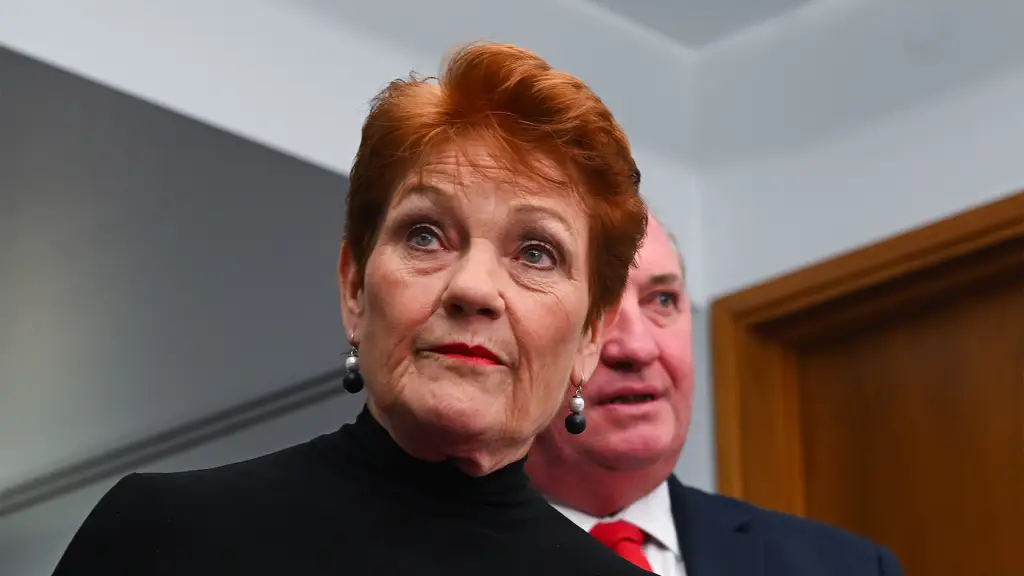

Australia’s right-wing populist party One Nation has recorded a significant electoral breakthrough, highlighting growing voter frustration with the country’s dominant political parties.
Get today's headlines by email 
The party led by Pauline Hanson secured more than 20% of votes in a recent state election in South Australia, its strongest showing outside Hanson’s home state of Queensland. The result will deliver at least three seats for the party and marks the first time it has reached such levels of support in a state long dominated by the two major parties.
Breakthrough vote signals shifting political mood
Although Peter Malinauskas led the Labor Party to a decisive victory and increased his parliamentary majority, One Nation’s gains came largely at the expense of the conservative Liberal Party of Australia.
Analysts say the result reflects broader shifts in Australian politics as voters increasingly turn to minor parties and independents.
Kos Samaras, a former Labor strategist and co-director of the Redbridge polling firm, described the outcome as a troubling sign for the country’s established political forces.
Cost-of-living pressures fuel support
Economic concerns have played a central role in One Nation’s renewed momentum.
The party has long campaigned on strict immigration policies, but rising housing costs and broader cost-of-living pressures have pushed many voters toward alternatives to the major parties.
In South Australia, some voters said economic pressures drove their decision to abandon traditional political loyalties. Rising property prices and rental costs have become major concerns for households across the country.
One Nation campaigned on increasing housing supply and limiting immigration levels, although immigration policy is set at the federal rather than state level.
The party also broadened its campaign effort, fielding candidates across every electorate and recruiting high-profile figures such as former senator Cory Bernardi to lead its ticket.
The result comes amid declining support for the Liberal-National Coalition and growing dissatisfaction with mainstream parties.
A polarising figure in Australian politics
Hanson has remained one of the most controversial figures in Australia’s political landscape for decades.
She first entered parliament in 1996 after winning a Queensland seat in a dramatic upset, shortly after being disendorsed by the Liberal Party. Her maiden speech drew widespread attention for comments warning Australia risked being “swamped by Asians”.
Her party, the One Nation, achieved rapid early success but soon struggled to maintain support. Hanson lost her parliamentary seat in 1998 and spent years outside federal politics before returning to the Senate in 2016.
During that period she remained a high-profile and often divisive figure. In 2003 she was briefly jailed on electoral fraud charges before the conviction was later overturned on appeal. She has also faced legal action over remarks judged to have racially vilified another senator.
Despite repeated controversies, supporters view Hanson as an outsider who challenges political elites and speaks for voters who feel ignored by mainstream parties.
Limits to a populist breakthrough
While One Nation’s recent performance has drawn attention, experts say structural barriers remain.
Australia’s preferential voting system requires voters to rank candidates in order of preference, a process that tends to favour established parties. Voting is also compulsory, which analysts say reduces the likelihood of sudden political swings.
Scholars argue that while populist parties can gain influence, replacing the long-standing dominance of Labor and the conservative Coalition remains difficult.
Nevertheless, analysts warn that growing support for minor parties signals deepening dissatisfaction among voters who believe traditional parties no longer address economic concerns or social change.
For Hanson, the South Australia result marks an opportunity to expand the party’s reach. She has already pointed to upcoming elections in other states and federal contests as potential next steps in building support.
Join the discussion? 
Already a member? 
 Adapted by ASEAN Now. Source 28 March 2026