Skip to content
View in the app

A better way to browse. Learn more.

ASEAN NOW

A full-screen app on your home screen with push notifications, badges and more.

To install this app on iOS and iPadOS
  1. Tap the Share icon in Safari
  2. Scroll the menu and tap Add to Home Screen.
  3. Tap Add in the top-right corner.
To install this app on Android
  1. Tap the 3-dot menu (⋮) in the top-right corner of the browser.
  2. Tap Add to Home screen or Install app.
  3. Confirm by tapping Install.

Thailand News

All the latest news stories from Thailand are written in English. Fresh news and stories from around the kingdom brought to you daily.
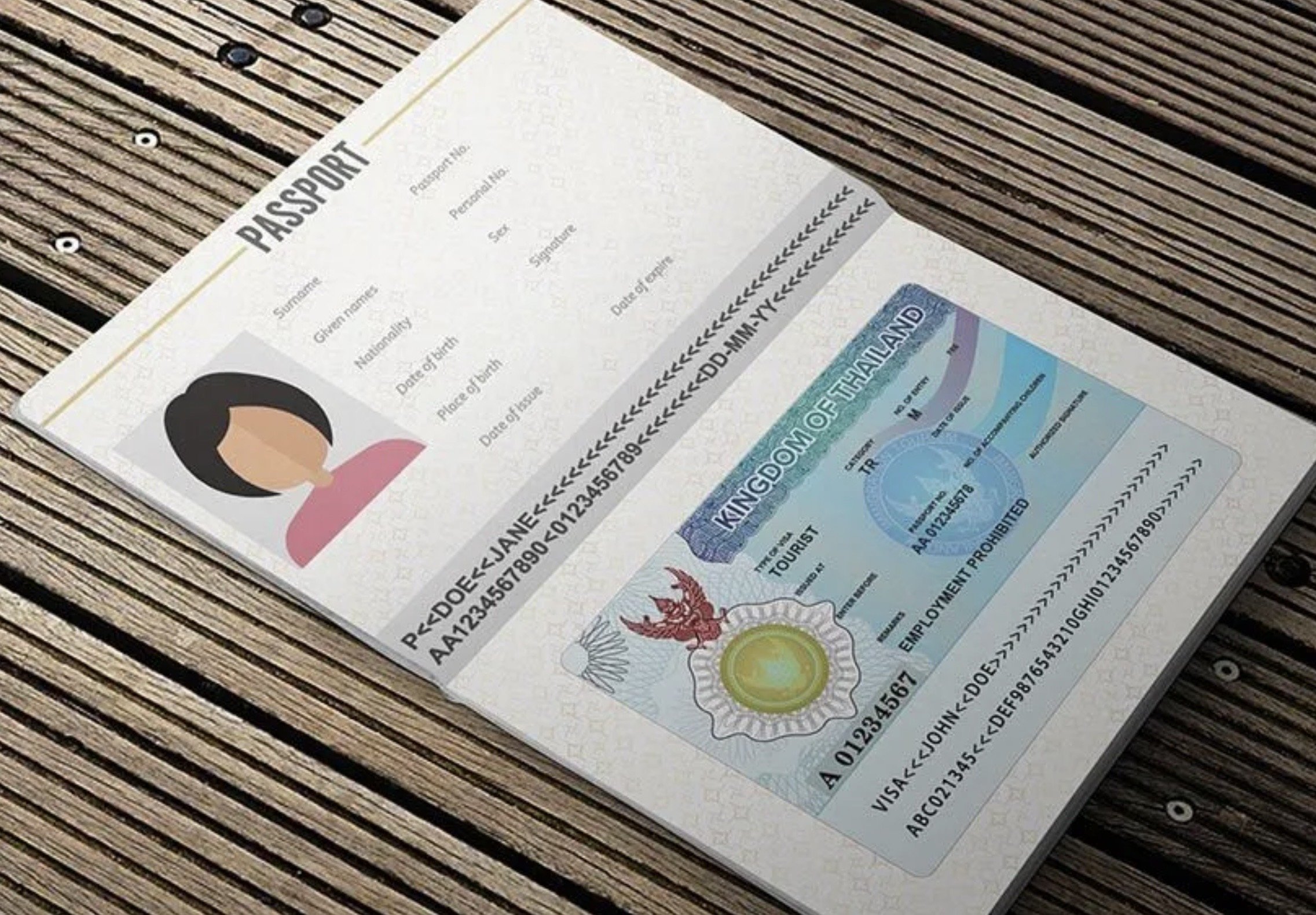
Thailand's Cabinet has approved significant visa policy changes to attract more tourists, digital nomads, students, and retirees, as part of a larger economic stimulus plan. On February 10, Deputy Government Spokesperson Aiyarin Phanrit announced the endorsement of proposals from the Ministry of Foreign Affairs, including a package of short, medium, and long-term visa measures. This initiative includes both active policies and new updates under consideration.

Get today's headlines by email

Currently, nationals from 93 countries can enter Thailand for up to 60 days without a visa under a special arrangement known as Por.60, which covers tourism, business, and short-term work visits. Furthermore, citizens from 31 countries can obtain a Visa on Arrival (VoA) at select immigration checkpoints, with an additional eight countries expected to be added to this scheme soon.

Two new visa categories have been introduced to support long-stay and skilled foreign visitors. The Destination Thailand Visa (DTV) is tailored for remote workers like digital nomads and those involved in cultural activities such as Thai boxing and cooking. Additionally, the Non-Immigrant ED Plus visa allows foreigners to study or study while working part-time, under specific conditions.

In the medium term, the Ministry plans to revise long-stay visa criteria for retirees to attract expats who can support sectors like real estate and health tourism. Efforts to streamline existing visas are ongoing, reducing 17 visa codes to seven, set to be fully implemented by August 31.

The Visa Policy Committee, reinstated by the Prime Minister, is evaluating the 60-day exemption scheme due to concerns over misuse for illegal work or activities in neighboring countries. Upcoming meetings will further address these issues, with the Ministry set to present findings.

Officials assert that these visa updates are crucial for balancing tourism growth with national security and economic development, reported The Thaiger.

Key Takeaways
Thailand's new visa policies target tourists, digital nomads, and retirees.
Nationals from 93 countries can now visit for up to 60 days without a visa.
Two new visas cater to remote workers and students, boosting economic prospects.

Join the discussion?

Already a member?

  Adapted by ASEAN Now · The Thaiger · 11 Feb 2026
snoop1130
snoop1130
The lawyer representing Pol Gen Surachate Hakparn, known as “Big Joke”, has filed a formal petition with Thailand’s Anti-Money Laundering Office (AMLO), requesting an investigation into alleged discrimination, human rights violations and possible links to an online gambling network involving a transaction committee member. The move seeks to halt or scrutinise any process that could lead to the seizure or freezing of assets linked to the former deputy national police chief.

At 3.00pm on 9 February 2026, Mr Sanyaphattra Samart submitted the petition to AMLO Secretary-General Thepsu Bowornchotidara at the agency’s headquarters. He asked AMLO to consider whether actions taken against Pol Gen Surachate breached constitutional principles, including the presumption of innocence and whether certain officials may lack neutrality due to personal conflicts.

The complaint centres on a transaction committee member described as being in direct conflict with Pol Gen Surachate in several cases. According to the lawyer, this individual has attempted to push matters involving Pol Gen Surachate into the committee’s consideration despite the absence of a final court judgment.

Mr Sanyaphattra said there were efforts to move disputed facts into a process that could result in asset seizure. He argued that this required disclosure to the committee chair, as the individual involved allegedly held the status of a direct adversary, raising concerns over qualifications, impartiality, and lawful use of authority.


Pictures courtesy of Matichon

He stated that the petition was filed to ensure fairness for Pol Gen Surachate and to explain repeated submissions to authorities. The lawyer said he had received information suggesting that improper or unconstitutional actions were imminent, potentially violating basic rights and human rights protections.

The submission includes extensive documentation and evidence, according to Mr Sanyaphattra. He confirmed that Pol Gen Surachate is prepared to defend himself through legal processes but formally objects to any exercise of power deemed unlawful, discriminatory, or rooted in personal conflict.

The lawyer further alleged that the committee member had been part of a police task force pursuing cases against Pol Gen Surachate. He noted that Ms Pimwilai Plong-on, a suspect in the Minnie online gambling case, has filed a complaint against that task force at Tao Poon Police Station, naming the same individual as team leader.

Matichon reported that Mr Sanyaphattra said the circumstances could fall within offences related to money laundering or links to predicate offences. He asked AMLO to assess whether a person facing such allegations could fairly participate in decisions to seize or freeze others’ assets.


Key Takeaways

• Big Joke’s lawyer petitioned AMLO on 9 February 2026 over alleged bias and rights violations.
• The complaint questions the neutrality of a transaction committee member with alleged conflicts.
• AMLO has been asked to review evidence and determine the appropriateness of any asset action.

Related Stories

Big-joke-files-defamation-case-against-former-aide

More-witnesses-accuse-big-joke-of-bullying

  
Adapted by ASEAN Now from Matichon 2026-02-11


Georgealbert
Georgealbert
The Anti-Money Laundering Office (AMLO) will hold a public auction of seized vehicles and other assets later this month, offering 152 items for sale over two days. The auction, officially listed as Auction No. 4/2569, is scheduled for 18–19 February 2026 at AMLO headquarters in Nonthaburi, with registration opening at 8.30am and bidding starting at 10.00am. The sale is expected to attract strong interest due to the number of high-value luxury vehicles included.

Get today's headlines by email

The auction forms part of AMLO’s statutory process to dispose of assets seized or forfeited under anti-money laundering and related laws. Such auctions are held periodically and are open to the public, provided participants register in advance and comply with auction conditions. Proceeds from the sales are handled in accordance with legal procedures governing confiscated assets and returned to government central funds.

Among the most notable vehicles on offer is a Rolls-Royce Phantom with Saraburi registration, carrying a starting price of 18 million baht. Other high-end listings include a McLaren 720S Spider starting at 8 million baht, a Porsche 911 Carrera Coupe at 4 million baht, and a Porsche Panamera 4 E-Hybrid priced from 2.3 million baht. Additional vehicles include multiple Porsche models, two Toyota Alphards, a Lexus LM 350h with red plates, a BMW X5, a Mercedes-Benz GLC 300e Coupe and a Ford Mustang, with starting prices ranging from 1 million to 3.5 million baht.


AMLO has arranged several inspection dates to allow prospective bidders to examine the assets before the auction. On 12 February, selected items numbered 32–35 can be inspected at Nilthan Co Ltd in Kalasin province. On 13 February, asset number 105 will be available for inspection at Por Roongroj Siam Yangyon Co Ltd in Samut Sakhon, with interested parties required to contact officials at least two working days in advance.

A larger inspection session is scheduled for 16 February at AMLO’s asset storage facility in Bang Kruai district, Nonthaburi. This will cover a wide range of listed items, including many of the luxury vehicles highlighted in the auction catalogue. Inspections will run from 9.30am to 3.30pm on all designated dates.

Thaitabloid reported that AMLO said further details, including auction rules and full asset lists, are available on its official website and through its hotline. The auction will proceed as planned over two days, with bidders competing through oral bidding at the venue.


Pictures courtesy of Thaitabloid

Key Takeaways

• AMLO will auction 152 seized vehicles and assets on 18–19 February 2026 at its Nonthaburi headquarters.
• Luxury vehicles on sale include a Rolls-Royce Phantom, McLaren 720S Spider, and multiple Porsche models.
• Asset inspections are scheduled on 12, 13, and 16 February at locations in Kalasin, Samut Sakhon, and Nonthaburi.


Join the discussion?

Already a member?


Related Story

AMLO-to-auction-luxury-watches-designer-goods-in-Bangkok


  Adapted by ASEAN Now · Source · 11 Feb 2026

Georgealbert
Georgealbert
The criminal court has sentenced Phruethikan Sarakul, known as “Jo”, a former staff member of the Progressive Party (Khana Kao Na) to an additional 30 years in prison under Section 112 of the Criminal Code. The ruling brings his total sentence to 50 years when combined with a previous 20-year term. The verdict was delivered on 10 February 2026 at the Criminal Court on Ratchadaphisek Road.

The case, registered as Case No. A.1486/2566, was brought by prosecutors from the Office of Criminal Litigation Division 4. Phruethikan was convicted of lèse-majesté under Section 112 and offences under the Computer Crime Act. The court noted that the defendant absconded during proceedings and is yet to caught, prompting the issuance of an arrest warrant and the forfeiture of bail.

The charges stem from online posts made between 8 November 2021 and 27 March 2022. Prosecutors alleged that Phruethikan uploaded content to Twitter that defamed, insulted, or threatened the monarchy, constituting an offence against national security. The court found that the posts were intended to cause public misunderstanding and incite opposition to the monarchy.

The court ruled that the defendant committed multiple offences across separate acts. It imposed 10 counts, sentencing him to three years per count, for a total of 30 years, to be served consecutively to his earlier sentence. On 18 December, the Criminal Court had previously sentenced Phruethikan to 20 years’ imprisonment in a related case involving Section 112 and the Computer Crime Act.

During the reading of the verdict, defence lawyer Arnon Nampa, a human rights lawyer and political activist, was present in court. Arnon Nampa is himself currently serving a prison sentence in connection with a Section 112 conviction and was transferred from prison to attend the hearing. The court confirmed that Phruethikan remained at large at the time of sentencing.

The prosecution cited provisions of Thailand’s 2017 Constitution, including Section 2, which establishes Thailand as a constitutional monarchy, and Section 6, which places the King in a position of reverence and prohibits accusations or legal action against the monarch. The court held that the defendant knowingly disseminated unlawful computer data related to offences against national security.

The ruling underscores the continued enforcement of Section 112 and the Computer Crime Act in cases involving online speech. It also highlights procedural consequences for defendants who abscond, including arrest warrants and bail penalties.

Matichon reported that further legal steps depend on the defendant’s apprehension and any subsequent appeals filed in accordance with Thai criminal procedures.


Key Takeaways

• A court sentenced former staffer Phruethikan Sarakul to 30 more years, totalling 50 years in prison.
• The conviction covers 10 counts under Section 112 and the Computer Crime Act for Twitter posts made in 2021–2022.
• The defendant absconded during proceedings, leading to an arrest warrant and bail forfeiture.

  
Adapted by ASEAN Now from Matichon 2026-02-11


Georgealbert
Georgealbert
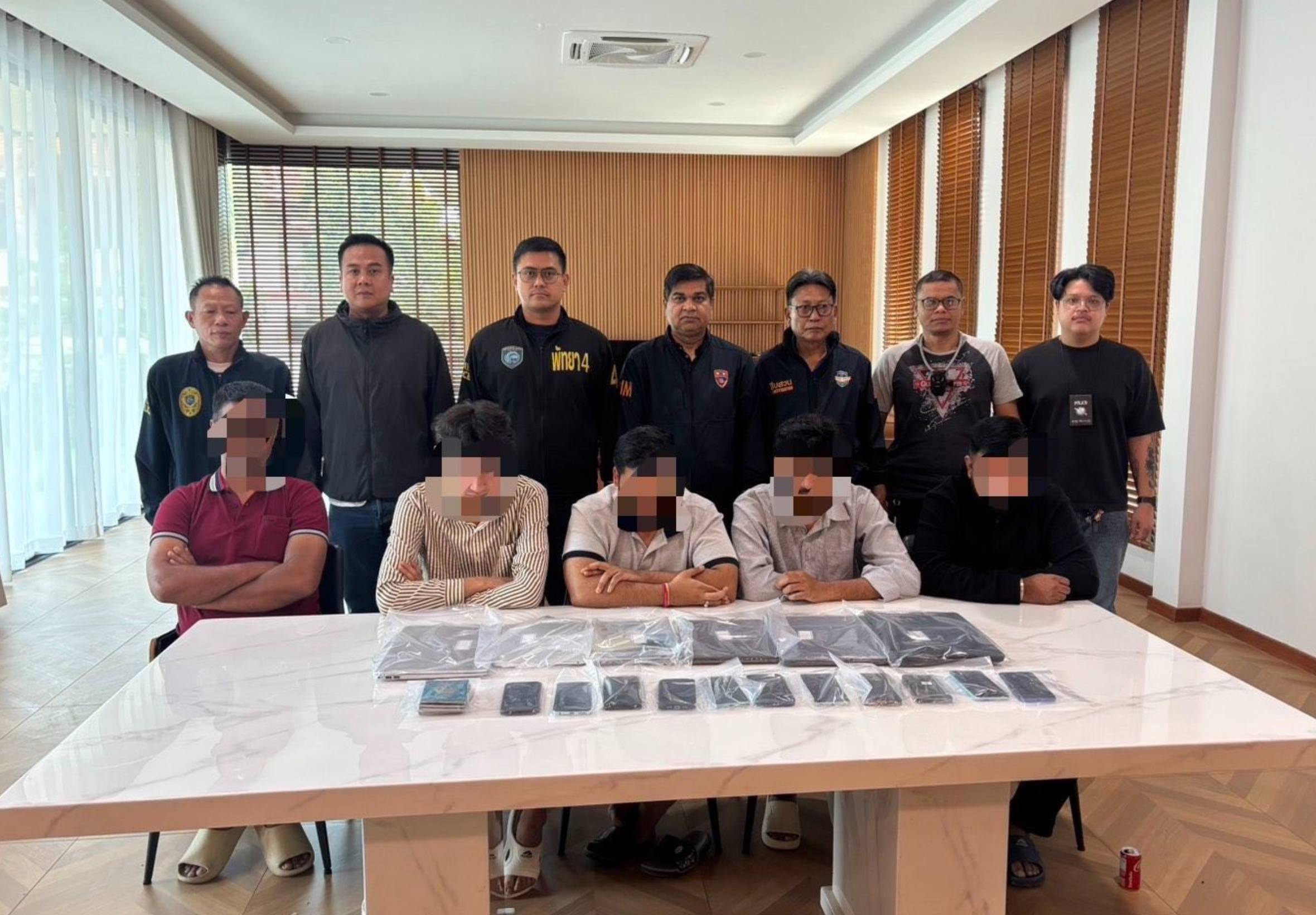
Police have dismantled a major call centre scam network, arresting four suspects and seizing assets worth more than 114 million baht in coordinated raids across five provinces. The operation targeted a transnational criminal network involving a Chinese and Thai nationals linked to online investment fraud and money laundering.

The arrests followed searches at nine locations in Bangkok, Pathum Thani, Phitsanulok, Kamphaeng Phet and Tak on Tuesday, 10 February 2026. Officers from the Technology Crime Suppression Division (TCSD), under the Central Investigation Bureau (CIB), worked with more than 200 personnel from multiple Thai agencies and international partners, including the US Homeland Security Investigations (HSI) and US Secret Service (USSS).

The four suspects include a 49-year-old Chinese national identified as Mr Lai, alleged to be the beneficiary of the criminal proceeds and three Thai nationals aged between 49 and 55 accused of laundering money and facilitating the operation. All were arrested under warrants issued by the Criminal Court on 26 January 2026.

Police said the investigation stemmed from online complaints and big data analysis revealing a surge in scams linked to fake online trading platforms. Victims were lured into selling goods or investing through a counterfeit application posing as “TikTokshop”, called “Tkshop”, which was distributed outside official app stores.


Pictures courtesy of Naewna

The fake app was designed to mimic legitimate platforms and displayed fabricated sales and profit figures to build trust. Victims were then instructed to transfer money for investments, goods or fees into multiple bank accounts controlled by the network, after which withdrawals were blocked unless further payments were made.

Authorities recorded 88 victim cases with losses exceeding 25 million baht, while a further 67 mule accounts were linked to damages of more than 15 million baht. Investigators also uncovered the group’s role in transporting people and equipment across borders using natural routes to evade detection.


Seized assets include about 4 million baht in cash, 13 cars worth around 22 million baht, 31 tractors valued at 10 million baht, a backhoe, a house worth 31 million baht, gold bars, branded goods, jewellery, 28 land deeds and frozen bank deposits. All assets have been handed to the Anti-Money Laundering Office (AMLO).

Thaitabloid reported that police warned the public to be cautious about online investment offers and reiterated that selling or lending bank accounts can carry jail terms of up to 10 years if linked to money laundering. Further investigations are under way to identify additional suspects in the cross-border network.


Key Takeaways

• Police arrested four suspects in a nationwide operation targeting a call centre scam network.
• Victims lost more than 40 million baht through fake investment and e-commerce platforms.
• Authorities seized assets worth over 114 million baht and are expanding the investigation.

Related Stories

AMLO-seizes-luxury-yacht-in-cross-border-scam-crackdown

Anti-money-laundering-targets-high-profile-financial-crime-cases

  
Adapted by ASEAN Now from Naewna 2026-02-11


Georgealbert
Georgealbert
Prime Minister Anutin Charnvirakul has announced plans to ask the Cabinet to prepare for the cancellation of MOU44, saying the agreement no longer delivers any benefit. The proposal would require relevant state agencies to begin legal and administrative preparations, rather than terminating the memorandum immediately. The move signals a possible policy shift with implications for Thailand’s long-standing international commitments.

Speaking at Government House at 10.00am on 10 February 2026, Anutin, leader of the Bhumjaithai Party, said he would raise the matter at a Cabinet meeting. He explained that agencies would be instructed to prepare the necessary groundwork for cancellation in line with legal requirements. He stressed that the current government would not revoke the agreement outright without due process.

MOU44 refers to a memorandum of understanding signed between Thailand and Cambodia, formally known as the 2001 Memorandum of Understanding on the Area of Overlapping Maritime Claims in the Gulf of Thailand. The agreement set out a framework for the two countries to cooperate, refrain from unilateral exploitation and jointly explore and develop natural resources, particularly petroleum, in the disputed maritime area. It was intended as a temporary mechanism to manage overlapping claims while negotiations on maritime boundaries continued.

According to Anutin, MOU44 has remained in force for years without tangible progress. He said the agreement has failed to advance cooperation or deliver practical outcomes, making its continued existence unjustifiable. For this reason, he argued that keeping MOU44 serves no practical purpose.

When asked whether the Cabinet has the authority to cancel the memorandum immediately, Anutin said all actions must strictly comply with the law. He emphasised that the government would follow established legal and administrative procedures at every stage. Any decision, he said, must be defensible under both domestic and international legal frameworks.

Thaitabloid reported that the Cabinet is expected to assign relevant agencies to study the legal obligations, administrative implications and possible consequences of cancelling MOU44. Their findings will inform the government’s next steps and determine whether formal termination can proceed. Further consideration will be required before any final decision is made.


Key Takeaways

• Prime Minister Anutin has proposed Cabinet preparations to cancel the Thailand–Cambodia MOU44.
• MOU44 covers cooperation and joint development in overlapping maritime claims in the Gulf of Thailand.
• Any cancellation will follow legal and administrative procedures and will not be immediate.

Related Stories

Senate-to-decide-on-Thai-Cambodian-maritime-MOU

Deputy-pm-consults-security-agencies-on-MOU-43-44-review

  
Adapted by ASEAN Now from Thaitabloid 2026-02-11


Georgealbert
Georgealbert
Passengers in Thailand can now utilize QR codes for enhanced taxi ride safety and convenience. This new feature allows users to verify driver details, real-time track their journey, share trip information, and rate their experience. The Department of Land Transport plans to equip around 70,000 taxis with these QR codes by June 2026.

Previously, passengers had limited means to verify driver identity or report issues. The new system aims to address these concerns with three QR code variants: purple for driver verification, blue for fare estimation and feedback, and red for urgent complaints. The codes are linked to government systems, promising quick resolution of reported issues.

Experts suggest this advancement is a step forward in transportation safety and transparency. By linking the QR codes with driver and vehicle data, including service history and ratings, the system provides a comprehensive check for passengers. This technology is expected to significantly reduce risks of driver impersonation and disputes over fares or service conduct.

Looking ahead, the Department plans to complete the rollout by mid-2026, covering all taxis in service. As the system develops, additional features may be integrated, further enhancing passenger security and satisfaction. The initiative is a response to growing expectations for accountability and safety in urban transport systems, reported The Nation.

Key Takeaways
QR codes allow real-time tracking and driver verification for taxi passengers.
The system links with government databases for efficient handling of complaints.
Rollout aims to cover 70,000 taxis by June 2026.

Related Stories
Overcharged by Taxi, Japanese Tourist Cuts Bangkok Trip Short
Pattaya Goes Green with Sustainable Electric Transportation


Adapted by ASEAN Now from The Nation 2026-02-10


snoop1130
snoop1130
A Vietnamese national was arrested on February 9 at Suvarnabhumi Airport for allegedly attempting to smuggle nearly 12 kilograms of rhino horns. The arrest was part of a collaborative effort involving C.I.Q. agencies and the Natural Resources and Environmental Crime Police. This operation highlights the ongoing battle against wildlife trafficking in Thailand.

The suspect, identified as a 36-year-old Vietnamese traveler, was apprehended after an X-ray scan revealed anomalies in a foam box inside his checked luggage. The arrest took place at around 8 pm as officials traced the luggage to the passenger traveling from Lubumbashi in the Democratic Republic of the Congo. The suspect had transited through Ethiopia and Thailand and was en route to Vientiane, Laos.

The search at the wildlife inspection facility uncovered six rhino horns bundled in three packages, weighing 11.75 kilograms in total. Additionally, three pieces of animal skin, weighing 12 kilograms, were found concealing the horns. An iPhone 14 Pro Max, suspected to be linked to the smuggling operation, was also seized.

With no permits for wildlife products, the suspect faces charges under Thailand's Wildlife Preservation and Protection Act 2019, the Customs Act 2017, and the Animal Epidemics Act 2015. The case has been handed over to investigators at Suvarnabhumi Airport Police Station for further legal proceedings.

The rhino horns have been sent to the Wildlife Forensic Laboratory Centre for species verification. This development is crucial in determining the specific origins and aiding the broader investigation. reported The Thaiger.

Key Takeaways
A Vietnamese man was apprehended for smuggling rhino horns at Suvarnabhumi Airport.
Six rhino horns and three pieces of animal skin were seized during the operation.
The suspect faces charges under Thai wildlife and customs laws.

Related Stories
Cannabis Parcels Seized at Rim Moei Market, Mae Sot
Three Arrested in Thailand for Smuggling Chinese Migrants


Adapted by ASEAN Now from The Thaiger 2026-02-10


snoop1130
snoop1130
Bhumjaithai Party leader, Anutin Charnvirakul, addressed speculation today regarding Thailand's upcoming administration as official election results are still pending finalization. Speaking on February 10, Anutin emphasized patience, as the vote count had only reached 90%. He underscored that no decisions on coalitions would be made until official confirmation from the Election Commission of Thailand (ECT).

As Bhumjaithai reportedly secured over 190 seats, Anutin noted the importance of respecting this support but stated it was premature to talk about coalition details. He stressed the necessity of following a step-by-step process and not making assumptions prior to full result confirmation. Amid discussions on party strategy, Anutin mentioned the need to heed public opinion when selecting Cabinet members, addressing concerns about potential "grey ministers."

Regarding government stability, Anutin dismissed concerns about completing a four-year term, stressing that his leadership respects legal and public dynamics. He downplayed speculation on internal party factions, arguing that influential groups provide trust and stability. Anutin maintained that government performance, rather than mere numbers, is the true measure of stability, citing his previous experience with a minority government.

In response to Pheu Thai's claims of election irregularities, Anutin downplayed these concerns, asserting that such accusations often arise post-election. He redirected accountability to the ECT, responsible for the election process and reiterated that vote recount requests were part of the legal proceedings. On MOU 44, Anutin mentioned the Cabinet’s intent to discuss termination preparations, acknowledging that the government was not yet in caretaker status, but saw little benefit in maintaining the memorandum.

Amidst rumors about excluding the Klatham Party from potential coalitions, Anutin declined further comments and proceeded to a Cabinet meeting, reported The Thaiger.

Key Takeaways
Anutin urges patience as the vote count for Thailand's elections is still underway, dismissing premature coalition talks.
He emphasizes respecting party dynamics and trusts legal channels to address election-related concerns.
Discussions about MOU 44 are ongoing, with preparations for its cancellation being considered by the Cabinet.

Related Stories
Thailand’s Election Shock: Anutin Charnvirakul powers up after big win
Anutin Out! People's Future MPs to Shun PM Vote


Adapted by ASEAN Now from The Thaiger 2026-02-10


snoop1130
snoop1130
A video circulating on Facebook has ignited debate over election transparency after showing an official marking vote tallies behind overlapping score sheets. The footage, shared by user นิ้ง เทวราช, depicts a counting process with sheets obscured on a board, restricting public visibility. This setup has triggered criticism as unused space remained on the board, leading many to question the transparency of the process.

The incident happened during what seemed to be a routine vote count. Several sheets were aligned in such a way that parts of the tally were hidden, with an official ducking behind them to mark scores. Observers expressed discontent, asking why the papers were arranged this way when there was available space for clearer visibility.

Reactions were swift, with online commenters voicing their suspicion. "The board still had space. Why cover it up like that?" one user questioned, implying a potential lack of transparency. Other users criticized the setup as deliberately obscure, suggesting an intentional attempt to shield actions from observers.

AQOWFU9yxQyIVEjlZaGzTK_r9lE7bpOU8oayripsrS_szrHKbDBmAbOs3wcKcV-tlTp9LOSHN1CW8v1ZScXyIdh-L4UYnetD8ZJQbx__eg.mp4

This controversy has sparked a broader discussion about the need for transparency in vote-counting procedures in Thailand. Some users highlighted the necessity for stringent monitoring of election officials to assure public trust. The video has intensified calls for rechecking the vote counts to ensure integrity in the process.

Looking ahead, the public is demanding clearer guidelines for arranging tally sheets to prevent similar issues. Ensuring transparency in future elections could involve implementing stricter oversight measures. Public discussions continue as voters seek more accountability in election processes, reported The Thaiger.

Key Takeaways
Observers criticized the obstructed score sheets in the viral video.
The official's actions have triggered concerns about transparency.
Calls for clearer guidelines and oversight are intensifying.

Related Stories
Thailand Election 2026: Bhumjaithai Nears Substantial Win
Election Commission Withdraws 49 MP Candidates Before Poll


Adapted by ASEAN Now from The Thaiger 2026-02-10


snoop1130
snoop1130
The Civil Court has ordered the wife of a police colonel to pay 8 million baht in damages, plus interest, for defamation after remarks made in a television interview were found to have harmed the reputation of the wife of former deputy national police chief Pol Gen Surachate “Big Joke” Hakparn. The ruling, delivered on 9 February 2026, underscores the legal risks of making unsubstantiated allegations through broadcast media.

The court found that the defendant’s comments, although not naming the plaintiff directly, were clearly understood by the public to refer to her and caused serious reputational damage. As a result, the court awarded compensation and legal costs, marking a significant outcome in a high-profile civil dispute involving senior police families.

The case arose from an interview broadcast in October 2024 on the programme Thok Mai Thieng. During the interview, Ms Thanatta, the defendant, alleged that the plaintiff, Ms Sirinadda Hakparn, was having an affair with Pol Col Pheemapoj Nomchobphithak, a lecturer at the Police Cadet Academy and the defendant’s husband.

The defendant also accused the plaintiff of trespassing and stealing her property. Ms Sirinadda, the wife of Pol Gen Surachate Hakparn, filed a civil lawsuit seeking 10 million baht in damages, arguing that the allegations were false and had caused serious harm to her name and livelihood.

In its judgment in case number Por. 4343/2568, the court ruled that the interview content allowed viewers to identify the plaintiff despite the absence of her name. The court said the allegations of adultery, trespass and theft, when broadcast through a news programme, amounted to a wrongful act causing reputational and economic damage.

The court ordered the defendant to pay 8 million baht in damages, with interest at 5 percent per year on the principal amount from the day after the lawsuit was filed on 15 October 2025 until full payment is made. The defendant was also ordered to pay court fees on behalf of the plaintiff, with legal fees set at 10,000 baht.

The ruling highlights how public statements made through mass media can carry significant civil liability, particularly when they involve allegations of criminal or immoral conduct. It also reinforces the court’s approach that identification can be implied, even without explicit naming, if the audience can reasonably infer the person concerned.

SiamRath reported that the judgment may be appealed within the legal timeframe if the defendant chooses to challenge the ruling. The case has been closely watched, given the prominence of those involved and its implications for defamation standards in media interviews.


Pictures courtesy of SiamRath


Key Takeaways

• The Civil Court ordered 8 million baht in damages plus interest for defamation.
• The court ruled that implied identification can still constitute reputational harm.
• The case stems from allegations made during a televised interview in October 2024.

Related Stories

Big-joke-files-defamation-case-against-former-aide

More-witnesses-accuse-big-joke-of-bullying

  
Adapted by ASEAN Now from Siamrath 2026-02-10


Georgealbert
Georgealbert
Airports of Thailand Plc (AOT) expects more than 4.11 million passengers to pass through its six airports during the Chinese New Year holiday period from 13–22 February 2026, reflecting strong travel demand. The surge is driven largely by a continued recovery in the Chinese market, increasing pressure on airport operations nationwide. Authorities are preparing for heavier traffic and longer processing times during peak travel days.

AOT president Pavina Jariyathitipong said passenger traffic across Suvarnabhumi, Don Mueang, Chiang Mai, Mae Fah Luang–Chiang Rai, Phuket and Hat Yai airports is projected to reach about 4.11 million. This total includes around 2.6 million international passengers and 1.51 million domestic travellers. The figures highlight the scale of movement expected during the festive period.

The total number of flights during the 10-day period is estimated at 24,847. Of these, 14,295 are international flights and 10,552 are domestic services. Airports are expected to operate at near-capacity levels during peak hours.

Pavina said that according to data assessed as of 4 February, flights and passenger numbers from China have increased significantly. The number of Chinese passengers is expected to reach 679,259, representing an 8.1% rise year on year. This growth underscores the importance of the Chinese market to Thailand’s aviation and tourism sectors.

Suvarnabhumi Airport, Thailand’s main international gateway, is forecast to handle 444,255 passengers on routes linked to China. This represents a sharp increase of 24.2% compared with the same period last year. The airport is expected to be the busiest hub during the holiday.

Pavina stated the figures reflect renewed confidence in Thailand’s tourism sector and a continued recovery in international travel, particularly from China. The data also points to improving connectivity and sustained demand during major regional holidays.

To welcome travellers, AOT will organise Chinese New Year celebrations inside passenger terminals. Activities will include lion dance performances and cultural demonstrations aimed at enhancing the passenger experience during the festive period.

With heavy traffic anticipated, AOT has advised passengers to arrive at airports at least three hours before departure. The guidance is intended to help travellers avoid missing flights during peak congestion and busy processing times.

Khoasod reported that as the holiday period approaches, airports will continue monitoring passenger flows and flight schedules closely. Further operational measures may be adjusted in response to actual travel volumes.


Key Takeaways

• AOT expects more than 4.11 million passengers across six airports from 13–22 February 2026.
• Chinese passenger numbers are projected to rise to 679,259, up 8.1% year on year.
• Suvarnabhumi Airport alone is forecast to handle 444,255 China-route passengers.

  
Adapted by ASEAN Now from Khaosod 2026-02-10


Georgealbert
Georgealbert
The Federation of Thai Industries (FTI) has urged the incoming government to prioritise urgent economic and cost-of-living problems as its first agenda, warning that household debt, SME distress, export pressures and an influx of cheap imports now pose a critical threat to growth and public welfare. The call comes as Thailand awaits the formation of a new government following the general election, with business confidence closely tied to political stability and policy continuity.

On 9 February 2026 in Bangkok, FTI chairman Kriengkrai Thiennukul said the private sector hopes Thailand will soon have a capable and ethical government, noting that the composition of the cabinet directly affects public and investor confidence. He stressed the need for a swift government formation to ensure uninterrupted economic management and policy implementation.

Mr Kriengkrai said 2026 would be an exceptionally challenging year for both the Thai and global economies. He identified the most pressing crisis as the economic hardship facing households, with Thailand’s household debt nearing 90% of GDP and potentially rising to about 104% when informal debt is included, reflecting a serious imbalance between income and expenditure that has sharply reduced purchasing power.

The FTI highlighted at least the urgent issues requiring immediate action. These include a deepening SME crisis, particularly among businesses with credit lines below 500 million baht, where non-performing loans have risen to worrying levels. Exporters, a key engine of the Thai economy, are also under pressure from a strong baht, undermining competitiveness.

Another major concern is the severe liquidity shortage among SMEs, as bank lending continues to contract due to heightened caution over NPL risks. Mr Kriengkrai said the government would need to introduce targeted and precise stimulus measures to inject liquidity where it is most needed. He also warned of cheap imported goods, especially from China, flooding the Thai market both legally and illegally, forcing many local businesses to close.

From the business sector’s perspective, Mr Kriengkrai noted that parties currently enjoying strong public support, particularly the Bhumjaithai Party, have demonstrated economic preparedness by rapidly assembling experienced economic teams that work closely with the private sector. He said this had helped build confidence among businesses and the public, while continuity in economic policymaking remains a long-standing concern.

ThaiRath reported that the FTI said a fully formed cabinet should strengthen key economic ministries with professional expertise and elevate anti-corruption efforts to a national priority, describing corruption as a “cancer” draining public resources. The private sector also stressed the importance of forming a government with more than 300 parliamentary seats to ensure stability, reduce political friction and support sustained economic reform.


Picture courtesy of ThaiRath


Key Takeaways

• The FTI is urging the new government to make economic and cost-of-living issues its top priority amid rising debt and weak demand.
• SMEs, exports, liquidity constraints and cheap imports have been identified as the most urgent structural challenges.
• Business leaders say policy continuity, anti-corruption efforts and a strong parliamentary majority are vital for stability.

  
Adapted by ASEAN Now from Thairath 2026-02-10


Georgealbert
Georgealbert
The criminal court on 9 February 2026 sentenced two former politicians to five years in prison each for supporting terrorism-related activities, while acquitting them of lèse-majesté charges. The ruling affects Mr Payap Pankate, a former leader of the United Front for Democracy Against Dictatorship (UDD), and Mr Phetwarat Wattanapongsirikul, a former party-list MP from the Prachachat Party. Both defendants have applied for temporary release pending the court’s decision on bail.

The Criminal Court delivered its verdict in cases No. Or.3306/2567 and Or.3332/2567, brought by public prosecutors against Mr Phetwarat as defendant one and Mr Payap as defendant two. Prosecutors alleged offences including lèse-majesté under Section 112 of the Criminal Code and terrorism-related charges under Sections 135/2 and related provisions. The court combined the two cases for consideration because the allegations arose from the same set of events.

The background to the case dates back to April 2010 through 15 August 2010, during and after mass protests by the UDD. After the military dispersed the demonstrations, prosecutors said senior UDD figures, including the two defendants, arranged and supported weapons training in Siem Reap, Cambodia. The alleged aim was to prepare acts intended to create public fear and pressure the government in power at the time.

Prosecutors claimed the defendants helped recruit participants, provided accommodation and funding, and visited those undergoing training. They also alleged the defendants made statements that constituted insults or threats against the monarchy. The prosecution sought penalties under Sections 83, 91, and 132 of the Criminal Code.

In its ruling, the court found that evidence supporting the lèse-majesté charge was inconsistent and lacked corroboration. Witness testimony during the investigation and at trial conflicted on key points, leading the court to apply the principle of reasonable doubt and dismiss the charge under Section 227, paragraph two, of the Criminal Procedure Code.

However, the court accepted testimony from witnesses who said they had received weapons training in Cambodia. While it found no proof that the defendants directly recruited trainees, it ruled that their ideological encouragement, logistical support, financial assistance, and visits constituted facilitation of terrorism-related activities. The court convicted both men as supporters under Section 135/2 in conjunction with Section 86 and sentenced them under Section 135/3 to five years’ imprisonment each.

Manager online reported that the defendants submitted bail requests with surety following the verdict. The court is currently considering whether to grant temporary release while further legal steps proceed.


Key Takeaways

• The court sentenced Mr Payap Pankate and Mr Phetwarat Wattanapongsirikul to five years in prison each on 9 February 2026.
• Both were acquitted of lèse-majesté due to inconsistent and insufficient evidence.
• Bail applications have beeun filed and are under court consideration.

  
Adapted by ASEAN Now from MGRonline 2026-02-10


Georgealbert
Georgealbert
Thailand’s National Anti-Corruption Commission (NACC) has ruled that 44 former Members of Parliament from the Move Forward Party committed serious ethical violations by proposing amendments to Section 112 of the Criminal Code. The decision, announced on 9 February 2026, clears the way for the case to be referred to the Supreme Court for further consideration, with immediate consequences if the court accepts the petition.

According to reports, the NACC board voted to find all 44 former MPs at fault for breaching or failing to comply with serious ethical standards. The case centres on their joint action in signing and submitting a 2021 proposal to amend Section 112, also known as the lèse-majesté law. The ruling marks a significant escalation in legal proceedings linked to the controversial legislative proposal.

The 44 individuals concerned are former MPs of the Move Forward Party, some of whom are now MPs of the People’s Party. Some of those named were also former members of the Move Forward Party’s executive committee and have already been stripped of their political rights following a ruling by the Constitutional Court.

The 44 named include prominent figures now affiliated with the People’s Party, including party leader Nattaphong Ruengpanyawut, Sirikanya Tansakun, Rangsiman Rome and Pakornwut Udompipatsakul. The NACC decision applies collectively to all 44 individuals involved in the amendment proposal.

Following this resolution, the NACC will now forward the case file to the Supreme Court. Under established procedures, the court will take time to examine the submitted documentation before deciding whether to formally accept the case for trial. This review phase is a standard step in cases involving alleged serious ethical breaches by political office holders.

If the Supreme Court decides to accept the case, any of the accused who currently hold political positions from the 2026 election, will be required to immediately suspend their duties. This provision is triggered at the point the court formally registers the case, rather than at the conclusion of judicial proceedings. The measure is intended to preserve the integrity of the process while the case is under judicial consideration.

The decision adds to ongoing legal and political consequences stemming from efforts to amend Section 112, an issue that has remained highly sensitive within Thailand’s political system. It also underscores the expanding role of independent oversight bodies in scrutinising legislative actions taken by elected representatives.

Thaitabloid reported that the next step will depend on the Supreme Court’s preliminary review of the case file submitted by the NACC. Further developments will hinge on whether the court accepts the petition and schedules formal proceedings against the former MPs.


Key Takeaways

• The NACC ruled on 9 February 2026 that 44 former Move Forward MPs committed serious ethical violations over a Section 112 amendment proposal.
• The case will be forwarded to the Supreme Court, which must decide whether to accept it for trial.
• Acceptance of the case would require any accused currently holding political office to immediately suspend their duties.

  
Adapted by ASEAN Now from Thaitabloid 2026-02-10


Georgealbert
Georgealbert
Dr. Worawit Tantiwattanasap, Director of Umphang Hospital in Thailand's Tak province, is set to receive the UAE Health Foundation Prize 2026. This prestigious award recognizes his efforts to improve healthcare access for vulnerable populations in remote border regions. The World Health Organization (WHO) will present the award during the 79th World Health Assembly in May in Geneva, Switzerland.

The WHO's selection committee, led by Executive Board Vice Chairman Pongsadhorn Pokpermdee, unanimously nominated Dr. Worawit for his consistent humanitarian service. Known for his dedicated work in public health, particularly in Thailand's geographically challenging Umphang district, Dr. Worawit has been influential in expanding healthcare access. His advocacy resulted in national policies in 2010 and 2020 to support stateless persons and those with unresolved legal status.

Dr. Worawit's initiatives include setting up cross-border healthcare systems, mobile clinics, and proactive care measures focusing on diseases like tuberculosis and malaria. His work has extended to providing long-term health services, such as dialysis for refugees along the Thai–Myanmar border. Moreover, his innovative use of solar energy and medicine donation schemes have been vital in resource-limited settings, alongside training community health volunteers.

The UAE Health Foundation Prize, established in 1993, praises contributions towards the "Health for All" goal. It includes a certificate, a trophy, and US$40,000. Dr. Worawit's career has been marked by his service since 1991 at Umphang Hospital, where he previously won the Public Health Ministry's Outstanding Rural Doctor Award.

Looking forward, Dr. Worawit’s recognition could spark increased support for similar healthcare initiatives worldwide. The award underscores the importance of adapting health services to resource-challenged areas, advocating for policy changes, and integrating innovative solutions to address systemic health issues, reported Bangkok Post.

Key Takeaways
Dr. Worawit receives WHO’s UAE Health Foundation Prize 2026.
Acclaimed for expanding healthcare access in remote Thai regions.
Recognized for policy advocacy and innovative healthcare solutions.

Related Stories
Trump signs order to pull US from World Health Organization


Adapted by ASEAN Now from Bangkok Post 2026-02-09


snoop1130
snoop1130
The national police chief said the overall conduct of the election was orderly after polls closed on 8 February, despite several reported cases of election-related offences. Police had been ordered to tightly secure vote counting centres and the transport of ballot boxes to election authorities, particularly in high-risk areas. Extra security measures were also enforced following unrest in parts of the deep south.

The assessment was given by Pol Gen Kittirat Phanphet, Commissioner-General of the Royal Thai Police, during a meeting at the National Police Operations Centre in Bangkok. The meeting reviewed nationwide security operations for election day, with senior officers joining both in person and via video link. Pol Gen Kittirat thanked police officers at all levels for maintaining order and ensuring public safety across the country.

Authorities reported seven election-related cases, including ballot destruction, vote-buying and the distribution of alcohol. Some complaints have already been formally filed in certain areas and police have been instructed to investigate swiftly in cooperation with the Election Commission (EC), both at provincial level and in Bangkok. Pol Gen Kittirat said legal action would be taken strictly in line with election and criminal law.


He noted that the most common offence involved torn ballot papers, many of which are believed to stem from misunderstandings rather than deliberate intent. These incidents involved both voters and, in some cases, polling staff assisting voters. Investigations are ongoing to determine the facts in each case.

Vote-buying allegations account for seven cases nationwide, with one case each reported in Police Regions 4, 5, 6 and 7, and three cases in Police Region 8. All are currently under investigation according to procedures set by the EC. Police may conduct preliminary inquiries and must report findings to the EC within 72 hours.

Security remains in place at vote counting locations until full counting is completed, after which ballot boxes will be transported to provincial storage facilities. Police are responsible for security and traffic management throughout the process until the ballot boxes are formally handed over to provincial election officials.

Pol Gen Kittirat also addressed security concerns in Yala province’s Bannang Sata district, where an armed attack targeted a military patrol. He said police in Region 9 have been ordered to work closely with the military, focusing on intelligence gathering, joint operations and contingency planning during ballot transport. He described the attack as an attempt by hostile groups to demonstrate operational capability.

Daily News reported that Deputy National Police Chief Pol Gen Samran Nualma urged continued vigilance in the post-election period and instructed officers to report any significant developments promptly. The election security command centre will remain operational until 12 February.


Pictures courtesy of Daily News


Key Takeaways

• Police say the election proceeded peacefully nationwide despite reported offences.
• Investigations are under way into cases of ballot damage and alleged vote-buying.
• Security was intensified in southern border provinces during ballot transport.

  
Adapted by ASEAN Now from Dailynews 2026-02-09


Georgealbert
Georgealbert
The Election Commission (EC) is considering whether to take legal action against political party leaders who endorsed parliamentary candidates later ruled ineligible by the Supreme Court, a move that could have implications for parties involved in the election. The EC stressed that any action would be assessed on a case-by-case basis, depending on the facts of each situation and whether the endorsement affected the fairness of the election.

The issue follows Supreme Court rulings ordering the removal MP candidates from election lists after finding they lacked the legal qualifications to stand. Questions have since arisen over whether responsibility lies solely with the candidates or could extend to party leaders who signed certification documents supporting their nominations.

Speaking at 10.30am on 8 February 2026 at the Election Commission Office, EC secretary-general Sawaeng Boonmee said each case must be examined individually. He explained that some disqualifications stem from personal legal issues known only to the candidates themselves and in such circumstances party leaders may not have been aware of the problem. Under election law, candidates are expected to know their own eligibility status when applying.

Mr Sawaeng said the Political Parties Act requires authorities to consider whether a party’s actions resulted in an election that was not conducted in a fair and honest manner. Whether a party leader bears responsibility therefore depends on factual findings, including intent and knowledge at the time of endorsement. He added that it was not possible to predict outcomes while investigations were ongoing.

Asked whether any legal action could affect a party that had already won seats, Mr Sawaeng said the law must be applied if an offence is found, regardless of political consequences. However, he reiterated that it was too early to draw conclusions and that decisions would depend on the evidence.

ThaiRath reported that investigations into candidate eligibility and related responsibilities are continuing, with further decisions expected once all facts have been reviewed.


Key Takeaways

• The Election Commission is reviewing whether party leaders can be held liable for endorsing ineligible MP candidates.
• Decisions will be made case by case, based on facts and whether election fairness was affected.

Related Story

Election-commission-withdraws-49-MP-candidates-before-poll

  
Adapted by ASEAN Now from Thairath 2026-02-09


Georgealbert
Georgealbert
Thailand’s National Astronomical Research Institute (NARIT) has announced that Thai-developed space research equipment will be sent to orbit the Moon in August 2026, marking the country’s first direct participation in a lunar mission. The instruments will travel aboard China’s Chang’e 7 spacecraft to study space weather and high-energy particles, with implications for long-term space safety and technology resilience.

The announcement was made at the NARIT Open Talk 2026 event held on 7 February 2026 at The Sukosol Hotel in Bangkok, where NARIT showcased its latest research and technological developments. The mission represents a major milestone for Thai science and engineering, as the equipment was designed and built by Thai researchers and engineers.

NARIT is a government research organisation focused on advanced research that can be translated into economic, environmental, and social benefits. In previous years, the institute has highlighted work on air pollution, disaster monitoring, and public science education, positioning astronomy as a cross-disciplinary tool rather than a purely academic field.

Building on its 2025 work on PM2.5 pollution analysis, NARIT announced in 2026 that it is expanding the deployment of Aerosol Chemical Speciation Monitors (ACSM) nationwide. These instruments will be installed across all regions of Thailand to better understand regional pollution sources and support more targeted mitigation measures.

The institute has also introduced drones equipped with spectrograph instruments to measure NOx gases, beginning in Bangkok and surrounding areas. According to NARIT Director Dr Wiphup Rujopakarn, the collected data will be shared with relevant agencies to improve air quality monitoring and policy responses, as most existing stations measure only PM2.5.

Beyond environmental research, NARIT is expanding its IoT-based earthquake early warning system via satellite, with plans to increase monitoring stations from 10 to at least 500 nationwide. The institute is also promoting “astronomy for all”, including accessible learning tools for people with visual, hearing, mobility, and developmental impairments.

A key highlight of the 2026 programme is the CE-7 MATCH instrument (Chang’e 7 Moon Aiming Thai-Chinese Hodoscope), which will orbit the Moon between 10 and 20 August 2026 if schedules remain unchanged. The instrument will study space weather, energetic particle distribution, and the effects of solar storms on critical technologies on Earth.

The Standard reported that NARIT confirmed that further Thai instruments are planned for China’s Chang’e 8 mission, which aims to land near the Moon’s south pole to study radiation, soil composition, and areas linked to ice and hydrogen deposits.


Picture courtesy of The Standard


Key Takeaways

• Thai-built space instruments will orbit the Moon aboard China’s Chang’e 7 mission in August 2026.
• NARIT is expanding national research on air pollution, earthquakes, and accessible science education.
• Further Thai instruments are planned for the Chang’e 8 lunar landing mission.

Related stories

Thailand-to-chair-uUN-space-science-subcommittee-in-2026

KMUTNB-launches-knacksat-2-cubesat-into-earth-orbit

  
Adapted by ASEAN Now from TheStandard 2026-02-09


Georgealbert
Georgealbert
The general election on Sunday night delivered a major political upset, with unofficial results showing the conservative Bhumjaithai Party surging towards a massive victory. The outcome sharply reversed expectations and left the progressive People’s Party facing a significant setback, despite earlier polling predicting it would emerge as the largest party.

Unofficial tallies indicated that Prime Minister Anutin Charnvirakul’s Bhumjaithai Party secured close to 200 seats in the 500-member House of Representatives. By contrast, the People’s Party was projected to win around 108 seats, far fewer than anticipated and well below its previous performance.

The result marked a dramatic turnaround from the last election, when the People’s Party finished first with 151 seats. The party had built its support on younger voters and urban constituencies, and had been widely expected to dominate the 2026 contest once again.

The People’s Party, led by Natthaphong Ruangpanyawut, had moderated some policies previously seen as legally sensitive but remained popular in major cities. Despite nationwide losses, the party performed strongly in Bangkok, where it led in every constituency and was expected to win all 33 seats.

Speaking at the party headquarters, Natthaphong acknowledged the disappointment and accepted the unofficial results. “At this moment, we may not be the number one party,” he said, adding that the party would respect parliamentary principles and allow the leading party to form the government first.

He said the reasons behind voters’ decisions rested with the electorate and confirmed the party’s intention to continue its political work. Natthaphong stated that if Bhumjaithai forms the next government, the People’s Party would take on an opposition role and would not attempt to form a rival coalition.

Prime Minister Anutin described the outcome as a clear mandate from the public. “This victory belongs to the people, not only to the Bhumjaithai Party,” he said, pledging to administer the country, create prosperity, and solve national problems while upholding democracy under the constitutional monarchy.

Pheu Thai Party also lost ground, with projections showing it winning around 80 seats, down from 141 in the previous election. The party had nominated Yodchanan Wongsawat, nephew of former prime minister Thaksin Shinawatra, as its prime ministerial candidate.

Alongside the election, voters took part in a nationwide referendum on drafting a new constitution to replace the charter introduced after the 2014 military coup. Unofficial results showed more than 57% of voters supported drafting a new constitution.

Khoasod reported that the incoming government faces major challenges, including a severe economic slowdown with Thailand’s GDP growth projected to be the weakest among ASEAN countries. Heightened tensions with neighbouring Cambodia, following deadly clashes and the continued closure of land border crossings, will also test the next administration.


Key Takeaways

• Bhumjaithai Party is projected to secure close to 200 seats, emerging as the clear winner.
• The People’s Party fell to around 108 seats but dominated all 33 constituencies in Bangkok.
• A majority of voters backed drafting a new constitution in a nationwide referendum.

  
Adapted by ASEAN Now from Khaosod 2026-02-09


Georgealbert
Georgealbert
A senior Thai politician, Suriya Juangroongruangkit is facing scrutiny after a complaint was filed with the National Anti-Corruption Commission (NACC) alleging that a private jet was declared at a value far below its market price, raising questions over asset disclosure and potential legal consequences. The case has drawn public attention due to the high value of the aircraft and claims circulating on social media about its alleged misuse.

On 6 February 2026, at 9.00am, Srisuwan Janya, leader of the Rak Chart Rak Phaendin organisation, submitted a petition asking the NACC to investigate whether a prime ministerial candidate from a major political party deliberately filed a false assets and liabilities statement. The individual concerned previously served as deputy prime minister and a senior minister in the government of Paetongtarn Shinawatra, and filed the declaration upon leaving office on 24 September 2025.

The complaint follows claims posted by the CSI LA Facebook page, which alleged that a senior Thai politician identified as “Big S” purchased a Gulfstream G550 private jet from a foreign financier described as “grey capital”. The post claimed the aircraft’s true value was about 800 million baht, paid in monthly instalments of 100 million baht, but declared to the NACC at only 30 million baht. It also alleged the jet bore the initials “SRJ” and was used to transport ammunition to persons in northern and northeastern Thailand.

Later in response to the claims, Mr Kritchanont Aiyapanya, Pheu Thai Party deputy spokesperson issued a statement defending Suriya Juangroongruangkit, the accused. He said the Gulfstream G550 had a total value of 862,191,500 baht and was legally imported, with value-added tax paid to the Customs Department on 13 September 2024. He stated that Mr Suriya declared a 30-million-baht share because that was his ownership portion, with the remaining value held by relatives and said the asset declaration to the NACC was complete and accurate.


Pictures courtesy of Naewna

Mr Kritchanont rejected claims that the aircraft was used to transport ammunition, calling them “entirely false” and a distortion of facts. He said Mr Suriya last used the jet in early November last year and urged the public to verify information from reliable sources.

According to the petition, the NACC filing dated 17 November 2025 lists the jet as acquired on 12 September 2024 and valued at 30 million baht. Market checks cited by the complainant state that a new Gulfstream G550 costs about 2 billion baht, while used aircraft typically sell from about 600 million baht upwards. Srisuwan cited Section 114 of the 2018 Organic Act on Anti-Corruption, under which intentionally submitting false asset information is an offence, with penalties under Section 167 including up to five years’ imprisonment, a fine of up to 100,000 baht, or both, and possible political disqualification for up to 10 years.

Naewna reported that the NACC is now being asked to investigate the case, determine whether the declaration was false, and, if so, refer the matter to the Supreme Court’s Criminal Division for Political Office Holders.


Key Takeaways

• A complaint has been filed with the NACC alleging a false asset declaration by a senior Thai politician.
• The case centres on a Gulfstream G550 jet declared at 30 million baht despite far higher market values.
• If proven, the offence could lead to criminal penalties and a long ban from political office.

  
Adapted by ASEAN Now from Naewna 2026-02-08


Georgealbert
Georgealbert
Thailand’s manufacturing sector recorded 786 factory closures and 1,220 new openings in 2025, but momentum weakened sharply towards the end of the year, according to Kasikorn Research Centre. In December, factory closures exceeded openings for the first time in two years, signalling mounting pressure on industrial operators and raising concerns about the sector’s short-term stability.

The data, reported by PPTVHD36 on February 6, show that while the full-year balance remained positive, the gap between openings and closures narrowed significantly. Kasikorn Research Centre said this trend reflects ongoing structural problems and increasingly intense competition within the manufacturing sector, particularly as economic conditions remain fragile.

Throughout 2025, new factory openings still outnumbered closures, but the overall surplus declined by 42% compared with previous years. The proportion of factory openings to closures dropped to 434, representing a significant decrease and indicating that business confidence is weakening despite continued investment activity.

The research centre identified the mining industry, food and beverage production, and non-metallic materials as the three sectors experiencing the highest number of factory closures. These industries have faced sustained pressure from rising costs, fluctuating demand and heightened competition from imported goods.

Another notable shift highlighted in the report is the increasing size of factories that are shutting down. The average registered capital per closed factory is projected to reach 49 million baht in 2025, up from 39 million baht per factory in 2024, suggesting that larger operators are now being affected rather than only smaller firms.

Kasikorn Research Centre warned that several structural challenges continue to weigh on manufacturing performance. Weak economic conditions and reduced purchasing power, driven by high living costs and elevated household debt, are limiting domestic demand and slowing output growth.

External pressures are also playing a significant role. Trade wars and a strengthening baht have increased production costs and reduced the international competitiveness of Thai manufacturers, particularly exporters operating on thin margins.

At the same time, intense competition from imported goods is squeezing capacity utilisation and sales across multiple sectors. This has made it harder for factories to maintain profitability, contributing to the rising number of closures seen towards the end of the year.

Kasikorn Research Centre recommended close monitoring of three key issues that may influence factory openings and closures. These include domestic economic conditions, external trade developments, and the impact of imports on local manufacturers’ capacity utilisation and revenues.

The research centre noted that how these factors evolve will be critical in determining whether Thailand’s manufacturing sector can stabilise in 2026 or face further consolidation.


Key Takeaways

• Thailand recorded 786 factory closures and 1,220 new openings in 2025, but closures exceeded openings in December.
• The mining, food and beverage, and non-metallic materials sectors saw the most factory shutdowns.
• Larger factories are closing, with average registered capital rising to 49 million baht per factory in 2025.

  
Adapted by ASEAN Now from Thainewsroom 2026-02-08


Georgealbert
Georgealbert
Thailand’s leading prime ministerial candidates are locked in a high-stakes search for a new Finance Minister as public debt approaches its legal ceiling, raising fears of a sovereign credit rating downgrade after the 8 February general election. The decision is widely seen as critical to market confidence, with global rating agencies already warning about the country’s deteriorating fiscal position. Investors are closely watching the choice for signs of how the next government will manage debt, spending and economic growth.

The urgency follows a difficult economic period in 2025, when both Moody’s and Fitch Ratings revised Thailand’s outlook to “Negative”. Public debt is now hovering near the statutory 70% of GDP limit, leaving little room for additional fiscal stimulus. At the same time, growth has remained sluggish, increasing pressure on the incoming administration to stabilise finances without triggering a downgrade.

The three main parties competing to form the next coalition have adopted markedly different approaches to the finance portfolio. The People’s Party has not revealed its preferred candidate, fuelling speculation they may select a high-profile external expert to bolster confidence in its 4% annual growth target. The strategy is aimed at reassuring markets and rating agencies of policy credibility.

Bhumjaithai Party has taken a more explicit route by naming Ekniti Nitithanprapas as its choice for Finance Minister. The party is pitching continuity and stability, with a focus on reviving stalled infrastructure projects and sustaining economic growth of “3% plus” within existing fiscal frameworks. This approach is designed to minimise uncertainty during a fragile recovery.

Pheu Thai Party may opt to appoint its leader and prime ministerial candidate, Julapun Amornvivat, who previously served as Deputy Finance Minister. Pheu Thai is campaigning on a more ambitious 5% growth target and has proposed shifting the central bank’s mandate from inflation targeting towards exchange rate management, a plan that has drawn scrutiny from economists and investors.

Fiscal risks remain acute regardless of the political outcome. Dr Athiphat Muthitacharoen of Chulalongkorn University warned that Thailand’s interest-to-revenue ratio has reached 11%, close to the 12% benchmark used by rating agencies to determine investment-grade status. “If the interest burden hits that 12% ceiling next year, the pressure for a formal credit downgrade will become immense,” he said.

The Nation reported that for the next prime minister, the appointment must balance political authority with international credibility. The selected Finance Minister will be tasked with convincing sceptical global agencies that Thailand can manage its revenue and expenditure path. The decision will be a key signal of whether the country can stabilise its finances and avoid further erosion of investor confidence in the months ahead.


Key Takeaways

• Thailand’s next Finance Minister will play a decisive role in averting a potential sovereign credit rating downgrade.
• Public debt near the 70% of GDP limit and an 11% interest-to-revenue ratio have heightened market concern.
• Political parties are offering contrasting strategies, from continuity to reform and external expertise.

  
Adapted by ASEAN Now from Nation 2026-02-08


Georgealbert
Georgealbert
The Election Commission (EC) has announced that courts have ordered the withdrawal of 49 parliamentary candidates ahead of nationwide voting on 8 February 2026, warning voters that selecting disqualified constituency candidates will result in spoiled ballots. The decision affects 18 constituency candidates and 31 party-list candidates across multiple political parties, including several major parties. The EC urged voters to carefully check candidate lists before casting their ballots.

The announcement was made on 7 February 2026 at the Election Commission Office in Chaeng Watthana by Acting Sub-Lieutenant Phasakorn Siriphokyaporn, Deputy Secretary-General of the EC, during a briefing on preparations for the general election and a national referendum taking place on the same day. He said voting would be conducted at 99,538 polling stations nationwide, with approximately 52 million eligible voters expected to participate. Voters were reminded to bring valid identification, including a national ID card, driving licence, disability card, or official digital identification.

According to the EC, the Supreme Court ordered the removal of 18 constituency MP candidates from ballots. These include candidates from Kla Tham Party, Pheu Thai Party, Palang Pracharath Party, Prachachon Party, Democrat Party, Thai Sang Thai Party, Phalangwat Party, Phuea Ban Muang Party and Thai Kao Mai Party, across provinces such as Nakhon Ratchasima, Ratchaburi, Phuket, Rayong, Nakhon Si Thammarat and Udon Thani. The EC stressed that any vote cast for these individuals, including advance votes already submitted, will be counted as invalid.

The court also ordered the removal of 31 party-list MP candidates from various parties, including Palang Tham Mai, Thai Kao Mai, Prachathipatai, Kla Tham, Palang Pracharath, Ruam Thai Sang Chart and others. The EC clarified that this will not affect party-list voting, as voters select parties rather than individuals, and parties are legally permitted to submit lists of up to 100 candidates.

To prevent confusion, provincial election offices have been instructed to publicly display the names of disqualified candidates at polling stations, with withdrawn names crossed out on ballots. The EC also reiterated that alcohol sales are banned nationwide from 6pm on 7 February until 6pm on election day, and that all campaigning must cease after 6pm on 7 February.

Khoasod reported that the EC confirmed that voters who registered for advance voting on 1 February but did not vote cannot cast ballots in the general election on 8 February, though they may still participate in the referendum. Voters whose advance registration was unsuccessful may vote at their registered polling stations as normal, while updated voter lists will be displayed to address visibility issues reported earlier.


Pictures courtesy of Khaosod


Key Takeaways

• Courts have ordered the withdrawal of 18 constituency and 31 party-list MP candidates before the election.
• Voting for withdrawn constituency candidates will result in spoiled ballots, including advance votes.
• Party-list voting remains unaffected, and voters can still choose their preferred party.

  
Adapted by ASEAN Now from Khaosod 2026-02-08


Georgealbert
Georgealbert
Foreign investors are driving renewed activity in Thailand’s hotel investment market, with transaction values in 2026 forecast to exceed 12 billion baht. The trend is centred on prime locations such as Bangkok and Phuket, where assets are being acquired for renovation, upgrading and long-term value creation.

The rebound in investor confidence comes despite a slowdown in foreign tourist arrivals in 2025. Market participants are positioning for long-term recovery in tourism, prompting both Thai and international investors to aggressively pursue hotels in high-potential destinations.

Thailand’s tourism sector remains a core economic driver, according to Phattarachai Taweewong, Director of Research and Communications at Colliers Thailand. He said that even under global economic pressure, tourism continues to underpin investor interest in hospitality assets.

In 2025, foreign tourist arrivals fell to 32.97 million, a year-on-year decline of 7.23%, generating 1.54 trillion baht in revenue, down 4.71%. The main source markets were Malaysia, China, India, Russia and South Korea, with Chinese, Russian and Indian tourists producing the highest revenues, reflecting strong purchasing power in the hotel sector.


Domestic tourism continued to provide support, with 202.66 million Thai tourist trips recorded, up 2.84% year-on-year. Revenue from domestic travel reached 1.17 trillion baht, an increase of 4.18%, with Bangkok and coastal destinations maintaining their dominance.

Although average hotel occupancy nationwide slipped to around 72% in 2025, many operators increased average daily rates and revenue per available room. This reflected a strategic shift towards premium markets and improved product quality rather than volume-driven competition.

Over the past decade, hotel transactions in Thailand totalled 137.92 billion baht, averaging nearly 14 billion baht per year. The peak period of 2017–2018 saw annual transaction values exceed 20 billion baht, driven by strong growth in foreign tourism.

In 2025, around six hotels comprising 1,574 rooms were sold for a combined value of 10.14 billion baht. These transactions were concentrated in Bangkok, Phuket, Chonburi and Koh Samui.

Phattarachai expects hotel transaction values in 2026 to reach 12 billion baht, supported by ongoing negotiations and interest from major Thai and foreign operators. Bangkok, Phuket, Koh Samui, Pattaya, Krabi and Chiang Mai remain the most attractive locations.

Investors are prioritising hotels offering a minimum annual return on investment of 6%, with building ages of no more than 10–15 years and more than 150 rooms. Value-add strategies, including renovation, repositioning and cost restructuring, are now central to investment decisions.

The Nation reported that The Tourism Authority of Thailand forecasts 34 million foreign tourist arrivals in 2026. Despite global challenges, the Thai hotel market is increasingly viewed as a sustainable, long-term investment asset.


Pictures courtesy of The Nation


Key Takeaways

• Foreign-led hotel transactions in Thailand are forecast to exceed 12 billion baht in 2026.
• Investors are focusing on prime locations and value-add strategies to boost long-term returns.
• Tourism recovery expectations continue to underpin confidence despite weaker 2025 arrivals.

  
Adapted by ASEAN Now from Nation 2026-02-07


Georgealbert
Georgealbert

Account

Navigation

Search

Search

Configure browser push notifications

Chrome (Android)
  1. Tap the lock icon next to the address bar.
  2. Tap Permissions → Notifications.
  3. Adjust your preference.
Chrome (Desktop)
  1. Click the padlock icon in the address bar.
  2. Select Site settings.
  3. Find Notifications and adjust your preference.