Skip to content
View in the app

A better way to browse. Learn more.

ASEAN NOW

A full-screen app on your home screen with push notifications, badges and more.

To install this app on iOS and iPadOS
  1. Tap the Share icon in Safari
  2. Scroll the menu and tap Add to Home Screen.
  3. Tap Add in the top-right corner.
To install this app on Android
  1. Tap the 3-dot menu (⋮) in the top-right corner of the browser.
  2. Tap Add to Home screen or Install app.
  3. Confirm by tapping Install.

Thailand News

All the latest news stories from Thailand are written in English. Fresh news and stories from around the kingdom brought to you daily.
Nattapong Rueangpanyawut, leader of the People’s Party, has denied all allegations in a defamation case brought by Gulf Energy Development. He appeared in court on 16 February to submit his formal statement and supporting evidence in response to charges of defamation by advertisement and causing reputational damage to the company. The court has scheduled witness hearings to begin in October.

Get today's headlines by email

Speaking after the hearing, Mr Nattapong said the proceedings were in line with legal process. He confirmed that he had previously applied for bail and that he had now formally submitted his defence and evidence to the court. He stated that he rejects all accusations and maintains his innocence.

The case concerns allegations that statements made by Mr Nattapong damaged the reputation of Gulf Energy Development. He declined to disclose the names of defence witnesses, citing the need to protect their privacy. He said the witnesses would testify on behalf of those accused in relation to efforts to push for energy policies in Thailand that do not result in energy monopolies.


Pictures courtesy of Daily News

In the same case, Supachote Chaisajja, a People’s Party party-list MP candidate, also submitted his statement and evidence later in the afternoon of 16 February. Another party-list MP candidate, Worapop Viriyaroj, has a court appointment set for May. The proceedings form part of a broader legal process involving members of the People’s Party and the company.

Mr Nattapong reiterated that he stands by his actions and intends to defend himself through the judicial process. He did not provide further details about the substance of the allegations or the evidence submitted. The court’s decision to begin examining witnesses in October marks the next significant stage in the case.

Daily News reported that the outcome of the hearings could have implications for the individuals involved and for ongoing debates concerning Thailand’s energy sector. For now, the case remains before the court, with all parties preparing their evidence. Further developments are expected as the October hearings approach.


Key Takeaways

• Nattapong Rueangpanyawut denied all charges in a defamation case filed by Gulf Energy Development on 16 February.
• The court has scheduled witness hearings to begin in October, with other defendants appearing at later dates.
• Nattapong declined to name defence witnesses, citing privacy concerns.

Join the discussion?

Already a member?

Adapted by ASEAN Now Dailynews 17 Feb 2026
Georgealbert

Georgealbert

A 20-year-old woman from Chiang Rai was killed after being struck by a pickup truck while crossing the road beneath a pedestrian footbridge in Pak Kret, Nonthaburi, late on 15 February 2026. The incident occurred at 10.40pm on Chaiyaphruek outbound road in front of Bang Phlap Municipality. Police from Chaiyaphruek Police Station were alerted and coordinated with an on-duty doctor from the Institute of Forensic Science to examine the scene.

Get today's headlines by email

The victim, identified as Ms Suphaporn, was found lying in the middle of the road with broken limbs and a severe head injury. Her body was discovered approximately 50 metres from a white Ford pickup truck registered in Nonthaburi, which had sustained front-end damage. A grey Toyota saloon registered in Bangkok was also at the scene, with its driver stating that he subsequently ran over the victim’s body.

CCTV footage captured the incident, showing the woman leaving a convenience store before running across the road beneath the footbridge. She was struck forcefully by the pickup truck while attempting to cross from the left side towards the central reservation. The collision threw her into the roadway, where she was later run over by the following vehicle.


Pictures courtesy of Naewna

Mr Chotichanok, 29, the pickup driver, told police he was travelling at approximately 100 kilometres per hour. He stated that the woman ran across the road from the left to try to reach the central reservation and he was unable to brake in time, resulting in a violent impact. The driver of the Toyota said he was travelling behind the pickup and could not stop in time, running over the victim as she lay on the road.

A witness, Mr Chaiporn, reported seeing the woman exit the convenience store and run across the road beneath the footbridge before being struck in front of him. Police said they have documented the scene and questioned both drivers. The pickup driver maintains that the victim cut in front of his vehicle, preventing him from braking in time.


Naewna reported that officers are working to contact the victim’s relatives to inform them of the incident. The body has been transferred by Ruamkatanyu Foundation to the Institute of Forensic Science for further examination. Investigations into the circumstances of the collision are ongoing.


Key Takeaways

• A 20-year-old woman from Chiang Rai was killed after being struck by a pickup and then run over by a following car on 15 February 2026.
• CCTV shows she ran across Chaiyaphruek Road beneath a pedestrian footbridge.
• Police have questioned both drivers and transferred the body for forensic examination.

Related stories

Pedestrian-critically-injured-in-Pattaya-road-collision

71-year-old-pedestrian-killed-by-motorcycle-near-footbridge

Join the discussion?

Already a member?

Adapted by ASEAN Now Naewna 17 Feb 2026

Georgealbert
Georgealbert
The Transport Ministry says the THB990 billion land bridge under the Southern Economic Corridor (SEC) could be opened for bidding and private investment within four years under the Bhumjaithai-led government of Anutin Charnvirakul. Officials cited strong interest from Thai and overseas investors following international roadshows. The project aims to link freight movement between the Gulf of Thailand and the Andaman Sea.

Get today's headlines by email

The land bridge concept dates back to the government of Thaksin Shinawatra in 2005, when then transport minister Suriya Juangroongruangkit sought cabinet approval for feasibility studies. It was later revived under Prime Minister Prayut Chan-o-cha, with Saksayam Chidchob overseeing an estimated investment of THB1.19 trillion covering ports, a motorway and double-track rail. After the Covid-19 period, the Office of Transport and Traffic Policy and Planning (OTP) reduced the initial scale, cutting Phase 1/1 capacity from 6 million to 4 million TEU (twenty-foot equivalent units) while maintaining a long-term target of 20 million TEUs.

Revised plans lowered the investment estimate to THB990 billion. The project continued under the Pheu Thai-led government between 2023 and 2025, when Suriya returned as transport minister, and has now been advanced by Deputy Prime Minister and Transport Minister Phiphat Ratchakitprakarn. The cabinet has instructed the ministry to gather investor feedback to support drafting a ‘request for proposals’ (RFP), with OTP preparing documents and related agencies completing studies.

Deputy permanent secretary for transport Panya Chupanich said parallel work is under way on development models, draft RFPs and roadshows. He noted that enabling legislation, particularly the draft SEC Act, is required before tendering, after the previous government failed to table it before parliament was dissolved. Mechanisms for a land bridge fund must also be reviewed by the Comptroller General’s Department prior to cabinet approval.

Roadshows have drawn interest from companies including China Harbour Engineering Company Ltd, Gulf Energy Development Plc, DP World Logistics (Thailand) Co Ltd, Transworld GSA (Thailand) Co Ltd, Mitsui & Co (Thailand) Ltd, Sahathai Terminal Plc and the European Association for Business and Commerce. Shipping-related operators expressing interest include Mediterranean Shipping (Thailand) Co Ltd, HMM (Thailand) Co Ltd, Evergreen Shipping Agency (Thailand) Co Ltd and Eastern Sea Laem Chabang Terminal Co Ltd.

The project is planned as a 50-year concession under a PPP (public-private partnership) Net Cost model, following a “One Port, Two Sides” principle under a single contract. Investors must demonstrate port and shipping-line experience and financial capacity. Separately, the Expressway Authority of Thailand estimates the Samui island expressway will cost THB74,044 million, with traffic projected at 3,049 vehicles per day in 2034, rising to 10,339 by year 30.

Cover pcture courtesy of The Nation

Key Takeaways

• The THB990 billion land bridge could open for private bidding within four years if enabling laws are passed.
• Investment estimates were reduced from THB1.19 trillion after project scale adjustments post-Covid-19.
• The scheme will operate under a 50-year PPP concession requiring experienced port and shipping investors.

Join the discussion?

Already a member?

Adapted by ASEAN Now Nation 17 Feb 2026
Georgealbert
Georgealbert
An American man, who has not yet been named by authorities, was beaten to death by four Myanmar nationals in Bangkok on 16 February 2026, in an incident police say stemmed from a relationship dispute. The assault took place in the late afternoon, in Soi Suksawat 26, Bang Mod subdistrict, Chom Thong district. Officers from Bang Mod Police Station were alerted to the attack and launched an immediate investigation.

Get today's headlines by email

According to local residents who witnessed events leading up to the violence,  three of the suspects were employees of a scrap shop owner. The deceased had lived in the same apartment building as the suspects for several years and was known to walk his dog at that time. Over the past month, he had allegedly harassed his former girlfriend, who is the sister of one of the suspects, demanding that she resume their relationship.

Witnesses said that at 10pm the previous night, the deceased allegedly entered the apartment building with a knife and went to the woman’s room but did not find her, as she had temporarily moved elsewhere. The following morning, some of the suspects reportedly filed a report with police. Later that day, the deceased was seen again carrying a knife and approaching the woman’s room.

One witness said a worker grabbed an iron bar from inside the shop and ran out despite attempts to stop him. The situation escalated quickly, resulting in the four men assaulting the American man in the street outside the premises. Police said the suspects claimed they did not intend to cause his death, but the confrontation became chaotic and led to fatal injuries.

Pol Col Sanchai Phunphon, superintendent of Bang Mod Police Station, confirmed that the motive centred on a romantic dispute. He said the victim had previously been in a relationship with the woman but had continued trying to reclaim her despite her clear refusal. Investigators are continuing to gather evidence and question and detain those involved.

The case has drawn attention in the local community, where residents reported hearing arguments and disturbances at the apartment over the past month. Authorities have not released further details about charges at this stage. Police are proceeding with legal action and further questioning as the investigation continues.


Pictures courtesy of Amarin

Key Takeaways

• Four Myanmar nationals allegedly beat an American man to death in Soi Suksawat 26 on 16 February 2026.
• Police say the incident stemmed from a romantic dispute involving the victim’s former girlfriend.
• The suspects claim they did not intend to kill the victim, and investigations are ongoing.

Join the discussion?

Already a member?

Adapted by ASEAN Now Amarin 17 Feb 2026
Georgealbert
Georgealbert
Thailand’s economy grew by 2.4% in 2025, outperforming initial forecasts after a strong surge in the final quarter of the year. Data released on Monday, February 16, 2026 by the National Economic and Social Development Council (NESDC) showed Gross Domestic Product expanded by 2.5% in the fourth quarter alone. The result marked a sharp acceleration from 1.2% growth in the previous quarter and exceeded the agency’s earlier estimate of 1.7%.

Get today's headlines by email

The late-year improvement was driven primarily by a decade-high rise in total investment. Investment climbed by 8.1% in the fourth quarter, the strongest increase since 2016, with private investment up 6.5% due to heavy spending on industrial machinery and office equipment. Consumer spending also grew by 3.3%, supported by a rush to secure benefits under the government’s EV 3.0 first-phase subsidy scheme before it expired.

Spending on durable goods rose by 12.2% in the final three months of 2025, reflecting heightened automotive purchases. The industrial sector recorded significant gains in exports of telecommunications equipment, which rose by 83%, and computers, which increased by 91%. However, agricultural exports such as rice and rubber declined amid strong price competition in global markets.

The automotive sector experienced mixed results, with passenger car exports falling by 36.2% despite growth in shipments of pickup trucks and jewellery. Despite these variations, Thailand recorded a trade surplus of US$23.3 billion for the full year. The overall figures indicate resilience in investment and domestic consumption, offsetting weaker performance in some traditional export segments.

The Nation reported that NESDC secretary-general Danucha Pichayanan set a growth target of 2% for 2026, within a forecast range of 1.5% to 2.5%. “The momentum in 2026 will be sustained by continued private consumption, a recovery in the vital tourism and service sectors, and a boost in government capital expenditure,” Danucha stated. The council added that favourable weather conditions and adequate water supplies are expected to support a rebound in agricultural production. Inflation for 2026 is projected to remain low, within a range of -0.3% to 0.7%.


Pictures courtesy of The Nation

Key Takeaways

• Thailand’s economy expanded by 2.4% in 2025, with fourth-quarter growth accelerating to 2.5%.
• Total investment surged 8.1% in Q4, the strongest rise since 2016, while consumer spending rose 3.3%.
• NESDC has set a 2026 growth target of 2%, with inflation forecast between -0.3% and 0.7%.

Join the discussion?

Already a member?

Adapted by ASEAN Now Nation 17 Feb 2026
Georgealbert
Georgealbert
Eight illegal Chinese migrants were arrested by highway police near the Cambodian border in Thailand's eastern province. The arrest took place on highway 359 in Sri Maha Phot district, where authorities stopped a Toyota vehicle carrying the migrants and a large number of mobile devices. The vehicle, driven by a Thai man named Chonlathit, was flagged for its heavily tinted windows and suspiciously heavy load.

Get today's headlines by email

The incident occurred Sunday morning and involved eight Chinese nationals, most lacking official identification documents. Only one migrant, a Chinese woman, had a passport, which police found had an expired visa. Additionally, a Myanmar national in the vehicle possessed a passport but lacked a visa stamp. The police confiscated 283 mobile phones, 118 charging cables, two notebook computers, and accessories from nine backpacks found inside the vehicle.

The driver, Chonlathit, admitted he was paid 10,000 baht to transport the passengers from Watthana Nakhon in Sa Kaeo to a hotel in Thanyaburi, Pathum Thani. Further investigations led police to the hotel, where they discovered five additional Myanmar nationals without official identification. The seized mobile phones have been impounded for further investigation, as authorities suspect involvement in criminal activities. The case underscores ongoing issues with illegal immigration and smuggling in the region., reported Bangkok Post.

Key Takeaways
Eight Chinese migrants lacking legal documentation were arrested.
Police seized 283 mobile phones during the search.
Authorities found more undocumented individuals at a nearby hotel.

Join the discussion?

Already a member?

  Adapted by ASEAN Now · Bangkok Post · 16 Feb 2026
snoop1130
snoop1130
Bangkok has introduced the "EV for Win Riders" initiative to transition motorcycle taxis to electric vehicles. Launched by the Bangkok Metropolitan Administration (BMA) and supported by partners like Germany’s GIZ, King Mongkut’s University of Technology Thonburi, and the Electric Vehicle Association of Thailand, the project aims to reduce pollution and operational expenses for riders in the city.

Get today's headlines by email

BMA Governor Chadchart Sittipunt emphasized the importance of motorcycle taxis to Bangkok's transport network and highlighted the environmental and economic benefits of switching to electric vehicles. The transition is part of a broader strategy to lower carbon emissions and improve air quality. The initiative begins with a pilot model that offers motorcycles through a lease-to-ride approach, costing between 75–140 baht daily, with available charging and battery-swapping facilities.

The initial phase will involve over 200 motorcycle taxi riders and street sweepers from Din Daeng and Phaya Thai. Participants will trial electric motorcycles and provide feedback, with 30 riders selected for a month-long complimentary service period. Data from these trials will guide potential expansion across the city.

Research from the Thai-German Cooperation on Energy, Mobility and Climate project highlights the environmental impact of over 89,000 motorcycle taxis in Bangkok, which currently emit substantial carbon dioxide levels. The project's trials aim to gather user feedback to enhance charging systems and support the city's clean transportation goals.

The program is part of the BMA's effort to integrate electric motorcycles into daily life, addressing pollution and enhancing livelihoods. The initiative is supported by Porphrom Vikitsreth, sustainability adviser to the Bangkok governor, and Assoc Prof Dr Yosapong Laonual, head of KMUTT's MOVE Centre, reported The Nation.

Key Takeaways
Bangkok's pilot project aims to transition motorcycle taxis to electric power.
Over 200 riders will participate in trials to assess costs and benefits.
The initiative seeks to cut emissions and support clean transportation.

Join the discussion?

Already a member?

  Adapted by ASEAN Now · The Nation · 16 Feb 2026
snoop1130
snoop1130
A Siberian Husky was set on fire in Songkhla's Muang district last Friday night, prompting the owner to seek public assistance to find the attacker. The incident occurred when a man poured gasoline on the dog in Ban Laem Kwan and ignited it. The dog managed to reach its owner's house, where the flames were extinguished before it was taken to a veterinarian for treatment.

Get today's headlines by email

The dog sustained severe burns, and concerns remain about its recovery. A complaint has been filed with the district police, while the owner is calling for public cooperation to identify the perpetrator. The distressing event has drawn significant attention online, with many expressing sympathy for the dog and outrage over the cruel act.

Social media users have voiced their anger and demanded strict punishment for the individual responsible. Experts emphasize the need for awareness and resources to prevent animal cruelty and support affected animals. Calls for justice and improved animal protection measures are widespread among the community.

Moving forward, authorities are investigating the incident while the public's assistance is sought for any information leading to the assailant. The dog's owner continues to update the community on its condition and recovery progress as efforts to find the attacker intensify.

Key Takeaways
A Siberian Husky sustained severe burns after being set on fire.
The owner has involved police and seeks public help to identify the attacker.
The incident spurred widespread calls for severe punishment and improved animal protection.

Join the discussion?

Already a member?

  Adapted by ASEAN Now · Thai PBS · 16 Feb 2026
snoop1130
snoop1130
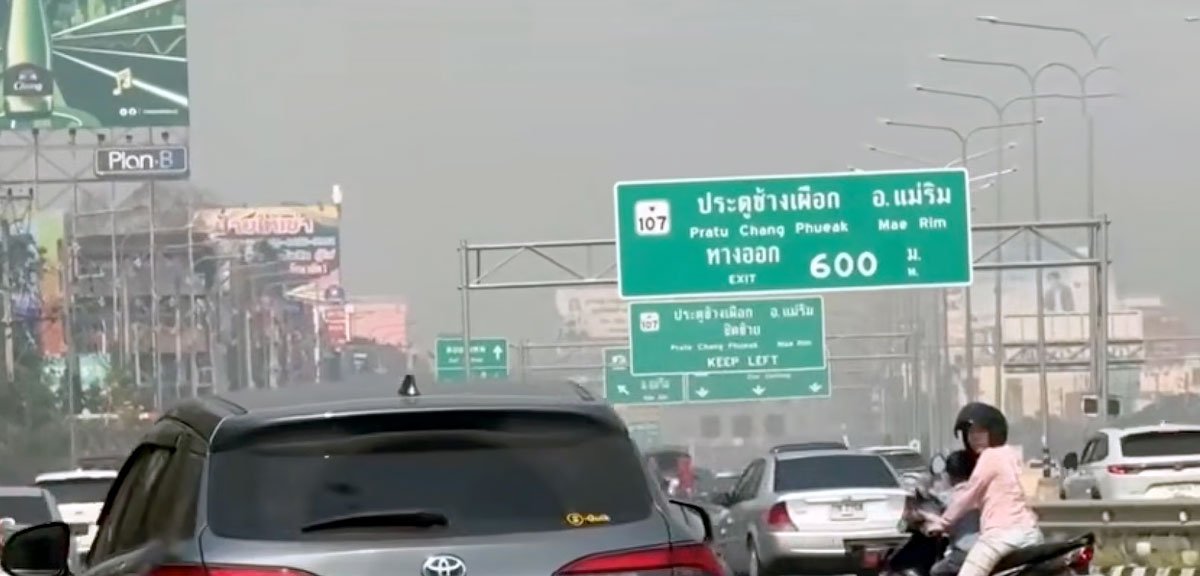
The Pollution Control Department in Thailand has advised the public to reduce smoke-producing activities during the Chinese New Year, scheduled for 16–17 February 2026. Traditional practices such as burning incense and joss paper, along with firecrackers, can significantly increase PM2.5 fine dust pollution. The department warns that these activities pose health risks, particularly to children, the elderly, and those with respiratory conditions.

Get today's headlines by email

The warning comes as PM2.5 levels are predicted to rise during the celebrations, particularly impacting Bangkok, nearby provinces, the central plains, and the lower Northern region. Director-General Surin Wongkitthamrong emphasized that the smoke contains carcinogens and toxic gases, which can lead to respiratory issues if inhaled over prolonged periods. Weather patterns are expected to exacerbate the situation by limiting air circulation, thus allowing pollutants to accumulate.

The department's campaign, “Reduce Pollution, Increase Good Fortune,” encourages the public to adjust their customs to mitigate health and environmental impacts. Experts highlight the importance of community cooperation in reducing traditional burning, which will help maintain cleaner air quality during the festivities. The initiative has also sparked discussions on incorporating environmental consciousness into cultural traditions both locally and globally.

Moving forward, monitoring stations in key areas will keep track of pollution levels, providing regular updates to the public. The department aims for increased awareness and long-term changes in cultural practices to combat pollution effectively. There is also potential for policy measures to support sustainable celebration methods in the future.

Key Takeaways
PM2.5 levels are expected to rise during the Chinese New Year due to traditional burning activities.
Vulnerable groups are at increased risk from the pollutants and toxic gases produced.
Changes in celebration practices are encouraged to promote health and environmental protection.

Join the discussion?

Already a member?

  Adapted by ASEAN Now · Khaosod · 16 Feb 2026
snoop1130
snoop1130
Reports from a Thai Facebook page allege that Cambodian soldiers are setting fires along the Thai-Cambodian border to obscure visibility and move troops and equipment. The page, called Army Military Force, described the fires as a tactical maneuver rather than agricultural clearing. These claims come amid ongoing tensions in the area, though no official confirmation has been received from Thai authorities.

Get today's headlines by email

The Facebook page alleged cooperation between Cambodian soldiers and local villagers to ignite these fires, describing it as a “tactical information filtering strategy.” The intention, according to the posts, is to reduce visibility for Thai forces, who reportedly hold higher ground and have been intercepting Cambodian communications. The page dismissed rumours that the fires were meant to destroy PMN-2 landmines, asserting that Cambodian forces have minefield maps to avoid such tactics.

The post also claimed that Thai forces previously obtained Cambodian minefield maps during key operations, including the retaking of Hill 350 and other strategic locations. Allegations suggest Cambodian mines are concentrated around operational bases and along Thai patrol routes rather than the wider forest area, stretching 798 kilometers and covering approximately 2,400 square kilometers. The speculation about Cambodian plans to seize Thai provinces was also dismissed by the page due to Cambodia’s reported strategic disadvantages.

Experts have yet to weigh in, and no official response has been given by Thai authorities regarding these claims. The lack of confirmation leaves the situation tense, with ongoing discussions about the true nature and implications of the alleged activities. As the situation develops, both nations continue to face scrutiny over border management and military strategies.

Looking forward, the focus will likely remain on de-escalating tensions and seeking clarification from official channels. Military analysts may closely monitor communications and movements for any further developments. The ongoing border situation necessitates diplomatic efforts to resolve disputes peacefully.

Key Takeaways
Allegations claim Cambodian troops use forest fires tactically along the border.
Thai forces reportedly have a strategic advantage with high ground visibility.
Official confirmation is still pending as the situation remains tense.

Join the discussion?


Already a member?

  Adapted by ASEAN Now · The Thaiger · 16 Feb 2026
snoop1130
snoop1130
Pattaya police have arrested Yap Chin Keong, a Malaysian-born Chinese national, in connection with a call centre scam that defrauded a Thai university student of over 1.9 million baht. The 20-year-old student filed a complaint after being falsely accused of involvement in a gambling website operation, with the scammer claiming his phone number was linked to social media promotions for the site. The fraudster instructed the victim to leave cash in a car boot, later grabbing the money and fleeing the scene.

Get today's headlines by email

The student reported the incident to Mueang Pattaya Police Station on February 10, explaining that the money stolen was the last of what his mother left him before her death. Following the report, officers used CCTV footage to identify and track down the suspect to a hotel in Nonthaburi province, where they made the arrest on February 15. Yap admitted to the crime, stating he acted under orders from a "big boss" who allegedly possessed his personal documents and monitored his movements.

Yap confessed to his role in the scam, revealing he handed the stolen cash to the alleged mastermind in Songkhla on February 12. To corroborate his story, he presented investigators with chat logs supposedly between him and the boss. Yap claimed he received 30,000 baht per assignment, maintaining he did not realize the content of the bags initially and expressed regret over his actions.

Now in custody, Yap is assisting police in uncovering further members of the criminal operation. Investigators are focused on dismantling the network behind the scam, hoping his cooperation will lead to additional arrests. Authorities emphasize their continued efforts to curb such fraudulent activities.

Key Takeaways
A Malaysian man was arrested for a scam defrauding over 1.9 million baht.
The suspect claimed coercion by a "big boss" and regrets his actions.
Police are working to dismantle the broader network of the scam.

Join the discussion?

Already a member?

  Adapted by ASEAN Now · The Thaiger · 16 Feb 2026
snoop1130
snoop1130
An elderly shop owner in Phuket is facing significant criticism after a video showing her making racist gestures towards a Chinese tourist went viral on the Douyin platform. The footage captures the shop owner engaging in a heated exchange with the tourist, where she is seen making offensive gestures including sticking her tongue out and mimicking single eyelids in an apparent attempt to mock the visitor. The incident has sparked outrage among social media users both in China and Thailand.

Get today's headlines by email

The conflict reportedly began when the shop owner, dressed in a red dress, talked with an Indian couple outside her store when they asked about the tourist's nationality. Responding with a pig nose gesture, she identified the tourist as Chinese, which the tourist found inappropriate. Despite not intending to enter the shop, the tourist decided to record and share the incident after the situation escalated, with the shop owner allegedly saying, “Why can’t I do this. Chinese people are ugly!”

The video quickly gained traction across Chinese and Thai social media platforms and was also covered by local media. The shop, located in Phuket Old Town, is reportedly known for charging a 40 baht entry fee to tourists who do not make a purchase, leading to similar confrontations in the past. The video has prompted many Thai users to criticize the owner, with accusations that her discriminatory behavior has persisted for years without intervention from authorities.

This incident has raised concerns about its potential impact on tourism, particularly as visitor numbers from China have already been in decline. Commenters noted that other businesses in the area also impose entry fees, creating an environment of unease among tourists. Going forward, there may be increased scrutiny of how shop owners engage with foreign visitors, potentially leading to policy changes to protect tourists from discriminatory practices.

Key Takeaways
Viral video shows Phuket shop owner making racist gestures at a Chinese tourist.
Incident highlights ongoing issues with tourist discrimination in the area.
Potential impact on tourism as concerns over foreign visitor treatment rise.

Join the discussion?

Already a member?

  Adapted by ASEAN Now · The Thaiger · 16 Feb 2026
snoop1130
snoop1130
A cannabis vendor in Pathum Thani has accused a group of 10 men, including two police officers, of stealing 800,000 baht in cash and cannabis trees worth over 2.2 million baht. The vendor, 22, alleged the group falsely claimed he lacked a permit for his legal cannabis operation before conducting a raid on his home on February 12.

Get today's headlines by email

The vendor shared video evidence with the news page Jmoi V+ and filed a complaint at the Mueang Pathum Thani Police Station. He asserted that despite having the proper permits, the group accused him of illegal cannabis cultivation and sales. During what he described as an illegitimate raid, he alleged the group took cash and valuable cannabis plants, resulting in a total loss exceeding 3 million baht.

The vendor attempted to address the issue with local police but found the accused officers absent when he reported the incident. After discovering damaged CCTV inside his home, he sought footage from nearby cameras for additional evidence.

Subsequent police investigations identified some of the alleged perpetrators as serving officers, leading to six arrest warrants, while four suspects remain unidentified. Among those with warrants, three individuals surrendered, including Police Captain Pongphon and another officer. All have denied the allegations.

One named officer was under scrutiny for a separate extortion case two months prior to this incident. Authorities have detained the three suspects for further questioning, while the investigation into the incident continues to track down the remaining individuals involved, reported The Thaiger.

Key Takeaways
A Pathum Thani cannabis vendor accuses police officers of theft during a wrongful raid.
Investigations led to six arrest warrants; three suspects are in custody.
An officer linked to a previous extortion case was involved in the incident.

Join the discussion?

Already a member?

  Adapted by ASEAN Now · The Thaiger · 16 Feb 2026
snoop1130
snoop1130
Yang Talat Hospital in Kalasin, northeastern Thailand, has reported a 100% success rate in laparoscopic surgeries for colorectal cancer, following screenings of over 1,200 individuals since 2023. The hospital detected 19 cases of cancer among these screenings, with all patients undergoing successful surgeries and resuming normal life.

Get today's headlines by email

The programme at Yang Talat Hospital began in 2023, offering free colonoscopy screenings that have proven crucial in early cancer detection. Dr. Samanmit Attanak, the hospital director, highlighted the significant threat posed by colorectal cancer in Thailand, ranking among the top three most common cancers nationwide. Early detection through regular screenings is emphasized as critical in reducing mortality rates.

The initiative was officially launched with support from district chief Ekarat Misa, alongside health officials and local volunteers. The hospital's programme uses colonoscopy as the primary screening method due to its reliability and potential for immediate treatment, preceding other methods like the faecal immunochemical test (FIT).

Between 2023 and 2025, the hospital screened 1,222 individuals, identifying 19 cases of cancer—all successfully treated surgically. The effectiveness of this programme underscores the crucial role of accessible healthcare services in early cancer detection and treatment, especially in reducing travel costs and improving survival rates.

This year marks the hospital’s fourth year of the screening programme, which aims to examine 567 individuals. Screenings are to be conducted on Fridays and Sundays, targeting individuals aged 50 and above in Yang Talat and the neighboring areas. By maintaining a robust healthcare network and trained specialists, the hospital seeks to standardize cancer screening practices further, reported Khaosod.

Key Takeaways
Yang Talat Hospital has achieved a 100% success rate in surgeries for colorectal cancer following extensive screenings.
The programme highlights the importance of early detection in reducing mortality rates for one of Thailand's most common cancers.
The hospital plans to screen 567 people in the 2026 programme, expanding access to vital cancer detection services.

Join the discussion?

Already a member?

  Adapted by ASEAN Now · Khaosod · 16 Feb 2026
snoop1130
snoop1130
Authorities in Loei, Thailand, have arrested two men at the Ban Khok Phai border checkpoint for allegedly operating an unlicensed tour business offering trips to Laos for Thai tourists. The arrests took place on February 16 in the Pak Chom subdistrict, with officers seizing documents, money transfer records, and promotional materials used in their operation. The suspects, both 30 and from Mueang Loei district, were charged under Thailand’s Tour Business and Guide Act (2008), facing up to two years in prison or a fine of 500,000 baht.

Get today's headlines by email

The unlicensed tour business reportedly operated for over two months, utilizing a Lao tour company license and promoting their services on social media. Tours were managed through the Khok Phai checkpoint using hired vans. The Tourism Police undertook a covert operation, purchasing a tour package for February 14-15 to confirm the illegal operations before making the arrests.

Acting Second Lt. Kritchanat Kunratchahirun, president of the Loei Tourism Business Association, emphasized the importance of using licensed tour operators due to potential legal penalties when things go awry. He noted the increased activity at Ban Khok Phai following its upgrade to facilitate smoother cross-border travel. Kritchanat advocated for further inspections of online adverts for overseas tours to verify their legitimacy.

Going forward, authorities urge tourists to use resources provided by the Department of Tourism to verify tour companies' licenses before purchasing trips. This advice aims to prevent illegal operations and protect tourists from potential scams.

Key Takeaways
Two men were arrested for running an unlicensed tour business in Loei.
The operation used a Lao license and advertised via social media.
Tourists can verify tour operator licenses through the Department of Tourism.

Join the discussion?

Already a member?

  Adapted by ASEAN Now · The Thaiger · 16 Feb 2026

snoop1130
snoop1130
The first phase of the Thai–Chinese high-speed rail project has reached 51.74% completion, according to the State Railway of Thailand (SRT). The update was provided during a visit by the Senate committee on transport to Chiang Rak Noi railway station in Ayutthaya. Acting SRT governor Anan Phonimdaeng said progress is continuing across multiple contracts.

Get today's headlines by email

Phase 1 links Bangkok and Nakhon Ratchasima and carries a total investment value of 179.41 billion baht. The phase consists of 14 construction contracts and one train system contract. Two contracts covering the Klang Dong–Pang Asok and Sikhiu–Kut Chik sections have been completed, while construction is under way on 10 others.

Two additional contracts for the Bang Sue–Don Mueang and Ban Pho–Phra Kaeo sections have yet to be signed. Mr Anan said the SRT has instructed contractors to adhere strictly to timelines while maintaining engineering and safety standards. Commercial operations for Phase 1 are scheduled to begin in 2030.

The 250.77-kilometre route will largely be elevated, with approximately 188.68km designed as elevated track to reduce level crossings and improve safety. About 54.09km will run at ground level. Two tunnels, located in Muak Lek and Lam Takhong, will span a combined distance of around 8km.

Six main stations are planned along the Phase 1 route: Krung Thep Aphiwat, Don Mueang, Ayutthaya, Saraburi, Pak Chong and Nakhon Ratchasima. The project forms part of broader efforts to modernise Thailand’s rail infrastructure and strengthen regional connectivity.

Phase 2 of the project, extending from Nakhon Ratchasima to Nong Khai, has already been approved by the cabinet and passed its environmental impact assessment. This 357.12km section is valued at 256.4 billion baht. It will include five stations: Bua Yai Junction, Ban Phai, Khon Kaen, Udon Thani and Nong Khai.

Manger online reported that bidding and contract signing for Phase 2 are expected to take place this year. Construction is projected to take 48 months, with an anticipated opening in 2031. Once completed, the full route is intended to enhance transport capacity and support cross-border links.

Cover picture courtesy of Bangkokpost

Key Takeaways

• Phase 1 of the Thai–Chinese high-speed rail project is 51.74% complete, with two contracts finished and 10 under construction.
• The 250.77km Bangkok–Nakhon Ratchasima section is valued at 179.41 billion baht and is scheduled to open in 2030.
• Phase 2 to Nong Khai, worth 256.4 billion baht, is expected to open in 2031 after 48 months of construction.

Join the discussion?

Already a member?

Adapted by ASEAN Now Bangkokpost 16 Feb 2026


Georgealbert
Georgealbert
Thai authorities say they have found clear evidence that Cambodia secretly planted landmines inside Thai territory, describing the act as a serious violation of international humanitarian law. The Royal Thai Navy confirmed that newly laid anti-personnel mines were discovered during operations to secure and clear border areas. Officials said the discovery has heightened security concerns along the frontier.

Get today's headlines by email

Rear Admiral Parach Rattanachaiyaphan, spokesperson for the Royal Thai Navy, said the Navy’s Humanitarian Mine Action Unit found six newly manufactured PMN-2 anti-personnel mines in Ban Chamrak, Mueang district, Trat province. The discovery was made on 14 February 2026 during operations to reclaim and clear the area under the “Trat Phikhat Phairi” plan.

An inspection confirmed the devices were newly placed by the opposing side and were not remnants from past conflicts. In nearby areas, officials also found three PMN-1 mines and one POMZ mine while developing a tactical route along the border.


The Navy stressed that Thailand is strictly adhering to the joint Thai–Cambodian statement issued on 27 December 2025, maintaining a humanitarian approach and refraining from the use or support of anti-personnel mines in all circumstances. Authorities said the deployment of new mines represents a grave breach of international humanitarian law and obligations concerning the prohibition of anti-personnel mines.

Thai officials formally condemned the alleged action and said all evidence would be systematically recorded. They added that further steps would be pursued under relevant legal frameworks and international mechanisms.


Pictures courtesy of Amarin

The discovery follows recent efforts by Thai forces to reinforce border security and clear suspected hazardous areas. Military units have been conducting mine clearance and strengthening defensive measures along sensitive sections of the frontier in response to ongoing tensions.

Amarin reported that officials indicated that documentation and verification of the findings would continue, alongside coordination with relevant agencies. The government has signalled it will proceed within established international legal channels while maintaining security operations in the affected areas.


Key Takeaways

• Six newly manufactured mines were found in Ban Chamrak, Trat, on 14 February 2026.
• Thai authorities say the mines were newly planted and not leftover from previous conflicts.
• Thailand has condemned the alleged action and will pursue legal steps through international mechanisms.

Join the discussion?

Already a member?

Adapted by ASEAN Now Amarin 16 Feb 2026
Georgealbert
Georgealbert
A 44-year-old male inmate infected with mpox has died in custody, the Department of Disease Control confirmed on 14 February 2026. The prisoner, who had multiple underlying conditions, passed away on 11 February after his condition deteriorated despite treatment. Laboratory tests confirmed infection with the Mpox Clade II strain.

Get today's headlines by email

Dr Montien Kanasawad, Director-General of the Department of Disease Control at the Ministry of Public Health, said the inmate had pre-existing illnesses including HIV, hepatitis B and C and syphilis. He had not been receiving continuous treatment, resulting in severe immunodeficiency which contributed to the unusually serious progression of the disease.

The inmate entered prison on 20 January 2026 with a wound on his leg. He later developed a fever and a rash with lesions across his body before being urgently transferred to the Corrections Hospital. Although medical staff provided full treatment, his symptoms worsened and he died on 11 February.

Initial investigations suggest he may have contracted the virus before entering prison. Health officials believe his lack of antiretroviral treatment for HIV significantly weakened his immune system, leading to increased severity.

Following laboratory confirmation, the Department of Disease Control worked with the Department of Corrections and related agencies to implement immediate containment measures. Authorities isolated and monitored 32 close contacts within the same zone and placed a further 14 individuals under observation in related areas.

Prisoner transfers in the affected area were suspended, and temperature checks are being conducted twice daily for 21 days. A large-scale environmental clean-up has been carried out, and infectious waste is being managed under strict standards.

In addition, health authorities are closely monitoring contacts within healthcare settings, particularly medical personnel and staff involved in treatment. Nineteen high-risk individuals have received post-exposure prophylaxis vaccination, while risk assessments are ongoing for more than 80 others.

Dr Niti Hetanurak, Deputy Director-General of the Department of Disease Control, stated that mpox spreads through close contact with rashes, lesions or bodily fluids, as well as sharing personal items and intimate sexual contact. Common symptoms include fever, swollen lymph nodes, muscle aches and skin lesions, and anyone experiencing suspected symptoms should seek medical attention promptly.

Officials confirmed that no additional inmates or staff have shown symptoms consistent with the disease. The situation remains under close monitoring, and authorities have urged the public to remain confident in the surveillance and response systems in place.

Amarin reported that The Department of Disease Control said it will continue working with all relevant sectors to prevent wider transmission. Members of the public with concerns can contact the Department of Disease Control hotline on 1422.

Key Takeaways

• A 44-year-old inmate with multiple underlying conditions died from Mpox Clade II on 11 February 2026.
• Authorities are monitoring 46 prison contacts and more than 80 additional individuals, with 19 receiving vaccination.
• No further cases have been detected and the situation is under close control.

Join the discussion?

Already a member?

Adapted by ASEAN Now Amarin 16 Feb 2026
Georgealbert
Georgealbert
A protest group calling itself the “United Front of Thammasat and Demonstration” organised a mock referendum on Sunday, February 15, inviting the public to vote on whether the Election Commission (EC) should be removed from office. The activity took place from 5pm to 7pm on the Pathum Wan intersection skywalk near the Bangkok Art and Culture Centre on Rama 1 Road in Bangkok.

Get today's headlines by email

Participants were asked a single question: “Do you agree that the Election Commission should be removed from office?” Ballots were cast in a mock booth set up at the site, allowing members of the public to express their views. The event was led by Teeraphat Supapitakphaiboon.

The group announced the activity through its Facebook page, encouraging people to join the mock referendum. Organisers said the location was chosen to attract the large number of young people who pass through the area. They also indicated plans to expand the campaign to other major universities.


Universities mentioned as potential venues for similar activities include Chulalongkorn University, Thammasat University, Ramkhamhaeng University, Kasetsart University and Srinakharinwirot University. Student organisations at these institutions were said to support the same idea. The organisers aim to build wider momentum among university communities.

The protest follows continued mobilisation by groups calling for a “recount” in relation to the 2026 election. On February 14 at 5pm, the “Thalu Gas” group and the “Recount Chon Buri” group held a rally outside the Bangkok Art and Culture Centre in Pathum Wan. They claimed the 2026 election was not transparent and called for a nationwide recount to ensure transparency and restore public confidence in democracy.

The Election Commission has previously defended its procedures, including the use of barcodes and QR codes on ballots. Related legal action has also been reported, with the Administrative Court accepting a lawsuit concerning election procedures and considering requests to suspend results and call for a re-election.

The Nation reported that further activities by the United Front of Thammasat and Demonstration are expected, particularly if similar mock referendums are organised at university campuses. It remains to be seen whether the campaign will draw broader public participation or prompt an official response from the EC.


Pictures courtesy of The Nation

Key Takeaways

• A Thammasat-linked protest group held a mock referendum on February 15 calling for the removal of the Election Commission.
• The event took place at Pathum Wan intersection and aimed to mobilise young people and university students.
• Other protest groups have demanded a nationwide recount, alleging a lack of transparency in the 2026 election.

Join the discussion?

Already a member?

Adapted by ASEAN Now Nation 16 Feb 2026
Georgealbert
Georgealbert
The Royal Thai Embassy in Bern held an official ceremony on 11 February marking the voluntary restitution of 11 cultural artefacts to Thailand. Thai Ambassador to Switzerland Pannabha Chandraramya received the items on behalf of the Thai government from Fabienne Baraga, Head of the Specialist Body for the International Transfer of Cultural Property at the Federal Office of Culture, representing the Swiss Confederation. The return formally transfers custody of the historically significant objects back to Thailand.

Get today's headlines by email

The artefacts were voluntarily returned through Swiss authorities by an anonymous collector who expressed a wish for the items to be restored to their country of origin. Preliminary assessments indicate the objects may have originated from the Ban Chiang Archaeological Site in north-eastern Thailand. The site is recognised as a UNESCO World Heritage site.

UNESCO: Ban Chiang is considered the most important prehistoric settlement so far discovered in South-East Asia. It marks an important stage in human cultural, social and technological evolution. The site presents the earliest evidence of farming in the region and of the manufacture and use of metals.


The repatriation was described as a symbol of the enduring friendship and close cultural cooperation between Thailand and Switzerland. Officials said the return reflects a shared commitment to protecting global cultural heritage. The ceremony was attended by representatives from the Swiss Federal Department of Foreign Affairs, the Federal Department of Home Affairs, and members of the Thai community in Switzerland.

The restitution follows established procedures for the international transfer of cultural property handled by Swiss authorities. The involvement of the Federal Office of Culture underscores Switzerland’s role in facilitating the voluntary return. The artefacts are expected to be formally reintegrated into Thailand’s cultural heritage collections following their transfer.

Khoasod reported that Thai authorities are likely to conduct further verification and conservation assessments once the items arrive in Thailand. Any confirmation of their origin from Ban Chiang Archaeological Site would reinforce the historical importance of the return. The event highlights ongoing cooperation between the two countries in matters relating to cultural property.


Pictures courtesy of Khaosod

Key Takeaways

• Eleven cultural artefacts were voluntarily returned to Thailand in a ceremony held in Bern on 11 February.
• The items may have originated from the Ban Chiang Archaeological Site, a UNESCO World Heritage site in north-eastern Thailand.
• The restitution was described as reflecting close cultural cooperation between Thailand and Switzerland.

Join the discussion?

Already a member?

Adapted by ASEAN Now Khaosod 15 Feb 2026
Georgealbert
Georgealbert
Parit Wacharasindhu has reaffirmed that the People’s Party will serve as leader of the opposition following the formation of a coalition government between Bhumjaithai Party and Pheu Thai Party. Speaking in Bangkok on 14 February 2026, the party spokesperson also denied holding any talks with Thammanat Prompow after the coalition was announced.

Get today's headlines by email

Parit said Bhumjaithai had already successfully formed a government, citing its public declaration of cooperation with Pheu Thai and several smaller parties. He noted that the combined number of MPs in the alliance exceeds 250, giving it a parliamentary majority.

In principle, Parit said, the People’s Party has consistently maintained that it is the legitimate right of the largest party to form a government. As the election results showed that the People’s Party was not the largest party, it respects that right and will take up its role in opposition without joining the government.

He was responding to questions about whether the People’s Party would attempt to form a government if Bhumjaithai failed to do so. Parit made clear that such a scenario does not apply, given that Bhumjaithai has already secured sufficient support to lead the administration.

Addressing reports that Pheu Thai may seek to reclaim the Agriculture and Cooperatives Ministry from the Kla Tham Party, Parit said there had been no discussions between Thammanat and the People’s Party. He stressed that negotiations over cabinet portfolios are a matter for coalition partners and not the opposition.

Parit added that the public would want clarity on how coalition parties intend to reconcile differing policies. He said there has yet to be clear indication of the first key policies the new government will prioritise.

The formation of the Bhumjaithai–Pheu Thai coalition marks a significant development in Thailand’s political landscape. With more than 250 MPs, the alliance appears positioned to move forward with cabinet appointments and policy implementation.

Khoasod reported that attention is now likely to turn to the allocation of ministerial posts and the government’s initial legislative agenda. Observers will also be watching how effectively the opposition, led by the People’s Party, scrutinises the coalition’s performance in parliament.

Key Takeaways

• Parit Wacharasindhu confirmed the People’s Party will serve as leader of the opposition following the Bhumjaithai–Pheu Thai coalition.
• He denied any talks with Thammanat Prompow and said cabinet negotiations are for coalition partners.
• The Bhumjaithai coalition commands more than 250 MPs, clearing the way for government formation and policy rollout.

Join the discussion?

Already a member?

Adapted by ASEAN Now Khaosod 15 Feb 2026
Georgealbert
Georgealbert
A proposal to increase Thailand’s value-added tax (VAT) to 10% aims to boost government revenue and enhance welfare benefits for senior citizens. The plan, reported on Saturday, February 14, 2026, suggests the higher rate could generate an additional 200–300 billion baht annually. The extra funds would help raise monthly pensions for elderly citizens from the current 600–1,000 baht to 3,000 baht.

Get today's headlines by email

VAT currently accounts for around 30% of total government income, generating approximately 900 billion baht each year. Under the proposal, the additional revenue would be placed in a special savings account, allowing individuals to invest in government bonds to support increased welfare spending. The measure forms part of broader efforts to strengthen public finances amid rising fiscal pressures.

The sub-committee has also proposed expanding the tax base and tackling tax evasion. One key measure would introduce a 0.11% tax on stock sales, ending a more than 40-year exemption and potentially generating 16–18 billion baht annually. Another proposal under consideration is taxing gold transactions, which average around 65 billion baht per day, compared with approximately 42 billion baht in daily stock trades.

In addition, the committee recommends reinstating an exit tax for outbound travel. The proposed charge would be 1,000 baht per person for air travel and 500 baht for land or sea departures, potentially raising an extra 2.8 billion baht per year.

Warit Pipitpojjanakarn, secretary of the sub-committee on finance, raised concerns that public debt is projected to reach 69.78% of GDP by 2028, nearing the 70% ceiling. He noted that persistent budget deficits, particularly during the Covid-19 crisis, pushed the shortfall beyond the fiscal sustainability limit of 3% of GDP, with projections showing a rise to 4.4% by 2026. He also proposed structural tax reforms to promote savings and ease living costs.

Among these reforms is an increase in the child tax deduction from 30,000 baht to 500,000 baht per child. Plans include establishing savings funds for children and parents, with tax deductions of up to 100,000 baht per year, through a “Thai Junior Fund” and a “Parents Fund”. Dividend tax rules would also be adjusted for individuals earning more than 10 million baht annually, shifting them to a progressive rate.

The Nation reported that all the proposals remain under consideration, with further deliberations expected before any measures are implemented.

Cover picture courtesy of Nation

Key Takeaways

• Raising VAT to 10% could generate an additional 200–300 billion baht annually to fund higher elderly pensions.
• New taxes on stock sales, gold trading and outbound travel are proposed to expand revenue sources.
• Public debt is projected to reach 69.78% of GDP by 2028, nearing the 70% ceiling.

Join the discussion?

Already a member?

Adapted by ASEAN Now Nation 15 Feb 2026
Georgealbert
Georgealbert
A Thai masseuse in Germany has been ordered to pay €1,000 in compensation after a court found she sexually assaulted a male client by providing “special services” without consent. The ruling followed a complaint by a 26-year-old German software engineer, identified only as Ben. The incident took place at a massage shop on Osloer Straße in Berlin.

Get today's headlines by email

The 53-year-old masseuse, identified as Sukanya, was reported to police two days after the alleged assault. Ben told local news outlet B.Z. that he had booked a back massage by phone and attended the appointment alone. He said he felt reassured by a sign at the premises stating there was “no happy ending” service.

A photograph published in media reports showed a sign on the shop door reading in German, “no erotic service, medical service only.” Ben said he was taken to a massage room where Sukanya asked him to remove his trousers. Although he found the request unusual, he assumed it was to prevent his clothes from getting oil on them.

According to Ben, Sukanya initially performed the requested back massage before moving her hands to his thighs, buttocks and genitals. He said she later instructed him to lie on his back, tapped his genitals twice and pointed to her mouth while asking whether he wanted “special service.” Ben stated that he refused.

He told B.Z. that he did not have the courage to stop Sukanya or confront her at the shop. After returning home, he said he showered for almost two hours. He reported the sexual assault to police two days later.

During court proceedings, Sukanya said she believed the client wanted an erotic massage. She apologised to Ben in person, and the two sides reached an agreement. The court ordered her to pay €1,000 in compensation within six months.

Thai social media users criticised Sukanya, with some stating the case damaged the image of Thailand and Thai massage. Others said such incidents undermine Thai masseuses who provide medical massage services to clients.


Picture courtesy of Olaf Wagner via B.Z.

Key Takeaways

• A Thai masseuse in Berlin was ordered to pay €1,000 after a client reported sexual assault.
• The client said he had booked a back massage and refused an offer of “special service.”
• The court ordered compensation within six months after both sides reached an agreement.

Join the discussion?

Already a member?

Adapted by ASEAN Now TheThaiger 15 Feb 2026
Georgealbert
Georgealbert
Thai authorities have launched a renewed push to address the country’s collapsing birth rate, now at its lowest level in 75 years, with officials stressing the importance of supporting every pregnancy. The Ministry of Public Health said the aim is to ensure that every birth is safe, voluntary and fully supported. The announcement was made at a press conference on Friday.

Get today's headlines by email

Dr Amporn Benjapolpitak, director-general of the Department of Health, warned that Thailand is facing a severe demographic crisis driven by a sharp decline in births. She said the trend poses long-term risks to economic growth, social structure, the labour force, the welfare system and public health.

According to the Department of Provincial Administration, Thailand recorded 416,514 births last year, the lowest figure in nearly 75 years. In contrast, deaths reached 559,684 during the same period.

Thailand is consistently ranked among the bottom 10 countries globally for low birth rates. Its Total Fertility Rate has fallen to between 1.0 and 1.2 children per woman, well below the 2.1 replacement level needed to maintain a stable population. It is also the only country in Southeast Asia with a declining birth rate.

Officials attribute the decline to economic struggles, high living costs and changing social norms among younger generations. Without substantial policy intervention, they said the population could shrink to as little as 30 million within the next five to six decades.

Dr Amporn outlined the Ministry’s “Every Birth Matters” policy, emphasising that the objective is not to pressure couples into having children. Instead, the focus is on ensuring that each birth is voluntary, safe and supported by high-quality care.

Department of Health deputy director-general Dr Pakorn Tungkasereerak detailed five key achievements: expanding fertility and preconception services; strengthening maternal and child healthcare through a continuous care model; investing in early childhood development under the “Amazing 2,500 Days” framework; preventing unintended pregnancies; and promoting mental health support for mothers and families.

He also announced three forward-looking strategies aimed at building a health-centred ecosystem to support quality childbirth. These include reducing healthcare burdens on parents, expanding digital access to maternal and child health services and harnessing big data analytics to provide more tailored, family-level policy support.

Bangkokpost reported that officials said sustained and integrated action across government and society will be essential to reverse the downward trend and secure Thailand’s demographic future.

Cover picture courtesy of Bangkokpost

Key Takeaways

• Thailand recorded 416,514 births last year, while deaths reached 559,684.
• The Total Fertility Rate has fallen to between 1.0 and 1.2, below the 2.1 replacement level.
• The “Every Birth Matters” policy focuses on safe, voluntary and fully supported pregnancies.

Join the discussion?

Already a member?

Adapted by ASEAN Now Bangkokpost 15 Feb 2026
Georgealbert
Georgealbert
Thailand’s Department of National Parks, Wildlife and Plant Conservation has announced stricter controls on the possession of 10 high-risk wild animal species, with immediate effect. The new measures aim to strengthen public safety, standardise approval processes nationwide and enhance animal welfare standards.

Get today's headlines by email

On 12 February 2026, Director-General Atthaphon Charoenchansa said the department had issued a new regulation to intensify oversight of “Category A controlled wildlife”, a group comprising species considered dangerous or potentially harmful to life and property. The updated measures are designed to align enforcement more closely with the Wildlife Preservation and Protection Act B.E. 2562 (2019).

The 10 species listed under Category A include large carnivores such as cheetahs, lions and jaguars. The list also covers great apes including mountain gorillas, gorillas, chimpanzees, bonobos, Sumatran orangutans and Bornean orangutans, as well as green anacondas.

Officials will conduct comprehensive inspections of premises where such animals are kept, assessing suitability for the animals’ behavioural needs, lifetime welfare provisions and specialist veterinary care for dangerous species. Owners must also secure consent from nearby residents and communities to confirm that facilities will not adversely affect public safety.

Strict escape prevention systems are required, alongside emergency response plans, rescue equipment and high-performance warning systems. Possession must comply with other relevant laws, including town planning, public health and local regulations.

If premises fail to meet standards, officials may order corrective action within a specified timeframe. Failure to comply could result in non-recognition of possession status and the immediate seizure or confiscation of the animals.

Holders of valid possession certificates who breach welfare regulations face penalties of up to six months’ imprisonment, a fine of up to 50,000 baht, or both. In cases where an animal escapes due to unforeseen circumstances, owners must notify authorities within 24 hours to enable prompt response.

ThaiRath reported that the  department stated that the regulation takes effect immediately to safeguard public safety and improve animal welfare nationwide. Category B controlled wildlife, covering 57 species deemed less dangerous, will continue to be regulated under the existing 2022 framework.


Picture courtesy of Department of National Parks, Wildlife and Plant Conservation

Key Takeaways

• Thailand has imposed stricter controls on 10 Category A wild animal species with immediate effect.
• Owners must meet enhanced welfare, safety and legal compliance standards or face seizure and penalties.
• Breaches can result in up to six months’ imprisonment, a 50,000 baht fine, or both.

Related Stories

Lion-seized-after-escaping-and-attacking-child-in-Kanchanaburi

Illegal-lion-and-liger-seized-from-home-in-Songkhla

Join the discussion?

Already a member?

Adapted by ASEAN Now Thairath 14 Feb 2026
Georgealbert
Georgealbert

Account

Navigation

Search

Search

Configure browser push notifications

Chrome (Android)
  1. Tap the lock icon next to the address bar.
  2. Tap Permissions → Notifications.
  3. Adjust your preference.
Chrome (Desktop)
  1. Click the padlock icon in the address bar.
  2. Select Site settings.
  3. Find Notifications and adjust your preference.