Skip to content
View in the app

A better way to browse. Learn more.

Thailand News and Discussion Forum | ASEANNOW

A full-screen app on your home screen with push notifications, badges and more.

To install this app on iOS and iPadOS
  1. Tap the Share icon in Safari
  2. Scroll the menu and tap Add to Home Screen.
  3. Tap Add in the top-right corner.
To install this app on Android
  1. Tap the 3-dot menu (⋮) in the top-right corner of the browser.
  2. Tap Add to Home screen or Install app.
  3. Confirm by tapping Install.

Become a member

Become a member

World News

Fresh news brought to you daily from around the world. Hot news, breaking stories as they happen.
Prices spike as conflict threatens global energy supply
Oil prices have surged to their highest level in more than two years after a senior Qatari official warned that oil and gas production across the Gulf could soon grind to a halt if conflict in the region continues.

Brent crude rose more than 9% on Friday to above $93 a barrel, marking its highest level since autumn 2023. The sharp jump followed comments from Qatar’s energy minister, Saad al-Kaabi, who warned that the escalating crisis in the Middle East could have severe consequences for global energy supplies.

Get the latest headlines in your email

The region plays a central role in the world’s oil and gas market, and any disruption quickly feeds through to global prices. Higher crude costs typically translate into more expensive fuel, heating and transport, which can in turn push up the price of goods and services.

Qatar warns of potential halt to Gulf production
Speaking to the Financial Times, Kaabi said the conflict could soon force oil and gas exporters across the Gulf to stop production entirely.
He warned the consequences could be severe for the global economy.
“The economies of the world could be brought down,” he said.

Qatar itself is a major exporter of oil and liquefied natural gas (LNG), supplying energy to countries around the globe. Earlier this week QatarEnergy announced it had already halted LNG production after what it described as military attacks on its facilities.
The company has declared “force majeure”, a clause that allows suppliers to suspend contractual obligations when circumstances beyond their control prevent deliveries.

Kaabi suggested other energy exporters in the region could soon be forced to follow suit if the conflict continues.
Even if hostilities stopped immediately, he added, restoring normal production levels could take weeks or even months.

Strait of Hormuz disruption fuels market fears
The conflict has also raised serious concerns about shipping through the Strait of Hormuz, one of the most critical energy transit routes in the world.

Around a fifth of the world’s oil supply normally passes through the narrow waterway each day. However, traffic through the strait has largely halted since the conflict between the United States, Israel and Iran intensified last weekend.
Any prolonged disruption could have a major impact on global energy markets, particularly for countries heavily dependent on imported oil.

Large economies such as China, India and Japan rely significantly on crude shipments that normally pass through the strait.
Some Gulf producers have limited alternatives. Saudi Arabia and the United Arab Emirates operate pipelines that allow some oil exports to bypass the strait, but analysts say these routes cannot fully replace normal shipping volumes.

Analysts warn of wider economic risks
Energy analysts say the situation now presents a significant risk to the global economy if the conflict continues.
Jorge Leon, an analyst at Rystad Energy, said the world may be on the brink of a wider energy shock.
“I think we’re on the edge of trying to understand whether this will be a short energy crisis with limited implications, or the beginning of a massive economic and energy crisis,” he said.

Leon warned that if the conflict continues for more than two weeks, the chances of serious disruption to global energy systems would increase sharply.
If Gulf exporters are unable to ship oil abroad, they will be forced to store production instead. Once storage facilities reach capacity, producers may have little choice but to shut down wells and halt output.

Depending on available storage, that point could arrive within days or a few weeks.
Oil prices rising above $100 a barrel is now considered a realistic possibility, Leon said, although the duration of any price spike would be crucial.
If prices remain high for an extended period, governments could respond by releasing emergency reserves, as many did following Russia’s full-scale invasion of Ukraine.

Impact likely to be felt through energy costs
Some analysts believe a complete shutdown of Gulf oil and gas production remains an extreme scenario.
Lindsay James, an investment strategist at Quilter, said market movements suggest investors still expect shipping through the Strait of Hormuz to resume relatively quickly.

However, she warned the risk of prolonged disruption grows the longer the conflict continues.
For households, the immediate effect is likely to be felt mainly through higher energy costs rather than a broad surge in inflation.
Fuel prices and heating costs could rise, putting pressure on household budgets and slowing economic growth if elevated energy prices persist.

Join the discussion?

Already a member?


  Adapted by ASEAN Now · Source · 06.03 2026
ASEAN NOW News
ASEAN NOW News
Airlines are being forced to reroute flights through increasingly narrow corridors as conflict linked to Iran shuts large areas of Middle Eastern airspace and disrupts one of the world’s busiest aviation regions.

The latest pressure point emerged after the southern half of Azerbaijan closed its airspace following a drone attack, leaving airlines with fewer options as they try to keep long-haul routes between Europe and Asia operating.

Get the latest headlines in your email

The restriction has squeezed aircraft into a narrow flight corridor across northern Azerbaijan, intensifying congestion in skies that were already under strain from wider regional tensions.
Aviation analyst John Strickland said the situation has left carriers with limited alternatives.
“There is now a very tight range of options for airlines,” he said, describing the conditions facing flight planners.

Airspace closures reshape global routes
The disruption is particularly significant because the Middle East normally acts as a key crossroads for global aviation. Routes across Iran, Iraq and the Gulf region typically carry large volumes of traffic linking Europe, Asia and Africa.
But with much of that airspace now considered unsafe, airlines are diverting flights around the region.

Western carriers had already been avoiding Russian airspace since the 2022 invasion of Ukraine, forcing many long-haul flights to take longer routes. The additional closure of Iranian and Iraqi airspace has further complicated those plans.

According to aviation data from Flightradar24, aircraft are now clustering in a roughly 100-kilometre-wide corridor across northern Azerbaijan, a country about the size of Portugal. This corridor has become one of the few viable passages connecting Europe with parts of Asia.

David Mumford, an international operations specialist at aviation risk group Opsgroup, said the traditional central route across the Gulf region is effectively unusable.
“The central corridor across Iran, Iraq and the Gulf is effectively closed,” he explained. “Most traffic is going either north via the Caucasus and Afghanistan, or south via Egypt, Saudi Arabia and Oman.”
Both alternatives involve longer flight paths, which increase fuel consumption and extend journey times.


Longer journeys and tighter scheduling
Passengers are already beginning to feel the effects of the disruption, with flight times increasing on some routes between Europe and Asia.
Strickland said airlines must juggle multiple challenges when planning new flight paths, including weather conditions, congestion in the remaining corridors and the ripple effect delays can cause to aircraft schedules.

“Flights already doing circuitous routing have even less choice,” he said.
Congestion could become particularly noticeable during peak travel periods. Flights from Europe to Asia typically depart in the afternoon and evening, while services returning from Asia often arrive in Europe early in the morning.

This means many aircraft may be trying to pass through the same limited corridors at similar times of day.
While most airlines are managing to operate non-stop services despite the longer distances, a few have already had to adapt.
Australian airline Qantas, for example, has introduced a refuelling stop in Singapore for its Perth-to-London service, which had previously operated as a non-stop flight.

Wider risks for global aviation
The situation could deteriorate further if Azerbaijan becomes more directly involved in the conflict.
David Kaminski, air transport editor at aviation news service FlightGlobal, warned that a wider escalation could dramatically restrict available airspace across the region.

If Azerbaijan were drawn deeper into the conflict, airlines could face what he described as an “airspace brick wall” stretching from Saudi Arabia to northern Russia.
“The disruption would be vast,” he said.

Gulf aviation model under pressure
The crisis also threatens the business model of Gulf airlines that have built global networks around major hubs such as Dubai, Abu Dhabi and Doha.
Carriers including Emirates, Etihad and Qatar Airways have transformed those cities into major transit points connecting travellers from Europe with destinations across Asia.

If the conflict continues for an extended period, however, the flow of passengers through those hubs could decline, potentially benefiting rival aviation centres.
Kaminski suggested nearby cities such as Riyadh or Istanbul might try to capitalise if travel patterns shift permanently.
In the short term, aviation experts say airlines will continue adjusting routes day by day while closely monitoring security developments across the region.

Join the discussion?

Already a member?


  Adapted by ASEAN Now · Source · 06.03 2026
ASEAN NOW News
ASEAN NOW News
A long-range American bomber capable of carrying dozens of cruise missiles has arrived at a military base in the United Kingdom, underscoring Washington’s expanding military posture as tensions with Iran intensify.

The 146-foot B-1 Lancer landed at RAF Fairford in Gloucestershire on Friday after the British government authorised the United States to use certain UK bases for limited defensive operations connected to the conflict.

The aircraft’s arrival comes days after Prime Minister Keir Starmer agreed to allow American forces to operate from British facilities for strikes targeting Iranian missile capabilities. Officials have emphasised that the UK is not directly participating in attacks inside Iran but is supporting defensive measures to protect allied forces and regional partners.

Get the latest headlines in your email


Strategic bomber deployed to RAF Fairford
The B-1 Lancer is among the most powerful aircraft in the U.S. Air Force’s long-range strike fleet. Piloted by a crew of four, the bomber has a wingspan of 137 feet and weighs about 86 tonnes.
According to manufacturer Boeing, it can reach speeds of more than 900 miles per hour, making it the fastest bomber currently in U.S. service.

The aircraft can carry up to 24 cruise missiles as well as a wide range of other precision weapons. Its systems include advanced radar and satellite-guided navigation designed to improve targeting accuracy over long distances.
To protect itself in hostile airspace, the bomber is equipped with electronic jammers, radar warning receivers and decoy systems intended to confuse enemy air defences.

Nicknamed “the Bone” by pilots and crews — derived from the aircraft’s designation B-One — the bomber has frequently been used for rapid strike deployments during international crises.

RAF Fairford’s long-standing US role
RAF Fairford, located on the border of Gloucestershire and Wiltshire, has historically served as a staging point for American heavy bombers operating in Europe and the Middle East.

The base has previously supported U.S. strategic aircraft during conflicts in Iraq and Afghanistan and regularly hosts visiting bombers during NATO exercises and rotational deployments.

Western officials said earlier this week that the UK was preparing to receive such aircraft and expected them to arrive within days as part of a broader reinforcement of American air capabilities in the region.
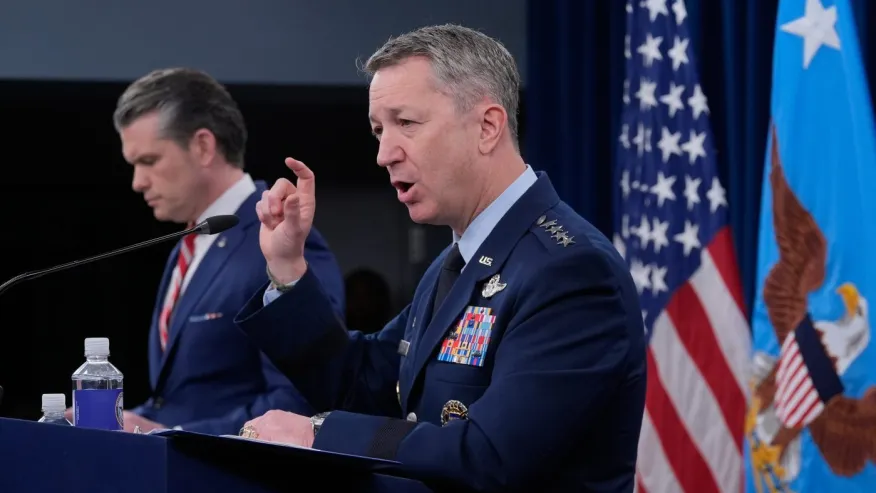
The bomber deployment forms part of a wider military buildup announced by U.S. Defence Secretary Pete Hegseth.
Speaking on Thursday, he indicated that American operations related to Iran were likely to intensify in the coming period.
“It’s more fighter squadrons, it’s more capabilities, it’s more defensive capabilities,” Hegseth said. “And it’s more bomber pulses more frequently.”

Britain emphasises defensive role
The British government has repeatedly stressed that its involvement in the crisis is focused on defensive actions rather than offensive strikes.
Royal Air Force aircraft have been deployed to intercept missiles and drones launched by Iran toward allied countries in the region, including those hosting Western military personnel.

Downing Street said the decision to allow the United States to operate from UK bases was aimed at preventing further attacks by targeting missile launch capabilities at their source.
A spokesperson for the prime minister told reporters on Friday that the arrangement allowed only “limited, specific and defensive use” of British facilities.

“We’ve been very clear that our response has been to allow the US limited, specific and defensive use of our bases to protect British lives, British interests and our allies in the region,” the spokesperson said.
Officials added that British forces were concentrating on air defence operations while U.S. forces targeted missile infrastructure believed to be responsible for attacks across the region.

The arrival of the B-1 bomber highlights how the conflict is drawing in additional Western military resources, even as governments continue to emphasise that their goal is to deter further escalation rather than widen the war.

Join the discussion?

Already a member?


  Adapted by ASEAN Now · Source · 05.03 2026
ASEAN NOW News
ASEAN NOW News
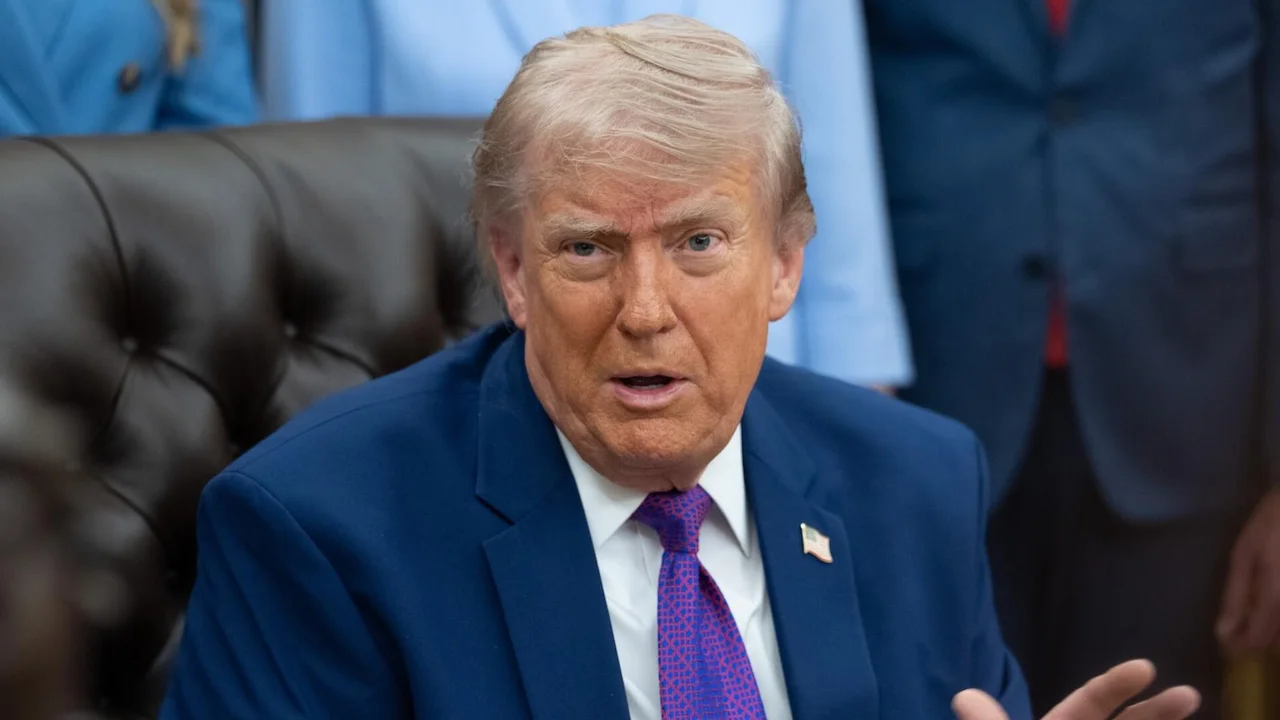
US President Donald Trump has suggested he wants a role in deciding who will lead Iran after the killing of its Supreme Leader Ali Khamenei, a stance that is likely to deepen tensions with the country’s clerical leadership during an escalating war.

Trump, who has often left observers guessing about his objectives in the conflict, has now indicated that he wants influence over the selection of Iran’s next leader following the deaths of Khamenei and several senior commanders during joint US–Israeli strikes.
Speaking in recent interviews, Trump said he would only support the appointment of what he described as “a great and acceptable leader” after Iran agreed to what he called unconditional surrender.

Get the latest headlines in your email

The remarks point to an ambition not simply to defeat Iran militarily but to shape its political future – an idea that Iran’s leadership has long rejected as foreign interference.

Iran’s leadership faces pressure amid war
The Islamic Republic’s governing system is built around religious authority and a network of powerful institutions developed since the 1979 revolution. Despite internal rivalries between reformists, pragmatists and hardline factions, the ruling elite has historically united around a single priority: preserving the political system that keeps it in power.

Even under heavy military pressure, there is little sign that this calculation has changed.
Hardline groups appear to retain influence in Tehran, and officials have given no indication that they would consider accepting a leader chosen or endorsed by Washington.

Trump’s comments have also disappointed some Iranian opposition figures who had hoped the death of the supreme leader might lead to the collapse of the Islamic Republic. Instead, the US president’s language suggests he is aiming for a transformation within the existing political structure rather than its complete removal.

Tehran rejects outside interference
Iranian officials quickly condemned Trump’s suggestion that the United States could influence the succession.
State media carried statements from members of the country’s interim leadership council accusing Washington of trying to impose its will on Iran’s internal affairs.

“The great Iranian nation will never allow anyone to interfere in its right to determine its own destiny,” the council said, according to the conservative Mehr News Agency.
The reaction reflects the deep suspicion of Western involvement that has shaped Iranian politics for decades. That mistrust is rooted partly in the 1953 Iranian coup d'état, when the intelligence agencies of the United States and Britain helped overthrow Prime Minister Mohammad Mosaddegh and restore Mohammad Reza Pahlavi to power as shah.
The monarchy’s eventual collapse during the Iranian Revolution reinforced anti-Western sentiment that still shapes the country’s political identity.

Uncertainty over succession
Iran’s formal process for selecting a supreme leader is usually secretive even in stable times. The responsibility lies with the Assembly of Experts, a body of senior clerics tasked with choosing and supervising the country’s top religious authority.

The current war has made the process even less clear. Reports suggest that meetings scheduled in Tehran and Qom were disrupted after nearby buildings were struck during the conflict, forcing participants to communicate remotely.

One possible successor widely discussed in Iranian media is Mojtaba Khamenei, the late leader’s son and a figure seen as closely aligned with the country’s security establishment. Trump has already indicated that he opposes that option, saying the younger Khamenei would be unacceptable as Iran’s next ruler.

Analysts say Mojtaba Khamenei is closely linked to the powerful Islamic Revolutionary Guard Corps, the military and security force created to defend the Islamic Republic. The organisation has grown into one of the most influential institutions in Iran, controlling major economic assets as well as significant military power.
However, experts note that any candidate would also need the backing of the broader clerical establishment, where Mojtaba Khamenei’s support may be less secure.

Other names emerge
Several other figures have been mentioned as potential successors. Among them is Hassan Khomeini, a grandson of revolutionary founder Ruhollah Khomeini. Seen by some observers as relatively moderate within the clerical hierarchy, he has taken on a more visible role in recent years as tensions with the West intensified.

Another name occasionally raised is Alireza Arafi, a senior jurist who currently serves on Iran’s interim leadership council. But his background in religious scholarship rather than politics or security affairs may limit his chances during a period of conflict.
There are also suggestions that the Assembly of Experts could abandon the traditional model of a single supreme leader and instead appoint a leadership council to guide the country during the crisis.

Risks for any successor
Whoever ultimately emerges as Iran’s next leader would inherit a country under intense military and economic pressure. Israel has signalled that senior Iranian decision-makers could remain targets as long as hostilities continue, raising the stakes for anyone assuming power.

For now, the outcome remains uncertain. Iran’s internal deliberations are largely hidden from public view, and the war has further complicated an already opaque political process.
Yet Trump’s statements underline how deeply international forces have become intertwined with Iran’s future leadership. Whether Tehran’s rulers can preserve control over the succession – while resisting outside pressure – may prove one of the defining questions of the conflict.

Join the discussion?

Already a member?


  Adapted by ASEAN Now · Source · 06.03 2026
ASEAN NOW News
ASEAN NOW News
Previously withheld documents from the United States Department of Justice linked to the investigation of financier Jeffrey Epstein have been released, including FBI interview summaries containing unsubstantiated sexual assault allegations involving U.S. President Donald Trump.

The documents emerged after media reports suggested several files connected to the investigation were missing from the department’s public database, prompting accusations from Democrats that material had been withheld.
Justice Department officials said the omission was the result of a technical mistake during the review process. According to the department, the documents had been “incorrectly coded as duplicative,” which meant they were inadvertently excluded when earlier batches of Epstein-related material were released.

Get the latest headlines in your email

Interview summaries detail claims
The newly released material includes three FBI memoranda summarising interviews conducted in 2019 with a woman who made allegations involving both Trump and Epstein.

According to the interview summaries, the woman told investigators she had been introduced to Trump by Epstein during the 1980s when she was a teenager. She alleged that both men sexually assaulted her when she was between 13 and 15 years old.
The documents make clear that the claims were not corroborated. Investigators recorded the allegations as part of their inquiries but there is no indication they were substantiated or that further investigative steps were taken.

The files indicate that the Federal Bureau of Investigation did not maintain further contact with the woman after the interviews.
It also remains unclear whether Trump and Epstein were in contact during the specific period in which the alleged incidents were said to have occurred.

White House rejects allegations
The White House dismissed the claims after the documents were made public.
Press Secretary Karoline Leavitt said the allegations were “completely baseless” and unsupported by credible evidence.
“As we have said countless times, President Trump has been totally exonerated by the release of the Epstein Files,” she said in a statement.
Leavitt also argued that the previous administration under Joe Biden did not bring charges because investigators determined there was no wrongdoing.
Trump has consistently denied any misconduct connected to Epstein. He has not been accused of crimes by individuals who have publicly identified themselves as survivors of Epstein’s abuse network.

Thousands of references in documents
The broader collection of Epstein records released by the Justice Department includes thousands of references to Trump in emails, correspondence and other documents.
However, most references appear in routine communications involving Epstein and his associates rather than formal accusations.

The files also contain lists of allegations submitted to the FBI’s national Threat Operations Center tip line. These tips include claims involving Epstein, Trump and other prominent figures, but many appear to be unverified reports from callers and often lack supporting evidence.

Justice Department officials previously acknowledged that some submissions contained sensational or inaccurate claims.
Following an earlier document release in January, the department said some tips referencing Trump had been submitted shortly before the 2020 election and were considered unfounded.

Questions raised over missing files
The newly disclosed memos surfaced after reporting by U.S. media organisations, including NPR and The New York Times, suggested the interview summaries had been omitted from earlier releases.

Indexes and serial numbers within the released archive indicated that the FBI had conducted four interviews with the same woman in 2019 during its investigation of Epstein associate Ghislaine Maxwell.
Maxwell was convicted in 2021 and sentenced the following year for sex trafficking offences connected to Epstein’s abuse operation.
But three interview summaries and related notes — amounting to more than 50 pages — were not initially available in the Justice Department’s online database, prompting questions about whether material had been withheld.

Congressional scrutiny intensifies
The handling of the files has also drawn attention on Capitol Hill.
A congressional committee recently voted to subpoena Pam Bondi, the U.S. attorney general, to answer questions about the Justice Department’s management of the Epstein document releases.

Members of the United States House Committee on Oversight and Accountability from both parties supported the subpoena request. Lawmakers approved legislation in November requiring the department to release records linked to its investigations into Epstein. Since then, millions of pages of documents have been made public.

Longstanding but complicated relationship
Epstein and Trump were known to have socialised for several years in the 1990s and early 2000s.
Trump has previously said the relationship ended after a dispute in the early 2000s, several years before Epstein’s first arrest in 2006 on charges related to underage prostitution.
The latest documents do not change the legal status of the allegations, but they have renewed political debate over the handling of the Epstein archive and the process used to review and release its contents.


Join the discussion?

Already a member?


  Adapted by ASEAN Now · Source · 06.03 2026
ASEAN NOW News
ASEAN NOW News
U.S. President Donald Trump has dismissed Kristi Noem as secretary of the United States Department of Homeland Security, ending weeks of growing political pressure over her leadership of the agency and replacing her with Republican senator Markwayne Mullin.

The decision marks the first major personnel shake-up of Trump’s second term. The president announced the change in a post on Truth Social on Thursday, saying Mullin would take over the department starting on 31 March.

Get the latest headlines in your email

Trump thanked Noem for her service, praising what he described as “spectacular results” particularly on border enforcement. He said she would instead become a special envoy responsible for a security initiative called the “Shield of the Americas,” which the administration plans to unveil in the coming days.

Replacement announced amid political pressure
Mullin, a Republican senator from Oklahoma and a close ally of Trump, told reporters he had been informed of the decision only shortly before it was announced publicly.

“It’s humbling,” Mullin said, adding that the rapid development prompted him to call his father after learning he would join the president’s cabinet. “A little kid from west Oklahoma getting to serve in the president’s cabinet is pretty neat.”
Noem later acknowledged the move in a post on X, thanking Trump for the opportunity to lead the department and highlighting what she described as her record on immigration enforcement and border security.

The announcement came shortly before she addressed a group of police officials in Nashville. She did not publicly refer to her dismissal during the speech.

Bipartisan criticism over shootings
Noem’s removal follows weeks of bipartisan criticism over the conduct of federal immigration agents operating under the department’s authority.

The controversy intensified after immigration agents deployed in Minneapolis killed two U.S. citizens, Renee Good and Alex Pretti, during separate incidents connected to protests against immigration enforcement. The shootings triggered intense scrutiny of the agency and demands for changes to rules governing the use of force.

Noem drew criticism after accusing both individuals of involvement in “domestic terrorism,” comments that critics said were not supported by the available evidence regarding their participation in demonstrations.

Senior Democrats welcomed her departure. Hakeem Jeffries, the House minority leader, described her tenure as a failure, telling reporters: “Good riddance. She was a disaster.”

However, Jeffries said replacing the secretary alone would not resolve broader concerns about immigration enforcement policies. Democrats have been pushing for new guidelines governing the actions of immigration agents.
“We need a change in policy that has to be bold, dramatic, transformational and meaningful,” he said.

Funding dispute continues in Congress
The leadership change comes amid an ongoing standoff in Congress over funding for the Homeland Security Department.
The agency has been partially shut down since mid-February after Senate Democrats blocked a spending measure that did not include the new conduct rules they demanded following the Minneapolis shootings.

Chuck Schumer, the Senate majority leader, said he remained skeptical that replacing the department’s leader would address deeper concerns about immigration enforcement under Trump.
“I don’t trust any one person being in charge of this agency as long as Trump is president,” Schumer said, arguing that structural issues within immigration enforcement agencies remained unresolved.

Controversies surrounding leadership
Noem’s leadership of the department had also been clouded by other controversies in recent months.

Reports described turmoil inside the agency and alleged she had a personal relationship with senior adviser Corey Lewandowski, a former Trump campaign manager who worked closely with her at the department. Both denied wrongdoing, with Noem dismissing questions about the allegations as “tabloid garbage” during congressional hearings.

Additional scrutiny followed reports about a proposed $70m aircraft intended for high-profile deportation operations, as well as spending linked to advertising campaigns featuring the secretary.

Some Republicans also began raising concerns. Lindsey Graham said he appreciated Noem’s service but supported the decision to replace her, stating that “it was time for a change.”

A prominent figure in Trump’s immigration crackdown
Before joining the cabinet, Noem served as governor of South Dakota and had been widely viewed as a rising figure in the Republican Party. She was once considered a potential vice-presidential running mate for Trump during the 2024 election cycle.

As homeland security secretary, she became a prominent public defender of the administration’s immigration crackdown. The department oversees agencies such as U.S. Immigration and Customs Enforcement and the U.S. Border Patrol, which have played central roles in Trump’s mass deportation strategy.

Despite her removal, Noem is expected to remain involved in the administration through her new diplomatic role focused on countering transnational criminal networks in the Western Hemisphere.
Whether the leadership change will ease the political standoff over immigration enforcement and department funding remains uncertain as the debate in Congress continues.


Join the discussion?

Already a member?


  Adapted by ASEAN Now · Source · 05.03 2026
ASEAN NOW News
ASEAN NOW News
Israel decided months in advance to assassinate Iran’s Supreme Leader Ayatollah Ali Khamenei, according to Defence Minister Israel Katz, who said the plan was first approved in November during a high-level government meeting.

Katz told Israel’s N12 television that Prime Minister Benjamin Netanyahu set the objective of eliminating Khamenei during a restricted security discussion late last year. The operation had initially been scheduled for mid-2026 but was later brought forward as tensions with Iran escalated.

Get the latest headlines in your email

Khamenei was killed in the opening hours of the joint U.S.–Israeli air campaign launched last Saturday. The strike marked the first time a country’s top leader had been assassinated by an air attack, a move that dramatically intensified hostilities across the region.

Plan accelerated as tensions rose
According to Katz, Israel shared the plan with Washington after the decision was made. The timeline changed around January when protests erupted inside Iran and Israeli officials feared the country’s leadership might respond by launching attacks against Israeli or U.S. targets in the Middle East.

The military campaign has now entered its first week. Early strikes targeted senior Iranian political and military figures, triggering retaliatory missile and drone attacks from Tehran against Israel as well as American bases and allied states in the Gulf and Iraq.

Regional conflict widens
The conflict has also expanded beyond Iran and Israel. Israeli forces have carried out attacks against Hezbollah positions in Lebanon, raising concerns that the fighting could spread further across the region.

Israeli leaders say the military campaign is aimed at removing what they describe as an existential threat posed by Iran’s nuclear programme and its expanding ballistic missile arsenal. Officials have also suggested that regime change in Tehran is a possible outcome of the war.
So far, Iran’s clerical leadership has shown no indication it is willing to relinquish power despite mounting military pressure.

Join the discussion?

Already a member?


  Adapted by ASEAN Now · Source · 05.03 2026
ASEAN NOW News
ASEAN NOW News
Tehran retaliates against U.S. and Israeli strikes while key partners limit support to diplomacy
Iran is increasingly isolated as it confronts intense military pressure from the United States and Israel, with longtime partners Russia and China offering little beyond diplomatic criticism and calls for restraint.

The war intensified after Iranian Supreme Leader Ali Khamenei was killed in the opening strikes of the conflict. Since then, Tehran has responded by widening the scope of the confrontation, launching missiles and drones at targets across the Middle East and beyond.

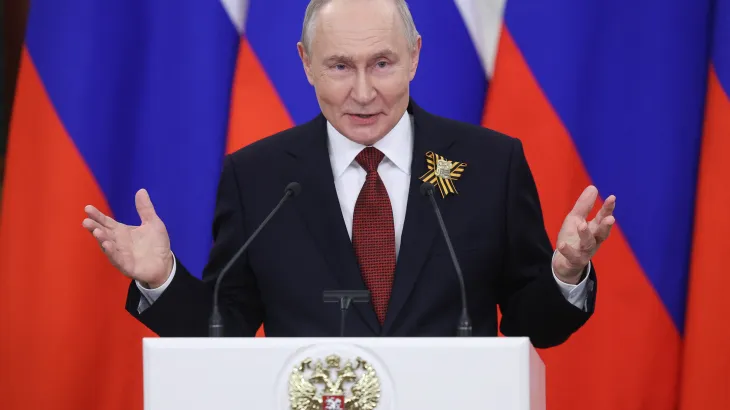
However, despite years of cooperation and shared opposition to Western influence, neither Vladimir Putin nor Xi Jinping has shown any sign of providing direct military support to Iran.

Get the latest headlines in your email

Iran expands the battlefield
In retaliation for the U.S.-Israeli campaign, Iran has targeted military bases, energy infrastructure and strategic facilities across the region. Missile and drone strikes have reached as far as Cyprus, Azerbaijan, Turkey and several Gulf states.

The attacks have also rattled global energy markets. Shipping disruptions in the Strait of Hormuz, which carries roughly 20% of the world’s oil supply, have forced tankers to divert or halt voyages altogether.
With the route effectively shut down for large parts of commercial traffic, oil prices have surged and major economies are scrambling to secure alternative energy supplies.

The growing disruption underscores the global consequences of the war, as energy flows from the Gulf remain critical for markets in Asia, Europe and beyond.

Russia prioritises Ukraine
Analysts say Moscow’s restrained response reflects a calculated decision to avoid direct confrontation with Washington.
Russia has deepened ties with Iran over the past decade, cooperating on military technology, missile systems and regional security issues. But the Kremlin’s priorities remain focused on the ongoing war in Ukraine.

“Putin has other priorities, and chief among them is Ukraine,” said Russia analyst Anna Borshchevskaya of the Washington Institute. Direct military involvement in Iran’s war with the United States would carry enormous risks for Moscow while offering little strategic benefit.

Some Russian officials also acknowledge that the Middle East conflict is drawing international attention away from Ukraine — an outcome that may indirectly serve Moscow’s interests.
Rising oil prices are another advantage. Higher global energy prices strengthen Russia’s war-time economy and increase revenue from its own exports.

China’s cautious strategy
China’s response has also been carefully measured. Beijing has criticised the use of force and called for negotiations but has avoided taking steps that could entangle it militarily in the conflict.

China has spent years expanding its diplomatic role in the Middle East while building strong economic partnerships across the region. However, its foreign policy generally avoids security commitments far from its core interests.

Unlike the United States, whose alliances often include formal defence obligations, China prefers relationships centred on trade, investment and arms sales.

This approach allows Beijing to maintain ties with multiple rival states at once — including Iran and its Gulf Arab neighbours — without being drawn into their conflicts.

Analysts say the conflict may even offer strategic benefits for China. As U.S. forces focus resources on the Middle East, Beijing gains a clearer view of American military capabilities while avoiding direct involvement.
Such insights could prove valuable as China continues to assess potential future conflicts closer to home, particularly around Taiwan and the South China Sea.

Energy concerns remain for Beijing
China’s biggest vulnerability in the crisis is its heavy reliance on Middle Eastern energy supplies.
About 45% of China’s imported oil passes through the Strait of Hormuz, making disruptions there a major concern for Beijing. However, the country has spent years building strategic petroleum reserves and diversifying suppliers.

Experts say China also has significant volumes of Iranian oil already stored in tankers or storage facilities, giving it a short-term buffer against supply interruptions.

Diplomacy instead of intervention
With military involvement unlikely, both Moscow and Beijing appear to be positioning themselves as potential diplomatic mediators.

Chinese Foreign Minister Wang Yi has held calls with European and Middle Eastern leaders urging dialogue, while President Putin has also spoken with Gulf officials and Iranian representatives.

At the same time, Russia appears careful not to tie its long-term strategy to the survival of Iran’s current leadership.
Analysts point to Moscow’s approach in Syria as an example. Despite backing former president Bashar al‑Assad for years, Russia quickly adapted when political power shifted in the country, preserving its strategic military bases and regional influence.
The same flexible approach may shape Moscow’s thinking toward Iran.

For both Russia and China, Iran remains strategically useful as a counterweight to Western influence. But the current conflict highlights the limits of that partnership.

As the war escalates, Tehran is discovering that even its closest geopolitical partners may be unwilling to fight on its behalf.

Join the discussion?

Already a member?


  Adapted by ASEAN Now · Source · 05.03 2026
ASEAN NOW News
ASEAN NOW News
Asia faces growing risk as conflict threatens oil and LNG shipments through the Strait of Hormuz
War in the Persian Gulf is sending shockwaves through global energy markets, raising fears of a new supply crisis as oil and natural gas shipments face disruption. The conflict involving Iran, the United States and Israel is already pushing prices higher and threatening fuel supplies to Asia, which relies heavily on imports transported through one of the world’s most critical maritime routes.

Get the latest headlines in your email

At the centre of concern is the Strait of Hormuz, the narrow waterway linking the Persian Gulf to the Gulf of Oman and global shipping routes. Roughly a fifth of the world’s oil and liquefied natural gas (LNG) shipments pass through the strait, making it one of the most strategically important chokepoints in the global energy system.

Energy consultancy Kpler estimates that about 13 million barrels of crude oil per day moved through the corridor in 2025. That represents nearly a third of all crude oil transported by sea worldwide. The strait also carries about 20% of global LNG exports, much of it destined for energy-hungry Asian economies.

War raises fears of supply disruption
Since the conflict escalated, concern over the safety of shipping in the region has intensified. Attacks on vessels and growing military activity have made insurers and shipping companies increasingly cautious, raising costs and increasing the risk of delays.

Even the possibility that the strait could be closed has unsettled markets. Analysts warn that any prolonged disruption would have immediate global consequences because there are few viable alternative routes for the enormous volume of fuel that passes through the waterway each day.

Oil prices have already surged. Brent crude, the international benchmark, has climbed about 15% since the war began, reaching roughly $84 per barrel — its highest level since mid-2024. Prices could rise further if hostilities escalate or if commercial shipping becomes significantly restricted.

The United States has said it may offer risk insurance to shipping companies and deploy naval forces to help protect vessels moving through the region, but uncertainty remains high.

Asia most exposed to the crisis
Asia is particularly vulnerable because many of its largest economies depend heavily on imported energy from the Middle East. Japan, South Korea and Taiwan rely on the region for a large share of their oil and gas supplies, while Southeast Asia’s growing economies are also exposed.

Japan imported around 2.34 million barrels of crude oil per day in January, according to its Ministry of Economy, Trade and Industry. Around 95% of those imports came from the Middle East. Japan is also one of the world’s largest importers of LNG, making uninterrupted shipping routes essential.

South Korea faces similar risks. The Korea International Trade Association estimates that roughly 70% of its crude oil imports and about 20% of its LNG supplies come from Middle Eastern producers.

Taiwan also imports nearly all of its natural gas and oil. While the island has attempted to diversify its energy sources, around one-third of its LNG supply still comes from Qatar.

Although Japan and South Korea maintain significant emergency energy reserves, analysts say these stockpiles can only act as temporary buffers. Industries that depend heavily on energy — such as Taiwan’s semiconductor sector — remain vulnerable if disruptions continue for an extended period.

Developing economies face price pressure
Developing countries across Southeast Asia face an additional challenge. When supplies tighten, wealthier nations can outbid poorer economies for available cargoes, leaving smaller markets struggling to secure fuel.

Similar dynamics were seen during the global energy shock triggered by Russia’s invasion of Ukraine in 2022, when competition for shipments drove prices sharply higher.
Governments across the region are already taking precautionary steps. In Singapore, officials have warned businesses and households to prepare for higher energy costs.

In the Philippines, authorities have restricted non-essential travel using government vehicles to reduce fuel consumption.
Thailand has urged citizens to conserve energy as fuel prices rise. Officials say domestic petroleum reserves could last up to 61 days while the country works to increase natural gas production from fields in the Gulf of Thailand and neighbouring Myanmar.

Rising costs ripple through economies
For workers who rely on fuel to earn a living, however, cutting consumption is not always possible. Taxi driver Sommit Sutar in the northern Thai city of Chiang Rai said rising gasoline prices are already affecting his livelihood.
“Gasoline was already expensive,” he said. “This war will make the problem even worse.”

Analysts say the biggest immediate threat may not be outright shortages but the ripple effects of rising prices. Higher fuel costs can push up transportation expenses, increase food prices and contribute to broader inflation across economies.
Energy experts say governments are now preparing for multiple scenarios — hoping the conflict does not further disrupt supplies, while bracing for the possibility that the crisis could deepen if fighting in the region continues.

Join the discussion?

Already a member?


  Adapted by ASEAN Now · Source · 05.03 2026
ASEAN NOW News
ASEAN NOW News
US President Donald Trump has said he believes Washington should play a role in selecting Iran’s next supreme leader, as the conflict between the US, Israel and Iran continues to widen across the Middle East.

Speaking to Axios on Thursday, Trump dismissed Mojtaba Khamenei—widely seen as a leading contender to replace his father, Ali Khamenei—as “a lightweight”.
“We want someone that will bring harmony and peace to Iran,” Trump said.

Khamenei, Iran’s long-time supreme leader, was killed during the opening wave of US-Israeli strikes earlier in the conflict. Trump suggested the US should help shape the leadership transition, comparing the situation to Washington’s intervention in Venezuela.

“I have to be involved in the appointment, like with Delcy in Venezuela,” he said, referencing the rise of Delcy Rodríguez following a US operation that captured former Venezuelan leader Nicolás Maduro.

Trump’s comments are likely to fuel debate over whether the US and Israel are seeking to overthrow the Islamic Republic entirely or simply force major changes in Tehran’s policies.

War widens across Middle East
The conflict has intensified steadily since the opening strikes, spreading instability across at least 14 countries in the region.
Iran has launched missile and drone attacks targeting Israel, US military bases and several American-allied Gulf states. The fighting has also disrupted oil shipments and global air travel.

According to officials in the region, the conflict has killed at least 1,230 people in Iran, more than 120 in Lebanon and around a dozen in Israel. Six US troops have also been reported killed.

Meanwhile, Israel has continued airstrikes targeting Iran’s missile infrastructure. Israel’s military chief, Eyal Zamir, said Israeli forces had destroyed about 80% of Iran’s air-defence systems and roughly 60% of its missile launchers.
Despite those losses, Zamir warned that the threat remains.
“The threat has not yet been removed,” he said.

Iranian response remains defiant
Iranian officials have rejected suggestions that Tehran is seeking negotiations with Washington.
Foreign Minister Abbas Araghchi said Iran saw no reason to engage in talks with the US after what he described as repeated attacks during previous diplomatic efforts.

“When we negotiated with them twice, every time they attacked us in the middle of negotiations,” he told NBC News.
Araghchi also accused the US Navy of committing “an atrocity at sea” after the Iranian frigate IRIS Dena was sunk in the Indian Ocean near Sri Lanka. Iranian officials say at least 87 crew members were killed when the vessel was torpedoed while returning from naval exercises.

Sri Lankan authorities said 32 sailors were rescued. Another Iranian warship was later escorted to a naval base near Colombo.
Iranian rhetoric has also intensified. Senior cleric Abdollah Javadi Amoli called on state television for the shedding of both Israeli and “Trump’s blood”, an unusually direct call for violence from a senior ayatollah.

Regional tensions escalate
The conflict is increasingly drawing in neighbouring countries and allied groups.
Israel issued evacuation warnings for residents in southern Beirut before launching strikes on areas believed to be controlled by the Iran-backed group Hezbollah. Lebanese officials say more than 120 people have died since the latest escalation began.

UN peacekeepers reported seeing and hearing ground combat in southern Lebanon as Israeli forces crossed the border.
Elsewhere in the region, several Gulf countries reported missile or drone attacks. Kuwait activated air-defence systems near the US embassy, while a drone was shot down close to the Al Dhafra Air Base in the United Arab Emirates, where US forces are stationed.

Authorities in Bahrain said an Iranian missile struck a state-run oil refinery, causing a fire that was later extinguished without casualties.
In Azerbaijan, President Ilham Aliyev accused Iran of carrying out a drone attack near an airport in the Nakhchivan region, injuring four airport workers. Tehran denied responsibility.

Global impact grows
Shipping routes have also been affected, with attacks reported on vessels in the Gulf of Oman and the Strait of Hormuz—a critical energy corridor through which roughly a fifth of the world’s oil passes.

The disruption has already pushed global oil prices higher and weighed on US stock markets.
Meanwhile, Israeli authorities said major religious sites in Jerusalem’s Old City—including the Western Wall and the Church of the Holy Sepulchre—would close temporarily after air-raid sirens sounded in Tel Aviv and Jerusalem amid continued missile threats.

With hostilities showing no sign of easing, officials across the region warn the conflict could expand further in the coming days.

Join the discussion?

Already a member?


  Adapted by ASEAN Now · Source · 05.03 2026
ASEAN NOW News
ASEAN NOW News
Iran launched a fresh wave of missile and drone attacks early Thursday targeting Israeli territory and U.S. military bases in the region, escalating a conflict that has already killed more than 1,000 people across multiple countries and rattled global energy markets.

Air-raid sirens wailed in Tel Aviv and Jerusalem as Israel reported multiple incoming missile barrages. Iranian state television said strikes also targeted American bases. Israel’s military said it began a “large-scale wave of strikes” against infrastructure in Tehran, while also carrying out targeted attacks in Lebanon against the Iranian-backed Hezbollah militant group. Explosions were reported in several areas of the Iranian capital soon after.

Get the latest headlines in your email

Fury over sunken warship
The renewed fighting follows the sinking of the Iranian frigate IRIS Dena by a U.S. submarine Tuesday night in the Indian Ocean. The Pentagon said a torpedo struck the vessel, killing at least 87 Iranian sailors. Sri Lankan authorities said 32 crew members were rescued, while its navy recovered dozens of bodies.
Iranian Foreign Minister Abbas Araghchi condemned the strike as “an atrocity at sea,” saying the ship had been operating in international waters.

“Mark my words: The U.S. will come to bitterly regret the precedent it has set,” Araghchi wrote on social media, adding that the vessel had recently participated in exercises hosted by the Indian navy.
The incident marked one of the deadliest direct confrontations between U.S. and Iranian forces in years and further widened a conflict that began Saturday when the U.S. and Israel launched coordinated strikes on Iran.

Calls for violence
In a rare and fiery clerical statement, Ayatollah Abdollah Javadi Amoli called for violence against the United States and Israel during remarks broadcast on Iranian state television.
“The shedding of Zionist blood, the shedding of Trump’s blood,” he said, declaring that fighting “oppressive America” was a religious duty. Such explicit calls for violence from a senior Shiite cleric are unusual and underscored the depth of anger within parts of Iran’s leadership.

The conflict has already claimed the life of Iran’s supreme leader, Ayatollah Ali Khamenei, who was killed in the opening strikes of the war, along with dozens of senior commanders. Iranian authorities are now scrambling to appoint a successor, only the second time since the 1979 Islamic Revolution that the country has faced such a transition.

Expanding battlefield
Since the war began, clashes have spread beyond Iran and Israel. Hezbollah has exchanged fire with Israeli forces in Lebanon, while Iran has launched missiles toward Gulf states hosting American troops. Israeli strikes have hit Beirut’s southern suburbs and other parts of Lebanon, killing several people, according to Lebanese officials.

The U.S. and Israel have said their attacks are aimed at degrading Iran’s missile arsenal and nuclear infrastructure. Some leaders have also suggested that weakening or toppling Iran’s government is an objective, though official goals and timelines have shifted repeatedly, signaling an open-ended campaign.
U.S. Defense Secretary Pete Hegseth declined to specify how long operations would last.
“You can say four weeks, but it could be six. It could be eight. It could be three,” Hegseth said at a Pentagon briefing. “Ultimately, we set the pace and the tempo.”

American and Israeli officials say the frequency of Iranian missile launches has declined as strikes have taken out launchers and stockpiles. Israel has eased some domestic restrictions, allowing certain workplaces to reopen if bomb shelters are nearby, though schools remain closed.

Rising casualties and oil shock
Iran’s Foundation of Martyrs and Veterans Affairs said more than 1,045 people have been killed in Iran since fighting began. Eleven people have died in Israel, and six U.S. service members have been killed.
The violence has also reverberated through global markets. Prior attacks have targeted the Gulf of Oman and the Strait of Hormuz, through which roughly a fifth of the world’s oil supply passes. Brent crude prices have climbed about 15% since the conflict began, after an initial spike earlier in the week briefly subsided.

Early Thursday, oil prices resumed their ascent amid fears that continued attacks on shipping lanes or energy infrastructure could further disrupt supply.

Leadership uncertainty in Tehran
As fighting intensifies, Iran’s political future remains uncertain. Potential candidates to replace Khamenei range from hard-liners advocating confrontation with the West to more pragmatic figures favoring diplomacy. Mojtaba Khamenei, the late leader’s son, has long been mentioned as a possible successor, though he has never held elected office.

In a sign of tightening internal control, Iran’s judiciary chief warned that anyone cooperating with “the enemy” would be treated as an enemy of the state.
Meanwhile, Israeli Defense Minister Israel Katz warned that Iran’s next supreme leader would be “a target for elimination” if he continues to threaten Israel and its allies.
With missile exchanges continuing and rhetoric hardening on both sides, the conflict shows little sign of easing — and risks drawing in more countries across an already volatile region.

Join the discussion?

Already a member?


  Adapted by ASEAN Now · Source · 05.03 2026
ASEAN NOW News
ASEAN NOW News
The United States did not provide the United Kingdom with exact operational details or timings before launching joint airstrikes with Israel on Iran, according to government sources, in a move that has exposed tensions between Washington and London over the widening Middle East conflict.

Get the latest headlines in your email

The decision to withhold precise information came as British Prime Minister Keir Starmer initially declined a U.S. request to use British military bases for the offensive operation. Sources said that while the UK was aware action was likely, it was not formally briefed on the exact moment or scope of the strikes.
The airstrikes — carried out by the U.S. and Israel — killed Iran’s supreme leader, Ayatollah Ali Khamenei, along with dozens of senior military figures, dramatically escalating the conflict.

Intelligence but no tipoff
A Whitehall source said Britain knew military action was imminent because of the buildup of equipment moving through allied channels and intelligence shared “via the usual channels.” However, the UK was not given advance notice of the precise timing or operational details of the attack.

The British government evacuated its embassy staff from Tehran on Friday, signaling that it believed strikes were coming. Still, officials were not informed about when over the weekend the operation would unfold.
Government insiders said the UK is typically closely aligned with the U.S. on military matters, making it difficult to judge whether this level of limited notification was unusual. However, the absence of detailed coordination underscores strains in what is often described as the “special relationship.”

Trump criticizes Starmer
U.S. President Donald Trump has publicly criticized Starmer for refusing to allow American forces to use British bases for the initial strikes. Trump reportedly said the special relationship was “not what it was” and dismissed Starmer as “no Churchill.”

In the days following the attack, Starmer reversed course in part, granting permission for U.S. forces to use British bases for defensive strikes aimed at degrading Iran’s missile capabilities after Tehran retaliated against targets in the Gulf.

The shift reflects the delicate balance the British government is attempting to maintain: avoiding direct involvement in offensive operations while protecting British personnel and regional allies from retaliatory attacks.

Starmer defends “special relationship”
Facing criticism in Parliament, Starmer robustly defended his approach during Prime Minister’s Questions. Conservative MP Gareth Bacon challenged him on whether his handling of the crisis had strengthened or weakened ties with Washington.

Starmer responded that British military deployments had been under way for weeks and were coordinated with U.S. forces. He emphasized that British assets were actively protecting American personnel and interests in the region.
“The American planes are operating out of British bases,” Starmer told MPs. “That is the special relationship in action. British jets are shooting down drones and missiles to protect American lives in the Middle East on our joint bases. That is the special relationship in action.”

He added that intelligence sharing between the two countries continued daily, arguing that cooperation on defense and security — rather than rhetorical exchanges — defines the alliance.

Military deployments across the region
According to the prime minister, British deployments include radar systems, ground-based air defenses, counter-drone systems and fighter jets. Since the start of the escalation, multiple F-35 and Typhoon aircraft have been operating not only in the Middle East but also from Cyprus.

Further missions were flown overnight, with Typhoon jets defending Qatar and F-35s protecting other regional partners. The UK government framed these deployments as defensive in nature and focused on protecting lives and regional stability rather than conducting offensive strikes.

A spokesperson for the prime minister reiterated that Starmer would only authorize actions deemed in Britain’s national interest and necessary to keep British citizens safe.

Strains but continued cooperation
Despite the lack of detailed advance notice, officials stressed that U.S.-UK military coordination remains extensive. American aircraft continue to operate from British bases, and intelligence cooperation has not been suspended.

However, the episode highlights a moment of friction in the transatlantic alliance at a time of heightened global instability. While both governments maintain that the special relationship endures, differences over operational decisions and political messaging have revealed a more complicated dynamic behind the scenes.

Join the discussion?

Already a member?


  Adapted by ASEAN Now · Source · 04.03 2026
ASEAN NOW News
ASEAN NOW News
A massive power outage has plunged much of Cuba into darkness, leaving millions of people, including residents of Havana, without electricity as the island grapples with a deepening energy crisis worsened by dwindling oil supplies and pressure from the United States.

The outage on Wednesday affected most of western Cuba from Pinar del Río to Camagüey, leaving nearly 7 million people — about two-thirds of the population — without power, officials confirmed. The collapse of the National Electric System followed the unexpected shutdown of the Antonio Guiteras thermoelectric plant, one of the country’s largest power generators, after a boiler leak and fire triggered a cascading failure of the grid and a “domino effect” blackout. Government energy officials warned it could take up to 72 hours or more to restore full service.

Get the latest headlines in your email

Strained grid and chronic outages
This outage is the second major blackout in Cuba’s western region in recent months and highlights long-standing fragilities in the island’s power network. Cuba’s electricity grid has suffered repeated failures in recent years due to aging infrastructure, insufficient maintenance and chronic fuel shortages, leaving frequent rolling blackouts part of daily life for many residents.

Even before this week’s outage, authorities warned of severe energy shortages, rationing services such as transportation and trash collection, and limiting jet fuel availability at several airports due to the deepening fuel crisis.

Oil supply crunch and U.S. pressure
The blackout has occurred against the backdrop of a broader energy squeeze. Cuba has long relied on imported oil — particularly from Venezuela — to fuel its electricity generation and transportation systems. However, Venezuelan oil shipments have ceased since late last year after a U.S. military operation and subsequent control of Venezuela’s exports, cutting off Havana’s primary source of fuel. Washington has also threatened tariffs on countries that supply oil to Cuba, prompting at least one alternate supplier, Mexico, to reduce deliveries.

Although the government emphasizes the technical cause of the latest blackout, analysts say the chronic scarcity of diesel and heavy fuel oil — essential for power plants and generators — has exacerbated an already fragile system. Fuel shortages have also disrupted public transport, forcing buses to suspend services in some areas.

Human impact and daily life
For ordinary Cubans, the blackout has transformed everyday life into a struggle. With transportation stalled, water pumps failing and refrigerators idle, people have been forced to adapt to extended periods without basic services. In Havana, some traffic lights and businesses depended on solar panels or backup generators to stay partly operational, but most homes remained in darkness.

“We trust in the experience and effort of the electrical workers to overcome this situation in the shortest possible time,” Prime Minister Manuel Marrero Cruz wrote on social media, as crews worked to restart power services.
Residents expressed frustration as public transport ground to a halt due to lack of fuel, leaving many, including elderly citizens and families with children, stranded or forced to seek rides by any means available.

Broader energy crisis
Energy analysts point to systemic challenges beyond the immediate blackout. Cuba’s grid struggles because supply frequently fails to match demand, and several thermal plants are offline due to breakdowns or maintenance needs. Solar and photovoltaic capacity, while growing, still cannot offset the deficits in thermal generation.

The broader fuel shortages have also impacted aviation, tourism and economic activity, with authorities warning of ongoing constraints until at least mid-March in some sectors. The loss of Venezuelan crude and threats to alternative suppliers have left the island confronting a potential “hour zero” of total fuel depletion unless new shipments arrive.

Join the discussion?

Already a member?


  Adapted by ASEAN Now · Source · 04.03 2026
ASEAN NOW News
ASEAN NOW News
When the United States and Israel launched strikes on Iran, Beijing did not react immediately. Several hours later, China’s Foreign Ministry said it was “highly concerned,” called for an immediate halt to military operations and urged a return to dialogue. The following day, Foreign Minister Wang Yi condemned the attacks as unacceptable.

The response was firm in tone but limited in substance — a pattern that reflects China’s broader foreign policy approach. Despite its expanding global footprint, Beijing has again chosen to stay on the sidelines militarily while positioning itself as a critic of force and a supporter of negotiations.

Get the latest headlines in your email

Strategic restraint over intervention
China’s armed forces have modernized rapidly in recent years. It has held joint military drills with Iran and established its first overseas naval base in Djibouti in 2017. Yet its primary security focus remains much closer to home, from Taiwan to the South China Sea.

Beijing has occasionally stepped into Middle East diplomacy when it sees opportunity. In 2023, it helped broker a rapprochement between Iran and Saudi Arabia, a move widely seen as a sign of growing Chinese influence. But analysts say Beijing views U.S. military campaigns in Afghanistan and Iraq as cautionary examples of overreach.

William Yang of the International Crisis Group said China is reluctant to project military power far beyond its immediate periphery or act as a security guarantor in volatile regions like the Middle East.

Similarly, China has offered diplomatic and economic backing to Russia and Venezuela while avoiding direct military involvement in Ukraine or Latin America. Craig Singleton of the Foundation for Defense of Democracies described Beijing’s response to the Iran strikes as “predictably restrained,” underscoring the limits of its influence once hard power is in motion.

U.S. ties take priority over Iran
China’s measured stance also reflects the relative importance it assigns to its relationships. While Beijing maintains strong economic ties with Tehran, its relationship with Washington carries far greater weight, particularly on trade, technology and Taiwan.

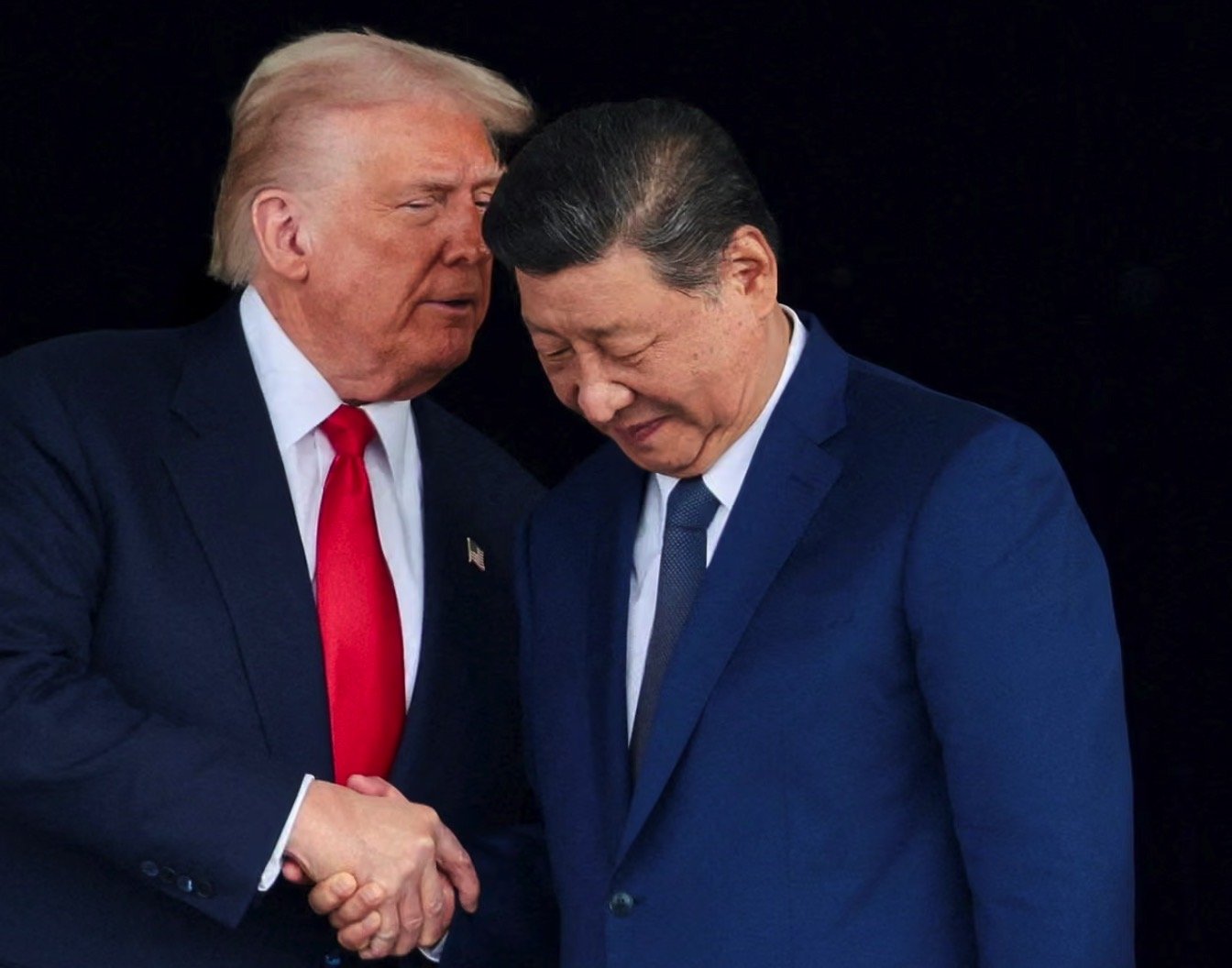
A highly anticipated visit by Donald Trump to Beijing to meet Chinese leader Xi Jinping is expected in the coming weeks. Analysts say Beijing is unlikely to jeopardize that summit over Iran.

George Chen of The Asia Group said that while China may engage in rhetorical sparring with Washington, it has little incentive to escalate tensions. “U.S.-China relations are already complicated enough,” he said, adding that introducing another major flashpoint would benefit neither side.

Energy security and regional risks
China is the largest importer of Iranian oil, taking in roughly 1.4 million barrels per day last year — about 13% of its total seaborne crude imports, according to data from Kpler. However, analysts say Beijing has prepared for potential disruptions by diversifying supply sources and building strategic reserves.

The more pressing concern is not necessarily Iranian oil itself, but instability in the broader Gulf region. Any sustained disruption to shipping through the Strait of Hormuz — a key chokepoint for global oil and liquefied natural gas — would have far-reaching consequences for China’s energy security and economic stability.
Attacks on Gulf energy infrastructure, including liquefied natural gas facilities, add to those worries.

Unlikely to arm Tehran
Despite long-standing defense ties, experts say China is unlikely to provide significant military assistance to Iran. Muhammad Zulfikar Rakhmat of Indonesia’s Center of Economic and Law Studies said any support would likely be limited to existing defense arrangements rather than rapid battlefield aid.

Beijing has repeatedly criticized the United States for supplying weapons to Ukraine, arguing that doing so prolongs conflicts. Providing arms to Iran would risk direct confrontation with Washington and undermine China’s carefully calibrated neutrality.

James M. Dorsey of Nanyang Technological University noted that while Iran’s missile program has roots in Chinese technology, Beijing is likely to err on the side of caution rather than expand support.

Ultimately, analysts say China’s response reveals a foreign policy guided less by ideological alignment and more by pragmatic calculation. Beijing appears determined to avoid entanglement in a distant war while safeguarding its economic interests and preserving space for diplomacy.

Join the discussion?

Already a member?


  Adapted by ASEAN Now · Source · 04.03 2026
ASEAN NOW News
ASEAN NOW News
Governments around the world are racing to evacuate citizens from the Middle East as the widening war with Iran continues to paralyze regional air travel and strand tens of thousands of passengers.

A French government flight carrying evacuees from Oman and Egypt landed in Paris early Wednesday, marking the first in a series of repatriation operations announced by Emmanuel Macron’s administration. Italy also confirmed that a group of students had returned home after being evacuated from Dubai in the United Arab Emirates.

Despite a slight uptick in flights, air travel across the region remains heavily disrupted. According to aviation analytics firm Cirium, more than 20,000 of the 36,000 scheduled flights to or from the Middle East since the start of the conflict have been canceled. Flight-tracking service FlightAware reported around 2,000 cancellations worldwide on Wednesday, down from roughly 3,150 on Monday.

Get the latest headlines in your email

Airspace closures across much of the Gulf have left passengers stranded not only in regional hubs but also in cities far beyond the conflict zone, as connecting flights through major airports were scrapped.

Transit hubs and vulnerable travelers
Oman, Egypt, Saudi Arabia and Jordan have emerged as key transit points for evacuation flights.
France estimates that around 400,000 of its citizens are either living in or traveling through parts of the Middle East affected by the conflict. Eleonore Caroit, the minister responsible for French nationals abroad, said about 100 seats on the first evacuation flight were reserved for vulnerable passengers, including families with children, elderly people and those with medical conditions.

Two additional French flights were scheduled for Wednesday: a military aircraft from Abu Dhabi carrying 180 citizens and a charter from Israel with 205 passengers.
“Our goal is to help repatriate as quickly as possible the French people who wish to return,” Caroit told broadcaster TF1.

The U.S. State Department said it was assisting Americans seeking to leave the region. In a post on X, the department said 18,000 Americans had safely returned home so far, including 8,500 on Tuesday alone. Earlier guidance urged U.S. citizens in more than a dozen countries to depart using any available commercial transportation.

Britain announced a charter flight from Oman to bring back some of the thousands of U.K. nationals in the Gulf. The Foreign Office said more than 130,000 British citizens had registered their presence in the Middle East since the conflict began, though not all are attempting to leave.

Ireland’s foreign minister said Emirates airline would operate a flight from Dubai to Dublin on Wednesday, and Dublin plans to charter a separate flight from Oman for about 280 people. Norway dispatched an emergency team to Dubai to reinforce embassy staff assisting roughly 1,500 registered Norwegian nationals.

Stranded travelers worldwide
Individual stories underscore the anxiety felt by those caught in the upheaval. Italian student Valerio Schiavoi described hearing military aircraft and missile alerts while participating in a diplomatic simulation in Dubai.

“It was frightening,” said Li Qian, a tourist from Hangzhou, China, who remains stranded in Abu Dhabi with her family. She said repeated missile alerts appeared on her phone and smoke was visible near areas they had recently visited. “We just want to get home as soon as possible.”

Commercial airlines including Etihad, Emirates and Virgin Atlantic have resumed limited services from the UAE to London, but seats remain scarce. British Airways said flights from Muscat through the weekend were fully booked, adding that it would schedule additional services if possible.

The ripple effects have extended far beyond the Middle East. In Bali, Indonesia, about 6,000 passengers were stranded after flights to Doha, Dubai and Abu Dhabi were canceled. Indonesian authorities issued emergency stay permits and waived overstay fines for affected travelers.

Some evacuees have considered costly alternatives. Agnes Chen Pun, a Hong Kong expatriate living in Dubai, said she briefly weighed hiring a $268,000 private jet before securing commercial tickets to Singapore at $2,200 per person. Though shaken, she said she plans to return once conditions stabilize.

With airspace closures still in place and tensions high, governments continue to juggle evacuation logistics while airlines struggle to restore normal operations in one of the world’s most important aviation corridors.

Join the discussion?

Already a member?


  Adapted by ASEAN Now · Source · 04.03 2026
ASEAN NOW News
ASEAN NOW News
A U.S. submarine has sunk an Iranian warship in the Indian Ocean, sharply escalating a conflict that is spreading across the Middle East as Washington and Israel intensify strikes on Iran’s military leadership, missile systems and symbols of state power.

The strike came as Iranian authorities postponed the mourning ceremony for slain Supreme Leader Ali Khamenei, who was killed at the outset of the war. State television said the scale and tempo of bombardment made it impossible to hold the event safely. Millions had attended the 1989 funeral of his predecessor, Ruhollah Khomeini, underscoring the symbolic weight of the moment.

Get the latest headlines in your email

The United States and Israel launched coordinated operations on Saturday, targeting Iran’s missile arsenal, Revolutionary Guard facilities and elements of its disputed nuclear program. While officials in both countries have signaled that degrading — and possibly toppling — Iran’s leadership is an objective, public messaging has shifted repeatedly, leaving uncertainty over the ultimate scope and duration of the campaign.

Expanding battlefield across the region
President Donald Trump praised U.S. forces on Wednesday, saying they were “doing very well on the war front, to put it mildly.” Republican senators later voted down a resolution that sought to halt the war under congressional war powers, signaling strong party backing for the operation despite growing casualties.

Iran has retaliated with waves of missiles and drones targeting Israel and Gulf states, including Bahrain and Kuwait. Turkey said NATO air defenses intercepted a ballistic missile launched from Iran before it crossed into Turkish airspace, a sign of how widely the conflict’s shockwaves are being felt.

Israel has also exchanged fire with the Iranian-backed Hezbollah movement in Lebanon. Israeli strikes pounded suburbs of Beirut, while Hezbollah launched rockets toward northern Israel. Air raid sirens sounded in Bahrain, home to the U.S. Navy’s Fifth Fleet, as regional militaries scrambled to respond to incoming projectiles.

The war has killed more than 1,000 people in Iran, over 70 in Lebanon and at least 11 in Israel, according to officials in those countries. Six U.S. service members have also died in attacks linked to Iranian retaliation.

Uncertain timeline for U.S. operations
At a Pentagon briefing, Defense Secretary Pete Hegseth declined to offer a definitive timeline for the campaign. “You can say four weeks, but it could be six. It could be eight. It could be three,” he said. “We set the pace and the tempo.”

Adm. Brad Cooper, the top U.S. commander in the Middle East, said American forces had significantly degraded Iran’s air defenses and destroyed ballistic missiles, launchers and drones. Israeli officials said the number of launches from Iran had declined in recent days, allowing authorities to ease some restrictions. Workplaces in Israel were set to reopen if shelters were nearby, though schools remain closed and air-raid sirens continue to sound in parts of the country.

Energy routes and global markets in the crosshairs
Iran’s Revolutionary Guard issued one of its strongest warnings yet, saying continued strikes would result in “the complete destruction of the region’s military and economic infrastructure.”

That threat appeared to materialize in the Strait of Hormuz, where a Maltese-flagged container ship was struck by two missiles, sparking a fire before its 24 crew members were rescued. The narrow waterway handles roughly a fifth of global oil shipments, and tanker traffic has fallen sharply since the conflict began, according to shipping data.

Oil prices have surged and global stock markets have been rattled amid fears that prolonged disruption could choke energy supplies and slow the world economy. International airlines have diverted flights, and hundreds of thousands of travelers remain stranded across the region.

Leadership vacuum in Tehran
Inside Iran, clerics are racing to choose a successor to Khamenei, marking only the second leadership transition since the 1979 Islamic Revolution. Potential candidates range from hard-line conservatives committed to confrontation with the West to figures advocating limited diplomatic engagement. The uncertainty has fueled concerns about internal instability at a time of intense external pressure.

Israeli Defense Minister Israel Katz warned that any future Iranian leader who continues to threaten Israel or the United States “will be a target for elimination,” underscoring the high stakes of the succession process.

With casualties mounting, energy markets in turmoil and no clear end date in sight, the sinking of the Iranian warship signals a new and potentially more dangerous phase of a conflict that now stretches from the Indian Ocean to the eastern Mediterranean.

Join the discussion?

Already a member?


  Adapted by ASEAN Now · Source · 04.03 2026
ASEAN NOW News
ASEAN NOW News
A Russian liquefied natural gas tanker has sunk in the Mediterranean Sea between Libya and Malta after explosions and a fire tore through the vessel, according to Libyan port officials.

Moscow accused Ukraine of attacking the tanker, the Arctic Metagaz, using uncrewed sea drones allegedly launched from the Libyan coast. Ukrainian authorities have not confirmed the claim.

Get the latest headlines in your email

Libya’s port authority said the ship had been carrying about 62,000 tonnes of LNG when blasts occurred. The vessel later sank around 130 nautical miles north of the port of Sirte. Officials said the cause of the fire remained unclear.

Crew rescued
Russia’s transport ministry said 30 Russian nationals were on board at the time of the incident. Byron Camilleri said Malta’s armed forces carried out a rescue operation and found the crew “safe and sound in a lifeboat.”

Unverified nighttime footage circulated online appeared to show the tanker engulfed in flames. Ukrainian blogger Serhii Sternenko posted images he claimed showed significant damage to the engine room, though the origin of the pictures has not been independently confirmed.

Speaking on state television, Russian President Vladimir Putin described the incident as a “terrorist attack.” Russia’s transport ministry called it “an act of international terrorism and maritime piracy,” and accused the European Union of complicity, without providing evidence.

Disputed claims
Ukraine’s SBU state security service declined to comment directly. A Ukrainian government-linked social media account appeared to mock Russia’s accusation, but stopped short of confirming involvement.

The Russian ministry said the tanker had departed from the northern port of Murmansk and was bound for Port Said in Egypt. The Arctic Metagaz is believed to be part of Russia’s so-called “shadow fleet” — a network of vessels used to transport oil and gas in an effort to circumvent Western sanctions imposed after Moscow’s full-scale invasion of Ukraine in 2022.

Marine tracking data indicated the tanker had last reported its position off the south-east coast of Malta the day before the fire. It is believed the crew may have deactivated the vessel’s automatic identification system prior to the incident.

Since the start of the war, Ukraine has carried out naval drone attacks on Russian ships, primarily in the Black Sea. If confirmed, an attack in the Mediterranean would mark a significant geographic expansion of such operations.

No independent verification has yet emerged to confirm who was responsible for the sinking. Investigations are expected as regional authorities assess both the cause of the fire and the environmental impact of the vessel’s loss.

Join the discussion?

Already a member?


  Adapted by ASEAN Now · Source · 04.03 2026
ASEAN NOW News
ASEAN NOW News
A congressional committee has voted to subpoena U.S. Attorney General Pam Bondi to testify about the Justice Department’s handling of files related to convicted sex offender Jeffrey Epstein.

The motion was introduced by Republican Representative Nancy Mace, who accused the Justice Department of orchestrating a “cover-up” in its release of investigative materials. The subpoena was approved by the House Oversight Committee with support from five Republicans and all Democrats on the panel.

Get the latest headlines in your email

“The Epstein case is one of the greatest cover-ups in American history,” Mace wrote on social media. “Three million documents have been released, and we still don’t have the full truth. Videos are missing. Audio is missing. Logs are missing.”

Bipartisan frustration
The Trump administration has faced mounting pressure from lawmakers across the political spectrum to release all remaining documents tied to the Epstein investigation. Although millions of records have been made public, critics argue that millions more remain undisclosed.

Last November, Donald Trump signed legislation requiring the Justice Department to release materials from its Epstein investigations. However, the rollout of the documents sparked bipartisan backlash. Some lawmakers accused the department of failing to adequately redact identifying details of victims while shielding the names of individuals who were not victims.

The Justice Department has denied wrongdoing, stating that “nothing has been deleted” and that withheld documents were duplicates, privileged materials, or part of ongoing federal investigations.
The department did not immediately respond to requests for comment following the committee’s vote.

High-profile testimony
The Oversight Committee has already summoned several prominent figures as part of its inquiry. Last week, former President Bill Clinton and former Secretary of State Hillary Clinton testified before the panel in response to a subpoena.

While neither Clinton has been accused of wrongdoing by Epstein’s victims, Bill Clinton’s name appears in investigative files, including photographs, linked to Epstein.

The top Democrat on the committee, Representative Robert Garcia, has alleged that the Justice Department is withholding files that include accusations of sexual abuse of a minor involving Trump. Garcia said he personally reviewed documents containing the allegation that have not been made public.

The escalating confrontation between Congress and the Justice Department underscores the enduring political and legal fallout from the Epstein case, years after his death in a New York jail in 2019. The committee has not yet announced a date for Bondi’s testimony.

Join the discussion?

Already a member?


  Adapted by ASEAN Now · Source · 04.03 2026
ASEAN NOW News
ASEAN NOW News
A federal judge in New York has granted preliminary approval to a proposed $35 million settlement between the estate of Jeffrey Epstein and a group of accusers who alleged that two of his longtime advisers enabled his sex trafficking scheme.
U.S. District Judge Arun Subramanian said Tuesday that the agreement appeared fair and scheduled a final approval hearing for 16 September in Manhattan federal court.

Get the latest headlines in your email

The settlement, announced on 19 February by law firm Boies Schiller Flexner, would resolve a 2024 class action lawsuit brought against Epstein’s former personal lawyer, Darren Indyke, and his former accountant, Richard Kahn. The two men served as co-executors of Epstein’s estate.

Allegations against advisers
In the lawsuit, attorneys alleged that Indyke and Kahn aided and abetted Epstein’s trafficking of young women and teenage girls by helping him establish a complex network of corporations and bank accounts. The suit claimed this structure enabled Epstein to conceal his conduct and funnel payments to victims and recruiters.
The complaint further alleged that the two advisers were “richly compensated” for their work.

Daniel Weiner, a lawyer representing Indyke and Kahn, said neither man admitted wrongdoing as part of the settlement. He said they were prepared to contest the claims at trial but chose to settle in order to achieve finality for the estate.
“Because they did nothing wrong, the co-executors were prepared to fight the claims against them through to trial, but agreed to mediate and settle this lawsuit in order to achieve finality as to any potential claims against the Epstein Estate,” Weiner said in a statement.

Sigrid McCawley, an attorney for the plaintiffs, said the agreement marked another step toward accountability for survivors.
“We are pleased we could take another step forward on that long road for the survivors and provide some sort of justice,” she said.

Prior payouts and ongoing scrutiny
Epstein’s estate has already paid substantial sums to resolve claims. A restitution fund established by the estate distributed $121 million to victims, and an additional $49 million was paid through separate settlements.
Epstein died in a New York jail in August 2019 while awaiting trial on federal sex trafficking charges. His death was ruled a suicide.

This year, millions of documents released by the Justice Department have shed further light on Epstein’s social connections with wealthy and powerful figures around the world.
Boies Schiller Flexner previously secured $365 million in settlements from JPMorgan Chase and Deutsche Bank after accusing the banks of overlooking warning signs while Epstein was a client.
If granted final approval in September, the proposed settlement would bring to a close one of the remaining civil cases tied to the disgraced financier’s estate.

Join the discussion?

Already a member?


  Adapted by ASEAN Now · Source · 03.03 2026
ASEAN NOW News
ASEAN NOW News
The father of a teenage boy accused of carrying out a deadly school shooting in Georgia has been found guilty of second-degree murder and other charges, in a closely watched case examining parental responsibility in mass shootings.
After about two weeks of testimony, jurors deliberated for only a few hours before convicting 54-year-old Colin Gray on more than two dozen counts related to the 4 September 2024 attack at Apalachee High School.

Get the latest headlines in your email

Gray had faced 29 charges, including second-degree murder, involuntary manslaughter and reckless conduct. Under Georgia law, second-degree murder includes causing the death of a child by committing cruelty to children. He pleaded not guilty to all counts.
Prosecutors argued that Gray acted with “criminal negligence” by giving his 14-year-old son, Colt Gray, access to a firearm and ammunition despite warning signs that the teenager posed a danger to others.

Four killed in 2024 attack
Colt Gray is accused of fatally shooting two students and two teachers with an assault-style rifle at the high school. He faces 55 charges, including four counts of malice murder and four counts of felony murder, and is being prosecuted as an adult. He has pleaded not guilty and is awaiting trial.

The victims were identified as teachers Richard Aspinwall, 39, and Christina Irimie, 53, along with students Mason Schermerhorn and Christian Angulo, both 14. Another teacher and eight students were wounded in the attack.
During the trial, prosecutors contended that Colin Gray provided his son with access to the weapon after receiving sufficient warning that the teenager could harm others. The defense argued that the father did not believe his son would carry out such an attack and should not be held criminally responsible for his actions.

Broader legal trend
The case is part of a growing number of prosecutions targeting parents in connection with school shootings carried out by their children. In 2024, the parents of a Michigan high school shooter were each convicted of involuntary manslaughter and later sentenced to between 10 and 15 years in prison.
Legal experts say such cases reflect an evolving approach by prosecutors who seek to hold adults accountable when they are alleged to have enabled minors’ access to weapons.

According to the Associated Press, Colin Gray faces up to 30 years in prison. He will be sentenced at a later date.
The verdict marks a significant development in efforts to address responsibility beyond the individual shooter, as communities and lawmakers continue to grapple with how to prevent school violence.

Join the discussion?

Already a member?


  Adapted by ASEAN Now · Source · 03.03 2026
ASEAN NOW News
ASEAN NOW News
Tensions flared on Capitol Hill as lawmakers pressed the Trump administration for answers about the strategy, cost and endgame of the expanding war with Iran.
Senior officials returned to Congress on Tuesday for a second day of closed-door briefings as both chambers weigh votes on a war powers resolution that would restrict Donald Trump’s authority to continue the joint U.S.-Israel military campaign without explicit approval from lawmakers.

Get the latest headlines in your email

“The president determined we were not going to get hit first. It’s that simple,” Secretary of State Marco Rubio said during a tense exchange with reporters.
Rubio rejected suggestions that Trump acted because Israel was poised to strike first, instead arguing the president seized a “unique opportunity” to degrade Iran’s missile and nuclear capabilities. “There is no way in the world that this terroristic regime was going to get nuclear weapons, not under Donald Trump’s watch,” he said.

Lawmakers voice concern over ‘mission creep’
The sudden shift to a wartime footing has disrupted the congressional agenda and intensified debate over potential “mission creep,” particularly following the killing of Iran’s Supreme Leader, Ali Khamenei. At least six U.S. service members have died so far in retaliatory attacks.

Senate Democratic Leader Chuck Schumer said he was concerned about the risk of a prolonged conflict. Other Democrats questioned whether the administration has clearly defined objectives or an exit strategy.

Sen. Angus King of Maine called it “very disturbing” if the United States entered war at the urging of Israeli Prime Minister Benjamin Netanyahu. Sen. Elizabeth Warren asked how the operation aligned with Trump’s “America First” pledge to avoid extended foreign entanglements.
Defense official Elbridge Colby told senators the campaign is designed to eliminate Iranian missile threats and prevent nuclear weapons development, insisting it is “not nation-building” and “not going to be endless.”

Divided reactions on Capitol Hill
Republican lawmakers largely rallied behind the president. Sen. Markwayne Mullin said Trump “did the world a favor,” while Sen. Lindsey Graham argued the focus should remain on eliminating threats, regardless of who governs Iran next.

Others urged caution. Sen. Richard Blumenthal said he feared the conflict could lead to U.S. “boots on the ground,” a scenario Trump has not explicitly ruled out.
Senate Majority Leader John Thune said the future of Iran’s leadership should be determined by its people, not Washington.

War powers vote looms
Both the House and Senate are preparing to consider war powers resolutions aimed at limiting the president’s authority to wage war without congressional approval. Under the Constitution, Congress holds the power to declare war, though presidents have frequently initiated military action without formal declarations.

House Democratic Leader Hakeem Jeffries said there would be strong support among Democrats for reasserting congressional authority. However, House Speaker Mike Johnson warned it would be “frightening” to constrain the commander-in-chief while U.S. forces are already engaged.
With midterm elections approaching and supplemental funding requests expected, lawmakers now face one of the most consequential votes of their terms — determining not only the scope of the conflict but Congress’s role in shaping it.

Join the discussion?

Already a member?


  Adapted by ASEAN Now · Source · 03.03 2026
ASEAN NOW News
ASEAN NOW News
The war with Iran has exposed sharp tensions between Keir Starmer and Donald Trump, straining a trans-Atlantic relationship the British leader had worked carefully to cultivate.
Trump publicly criticised Starmer this week over Britain’s reluctance to join U.S.-Israeli strikes on Iran. Speaking at the White House, Trump said: “This is not Winston Churchill that we’re dealing with,” accusing the UK of hesitating to allow American warplanes to use British bases.

Get the latest headlines in your email

In an interview with The Sun, Trump said the relationship with Britain was no longer as strong as before, adding: “It’s very sad to see that the relationship is obviously not what it was.”

Dispute over base access
Starmer initially blocked U.S. aircraft from operating out of British bases during the first wave of strikes. He later agreed to limited use of bases in England and on Diego Garcia in the Indian Ocean for what the UK described as defensive actions targeting Iranian missile sites — but not broader offensive operations.

Even after an Iran-made drone struck the British air base at Akrotiri in Cyprus, Starmer maintained that the UK “will not join offensive action.” He announced that the Royal Navy destroyer HMS Dragon and Wildcat helicopters equipped with counter-drone capabilities were being deployed for defensive purposes. British forces have also intercepted drones in Jordanian and Iraqi airspace.

In the House of Commons, Starmer offered a rare implicit rebuke of the U.S. approach, saying the UK does not believe in “regime change from the skies.”
“Any UK actions must always have a lawful basis and a viable, thought-through plan,” he told lawmakers, adding that while Trump disagreed with Britain’s position, it was his duty to act in the national interest.

Growing friction
The disagreement comes against a backdrop of mounting friction between the two leaders. Trump’s earlier comments about taking control of Greenland were criticised by European governments, including London. More recently, Trump has attacked Britain’s agreement to transfer sovereignty of the Chagos Islands — home to the strategically important Diego Garcia base — to Mauritius.

Peter Ricketts, a former head of the UK Foreign Office, said the U.S. under Trump had “effectively given up on any effort to be consistent with international law,” a stance likely to trouble Starmer, a former chief prosecutor.
Despite the tensions, UK officials insist the “special relationship” remains intact. Foreign Office Minister Stephen Doughty told Parliament that ties with Washington “have endured, continue to endure, and will endure into the future.”

However, the Iran conflict has highlighted differing approaches to military intervention and international law, raising questions about how closely London and Washington will align as the war continues.


Join the discussion?

Already a member?


  Adapted by ASEAN Now · Source · 03.03 2026
ASEAN NOW News
ASEAN NOW News
Residents of Tehran are stockpiling food and essentials as uncertainty grows over how long the escalating conflict will last in the Iranian capital.
Locals told BBC Persian they are increasingly anxious about the availability of groceries and rising prices, as explosions continue to echo across the city following days of U.S. and Israeli air strikes.

Get the latest headlines in your email

“We need to stock up because we don’t know for how long it’s going to continue,” said Nasrin, a Tehran resident. “We’re worried that we might run out of essentials if we don’t.”
Rising prices and empty streets
Iran was already grappling with high inflation and cost-of-living pressures before the latest hostilities. International sanctions and economic hardship sparked nationwide protests in December, which were met with a harsh crackdown by the Islamic Republic authorities.

Since the latest round of strikes began, residents say prices have climbed further.
Pouya, another Tehran resident, said staple goods have become noticeably more expensive. “Rice is now at 625 tomans; it was 530 before the war,” he said, adding that potatoes appear to have been among the hardest hit items.
Iranian state media reported that, under a government decision to prioritise domestic supply, exports of food and agricultural products have been banned “until further notice.”

Internet blackouts compound anxiety
Communication has also become more difficult. Internet blackouts and restrictions have limited access to information, complicating reporting from inside the country. International news organisations are frequently denied visas to operate in Iran.

Shayan, who lives in Karaj near Tehran, said internet packages have risen sharply in price. He added that access to satellite-based services such as Starlink, operated by Elon Musk, has become “enormously” more expensive.
“It’s very difficult to get online now,” he said.

Unease over duration of conflict
Omid, a 26-year-old in Tehran, said many residents initially assumed the strikes would be brief and focused on senior figures such as Ali Khamenei, who was assassinated at the start of the campaign.
“I thought it would be over by now,” he said, but described hearing further explosions on Tuesday afternoon.

Security presence in parts of the capital has increased, residents say, even as streets grow quieter. “There is a greater security presence on the streets, but the streets themselves are empty,” Omid said. “Some shops have closed, particularly those near the affected areas.”
As the conflict continues with no clear timeline for resolution, many in Tehran say they are preparing for the possibility of prolonged disruption to daily life.

Join the discussion?

Already a member?


  Adapted by ASEAN Now · Source · 03.03 2026
ASEAN NOW News
ASEAN NOW News
The Iranian-backed group Hezbollah has fired rockets from Lebanon into Israel for a second consecutive day, prompting Israeli air strikes and a ground troop deployment in southern Lebanon, as the country is pulled deeper into the widening regional conflict involving the US, Israel and Iran.

Israeli strikes have killed dozens of people, according to Lebanese health officials. In response to the escalating violence, thousands of residents fled villages in southern Lebanon. In Beirut, displaced families gathered in Martyrs’ Square and along the Mediterranean promenade seeking safety.

Get the latest headlines in your email


Israel said its bombing campaign was retaliation for rockets and drones launched by Hezbollah, which described its actions as revenge for the killing of Iran’s Supreme Leader, Ali Khamenei, in Tehran over the weekend. While Hezbollah’s barrage was seen by many analysts as largely symbolic, Israel’s response has been forceful and expansive.

Air strikes have targeted southern Lebanon, the Bekaa Valley and Beirut’s southern suburbs, known as Dahieh — a stronghold of Hezbollah and Lebanon’s Shia community. The Israeli military says it has expanded its presence in southern Lebanon, signalling the possibility of a prolonged operation.

Domestic backlash and political strain
Hezbollah’s decision to engage has sparked backlash within Lebanon, reflecting the group’s diminished standing after years of economic crisis and conflict. The Lebanese government announced a ban on Hezbollah’s military activities and demanded it hand over its weapons to the state.

Prime Minister Nawaf Salam said the group’s actions disregarded the “will of the majority of Lebanese,” underscoring growing frustration across the political spectrum.

Formed in the 1980s during Israel’s occupation of Lebanon, Hezbollah evolved into a powerful political and military force. Its most recent war with Israel ended in a 2024 ceasefire after 13 months of devastating fighting that left much of southern Lebanon in ruins. The group’s long-time leader, Hassan Nasrallah, was among senior figures killed during that conflict, and much of its arsenal was destroyed.
Despite the truce, Israel continued near-daily strikes, saying Hezbollah was attempting to rebuild. The militia largely refrained from responding — until now.

A risky calculation
Lebanese authorities had warned Hezbollah against intervening in the growing confrontation between Washington and Tehran. President Joseph Aoun has pushed a disarmament plan, arguing that armed resistance risks reigniting sectarian tensions.
Hezbollah, however, has resisted calls to surrender its weapons, a core element of its identity. Some observers suggest internal divisions may be emerging over the group’s strategy.

Israeli Defence Minister Israel Katz has described Hezbollah’s current leader, Naim Qassem, as a “marked target for elimination,” heightening fears of further escalation.
With Israeli troops expanding operations in the south, concerns are mounting that Lebanon could face another extended conflict. Analysts warn Hezbollah may now be cornered, risking further devastation for a country already struggling to recover from past wars.

Join the discussion?

Already a member?


  Adapted by ASEAN Now · Source · 03.03 2026
ASEAN NOW News
ASEAN NOW News
U.S. President Donald Trump has threatened to cut off trade with Spain after Madrid barred the United States from using its military bases for operations linked to the conflict in Iran.
Speaking at the White House on Tuesday, Trump accused Spain of being “terrible” and suggested sweeping economic retaliation.

Get the latest headlines in your email

“I could tomorrow – or today, even better – stop everything having to do with Spain, all business having to do with Spain,” he told reporters. “We don’t want anything to do with Spain.”
It remains unclear whether the administration will act on the threat, or how it would legally implement trade restrictions against a member of the European Union.

Legal and diplomatic questions
Trump and Treasury Secretary Scott Bessent argued that the U.S. has the authority to impose an embargo on Spanish imports if national or economic security requires it.
However, U.S. Trade Representative Jamieson Greer appeared cautious when pressed by the president.
“We’re going to talk about it with you,” Greer said, adding that the Supreme Court had clarified the president’s powers but stopping short of endorsing immediate action.
The White House did not provide further details on how such a move would work in practice.
The European Union’s single market allows goods to move freely among its 27 member states, complicating any attempt to isolate one country without affecting the broader bloc.

Tensions over defence spending
Trump also criticised Spain for resisting his demand that NATO allies raise defence spending to 5% of gross domestic product. Several European countries have indicated they are prepared to increase spending, but Spain has not committed to that level.

Spanish Prime Minister Pedro Sánchez recently described U.S. and Israeli strikes on Iran as an “unjustified, dangerous military intervention” that violated international law. Spanish officials subsequently said U.S. forces would not be permitted to use military bases in southern Spain for the operation, citing the United Nations charter.
German Chancellor Friedrich Merz, who met Trump on Tuesday, noted that Spain is part of the EU and that any trade negotiations with the bloc must include all member states.

Trade ties at stake
According to U.S. Census Bureau data, the United States exported about $26bn in goods to Spain in 2025, while importing roughly $21bn. Spain’s top exports to the U.S. include pharmaceuticals and olive oil.

Trump also criticised the United Kingdom for what he called a lack of cooperation over base access but did not threaten similar trade action.
Whether the latest remarks mark the start of formal trade measures or are intended as political pressure remains uncertain.

Join the discussion?

Already a member?


  Adapted by ASEAN Now · Source · 03.03 2026
ASEAN NOW News
ASEAN NOW News

Account

Navigation

Search

Search

Configure browser push notifications

Chrome (Android)
  1. Tap the lock icon next to the address bar.
  2. Tap Permissions → Notifications.
  3. Adjust your preference.
Chrome (Desktop)
  1. Click the padlock icon in the address bar.
  2. Select Site settings.
  3. Find Notifications and adjust your preference.