Skip to content
View in the app

A better way to browse. Learn more.

Thailand News and Discussion Forum | ASEANNOW

A full-screen app on your home screen with push notifications, badges and more.

To install this app on iOS and iPadOS
  1. Tap the Share icon in Safari
  2. Scroll the menu and tap Add to Home Screen.
  3. Tap Add in the top-right corner.
To install this app on Android
  1. Tap the 3-dot menu (⋮) in the top-right corner of the browser.
  2. Tap Add to Home screen or Install app.
  3. Confirm by tapping Install.

Become a member

Become a member

World News

Fresh news brought to you daily from around the world. Hot news, breaking stories as they happen.
Major Evacuation Ordered
Large parts of central Dresden are set to be evacuated after workers discovered an unexploded 250kg World War Two bomb.
The device, believed to be a British aerial bomb, was found near the site of the former Carola Bridge, which collapsed into the Elbe River in 2024.

Authorities say around 18,000 people — including residents, tourists and commuters — will need to leave the area while bomb disposal teams work to neutralise the device.
The Dresden Fire Brigade said the evacuation will be the largest carried out in the city for an unexploded wartime bomb.

Historic Landmarks Inside Evacuation Zone
Officials plan to cordon off much of the city’s historic centre from 09:00 local time.
Several well-known landmarks fall within the evacuation zone, including the rebuilt Frauenkirche, the Dresden Residenzschloss palace complex and the Semperoper opera house.

Government offices and public institutions are also located within the restricted area, including police headquarters and the regional parliament for Saxony.
Retirement homes, childcare facilities and other social institutions are expected to be affected.

Emergency accommodation has been arranged at the Dresden Exhibition Centre, which will open early in the morning for displaced residents.
Additional bus and tram services will run to the centre to help transport people from the evacuation zone.
Authorities have not yet said how long the bomb disposal operation could take.

Legacy of Wartime Bombing
Unexploded bombs are still regularly discovered across Germany decades after the end of World War II.
Dresden was heavily bombed by Allied forces in February 1945, when British and American aircraft dropped thousands of tons of explosives over several days.

The attacks devastated the city centre and killed an estimated 25,000 people.
The bombing remains one of the most controversial episodes of the war, with historians continuing to debate whether it was strategically justified or excessive.

Many of Dresden’s historic buildings, including the Frauenkirche and Semperoper, were reconstructed years later after being destroyed in the air raids.
British tenor Stephen Chaundy, who is currently working at the Semperoper, said rehearsals at the opera house had been cancelled due to the evacuation.

Reflecting on the wartime bombing of the city, he said: “The past casts a long shadow.”

Join the discussion?

Already a member?


  Adapted by ASEAN Now · Source · 10.03 2026
ASEAN NOW News
ASEAN NOW News
Deadly Strike on Primary School
The bombing of a primary school in the southern Iranian city of Minab on 28 February killed dozens of people, most of them girls aged seven to 12.

The attack on Shajareh Tayyebeh Primary School is the deadliest single incident so far in the war involving Iran, Israel and the United States.
UNESCO has described the strike as a “grave violation” of international law.

Get the latest headlines in your email

US President Donald Trump has claimed that Iran itself was responsible for the blast, suggesting that an inaccurate Iranian missile caused the destruction.
“In my opinion, based on what I’ve seen, that was done by Iran,” Trump said.

However, he has presented no evidence to support that claim, and US military officials have only said the incident is under investigation.
Meanwhile, open-source analysis — including satellite imagery, geolocation work and weapons fragments — appears to point in another direction.

School Located Near Military Compound
The school stood next to a complex belonging to Iran’s Islamic Revolutionary Guard Corps.
Investigators were able to confirm the exact location by comparing verified videos from the scene with satellite images of the area.

Historical imagery shows the school building had once been part of the wider IRGC compound but had been physically separated from it by walls for at least nine years.
The building also had clear visual features identifying it as a school, including brightly coloured murals and small sports fields.

Although there is no evidence the building itself was used for military purposes, its proximity to the IRGC naval barracks may explain why the surrounding area became a target during the wider air campaign.

Videos Show Strike Near Military Site
Videos posted online shortly after the explosion show the school building reduced to rubble, with thick smoke rising nearby.
Several clips filmed from different angles display distinctive murals that helped investigators confirm the location.

In at least one video, smoke can be seen rising from inside the neighbouring IRGC compound beyond the school’s perimeter wall.
This suggests the school was hit during a wider strike on the military complex next door.

Satellite Images Confirm Multiple Strikes
Satellite imagery released on 4 March showed extensive destruction in the area.
The images revealed the school building completely destroyed, along with four additional buildings located inside the IRGC compound.

The pattern of damage supports the theory that the attack was part of a coordinated strike targeting the military installation.

Missile Identified as Tomahawk
Additional evidence emerged on 8 March when Iranian state media released footage of a missile strike in Minab.
The video was geolocated by the investigative collective Bellingcat, which matched landmarks such as buildings, roads and trees with satellite images to determine where it had been filmed.

The analysis concluded that the missile landed within the IRGC compound adjacent to the school.
Weapons experts identified the projectile in the footage as a Tomahawk cruise missile.

According to munitions specialist N. R. Jenzen-Jones of Armament Research Services, this detail is significant.
“Given the belligerents, that indicates it is a US strike, as Israel is not known to possess Tomahawk missiles,” he said.
The United States is the only country involved in the conflict known to deploy that weapon system.

Missile Fragments Carry US Markings
Iranian media later published photographs of missile fragments allegedly recovered from the bombing site.
The images show pieces of equipment labelled with the logo of Globe Motors and Ball Aerospace, both US defence contractors.

Some fragments also display the words “Made in the USA”.
Analysis reported by the New York Times found that the serial numbers and labelling appeared consistent with US Department of Defense munitions.

Weapons expert Trevor Ball also identified the debris as consistent with components from a Tomahawk missile.
However, the origin of the fragments cannot be independently verified.

Strike Locations in US Briefing
Further evidence comes from a Pentagon briefing on 4 March led by US defence secretary Pete Hegseth.
During the briefing, the US military presented a map showing areas struck during an operation known as Operation Epic Fury.

While Minab was not specifically labelled, one of the marked strike points appears to correspond with the city’s location along Iran’s southern coastline.
Officials have also said that US forces focused their early strikes along southern Iran, while Israeli operations were concentrated in the western part of the country.

Misfire Claims Disputed
Some social media posts have claimed the school was destroyed by a misfired Iranian missile.
However, investigators say the photographs used as evidence for that claim were taken roughly 1,600 kilometres away in the northern Iranian city of Zanjan.

The images show snow-covered mountains in the background, a landscape that does not match the much warmer coastal environment around Minab.
Buildings visible in the photographs were also geolocated to Zanjan.

So far, the US government has not publicly confirmed responsibility for the strike.
But the available evidence — from satellite images to weapons analysis — increasingly suggests the bombing occurred during a US strike targeting nearby military facilities.

Join the discussion?

Already a member?


  Adapted by ASEAN Now · Source · 10.03 2026
ASEAN NOW News
ASEAN NOW News
Oil Giant Issues Stark Warning
Saudi Aramco has warned that the global oil market could face “catastrophic consequences” if the conflict between Iran, Israel and the United States continues to disrupt shipping through the Strait of Hormuz.

The narrow waterway, one of the most critical energy routes in the world, has effectively been closed to most commercial shipping since US strikes on Iran began nearly two weeks ago.
The disruption has removed an estimated 20 million barrels of oil per day from the global market, raising concerns about supply shortages and economic fallout.

Get the latest headlines in your email

Amin Nasser, chief executive of Saudi Aramco, described the situation as the most serious crisis the region’s oil and gas industry has faced.
“While we have faced disruptions in the past, this one by far is the biggest crisis the region’s oil and gas industry has faced,” he said.

Alternative Routes to Maintain Supplies
Despite the disruption, the Saudi state oil giant said it expects to continue supplying around 70% of its usual crude exports by rerouting shipments.
The company plans to send oil through its east-west pipeline across Saudi Arabia to the Red Sea port of Yanbu.

The pipeline can transport up to 7 million barrels of oil per day. According to Aramco, around 2 million barrels will be directed to domestic refineries in western Saudi Arabia, leaving roughly 5 million barrels available for export.
This would allow Saudi Arabia to maintain most of its global supply commitments, although still significantly below normal export levels.

Aramco has also begun drawing on oil reserves stored outside the Gulf region to help meet demand.
However, Nasser warned that these reserves could not be relied on indefinitely.
“They cannot be used for an extended period of time, but for the time being we are capitalising on it,” he said.

Vital Shipping Route Under Threat
Under normal conditions, roughly 100 oil tankers pass through the Strait of Hormuz each day, transporting crude oil and liquefied natural gas from major Gulf producers to global markets.
The waterway carries about one-fifth of the world’s oil supply.

But shipping traffic has dropped dramatically after Iran’s Islamic Revolutionary Guard Corps threatened to attack vessels using the route.
The group warned that ships travelling through the strait could be “set ablaze” if the conflict continues.
As a result, tanker traffic has dwindled to only a handful of ships per day, intensifying fears of a global energy shortage.

Oil Prices Volatile
Despite the supply concerns, oil prices eased slightly after comments by Donald Trump suggesting the war could end soon.
The price of Brent crude — the international oil benchmark — fell about 14% on Tuesday to around $85 per barrel.

Even with the drop, prices remain significantly higher than the roughly $72 per barrel recorded before the war began.
Earlier this week Brent crude briefly surged to $119 per barrel, its highest level since the period following Russia’s invasion of Ukraine in 2022.

Markets Show Signs of Relief
Financial markets reacted positively to the possibility of a quicker end to the conflict.
Stock indices across Europe and the United States staged a partial recovery after heavy losses earlier in the week.
In London, the FTSE 100 rose 1.6%, while Germany’s DAX climbed 2.4% and France’s CAC 40 gained 1.8%.

US markets also moved higher during afternoon trading on Wall Street.
However, analysts say the outlook for global energy markets remains highly uncertain as long as shipping through the Strait of Hormuz remains restricted.

Join the discussion?

Already a member?


  Adapted by ASEAN Now · Source · 10.03 2026
ASEAN NOW News
ASEAN NOW News
Washington Weighs High-Risk Operation
The administration of Donald Trump is reportedly considering deploying special forces into Iran to secure the country’s stockpile of highly enriched uranium (HEU), according to reports from US and Israeli officials.
Experts say Iran currently possesses about 440 kilograms of highly enriched uranium — enough material to produce at least 10 nuclear warheads if further refined to weapons-grade levels.

Get the latest headlines in your email

Preventing Tehran from developing a nuclear weapon has been one of the central objectives cited by the US president in the ongoing war.
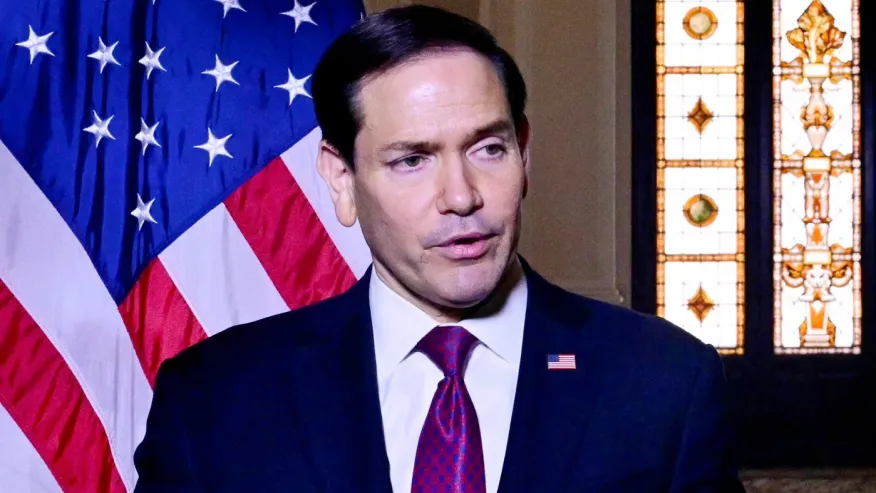
US secretary of state Marco Rubio told Congress that the material would need to be physically removed to eliminate the threat.

“People are going to have to go and get it,” Rubio said, suggesting that some form of direct intervention may ultimately be required.
However, he did not provide details on how such an operation might be conducted.

Special Forces Operation Under Discussion
Reports indicate that officials in Washington and Israel have discussed the possibility of deploying special forces to seize or secure Iran’s uranium reserves.
The mission could potentially involve troops from either or both countries, though no final decision has been announced.
Military and nuclear experts say the operation would be extremely complex and dangerous.

Retrieving nuclear material inside a hostile country during an active conflict would pose major logistical and security challenges.
Facilities containing the uranium are heavily protected and, in some cases, built deep underground to withstand attacks.

Uranium Stored in Underground Facilities
According to Rafael Grossi, director general of the International Atomic Energy Agency (IAEA), a significant portion of Iran’s stockpile is stored in underground tunnels.

Grossi said inspectors believe around 200 kilograms of highly enriched uranium are located at a nuclear complex near the city of Isfahan.
Additional material is believed to be held at another facility in Natanz, one of Iran’s most important nuclear sites.

Iran has recently constructed a new deeply fortified complex at Natanz known as Kuh-e Kolang Gaz La, which Western analysts often refer to as “Pickaxe Mountain”.
The site is built deep inside a mountain, making it far more difficult to reach through airstrikes or conventional military attacks.

High Risks and Strategic Challenges
Experts warn that any attempt to seize the uranium could carry significant risks.
Such an operation would likely require troops to enter heavily defended facilities while managing radioactive materials safely.

There is also the risk that Iran could attempt to move or hide the uranium if it believes foreign forces are preparing to capture it.
In addition, securing and transporting the material out of Iran would require careful handling to avoid environmental or nuclear safety hazards.

Analysts say the potential mission highlights how difficult it may be to fully eliminate Iran’s nuclear capabilities through military action alone.

Key Objective of the War
The fate of Iran’s enriched uranium has become one of the most critical strategic questions in the conflict.
US officials argue that leaving the material inside Iran could allow the country to rebuild its nuclear programme even if many of its facilities are destroyed.

For that reason, removing the stockpile entirely is being discussed as a possible final step to ensure Tehran cannot produce a nuclear weapon.
Whether such a high-risk operation will actually take place remains unclear.
But the discussions underline the growing urgency surrounding Iran’s nuclear programme as the war continues.

Join the discussion?

Already a member?


  Adapted by ASEAN Now · Source · 10.03 2026
ASEAN NOW News
ASEAN NOW News
Tehran Endures Heavy Bombardment
Residents of Tehran say the Iranian capital has experienced the most intense bombardment since the US-Israeli campaign began, with waves of explosions shaking neighbourhoods overnight

One resident in eastern Tehran, speaking anonymously under the pseudonym Niloufar for safety reasons, described hearing continuous blasts early Tuesday morning.
“We are under heavy bombardment and I can hear back-to-back explosions,” the resident said. “The buildings are shaking.”

Get the latest headlines in your email

The latest attacks are part of an air campaign launched jointly by Israel and the United States against Iran that began on 28 February. Israeli officials said Tuesday’s strikes included attacks on a weapons development facility.
Residents also reported widespread power outages and major communication disruptions across the city.

Health Warnings and Civilian Toll
Air pollution and environmental damage have also raised health concerns.
The World Health Organization warned that smoke and so-called “black rain” following strikes on oil facilities could pose respiratory risks to residents.

Officials urged people to remain indoors while air quality remains hazardous.
Human rights monitors say the conflict has already caused significant civilian casualties. According to the advocacy group Human Rights Activists in Iran, at least 1,245 civilians have been killed in Iran since the war began, including 194 children.

Elsewhere in the region, violence linked to the conflict has spread beyond Iran’s borders. Israeli strikes in Lebanon have reportedly killed at least 486 people, while missile attacks have killed 11 people in Israel.
The fighting has also affected US forces in the region, with seven American troops reported killed and around 140 injured.

Mixed Signals From Washington
The latest bombardment comes amid conflicting messages from US officials about how long the war could continue.
President Donald Trump said on Monday that the conflict was already largely complete and suggested it could end soon.
“The war is very complete, pretty much,” he said during an interview with CBS News.

However, US defence secretary Pete Hegseth signalled a more prolonged campaign.
Hegseth said military operations would continue until Iran had been “totally and decisively defeated”, adding that the timeline would depend on the president’s decisions.

“It’s not for me to posit whether it’s the beginning, the middle, or the end,” he said, suggesting further intense strikes were imminent.
Meanwhile, Dan Caine, chairman of the US Joint Chiefs of Staff, said American forces had struck more than 5,000 targets in Iran.

According to Caine, the campaign aims to destroy Iran’s ballistic missile and drone capabilities, weaken its naval forces and reopen shipping routes through the strategically vital Strait of Hormuz.

Iran Vows Retaliation
Iranian officials say they will not accept an end to the war until they have imposed significant costs on their adversaries.
Ali Larijani, head of Iran’s national security council, warned in a social media post that the country would not be intimidated by threats.

“The nation of Iran does not fear your empty threats,” he wrote, responding to warnings from Trump that the United States could strike “20 times harder” if Iran disrupted oil shipments through the Strait of Hormuz.
Iran has continued missile and drone attacks targeting Israel, US military bases across the Middle East and energy infrastructure in Gulf states.

Attacks Across the Gulf
The wider region has also seen growing instability.
In Manama, the capital of Bahrain, an Iranian strike hit a residential building, killing one person and injuring eight others.

Authorities in the United Arab Emirates said firefighters were battling a blaze near petrochemical facilities after a drone attack, while both Saudi Arabia and Kuwait reported intercepting drones.
Despite the tensions, daily life has continued relatively normally in some places.

In the Gulf city of Dubai, residents reported that beaches, shopping centres and restaurants remained open, though tourism has slowed.
Four migrant workers have died in the UAE after missile debris fell in populated areas.

Growing Risk of Global Energy Crisis
Economists warn that the conflict could have major consequences for the global economy.
The Strait of Hormuz, a narrow shipping channel connecting the Persian Gulf to global markets, handles roughly one-fifth of the world’s oil supply.

Any sustained disruption to production or shipping through the route could trigger a major energy shock similar to the oil crises of the 1970s.
Rising fuel prices are already affecting consumers worldwide, while investors are closely watching whether the conflict escalates further.

For residents in Tehran, however, the immediate concern remains survival.
One local described the city as feeling like “the last stop before hell” as airstrikes continued to shake neighbourhoods overnight.

Join the discussion?

Already a member?


  Adapted by ASEAN Now · Source · 10.03 2026
ASEAN NOW News
ASEAN NOW News
Putin Positions Russia as Mediator
Vladimir Putin is seeking to position Russia as a potential mediator in the conflict involving Iran, Israel and the United States, even as Moscow continues its own war in Ukraine.

The Russian president has spoken twice within a week with Iran’s leadership and also held a phone conversation with US President Donald Trump.

Get the latest headlines in your email

According to the Kremlin, Putin used the call with Trump to propose ideas aimed at achieving a diplomatic resolution to the Iran conflict.

Russian officials say these proposals are based on discussions with leaders in the Gulf region, Iran and other countries.
Moscow has publicly called for a “swift de-escalation and political resolution” to the war.
However, critics note that Russia itself launched a full-scale invasion of Ukraine in 2022 — an action condemned by the United Nations General Assembly as a violation of international law.

Strategic Partnership With Iran
Russia maintains a “Comprehensive Strategic Partnership” agreement with Iran, reflecting close cooperation between the two countries.

Putin recently reaffirmed Moscow’s “unwavering support” for Tehran, although the agreement does not amount to a formal mutual defence treaty.
Rather than direct military involvement, Russia has offered to help mediate between the parties.

For Moscow, the crisis also presents an opportunity to reinforce its influence across the Middle East and the Gulf.
By presenting itself as a diplomatic broker, the Kremlin hopes to demonstrate that it remains a major global power with the ability to shape international events.

Relations With the United States
The conflict may also give Russia a chance to maintain working relations with Washington.
The Kremlin has avoided directly criticising Trump over the military campaign against Iran.
Trump said after his call with Putin that the Russian leader appeared keen to assist.
“[Putin] wants to be helpful,” the US president said.
Trump also suggested that Russia could play a more constructive role by helping to end the war in Ukraine.
“I said you could be more helpful by getting the Ukraine-Russia war over with,” he added.
Despite differences over Ukraine, Moscow appears eager to maintain communication with the Trump administration, which it believes could benefit its strategic interests.

Oil Prices Offer Economic Benefits
Beyond diplomacy, the conflict could provide Russia with economic advantages.
Fighting in the Middle East has driven up global oil prices, boosting revenues for major energy exporters such as Russia.
Russia’s federal budget assumes an average oil export price of around $59 per barrel.

In recent months, global prices had dropped below that level, putting pressure on government finances.
However, crude oil prices surged dramatically after the war began, at one point approaching $120 per barrel before easing.
Even after falling back, prices remain well above Russia’s budget assumptions, potentially helping Moscow fund its ongoing war effort in Ukraine.

Possible Impact of Sanctions
The situation could become even more beneficial for Russia if oil-related sanctions are eased.
Trump has suggested the United States might waive certain sanctions on some countries to stabilise global energy supplies disrupted by the Iran conflict.

Volodymyr Zelensky, president of Ukraine, warned that any easing of restrictions on Russian oil exports would be a serious setback for Kyiv.
He urged Washington not to relax sanctions that were imposed after Russia’s invasion.

Mixed Reaction in Russian Media
While the Kremlin has avoided openly criticising Trump, some Russian media outlets have taken a far more confrontational tone.

The pro-government newspaper Komsomolskaya Pravda suggested that high oil prices could eventually push Western governments to reconsider sanctions on Russia.
Another publication, Moskovsky Komsomolets, sharply criticised Trump’s handling of the Iran war, calling the US president’s actions reckless.

As the conflict continues, Moscow appears determined to use the situation to strengthen its diplomatic position and secure economic advantages.

Join the discussion?

Already a member?


  Adapted by ASEAN Now · Source · 10.03 2026
ASEAN NOW News
ASEAN NOW News
Government Introduces New Definition
The UK government has adopted a new definition of anti-Muslim hate, with ministers insisting it will not restrict free speech while helping authorities tackle rising levels of hostility toward Muslim communities.

Speaking in the House of Commons, communities secretary Steve Reed said the government had a responsibility to respond to record levels of hate crime targeting Muslims.
Reed told MPs that defining anti-Muslim hostility was essential to addressing the issue effectively.
“You can’t tackle a problem if you can’t describe it,” he said.

Get the latest headlines in your email

The government has introduced a three-paragraph non-statutory definition outlining unacceptable prejudice, discrimination and hatred directed at Muslims. Officials say the definition is intended to guide institutions and public bodies but will not become law.
Reed said the wording had been carefully designed to ensure people could still freely discuss religion.
“The definition safeguards our fundamental right to freedom of speech about religion in general or any religion in particular,” he said.

Part of Broader Social Cohesion Strategy
The new definition was published alongside a wider Social Cohesion Strategy aimed at strengthening integration and reducing division within British society.

In an accompanying foreword, Keir Starmer said the country faced increasing pressures from forces seeking to exploit social tensions.
“In a world where so many people – digital grifters, hostile states and politicians of grievance – have a vested interest in division, we need to be much more active in asserting British values and the responsibilities of integration,” the prime minister wrote.

The strategy includes a range of measures designed to address extremism and improve community relations.
Among them are plans to introduce a whistleblowing route for university staff to report concerns about extremism and expanded powers for the Charity Commission to shut down organisations suspected of promoting extremist views.

Focus on English Language and Integration
Another key element of the strategy is a renewed focus on English language skills as a tool for integration.
Officials said the government will review existing English language provision to identify best practices and improve access to lessons.

The review will consider how technology and digital teaching could expand opportunities for people to learn English, with findings expected to be published in autumn 2026.
Government sources said the move aims to address what they described as a fragmented system currently delivered by organisations including the Department for Work and Pensions and local authorities.

The strategy also proposes introducing citizenship education in schools, strengthening digital literacy teaching and increasing understanding of faith communities across public institutions.

Mixed Reactions from Experts and Politicians
Some experts welcomed the new definition as an important step toward addressing discrimination against Muslims.
Javed Khan, managing director of the thinktank Equi and a member of the working group advising the government, described the move as a “watershed moment”.

However, he said it should only be considered a starting point.
Khan also warned that the strategy needed to place greater emphasis on tackling the rise of far-right extremism and the factors driving it.

Criticism also came from opposition politicians.
Paul Holmes, the shadow communities secretary, argued the strategy lacked concrete action and raised concerns about the potential implications for free speech.

Holmes referenced earlier advice from Jonathan Hall, the government’s independent reviewer of terrorism legislation, who suggested that any definition should clearly outline examples of speech that would not qualify as anti-Muslim hatred.
Without such clarity, Holmes warned, the definition could risk limiting legitimate criticism of extremist ideologies.

Join the discussion?

Already a member?


  Adapted by ASEAN Now · Source · 09.03 2026
ASEAN NOW News
ASEAN NOW News
Parliament Votes Down Proposed Ban
Members of the UK Parliament have rejected a proposal to ban social media use for children under the age of 16.

MPs in the House of Commons voted 307 to 173 against an amendment to the Children’s Wellbeing and Schools Bill that would have introduced the restriction. The proposal had been put forward by Conservative peer John Nash.
The vote followed growing calls from campaigners and some public figures to limit young people’s access to social media due to concerns about online harm.

Get the latest headlines in your email

Among those supporting tighter restrictions was actor Hugh Grant, who had backed the push for a legal ban earlier this year.
Despite the Commons vote rejecting the measure, the debate over limiting children’s access to social media is likely to continue.

Government Gains Powers to Introduce Restrictions
While MPs blocked the outright ban, they supported an alternative government proposal that could still allow restrictions to be introduced later.

Under the amendment, the UK science secretary, Liz Kendall, would be given powers to restrict or potentially ban social media access for children of certain ages in the future.
The powers could also apply to online chatbots and other digital services.
Explaining the approach in Parliament, education minister Olivia Bailey said the government wanted flexibility while it gathered further evidence.

The secretary of state could also be allowed to limit the use of virtual private networks by children, restrict addictive platform features such as autoplay, and potentially change the UK’s digital consent age.

Concerns Over Online Safety
Supporters of the proposed ban argued that parents were struggling to protect children from harmful online content.
Advocates said families were being placed in an “impossible position” when it comes to monitoring their children’s online activity.
However, some organisations warned that a blanket ban could have unintended consequences.
The child protection charity NSPCC said such restrictions might push teenagers toward unregulated or hidden parts of the internet, potentially increasing risks rather than reducing them.
The government said it is now launching a consultation to gather views from parents, experts and campaign groups before deciding on further action.
The consultation will consider whether social media platforms should introduce minimum age requirements and whether certain design features that encourage prolonged use should be disabled for younger users.

Political Debate Continues
The proposal sparked divisions among MPs.
John McDonnell, the Labour MP for Hayes and Harlington, voted against the government and supported the Lords amendment calling for the ban.
Meanwhile, more than 100 Labour MPs chose to abstain during the vote.
Munira Wilson, the Liberal Democrats’ spokesperson for education and children, criticised the government’s approach.
She said families needed stronger guarantees that action would be taken rather than further delays.

Wider Child Protection Measures
The legislation will now return to the House of Lords for further debate before it can become law.
If ultimately approved by both chambers, the bill would introduce several new child protection measures.
Among them is a requirement for local councils to assess a child’s home environment within 15 days if they are placed on a register of children not attending school.
The policy forms part of the government’s response to the murder of 10-year-old Sara Sharif in Woking in 2023, a case that prompted widespread calls for stronger safeguards for vulnerable children.

Join the discussion?

Already a member?


  Adapted by ASEAN Now · Source · 09.03 2026
ASEAN NOW News
ASEAN NOW News
Three high-profile real estate brokers have been convicted in a major sex trafficking case in the New York City after prosecutors accused them of drugging and assaulting dozens of women over several decades.

Brothers Tal Alexander, 39, and Oren Alexander, 38, rose to prominence selling luxury properties in New York City and Miami. Along with their younger brother Alon Alexander, 38, they were found guilty by a jury on multiple criminal charges, including sex trafficking and sexual exploitation of a minor.
The verdict followed a five-week trial in federal court.

Get the latest headlines in your email

Prosecutors said the brothers used their wealth and influence to lure women to parties, luxury homes and private trips before drugging and sexually assaulting them.
They were convicted on all 10 criminal counts and could face life in prison. Sentencing is scheduled for 6 August.

Prosecutors Describe Pattern of Abuse
During closing arguments, Assistant US Attorney Andrew Jones told jurors the brothers committed the crimes with “callousness” and even a “perverse sense of pride”.
Eleven women testified during the trial, including several who said they were minors when the incidents occurred.

Prosecutors said the brothers secretly placed drugs in victims’ drinks before assaulting them. In some cases, jurors were told the men physically restrained women while ignoring their pleas to stop.
Evidence presented to the court included a video allegedly showing Oren Alexander raping a drugged 17-year-old in his Manhattan apartment in 2009.

Defence Claimed Encounters Were Consensual
Lawyers representing the brothers argued the women had willingly attended parties and events and denied the accusations of assault.
Marc Agnifilo, an attorney for Oren Alexander, described the defendants as “womanisers” but insisted they had not drugged or raped anyone.

“They’re not drugging them, they’re not raping them, but they’re certainly pursuing them,” he told the court.
Agnifilo previously represented rapper Sean 'Diddy' Combs during his own sex trafficking trial last year.

New Allegations Surface
During the trial, another allegation emerged in a separate civil lawsuit filed by reality television personality and real estate agent Tracy Tutor.
Tutor accused Oren Alexander of drugging and sexually assaulting her in New York in 2024.
Lawyers for Alexander dismissed the claim, calling it a “demonstrably false lawsuit for maximum media impact”.

Prominent Careers in Luxury Real Estate
Before the criminal charges, Tal and Oren Alexander were well-known figures in the luxury property market.
They worked for real estate company Douglas Elliman, selling homes to high-profile clients including Liam Gallagher, Lindsay Lohan, Kim Kardashian and Kanye West.
In 2022, the brothers launched their own real estate firm, Official, based in New York.
Their younger brother Alon worked at the family-owned security company Kent Security.
Following the guilty verdict, all three brothers now face the possibility of spending the rest of their lives in prison.

Join the discussion?

Already a member?


  Adapted by ASEAN Now · Source · 09.03 2026
ASEAN NOW News
ASEAN NOW News
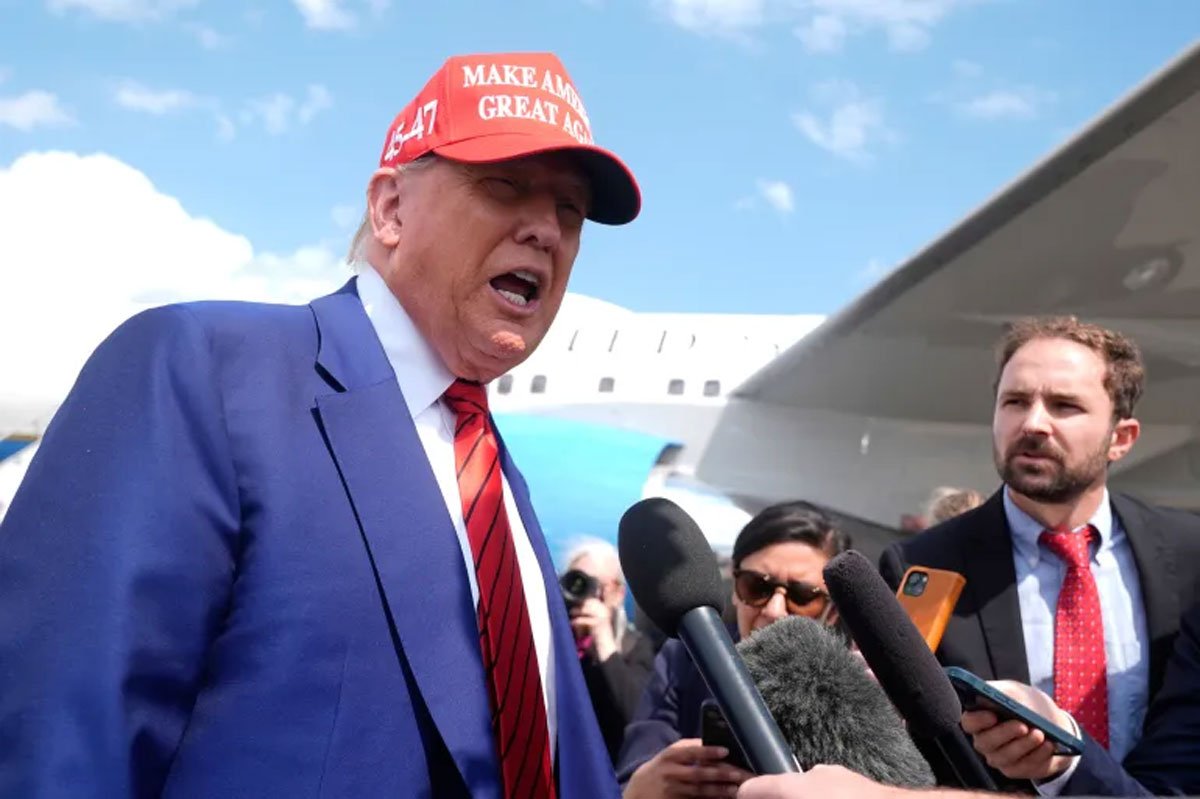
Trump Pushes Congress on Voting Bill
Donald Trump has threatened to refuse signing new legislation unless Congress approves a strict voting reform bill requiring proof of citizenship to vote.

Speaking at a Republican event in Miami, the US president renewed his push for the Safeguard American Voter Eligibility Act, often called the SAVE Act or “Save America Act”.
“All voters must show proof of citizenship in order to vote,” Trump said. “No mail-in ballots, except for illness, disability, military or travel.”

Get the latest headlines in your email

The president said the bill should take priority over other legislative business, repeating a warning he posted on the social media platform Truth Social.
“MUST GO TO THE FRONT OF THE LINE,” he wrote, adding that he would not sign other bills until the measure is passed in its strongest form.

Trump also claimed that stricter voting rules could dramatically shift the political landscape.
“If this passes, Democrats probably won’t win an election for 50 years,” he said.

What the Proposed Law Would Do
The legislation has circulated in Congress for more than two years and aims to tighten requirements for voter registration and ballot casting in federal elections.

Among its main provisions are mandatory documentary proof of US citizenship — such as a passport or birth certificate — in order to register to vote, as well as photo identification requirements when casting ballots.
The bill would also require states to ensure only US citizens are on voter rolls and allow private individuals to sue election officials if someone is registered without proper documentation.

Another provision directs states to share voter registration lists with the Department of Homeland Security so citizenship can be verified.
Supporters say the measures are necessary to prevent voter fraud and ensure confidence in elections.
However, critics argue that the requirements would make registration far more complicated and risk excluding legitimate voters.

Bill Faces Difficult Path in Senate
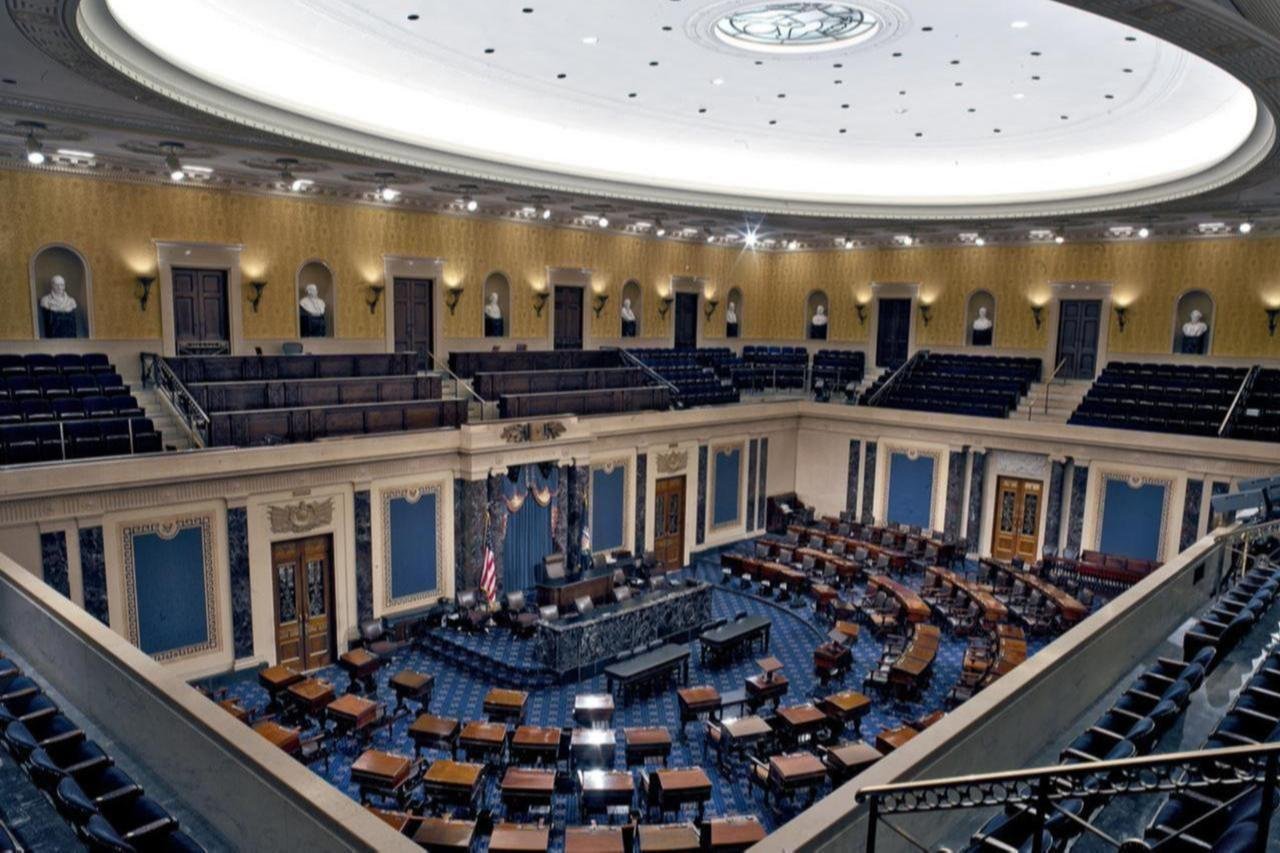
The legislation has already passed the United States House of Representatives earlier this year, but its prospects in the United States Senate remain uncertain.

Because of the chamber’s filibuster rules, the measure would likely require 60 votes to move forward, meaning significant bipartisan support would be needed.
Some Republicans have called for the filibuster to be lifted in order to pass the bill.

Ken Paxton, a Republican candidate in a heated Senate race in Texas, said he would consider dropping out of the contest if Senate leaders agreed to remove the procedural barrier to passing the legislation.

Critics Warn of Voting Barriers
Voting rights groups argue the proposed law could disenfranchise millions of Americans.
Many citizens do not have readily available proof of citizenship. Only about half of Americans hold a valid passport, while other documents — such as birth certificates — may not match current legal names.

Advocates say this could particularly affect married women who changed their surnames and voters whose documentation has not been updated.
The Brennan Center for Justice said the measure could disproportionately impact younger voters and minority communities.
Research also suggests voting by non-citizens is extremely rare. The Bipartisan Policy Center has said there is no evidence that such cases occur frequently enough to affect election outcomes.

Still, Trump has repeatedly raised concerns about non-citizens participating in US elections and has suggested the federal government should take greater control over how elections are run — a responsibility traditionally handled by states and local authorities.

Join the discussion?

Already a member?


  Adapted by ASEAN Now · Source · 09.03 2026
ASEAN NOW News
ASEAN NOW News
Trump Signals Conflict May End Soon
Donald Trump said the war involving the United States, Israel and Iran could end “very soon”, as the conflict entered its second week with continued strikes across the region.

Asked whether the fighting would end within days, the US president said he expected the campaign to conclude shortly, but stopped short of setting a firm timeline.
“No, but I think soon. Very soon,” he said when asked if the war might end this week.

Trump described the campaign as a “short-term excursion”, claiming the military operation was already largely successful and ahead of schedule.
“We’ve already won in many ways, but we haven’t won enough,” he said, adding that the operation would only conclude once Iran was no longer capable of threatening the US, Israel or their regional allies with weapons for a long period.

Disappointment Over Iran’s New Supreme Leader
Trump also reacted to the appointment of Mojtaba Khamenei as Iran’s new supreme leader following the death of his father, Ali Khamenei.

The president said he was “disappointed” by the choice, warning that it could lead to further tensions rather than political change inside Iran.
“I was disappointed because we think it’s going to lead to just more of the same problem for the country,” Trump said.
He had previously suggested he had potential candidates in mind who might lead Iran after the current regime.

However, he emphasised that any future leadership would ideally come from inside the country rather than from figures who have spent decades in exile.
Trump noted that some commentators had mentioned Reza Pahlavi, the exiled son of Iran’s former shah, but pointed out that he had not lived in the country for many years.

“I like the idea of internal and eternal,” Trump said, suggesting a leader emerging from within Iran’s political system might be more viable.

Refuses to Comment on Targeting Khamenei
The president twice declined to say whether Iran’s new leader had become a potential military target.
When asked directly if Mojtaba Khamenei had “a target on his back”, Trump refused to answer.
“I don’t want to say if he does or not, because that would be inappropriate,” he said.
His remarks came as Israel signalled it could consider targeting Iran’s new leadership as part of its ongoing campaign.

Strikes Continue Across the Region
Despite Trump’s suggestion the conflict could end soon, fighting continued across multiple fronts.
Israeli forces launched a second wave of strikes against targets in Tehran, with the Israel Defense Forces saying the attacks were aimed at “terror targets” in the Iranian capital.

However, reports indicated that energy and fuel infrastructure used by civilians had also been hit.
Meanwhile, Iran launched fresh missile and drone attacks against Israeli territory as well as US military bases across the Middle East and energy facilities in Gulf states.
The conflict has also expanded beyond Iran and Israel.
Israeli operations against Hezbollah in Lebanon have intensified, with raids in the south and airstrikes in Beirut.

Lebanon’s health ministry said Israeli attacks had killed 486 people since early March, including at least 83 children, while around 600,000 people have been displaced.
British forces have also been drawn into regional defence efforts. The UK Ministry of Defence said Eurofighter Typhoon jets intercepted drones heading toward Jordan and Bahrain.
In addition, Turkey said NATO air defences intercepted a ballistic missile from Iran that had entered its airspace.

Oil Prices Swing on War Comments
The conflict has also shaken global energy markets.
Oil prices surged sharply earlier in the week, with Brent crude climbing above $119 per barrel — the highest level in four years.
Markets reacted quickly after Trump suggested the conflict could soon end.

Brent crude later fell back to about $98.96 per barrel, easing fears of a prolonged disruption to global energy supplies.
Stock markets also recovered after the president’s comments. The S&P 500 initially opened lower but later finished the day higher as investors reacted to the possibility that the war might be shorter than previously feared.
Despite the market relief, analysts warn that volatility could continue as long as fighting persists across the region.

Join the discussion?

Already a member?


  Adapted by ASEAN Now · Source · 09.03 2026
ASEAN NOW News
ASEAN NOW News
The war involving the United States, Israel and Iran is already having economic consequences far beyond the battlefield, highlighting how central energy supplies remain to the global economy.

As the conflict disrupts exports from the Gulf region and forces some producers to scale back output, oil prices have surged, rattling financial markets and raising concerns about a broader economic slowdown.

A Global Energy Shock
At the centre of the crisis is the Strait of Hormuz, one of the world’s most critical shipping routes for energy. Roughly one-fifth of global oil supplies normally pass through the narrow waterway connecting the Persian Gulf to international markets.
With the conflict restricting ship traffic through the strait, large volumes of crude oil and liquefied natural gas are struggling to reach global buyers.

Energy producers outside the region, including the United States, Brazil and Norway, have limited capacity to rapidly increase production and offset the disruption.
Meanwhile several Gulf producers have already reduced output. Production in Iraq is reported to have fallen by more than 60%, while Kuwait and the United Arab Emirates have also scaled back their supply.

The strain is not limited to oil. About 20% of global natural gas supply has also been affected after production halted at facilities in Qatar following military attacks.
Without easy alternatives, analysts warn that shortages could emerge quickly in regions heavily dependent on imports, particularly Asia and Europe.

Energy Prices Climb
The supply shock has quickly pushed energy prices higher.
Both Brent crude and the US benchmark West Texas Intermediate surged sharply after the war began, briefly approaching $120 per barrel before falling back toward the mid-$80 range.

Even at those levels, the increase is already raising costs for businesses and households.
Natural gas prices in the United Kingdom and across Europe have nearly doubled since the start of the conflict. In the United States, petrol prices have climbed to roughly $3.50 per gallon, up from about $2.90 a month earlier.

Economists say sustained high oil prices could slow global economic growth. Analysts at Goldman Sachs estimate that if oil stabilises at $100 per barrel, it could shave about 0.4 percentage points off global growth.
Should the conflict drag on, some forecasts suggest prices could climb as high as $150 per barrel — levels that historically have been associated with severe economic strain.

Ripple Effects Across Industries
Higher energy costs affect far more than fuel bills.
Energy-intensive industries, from manufacturing to technology, face rising operating costs. Semiconductor production, for example, could be affected because major chip-manufacturing centres such as Taiwan rely heavily on imported energy.

Rising electricity and fuel costs could also complicate efforts by major US technology companies to expand the infrastructure needed to power artificial intelligence systems.
Other commodities are also being affected. The Middle East is an important supplier of aluminium, sulphur used in metal processing, and fertiliser ingredients such as urea.

As those prices increase, the impact could spread through supply chains, eventually pushing up the cost of food and manufactured goods.
Farmers in the United States are already feeling the pressure.

Harry Ott, a farmer in South Carolina who grows cotton, corn and soybeans, said his fertiliser supplier paused sales while assessing the impact of the conflict before announcing price increases.
Ott estimates the rise could add roughly $100 per acre to his fertiliser costs, potentially wiping out profits for the season.
“These are trying times,” he said, warning that farmers had not planned for such a sudden jump in expenses.

Financial Markets React
The economic risks appear greatest for countries heavily dependent on imported energy.
Stock markets in Asia and Europe have already reacted sharply. Japan’s Nikkei 225 has fallen by around 10% since the war began, while South Korea’s KOSPI has dropped roughly 15%.

In Europe, Germany’s DAX index has also declined by more than 7%.
Markets in the United States have held up somewhat better, with the S&P 500 slipping about 1.2% over the same period.
Even so, rising fuel costs could create political pressure for President Donald Trump as voters prepare for congressional elections later this year.

Analysts also say uncertainty about how long the conflict might last is contributing to volatility in energy markets.
Paul Sankey of Sankey Research warned that even if the US and Israel declare their operations complete, the situation may not fully stabilise.
“Much as the US and Israel may declare operations over and complete, the Iranians may not see it that way,” he said.
That possibility could keep global energy markets on edge long after any formal end to the conflict.

Join the discussion?

Already a member?


  Adapted by ASEAN Now · Source · 09.03 2026
ASEAN NOW News
ASEAN NOW News
Leaders of the Group of Seven (G7) have said they are prepared to take “necessary measures” to stabilise global energy supplies after the escalating war involving United States, Israel and Iran triggered a sharp surge in oil prices.

The pledge came after an emergency virtual meeting between G7 finance ministers and the International Energy Agency (IEA). While officials discussed releasing strategic oil reserves, no final decision was taken.

Get the latest headlines in your email

Oil prices briefly climbed close to $120 a barrel on Monday as traders feared the conflict could disrupt shipments through the critical Strait of Hormuz, a narrow passage used for roughly one-fifth of the world’s oil trade.
However, prices later dropped sharply after comments from Donald Trump suggesting the conflict might soon come to an end.

Emergency Energy Options Considered
During the meeting, IEA executive director Fatih Birol warned that global oil markets had deteriorated significantly in recent days.
He said a combination of disrupted shipping routes and curtailed production was creating growing risks for energy markets.

IEA member states collectively hold more than 1.2 billion barrels of emergency oil stocks, while a further 600 million barrels are stored by industry under government mandates.
Releasing those reserves remains an option if the situation worsens.

“We are not there yet,” said Roland Lescure, France’s finance minister, following the talks.
If countries decide to tap emergency reserves, it would mark the first coordinated release since 2022, when stockpiles were used to stabilise markets after Russia's invasion of Ukraine.

UK Calls for De-Escalation
The United Kingdom urged immediate steps to reduce tensions in the Middle East.
Chancellor Rachel Reeves said Britain had called for de-escalation and for guarantees to protect shipping routes in the region.

She also confirmed the UK was ready to support a coordinated release of oil reserves if necessary.
Major disruptions to energy supplies from the Middle East could push up fuel costs worldwide, potentially fuelling inflation and complicating plans by central banks to cut interest rates.

Markets React to Conflict
Financial markets reacted sharply to the growing uncertainty.
Benchmark Brent crude surged more than 25% during Asian trading at one point, briefly touching about $119.50 a barrel before falling back below $90 later in the day.

Gas prices also rose sharply. UK month-ahead gas contracts jumped nearly 25% to around 171p per therm before easing slightly.
Despite the increase, prices remain well below the extreme highs reached in 2022 following the outbreak of war in Ukraine.
Global stock markets also suffered losses.

Japan’s Nikkei 225 dropped more than 5%, while South Korea’s KOSPI fell about 6%.
In Europe, Germany’s DAX index and France’s CAC 40 both closed lower.
London’s FTSE 100 finished the day down only slightly after recovering from steeper earlier losses, while energy giants Shell and BP rose as investors bet they would benefit from higher oil prices.

Duration of War Key Concern
Analysts say the biggest uncertainty for markets is how long the conflict will last.
Paul Gooden, head of natural resources at Ninety One Asset Management, warned that prolonged disruption could push oil prices significantly higher.

“If the conflict drags on, the oil market will become increasingly nervous,” he said.
Prices between $120 and $150 a barrel could trigger what economists call “demand destruction”, where high costs force consumers and businesses to reduce fuel consumption.

For now, traders remain focused on developments in the Middle East, where attacks on energy infrastructure and shipping routes have already rattled global markets.

Join the discussion?

Already a member?


  Adapted by ASEAN Now · Source · 09.03 2026
ASEAN NOW News
ASEAN NOW News
People in Australia will soon have to prove they are over 18 before accessing online pornography, R-rated video games and sexually explicit AI chatbots under new laws aimed at protecting children from harmful content.

The rules, enforced by the country’s online safety regulator, require platforms to introduce stronger age-verification systems rather than relying on simple “over-18” tick boxes.


Get the latest headlines in your email

Julie Inman Grant, Australia’s eSafety Commission commissioner, said the new approach mirrors safeguards used in physical venues.
“We don’t allow children to walk into bars or bottle shops, adult stores or casinos, but when it comes to online spaces there are no such safeguards,” she said.

Stricter Age Verification
From Monday, websites and digital platforms must take what regulators describe as “meaningful steps” to prevent children from accessing adult material.
Acceptable verification methods could include facial recognition scans, digital identity checks or confirmation through credit card details.

The rules apply widely across the internet, including search engines, app stores, social media platforms, gaming services, pornography sites and AI systems such as companion chatbots.
The changes come only three months after Australia introduced a ban preventing children under 16 from using social media.

Concerns Over Privacy and Effectiveness
Some experts warn the new regulations may face practical challenges.
Age-verification technologies can be bypassed by determined users, while the requirement to submit personal information could also raise concerns about data security and privacy.

However, regulators say the measures are necessary given the scale of young people’s exposure to harmful material online.
Research from the eSafety Commission found that one in three children aged 10 to 17 had seen sexual images or videos on the internet.
More than 70% reported encountering content involving extreme violence, self-harm or suicide.

Join the discussion?

Already a member?


  Adapted by ASEAN Now · Source · 08.03 2026
ASEAN NOW News
ASEAN NOW News
Global oil prices surged above $110 a barrel on Monday while stock markets across Asia tumbled, as the escalating war involving Iran triggered fears of a prolonged disruption to energy supplies from the Middle East.

The conflict — involving strikes by the United States and Israel — has heightened concerns about shipments through the strategically vital Strait of Hormuz, a narrow waterway through which roughly one-fifth of the world’s oil supply normally passes.
With tanker traffic through the strait largely halted since the conflict began, markets reacted sharply to the possibility that global supplies could remain constrained for weeks.


Get the latest headlines in your email

Oil Prices Spike
Benchmark crude prices rose dramatically in early Asian trading.
Brent crude climbed nearly 24% to about $114.74 a barrel, while West Texas Intermediate crude — traded on the New York Mercantile Exchange — jumped more than 26% to roughly $114.78.

The price surge happened rapidly. Oil first jumped about 10% within minutes of markets opening before climbing another 10% shortly afterward.
Analysts said the sharp move reflected a sudden shift in sentiment after markets had previously appeared relatively calm about the risks posed by the conflict.

Scenes of damage to energy infrastructure across Iran and the wider Gulf region over the weekend increased fears that supplies could be severely disrupted.
Some analysts now warn that if the shutdown of shipping through the Strait of Hormuz continues until the end of March, prices could climb above $150 a barrel — potentially reaching record levels.

Stock Markets Slide
The surge in oil prices coincided with steep losses across Asia-Pacific stock markets.
Japan’s Nikkei 225 fell more than 7%, while Hong Kong’s Hang Seng Index dropped over 3%.
In Australia, the S&P/ASX 200 lost more than 4%.

The sharpest fall came in South Korea, where the KOSPI index plunged over 8%, triggering a 20-minute trading halt under the market’s circuit breaker rules — a mechanism designed to prevent panic selling.
It was the second time the safeguard had been activated in recent days after the index fell 12% earlier in the week.

Economic Ripple Effects
Higher oil prices threaten to push up costs for consumers and businesses worldwide.
Petroleum products such as jet fuel could become more expensive, and rising energy costs may also increase the price of key industrial materials including fertiliser inputs.

Much of the oil shipped through the Gulf is consumed in Asia, meaning the region could feel the immediate impact of supply disruptions.
There are already signs of shifts in global energy flows, with some liquefied natural gas shipments originally bound for Europe reportedly being redirected toward Asian buyers willing to pay higher prices.

Political Response
Responding to the market turmoil, Donald Trump said temporary price increases were a “small price to pay” for eliminating what he described as Iran’s nuclear threat.

Meanwhile, Iran signalled political continuity during the crisis by naming Mojtaba Khamenei as the successor to his father, Supreme Leader Ali Khamenei.
Analysts say the move suggests that hardline leadership remains firmly in control of the country as the conflict enters its second week.

Join the discussion?

Already a member?


  Adapted by ASEAN Now · ·Source 09.03 2026

CharlieH
CharlieH
Great Britain has only two days of gas stored !

Low Gas Storage Raises Energy Security Questions
United Kingdom energy reserves are under scrutiny after new data showed the country has less than two days of fossil gas stored, raising concerns as conflict involving Iran threatens global energy supplies.


Get the latest headlines in your email

Figures from National Gas, which operates Britain’s national gas transmission system, show the country had 6,999 gigawatt hours (GWh) of gas in storage on Saturday.
That figure is significantly lower than the 9,105 GWh recorded at the same time last year.
With a theoretical maximum capacity equivalent to about 12 days of gas consumption, current levels represent under two days of stored reserves.

LNG Tankers Diverted to Asia
The tightening situation comes as liquefied natural gas shipments are being redirected away from Europe.
According to shipping data compiled by Bloomberg, at least two LNG tankers changed course in the middle of the Atlantic in recent days, turning away from European destinations and heading toward Asian markets.
Several similar diversions occurred earlier in the week.
Energy analysts say the changes reflect surging demand in Asia following disruptions linked to the conflict involving Iran and its regional rivals.
Strait of Hormuz Disruption Drives Price Surge
The crisis escalated after intensified airstrikes by United States and Israel on Iranian targets, triggering retaliatory moves that have disrupted shipping routes.
Iran effectively closed the Strait of Hormuz, a strategic waterway through which roughly one-fifth of the world’s seaborne gas shipments pass.

The disruption has sent energy prices sharply higher.
Asian LNG prices jumped last week, while UK month-ahead gas prices surged to 137 pence per therm, compared with 78.5 pence before the war began.
The situation worsened after Qatar halted production at the world’s largest liquefied natural gas facility following a drone attack.
Many Asian economies rely heavily on Qatari LNG exports, pushing buyers to compete aggressively for available shipments.

Officials Say Supply Remains Secure
Despite the relatively small level of stored gas, British officials say the country is not facing an immediate supply crisis.
National Gas stressed that storage represents only a small part of Britain’s overall energy system.

Most of the country’s gas comes from domestic production on the UK Continental Shelf and imports from Norway, supplemented by LNG deliveries and pipeline connections with mainland Europe.
A spokesperson for the Department for Energy Security and Net Zero said it was “categorically untrue” that the UK had access to only two days of gas supply.
Officials argue that Britain’s diversified supply network provides flexibility to meet demand throughout the year.

Structural Challenges for the Future
Even so, experts warn that the current situation highlights broader challenges for the country’s long-term energy security.
Unlike mainland Europe, which maintains several weeks of gas reserves, the UK relies more heavily on a flexible supply system rather than large storage facilities.

According to National Gas chief executive Jon Butterworth, structural changes are reshaping the country’s energy landscape.
Declining production in the North Sea, increasing dependence on imported gas and evolving demand patterns are all creating new risks for the system.

Calls for Expanded Storage and Supply Options
In response to a government energy security review, National Gas has proposed measures aimed at strengthening the country’s supply resilience.
These include expanding LNG infrastructure, increasing storage capacity and potentially introducing floating gas storage facilities.

Gas injections into storage have already increased since late February as milder temperatures reduced demand, allowing reserves to rebuild slightly.
However, analysts say the combination of geopolitical tensions and global competition for energy supplies could keep pressure on markets in the months ahead.

Join the discussion?

Already a member?


  Adapted by ASEAN Now · Source · 08.03 2026
ASEAN NOW News
ASEAN NOW News
Attack on RAF Base Sparks Political Tensions
A drone strike on a British military installation in Cyprus has revived a long-running debate about the United Kingdom’s continued military presence on the island.

The attack struck a hangar at RAF Akrotiri, punching a hole through the structure and highlighting security concerns at one of Britain’s most strategically important overseas bases.
While some observers in the United Kingdom see the incident as a worrying sign of vulnerability in British defence infrastructure, others in Cyprus view it as evidence that the island’s hosting of foreign military facilities is drawing it into wider regional conflicts.

Protests Call for End to British Presence
The strike has fuelled protests in the Cypriot capital, Nicosia, where demonstrators gathered outside the presidential palace calling for the removal of British bases.
Among them was local business owner Natasha Theodotou, who carried a banner reading “British Bases Out”.
She argued that Cyprus should be fully independent and free from foreign military control.

Activists at the rally also linked the issue to broader geopolitical tensions, carrying pro-Palestinian signs and chanting slogans critical of the United States, Israel and the British military presence on the island.
An estimated 200 to 300 protesters joined the demonstration.

A Legacy of Cyprus’ Colonial Past
The presence of British military bases in Cyprus dates back to agreements made when the island gained independence from the United Kingdom in 1960.

Under that treaty, Britain retained two sovereign military territories: Akrotiri and Dhekelia.
Together they form the island’s Sovereign Base Areas, covering roughly 98 square miles (254 square kilometres).
The bases remain under full British jurisdiction and are even policed by a separate authority dedicated to the territories.
Their existence has remained controversial, particularly in the context of Cyprus’s complex political history.
In 1974, Turkey invaded the northern part of the island following a coup backed by Greece, leaving Cyprus divided ever since.
The capital, Nicosia, sits along the United Nations-monitored Green Line buffer zone and is often described as the world’s last divided capital.

Suspected Hezbollah Drone Attack
British military officials believe the drone that struck RAF Akrotiri was launched from Lebanon by militants from Hezbollah, the Iran-backed armed group.
The strike came amid escalating tensions in the region following attacks involving Iran, Israel and their allies.

Although the UK government has said the Cypriot bases are not being used for American bombing missions against Iranian missile sites, reports suggest the base has hosted surveillance flights, including operations by Lockheed U-2 spy planes.
Analysts say that role could explain why the base became a potential target as Iran and its regional allies retaliated against US and Israeli operations.
The UK has not participated in direct strikes against Iran.

Strategic Role of the Bases
For the British military, RAF Akrotiri represents a critical strategic foothold in the eastern Mediterranean.
From there, the UK can launch operations across the Middle East and North Africa and respond rapidly to regional crises.

A spokesperson for the UK Ministry of Defence said the bases play a vital role in protecting British citizens and supporting allied operations.
The ministry added that aircraft including Eurofighter Typhoon and Lockheed Martin F-35 Lightning II jets have recently flown sorties in the region to intercept Iranian drones.

Debate Over the Bases’ Future
The Cypriot government has emphasised that the drone targeted a British base rather than Cyprus itself, and that the country is not involved in the ongoing conflict.
Still, the incident has renewed calls for greater transparency about military activity at the bases and reopened debate over their future.

Cyprus’s foreign minister, Constantinos Kombos, acknowledged that the issue of the British bases has long been part of political discussions.
However, any attempt to renegotiate the arrangement would be extremely complex, involving not only Britain but also Greece, Turkey and representatives from both Greek and Turkish Cypriot communities.
For now, the bases remain a central but contentious part of Cyprus’s geopolitical landscape.

Join the discussion?

Already a member?


  Adapted by ASEAN Now · Source · 08.03 2026
ASEAN NOW News
ASEAN NOW News
Canadian Leader Urges Removal From Royal Line
Canadian Prime Minister Mark Carney has called for Prince Andrew, also known as Andrew Mountbatten-Windsor, to be removed from the British royal line of succession, describing the circumstances surrounding the duke as “deplorable”.

Get the latest headlines in your email

Speaking to reporters during a visit to Tokyo, Carney said Andrew’s conduct and the controversies that led to him losing his royal titles mean he should no longer remain eligible to become monarch.
Carney said the actions that resulted in Andrew being stripped of his status as a prince make it necessary to reconsider his place in the line of succession.
“Even though he is well down the line of succession, the point of principle stands,” the Canadian leader said.

Fallout From Epstein Scandal
Andrew’s position in the royal family has been under intense scrutiny due to his association with the late convicted sex offender Jeffrey Epstein.

The controversy surrounding the duke’s links to Epstein triggered widespread criticism and ultimately led to Andrew losing several royal roles and privileges.

In October, he was stripped of his princely status and formal royal titles, a move intended to distance the monarchy from the scandal.
Despite those measures, Andrew remains eighth in line to the British throne, a situation Carney says should be reconsidered.

Canada’s Constitutional Connection to the Crown
The issue carries particular relevance for Canada because the British monarch also serves as the country’s head of state.
King Charles III currently holds that role as sovereign of Canada, reflecting the country’s constitutional monarchy system and its membership in the Commonwealth of Nations.

Carney’s remarks highlight how decisions involving the British royal succession can have implications beyond the United Kingdom, affecting other Commonwealth realms where the monarch remains head of state.
The Canadian prime minister said there is a formal legal process that allows individuals to be removed from the line of succession and suggested that such a process should now be followed in Andrew’s case.

Current Order of Succession
Under the current structure of the monarchy, the heir to the throne is Prince William, the eldest son of King Charles III.
He is followed by his three children: Prince George of Wales, Princess Charlotte of Wales and Prince Louis of Wales.
Prince Andrew’s position much further down the line means he would only become monarch under highly unlikely circumstances. Nevertheless, Carney emphasised that maintaining public trust in the monarchy requires addressing issues of principle.

Calls for Reform Resurface
Debates over royal accountability and succession rules have resurfaced periodically in recent years, particularly when controversies involving members of the royal family arise.
While any change to the line of succession would require agreement across several Commonwealth countries that recognise the British monarch, Carney’s comments add fresh pressure for discussion on the issue.

For now, Andrew technically remains in the line of succession, though the prospect of him ever ascending to the throne remains extremely remote.
Still, Carney’s remarks suggest that some leaders believe the symbolic implications of his continued position should not be ignored.

Join the discussion?

Already a member?


  Adapted by ASEAN Now · Source · 08.03 2026
ASEAN NOW News
ASEAN NOW News
Son of Ayatollah Khamenei Chosen to Lead Iran
Mojtaba Khamenei has been named the new supreme leader of Iran following the death of his father, Ali Khamenei, marking a significant and controversial transition in the leadership of the Islamic Republic.

The decision was confirmed by senior Iranian officials after the country’s clerical body responsible for selecting the supreme leader moved to appoint Mojtaba as successor. The choice comes at a time of intense regional conflict and internal uncertainty following the killing of the long-time Iranian leader.

Get the latest headlines in your email

Supporters within the political and military establishment have described Mojtaba as a capable figure who understands both the religious and political foundations of the Iranian system.

A Low-Profile Figure With Powerful Connections
Born on 8 September 1969 in Mashhad, Mojtaba Khamenei is the second of Ali Khamenei’s six children. He received his early education at the religious Alavi School in Tehran.

At the age of 17 he served for brief periods during the Iran‑Iraq War, the eight-year conflict that deeply shaped Iran’s political outlook and its distrust of the United States and Western powers.

In 1999 he moved to the clerical centre of Qom to continue religious studies. It was only around that time that he began wearing clerical clothing, signalling his deeper involvement in the country’s religious establishment.

Despite his prominent family ties, Mojtaba has largely stayed out of public view. Unlike many senior Iranian figures, he has never held an official government post and rarely appears in public or gives interviews.

Long-Standing Influence Behind the Scenes
Although he has maintained a low public profile, Mojtaba Khamenei has long been suspected of wielding considerable influence behind the scenes.

Leaked US diplomatic cables published by WikiLeaks described him as “the power behind the robes”, suggesting he played a key role as a gatekeeper to his father.

Over the years analysts and political insiders have speculated that he helped shape key decisions within the Iranian leadership. Some reports have linked him to involvement in presidential elections, influence over the volunteer militia known as the Basij, and close relationships with the powerful Islamic Revolutionary Guard Corps.
However, none of these roles were formally acknowledged within the structure of the Islamic Republic.

Controversy Over Possible Dynastic Succession
The appointment of Mojtaba Khamenei has drawn attention because both his father and the founder of the Islamic Republic had previously criticised hereditary political rule.

Ruhollah Khomeini, who led the Iranian Revolution of 1979, strongly opposed dynastic leadership under the former Mohammad Reza Pahlavi monarchy.
Critics therefore see Mojtaba’s rise as potentially resembling the hereditary system the revolution once rejected.

The United States government had previously imposed sanctions on Mojtaba in 2019, identifying him as someone acting on behalf of the Iranian supreme leader.

Support From Iran’s Security Establishment
Following the announcement, Iran’s security and political institutions moved quickly to back the new leader.
Ali Larijani, secretary of the country’s Supreme National Security Council of Iran, said the decision showed Iran’s political system remained stable despite pressure from foreign enemies.

He said opponents had hoped the country would fall into a leadership crisis after the death of Ali Khamenei, but the selection process had moved forward successfully.
Iran’s state broadcaster IRIB and the semi-official Tasnim News Agency also carried statements from the Islamic Revolutionary Guard Corps praising Mojtaba Khamenei’s appointment.

The IRGC described him as a knowledgeable and capable leader and pledged “respect, devotion and obedience” to the new supreme leader.

A Powerful Role at a Critical Moment
As supreme leader, Mojtaba Khamenei will hold ultimate authority over Iran’s political system, including the armed forces, judiciary and major strategic decisions.

His leadership begins at a moment of heightened regional tension and international pressure on Tehran.
How he chooses to wield that power—and whether he continues his father’s political direction—will likely shape the future of Iran and its role in the Middle East for years to come.

Join the discussion?

Already a member?


  Adapted by ASEAN Now · Source · 08 03 2026
ASEAN NOW News
ASEAN NOW News
Saudi Arabia Issues Warning to Iran
Saudi Arabia has warned Iran that continued attacks on the kingdom or its energy infrastructure could force Riyadh to respond militarily, according to several sources familiar with the discussions.
Saudi officials have said they prefer a diplomatic solution to the escalating conflict between Iran and the United States, but warned that repeated strikes could change the kingdom’s position.

Get the latest headlines in your email

The message was reportedly delivered during a call between Saudi Foreign Minister Prince Faisal bin Farhan and his Iranian counterpart Abbas Araqchi earlier this week.
Sources said Riyadh made clear that if attacks on Saudi territory or energy facilities continue, the kingdom could permit US forces to use bases in Saudi Arabia for military operations against Iran.

Iran Signals Possible De-Escalation
The warning came shortly before Iranian President Masoud Pezeshkian delivered a speech apologising to Gulf neighbours affected by Iranian strikes.
Pezeshkian said Iran’s temporary leadership council had approved suspending attacks on nearby countries unless those nations launched attacks against Iran first.

“I personally apologise to neighbouring countries that were affected by Iran’s actions,” he said, suggesting Tehran was attempting to calm tensions across the region.
Iranian officials have also emphasised that their military strikes were aimed primarily at US and allied military assets rather than Gulf states themselves.

Gulf States Under Fire
Over the past week, several Gulf nations have reported being targeted by drones and missiles launched by Iran.
Countries including the United Arab Emirates, Kuwait, Qatar, Bahrain and Saudi Arabia have all faced incoming attacks during the escalation.

The regional crisis intensified after the death of Iran’s Supreme Leader Ali Khamenei on the first day of the war. Iran responded with missile strikes targeting Israel and Gulf states that host US military bases.
Meanwhile, Israel has carried out strikes against the Iran-backed militant group Hezbollah in Lebanon.
The widening conflict has raised fears that the fighting could spread across the Middle East if diplomatic efforts fail.

Mixed Signals From Iran’s Leadership
Despite Pezeshkian’s apology, messages from Iran’s military leadership have been less conciliatory.
The armed forces command known as Khatam al‑Anbiya Central Headquarters said US and Israeli bases across the region would remain legitimate targets.

In a statement, the command said Iran respected the sovereignty of neighbouring states but warned that American and Israeli military installations on land, sea and air would face “powerful and heavy” strikes.
The statement highlighted possible divisions within Iran’s leadership about whether to escalate or limit the conflict.

Diplomatic Contacts Continue
Saudi Arabia and Iran have maintained diplomatic communication throughout the crisis, including through Iran’s ambassador in Riyadh.
The two countries had spent recent years repairing relations after decades of regional rivalry. However, the latest wave of drone and missile attacks has strained that fragile rapprochement.

Iranian sources said Tehran told Saudi officials that its strikes were aimed at US interests rather than Gulf countries themselves.
One Iranian official also reportedly urged Gulf states to close American military bases and stop sharing intelligence with Washington, claiming such cooperation was helping the US carry out attacks on Iran.

Risk of Wider Regional War
The escalating exchanges highlight the delicate balance Gulf states are trying to maintain as the conflict intensifies.
Saudi Arabia has so far avoided allowing its territory, airspace or waters to be used for direct attacks on Iran. But officials have warned that stance could change if Iranian strikes continue.
For now, Riyadh appears to be pushing for de-escalation while keeping the option of retaliation firmly on the table.

Join the discussion?

Already a member?


  Adapted by ASEAN Now · Source · 07.03 2026
ASEAN NOW News
ASEAN NOW News
Trump Criticises UK Support in Iran Conflict
US President Donald Trump has said the United States does not need Britain’s help to win the war with Iran, in the latest sign of tension between the two long-standing allies.

In a social media post on Truth Social, Trump claimed the UK was only now considering sending aircraft carriers to the Middle East, but suggested the move would come too late to make a difference.
“The United Kingdom, our once great ally, maybe the greatest of them all, is finally giving serious thought to sending two aircraft carriers to the Middle East,” he wrote.

“That’s OK, Prime Minister Keir Starmer, we don’t need them any longer — but we will remember.”
Trump added that the United States had already secured victory and did not need countries that joined the conflict after it had effectively been decided.

Row Over Use of British Military Bases
Relations between Washington and London have been strained during the conflict with Iran, particularly over the use of British military bases.
Earlier in the week, Trump criticised Starmer after the British government initially blocked the US from using UK facilities for strikes against Iranian targets.

The disagreement prompted questions about the strength of the long-standing military partnership between the United States and the United Kingdom, which have historically coordinated closely on major military operations.
Trump accused the British prime minister of damaging relations between the two countries, suggesting his decisions had undermined the traditionally close alliance.

UK Considers Deploying Aircraft Carrier
Despite the tensions, Britain is now weighing a stronger military presence in the region.
The UK Ministry of Defence said it was preparing the aircraft carrier HMS Prince of Wales for possible deployment to the Middle East.

Aircraft carriers can serve as mobile air bases, capable of launching fighter jets and supporting naval operations across a wide area. Their presence is often seen as a major signal of military commitment.
However, Trump suggested the move was unnecessary from the US perspective, insisting American forces already had the situation under control.

Growing Strain Between Allies
The dispute highlights growing friction between the US administration and its traditional partners over the handling of the conflict with Iran.
Britain has allowed the United States to use some of its military facilities for what ministers describe as limited defensive operations. However, the UK has not taken part in direct strikes on Iranian territory.

Officials in London have emphasised that their focus has been on protecting regional allies and intercepting missiles and drones rather than expanding offensive operations.
Trump’s remarks suggest frustration in Washington over what it sees as hesitancy from European partners during the early stages of the conflict.

A Historically Close Partnership Under Pressure
The United States and Britain have long described their relationship as a “special relationship”, built on decades of military cooperation and shared intelligence.
From joint operations in conflicts such as World War II to more recent campaigns in the Middle East, the two countries have frequently fought side by side.

However, disagreements over strategy and timing in the current Iran conflict appear to have created one of the most visible public disputes between the allies in recent years.
Trump’s latest comments underline that tensions remain high as the conflict in the region continues to unfold.

Join the discussion?

Already a member?


  Adapted by ASEAN Now · Source · 07.03 2026
ASEAN NOW News
ASEAN NOW News
From Antarctic Giant to Fragmenting Relic
One of the most remarkable icebergs ever tracked by scientists is nearing the end of its life after drifting across the oceans for nearly four decades. Known as Iceberg A23a, the vast block of ice was once the largest iceberg on Earth, but it is now rapidly breaking apart and may vanish completely within weeks.
Researchers say the iceberg’s long and unpredictable journey has offered a rare chance to study how giant masses of Antarctic ice behave as they drift into warmer waters.
“It’s been an extraordinary journey,” said Prof Mike Meredith of the British Antarctic Survey. “But it is on its last legs now.”
Born from a Massive Antarctic Break
A23a’s story began in 1986 when it calved from the Filchner Ice Shelf in Antarctica, a huge floating extension of the continent’s ice sheet in the Weddell Sea. At the time, the iceberg covered roughly 4,000 square kilometres—more than twice the size of Greater London.
Soon after breaking away, the iceberg became stuck on the seabed in the Weddell Sea. For more than 30 years it remained effectively motionless, embedded in the muddy ocean floor.
It was not until 2020 that satellite data revealed the iceberg had finally broken free and begun drifting again.
Scientists believe A23a is the oldest iceberg currently being tracked by satellite. Dr Christopher Shuman, formerly of the University of Maryland, Baltimore County, compared following its movements to watching a suspenseful television drama.
“You don't know what you're going to see next,” he said.
Dramatic Breakup in Warmer Waters
At the start of 2025 the iceberg remained enormous, large enough that it could almost have stretched across the English Channel from the Isle of Wight to the coast of France.
But its decline accelerated over the following months. By mid-2025 A23a had shrunk by about a quarter as chunks broke away and warm seawater eroded its base and sides.
In late summer it drifted above the North‑west Georgia Rise, an underwater mound about 1,500km east of the Falkland Islands. There the iceberg appeared to spin slowly in a rotating column of ocean water.
Scientists think these mechanical stresses helped tear the already weakened iceberg apart. Several huge fragments broke away and were large enough to be named separately, including A23g, A23h and A23i.
Melting from Above and Below
Further damage occurred in late 2025 when pools of vivid blue meltwater formed across the iceberg’s surface. The water collected within rim-like ridges called ramparts and gradually seeped into cracks.
This process, known as Hydrofracturing, widens existing fractures and can trigger sudden break-ups. As the water drains through the ice, the weight forces cracks open further, sometimes causing large pieces to split away.
Scientists observed signs of this type of structural failure late in the year, leaving behind a “mélange” of smaller ice fragments surrounding the main iceberg.


A Natural Laboratory for Climate Research
Although the break-up of large icebergs is a natural process, researchers say A23a’s journey provides important clues about how Antarctica might respond to a warming climate.
Floating ice shelves act as stabilising barriers for the Antarctic ice sheet. If they weaken or collapse, glaciers behind them can flow more rapidly into the ocean, contributing to rising sea levels.
According to Dr Catherine Walker of the Woods Hole Oceanographic Institution, drifting icebergs like A23a effectively become moving research platforms.
“They’re travelling natural laboratories,” she said. Studying how they evolve in warmer conditions can help scientists understand how Antarctic ice shelves might behave in the future.
The Iceberg’s Final Days
In recent weeks ocean currents have carried what remains of A23a more than 700km northeast through the South Atlantic. Surface water temperatures near 10°C are accelerating its melt.
Satellite imagery suggests further cracking and fragmentation is already underway. By early March the iceberg had shrunk to about 180 square kilometres.
Once it falls to roughly 70 square kilometres, scientists will stop formally tracking it.
After nearly 40 years drifting across the ocean, A23a’s long journey appears to be entering its final chapter. Scientists believe that within weeks the last traces of the once-mighty iceberg will have melted into the sea.

Join the discussion?

Already a member?


  Adapted by ASEAN Now · Source · 07.03 2026
ASEAN NOW News
ASEAN NOW News
Tehran cautions Britain over role in widening conflict
Iran’s ambassador to the United Kingdom has warned the British government to be “very careful” about becoming more directly involved in the escalating war involving Iran, the United States and Israel.

Get the latest headlines in your email

Seyed Ali Mousavi told the BBC’s Sunday with Laura Kuenssberg that Iran would consider military bases used in attacks against it to be legitimate targets.
His comments come as the UK allows the United States to use British military bases for what ministers describe as defensive operations related to the conflict.

“If facilities or properties or bases are used against the Iranian nation, they will be considered legitimate targets,” Mousavi said.
He added that Iran expected the British government and other countries to act with caution.
“We expect them to be very delicate, very careful,” he said.

UK role limited to defensive support
Britain has so far said it is not directly participating in strikes against Iran.
Prime Minister Keir Starmer’s government has permitted the United States to use certain UK bases for operations described as defensive strikes on Iranian missile infrastructure.

British forces have also been involved in intercepting drones and missiles targeting allies in the region.
Mousavi said it was “good” that the UK had not directly joined the attacks.
He suggested Britain may be mindful of lessons from the Iraq War, when the UK supported the United States in military operations that later proved deeply controversial.

Iran signals strikes will continue
Despite diplomatic messages from Tehran suggesting a desire to limit escalation with neighbouring states, the ambassador indicated Iran would continue military operations as long as attacks against it persist.

Iran has launched strikes across the Middle East since the conflict began more than a week ago following US and Israeli attacks.
Countries including Qatar, the United Arab Emirates, Saudi Arabia, Bahrain, Oman and Iraq have all reported being targeted by Iranian strikes.

A British military installation in Cyprus has also been hit during the conflict.
Asked whether Iran would stop targeting bases outside Israel, Mousavi said Tehran would prefer not to attack neighbouring countries but insisted it had the right to strike locations used in operations against Iran.

“There is willingness from the Iranian side not to strike our neighbours,” he said.
But he added that Iran’s response ultimately depends on the actions of the United States and Israel.
“If the aggression continues, there is no doubt we will defend ourselves.”

President’s apology sparks mixed reactions
Iran’s president Masoud Pezeshkian issued an apology on Saturday to neighbouring Gulf states affected by the conflict.
Such statements are rare in Iranian diplomacy, and the gesture was seen as an attempt to ease tensions with regional partners.
However, reports suggest the apology has not been universally welcomed inside Iran. Some hardline factions have criticised the tone of the message, describing it as too conciliatory during wartime.
Despite the apology, missile interceptions reported in Qatar and the United Arab Emirates on Saturday indicate that Iranian attacks have continued.

Interview held at historically symbolic embassy
The ambassador’s remarks were delivered during an interview at the Iranian embassy in London, a building with its own place in the history of tensions between Iran and the West.

The embassy, located near Hyde Park, was the site of the dramatic Iranian Embassy siege.
During that incident, gunmen from an Iranian dissident group took hostages inside the building before British special forces from the Special Air Service stormed the embassy.
Nineteen hostages were rescued, although one person was killed and two others were injured during the operation.

Iran rejects accusations over conflict
Speaking in front of a large banner of Iran’s recently killed supreme leader Ali Khamenei, Mousavi insisted that Iran had not started the conflict.

He said Tehran’s actions were a response to attacks by the United States and Israel.
The ambassador also dismissed calls from Donald Trump for Iran to surrender.
While Tehran has expressed regret for disruption caused to neighbouring countries, Mousavi made clear that Iran would continue targeting Israeli forces and American bases across the region if the war continues.

The conflict has now entered its second week, with missile strikes and air attacks reported across multiple countries in the Middle East.
For now, diplomatic messages from Tehran suggest the war is unlikely to end quickly.

Join the discussion?

Already a member?


  Adapted by ASEAN Now · Source · 07.03 2026
ASEAN NOW News
ASEAN NOW News
Israeli special forces operation triggers deadly clashes
Dozens of people have been killed in eastern Lebanon after Israeli special forces carried out a raid supported by heavy air strikes, according to Lebanese officials and local residents.

Get the latest headlines in your email

The overnight operation took place in the town of Nabi Chit in the Bekaa Valley, an area where the Iran-backed group Hezbollah holds significant influence.

Lebanon’s health ministry said at least 41 people were killed and about 40 others injured in the attack. Among the dead were three members of the Lebanese Armed Forces.
Local residents reported that civilians were also among those killed, including several children.
The Israeli military has not responded to requests for comment about the specific events in the town.

Mission linked to long-missing Israeli airman
Officials and local sources said the focus of the raid was to recover the remains of Ron Arad, an Israeli air force navigator who went missing during the 1986 Lebanon air force mission disappearance.

Arad disappeared in 1986 after ejecting from a damaged aircraft during a mission over Lebanon and has long been considered one of Israel’s most prominent missing servicemen.

Israeli governments have repeatedly vowed to determine his fate and recover his remains if possible.
According to Lebanese military officials, Israeli aircraft appeared near the border with Syria late on Friday night. Two of the aircraft reportedly landed and deployed special forces units while a wave of air strikes began simultaneously.
The Lebanese army said it placed its units on alert and fired illumination flares in an attempt to identify the landing area.

Heavy bombardment reported during withdrawal
Residents and Hezbollah officials said fierce fighting erupted in the streets of Nabi Chit after Israeli troops entered the town.
Local sources said Hezbollah fighters and armed residents surrounded the commandos, triggering intense clashes.
According to witnesses, Israel then launched a series of air strikes to allow the special forces unit to withdraw safely.
Hezbollah said around 40 air strikes were carried out in the area to provide cover for the extraction of the troops.
Witnesses described widespread destruction. A damaged vehicle was left riddled with bullet holes and stained with blood, while nearby buildings collapsed into rubble.
A large crater at the centre of the village suggested a powerful explosion had struck the area, damaging surrounding homes.
Among the debris were everyday items such as children’s books, cooking utensils and household belongings.

Allegations over disguise and vehicles
Several witnesses told reporters the Israeli soldiers had entered the town wearing Lebanese military uniforms.
Some also claimed the troops used ambulances marked with the logo of Hezbollah’s health organisation to move through the area.
The Lebanese army chief later confirmed to local media that soldiers appeared to be disguised in Lebanese military clothing.
The Israel Defense Forces has not responded to questions about those allegations.

Civilians caught in the fighting
Residents described chaotic scenes as the fighting unfolded.
Many civilians had evacuated earlier following Israeli warnings that the area could be targeted. But others remained behind, believing the strikes would be limited to specific buildings.

Mohamed Chokr said several members of his family were killed when their home was hit.
“My uncle is a retired soldier, his son is also a retired soldier and another son is a school teacher,” he said.
“We are not affiliated with any political party. We are Shia and we support Hezbollah but we are not members.”
He said another relative who arrived with a bulldozer to help rescue survivors from the rubble was also killed during the clashes.
Other residents gathered at the site of a large crater on Saturday as they tried to assess the damage and search for survivors.
“They bombed everything,” said Ali Shakur. “This is crazy.”
Another man said residents had evacuated their children but some adults stayed behind, assuming the attacks would resemble previous strikes.
“Usually they hit two or three houses,” he said. “But this time it was non-stop.”

Israel says mission part of wider campaign
The Israeli military later said it had conducted additional strikes across southern Lebanon and the Bekaa Valley overnight.
In a statement, the IDF said the attacks targeted weapons storage facilities and military infrastructure linked to Hezbollah.
Israel said it would continue operations aimed at dismantling the group’s military capabilities.
Across Lebanon, at least 294 people have been killed in Israeli strikes since Monday, according to the Lebanese health ministry.

Family of missing pilot urges caution
The mission’s connection to Ron Arad’s disappearance has also drawn attention in Israel.
His widow, Tami Arad, urged Israeli leaders not to endanger soldiers’ lives in attempts to recover his remains.
“Our desire to know what happened to Ron stops as soon as there is risk to soldiers,” she wrote on social media.
“In our eyes, the sanctity of life comes before the commitment to return the remains of a fighter for burial.”
Despite the scale of the operation, residents in Nabi Chit said the raid had ultimately failed to locate the remains.
Some locals described the outcome as a victory for Hezbollah fighters who resisted the incursion.
“They came standing,” one resident said. “But we made them leave lying down.”

Join the discussion?

Already a member?


  Adapted by ASEAN Now · Source · 07.03 2026
ASEAN NOW News
ASEAN NOW News
Kristi Noem has been removed from her role as US homeland security secretary after more than a year of controversy and growing bipartisan criticism in Washington.

Noem was responsible for implementing the immigration crackdown central to the agenda of Donald Trump. During her tenure, deportations rose sharply, reaching around 675,000 in the president’s first year back in office. However, the figure still fell short of the White House’s stated target of one million removals annually.

Trump confirmed that Markwayne Mullin, a Republican senator from Oklahoma, will replace her.
Noem’s time leading the Department of Homeland Security was repeatedly overshadowed by controversies — from disputed immigration raids and spending rows to viral moments that drew national attention.
Here are six of the biggest stories that defined her time in office.

Get the latest headlines in your email

Fatal Minnesota immigration raids
The most serious crisis of Noem’s tenure followed immigration enforcement operations in the state of Minnesota.
The crackdown sparked large protests in the city of Minneapolis after two American citizens, Renee Good and Alex Pretti, were shot dead during confrontations with federal agents.

Noem publicly labelled both individuals “domestic terrorists”. However, later evidence, including mobile phone recordings and body-camera footage, raised questions about the official account of the incidents.
The controversy triggered criticism from both sides of the political aisle. Several Republican lawmakers joined Democrats in calling for Noem’s resignation.

During congressional hearings this week, Noem expressed sympathy to the families of the victims but did not withdraw her earlier comments.

Backlash over luxury government jets
Noem also faced scrutiny over spending decisions inside the Department of Homeland Security.
She authorised the purchase of two Gulfstream G700 luxury aircraft, with plans to add a third plane — a Boeing 737 — costing around $70m (£52m).

Critics questioned whether the purchases were an appropriate use of public funds.
Noem defended the acquisitions, saying the aircraft were intended as long-range “command and control” platforms that could also be used to transport deportees.

During a Senate hearing, one lawmaker displayed an image showing a bedroom installed on board one of the jets. Noem acknowledged the feature but said the aircraft was undergoing refurbishment.

The horseback immigration advert
Another controversy erupted over a $220m (£165m) advertising campaign aimed at encouraging migrants to voluntarily leave the United States.

The campaign featured Noem riding a horse across open prairie land while wearing a cowboy hat, accompanied by a herd of bison.
The advert urged undocumented migrants to “self-deport”.
Reports suggested the campaign irritated President Trump. When asked about it by reporters, he said he had never been aware of the commercial.

At a congressional hearing, John Kennedy pressed Noem over whether Trump had approved the campaign and questioned how advertising contracts had been awarded to firms with Republican connections.

“Blanketgate” and Corey Lewandowski
Another unusual controversy involved Noem’s close adviser Corey Lewandowski, who acted as her de facto chief of staff.
According to reports by Reuters and the Wall Street Journal, Lewandowski blamed a Coast Guard pilot for misplacing Noem’s blanket during a flight transfer between aircraft.

The reports claimed Lewandowski entered the cockpit while the plane was ascending and demanded to know where the blanket was.
The incident quickly became known in Washington as “Blanketgate”.
Lewandowski disputed the reports, and during a later congressional hearing Noem rejected questions about rumours of a personal relationship between the two, calling them “tabloid garbage”. Both had previously denied claims of an affair.
Lewandowski is also expected to leave the department following Noem’s departure.

Prison photo-op in El Salvador
In March, Noem travelled to El Salvador to visit the country’s controversial maximum-security prison, Cecot prison.
The facility had agreed to accept deportees from the United States.
During the visit, Noem posed for photographs in front of detainees standing behind the bars of crowded cells.
The images circulated widely online, drawing criticism from human rights groups.
Observers also noted that she appeared to be wearing a $50,000 (£37,000) Rolex Cosmograph Daytona watch during the visit.
The trip was not the first time Noem’s memoir had sparked controversy. Her 2024 book had previously been criticised after it included a claim that she once met Kim Jong Un — an anecdote that was later acknowledged to be inaccurate.

The dog story that went viral
One of the most widely discussed stories about Noem actually came from her own memoir.
In the book she described shooting the family’s 14-month-old wirehaired pointer named Cricket after concluding the dog was untrainable and dangerous.
Noem wrote that she led the animal to a gravel pit before killing it.
“It was not a pleasant job,” she wrote. “But it had to be done.”
The account sparked a major backlash online, though Noem defended the decision, saying difficult choices like that are sometimes necessary on farms.
“We love animals,” she wrote in a social media post. “But tough decisions like this happen all the time on a farm.”

Join the discussion?

Already a member?


  Adapted by ASEAN Now · Source · 05.03 2026
ASEAN NOW News
ASEAN NOW News

Account

Navigation

Search

Search

Configure browser push notifications

Chrome (Android)
  1. Tap the lock icon next to the address bar.
  2. Tap Permissions → Notifications.
  3. Adjust your preference.
Chrome (Desktop)
  1. Click the padlock icon in the address bar.
  2. Select Site settings.
  3. Find Notifications and adjust your preference.