Skip to content
View in the app

A better way to browse. Learn more.

Thailand News and Discussion Forum | ASEANNOW

A full-screen app on your home screen with push notifications, badges and more.

To install this app on iOS and iPadOS
  1. Tap the Share icon in Safari
  2. Scroll the menu and tap Add to Home Screen.
  3. Tap Add in the top-right corner.
To install this app on Android
  1. Tap the 3-dot menu (⋮) in the top-right corner of the browser.
  2. Tap Add to Home screen or Install app.
  3. Confirm by tapping Install.

Become a member

Become a member

World News

Fresh news brought to you daily from around the world. Hot news, breaking stories as they happen.
Washington has endorsed Pakistan’s “right to defend itself” after Islamabad launched airstrikes on major Afghan cities amid a sharp escalation in hostilities between the two neighbours.

The Taliban government in Kabul said it was ready to resolve the dispute through dialogue as violence intensified.
Taliban spokesperson Zabihullah Mujahid said: “The Islamic Emirate of Afghanistan has always tried to resolve issues through dialogue, and now also we want to resolve this matter through dialogue.”

Get the latest headlines in your email

Pakistani strikes reportedly hit parts of Kabul, Kandahar and Paktia on Thursday night, and Paktia, Paktika, Khost and Laghman on Friday, according to Taliban officials.

Pakistan declares ‘open war’
Earlier, Pakistan’s defence minister Khawaja Asif said the country was in “open war” with Afghanistan and that Islamabad’s patience had run out.

The latest wave of attacks followed clashes along the border, with Pakistan accusing Afghan forces of attacking its troops. Kabul said its actions were in retaliation for deadly Pakistani airstrikes last weekend on Afghan border areas.
Islamabad has long accused Afghanistan’s Taliban rulers of sheltering militant groups that launch cross-border attacks into Pakistan — a charge Kabul denies. Pakistan also alleges that the Taliban government has grown closer to India, its longstanding regional rival.

US expresses support
Allison Hooker, the U.S. under secretary of state for political affairs, spoke on Friday with Pakistan’s foreign secretary, Amna Baloch, expressing condolences “for lives lost” in the recent violence.
“We continue to monitor the situation closely and expressed support for Pakistan’s right to defend itself against Taliban attacks,” Hooker wrote on X.

Pakistan remains a key U.S. ally. Washington designates the Afghan Taliban, who returned to power in 2021 following the withdrawal of U.S.-led forces, as a terrorist group.

Calls for de-escalation
European leaders urged restraint. Kaja Kallas, the European Union’s foreign policy chief, said Afghan territory must not be used to threaten other countries and called on the Taliban authorities to act against militant groups operating from Afghanistan.
“We urge both sides to engage in dialogue,” Kallas said, adding that international humanitarian law must be respected and civilians protected.

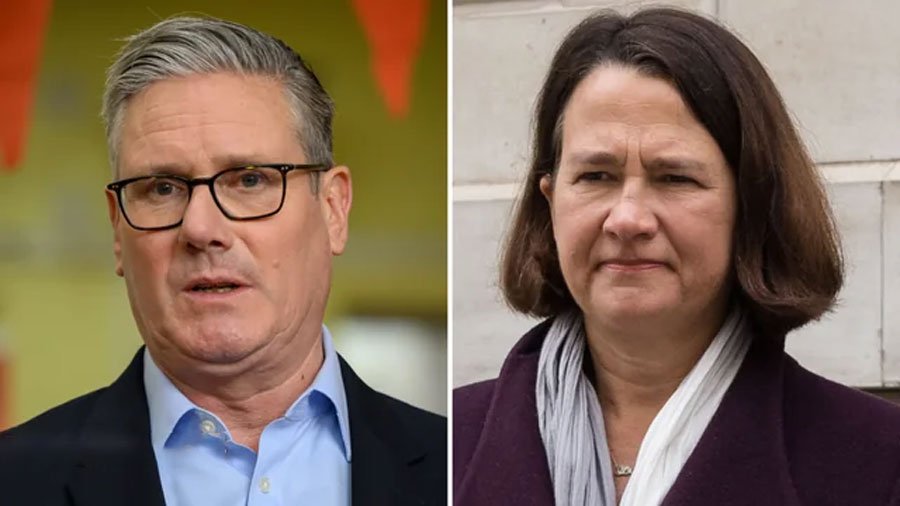
UK Home Secretary Yvette Cooper also voiced concern over the “significant escalation” and called on both sides to take immediate steps toward de-escalation and re-engage in mediated talks.
A Qatari-mediated ceasefire ended previous fighting in 2025, but negotiations held in Istanbul in November failed to produce a formal peace agreement, leaving tensions simmering along the volatile border.

Join the discussion?

Already a member?


  Adapted by ASEAN Now · Source · 02.03 2026
ASEAN NOW News
ASEAN NOW News
A suspected Hezbollah drone has struck the UK’s RAF Akrotiri airbase in Cyprus, prompting a partial evacuation and heightened security measures as tensions escalate across the Middle East.

Cypriot authorities said a one-way attack drone hit the base shortly after midnight on Sunday. Two additional drones were intercepted on Monday morning as they approached the British military facility, suggesting what officials described as sustained targeting on the third day of the regional conflict.

Get the latest headlines in your email
It has not been publicly confirmed where the drones were launched from. However, a Cypriot news agency reported that the devices were small, low-flying drones fired by Lebanon’s Hezbollah, the Iranian-backed militant group. The UK Ministry of Defence has not formally attributed responsibility.

A spokesperson for the ministry said: “Our armed forces are responding to a suspected drone strike at RAF Akrotiri in Cyprus at midnight local time. Our force protection in the region is at the highest level and the base has responded to defend our people.”

Defence sources indicated the drone was likely a Shahed-type unmanned aerial vehicle, an Iranian-designed one-way attack drone widely used in regional conflicts. Parts of the device have reportedly been recovered for investigation.

Security alert and evacuation
Residents living near RAF Akrotiri were advised to shelter in place following the strike. A security alert issued by the base administration late Sunday urged caution “following a suspected drone impact.”

On Monday, a Cypriot government spokesperson confirmed: “Two unmanned aerial vehicles that were moving towards the direction of the British bases at Akrotiri were confronted in time.”

Anti-drone defences at the base had been reinforced but were unable to prevent the first drone from penetrating local protection systems. Officials said there were no reported casualties and damage appeared limited.
Family members of British military personnel have been asked to temporarily leave the base and relocate elsewhere in Cyprus as a precautionary measure.

Strike follows UK decision on US base access
The incident occurred hours after UK Prime Minister Keir Starmer announced that Britain would allow the United States to use its military bases, including those in Cyprus, to conduct strikes on Iranian missile sites.
Officials suggested that based on likely flight times, the drone may have been launched before Starmer made the announcement public.

In a recorded statement on Sunday evening, Starmer said Iran’s actions were becoming increasingly reckless and posed a risk to British lives. He stressed that British forces would not directly participate in offensive operations and that the bases would be used solely for a “specific and limited defensive purpose.”

The UK is widely regarded by Iran as a close U.S. ally, raising concerns that British facilities in the region could become further targets if the conflict continues to widen.

Join the discussion?

Already a member?


  Adapted by ASEAN Now · Source · 02.03 2026
ASEAN NOW News
ASEAN NOW News
France will increase the size of its nuclear arsenal for the first time in decades and step up weapons cooperation with European allies, President Emmanuel Macron has announced, citing mounting geopolitical instability and the need for stronger continental deterrence.

Speaking from the Île Longue nuclear submarine base in Brittany, Macron said a “period of geopolitical upheaval, fraught with risk” required France to reinforce its nuclear doctrine. France is the European Union’s only nuclear-armed state.

Get the latest headlines in your email

An expansion of the arsenal, currently estimated at about 290 warheads — a figure unchanged since 1992 — was “essential”, Macron said. He declined to specify how many additional warheads would be ordered, stressing that the move was intended to preserve credible deterrence rather than trigger an arms race.
“This is not an arms race,” he said. “It is essential that our adversaries cannot even glimpse the possibility of hitting France without the certainty of suffering damage they would not recover from.”

Potential deployment across Europe
Macron said Paris could deploy nuclear-capable Dassault Rafale fighter jets to partner countries such as Germany and Poland under what he described as a policy of “advance deterrence”.
However, he made clear that France would not share decision-making authority over the use of its nuclear weapons. The “ultimate decision” would remain solely with the French president, and the definition of France’s “vital interests” would stay sovereign.

Talks on closer nuclear cooperation have already begun with the UK, Germany, Poland, the Netherlands, Belgium, Greece, Sweden and Denmark, according to Macron. The new framework could also include conventional participation by allied forces in French nuclear exercises and joint visits to strategic sites.

Europe reassesses security role
Macron pointed to Russia’s war against Ukraine, China’s expanding military capabilities and shifts in U.S. defence strategy as reasons Europe must take greater responsibility for its own security.
The announcement comes amid unease among European governments over the reliability of U.S. security guarantees under President Donald Trump, whose approach to transatlantic alliances has unsettled long-standing defence assumptions.

France and Germany said in a joint statement they had established a high-level nuclear steering group. The arrangement would “add to, not substitute for,” NATO’s nuclear deterrence framework.
German Chancellor Friedrich Merz previously confirmed holding initial discussions with Macron on nuclear cooperation. Meanwhile, Polish Prime Minister Donald Tusk said Warsaw was in talks with Paris and other allies, declaring: “We are arming up together with our friends so that our enemies will never dare to attack us.”

Swedish Prime Minister Ulf Kristersson also confirmed Stockholm would participate in discussions, describing the moment as the most critical for European defence since the Second World War.
Macron said the strengthened doctrine would “complicate the calculations of our adversaries” and ensure France’s deterrent remains credible in an increasingly uncertain global landscape.


Join the discussion?

Already a member?


  Adapted by ASEAN Now · Source · 02.03 2026
ASEAN NOW News
ASEAN NOW News
The U.S. and Israeli air war against Iran escalated sharply on Monday, expanding into Lebanon as regional tensions deepened and a Kuwaiti air defence unit mistakenly shot down three American fighter jets during an Iranian attack.

The widening campaign has left no clear end in sight, with Israeli forces striking targets in Lebanon after missile and drone launches by Hezbollah, while Tehran continued retaliatory attacks on Gulf states hosting U.S. military bases.

Get the latest headlines in your email

Kuwait downs US jets during Iranian strike
According to U.S. Central Command, Kuwait mistakenly shot down three American F-15E fighter jets amid the chaos of an incoming Iranian assault. All six crew members ejected safely and were recovered.
The incident underscored the volatility of a conflict that has already killed dozens across Iran, Israel and Lebanon, disrupted global air travel and halted shipping through the strategic Strait of Hormuz — a chokepoint for roughly a fifth of the world’s oil trade. Oil prices surged as a result.

Trump says operation could last weeks
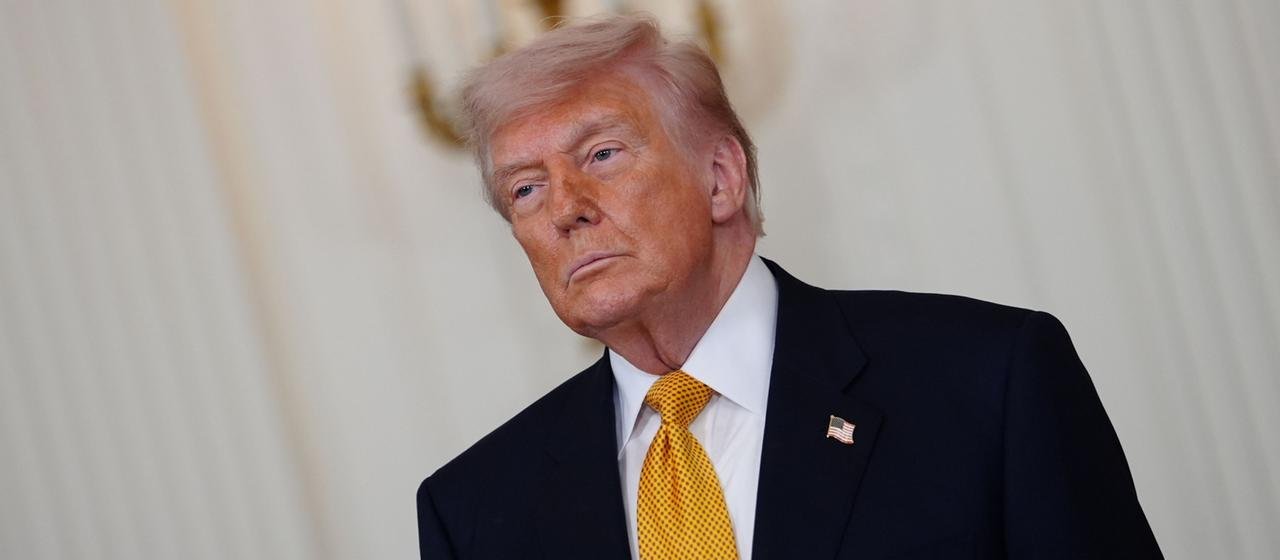
U.S. President Donald Trump said the joint U.S.-Israel campaign could continue for several more weeks, describing it as “ahead of schedule” but warning it could take longer than initial projections.
“Right from the beginning, we projected four to five weeks, but we have capability to go far longer than that,” Trump said at the White House.

The operation began with targeted strikes that killed Iran’s Supreme Leader, Ali Khamenei, dramatically reshaping the regional landscape. Trump said it remained unclear who was now in charge in Tehran.
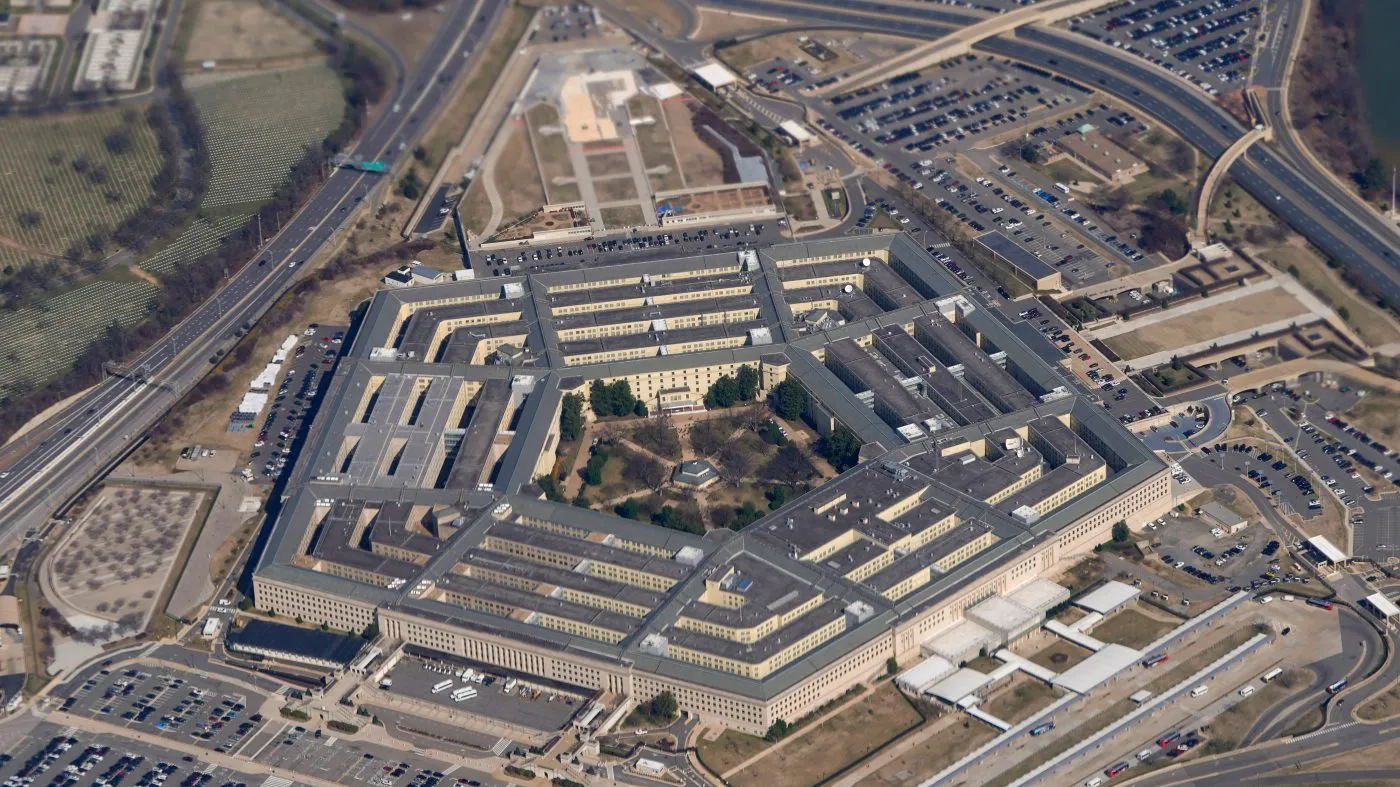
The Pentagon said more U.S. forces were deploying to the region. General Dan Caine, chairman of the Joint Chiefs of Staff, warned that military objectives would require “difficult and gritty work.”
So far, six U.S. service members have been killed, all in Iranian retaliatory attacks on Kuwait.

Political and economic fallout
The campaign represents one of the most consequential foreign policy gambles of Trump’s presidency. A Reuters/Ipsos poll found only one in four Americans supports the strikes, posing potential risks for Republicans in upcoming midterm elections.

Rising oil prices have already pushed average U.S. gasoline prices above $3 per gallon, adding economic pressure at home.
Iran denies seeking nuclear weapons and has condemned the strikes as unprovoked, saying negotiations with Washington had been ongoing before the assault. Tehran has refused calls to negotiate under fire.

War spreads to Lebanon
The conflict opened a new front when Hezbollah launched missiles and drones toward Israel from Lebanon. Israel responded with sweeping airstrikes in Beirut’s southern suburbs, targeting what it described as senior militants. Lebanese officials reported dozens killed and injured.

An Iranian-designed Shahed drone, believed by Cypriot authorities to have been launched from Lebanon, struck a British air base in Cyprus. UK Prime Minister Keir Starmer said Britain would defend its personnel but would not engage in offensive operations.
Meanwhile, Gulf states including Qatar and Saudi Arabia faced renewed missile and drone attacks, forcing energy shutdowns and deepening fears of prolonged regional war.

Join the discussion?

Already a member?


  Adapted by ASEAN Now · Source · 02.03 2026
ASEAN NOW News
ASEAN NOW News
U.S.-brokered talks between Russia and Ukraine expected later this week could be moved from Abu Dhabi to Switzerland or Turkey if escalating conflict in the Middle East makes the planned venue untenable, Ukrainian President Volodymyr Zelenskyy said Monday.

“Due to hostilities, as of today we cannot confirm (the talks) will take place in Abu Dhabi,” Zelenskyy told reporters in a WhatsApp chat. He had previously said the capital of the United Arab Emirates would host the meeting.

Get the latest headlines in your email

Previous rounds of negotiations have been held in Abu Dhabi, Istanbul and Geneva but have not produced a breakthrough on core issues since Russia’s full-scale invasion of Ukraine began in February 2022.

Impact of Middle East conflict
The talks come as international attention has been drawn toward US and Israeli strikes on Iran and the subsequent retaliation by Iranian and Iran-backed forces. The widening conflict risks overshadowing diplomatic efforts to end the nearly four-year war in Ukraine.

Zelenskyy said Western countries had so far given no indication that deliveries of vital air defence systems to Kyiv would be disrupted by commitments in the Middle East.

He highlighted the importance of US-made Patriot missile systems but acknowledged that supplies could be affected if hostilities in the Gulf region continue for an extended period.

Air defence and infrastructure concerns
Russia’s campaign to cripple Ukraine’s power grid over the winter had failed in its strategic aim, Zelenskyy said, though it caused extensive damage. He added that Russian aerial assaults are now shifting focus to other critical infrastructure, including water supply facilities.

Ukraine has relied heavily on Western-supplied air defences to repel waves of drones and missiles. Daily bombardments, including attacks using Iranian-designed Shahed drones, have continued in recent months.

UK comments on drone expertise
On Sunday, Keir Starmer said the United Kingdom would bring Ukrainian experts to assist Persian Gulf countries in countering Iranian drones, citing Ukraine’s battlefield experience.

However, Zelenskyy said he had not received any direct requests from the UK or other governments regarding such assistance.
Diplomatic efforts led by the United States to bring Moscow and Kyiv to a negotiated settlement remain ongoing, though expectations for a major breakthrough remain low.

Join the discussion?

Already a member?


  Adapted by ASEAN Now · Source · 02.03 2026
ASEAN NOW News
ASEAN NOW News
Donald Trump has pushed back against mounting criticism of his administration’s military campaign against Iran, as the conflict widens and some allies question whether the operation aligns with his “America First” pledge.

“I don’t have the yips with respect to boots on the ground — like every president says, ‘There will be no boots on the ground.’ I don’t say it,” Trump said at a White House event. “I say ‘probably don’t need them,’ (or) ‘if they were necessary.’”

The president and senior aides defended the approach as Iran continued retaliatory drone and missile strikes against Israel, US bases and Gulf states. Israel and Hezbollah also exchanged fire, opening another front.

Get the latest headlines in your email

Unease among allies
Trump returned to office pledging to avoid “forever wars” and long criticised nation-building and regime change. But the current conflict has unsettled parts of his political base.

Erik Prince, a longtime Trump ally, said on War Room that he was “disappointed” and warned the operation would “uncork a significant can of worms”.

Other conservative voices, including commentator Tucker Carlson, have also questioned the decision to strike Iran.
Still, many Republican lawmakers have rallied behind the president. Representative Tim Burchett said Iran were “bad actors” who had supplied weapons to Hezbollah and killed Americans, and rejected the idea of a major split within the movement.

Timeline and casualties
Trump described the joint US-Israeli campaign as “substantially ahead of schedule”, estimating it could meet objectives within four to five weeks, though he cautioned it might take longer.

Defense Secretary Pete Hegseth was less specific, saying the timeline could shift.
Joint Chiefs Chairman Dan Caine said the US military expected further casualties. As of Monday, six US service members had been killed in action, with others seriously injured during Iranian retaliatory strikes.

Regime change questions
The administration has not detailed who it would support to lead Iran following the killing of Supreme Leader Ali Khamenei and other senior figures.

Trump has called on Iran’s Revolutionary Guard Corps to lay down its arms but has not committed to backing opposition groups. Analysts note that air power alone rarely produces regime change.
Trita Parsi of the Quincy Institute suggested the administration may instead accept “regime collapse” or “regime implosion”, allowing it to distance itself from long-term consequences.

Meanwhile, Israel is reportedly pressing for a sustained operation. Daniel Shapiro, a former US ambassador to Israel now at the Atlantic Council, said Israeli leaders may worry Trump could “declare victory” too early.

Intelligence and nuclear claims
Administration officials told congressional staff that intelligence did not indicate Iran was preparing an imminent strike on the US, though broader regional threats remained.

Trump has argued action was necessary because Iran was seeking long-range ballistic missiles. Tehran has not acknowledged such a programme. A US Defense Intelligence Agency report last year said Iran could develop an intercontinental missile by 2035 if it chose to pursue one.

Rafael Grossi of the International Atomic Energy Agency said Iran has an “ambitious” nuclear programme but no active nuclear weapons programme. Iran has not allowed inspectors to revisit damaged sites.

Kelsey Davenport of the Arms Control Association warned that “regime change is not a viable nonproliferation strategy”, arguing Iran’s nuclear knowledge “cannot be bombed away”.

Join the discussion?

Already a member?


  Adapted by ASEAN Now · Source · 02.03 2026
ASEAN NOW News
ASEAN NOW News
Russian state media figures have issued threats of potential strikes on Europe following US and Israeli military action in Iran, as President Vladimir Putin expressed condolences over the reported death of Iran’s supreme leader, Ali Khamenei.
Putin described Khamenei’s killing as “a murder committed in cynical violation of all norms of human morality and international law”, according to Russian statements released on Sunday.

Get the latest headlines in your email

Television threats and blame on West
During a broadcast on the Solovyov Live channel, host Vladimir Solovyov and guests discussed possible retaliation and sharply criticised Europe and the United States.
Sergey Karnaukhov and Dimitri Simes, both associated with the Washington-based think tank The Center for the National Interest, argued that the West was escalating tensions with Moscow.

In the programme, Estonia was accused of “waging war” against Russia. One speaker suggested that US President Donald Trump had “unwittingly created political and psychological opportunities” for Moscow, claiming he had “untied our hands” for Russia’s commander-in-chief to act in the interests of national security.
Solovyov went further, saying: “The only language Europe understands is the language of force … It’s clearly time to strike their little house,” in remarks widely interpreted as a threat directed at European countries.

Foreign ministry condemnation
Separately, the Russian foreign ministry condemned the joint US-Israeli operation in Iran as “a pre-planned and unprovoked act of armed aggression against a sovereign and independent UN member state”.
In a statement, Moscow said Washington and Tel Aviv had embarked on “a dangerous adventure” that risked pushing the region towards humanitarian, economic and potentially radiological catastrophe.

The comments reflect Moscow’s strong opposition to the strikes on Iran and signal heightened rhetoric at a time of already strained relations between Russia and Western governments.
There has been no formal announcement from the Kremlin of any military action against European states, and the remarks were made in the context of a televised discussion programme rather than an official policy statement.

Join the discussion?

Already a member?


  Adapted by ASEAN Now · Source · 01.03 2026
ASEAN NOW News
ASEAN NOW News
At least 22 people were killed and more than 120 injured in violent clashes across Pakistan on Sunday as demonstrators angered by US and Israeli strikes on Iran attempted to storm the US Consulate in Karachi, authorities said.
The unrest followed the reported killing of Iran’s supreme leader, Ali Khamenei, in the attacks.

Get the latest headlines in your email

Karachi violence
In Karachi, Pakistan’s largest city and the capital of Sindh province, protesters briefly attacked the perimeter of the US Consulate, according to senior police official Irfan Baloch. Security forces later dispersed the crowd.
Police and hospital officials said at least 10 people died in clashes in the city. Summaiya Syed Tariq, a police surgeon at a government hospital, said six bodies were initially brought in, with the toll rising after four critically injured people died.

Authorities said protesters torched a nearby police post and smashed windows at the consulate compound, but denied reports that the building itself was set on fire. Dozens of young demonstrators, some with faces covered, threw stones at police as hundreds of officers and paramilitary personnel were deployed to secure the area.

Interior Minister Mohsin Naqvi appealed for calm, urging citizens to protest peacefully and not take the law into their own hands.
President Asif Ali Zardari expressed “profound sorrow” over Khamenei’s death and conveyed condolences to Iran, saying Pakistan stood with the Iranian people “in this moment of grief”.

Deadly clashes in the north
In the northern Gilgit-Baltistan region, 12 people were killed and more than 80 injured when thousands of demonstrators clashed with police, local official Asghar Ali said.

Protesters attacked the offices of the United Nations Military Observer Group and the United Nations Development Programme, as well as government buildings. Authorities said troops were deployed and the situation was brought under control. A government spokesman said all UN staff were safe.

Protests nationwide
The U.S. Embassy in Pakistan said it was monitoring demonstrations at consulates in Karachi and Lahore, as well as calls for protests at the embassy in Islamabad and the consulate in Peshawar. It advised US citizens to avoid large crowds and monitor local news.

In Islamabad, police fired tear gas and used batons to prevent protesters from reaching the US Embassy in the diplomatic enclave. Similar tactics were used in Peshawar and Lahore.
Authorities said security had been tightened around US diplomatic missions nationwide to prevent further violence.

Join the discussion?

Already a member?


  Adapted by ASEAN Now · Source · 01.03 2026
ASEAN NOW News
ASEAN NOW News
The US and Israeli attack on Iran triggered widespread airspace closures across the Middle East on Sunday, stranding or diverting hundreds of thousands of travellers and halting operations at key global aviation hubs.
Countries including Israel, Qatar, Syria, Iran, Iraq, Kuwait and Bahrain shut their airspace, while the United Arab Emirates announced a “temporary and partial closure”, according to the flight tracking website FlightRadar24. As a result, airports in Dubai, Abu Dhabi and Doha suspended operations, leading to thousands of cancellations by major international carriers, including British Airways and Virgin Atlantic.

Get the latest headlines in your email

Dubai International – the world’s busiest airport for international passenger traffic – was among the worst affected.

UK evacuation planning
The UK government is preparing what could become one of the largest evacuations in its history. More than 76,000 British nationals have registered their presence in affected areas, with officials expecting that number to rise.

More than two-thirds of those are believed to be in the UAE, many of them tourists or business travellers rather than residents. The Foreign Office has advised against all travel to Iran, Israel and Palestine, and against all but essential travel to the UAE, Qatar, Kuwait and Bahrain.

Officials have urged British nationals to follow local safety instructions, including sheltering in place where advised. The government is examining options for potential evacuation routes, though any operation would pose significant logistical challenges.

Airports targeted and airlines suspend services
Major regional airports were also caught up in Iran’s retaliatory strikes. Dubai International Airport and the nearby Burj Al Arab hotel reportedly sustained damage, with injuries reported. In Abu Dhabi, an incident at Zayed International Airport was said to have resulted in casualties, though details remained unclear.

The three main Gulf carriers – Emirates, Qatar Airways and Etihad Airways – typically handle around 90,000 passengers a day through their hubs, according to aviation analytics firm Cirium. All three suspended flights.

More than 3,400 flights were cancelled across seven major Middle Eastern airports on Sunday. FlightRadar24 said a notice to airmen had extended the closure of Iranian airspace until at least Tuesday morning UK time.

Ongoing uncertainty for travellers
The closures are compounded by regional tensions elsewhere, including fighting between Pakistan and Afghanistan, which is narrowing alternative flight corridors and increasing congestion.

At Heathrow, 24 of 56 scheduled departures to Middle Eastern destinations were cancelled on Sunday, according to Cirium. Some airlines issued waivers allowing passengers to rebook without penalty.

Henry Harteveldt, president of Atmosphere Research Group, warned travellers to expect further disruption in the coming days. John Strickland, a UK-based aviation analyst, said the scale of the crisis lay not only in the number of passengers affected but also in displaced crews and aircraft.

Airlines have urged passengers to check flight statuses before travelling to airports, as the situation remains fast-moving and highly uncertain.

Join the discussion?

Already a member?


  Adapted by ASEAN Now · Source · 01.03 2026
ASEAN NOW News
ASEAN NOW News
Oil prices are expected to jump sharply when markets reopen, as the US-Israel war with Iran and the effective closure of the strait of Hormuz unsettle global investors despite pledges from major producers to raise output.
US crude is on track to rise about 11% when trading resumes in New York, according to data from IG, potentially climbing above $74 a barrel from $67 on Friday. That would mark its highest level since June 2025, when the US launched strikes on Iran’s nuclear facilities.
The move comes even after OPEC+ agreed on Sunday to increase output by more than expected as it assessed the impact of the conflict.

Get the latest headlines in your email


Strait of Hormuz disruption
Iran’s Revolutionary Guards reportedly told ships on Saturday that passage through the strait of Hormuz was prohibited, effectively shutting the vital choke point. About 20% of global oil supplies and an estimated $500bn of energy trade pass through the strait each year.

A tanker in the strait was attacked on Sunday, and Reuters reported that at least 150 vessels carrying crude, liquefied natural gas and oil products dropped anchor as traffic slowed to a near standstill. Vessels in the region also transport chemicals and fertilisers, raising concerns about knock-on effects for agriculture and food prices.

Tehran has long warned it could close the strait in retaliation for military action. However, Tamsin Hunt of S-RM said a full closure would be “devastating for Iran’s own economy”.

Market reaction
Analysts at Barclays said oil could reach $80 a barrel in the event of a “material supply disruption”. Royal Bank of Canada warned that regional leaders had cautioned Washington about the risk of “$100-plus oil” in the event of further escalation.

Higher wholesale prices are expected to filter through to motorists. The AA said the average UK petrol price stood at 132.9p a litre and diesel at 142.4p, with further rises possible. Luke Bosdet, an AA spokesperson, said escalating conflict threatened even higher fuel costs for drivers.

Stock markets are also braced for turbulence. London’s FTSE 100 is forecast to fall about 0.5% on Monday after hitting a record high on Friday.

Investors are expected to seek safe-haven assets. Gold, which has risen for four consecutive weeks, was up more than 2% on IG’s weekend markets, while silver gained over 3%.

Gulf markets and shipping risks
Eight Opec+ countries, including Saudi Arabia and Russia, agreed to raise output by 206,000 barrels a day in April, above earlier expectations. The move may ease pressure on prices, though the group said the step would also allow members to accelerate compensation adjustments.

The conflict has also pushed up the cost of insuring ships in the region. Dylan Mortimer of Marsh said attacks on shipping could have “major repercussions” for war insurance rates.

International Maritime Organization advised vessels to avoid transiting the affected area until conditions improve.
Most Gulf stock markets fell on Sunday. Saudi Arabia’s main index dropped 2.5%, although shares in Saudi Aramco rose 2.5% on expectations of higher crude prices. Kuwait suspended trading, while the UAE halted trading in Abu Dhabi and Dubai for two days, citing exceptional circumstances.

Join the discussion?

Already a member?


  Adapted by ASEAN Now · Source · 01.03 2026
ASEAN NOW News
ASEAN NOW News
Keir Starmer has confirmed that the UK will allow the United States to use British military bases to carry out what he described as “specific and limited defensive” strikes against Iranian missile sites.

In a recorded statement on Sunday evening, Starmer said the decision had been taken as Iranian actions became “increasingly reckless” and put British lives at risk. The UK has not directly participated in US-Israeli strikes on Iran so far.

Get the latest headlines in your email

“The US has requested permission to use British bases for that specific and limited defensive purpose,” he said.
“We have taken the decision to accept this request – to prevent Iran firing missiles across the region … killing innocent civilians … putting British lives at risk … and hitting countries that have not been involved.”

Legal basis and regional security
The government released a summary of its legal position, stating: “The UK is acting in the collective self-defence of regional allies who have requested support.”
Starmer said around 200,000 British nationals were currently in Middle Eastern countries targeted by Iranian strikes.

“The only way to stop the threat is to destroy the missiles at source in their storage depots or the launchers used to fire them,” he said, adding that British jets were already involved in coordinated defensive operations and had intercepted Iranian attacks.

In a joint statement with France and Germany, the UK said it would take “necessary and proportionate defensive action” to help prevent further missile and drone launches.

Political backlash
The decision has drawn criticism from opposition parties and some within Labour.
Ed Davey, leader of the Liberal Democrats, demanded that MPs be given a vote.
“This is a slippery slope,” he said. “Starmer must come to parliament, set out the legal case in full, and give MPs a vote. The UK must not be complicit in illegal military action.”

Zack Polanski also described US action as an “illegal and unprovoked attack”.
At the same time, Starmer has faced pressure from the Conservatives and Reform UK to offer stronger backing to Donald Trump.

The government has declined to say it supports US strikes, which Washington claims killed around 48 Iranian leaders, and has not stated whether it considers them lawful.

Defence secretary John Healey said “few people will mourn” the reported death of Iran’s supreme leader, Ali Khamenei, calling the regime “a source of evil”.
The government has not specified which British bases may be used.

Join the discussion?

Already a member?


  Adapted by ASEAN Now Source ·01.03.2026
ASEAN NOW News
ASEAN NOW News
Two people were killed and more than a dozen others injured in a shooting outside a beer garden in Austin, in what the FBI says may be linked to terrorism.

Police said officers responding to reports of an active shooter around 2:00am (08:00 GMT) on Sunday near Buford’s bar shot and killed the suspect, bringing the total number of dead to three, including the gunman.

Get the latest headlines in your email

The suspect has been identified by US media, including CBS News, as Ndiaga Diagne, a naturalised American citizen born in Senegal. Authorities have not officially confirmed his identity.

Shooting in entertainment district
According to Austin Police Chief Lisa Davis, officers were already on patrol in the city’s busy nightlife areas when they received reports of a man with a gun at Buford’s, located on West Sixth Street, not far from the popular East Sixth Street bar district.

Davis said the suspect drove past the bar in a large SUV, activated the vehicle’s hazard lights, rolled down his window and fired a pistol at people gathered on the patio and sidewalk outside.

He then parked nearby, exited the vehicle armed with a rifle and began walking back towards the bar. Three police officers confronted him at an intersection and shot him dead.
Officials said the SUV was searched and no explosives were found.

FBI investigating possible terrorism link
Alex Doran, acting special agent in charge of the FBI’s San Antonio office, said there were indications inside the vehicle and on the suspect that suggested a “nexus to terrorism”.

However, he cautioned that the investigation remained in its early stages and that he was “not prepared to release those details”.

“We are committed to seeing this process through to the very end,” Doran said.
Police have not publicly identified a motive.
Victims and witness accounts
Of the 14 people taken to hospital, three were in critical condition, according to Austin-Travis County Emergency Management Services head Rob Luckritz.

Kelson Lee, 25, told local outlet Austin Current that he was nearby when gunfire erupted.
“I see about seven to eight bodies on the floor,” he said. “No one should ever have to see that.
“I kind of blacked out, froze up. I felt kind of helpless because I wanted to help people.”
Authorities said the rapid police response – estimated at 57 seconds – likely prevented further casualties.
Political leaders respond
Donald Trump has been briefed on the shooting, according to White House press secretary Karoline Leavitt.
Republican Senator Ted Cruz condemned what he called a “senseless act of violence” and said his office was coordinating with local, state and federal authorities.

“I’m grateful for the heroic and quick response from law enforcement,” he wrote on social media.
Greg Abbott said the attack would not “shake the resolve of Texans”, while Austin Mayor Kirk Watson praised the speed of the emergency response, saying officers had “definitely saved lives”.

University community affected
Austin is home to the Texas state capitol and the University of Texas at Austin, located less than two miles (3.2km) from Buford’s.

East and West Sixth Streets are popular weekend destinations for many of the university’s roughly 55,000 students.
Jim Davis, president of the university, said in a statement: “Our prayers are with the victims and all those impacted, including members of our Longhorn family, and my heart goes out to their families, friends, classmates, professors, and loved ones.”

Authorities said the investigation remains ongoing as federal and local officials work to determine whether the shooting was ideologically motivated.

Join the discussion?

Already a member?


  Adapted by ASEAN Now · Source · 01 March 2026

ASEAN NOW News
ASEAN NOW News
Joe Biden has warned that his successor, Donald Trump, will attempt to “steal” the upcoming US midterm elections, delivering the remarks in a rare public address on Friday.
Speaking in South Carolina, where he was being honoured for his lifetime achievements in politics, Biden said the United States was experiencing “dark days” and urged Americans to vote in order to defend democratic institutions.

Get the latest headlines in your email

The speech, delivered at the Columbia Museum of Art, came hours before the Trump administration launched strikes on Iran, adding to a turbulent political backdrop.

‘Battle for the soul of the nation’
Reprising a theme from his successful 2020 presidential campaign, Biden told the audience that the “battle for the soul of this nation is one that’s never really over”.
He criticised Trump’s reported plans to introduce stricter voting requirements ahead of the midterms, describing them as efforts to suppress turnout.

“Here’s the good news,” Biden said. “In America, the power still belongs to the people for now. And the way to show the power is vote, show up and vote. And folks, when we do that, that’s bad news for Donald Trump, and he knows it.
“That’s why he’s trying to pull out more and more barriers – put them up. He’s trying to steal the election, because he knows he can’t win your vote, so he’s going to do everything he can to prevent you from wanting to vote.”

Rare appearance after health treatment
Biden, 83, has largely remained out of the public eye since leaving office and undergoing treatment for an aggressive form of prostate cancer. He did not address his health during Friday’s speech.

Instead, he turned his focus to Trump’s recent State of the Union address and broader policy decisions, including an immigration crackdown that he said had resulted in the deaths of US citizens Renee Good and Alex Pretti in Minneapolis in January.

“He doesn’t mention Renee Good, Alex Pretti … [or] offer even a word of solace to their families,” Biden said.
He also criticised Trump for failing to acknowledge victims connected to disgraced financier Jeffrey Epstein, who died in federal custody in 2019. Trump was among the many high-profile figures who had previously associated with Epstein.

Approval ratings and political backdrop
Biden’s remarks come as opinion polls suggest Trump is facing significant public dissatisfaction. An early February survey by the Associated Press-NORC Center for Public Affairs Research found that 61% of Americans disapproved of Trump’s performance in office. A separate NPR/PBS News/Marist poll reported that a majority of US adults believe the country is moving in the wrong direction.

Biden withdrew from the 2024 presidential race after a widely criticised debate performance in June of that year. He endorsed his vice-president, Kamala Harris, as his successor, but Trump ultimately defeated her in the general election to return to the White House.

In his address on Friday, Biden framed the upcoming midterms as a crucial test of democratic resilience, urging supporters to remain engaged despite what he described as a challenging political climate.
“The power still belongs to the people,” he said. “But only if they use it.”

Join the discussion?

Already a member?


  Adapted by ASEAN Now · Source · 28 Feb 2026
ASEAN NOW News
ASEAN NOW News
Iran says US and Israel strikes hit school, killing 108
At least 108 people have died in an explosion at a school in southern Iran, according to a local prosecutor, as the United States and Israel continued large-scale air strikes across the country.

Get the latest headlines in your email

Iranian officials said the school, in the town of Minab in Hormozgan province, was struck during the latest wave of attacks. The incident has not been independently verified, and there has been no confirmation from either Washington or Tel Aviv that the school was deliberately targeted.

President Masoud Pezeshkian described the attack as a “barbaric act” and “another black page in the record of countless crimes committed by the aggressors”.

School near IRGC base
An official said the school had been “targeted by three missile attacks”. It is located about 600 metres (1,968 feet) from a base belonging to Iran’s Islamic Revolutionary Guard Corps (IRGC), which has been among the sites hit during the strikes.

The proximity of the military facility has raised questions about whether the school was directly targeted or caught in a strike aimed at the nearby base.

The BBC has verified video clips showing the aftermath of the explosion, with smoke rising from a damaged building as crowds gathered nearby. Screams and panic can be heard in the background of the footage.

However, the broadcaster said it had not been able to independently verify the reported death toll. International news organisations are often refused visas to Iran, limiting their ability to report freely from the ground.

Rising nationwide toll
The Iranian Red Crescent said at least 201 people across the country had been killed in the broader wave of air strikes, with 747 injured.

Red Cross and Red Crescent officials in Geneva said response teams had been mobilised to assist at the school site in Minab following the incident.
The figures released by Iranian authorities have not been independently confirmed.

Public anger and mistrust
News of the reported deaths prompted anger on Iranian social media, where users expressed grief and frustration.
An Iranian living abroad who opposes military intervention wrote: “The first victims of this war are 40 girls in Minab, hit by a missile attack. Is this the war you cheer for?”

Others directed criticism at Iran’s leadership, reflecting deep mistrust of official accounts.
One user wrote: “Even if the regime did not directly target schools, the deaths of children in Minab remain the responsibility of the Islamic Republic.

“People have no shelters, the internet is cut, phone lines are down, and there has been no warning to keep children out of school. In these conditions, the minimum requirement should be to stay at home.”

Strikes continue amid leadership claims
The reported school strike took place as US and Israeli forces launched repeated waves of attacks against targets in multiple Iranian cities throughout Saturday.
The offensive appears set to continue, despite US President Donald Trump claiming that Iran’s Supreme Leader, Ali Khamenei, along with several senior commanders, had been killed in the initial strikes.
Iranian authorities have not confirmed Khamenei’s death.
With casualties rising and conflicting claims emerging from all sides, independent verification of events on the ground remains limited.

Join the discussion?

Already a member?


  Adapted by ASEAN Now · Source · 28 Feb 2026
ASEAN NOW News
ASEAN NOW News
Luxury Dubai hotel hit as Iran launches retaliatory strikes across region
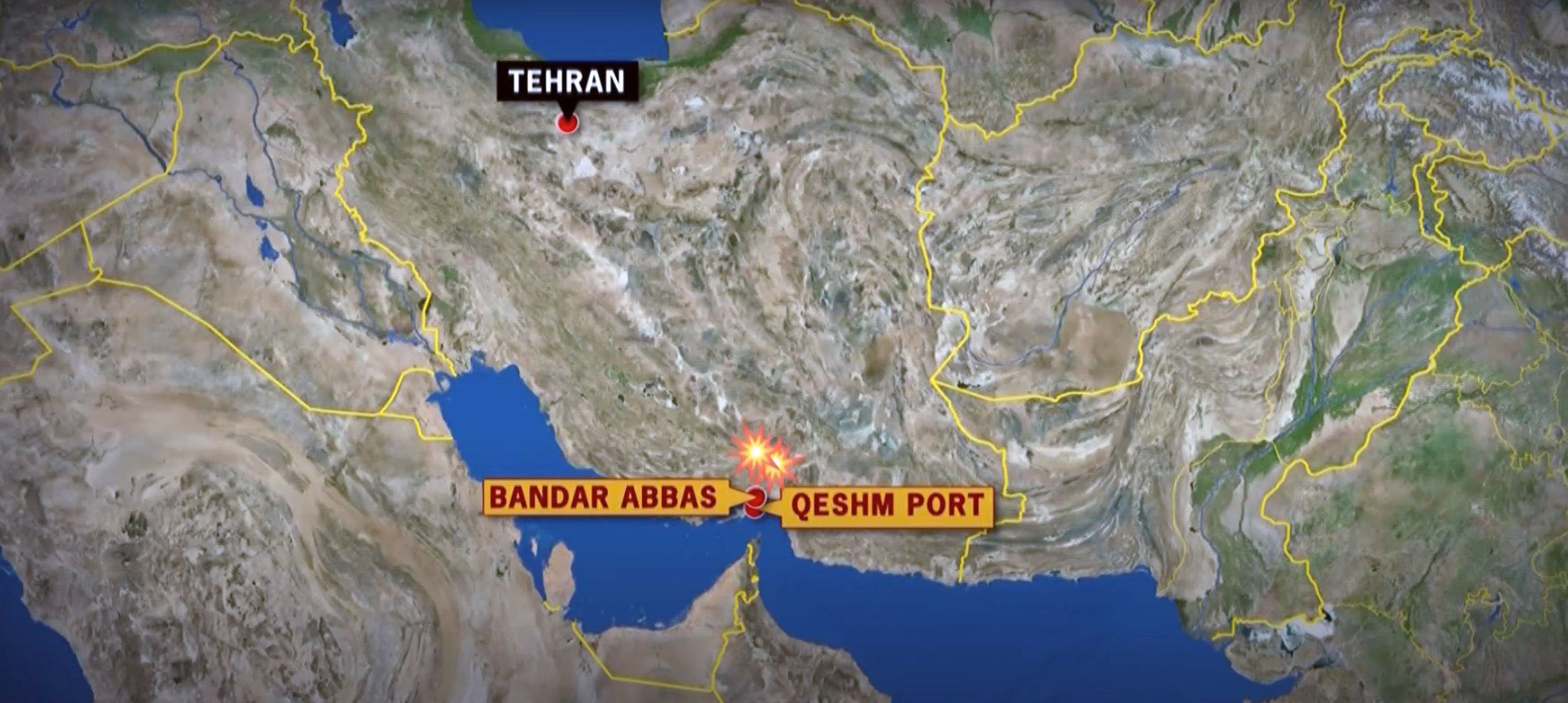
A luxury hotel in Dubai has been hit amid a wave of Iranian missile and drone strikes across the Middle East, launched in retaliation for what Tehran described as a “massive” and ongoing US-Israeli attack on its territory.

Get the latest headlines in your email
Video verified by the BBC showed a fire tearing through the Fairmont The Palm on Saturday, with thick black smoke rising above the Palm Jumeirah waterfront in the Dubai.

Local officials said four people were injured in a blaze at a building in the Palm Jumeirah area but provided no further details. It was not immediately clear whether the hotel was directly struck or damaged by falling debris from an intercepted missile or drone.

In the early hours of Sunday, the Dubai Media Office said four people were also wounded in an “incident” at Dubai International Airport, one of the world’s busiest transport hubs. The airport’s concourse sustained “minor damage”, officials said, without elaborating.

Missiles intercepted across Gulf states
Elsewhere in the region, Qatar, Bahrain, Jordan and Kuwait — all of which host US military facilities — said they had intercepted missiles fired towards them.

Huge plumes of black smoke were seen rising near the headquarters of the US Navy’s Fifth Fleet in Manama, Bahrain. The base, officially known as Naval Support Activity Bahrain, serves as a key logistical and operational hub for US naval forces in the Gulf.

Authorities in Bahrain confirmed the area had been targeted. Video from Manama showed a drone striking a tower block, erupting into a bright yellow fireball on impact.

Bahrain’s Ministry of Interior later said three buildings in Manama and Muharraq were hit by “drone attacks and falling debris from an intercepted missile”. Fires at one building had been brought under control, while damage assessments were under way at the other two sites.
The United States has not yet publicly commented on the reported strike near its naval facility.

Al Udeid base targeted in Qatar
In Doha, Qatar’s defence ministry said it had intercepted several missiles apparently targeting Al Udeid Air Base, the largest US military base in the region.

Explosions were seen in the sky above the capital, and footage circulating online showed residents running from a falling projectile in a residential area.

Qatar’s Ministry of Foreign Affairs condemned what it described as the “targeting of Qatari territory with Iranian ballistic missiles”, calling it “a flagrant violation of its national sovereignty” and an “unacceptable escalation”.

The US maintains around 13 military bases across the Middle East, with between 30,000 and 40,000 troops typically deployed across the region.

Kuwait and Iraq incidents
In Kuwait, the state news agency Kuna reported that a drone targeting the international airport caused “minor injuries to several employees” and “limited” damage to a terminal building.

Explosions were also heard in parts of the country, though officials said air defences had intercepted incoming threats.
In Iraq, US air defences shot down a drone over a military base near Erbil, according to Reuters.

Iran claims responsibility
Iran’s Islamic Revolutionary Guard Corps (IRGC) said in a statement that it was targeting US bases and assets as part of “Operation Truthful Promise 4”, describing the strikes as retaliation for attacks launched earlier on Saturday by the United States and Israel.

That earlier offensive, which began at approximately 09:30 Tehran time (06:00 GMT), reportedly targeted sites linked to Iran’s leadership and military infrastructure.

US President Donald Trump has publicly backed the strikes on Iran and has urged the Iranian people to rise up against the country’s leadership.

As missile interceptions and airspace alerts continued into Sunday, authorities across the Gulf remained on high alert amid fears of further escalation in what is rapidly becoming one of the most direct regional confrontations in years.

Join the discussion?

Already a member?


  Adapted by ASEAN Now · Source · 28 Feb 2026
ASEAN NOW News
ASEAN NOW News
Trump claims Iran’s supreme leader is dead after US-Israel strikes
Donald Trump has claimed Iran’s Supreme Leader, Ali Khamenei, is dead following large-scale US and Israeli strikes across the country, including an apparent attack on the cleric’s compound in Tehran.

Get the latest headlines in your email
There has been no confirmation from Iranian authorities that Khamenei has been killed. Iranian state media said he remained “steadfast and firm in commanding the field”, while foreign ministry spokesman Esmail Baqaei said he was “not in a situation to confirm anything” regarding the leader’s status.

The claim came hours after Israeli Prime Minister Benjamin Netanyahu said Khamenei’s compound had been destroyed in what he described as “a powerful, surprise strike”.

“We destroyed the compound of the tyrant Khamenei in the heart of Tehran,” Netanyahu said in a televised address. “There are many signs that the tyrant himself is no more.”

Trump later wrote on Truth Social: “Khamenei, one of the most evil people in History, is dead.” He added that US intelligence and “Highly Sophisticated Tracking Systems” had worked closely with Israel during the operation.

Explosions reported across Iran
Shortly after 09:30 local time (06:00 GMT) on Saturday, Iranian media reported explosions in central Tehran. Images showed smoke rising above Jomhouri Square and Hassan Abad Square.

Blasts were also reported in Karaj, near the capital, as well as Isfahan and Qom in central Iran, and Kermanshah in the west.

Footage verified by the BBC showed explosions within roughly 1km (0.6 miles) of Leadership House, Khamenei’s official compound, which holds symbolic and operational significance as the seat of Iran’s highest authority. Satellite imagery reviewed by the broadcaster appeared to show blackened structures, debris and a column of smoke rising from the area.
It was not immediately clear whether Khamenei was present at the time of the strikes.

Videos circulating on social media showed people running from impacted areas amid the sound of secondary explosions. The scale of casualties, if any, has not been independently confirmed.

Iran launches retaliatory strikes
Iran responded by launching missiles and drones toward Israel and four Gulf states that host US military bases: Bahrain, Kuwait, Qatar and the United Arab Emirates.

Regional authorities said they were assessing damage and monitoring incoming projectiles. There were no immediate confirmed reports of casualties from the retaliatory wave, but officials described the situation as fluid.

The escalation marks one of the most direct confrontations between Iran, the United States and Israel in recent years and raises concerns of a broader regional conflict.

Airspace closures and flight cancellations
The unfolding crisis has disrupted air travel across the Middle East.
Of approximately 4,218 flights scheduled to land in the region on Saturday, 966 were cancelled, according to aviation analytics firm Cirium. By Sunday, 716 of 4,329 scheduled departures had already been scrapped.

Several airlines suspended operations to affected destinations. British Airways cancelled flights to Tel Aviv and Bahrain until Wednesday and offered passengers free rebooking or refunds. Swiss International Air Lines and other Lufthansa Group carriers halted flights to Tel Aviv, Beirut, Amman, Erbil and Tehran until 7 March.

Kuwait’s aviation authority suspended flights to Iran indefinitely. Iraq and Jordan closed their airspace entirely, while the UAE said it had “partially and temporarily” restricted its airspace as a precaution.

The UK Foreign Office updated its travel advice for Jordan, Syria, Lebanon, Iraq, Yemen, Turkey, Saudi Arabia and Oman, urging travellers to remain vigilant and follow local authority guidance.

Uncertainty over Khamenei’s status
Despite the statements from Trump and Netanyahu, Iranian officials have not confirmed the death of Khamenei, who has led the Islamic Republic since 1989 and holds ultimate authority over the country’s military and political institutions.
With missile exchanges ongoing and airspace closures spreading, the region remains on high alert. Independent verification of Khamenei’s status and the full impact of the strikes is still pending.

Join the discussion?

Already a member?


  Adapted by ASEAN Now · Source · 28 Feb 2026
ASEAN NOW News
ASEAN NOW News
DUBAI, United Arab Emirates (AP) — President Donald Trump has appealed to the Iranian people to “take over your government” after the U.S. and Israel launched strikes on Iran.

He said: “It will be yours to take.”

THIS IS A BREAKING NEWS UPDATE. AP’s earlier story follows below.

DUBAI, United Arab Emirates (AP) — The U.S. and Israel launched an attack Saturday on Iran, with the first apparent strike happening near the offices of Supreme Leader Ayatollah Ali Khamenei.

Iranian media reported strikes nationwide, and smoke could be seen rising from the capital.

President Donald Trump said in a video posted on social media that the U.S. had begun “major combat operations in Iran.” He claimed Iran has continued to develop its nuclear program and plans to develop missiles to reach U.S.

It also wasn’t immediately clear whether the 86-year-old Khamenei was in his offices at the time. He hasn’t been seen publicly in days as tensions with the United States have grown. The attack comes as the United States has assembled a vast fleet of fighter jets and warships in the region to try to pressure Iran into a deal over its nuclear program.

Roads to Khamenei’s compound in downtown Tehran had been shut down by authorities as other blasts rang out across the capital. Neighboring Iraq closed its airspace, according to the Ministry of Transport.

Source


74a212a8c649b2c82c8a2e94c6b74309.mp4

Join the discussion?

Already a member?


  Adapted by ASEAN Now
ASEAN NOW News
ASEAN NOW News
US President Donald Trump has suggested that the United States could carry out a “friendly takeover” of Cuba, signaling sharply rising tensions between Washington and Havana.

Get the latest headlines in your email

Speaking to reporters outside the White House as he left for Texas on Friday, Trump said that “the Cuban government is talking with us” and described the island as being “in a big deal of trouble” economically. He said Cuba currently lacks money and basic resources, and added, “maybe we’ll have a friendly takeover of Cuba… we could very well end up having a friendly takeover of Cuba.”

Trump did not explain what he meant by a “friendly takeover.” He said Secretary of State Marco Rubio was engaged in high-level discussions with Cuban officials, but did not provide details. Cuba has denied that formal, high-level talks with the US government are underway, though informal contacts with some Cuban figures have been reported.

The comments come against the backdrop of worsening tensions in the region following the capture of Venezuelan President Nicolás Maduro in January during a US military operation. Cuba has long relied on Venezuela for oil and economic support, and the loss of that backing has deepened its economic crisis, which the US has sought to intensify with sanctions and an energy blockade.

In recent days, relations were further strained after a deadly shootout off Cuba’s north coast. Cuban authorities said a Florida-registered speedboat carrying armed Cuban nationals opened fire on border guards, resulting in deaths and injuries; the US is investigating the incident.

Trump characterised Cuba as a “failed nation” that wants US assistance and said that any changes on the island could be “very positive for the people that were expelled, or worse, from Cuba and live here.” He did not clarify how a takeover, friendly or otherwise, would take place or what it would involve.

Cuba’s government has strongly criticised US pressure, calling the continued trade embargo and sanctions a form of collective punishment. Officials have insisted that sovereignty and independence must be respected in any dialogue with Washington.

The idea of a takeover, even if framed as “friendly,” has alarmed diplomats and analysts, since Cuba has been among the US’s most enduring adversaries since the 1960s, and the proposal carries implications for regional stability.

Join the discussion?

Already a member?


  Adapted by ASEAN Now · Source · 27 Feb 2026


ASEAN NOW News
ASEAN NOW News
US President Donald Trump has ordered all federal agencies to immediately stop using technology developed by artificial intelligence company Anthropic, following a dispute between the firm and the Pentagon.

Get the latest headlines in your email

The announcement came shortly before a deadline for negotiations between Anthropic and the United States Department of Defense expired on Friday. The two sides had failed to reach an agreement over the company’s ethical guidelines governing its AI systems.
In a post on Truth Social, Trump said he would direct agencies to “IMMEDIATELY CEASE” all use of Anthropic technology.

“The Leftwing nut jobs at Anthropic have made a DISASTROUS MISTAKE trying to STRONG-ARM the Department of War, and force them to obey their Terms of Service instead of our Constitution,” Trump wrote.

“WE will decide the fate of our Country – NOT some out-of-control, Radical Left AI company run by people who have no idea what the real World is all about,” he added.

The dispute centres on the Pentagon’s demand that Anthropic relax certain ethical guardrails embedded in its AI systems. According to officials familiar with the talks, the Defense Department argued that national security considerations required greater operational flexibility. Anthropic reportedly refused to amend its terms, saying its policies are designed to prevent misuse and ensure responsible deployment of advanced AI tools.

The breakdown in negotiations triggered warnings from the Pentagon that federal contracts could be suspended if no agreement was reached.

Anthropic, founded by former OpenAI researchers, has positioned itself as a company focused on AI safety and responsible development. Its systems are used by a range of private-sector clients and government agencies for research, data analysis and automation tasks.

It was not immediately clear how widely Anthropic’s technology is deployed across federal departments or what operational impact the order would have. Agencies may need to suspend or replace AI-driven systems currently powered by the company’s models.

The move marks a significant escalation in tensions between the White House and parts of the technology sector over the regulation and control of artificial intelligence. The administration has argued that US national security and constitutional authority must take precedence over corporate policies.
Anthropic had not publicly responded to Trump’s announcement at the time of publication.


Join the discussion?

Already a member?


  Adapted by ASEAN Now · Source · 27 Feb 2026
ASEAN NOW News
ASEAN NOW News
Former US president Bill Clinton told a congressional committee he had “no idea of the crimes” committed by disgraced financier Jeffrey Epstein and insisted he “did nothing wrong” in his relationship with him.

Clinton made the remarks during a six-hour deposition before the House Oversight Committee on Friday. The appearance came a day after his wife, Hillary Clinton, testified before the same panel and criticised the proceedings as “partisan political theater”.

Get the latest headlines in your email

In an opening statement released as the hearing began, Clinton said that had he known about Epstein’s criminal conduct, he would have reported it. Referring to his upbringing in a home affected by domestic abuse, he said he would not have associated with Epstein if he had been aware of any wrongdoing.

“Even with 20/20 hindsight, I saw nothing that ever gave me pause,” Clinton said, adding that Epstein had concealed his activities.

Epstein died in custody in 2019 while awaiting trial on federal sex trafficking charges. His earlier conviction in Florida in 2008 for solicitation of a minor drew criticism over the leniency of a plea deal reached at the time.

Committee chair James Comer described the deposition as “very productive” and said Clinton answered every question put to him. He added that a “consistent theme” emerging from witness testimony was that authorities had failed Epstein’s victims when he was first arrested in Palm Beach.

Clinton acknowledged flying several times on Epstein’s private jet in the early 2000s but said he never visited Epstein’s private island. He told lawmakers he cut ties with Epstein around 2005, before the 2008 plea agreement became public.

According to Comer, Clinton also said he had spoken to Donald Trump about Epstein at a golf tournament in the early 2000s and that Trump had indicated he too had fallen out with the financier. Comer said Clinton did not suggest Trump was involved in Epstein’s crimes.

That account was later disputed by the committee’s ranking Democrat, Robert Garcia, who told reporters that Comer’s description was not a complete representation of what had been said. Democrats have called for Trump to testify before the committee.

Hillary Clinton, during her deposition a day earlier, said she had never met Epstein. After her session, she complained about repetitive questioning and said she had been asked about conspiracy theories, including UFOs and the so-called “Pizzagate” theory.

Comer said visitor logs showed Epstein visited the White House multiple times during Bill Clinton’s presidency and alleged that Hillary Clinton had flown numerous times on Epstein’s plane. Democrats have questioned the interpretation of those records and called for full transcripts or video of the depositions to be released.

Representative Ro Khanna said Clinton’s appearance marked the first time a former president had testified before Congress since Gerald Ford in 1983 and argued that it set a precedent for compelling testimony from former and current presidents alike.

The Clintons were subpoenaed by the House committee in August and initially resisted appearing, requesting that their testimony be held publicly. They agreed to comply after Republicans threatened contempt proceedings.

Clinton has not been charged with any crime in connection with Epstein and has denied past allegations of sexual misconduct unrelated to the financier.

The committee has not indicated when it will release a full transcript of the testimony.

Join the discussion?

Already a member?


snaptik_7611785719073328414_v3.mp4


  Adapted by ASEAN Now · Source · 27 Feb 2026
ASEAN NOW News
ASEAN NOW News
Residents of District 6 in Kabul were jolted awake by explosions and the sound of jets overhead as violence escalated sharply between Afghanistan and Pakistan.

Get the latest headlines in your email

Pakistan launched airstrikes in Afghanistan, including in Kabul as well as Paktia and Kandahar provinces, the latter a historic stronghold of the Taliban movement. The strikes followed months of rising hostilities along the border.

Earlier the same night, Afghanistan’s Taliban government said it had carried out a ground operation against Pakistani military positions near the frontier, claiming to have captured posts and killed soldiers. Taliban officials described the action as retaliation for what they called Pakistani incursions and civilian deaths caused by earlier airstrikes.

Those earlier strikes, on 21 February, targeted Nangarhar and Paktika provinces. The United Nations said it had credible reports that 13 Afghan civilians were killed. Islamabad denies targeting civilians, saying it struck militant hideouts linked to Tehreek-i-Taliban Pakistan (TTP), also known as the Pakistani Taliban.

Pakistan says the TTP has carried out a series of attacks inside the country, including a recent suicide bombing at a Shia mosque in Islamabad that killed more than 30 people. Although the Islamic State group claimed responsibility, Pakistani officials say they have evidence linking the TTP to the attack and accuse Afghanistan-based leaders of directing operations with Taliban support.

The Taliban government rejects those allegations, insisting Afghan territory is not used to threaten other countries and calling Pakistan’s actions unprovoked.

The last major flare-up occurred in October 2025, when cross-border strikes continued for days. Mediation efforts by Qatar and Turkey led to talks in Doha and Istanbul, producing a fragile ceasefire that ultimately failed.

Militarily, Pakistan holds a significant advantage, with advanced aircraft and defence systems. Afghanistan’s Taliban authorities rely largely on equipment left behind after the 2021 withdrawal of US and NATO forces, along with limited acquisitions through informal channels. There is no evidence Kabul can conduct deep airstrikes into Pakistan, though it has reportedly used drones in the latest clashes.

Trade between the two countries has been suspended since October 2025, affecting businesses and the supply of essential goods, including medicines.

For many Afghans, already facing economic hardship and restrictions under Taliban rule, the renewed violence has shattered a sense of relative security that had followed decades of war.

Join the discussion?

Already a member?


  Adapted by ASEAN Now · Source · 27 Feb 2026


ASEAN NOW News
ASEAN NOW News
Israel’s High Court has temporarily halted a government move that threatened to bar dozens of international aid organisations from operating in the occupied Palestinian territories.

Get the latest headlines in your email

The injunction came just before a deadline requiring 37 organisations to comply with new registration rules or cease operations. Aid groups had warned that a shutdown would remove a vital lifeline for vulnerable communities in Gaza Strip and the West Bank.

Four months into a fragile ceasefire in Gaza, much of the territory’s population of more than two million depends on humanitarian assistance for food, water and medical care. In the West Bank, aid agencies support Palestinians displaced amid settlement expansion and settler violence.

In December, Israeli authorities told organisations including Médecins Sans Frontières, Oxfam, Save the Children, ActionAid and the Norwegian Refugee Council that their registrations had expired. They were given 60 days to comply with new transparency requirements or stop work by 1 March.

Seventeen NGOs petitioned the High Court to suspend the measures, arguing that Israel, as an occupying power, has obligations under international humanitarian law. Judge Dafna Barak-Erez said there was “a real legal dispute” requiring further examination.

Prime Minister Benjamin Netanyahu’s government has taken a firm stance toward international and Palestinian NGOs, citing security concerns. Israel has accused some groups of links to armed organisations, allegations the charities deny.
The government has also passed legislation banning UNRWA from operating in Israel, affecting its work in Gaza and the West Bank.

Israel’s Ministry for Diaspora Affairs and Combating Antisemitism says NGOs must now provide full details of staff, funding sources and operations to prevent links to armed groups following the 7 October 2023 Hamas-led attacks. Aid groups argue that sharing staff identities would endanger workers and breach European data protection laws.

Jan Egeland of the Norwegian Refugee Council described the dispute as political, saying organisations already screen staff against international sanctions lists.

Israel says 27 NGOs have been approved under the new rules and 11 rejected, representing about 1% of aid entering Gaza. Officials maintain that assistance continues through compliant channels.

Humanitarian groups have welcomed the court’s injunction but say uncertainty remains over how they will operate while the legal challenge continues. A final ruling date has not been set.

Join the discussion?

Already a member?


  Adapted by ASEAN Now · Source · 27 Feb 2026
ASEAN NOW News
ASEAN NOW News
Neil Sedaka, the American singer-songwriter behind a string of pop hits in the 1950s and 60s including Breaking Up Is Hard to Do, has died at the age of 86.

His family confirmed his death in a statement, saying they were “devastated by the sudden passing of our beloved husband, father and grandfather”.

“A true rock and roll legend, an inspiration to millions, but most importantly, at least to those of us who were lucky enough to know him, an incredible human being who will be deeply missed,” the statement said.
No cause of death or location was disclosed.

Born in Brooklyn, New York, Sedaka studied at the Juilliard School and was a founding member of the doo-wop group The Tokens in the late 1950s.

He went on to build a successful solo career, recording hits such as Oh! Carol, Calendar Girl, Laughter in the Rain and Bad Blood. A skilled pianist, he was nominated for five Grammy Awards during a career spanning more than six decades.

Sedaka also found success as a songwriter for other artists. As a teenager, he co-wrote “Stupid Cupid”, which was recorded by Connie Francis in 1958.

Although his popularity declined in the US during the British Invasion of the mid-1960s, he returned to the Billboard Top 10 in 1975 after writing Love Will Keep Us Together for Captain & Tennille. He also recorded several albums in the 1970s for a label founded by Elton John.

In a 2012 interview with the BBC during a visit to London, where he performed a piano concerto at the Royal Albert Hall, Sedaka spoke about his love of classical music.

“It’s wonderful for the soul to be able to play classical music,” he said.
“But to travel around, playing your own lyrics and music is a very rewarding feeling and I chose that, and I have no regrets.”

Join the discussion?

Already a member?


  Adapted by ASEAN Now · Source · 27 Feb 2026
ASEAN NOW News
ASEAN NOW News
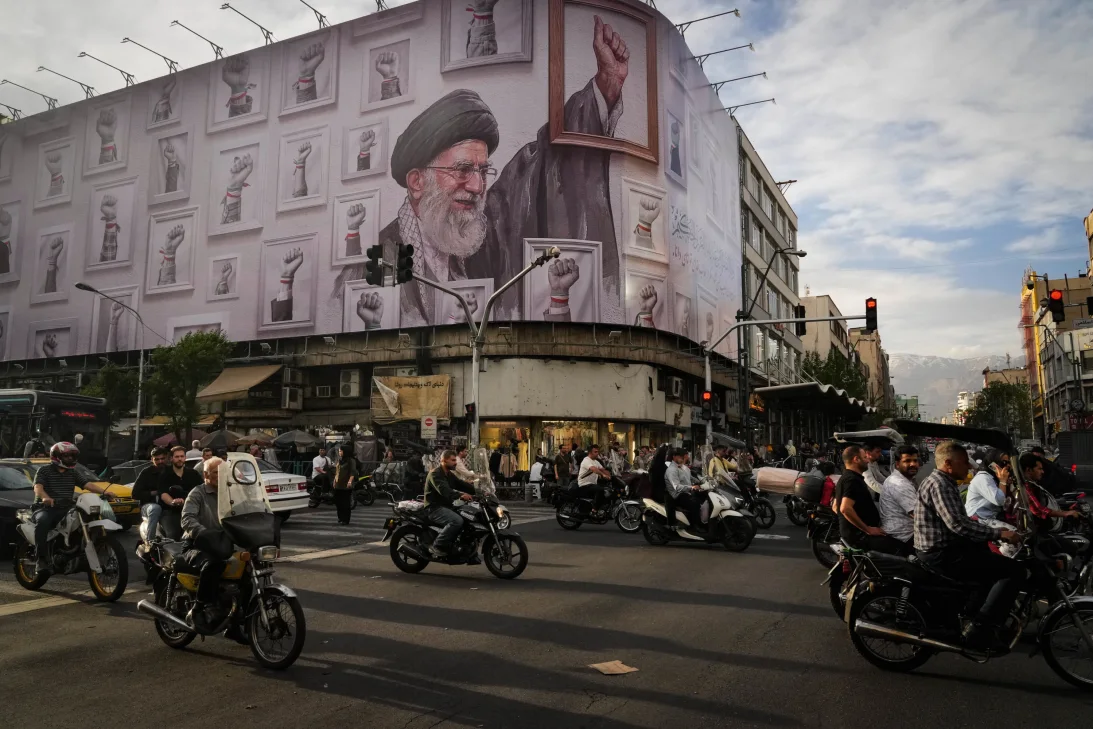
Residents across Iran are facing sleepless nights and rising anxiety as speculation grows that the United States could carry out military strikes.

Get the latest headlines in your email

In cities around the country, some young people are closely monitoring aircraft and ship-tracking platforms. While some fear foreign intervention, others quietly hope outside pressure could shift the balance after more than 50 days of unrest and a violent crackdown on anti-establishment protests.

Expectations that Washington might intervene faded after US President Donald Trump appeared to pivot from earlier supportive rhetoric toward diplomatic engagement. He had previously encouraged demonstrators to “keep protesting” and said that “help is on the way”.

The human toll from the unrest remains disputed. The US-based rights group Human Rights Activists in Iran (HRANA) says 7,007 people have been killed, with thousands of additional cases under review. Iranian authorities put the figure at 3,117.

UN experts, including special rapporteur Mai Sato, say internet restrictions and mass detentions make it impossible to verify the true scale of the crackdown.

A third round of US-Iran negotiations in Geneva ended this week without a final agreement, though officials signalled limited progress. The lack of a breakthrough has deepened uncertainty.

Some analysts warn that a collapse in talks could trigger wider conflict. Iranian leaders have previously suggested they would risk regional escalation rather than concede key demands. Others speculate that Tehran could adopt a confrontational posture if militarily challenged.

Concerns are compounded by continued domestic repression. Sato has warned of mounting pressure on human rights lawyers, along with ongoing arrests and surveillance, describing the period as one of the darkest for rights in recent years.

On pro-government social media, two narratives dominate. One expresses cautious optimism that negotiations could avert another war, recalling the eight-year Iran-Iraq conflict and more recent hostilities with Israel that left more than 1,200 people dead in Iran and 28 in Israel. The other frames any confrontation as inevitable.

State media have stepped up broadcasts highlighting missile capabilities, a common feature during heightened tensions.

Economic pressures are also mounting ahead of Nowruz, the Persian New Year. With US sanctions in place and inflation above 62%, markets are subdued. Traders report reduced foot traffic, and investors appear reluctant to make major commitments amid the uncertainty.

Join the discussion?

Already a member?


  Adapted by ASEAN Now · Source · 27 Feb 2026
ASEAN NOW News
ASEAN NOW News
A 14-year-old Palestinian boy, Jad Jadallah, was shot at close range by Israeli soldiers last November in al-Far’a refugee camp in the occupied West Bank. Video footage shows he lay wounded for at least 45 minutes while soldiers blocked ambulances from reaching him.

Get the latest headlines in your email

According to eyewitnesses and CCTV footage verified by the BBC, 14 Israeli soldiers formed a cordon around Jad as he lay bleeding in an alley. Two Palestinian ambulances were prevented from reaching him.
The Israeli Defence Forces (IDF) said soldiers provided “initial medical treatment” after confirming he was not wearing an explosive device. A spokesperson declined to give details about the timing or type of treatment.

All Israeli soldiers receive trauma training and combat units include a trained medic. However, the footage does not show soldiers giving life-saving aid. At times, Jad appeared to wave his arms and throw his hat toward the soldiers in an effort to get attention. The soldiers appeared to ignore him and kicked the hat back.

The IDF accused Jad of throwing a rock, which under its rules of engagement can justify lethal force. Footage shows a soldier placing an object next to Jad after he was shot and photographing it. Jad’s family and a leading human rights group said this suggests an attempt to frame him.

Jad was later placed in an Israeli military vehicle. It remains unclear where or how many times he was shot. The military has not returned his body to his family and has declined to answer questions about his injuries.

CCTV footage captured the moment of the shooting. It shows Jad and two friends standing at the corner of an alley after reports that Israeli forces were leaving the camp.

Four soldiers had remained behind, standing a few metres away behind a wall. Jad’s friends ran when they saw the soldiers. The footage shows a soldier stepping into view less than three metres from Jad and opening fire.

Jad ran up the alley after appearing to be hit. The footage shows dust rising ahead of him, suggesting further shots were fired. He collapsed a few metres later, out of the CCTV frame.

Bystander video filmed from another direction shows him on the ground. His mother said she tried to reach him but was blocked by soldiers.

Call logs from the Palestinian Red Crescent show an ambulance arrived eight minutes after the emergency call. Lead paramedic Hassan Fouqha said his team was stopped at gunpoint about 100 yards from Jad and forced to wait for at least 35 minutes.

Fouqha said a second ambulance approaching from another direction was also blocked. “We could have reached him and provided medical aid but we were prevented,” he said.

Al-Far’a camp is home to about 10,000 Palestinians and is subject to frequent Israeli military raids. According to the United Nations, 55 children were killed by Israeli forces in the West Bank last year, and 227 have been killed there since the 7 October 2023 Hamas attack on Israel.

Join the discussion?

Already a member?


  Adapted by ASEAN Now · Source · 26 Feb 2026
ASEAN NOW News
ASEAN NOW News

Account

Navigation

Search

Search

Configure browser push notifications

Chrome (Android)
  1. Tap the lock icon next to the address bar.
  2. Tap Permissions → Notifications.
  3. Adjust your preference.
Chrome (Desktop)
  1. Click the padlock icon in the address bar.
  2. Select Site settings.
  3. Find Notifications and adjust your preference.