Skip to content
View in the app

A better way to browse. Learn more.

Thailand News and Discussion Forum | ASEANNOW

A full-screen app on your home screen with push notifications, badges and more.

To install this app on iOS and iPadOS
  1. Tap the Share icon in Safari
  2. Scroll the menu and tap Add to Home Screen.
  3. Tap Add in the top-right corner.
To install this app on Android
  1. Tap the 3-dot menu (⋮) in the top-right corner of the browser.
  2. Tap Add to Home screen or Install app.
  3. Confirm by tapping Install.

Become a member

Become a member

World News

Fresh news brought to you daily from around the world. Hot news, breaking stories as they happen.
Iran signals further escalation in regional conflict
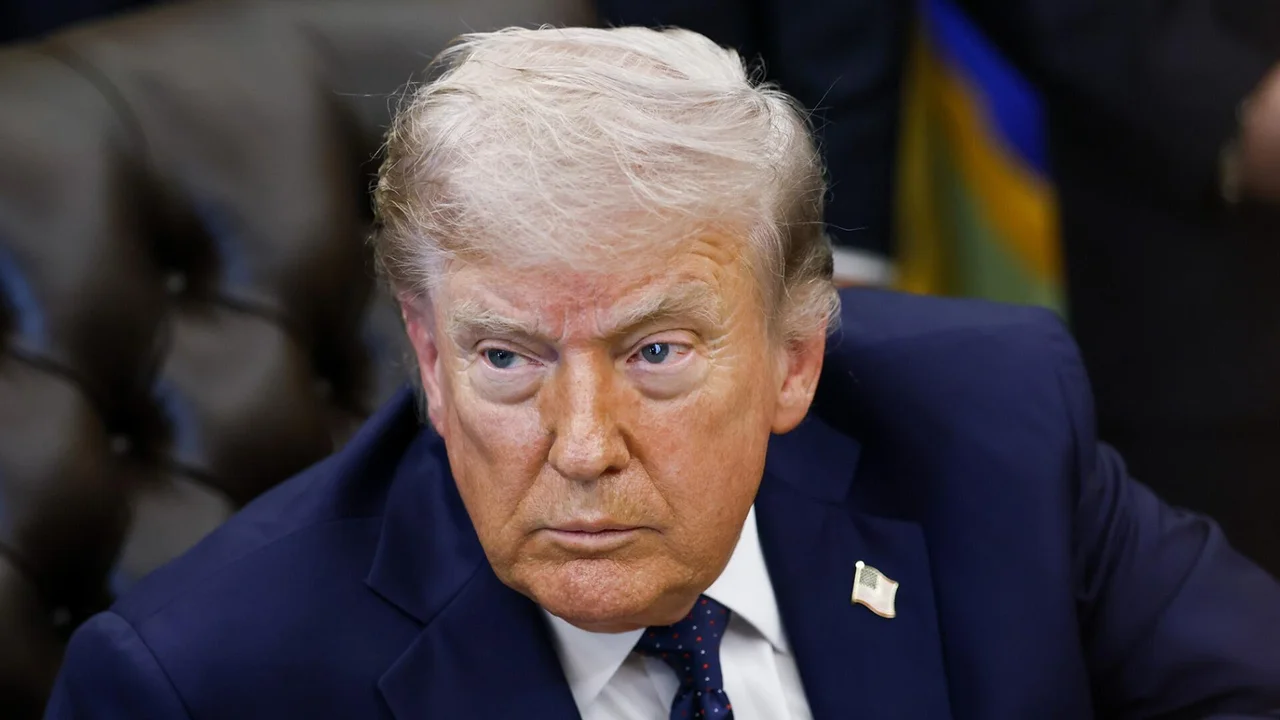
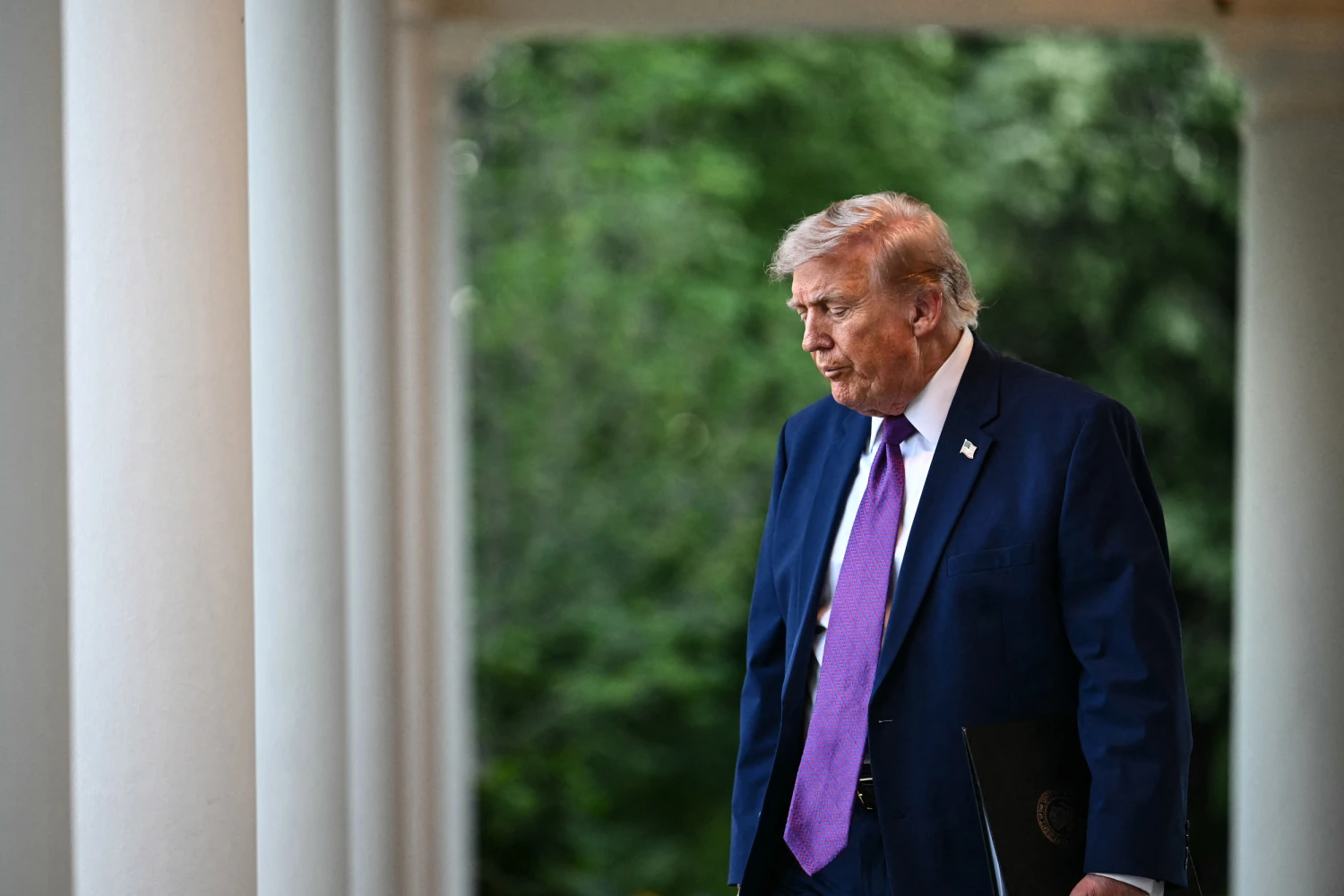
Iran has warned it may expand its military actions across the Middle East, threatening facilities linked to the United States after President Donald Trump suggested that several countries could send warships to support efforts to reopen the Strait of Hormuz.

The strategic waterway, through which a large share of global oil supplies normally passes, has been largely closed by Iran since the start of the current conflict. The fighting began nearly three weeks ago following coordinated attacks by the United States and Israel on Iranian targets.
Since then, Tehran has launched repeated strikes against oil and infrastructure sites around the Gulf as well as missile attacks on Israel.

Don’t miss the latest headlines from Thailand and around the world. Get the Asean Now Briefing newsletter, delivered daily. Sign up here.
On Saturday, Iranian forces fired additional projectiles at Israel while also launching ballistic missiles towards the United Arab Emirates.

Missile attacks affect Gulf energy hub
Some oil-loading operations in Fujairah in the UAE were halted after the latest strikes, according to industry and trade sources. The emirate is one of the world’s major refuelling centres for shipping.

Television footage showed dark smoke rising above the area following the missile barrage. An Iranian military spokesperson urged residents in the UAE to avoid ports, docks and locations described as “American hideouts”, claiming US forces had carried out attacks on Iranian islands from those sites.

The UAE condemned the strikes. Anwar Gargash, diplomatic adviser to the country’s president, said the state had the right to defend itself against what he described as “terrorist aggression”.
Despite that, he said the UAE was still seeking restraint and a diplomatic path that could reduce tensions in the region.

US and Israeli strikes intensify
The United States continued air operations against Iran, targeting the country’s main oil export hub on Kharg Island. US aircraft bombed the facility on Friday and carried out further attacks on Saturday.
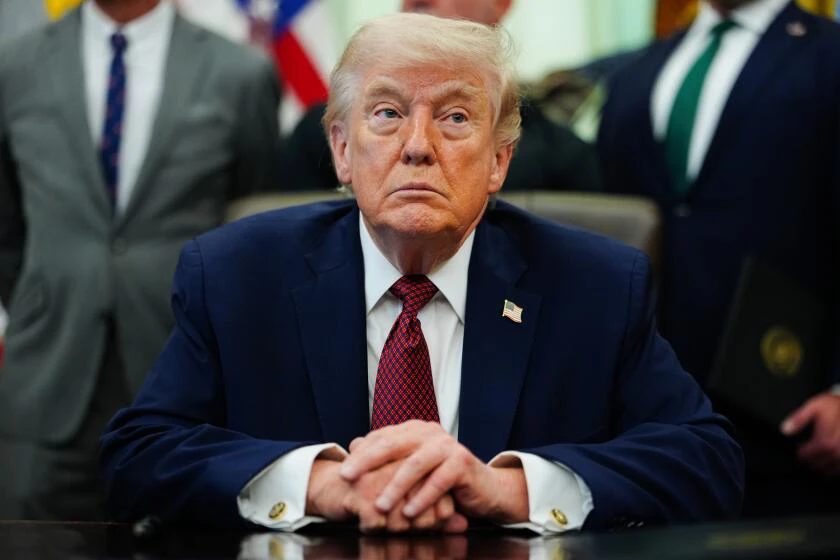
In an interview with NBC News, President Trump said the strikes had severely damaged much of the island’s infrastructure and indicated additional attacks were possible.

Trump also said negotiations with Iran were not currently possible because the conditions were “not good enough”.
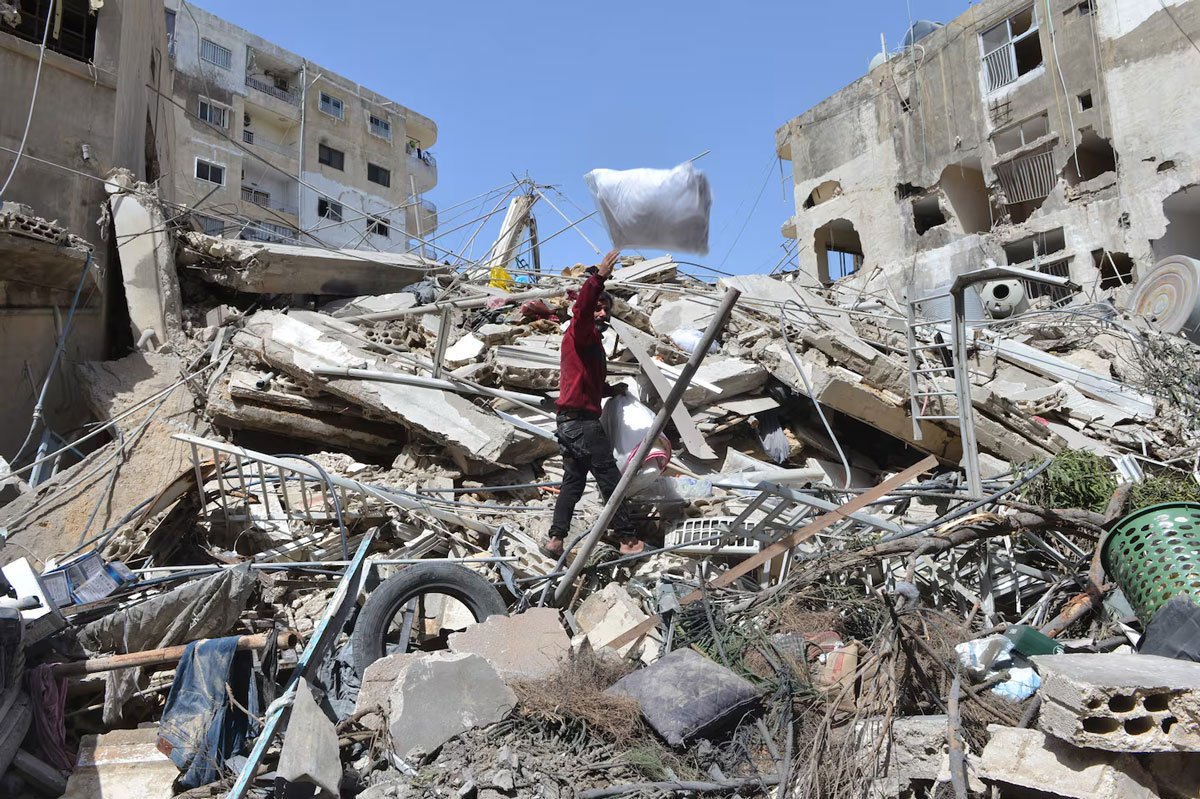
Israeli aircraft meanwhile conducted dozens of air raids across Iran. Iranian media reported that at least 15 people were killed when a strike hit a refrigerator and heater factory in the city of Isfahan.
The Israeli military said its operations were aimed at weakening Iran’s missile-launching capabilities and targeting the security forces of the Iranian government.

Trump calls for international naval presence
In social media posts, Trump said several countries could join the United States in protecting shipping in the Strait of Hormuz.

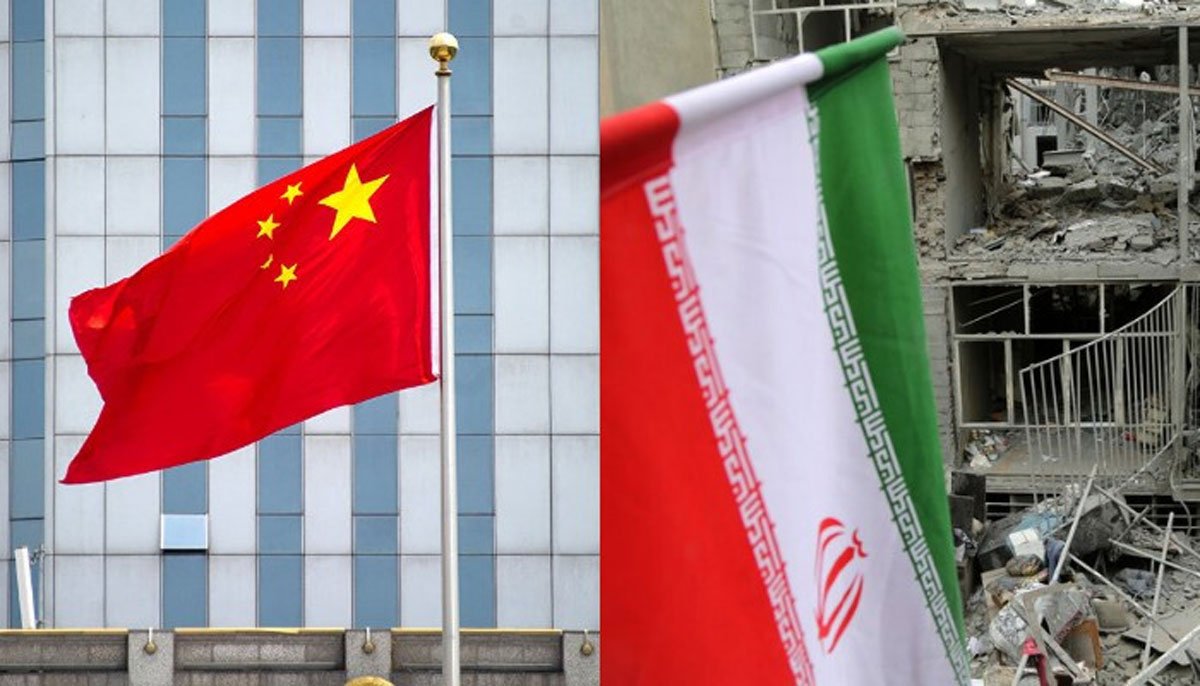
He specifically mentioned China, France, Japan, South Korea and the United Kingdom as nations that might deploy naval vessels to help ensure passage through the waterway.
The strait typically carries about a fifth of the world’s oil and liquefied gas supplies. Iran’s closure of the route has already pushed energy prices sharply higher and raised concerns about global economic disruption.

The United States has not yet outlined a detailed plan for reopening the passage.
Earlier in the week, Trump warned that Iranian oil facilities could become targets if shipping continued to be blocked. He said he had so far chosen not to destroy key infrastructure on Kharg Island but could reconsider if Iran interfered with maritime traffic.

Iran targets regional partners
Iranian officials signalled they may broaden their response. Ebrahim Zolfaghari, spokesperson for Iran’s joint military command, said energy and economic infrastructure connected to companies with US ties across the region could become targets.

Iran’s foreign minister, Abbas Araghchi, urged neighbouring states to remove US military forces from their territories, arguing that American security guarantees in the region had failed to prevent conflict.
Analysts say Tehran’s strategy appears aimed at putting pressure on Washington by targeting US partners and disrupting global energy markets.

Ali Vaez of the International Crisis Group said Iran’s approach combines three objectives: ensuring the survival of the government, maintaining the ability to retaliate and prolonging the conflict long enough to negotiate from a stronger position.

Rising casualties and regional tensions
The fighting has caused significant casualties. Reports indicate between 1,400 and 1,800 people have been killed in Iran since the conflict began, while 13 people have died in Israel and around 20 in Gulf countries.

The US embassy in Baghdad has advised American citizens to leave Iraq immediately after a missile strike near the embassy compound.
The warning cited threats from Iran-aligned militia groups as well as the risk of further missile and drone attacks in Iraqi airspace.

President Trump has not provided a timeline for ending the conflict, saying the fighting would continue “as long as it’s necessary”.

Join the discussion?

Already a member?


  Adapted by ASEAN Now · Source · 14.March 2026
ASEAN NOW News
ASEAN NOW News
Large-scale missile test seen as signal during US-South Korea military drills and wider global conflict
North Korea fired a volley of about 10 ballistic missiles on Saturday in what analysts believe could be one of the country’s largest single missile displays in recent years.

Don’t miss the latest headlines from Thailand and around the world. Get the Asean Now Briefing newsletter, delivered daily. Sign up here.
According to the South Korean Joint Chiefs of Staff, the missiles were launched from the Sunan district of Pyongyang at approximately 1:20pm local time.
The projectiles travelled roughly 350 kilometres before falling into waters in the East Sea, also known internationally as the Sea of Japan.

South Korea’s military said it was closely monitoring the situation and was prepared to respond to any further escalation.

Missiles monitored by Japan
Authorities in Japan also tracked the launches.
The Japan Coast Guard said the missiles landed outside the country’s exclusive economic zone, meaning they did not violate Japanese territorial waters.

Officials from the Japanese Ministry of Defense reported that the missiles reached an altitude of about 80 kilometres and travelled approximately 340 kilometres before splashing down.
While no damage or injuries were reported, the launches raised concerns across the region about the potential for further military demonstrations by Pyongyang.

Timing linked to military drills
The missile barrage occurred during the annual joint military exercises conducted by the United States and South Korea.
These drills, known as Freedom Shield, run from 9 to 19 March and involve thousands of troops.

The exercises are largely computer-simulated command-post drills designed to test joint operational readiness between the two allies. They are accompanied by a field training programme called Warrior Shield, which involves practical manoeuvres and defensive scenarios.
North Korea routinely criticises these exercises, describing them as rehearsals for an invasion.
Both United States and South Korea reject that accusation, saying the drills are defensive and necessary given Pyongyang’s continued expansion of its nuclear and missile capabilities.

Analysts see wider geopolitical message
Some experts believe the timing of the missile launches also reflects broader global tensions.
Leif-Eric Easley, a professor at Ewha Womans University in Seoul, said Pyongyang may be drawing lessons from the recent military operations involving the United States and Israel against Iran.

According to Easley, North Korea has been investing heavily in strengthening its naval capabilities in recent years, possibly with assistance from Russia.
However, the rapid destruction of much of Iran’s naval capacity during recent operations has likely caught the attention of North Korean leadership.

Easley suggested the missile launches were intended to demonstrate that the country could still inflict serious damage if its own military forces came under attack.

Perceived opportunity during global conflict
Analysts also note that some U.S. military assets have reportedly been redeployed from the Korean Peninsula to the Middle East due to the conflict involving Iran.

That shift could create an opportunity for Pyongyang to apply political pressure on Seoul, even if it does not intend to initiate a direct military confrontation.
Rather than escalating into immediate conflict, Easley suggested North Korea may instead focus on propaganda aimed at increasing political divisions within South Korea over the role of American forces in the region.

Diplomatic signals and rhetoric
The launches come amid renewed discussion about potential diplomatic engagement between Washington and Pyongyang.
According to reports from Yonhap News Agency, South Korean Prime Minister Kim Min Seok recently indicated that Donald Trump remains open to meeting North Korean leader Kim Jong Un during a future visit to China.

At the same time, Pyongyang has sharply criticised the joint military drills.
Kim Yo Jong, the influential sister of Kim Jong Un, warned that such exercises undermine regional stability during a period when global security structures are already under strain.
North Korea’s foreign ministry has also condemned the recent U.S.-Israeli military actions against Iran, publicly voicing support for Tehran’s leadership.

Continuing tensions on the peninsula
Missile launches remain a common tactic used by Pyongyang to demonstrate military capability and political resolve.

While the latest test did not directly threaten neighbouring countries, it highlights the persistent volatility surrounding the Korean Peninsula.
With major military exercises under way and global conflicts affecting strategic calculations, analysts warn that tensions in the region could continue to fluctuate in the coming months.

Join the discussion?

Already a member?


  Adapted by ASEAN Now · Source · 14.March 2026


ASEAN NOW News
ASEAN NOW News
Engineer who found legendary “Ship of Gold” treasure never revealed the location of hundreds of coins
A U.S. deep-sea treasure hunter who discovered one of the most famous shipwrecks in American history has been released from prison after spending nearly a decade behind bars for refusing to reveal the location of hundreds of missing gold coins.

Tommy Thompson, 73, became famous in 1988 after locating the wreck of the SS Central America — a 19th-century vessel known as the “Ship of Gold.”
But his spectacular discovery later turned into a long legal battle with investors who accused him of hiding profits from the treasure.

Don’t miss the latest headlines from Thailand and around the world. Get the Asean Now Briefing newsletter, delivered daily. Sign up here.

Legendary shipwreck discovery
The SS Central America sank in 1857 during a hurricane off the coast of the United States while carrying a massive shipment of gold from California.
The ship had been transporting around 30,000 pounds of newly minted gold from San Francisco to banks on the East Coast when it went down.

More than 425 passengers and crew members died, and the loss of the gold shipment helped trigger the economic turmoil known as the Panic of 1857.
The wreck lay nearly 7,000 feet below the ocean surface for more than a century before Thompson and his expedition team finally located it in 1988 after years of searching.

Millions recovered from the ocean floor
At the time, Thompson was working as an engineer at the Battelle Memorial Institute in Columbus, Ohio.
His expedition eventually recovered thousands of gold bars and coins from the seabed, making it one of the most valuable shipwreck recoveries in U.S. history.

Many of the artifacts were later sold in 2000 for around $50 million.
However, a later criminal complaint suggested that the total value of the gold recovered from the wreck could be as high as $400 million.

Investors claim they were cheated
The expedition had been financed by 161 investors, who together provided about $12.7 million to fund the search for the shipwreck.
They were promised a share of the treasure recovered from the seabed.

But years passed without many investors receiving any returns from the discovery.
In 2005, a group of investors filed a lawsuit accusing Thompson of withholding profits and failing to share proceeds from the sale of the treasure.

Years on the run
As legal pressure mounted, Thompson disappeared in 2012 after failing to appear in court.
Authorities spent several years searching for him before he and an associate were eventually arrested in 2015 in Boca Raton, Florida.

Investigators discovered that Thompson and his partner had been living quietly in a hotel for two years, paying cash for their room under a false name and avoiding attention by relying on taxis and public transportation.

Prison over missing coins
After his arrest, Thompson was jailed for criminal contempt and later held in civil contempt for refusing to answer questions about roughly 500 gold coins that remained missing from the shipwreck recovery.

Civil contempt sentences can continue indefinitely until a defendant complies with a court order — in this case, revealing the location of the missing treasure.
Despite years of legal pressure, Thompson repeatedly insisted that the coins had been placed in a trust in Belize.

He also claimed that much of the money from earlier treasure sales had been consumed by legal costs and loan repayments.

Judge ends contempt sentence
After nearly ten years behind bars, a judge recently ordered Thompson’s release.
The court concluded that further imprisonment was unlikely to force him to disclose the coins’ whereabouts.

Because civil contempt is intended to pressure someone into complying with a court order, the judge ruled that continuing to hold him would serve little purpose if he remained unwilling or unable to provide answers.

Mystery remains unsolved
Although Thompson is now free, the mystery surrounding the 500 missing gold coins remains unresolved.
Some investors continue to argue that large portions of the treasure recovered from the wreck have never been fully accounted for.

The case has become one of the most unusual legal sagas connected to a shipwreck discovery — a story involving a legendary lost treasure, a decade-long prison sentence and a fortune in gold that may still be hidden somewhere.

Join the discussion?

Already a member?


  Adapted by ASEAN Now · Source · 14.March 2026
ASEAN NOW News
ASEAN NOW News
Proposal to feature British animals on new currency sparks political criticism and public debate
The Bank of England plans to feature British wildlife on its next generation of banknotes, replacing historical figures such as Winston Churchill and Jane Austen — a move that has already sparked a political backlash.

Don’t miss the latest headlines from Thailand and around the world. Get the Asean Now Briefing newsletter, delivered daily. Sign up here.
The central bank says the redesign follows public consultation and is partly driven by the need to introduce more sophisticated anti-counterfeiting technology.
However, some political leaders argue that removing well-known figures from the currency risks downplaying Britain’s history.

Political leaders voice criticism
Several prominent politicians have criticised the proposal since it was announced.
Kemi Badenoch, leader of the Conservative Party, dismissed the idea as unnecessary, arguing that replacing historical figures with wildlife would be a mistake.

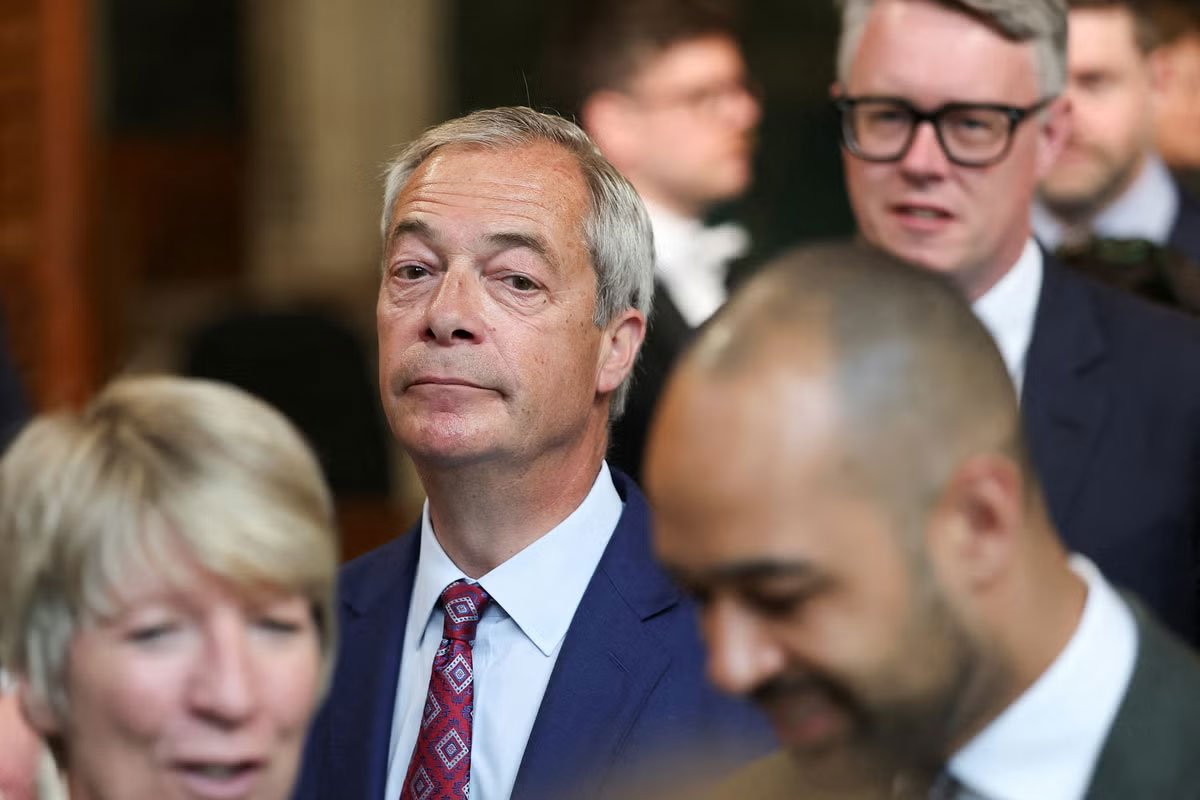
Meanwhile Nigel Farage of Reform UK described the proposal as “absolutely crackers”, suggesting that revered national figures could end up being replaced by animals such as beavers.
Ed Davey, leader of the Liberal Democrats, also questioned the timing of the change, saying it seemed odd to debate banknote designs while conflict continues in Europe.

Public consultation favoured nature
Despite the criticism, the Bank of England says the wildlife theme was the most popular choice during a consultation process involving tens of thousands of responses.
About 60 percent of participants selected nature or wildlife as one of their preferred themes for future banknotes.

Other options included architecture and landmarks, historical figures, arts and culture, innovation and major national milestones.
The new designs would appear on the reverse side of £5, £10, £20 and £50 notes, replacing portraits that have appeared on Bank of England banknotes for more than five decades.

Portraits of notable individuals were first introduced in 1970, beginning with William Shakespeare.
The current series features Churchill on the £5 note, Austen on the £10, artist J. M. W. Turner on the £20, and mathematician and wartime codebreaker Alan Turing on the £50.

Animal charities join the discussion
The debate has attracted attention beyond politics, with the RSPCA suggesting that lesser-known animals could also be considered.
The charity highlighted species such as pigeons, rats and gulls, arguing they have played significant roles alongside humans.

RSPCA wildlife expert Geoff Edmond pointed out that pigeons famously carried military messages during both world wars, while rats have been trained to detect landmines and identify diseases.
He said animals that are often overlooked — including foxes and gulls — might also deserve recognition on the country’s currency.

Family reaction to Churchill removal
Emma Soames, a granddaughter of Winston Churchill, said she was not surprised that the wartime leader might eventually disappear from the £5 note.
She told the BBC she never expected the portrait to remain on the currency indefinitely.
Asked about the possibility of Churchill being replaced by an animal such as a badger, she joked that either the badger or her grandfather would be fortunate.

Security features driving redesign
Officials say the wildlife theme offers new possibilities for modern security features designed to prevent counterfeiting.
Designs could include moving elements built into the notes, such as birds appearing to flap their wings or animals depicted in motion.

Victoria Cleland, the Bank of England’s chief cashier — whose signature appears on British banknotes — acknowledged that currency designs often provoke strong opinions.
She said consulting the public was an important part of the process.

Wildlife imagery already appears on some British banknotes issued by other institutions. For example, notes produced by the Royal Bank of Scotland feature animals such as otters, red squirrels and mackerel.

Online reaction adds humour
The debate has also produced a wave of jokes on social media.
Supermarket chain Aldi UK even suggested that its well-known “Cuthbert the Caterpillar” cake could appear on a future banknote design, sharing a playful mock application for the role.

The Bank of England has not yet decided which species will appear on the new notes.
Experts will now compile a shortlist of wildlife candidates that will be presented to the public later this year.

A final decision will ultimately be made by the bank’s governor, although it may take several years before the redesigned notes enter circulation.

Join the discussion?

Already a member?


  Adapted by ASEAN Now · Source · 14.March 2026
ASEAN NOW News
ASEAN NOW News
Rare unrest erupts as blackouts, shortages and rising prices fuel public anger
Protesters in Cuba have ransacked a local Communist Party building following a demonstration over soaring food prices and persistent power cuts, marking a rare public display of dissent in the country.

Don’t miss the latest headlines from Thailand and around the world. Get the Asean Now Briefing newsletter, delivered daily. Sign up here.
Authorities said five people were arrested after a small group vandalised the party offices overnight in the central city of Morón.
The unrest comes as frustration grows across the island over rolling blackouts and widespread shortages of food, fuel and medicine.

Protest turns violent
According to Cuba’s Interior Ministry, the protest began as a peaceful rally but escalated into vandalism later in the evening.
State media reported that a group of demonstrators threw stones at the entrance of the local headquarters of the Communist Party of Cuba and removed furniture from inside the building.

The furniture was then set on fire in the street outside the offices.
Other nearby state-run facilities, including a pharmacy and a government-operated market, were also targeted during the unrest.
Videos circulating on social media appeared to show protesters shouting “liberty” while flames burned in the street outside the building.

Government response
President Miguel Díaz-Canel acknowledged that many of the demonstrators’ complaints were legitimate but condemned the destruction of property.

He said that while citizens’ grievances were understandable, “violence and vandalism that threatens citizen tranquility” would not be tolerated.
Writing on the social media platform X (Twitter), Díaz-Canel said the country’s prolonged power outages had caused understandable distress.

He blamed the worsening crisis on what he described as a tightening U.S. blockade that has severely limited the island’s access to fuel.

Energy crisis pushes economy to brink
Cuba’s economy has been under growing pressure as the island struggles with an energy shortage that has disrupted daily life.

The government says no fuel shipments have reached the country in three months due to restrictions imposed by the administration of Donald Trump.
Havana relies heavily on imported fuel to generate electricity, and the supply shortages have triggered rolling blackouts across the country.

In the capital Havana, residents have endured outages lasting as long as 15 hours per day, while services such as rubbish collection, hospital operations, transport and education have also been affected.

Talks with Washington
The protest occurred just hours after the Cuban government confirmed it had opened talks with the United States to try to resolve long-standing disputes between the two countries.

Díaz-Canel said the negotiations aim to “seek solutions through dialogue” to bilateral tensions.
Washington has significantly increased pressure on Havana in recent months.
Trump has openly expressed support for political change on the island and recently warned that Cuba was in “deep trouble.”

He has also threatened what he described as a possible “friendly takeover” of the country’s government.

Growing unrest
Public protests remain uncommon in Cuba, where political dissent has historically been tightly controlled.

Although the country’s 2019 constitution formally recognizes the right to protest, legislation defining how demonstrations can legally take place has yet to be passed.
In recent weeks, frustration over the energy crisis has led to a rise in smaller acts of protest.

Many Cubans have taken to banging pots and pans at night — a traditional form of protest in Latin America known as a cacerolazo — to express anger over the prolonged blackouts.
Earlier this month, students at University of Havana staged a demonstration over disruptions to their education caused by the power shortages.
As the economic crisis deepens, analysts say similar protests could become more common across the island.

Join the discussion?

Already a member?

  Adapted by ASEAN Now · Source · 14 Mar 2026
ASEAN NOW News
ASEAN NOW News
US president claims military targets were “obliterated” in one of the most powerful strikes in the region

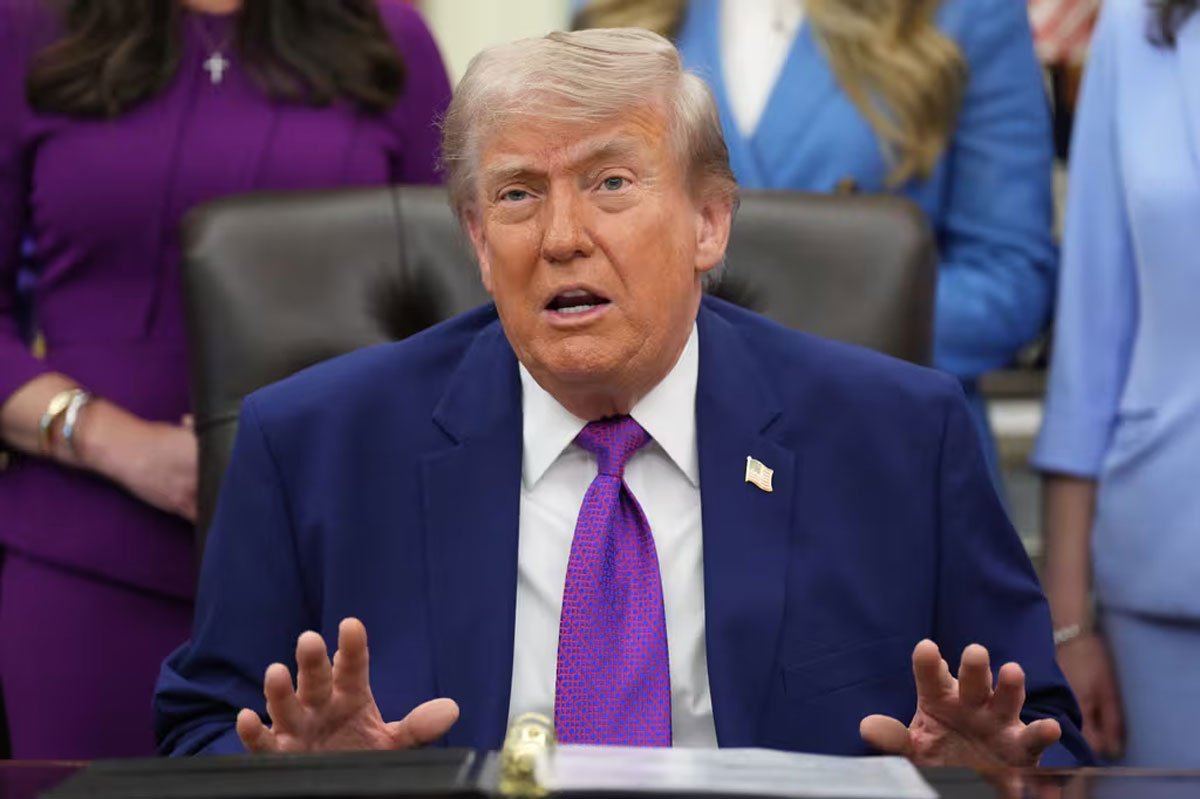
Donald Trump has said the United States carried out a massive bombing raid on Kharg Island, claiming American forces destroyed every military target there in what he described as one of the most powerful strikes in the region’s history.
The U.S. president announced the operation in a post on the social media platform Truth Social on Friday evening.
He said the attack targeted what he called “Iran’s crown jewel”, referring to the strategic island in the Persian Gulf.
“Moments ago, at my direction, the United States Central Command executed one of the most powerful bombing raids in the history of the Middle East and totally obliterated every military target in Iran’s crown jewel, Kharg Island,” Trump wrote.

Strategic oil hub
Kharg Island is a small island belonging to Iran, located in the northern Persian Gulf.
Roughly five miles long and about two and a half miles wide, the island serves as the main terminal for nearly all of Iran’s oil exports, making it one of the most strategically important energy sites in the country.
Until now, it had largely been spared in the ongoing military campaign involving the United States and Israel.
Trump said the raid specifically targeted military facilities, adding that U.S. forces deliberately avoided destroying the island’s oil infrastructure.
“For reasons of decency, I have chosen not to wipe out the oil infrastructure on the island,” he said.

Warning over Strait of Hormuz
Trump warned that the decision could change if Iran interferes with shipping in the nearby Strait of Hormuz.
The narrow waterway is one of the world’s most critical energy routes, carrying a large share of global oil shipments.
“Should Iran, or anyone else, do anything to interfere with the free and safe passage of ships through the Strait of Hormuz, I will immediately reconsider this decision,” Trump wrote.
The strait has been a focal point of tensions during the ongoing conflict.

Trump boasts of US military power
In the same statement, Trump praised the strength of the U.S. armed forces.
He said the American military had been rebuilt during his presidency into “the most lethal, powerful and effective force anywhere in the world.”
He also warned that Iran lacked the ability to defend itself against U.S. strikes.

“Iran has no ability to defend anything that we want to attack,” he said.
Trump repeated his long-standing pledge that Iran would never be allowed to develop nuclear weapons.
“Iran will never have a nuclear weapon, nor will it have the ability to threaten the United States, the Middle East or the world,” he wrote.

Earlier comments on possible operation
In an interview broadcast earlier Friday on Fox News, Trump was asked whether the United States might seize Kharg Island.
He dismissed the question, suggesting it would be foolish for a president to reveal military plans.
“Let’s say I was going to do it or let’s say I wasn’t going to do it — why would I tell you?” he said.
The comments came as fighting between Iran and its regional adversaries continues to escalate, raising fears that the conflict could further disrupt global energy markets and shipping routes.

Join the discussion?

Already a member?


  Adapted by ASEAN Now · Source · 13.03 2026
ASEAN NOW News
ASEAN NOW News
Watchdog criticizes “racist hate speech” and mass deportations in the United States

A United Nations watchdog has accused Donald Trump and other U.S. political leaders of using “racist hate speech” against migrants and overseeing policies that have led to serious human rights violations.

In a decision issued this week, the United Nations Committee on the Elimination of Racial Discrimination (CERD) called on the United States to meet its obligations under international agreements to combat racism and discrimination.
The committee said it was deeply concerned by the use of dehumanising language and harmful stereotypes directed at migrants, refugees and asylum seekers.

“Portraying them as criminals or as a burden, by politicians and influential public figures at the highest level, particularly the president, may incite racial discrimination and hate crimes,” the panel said.
The statement marked a rare instance in which the UN body appeared to directly criticize remarks made by a sitting U.S. president.

Concerns about migration crackdown
The panel also documented concerns about a wide range of measures introduced during Trump’s current administration to control migration.
These include allegations of systematic racial profiling by officers from U.S. Immigration and Customs Enforcement and border patrol agencies.
The committee also cited reports describing “discriminatory, dangerous and violent methods” used in immigration enforcement operations.
According to the report, at least eight people have died since January 2026 in incidents linked to immigration enforcement.

Minneapolis cases highlighted
Particular attention was given to events in Minneapolis, where federal immigration agents carried out large-scale operations earlier this year.
The panel said it had identified a pattern of serious human rights violations during the crackdown.
It referenced the deaths of two individuals — Alex Pretti and Renee Good — who were killed in separate shootings involving federal agents.
The committee said the incidents could amount to gross violations of international human rights law, and may constitute extrajudicial killings of peaceful protesters.

Surge in detention and deportations
CERD also expressed concern about the rapid rise in the number of migrants being held in detention facilities.
According to the report, the number of people detained increased from about 40,000 in late 2024 to roughly 73,000 at the beginning of 2026.
At least 675,000 migrants have been deported since Trump returned to power in January 2025.

The committee also noted that the administration had moved to remove legal protections from hundreds of thousands of migrants who had previously been allowed to live in the United States.
Reports of detainees being held in inhumane conditions and receiving inadequate medical care were also cited as major concerns.
At least 29 migrants died in detention facilities in 2025, with six additional deaths reported in January 2026, according to the report.

Complaint brought by civil liberties group
The UN committee issued its decision after the American Civil Liberties Union asked it to review possible rights violations connected to immigration enforcement operations in Minnesota.

CERD’s decisions are non-binding, meaning they do not impose legal penalties but are intended to highlight potential violations of international standards.
Previous U.S. administrations, including those led by Barack Obama and Joe Biden, have also faced criticism from the panel over immigration policies.
However, the committee did not previously single out presidential rhetoric in the same way.

White House rejects criticism
The Trump administration dismissed the report and criticized the United Nations.
White House spokesperson Olivia Wales said the assessment was biased and out of touch with conditions in the United States.

“This United Nations assessment is just as useless as their broken escalator, and their extreme bias continues to prove why no one takes them seriously,” she said in a statement.
She added that the administration’s border policies had made the country “safer and stronger than ever before.”

Join the discussion?

Already a member?


  Adapted by ASEAN Now · Source · 13.03 2026
ASEAN NOW News
ASEAN NOW News
Newly uncovered photo shows the trio together in casual setting
A newly uncovered photograph shows Andrew Mountbatten-Windsor and Peter Mandelson sitting with disgraced financier Jeffrey Epstein, marking the first known image of the three together.

The picture shows the men wearing bathrobes while seated outside at a wooden table with mugs decorated with the American flag. The image is believed to have been taken on Martha's Vineyard, an island off Cape Cod in Massachusetts known as a popular destination for wealthy visitors.

The photograph was uncovered by ITV News and was reportedly among millions of Epstein-related files released earlier this year by the United States Department of Justice.
No date was provided for the image.

Mandelson message in Epstein birthday album
A similar photograph of Mandelson previously appeared in a birthday album created for Epstein in 2003.
In a handwritten message included in the book, Mandelson referred to Epstein as “my best pal,” describing him as an “intelligent sharp-witted man.”
Epstein died in August 2019 while awaiting trial on federal sex-trafficking charges.

Appearances in Epstein documents
Both Mountbatten-Windsor and Mandelson appear several times in the large collection of documents linked to Epstein.
According to reports, the files contain various photographs showing the men in informal situations connected to Epstein.
Some images reportedly show Mountbatten-Windsor interacting with unidentified women, while others show Mandelson in casual situations including receiving a foot massage.
There is no suggestion that appearing in the documents implies wrongdoing.
Epstein had previously been jailed in 2008 for soliciting prostitution from a minor.

Investigations and fallout
Mountbatten-Windsor and Mandelson have both faced scrutiny over their relationships with Epstein.
Mountbatten-Windsor was stripped of royal roles and asked to vacate the large residence he occupied in Windsor. Last month he was arrested on suspicion of misconduct in public office over allegations he shared confidential information with Epstein while serving as the United Kingdom’s trade envoy.
He has denied any wrongdoing.

Mandelson has also faced political consequences. He was dismissed as the United Kingdom’s ambassador to the United States last September and resigned from the House of Lords in February following renewed attention to his ties with Epstein.
He was later arrested on suspicion of misconduct in public office over allegations that he may have shared sensitive government information with Epstein while serving as business secretary in the government of Gordon Brown.

Mandelson has denied wrongdoing, and his lawyers say he will cooperate fully with investigators.
Both men have been released while the investigations continue.

Pressure on the prime minister
The controversy has also raised questions about the decision by Keir Starmer to appoint Mandelson as ambassador to Washington.
Starmer apologised again this week for the appointment, saying: “It was me that made a mistake, and it’s me that makes the apology to the victims of Jeffrey Epstein.”
His remarks followed the publication of 147 pages of government documents related to Mandelson’s appointment.

Ethics review rejected
Members of the opposition Conservative Party had called for an investigation into whether Starmer breached the ministerial code in making the appointment.
However, the prime minister’s independent ethics adviser, Laurie Magnus, said there were no grounds to open an inquiry.
In a written response, Magnus said the released documents indicated that the correct process for appointing a political envoy had been followed.

Join the discussion?

Already a member?


  Adapted by ASEAN Now · Source · 13.03 2026
ASEAN NOW News
ASEAN NOW News
Fuel shortages and blackouts push Havana toward dialogue with Washington
Cuba has begun talks with the United States as a U.S. oil blockade pushes the island nation deeper into an economic crisis marked by power outages and fuel shortages.

President Miguel Díaz-Canel confirmed Friday that discussions had started with the government of United States.
“These talks have been aimed at finding solutions through dialogue to the bilateral differences we have between the two nations,” Díaz-Canel said in remarks broadcast on Cuban state television.

Don’t miss the latest headlines from Thailand and around the world. Get the Asean Now Briefing newsletter, delivered daily. Sign up here.

The announcement marks the first public acknowledgment from Havana that official negotiations are underway with Washington.

Fuel supplies collapse
According to Díaz-Canel, no fuel shipments have reached Cuba in the past three months because of the blockade imposed by U.S. President Donald Trump.
The shortage has sharply reduced diesel and fuel oil reserves, leaving the country’s electricity system increasingly unstable.
A massive blackout last week left much of the island without power, while outages in the capital Havana have since stretched to more than 12 hours per day in many neighborhoods.
Officials say the energy crisis is now one of the most severe challenges facing the Communist-run nation.

Push for energy independence
Cuban authorities say they are also trying to reduce reliance on imported fuel.
Díaz-Canel said the government has increased domestic crude oil and natural gas production this year and plans to expand solar energy generation by about 10% by the end of March.
The measures are intended to stabilize the country’s electrical grid while negotiations with the United States continue.
Still, analysts say the island remains heavily dependent on imported fuel to run its aging power plants.

Talks at an early stage
Díaz-Canel said the negotiations are still in their initial phase and are meant to determine whether both countries are willing to pursue a broader agreement.
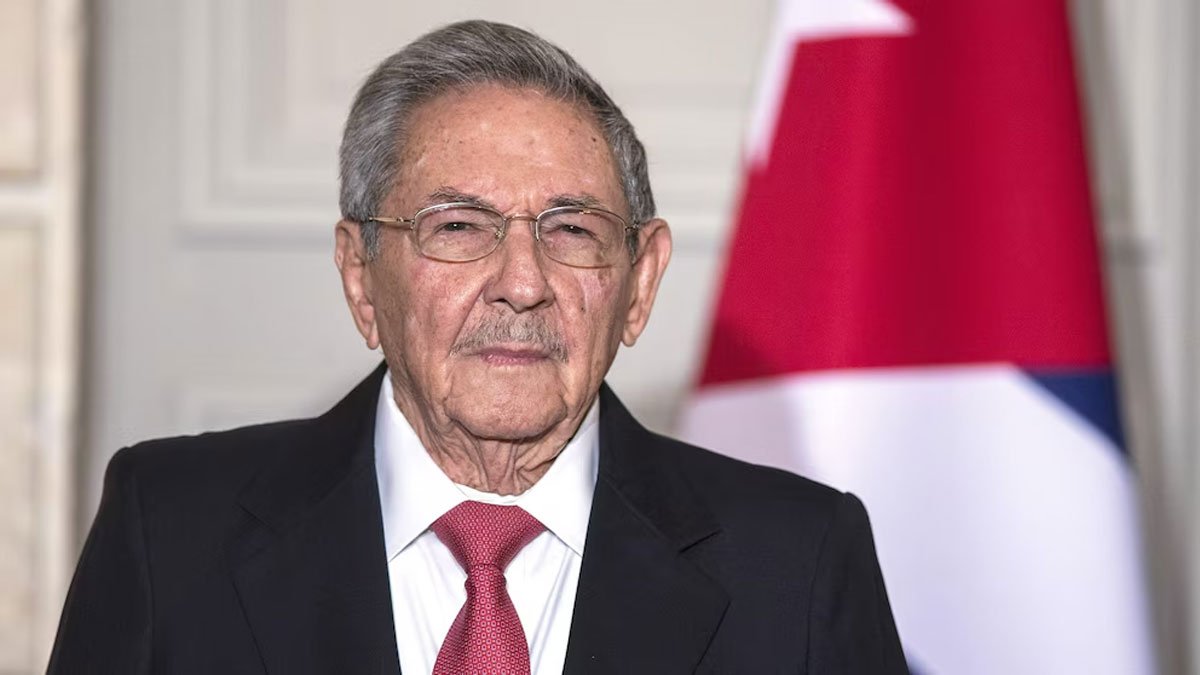
He said he is personally overseeing the talks alongside former Cuban leader Raúl Castro and other senior officials from the ruling Communist Party.

The Cuban president did not reveal where or when the meetings took place, nor did he identify the U.S. representatives involved.
However, Trump has previously said that U.S. Secretary of State Marco Rubio was participating in discussions with Cuban officials.

Political sensitivities in Havana
The announcement also drew attention to the presence of Raúl Guillermo Rodríguez Castro, the grandson of Raúl Castro.
Rodríguez Castro — known by the nickname “El Cangrejo,” or “The Crab” — appeared among senior Communist Party officials during Díaz-Canel’s televised address, despite not holding a formal high-ranking government position.
His appearance fueled speculation about the role he may be playing behind the scenes in negotiations with Washington.

Vatican-linked prisoner release
Just before the talks were confirmed, Cuba also announced that it would release 51 prisoners under an agreement involving the Vatican.
The decision followed a meeting two weeks earlier between Cuban Foreign Minister Bruno Rodríguez Parrilla and Pope Leo.

Díaz-Canel emphasized that the prisoner release was a sovereign decision made by Cuba rather than a concession imposed by foreign governments.
The Vatican has historically acted as a mediator between Havana and Washington.

In 2014, diplomatic efforts supported by the Holy See helped lead to a normalization process between the two countries during the presidency of Barack Obama.

Public reaction mixed
Some Cubans welcomed the possibility of renewed dialogue with the United States but stressed that the government should not compromise its political principles.
Felipa Rodríguez, a 67-year-old retiree in Havana, said negotiations would be acceptable if they respected Cuba’s sovereignty.
“If the talks are friendly and Cuba doesn’t have to give ground politically, there’s no problem at all,” she said.

Uncertain path ahead
Relations between the United States and Cuba have swung between confrontation and cautious engagement for decades.
The current energy crisis — triggered by the U.S. oil blockade — has intensified pressure on Havana’s leadership to seek relief through diplomacy.

Whether the new talks will produce concrete results remains unclear, but both governments now appear willing to explore dialogue after months of escalating economic strain.

Join the discussion?

Already a member?


  Adapted by ASEAN Now · Source · 13.03 2026
ASEAN NOW News
ASEAN NOW News
Reinforcements arrive as fighting spreads across the region and missile attacks continue
The United States has ordered a major reinforcement of its forces in the Middle East, sending thousands of Marines and a large amphibious assault ship to the region as the war involving Iran enters its second week.

Don’t miss the latest headlines from Thailand and around the world. Get the Asean Now Briefing newsletter, delivered daily. Sign up here.

A U.S. official said about 2,500 Marines from the United States Marine Corps and the amphibious assault ship USS Tripoli have been directed toward the region.
The deployment comes as fighting intensifies between Iran, Israel and their regional allies, raising fears of a wider Middle East conflict.

Marines join growing US military presence
The Marines are part of the 31st Marine Expeditionary Unit, a rapid-response force capable of conducting amphibious landings, evacuating civilians and reinforcing U.S. embassies during crises.
The unit and the Tripoli are normally based in Japan but had already been operating in the Pacific before being redirected toward the Middle East.

Earlier in the week, the United States Navy had about 12 warships operating in the Arabian Sea, including the aircraft carrier USS Abraham Lincoln and several destroyers.
If the Tripoli joins the flotilla, it would become the second-largest ship deployed there after the carrier.
The reinforcement does not necessarily mean a ground invasion is planned. Marine expeditionary units are often used for security missions, humanitarian operations or emergency evacuations.

Explosion at Tehran rally
Meanwhile, tensions inside Iran escalated after a large explosion struck a major demonstration in the capital.
Thousands had gathered at Ferdowsi Square for the annual Quds Day rally, a state-organized event supporting Palestinians and calling for Israel’s destruction.

Footage from the scene showed crowds chanting slogans as smoke rose nearby after the blast. There were no immediate reports of casualties.
Shortly before the explosion, Israeli military accounts issued warnings in Farsi urging people to leave the area. However, many Iranians likely did not see the message because authorities have heavily restricted internet access.

At the rally, Iran’s judiciary chief Gholamhossein Mohseni Ejei was giving an interview on state television when the explosion occurred.
Surrounded by bodyguards, he raised his fist and declared that Iran “under this rain of missiles will never withdraw.”

Thousands of targets struck in Iran
In Washington, U.S. Defense Secretary Pete Hegseth said coalition forces had struck more than 15,000 targets in Iran since the start of the conflict.
Israel also reported hitting over 200 sites in 24 hours, targeting missile launchers, air defense systems and weapons production facilities.
Meanwhile, U.S. President Donald Trump said the war would end “when I feel it in my bones.”

He also warned that Iran’s key oil export terminal on Kharg Island could be attacked if Tehran continues to threaten shipping in the nearby Strait of Hormuz — a crucial waterway that carries roughly 20% of the world’s traded oil.
Iran has already launched missile and drone attacks across the Gulf region and effectively disrupted shipping through the strait.

Rising casualties and regional fallout
Elsewhere in the region, violence continues to spread.
In Lebanon, an Israeli strike on a medical center in the village of Burj Qalaouiyah reportedly killed 12 healthcare workers, according to Lebanese authorities.
Another strike in the coastal city of Sidon killed eight people.

Officials say more than 770 people have been killed in Lebanon since fighting erupted between Israel and the Iranian-backed militant group Hezbollah roughly 10 days ago.
About 850,000 people have been displaced, according to António Guterres, secretary-general of the United Nations.

US aircraft crash adds to losses
The U.S. military also confirmed that all six crew members aboard a Boeing KC‑135 Stratotanker refueling aircraft were killed after the plane crashed in Iraq.
Officials said the crash was not caused by enemy fire. Another aircraft involved in the mission landed safely.
The deaths bring the number of U.S. service members killed during operations related to the conflict to at least 13.

War shows no sign of slowing
As missile attacks, drone strikes and air raids continue across the Middle East, the deployment of additional American forces signals that Washington expects the conflict to persist.

With shipping lanes threatened, oil prices rising and humanitarian crises deepening in neighboring countries, the war is increasingly reshaping security across the region.

Join the discussion?

Already a member?


  Adapted by ASEAN Now · Source · 13.03 2026
ASEAN NOW News
ASEAN NOW News
Kurdish fighters in northern Iraq say they are ready to confront Iran’s regime, even as drone strikes threaten their camps
In a remote mountain camp in northern Iraq, Kurdish fighters preparing to challenge Iran’s leadership say the pull of home remains powerful — even after decades in exile.

Don’t miss the latest headlines from Thailand and around the world. Get the Asean Now Briefing newsletter, delivered daily. Sign up here.
For Shaho Bloori, a 53-year-old commander, the struggle is deeply personal.
Two of his sisters still live in Iran. Eighteen of his relatives are buried there, killed by the regime over the years.
Among them was his brother, a young protest singer executed at the age of 21.

Bloori says the authorities not only hanged his brother but also shot his body repeatedly. Even after his death, he says, officials tried to control the family’s grief.
“When my mother went to wash his body, there were 16 bullet holes,” he recalls.
“They told her: ‘You must not cry. If you do, we will not let you bury him.’”
Despite his anger, Bloori says he does not seek revenge if the current government falls.
“We must stop the hanging,” he says. “Even if someone was responsible for hanging my brother, I don’t want them executed. We need freedom, not another regime like the Islamic regime.”

Training a new generation of fighters
Bloori now trains young Kurdish fighters in the mountains of northern Iraq.
The fighters belong to Komala of the Toilers of Kurdistan, a small Iranian Kurdish opposition group that is part of a broader alliance of organisations opposing Tehran’s rule.

The camp sits in a rugged region of Iraqi Kurdistan surrounded by snow-capped peaks — a beautiful landscape that is also a frequent target for Iranian strikes.
Days before journalists visited, drones struck roughly a kilometre from the site, injuring several people.
Despite the danger, training continues.

About two dozen fighters — men and women — gathered to greet visitors, chanting slogans and raising their rifles in the air.
Their rallying cry echoes across the mountains: “Woman, life, freedom,” a Kurdish slogan adopted by protest movements inside Iran.
More fighters stand guard on nearby hilltops, scanning the sky for drones. One lone sentry watches the horizon with his dog beside him.

Kurds spread across the Middle East
The Kurds are one of the largest ethnic groups in the Middle East without their own state.
They live mainly across Iraq, Iran, Syria and Turkey, sharing a long history of persecution and political divisions.

Iranian Kurdish fighters have operated from bases in northern Iraq for decades, although local Kurdish authorities are cautious about allowing their territory to become a staging ground for attacks on Iran.
Officials in the autonomous Kurdish region want to avoid being drawn into the wider conflict.

Hopes for a wider uprising
Amjad Hossein Panahi, a senior official in the Komala movement, says Kurdish fighters could play an important role if Iran’s government weakens.
He argues that air strikes alone will not topple the regime.
“Bombing is weakening the regime,” he says. “But Iran is a big country. Ground forces must intervene, and the Kurds can play an important role.”

Panahi believes international support — particularly a no-fly zone — would be necessary to make that possible.
But he is skeptical about how long the United States will remain involved.
“I don’t trust Donald Trump,” he says bluntly. “I think he could decide to stop the war.”
Still, Panahi believes the Iranian government is nearing its end.
“It will fall,” he says. “Whether by Trump, by Benjamin Netanyahu, or by the people themselves.”

A sudden warning
The conversation suddenly ends when Panahi receives a phone call.
Another Komala camp near the city of Sulaymaniyah has reportedly come under drone attack.
He immediately shouts orders to the fighters gathered around him.

“Spread out! Drones and ballistic missiles are coming. Hurry!”
The fighters scatter across the mountainside. Visitors rush for cover.
The skies remain quiet, but the message is clear: the threat is never far away.
For decades, Kurdish fighters have waited in these mountains for a chance to return home.
If they do cross the border into Iran, the cost could be enormous — not only for them, but also for the fragile stability of northern Iraq.

Join the discussion?

Already a member?


  Adapted by ASEAN Now · Source · 13.03 2026
ASEAN NOW News
ASEAN NOW News
Centuries-old tradition ends as Parliament votes to remove hereditary aristocrats from the upper chamber
Britain is set to end one of the oldest traditions in its political system after Parliament voted to remove hereditary nobles from the country’s upper legislative chamber.

Members of the House of Lords agreed this week to stop blocking legislation passed by the House of Commons that will remove dozens of hereditary aristocrats who inherited seats in Parliament along with their titles.
The move marks the final stage of a reform process that began more than two decades ago and will bring to an end a system that has existed for around 700 years.

Don’t miss the latest headlines from Thailand and around the world. Get the Asean Now Briefing newsletter, delivered daily. Sign up here.

Government ministers say the change is designed to make Britain’s legislature more democratic and merit-based.

Ending an “archaic” system
Nick Thomas-Symonds, a senior government minister, said the reform ends what he described as an outdated political principle.

“Our parliament should always be a place where talents are recognized and merit counts,” he said.
“It should never be a gallery of old boys’ networks, nor a place where titles, many of which were handed out centuries ago, hold power over the will of the people.”

Historically, members of the House of Lords included bishops, appointed life peers and hereditary nobles such as dukes, earls and viscounts. The hereditary peers inherited their seats through aristocratic titles passed down through generations.
Critics have long argued that allowing unelected aristocrats to sit in Parliament is incompatible with modern democracy.

Reform decades in the making
Major reforms to the House of Lords began in 1999, when most hereditary peers were removed from the chamber. However, a small number remained, allowing them to continue participating in legislative debates and votes.
It was another 25 years before the government of Keir Starmer introduced legislation to remove the remaining hereditary members.

The change will take effect once Charles III grants royal assent to the bill — a largely ceremonial step that formally turns legislation into law.
The remaining hereditary peers are expected to leave the chamber at the end of the current parliamentary session this spring.
Some compromises were made during negotiations, including provisions allowing a limited number of hereditary members to remain by being converted into appointed “life peers.”
Scrutiny role remains important
Despite criticism, the House of Lords plays a significant role in Britain’s legislative process.
The chamber reviews and scrutinizes laws passed by the House of Commons, often suggesting amendments and raising concerns about proposed legislation.
Supporters say its members often bring expertise from fields such as law, science and business, allowing the chamber to provide detailed examination of complex policies.
However, critics argue that the body remains too large and insufficiently accountable to the public.
Renewed scrutiny after political controversy
Debate about reforming the Lords intensified earlier this year following controversy surrounding Peter Mandelson, who resigned from the chamber after revelations about his past friendship with convicted sex offender Jeffrey Epstein.
The case renewed attention on the behavior and accountability of members within the unelected chamber.
While Mandelson’s resignation was not directly related to hereditary peers, it added pressure for broader institutional reform.
Future reforms still uncertain
The Labour government has said it ultimately wants to replace the House of Lords with a second chamber that is more representative of the United Kingdom.
However, previous attempts at major constitutional reform have progressed slowly.

Nicholas True, the opposition Conservative leader in the House of Lords, acknowledged the end of a long tradition but defended the historical role played by hereditary peers.
“So, here we are at the end of well over seven centuries of service by hereditary peers in this Parliament,” he told fellow lawmakers.

“Many thousands of peers served their nation here and thousands of improvements to law were made.”

While the system may soon disappear, True argued that many hereditary peers had served the country faithfully.
The change nevertheless marks a historic turning point for Britain’s political institutions, closing a chapter that stretches back to the medieval origins of Parliament.


Join the discussion?

Already a member?


  Adapted by ASEAN Now · Source · 12.03 2026
ASEAN NOW News
ASEAN NOW News
Unexplained outages across Russia’s capital raise concerns about new Kremlin controls over the web
Unexplained internet disruptions in Moscow have sparked growing concern that the Kremlin is testing new tools to tighten control over Russia’s online space.

Residents in central Moscow and other major cities say they have experienced widespread problems accessing mobile internet services over the past week. Many reported being unable to open websites or messaging apps, while others said their phones lost service entirely.

The outages have forced some people to rely on older communication methods, including walkie-talkies and pagers, as the disruptions affect everyday activities such as ordering taxis, contacting family members and sending work messages.
The government has acknowledged the outages but offered few details about their purpose or duration.

Kremlin cites “security” reasons
Officials in Moscow said the disruptions were introduced to improve security.
The Kremlin said the restrictions would remain in place “as long as additional measures are necessary,” without providing further explanation.

Internet shutdowns have become more common across Russia since the start of the war in Ukraine, though previous disruptions have usually affected border regions or areas near military activity rather than the country’s capital.
Now, however, the outages appear to be affecting large parts of Moscow’s city centre and other major urban areas.
Users in St Petersburg have also reported problems accessing mobile networks and internet services.

Possible “whitelist” internet system
Human rights groups and technology experts believe the shutdowns may be linked to testing a new “whitelist” system that would restrict internet access to a limited number of approved websites.

Under such a system, only government-authorised services would remain available. Officials have previously said the approved list would include essential services such as online marketplaces, delivery platforms and digital pharmacies.

Critics warn the system would significantly limit Russians’ access to independent news sites and foreign platforms.
Internet restrictions in Russia have intensified in recent years. Authorities have already blocked several major international platforms, including WhatsApp, Facebook and YouTube.

There is also speculation that Telegram, one of the country’s most widely used messaging apps, could face new restrictions.

Economic disruption across the capital
The outages are also affecting businesses across Moscow.
Courier services, taxi platforms and retailers that depend on mobile internet have been particularly hard hit. Russia’s business newspaper Kommersant estimated that companies in Moscow could lose around one billion roubles — about £9.4 million — each day the shutdown continues.

Even lawmakers have been affected. Deputies in Russia’s lower house of parliament, the State Duma, complained that mobile networks and Wi-Fi connections inside the building were no longer functioning.
Without internet access, many lawmakers said they were effectively cut off from the outside world.

Russians turn to older communication tools
Faced with the disruptions, many residents have begun using older communication devices.
Data from the e-commerce platform Wildberries shows a sharp rise in sales of walkie-talkies and pagers.

According to Russian media reports, walkie-talkie sales increased by about 27%, while demand for pagers rose by 73%. Sales of paper maps of Moscow have also surged as people struggle to use navigation apps.

Push toward state-backed “super-app”
At the same time as the outages, Russian authorities are encouraging citizens to adopt a new state-supported mobile platform called Max.

The app has been compared to China’s WeChat and is expected to combine messaging, payments and government services in one platform.
Critics say the app could allow security agencies to monitor communications more closely.

Meanwhile, a Russian lawmaker recently said authorities may soon gain the ability to restrict virtual private network (VPN) traffic — one of the few tools still used by Russians to bypass blocked websites.
If implemented, such measures could further isolate Russia’s internet from the wider global web.

Join the discussion?

Already a member?


  Adapted by ASEAN Now · Source · 12.03 2026
ASEAN NOW News
ASEAN NOW News
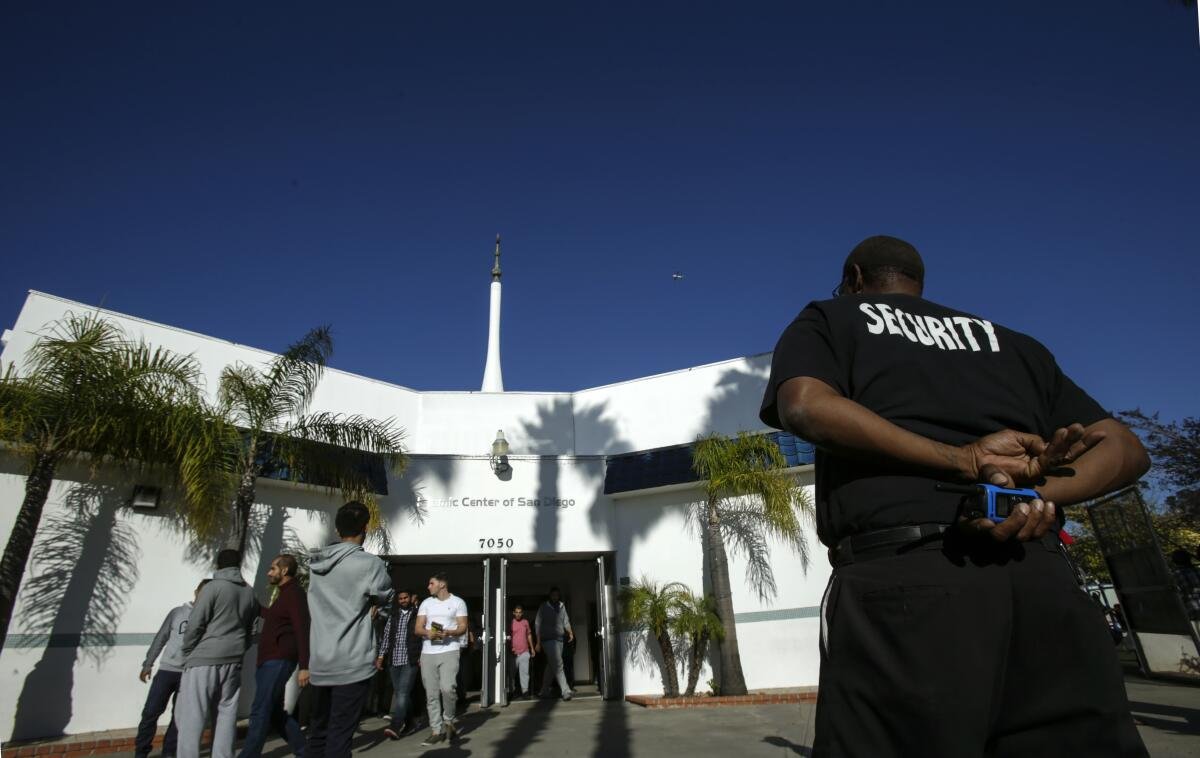
No serious casualties reported at Temple Israel as authorities investigate explosives found in suspect’s vehicle
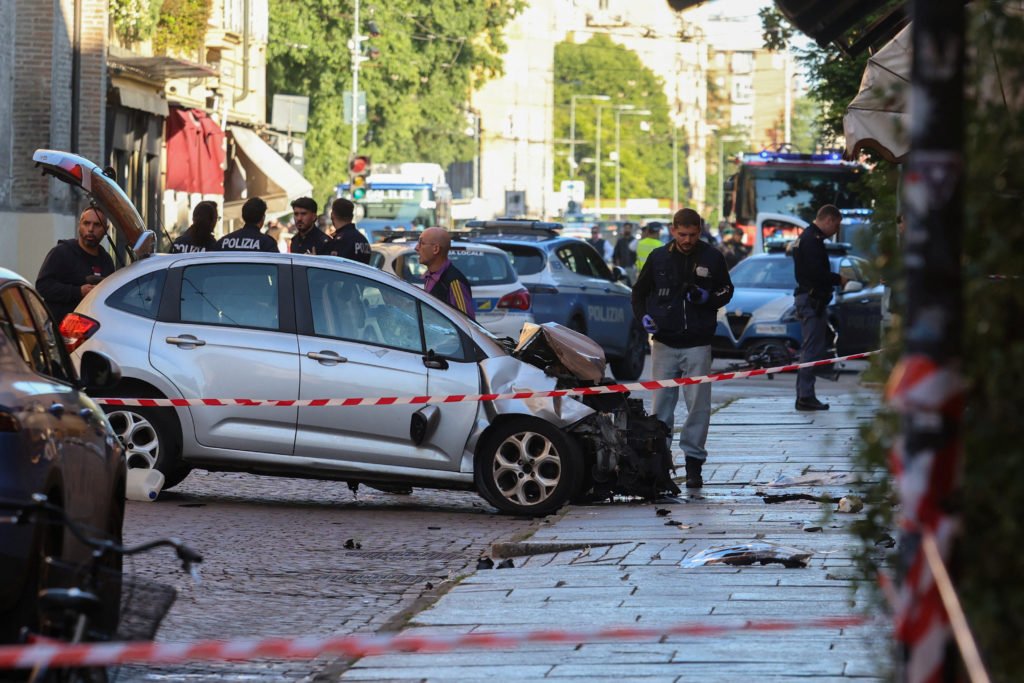
A suspect died after driving a vehicle into a synagogue in Michigan on Thursday, breaching the building before being confronted by security staff. Authorities say no serious injuries were reported in the incident.

Don’t miss the latest headlines from Thailand and around the world. Get the Asean Now Briefing newsletter, delivered daily. Sign up here.

The attack took place at Temple Israel, where the suspect reportedly drove through the entrance and down a hallway inside the building.
Michael Bouchard said the suspect was found dead inside the vehicle. Authorities have not yet determined whether the individual was shot by synagogue security personnel or died by suicide.

“He breached the building, drove down the hall and was engaged by security,” Bouchard told reporters. “It’s hard to say how fast. He was traveling with purpose down the hall from what we can see on the video.”

Explosives found in vehicle
Officials said explosives were reportedly discovered inside the suspect’s vehicle. Bomb detection dogs and a state bomb squad were deployed to examine the car and ensure no additional devices were present.

Law enforcement quickly evacuated a school located within the synagogue complex.
“The important thing is that no kids and no staff were injured whatsoever,” Bouchard said. “Everybody has been moved out safely.”

Authorities urged the public to remain calm as the situation was brought under control.
“So we want people to take a breath,” the sheriff said. “No one was hurt. Security did their job, and the responders did theirs.”

FBI joins investigation
The Federal Bureau of Investigation confirmed it had sent agents to assist local authorities.
FBI Director Kash Patel said federal personnel were responding alongside Michigan officials to what appeared to be a vehicle ramming and possible active shooter situation.

Emergency vehicles, including a bomb squad unit, were seen arriving at the scene as dozens of police cars gathered outside the synagogue.

Leaders condemn the attack
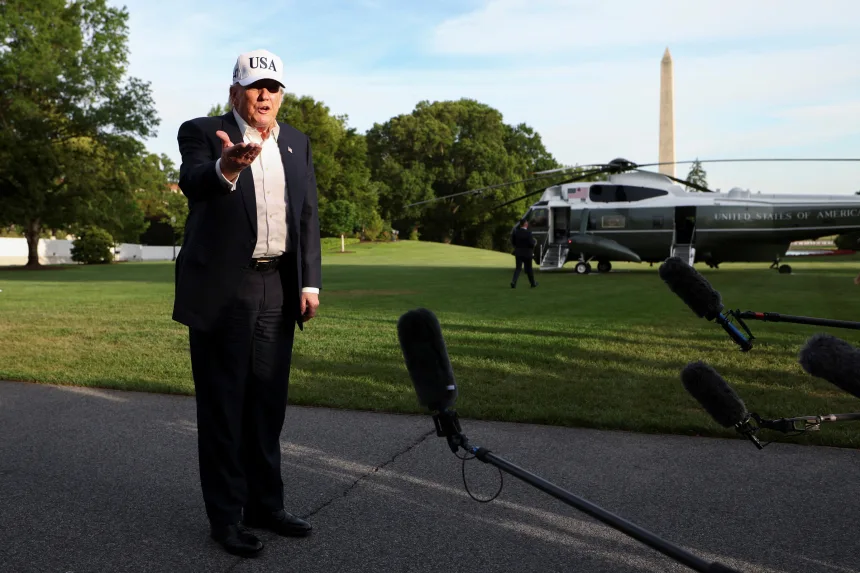
At the White House, Donald Trump said he had been fully briefed and expressed support for the local Jewish community.
“I send love to the Michigan Jewish community and all of the people in the Detroit area following the attack on the Jewish synagogue early today,” Trump said.

Michigan Governor Gretchen Whitmer said she was monitoring the situation closely.
“Michigan’s Jewish community should be able to live and practice their faith in peace,” Whitmer wrote on social media. “Antisemitism and violence have no place in Michigan.”

Jewish organizations across Detroit were advised to enter lockdown as a precaution, according to the Jewish Federation of Detroit.

Rising concerns over attacks on places of worship
The incident comes amid increasing concern over antisemitism and violence targeting Jewish communities.

According to the American Jewish Committee, its 2025 “State of Antisemitism in America” report found that 91% of American Jews surveyed said they felt less safe due to violent attacks in the previous year.
Temple Israel had also recently conducted security training with the Federal Bureau of Investigation earlier this year.

Michigan has seen several attacks on places of worship in the past year, including a church shooting in Grand Blanc Township that killed four people.
Authorities are continuing to investigate the suspect’s motives and whether the explosives discovered in the vehicle were operational.

Join the discussion?

Already a member?


  Adapted by ASEAN Now · Source · 12.03 2026
ASEAN NOW News
ASEAN NOW News
“If I had disobeyed my mother and gone to New York, what might have happened to me?” asks Gláucia Fekete.

In 2004, she was a 16-year-old living in rural Brazil and beginning a career in modelling. Around that time, French modelling agent Jean-Luc Brunel visited her family home, trying to persuade her mother to allow her to travel to Ecuador for a modelling contest.

Don’t miss the latest headlines from Thailand and around the world. Get the Asean Now Briefing newsletter, delivered daily. Sign up here.
Brunel later died in prison while awaiting trial on charges of rape, sexual assault and trafficking girls for the late US financier and convicted sex offender Jeffrey Epstein.

At the time, Gláucia and her family did not know who Brunel was. They had been introduced through a well-known Brazilian modelling scout.
A BBC News Brasil investigation has found evidence that Brunel used modelling agencies connected to him to recruit young women and girls from South America for Epstein. The investigation also uncovered records suggesting visas were arranged for some of them to travel to the United States.

Another Brazilian woman, who says she had a relationship with Epstein, showed the BBC a US visa listing one of Brunel’s agencies as her sponsor. She says she never worked as a model for the agency and that the paperwork existed only so she could visit Epstein.
Gláucia’s mother, Barbara, initially had doubts about Brunel, but she remembers him as “very charming.” Eventually she allowed her daughter to travel to Ecuador without her.

The teenager went with Brunel’s team to Guayaquil for the Models New Generation competition. Local newspapers at the time reported contestants were aged between 15 and 19.
Gláucia says the event itself appeared normal, but she became uneasy when she was not allowed to contact her family.
Another contestant, a 16-year-old from Western Europe who asked not to be identified and is referred to as Laura, also recalls feeling uncomfortable around Brunel.

“It was strange how he behaved and how he was always around the young Brazilian girls,” she says. “He was acting like a clown and only hanging out with quite young girls.”
Laura believes the competition itself was legitimate and well organised, but says Brunel seemed to focus on girls he considered vulnerable.

“He appeared to control their finances,” she says. “The girls from Brazil and Eastern Europe seemed to be the main targets.”
Near the end of the trip, Brunel offered to fly Gláucia to New York to participate in modelling shows, with all expenses paid. At that point, he needed permission from her mother.

Barbara’s answer was immediate.
“No. Not a chance,” she says now.
“They were looking for children, minors. Unfortunately they found my daughter.”
She cut off all contact with Brunel’s network and forbade Gláucia from continuing in modelling.
Looking back, Gláucia says it may have saved her from something far worse.
“It really was a narrow escape,” she says.

Documents released by the US government and reviewed by BBC News Brasil show that Epstein was in Guayaquil on 24 and 25 August 2004 — the same time the modelling competition’s final took place. Records also indicate that at least one model under 16 who attended the event flew on Epstein’s plane at least twice that year.
“Without knowing it, I was in the middle of that storm,” Gláucia says.
“My mother saved me.”

“He chose me”
Another Brazilian woman, identified here as Ana to protect her identity, says Brunel and his modelling network played a role in facilitating her relationship with Epstein.

Ana says she was recruited in the early 2000s in São Paulo by a Brazilian woman who promised modelling opportunities.
According to Ana, the reality was very different.

When she arrived in São Paulo, the woman took her documents and told her she owed money for travel and photos. Ana says she soon realised there was no modelling work at all.
“She was a madam,” Ana says. “Before I knew it, she was pimping me out.”
One of the clients, she says, was Jeffrey Epstein.

A few weeks after her 18th birthday, the woman brought her to the home of a wealthy businessman in São Paulo. Ana says she heard him describe Epstein as “the king of the world” and say that “he likes younger girls.”
Days later, she says she and two other women were taken to a luxury hotel in the city where Epstein would choose one of them.
“He chose me,” she says.

Ana says Epstein asked her to remove her clothes and watched while touching himself.
“His thing was watching me while he touched himself,” she says. “It was disgusting, but of all evils, the lesser one.”
US Department of Justice files, including emails and flight records, confirm Epstein was in Brazil around that time.
Ana says she later attended a party where she first met Brunel. Soon afterward, Brunel became involved in arranging a US visa for her.

The visa listed Brunel’s modelling agency in New York — Karin Models of America — as the sponsor.
Ana says she never worked for the agency and believes the visa was simply arranged so she could travel to see Epstein.
Court records and US Department of Justice files indicate Brunel used his agencies, including Karin Models of America and later MC2, to recruit girls from several countries, including minors.

A former MC2 employee testified that Epstein paid for visas arranged through Brunel’s agency in the United States.
Before his death, Brunel denied wrongdoing. His lawyers said he had been “crushed” by the allegations and blamed what they called a hostile “media-judicial system.”

Ana says she travelled with Epstein to the United States and France for about four months. She describes him as sometimes “affectionate,” saying he even paid for English lessons.
She says her US visa was eventually cancelled in Miami after authorities questioned who was paying for her work and travel.

Before that, she says she had visited the US at least six times to spend time with him.
Ana says she also visited Epstein’s private island in the US Virgin Islands and believed he considered her his girlfriend until she discovered him with another woman.
“Until then, it hadn’t sunk in that he did this with many girls,” she says.
She says they had sex once and that he often wanted affection — “sleeping, spooning, cuddling and having his feet massaged.”

Ana recalls Epstein once telling her that Brunel had asked to sleep with her but that he refused.
“I didn’t let him because you’re mine,” she says Epstein told her.
The comment left her unsure how to feel.
“I didn’t know whether to be grateful or more terrified,” she says.
After that, she says Brunel seemed to watch her “like a wolf looking at a lamb.”
Ana says Epstein had agreed to pay the Brazilian woman who recruited her $10,000 for the first meeting and the trip to Paris, though she says he only paid part of it.

Testimony from a former MC2 accountant given in a Florida court case in 2010 refers to a Brazilian woman who arranged girls for Epstein and Brunel and later complained about unpaid money.
Ana says that after her documents were returned, contact with the recruiter faded, though she continued seeing Epstein for some time.

He later offered to arrange a green card for her to live in the United States, she says, but she declined because she wanted to stay close to her family in Brazil.

Investigation into recruitment network
Brazil’s Federal Public Prosecutor’s Office opened an investigation in February into whether a recruitment network connected to Epstein operated in the country.
Federal prosecutor Cinthia Gabriela Borges, from the national anti-trafficking unit, told the BBC she hopes to speak with women who had contact with Epstein to understand how the system worked.
The women themselves are not the targets of the investigation.

Labour inspector and researcher Maurício Krepsky says the allegations could amount to human trafficking for sexual exploitation. Crimes of that nature may not be subject to a statute of limitations, meaning those involved could still face accountability.
Gláucia says she remains grateful her mother refused Brunel’s offer years ago.
And after rebuilding her life, Ana says she now considers herself fortunate to have escaped Epstein’s circle.
“I think I was lucky,” she says. “But I feel for the other women.”

Join the discussion?

Already a member?


  Adapted by ASEAN Now · Source · 12.03 2026

ASEAN NOW News
ASEAN NOW News
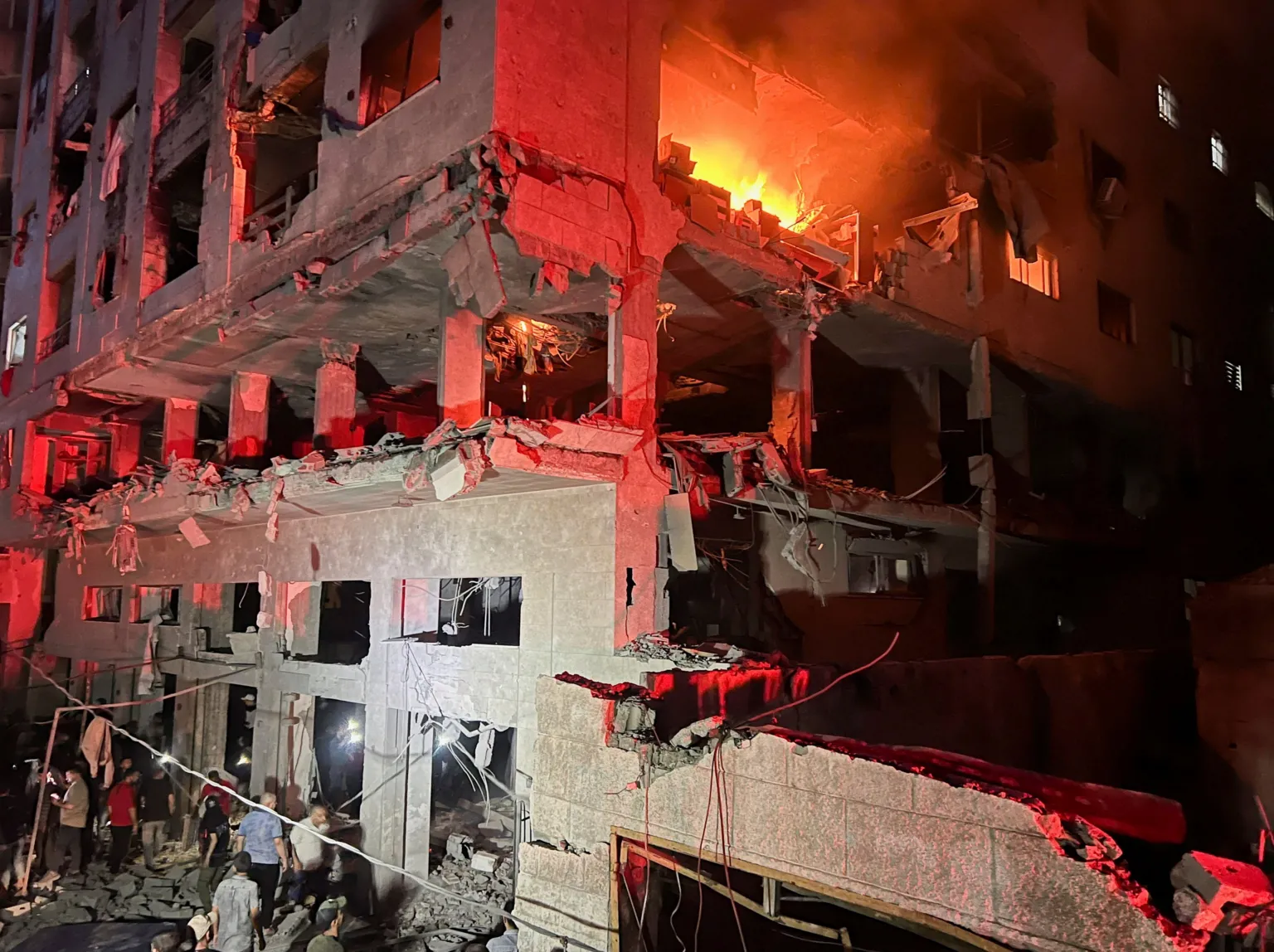
The Israeli military launched multiple waves of air strikes across Lebanon, including the capital Beirut, after the Iran-backed militant group Hezbollah fired roughly 200 rockets into northern Israel.

Israeli attacks were reported across southern Lebanon and in Beirut’s southern suburbs, an area known as Dahieh that is considered a Hezbollah stronghold. Thousands of residents have fled the district during the past week as bombardment intensified.
Don’t miss the latest headlines from Thailand and around the world. Get the Asean Now Briefing newsletter, delivered daily. Sign up here.

Some of the strikes also hit other parts of the capital, including the Corniche seafront. Lebanon’s health ministry said at least 12 people were killed in that area overnight.

Hezbollah launches large-scale attack
Hezbollah fired the rockets across the Israeli border on Wednesday evening in what appeared to be a coordinated assault alongside missile strikes launched by Iran.

An Israeli military spokesperson said the barrage was the largest cross-border attack carried out by Hezbollah since the latest phase of the conflict began.

Approximately 200 rockets and 20 drones were launched simultaneously while Iran fired ballistic missiles toward Israel, the spokesperson said.

Hezbollah later said it had targeted several sites in northern Israel in response to what it described as “criminal aggression” against Lebanese towns and cities.
The group said the targets included the headquarters of Israel’s northern military command near Safed and bases near the city of Haifa.

Iran’s Islamic Revolutionary Guard Corps said its forces had carried out a “joint and integrated operation” with Hezbollah that struck more than 50 targets.
Israeli authorities reported that one building was damaged in the Galilee region and two people were lightly wounded. Another building in Haniel, a farming community in central Israel, was damaged by debris from an intercepted rocket, though no injuries were reported.


Israel threatens to expand operations
In response to the attacks, Israeli Defence Minister Israel Katz said the military had been ordered to prepare for a broader campaign inside Lebanon.
He said the objective would be to restore security to Israeli communities near the northern border.
The Israeli military also expanded a large evacuation zone in southern Lebanon. Residents have been told to leave areas covering nearly all territory south of the Zahrani River, about 40 kilometers from the Israeli border.

Lebanon caught in widening conflict
Lebanon was drawn into the broader war between Iran, Israel and the United States around 10 days ago when Hezbollah launched rockets and drones into Israel.

The attacks were carried out in retaliation for the killing of Iran’s supreme leader and continued Israeli strikes after a ceasefire between Israel and Hezbollah collapsed in 2024.
Israel says its ongoing military campaign will continue until Hezbollah is disarmed.

Lebanese authorities say Israeli strikes have killed at least 687 people since the escalation began, including 98 children, and displaced roughly 800,000 people.
The Israeli military has reported that two of its soldiers have been killed in combat operations inside Lebanon.

Calls for restraint
Lebanese Prime Minister Nawaf Salam said the country had been pulled into a conflict it did not want.
“It is a war we did not want; on the contrary, we are working day and night to bring it to an end,” he said in a televised address.

International leaders have also urged restraint.
Emmanuel Macron, president of France, warned that Hezbollah had made a major mistake by dragging Lebanon into the confrontation, while also calling on Israel to rule out launching a ground offensive.
Meanwhile, Tom Fletcher, the United Nations humanitarian chief, warned that Lebanon was facing “a moment of grave peril” as the conflict intensifies.

Join the discussion?

Already a member?


  Adapted by ASEAN Now · Source · 12.03 2026
ASEAN NOW News
ASEAN NOW News
Oil prices have been experiencing dramatic swings over the past two weeks as the war involving Iran, the United States and Israel disrupts global energy markets.

The cost of crude oil rarely dominates everyday conversation, but the recent volatility has pushed it firmly into the spotlight. Prices are currently trading more than a third higher than they were before the conflict began.

Don’t miss the latest headlines from Thailand and around the world. Get the Asean Now Briefing newsletter, delivered daily. Sign up here.

Much of the surge has been driven by attacks on energy infrastructure and shipping routes, as well as the effective closure of the Strait of Hormuz, a narrow waterway that carries about one-fifth of the world’s oil supply

Historic market volatility
Oil markets saw particularly extreme fluctuations earlier this week.
According to Faisal Islam, economics editor at BBC News, Monday became the most volatile day in oil trading history.

Much of the attention has centred on the price of Brent crude oil benchmark, a widely used global benchmark that heavily influences international energy prices.
Oil is typically traded through contracts for delivery at a later date, meaning prices today often reflect expectations about future supply.

Lindsay James, an investment strategist at Quilter, said current price rises largely reflect fears about supply shortages in the coming months.


War fears push prices higher
Before the conflict escalated, oil was trading at roughly $71 per barrel. Prices surged rapidly once the strikes on Iran began.

Market anxiety intensified after comments from Saad al-Kaabi, the energy minister of Qatar, who warned that Gulf oil and gas producers might halt production within days.
That statement pushed oil prices to a two-year high.
When markets reopened after the weekend, the price briefly approached $120 per barrel.

Sudden crash after political signals
The sharp rise was followed by an equally dramatic fall.
Reports emerged that the International Energy Agency was preparing a coordinated release of emergency oil reserves to stabilize markets.

At the same time, U.S. President Donald Trump suggested the war might soon be nearing an end, describing the situation as “very complete, pretty much.”

The combination of these signals triggered a rapid sell-off in the market.
By the end of Monday, oil had fallen nearly $30 per barrel from its earlier peak.
James described the dramatic change as “extraordinary even by the volatile standards of commodities,” adding that the world is currently experiencing an energy shock without modern precedent.

Confusion over tanker escort claim
Another moment of turbulence came when U.S. Energy Secretary Chris Wright posted on the social media platform X that American forces had successfully escorted an oil tanker through the Strait of Hormuz.

Following the post, benchmark prices briefly plunged to around $82 per barrel.
However, the message later disappeared from Wright’s account.

The White House subsequently confirmed that the claim was incorrect and that the U.S. Navy had not escorted any tankers through the crucial shipping route.

Prices quickly rebounded to about $86 per barrel after the clarification, highlighting how sensitive global markets have become to developments in the conflict.

Join the discussion?

Already a member?


  Adapted by ASEAN Now · Source · 12.03 2026
ASEAN NOW News
ASEAN NOW News
Mojtaba Khamenei, Iran’s newly appointed supreme leader, has vowed that the country will continue blocking the Strait of Hormuz, one of the world’s most important oil shipping routes, in his first public statement since assuming power.

Don’t miss the latest headlines from Thailand and around the world. Get the Asean Now Briefing newsletter, delivered daily. Sign up here.
The message was broadcast on Iranian state television, though Khamenei did not appear in person. Instead, the statement was read aloud by a news presenter.
In the message, he pledged that Iran would seek revenge for citizens killed during the war with the United States and Israel, while warning neighbouring countries to close American military bases on their territory.

Leadership change after wartime strike
Khamenei was named supreme leader on March 8 after his father, Ali Khamenei, was killed during the opening day of the conflict.
The senior leader died in a joint U.S.–Israeli strike on the supreme leader’s compound.

According to reports, Mojtaba Khamenei also lost his wife and one of his sons in the same attack. His mother was initially reported killed as well, though at least one Iranian media outlet has since suggested she may have survived.
The Reuters news agency, citing an unnamed Iranian official, reported that Khamenei himself was “lightly injured” during the strike.

However, there have been no confirmed details about his condition.
He has not appeared in public since being appointed and no verified photographs or videos have been released showing him since the leadership change.
Iran’s state television has described him as a “veteran of the Ramadan war,” though it has not confirmed whether he was wounded.

Strait of Hormuz central to strategy
In his statement, Khamenei said Iran would continue using the strategic importance of the Strait of Hormuz as leverage in the conflict.

The narrow waterway carries a large portion of the world’s oil and gas shipments.
He described the route as an area where “the enemy is highly vulnerable” and suggested blocking it could place pressure on Western powers and their allies.

Warning to regional neighbours
Khamenei also warned neighbouring countries against allowing U.S. military bases to operate within their borders.

Iran shares land or maritime borders with 15 countries across the region.
“We have always sought warm and constructive relations with all of them,” the statement said.
However, he urged governments in the region to clarify their position regarding the conflict.

“These countries must clarify their stance toward the aggressors against our homeland and the killers of our people,” the message said.
Khamenei added that regional states should close American bases “as soon as possible.”

He also said Iran would continue targeting U.S. military facilities across the region as part of its response to the ongoing war.

Join the discussion?

Already a member?


  Adapted by ASEAN Now · Source · 12.03 2026
ASEAN NOW News
ASEAN NOW News
Newly released government documents show that Keir Starmer was warned that appointing Peter Mandelson as the United Kingdom’s ambassador to the United States could pose a “reputational risk” because of his association with convicted sex offender Jeffrey Epstein.

Despite the warning, Starmer approved Mandelson’s appointment. The veteran Labour Party politician held the diplomatic post for nine months before being dismissed when new details about his relationship with Epstein emerged.
The documents, released Wednesday, reveal that senior civil servants flagged concerns before the appointment was finalized.

Don’t miss the latest headlines from Thailand and around the world. Get the Asean Now Briefing newsletter, delivered daily. Sign up here.

Longstanding relationship highlighted
A due diligence report prepared in December 2024 outlined a relationship between Mandelson and Epstein that spanned nearly two decades.
According to the report, Mandelson helped arrange a meeting between Epstein and then–prime minister Tony Blair in 2002.

The document also noted that Mandelson reportedly stayed at Epstein’s residence in 2009 while the financier was serving a jail sentence for sexual offenses involving a minor.
The report cited a 2019 internal review commissioned by JPMorgan which described Epstein as having a particularly close relationship with both Mandelson and Prince Andrew.

Officials also flagged earlier controversies from Mandelson’s time in government, including two resignations over financial matters and his role at the lobbying firm Global Counsel.

Government says Mandelson misled officials
Despite the warnings, the appointment went ahead.
Cabinet minister Darren Jones later told lawmakers that the due diligence process failed to reveal the full extent of Mandelson’s ties to Epstein.

He said Mandelson had misled Starmer about the nature of the relationship.
“Peter Mandelson should never have been afforded the privilege of representing this country,” Jones told members of the House of Commons.
“The prime minister deeply regrets taking him at his word. It was a mistake.”

Political fallout grows
Starmer dismissed Mandelson in September after earlier documents revealed the former minister maintained contact with Epstein following his 2008 conviction.

Further revelations emerged after a large collection of Epstein-related files was published by the U.S. Department of Justice earlier this year, intensifying scrutiny of Starmer’s decision.
Opposition politicians have since accused the prime minister of a serious lapse in judgment.

Ed Davey, leader of the Liberal Democrats, called the appointment a “catastrophic failure of judgment.”
Meanwhile, Conservative lawmaker Alex Burghart said the prime minister should have recognized the risks from the information already presented in the due diligence report.

Criminal investigation underway
Mandelson is also facing a police investigation into allegations that he shared sensitive government information with Epstein when he served as business secretary following the 2008 financial crisis.

He was arrested at his home in London on February 23 on suspicion of misconduct in public office.
Police later released him without bail conditions while the investigation continues.
Mandelson has denied wrongdoing and has not been charged. Authorities say he does not face allegations of sexual misconduct.

He has since resigned from the House of Lords and lost his ambassadorial salary of about £157,000 a year.
Documents show he initially requested compensation totaling £547,000 after his dismissal, representing the remainder of his four-year contract.
The government ultimately agreed to pay him £75,000.

Join the discussion?

Already a member?


  Adapted by ASEAN Now · Source · 11.03 2026
ASEAN NOW News
ASEAN NOW News
The administration of Donald Trump estimates that the first six days of the war against Iran cost the United States at least $11.3 billion, according to a source familiar with a recent congressional briefing.
The estimate was shared with lawmakers during a closed-door session for senators on Tuesday, as members of Congress continue pressing the administration for more details about the conflict.

The Asean Now Briefing newsletter keeps you informed with all the latest news Sign up here.
Officials stressed that the figure represents only an early estimate and does not reflect the full cost of the war so far.
The number was first reported by The New York Times.

Congressional aides said the White House is expected to request additional funding soon. Some officials have suggested the request could reach $50 billion, though others believe even that figure may underestimate the potential costs.
So far, the administration has not released a public estimate of the total expense or a clear timeline for how long the conflict might continue.

Speaking during a trip to Kentucky on Wednesday, Trump said the United States had already achieved major success in the war.
“We won,” he said, while adding that American forces would remain involved until the mission is fully completed.
The military campaign began on February 28 with coordinated airstrikes carried out by the United States and Israel against targets inside Iran.

Since then, the conflict has expanded into neighboring Lebanon and has significantly disrupted global energy markets and shipping routes.
The fighting has reportedly killed around 2,000 people, the majority of them in Iran and Lebanon.

During briefings to lawmakers, administration officials said $5.6 billion worth of munitions were used in the first two days of strikes alone.
Members of Congress have expressed concern that the rapid pace of operations could significantly drain U.S. military stockpiles.

These concerns come at a time when the American defense industry is already struggling to meet high global demand for weapons and equipment.
To address supply issues, Trump recently met with executives from seven major defense contractors as the U.S. Department of Defense works to replenish depleted stockpiles.

Meanwhile, Democratic lawmakers are demanding greater transparency from the administration.
Several have called for senior officials to testify publicly under oath about the strategy behind the war, including how long the conflict might last and what plans exist for Iran once fighting ends.

Join the discussion?

Already a member?


  Adapted by ASEAN Now · Source · 11.03 2026
ASEAN NOW News
ASEAN NOW News
Moscow Condemns Bryansk Strike
Russia has accused Ukraine and United Kingdom of carrying out what it described as a “terrorist attack” on the western Russian city of Bryansk.
In a statement released Wednesday, the Russian Foreign Ministry condemned the deadly strike and alleged that missiles supplied by Britain had been used in the attack.

The Asean Now Briefing newsletter keeps you informed with all the latest news Sign up here.

Moscow claimed the strike violated international legal norms and accused London of crossing a dangerous line by supplying weapons that were allegedly used to target Russian territory.

Claims of Escalation
According to the ministry, the attack was intended to sabotage ongoing efforts toward a peace process in the war between Russia and Ukraine.
Officials said the strike was part of a broader attempt to escalate the conflict rather than seek a negotiated settlement.
The statement did not provide detailed evidence supporting the claim that British-made missiles were used in the attack.

Growing Tensions
The accusation adds to mounting tensions between Moscow and Western governments over military support for Ukraine.
Since the full-scale invasion of Ukraine by Russia in 2022, Western countries including the United Kingdom have provided Kyiv with weapons, training and financial assistance.

Russia has repeatedly warned that such support risks widening the conflict.

Join the discussion?

Already a member?


  Adapted by ASEAN Now · Source · 11.03 2026


ASEAN NOW News
ASEAN NOW News
Attacks Raise Global Energy Concerns
Attacks on commercial vessels in the Persian Gulf continued on Wednesday as tensions surrounding the war involving Iran escalated and the critical Strait of Hormuz remained effectively closed.

The United States said it had destroyed more than a dozen Iranian vessels suspected of laying naval mines, an effort aimed at preventing Tehran from fully sealing off the narrow maritime route.
The passageway plays a crucial role in global energy supply, carrying a large share of the world’s oil and liquefied natural gas shipments.

Get the latest headlines in your email

Iran has vowed to block oil exports in the region, declaring it would not allow “even a single liter” of energy resources to reach its enemies.
Meanwhile, Donald Trump said there were no confirmed reports that Iran had placed mines in the strait, though he warned of strong military retaliation if the waterway were formally closed.

A Vital Artery for Global Trade
The Strait of Hormuz is a narrow channel connecting the Persian Gulf with the Gulf of Oman.
At its narrowest point, the waterway measures about 33 kilometers (21 miles) across, making shipping lanes tight and difficult to navigate.

Although the territorial waters of both Iran and Oman border the passage, the route is considered an international shipping corridor open to vessels from all countries.
Nearby states such as the United Arab Emirates, home to the city of Dubai, also depend heavily on the strait for energy exports and trade.

Approximately 20% of the world’s oil and natural gas shipments pass through the passage, making it one of the most strategically important maritime choke points on the planet.

A Historic Trade Route
The strait has played a key role in trade for centuries.
Historically, goods such as ceramics, silk, textiles and ivory travelled through the region along maritime routes linking Asia with the Middle East and Europe.

In the modern era, the strait serves as the primary export route for oil and gas from countries including Saudi Arabia, Kuwait, Iraq, Qatar, Bahrain, the United Arab Emirates and Iran.
Much of this energy supply is shipped to Asian markets, particularly China.
Although pipelines in Saudi Arabia and the UAE allow some oil exports to bypass the strait, most energy shipments from the Gulf still rely on this narrow route.

Rising Attacks on Shipping
Since the war began, attacks targeting vessels in and around the Strait of Hormuz have increased significantly.
According to the International Maritime Organization, at least 12 incidents involving merchant vessels had been recorded as of Wednesday.

The organization’s secretary-general, Arsenio Dominguez, said that at least seven sailors had been killed during these incidents.
Meanwhile, the British military-run United Kingdom Maritime Trade Operations center reported 17 separate security incidents in the wider region, including the Persian Gulf and the Gulf of Oman.

Of those reports, 13 were confirmed attacks and four were categorized as suspicious activity.
The incidents involved a variety of vessels including tankers, cargo ships and tugboats.

Global Shipping Disrupted
Although the Strait of Hormuz has not been formally declared closed, the rising attacks have effectively halted most commercial traffic.
Major shipping companies have already suspended operations in the area.

The Danish shipping giant Maersk announced it had stopped sending vessels through the strait until further notice.
Other major ocean carriers, including Hapag-Lloyd, CMA CGM and MSC, have issued similar warnings.
According to logistics expert Tom Goldsby of the University of Tennessee, many vessels are now stranded in the Persian Gulf.
Around 400 oil tankers are currently idle in the region as companies wait for the security situation to improve.

Insurance and Military Plans
To help restore confidence in shipping through the region, the United States is introducing a reinsurance program through the U.S. International Development Finance Corporation.

The program would cover up to $20 billion in losses related to damage to ships or cargo caused by the conflict.
Political risk insurance is intended to protect companies from financial losses caused by war, violence or unstable political conditions.

Marine insurers had previously begun cancelling policies or sharply increasing rates for ships operating in the area.
Trump has also suggested the U.S. Navy could escort oil tankers through the strait if necessary.
Meanwhile, a separate initiative led by France aims to organise multinational naval escorts once the most intense phase of the conflict subsides.

Join the discussion?

Already a member?


  Adapted by ASEAN Now · Source · 11.03 2026
ASEAN NOW News
ASEAN NOW News
Vital Oil Route Effectively Closed
The war involving Iran, Israel and the United States has effectively shut down shipping through the Strait of Hormuz, one of the world’s most important energy corridors.

Get the latest headlines in your email

The narrow waterway off Iran’s coast connects the Persian Gulf to global markets and carries a significant share of the world’s oil and liquefied natural gas.
With traffic through the passage now severely disrupted, gasoline prices have begun rising worldwide as energy supplies tighten.

Governments are already discussing plans to reopen the strait once the fighting subsides.

International Plans to Restore Shipping
In Europe, Emmanuel Macron is leading an international effort to prepare for the reopening of the shipping route.
The France president has proposed deploying naval forces to escort oil tankers and cargo vessels through the strait once conditions allow.

The idea is to ensure that energy shipments and global trade can resume safely after hostilities ease.
However, military analysts warn that attempting such an operation while fighting continues would be extremely dangerous.

Retired French naval officer Pascal Ausseur said sending ships through the strait during active conflict would leave them highly exposed.
“In today’s context, sending warships or civilian vessels into the Strait of Hormuz would be suicidal,” he said.
Even if a ceasefire were agreed, he added, the situation would remain risky.

Lessons From Red Sea Operations
Naval forces from several countries already have experience protecting commercial shipping in hostile waters.
Warships from France, United States and United Kingdom have previously escorted merchant vessels through attacks in the Red Sea carried out by Iran-backed Houthi militants from Yemen.

During those operations, warships used a combination of machine guns, naval cannons and advanced air-defence systems to intercept incoming missiles and drones.
For example, the French frigate French frigate Alsace shot down three ballistic missiles while escorting a container ship in 2024.

Its commander at the time, Jérôme Henry, said repeated attacks placed intense pressure on crews and left sailors with little rest.

Iran Presents Greater Threat
Experts warn that reopening the Strait of Hormuz could prove far more difficult than protecting shipping in the Red Sea.
Iran possesses a significantly more advanced military than the Houthi forces that targeted vessels in recent years.
According to assessments by the U.S. Defense Intelligence Agency, Iran has anti-ship cruise missiles capable of reaching vessels throughout the strait and nearby waters.

The country also has access to drones, naval mines, long-range missiles and fast attack craft that could be used to target shipping.
Retired French vice admiral Michel Olhagaray said the level of threat would require a much larger and more sophisticated military presence to counter.

Before commercial vessels could safely return, he said, many of Iran’s offensive systems along the coastline would likely need to be neutralised.

No Quick Solution
Even with military escorts and surveillance, analysts say reopening the strait safely would require extensive monitoring and intelligence gathering.

Navies would need to maintain constant patrols and carefully track potential threats before allowing tankers to resume transit.
Until hostilities decline significantly, Olhagaray warned, shipping through the Strait of Hormuz will remain extremely hazardouss

“That will not happen at all — not at all — in the near future,” he said.

Join the discussion?

Already a member?


  Adapted by ASEAN Now · Source · 11.03 2026
ASEAN NOW News
ASEAN NOW News
Preliminary Inquiry Points to US Responsibility
A preliminary investigation by the United States military has reportedly concluded that an American missile strike was responsible for the deadly bombing of an elementary school in Iran earlier this year.

Get the latest headlines in your email

According to reporting by The New York Times, citing US officials familiar with the inquiry, the strike on 28 February that destroyed Shajarah Tayyebeh Elementary School was the result of a targeting error by US military planners.
Iranian authorities say at least 175 people were killed in the attack, most of them children, making it one of the deadliest incidents involving civilian casualties during the current conflict.

Missile Strike Linked to Targeting Error
The preliminary findings indicate that the strike involved a Tomahawk cruise missile launched during US operations in the region.
Investigators reportedly believe officers at United States Central Command created the coordinates for the strike using outdated intelligence data supplied by the Defense Intelligence Agency.

The mistake appears to have caused the missile to hit the school building rather than its intended target.
The school is located in the town of Minab near facilities used by Iran’s Islamic Revolutionary Guard Corps naval forces.
Although the school building had once been part of the wider military complex, satellite imagery shows it had been separated from the base by walls for nearly a decade and displayed clear signs of being an educational facility.

Tehran’s Claims Gain Support
The preliminary findings appear to support claims made by Iranian officials that the United States carried out the strike.

Tehran previously released video footage of a missile hitting the area as well as images of debris said to include fragments of US-made weapon components.
Independent analysts had already suggested the evidence strongly pointed to American involvement.

Trump Blamed Iran
Despite the growing evidence, US President Donald Trump publicly blamed Iran for the bombing.
“In my opinion, based on what I’ve seen, that was done by Iran,” Trump said last week, arguing that Iranian weapons were inaccurate.

He did not present any evidence to support the claim.
US military spokespeople have not repeated the president’s accusation and have instead said the incident remains under investigation.

Pentagon Maintains Silence
Officials have declined to comment in detail while the inquiry continues.
In a brief statement, the Pentagon said: “The incident is under investigation.”

A spokesperson for US Central Command also said it would be inappropriate to discuss the findings until the investigation is complete.
The inquiry has not yet been finalised, and officials say further details may emerge as the investigation continues.

Join the discussion?

Already a member?


  Adapted by ASEAN Now · Source · 11.03 2026

ASEAN NOW News
ASEAN NOW News
Emergency Oil Release Planned
The United States will release 172 million barrels of oil from its strategic petroleum reserve in an effort to lower global energy prices following supply disruptions linked to the war involving Iran, Israel and the US.

Get the latest headlines in your email

US energy secretary Chris Wright said the move forms part of a wider coordinated release announced by the International Energy Agency.
The agency said its 32 member countries had collectively agreed to release around 400 million barrels of oil to stabilise markets affected by the conflict.

Release to Begin Next Week
Wright said the US portion of the release will begin next week and is expected to take about 120 days to complete.
The goal is to ease pressure on global supply and help bring down fuel prices, which have surged amid fears of disruptions to Middle East oil exports.
In a statement, Wright accused Iran of “manipulating and threatening the energy security of America and its allies”.

Trump Supports Reserve Use
Earlier in the day, President Donald Trump confirmed that the government planned to draw from the country’s emergency oil reserves.
“We’ll do that, and then we’ll fill it up,” Trump said.
“Right now, we’ll reduce it a little bit, and that brings the prices down.”

Join the discussion?

Already a member?


  Adapted by ASEAN Now · Source · 11.03 2026

ASEAN NOW News
ASEAN NOW News

Account

Navigation

Search

Search

Configure browser push notifications

Chrome (Android)
  1. Tap the lock icon next to the address bar.
  2. Tap Permissions → Notifications.
  3. Adjust your preference.
Chrome (Desktop)
  1. Click the padlock icon in the address bar.
  2. Select Site settings.
  3. Find Notifications and adjust your preference.