I asked my favourite Artificial Idiot "Could Thailand improve water management and reduce flooding by introducing AI into the dam release control system?"
Here is "his" response.
Of course the AI could decide that we are a blight on the planet (for once it would probably be right) and drown us all!!!
==============================================================================
Yes—but with a big asterisk.
AI absolutely can improve how Thailand operates its dams and reduce flood risk, and it’s already starting to happen. But it only really works if it’s combined with better data, clear rules, and good coordination between agencies – not just “add AI and stir.”
1. Why dams matter so much for Thai floods
Most large floods in the Chao Phraya basin are heavily influenced by how a few big reservoirs (Bhumibol, Sirikit, etc.) are operated. When they keep too much water early in the wet season, they may be forced to release huge volumes later, worsening downstream floods; if they release too much too early, you risk drought and power shortages. After the 2011 megaflood, several studies pointed to weaknesses in reservoir operation, political interference, poor maintenance, and inadequate forecasting as key contributors. AGU Publications+4ERIA+4Wikipedia+4
So dam release rules are a perfect candidate for smart, data-driven support.
2. Thailand is already piloting AI for dam & flood management
This isn’t hypothetical—Thai agencies and researchers have been testing AI-based systems:
Hybrid neuro-fuzzy models for Bhumibol & Sirikit
Researchers applied an Adaptive Neuro-Fuzzy Inference System (ANFIS) to re-operate Bhumibol and Sirikit dams in the Chao Phraya basin to reduce both water scarcity and flood risk in the central region. irre.ku.ac.th+1
AI-based Automated Reservoir Management System (ARMS)
A recent study describes the ARMS system, an AI-based real-time decision support tool used during the 2024 Chao Phraya flood to assist reservoir operations. icid-ciid.org+1
Machine learning inflow / water level forecasting
XGBoost-based inflow forecasting for Bhumibol Dam to improve real-time decisions. hii.or.th
ML models for Chao Phraya water level prediction that explicitly account for flows regulated by the main storage dams. EngJ
Dam safety remote monitoring
EGAT and NECTEC built a Dam Safety Remote Monitoring System (DS-RMS) that integrates large volumes of structural, geotechnical and hydrological sensor data to support expert decision-making about dam safety. nstda.or.th+1
Globally, reviews of AI in dams and reservoir operations show clear potential for better flood control, hydropower optimization, and risk monitoring. MDPI+5ResearchGate+5ScienceDirect+5
So the question isn’t “should Thailand introduce AI?” so much as “how far should Thailand scale and integrate it?”
3. What AI can actually do for dam release decisions
(a) Better forecasts = fewer nasty surprises
AI/ML models (XGBoost, LSTMs, hybrid neuro-fuzzy systems, etc.) can:
Predict inflows to each reservoir using rainfall, soil moisture, radar, and satellite data
Predict river levels at key control points (e.g., upstream of Bangkok) given different release scenarios
Learn complex, nonlinear relationships that traditional rule curves don’t capture well hii.or.th+2EngJ+2
This allows operators to see earlier when a dangerous combination (full reservoirs + incoming storm) is forming, and adjust releases days or weeks ahead instead of reacting late.
(b) Multi-reservoir optimization instead of “each dam on its own”
AI + optimization can treat the whole Chao Phraya system (Bhumibol, Sirikit, downstream regulators, floodways, etc.) as one coordinated system:
Choose releases that minimize downstream flood risk while
Respecting hydropower needs, irrigation supply, environmental flows, and target safety storage for future storms
Studies on Thailand’s main reservoirs already show the use of AI/meta-heuristics (e.g., GA, HHO, WDO, MPA) to derive better rule curves and decision support for “smart dam operations.” MDPI+1
In plain language: instead of human operators eyeballing a few charts and a static rule curve, an AI engine can continuously run thousands of “what-if” simulations in the background and propose the safest release pattern.
(c) Real-time decision support dashboards
A realistic near-term model for Thailand is “AI copilot, human captain”, where:
AI integrates radar, station gauges, satellite rainfall, soil moisture, forecast models, and upstream inflows
It generates release recommendations with quantified risk (e.g., “If you release X m³/s now, peak level at Ayutthaya has a 5% chance of exceeding Y m, versus 20% under current plan.”)
Operators at EGAT, RID, and BMA see this in a shared dashboard and make the final call
Systems like ARMS are already moving in this direction during flood situations in the Chao Phraya basin. icid-ciid.org+1
(d) Early warning and communication
Once you have good AI-driven forecasts:
You can trigger alerts earlier for communities in floodways and retention areas
Share scenario-based maps (“under release plan A vs B, your district will get ~0.5 m vs 1.2 m of water”)
Support more transparent, evidence-based decisions about which areas are used as intentional retention zones – a big political and social issue after 2011. TDRI+2World Bank Blogs+2
(e) Dam safety and extreme events
AI can also:
Detect unusual patterns in piezometer readings, displacement sensors, and seepage data from dams
Flag potential structural issues earlier than manual review
That’s precisely the direction EGAT’s DS-RMS has taken – turning huge sensor datasets into actionable information for engineers. nstda.or.th+2Factor This™+2
Healthy dams with early detection of structural problems are less likely to contribute to catastrophic flooding.
4. What AI cannot fix
Even with perfect AI, a lot of Thailand’s flood risk comes from:
Land use and urbanization in natural floodplains
Insufficient or poorly maintained urban drainage, canals, and floodgates
Political decisions, e.g. how much to protect industrial estates vs. low-income communities, which areas to sacrifice as retention zones, etc. SciSpace+2TDRI+2
AI can help you see trade-offs more clearly, but it can’t decide what is “fair.” That’s politics and governance.
5. Key risks with AI-driven dam control
If Thailand scales up AI in this area, it needs to be careful about:
Black-box decisions
If models are opaque, it’s hard to explain to the public why their area was flooded “for the greater good.” Trust may decrease if people feel a mysterious algorithm is deciding their fate.
Data gaps & bias
AI is only as good as the data: missing sensors, bad calibration, or changing climate patterns can lead to wrong recommendations.
Over-automation
Fully automatic gate control with no human oversight is risky in a politically sensitive, high-stakes system. Right now, AI should support operators, not replace them.
Cybersecurity
Networked AI control systems become critical infrastructure targets. Dam and gate control systems need strong isolation and security.
Institutional silos
If EGAT, RID, HII, and BMA don’t share data and use the tools together, even the best AI won’t fix coordination failures.
6. So, could AI reduce flooding in Thailand?
Short answer:
Yes, if AI is used as a transparent, well-designed decision support system embedded in broader reforms, it can significantly improve water management and reduce flood impacts from dam operations.
Specifically for Thailand, promising next steps would be:
Scale up AI copilot systems like ARMS from research/pilot status into routine operations for all major Chao Phraya reservoirs, with joint dashboards for EGAT, RID, and BMA. EngJ+5icid-ciid.org+5ResearchGate+5
Standardize transparent, AI-aided rule curves: publish seasonal operating rules where AI helps update them annually based on new climate and inflow statistics, but humans sign off. PMC+1
Invest in sensors & data infrastructure: more real-time rainfall, river, and soil moisture data + quality control; open data where possible. nstda.or.th+2Factor This™+2
Build explainable AI tools that show “why” a certain release is recommended, in terms non-experts can understand.
Embed AI into governance: clear protocols on who has final authority, how trade-offs are made, and how decisions are communicated to affected communities.
If you’d like, I can sketch a simple conceptual architecture (modules, data flows, agencies) for an AI-assisted dam release system tailored to the Chao Phraya basin.
Export response as a Word file
Export response as a PDF file
You said:
ok please do
ChatGPT said:
Thought for 8s
Here’s a conceptual “AI copilot for dam releases” tailored to the Chao Phraya basin. I’ll keep it high-level but concrete enough that you could turn it into a real system diagram.
1. Big picture: layered architecture
Think of it as 5 main layers:
Data Layer – all the raw inputs (sensors, forecasts, satellite, operations data)
Integration & Storage Layer – cleans, fuses, and stores data
AI & Modelling Layer – forecasts and “what-if” simulations
Decision & Governance Layer – recommends releases, handles rules/approvals
User & Communication Layer – dashboards, alerts, and public info
I’ll walk through each.
2. Data Layer – what feeds the AI
2.1 Hydrometeorological data
Rainfall:
Ground gauges (RID, HII, TMD)
Weather radar (TMD radar network)
Satellite rainfall estimates (e.g., GPM, GSMaP)
River and canal water levels:
Upstream gauges in Ping, Wang, Yom, Nan basins
Main-stem Chao Phraya gauges (Nakhon Sawan, Chainat, Ayutthaya, Bangkok)
Key floodways and diversion channels
2.2 Reservoir & operations data
Real-time reservoir data for major dams:
Bhumibol, Sirikit, Kwae Noi, Pasak Jolasid, etc.
Current storage, inflow, release, gate positions, hydropower generation
Planned releases (daily/weekly schedules)
Irrigation demand schedules from RID
2.3 Dam safety & structural data (optional but powerful)
Piezometer readings, seepage, structural displacement
Vibrations, stress sensors if available
Weather at the dam sites
2.4 Socio-economic & exposure data
Population and land use maps
Industrial estates, critical infrastructure, farmland zones
Defined floodways / retention areas and their agreed operating rules
3. Integration & Storage Layer – making the data usable
This is your “nervous system” that glues everything together.
3.1 Data ingestion
Connectors to:
EGAT SCADA for big reservoirs
RID telemetry for weirs/canals
TMD radar and forecast feeds
HII / other hydrological stations
Streaming or near-real-time ingestion (e.g., every 5–15 minutes for levels, hourly for radar)
3.2 Data quality & fusion
Automatic checks for:
Missing data, flat-lines, physically impossible jumps
Sensor cross-validation (e.g., radar vs. gauges)
Fusion:
Combine radar + gauges to produce best-estimate gridded rainfall
Merge satellite rainfall as backup / gap filler
3.3 Storage
Time-series database for operational data (levels, flows, rainfall, storage)
Spatial database for maps (land use, districts, floodways, DEMs)
Scenario datastore for saving past model runs (“replay” and audits)
4. AI & Modelling Layer – the actual “brain”
This layer should be modular and replaceable (so models can be upgraded without rewriting everything).
4.1 Forecasting engines
(a) Inflow forecasting for each reservoir
ML models (e.g., XGBoost, LSTM) per sub-basin:
Inputs: recent rainfall, soil moisture proxies, upstream levels, seasonal indicators
Outputs: probabilistic inflow forecasts (distributions, not just single values) over next 1–10 days
(b) River level & flood forecasting
Hybrid approach:
Data-driven models for quick short-term forecasts at key gauges
Coupled with hydrodynamic/hydrological model (e.g., 1D/2D river model) for spatial flood extent
Inputs: inflow scenarios from (a), planned dam releases, tide levels near Bangkok
(c) Dam safety anomaly detection (optional)
Anomaly detection on dam sensors:
“Normal” patterns learned from historical data
Alerts when seepage, displacement, etc. deviate from normal for current loading
4.2 Optimization & “what-if” simulation engine
This is where AI directly supports release decisions.
Multi-reservoir optimization module
Decision variables: releases from Bhumibol, Sirikit, upstream regulators, Pasak, etc.
Objectives (weighted):
Minimize probability / magnitude of downstream flooding at key points
Maintain minimum storage for drought resilience
Meet hydropower and irrigation targets as far as possible
Constraints:
Physical: max/min releases, ramping rates, structural limits
Policy: agreed maximum acceptable flows at Nakhon Sawan, Ayutthaya, Bangkok, etc.
Environmental: minimum flows downstream
Scenario generator
Runs multiple “what-if”s:
Different rainfall scenarios (wet/median/dry)
Different release options (e.g., conservative vs aggressive early drawdown)
Produces:
For each option: expected flood levels, risk of exceedance, impacts on storage and water supply later in season
Explainable recommendations
Instead of “Release 2,100 m³/s because the model says so”
Outputs: “Compared with current plan, increasing Bhumibol release by 300 m³/s now is projected to reduce the chance of Ayutthaya level > X m from 25% to 10%, while keeping end-of-October storage above Y%.”
5. Decision & Governance Layer – who decides what
This layer encodes rules + human authority on top of AI results.
5.1 Rule engine
Hard-coded constraints and policy rules, for example:
Seasonal target storage curves for each reservoir
Maximum allowable flows at key control points
Priority rules in extreme events (e.g., “protect dam safety at all costs”, “industrial estates have priority over low-density farmland after level Z”)
Also encodes escalation rules:
When model shows more than X% risk of serious flooding, trigger a multi-agency decision meeting.
5.2 Human-in-the-loop decision console
Multi-agency “control room” where EGAT, RID, HII, BMA sit together (physically or virtually)
They see:
Current state (levels, storages, incoming storms)
AI suggested release options and consequences
Trade-off graphs: flood risk vs. water supply reliability, etc.
They select:
One of the recommended plans, or
Customize a plan (adjust releases) and re-run a quick simulation
5.3 Audit & accountability
Every decision is logged with:
AI’s recommended options and their metrics
The final chosen option and who approved it
Context (forecasts, alerts, political directives)
This enables:
Post-event reviews (“why did we flood area A?”)
Continuous learning: future models can be trained on these decisions and their outcomes.
6. User & Communication Layer – how people see and use it
6.1 Operator dashboards (professional users)
Separate but connected dashboards for:
Reservoir operators (EGAT, RID):
Reservoir-centric view: storage trajectories, inflow scenarios, turbine/gate recommendations
Flood management (RID, DDPM, BMA):
River-centric view: predicted levels, flood maps, hotspot alerts
Dam safety engineers:
Structural health indicators + thresholds
All views share the same underlying scenario engine, so everyone sees consistent stories.
6.2 Provincial & local authority portal
Map view of:
Expected water levels and depths
Timing of peak levels
Tools to:
Download localised bulletins
See which “plan” (A, B, C) has been selected and why in simple terms
6.3 Public-facing communication
Simple, non-technical outputs:
Colour-coded risk maps (“low / medium / high flooding probability”)
Timeline: “Water expected to peak in your district around X date at Y height”
Open data where politically feasible:
Current storage and releases
Basic model forecasts (with clear caveats)
7. Cross-cutting concerns
These apply across all layers:
Cybersecurity
Separate secure network segments for control vs. information
Strict access control and monitoring
Redundancy & fail-safe
If AI/IT fails, system reverts to traditional rule curves and manual operation.
Model governance
Regular retraining and validation of AI models
Version control and documented changes
Capacity building
Training programmes for operators, engineers, and local officials
“Table-top” exercises using historical or synthetic flood events
8. One-sentence summary
You don’t put an AI “pilot” in charge of the dam; you build an AI copilot that sits on top of strong data and hydrological models, clearly shows trade-offs and risks to EGAT/RID/BMA, and logs every decision—so Thailand can both reduce flood damage now and keep learning for the next big storm.
If you tell me what audience you have in mind (e.g., policy brief vs. technical team), I can turn this into a one-page architecture diagram description or even pseudo-spec for a pilot project.





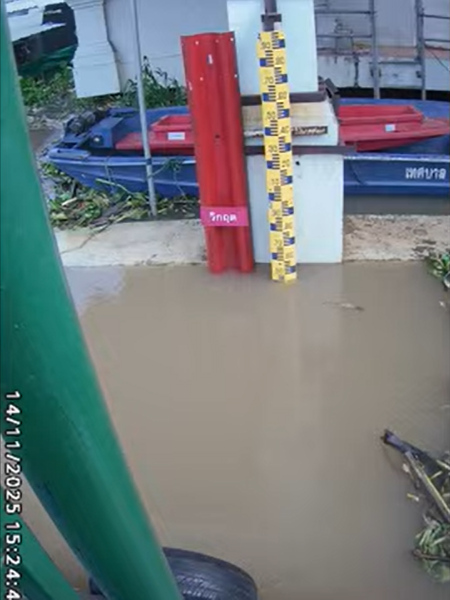
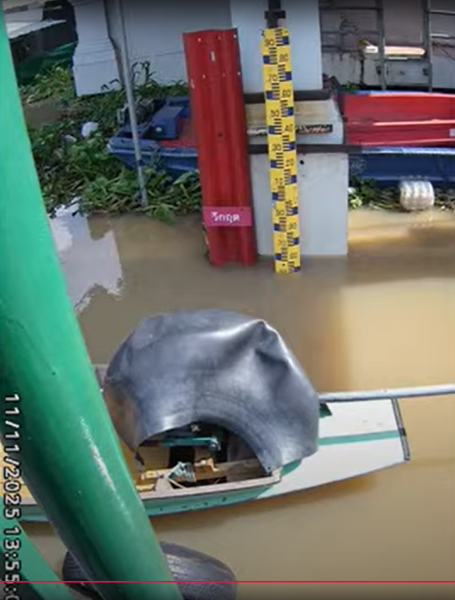
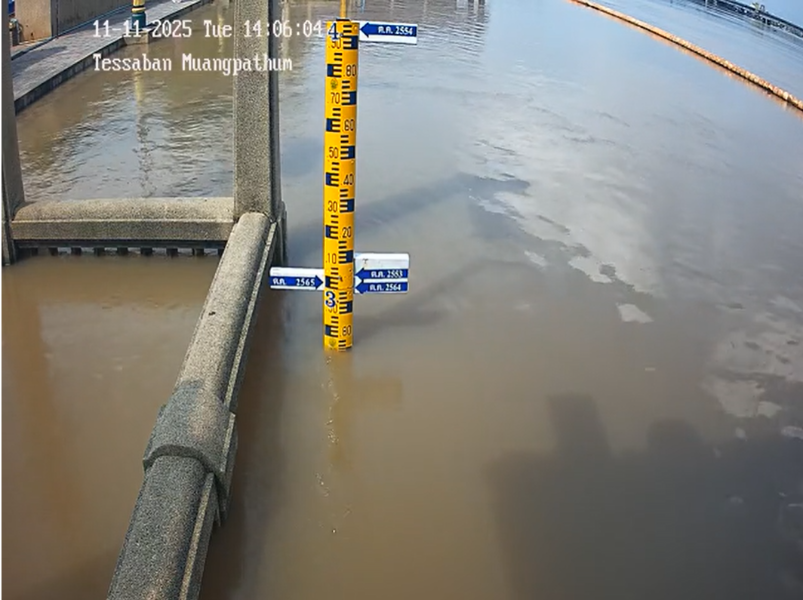
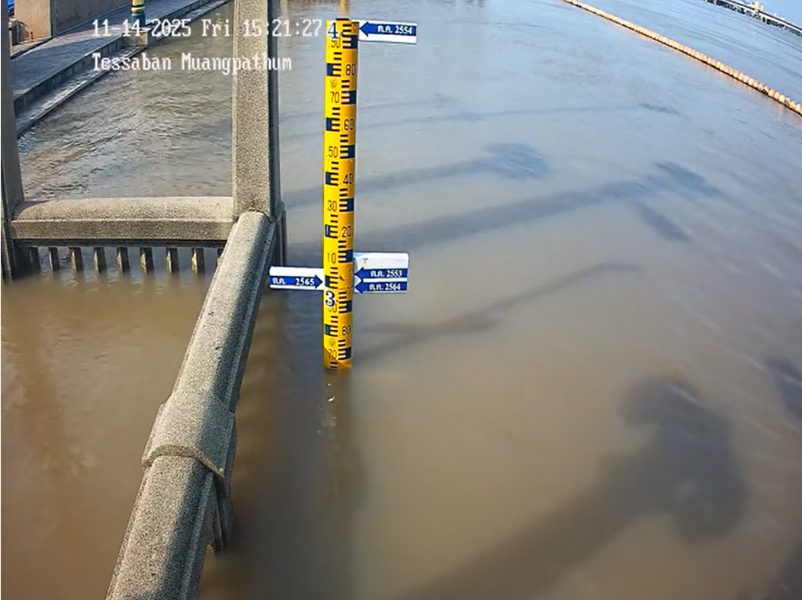 If you believe you are being stalked please just hit the Report button and tell us your fears. We will investigate and deal with any offenders.A troll post and replies have been removed.Danger Will Robinson! Danger! This is exactly the scenario that leads to getting bounced around the bedroom (possibly via the ATM) then someone falls for someone else and ... I know, I have the t-shirt and the wife of 21 years this year that I love to the moon and back**!! **She does tell me that she loves me on the way to shopping (or the bank ) and back!I asked my favourite Artificial Idiot "Could Thailand improve water management and reduce flooding by introducing AI into the dam release control system?" Here is "his" response. Of course the AI could decide that we are a blight on the planet (for once it would probably be right) and drown us all!!! ============================================================================== Yes—but with a big asterisk. AI absolutely can improve how Thailand operates its dams and reduce flood risk, and it’s already starting to happen. But it only really works if it’s combined with better data, clear rules, and good coordination between agencies – not just “add AI and stir.” 1. Why dams matter so much for Thai floods Most large floods in the Chao Phraya basin are heavily influenced by how a few big reservoirs (Bhumibol, Sirikit, etc.) are operated. When they keep too much water early in the wet season, they may be forced to release huge volumes later, worsening downstream floods; if they release too much too early, you risk drought and power shortages. After the 2011 megaflood, several studies pointed to weaknesses in reservoir operation, political interference, poor maintenance, and inadequate forecasting as key contributors. AGU Publications+4ERIA+4Wikipedia+4 So dam release rules are a perfect candidate for smart, data-driven support. 2. Thailand is already piloting AI for dam & flood management This isn’t hypothetical—Thai agencies and researchers have been testing AI-based systems: Hybrid neuro-fuzzy models for Bhumibol & Sirikit Researchers applied an Adaptive Neuro-Fuzzy Inference System (ANFIS) to re-operate Bhumibol and Sirikit dams in the Chao Phraya basin to reduce both water scarcity and flood risk in the central region. irre.ku.ac.th+1 AI-based Automated Reservoir Management System (ARMS) A recent study describes the ARMS system, an AI-based real-time decision support tool used during the 2024 Chao Phraya flood to assist reservoir operations. icid-ciid.org+1 Machine learning inflow / water level forecasting XGBoost-based inflow forecasting for Bhumibol Dam to improve real-time decisions. hii.or.th ML models for Chao Phraya water level prediction that explicitly account for flows regulated by the main storage dams. EngJ Dam safety remote monitoring EGAT and NECTEC built a Dam Safety Remote Monitoring System (DS-RMS) that integrates large volumes of structural, geotechnical and hydrological sensor data to support expert decision-making about dam safety. nstda.or.th+1 Globally, reviews of AI in dams and reservoir operations show clear potential for better flood control, hydropower optimization, and risk monitoring. MDPI+5ResearchGate+5ScienceDirect+5 So the question isn’t “should Thailand introduce AI?” so much as “how far should Thailand scale and integrate it?” 3. What AI can actually do for dam release decisions (a) Better forecasts = fewer nasty surprises AI/ML models (XGBoost, LSTMs, hybrid neuro-fuzzy systems, etc.) can: Predict inflows to each reservoir using rainfall, soil moisture, radar, and satellite data Predict river levels at key control points (e.g., upstream of Bangkok) given different release scenarios Learn complex, nonlinear relationships that traditional rule curves don’t capture well hii.or.th+2EngJ+2 This allows operators to see earlier when a dangerous combination (full reservoirs + incoming storm) is forming, and adjust releases days or weeks ahead instead of reacting late. (b) Multi-reservoir optimization instead of “each dam on its own” AI + optimization can treat the whole Chao Phraya system (Bhumibol, Sirikit, downstream regulators, floodways, etc.) as one coordinated system: Choose releases that minimize downstream flood risk while Respecting hydropower needs, irrigation supply, environmental flows, and target safety storage for future storms Studies on Thailand’s main reservoirs already show the use of AI/meta-heuristics (e.g., GA, HHO, WDO, MPA) to derive better rule curves and decision support for “smart dam operations.” MDPI+1 In plain language: instead of human operators eyeballing a few charts and a static rule curve, an AI engine can continuously run thousands of “what-if” simulations in the background and propose the safest release pattern. (c) Real-time decision support dashboards A realistic near-term model for Thailand is “AI copilot, human captain”, where: AI integrates radar, station gauges, satellite rainfall, soil moisture, forecast models, and upstream inflows It generates release recommendations with quantified risk (e.g., “If you release X m³/s now, peak level at Ayutthaya has a 5% chance of exceeding Y m, versus 20% under current plan.”) Operators at EGAT, RID, and BMA see this in a shared dashboard and make the final call Systems like ARMS are already moving in this direction during flood situations in the Chao Phraya basin. icid-ciid.org+1 (d) Early warning and communication Once you have good AI-driven forecasts: You can trigger alerts earlier for communities in floodways and retention areas Share scenario-based maps (“under release plan A vs B, your district will get ~0.5 m vs 1.2 m of water”) Support more transparent, evidence-based decisions about which areas are used as intentional retention zones – a big political and social issue after 2011. TDRI+2World Bank Blogs+2 (e) Dam safety and extreme events AI can also: Detect unusual patterns in piezometer readings, displacement sensors, and seepage data from dams Flag potential structural issues earlier than manual review That’s precisely the direction EGAT’s DS-RMS has taken – turning huge sensor datasets into actionable information for engineers. nstda.or.th+2Factor This™+2 Healthy dams with early detection of structural problems are less likely to contribute to catastrophic flooding. 4. What AI cannot fix Even with perfect AI, a lot of Thailand’s flood risk comes from: Land use and urbanization in natural floodplains Insufficient or poorly maintained urban drainage, canals, and floodgates Political decisions, e.g. how much to protect industrial estates vs. low-income communities, which areas to sacrifice as retention zones, etc. SciSpace+2TDRI+2 AI can help you see trade-offs more clearly, but it can’t decide what is “fair.” That’s politics and governance. 5. Key risks with AI-driven dam control If Thailand scales up AI in this area, it needs to be careful about: Black-box decisions If models are opaque, it’s hard to explain to the public why their area was flooded “for the greater good.” Trust may decrease if people feel a mysterious algorithm is deciding their fate. Data gaps & bias AI is only as good as the data: missing sensors, bad calibration, or changing climate patterns can lead to wrong recommendations. Over-automation Fully automatic gate control with no human oversight is risky in a politically sensitive, high-stakes system. Right now, AI should support operators, not replace them. Cybersecurity Networked AI control systems become critical infrastructure targets. Dam and gate control systems need strong isolation and security. Institutional silos If EGAT, RID, HII, and BMA don’t share data and use the tools together, even the best AI won’t fix coordination failures. 6. So, could AI reduce flooding in Thailand? Short answer: Yes, if AI is used as a transparent, well-designed decision support system embedded in broader reforms, it can significantly improve water management and reduce flood impacts from dam operations. Specifically for Thailand, promising next steps would be: Scale up AI copilot systems like ARMS from research/pilot status into routine operations for all major Chao Phraya reservoirs, with joint dashboards for EGAT, RID, and BMA. EngJ+5icid-ciid.org+5ResearchGate+5 Standardize transparent, AI-aided rule curves: publish seasonal operating rules where AI helps update them annually based on new climate and inflow statistics, but humans sign off. PMC+1 Invest in sensors & data infrastructure: more real-time rainfall, river, and soil moisture data + quality control; open data where possible. nstda.or.th+2Factor This™+2 Build explainable AI tools that show “why” a certain release is recommended, in terms non-experts can understand. Embed AI into governance: clear protocols on who has final authority, how trade-offs are made, and how decisions are communicated to affected communities. If you’d like, I can sketch a simple conceptual architecture (modules, data flows, agencies) for an AI-assisted dam release system tailored to the Chao Phraya basin. Export response as a Word file Export response as a PDF file You said: ok please do ChatGPT said: Thought for 8s Here’s a conceptual “AI copilot for dam releases” tailored to the Chao Phraya basin. I’ll keep it high-level but concrete enough that you could turn it into a real system diagram. 1. Big picture: layered architecture Think of it as 5 main layers: Data Layer – all the raw inputs (sensors, forecasts, satellite, operations data) Integration & Storage Layer – cleans, fuses, and stores data AI & Modelling Layer – forecasts and “what-if” simulations Decision & Governance Layer – recommends releases, handles rules/approvals User & Communication Layer – dashboards, alerts, and public info I’ll walk through each. 2. Data Layer – what feeds the AI 2.1 Hydrometeorological data Rainfall: Ground gauges (RID, HII, TMD) Weather radar (TMD radar network) Satellite rainfall estimates (e.g., GPM, GSMaP) River and canal water levels: Upstream gauges in Ping, Wang, Yom, Nan basins Main-stem Chao Phraya gauges (Nakhon Sawan, Chainat, Ayutthaya, Bangkok) Key floodways and diversion channels 2.2 Reservoir & operations data Real-time reservoir data for major dams: Bhumibol, Sirikit, Kwae Noi, Pasak Jolasid, etc. Current storage, inflow, release, gate positions, hydropower generation Planned releases (daily/weekly schedules) Irrigation demand schedules from RID 2.3 Dam safety & structural data (optional but powerful) Piezometer readings, seepage, structural displacement Vibrations, stress sensors if available Weather at the dam sites 2.4 Socio-economic & exposure data Population and land use maps Industrial estates, critical infrastructure, farmland zones Defined floodways / retention areas and their agreed operating rules 3. Integration & Storage Layer – making the data usable This is your “nervous system” that glues everything together. 3.1 Data ingestion Connectors to: EGAT SCADA for big reservoirs RID telemetry for weirs/canals TMD radar and forecast feeds HII / other hydrological stations Streaming or near-real-time ingestion (e.g., every 5–15 minutes for levels, hourly for radar) 3.2 Data quality & fusion Automatic checks for: Missing data, flat-lines, physically impossible jumps Sensor cross-validation (e.g., radar vs. gauges) Fusion: Combine radar + gauges to produce best-estimate gridded rainfall Merge satellite rainfall as backup / gap filler 3.3 Storage Time-series database for operational data (levels, flows, rainfall, storage) Spatial database for maps (land use, districts, floodways, DEMs) Scenario datastore for saving past model runs (“replay” and audits) 4. AI & Modelling Layer – the actual “brain” This layer should be modular and replaceable (so models can be upgraded without rewriting everything). 4.1 Forecasting engines (a) Inflow forecasting for each reservoir ML models (e.g., XGBoost, LSTM) per sub-basin: Inputs: recent rainfall, soil moisture proxies, upstream levels, seasonal indicators Outputs: probabilistic inflow forecasts (distributions, not just single values) over next 1–10 days (b) River level & flood forecasting Hybrid approach: Data-driven models for quick short-term forecasts at key gauges Coupled with hydrodynamic/hydrological model (e.g., 1D/2D river model) for spatial flood extent Inputs: inflow scenarios from (a), planned dam releases, tide levels near Bangkok (c) Dam safety anomaly detection (optional) Anomaly detection on dam sensors: “Normal” patterns learned from historical data Alerts when seepage, displacement, etc. deviate from normal for current loading 4.2 Optimization & “what-if” simulation engine This is where AI directly supports release decisions. Multi-reservoir optimization module Decision variables: releases from Bhumibol, Sirikit, upstream regulators, Pasak, etc. Objectives (weighted): Minimize probability / magnitude of downstream flooding at key points Maintain minimum storage for drought resilience Meet hydropower and irrigation targets as far as possible Constraints: Physical: max/min releases, ramping rates, structural limits Policy: agreed maximum acceptable flows at Nakhon Sawan, Ayutthaya, Bangkok, etc. Environmental: minimum flows downstream Scenario generator Runs multiple “what-if”s: Different rainfall scenarios (wet/median/dry) Different release options (e.g., conservative vs aggressive early drawdown) Produces: For each option: expected flood levels, risk of exceedance, impacts on storage and water supply later in season Explainable recommendations Instead of “Release 2,100 m³/s because the model says so” Outputs: “Compared with current plan, increasing Bhumibol release by 300 m³/s now is projected to reduce the chance of Ayutthaya level > X m from 25% to 10%, while keeping end-of-October storage above Y%.” 5. Decision & Governance Layer – who decides what This layer encodes rules + human authority on top of AI results. 5.1 Rule engine Hard-coded constraints and policy rules, for example: Seasonal target storage curves for each reservoir Maximum allowable flows at key control points Priority rules in extreme events (e.g., “protect dam safety at all costs”, “industrial estates have priority over low-density farmland after level Z”) Also encodes escalation rules: When model shows more than X% risk of serious flooding, trigger a multi-agency decision meeting. 5.2 Human-in-the-loop decision console Multi-agency “control room” where EGAT, RID, HII, BMA sit together (physically or virtually) They see: Current state (levels, storages, incoming storms) AI suggested release options and consequences Trade-off graphs: flood risk vs. water supply reliability, etc. They select: One of the recommended plans, or Customize a plan (adjust releases) and re-run a quick simulation 5.3 Audit & accountability Every decision is logged with: AI’s recommended options and their metrics The final chosen option and who approved it Context (forecasts, alerts, political directives) This enables: Post-event reviews (“why did we flood area A?”) Continuous learning: future models can be trained on these decisions and their outcomes. 6. User & Communication Layer – how people see and use it 6.1 Operator dashboards (professional users) Separate but connected dashboards for: Reservoir operators (EGAT, RID): Reservoir-centric view: storage trajectories, inflow scenarios, turbine/gate recommendations Flood management (RID, DDPM, BMA): River-centric view: predicted levels, flood maps, hotspot alerts Dam safety engineers: Structural health indicators + thresholds All views share the same underlying scenario engine, so everyone sees consistent stories. 6.2 Provincial & local authority portal Map view of: Expected water levels and depths Timing of peak levels Tools to: Download localised bulletins See which “plan” (A, B, C) has been selected and why in simple terms 6.3 Public-facing communication Simple, non-technical outputs: Colour-coded risk maps (“low / medium / high flooding probability”) Timeline: “Water expected to peak in your district around X date at Y height” Open data where politically feasible: Current storage and releases Basic model forecasts (with clear caveats) 7. Cross-cutting concerns These apply across all layers: Cybersecurity Separate secure network segments for control vs. information Strict access control and monitoring Redundancy & fail-safe If AI/IT fails, system reverts to traditional rule curves and manual operation. Model governance Regular retraining and validation of AI models Version control and documented changes Capacity building Training programmes for operators, engineers, and local officials “Table-top” exercises using historical or synthetic flood events 8. One-sentence summary You don’t put an AI “pilot” in charge of the dam; you build an AI copilot that sits on top of strong data and hydrological models, clearly shows trade-offs and risks to EGAT/RID/BMA, and logs every decision—so Thailand can both reduce flood damage now and keep learning for the next big storm. If you tell me what audience you have in mind (e.g., policy brief vs. technical team), I can turn this into a one-page architecture diagram description or even pseudo-spec for a pilot project.We are well after the theoretical high tide, the level is still creeping up (about 1cm per 30 minutes). Same at Pathum Thani, a slow upwards creep at a similar rate.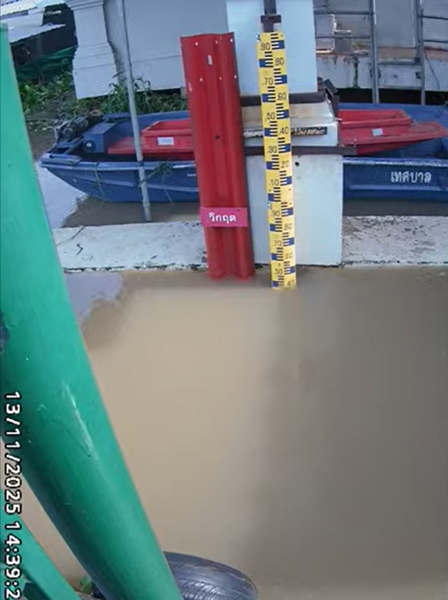
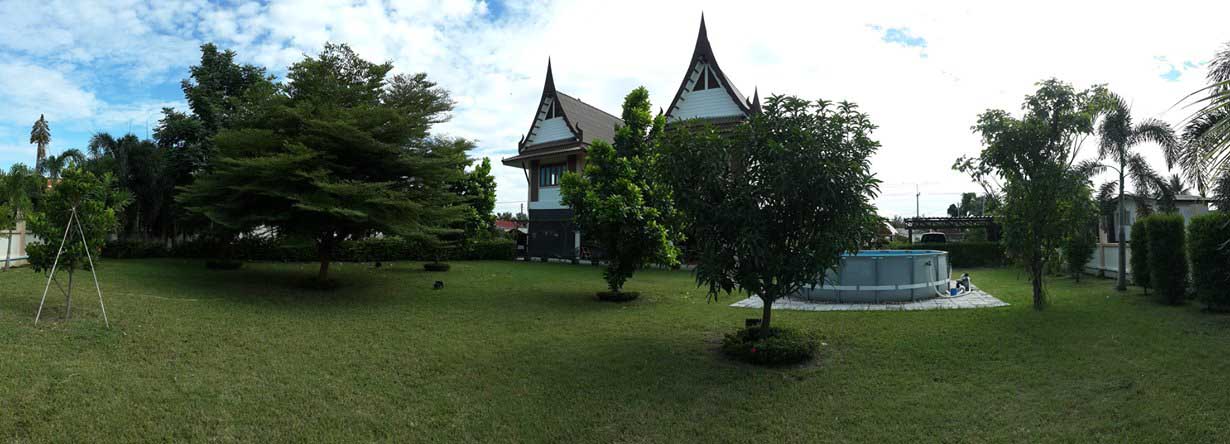
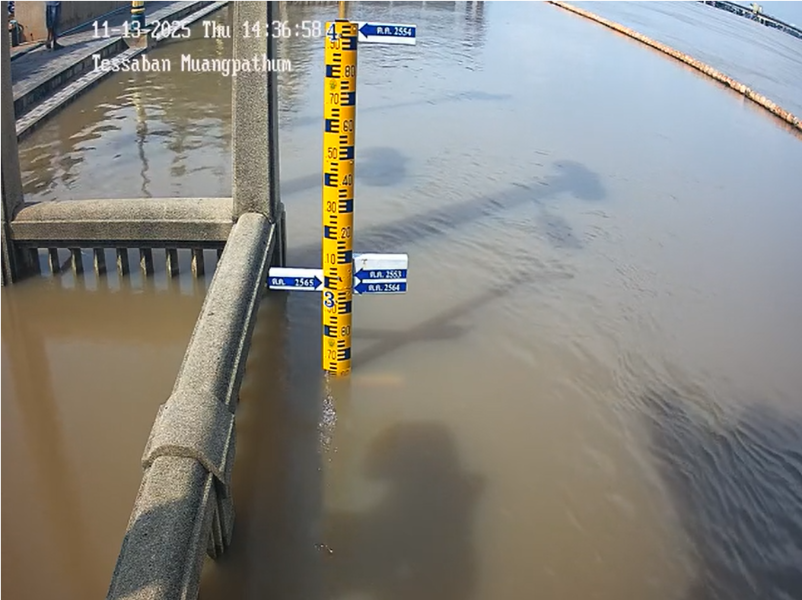 Not good upstream in In Buri 😞 In a way I'm glad we are not behind such a flood barrier, we get the slow motion train wreck not the high speed impact.Your description is correct, your sparks should know this. The diagram you have shows the internal wiring of the unit rather than how to connect it in Thailand. Do verify that the supply polarity is correct (what you think is L really is L).Madam is quite generous with my money, the ladies got her standard "help" rate (same as our cleaner and the occasional garden helper), 500 Baht for half a day (and as much water as they could drink). They earned it! My lady also tipped the sand truck driver and his dog got a doggie chew. Last time the water got high enough to worry was in 2022, I put a plastic bag over the drain with a sandbag on top. The downstairs shower is the lowest point so the submersible went in there too so it could remove anything that got past the sandbag walls.A man wakes up and finds himself in a hospital room, one with only himself in it. He has no recollection of how he got there. While pondering it, his bedside phone rings, and he answers it. A doctor on the other end identifies himself and tells the man: "I have really bad news. You're very sick. After your collapse yesterday, we ordered several tests and got the results back this morning. I'm afraid you have Avian flu, Ebola, and you're positive for HIV and hepatitis." Stunned, the man asks "Well, what's next!? What are you going to do?" The doc replies: "Well, for starters, we're putting you on a strict diet of only pizza." The patient asks: "Will that really help me, doctor?" "No", the doc responds. "But it's all we can fit under the door.”I've sent her the link to the licence application site. She will have a hyperactive / autistic 10 year old with her after a 12 hour flight in cattle-class. I expect customs will want to get rid of them ASAP I'm stocking up on my meds already!!Yeah, I remember that and something about poppy seeds off a bread roll in trouser turnups! They're coming direct, her boyfriend had some, er, issues, in Dubai when he was doing private security so he's avoiding any Middle-East countriesBetter get it typed, or nobody will be able to read it!My daughter is coming over in April for a holiday. She's on a veritable pharmacy of pills: - Codine Pregabalin Topiramate Setraline All will be in original packaging and she'll bring a copy of her scrip. Any possible issues??Top of the tide at Ko Kret, down somewhat but is this the calm before the storm?? As noted the level does continue to creep up due to the flow to the gulf being delayed by the tide. The koi are safely corralled after they escaped during the last flood. Madam eventually filled 500 sandbags, still 100 on the roll as backup. Oh I do like to be beside the sea side!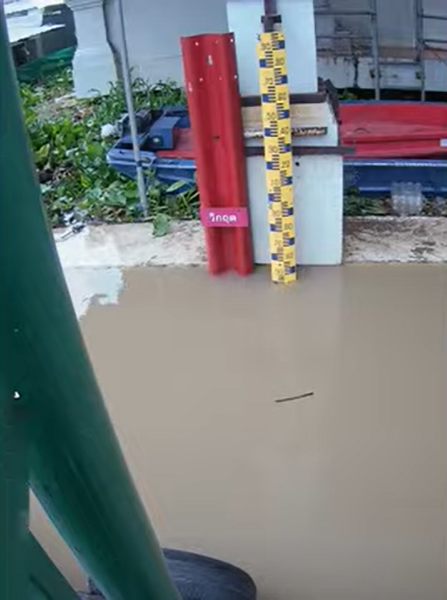

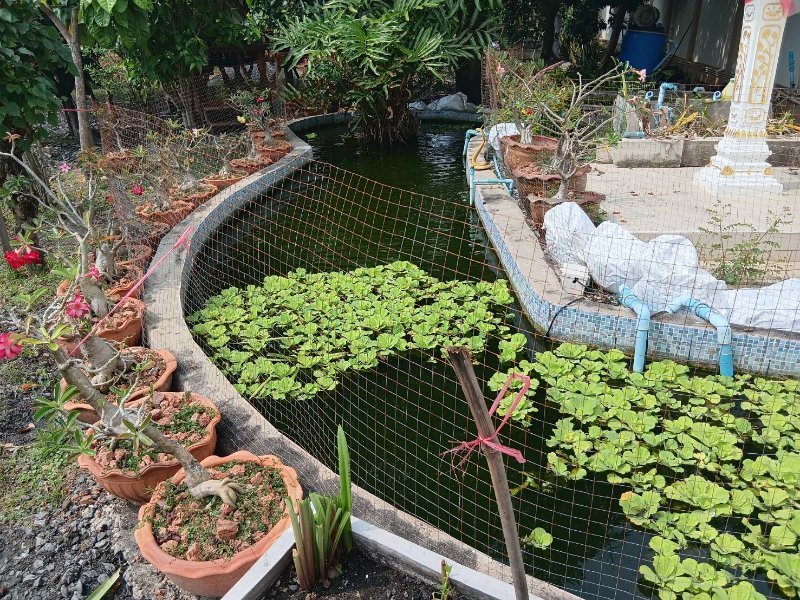
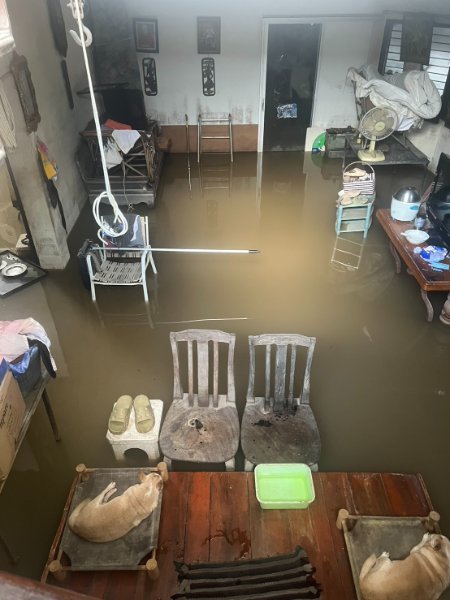
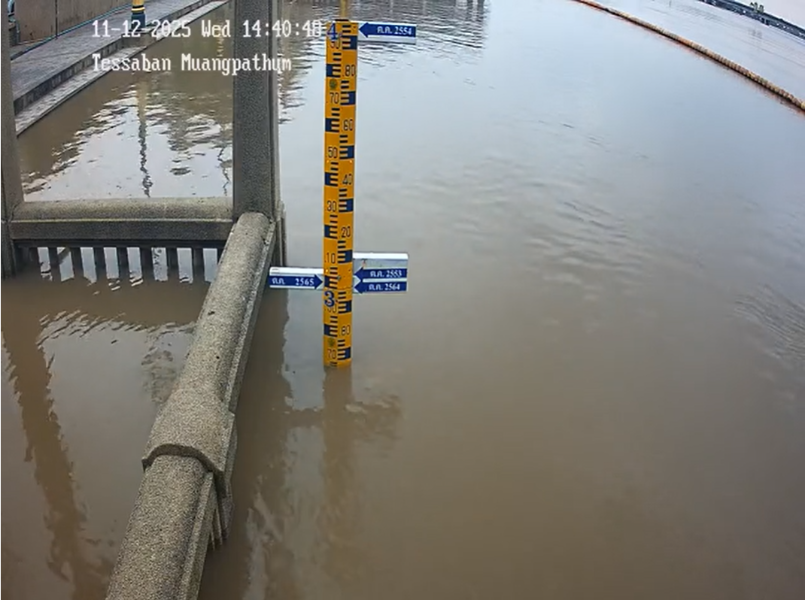 AQP2Isrt1FaVRxMtu4azzv7rMwuMpcKKtA72y8wf6cy9UbN9Kr6Cv6KXOFrcTMKELwXne_WYC8J9jZWR3DjGrtl8c02uwln9POOKxTfIqgsS8w.mp4467bd789-ea88-431f-bd71-7ef94155af54.mp4Just for interest, this is the current view from the family restaurant. Important equipment is safely upstairs. 784352150.051997.mp4 The dogs have taken to the high ground.
 Top of the tide today at Ko Kret. Level is holding, for now! EDIT It's worth noting that the level at our location does continue to creep up during the whole of the tide "double hump" as water backs up unable to drain to the gulf.