Skip to content
View in the app

A better way to browse. Learn more.

Thailand News and Discussion Forum | ASEANNOW

A full-screen app on your home screen with push notifications, badges and more.

To install this app on iOS and iPadOS
  1. Tap the Share icon in Safari
  2. Scroll the menu and tap Add to Home Screen.
  3. Tap Add in the top-right corner.
To install this app on Android
  1. Tap the 3-dot menu (⋮) in the top-right corner of the browser.
  2. Tap Add to Home screen or Install app.
  3. Confirm by tapping Install.

Become a member

Become a member

World News

Fresh news brought to you daily from around the world. Hot news, breaking stories as they happen.
US immigration authorities have arrested about 10,000 people suspected of being in the country illegally over a five-day period, according to sources familiar with the figures.

Get today's headlines by email

The arrests were made across the United States during a recent nationwide enforcement effort, the sources said, marking a significant increase in detention activity.
Immigration arrests accelerate
Officials have also set a new operational target of at least 2,000 immigration arrests per day, according to the sources. The goal follows discussions between senior White House and Department of Homeland Security (DHS) officials and Immigration and Customs Enforcement (ICE) leadership aimed at increasing enforcement activity.
A source familiar with those discussions told ABC News that officials had previously urged ICE to work toward 3,000 arrests per day.
DHS highlights focus on criminal offenders
In a statement, a DHS spokesperson said immigration officers had been carrying out President Donald Trump's pledge to arrest and remove migrants accused or convicted of serious crimes.
"Since Day One, DHS law enforcement has been delivering on President Trump's promise to the American people to arrest and deport criminal illegal aliens including murderers, rapists, pedophiles, gang members, and terrorists," the spokesperson said.
The Trump administration has repeatedly said its immigration crackdown is focused on what the president has described as the "worst of the worst" offenders. While the criminal records of those arrested in the latest operation have not been disclosed, the DHS spokesperson said nearly 70% of ICE arrests involve migrants who have been charged with or convicted of crimes in the United States.
Lower-profile enforcement strategy
According to sources, the recent enforcement operations have been conducted with relatively little public attention.
The approach follows a commitment by DHS Secretary Markwayne Mullin during his confirmation hearing earlier this year to keep the agency focused on its work rather than publicizing enforcement actions. That represents a shift from the approach of former DHS Secretary Kristi Noem, who favored greater publicity for ICE operations.
ICE is also preparing for new leadership under Lance Schroyer, a close ally of Mullin and a former Oklahoma state trooper. Schroyer has no previous federal immigration enforcement experience.
Calls for more public data
Mike Howell, president of the Trump-aligned Oversight Project and a leader of the Mass Deportation Coalition, welcomed the reported increase in arrests but said the administration should release more detailed deportation statistics.
"There have been so many numbers thrown around in press releases, estimates, extrapolations, and puffery that most people are just kind of immune to it and waiting to see the hard data that's being withheld," Howell said.

Join the discussion?


Adapted by ASEAN Now. Source 3 July 2026
webfact
webfact
At least eight people have been arrested in the UK as part of investigations into online networks that encourage men to drug and sexually assault women, the National Crime Agency (NCA) has said.

Get today's headlines by email

Since October 2025, the agency has identified 270 individuals connected to a forum and associated websites where footage of coordinated sexual abuse was shared. Investigators said the offending mirrors the abuse suffered by French survivor Gisèle Pelicot, whose case drew international attention after she was repeatedly drugged by her husband and raped by dozens of men.
Investigations uncover organised abuse forums
The NCA said the abuse is typically carried out by a long-term partner and can continue undetected for many years, with some cases lasting decades.
Deputy director Nigel Leary said drug-facilitated sexual assault was "no longer isolated behaviour" but had become "increasingly organised".
Victims identified and international inquiries launched
The agency said 14 investigations are under way, with eight victims identified and provided with support.
Evidence gathered from the online forums has been shared with law enforcement agencies in several countries as part of efforts to identify offenders and victims beyond the UK.
The NCA said it has established a coordinated response involving prosecutors and safeguarding organisations to help identify victims and provide support while pursuing criminal investigations.
Last week, representatives from law enforcement agencies in Brazil, Canada, France, Hungary, the Netherlands, Spain and the United States met in London to exchange intelligence on suspected offenders, victims and online communities linked to the abuse.
The agency said the meeting resulted in the identification of more than 150 offenders and victims, as well as four previously unknown online communities.
Authorities urge victims to seek help
Siobhan Blake, the Crown Prosecution Service's national lead for rape and serious sexual offences, described the crimes as among the most disturbing she had encountered.
She said victims were subjected to severe sexual abuse in their own homes, calling it an extreme betrayal of trust. Blake added that the offending flourished in secrecy, both online and behind closed doors, and said the criminal justice system was committed to exposing those responsible and securing justice for victims and survivors.
Deputy Assistant Commissioner Helen Millichap, director of the National Centre for Violence Against Women and Girls and Public Protection, said victims may not immediately realise they have been assaulted.
She urged anyone who feels something is wrong to seek help, even if they have no clear memory or proof, adding that police and support services would listen, take reports seriously and provide appropriate care.
Pelicot case highlighted scale of abuse
Earlier this year, Gisèle Pelicot told the BBC she had been "crushed by horror" after learning that her former husband, Dominique Pelicot, had repeatedly drugged her and invited dozens of men to rape her while she was unconscious.
The 73-year-old waived her right to anonymity to speak publicly about her experience and campaign for victims. Dominique Pelicot was sentenced to 20 years in prison.

Join the discussion?


Adapted by ASEAN Now. Source 3 July 2026

webfact
webfact
At least six people were killed and 22 others injured after a bomb exploded inside a busy cafe in central Damascus, according to Syrian state media.

Get today's headlines by email

Deadly Blast Rocks Central Damascus
The interior ministry said the explosive device had been planted inside the cafe, which is located about 100 metres from the Palace of Justice in the capital's Hejaz district. Authorities have not identified those responsible, and no group immediately claimed the attack.
The bombing is the deadliest to hit Damascus since a suicide attack on a church in June 2025 that killed 25 people.
Witness Describes Scene of Devastation
Mohammed al-Dahabi, who owns a glasses shop next to the cafe, said the explosion brought back memories of the violence that gripped the city during Syria's civil war.
"I felt strong pressure, and the whole place shook," he told AFP. "I ran to the place and saw people lying on the floor with blood pooled around them everywhere."
Video shared on social media appeared to show at least two men lying motionless on the outdoor terrace of the cafe after the blast.
Authorities Vow Action
Damascus Governor Maher Marwan Idlibi visited the scene and said those behind the attack would be held accountable.
"Each time the country sees a period of stability, malicious parties try to destabilise it," he said.
Officials have not announced any arrests or provided further details about the investigation.
Security Challenges Persist
The bombing comes as Syria's interim government continues to face significant security challenges following the overthrow of former president Bashar al-Assad by Islamist-led rebel forces in December 2024, ending more than 13 years of civil war.
Interim President Ahmed al-Sharaa has been working to consolidate government control across the country and improve security, but violence has continued in several areas.
The June 2025 church bombing, which killed 25 people, was claimed by the little-known jihadist group Saraya Ansar al-Sunnah. However, Syrian authorities attributed that attack to the Islamic State (IS) group.
In recent months, Syria has also experienced repeated outbreaks of deadly sectarian violence involving government forces and members of the country's Alawite and Druze religious minorities, underscoring the continuing instability despite the end of the civil war.


Join the discussion?


Adapted by ASEAN Now. Source 3 July 2026
webfact
webfact
A former US Olympic canoeist has been indicted on a felony charge after allegedly damaging the Lincoln Memorial Reflecting Pool in Washington, DC, federal prosecutors said.

Get today's headlines by email

David "Davey" Hearn, 67, is accused of causing about $1,000 (£750) in damage to the landmark after allegedly pulling up newly installed sealant from the bottom of the pool on 19 June.
Former canoeist faces felony charge
US Attorney Jeanine Pirro announced the indictment on Thursday, saying the damage occurred shortly after renovation work had been completed.
"The defendant ripped a piece of recently installed sealant on the bottom of the reflecting pool," Pirro said. She described the incident as a deliberate act that damaged a restoration project carried out by the National Park Service.
Hearn denies wrongdoing
Hearn, a three-time US Olympic canoeist, has denied the allegations.
He previously told the BBC that he had stopped by the Reflecting Pool after a long bike ride out of curiosity about its condition. He said he only touched material that had already come loose and insisted he "didn't destroy, rip, tear, peel, or remove any part" of the coating.
His lawyers also rejected the charges, calling the prosecution politically motivated.
In a statement issued after the indictment, they said Hearn was innocent and argued that the case reflected "the administration's effort to shift blame for their own failures".
Hearn has previously described his arrest as an "arbitrary, capricious prosecution".
Ongoing problems at the Reflecting Pool
The Reflecting Pool has experienced several issues despite a recent $14 million renovation project. Large sections of the new sealant have been seen peeling from the bottom, while algae growth has also been reported.
US Park Police said five people have been arrested in connection with alleged vandalism at the site, while another five have received federal citations. A National Park Service official had previously said parts of the pool's lining had been cut with a sharp object.
President Donald Trump has blamed vandals for the damage. After inspecting the site on 20 June, he said on social media that repairs would begin immediately.
He wrote: "Work will begin immediately on fixing the seriously vandalized Reflecting Pool," adding: "Who would do such a thing? SICK, DERANGED PEOPLE!"
Historic landmark
The Lincoln Memorial Reflecting Pool was built in the 1920s and extends 2,030ft (619m) between the Lincoln Memorial and the Washington Monument.
Over the years, it has faced recurring maintenance challenges, including leaks, structural deterioration, faulty pipes, algae growth and bird droppings.


Join the discussion?


Adapted by ASEAN Now. Source 3 July 2026
webfact
webfact
A new analysis published in the British Medical Journal has suggested that the UK-US trade deal agreed last December could force the NHS in England to redirect £44.7 billion from health services to higher medicines costs by 2036, potentially contributing to more than 229,000 excess deaths.

Get today's headlines by email

Researchers said the projected increase in spending on new medicines would require significant cuts to NHS services unless additional government funding is provided. The analysis estimates the annual cost of the agreement will rise to £8.8 billion by 2036, with the cumulative cost reaching £44.7 billion over the period.
Medicines costs could reshape NHS spending
The report, produced by researchers from the University of York, the University of Liverpool and Christchurch Hospital in New Zealand, found that reduced NHS spending on services could have a major impact on public health. If the effects on adult social care were also included, the estimated number of excess deaths would increase to 291,000.
Researchers said most of the preventable deaths would involve people with heart, respiratory and gastrointestinal diseases, as well as cancer.
Government defends agreement
The trade deal requires the UK to pay around 25% more for new medicines over the next decade. It also commits the NHS in England to doubling the share of GDP spent on innovative medicines, from 0.3% to 0.6%.
When the agreement was announced, ministers described it as a landmark deal that would improve patient access to new treatments while protecting British pharmaceutical exports from potential US tariffs.
The government has said the agreement will cost an additional £1 billion between 2025-26 and 2028-29, although it has acknowledged costs will rise after that period without providing further estimates.
Science minister Patrick Vallance previously confirmed that the additional spending would come from the Department of Health and Social Care rather than the Treasury.
Critics call for greater scrutiny
The findings have prompted renewed calls for the government to publish its own impact assessment of the agreement.
Sir Ciarán Devane, chief executive of the NHS Alliance, said the analysis raised serious questions about whether the deal represented good value for patients and the NHS, warning that diverting billions from frontline services could have significant consequences for prevention, community care and treatment of long-term conditions.
Liberal Democrat health spokesperson Helen Morgan described the findings as alarming and urged ministers to release their assessment of the agreement.
Campaign groups including Global Justice Now and Just Treatment also criticised the deal, arguing that higher medicines spending could reduce funding available for NHS services and staff while increasing profits for pharmaceutical companies.
Department rejects findings
Responding to the analysis, a Department of Health and Social Care spokesperson disputed the projected £45 billion cost.
The department said reforms to medicines pricing would allow NHS patients to access life-changing treatments that were previously unavailable while strengthening the UK's position as a centre for developing and manufacturing new medicines.
The spokesperson added that funding for the agreement would come from allocations agreed in the spending review, which secured record NHS funding, with future spending to be determined at the next review.

Join the discussion?

Already a member?


Adapted by ASEAN Now. Source 2 July 2026
webfact
webfact
A convicted people smuggler once described by French authorities as a leading figure in migrant trafficking is living in Leicestershire and is believed to be seeking asylum in the UK while working illegally, a BBC investigation has found.

Get today's headlines by email

Twana Jamal was sentenced to five years in prison by a French court in 2016 after being convicted of organising illegal Channel crossings. Prosecutors said the Iraqi Kurd, who was 36 at the time, earned up to £100,000 a week by transporting migrants from northern France to Britain.
French Conviction and Life in Britain
Following a tip-off earlier this year, BBC journalists traced Jamal to the village of Blaby, where they observed him working at a local business, driving despite apparently having no valid licence, and using what appeared to be a different name.
The findings have raised fresh questions over the UK's ability to identify asylum applicants with serious criminal convictions abroad.
Smuggling Network and Multiple Aliases
Jamal came to the BBC's attention during an investigation into cross-Channel people-smuggling networks that also led to the arrest of another alleged gang leader.
French prosecutors previously identified Jamal as a prominent member of the Kurdish criminal groups known as the Ranya Boys, which European law enforcement agencies say have played a major role in cross-Channel smuggling operations over the past 15 years.
Court evidence showed Jamal operated from the Grand-Synthe migrant camp near Dunkirk between 2012 and 2016, charging migrants between £4,500 and £5,000 for journeys to Britain, when freight lorries were the preferred method of crossing.
Known by the nickname "Pasha", Jamal denied the charges during his trial, claiming mistaken identity. However, he was convicted and was expected to be deported to Iraq's Kurdistan region after serving his sentence.
The French court also heard that he regularly used multiple aliases, with prosecutors saying he sometimes wrote his assumed identity inside his baseball cap to avoid confusion.
BBC Investigation
Using information from several sources, including a recorded telephone conversation, the BBC established that Jamal was living in Leicester. During the call, he allegedly claimed he was earning good money, spoke about work involving cigarettes and said he drove without a licence, adding that he was unconcerned about police attention.
Journalists later identified a man matching Jamal's appearance working at one of two Candy Corner convenience stores in Blaby. During an undercover visit, he introduced himself as "Sultan". Reporters also identified a hand tattoo matching photographs from social media, where he uses the name "Sultan Pasha".
Over several days, the BBC said it witnessed him working in the shop and driving a vehicle, despite asylum seekers generally being prohibited from working while their claims are being processed.
When confronted, Jamal denied any involvement in people smuggling or serving a prison sentence in France. However, after being shown a photograph taken during his 2016 court appearance, he did not dispute that it showed him. Asked about driving without a licence, he replied: "So what? Did I hit you?"
Jamal said he had applied for asylum in the UK and was still awaiting a decision.
Concerns Over Border Checks
UK law normally requires asylum claims to be refused where an applicant has received a prison sentence of at least 12 months overseas. It remains unclear whether Jamal's French conviction was identified by UK authorities or whether the use of an alternative identity affected background checks.
The BBC also reported that European law enforcement officials believe at least 15 convicted people smugglers from France, Germany and Belgium are now living in the UK under false identities while claiming asylum.
According to Lucy Morton of the Immigration Services Union, the UK's departure from the European Union has made access to criminal records held by some European countries more difficult because previous data-sharing arrangements no longer apply.
The Home Office said all asylum applicants undergo mandatory identity, security and criminality checks. It added that the UK continues to operate criminal-record information-sharing agreements with several countries and said immigration enforcement activity is currently at record levels, with arrests for illegal working having increased by 83%.

Join the discussion?


Adapted by ASEAN Now. Source 2 July 2026
webfact
webfact
Donald Trump earned at least $2.2bn (£1.7bn) during his first year back in the White House, according to a newly released financial disclosure report, marking an unprecedented level of personal income while serving as US president.

Get today's headlines by email

Historians say the figure represents a sharp departure from the longstanding practice of presidents distancing themselves from their private financial interests while in office.
The contrast with earlier presidents is striking. Harry Truman left office with little income beyond a monthly Army pension of $113 (£85) and argued that former presidents should not profit from the prestige of the office.
Trump's earnings dwarf those of past presidents
George W Bush placed his investments in a blind trust before becoming president and later said he did not know how the 2008 financial crisis had affected his personal wealth.
Barbara Perry, a presidential historian at the University of Virginia's Miller Center, said there was "no precedent" for Trump's level of personal earnings while in office.
Cryptocurrency drives record income
According to the disclosure, cryptocurrency generated the largest share of Trump's reported income in 2025.
He declared about $1.4bn from cryptocurrency-related ventures, including $635m in royalties from Celebration Coins, the company believed to be behind the $TRUMP meme coin launched shortly before his second term began.
Trump also reported more than $500m from World Liberty Financial, a cryptocurrency business founded by his sons, Donald Trump Jr and Eric Trump, together with the sons of Steve Witkoff, Trump's special envoy to the Middle East and Ukraine.
His reported income for 2025 was almost four times the $622m disclosed for 2024, before his return to office.
White House rejects conflict claims
The White House denied that Trump or his family had benefited improperly from the presidency.
Deputy press secretary Anna Kelly said neither the president nor his family had engaged in conflicts of interest and insisted all decisions made by the administration were in the interests of the American people. She accused critics of repeating longstanding political attacks.
Before both of his presidential terms, Trump transferred day-to-day control of the Trump Organization to his adult sons but, unlike several previous presidents, did not place his business assets in a traditional blind trust or sell his holdings.
The Trump Organization said before his second inauguration that Trump would play no role in its daily operations, while Eric Trump said the company would follow strict ethical standards.
Ethics concerns remain
Critics argue several actions taken by the administration have benefited businesses connected to Trump and senior officials.
Last July, Trump signed legislation supporting stablecoins, months after World Liberty Financial launched its digital currency business. Later, he pardoned Binance founder Changpeng Zhao as his administration promoted the cryptocurrency industry.
A New York Times report also said Trump secured a deal with Kazakhstan that gave an American company access to a major critical minerals project. Eric Trump and Donald Trump Jr later acquired a minority stake in a company involved in the venture, while Cantor Fitzgerald, led by Commerce Secretary Howard Lutnick's sons, also participated in the deal.
Speaking to reporters on Wednesday, Trump said his wealth reflected investment gains and maintained he was not involved in managing his family's business interests.
"I don't get involved in my personal [finances]," he said. "I've made a lot of money before I became president."
Richard Painter, who served as the chief White House ethics lawyer under George W Bush, said Trump's cryptocurrency earnings represented a clear conflict of interest.
"This is a very, very troubling situation for the American people to see their president making so much money," he said.

Join the discussion?


Adapted by ASEAN Now. Source 2 July 2026
webfact
webfact
Thousands of people gathered in the Swiss village of Écône on Wednesday as the Society of Saint Pius X (SSPX) ordained four new Catholic bishops, ignoring a direct appeal from Pope Leo XIV to halt the ceremony.

Get today's headlines by email

The newly ordained bishops include one from the United States, one from Switzerland and two from France. They belong to the traditionalist SSPX, a group founded by French Archbishop Marcel Lefebvre that has long opposed key reforms introduced by the Catholic Church following the Second Vatican Council.
Ordinations Go Ahead Despite Vatican Warning
Earlier this week, Pope Leo described the planned ordinations as a "schismatic act" that could "tear the seamless garment of Christ" and urged SSPX leaders not to proceed.
Despite the warning, the ceremony took place under grey Alpine skies before a crowd estimated at more than 15,000 people.
Traditional Ceremony Highlights Long-Running Dispute
Hundreds of priests in ceremonial robes processed through Écône carrying candles, crosses and incense before entering a large tent erected in a nearby field.
During the Latin-language ceremony, the four bishop candidates lay prostrate before the altar with their heads resting on red velvet cushions before taking their ordination vows.
The SSPX rejects several reforms introduced by the Vatican during the 1960s and 1970s. Among them are the use of local languages instead of Latin during Mass, greater engagement with other religions, support for religious freedom, and liturgical changes such as priests facing the congregation during services.
The group has argued that these reforms moved the Church away from its traditional teachings and practices.
Pope Faces Fresh Test Over Church Unity
Ordaining bishops without the Pope's approval is considered one of the most serious breaches of Catholic Church unity.
When the SSPX last ordained bishops without papal consent in 1988, those bishops were immediately excommunicated. Pope Benedict XVI lifted those excommunications in 2009 in an effort to improve relations, although the broader dispute remained unresolved.
Pope Leo is now expected to exclude the four newly ordained bishops from the Catholic Church, though the Vatican has not announced any further disciplinary measures.
SSPX Superior General Davide Pagliarani rejected suggestions that the ordinations were intended to deepen divisions. Addressing those attending the ceremony, he said the group acted "precisely because we love the Pope as the vicar of Christ, as the head of the Church" and added that it did not want to see the Pope "humiliated any more, on the side of false shepherds representing false religions".
Small Movement With Global Reach
Although the SSPX is estimated to have around 600,000 followers compared with the Catholic Church's more than 1.4 billion members, it has established a presence in dozens of countries, including the United States, where it has a strong following in Kansas.
The Écône ceremony was livestreamed on YouTube in seven languages. Visitors could also buy commemorative merchandise, including "Écône2026" baseball caps and gift packs of Swiss wine featuring labels depicting a bishop's mitre.
The events present an early challenge for Pope Leo, who has only recently assumed the papacy. While he has declared the ordinations illegitimate and warned they threaten Church unity, further action against the SSPX could risk deepening the divisions he has warned against.

Join the discussion?


Adapted by ASEAN Now. Source 2 July 2026
webfact
webfact
At least nine people were killed after Russia launched a large-scale missile and drone attack on Ukraine's capital, Kyiv, overnight, according to Ukrainian officials. The bombardment triggered fires, damaged residential areas and critical infrastructure, and forced residents across several districts to seek shelter.

Get today's headlines by email

Kyiv's military administration said a significant number of people were injured, including children. Tymur Tkachenko, head of the city's military administration, accused Russia of deliberately targeting civilian neighbourhoods.
"The enemy is once again deliberately targeting residential areas and killing civilians," he said.
Overnight bombardment kills civilians
As daylight broke on Thursday, emergency crews assessed widespread destruction. A large crater, believed to have been caused by one of the explosions, was visible alongside burned-out vehicles, damaged buildings and scattered debris.
Fires also broke out in several parts of the capital. An ambulance station was damaged, leaving at least one person critically injured, while firefighters battled a blaze that engulfed a hotel on one of Kyiv's central boulevards.
Kyiv warned of major attack
The assault came just hours after Ukrainian President Volodymyr Zelensky warned that Russia was preparing a major strike. He cut short a visit to Dublin on Wednesday after receiving what he described as fresh intelligence about Moscow's plans.
"I urge our people to be especially careful, to protect themselves, their children, and, of course, their families," Zelensky said.
He added that Russian President Vladimir Putin had been preparing the large-scale attack for some time.
Ukraine's ambassador to the United States, Olha Stefanishyna, said residents had spent another night sheltering from sustained aerial attacks.
She said the strikes caused fires and widespread damage to civilian infrastructure and residential buildings across several districts of Kyiv.
During the overnight assault, witnesses reported hearing repeated explosions as drones, cruise missiles and ballistic missiles struck the city. Air defence systems were seen firing tracer rounds into the night sky in an effort to intercept incoming weapons.
Russia cites response to Ukrainian attacks
Russia's Ministry of Defence said its forces had targeted Ukrainian energy facilities and military sites in central and eastern Ukraine. It described the operation as retaliation for recent Ukrainian attacks on Russian power stations stretching from Moscow to the Black Sea.
Those Ukrainian strikes prompted a rare acknowledgement from President Putin that Russia was experiencing fuel shortages.
The latest barrage marked Russia's first large-scale missile and drone attack on Ukraine in more than two weeks.
Regional tensions remain high
Neighbouring Poland activated fighter jets during the attack as a precaution to protect its airspace, stressing that the move was preventive. Polish authorities said there were no reports of Russian strikes crossing into Polish territory.
The Polish military said the measures were intended to safeguard airspace, particularly in areas close to the conflict.
On the battlefield, Russian forces have recently advanced into the city of Kostyantynivka, one of Ukraine's remaining key defensive positions in the east. Capturing the city would strengthen Moscow's push to secure the wider Donbas region.
However, Ukrainian military commanders say their forces have regained more territory than they have lost this year, while disrupting Russian supply routes linking the Russian border with occupied Crimea.
Despite those claims, the wider front line has remained largely static for months, with both sides holding entrenched positions.
Russia currently controls about one-fifth of Ukraine's territory, most of it captured during the early stages of its full-scale invasion launched in February 2022.

Join the discussion?

Already a member?


Adapted by ASEAN Now. Source 2 July 2026
webfact
webfact
Conservative leader Kemi Badenoch has accused outgoing Prime Minister Sir Keir Starmer of leaving a funding gap in the government's new defence investment plan, claiming his successor will inherit an unfinished financial commitment.

Get today's headlines by email

The dispute follows the publication of the long-awaited Defence Investment Plan (DIP), which pledges an additional £15 billion for the UK's armed forces by 2030. The strategy, unveiled on Tuesday ahead of next week's Nato summit, is intended to strengthen Britain's military readiness for future conflicts.
However, Defence Minister Luke Pollard confirmed that only £10.3 billion in funding has so far been identified. The remaining £4.7 billion will have to be found by the next chancellor in the autumn Budget.
Defence plan sparks political clash
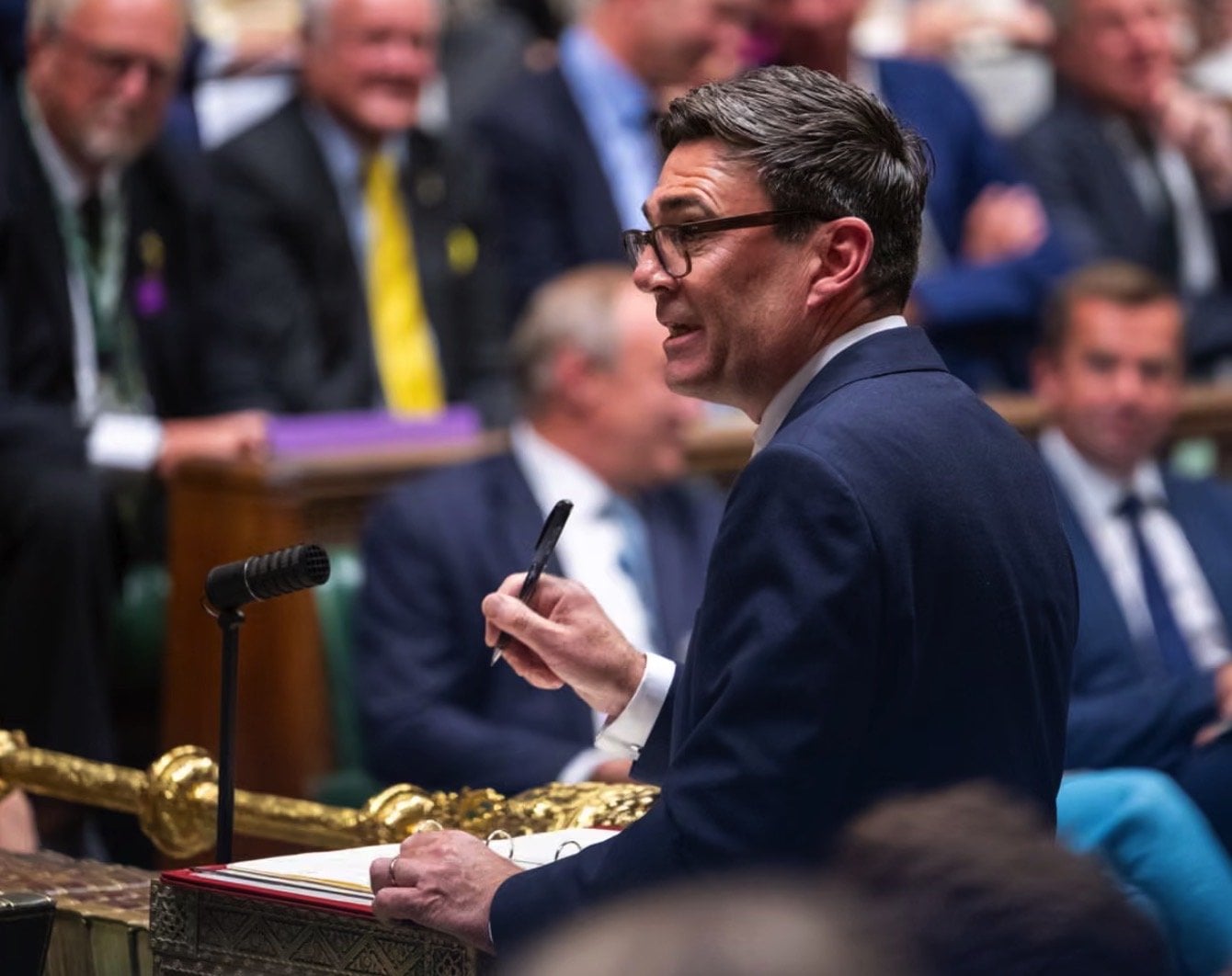
At Prime Minister's Questions, Badenoch said the government had failed to fully fund its own proposals and questioned whether Andy Burnham, who is widely expected to become prime minister on 20 July, had agreed to cover the shortfall.
She argued that the government had prioritised welfare spending over defence and said the investment plan was effectively "£5bn short". Badenoch also claimed the UK had increased defence spending by only 0.01% over the past two years compared with its allies, adding that the government's figures "didn't add up".
Starmer defends investment plan
Sir Keir dismissed Badenoch's criticism as "faux outrage" and accused the Conservatives of reducing defence spending while they were in office.
He said Labour had been able to increase defence spending because Chancellor Rachel Reeves had created sufficient fiscal headroom in last November's Budget. Sir Keir added that he was proud of the government's defence strategy and said any Labour prime minister would support it.
The £15 billion package remains below the £28 billion reportedly sought by defence chiefs and former defence ministers John Healey and Al Carns, who resigned in protest over the scale of the investment.
Downing Street declined to say whether Burnham had approved the plan or whether his future chancellor would be expected to use Budget headroom to finance the remaining £4.7 billion.
Earlier on Wednesday, Pollard told BBC Breakfast that whichever chancellor takes office after the leadership transition would need to find the necessary funding in the autumn Budget, describing the process as routine for governments. He also said Burnham had only been informed of the funding gap on Tuesday and expressed support for him becoming prime minister.
Burnham has not publicly commented on the defence plan.
Spending cuts to fund defence
Sir Keir ruled out additional borrowing to finance the defence increase, saying the money would instead come from reducing long-term capital investment budgets across other government departments by 1%.
Liberal Democrat leader Sir Ed Davey argued the funding package left the UK "vulnerable to missile attack" and said the investment fell well short of what was needed. Sir Keir rejected the Liberal Democrats' proposal to issue defence bonds, saying ministers had examined the idea but concluded it amounted to borrowing under another name.
Road projects face uncertainty
The government's effort to redirect spending has also triggered concerns over infrastructure projects.
The Department for Transport is expected to save £700 million by reviewing road schemes, with the A38 Derby Junctions project and the A46 Newark Bypass among those being considered for cancellation. The Department for Energy Security and Net Zero is also expected to contribute £2 billion in savings, largely through efficiency measures.
Downing Street said further details of departmental reductions would be announced in the autumn but did not provide a comprehensive list of affected projects. Officials also declined to rule out cuts to rail investment, although they said frontline NHS services would be protected.
The potential cancellation of road schemes has drawn criticism from local politicians. Labour's East Midlands mayor Claire Ward described the proposals as "completely unacceptable", while Newark MP Robert Jenrick demanded an explanation from the transport secretary. Lincoln MP Hamish Falconer expressed disappointment over uncertainty surrounding the A46 project, and Mid Derbyshire Labour MP Jonathan Davies warned that reducing transport investment could slow economic growth.
Asked about the criticism, the prime minister's spokesman said the government was prioritising Britain's security in what he described as "a more dangerous world."

Join the discussion?

Already a member?


Adapted by ASEAN Now. Source 2 July 2026
webfact
webfact
President Donald Trump is preparing to headline a major Independence Day celebration on the National Mall, describing it as the centerpiece of what he has called the "most unforgettable birthday party any country has ever seen." Behind the scenes, however, White House officials are reportedly concerned that attendance may fall short of expectations.

Get today's headlines by email

The concerns follow a campaign-style speech Trump delivered on the National Mall last week that drew smaller crowds than anticipated, according to sources familiar with the planning. The event had been arranged after several musical performers withdrew because of the state fair's association with the president.
Preparations overshadowed by attendance concerns
Trump, who spoke for about 30 minutes, focused largely on his administration's achievements and what he described as America's renewed strength. According to people familiar with the matter, he later became frustrated after seeing aerial images showing large areas of open space beyond the audience gathered near the stage. Several White House officials reportedly deleted social media posts featuring the images, while Trump later insisted online that the crowd had been "packed to the brim."
Asked about the episode, a White House official dismissed the reports, saying: "This is fake news!"
Planning adjusted to avoid empty seats
The experience has increased pressure on organizers ahead of Friday's Independence Day event, which Trump has promoted as one of the defining moments of his presidency and part of the United States' 250th anniversary celebrations.
Some people close to the White House have questioned whether more should have been done to attract larger crowds to recent events.
One person familiar with the discussions said the fair suffered from an assumption that attendance would naturally follow once the event was built.
To improve the appearance of the audience for Trump's July 4 address, officials plan to issue free tickets for the viewing area immediately in front of the stage. Even so, aides acknowledge that some ticket holders may ultimately choose not to attend.
White House spokesman Davis Ingle defended the celebrations, saying Trump was ensuring Americans received the "spectacular 250th birthday" the country deserved. He described the events as part of a broader effort to renew patriotism and national pride under Trump's leadership.
Legacy ambitions meet logistical setbacks
The Independence Day speech is part of a broader series of events that Trump has long envisioned as central to the nation's semiquincentennial celebrations.
This week, he is scheduled to attend the dedication of the Theodore Roosevelt Presidential Library in North Dakota, an event that will also mark the inaugural flight of a new Air Force One. On Friday, he will travel to South Dakota for a fireworks display at Mount Rushmore before returning to Washington.
Planning for the celebrations dates back to Trump's 2024 campaign. Advisers had initially discussed holding a major July 4 speech in Philadelphia before the plans shifted to Washington. Trump had also promoted the idea of a nationwide state fair as early as 2023.
Presidential historian Timothy Naftali said the celebrations reflected Trump's desire to shape his historical legacy, describing the effort as an attempt to leave a lasting personal mark.
State fair draws mixed response
The Great American State Fair, stretching across downtown Washington, has experienced uneven attendance and several operational challenges.
Some state exhibits, including those from Arizona and Texas, have attracted large crowds with elaborate displays. Others have remained sparsely decorated after states declined to participate because of financial constraints.
The event has also faced a series of setbacks. Air conditioning failures forced temporary closures at several pavilions during hot weather, while severe storms prompted periodic shutdowns and led to the cancellation of a concert by Vanilla Ice. Organizers also removed a Confederate flag display from the North Carolina pavilion after criticism from North Carolina Governor Josh Stein. Separately, one man was arrested after allegedly filming female performers inappropriately during an acrobatic show.
Despite the difficulties, organizers said attendance had exceeded 150,000 visitors. Freedom 250 spokeswoman Julia Friedland rejected criticism of the event, saying Americans were travelling to Washington from across the country to take part in the celebrations.
Many visitors interviewed at the fair also praised the experience, although some noted that strict security measures limited comfort. Attendees are barred from bringing food, water bottles and coolers into the venue, leaving many to rely on on-site food vendors while temperatures climbed.
Those restrictions will also apply during the July 4 celebration, where temperatures are forecast to approach 100 degrees. Organizers are planning an afternoon air show followed by a fireworks display that could continue until nearly midnight and is intended to set a Guinness World Record.
Acknowledging persistent scrutiny of crowd sizes, Trump urged supporters to attend, warning that empty seats would quickly become a focus of media coverage.


Join the discussion?

Already a member?


Adapted by ASEAN Now. Source 2 July 2026
webfact
webfact
Two federal judges have blocked the Trump administration from enforcing new restrictions on a federal student loan forgiveness program, preventing changes that would have denied debt relief to some public service workers based on their employers' activities.

Get today's headlines by email

The rulings, issued on Tuesday by federal judges in Massachusetts and Washington, D.C., came one day before the revised eligibility rules for the Public Service Loan Forgiveness (PSLF) program were due to take effect.
Federal judges halt overhaul before new restrictions take effect
The administration had sought to overhaul the program by excluding borrowers employed by organizations deemed to have a "substantial illegal purpose," arguing the changes would ensure the program supports organizations aligned with its priorities.
More than 20 states and a coalition of nonprofit organizations filed separate lawsuits, arguing the new rule would allow the Department of Education to deny loan forgiveness based on political or ideological disagreements.
The challengers said the policy could be used against organizations involved in areas such as transgender healthcare and immigration advocacy.
States and nonprofits challenge new eligibility rules
In Massachusetts, U.S. District Judge Myong Joun ruled that the Education Department lacked the legal authority to impose the new restrictions. He also said the rule could violate the First Amendment by discouraging protected speech and forcing the administration's viewpoints on employers.
"The Department cannot create new criminal prohibitions through rulemaking," Joun wrote. He added that the evidence showed the final rule had already "chilled protected speech."
Separately, U.S. District Judge Amir Ali in Washington, D.C., blocked the rule in a lawsuit brought by four nonprofit organizations that advocate for immigration rights and other causes.
Administration defends policy
Education Department Under Secretary Nicholas Kent said the administration was reviewing its legal options following the rulings.
In a statement, Kent said the PSLF program was designed to support public service rather than "subsidize organizations that engage in terrorism, facilitate illegal immigration, or support the mutilation of children."
Congress created the PSLF program in 2007 to encourage graduates to work in public service by forgiving eligible federal student loans after 10 years of qualifying employment. More than one million borrowers have received loan forgiveness through the program.
The Trump administration has argued that some organizations have exploited the program in ways that undermine U.S. values and national security.
Existing program remains in place
An executive order signed by President Donald Trump last year directed the education secretary to narrow eligibility for the program by excluding organizations involved in activities the administration considered unlawful.
The Education Department's final rule listed activities including aiding illegal immigration, supporting terrorism or trafficking, and facilitating what it described as the "chemical and surgical castration or mutilation of children."
The two court rulings leave the current PSLF program unchanged while the legal challenges continue, marking another setback for the Trump administration's efforts to reshape federal student loan policy.

Join the discussion?

Already a member?


Adapted by ASEAN Now. Source 2 July 2026
webfact
webfact
Idaho has become the first US state to make the firing squad its primary method of execution, marking a significant shift in the country's use of capital punishment as states continue to face difficulties carrying out lethal injections.

Get today's headlines by email

The state's newly renovated execution chamber officially became operational on 1 July after the Idaho Department of Correction completed a more than $1 million project at its maximum-security prison south of Boise. The upgrade includes AR-style, .308-calibre rifles that will be used by volunteer marksmen during executions.
Idaho adopts firing squad as primary method
Under Idaho's protocol, three anonymous volunteers selected by prison officials will carry out executions. The state currently has eight inmates on death row.
The department said it is prepared to carry out executions and that its procedures are designed to ensure they are conducted in a "secure, orderly, and dignified manner."
Shift driven by problems with lethal injection
Idaho's decision follows growing challenges with lethal injection, the most common execution method in the United States.
In February 2024, the state halted the planned execution of convicted murderer Thomas Creech after medical personnel were unable to establish an intravenous line. Similar problems have occurred in other states, while restrictions on the supply of execution drugs have further complicated the use of lethal injections.
Alabama has also faced legal challenges over its use of nitrogen gas asphyxiation after federal courts ruled against the method earlier this year.
Against that backdrop, several states have turned to firing squads. Idaho is now the seventh state to authorise the method in some form, joining Mississippi, Oklahoma, South Carolina and Utah, while Florida and Tennessee also permit its use under certain circumstances.
Supporters argue that firing squads provide a faster and more reliable means of execution because bullets aimed at the heart rapidly stop blood circulation to the brain.
Executions raise concerns over pain and accuracy
Despite those claims, recent executions have fuelled debate over whether the method consistently works as intended.
Historical records show that several firing squad executions in the United States have resulted in prolonged deaths after shooters failed to strike the intended target. Among the 147 civilian firing squad executions recorded since 1608 are cases in which prisoners remained alive for several minutes after being shot.
Questions have also emerged over more recent executions.
A 2010 execution in Utah prompted later scrutiny after forensic experts reviewing autopsy photographs concluded the bullets appeared to have struck outside the intended area around the heart, raising concerns that the inmate may have experienced prolonged suffering.


File photo courtesy of The Guardian

Similar concerns followed the April 2025 execution of South Carolina inmate Mikal Mahdi. Witnesses reported that Mahdi cried out after being shot and continued breathing for more than a minute. Autopsy findings reviewed by independent forensic experts suggested the bullets missed the left ventricle of the heart, potentially prolonging his death.
South Carolina officials rejected claims that the execution had been mishandled. The state's Supreme Court later ruled that the execution was not botched, although it acknowledged that the bullets did not directly strike the prisoner's left ventricle.
Experts question growing reliance on firing squads
Legal filings in subsequent court cases have gone further, with defence lawyers and some forensic specialists alleging that marksmen may have intentionally avoided the intended target in certain executions. Those allegations remain speculative, and both Utah and South Carolina authorities have rejected or declined to comment on claims of deliberate misconduct.
Execution experts say the renewed interest in firing squads reflects the wider difficulties states face in maintaining capital punishment rather than renewed confidence in the method itself.
Some legal scholars who previously regarded firing squads as one of the least problematic execution methods now argue that the process still depends on human judgement and therefore remains vulnerable to mistakes or misconduct.
As more states consider alternatives to lethal injection, Idaho's adoption of the firing squad is likely to intensify the national debate over how executions are carried out and whether any method can reliably avoid unnecessary suffering.


Join the discussion?

Already a member?


Adapted by ASEAN Now. Source 1 July 2026
webfact
webfact
Several people have died after a major fire swept through an apartment building in the Belgian port city of Antwerp on Wednesday morning, while firefighters continued searching the building for additional victims.
Search Continues as Fire Burns Through Apartment Block

Get today's headlines by email

Emergency services were called to the apartment block on Antwerp's Left Bank at around 9:53 a.m. local time after reports of a fire. The building is home to approximately 200 residents.
Authorities said multiple people were killed in the blaze, while several others sustained serious injuries. Additional residents were treated for smoke inhalation. Officials had not confirmed the exact number of casualties by the time of publication, and it remained unclear how many people had been evacuated or were still inside the building.
Residents affected by the fire were taken to the nearby Hof Ter Schelde care centre for assistance.
Rescue Efforts Continue
Marie De Clercq, a spokesperson for Antwerp Fire Zone, said firefighters were concentrating on searching the building for possible victims as thick smoke complicated rescue operations.
She said the smoke spread rapidly between floors and apartments, making it more difficult for crews to locate residents and carry out evacuations safely.
Firefighters had not yet brought the blaze under control, De Clercq added. Initial assessments suggested the fire may have started on the building's eighth floor, although officials said it was too early to confirm the exact origin.
Multiple firefighting units, supported by drone teams, remained at the scene as efforts to contain the fire and search the building continued.


Emergency Response Expanded
Although authorities did not activate the provincial disaster plan, they requested a provincial-scale response, allowing neighbouring fire zones to provide additional personnel and equipment.
A medical intervention plan was also put in place to support the emergency response and treat those injured or affected by smoke.
Fire services urged the public to avoid the area while operations continued. Residents in nearby buildings impacted by smoke were advised to keep their doors and windows closed and switch off ventilation systems if necessary.
Cause Yet to Be Determined
The cause of the fire has not been established.
Local police said a forensic investigation would begin later on Wednesday after specialist investigators arrived at the scene. Authorities are expected to examine the building once conditions are safe enough to determine how the fire started.
Search and rescue operations were still ongoing, with firefighters continuing to inspect the building for anyone who may remain trapped inside.

Join the discussion?

Already a member?


Adapted by ASEAN Now. Source 1 July 2026
webfact
webfact
The U.S. Supreme Court has agreed to hear a major Second Amendment case that will determine whether bans on AR-15s and similar assault-style rifles are constitutional, setting the stage for a landmark ruling that could affect gun laws across the country.

Get today's headlines by email

The justices announced on Tuesday that they will consider challenges to assault weapon bans enacted in Connecticut and the Chicago area. The case will be argued during the court's next term.
Second Amendment Challenge to Be Heard
At the heart of the dispute is whether AR-15s and similar firearms are protected under the Second Amendment. States defending the restrictions argue that these weapons do not fall within the constitutional definition of "arms" that individuals have the right to keep and bear.
Nationwide Impact Expected
The Supreme Court's decision is expected to provide nationwide guidance on the legality of assault weapon bans. Oral arguments are likely to take place after the court's next term begins in October, with a ruling anticipated next year.
According to the National Shooting Sports Foundation, around 32 million modern sporting rifles are currently in circulation in the United States.
The case follows years of legal disputes over state assault weapon bans, particularly after the Supreme Court's conservative majority introduced a new Second Amendment standard requiring modern gun regulations to be supported by a historical tradition of similar restrictions.
State Laws Under Scrutiny
Although definitions vary, 10 states have enacted bans on assault weapons, according to gun control advocacy group Everytown for Gun Safety. The Supreme Court's ruling could have significant implications for those laws.
The justices had considered whether to take up the case for several months before announcing on Tuesday that they would hear the challenges.
The decision also comes after the court concluded its Second Amendment cases for the current term. In recent rulings, the justices limited the government's authority to prosecute people for possessing firearms solely because they occasionally use marijuana and struck down Hawaii's restrictions on carrying guns on private property.


Join the discussion?

Already a member?


Adapted by ASEAN Now. Source 1 July 2026
webfact
webfact
Attorneys for E. Jean Carroll have asked a federal judge to order US President Donald Trump to pay the $5 million awarded to her after the Supreme Court declined to hear his appeal in a civil case involving sexual abuse and defamation.

Get today's headlines by email
Carroll seeks release of judgment funds
In a court filing submitted on Tuesday, Carroll's legal team argued that the long-running legal battle has reached its conclusion and that the money held in escrow should now be released to her.
The Supreme Court rejected Trump's appeal without any recorded dissent, leaving intact the 2023 verdict and judgment against him.
Lawyers oppose further delay
Carroll's attorney, Roberta Kaplan, told the court that Trump's legal team had contacted her to ask whether Carroll would agree to another delay while Trump sought reconsideration from the Supreme Court.
Kaplan rejected the request, writing that after four years of litigation through every level of the federal court system, the case should now come to an end.
She argued that the conditions agreed by both sides for releasing the funds had been met once the Supreme Court declined to review the case. Under that agreement, she said, Carroll is entitled to receive the money awarded by the jury.
The $5 million has remained in escrow while Trump's appeal was pending.
Trump vows to continue legal fight
Following the Supreme Court's decision, Trump said he intended to continue challenging the case.
In a post on his social media platform, he described the lawsuit as an example of "weaponization" and "lawfare" and said he would keep fighting the defamation claim "with all of my power and strength."
His attorneys have indicated they may ask the Supreme Court to reconsider its refusal to hear the appeal.
Jury found Trump liable in 2023
A Manhattan jury ruled in 2023 that Trump was liable for sexually abusing Carroll in a dressing room at the Bergdorf Goodman department store during the mid-1990s. The jury also found him liable for defaming Carroll in 2022 after he publicly denied her allegations.
The jury awarded Carroll $5 million in damages.
In his appeal, Trump argued that the trial judge had made several legal errors. He objected to jurors being shown excerpts from the 2005 "Access Hollywood" recording, in which he discussed sexually aggressive behaviour that he later dismissed as "locker room talk."
Trump also challenged the judge's decision to allow testimony from Jessica Leeds and Natasha Stoynoff, two women who accused him of sexual assault. Trump has denied their allegations.
With the Supreme Court declining to hear the appeal, Carroll's attorneys argue that there are no remaining grounds to withhold payment and have urged the court to release the funds without further delay.

Join the discussion?

Already a member?


Adapted by ASEAN Now. Source 1 July 2026
webfact
webfact
President Donald Trump has vowed to pursue legislation to end birthright citizenship after the US Supreme Court ruled that the Constitution guarantees citizenship to children born in the United States, dealing a setback to one of his key immigration policies.

Get today's headlines by email

The president said Congress should begin work immediately on changing the law, arguing that legislation could achieve his goal without the need for a constitutional amendment. However, legal experts say any such law would almost certainly face constitutional challenges because birthright citizenship is rooted in the US Constitution.
Trump rejects court ruling
The Supreme Court voted 6-3 to strike down an executive order Trump signed on his first day back in office that sought to end automatic citizenship for many children born in the US.
Writing for the majority, Chief Justice John Roberts said the 14th Amendment guarantees citizenship to every person born in the United States. He wrote that the amendment extended the promise of citizenship "to every free-born person in this land" and that the court would continue to uphold that principle.
Responding on his social media platform, Trump described the ruling as "too bad for our Country" but insisted that Congress could still act.
He argued that lawmakers could end birthright citizenship through legislation backed by the president, saying there was no need for what he called a "long and unwieldy" constitutional amendment. Trump urged Congress to begin work on the issue immediately.
Legal hurdles remain
Birthright citizenship is protected by both the 14th Amendment to the Constitution and federal citizenship law enacted in 1940.
Although Trump believes Congress could change the law, any legislation attempting to restrict birthright citizenship would likely face immediate legal challenges. Courts would have to decide whether such a law is compatible with the Constitution, raising the possibility that the issue could eventually return to the Supreme Court.
ABC News asked the White House for details on how the administration believes legislation could overcome the court's ruling and whether it expects further legal challenges. The White House referred questions to Trump's social media statement.
The president's comments marked a shift in emphasis following remarks he made a day earlier, when he said he would accept the Supreme Court's decision and acknowledged that the matter was ultimately for the justices to decide.
Later on Tuesday, Trump repeated his call for Congress to act while also highlighting other recent Supreme Court decisions that had gone in his favour.
Congress weighs next steps
Before Trump's latest comments, House Speaker Mike Johnson said Republicans were disappointed by the court's decision and expected Congress to consider possible responses.
Johnson said lawmakers would discuss whether a constitutional amendment was needed to address birthright citizenship, arguing that the current policy had been "grossly abused."
He acknowledged, however, that changing the Constitution would be difficult and could take many years. Under the US Constitution, an amendment requires approval by a two-thirds majority in both chambers of Congress before being ratified by three-quarters of the states.
Johnson said he believed a constitutional amendment was likely to be the only long-term solution following the Supreme Court's ruling.

Join the discussion?

Already a member?


Adapted by ASEAN Now. Source 1 July 2026
webfact
webfact
US President Donald Trump reported earning more than $1 billion (£750 million) from cryptocurrency-related business activities in 2025, according to his latest mandatory financial disclosure, highlighting the growing role of digital assets in his personal wealth.

Get today's headlines by email
Crypto earnings dominate financial disclosure
The 927-page filing shows Trump received $635 million in royalties from his Trump-themed meme coin, which has lost much of its value since it was launched shortly before he returned to office.

He also disclosed more than $500 million in income from World Liberty Financial, a cryptocurrency company founded by his sons alongside the sons of his special envoy, Steve Witkoff.
The latest filing far exceeds Trump's previous disclosure for 2024, when he reported more than $600 million in income.
White House rejects conflict claims
The White House dismissed suggestions that Trump's crypto ventures create a conflict of interest, noting that his business assets are held in a trust managed by his sons.
Deputy White House Press Secretary Anna Kelly said the president had fulfilled his pledge to make the United States the "crypto capital of the world."
She said neither Trump nor his family had engaged in conflicts of interest and described allegations to the contrary as politically motivated. Trump has also argued that the US president is not bound by federal conflict-of-interest laws.
Trump's embrace of cryptocurrency marks a significant shift from his earlier views. In 2021, he described Bitcoin as a "scam" and a "disaster waiting to happen." During his 2024 presidential campaign, however, he pledged to make the United States the world's leading centre for cryptocurrency. After returning to office, he signed an executive order supporting the responsible growth of the digital asset industry.
Ethics experts raise concerns
Richard Painter, who served as the chief White House ethics lawyer under former President George W. Bush, described Trump's reported crypto earnings as "extraordinary" and said they represented a conflict of interest.
Will Walker-Arnott, director of private clients at Raymond James Financial Group, said Trump's approach differed sharply from previous presidents.
He noted that former President Jimmy Carter placed his peanut farm into a blind trust, while George W. Bush sold his ownership stake in the Texas Rangers baseball team before taking office. Walker-Arnott said Trump appeared to be taking a very different approach by continuing to generate substantial income through family-linked cryptocurrency businesses.
Real estate and branded products add millions
Although cryptocurrency generated the largest share of Trump's reported income, his real estate holdings continued to produce significant earnings.
The filing shows he earned about $122 million from his golf resort in Doral, Florida, and approximately $77 million from his Mar-a-Lago club. His golf clubs in Bedminster, New Jersey, Jupiter, Florida, and Turnberry, Scotland, each generated more than $30 million.
Trump also received millions in royalties from branded merchandise, including watches, Bibles, trainers, fragrances and guitars. The disclosure lists $4.7 million from Trump-branded watches alone.
First Lady Melania Trump reported $10.7 million from a licensing agreement linked to a documentary about her released last year, along with $6 million from the sale of non-fungible tokens (NFTs).
Trump also disclosed $86.5 million from legal settlements involving several media and technology companies. The White House said most of those funds would support Trump's future presidential library or a nonprofit responsible for maintaining park sites in the Washington area.
According to Forbes, Trump's estimated net worth has risen to $6 billion, up from $2.3 billion in 2024, while Bloomberg estimates it at $7.6 billion. His filing, at more than 900 pages, is substantially longer than those of previous presidents. Former President Joe Biden's final full-year disclosure, for comparison, was 11 pages long.

Join the discussion?

Already a member?


Adapted by ASEAN Now. Source 1 July 2026
webfact
webfact
People granted asylum in the UK could be required to repay around £10,000 towards the cost of their accommodation and financial support once they begin earning, under proposals contained in the government's new Immigration and Asylum Bill.

Get today's headlines by email

The measures are intended to recover some of the costs of supporting asylum seekers from adults deemed able to contribute financially. Under the plans, asylum seekers who have the right to work would have to repay the flat-rate amount before becoming eligible to settle permanently in the UK.
Failed asylum seekers who leave the country would also be expected to repay outstanding costs before being allowed to return.
Refugees Could Repay Support Costs
Home Secretary Shabana Mahmood said the proposals reflected the principle that while asylum support is a right, it also carries responsibilities. She said people should contribute once they are financially able to do so, describing it as a way of repaying the support provided by taxpayers.
The government expects the repayment amount to be set at about £10,000, although the Home Office has not yet decided the earnings threshold at which repayments would begin. Ministers would also have powers to adjust both the repayment amount and income thresholds to ensure the scheme remains fair to taxpayers while avoiding hardship for migrants.
Concerns Over Practicality
Dr Madeleine Sumption, director of the University of Oxford's Migration Observatory, said the proposals marked a further tightening of the UK's immigration system while remaining within international refugee and human rights obligations.
She also questioned how much money the scheme would recover, noting that many refugees earn relatively low incomes. According to Migration Observatory analysis, only an estimated 13% of people granted refugee status five years earlier earned at least £20,000 in 2023, with most either unemployed or earning less.
The Home Office said 24% of refugees aged 16 to 64 were in employment during their first year after being granted asylum between 2015 and 2023. That figure rose to about 48% after two years. Among those working eight years after receiving refugee status, 37% were employed full time, with median earnings of £23,000 and only 40% earning above the minimum wage.
Critics and Wider Reforms
The Refugee Council criticised the plans as "unfair" and "impractical", arguing they would amount to an extra financial burden on refugees trying to rebuild their lives. The charity said asylum seekers are prevented from working while their claims are processed and that support is provided only to those facing destitution.
The Home Office said around £4 billion of public money was spent supporting asylum seekers last year. It estimated that accommodation costs average £23.25 per night in private rented housing and £144 per night in hotels, while weekly subsistence payments range from £9.95 to £49.18 per person.
Shadow Home Secretary Chris Philp said Labour had adopted a proposal previously put forward by the Conservatives after opposing it during debate on an earlier Immigration Bill.
The legislation would also establish a new immigration appeals authority designed to speed up the removal of failed asylum seekers. It includes changes to the application of human rights and modern slavery laws to asylum claims, with ministers saying the aim is to reduce what they describe as vexatious applications.
The government says the wider package will create a firm but fair asylum system and reduce incentives for illegal migration, although some of the tougher measures are expected to face opposition from Labour MPs.
The bill also includes plans for capped safe and legal refugee routes, allowing organisations such as universities, businesses and community groups to sponsor refugees. Separately, ministers recently announced plans to expand the use of former military barracks to house asylum seekers after closing additional hotels in England.


Join the discussion?

Already a member?


Adapted by ASEAN Now. Source 1 July 2026
webfact
webfact
More than one million undocumented migrants and asylum seekers have applied to regularise their status in Spain under a government programme aimed at bringing more people into the formal workforce and supporting the country's long-term economic and demographic needs.

Get today's headlines by email

Overwhelming response to regularisation scheme
The initiative, announced by Spain's socialist-led government in January, was originally expected to benefit around 500,000 people. However, by the time applications closed on Tuesday, the number of applicants had exceeded one million.
The programme offers successful applicants a one-year residence and work permit. To qualify, individuals must prove they have no criminal record and show they had been living in Spain for at least five months before 31 December 2025, or that they had applied for international protection before that date.
Prime Minister Pedro Sánchez said the unexpectedly high number of applications demonstrated the need for the scheme.
"The fact that more than one million people submitted applications shows just how necessary this recognition of rights and responsibilities was," he said during an event in Madrid.
Government argues immigration is vital
Sánchez said immigration would be essential for Spain's future economic growth, its ageing population and the sustainability of its welfare system.
He warned that without immigration, Spain's gross domestic product would be 19% lower by 2050. He said such a scenario would result in the closure of around 90,000 bars, leave 50,000 primary and secondary school classrooms without pupils, and lead to the loss of approximately 220,000 farms.
According to the prime minister, Spain would become "poorer, emptier, weaker and without the resources to fund its welfare state" without continued migration.
Spain has previously introduced large-scale regularisation programmes under both socialist and conservative governments, but the latest measure has drawn strong opposition from conservative and far-right parties.
Opposition mounts legal and political challenge
The centre-right People's Party (PP) has argued that the scheme risks placing excessive pressure on public services, while the far-right Vox party has accused the government of using immigration to reshape Spain's population, labour market and electoral landscape.
Regional PP administrations in Valencia and Aragón have challenged the programme in court. On Tuesday, a court said it was considering asking the European Court of Justice to determine whether parts of the government's decree are compatible with European Union law.
PP leader Alberto Núñez Feijóo has also criticised a separate democratic memory law introduced in 2022, which allows descendants of Spaniards exiled during the Spanish Civil War and Francisco Franco's dictatorship to obtain Spanish citizenship.
More than 2.4 million people have applied under that law, with more than 544,000 applications already approved.
In a radio interview on Monday, Feijóo accused the government of pursuing "electoral engineering" by expanding the number of potential voters.
The government rejected those claims. Migration Minister Elma Saiz described the accusations as "incredibly irresponsible", saying they reflected political frustration rather than a credible policy alternative.
Integration plan unveiled
Sánchez has consistently defended immigration even as many European governments have adopted tougher migration policies.
Reiterating comments he made to parliament in October 2024, he said migration has historically driven national development, while hatred and xenophobia have undermined societies.
Alongside the regularisation programme, the government announced a €500 million (£431 million) integration and citizenship plan aimed at helping migrants settle successfully in Spain.
Sánchez said the initiative would promote equal treatment, combat discrimination and expand opportunities, while also expecting newcomers to respect Spanish law, learn the country's official languages and embrace its democratic values.

Join the discussion?

Already a member?


Adapted by ASEAN Now. Source 1 July 2026
webfact
webfact
The US Supreme Court has ruled that states may ban transgender women from competing in female school and college sports, upholding laws that require athletes to compete according to their sex recorded at birth.


Get today's headlines by email
The decision came in two cases involving challenges to laws in Idaho and West Virginia, where transgender students argued the restrictions were unlawful. More than two dozen states have introduced similar bans since Idaho became the first to do so in 2020.
The court unanimously found that the state laws do not violate Title IX, the federal civil rights law that prohibits sex-based discrimination in schools.
States Win Challenge Over School Sports Rules
However, the justices split 6-3 over whether the bans breached the US Constitution's 14th Amendment, which guarantees equal protection under the law. The court's six conservative justices concluded the restrictions were constitutional, while its three liberal members disagreed.
Writing for the majority, Justice Brett Kavanaugh said the Constitution and Title IX "do not require an overhaul of women's and girls' sports throughout America."
Justice Sonia Sotomayor, writing in partial dissent, criticised the ruling, saying the majority had adopted "a diminished view of equal protection" in cases involving school sports.
Challenges From Idaho and West Virginia
One of the cases was brought by Lindsay Hecox, a transgender woman and long-distance runner, shortly after Idaho enacted its law. She had previously secured injunctions from both a federal district court and an appeals court while the legal challenge continued.
At the time the legislation was passed, Idaho state lawmaker Barbara Ehardt, who introduced the measure, said it was intended to ensure that "boys and men will not be able to take the place of girls and women in sports because it's not fair".
A federal appeals panel had later ruled that Idaho failed to provide sufficient evidence that its law protected equal opportunities for female athletes, concluding that it violated constitutional rights. The Supreme Court's ruling overturns that outcome.
Supporters Welcome Decision, Campaigners Condemn It
West Virginia Attorney General JB McCuskey welcomed the ruling, describing it as a victory for common sense that would give states "the clarity and confidence to ensure fairness and safety for female athletes today and for generations to come".
LGBT advocacy group the Human Rights Campaign strongly criticised the decision. Its president, Kelley Robinson, said the ruling was "heartbreaking for transgender student athletes who are being forced to sit on the sidelines simply for who they are".
President Donald Trump also praised the judgment, calling it a "BIG WIN" in a social media post. The participation of transgender athletes in women's sports was a prominent issue during his 2024 election campaign.
After returning to office, Trump signed an executive order aimed at preventing transgender women from competing on female school and college sports teams. The NCAA, which governs US college athletics, subsequently barred transgender women from women's competitions.
Broader Debate Continues
Supporters of the restrictions argue that transgender women retain physical advantages over athletes recorded female at birth, making separate eligibility rules necessary to protect fairness in women's sport.
The International Olympic Committee said in March that, following an 18-month review of scientific evidence, it would restrict the women's category at the Olympic Games to biological females. The IOC said its working group found a "clear consensus" that male sex provides a performance advantage in sports that depend on strength, power and endurance.
Opponents of the bans argue the policies discriminate against transgender students and dispute claims that there is a scientific consensus showing transgender women and girls possess an inherent competitive advantage in all cases.


Join the discussion?

Already a member?


Adapted by ASEAN Now. Source 1 July 2026
webfact
webfact
The US Supreme Court has ruled that children born in the United States are entitled to citizenship under the Constitution, rejecting President Donald Trump's attempt to end the long-established policy through executive action.

Get today's headlines by email
Court rejects executive order
In a 6-3 decision, Chief Justice John Roberts said that children born in the US to parents who are in the country unlawfully or on a temporary basis are citizens from birth under the 14th Amendment.
Trump had sought to narrow the constitutional guarantee by arguing that children of undocumented immigrants and some temporary visitors were not "subject to the jurisdiction" of the United States and therefore should not automatically receive citizenship.
The ruling marks a significant defeat for the president's immigration agenda and preserves a constitutional principle that has been in place for more than 150 years.
Writing for the majority, Roberts said the framers of the 14th Amendment had extended the promise of citizenship to "every free-born person in this land".
"Citizenship, then and now, was the right to have rights – to freely participate in our political community," he wrote, adding: "We keep that promise today."
Trump vows to continue fight
Reacting on Truth Social, Trump described the decision as "too bad" and pledged to continue efforts to end birthright citizenship through Congress rather than by constitutional amendment.
"No long and unwieldy constitutional amendment is necessary," he wrote. "Congress should today start work on ending expensive, and unfair to our country, birthright citizenship."
The United States has recognised birthright citizenship since 1868, when the 14th Amendment was adopted following the Civil War. Originally intended to secure the rights of formerly enslaved people, the amendment states that all persons born or naturalised in the United States, and subject to its jurisdiction, are citizens of the country.
Sharp division among justices
Three conservative justices – Clarence Thomas, Neil Gorsuch and Samuel Alito – dissented.
Justice Thomas argued that the 14th Amendment was being used beyond its original purpose, saying it had been "repurposed for political projects" and that the formerly enslaved people it was designed to protect "were Americans" who owed no allegiance to another country.
Justice Alito described the majority's decision as a "serious mistake", arguing it grants citizenship to almost anyone born in the United States, including children whose parents travel to the country specifically to give birth before returning home.
The case carried particular importance for Trump, who made a rare appearance at the Supreme Court during oral arguments in April.
Political reaction
White House Chief of Staff Stephen Miller criticised the ruling, calling it "one of the most destructive and outrageous decisions" in the court's history.
Writing on X, he said: "American citizenship is not the birthright of the world. No provision of the Constitution can be read to require our national self-obliteration."
Democrats and civil rights groups welcomed the outcome.
House Democratic leader Hakeem Jeffries said the Supreme Court had upheld both the Constitution and longstanding legal precedent by confirming that everyone born in the United States is an American citizen.
Dariely Rodriguez, chief counsel at the Lawyers' Committee for Civil Rights Under Law, said the judgment reaffirmed a principle that has existed for more than a century.
"Anyone born on American soil, regardless of the legal status of their parents, is born an American citizen," she said, adding that the decision demonstrated the country had "endured an incredible test of our collective will as a nation and have prevailed."


Join the discussion?

Already a member?


Adapted by ASEAN Now. Source 1 July 2026
webfact
webfact
Sir Keir Starmer has unveiled a major defence investment plan, promising to build an army that is "10 times more lethal" through increased military spending and greater use of advanced technology.

Get today's headlines by email

Launching the long-delayed Defence Investment Plan (Dip) on Tuesday, the prime minister announced an additional £15 billion for defence, £1.5 billion more than had previously been pledged to former defence secretary John Healey.
The strategy had originally been due for publication last year but was delayed amid disagreements within government over funding levels, a dispute that ultimately contributed to Healey's resignation last month.
Bigger military budget aims to modernise UK forces
Starmer said defence spending would rise from 2.3% of gross domestic product (GDP) in 2024 to 2.7%, putting the UK "on a trajectory" to reach 3% during the next parliament.
Annual defence spending is expected to increase from £54 billion to £80 billion by 2029. Starmer argued that strengthening the armed forces was essential to preventing future conflict, saying that "the best way to avoid war is to prepare for it".
Investment focused on technology and deterrence
The four-year investment programme includes funding across several major defence projects.
The largest allocation, £63 billion, will support the UK's nuclear deterrent through the Dreadnought and SSN-AUKUS submarine programmes, as well as the purchase of 12 F-35A fighter aircraft.
A further £8 billion will be invested in the Global Combat Air Programme (GCAP), which is developing a next-generation stealth fighter for the Royal Air Force.


Picture courtesy of PA

Project Royal Oak, described as the biggest upgrade of Britain's naval bases in more than 45 years, will receive £26 billion.
More than £5 billion has been earmarked for transforming the armed forces through drones and autonomous systems, including £650 million for unmanned aerial and ground vehicles. Another £2 billion will fund a Digital Targeting Web using software and artificial intelligence to speed military decision-making and target engagement.
The government also plans to spend £11 billion on munitions and weapons stockpiles, including the construction of at least six new energetics factories by 2030.
Lessons from Ukraine shape strategy
Starmer said the investment would ensure Britain was prepared to confront Russia by 2030 if required, describing the programme as a "generational transformation" built on lessons learned from the war in Ukraine.
He highlighted the growing role of autonomous technology in modern warfare, saying future warships and aircraft would increasingly operate alongside autonomous systems as part of an integrated force.
The UK has closely monitored the widespread use of drones during the conflict in Ukraine, where around 200,000 are reportedly used each month, as well as their deployment in conflicts involving Iran.
The prime minister acknowledged that some infrastructure projects, including spending on roads and energy, might not proceed as originally planned to accommodate the higher defence budget.
However, he insisted the increased military investment would not come at the expense of frontline public services such as health and education. He also ruled out reducing day-to-day defence spending, arguing that cutting public services to fund defence would leave Britain "fundamentally weaker as a nation".
Political criticism and NATO pressure
The Defence Investment Plan has been viewed as a key part of Starmer's legacy, though Labour leadership contender Andy Burnham has indicated it could be reviewed if he succeeds him.
Burnham has suggested future defence contracts should place greater emphasis on supporting British-based defence companies.
Opposition parties criticised the plan, with Shadow Defence Secretary James Cartlidge describing it as "too little, too late". He argued the additional funding was only marginally higher than the amount disputed before John Healey's resignation and said the strategy had been delayed for almost a year.
Liberal Democrat leader Sir Ed Davey also called the plan "late and underfunded".
The announcement comes as NATO allies face increasing pressure to raise defence spending. At next week's NATO summit in Ankara, members are expected to outline a credible path towards spending 5% of GDP on defence by 2035. The White House said on Monday that US President Donald Trump expects the UK and other alliance members to meet their defence spending commitments.

Join the discussion?

Already a member?


Adapted by ASEAN Now. Source 30 June 2026
webfact
webfact
European media group Axel Springer has completed its £575 million acquisition of Telegraph Media Group (TMG), bringing to an end three years of uncertainty over the ownership of the 172-year-old British newspaper titles.

Get today's headlines by email

The Germany-based company said it had received all necessary regulatory approvals in the UK, Ireland and Austria, allowing it to take full control of the publisher.
Axel Springer secures Telegraph ownership
Chief executive and controlling shareholder Mathias Döpfner described the completion of the deal as a significant milestone, saying the company and the Telegraph shared a commitment to press freedom, innovation and shaping the future of journalism.
Digital growth plans
The Telegraph will join Axel Springer's portfolio, which includes German newspapers Bild and Die Welt, along with digital news outlets Politico and Business Insider.
Döpfner said the company plans to use its digital expertise to accelerate the Telegraph's digital transformation, including expanding its presence in the United States. He has previously said his ambition is to make the Telegraph the leading centre-right English-language news organisation.
He also said the acquisition would strengthen the company's AI-powered digital strategy while maintaining trusted journalism.
Döpfner reiterated that the editorial independence of the Telegraph titles would remain "sacrosanct" and confirmed his support for the existing leadership team, including editor-in-chief Chris Evans, Sunday Telegraph editor Allister Heath and chief executive Anna Jones.
Evans welcomed the completion of the takeover, saying the company had endured three difficult years without long-term owners and now looked forward to pursuing new opportunities for growth in the UK and overseas.
Three years of ownership uncertainty
The sale process began in 2023 after the Barclay family lost control of Telegraph Media Group over £1.16 billion in unpaid debts owed to Lloyds Bank.
A joint venture, RedBird IMI, which was 75% backed by Sheikh Mansour bin Zayed Al Nahyan, vice-president of the United Arab Emirates and owner of Manchester City, initially took control after agreeing to repay the Barclays' debts.
However, the British government later introduced legislation preventing foreign states or state-linked investors from owning UK newspaper assets, forcing RedBird IMI to sell the titles. The new rules also introduced a 15% cap on foreign state influence in newspaper ownership.
A consortium led by RedBird Capital, RedBird IMI's junior partner, offered £500 million for the newspapers last year but withdrew from the process in November.
Late bid beats Daily Mail owner
After RedBird Capital's withdrawal, Daily Mail & General Trust (DMGT) moved close to acquiring the Telegraph after receiving government approval to assume the right-to-buy option from RedBird IMI.
However, Axel Springer entered the process with a late offer worth £575 million, exceeding DMGT's bid by £75 million. Combined with what was seen as a straightforward regulatory approval process, the proposal was accepted by RedBird IMI, clearing the way for the German media group to become the Telegraph's new owner.

Join the discussion?

Already a member?


Adapted by ASEAN Now. Source 30 June 2026
webfact
webfact
Russian soldiers reaching some of the most contested areas of the front line in Ukraine can expect to survive an average of only 20 to 35 minutes, according to estimates shared by Russian military bloggers and cited by Oxford historian Peter Frankopan in a Foreign Policy report. The claim has not been independently verified by CBS News.

Get today's headlines by email

Similar accounts have become increasingly common on Russian military channels, suggesting growing awareness among some Russians of the war's human cost, despite longstanding efforts by the Kremlin to limit public discussion of battlefield losses.
Russian Military Bloggers Highlight Front-Line Risks
The conflict has inflicted heavy casualties on Russian forces. The head of Britain's GCHQ intelligence agency said last month that Russian military deaths have likely approached 500,000. Meanwhile, Ukraine's defence ministry says more than 1.4 million Russian troops have been killed or wounded since the full-scale invasion began.
Drones Reshape the Battlefield
The widespread use of drones has transformed the front lines into what military analysts describe as a "kill zone," forcing both sides to adapt their tactics.
With heavy artillery increasingly vulnerable to inexpensive first-person-view (FPV) drones, Russian forces have relied more heavily on small assault groups travelling on foot or motorcycles to probe Ukrainian defences and exploit weak points.
Ukrainian President Volodymyr Zelenskyy has said drones now account for more than 80% of Russian battlefield losses. Some estimates also suggest that Russian forces are now suffering more fatalities than injuries, a pattern described as unprecedented in modern warfare.
Ukraine has also faced significant manpower shortages and has increasingly used similar infiltration tactics during efforts to hold or regain territory.
Rob Lee, a military analyst based in Ukraine, said personnel shortages have persisted since the end of Ukraine's 2023 counteroffensive.
"Manpower's been a problem since the end of the summer of 2023 offensive," Lee told CBS News. "We've had some cases where infantry have spent more than a year in position with no rotation."
Ukraine Expands Drone Operations
Ukraine has sought to reduce troop exposure by expanding the use of drones beyond combat missions. Uncrewed systems are increasingly used for logistics, medical evacuation and other battlefield support roles.
"We say there is no need to send a human being where the robot can do the job," Oleksandr Kamyshin, the Ukrainian official overseeing the country's defence industry, told CBS News earlier this year.
Some estimates indicate Russia is losing roughly eight soldiers killed or seriously wounded for every Ukrainian casualty.
Despite those losses, Russia has continued to make gradual territorial gains. Ukraine's top military commander said Ukrainian forces have recaptured more than 230 square miles of territory this year, but Russian troops have advanced in strategically important parts of the Donetsk region.
Ukrainian commanders said last week that Russian forces were attempting to infiltrate the outskirts of Kostyantynivka, a key industrial city in Donetsk.
War's Impact Felt More Widely in Russia
A nationwide Russian public opinion survey released on Monday by the Institute for Conflict Studies and Analysis of Russia, a Ukrainian think tank, found that 31% of respondents said at least one family member had been mobilised, up from 17% in 2022.
Oleksandr Shulga, head of the institute, cautioned against overstating the findings, saying that "even after four years, the majority of Russians do not perceive this war as existential."
However, he noted that the conflict has become increasingly personal for many Russians. According to the survey, only 29% of respondents said none of their relatives or acquaintances had been killed in the fighting since the war began.

Join the discussion?

Already a member?


Adapted by ASEAN Now. Source 30 June 2026
webfact
webfact

Account

Navigation

Search

Search

Configure browser push notifications

Chrome (Android)
  1. Tap the lock icon next to the address bar.
  2. Tap Permissions → Notifications.
  3. Adjust your preference.
Chrome (Desktop)
  1. Click the padlock icon in the address bar.
  2. Select Site settings.
  3. Find Notifications and adjust your preference.