Skip to content
View in the app

A better way to browse. Learn more.

Thailand News and Discussion Forum | ASEANNOW

A full-screen app on your home screen with push notifications, badges and more.

To install this app on iOS and iPadOS
  1. Tap the Share icon in Safari
  2. Scroll the menu and tap Add to Home Screen.
  3. Tap Add in the top-right corner.
To install this app on Android
  1. Tap the 3-dot menu (⋮) in the top-right corner of the browser.
  2. Tap Add to Home screen or Install app.
  3. Confirm by tapping Install.

Become a member

Become a member

World News

Fresh news brought to you daily from around the world. Hot news, breaking stories as they happen.
The European Union and the United Kingdom have confirmed that their next summit aimed at improving post-Brexit relations will take place on 22 July in Brussels, following months of delays linked to disagreements over a proposed youth mobility scheme.

Get today's headlines by email

The meeting had originally been scheduled for May but was pushed back several times as negotiators struggled to reach common ground on a programme that would allow people under 30 to work, study and travel more freely between the UK and EU.
Youth Mobility Talks Remain Key Obstacle
The proposed scheme has emerged as one of the most contentious issues in the negotiations. Discussions stalled in recent weeks, prompting speculation that the summit could be postponed until later in the year.
Speaking at the G7 gathering in Evian on Tuesday, António Costa confirmed the summit date and stressed the importance of closer cooperation between the two sides.
He said strong collaboration between the EU and UK was vital for Europe's security, resilience and economic prosperity, adding that both parties were working to ensure the summit's success.
EU diplomats have indicated that progress on a youth experience programme remains a key condition for holding the summit. The bloc has reportedly insisted that an agreement on the issue is necessary before leaders meet.
Starmer Pushes for Closer Ties
UK Prime Minister Keir Starmer said his government was fulfilling its pledge to improve relations with Europe and place Britain at the centre of European affairs.
He said closer cooperation would help address living costs, support employment and create opportunities for younger people.
Meanwhile, Naomi Smith, head of the pro-EU organisation Best for Britain, said the importance of the EU was growing and argued that even signalling a future ambition to seek membership could strengthen support for closer ties.
Trade and Climate Issues Also on Agenda
Alongside youth mobility, negotiators are working on a food and agricultural trade agreement designed to reduce border bureaucracy and physical inspections on UK exports entering the EU.
The proposed sanitary and phytosanitary arrangement would involve Britain aligning with EU standards. Parts of the deal have already been agreed, and the UK has begun outlining some of the checks that would be removed ahead of its expected implementation, likely next summer.
Discussions are also advancing on linking emissions trading systems. Such an arrangement would align UK and EU carbon trading rules and help address charges applied to products with high carbon emissions.
Delays Frustrated EU Officials
In recent months, some senior EU diplomats expressed concern that progress in the reset process was slowing despite repeated commitments from Starmer's government since taking office in 2024.
A further sticking point has been UK opposition to some EU proposals within the youth programme, including restoring home-fee tuition status for EU students studying in Britain, a benefit that existed before Brexit.
Despite the delays, both sides are now preparing for the July summit as negotiations continue on the remaining unresolved issues.


Join the discussion?

Already a member?


Adapted by ASEAN Now. Source 18 June 2026
webfact
webfact
Details of a reported 14-point memorandum of understanding (MoU) between the United States and Iran have emerged, outlining a framework for extending a ceasefire, easing sanctions and opening negotiations toward a broader agreement between the two countries.

Get today's headlines by email

The document has not been officially released by either government. However, Bloomberg News and Al Arabiya published what they described as the text of the agreement, which is expected to be signed on Friday.
A central feature of the reported framework is a commitment by Iran not to produce or acquire nuclear weapons. While the document addresses future discussions on Tehran’s nuclear programme, it does not appear to provide a detailed solution to outstanding nuclear issues.
Nuclear talks and negotiation timeline
Under the reported terms, Iran and the United States would begin negotiations aimed at reaching a final agreement within 60 days of signing the MoU. The deadline could be extended if both sides agree.
The text states that Iran would reaffirm its pledge never to develop nuclear weapons. It also says that the future of Iran’s enriched uranium stockpiles and other nuclear-related matters, including the country’s civilian nuclear requirements, would be addressed during negotiations on a final agreement.
The agreement further provides that, after a final deal is signed, Iran would maintain the existing status of its nuclear programme while the United States would refrain from imposing new sanctions or increasing its military presence in the region.
Ceasefire and regional security
According to the reported document, the agreement would establish an immediate and permanent end to hostilities “on all fronts, including Lebanon”. Both sides, along with their allies involved in the conflict, would commit not to carry out hostile actions or threaten the use of force against one another.
Although Israel is not named in the text, references to allies involved in the conflict suggest that Israeli military operations in Lebanon are included within the ceasefire framework.
The MoU also calls on both countries to respect each other’s sovereignty and territorial integrity and avoid interference in domestic affairs.
In addition, the United States would reportedly lift the naval blockade on Iranian ports immediately after the agreement is signed and withdraw its forces from surrounding areas within 30 days of a final settlement.
Iran, for its part, would take immediate steps to restore shipping through the Strait of Hormuz, with the aim of returning commercial traffic between the Persian Gulf and the Sea of Oman to pre-war levels within 30 days.
Sanctions relief and economic support
The reported framework outlines extensive sanctions relief for Iran.
The United States would commit to ending sanctions imposed through multiple channels, including unilateral American measures and sanctions linked to international bodies, according to a timetable to be determined in a final agreement.
Washington would also issue waivers allowing exports of Iranian oil, petrochemical products and related services, including banking, insurance and transportation, until broader sanctions are lifted.
The document additionally states that the US would release frozen or restricted Iranian assets as negotiations progress. Those funds would be available for use under the direction of Iran’s central bank.
Toward a final agreement
Another provision calls for the United States and regional partners to develop a programme for Iran’s economic rehabilitation and growth, supported by at least $300 billion in financing. The mechanism for implementing the plan would be negotiated within 60 days.
The MoU also proposes the creation of an oversight mechanism to monitor implementation and compliance with a future agreement.
Once key provisions related to military withdrawals, maritime access, sanctions waivers and asset releases begin to take effect, negotiations would continue on the remaining elements of a final settlement.
According to the reported text, any final agreement would ultimately be endorsed through a binding resolution of the UN Security Council.

Join the discussion?

Already a member?


Adapted by ASEAN Now. Source 17 June 2026
webfact
webfact
A Swedish court has sentenced a 61-year-old man to four years and five months in prison after finding that he forced his wife to provide sexual services to more than 120 men.

Get today's headlines by email

The ruling followed a trial in Härnösand on Sweden's eastern coast, where judges convicted the man of attempted rape, aggravated pimping, assault and unlawful threats. The court concluded that he exercised extensive control over his wife through intimidation, violence and surveillance.
Abuse Spanned Several Years
The case has attracted international attention and has been compared by some observers to the crimes committed by Dominique Pelicot in France, although the circumstances differed.
Neither the convicted man nor his wife has been publicly identified.
Threats and Surveillance
Prosecutors said the abuse began in 2022 and continued until October 2025, when the woman reported her husband to police.
According to the court, the man used drugs, threats and the isolated location of the couple's farm near Kramfors to maintain control over his wife. Prosecutors said he threatened to kill her, burn her with petrol and sever her fingers.
Security cameras installed around the home were also used to monitor her movements, with some sexual encounters recorded by the surveillance system.
Swedish broadcaster SVT reported that the woman eventually escaped by using an area of the house not covered by the cameras before contacting police.
Court Rejects Consent Defence
Throughout the investigation and trial, the man denied wrongdoing, arguing that he had merely helped arrange consensual sexual encounters.
The court rejected that defence, finding that he had "ruthlessly exploited" his wife. Judges ruled that he pressured and manipulated her into performing sexual acts, broadcasting some online, receiving additional sex buyers and attempting to involve neighbours and customers.
The judgment stated that much of this coercion involved persistent pressure and degrading treatment. The court also found that the man initiated the sale of her sexual services and managed most aspects of the operation.
Charges Against Buyers
Authorities identified around 120 men who had obtained sexual services through the arrangement. However, only 29 were ultimately charged.
Most denied the allegations, claiming either that no sexual activity occurred or that no payment was made.
The court convicted 28 of purchasing a total of 56 sexual services. Two received prison sentences, while the remaining defendants were given suspended sentences or placed on probation.
Judges dismissed eight rape charges against the husband, saying prosecutors had not proven that the woman's participation was involuntary in those cases or, in one instance, could not determine exactly what sexual acts had taken place. Three additional attempted rape charges were also dismissed, although one count of attempted rape resulted in conviction.
In addition to his prison sentence, the court ordered the man to pay his wife 200,000 Swedish krona (£15,900) in damages.

Join the discussion?

Already a member?


Adapted by ASEAN Now. Source 17 June 2026
webfact
webfact
Police in Vietnam have rescued more than 500 cats after dismantling a suspected cat meat trafficking network in one of the country's largest animal welfare operations in recent years.

Get today's headlines by email

The raid, carried out in and around Ho Chi Minh City last week, followed an investigation into a series of pet thefts. Authorities detained nine suspects and uncovered hundreds of live cats allegedly destined for the meat trade, according to local media reports and animal welfare groups.
Major Rescue Operation
Police discovered 45 cages containing around 400 live cats, along with four foam containers packed with ice that held about 80 dead cats. A further 21 live cats were recovered at another location, bringing the total number of animals seized to more than 500.
Authorities said the suspects admitted collecting and trapping cats across southern Vietnam over the past three years, including in Ho Chi Minh City and the cities of Tay Ninh and An Giang.
More than 40 rescued cats have since been reunited with their owners. However, animal welfare groups said dozens of animals later died because of the poor conditions in which they had been kept.
Families Reunited With Pets
Karanvir Kukreja, who leads a campaign against dog and cat meat consumption for Humane World for Animals, described the case as a stark reminder of the scale of Vietnam's cat meat trade.
Phuong Pham, the organisation's country director in Vietnam, said thousands of cats are believed to be stolen, transported and slaughtered for meat across the country each month.
Several of the rescued cats were pregnant, and some have since given birth while in police care.
Chris Gindelhumer of Vietnam Cat Welfare, which is helping care for the animals, said the rescue effort had been emotional for both volunteers and pet owners.
He said many families had arrived searching for missing cats, with some successfully reunited with their pets while others were unable to find them.
Veterinarians and volunteers have been working continuously to treat and care for the rescued animals.
Debate Over Cat Meat Trade
The consumption of dog and cat meat remains legal in Vietnam, although vendors are required to hold permits verifying the origins of the animals they sell.
Some local authorities are seeking to reduce the practice. The city of Hoi An has been working with international animal welfare organisations to discourage dog and cat meat consumption.
Following South Korea's decision in 2024 to ban the dog meat trade, Vietnamese officials said they planned to strengthen legal protections for pets and their owners.
The latest rescue has also drawn public attention. An Pham, a graduate student and cat owner in Ho Chi Minh City, said the case had shocked many people and increased awareness of the issue of cat meat consumption.


Join the discussion?

Already a member?


Adapted by ASEAN Now. Source 17 June 2026
webfact
webfact
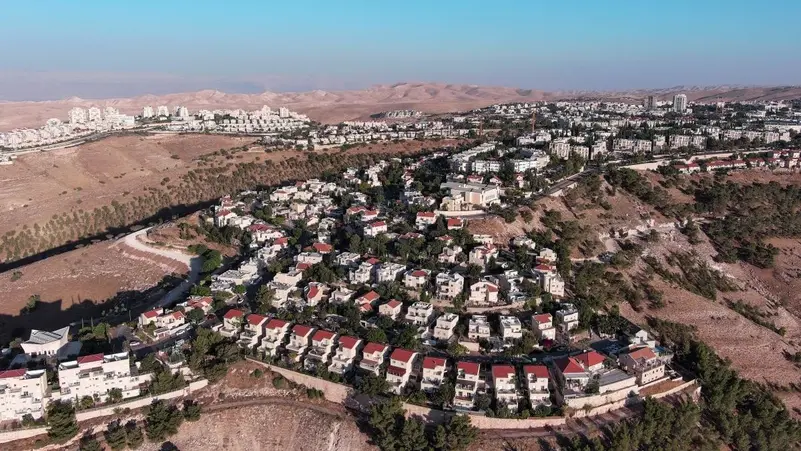
A decades-old agreement governing Jerusalem’s most sensitive religious site is facing renewed pressure as Israeli nationalist activists and politicians increasingly challenge restrictions on Jewish prayer at the al-Aqsa mosque compound.

Get today's headlines by email

The issue was highlighted by comments from Israeli nationalist politician Moshe Feiglin, who openly advocated building a new Jewish temple on the site while visiting the compound, known to Muslims as al-Haram al-Sharif and to Jews as the Temple Mount.
Growing Challenge to Longstanding Holy Site Arrangement
Feiglin prayed and sang religious songs with a group of Jewish worshippers at the site, actions that critics say violate longstanding arrangements intended to preserve stability at one of the world’s most contested religious locations.
Under the Status Quo system, custody of the compound remains with the Jordanian-administered Islamic Waqf. While non-Muslims may visit, Muslim worship is traditionally the only form of prayer permitted inside the compound.
Reports Fuel Concern Over Possible Changes
Recent media reports claiming Israeli and American officials have discussed altering the current arrangements have triggered concern across the region.
According to those reports, a new Israeli body could eventually designate the site as a “multi-faith centre,” potentially allowing expanded Jewish prayer and increasing Israeli oversight of the compound.


video screenshot

At a congressional hearing, Marco Rubio said he had no knowledge of such plans. Meanwhile, Mike Huckabee has frequently emphasised Jewish historical ties to religious sites in Jerusalem and the occupied West Bank.
The office of Israeli Prime Minister Benjamin Netanyahu has repeatedly stated that there has been no change to the Status Quo arrangements.
Islamic Authorities Warn of Consequences
Palestinian and regional officials have warned that any formal alteration to the existing system could provoke serious unrest.
Dr Mustafa Abu Sway, deputy head of the Islamic Waqf Council, said changing the status of the site would risk destabilising relations between Muslims and Jews and could threaten broader regional peace.
Jordan, Egypt and several Gulf states have also expressed concern about what they see as a gradual erosion of Islamic authority at the compound. The British government has likewise called for the historic arrangements governing Jerusalem’s holy sites to be respected.
Nationalists Push for Greater Israeli Control
Among those advocating greater Jewish access is Israeli National Security Minister Itamar Ben-Gvir, who has become a prominent supporter of expanded Jewish prayer rights at the compound.
During last month’s Jerusalem Day celebrations, Ben-Gvir led nationalist supporters through East Jerusalem and visited the site, where he declared that the Temple Mount belonged to the Jewish people. He has previously supported Jewish prayers and religious songs in parts of the compound despite objections from Muslim authorities.
Supporters view such moves as correcting historical restrictions, while opponents argue they undermine a fragile arrangement that has helped prevent wider conflict.
Echoes of Past Violence
The dispute carries particular sensitivity because of its role in previous outbreaks of violence.
In September 2000, then-opposition leader Ariel Sharon visited the compound under heavy police protection. The visit was widely viewed by Palestinians as provocative and became one of the events associated with the outbreak of the Second Intifada.
Over the following five years, violence across Israel, the West Bank and Gaza claimed more than 4,000 lives.
As pressure grows from nationalist groups seeking changes at the site, many observers fear that any significant alteration to the governance or religious practices at Jerusalem’s holiest and most politically sensitive location could once again inflame tensions across the region.

Join the discussion?

Already a member?


Adapted by ASEAN Now. Source 17 June 2026
webfact
webfact
A British couple have described the “surreal” moment a Russian warship fired warning shots near their yacht in the English Channel, as UK authorities investigate the incident.

Get today's headlines by email

Jane and Alan Kelvey were sailing aboard the UK-registered yacht Bright Future about 23 miles south of the Isle of Wight on Tuesday morning when they encountered the Russian frigate Admiral Grigorovich.
Couple Describe Warning Fire
Speaking to BBC Newsnight, Jane Kelvey said the warship first sounded its horn with five short blasts, a maritime signal used to attract attention and indicate uncertainty over another vessel’s intentions.
The couple responded by altering course slightly to port to show they had seen the frigate. According to Jane, another series of horn blasts followed about a minute later, immediately accompanied by several rounds of small-arms fire.
She said the shots appeared to be warning fire directed into the air rather than at the yacht itself.
Jane insisted the vessel was not on a collision course with the Russian warship and said the situation only became concerning once the gunfire began.
Alan Kelvey described the use of warning shots as unnecessary. Shortly afterwards, a team from the Royal Navy patrol vessel HMS Tyne arrived to check on the couple’s welfare and gather details about the encounter.
Conflicting Accounts
The Russian Defence Ministry said the yacht had been making a “dangerous approach” toward the frigate. It stated that the crew attempted to establish radio contact, launched warning flares and eventually fired rifles into the yacht’s path in accordance with international maritime regulations.
The Kelveys disputed parts of that account.
British officials believe the yacht, which has no engine, may have drifted toward the frigate in foggy conditions after departing the UK. The assessment is that the Russian crew may have concluded the vessel was less manoeuvrable and at greater risk of collision.
A UK Ministry of Defence spokesperson said the warning shots were not aimed at the yacht and were intended to prevent a possible collision after attempts to communicate with the vessel.
Russian Naval Activity in the Channel
The incident occurred outside UK territorial waters and has been described by the Ministry of Defence as an isolated event unrelated to the recent interception of a Russian shadow fleet tanker in the Channel.
Russian naval vessels regularly transit the waterway and are routinely monitored by the Royal Navy. The Admiral Grigorovich was being shadowed by the patrol vessel HMS Mersey as part of a routine operation.
According to NATO sources cited by BBC Verify last week, Moscow had tasked the frigate with escorting shadow fleet vessels through the Channel. The ship has reportedly remained at sea for extended periods with support from the repair vessel PM-82.
Satellite imagery reviewed by BBC Verify showed the support vessel operating between the Channel and the North Sea in recent months.
Expert: Likely a Miscalculation
Former Royal Navy rear admiral James Parkin said the use of armed force at sea is normally a last resort and generally reserved for self-defence.
He suggested the episode was more likely the result of a misjudgment than a deliberate attempt to target a British yacht near UK waters.
Although British officials do not believe the incident was linked to the seizure of a shadow fleet tanker days earlier, Parkin noted that operation had been an embarrassment for Moscow, given the presence of a Russian naval vessel in the area.
The encounter comes amid heightened tensions between the UK and Russia and has drawn added attention against a backdrop of growing concern among British officials about increasingly assertive Russian activity.


Join the discussion?

Already a member?


Adapted by ASEAN Now. Source 17 June 2026
webfact
webfact
A Russian artist who openly criticized President Vladimir Putin has been shot dead in eastern Poland, prompting a murder investigation and the detention of two Belarusian nationals.

Get today's headlines by email

Polish prosecutors said Robert Kuzovkov, 44, who worked under the artistic name Semyon Skrepetsky, was killed on Monday morning in the town of Biała Podlaska, around 40km from the Belarusian border.
Fatal Shooting Near Belarusian Consulate
According to prosecutors, Kuzovkov was attacked in a car park about 600 metres from the Belarusian consulate.
Marcin Kozak, a spokesman for the district prosecutor's office in Lublin, said an unidentified gunman approached the artist and fired two shots. After the victim fell to the ground, the attacker allegedly moved closer and fired three additional rounds before fleeing.
Kuzovkov died at the scene. Authorities said he suffered gunshot wounds to the head, chest and back.
Investigators recovered five shell casings and a Geco 9mm Luger bullet. A post-mortem examination is scheduled for Wednesday.
Two Belarusians Detained
Police have detained two Belarusian citizens, aged 33 and 37, near the Belarusian consulate. Prosecutors said their involvement, if any, remains under investigation.
No motive has been officially established.
Kuzovkov had been granted asylum in Poland after leaving Russia in 2021, saying he feared criminal prosecution in his home country. He settled in Biała Podlaska, a town of fewer than 60,000 residents.
Known for Political Caricatures
Using the name Semyon Skrepetsky, Kuzovkov became known for satirical drawings targeting political figures including Putin, Belarusian leader Alexander Lukashenko and Chechen leader Ramzan Kadyrov.
His work portrayed Putin in the arms of Soviet dictator Joseph Stalin, depicted Lukashenko as Adolf Hitler, and mocked Kadyrov and his son Adam. He also produced cartoons criticizing Russian opposition figure Alexei Navalny as well as ordinary Ukrainians.
His cartoons were distributed through Telegram and his YouTube channel, while his home address in Poland was publicly available online.
Friends Recall Security Fears
Belarusian artist Vladislav Bokhan, who knew Kuzovkov, said he learned of the shooting through Polish radio reports and quickly feared his friend might be the victim because of the small size of the town where he lived.
Video posted on social media the evening before the killing showed Kuzovkov attending a Russia Day protest outside the Russian embassy in Berlin. He was carrying artwork depicting Putin and Stalin and dragging a Russian flag behind him.
A friend, Bulat Subkhankulov, said he had repeatedly warned Kuzovkov about the risks associated with his activism and public criticism.
Subkhankulov said he believed the artist had become increasingly fearless despite concerns for his safety, adding that warnings about potential consequences ultimately had little effect.
Kuzovkov is survived by his wife and five children, who remain in Poland.

Join the discussion?

Already a member?


Adapted by ASEAN Now. Source 17 June 2026
webfact
webfact
Recent US intelligence assessments conclude that Iran can effectively shut down the Strait of Hormuz whenever it chooses, giving Tehran a powerful tool to disrupt global trade and energy markets after the recent conflict, according to sources familiar with the findings.

Get today's headlines by email

The assessments suggest Iran demonstrated its ability to block access to the strategic waterway during the war and could repeat the tactic in future crises, even if a framework agreement expected to be signed on Friday succeeds in reopening the route and launching new nuclear negotiations.
Iran's Strait Leverage Raises New US Concerns
One source familiar with the intelligence findings said the conflict had fundamentally changed Iran's calculations, describing control of the strait as a strategic asset with far-reaching economic consequences.
Military Capabilities Remain Intact
US officials believe Iran retains a substantial portion of its military arsenal, including missiles, drones, launch systems and hundreds of fast attack boats capable of harassing shipping or deploying naval mines.
According to sources, intelligence agencies have also observed Iran rebuilding parts of its military-industrial base faster than expected and restarting drone production.
The assessments further conclude that Iran learned it could use strikes against Gulf energy infrastructure as an effective asymmetric weapon, adding another source of leverage beyond direct military confrontation.
Although discussions have taken place about possible allied efforts to help secure the waterway after it reopens, officials remain uncertain about how such arrangements would operate.
Agreement Tied to Reopening the Waterway
A senior US official told CNN that Iran will receive no benefits from the framework agreement unless it keeps the strait open and complies with other commitments. The official said the United States would ease its blockade in proportion to Iran's restoration of maritime traffic.
Another source familiar with the negotiations said Iran's disruption of shipping had strained relations with China and Gulf states, highlighting the economic costs Tehran faces when interfering with global energy flows.
Even if the agreement is implemented, shipping experts and industry officials expect uncertainty to limit traffic through the chokepoint for weeks or months.
Concerns Over Wider Regional Disruption
US intelligence officials are also examining the possibility that Iran could seek to pressure global markets through another key trade route, the Bab-el-Mandeb Strait.
Sources said Tehran has considered using the Houthis in Yemen to disrupt traffic through the Red Sea gateway if negotiations with Washington collapse. Closing both Bab-el-Mandeb and the Strait of Hormuz would have severe consequences for global trade and energy supplies.
While officials noted the Houthis have so far refrained from broad attacks on Western shipping, expanding operations beyond Israeli-linked vessels would represent a major escalation.
Questions Over US Strategy
The assessments have renewed scrutiny of President Donald Trump's decision to launch military operations against Iran. Sources said the administration underestimated Tehran's willingness to close the Strait of Hormuz, partly because officials believed such a move would inflict greater harm on Iran than on the United States.
US officials also expected China to use its influence to discourage Tehran from taking that step.
Instead, intelligence agencies now believe Iran was emboldened by its ability to disrupt shipping and target regional energy infrastructure without exhausting significant military resources.
Some officials assess that Tehran is now more likely to consider closing the strait in future confrontations, particularly after demonstrating both the intent and capability to do so.
Trump said this week that the strait is already partially reopened and should be fully open by Friday when Washington and Tehran are expected to sign a memorandum of understanding. However, questions remain about how any agreement would prevent Iran from using the same tactic again in the future.

Join the discussion?

Already a member?


Adapted by ASEAN Now. Source 17 June 2026

webfact
webfact
Nearly half of Americans now identify as political independents rather than members of either major party, according to a new CNN poll, marking the highest level of partisan independence recorded by the network in more than a decade.

Get today's headlines by email

The survey found that 47% of Americans consider themselves independents, an increase of roughly 10 percentage points since the period following President Donald Trump's first term. The figure is close to the previous high of 48% recorded in CNN polling during 2015.
Shift Away From Party Labels
Democrats and Republicans divide the rest of the population almost evenly. The poll found that 27% of Americans identify as Democrats and 26% as Republicans.
Many independents, however, still lean toward one of the two major parties. When those partisan leanings are taken into account, 39% align more closely with Democrats, 37% with Republicans, and 25% say they do not lean toward either side.
Even when respondents who initially expressed no preference were asked to choose a side, the electorate remained closely divided, underscoring the narrow political balance in the United States.
CNN's polling shows neither party has maintained a significant advantage in overall identification since 2021, when Democrats held a six-point lead. Since then, the gap between the two parties has remained at about one percentage point each year.
Registered Voters Show GOP Decline
Among registered voters, Democrats now hold a slight edge. The poll found that 31% identify as Democrats, compared with 28% who identify as Republicans, while 41% say they belong to neither party.
That represents a notable change from 2024, when 34% of registered voters identified as Republicans, 31% as Democrats and 35% as independents.
The findings suggest Republicans have lost some ground among voters since last year's election cycle, potentially adding to concerns for the party ahead of the midterm elections as Trump's approval ratings have weakened.
Younger Voters Driving Independence
Several demographic groups have moved away from Republican identification since 2024, including younger voters, men and White voters without college degrees.
Among voters under 45, only 17% now identify as Republicans, down from 26% in 2024. Democratic identification among that group has remained largely unchanged at 33%, while half now say they do not belong to either party.
Similar trends were observed among men, particularly younger men, and among White voters without college degrees, with many shifting toward independent status rather than switching directly to the Democratic Party.
Independents Less Engaged Politically
The poll also highlights key differences between independents and partisan voters.
Independents tend to be younger, with 63% under the age of 50, compared with 52% of Democrats and 38% of Republicans. They are also more likely than Republicans to live in urban areas, though less likely than Democrats to do so.
Income levels among independents are generally lower, with nearly half reporting annual household earnings below $50,000.
Politically, independents appear less engaged than partisans. Only 67% are registered to vote, compared with more than 80% of Democrats and Republicans. Just one-quarter say they regularly seek out political news.
Poll Methodology
The CNN poll was conducted by SSRS between May 7 and May 31 among 2,480 adults nationwide using online and telephone interviews. Participants were selected through address-based sampling and random cellphone number sampling. The survey has a margin of error of plus or minus 2.7 percentage points.

Join the discussion?

Already a member?


Adapted by ASEAN Now. Source 17 June 2026

webfact
webfact
The FBI says it has disrupted an alleged plot to attack a UFC event held at the White House, leading to the arrest of five men across four states.

Get today's headlines by email

According to the US Department of Justice, the suspects planned to use explosive-laden drones and sniper teams to target attendees at Sunday's event on the White House South Lawn. Prosecutors allege the operation was designed to create panic among spectators before launching further attacks.
The suspects were identified as Tycen Proper, Bryan Roa, Michael Thomas, Daniel Eskridge and Abraham Alvarez. Authorities arrested them in Ohio, Missouri, Nebraska and California.
Alleged Multi-Stage Attack Plan
Court documents state that the group intended to fly drones into nearby buildings, triggering chaos and driving crowds toward positions where snipers would open fire on what they described as "high-value targets".
Prosecutors further allege that a second group of attackers planned to advance on the White House gates.
The event drew around 4,300 invited guests, while an estimated 85,000 people watched from a nearby fan zone. Fourteen mixed martial arts fighters competed in a series of bouts as part of celebrations marking the 250th anniversary of the United States.
Investigation Began With Family Warning
Investigators say the case came to light after Proper's mother contacted local authorities on 10 June, expressing concern about her son's firearms purchases and online communications.
Prosecutors said Proper, 19, had been interacting with an online group that expressed anti-government and religious extremist views.
During an FBI interview on 11 June, Proper allegedly admitted involvement in planning the attack. Authorities say members of the group first communicated through a TikTok chat called "Vanguard of the Old" before moving some discussions to the encrypted messaging app Signal.
Motives Detailed in Court Documents
According to court filings, participants discussed launching a revolution by attacking wealthy individuals and politicians attending the event.
Prosecutors said conversations included grievances about government corruption, the handling of the Epstein files, data centres and other government policies.
Proper has been charged with conspiracy to commit an offence against the United States and attempted murder of a federal officer. His lawyer has not publicly commented.
Officials Cite Growing Security Concerns
FBI Director Kash Patel said the alleged attack plans had been stopped through a multi-state operation.
Secret Service Deputy Director Matt Quinn later described the case as a serious threat but declined to discuss details while the investigation remains active.
Asked about the alleged plot during the G7 summit in France, President Donald Trump said he had not been briefed on the matter. Vice-President JD Vance told Fox News that the public was being informed because of the scale of the alleged plan.
The arrests come amid growing concern over political violence in the United States. Researchers have reported a rise in targeted political attacks in recent years, while experts warn that such incidents can contribute to further cycles of violence.


Join the discussion?

Already a member?


Adapted by ASEAN Now. Source 17 June 2026
webfact
webfact
Prime Minister Sir Keir Starmer has said he is pleased that “justice has been done” after two men were convicted over a series of arson attacks targeting property linked to him.

Get today's headlines by email

Roman Lavrynovych, 22, a Ukrainian national, and Stanislav Carpiuc, 27, a Romanian citizen born in Ukraine, were found guilty on Monday of conspiring to carry out arson attacks on properties and a vehicle connected to Starmer in 2025.
Prime Minister Responds After Guilty Verdicts
Speaking from the G7 summit in France, Starmer said he was “very pleased for my family's sake” that the men had been convicted.
“Obviously it was a bad attack, and all the details have now come out in court and justice has been done,” he told reporters.
Focus Turns to Alleged Russian Involvement
The verdicts came shortly before a BBC Panorama investigation reported that Russia was behind the attacks.
Starmer said the incidents should be viewed within the wider context of Russia’s war against Ukraine. He pointed to Ukraine’s battlefield successes and the impact of Western sanctions on Moscow, arguing that G7 nations should increase pressure on Russia.
The UK has since announced 70 new sanctions targeting Russia, including measures aimed at the Kremlin’s so-called “shadow fleet” used to transport oil and gas, as well as financial networks accused of helping Moscow circumvent existing restrictions.
The sanctions followed the boarding of a suspected Russian shadow fleet oil tanker in the English Channel on Sunday.
Investigation Traces Recruitment to Telegram Contact
Prosecutors said the attacks were organised after one of the suspects was recruited online by a Russian-speaking Telegram user known as “El Money”, who allegedly promised payment for carrying out the crimes.
The Panorama investigation reported evidence suggesting “El Money” is Evgeny Lyukshin, a 23-year-old Russian diplomat and the son of a senior Russian official.
According to the BBC, the Telegram account offered Russian citizenship in exchange for carrying out additional attacks and circulated messages praising Russian President Vladimir Putin. Russian-based online accounts also allegedly spread disinformation about the motives behind the attacks.
Security Concerns Raised
Former MI6 chief Sir Richard Moore said on Tuesday that Putin was attempting to intimidate Britain through sabotage, cyber operations and arson attacks.
Speaking on BBC Radio 4’s Today programme, Moore said Britain should not be surprised if Russian involvement were eventually confirmed, although the government and intelligence services have not formally attributed the attacks to the Kremlin.
He argued that Moscow may be seeking to expand the conflict beyond Ukraine through disruptive actions designed to distract and intimidate countries supporting Kyiv.
Moore called for continued backing for Ukraine, stronger cyber defences and increased investment in intelligence capabilities. He also said individuals recruited online to act on behalf of hostile states should face lengthy prison sentences if convicted.
Political Reaction
The case has renewed debate over Britain’s security and defence posture.
Former Armed Forces Minister Al Carns, who resigned from government last week alongside Defence Secretary John Healey in a dispute over military funding, said the attacks and subsequent disinformation campaign demonstrated the need to rethink national defence priorities.
Conservative leader Kemi Badenoch also condemned the attacks, saying public officials should never face intimidation or violence because of their role.
“Democracy is settled at the ballot box, not through fear or violence and definitely not through foreign interference from hostile countries,” she said.

Join the discussion?

Already a member?


Adapted by ASEAN Now. Source 16 June 2026
webfact
webfact
Negotiations over a proposed agreement between the United States and Iran remain clouded by uncertainty, despite US President Donald Trump saying the framework has already been signed electronically and describing it as a fair arrangement.

Get today's headlines by email

Speaking three days before the expected signing of a memorandum of understanding in Switzerland, Trump said the central aim of the deal was to ensure Iran could never obtain a nuclear weapon. He warned Tehran would face severe consequences if it attempted to develop, buy or otherwise acquire one.
Nuclear Restrictions at Centre of Agreement
Trump said he personally pushed for changes to the wording of the agreement, arguing that it should prohibit Iran not only from developing nuclear weapons but also from obtaining them by any means.
According to Trump, the revised language required additional negotiations before the framework could be finalised. He said Iran would be barred from developing, purchasing or acquiring a nuclear weapon and insisted Tehran would not violate those terms.
The US president also dismissed reports that Washington would commit funds to rebuilding Iran under the agreement. Iranian media have reported that a reconstruction package worth $300 billion forms part of the framework, but Trump rejected that claim, saying the United States had no obligation to invest in Iran.
On Iran’s stockpile of highly enriched uranium, Trump said Washington intended to recover the material. He argued that doing so carried symbolic importance, even if the uranium itself was not especially valuable.
Trump also defended his decision to withdraw from the 2015 nuclear agreement negotiated during the administration of former president Barack Obama, describing that accord as deeply flawed.
Trump Criticises Israel Over Lebanon
While discussing the broader regional situation, Trump said he did not support regime change in Iran, arguing that such efforts had historically failed. However, he noted that the deaths of several Iranian leaders had already altered the country's leadership landscape.
The US president also delivered unusually direct criticism of Israel’s military actions in Lebanon. He said the conflict with Hezbollah had dragged on for too long and warned that excessive civilian casualties were being caused.
Trump suggested that Syria could play a greater role in dealing with Hezbollah and questioned the need for strikes that destroy residential buildings while targeting militants.
He also criticised Israeli military action shortly before the expected signing of the US-Iran agreement and said Israeli Prime Minister Benjamin Netanyahu needed to act more responsibly regarding Lebanon.
Despite reports of tensions between the two leaders, Trump said his relationship with Netanyahu remained strong and described cooperation between the United States and Israel as highly effective.
Iran Links Deal to Lebanon Ceasefire
Iranian officials have continued to argue that the framework extends beyond Iran itself and includes provisions affecting Lebanon.
Foreign Minister Abbas Araghchi said implementation of the memorandum would begin on Friday and described the end of hostilities across multiple fronts as a key achievement of the first stage of negotiations.
Araghchi said discussions had been divided into two phases. The first focused on ending the war, reopening the Strait of Hormuz, releasing frozen Iranian assets and reconstruction efforts. A second 60-day negotiating period is expected to address sanctions relief and the nuclear issue in greater detail.
He also warned that any future Israeli military action against Lebanon would violate the understanding reached with the United States.
Missiles and Drones Remain Unresolved
Although Trump has presented the agreement as a major diplomatic success, significant questions remain unanswered.
Israeli and European officials have expressed concern that Iran’s ballistic missile programme does not appear to be covered by the current framework. European leaders, including French President Emmanuel Macron and European Commission President Ursula von der Leyen, have urged that missile capabilities be included in any final settlement.
Iran has long refused to negotiate over its missile programme, describing it as a matter of national defence. Israeli officials fear that large-scale missile attacks could inflict damage comparable to that caused by a small nuclear weapon.
Questions also remain over Iran’s drone capabilities and the future of its regional proxy groups. Analysts in Israel believe there is no guarantee that negotiations will produce a final agreement, leaving key security concerns unresolved.
For now, Trump continues to frame the emerging accord around a single objective: preventing Iran from ever obtaining a nuclear weapon. Yet disputes over missiles, Lebanon, Hezbollah and broader regional security issues are already testing the framework before it is formally signed.

Join the discussion?

Already a member?


Adapted by ASEAN Now. Source 16 June 2026
webfact
webfact
Leaders of the G7 nations gathered in France on Tuesday with the United States-Iran agreement and the war in Ukraine dominating the agenda, as European allies seek progress on both crises.

Get today's headlines by email

French President Emmanuel Macron, hosting the summit in Evian-les-Bains near the Swiss border, said leaders would focus on ensuring that the agreement between Washington and Tehran is turned into a “solid, serious” final settlement.
Focus on Strait of Hormuz
Macron said a working lunch on Tuesday would centre on reopening the Strait of Hormuz, a vital shipping route for global energy supplies. Discussions are expected to include a possible French-British maritime security mission and alternative energy transport routes that avoid the waterway.
US President Donald Trump has said the strait would be fully reopened on Friday, when a formal agreement is expected to be signed in Geneva.
The preliminary deal, digitally signed on Monday, is set to open a 60-day negotiating period covering issues including Iran’s stockpile of highly enriched uranium and the lifting of international sanctions.
The G7 brings together the United States, France, the United Kingdom, Canada, Germany, Italy, Japan and the European Union.
Leaders from the United Arab Emirates, Qatar and Egypt are also attending the talks, although diplomats say they are not expected to play a major role in discussions on Iran’s nuclear programme.
Arriving in France on Monday evening, Trump welcomed the agreement, describing it as a deal that would bring significant benefits.
European Backing for Agreement
Before the summit opened, the leaders of France, Germany, Italy and the United Kingdom issued a joint statement, also signed by Canada, congratulating the United States, Iran and mediators on what they described as a diplomatic breakthrough.
They stressed the importance of detailed negotiations and rapid implementation of the agreement to allow tanker traffic to resume through the Strait of Hormuz.
Macron later said France and its partners stood ready to move quickly to support the reopening of the waterway. Paris and London have promoted plans for a maritime mission aimed at restoring security in the area when conditions permit.
Ukraine Remains High on Agenda
The war in Ukraine is expected to be the second major focus of the summit, with European leaders hoping to persuade Trump that previous US proposals for ending the conflict have favoured Moscow too heavily.
Ukrainian President Volodymyr Zelenskyy is participating in Tuesday’s opening session, which is devoted to efforts to build peace in Ukraine, and could also hold separate talks with Trump.
On Monday, Zelenskyy renewed an offer to meet Russian President Vladimir Putin at the summit. Putin previously rejected a similar proposal, saying there was little value in a meeting without a draft agreement.
Europe Seeks Pressure on Russia
European Commission President Ursula von der Leyen said Ukraine was continuing to resist Russian advances and had regained some territory while developing the ability to strike targets deep inside Russia.
She also argued that sanctions were placing increasing strain on Russia’s economy.
Negotiations between Moscow and Kyiv have stalled as both sides continue to intensify military attacks.
European governments are seeking to demonstrate that they remain open to talks with Russia while also increasing sanctions pressure and military support for Ukraine, arguing that Moscow is responsible for the lack of progress toward a settlement.
Trump said he held positive conversations on Sunday with both Zelenskyy and Putin and believed both leaders were willing to explore steps toward ending the war.


Join the discussion?

Already a member?


Adapted by ASEAN Now. Source 16 June 2026
webfact
webfact
Dozens of Ukrainian drones targeted Moscow overnight, damaging a major oil refinery and disrupting air traffic across the Russian capital, according to city officials.

Get today's headlines by email

Moscow Mayor Sergey Sobyanin said one drone struck a facility at the Moscow Refinery in the southeastern Kapotnya district. He said there were no casualties and emergency crews were working at the site.
Videos circulating on social media appeared to show flames and thick black smoke rising from the Gazprom-owned refinery, one of the largest fuel-processing facilities serving the Russian capital.
Drone Campaign Intensifies
The attack marked the ninth consecutive day of Ukrainian drone strikes on Moscow, according to statements issued by Sobyanin.
Ukraine has increasingly expanded its long-range drone campaign against targets deep inside Russia, a strategy Kyiv has described as "long-range sanctions." The number of drones reportedly intercepted around Moscow on Tuesday was the highest recorded by the mayor since mid-May.
Sobyanin said Russian forces have shot down 1,134 Ukrainian drones heading toward Moscow so far this year, surpassing the 734 interceptions he reported for all of 2025.
Kyiv Says Strikes Are a Response to Russian Attacks
The latest strike followed a major Russian attack on Kyiv a day earlier that killed at least five people and damaged a historic cathedral.
Ukrainian President Volodymyr Zelenskyy shared footage that he said showed the burning Moscow refinery, describing the attack as part of Ukraine's long-range strike campaign.
"Russia must be compelled to end the war against our people," Zelenskyy said, calling the operation a response to continuing Russian attacks and the prolongation of the conflict.
Andriy Kovalenko, head of Ukraine's Counter-Disinformation Center, said the refinery processes around 11 million tonnes of oil annually and supplies roughly 40% of Moscow's gasoline demand. He argued the strike demonstrated the limits of Russia's air-defence network despite extensive protection around the capital.
Airports Face Restrictions
Russia's Defence Ministry said its forces destroyed at least 172 Ukrainian drones overnight across the country, with the Moscow attack forming part of a broader wave of strikes.
Russia's aviation authority imposed temporary flight restrictions at more than a dozen airports, including all four of Moscow's international hubs: Sheremetyevo International Airport, Domodedovo International Airport, Vnukovo International Airport and Zhukovsky International Airport.
Other affected airports stretched from Sochi on the Black Sea coast to Nizhnekamsk in the republic of Tatarstan.
Russia and Ukraine Continue Long-Range Strikes
Ukraine's air force said Russia launched 132 drones and two missiles overnight. It said 114 drones were intercepted or suppressed, while both missiles and 16 drones struck targets at nine locations.
The latest exchanges came as Zelenskyy met Western leaders, including US President Donald Trump, at the G7 summit in France.
Ahead of the gathering, Zelenskyy said he would again urge Ukraine's allies to increase pressure on Russian President Vladimir Putin to end Moscow's invasion.

Join the discussion?

Already a member?


Adapted by ASEAN Now. Source 16 June 2026

webfact
webfact
US President Donald Trump has said a preliminary agreement aimed at ending the war with Iran has already been signed, with further details expected to be released in the coming days.

Get today's headlines by email

Speaking alongside Emmanuel Macron during the G7 summit on Monday, Trump said the deal had been completed and would soon be made public.
Agreement Signed, Details Due Soon
"I am very happy to say it's signed, the deal is all signed," he said.
Senior US officials later disclosed some elements of the framework, saying the Strait of Hormuz is expected to reopen on Friday, the same day the agreement is due to be formally signed in Geneva. Trump said the document was a "very powerful" one and indicated it would be released publicly shortly after the ceremony.
Ceasefire Extended as Nuclear Talks Begin
According to US officials, the agreement was electronically signed by Trump, Vice President JD Vance and Iranian Parliament Speaker Mohammad Bagher Ghalibaf.
The framework extends the current ceasefire by 60 days while negotiations continue on a comprehensive settlement. Technical discussions on Iran's nuclear programme are expected to begin this week.
Officials said any easing of sanctions or release of frozen Iranian assets would depend on Tehran meeting commitments under the agreement. Vance said Iran's commitment never to acquire a nuclear weapon was built into the framework and would be subject to verification.
Regional Tensions Persist
The breakthrough was first announced on Sunday by Shehbaz Sharif, whose government helped mediate the talks. He said the agreement included the immediate cessation of military operations across all fronts, including Lebanon.
However, US officials clarified that while Lebanon falls under the ceasefire framework, the withdrawal of Israeli troops from Lebanese territory is not a condition of the deal. They added that Israel would retain the right to defend itself.
Israeli Prime Minister Benjamin Netanyahu said on Monday that Israeli forces would remain in security zones in Lebanon, Syria and Gaza for as long as necessary. He also reiterated that Iran would not be allowed to obtain nuclear weapons regardless of any agreement.
His comments came after reports of a deadly Israeli strike in southern Lebanon, the first reported since the deal was announced. Hezbollah said it responded by launching missiles and drones at Israeli forces.
Mixed Reactions to Framework Deal
Trump said he had ordered the lifting of a US naval blockade of Iranian ports and claimed ships carrying oil had already begun moving through the Strait of Hormuz.
Iranian Deputy Foreign Minister Kazem Gharibabadi confirmed the halt in military operations and said Qatari mediators spent up to 15 hours in talks in Tehran to secure the agreement.
Iranian state media portrayed the deal as a victory, while the country's military command said the US and Israel had been forced to accept defeat. However, Iran's foreign ministry struck a more cautious tone, saying Tehran still harboured deep mistrust of Washington and viewed the framework only as a first step towards reducing tensions.
Lebanese President Joseph Aoun welcomed the announcement, expressing hope that it would lead to lasting measures to end regional violence.
European leaders, including those of the UK, France, Germany and Italy, welcomed the development and reiterated that Iran must never obtain a nuclear weapon. UK Prime Minister Keir Starmer described the agreement as a significant step towards ending the conflict, improving regional stability and reopening the Strait of Hormuz.


Join the discussion?

Already a member?


Adapted by ASEAN Now. Source 16 June 2026
webfact
webfact
The ceasefire agreement brokered by US President Donald Trump with Iran has created a major political challenge for Israeli Prime Minister Benjamin Netanyahu, undermining key pillars of the security and foreign policy credentials that have defined his career.

Get today's headlines by email

For years, Netanyahu portrayed himself as a leader with significant influence in Washington and positioned confronting Iran as the centrepiece of Israel’s national security strategy. The new agreement, however, has raised questions about both claims, with Israel appearing sidelined during negotiations and Iran emerging from the conflict without the outcome Netanyahu had sought.
Alliance Strains After Ceasefire Agreement
The deal has also intensified concerns over Israel’s ability to continue military operations against Hezbollah in Lebanon, after Tehran insisted that the ceasefire should apply to military activity across multiple fronts, including Lebanon.
Growing Political Pressure at Home
The agreement has drawn criticism from across Israel’s political spectrum. Opposition leader Yair Lapid told parliament that Netanyahu faced a choice between a damaging confrontation with Israel’s closest ally or accepting an arrangement that could compromise Israeli interests.
Trump’s public criticism of Netanyahu following an Israeli strike on Beirut has further fuelled debate ahead of an election that must be held before the end of October. Political rivals and commentators have seized on the remarks as evidence of deteriorating relations between Washington and Jerusalem.
Pressure is also emerging from within Netanyahu’s governing coalition. Far-right National Security Minister Itamar Ben-Gvir argued that Israel was not bound by an agreement that failed to guarantee its security.
Likud lawmaker Ariel Kallner said Israel would continue to defend itself, while declining to specify whether military operations would continue under the new arrangement.
Former Mossad official and Iran specialist Sima Shine questioned why the United States had accepted terms that could allow Iran to maintain influence through Hezbollah in Lebanon, describing the deal as deeply unpopular among both Israel’s political leadership and security establishment.
Security Strategy Under Scrutiny
Netanyahu has so far remained largely silent, an unusual stance for a leader who has often been quick to declare success after military operations. His reluctance to comment has been interpreted by some observers as a sign of the difficult choices now facing his government.
Since the Hamas-led attacks of 7 October 2023, Netanyahu has pursued a more aggressive security doctrine aimed at eliminating threats before they fully emerge. That approach has led to extended Israeli military operations in Gaza, Lebanon and Syria.
Despite Israel’s campaign in Gaza, Hamas continues to retain control over significant parts of the territory, while international efforts to establish a post-war political framework remain stalled. At the same time, Israel’s military commitments across several fronts have increased pressure on armed forces and reservists.
Limited Room for Manoeuvre
Critics argue that repeated confrontations with Hezbollah and Iran have failed to eliminate Israel’s principal adversaries. Instead, some analysts say Iran’s leadership has become more hardline and continues to wield influence across the region.
Security analyst Danny Citrinowicz said Israel must reassess its strategy towards Tehran and adopt more realistic objectives. He warned that any Israeli action viewed in Washington as an attempt to undermine the agreement could provoke a strong response from the United States.
Unlike previous disputes with US administrations, analysts note that Netanyahu has fewer opportunities to bypass the White House by appealing directly to Congress or public opinion in the United States.
As Israel heads towards a general election, Netanyahu’s long-standing argument that he offers the strongest protection against regional threats is facing renewed scrutiny. Rather than securing a decisive victory over Iran, the ceasefire has left him confronting a difficult choice between challenging a key ally or adapting to an agreement he did not shape.

Join the discussion?

Already a member?


Adapted by ASEAN Now. Source 16 June 2026
webfact
webfact
A US Air Force B-52 Stratofortress bomber crashed shortly after taking off from Edwards Air Force Base in southern California on Tuesday, prompting an emergency response and the closure of the airfield.

Get today's headlines by email

The incident occurred at about 11:20 local time (19:20 GMT), according to a statement from the base. Officials did not immediately confirm whether anyone was injured in the crash.
Emergency crews were dispatched to the scene, where a large plume of black smoke rose into the sky and was visible from miles away.
“Emergency crews immediately responded to the scene and the situation is ongoing. More information will be provided as it becomes available,” the base said.
A spokesperson for Edwards Air Force Base declined to provide further details when contacted by the BBC.
Airfield Closed After Crash
Television footage from the area showed a scorched and smoking crash site in the Mojave Desert.
In a later update posted on X, the base said the airfield had been closed and all inbound aircraft were being diverted. Officials also suspended all non-commercial visitor passes to allow the installation to focus on emergency operations.
Authorities have not yet released details on what caused the crash.


video screenshot
Long-Serving Strategic Bomber
The Boeing B-52 Stratofortress has been a key part of the US Air Force since the 1950s. The long-range strategic bomber is capable of carrying a payload of up to 70,000 pounds, including conventional munitions and nuclear cruise missiles.
Designed for extended missions, the aircraft can refuel in flight, giving it a potentially global reach. It typically operates with a crew of five: an aircraft commander, pilot, radar navigator, navigator and electronic warfare officer.
The B-52 has recently been involved in operations linked to the latest US-Israeli conflict with Iran.
Lawmakers Offer Support
Edwards Air Force Base is located about 100 miles (160km) north of Los Angeles.
Congressman Jay Obernolte, whose district includes the base, said on Facebook that he and his wife were praying for those involved in the crash, particularly the crew, their families and emergency responders.
Meanwhile, Lisa McClain wrote on X that her thoughts were with everyone affected by the incident. She thanked emergency personnel responding to the scene and expressed support for US service members.
The emergency response remained ongoing as officials continued to assess the situation.


Join the discussion?

Already a member?


Adapted by ASEAN Now. Source 16 June 2026
webfact
webfact
A memorandum of understanding between the United States and Iran has brought an end to months of conflict, reopening the Strait of Hormuz and extending a ceasefire that has eased pressure on global markets and regional security.

Get today's headlines by email

The agreement, announced after intensive negotiations, is expected to restore shipping through one of the world's most important waterways and remove restrictions on Iranian ports. However, key issues, including Iran’s nuclear programme and the future of sanctions, have been postponed for further talks.
War's Lasting Consequences
The conflict has left deep scars across the Middle East. Thousands of people were killed, while homes, businesses and infrastructure suffered extensive damage.
The closure of the Strait of Hormuz disrupted the movement of oil, natural gas and industrial products, including fertilisers and materials used in manufacturing. Concerns remain that the disruption could have longer-term effects on food supplies in poorer regions, particularly parts of sub-Saharan Africa.
Officials in Gulf Arab states are also reassessing their security strategies following the war. Some have privately discussed reducing reliance on Washington and pursuing more balanced relations with regional powers, including Iran.
Return to Negotiations
The agreement effectively restores conditions that existed before the outbreak of hostilities on 28 February.
Before the conflict began, American and Iranian officials had been engaged in negotiations in Geneva aimed at addressing concerns over Tehran’s nuclear activities. According to sources familiar with the talks, Iranian representatives believed serious progress was being made and had presented both proposals and concessions during discussions.
The new memorandum creates an opportunity for those negotiations to resume while allowing commercial shipping to return to the Strait of Hormuz.
Miscalculations and Political Fallout
The war began with a series of surprise attacks by the United States and Israel, whose leaders predicted a swift campaign that would weaken Iran’s leadership and potentially bring about political change in Tehran.
Instead, Iran’s ruling establishment survived and quickly reorganised following the deaths of senior figures, including Supreme Leader Ayatollah Ali Khamenei. Leadership positions were rapidly filled by a new generation of officials and commanders linked to the Islamic Revolutionary Guards Corps.
Rather than collapsing, the Iranian government emerged from the conflict intact, strengthening the position of hardline figures who viewed the war as an existential threat to the Islamic Republic.
Iran responded by pursuing a strategy that included pressure on regional shipping routes and attacks against targets linked to the United States, Israel and several Arab neighbours.
Israel Faces Difficult Choices
Israel, a key partner in the conflict, was not included in negotiations over the memorandum and has reacted with concern to the outcome.
Prime Minister Benjamin Netanyahu, who had long argued that Iran represented Israel’s greatest security threat, now faces criticism from political opponents who accuse him of harming Israel’s strategic position.
Attention is also focused on Israel’s military presence in parts of Lebanon, Syria and Gaza. Israeli officials have indicated that some occupied areas could remain under military control for an extended period, a stance that continues to generate political debate.
An Israeli air strike on Beirut’s southern suburbs shortly before the agreement was reached appeared to increase pressure on negotiators as diplomatic efforts entered a critical phase.
Uncertain Path Forward
While the memorandum has halted active fighting, it falls short of a comprehensive peace settlement. The most contentious issues have been deferred, and significant distrust remains between Washington and Tehran.
For now, the agreement has brought an end to a costly conflict and reopened channels for diplomacy. Whether it can evolve into a broader settlement capable of reshaping relations between the United States and Iran remains uncertain.

Join the discussion?

Already a member?


Adapted by ASEAN Now. Source 16 June 2026
webfact
webfact
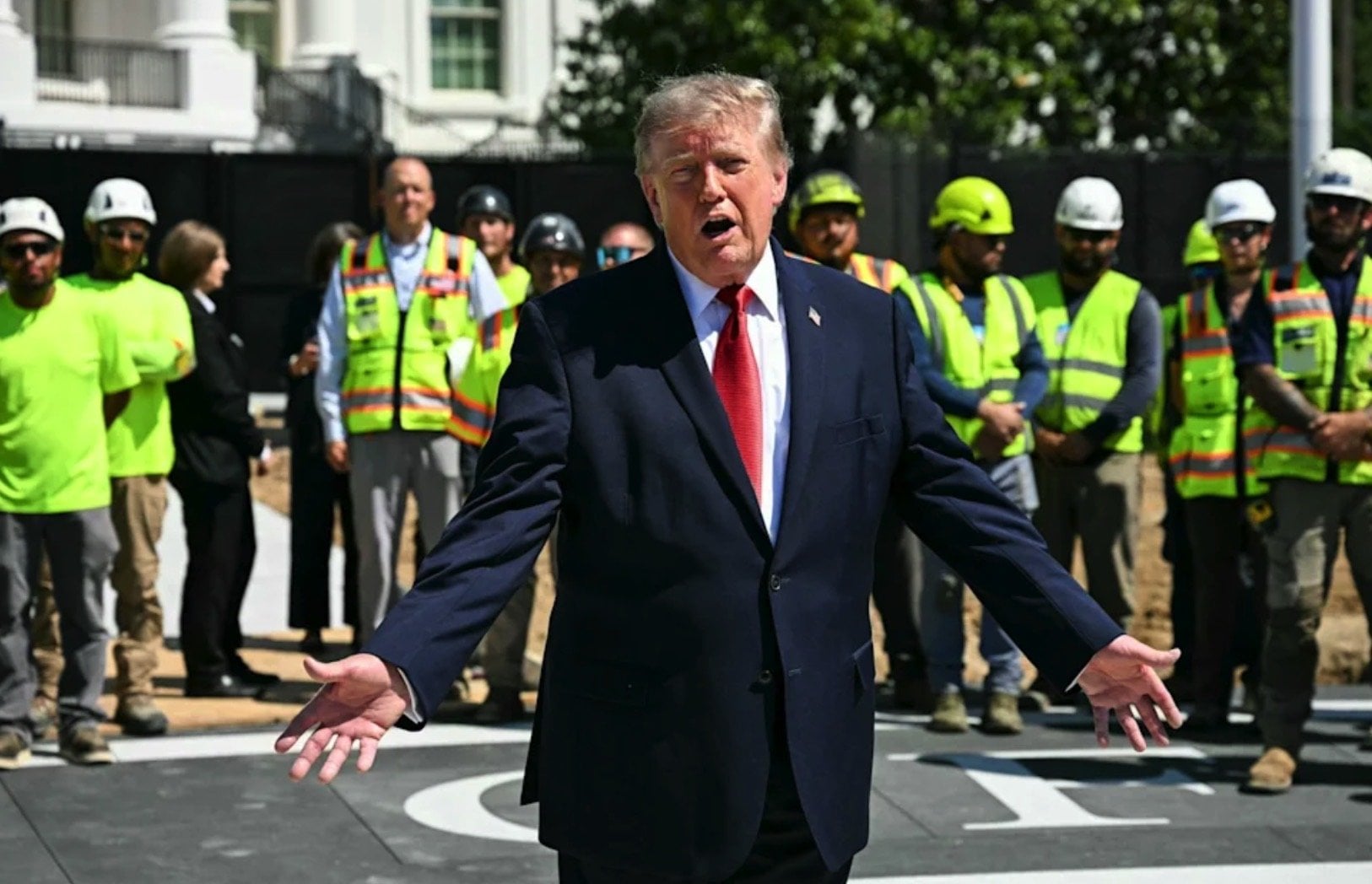
The White House hosted its first professional sporting event on Sunday night as President Donald Trump celebrated his 80th birthday and the approaching 250th anniversary of American independence with a UFC card staged on the South Lawn.

Get today's headlines by email

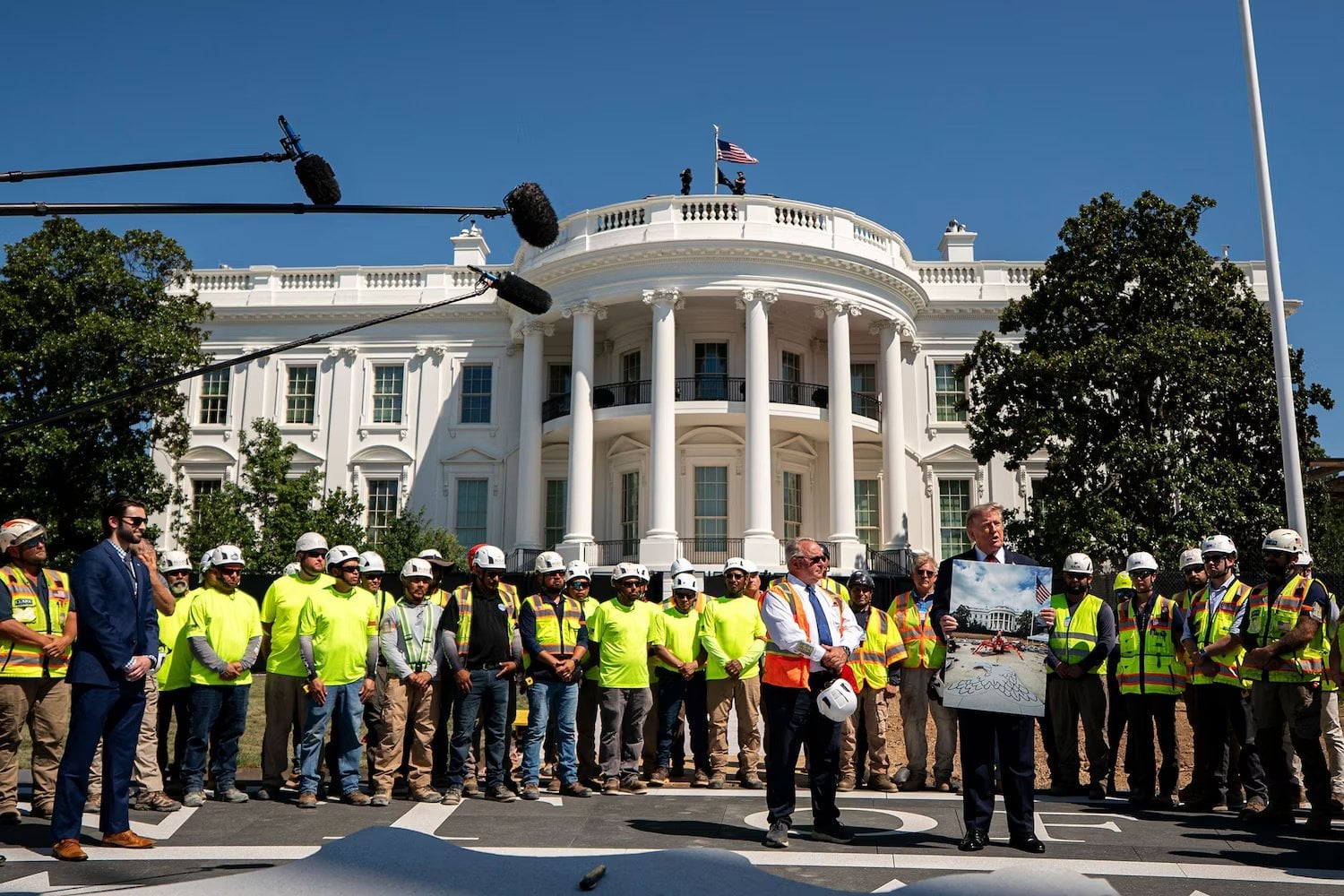
The event transformed a space traditionally used for state functions, diplomatic ceremonies and national celebrations into an outdoor arena beneath a massive steel structure known as the Claw. Military aircraft flyovers accompanied Trump's arrival alongside UFC president Dana White, while thousands of spectators gathered on the South Lawn and the nearby Ellipse.
White House hosts first professional UFC event
Organizers had delayed the start by an hour because of forecasts of thunderstorms, but the weather held throughout the night.
The evening featured a strong display of patriotic symbolism. A joint flyover involving the Blue Angels and Thunderbirds took place during the event, while a B-1 bomber later passed overhead. Chants of "U-S-A" echoed around the venue throughout the night.
Guests included technology executives, political allies, cabinet officials and foreign dignitaries, reflecting the unusual blend of politics, business and combat sports surrounding the event.
Gaethje stuns unbeaten Topuria for lightweight title
The main event produced one of the biggest upsets in recent UFC history. American fighter Justin Gaethje defeated previously unbeaten Ilia Topuria to capture the undisputed lightweight title after Topuria's corner stopped the contest before the fifth round.
Gaethje survived several difficult moments early in the fight as Topuria appeared to be in control. However, the American rallied as the bout progressed, leaving the champion badly swollen and bloodied by the later rounds.
The seven-fight card proved highly entertaining from a sporting perspective. Every contest ended by knockout or technical knockout, marking the first time in the UFC's history that an entire event card had finished without a single fight going to the judges' scorecards.
Other notable winners included Ciryl Gane, who secured the interim heavyweight title, along with Josh Hokit, Sean O'Malley and Bo Nickal.
Michelle Obama smear overshadows celebratory night
Despite the festive atmosphere, controversy emerged during the fight card. Following his second-round victory over Derrick Lewis, heavyweight prospect Josh Hokit left the cage to present Trump with a necklace before delivering a post-fight speech.
During his remarks, Hokit repeated a false conspiracy theory about former First Lady Michelle Obama. The claim, which has circulated for years despite being repeatedly debunked, drew mixed reactions from spectators and quickly became one of the night's most controversial moments.
The incident overshadowed parts of an event that had been intended as a showcase of American achievement and national pride.
Politics, patriotism and sport collide at White House
Politics surfaced elsewhere during the event. During O'Malley's bout against Canadian fighter Aiemann Zahabi, some spectators chanted slogans referencing Trump's past remarks about Canada. O'Malley later defeated Zahabi by second-round technical knockout.
The evening concluded shortly after 1am on Monday. Fireworks lit up the sky above the White House as Trump entered the cage to congratulate Gaethje and celebrate the American fighter's championship victory.
What began as a showcase of American patriotism and sporting spectacle ultimately combined elite competition, political theatre and controversy, leaving the historic event remembered for more than just the action inside the cage.

Join the discussion?

Already a member?


Adapted by ASEAN Now. Source 15 June 2026
webfact
webfact
Marius Borg Høiby, the son of Norway’s Crown Princess Mette-Marit, has been sentenced to four years in prison after being found guilty of two counts of rape by Oslo District Court.

Get today's headlines by email

The 29-year-old was cleared of two other rape charges but convicted of several additional offences, including violence and abuse against former partners. Høiby denied all four rape allegations.
The verdict was delivered on Monday by a panel of three judges. Høiby did not attend court in person because of unspecified health reasons and instead joined proceedings by video link.
Court Delivers Mixed Verdict
Prosecutors had sought a prison sentence of seven years and seven months, while defence lawyers argued for a term of 18 months. The defence team said it would consider an appeal.
Judge Jon Sverdrup Efjestad opened the hearing with a summary of the court’s findings before presenting a detailed 128-page ruling.
The court found Høiby guilty of raping two women. One case related to an incident on the Crown Prince’s Skaugum estate in 2018, while the second involved a woman in Oslo in 2024.
However, judges acquitted him of two other rape charges connected to separate incidents involving women he met in Oslo and in the Lofoten Islands.
Evidence and Victims
The case involved six women in total. One of the victims attended court to hear the verdict and was seen crying after the guilty finding.
Prosecutors argued that she had been asleep or otherwise unable to resist when the assault occurred following a party in Oslo in March 2024. The woman testified that she had been asleep and would never have consented to the act.
The court accepted that she had been incapable of resisting what took place. All four rape allegations in the case involved women who were either asleep or incapacitated.
Høiby was also convicted of abusing former girlfriend and influencer Nora Haukland, as well as causing serious bodily harm to another former partner. He was further found guilty of offences involving a sixth woman, known publicly as the “Frogner woman” after the Oslo district where she lived.
Compensation and Possible Appeal
The court ordered Høiby to pay a total of 640,000 Norwegian kroner in compensation to four women, including Haukland, the only complainant judges ruled could be identified publicly.
The sentence exceeded the punishment proposed by the defence, despite Høiby having admitted to other offences, including transporting 3.5kg of marijuana and committing traffic violations.
His lawyer, Petar Sekulic, said the defence had not yet spoken with Høiby following the ruling but indicated that an appeal remained a possibility. Defence lawyer Ellen Holager Andenæs said the team welcomed the acquittals while expressing concerns about other parts of the judgment.
Royal Family Under Scrutiny
Although Høiby is not a member of the royal family, the case has drawn significant public attention because he was raised alongside Crown Prince Haakon and Crown Princess Mette-Marit after her marriage into the royal household.
The palace said it would not comment on the verdict. Attention has also focused on Mette-Marit’s health after she was placed on a lung transplant list due to pulmonary fibrosis.
Commentators said the case had damaged public perceptions of Norway’s royal family, although concern over the crown princess’s health has increasingly dominated public discussion.

Join the discussion?

Already a member?


Adapted by ASEAN Now. Source 15 June 2026
webfact
webfact
At least nine people were killed in a large-scale Russian missile and drone assault on Ukraine that damaged a historic cathedral in Kyiv, according to Ukrainian officials.

Get today's headlines by email
Cathedral Hit During Nationwide Attack
Four people died in attacks on the capital, while five rescue workers were killed while tackling a fire caused by a strike in the north-eastern city of Kharkiv. Authorities said a further 23 people were injured in Kyiv and five were wounded in Kharkiv.
The overnight bombardment left much of the country under air raid alerts on Monday morning.
Historic Religious Site Damaged
Among the sites affected was the 11th-century Dormition Cathedral, part of the UNESCO-listed Kyiv-Pechersk Lavra.
Images from the scene showed a large hole in one side of the cathedral and fire damage to part of its roof. Ukrainian President Volodymyr Zelensky described the strike as “one of the biggest Russian crimes against Christian culture today”.
The fire at the cathedral was later extinguished.
Russia denied striking the religious landmark, claiming instead that a US-made Patriot air defence missile had hit the site after apparently malfunctioning. Moscow did not provide evidence to support the allegation.
The cathedral has suffered damage before during Russia’s full-scale invasion, which began in 2022. In January, Ukrainian officials reported damage to several buildings within the Kyiv-Pechersk Lavra complex. The cathedral had also been largely destroyed during World War Two before being rebuilt.
Widespread Damage Across Kyiv
Kyiv Mayor Vitali Klitschko said drone and missile attacks set buildings and vehicles ablaze and cut electricity supplies to more than 140,000 residents.
Zelensky said Russia launched 70 missiles and 611 drones during the overnight assault. Russia’s military said its “massive strike” targeted Ukrainian military facilities.
French President Emmanuel Macron condemned the damage to the cathedral, writing on X that “nothing justifies this attack on our universal heritage”.
G7 Meeting Looms
The attacks came ahead of a G7 summit in France, where the war in Ukraine is expected to feature prominently on the agenda.
Zelensky said the gathering should deliver a “decisive and meaningful” response, including greater pressure on Russia and additional air defence support for Ukraine, particularly anti-ballistic missile systems.
The Ukrainian leader also said he had spoken with US President Donald Trump about efforts to bring an end to the conflict.
Meanwhile, Russian officials reported that a Ukrainian drone strike on the city of Tula killed three people and injured three others, including a one-year-old child.


Join the discussion?

Already a member?


Adapted by ASEAN Now. Source 15 June 2026
webfact
webfact
Prime Minister Keir Starmer has announced plans to ban social media access for children under 16 across the UK, saying the move is needed to protect young people from harmful online content, bullying and potential mental health risks.

Get today's headlines by email

Speaking at Downing Street, Starmer said the measure would deliver “real change for our children and our future”, arguing that the benefits of social media no longer outweighed the risks faced by many young users.
Wider Restrictions Planned
Under the proposals, children under 16 would be barred from using major social media platforms. The government also intends to introduce restrictions on other online products, including gaming applications, with measures such as removing the ability for young users to communicate with strangers.
Starmer acknowledged that social media offers benefits for young people but said the government had concluded that a complete ban was the best option.
“This is not something I do lightly,” he said, adding that government decisions often involve difficult choices and that protecting children had become the priority.
Legislation Expected This Year
The prime minister said the government aims to pass legislation before the end of the year, with the restrictions expected to take effect next spring.
The announcement comes as concerns grow over the impact of online platforms on children’s wellbeing and safety. Starmer presented the policy as part of a broader effort to give children a fairer and safer environment in which to grow up.
Addressing concerns that teenagers may find ways around the restrictions, as some have reportedly done in Australia following similar measures, Starmer said the possibility of circumvention should not prevent action.
He compared the proposal to existing age restrictions on alcohol sales, arguing that laws serve not only as rules but also as statements of societal values. He said the ban would help shape expectations among parents and children and contribute to a safer online environment.
Support From Campaigners and Parents
The announcement was made before an audience that included campaigners advocating stronger protections for children online, including parents who had lost children. Starmer thanked those campaigners for their efforts and said he would not compromise on children's safety and happiness.
He acknowledged that implementing and enforcing the ban would be challenging but said the government had consulted widely, reviewed available evidence and examined approaches taken by countries such as Australia.
Tech Industry Concerns
Asked whether the policy could provoke opposition from major US technology companies, Starmer rejected suggestions that the move was anti-technology.
He said supporting technological innovation and artificial intelligence could coexist with stronger protections for children, arguing that the development of new technologies should not come at the expense of young people's safety.
The government also said that responses to its “growing up in the online world” consultation showed strong public backing for tougher measures, with nine in 10 parents supporting a minimum age of 16 for access to social media platforms.


Join the discussion?

Already a member?


Adapted by ASEAN Now. Source 15 June 2026
webfact
webfact
Pakistan's Prime Minister Shehbaz Sharif said a ceasefire agreement between the United States and Iran is now in place, with a formal signing ceremony scheduled for June 19 in Switzerland.

Get today's headlines by email
Sharif says ceasefire now in effect
Sharif said both sides had agreed to the "immediate and permanent termination of military operations on all fronts, including in Lebanon."
Israel renews attacks on Beirut suburbs
The announcement came as Israel renewed air strikes on the southern suburbs of Beirut despite the reported ceasefire, raising questions about the agreement's implementation.
Trump declares deal complete
In a post on Truth Social, President Donald Trump declared that the deal with Iran was "now complete."
"Congratulations to all!" Trump wrote.
Trump also said he had authorized the reopening of the Strait of Hormuz and ordered the immediate removal of the US naval blockade.
"Ships of the World, start your engines. Let the oil flow!" he said.
Talks to continue before signing ceremony
Sharif thanked the US and Iran for their commitment to the agreement, as well as Qatar for supporting efforts to secure the deal.
He also praised the leadership of Saudi Arabia and Turkiye for what he described as their significant contributions to the negotiations.
According to Sharif, a series of meetings will take place this week to prepare for technical discussions ahead of the official signing ceremony in Switzerland on June 19.

Join the discussion?

Already a member?


Adapted by ASEAN Now. Source 15 June 2026
webfact
webfact
President Donald Trump on Sunday urged Israel and Iran not to jeopardize an emerging peace agreement, warning that renewed violence in Lebanon could undermine efforts to finalize a deal aimed at easing tensions across the region.

Get today's headlines by email

Writing on Truth Social, Trump said negotiators were close to reaching an agreement that could bring stability not only to Iran and the United States but also to neighboring Lebanon.
“We are very close to a Deal that will bring peace to the region, including to Lebanon, and all sides should stand down,” Trump said. He called for an end to attacks by both Israel and Hezbollah, adding: “This could be the beginning of a long and beautiful peace — Let’s not blow it!”
Beirut strike raises concerns
Trump’s comments came after Israeli forces struck Beirut on Sunday in response to three projectiles launched from Lebanon into northern Israel.
The Israeli military said no injuries were reported from the projectile fire and that the incident was being investigated. Trump described the initial attack on Israel as “small and meaningless,” noting that nobody had been killed or wounded.
He also criticized Israel’s retaliatory strike, saying the attack on Beirut should not have taken place at a time when negotiations were nearing a breakthrough.
Deal faces regional complications
According to a source cited by NewsNation, Israel’s military action in Lebanon has complicated efforts to complete the proposed agreement between Washington and Tehran. Israel is not a direct participant in the talks, although Israeli Prime Minister Benjamin Netanyahu’s office said earlier this week that he supports Trump’s commitment to securing a deal.
Trump had suggested on Saturday that a ceasefire agreement could be signed on Sunday. However, Iranian officials and state media have pushed back against that timeline.
Iran remains cautious
Efforts to advance negotiations continued on Sunday, with Qatari mediators traveling to Tehran for meetings with Iranian officials, according to a source familiar with the talks cited by Reuters.
A key element of the proposed agreement would involve reopening the Strait of Hormuz, a vital shipping route through which roughly one-fifth of global oil and gas supplies pass.
Iranian state media indicated that while a formal agreement was unlikely to be signed on Sunday, negotiations could produce a final deal within days. Foreign Ministry spokesperson Esmail Baghaei said Tehran remained cautious about commenting on the process because of what he described as inconsistency from the other side.
Democrats criticize terms
The reported outlines of the agreement have drawn criticism from some Democratic lawmakers.
Representative Seth Moulton of Massachusetts argued that the deal amounted to a concession, questioning whether reopening the Strait of Hormuz justified the costs of the conflict. He cited the financial burden of the war and the loss of American lives while criticizing the reported terms.
Senator Jack Reed of Rhode Island also criticized the initiative, suggesting Trump was seeking a political achievement on his 80th birthday. Reed said the agreement came after what he described as significant financial costs associated with the conflict.

Join the discussion?

Already a member?


Adapted by ASEAN Now. Source 15 June 2026

webfact
webfact
Swiss voters have rejected a proposal to limit the country's population to 10 million people, delivering a setback to the right-wing Swiss People's Party (SVP), which had argued that immigration was placing excessive strain on public services and infrastructure.

Get today's headlines by email
Referendum Defeats Immigration-Linked Plan
Official results showed that almost 55% voted against the measure, while about 45% supported it. Turnout reached 60%.
The referendum carried significant implications for Switzerland's relationship with the European Union. The proposal was opposed by the Swiss government, business groups and all other major political parties, which warned that approval could threaten the country's agreement on the free movement of people with the EU.
Swiss Justice Minister Beat Jans welcomed the outcome, describing it as a vote for “stability, openness and reliability”.
Concerns Over Economy and EU Ties
Switzerland's population has increased from 7.3 million in 2002 to around 9.1 million today. About 27% of residents are not Swiss citizens.
Supporters of the proposal argued that limiting population growth would help ease pressure on housing, transport networks and the environment. However, these arguments failed to attract enough support nationwide.
Business leaders and many voters expressed concern that stricter limits could reduce access to workers needed in sectors including tourism, healthcare and elderly care. Others feared economic consequences if Switzerland's ties with the EU were weakened.
More than half of Swiss exports are sold within the European Union. Continued access to the bloc's markets is linked to Switzerland's commitment to the free movement agreement. Had the proposal passed, Switzerland would have been required to end that arrangement.
Following the vote, European Commission President Ursula von der Leyen welcomed the result, saying Switzerland and the EU share strong links and a close partnership.
Debate Over Immigration and Public Services
The referendum highlighted a long-running political debate over immigration and its impact on Swiss society.
Marcel Dettling, president of the Swiss People's Party, said the result did not remove underlying concerns, arguing that voters still wanted solutions to problems such as housing shortages and rising costs.
The party has frequently linked immigration to challenges including crowded schools, pressure on healthcare services and increased demand for housing.
Critics rejected that argument. Helin Genis, a Social Democrat serving on Bern city council, said migrants were being unfairly blamed for issues that stem from political and economic decisions rather than immigration itself.
Before the vote, SVP politician Nils Fiechter argued that immigration was contributing directly to shortages in housing and public services. Opponents countered that focusing on migration risked deepening divisions without addressing the root causes of those problems.
Urban-Rural Divide Emerges
Voting patterns revealed a clear contrast between urban and rural areas. Swiss citizens are the only people eligible to vote in national referendums.
Cities with larger immigrant populations overwhelmingly rejected the proposal. In Bern, nearly 84% of voters opposed the population cap.
Tourism-dependent regions also voted against the measure. Cantons including Graubünden, home to St. Moritz, and Valais, which includes Zermatt and the Matterhorn area, rejected the plan amid concerns over labour shortages.
Employers warned that sectors such as hospitality, healthcare and care homes rely heavily on foreign workers. Opponents also noted that around one-fifth of Switzerland's population is now over the age of 65, increasing demand for younger workers and taxpayers.
The outcome suggests that while concerns over housing costs, public services and infrastructure remain significant, a majority of Swiss voters were unconvinced that restricting immigration was the best way to address them.


Join the discussion?

Already a member?


Adapted by ASEAN Now. Source 15 June 2026
webfact
webfact

Account

Navigation

Search

Search

Configure browser push notifications

Chrome (Android)
  1. Tap the lock icon next to the address bar.
  2. Tap Permissions → Notifications.
  3. Adjust your preference.
Chrome (Desktop)
  1. Click the padlock icon in the address bar.
  2. Select Site settings.
  3. Find Notifications and adjust your preference.