Skip to content
View in the app

A better way to browse. Learn more.

ASEAN NOW

A full-screen app on your home screen with push notifications, badges and more.

To install this app on iOS and iPadOS
  1. Tap the Share icon in Safari
  2. Scroll the menu and tap Add to Home Screen.
  3. Tap Add in the top-right corner.
To install this app on Android
  1. Tap the 3-dot menu (⋮) in the top-right corner of the browser.
  2. Tap Add to Home screen or Install app.
  3. Confirm by tapping Install.

Become a member

Become a member

World News

Fresh news brought to you daily from around the world. Hot news, breaking stories as they happen.
President Donald Trump reversed a temporary move to pause most vehicle stops by Immigration and Customs Enforcement after complaints from supporters, according to two people familiar with the matter.

CNN reported on Tuesday that ICE officers had been instructed to largely suspend vehicle stops until further notice, with some exceptions. Tom Homan, the White House border czar, said the step was meant to be temporary, following ICE-related shootings in Houston, Texas, and Maine.
ICE Review After Fatal Shootings
The shootings have led senior officials within the Department of Homeland Security to consider interim changes to operations, sources said. The pause—however brief—removed a key enforcement tool as the administration sought to increase arrests tied to Trump’s mass deportation plans.
Officials have also been working under pressure to meet the administration’s self-set target of 2,000 arrests per day.
Markwayne Mullin, the Homeland Security secretary, and Homan did not inform Trump about the traffic stop change before it was put in place, according to two people familiar with the timeline.
Trump Reacts to Coverage and Orders Overturn
Trump became angry after seeing media coverage that described the temporary policy shift as weakening immigration enforcement. Early on Wednesday, he ordered that the guidance be reversed and posted on Truth Social that “The Radical Left Dumocrats would like to see this done, but it won’t happen on my watch.”
CNN asked the White House for comment.
A reversal followed amid heightened criticism from prominent figures in the MAGA base. Steve Bannon, a longtime adviser to Trump, and conservative lawyer Mike Davis criticised the decision to suspend traffic stops in comments broadcast on Wednesday.
Davis, speaking on Bannon’s “War Room” programme, said Mullin should not be aligned with Senate Democrats and Susan Collins, and called for stronger action if the administration could not carry out enforcement priorities.
Guidance Reversed, Officers Told to Keep Options
The traffic stop guidance was later rolled back, a White House official said, describing it as an effort to ensure ICE officers had appropriate options while carrying out arrests aimed at deporting undocumented people.
Mullin said in a statement that he and Trump shared the same position and that ICE officers should have “all options available” to keep them safe while pursuing the administration’s mission of removing “as many illegal alien criminals” as possible.
Earlier on Wednesday, Mullin posted an image of Trump’s Truth Social message reversing the guidance. On X, he added that the top priority was to keep officers safe and remove criminals from US streets, and that anyone in the country illegally should leave.
According to the source, the guidance applied to ICE staff in Enforcement and Removal Operations, the unit responsible for arrest and deportation of undocumented immigrants. It imposed a pause on initiating vehicle stops. Officers were instead told to coordinate with partner agencies to conduct a stop when executing a criminal warrant involving an individual in a vehicle.
Killings Spur Body Camera Pledge
The administration ordered the vehicle stop pause after two fatal shootings during federal immigration enforcement operations drew renewed scrutiny of ICE. Lorenzo Salgado Araujo was killed in Houston and Joan Sebastian Durán Guerrero was shot in Biddeford, Maine. Sources said neither man was the target of the operations in which they were killed.
In the aftermath of the shootings, the Department of Homeland Security said it would “rapidly” deploy body cameras to officers across the country, as pressure mounted for independent investigations.

Join the discussion?


16 July 2026
webfact
webfact
A 14-year-old boy from south London has been charged with an offence linked to “extreme rightwing terrorism” after police found documents of concern during a search of his home.

The Metropolitan Police said the teenager was arrested on 9 July on suspicion of criminal damage to a vehicle. Officers who went to the address then uncovered what they described as “a number of documents of concern”, prompting further counter-terrorism work.
Alleged target in Sutton
The terrorism charge relates to an alleged plan to target two mosques in the Sutton area of south London.
The Met said the mosques affected had been contacted and were receiving support from specialist officers. It added that officers were not looking for any other suspects in connection with the plot.
Following further inquiries by counter-terrorism officers working with the Crown Prosecution Service, the boy was charged with preparation of terrorist acts on or before 9 July.
Other charge
He was also charged with racially aggravated damage to property after officers alleged he damaged a car window on or before 20 June in Sutton. Both charges stem from matters investigated after the initial vehicle incident and the subsequent search.
Helen Flanagan, head of counter-terrorism policing for London, said the charge was serious and would be of concern to the public and local community.
She said the case was particularly worrying for the Muslim community and that police were working with the venues affected to provide updates, advice, support and reassurance. Flanagan added that the force is seeing an increasing number of children and young people in its counter-terrorism casework.
Nick Blackburn, the Met’s deputy commander for local policing in south London, said the cumulative impact of such incidents can be significant for Muslim communities.
He said the charges were brought just days after 12 people were arrested over a suspected threat to an Islamic festival in Suffolk, and after a man was arrested over an alleged assault outside a mosque in Leyton. Blackburn said counter-terrorism colleagues were involved throughout the investigation and that additional patrols had been put in place in affected areas, with further patrols expected in the coming days.
Wider security guidance
Last month, new national guidance from the Muslim Council of Britain advised mosques in the UK to carry out lockdown drills, strengthen links with police and improve CCTV coverage. The guidance was issued amid growing concerns about anti-Muslim attacks and warned that Muslim places of worship faced increasing risks including vandalism, intimidation, threats and targeted hostility.
The Met’s announcement follows a wider pattern of incidents affecting Muslim communities. These include a “potential serious threat” to an event in Suffolk, racist riots in Belfast last month, and attempted firebombings, vandalism and violent attacks on mosques in Glasgow, Edinburgh, Manchester, Liverpool, Shrewsbury and parts of east London.

Join the discussion?


16 July 2026
webfact
webfact
A 68-year-old man in Berlin has been charged with 22 counts of raping women who prosecutors say were unconscious, with investigators also believing the assaults may have involved as many as 60 victims.

Berlin prosecutors said they have indicted the German national, an electrician who has not been named, on charges covering sexual assault of 14 women. They said he has been in custody since March and that the offences were allegedly filmed.
Investigators believe that the suspect may have attacked up to 60 people, based on video material gathered during an ongoing probe. Prosecutors said the case formed part of a wider pattern of high-profile series offences in which victims were targeted without their knowledge and the assaults were recorded.
Charges and alleged victims
Prosecutors said the indictment relates to 22 counts involving 14 women. They also said their investigation has uncovered numerous alleged offences against a total of 58 women.
They added that 10 of the women had not yet been identified.
Prosecutors said the charges are framed not only around sexual violence, but also around violations of the right to one’s own image. They said the suspect is alleged to have recorded each offence, and that this element is part of the legal basis for the charges.
Sedation and online approach
Prosecutors said the suspect is accused of sedating the women using various sleeping tablets combined with alcohol, before allegedly raping them.
They said the victims were allegedly lured beforehand through online dating platforms.
Several people believed to have been attacked told investigators they could not remember the alleged assaults, and they only became aware of what had happened after the videos were found.
Prosecutors said the man had not responded to the charges.
How investigators built the case
The case emerged after a tip from police in Lower Saxony. In early 2025, officers there were investigating similar allegations against another man who later died. Prosecutors said that man had been in contact with the Berlin suspect through online chats.
The tip led Berlin police to search the suspect’s home in the Friedrichsfelde suburb. During the search, officers reportedly discovered a large set of digital files.
In 2026, an investigator found several videos of sexual assaults in which the suspect is believed to be the attacker. Police then carried out another raid at his flat in March of this year and detained him.
Parallels with other cases
Prosecutors said the allegations have prompted comparisons with other incidents investigated in Germany this year, including cases in Berlin and Munich involving drugged women whose assaults were recorded.
German media also drew parallels with the highly publicised trial of Gisèle Pelicot in France, in which her husband was convicted of drugging and abusing her and offering her unconscious to multiple strangers to be raped. The comparisons were drawn by media reports, rather than by prosecutors in Berlin.

Join the discussion?


16 July 2026
webfact
webfact
US Defence Secretary Pete Hegseth has announced a new Department of Defense programme to screen soldiers aged 30 and above for testosterone deficiency, describing it as a way to support readiness and long-term health.

In a video posted on X on Wednesday, Hegseth said the department would authorise annual testing for “warfighters” aged 30 and over as part of their routine health assessments. He said service personnel under 30 would be able to opt in to the screening.
Hegseth said the move is intended to ensure troops have “right testosterone levels” to operate at their best, linking the programme to what he described as the demands of modern combat. He said addressing health indicators early would help maintain psychological and mental readiness, and that the initiative formed part of the department’s commitment to provide “elite medical care”.
Annual testing and voluntary treatment
Under the plan, annual tests would be carried out for eligible personnel over the age of 30. Hegseth said treatment, including testosterone replacement therapy, would be voluntary.
He said the programme is designed to “restore and optimise” capabilities and to prioritise long-term health, with the aim of keeping service members “strong and resilient” for their entire lives. The announcement also framed the screening as part of maintaining physical and mental readiness for modern combat.
Hegseth did not give further details on how the tests would be implemented beyond describing them as part of ongoing health assessments.
Medical body urges caution on diagnosis
The initiative comes as “low T” has become a prominent political topic in the US. It is not the first time figures in the Trump administration have discussed testosterone levels publicly.
In a statement, the American Urological Association said it appreciates the administration’s recognition of the importance of screening for testosterone deficiency. However, it cautioned that diagnosing testosterone deficiency should not rely on a single blood test.
The association said testosterone testing can provide a baseline value for people who need further evaluation, but that a diagnosis should be based on symptoms and two separate tests rather than one result.
“Low T” debate and gender care not addressed
Hegseth’s announcement did not address active duty women in the US military. According to the text, more than 231,000 women serve on active duty.
The wider debate around testosterone has been taken up across parts of the political right and online. The article says Robert F Kennedy Jr, the US health secretary, has spoken about testosterone as part of his personal anti-ageing approach, and warned in October that teenagers have significantly less testosterone than older men, despite saying the claim was not backed by evidence.
The report also points to right-leaning media commentary, including Tucker Carlson criticising what he described as a masculinity crisis in films such as The End of Men, alongside influencers promoting “T-maxxing” and direct-to-consumer testosterone injections.
Research cited from the journal Social Science & Medicine says young men are being targeted online by influencers and wellness companies promoting hormone tests and treatments as essential to being a “real man”, despite screening for low testosterone being medically unwarranted for most people in that age group.


Join the discussion?


16 July 2026
webfact
webfact
Sir Keir Starmer told MPs his final Prime Minister’s Questions marked “the end of my political journey” as he prepares to step down as prime minister. In a 50-minute session in the House of Commons, normal political hostilities were largely set aside. MPs across the chamber paid tribute to the departing prime minister, traded light jokes and shared personal anecdotes before his exit.

Tributes and a standing ovation
Several of Sir Keir’s close allies appeared emotional as he thanked staff for their support. He said his team had been “prepared to walk through fire” for him, and acknowledged their work over his time in office.
As he left the chamber, his own MPs gave him a standing ovation. Many on the opposition benches also rose, while his family watched from the gallery.
Chancellor Rachel Reeves, seated beside him on the front bench, appeared close to tears. Labour MP Carolyn Harris also struggled to hold back emotion as she told the House that she saw his “decency and his courage” reflected in daily work.
Sir Keir was due to hand over power to Andy Burnham on Monday. Burnham, the former Greater Manchester mayor, is set to be confirmed as Labour leader at a special party conference on Friday.
Badenoch praises, then warns
Conservative leader Kemi Badenoch did not attack Sir Keir’s record directly during her questions. Instead, she praised his work on Ukraine and his friendship with Volodymyr Zelensky, the president of the country.
However, she made clear Labour MPs and their next leader would face difficult times. Badenoch said the change of prime minister was not a “silver bullet” and warned that “their troubles are only just beginning”.
She also asked whether Burnham should take questions in the Commons rather than “scurrying away for the summer”. With the Commons due to rise for its recess on Thursday, Burnham was not likely to take questions in Parliament until September.
Badenoch framed her exchanges around the idea of continuity and timing, while Sir Keir did not directly respond when she asked if he had advice for his successor. He promised “wholehearted support”, adding that he would offer it privately if asked, rather than publicly when not asked for.
Sir Keir also thanked Badenoch for kindness following the death of his brother and after an arson attack on his family home.
World Cup and Clacton banter
The session, held around eight hours before England’s World Cup semi-final against Argentina, included multiple references to the match. Jokes about football hopes were interspersed with comments on politics closer to home, including the Clacton by-election.
Conservative MP Graham Stuart joked that the prime minister had been given the “red card” by “400 dodgy referees”. Liberal Democrat MP Will Forster asked whether Sir Keir’s last act would be to declare a bank holiday if England won the World Cup. Sir Keir replied that he did not want to “tempt fate” and suggested Forster ask him again on Sunday.
There were also references to the Clacton contest, triggered by the resignation of Reform UK leader Nigel Farage. The main parties are not taking part, accusing Farage, who is re-fighting the constituency, of pulling a stunt as he stands again in Essex. The boycott means opponents are largely either independent or novelty candidates.
Sir Keir told people in Clacton to “put your vote in the bin”. Sir Ed Davey said he could not “back joke figures with ridiculous policies”, and said that was why he was supporting Count Binface. Reform UK MP Danny Kruger replied that a “comedian with a dustbin on his head” was a suitable substitute for the major parties.
Looking back and a leaving gift
Sir Keir was met with cheers as he arrived, despite having been forced out by his own MPs two years after delivering a landslide election victory.
In comments to guests of the prime minister in the gallery, he said those whose lives had been “changed or improved by this Labour government”, and people who “struggle to be seen or heard” across the country, were “the reason” he came into politics.
Before leaving office, the cabinet also marked the moment. Deputy prime minister David Lammy organised a whip-round to buy Sir Keir a vintage silver carriage clock as a leaving gift. The clock, made in the 1920s by the firm responsible for building Big Ben, was presented at Sir Keir’s final cabinet meeting on Wednesday morning, with a plaque reading: “Change promised, change fought for, change delivered. Thank you Keir – The Cabinet,” Downing Street said.


Join the discussion?


16 July 2026
webfact
webfact
France’s National Assembly has passed a bill to create a right to assisted dying, with strict safeguards, after years of debate and repeated reversals in the upper house.

MPs voted 291 to 241 to approve the measure, which had previously been rejected three times by the Senate. Prime Minister Sébastien Lecornu is expected to refer parts of the bill to France’s Constitutional Council to determine whether it complies with the constitution before it can become law.
Eligibility and safeguards
The legislation would allow assisted dying for French adults with a “serious and incurable” illness that is life-threatening and in an advanced or terminal stage. It would require that the condition leaves the person in constant physical or psychological suffering that is unbearable and resistant to treatment.
The patient would have to make a request to a doctor, expressing their intention freely. After consultation, the doctor would decide within 15 days.
Two-step confirmation and administration
Once the doctor has agreed that the criteria are met, the patient would be given a two-day period to reflect, after which they would confirm their request again.
The final step would involve the patient administering a lethal substance themselves. If they were unable to do so, a doctor or nurse could carry out the administration. The decision to proceed would also need to be verified by the physician on the day of the procedure.
Constitutional review and political delay
Wednesday’s vote means France could join a number of European countries that have decriminalised assisted dying in some form.
On the eve of the vote, Lecornu said he intended to submit provisions of the bill to the Constitutional Council, a nine-member body that checks whether laws comply with the constitution.
President Emmanuel Macron has previously backed end-of-life legislation, but the process was delayed after he called snap elections two years ago. Since 2024, French prime ministers have shown greater reluctance to advance the assisted dying bill, and Lecornu is known to have reservations about its terms.
Ahead of the vote, Lecornu’s office said the National Assembly had debated the bill extensively, but that the Senate had not allowed scrutiny that addressed “both the aspirations of its supporters and concerns of those worried about its implementation”.
It said the constitutional review should focus on three specific elements: whether the two-day reflection period is too short; whether patients protected under the law but with impaired judgement can still give free and informed consent; and the role of health and social care facilities in providing assisted dying services, given their stated mission to deliver palliative care for those who are terminally ill.
European context and UK debate
The assisted dying issue has been highly contentious in France, with opposition from the Catholic Church and parts of the medical profession. Despite the political conflict, opinion polls have indicated that a large majority of people in France support giving terminally ill patients a choice between palliative care and assisted dying.
Similar arguments have played out elsewhere in Europe. The UK’s bill to legalise assisted dying in England and Wales stalled earlier this year and is due to return to Parliament in September.
In the Netherlands and Belgium, assisted dying has been legal since 2002 for people with unbearable suffering from incurable illness, with the practice carried out under a physician’s oversight. Switzerland has long allowed assisted suicide where the person who helps acts unselfishly.

Join the discussion?


16 July 2026
webfact
webfact
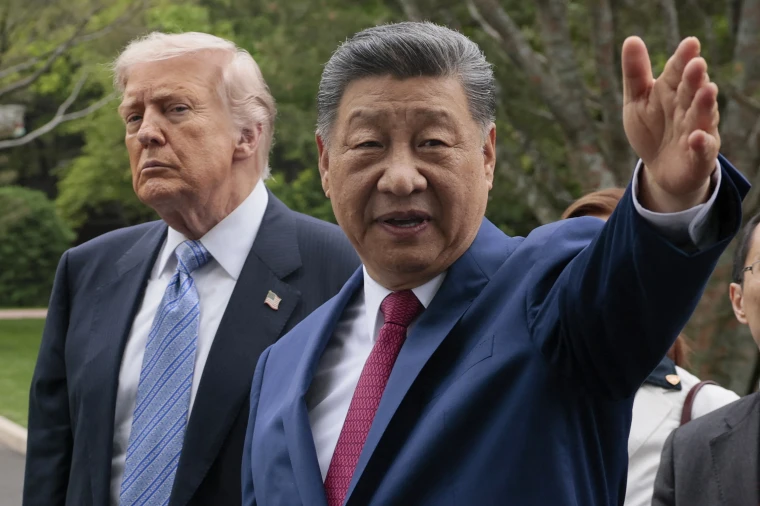
China is now viewed more positively than the United States in many countries worldwide, according to a new study by Pew Research Center, the first time the organisation has recorded that pattern at that scale.

The non-partisan, US-based think tank found favourable opinions of China have reached record highs in multiple countries, while perceptions of the United States have weakened. Pew said respondents also showed low confidence in both US President Donald Trump and Chinese leader Xi Jinping, though Xi was rated more positively than Trump.
Global views shift
Pew surveyed more than 42,000 people across 36 countries between February and May. Participants were asked whether they had a very favourable, somewhat favourable, somewhat unfavourable or very unfavourable view of each superpower.
Across the 36 countries, Pew reported that in 25 nations there were more respondents with favourable views of China than of the US. The centre said this marked the first time it had seen such a result across so many countries since it began tracking global sentiments towards the two powers in 2002.
Pew research director Jonathan Schulman said the organisation previously recorded dips in positive views of the United States, including in 2008 at the end of George Bush’s presidency and in 2017 at the start of Trump’s first term. Even during those declines, favourable views of China were generally similar to, or slightly below, those of the US, Schulman told the BBC.
In this year’s survey, major swings towards China were reported in Spain, Indonesia, Italy, Greece and Canada. Only six countries still preferred the United States more: Poland, the Philippines, South Korea, India, Japan and Israel, which are described as staunch US allies.
Pew also found that median favourable views followed different trajectories in its wider dataset. The median favourable opinion of the US across 20 countries fell steadily in recent years, while the median favourable opinion of China rose. Pew said favourable views of China increased in more than a third of the countries surveyed in recent years, based on an expanded dataset that included the United States.
The study also pointed to record highs for China in several places, including Italy, Spain, Colombia, Mexico, Indonesia, Malaysia, Nigeria and Turkey.
Allies still back US
Pew said the pattern of attitudes often differed by country income level. Middle-income countries tended to hold more positive views of China, while wealthier countries were more likely to have negative views. One exception was Singapore, where Pew recorded both a high GDP per capita and a high level of positivity towards China.
In Asia-Pacific, Pew reported especially sharp contrasts. It said about 90% of respondents in Pakistan appeared to favour China, compared with 11% in Japan.
Confidence in Xi and Trump
Pew’s survey also asked respondents about confidence in Xi and Trump to do the right thing regarding world affairs. Overall, confidence scores were low for both leaders, with most countries recording results below 50%. Many countries, however, expressed more confidence in Xi than in Trump.


For Xi, Pew reported the highest rating was in Pakistan at 83% and the lowest was in Japan at 7%. For Trump, the highest confidence rating was in the Philippines at 68% and the lowest was 4% in the West Bank/East Jerusalem.
Schulman said the survey suggested people did not have as firm a view of Xi as they did of other political leaders, while respondents were more likely to give answers at the extremes when rating Trump.
Pew also found that while more people believed the US government respected personal freedoms more than China’s government did, the gap had narrowed. When asked about foreign policy, Pew said China was viewed as interfering less than the US in the affairs of other countries.


Foreign policy assessments
In additional questions Pew asked in several middle-income countries, a median of 75% said the US interfered in other countries’ affairs a great deal or a fair amount, while 45% said the same of China.
Similar studies by other groups have produced related but not identical results. Gallup reported last year that China surpassed the US in global approval ratings, with the widest gap in China’s favour recorded in 20 years. Separately, the Asia Society’s Global Public Opinion on China survey said China’s image, which dipped during the pandemic, had made only a modest recovery.
Carnegie China scholar Chong Ja Ian said Pew’s findings were consistent with expectations, citing what he described as the volatility of US policy and its economic effects, and saying that China can appear more predictable. He added that while people may not necessarily hold strong confidence in Xi personally, they can still show more positive views of China overall.

Join the discussion?


16 July 2026
webfact
webfact
An American man arrested in Spain after allegedly providing material support for Hamas is being held without bail in Madrid as the US government seeks his extradition, prompting fresh concerns among leftwing supporters of Palestinian causes about “chilling effects” on humanitarian and political activity.

Get today's headlines by email

Spanish authorities detained James “Fergie” Chambers on Friday in Ibiza. He is now in custody in the Spanish capital, where a hearing has been set for Thursday to decide whether he can be released on bail. The indictment against him has been sealed.
Spanish extradition process
The Spanish high court has 40 days to rule on the US extradition request submitted by the Trump administration. If the court rejects the bid, the proceedings end at that stage. If it approves the request, the Council of Ministers makes the final decision, according to a spokesperson for the court.
Stanley Cohen, an attorney with decades of experience in terrorism cases, said the case is the first known instance of the US pursuing extradition of a citizen who has been arrested and charged in connection with support for Hamas.
In comments reported by supporters, Cohen said the decision to seek extradition would “look good” politically, adding that he believed the move was made for “political purposes”. Chambers’s case, he suggested, could influence how other people and groups view the risks of involvement in pro-Palestinian work.
Donations and alleged links
Chambers, who describes himself as anti-imperialist, is the heir to a wealthy US family that owns Cox Communications. His legal team says he has funded progressive and humanitarian projects, including initiatives supporting children and other community efforts in the Middle East, and that he has donated more than $1m to humanitarian projects in Gaza.
His attorney, Llorenç Salvà, said in a statement that Chambers has long been known to US authorities and that the Trump administration, which has prioritised disrupting alleged terrorist-related funding, is now seeking his extradition. In statements about the arrest, Chambers’s partner, Stella Schnabel, said he was being jailed for using his wealth to support Palestine, characterising it as political persecution.
Chambers also said he had been on the US federal government’s radar for more than a decade. According to the account of his activities, he sold stock in mid-2023 worth around $250m as part of transactions within his family’s holdings, and later directed money towards causes he supported.
The case drew attention in the United States after Chambers was profiled in US media. In late 2023, he gave an interview on local television in New Hampshire about a direct action against Elbit Systems, described as an Israel defence contractor, which he said was carried out by a group that he had backed financially. He later moved to Tunisia, where he bought the football club Club Africain.
Leftwing concerns and legal precedents
Spanish politicians and lawmakers from left-of-centre parties have questioned whether the state is treating humanitarian or solidarity work as criminal support for terrorism.
Irene Montero, a member of Podemos and a Spanish representative in the European Parliament, posted on X on Monday that Spain should not collaborate with the Trump administration in what she described as the persecution of Palestinian solidarity, arguing the government should protect Chambers.
Separately, six members of Spain’s Congress from Sumar wrote that Chambers’s arrest occurred in the context of “growing repression” from the Trump administration against the Palestinian solidarity movement. They also pointed to Spain’s wider public critiques of Israel’s actions in Gaza and said that heightened tensions with the Trump administration form part of the background to the US request.
Trevor Aaronson, author of books on the FBI and terrorism, linked the Chambers case to arguments made within Trump-era counter-terrorism thinking that leftwing groups can be treated as part of a broader network connected to violence. He said the approach echoes legal reasoning developed in the post-9/11 “War on Terrorism”, including the mid-2000s Holy Land Foundation case, where prosecutors argued that money can be “fungible” and that support for governed areas could indirectly aid groups such as Hamas.
Aaronson said that such reasoning can create a “chilling effect”, discouraging people from donating to Palestinian groups or other leftwing organisations for fear their actions could be interpreted as terrorism-related support. He also criticised the timing, saying that humanitarian needs in Gaza are greater than ever and that linking aid to terrorism is significant.

Join the discussion?


15 July 2026
webfact
webfact
British lawmakers marked the deaths of three politicians over the past decade on Monday, using tributes in Parliament to highlight growing concern about security and the wider impact of violence on political life.

Get today's headlines by email

Home Secretary Shabana Mahmood said MPs should be able to carry out their work without fear. “Politics is a calling for those of us here, but it should not be a dangerous one,” she told the House, adding that ministers and police must remain alert to “changing threats” as they develop.
The latest killing, of former Conservative MP Ann Widdecombe, has drawn renewed attention to a period in which Britain has seen an unusually high number of political deaths in a short span. Widdecombe’s death came after the murders of sitting MPs Jo Cox in 2016 and David Amess in 2021.
Investigation into Widdecombe death
Police said Widdecombe was found dead at her home last week with “serious injuries”. She had previously served as an MP and later became the immigration spokesperson for Reform UK, a right-wing populist party.
Authorities initially said they had no information indicating her death was politically motivated. They subsequently announced that counter-terrorism police were leading the investigation.
A 28-year-old White British man was arrested, first on suspicion of murder and later on suspicion of “commission, preparation or instigation of acts of terrorism”. On Tuesday, the police said Widdecombe had been killed in a “targeted attack”. They have not given a motive but said one “line of enquiry” was whether the suspect was targeting Reform UK figures.
Calls to avoid simple links
Alan Renwick, a politics professor at University College London and director of the Constitution Unit, cautioned against connecting “the very extreme actions of a small number of individuals” to broader trends in society. He said, however, that the overall threat faced by MPs and others in public life has risen.
Renwick told CNN that threats are now directed at politicians “almost routinely”, which he said represents a shift from the past and “seriously impairs democracy”.
Threats and violence against MPs have increased sharply in recent years, according to reporting and parliamentary figures. The annual number of crimes against MPs reported to police reached almost 1,000 in 2025, nearly doubling from 2022, The Times reported in March. A parliamentary report said the number was 151 in 2017, describing it as a ten-fold increase since then.
Online debate and changing politics
Speakers linked the current risk environment to the political climate shaped by events earlier in the decade, including the period around the 2016 vote to leave the European Union. They also pointed to social media’s role in amplifying hostility.
Brendan Cox, Widdecombe’s predecessor Jo Cox’s widower, told Sky News he feels “much less optimistic” about political discourse than he did after his wife’s murder. He said the killing had initially prompted shock and unity across the political spectrum but that over time politics have moved further into opposing factions.
Cox said the “Wild West culture” online helps drive violence by making extreme content easier to spread and more likely to be treated as legitimate. He argued that regulators and the political system allow social media to continue promoting the most extreme material, often violent, content.
Diane Abbott, who has faced sustained abuse as the first Black woman elected to parliament, also drew attention to online activity, saying conditions have “got much, much worse” with the rise of online engagement.
While debate has focused on political attacks, officials noted that crime rates against individuals and households in Britain have generally fallen over the last decade.
Fears over constituent contact and Europe-wide pattern
Compared with many European countries, Britain’s number of murdered politicians is described as exceptional, although other parts of Europe have seen rising harassment and intimidation. The European Parliament has attributed that trend to increased political polarization.
In Britain, a parliamentary survey found that one in three MPs who took part were considering not standing for re-election, while many said their relationship with constituents had been affected.
Mahmood said security concerns have also changed how MPs interact with the public. When she was first elected in 2010, she held open constituency surgeries where residents could turn up. She said such sessions, where Cox and Amess were murdered, are now “no longer possible”.
“I still offer advice surgeries, but on terms that are very different from when I first became an MP,” Mahmood told MPs. “It is a tragedy because it does change the way we relate to our constituents.”

Join the discussion?


15 July 2026
webfact
webfact
The UK government has announced plans for a midnight social media curfew for 16 and 17-year-olds, saying the measure will be switched on by default but can be avoided by changing account settings.

Get today's headlines by email

Under the proposal, popular platforms including Instagram, TikTok and YouTube would be set to be unavailable between midnight and 06:00 for older teenagers. The government said the curfew would be paired with changes to “addictive” design features, including auto-play and infinite scroll, which it wants to disable during the same period.
The government argued that the combination would help improve teenagers’ sleep, attention at school and college, and family time. Technology Secretary Liz Kendall said the steps were designed to ensure young people “enjoy the benefits of technology” while having tools to help them “thrive” online.
Critics, however, said the approach was incomplete. Laura Trott, the Conservative shadow education secretary, described the plan as a “dog’s dinner”, arguing that it amounted to a curfew that can be bypassed. Child safety organisations and experts also raised concerns about whether a time-based restriction would protect vulnerable children.
Linked with wider online restrictions for children
The announcement comes after the government said in June that children under 16 in the UK would be barred entirely from a range of social media platforms.
The Department for Science, Innovation and Technology said it intends to put the new proposals before Parliament by the end of 2026, with a goal of bringing them into effect next spring alongside the planned ban for under-16s.
Alongside the curfew, the government said it wants measures to improve the safety of children using AI chatbot services. It said providers should introduce regular breaks for under-18s.
Government cites curfew trials; critics question impact
The government said it had trialled several approaches, including overnight curfews, in households across the UK. It reported that 300 teenagers took part in tests in which social apps were disabled overnight from 21:00 to 07:00, or capped to one hour, while some participants saw no changes. The government said the tests lasted one month and were designed to compare experiences.
In a report published on Tuesday, officials said the overnight curfews produced the biggest gains in sleep, alongside more engaging family evenings and a lighter burden for parents. It added that the option was also the most manageable to enforce compared with the other interventions tested.
Kendall said the findings supported what parents have long told the government: reducing time on social media brings benefits.
However, Andy Burrows, chief executive of the Molly Rose Foundation, said the plan was “piecemeal” and not the comprehensive child safety framework needed. Prof Sonia Livingstone, an expert in children’s digital rights at the London School of Economics, warned that a curfew could be harmful for vulnerable children if it restricts access to support at night.
“If it’s a curfew on companies using push notifications to wake someone up in the night, absolutely have a curfew,” Prof Livingstone told the BBC. She said a restriction that prevents a child in need of help or comfort from reaching trusted sources during the night could cause harm.
Ofcom powers, VPN concerns and Australia comparison
Dame Rachel de Souza, England’s children’s commissioner, said young people do not want a ban but do want protection from addictive features such as infinite scrolling. She said she wanted to understand how the policies would be delivered and said she would monitor whether they are effective while also urging Ofcom to use its powers to make online services safer for children.
The government’s moves have been framed as following steps taken in Australia, where restrictions on social media for under-16s began in December. In Australia, providers were required to close existing accounts and stop teens from opening new ones, but the measures have been criticised as ineffective, with many young people reporting they can still access sites that were meant to be blocked.
Questions have also been raised about the practicality of age checks for under-16s, and about how any UK regime might handle virtual private networks (VPNs). On Tuesday, the government said research it commissioned found little evidence that many children use VPNs to bypass age checks.

Join the discussion?


15 July 2026
webfact
webfact
China has detained a US seismologist who studies nuclear test activity for nearly two years on espionage allegations, the man’s family said, while Beijing said the case is being handled under Chinese law.

Get today's headlines by email

Detained in Beijing visit
Chen Youlin, 54, was arrested in November 2024 while travelling to Beijing to visit family, according to Global Reach, a US hostage advocacy group. His relatives decided to speak publicly after they said they had not seen any indication that Chinese authorities would release him.
Chen’s wife, Rong Yufang—also a seismologist—said she has not been able to speak with her husband for more than 600 days and is concerned for his health and welfare. She said in a statement carried by Global Reach that he has been denied regular contact.
China’s foreign ministry said on Tuesday that judicial authorities handle cases according to law. Spokesman Lin Jian said there was “no such thing as so-called wrongful detention”. In China, he noted, espionage convictions can lead to life imprisonment or the death penalty.
Chen is currently the only US citizen designated as “wrongfully detained” by Global Reach.
Work focused on North Korea tests
Rong told Reuters that Chinese authorities questioned Chen more than 100 times about his research and that he was not allowed to see a lawyer for the first 13 months of his detention.
Chen, who was born in China and became a US citizen in 2011, lives in Boston, Massachusetts. His published work focuses on North Korea, a close Chinese partner that has been under long-running sanctions over its nuclear weapons programme and underground nuclear tests.
It is not clear, the reporting said, whether and how Chen’s research intersected with any nuclear activity by China. US intelligence has suggested that China is developing a new nuclear arsenal and has carried out secret tests, charges Beijing denies.
Rong said Chen worked with Chinese colleagues in ways she described as transparent, adding that his work was collaborative rather than secretive.
His research included a study in December 2020 that used seismic data recorded across Asia—including China—to improve nuclear test monitoring and estimate yields.
Treaty monitoring and US-funded projects
Chen’s work drew on seismological methods to detect nuclear explosions. He also undertook projects funded by the US government, according to Global Reach.
The advocacy group said there are “suspicions within the US government” that Chen’s arrest was linked to China conducting nuclear tests in violation of the Comprehensive Nuclear Test Ban Treaty. The treaty aims to ban all nuclear explosion tests, but several “nuclear-capable” states have not ratified it, including the US and China. Both countries have observed voluntary moratoriums on explosive nuclear testing.
In June 2020, during Donald Trump’s first term, the US administration accused China of conducting a covert underground nuclear test at the Lop Nur facility in the country’s north-west. China rejected the allegations as unfounded and politically motivated.
Health concerns and US response
A separate US-based hostage advocacy group, the Foley Foundation, said Chen’s health is a concern and noted he has diabetes, high blood pressure and high cholesterol. It said he needs reliable access to medical treatment that is not available while he is imprisoned.
US Senator Edward Markey, a Massachusetts Democrat, said China’s handling of Chen “has undermined [its] partnership [with the US]” and could discourage other academics from working with Chinese counterparts. In a statement published on Tuesday, Markey said he hoped increased attention would lead to Chen’s release.
Details about Chen’s detention emerged about a month after China confirmed it had arrested another US academic, Min Zin, director of a Myanmar-focused think tank. Beijing has accused Min of spying and of endangering Chinese national security.

Join the discussion?


15 July 2026
webfact
webfact
US President Donald Trump said next week the United States would strike Iran’s bridges and power plants unless Tehran resumed talks, escalating pressure as fighting between the two countries entered its fourth consecutive day.

Get today's headlines by email

The remarks were made in an interview on Fox News, in the same period that US and Iranian forces reported continued exchanges of fire.
Threat Linked to Resuming Negotiations
Trump said he warned Iranian authorities that “it gets really bad” unless Iran “gets to the table and negotiate”. He said the US would “knock out” power plants and bridges, repeating threats he had previously made and which were condemned at the time by UN officials.
In April, Trump threatened strikes on civilian infrastructure in Iran, including bridges and power plants. Volker Türk, the UN human rights chief, said deliberately attacking civilians and civilian infrastructure is prohibited under international law and amounts to a war crime. The Geneva Conventions, agreed in 1949, bar attacks on sites essential for civilians.
In Tuesday night’s interview, Trump also said US negotiators had told their Iranian counterparts that they needed to make a deal or “you’re not going to have anything left”.
US Says It Targeted Capabilities Used to Attack Shipping
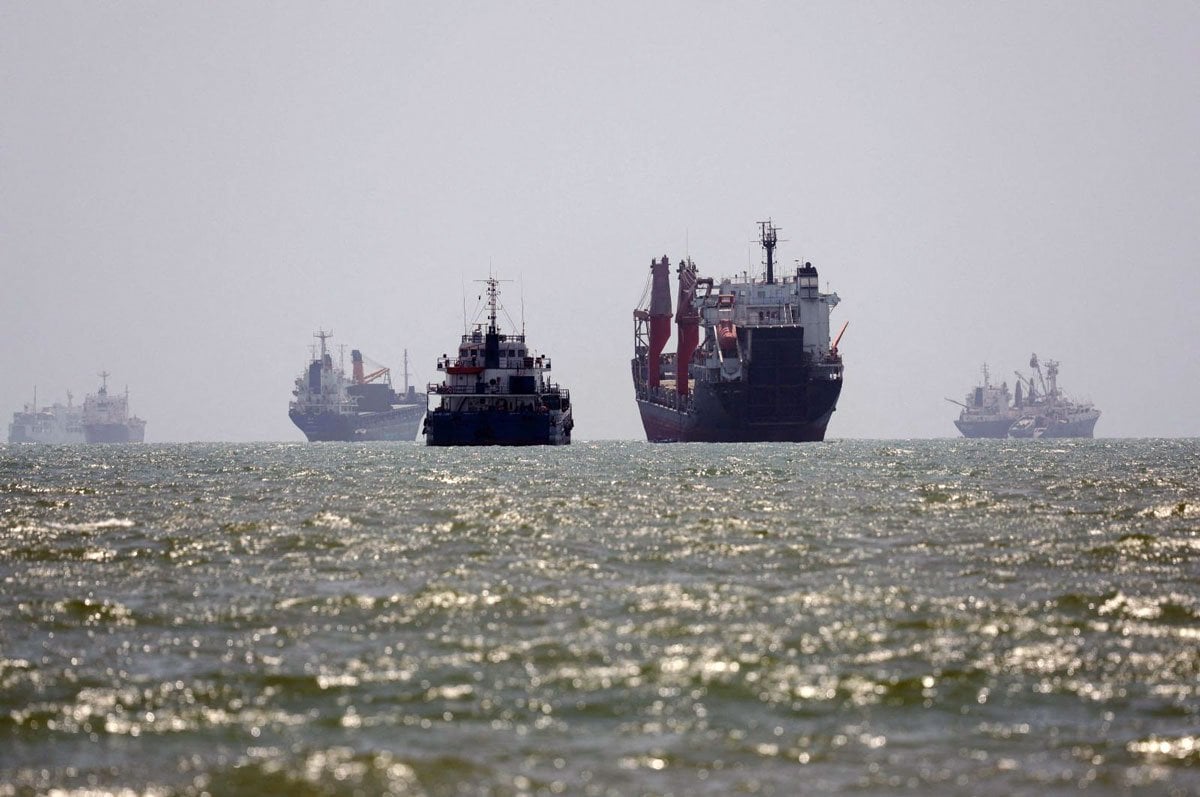
The latest escalation in rhetoric coincided with a renewed round of US strikes. US Central Command said late on Tuesday that its forces began an additional round of strikes against Iran to degrade capabilities used to attack commercial shipping in the Strait of Hormuz.
US Admiral Brad Cooper said in a late Tuesday statement that Iran had “intentionally targeted civilians” by attacking seven commercial ships. Cooper said the attacks resulted in nearly a dozen civilian crew members killed, missing, or injured.
The United Arab Emirates said on Monday night that Iranian cruise missiles had hit two UAE tankers, killing one Indian crew member and wounding eight others, with four in serious condition.
Iran’s Islamic Revolutionary Guard Corps later confirmed the strikes via Telegram, saying two tankers ignored warnings, switched off navigation systems and tried to pass through a mined route. Centcom did not specify which other incidents its statement referred to, and the IRGC did not immediately comment beyond its Telegram message.
In the early hours of Wednesday, Kuwait’s military said it was intercepting Iranian attack drones, while Bahrain activated air raid sirens. Kuwait’s army said air defences were engaging hostile drone attacks, and Bahrain’s interior ministry urged residents to move to safe places.
Tehran said on Tuesday it had targeted US military facilities in Bahrain and Jordan after earlier attacking two UAE tankers.
Fee Plan Row and Blockade Move
Trump’s comments came after he said a 20% fee he had threatened to impose on cargo moving through the Strait of Hormuz would be replaced by “massive” trade and investment deals with Gulf states. The announcement was made hours before the US resumed its blockade of Iranian ports.
On Truth Social, Trump said he had decided to replace the “United States Reimbursement Fee” with trade and investment deals to be made by Gulf states with the US, adding that the investments would be “MASSIVE” and “extraordinarily good” for them, without giving further details. He also said the strait was open to all ship traffic except for Iran and said oil was flowing “like never before”.
After talks in Washington with Iraq’s new Prime Minister Ali al-Zaidi, Trump said he did not like the concept of a fee, but that it was “not fair” for the US to protect the strait for the entire world. He said he had adjusted his initial plan after receiving calls from Gulf leaders.
Iran said it would remain in control of the Strait of Hormuz. Deputy Foreign Minister Kazem Gharibabadi told state television that the decision to tighten measures, including a blockade, had “dismantled” an earlier agreed truce, according to AFP. Reuters reported him saying that if the US tried to squeeze Iran through military actions and an economic blockade, it would be a mistake.
The US imposed a naval blockade of all Iranian ports in April. About five weeks later, it said it had redirected 100 commercial vessels and disabled four. The US lifted the blockade in June as part of a memorandum of understanding aimed at ending the conflict, but a dispute over the strait remains a key point.
Shipping data shows traffic through the Strait of Hormuz has slowed to a two-month low, while Brent crude prices have risen sharply.

Join the discussion?


15 July 2026
webfact
webfact
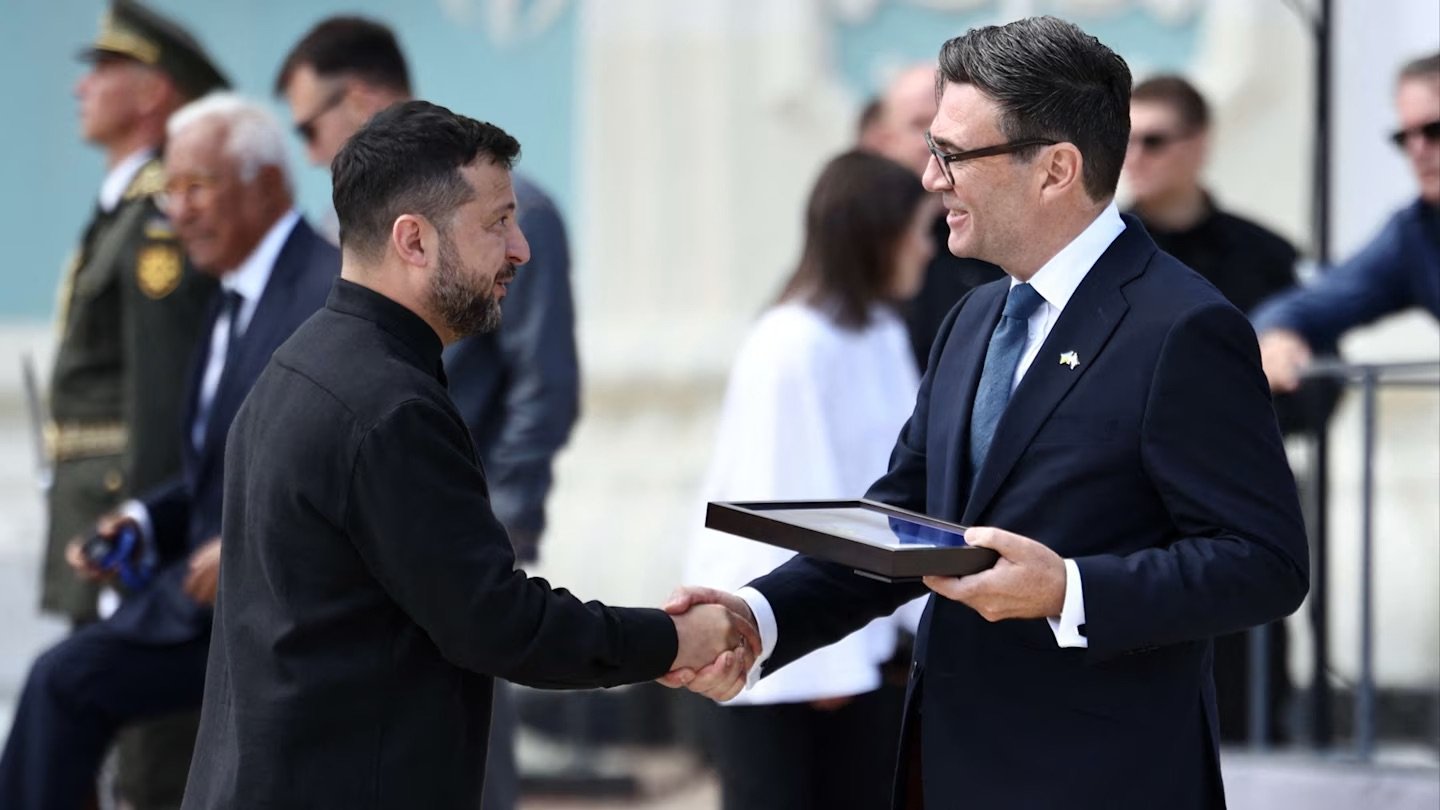
Sir Keir Starmer has become the first serving prime minister of the United Kingdom to receive France’s highest award, the Legion d’honneur.

Get today's headlines by email

He was presented with the decoration at the end of a meeting associated with the “Coalition of the Willing”, a group of countries set up with French President Emmanuel Macron to support Ukraine following Russia’s full-scale invasion in 2022. Starmer and Macron helped establish the coalition, according to the account of the event.
Macron praises Starmer’s role
At the ceremony in the French presidential palace, Macron said he wanted to express gratitude for Starmer’s “years as prime minister”. He praised Starmer’s “human qualities” and described him as a “reliable and friendly partner”.
Macron also referenced commitments from the UK that, he said, supported not only the country but “the security of Europe” and Ukraine, alongside the bilateral relationship between France and the UK.
Ukraine’s President Volodymyr Zelensky, who was among those attending to recognise Starmer ahead of his departure, also paid tribute to the outgoing prime minister. Starmer is due to leave office next week.
Zelensky and Merz thank the outgoing leader
During the event, Zelensky and German Chancellor Friedrich Merz both publicly thanked Starmer. Zelensky’s comments were part of the acknowledgements made at the conclusion of the meeting in Paris.
Merz thanked Starmer in person at the French presidential palace, as did Zelensky, who was listed among those paying tribute.
What the Legion d’Honneur is
The Legion d’honneur is awarded each year to around 2,000 French people and 200 foreign nationals. Recipients are recognised for “outstanding merits”.
Among past honours in the order is Sir Winston Churchill, who received the highest rank of the decoration, known as Grand Croix (Grand Cross). That level is awarded for continued “outstanding merit” over an extended period.
A controversial decoration with notable recipients
The Legion d’honneur has faced criticism since it was created by Napoleon Bonaparte in 1802.
Past recipients include leaders such as Nelson Mandela and former US President Dwight Eisenhower, as well as Zelensky. It has also been granted to figures including Russian President Vladimir Putin and Libya’s Muammar Gaddafi, and earlier to Benito Mussolini of wartime Italy and Spain’s dictator Francisco Franco.
So far, only one foreign recipient has had the honour withdrawn: former Panamanian President Manuel Noriega.
Under Macron, French officials also removed the award from Hollywood producer Harvey Weinstein following a series of accusations of sexual harassment and rape, according to the report of the decision.

Join the discussion?


15 July 2026
webfact
webfact
Donald Trump’s shifting demands over how the United States would secure shipping through the Strait of Hormuz have underscored how hard it is proving to end the war with Iran, which has now dragged on for more than four months.

Get today's headlines by email

On Monday, the president announced on Truth Social that the United States would resume a naval blockade of Iranian-linked shipping and said all vessels passing through the strait, including ships from US allies, would have to pay a 20% fee. Trump said the charges were meant to reimburse the US “for any and all costs” tied to providing safety and security in what he described as a volatile area.
The proposal lasted a day. On Tuesday, Trump withdrew it, instead saying he would pursue “trade and investment deals” with Gulf allies. The message suggested Washington would offer them safe passage through Hormuz in exchange for cooperation on economic arrangements.
Hormuz proposal flips after short run
The abrupt change came as negotiations between Washington and Tehran, temporarily framed by a memorandum of understanding, failed to produce an enduring ceasefire.
The MOU had been meant to put a ceiling on hostilities and set out a path for further talks. Both sides had previously described it as a breakthrough, though key aspects were left for later negotiation.
Trump’s blockade announcement on Tuesday signaled the end of that framework. At 10:16 ET (16:16 BST), the MOU “died” on Truth Social, according to Trump’s post, as he also cited a wave of renewed US military strikes across Iran.
Blockade returns as attacks spread
Iran responded by intensifying attacks on US allies and on commercial shipping in the region. Traffic through the Strait of Hormuz again slowed to near standstill, according to the report.
The renewed cycle of fighting followed weeks of stop-and-start diplomacy. Each time a ceasefire appeared to hold, occasional incidents tested the terms, leaving doubts about whether both sides were observing the same understanding.
Although the US had, in military terms, carried out strikes that it said achieved its immediate aims—destroying Iranian ships, aircraft and targets and degrading defence capabilities—the political track remained unresolved. The ability to deny Iran access to the strait was also not automatic, the article said, and without a major escalation by American forces in the region, the US could not fully prevent Iranian pressure on shipping.
Prior “tolls” criticism resurfaces
Trump’s latest Hormuz fee idea was not new, having been floated at various points during the war. But it collided with earlier US messaging from within the administration.
In a statement last month, Secretary of State Marco Rubio condemned an Iranian plan to impose “fees” on shipping through the strait, saying international waterways should not be subject to tolls and referring to existing international law and practice across global routes.
The memorandum’s text had also left room for Iran to play a role in managing the safe passage of commercial vessels through Hormuz. It stated that the Islamic Republic would make arrangements, using its best efforts, for safe passage “with no charge”.
Alongside that language, the MOU included promised investment in Iran and an end to international sanctions. Those elements had been treated by some as inducements aimed at reducing Iran’s incentive to use geography for leverage in the strait. The report said that assessment has proved wrong, at least for now.
Defense Priorities director Rosemary Kelanid said the MOU was effectively undone, with the commitments it described “completely” reversed.
Patience tested on both sides
With the blockade back in place, Iran faces renewed pressure as oil revenue—described as a lifeline for the regime—comes under strain again. Trump, meanwhile, is confronted with a recurring choice: expand the conflict further, or accept an outcome that leaves Iran in place despite the risk that the fighting could restart.
Elliot Abrams, a senior fellow at the Council on Foreign Relations, said the two sides are again asking who can outlast the other, with Iran unable to export oil and the US and other customers dependent on Persian Gulf supply.
The dispute also leaves the underlying issues unresolved, including control of the strait, Iran’s nuclear programme, and Iran’s regional influence. Abrams said there could be room for negotiations over a Hormuz arrangement, but not a return to the earlier memorandum framework.
As the war approaches a fifth month, Trump pointed out that other US conflicts, including the Vietnam War, had lasted for years. The report noted that a prolonged conflict contributed to political damage for Lyndon Baines Johnson, and that Trump’s team is also mindful of the domestic backdrop heading into November’s midterm elections—especially given the concern that higher oil prices would reverse recent improvements in consumer inflation trends. After Trump’s Monday post, the price of a barrel of oil rose nearly 10%, the biggest one-day gain in six years.
With the MOU dismantled and hostilities resumed, the article said the war does not appear closer to resolution than it was in the early weeks of the conflict.

Join the discussion?


15 July 2026
webfact
webfact
US President Donald Trump has paid writer E Jean Carroll more than $5m (£3.7m) in damages, ending a three-year effort to delay a civil ruling that found him liable for sexually abusing and defaming her.

Get today's headlines by email

Her lawyers said the payment was made after a judge ordered it following the US Supreme Court’s decision last month to reject Trump’s bid to review the case.
Damages paid after judge’s order
Roberta Kaplan, a lawyer for Carroll, said on Tuesday that Carroll had received the damages amount ordered by a jury.
“Today, we are pleased to report that she has received the damages payment the jury awarded her as a result of that verdict,” Kaplan said in a brief statement.
Trump had sought to postpone the payout so he could ask the Supreme Court to reconsider a ruling that declined to hear his appeal. The judge overseeing the case then directed him to pay the damages.
A representative for Trump’s legal team declined to comment on the payment.
Payment tops $5.62m with interest
Carroll’s legal team said she received more than $5.62m. The figure included the $5m awarded by the jury plus interest accrued during the appeals process.
After the verdict in 2023, Trump deposited the damages into a court-controlled account. The funds remained there while the legal challenges proceeded through the courts.
In seeking to avoid payment, Trump argued that the trial judge improperly allowed evidence that prejudiced jurors against him. He also described the case as politically motivated.
Trump challenges evidence and verdict
Lawyers for Trump criticised the judge’s decision to require payment. They characterised the lawsuit as a “hoax” and a “Witch Hunt”, arguing it had been supported by Democrats.
During the legal process, a federal appeals court upheld the jury’s finding last year. It said Judge Lewis Kaplan, who presided over the civil trial, did not make errors that would justify a new trial.
Trump had also repeatedly denied Carroll’s allegations.
Carroll, who is 82, has said Trump assaulted her in the mid-1990s in a dressing room at Bergdorf Goodman in Manhattan. She later alleged Trump defamed her in a 2022 post on his Truth Social platform, in which he denied her claims.
Supreme Court decision ends delay
Last month, the Supreme Court declined Trump’s request to consider the matter, removing a key barrier to payment.
Carroll marked the Supreme Court’s refusal at the time, posting on her Substack that the outcome meant “WE WON!” She also wrote that the result was “for every woman in the world”.
Trump’s legal team has continued contesting related decisions. He is also appealing a separate 2024 ruling in which another jury found him liable for defaming Carroll and awarded her nearly $84m.
A panel of federal judges rejected Trump’s appeal of that award last year.
Separate defamation case remains under appeal
The new payment resolves the damages component of the 2023 civil case in which the jury found Trump liable over Carroll’s claims of sexual abuse and defamation. The case began before Trump’s Supreme Court challenge, which ultimately failed.
The damages paid Tuesday conclude a process that began shortly after the jury verdict, when the money was set aside pending appeals.

Join the discussion?


15 July 2026
webfact
webfact
The US House of Representatives on Tuesday passed legislation that would make daylight saving time permanent across the country, clearing a key step for the measure as it moves to the Senate.
House passes Sunshine Protection Act
In a vote of 308-117, the lower chamber approved the Sunshine Protection Act of 2025. If enacted, the bill would establish daylight saving time as the permanent standard time nationwide.
The legislation now goes to the Senate for further consideration.
Trump backs measure backed by Florida lawmakers
President Donald Trump said he supports the bill, posting on Truth Social that the change would help avoid the costs and disruption associated with switching clocks twice each year.
He argued that “Hundreds of Millions of Dollars are spent every year” by people, cities and states because they are “forced to change their Clocks,” and said he wants the measure signed into law.
The House bill was introduced by Republican Rep. Vern Buchanan of Florida and has been popular in the state. Supporters in Florida have said extending evening daylight could boost tourism and outdoor recreation.
Buchanan previously said Floridians and Americans are “tired of the biannual time change,” adding that he believes permanent daylight saving time can improve public health, reduce traffic accidents, lower crime and encourage more outdoor activity. He also described ending the clock change as a “commonsense reform” that would improve daily life for millions of Americans.
The top Democrat on the House Energy and Commerce Committee, Rep. Frank Pallone Jr. of New Jersey, has also backed the bill.
Senate consideration after 2022 push
The Senate unanimously approved a similar measure in 2022, but it stalled in the House. While this time around the House has advanced the new text, the legislation could still face resistance in the upper chamber.
Sen. Tom Cotton, a Republican from Arkansas, has warned that making daylight saving time permanent would “push winter sunrises to an absurdly late hour.” Cotton said the change could force children to walk to school in the dark, or that schools would need to move start times later.
As the process moves forward, lawmakers will consider whether any of those concerns could affect the bill’s prospects in the Senate.

Join the discussion?


15 July 2026
webfact
webfact
Billionaire investor Warren Buffett has said he will not include the Bill and Melinda Gates Foundation in his annual charitable giving after new disclosures linked the Microsoft co-founder to convicted sex offender Jeffrey Epstein.

Get today's headlines by email

In a statement released Tuesday, Buffett said he would donate about $6 billion to four foundations connected to his own family. He did not mention the Gates Foundation in the announcement, which follows renewed public attention on Epstein after the release of related court materials.
Donations and end-date for Buffett’s remaining shares
Buffett also outlined a change to how his remaining wealth will be given away. He said his remaining shares of Berkshire Hathaway, worth nearly $146 billion, will be donated to the four foundations by December 31, 2034.
He previously had planned for his three children to distribute his remaining fortune within 10 years after his death. Buffett said Tuesday that timing is uncertain, but insisted the donations would still be completed by the end of 2034.
“Of course, mortality is unpredictable, but my remaining shares will be donated to the four foundations one way or the other by December 31, 2034,” he said. He added that the aim is for grants managed by his children to grow year by year, and for the annual grant to the Susan Thompson Buffett Foundation to increase at a somewhat higher rate.
Buffett’s statement came as CNBC said he is scheduled to give the US business network an exclusive interview on the matter on Wednesday morning. The Gates Foundation and Buffett did not immediately respond to requests for comment on Tuesday.
Gates, Epstein and review of the foundation’s past
Buffett has long directed substantial parts of his giving to the Gates Foundation. Since he announced plans to distribute his fortune in 2006, more than $61 billion in gifts have gone to the Gates Foundation, including regular transfers of Berkshire Hathaway stock and donations from Buffett’s family foundations.
The relationship between Gates and Epstein has been scrutinised again following the disclosure of court materials. Gates has denied any knowledge of Epstein’s crimes and has not been accused of wrongdoing. He has said he met Epstein because he believed it would help him raise money for charitable causes.
Epstein, who was accused of sexually abusing dozens of underage girls, was found dead at a Manhattan federal detention facility in August 2019. New York City’s medical examiner later ruled his death a suicide.
The Gates Foundation said it hired someone in March to assess its past engagement with Epstein and to review policies for vetting future partnerships. Gates and other board members are expected to receive an update on the assessment during the summer, the foundation said.
Court documents tied to a Justice Department investigation into Epstein include references to Gates, including email correspondence about philanthropic projects, calendar entries recording meetings, and photographs of Gates at events attended by the two men.
Buffett’s past comments and earlier dispute
Buffett previously said in 2024 that he would cut off donations to the Gates Foundation after his death, allowing his children to decide how to distribute the remainder of his fortune. The decision announced Tuesday accelerates the shift for the annual donations while he is still alive.
Buffett and Gates were close friends for years, speaking often, playing bridge online and taking vacations together. Gates served on Berkshire’s board for years, and Buffett sat on the board of the Gates Foundation. Buffett told CNBC in March that he had not spoken with Gates for months before the Epstein files were released in the autumn of 2025.
In earlier years, Buffett defended Gates publicly. Three years ago, Buffett cut off a man who tried to question Gates’ character during a Berkshire shareholder meeting, citing Epstein ties. The man, Peter Flaherty, was arrested for trespassing despite being approved to make the presentation; charges were later dropped, and a lawsuit stemming from the incident is still pending.
Buffett told CNBC in March that it was “astounding” how someone could succeed as a con person, adding that he did not want to be involved with anything that could be investigated later. He also said he was glad Epstein never came to Omaha, where he has lived for more than six decades.
Buffett stepped down as Berkshire Hathaway chief executive in January after 60 years at the helm, but remains chairman and the largest shareholder. Greg Abel is now CEO.

Join the discussion?


15 July 2026
webfact
webfact
A fragile arrangement between the United States and Iran, agreed last month and designed to prevent renewed conflict, has shown signs of slipping toward war, analysts and regional sources say. Efforts by Arab and Pakistani mediators to preserve the on-again, off-again calm may not be enough if tensions over maritime access around the Strait of Hormuz intensify.

Get today's headlines by email

Officials in both capitals have also signalled they want to avoid a return to a prolonged, full-scale confrontation. But the central dispute concerns the status and management of the strategic strait, where Iran is pressing claims that it says cannot be overridden by military, economic or diplomatic pressure.
Strait of Hormuz becomes the key fault line
Iran’s lead negotiator, Mohammad Bagher Ghalibaf, said in a recent social media post that Iran would “keep your word or pay the price”, linking the warning to the agreement. Tehran points to the memorandum of understanding that was drafted rapidly in June and lays out a 14-point framework.
Iran argues that point five gives it scope to manage the corridor. The clause says Iran will “make arrangements using its best efforts for the safe passage of commercial vessels”.
The US interpretation is broader, according to the article’s accounts: Washington reads the language as requiring Iran to allow the free flow of global oil and gas and other essential goods, including inputs used to produce fertiliser.
An Arab oil executive described the drafting as ambiguous, saying the wording could be interpreted in multiple ways.
Mistrust, internal splits and IRGC role
While Iran’s new leadership is described as aligned on its broad approach, there are growing signs of disagreements about how to proceed. Robert Malley of the International Crisis Group, who helped negotiate the 2015 nuclear deal that President Donald Trump withdrew from during his first term, said some in Tehran want to use battlefield gains as leverage through diplomacy, while others believe the ceasefire came before Iran had inflicted enough damage on the United States.
Recent attacks on three vessels, including a Qatari-flagged liquefied natural gas tanker sailing near Oman’s coastline, were described by a regional diplomatic source as the work of a “rogue unit” within the Islamic Revolutionary Guard Corps (IRGC). With the IRGC playing a dominant role in Iran’s security system, Iran’s stated position is that ships must follow routes designated by Tehran.
Iran’s parliament also moved to codify control. A bill presented “last night” aims to govern the strait through the “Strategic Action for the Security and Sustainable Progress of the Strait of Hormuz and the Persian Gulf”. The measure was posted on X by Ebrahim Azizi, head of the assembly’s national security commission. He said controlling the waterway is Iran’s “inalienable right”, and when asked when Iran would relinquish control, replied: “never”.
Iran views control of the corridor as both leverage and deterrence, as well as an economic fallback if sanctions remain in place and overseas assets continue to be frozen.
Neighbours raise objections; possible fee compromise
The push to reshape rules in the region has increased friction with neighbouring states, including Qatar, which has played a role in mediation. Tensions also extend to Oman, a longstanding ally that has acted behind the scenes for years.
The United Arab Emirates has indicated that Iran’s plans to charge “service fees” for shipping are unacceptable and would set a harmful precedent. A source familiar with the exchange also said Oman objected to including language in point five stating that Iran will hold dialogue with the Sultanate of Oman to define future administration and maritime services. Muscat, the source said, now finds itself balancing Washington’s expectations against Tehran’s aims for a discreet mediating role.
Some observers think an eventual compromise may still be possible. Simon Gass, a former senior British diplomat involved in talks on the 2015 deal, said a solution could involve no tolls for passage but allow shipping fees that demonstrate Iran’s authority.
Even if the truce survives, the underlying problem is a mismatch in how each side reads the other’s constraints. Each side, according to the accounts here, believes it has the upper hand and expects the opponent to back down first due to its own vulnerabilities. The piece notes that Iran was able to take advantage of a brief window when US sanctions on exports of its oil were waived, but that opportunity has since closed.
Recent reporting also points to pressure on Iran’s economy, including high inflation around 80% and widespread job losses, alongside internet disruptions. The crisis over the strait has further crowded out discussion of the core nuclear issue, while the memorandum’s 60-day period for intensive talks is described as unrealistic. Malley said he believes the truce may recover in some form, but added that given dysfunction on both sides, it cannot be assumed.

Join the discussion?


15 July 2026
webfact
webfact
President Donald Trump has backed away from a planned 20% fee on all shipping through the Strait of Hormuz, replacing the levy with trade and investment arrangements with Gulf states, even as the US moved to resume a blockade of Iranian ports.

Join the discussion?

The decision came hours before the United States restarted the blockade, part of an effort to intensify pressure on Iran and weaken what Washington describes as Tehran’s ability to attack commercial shipping in the key waterway.
Trump replaces fee with trade and investment deals
Trump said the proposed “United States reimbursement fee” would be replaced by trade and investment deals that Gulf partners would pursue with the US. In comments posted on Truth Social, he did not provide details of how such deals would work but said the investments would be substantial.
The US president also asserted that the strait would remain open to all ship traffic except that involving Iran. He further said oil was moving through the waterway, attributing that to US military power.
Trump previously said the US would act as the “guardian” of the Strait of Hormuz and announced the 20% charge on cargo shipments to help pay for protecting the route. He said later that he disliked the fee approach but that it was “not fair” for the US to protect the strait for the world. He also said he changed the plan after receiving calls from Gulf leaders.
US moves back to blockade amid renewed strikes
US Central Command (Centcom) said late on Tuesday that American forces began an additional round of strikes against Iran, aimed at continuing to degrade capabilities Iran uses to attack commercial shipping in the Strait of Hormuz.
Centcom said earlier in the week it had carried out a third night of attacks for the same purpose. Iran’s state media reported explosions in several cities, including Bushehr, where a nuclear power plant is located.
Iran said it targeted US military facilities in Bahrain and Jordan after previously hitting two oil tankers registered to the United Arab Emirates.
Iran says it retains control as traffic slows
Iran has said it will remain in control of the Strait of Hormuz, rejecting the US approach. Iran’s Deputy Foreign Minister Kazem Gharibabadi said the blockade decision effectively dismantled an earlier truce arrangement between the countries, according to AFP.
The US first imposed a naval blockade of Iranian ports in April to increase pressure on Tehran. About five weeks later, the US military said it had redirected 100 commercial vessels and disabled four ships under the blockade. The US later lifted the measure in June under a memorandum of understanding intended to end the conflict, but differences over control of the strait have persisted.
Shipping data indicates traffic through the Strait of Hormuz has slowed to a two-month low. Brent crude prices have also risen sharply, amid concerns that tanker movement has been constrained.
Iran effectively shut down the waterway after the US and Israel launched strikes against Iran on 28 February, despite the strait’s role in global energy flows. The route previously carried about a quarter of the world’s oil and around a fifth of global liquefied natural gas.
Netanyahu warns of stronger response if attacked first
Separately on Tuesday, Israel’s Prime Minister Benjamin Netanyahu said Israel’s retaliation against Iran would be “much more powerful” if Iran attacks first. He warned Iranian leaders not to expect continued quiet if they strike Israel, speaking in a video posted on social media.

Join the discussion?


15 July 2026
webfact
webfact
An Immigration and Customs Enforcement (ICE) agent fatally shot a Colombian national during an immigration enforcement operation in Biddeford, Maine, after a vehicle attempted to flee, the agency said.

Get today's headlines by email

The incident comes about a week after ICE used deadly force in a separate case involving another migrant in a traffic stop in Texas.
Operation linked to final removal order
ICE said agents were surveilling an address in Biddeford for a person with a final order of removal at around 07:00 EDT (11:00 GMT) on Monday.
Agents attempted to stop a driver who was leaving the address. ICE said the vehicle tried to flee the scene, and that “fearing for public safety”, an officer discharged a weapon. ICE added that the driver was struck.
After the shooting, dozens of demonstrators gathered in Biddeford.
Prosecutor, lawmakers order investigation as officer placed on leave
Maine’s top prosecutor said the officer worked for ICE’s Enforcement Removal Operations and has been placed on leave while an investigation is carried out.
The state’s Attorney General, Aaron Frey, said initial information indicates the individual “attempted to flee in a vehicle in the direction of the officer and was fatally shot”.
Frey said the man’s name would not be released until he is formally identified and his family is notified.
The Department of Homeland Security inspector general office is taking over the investigation, Senator Susan Collins said, citing the agency overseeing ICE.
Collins and other Maine officials faced questions after reports that the circumstances of the operation changed. Fellow senator Angus King said he was first told by DHS chief Markwayne Mullin that the person shot was a target of an arrest warrant in an immigration operation. Hours later, King said Mullin told him the man was not the target of a warrant.
Governor Janet Mills said the death of someone the government was not seeking “makes this tragedy even more disturbing and infuriating”. She said it showed what she called the “reckless and haphazard manner” in which immigration enforcement operations are being conducted in Maine and across the country.
Embassy, rights groups confirm victim’s nationality; witnesses describe gunfire
Colombia’s embassy confirmed the deceased man was Colombian. The embassy said it has requested information and clarification from DHS about the circumstances and will follow the case as the investigation continues.
The Maine Immigrants’ Rights Coalition said the man was a 26-year-old Colombian authorised to work in the United States, and said he was part of its community. The organisation did not identify him.
Protests also took place outside the office of Collins after she voted to fund ICE, with demonstrators calling for what King described as a “full and impartial investigation”.
Witness accounts to local and national media described the shooting and the response by federal agents. The Biddeford Gazette reported that around 07:20 local time, a resident saw flashing lights from an unmarked white SUV and at least two officers wearing green ICE vests. The witness said agents surrounded a white sedan and that at least four gunshots were heard.
Another witness speaking to the Associated Press said the victim lived nearby with his wife and daughter and described seeing his spouse fall to her knees and a child crying with a pink backpack.
King said Mullin told him the man was shot after attempting to drive his car at officers. King said that involved “weaponised” use of the vehicle, and that an ICE agent fired.
King also said officers did not wear body cameras and that officials would investigate whether deadly force was necessary.
The case has renewed attention on DHS and ICE operations. On 7 July, ICE officer Lorenzo Salgado Araujo, a 52-year-old builder, was shot and killed in Houston while driving to a construction site. Federal officials later said he was not the intended target but that he tried to run over an ICE agent.
Mullin took over leadership of DHS in March, replacing Kristi Noem after she was fired by US President Donald Trump. Noem’s tenure followed fatal shootings by immigration officers of two protesters, Alex Pretti and Renee Good, both American citizens, after immigration enforcement surges were announced in Minnesota and other states.
A similar operation in Maine, launched in January and dubbed Operation Catch of the Day, has also drawn legal challenges. Civil rights organisations filed a lawsuit alleging aggressive tactics by federal agents during enforcement surges.


Join the discussion?


14 July 2026
webfact
webfact
Florida is set to carry out executions of three prisoners scheduled to die by the end of the month, underscoring how the death row population has aged in the United States.

Get today's headlines by email

The state last week executed Dusty Ray Spencer, 74, becoming Florida’s oldest prisoner put to death in modern times. Two more men, both in their late 70s and 80, are next in line, with their dates set closely together.
Elderly prisoners scheduled for death in Florida
On June 25, Spencer was executed after being convicted of fatally stabbing his wife in 1992. The US Supreme Court rejected his appeal, which argued that liver disease would make him especially vulnerable to severe pain during lethal injection.
Florida’s next scheduled execution is for Dennis Sochor, who was convicted of killing Patricia Gifford, 18, hours after meeting her at a New Year’s Eve party in 1982. Family members have said they plan to attend. Sochor is 79, and his attorneys had argued against execution based on his age and health, leaving him nearing his 80th birthday.
Dominick Anthony Occhicone, 80, is scheduled to die on July 28. He was sentenced in the murders of his ex-girlfriend’s parents and has spent nearly four decades on Florida’s death row. If executed, he would be the second-oldest person known to be put to death in the US, behind Walter Moody Jr., who was 83 when he was executed in Alabama in 2018.
Florida has three inmates older than Occhicone on its death row.
Questions raised as appeals and sentencing run long
The coming executions are reviving debate over whether capital punishment can be carried out humanely when inmates are elderly and medically frail, and about whether long appeals processes, intended to protect constitutional rights and guard against wrongful executions, also contribute to delays.
Rev. Dustin Feddon, a Catholic priest who has ministered to Florida death row inmates since 2013, said the issue raises the question of whether the system is effectively waiting out a natural death. He added that executing those who are the most frail and elderly would be especially harsh.
Marilyn Gifford, whose sister was killed by Sochor, said she does not view the age factor as a reason to stop the process. She told reporters she is “happy it’s happening” during her lifetime.
Governor controls execution dates in Florida
It is not clear why Florida scheduled three executions in close succession. Legal advocates say the state’s system gives the governor broad authority over timing.
Maria DeLiberato, legal director of Floridians for Alternatives to the Death Penalty, said Florida’s governor largely determines when executions occur, while in many other states the courts play a bigger role in setting schedules.


Picture courtesy of Miami Herald

About half of Florida’s 242 death row inmates have exhausted their appeals and could receive death warrants at any time. The family of Michael Sheridan spent about a year calling and writing to Republican Governor Ron DeSantis to request that he sign a death warrant before Sheridan’s killer was executed earlier this year. DeSantis’ office did not respond to an Associated Press request for comment.
DeSantis oversaw a record 19 executions in 2025, more than any other Florida governor since the death penalty was reinstated in 1976. The state has carried out nine executions so far this year.
In a statement last year, DeSantis said his goal is to deliver justice for victims’ families who waited for decades, arguing that delays deny justice.
Age alone is not a bar under court precedent
The average age of inmates executed in the US has risen from the 30s to the 50s over the past half-century, according to the Death Penalty Information Center. In many cases, decades on death row can lead inmates to develop medical conditions that may complicate attempts to carry out lethal injections.
Occhicone’s attorneys said he has age-related ailments, including kidney and prostate problems, and requires assistance getting in and out of the shower.
Under Supreme Court precedent, people cannot be executed for crimes committed before age 18. But court officials and attorneys say advanced age alone does not provide a basis to stop an execution. Gerod Hooper, a lawyer with Florida’s Capital Collateral Regional Counsel, said a legal challenge would have to show that the inmate lacks execution capacity or that specific medical conditions would make the injection process unconstitutional because of undue pain.
Similar issues have arisen in other states. In cases involving inmates with dementia in Utah and Alabama, execution was avoided and the prisoners later died of apparent natural causes. In Idaho, an inmate received at least one stay connected to cancer and other health problems, though state officials continued to seek the death penalty.
Frank Frandel, who grew up near Sochor in Portland, Michigan, said he opposes leniency based on age, noting Sochor’s father is expected to turn 99 this year and arguing that Sochor could live for many years.

Join the discussion?


14 July 2026
webfact
webfact
Families staying at a London hotel have been moved to other accommodation after the Home Office closed asylum hotels, prompting legal challenges over whether the government assessed people’s individual needs before relocations.

Get today's headlines by email

Staycity closure and relocation plan
Huda, 41, and her two children, aged 10 and 12, had lived in two rooms in a London hotel for six months before being told they would be moved with a few days’ notice. The engineering graduate from Tunisia said she fled death threats from extended family and is awaiting a decision while her asylum application is processed.
The Home Office said Staycity—the hotel where the family was staying—would close as part of a government pledge to move asylum seekers out of hotels and into military barracks or other shared housing. The shift followed protests by anti-migrant campaigners, who argued that hotels were too comfortable to host asylum seekers.
On 25 June, the Home Office announced the closure of 20 hotels, after an earlier announcement this year that shut 11 asylum hotels.
Under the plan, people affected by closures may be transferred to other hotels with vacancies, moved to military barracks, or granted asylum.
Court order questions assessment of accommodation adequacy
Legal challenges have been brought on behalf of some residents at the Staycity site. Claimants say the Home Office failed to evaluate individual vulnerabilities before people were relocated.
A court order issued by John Halford, sitting as a deputy high court judge, said it was “arguable” the home secretary did not consider the “adequacy” of accommodation asylum seekers were being moved to from Staycity.
Huda’s daughter uses a wheelchair and has epilepsy and a heart condition. Huda said her daughter’s medical supplies take up almost an entire room, leaving little space for other essentials.
Reported impact on healthcare and living conditions
Huda said the family spent much of the day waiting in the hotel reception for transport. She said they waited from 10am to 7pm before being taken to a new location.
She said the new accommodation was significantly worse. Huda claimed her daughter is sleeping on the floor because she is afraid of a bunk bed, and that the space is so cramped there is nowhere to cook for the children.
She also said the room in the new hotel is too small, adding that she has to change her daughter’s nappies in a corridor. Huda said her daughter’s medicine needs to be kept in a fridge but that no fridge was available in the new room. “I’m worried I won’t be able to keep her alive,” she said.
A solicitor, Ralitsa Peykova of Deighton Pierce Glynn, said the legal proceedings were necessary because clients were being moved from one hotel to another without what she described as an evaluative assessment of their needs. She said the closures created “complete chaos” and wasted taxpayers’ money.
Chloe White, executive director of Action for Refugees in Lewisham, supported families relocated from Staycity. She said that despite the Home Office’s assurances that increased hotel closures were going well, “the reality on the ground is very different” and families faced a high “human cost”.
Other cases cited, including moves before exams
Another asylum seeker at Staycity, Farhad, said he was given a Post-it note telling him he would be moved the next day, without an explanation. He said he was a victim of trafficking, torture and labour exploitation and has been diagnosed with post-traumatic stress disorder and depression. He also said he believes people’s suffering is not considered, including a claim that one resident receiving chemotherapy was moved away from the hospital where treatment was ongoing.
A separate legal challenge, the article says, involves a mother moving with her sons to Aberdeen, about 549 miles away, two days before one child’s A-level exams. Claimants say they are upset about disruption to the boys’ education.
Home Office response
A Home Office spokesperson said: “This government will close every asylum hotel, and work is well under way to move asylum seekers into more suitable accommodation.” The spokesperson added that the welfare of asylum seekers remains a priority and said the department would work with providers to meet additional needs and minimise disruption wherever possible.


Join the discussion?


14 July 2026
webfact
webfact
The US government has issued $81bn in refunds for tariff payments since the start of the current fiscal year, after the Supreme Court ruled that parts of Donald Trump’s tariff programme were unlawful, according to budget figures released on Monday.

Get today's headlines by email

Tariffs are taxes applied to imported goods. The refunds relate to duties collected under new measures ordered by Trump after he returned to the White House last year.
In February, the Supreme Court blocked a significant portion of the additional tariffs, requiring the government to return money to companies that had already paid the challenged charges.
Refunds rise sharply after Supreme Court decision
Budget data show that the United States paid out $81bn in tariff refunds in the fiscal year that began in October 2025. That compares with $5bn refunded during the same period a year earlier.
A senior Treasury Department official told reporters that the year-on-year jump was “almost entirely” linked to the Supreme Court decision. The official said most refunds were made in May and June.
The court ruling effectively halted the continuation of the blocked tariff measures and opened the way for refund claims tied to duties collected under the unlawful orders.
Trump’s tariff plan and its budget impact
Trump has described tariffs as a broad tool to reshape the US economy. He has argued they would support domestic manufacturing, improve trade outcomes and help reduce federal budget deficits.
After the introduction of tariff income, the deficit had narrowed slightly last year. However, the government’s finances have since worsened, with new budget figures showing renewed growth in the deficit during the current fiscal year.
The deficit reached $1.367tn in the first nine months of the fiscal year, an increase of 2% compared with the same period previously.
Higher costs: debt interest and military spending
Alongside the deficit figure, the budget release also highlighted rising spending elsewhere. The US government spent more than $1tn on interest payments on its debt during the same nine-month period, up 14%.
Military spending also increased, rising 5% during the period covered by the figures. The budget documents attributed that rise to the ongoing war in the Middle East.
Next tariff steps due to expire on 24 July
Trump’s current tariff policy includes a temporary 10% global duty. That measure is scheduled to expire on 24 July.
The White House is preparing new tariffs to replace or extend the outgoing one, according to the budget materials cited Monday. The administration said it is acting in response to what it describes as lax enforcement of anti-forced labour laws and excess industrial capacity in other countries.
The refunds underscore how court rulings can quickly change the financial picture for tariff policies. While tariff revenue had previously helped support the government’s deficit position, the repayments required after the Supreme Court decision have driven a major rise in outflows during the current fiscal year.

Join the discussion?


14 July 2026
webfact
webfact
Andy Burnham is set to take over as Labour leader and Britain’s next prime minister after winning the backing of 349 Labour MPs, including all eligible members of Keir Starmer’s current cabinet.

Get today's headlines by email

The increase of 27 nominations on Monday has left no route for another contender to reach the threshold required to force a leadership contest. Only 54 MPs have not yet backed Burnham, and with several key figures unable to nominate, the contest cannot be triggered by any rival.
Burnham reaches 349 nominations
Burnham, the newly elected MP for Makerfield, entered the leadership battle with 322 nominations last week. By Monday, he had gained an additional 27, bringing his total to 349.
Under the party’s rules, 81 nominations are needed to stand for the leadership election. With 54 MPs still to back him—among them Starmer and Shabana Mahmood—no other candidate can now collect enough nominations to qualify.
Mahmood cannot nominate because of her role as chair of the Labour Party’s national executive committee (NEC). By convention, Starmer, as outgoing leader, does not take part in nominations, while Anna Turley and Mahmood also do not nominate in line with their positions as chairs of the NEC and the party, respectively.
Transition to start amid leadership push
Burnham is due to replace Starmer as Labour leader on Friday, before moving into Downing Street on Monday. On Monday night, he used an online “hustings” with the parliamentary Labour party (PLP) to urge MPs to unite behind his leadership.
He told the PLP that he would seek to build what he described as a “broad church” cabinet, reflecting the party’s traditional approach. Burnham said future appointments would be based on “contribution, experience and commitment”, and would aim to ensure Labour’s leadership reflects different parts of the movement.
He also set out a plan to reset the relationship between Downing Street and Labour MPs. Burnham said he wanted to establish a “team and culture where everyone is valued, seen and listened to”, and described an “accountable, visible and accessible” approach. He said he would create a feedback loop from the PLP into local communities and back to the leadership and cabinet ministers, which he said was necessary for effective policy-making and delivery.
Focus on growth, devolution and cost of living
Burnham said his government will prioritise delivering good growth in every part of the country, devolving more power to communities, and putting the cost of living at the centre of government.
His emphasis on devolution and on “the north” has prompted concern among some Labour MPs, who fear that benefits could be concentrated on allies with constituencies in northern England, or those aligned with what some describe as the “blue Labour movement”.
During his hustings session, Burnham began by paying tribute to Ann Widdecombe, saying Labour’s thoughts were with her family and friends, and urging politicians to give police “the resources and space they need” to investigate her death.
He also praised Starmer for delivering the Hillsborough law, saying the prime minister had kept a promise made to the families of the 1989 disaster. Burnham added that the country expects Labour to come together at a “significant moment” for Britain.
Starmer resignation delayed and planned meetings moved
Meanwhile, the Guardian reported that Starmer’s formal resignation at Buckingham Palace—previously scheduled for early on Monday—has been pushed back to later in the morning because of England’s World Cup campaign.
Starmer is expected to attend Sunday’s final in New Jersey if England win their semi-final against Argentina on Wednesday. He is then due to meet King Charles the following day, with the meeting now expected to take place more than two hours later than planned. The change, the report said, reflects transatlantic flight logistics that made the original slot impractical.
Additional MPs who nominated Burnham on Monday included junior ministers Chris Bryant and Mike Tapp, former minister Jess Phillips, and Richard Burgon, secretary of the Socialist Campaign Group of Labour MPs.
The added nominations also included Steve Reed, the communities secretary and a key ally of Starmer. Reed was the only cabinet member not to nominate Burnham last week.

Join the discussion?


14 July 2026
webfact
webfact
The Soviet nuclear submarine Komsomolets, which sank off Norway in 1989, remains under scrutiny after Norwegian researchers reported continuing radioactive leaks from the wreck.

Get today's headlines by email
Wreck Raises Long-Running Concerns
The submarine lies close to 1.7km, or about one mile, below the Norwegian Sea. Its sinking prompted alarm because two nuclear-tipped torpedoes were left on board, containing about 9lb (4kg) of plutonium.
In a 1993 BBC report, Russian Greenpeace activist Dimitri Litvinov warned that the wreck posed an urgent danger if nothing was done. At the time, environmentalists feared plutonium could enter rich fishing grounds, although an international scientific report that year concluded fisheries were unlikely to be contaminated.
Fire And Sinking
Komsomolets was built as an advanced Soviet attack submarine capable of operating at exceptional depths. Nato expected it could be the first of a larger class, but no sister vessels were completed. A 1994 BBC Horizon documentary described it as a submarine designed to cruise and launch nuclear weapons from 1,000m, far deeper than Western equivalents could operate.
A fire broke out on 7 April 1989. The crew brought the vessel to the surface, but it sank after five hours afloat. Forty-two of the 69 crew members died.
As the submarine went down, an escape pod carried five trapped sailors to the surface. Only one managed to get out before the pod filled with water.
When the wreck struck the seabed, an explosion tore open its titanium pressure hull and allowed seawater to reach the nuclear torpedoes. Russian oceanographers later found parts of the hull had shattered in the blast.
Scientists disagreed over the scale of the threat. Igor Spassky, from the Rubin Institute, which designed the submarine, told the BBC in 1993 that the situation was not catastrophic, but said he wanted the wreck raised. He also warned separately that saltwater corrosion could eventually release plutonium from the damaged torpedoes.
Attempts To Contain Material
Deep-sea engineering work in 1995 and 1996 sealed cracks in the hull and closed torpedo tubes to contain radioactive material. The operation ended in July 1996.
Norwegian government investigations have since found the submarine is still leaking. The sealant used in the 1990s was expected to last about 30 years.
A March 2026 report by the Norwegian Radiation and Nuclear Safety Authority, known as the DSA, said the torpedoes remain sealed but the reactor is deteriorating. Researchers found radioactive material escaping in occasional bursts, including a visible cloud from a ventilation duct, rather than as a constant leak.
Ingar Amundsen, acting director of the DSA's Department for International Nuclear Safety and Security, said current releases from the reactor had so far had little effect on the surrounding marine environment.
Calls For Further Checks
Experts say the risk could change as corrosion continues. Hans Kristensen, director of the Nuclear Information Project at the Federation of American Scientists, told the BBC that radiation levels could be affected by oxygen levels in seawater around and inside the wreck, as well as by the condition of the sealant.
He said shifting currents could influence how radioactive material moves from the wreck and whether it reaches bottom-feeding species and fish. He added that the earlier decision to seal the submarine showed authorities had recognised the risk.
Amundsen said more work was needed to understand the releases and corrosion, but the depth of the wreck made mitigation difficult and there were no known current plans for action. Kristensen said a new expedition should at least assess the submarine’s condition, noting that plutonium in warheads has a half-life of 24,000 years.


Join the discussion?


14 July 2026
webfact
webfact

Account

Navigation

Search

Search

Configure browser push notifications

Chrome (Android)
  1. Tap the lock icon next to the address bar.
  2. Tap Permissions → Notifications.
  3. Adjust your preference.
Chrome (Desktop)
  1. Click the padlock icon in the address bar.
  2. Select Site settings.
  3. Find Notifications and adjust your preference.