



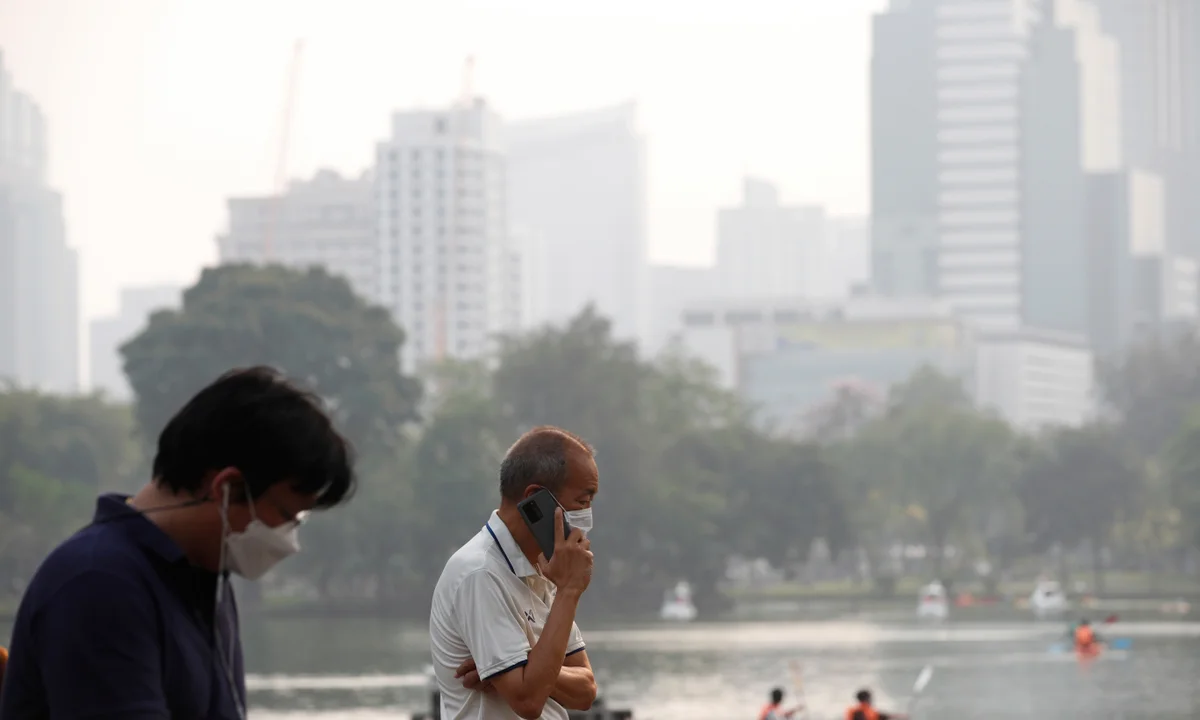

Global air quality worsened significantly in 2025, with only 14% of cities meeting the World Health Organization’s PM2.5 guideline, as reported by IQAir’s World Air Quality Report. This marked a decline from the previous year when 17% of cities met the standard. Severe weather events like wildfires and dust storms, exacerbated by climate change, were major contributors to the decline.
Get today's headlines by email 
The report highlighted Thailand’s position as the 48th most polluted country globally, with an average PM2.5 concentration of 17.8 µg/m³, showing slight improvement from the previous 19.8 µg/m³. Despite this improvement, Thailand remained well above the WHO guideline of 5 µg/m³. Pakistan was identified as the most polluted country, registering the highest PM2.5 levels at 67.3 µg/m³, with Bangladesh and Tajikistan following closely.
South Asia maintained its status as the most polluted region, with New Delhi among the most polluted capitals. Various sources, including transportation, industrial emissions, and construction dust, contributed to these high levels. The report stressed the ongoing issue of transboundary pollution, particularly in East and Southeast Asia, where pollutants often cross borders, complicating efforts to maintain air quality.
Within Thailand, Om Noi Municipality recorded the highest PM2.5 levels at 32.2 µg/m³. The global ramifications of air pollution remain significant, with the WHO estimating that outdoor air pollution contributes to 4.2 million premature deaths annually. Frank Hammes, IQAir’s global chief executive, emphasized the need for ongoing efforts and access to real-time data to protect public health and achieve cleaner air.
The economic impact is profound, with the World Bank estimating annual global damages from air pollution at approximately US$4.5 to US$6.1 trillion. In light of these findings, calls for international action are intensifying, focusing on reducing fossil fuel use and improving air-quality monitoring. Health experts underline the importance of coordinated efforts at all levels as climate change intensifies pollution's frequency and severity, reported The Nation.
Join the discussion? 
Already a member? 
 Adapted by ASEAN Now · The Nation · 25 Mar 2026