



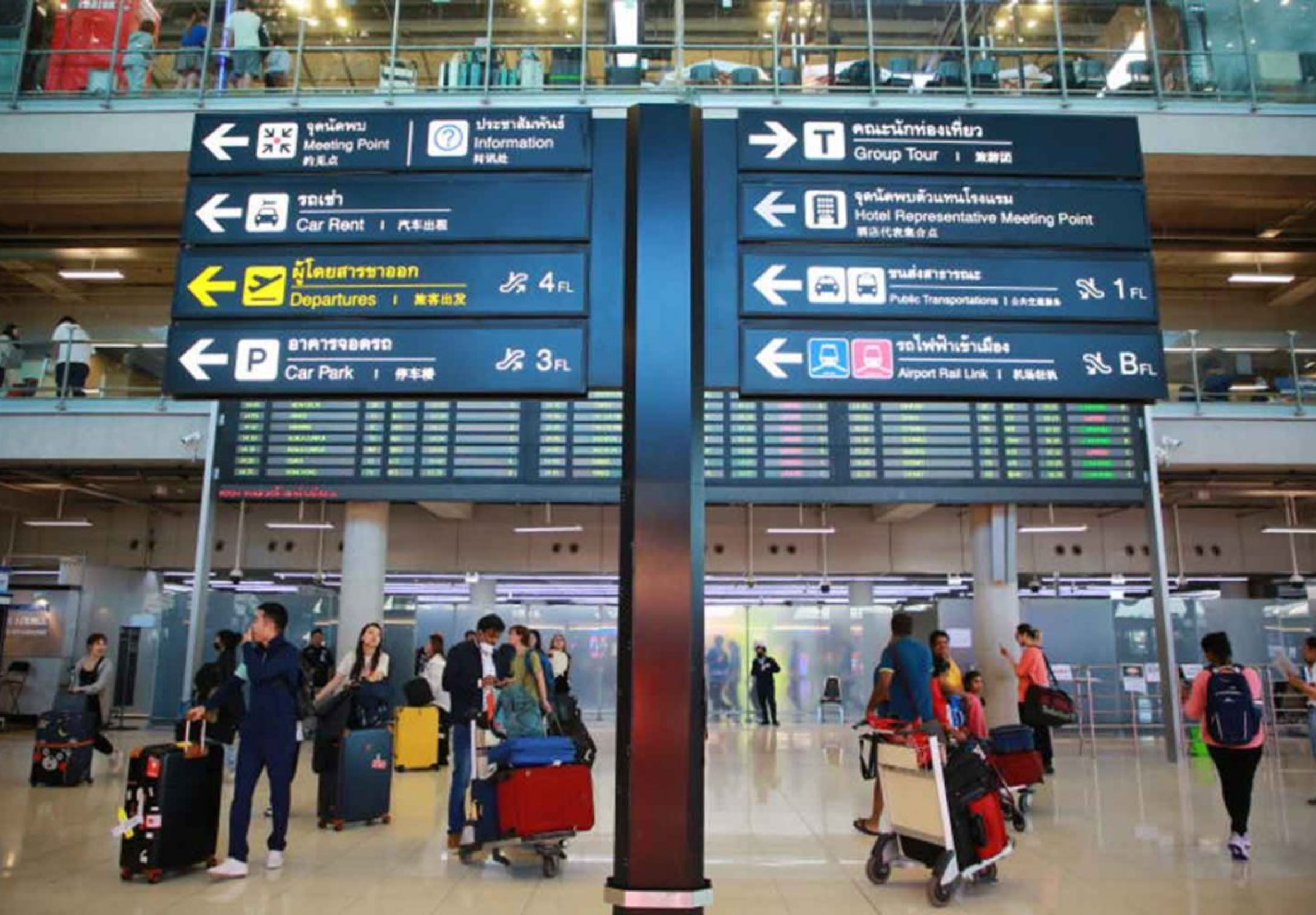

Thailand could lose more than 40 billion baht in tourism revenue if the closure of Middle East airspace continues for eight weeks, according to the Tourism and Sports Ministry. The disruption has already affected travellers from Europe and the Middle East, with many flights unable to operate and airlines forced to adjust schedules. Officials warn the situation could significantly reduce foreign arrivals during the current travel period.
Get today's headlines by email 
Natthriya Thaweevong, tourism and sports permanent secretary, said the ministry assessed the potential impact under three scenarios depending on how long the airspace remains closed. In the worst-case scenario of an eight-week closure or longer, Thailand could lose 595,874 foreign arrivals and about 40.9 billion baht in tourism revenue. The largest decline would come from Europe, with 429,809 fewer tourists, followed by 146,419 from the Middle East and 19,646 from other regions.
Gulf airlines including Emirates and Etihad Airways have resumed only limited flights, leaving many routes still disrupted. Between Feb 28 and March 5, a total of 409 flights to and from Thailand were cancelled, mostly at Suvarnabhumi airport. The ministry said travellers from Europe and the Middle East have been particularly affected as flights normally pass through Middle Eastern airspace.
Under a base-case scenario in which the closure lasts four weeks, Thailand could lose 334,084 arrivals worth about 21.5 billion baht in tourism revenue. The decline would include 265,645 European tourists and 68,439 visitors from the Middle East. Officials noted airlines would adjust flight schedules in this scenario while oil prices would not rise significantly.
If the disruption lasts three weeks or less, the impact would be smaller but still notable, with 210,973 fewer arrivals. The projected decline would include 188,129 European tourists and 22,844 travellers from the Middle East, resulting in an estimated revenue loss of 13.1 billion baht. The ministry also warned that longer flight routes could increase travel times and airfares, meaning only higher-spending travellers may continue flying.
The situation is further complicated by rising inflation in Europe, which Ms Natthriya said could weaken travellers’ spending power. Airlines operating on the summer schedule may also raise fares due to higher oil prices and volatile currencies. Short-haul markets are expected to see smaller adjustments compared with long-haul travel.
In response, Thailand plans to place greater emphasis on short-haul tourism markets such as Malaysia, India and South Korea. Officials also see an opportunity to promote Thailand as an aviation hub connecting flights from Asia and Southeast Asia to Europe.
Authorities have recruited volunteers to assist officers at tourist assistance centres in major airports to help travellers affected by flight disruptions. The conflict has also affected outbound travel, including the cancellation of a tour programme to Busan in South Korea scheduled for March 7–9 by True World Travel after an airline withdrew seats to accommodate stranded passengers.
Bangkokpost reported that Jaturon Phakdeewanit, director-general at the Tourism Department, said the company is offering refunds to affected travellers. Customers can also change their travel dates while keeping the same tour price.
Join the discussion? 
Already a member? 
 Adapted by ASEAN Now Bangkokpost 10 Mar 2026