




The United States has launched investigations under Section 301 into 16 major trading partners, including Thailand, as Washington seeks new tools to apply tariff pressure following a legal setback in the US Supreme Court. The move forms part of a broader effort by the administration of President Donald Trump to maintain leverage in global trade disputes.
Get today's headlines by email 
The investigations are being conducted under Section 301 of the Trade Act of 1974, which allows the Office of the United States Trade Representative (USTR) to impose tariffs or other retaliatory measures on countries accused of engaging in unfair trade practices. The authority is commonly used to challenge policies that Washington believes harm American industries or distort international trade.
According to Reuters, the probe targets what the US government describes as structural trade problems and excess industrial capacity that disadvantage US manufacturers. Officials argue that these practices contribute to large trade imbalances between the United States and its trading partners.
The 16 economies named in the investigation are the European Union, China, Mexico, Vietnam, Taiwan, Thailand, Japan, India, South Korea, Switzerland, Malaysia, Indonesia, Cambodia, Bangladesh, Norway and Singapore.
The investigations come after the US Supreme Court blocked earlier tariff measures introduced by the Trump administration. Those duties had been used as a key instrument in Washington’s trade strategy, particularly against countries accused of unfair trade practices or benefiting from large export surpluses.
With the earlier tariffs struck down, the administration is now looking for alternative legal mechanisms to restore trade pressure. The Section 301 process provides a pathway that could lead to new tariffs or other trade restrictions if the investigations determine that US industries have been harmed.
The Reuters report said the wider strategy reflects a push by the White House to rebuild long-term tariff leverage. Jamieson Greer, the US Trade Representative, signalled that further investigations may follow as part of the administration’s broader trade policy agenda.
The Nation reported that officials hope the Section 301 process could clear the way for new tariffs as early as this summer. Any measures introduced would likely affect a wide range of goods imported from the countries under investigation.
The move could have significant implications for global trade flows, particularly for export-oriented economies such as Thailand and other manufacturing hubs in Asia. Governments named in the probe may face pressure to respond diplomatically or adjust trade policies if Washington proceeds with retaliatory measures.
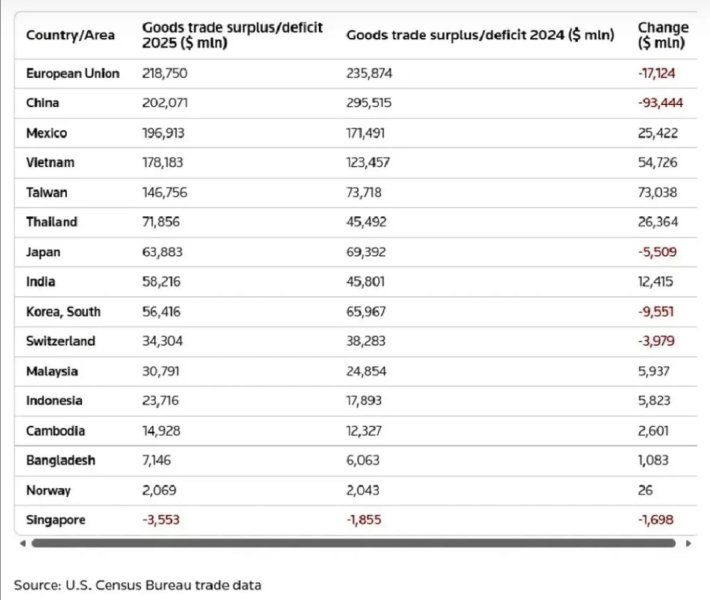
Picture courtesy of The Nation
Join the discussion? 
Already a member? 
 Adapted by ASEAN Now Nation 13 Mar 2026