Skip to content
View in the app

A better way to browse. Learn more.

Thailand News and Discussion Forum | ASEANNOW

A full-screen app on your home screen with push notifications, badges and more.

To install this app on iOS and iPadOS
  1. Tap the Share icon in Safari
  2. Scroll the menu and tap Add to Home Screen.
  3. Tap Add in the top-right corner.
To install this app on Android
  1. Tap the 3-dot menu (⋮) in the top-right corner of the browser.
  2. Tap Add to Home screen or Install app.
  3. Confirm by tapping Install.

Become a member

Become a member

World News

Fresh news brought to you daily from around the world. Hot news, breaking stories as they happen.
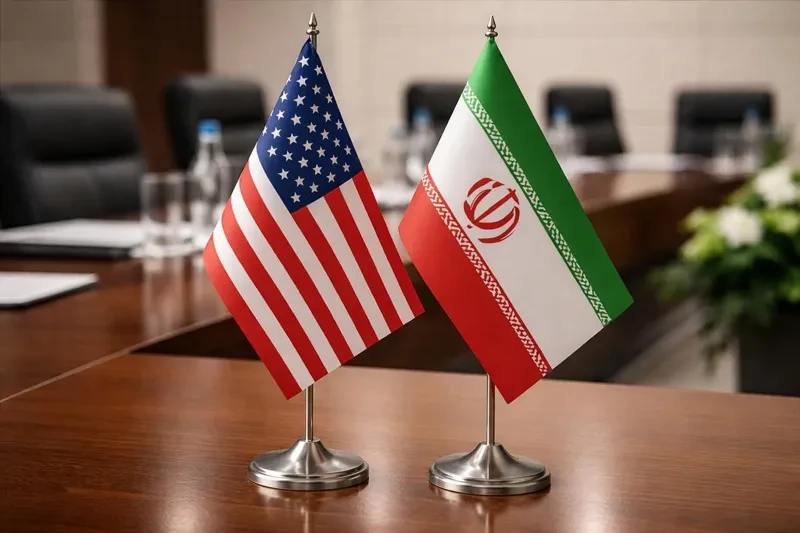
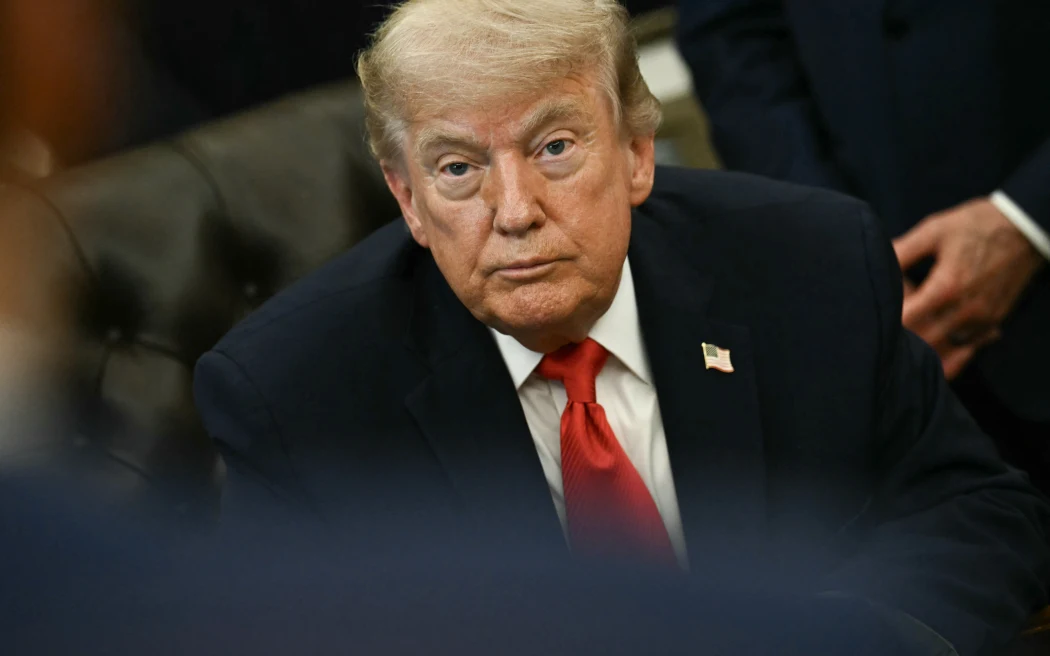
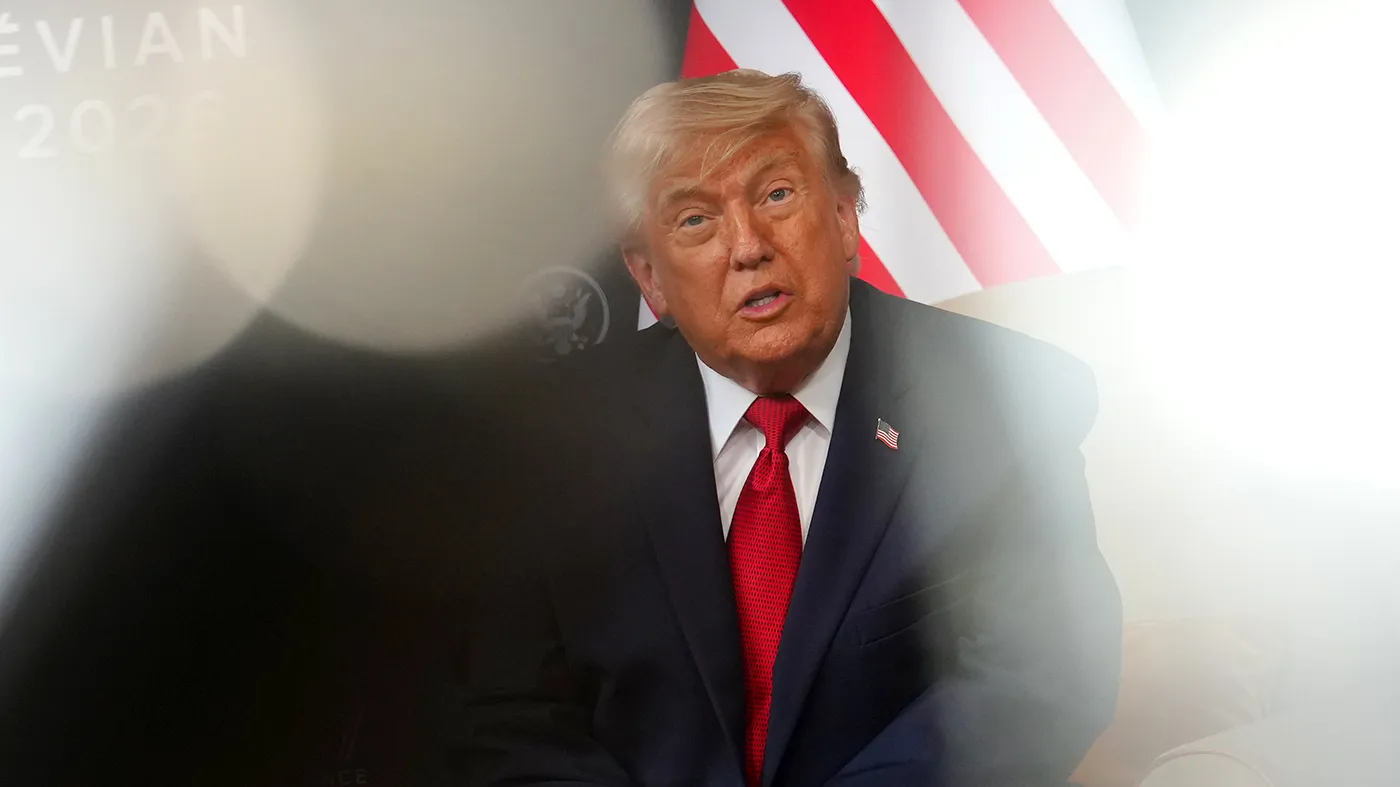
President Donald Trump has suggested the United States is unlikely to attempt to seize Iran’s oil resources, saying such a move would not have broad support among the American public, even though he personally favors the idea.

Get today's headlines by email

Speaking to reporters during the annual White House Easter egg roll on Monday, Trump said he would like to take control of Iran’s oil but acknowledged the political obstacles to doing so.
“I’d like to take the oil because it’s there for the taking,” he said. “Unfortunately, the American people would like to see us come home.”
The remarks represent a notable shift in tone after weeks in which the president had repeatedly raised the prospect of the United States taking control of Iranian oil assets during the ongoing conflict.
Balancing ambitions with domestic pressure
Trump reiterated several times that he believed the United States could profit from such a move.
“We’d make plenty of money,” he said, adding that his business background shaped how he viewed the issue.
“I’m a businessman first,” the president said, while recalling a previous U.S. operation in Venezuela in which Washington secured some oil proceeds.
However, Trump suggested the idea could face strong domestic opposition. Any attempt to seize Iranian oil fields or export facilities would likely require deploying ground forces to hold key infrastructure — a step that could deepen U.S. involvement in the conflict.
“I just don’t think the people of the United States would really understand,” he said.
Strategic targets under discussion
Energy analysts and military observers have closely watched the possibility of a U.S. operation targeting Iran’s oil sector, particularly the export hub at Kharg Island. The small Persian Gulf island handles the vast majority of Iran’s crude exports and is considered one of the country’s most strategically important energy sites.
Capturing or controlling the island would likely require troops on the ground to secure ports, pipelines and storage facilities. Expanding the operation further to take over oil production sites on the Iranian mainland—mainly located in the country’s southwest—would require an even larger and more complex military campaign.
For several weeks Trump has publicly floated the idea of taking Iran’s oil. In a social media post last Friday he wrote: “KEEP THE OIL, ANYONE?”, suggesting the move could be carried out easily given more time.
Strikes and threats amid wider conflict
The United States has already carried out missile strikes against military positions on Kharg Island during the conflict. U.S. officials have said the attacks targeted military installations rather than oil infrastructure.
At other times, however, Trump has threatened to escalate by striking Iran’s energy facilities directly. In late March, he warned that oil wells, power plants, and the Kharg export terminal could be destroyed if Iran did not agree to reopen the Strait of Hormuz and reach a deal to end the fighting.
Despite those threats, Monday’s comments suggest the administration may be less inclined to pursue a strategy aimed at controlling Iran’s oil resources.
While Trump again said he personally supported taking the oil — invoking an older principle that “to the winner belong the spoils” — he signaled that domestic political realities could limit such ambitions.
Energy markets watching closely
The president’s remarks came during a day of escalating rhetoric toward Iran, including warnings that U.S. forces could target bridges and power infrastructure if the conflict continues.
Still, by indicating that a U.S. effort to seize Iran’s oil is unlikely, Trump appeared to reduce the immediate prospect of one of the most drastic scenarios being considered by energy traders and geopolitical analysts.
A military campaign aimed at controlling Iran’s oil sector would carry significant risks, potentially drawing the United States deeper into a prolonged ground conflict in the region.
For now, the president’s comments suggest that option may remain largely theoretical.

Join the discussion?

Already a member?


Adapted by ASEAN Now. Source 7 April 2026
webfact
webfact
Three people, including a 10-month-old baby, have died after a large tree fell onto a group attending an Easter egg hunt in northern Germany, authorities said.

Get today's headlines by email

The incident occurred on Sunday morning in a wooded area near the town of Satrupholm, where strong winds brought down a tree during the outdoor gathering.
Around 50 people were taking part in the event when the accident happened at about 11:00 local time, according to police.
Tree falls during community event
Police said the group included residents from a nearby facility that supports pregnant women, new mothers and children. The centre is part of the state-funded child welfare system and offers assistance to families in need.
Authorities said the tree, estimated to be about 30 metres (100 feet) tall, toppled during strong winds and struck several people participating in the Easter activity.
Four individuals were trapped beneath the fallen tree.
Emergency responders treated two victims — a 21-year-old woman and a 16-year-old girl — at the scene, but both later died from their injuries. The woman’s 10-month-old daughter was taken to hospital but died shortly afterwards.
An 18-year-old woman was seriously injured and airlifted to hospital for treatment.
Weather warning in place
The German Weather Service had issued warnings for strong winds in the region at the time of the incident.
Images from the scene published by the German newspaper Bild showed Easter eggs scattered on the ground in the wooded area where the accident occurred. Some victims were covered with white sheets as emergency services worked at the site.
Grief counsellors were later sent to assist those affected by the tragedy.
Officials express shock
Political leaders in the state of Schleswig-Holstein said they were deeply affected by the incident.
In a joint statement carried by the German news agency Deutsche Presse-Agentur, regional governor Daniel Günther, Interior Minister Magdalena Finke and Youth and Families Minister Aminata Touré expressed their condolences.
“Our thoughts are with the family members of the dead, with the injured, and with everyone who had to experience this terrible occurrence,” the statement said.
Authorities have not indicated whether an investigation into the accident is under way.
META: Three people, including a baby, died after strong winds toppled a large tree onto an Easter egg hunt gathering in northern Germany.

Join the discussion?

Already a member?


Adapted by ASEAN Now. Source 6 April 2026
webfact
webfact
UK Prime Minister Keir Starmer has warned that support for rival parties could threaten newly introduced workers’ rights, as a series of labour and welfare measures come into force across the UK.

Get today's headlines by email

In an article published ahead of the policy changes taking effect on Monday, Starmer criticised political opponents and some business figures who had opposed the reforms. He described the package as the most significant expansion of workers’ protections in a generation.
The measures include changes to sick pay, parental leave and employment protections, introduced under the Employment Rights Act 2025.
Labour contrasts itself with rivals
Starmer used the moment to challenge both left- and right-wing opponents ahead of local elections scheduled for 7 May. He argued that only his party combined economic credibility with the willingness to implement major labour reforms.
“A vote for any other party puts that progress at risk – whether through choices that would take us backwards, or approaches that simply don’t stand up to the realities of governing,” he wrote.
The prime minister also highlighted the need for what he called a “serious, credible economic strategy,” drawing a contrast with both the Green Party of England and Wales and Reform UK.
The Greens are currently led by Zack Polanski, while Nigel Farage has become a prominent figure associated with Reform UK.
New welfare and employment measures
Among the measures introduced on Monday is the removal of the two-child benefit cap, a policy originally introduced by the Conservatives in 2015 under then-chancellor George Osborne.
Starmer described the move as one of the proudest moments of his government.
Other changes include a 4.8% rise in the state pension, bringing it to £241.30 per week, and a 2.3% increase in the standard allowance of universal credit.
Under the new employment legislation, statutory sick pay will be available from the first day of illness rather than after a waiting period. Workers will also gain access to paternity leave and unpaid parental leave from the first day of employment.
Labour has promoted the changes as major policy achievements as it prepares for local and regional elections across England, as well as parliamentary elections in Scotland and Wales.
Political pressure ahead of elections
Polling suggests Labour faces significant electoral pressure. A recent survey by YouGov placed the Greens in joint second place nationally behind Reform UK.
Separate polling conducted by former Conservative treasurer Michael Ashcroft suggested a three-way tie between the Greens, Conservatives and Reform UK, each on 21%, with Labour trailing on 17%.
The growing strength of the Greens has been highlighted by their recent victory in the formerly safe Labour constituency of Gorton and Denton.
A spokesperson for the Green Party rejected Starmer’s criticism, saying the party now represented working-class voters and accusing Labour of weakening the reforms after pressure from corporate lobbyists.
Criticism from left and right
Starmer’s government has faced criticism from across the political spectrum. On the left, trade union leaders say the reforms fall short of earlier promises.
Unite the Union general secretary Sharon Graham described the Employment Rights Act as “a shell of its former self”. The union recently reduced the membership fees it pays to Labour, partly in response to the ongoing bin strike in Birmingham.
Meanwhile the Conservative Party criticised the removal of the two-child benefit cap, arguing it would cost billions of pounds.
Party leader Kemi Badenoch said the policy would increase welfare spending and accused the government of providing additional support to households not in work.
Labour rejected the criticism, saying Conservative figures relied on misleading calculations and incorrectly categorised households that included people with disabilities as unemployed.


Join the discussion?

Already a member?


Adapted by ASEAN Now. Source 6 April 2026
webfact
webfact
France has condemned China following the execution of a French citizen who had spent more than 15 years on death row after being convicted of drug trafficking.

Get today's headlines by email

The man, Chan Thao Phoumy, 62, was executed in the southern Chinese city of Guangzhou, according to a statement released late Saturday by France’s foreign ministry. The ministry said the execution went ahead despite repeated appeals from French authorities for clemency.
Officials did not specify when the execution took place. A Chinese court had sentenced Chan to death in 2010.
France expresses “consternation”
In its statement, the French foreign ministry said it was deeply troubled by the execution and raised concerns about the handling of the case.
The ministry expressed “consternation” at the decision to carry out the sentence and criticised what it described as shortcomings in the legal process.
“We particularly regret that Mr. Chan’s defence did not have access to the final court hearing, which constitutes a violation of his rights,” the statement said.
French authorities also extended condolences to the family of the executed man.
“We extend our condolences to his family, whose grief we share,” the ministry added.
France has long opposed capital punishment and regularly campaigns internationally for its abolition.
China defends its legal process
In a brief response issued on Sunday, the Chinese Embassy in Paris defended the country’s judicial procedures but did not mention Chan by name.
The embassy said that China treats defendants equally regardless of nationality and handles cases in accordance with its laws.
“China treats defendants of all nationalities equally, handles all cases impartially and strictly in accordance with the law,” the statement said.
China maintains the death penalty for a range of crimes, including drug trafficking. The government provides limited public information about executions.
Death penalty remains widely used in China
Although exact figures are not published, China is widely believed to carry out more executions each year than any other country.
Human rights organisation Amnesty International says the use of capital punishment in China is highly secretive, but estimates that thousands of people may be sentenced to death and executed annually.
Executions in China are typically carried out either by firing squad or by lethal injection.
France abolished the death penalty in 1981 through an act of parliament and has since been an active supporter of global efforts to end capital punishment.
The execution of the French national highlights ongoing tensions between countries that oppose the death penalty and states that continue to apply it, particularly in cases involving foreign citizens.

Join the discussion?

Already a member?


Adapted by ASEAN Now. Source 6 April 2026

webfact
webfact
Pepsi has pulled out as the main sponsor of the Wireless Festival in London following backlash over the decision to book rapper Kanye West as the event’s headline act.

Get today's headlines by email

The US artist, who now goes by Ye, is scheduled to headline all three nights of the rap and R&B festival taking place in north London from 10 to 12 July. The event had been marketed as “Pepsi presents Wireless,” with the soft drinks company serving as its primary sponsor.
The announcement of West’s involvement has prompted criticism from politicians and organisations over controversial statements he made in recent years.
Sponsors Distance Themselves
Pepsi confirmed it would withdraw its sponsorship of the festival after the line-up announcement drew public attention. Drinks company Diageo has also stepped back from the event in its current form.
Two of Diageo’s brands, Johnnie Walker whisky and Captain Morgan rum, had previously been listed as partners on the festival’s website.
A company spokesperson said Diageo had raised concerns with organisers and would not sponsor the 2026 edition of the festival, "as it stands."
By Sunday evening, the Wireless website still displayed Pepsi, Johnnie Walker and Captain Morgan as partners. However, a section detailing partners appeared to have been removed, replaced by an error message stating: “There’s nothing to see here.”
Festival organisers Festival Republic and representatives for West did not immediately comment.
Political Criticism
Prime Minister Sir Keir Starmer described the booking as “deeply concerning”, referring to the rapper’s past remarks.
Speaking in comments first reported by the Sun on Sunday, Starmer said West had been invited to headline despite earlier antisemitic statements and comments praising Nazism.
“Antisemitism in any form is abhorrent and must be confronted firmly wherever it appears,” the prime minister said.
“Everyone has a responsibility to ensure Britain is a place where Jewish people feel safe.”
Other political figures also criticised the scheduled appearance. Liberal Democrat leader Sir Ed Davey said the government should prevent West from entering the UK, calling the situation “extremely serious”.
BBC News understands that the Home Office has not yet received a visa application from the artist.
Conservative leader Kemi Badenoch said governments must avoid “platforming people who make antisemitic statements or who put out anything that will incite violence and hatred towards Jews”.
Reform UK leader Nigel Farage said he personally would not attend the event.
Previous Controversies
West has faced widespread condemnation over a series of public statements and actions in recent years.
In 2022 his account on the social media platform X was suspended several times after posts that breached the platform’s rules, including a message in which he said he would go “death con 3 on Jewish people” and an image combining a swastika with the Star of David.
He also attracted criticism after wearing a “White Lives Matter” T-shirt during Paris Fashion Week.
Sportswear company Adidas later ended its partnership with the artist, saying it did not tolerate antisemitism or hate speech.
Last year Australia blocked West from entering the country after he released a song titled “Heil Hitler”, which referenced the Nazi leader.
Apology and Recent Activity
West, who has spoken publicly about living with bipolar disorder, later issued an apology for earlier comments.
In November 2025 he met Rabbi Yoshiyahu Yosef Pinto and reportedly apologised for previous antisemitic remarks. Two months later he published a full-page advertisement in the Wall Street Journal stating he was “not a Nazi or an antisemite”.
In the statement he said manic episodes associated with bipolar disorder had caused him to “lose touch with reality” and expressed regret over his actions.
Despite the controversy, West has continued releasing music. Three songs from his album Bully, released in March, are currently within the UK’s top 100 singles chart.
The rapper has not performed in the UK since headlining the Glastonbury Festival in 2015.
Wireless organisers have promoted the July event as a “three-night journey through his most iconic records”.
Calls for Entry Ban
The controversy has also prompted calls for authorities to block West’s entry to Britain.
Earlier this week, the Board of Deputies of British Jews, the largest body representing Jewish communities in the UK, said the artist should not be allowed into the country.
A spokesperson for London Mayor Sir Sadiq Khan said West’s previous remarks were “offensive and wrong” and did not reflect the values of the capital.
The spokesperson added that the decision to book the artist was made by festival organisers and not by City Hall.

Join the discussion?

Already a member?


Adapted by ASEAN Now. Source 6 April 2026
webfact
webfact
Hungary’s prime minister, Viktor Orbán, convened an emergency meeting of the National Defence Council after explosives were discovered near a major pipeline carrying Russian gas toward Hungary— an incident that has intensified political tensions ahead of the country’s upcoming election.

Get today's headlines by email

The explosives were located across the border in Serbia near infrastructure linked to the TurkStream pipeline, a key route supplying Russian natural gas to Hungary. The discovery was reported by Serbian authorities and comes as Orbán’s governing party faces a challenging vote next Sunday.
Discovery near the Serbian border
Serbian President Aleksandar Vučić said the Serbian army found two rucksacks containing explosives and detonators near the village of Tresnjevac in the Kanjiza district. The location lies roughly 20 kilometres from where the TurkStream pipeline crosses from Serbia into Hungary.
“Our units found an explosive of devastating power,” Vučić said in a message posted on Instagram, adding that he had informed Orbán and would provide updates as the investigation continues.
Hungary relies heavily on the TurkStream pipeline for its energy supply, receiving between five and eight billion cubic meters of Russian gas annually via the route. Slovakia also depends on the pipeline for gas deliveries.
The Hungarian government has portrayed the discovery as part of a broader pattern of threats to its energy security.
Foreign Minister Péter Szijjártó said recent developments included what he described as attempts to restrict Hungary’s energy imports and alleged drone attacks targeting the pipeline while it was still inside Russian territory.
Political tensions ahead of vote
The incident has unfolded during a heated election campaign in Hungary. Orbán’s Fidesz party has emphasised energy security and the affordability of fuel and heating, arguing that Hungary’s relatively low prices depend on continued access to Russian oil and gas.
Orbán has also accused a “Kyiv-Brussels-Berlin” axis of seeking to cut Hungary off from Russian energy and replace his government with an opposition administration.
His main challenger, Péter Magyar, leader of the Tisza movement, dismissed the incident as political theatre and accused the prime minister of creating fear ahead of the vote.
Magyar said Orbán was attempting to manipulate public opinion and insisted that the election would proceed as scheduled.
Security analysts and former intelligence officials have also voiced concerns about the possibility of a staged incident designed to influence the political climate. Hungarian security expert András Rácz had warned days earlier that a fabricated attack on the TurkStream pipeline could occur in Serbia and be blamed on Ukraine.
Former Hungarian counter-intelligence official Péter Buda told the BBC that such an operation could sway voters if it heightened fears about Hungary’s energy security.
Disputes over responsibility
Ukrainian officials moved quickly to deny any involvement. Foreign ministry spokesman Heorhiy Tykhyy said Kyiv had “nothing to do with this” and suggested the incident could instead represent a Russian attempt to interfere in Hungary’s election.
No official allegations have been made linking Ukraine to the explosives. Serbian authorities are expected to release initial findings from their investigation shortly.
Orbán, a long-time ally of Russian President Vladimir Putin, has repeatedly resisted European Union pressure to phase out Russian energy imports following Russia’s full-scale invasion of Ukraine.
Meanwhile, tensions over energy deliveries have already been high. Orbán has accused Ukrainian President Volodymyr Zelenskyy of blocking Russian oil shipments through the Druzhba pipeline, though Kyiv says the route was damaged during a Russian attack and is expected to resume operation in mid-April.
With the investigation continuing and the election approaching, the discovery of explosives near the pipeline has further heightened political uncertainty in Hungary.

Join the discussion?

Already a member?


Adapted by ASEAN Now. Source 6 April 2026
webfact
webfact
The United States Secret Service is investigating reports of gunfire heard near the White House early on Sunday morning.

Get today's headlines by email

According to the agency, officers responded shortly after midnight local time to reports of shots fired in the area around Lafayette Park, located just north of the presidential residence. Security personnel searched the park and nearby streets following the reports.
Incident reported near Lafayette Park
Officials said no suspect had been located and no injuries were reported during the incident.
Authorities are continuing to examine the situation and are looking for a possible vehicle and a person of interest connected to the gunfire.
Security measures around the White House
Despite the incident, the Secret Service said operations at the White House continued as normal, though security measures in the area were increased.
“Operations at the White House remain normal, but a heightened security posture is in place,” the agency said.
Some roads around the complex were temporarily closed during the investigation but have since reopened.
Secret Service spokesman Anthony Guglielmi said in a post on X that officers had completed their search of the area. However, officials confirmed later that the investigation remains ongoing.
President remains in Washington
Donald Trump was in Washington over the weekend when the incident occurred.
The president often spends weekends at his Florida property, Mar-a-Lago, but remained at the White House for the Easter holiday.
In a message posted on X on Saturday, White House communications director Steven Cheung said Trump had been working throughout the weekend.
“[The president] has been working nonstop in the White House and Oval Office,” Cheung wrote.
Easter events at the White House
Trump was also scheduled to host a family Easter dinner at the White House on Sunday, according to CBS News.
The White House did not immediately respond to requests for comment about the reported gunfire.
Officials said investigators are continuing to gather information as they search for those involved in the incident near the presidential complex.

Join the discussion?

Already a member?


Adapted by ASEAN Now. Source 6 April 2026
webfact
webfact
Pope Leo XIV used his first Easter Mass as leader of the Roman Catholic Church to call on global leaders to abandon war and pursue peace, addressing thousands gathered in St Peter’s Square on Sunday.

Get today's headlines by email

Standing on the central balcony of St Peter's Basilica, the pope delivered his traditional “Urbi et Orbi” blessing — Latin for “to the city and the world” — before a large crowd of worshippers.
First Easter address as pontiff
“On this day of celebration, let us abandon every desire for conflict, domination and power, and implore the Lord to grant his peace to a world ravaged by wars,” he said.
He also appealed directly to political leaders, saying: “Let those who have weapons lay them down. Let those who have the power to unleash wars choose peace.”
Appeals amid global conflicts
The address marked the first Easter message by the US-born pontiff since his election earlier this year. In recent weeks he has spoken frequently about armed conflicts around the world, warning that societies risk becoming indifferent to violence.
“We are growing accustomed to violence, resigning ourselves to it, and becoming indifferent to the deaths of thousands of people,” the pope said.
Although he referred broadly to a world “ravaged by wars,” Leo did not name specific countries or conflicts in his remarks, breaking with the approach sometimes taken by previous papal Easter messages.
In recent public comments, however, the pontiff has criticised the war involving Iran and urged international leaders to pursue de-escalation.
Earlier in the week he made a direct appeal to Donald Trump, calling on the American president to find an “off-ramp” to end the conflict.
Tribute to predecessor
During the address, Leo also paid tribute to his predecessor, Pope Francis, who delivered his final Easter message last year only hours before his death.
Reflecting on the Christian story of the resurrection, the pope said Jesus had responded to suffering with complete nonviolence.
For Christians, Easter marks the resurrection of Christ three days after the crucifixion and is regarded as the most important date in the liturgical calendar.
Easter celebrations at the Vatican
Thousands filled St Peter's Square for the ceremony, which was decorated with seasonal flowers arranged around the square and the basilica.
Rows of daffodils and thousands of purple, red and white blooms formed the backdrop for the celebrations as the pontiff greeted worshippers gathered below the balcony.
Church bells rang across the Vatican as Leo concluded the ceremony, offering Easter greetings in several languages including Latin, Arabic and Chinese.
The pope also announced that he would return to the basilica on 11 April to lead a prayer vigil dedicated to peace.
During Saturday night’s Easter Vigil service, Leo had already urged Christians not to become numb to the scale of global conflicts and instead to work for reconciliation.
His Easter message reinforced that appeal, urging political leaders and the faithful alike to reject violence and seek peace.


Join the discussion?

Already a member?


Adapted by ASEAN Now. Source 6 April 2026
webfact
webfact
US President Donald Trump has issued an expletive-laden warning to Iran, threatening to destroy key infrastructure if Tehran does not reopen the Strait of Hormuz to international shipping by a newly extended deadline.

Get today's headlines by email

The threat was delivered in a strongly worded message posted on Trump’s Truth Social platform as tensions continue to escalate during the ongoing conflict involving the United States, Israel and Iran.
Despite the aggressive rhetoric, Trump later suggested diplomacy could still prevail, saying there was a “good chance” that an agreement with Tehran could be reached.
Ultimatum over vital oil route
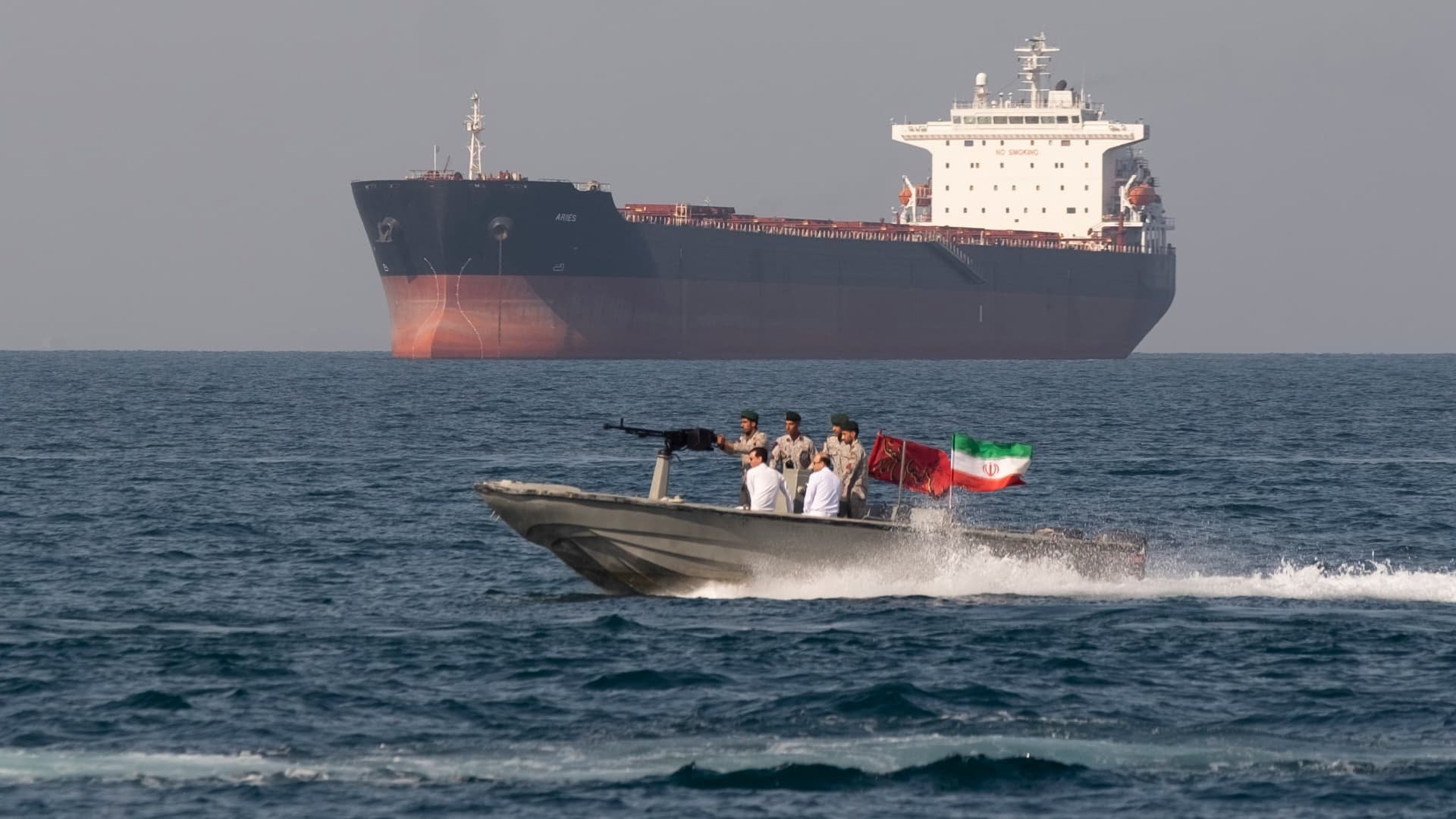
The Strait of Hormuz is one of the world’s most critical energy corridors, with roughly a fifth of global oil and gas shipments normally passing through the narrow waterway. Iranian actions that have disrupted traffic there have pushed global oil prices sharply higher and raised concerns about rising inflation worldwide.
Trump has repeatedly set deadlines demanding that Iran fully reopen the route.
In his Truth Social post, the US president warned that Iranian infrastructure could be targeted if access to the strait is not restored.
He wrote:
“Tuesday will be Power Plant Day, and Bridge Day, all wrapped up in one, in Iran. There will be nothing like it!!! Open the Fuckin' Strait, you crazy bastards, or you'll be living in Hell - JUST WATCH! Praise be to Allah. President DONALD J. TRUMP.”
Trump later told Fox News that negotiations might still succeed but warned that he was considering major military action if an agreement was not reached quickly.
Iran dismisses warning
Iranian officials rejected the ultimatum, describing it as reckless and irrational.
Mahdi Tabatabaei, a spokesman for the Iranian president’s office, said the Strait of Hormuz would reopen once compensation arrangements were made for damage Iran says it suffered during the conflict.
Tehran has suggested that ships transiting the waterway could be required to pay tolls as part of those compensation efforts.
A senior Iranian commander, Gen Ali Abdollahi Aliabadi, criticised Trump’s warning, calling it a “helpless, nervous, unbalanced and stupid action” and warning that “the gates of hell will open” for the US leader if attacks are carried out.
Rescue mission after fighter jet downing
Trump’s remarks came shortly after US forces confirmed the rescue of the second crew member from a Boeing F-15E Strike Eagle shot down over Iran.
According to reports, the rescue operation took place in mountainous terrain in south-western Iran after a firefight in hostile territory. The jet’s pilot had already been recovered shortly after the aircraft was brought down on Friday.
Both Washington and Tehran had launched searches for the missing crew member following the incident.
Regional fighting intensifies
The downing of the fighter jet occurred during more than a month of fighting following US and Israeli air strikes on Iranian targets. Tehran has responded with attacks against Israel and several Gulf countries allied with Washington.
Israel has continued to strike Iranian infrastructure, including a petrochemical facility hit on Saturday. Defence officials say Israel is also awaiting US approval for additional strikes against Iranian energy sites.
US-Israeli strikes also targeted Qasem Soleimani International Airport on Sunday.
Iran has continued firing drones and missiles across the region. In Haifa, a ballistic missile struck a residential building, injuring four people.
Authorities in Abu Dhabi said falling debris from an Iranian missile caused fires at a petrochemical facility. Officials in Kuwait reported severe damage to oil and petrochemical installations from drone strikes, while industrial and fuel plants were also targeted in Bahrain.
Trump has postponed several earlier deadlines demanding the reopening of the Strait of Hormuz while saying negotiations were under way. Iran has denied that direct talks with Washington are taking place.


Join the discussion?

Already a member?


Adapted by ASEAN Now. Source 6 April 2026
webfact
webfact
The second crew member from a US F-15 fighter jet shot down over southern Iran on Friday has been recovered during a major rescue mission, according to US media reports.

Get today's headlines by email

The aircraft was downed over southern Iran on Friday, leaving two American aviators unaccounted for.
Large US combat search and rescue operation launched
In the hours following the incident, US forces launched what one person familiar with the operation described as a “huge” combat search and rescue mission in the area.
US media later reported that the second American crew member missing from the F-15 had been located and rescued by US forces.
Aviator recovered after reported ‘heavy firefight’
According to Al Jazeera, citing a US government official, the aviator was recovered after what was described as a “heavy firefight.”
The BBC also understands that US and Iranian forces were involved in an engagement during the rescue operation.
Condition of rescued crew member remains unclear
The condition of the recovered crew member has not been disclosed. However, reports indicate that the pilot may have been injured during the initial ejection from the aircraft.
Further details about the circumstances of the rescue have not been confirmed.

Join the discussion?

Already a member?


Adapted by ASEAN Now. Compiled from various sources. 5 April 2026
webfact
webfact
The White House is considering additional leadership changes at the U.S. Justice Department, with two senior officials potentially affected as President Donald Trump continues to reshape the department’s top ranks.

Get today's headlines by email

According to sources familiar with the discussions, the changes could involve Associate Attorney General Stanley Woodward and Assistant Attorney General for the Civil Rights Division Harmeet Dhillon. Officials have discussed promoting Dhillon to one of the department’s highest roles while moving Woodward out of his current position. Sources cautioned that no final decisions have yet been made.
A spokesperson for the United States Department of Justice declined to comment on personnel matters.
Leadership shifts after attorney general’s removal
The potential changes come shortly after Trump removed Pam Bondi from her post as attorney general earlier in the week. The president had reportedly grown frustrated that Bondi had not pursued criminal cases against individuals he views as political opponents.
Following her departure, Trump appointed Deputy Attorney General Todd Blanche to serve as acting attorney general. It remains unclear whether Blanche will be nominated to hold the position permanently.
Other possible candidates are also under discussion. One of the names mentioned as a potential contender is Lee Zeldin, a former member of Congress who currently leads the Environmental Protection Agency.
Background of Stanley Woodward
Woodward, currently the third-ranking official in the Justice Department, previously worked as a defense lawyer representing several allies of Trump.
Among his former clients were White House adviser Peter Navarro, FBI Director Kash Patel, and Walt Nauta, who was charged in the classified documents investigation led by Special Counsel Jack Smith.
Woodward also represented Kelly Meggs, a member of the Oath Keepers militia group who was convicted of seditious conspiracy related to the January 6 Capitol attack. Meggs later had his sentence commuted by Trump.
Despite his connections to the president’s allies, Woodward has faced criticism from some figures within Trump’s political orbit. Far-right commentator Laura Loomer has publicly criticized him, pointing to his wife’s support for progressive causes.
As associate attorney general, Woodward oversees several major divisions within the department, including the Civil Rights Division, Antitrust Division, Civil Division, and the Environment and Natural Resources Division. The role also supervises the department’s grant-making offices and the U.S. trustee program.
Dhillon’s tenure at Civil Rights Division
Dhillon, who currently leads the Civil Rights Division, is widely viewed as a close political ally of Trump.
During her tenure, the division has experienced substantial turnover. More than 75% of its attorneys have left over the past year, many accepting buyouts or early retirement amid concerns about changes to the office’s priorities.
Under Dhillon’s leadership, the division has launched investigations into diversity, equity and inclusion policies at universities, filed lawsuits seeking to prevent transgender athletes from competing in girls’ and women’s sports, and pursued legal action against dozens of states to obtain unredacted voter registration lists.
She also established a new section dedicated to gun rights enforcement.
Dhillon additionally halted efforts to negotiate consent decrees with police departments in Minneapolis and Louisville, which had been pursued after earlier investigations during the previous administration found evidence of systemic constitutional violations.
Criticism from former officials
Dhillon’s approach has drawn criticism from former staff within the Civil Rights Division.
In an open letter last year, more than 200 former attorneys from the division accused her of undermining the office’s mission. The division was established under the Civil Rights Act of 1957, legislation designed to combat racial segregation under the Jim Crow system and protect voting rights for Black Americans.

Join the discussion?

Already a member?


Adapted by ASEAN Now. Source 5 April 2026
webfact
webfact
A sharp increase in fees for U.S. skilled-worker visas has prompted concern among immigration experts and technology professionals, who warn the move could redirect global talent to other countries.

Get today's headlines by email

In September 2025, the administration of Donald Trump announced a policy requiring a $100,000 fee for new applications for the H-1B visa programme, which allows U.S. companies to hire highly skilled foreign workers. Officials said the measure was intended to protect American jobs.
Previously, the cost of applying for an H-1B visa typically ranged between $1,700 and $4,500.
The policy change has triggered debate among technology workers abroad, particularly in India, which supplies the majority of H-1B visa holders.
Hyderabad’s tech workforce reassesses U.S. ambitions
In the southern Indian city of Hyderabad, a major hub for global technology firms, many workers have long viewed employment with multinational companies as a potential pathway to a job in the United States.
The city hosts offices of companies including Google and Facebook, contributing to its reputation as India’s “Silicon Valley”. The technology district known as “High Tech City” has even earned the nickname “Cyberabad”.
Rajesh Jaknalli, who has worked for a U.S. technology firm in Hyderabad for roughly a decade, said many professionals had hoped strong performance would eventually lead to relocation opportunities.
For years, he said, the expectation among workers was that dedication and experience could open the door to a U.S. transfer.
That outlook, however, has shifted since the visa fee increase.
Workers and employers weigh alternatives
Hameed Abdul, who works for Amazon in Hyderabad, said the new requirement has changed his plans.
He had previously expected that his position might eventually lead to a role in the United States. But the higher cost, he said, makes such moves unlikely because employers may be unwilling to pay the new fee.
Instead, Abdul now plans to seek opportunities elsewhere and is considering relocating to Canada.
Immigration consultant Xavier Fernandes, founder of the agency Y-Axis Overseas Careers, said the H-1B visa system historically created a steady flow of skilled technology workers into the United States.
According to data from U.S. Citizenship and Immigration Services, more than 70% of H-1B visa recipients in 2024 were from India.
Fernandes argues that the programme has helped supply talent to the American technology sector and contributed to its growth over several decades.
Global competition for skilled workers
Other countries are moving to attract the same pool of workers, often by simplifying immigration procedures.
Fernandes said nations including Canada, China and Australia are actively seeking skilled foreign professionals.
Jaknalli said he is now applying for visas in Australia, describing the process there as relatively straightforward.
The debate over foreign talent has also surfaced within U.S. political discussions. In a television interview in November, Trump told Fox News host Laura Ingraham that while the country had many capable workers, it still needed to recruit certain specialised skills from abroad.
Fernandes believes the higher visa fee could shift innovation elsewhere if skilled professionals choose to remain in India or move to competing destinations.
He said many Indian engineers may now decide to build companies and careers at home rather than seek opportunities in the United States.

Join the discussion?

Already a member?


Adapted by ASEAN Now. Source 5 April 2026
webfact
webfact
US immigration authorities have arrested a niece of the late Iranian military commander Qasem Soleimani in Los Angeles after revoking her residency status, officials said, citing alleged support for Iran’s leadership and its military forces.

Get today's headlines by email

The US State Department confirmed that Hamideh Soleimani Afshar, 47, and her daughter Sarinasadat Hosseiny, 25, were taken into custody by Immigration and Customs Enforcement (ICE) agents on Friday. Authorities said both women had their green cards cancelled because of ties to the Iranian government and statements supporting groups designated by Washington as terrorist organisations.
Officials alleged that while living in the United States, Afshar publicly promoted Iranian government messaging and praised the country’s military leadership on social media.
Allegations of Pro-Regime Support
In a statement, the State Department said Afshar had shared posts celebrating attacks on American troops and military installations in the Middle East. Officials also said she expressed support for the Islamic Revolutionary Guard Corps (IRGC), which the United States designates as a terrorist organisation.
The department further alleged that Afshar referred to the United States as the “Great Satan” — a phrase long used by Iranian leaders to criticise Washington — and voiced backing for Iran’s leadership.
Afshar entered the United States in 2015 on a tourist visa, according to the Department of Homeland Security. She was later granted asylum in 2019 and obtained permanent resident status in 2021.
Authorities said she travelled to Iran at least four times after receiving her green card.
Her daughter Hosseiny arrived in the United States the same year on a student visa and obtained permanent residency in 2023.
A spokesperson for the Department of Homeland Security said permanent residency could be revoked if authorities believed the holder posed a threat.
“It is a privilege to be granted a green card to live in the United States,” spokesperson Lauren Bis said. “If we have reason to believe a green card holder poses a threat to the US, the green card will be revoked.”
Arrests in Los Angeles
Afshar was living in a two-bedroom residence in the Tujunga area of Los Angeles, about 20 miles north of the city centre. Local residents said she occupied a unit at the rear of a property on Plainview Avenue.
Neighbour Halasius Bradford said ICE officers detained Hosseiny while she was in a car with her boyfriend near the property.
“He said the agents were demanding to know where the mother was,” Bradford told reporters.
Officials also said Afshar’s husband has been barred from entering the United States.
Wider Context
The arrests come amid heightened tensions between Washington and Tehran during a continuing US-Israel conflict with Iran.
US Secretary of State Marco Rubio welcomed the decision to revoke the pair’s residency status, writing on social media that the administration would not allow foreign nationals who support hostile regimes to remain in the country.
Afshar is related to Qasem Soleimani, the former commander of Iran’s Quds Force, who was killed in a US drone strike ordered by then-president Donald Trump near Baghdad International Airport in 2020.
Washington said at the time that Soleimani had been planning attacks against US diplomats and military personnel in Iraq.
Iran continues to honour the general’s legacy. Iranian media have reported that a new ballistic missile model has been named “Haj Qassem” in his memory.
Previous Action Against Iranian Officials’ Families
The State Department also recently revoked the legal status of Fatemeh Ardeshir-Larjiani, the daughter of Iranian political figure Ali Larijani, who previously served as secretary of Iran’s Supreme National Security Council.
Officials said the measure formed part of broader efforts to prevent individuals connected to Iran’s leadership from residing in the United States while supporting the country’s government.


Join the discussion?

Already a member?


Adapted by ASEAN Now. Source 5 April 2026
webfact
webfact
Officials in the administration of Donald Trump say a court order stopping construction of a planned $400 million ballroom at the White House could pose a national security threat, as government lawyers urge an appeals court to allow work on the project to continue.

Get today's headlines by email

In a legal filing submitted on Friday, attorneys representing the United States National Park Service argued that suspending construction leaves the presidential residence in a more vulnerable position. They warned that delaying the project risks “grave national-security harms” to the president, his family and staff.
The filing urges a federal appeals court to temporarily block the ruling that halted the project while the administration pursues further legal action.
Dispute Over Construction Authority
The construction was paused earlier this week after a ruling by Richard Leon, a federal judge in Washington. He ordered a temporary halt to the ballroom project, finding that the president likely lacked the authority to carry out the work without approval from Congress.
Leon said the preservation group challenging the project was likely to succeed in its argument that federal law does not grant the president the power to undertake such extensive alterations independently.
The judge nevertheless delayed enforcement of his order for 14 days to allow the government time to appeal. He acknowledged that stopping a large construction project already underway could present logistical complications.
Leon was appointed to the federal bench by former president George W. Bush.
Security Arguments From the Administration
Lawyers for the National Park Service argued that leaving the site partially completed increases security risks around the White House grounds.
According to the court filing, the ballroom complex would include reinforced structures designed to protect against threats, including bomb shelters, military facilities and a medical unit. The administration described the planned building as a “heavily fortified” installation.
Government lawyers said the unfinished state of the construction site complicates efforts to secure the area. They noted that temporary facilities such as canvas tents — currently required for certain functions without the ballroom — are significantly more vulnerable to missiles, drones and other threats.
“Time is of the essence,” the filing said, stressing that delays could undermine efforts to strengthen security at the presidential residence.
Judge Rejects Immediate Security Concerns
In his ruling, Leon said he had reviewed classified information submitted by the government and concluded that stopping construction would not endanger national security.
He also allowed an exception in his injunction for any work considered necessary for the safety and protection of the White House complex.
Trump criticised the ruling publicly but acknowledged that security-related work could still continue. Construction linked to underground bunkers and other protective measures on the White House grounds will proceed and be funded by taxpayers.
The ballroom itself, however, is expected to be financed through a combination of Trump’s personal contributions and donations from private supporters.
Appeals Process Underway
The administration has asked the appeals court to rule on its request by Friday. It is also seeking to extend the judge’s 14-day pause on enforcing the halt so that the dispute can potentially be taken to the Supreme Court of the United States.
The legal battle comes as Trump pursues broader plans to reshape parts of Washington and modify the White House complex.

Join the discussion?

Already a member?


Adapted by ASEAN Now. Source 5 April 2026
webfact
webfact
The White House has proposed a record-breaking $1.5 trillion defense budget for the 2027 fiscal year, a sharp increase that comes as the United States enters its fifth week of conflict with Iran.

Get today's headlines by email

The budget request, released on Friday, asks Congress to approve a military spending level roughly $445 billion higher than the 2026 total. According to the administration, that represents an increase of about 42%.
At the same time, the proposal calls for a 10% reduction in non-defense spending, equivalent to about $73 billion in cuts across federal agencies.
Major shift toward defense spending
The administration said the plan reflects a strategic shift toward national security priorities during a period of international tensions.
Under the proposal, defense spending would reach about $1.5 trillion, the largest military budget request in U.S. history.
Officials say the increase is designed to strengthen the country’s military capabilities while supporting operations linked to the ongoing conflict with Iran.
The White House budget outlines several broader priorities, including reducing violent crime, strengthening national security, and tightening immigration enforcement.
Cuts targeting domestic programs
To offset the large rise in defense funding, the budget proposes reductions across a range of domestic programs.
Environmental initiatives are among the most affected. The plan includes cancelling more than $15 billion in Department of Energy grants tied to clean energy projects.
The proposal also continues what officials describe as the Department of Education’s “path to elimination,” signaling the administration’s intention to gradually dismantle the department.
Agriculture spending would face a 19% cut, while the Internal Revenue Service budget would be reduced by about $1.4 billion.
Russ Vought, director of the Office of Management and Budget, said the plan continues the administration’s efforts to limit federal spending outside national security.
“The 2027 Budget builds on the President’s vision by continuing to constrain non-defense spending and reform the Federal Government,” Vought wrote in a message accompanying the proposal sent to Congress.
Increased funding for law enforcement and immigration
The budget also proposes additional resources for federal law enforcement and immigration enforcement.
More than $19 billion would be allocated to federal law enforcement agencies, representing a 15% increase from the 2026 level.
Funding for Immigration and Customs Enforcement would remain at the same level as the previous year. That includes $2.2 billion to maintain approximately 41,500 immigration detention beds.
The White House said the Department of Homeland Security would also receive additional support through budget reconciliation measures.
Legislative strategy and political backdrop
The reconciliation process allows legislation to pass the Senate with a simple majority, bypassing the 60-vote threshold typically required to overcome a filibuster.
Officials suggested the approach could allow Republicans to advance key spending priorities without relying on Democratic votes.
According to the administration, reconciliation funding would help the Department of Homeland Security implement the president’s immigration policies, complete construction of the border wall along the southwest border, deploy new border security technology, and continue a major modernization program for the U.S. Coast Guard.
The budget proposal arrives as Congress remains deadlocked over funding for the Department of Homeland Security. The dispute has led to what officials describe as the longest partial government shutdown in U.S. history.
As with all presidential budget requests, the proposal serves primarily as a statement of priorities and must still be negotiated and approved by Congress.


Join the discussion?

Already a member?


Adapted by ASEAN Now. Source 5 April 2026
webfact
webfact
German men aged between 17 and 45 may need official approval before spending long periods outside the country under a provision linked to a new military service law introduced earlier this year.

Get today's headlines by email

The measure forms part of the Military Service Modernisation Act, which took effect on 1 January and is intended to strengthen Germany’s defence capabilities following growing security concerns in Europe after Russia’s full-scale invasion of Ukraine.
A spokesperson for the defence ministry confirmed that men aged 17 and above must seek permission if they plan to remain abroad for more than three months.
Authorities say the requirement is designed to maintain an effective registration system for potential military personnel.
Registration system linked to defence planning
According to the defence ministry, the rule is aimed at ensuring that authorities know where eligible individuals are located in the event of a national emergency.
“In the event of an emergency, we must know who may be staying abroad for an extended period,” the spokesperson said.
Despite the formal requirement, officials indicated that approvals are generally expected to be granted. It remains unclear how the rule would be enforced if someone failed to request permission before travelling.
The provision attracted little attention until it was reported by the Frankfurter Rundschau newspaper on Friday.
Officials also acknowledged that the requirement could have significant implications for young people. The defence ministry said further regulations covering exemptions are still being developed to prevent unnecessary administrative burdens.
Roots in earlier conscription law
The legal foundation for the travel requirement lies in Germany’s Conscription Act of 1956, which has been amended several times, most recently in December.
Before the latest changes, the obligation to report extended stays abroad applied only during periods when Germany was formally in a state of national defence or mobilisation.
A defence ministry official noted that similar provisions existed during the Cold War but said they had little practical impact at the time.
Expanding the armed forces
The new legislation also outlines plans to increase the size of Germany’s active military. The government aims to expand the Bundeswehr from around 180,000 personnel to roughly 260,000 by 2035.
As part of the changes, parliament approved a system of voluntary military service in December.
Since January, all 18-year-olds in Germany receive a questionnaire asking whether they are interested in joining the armed forces.
From July 2027, they will also undergo a fitness assessment to determine whether they would be eligible for service if war were to break out.
Women may volunteer for military service, but under Germany’s constitution they cannot be required to serve.
Debate over possible return of conscription
Although the current model is based on voluntary participation, officials have said compulsory service could be reconsidered if the security environment deteriorates or if too few people volunteer.
The proposal has prompted protests from some young people since it was approved by parliament.
One organiser wrote on social media that they opposed spending “half a year of our lives locked up in barracks” training for combat.
Germany significantly reduced the size of its armed forces following the end of the Cold War, when the military had nearly half a million personnel.
Mandatory military service was suspended in 2011 under then-chancellor Angela Merkel.
Chancellor Friedrich Merz has since pledged to rebuild the Bundeswehr and aims to turn it into Europe’s strongest conventional army as the government responds to what it describes as a more dangerous security environment on the continent.


Join the discussion?

Already a member?


Adapted by ASEAN Now. Source 5 April 2026
webfact
webfact
Tensions between the United States and Iran have intensified as both sides exchanged warnings of devastating retaliation, while military personnel continue searching for a missing American crew member after a US fighter jet was shot down over Iran.

Get today's headlines by email

US President Donald Trump warned that “all hell” would be unleashed if Tehran failed to reach an agreement with Washington, drawing a similarly stark response from Iranian officials.
The exchange comes amid continued military strikes and missile attacks across the region, raising fears of a widening conflict.
Escalating rhetoric and ongoing strikes
Posting on the social media platform Truth Social, Trump said that “all hell will reign down” on Iran if it did not reach a deal within 48 hours or reopen the strategically vital Strait of Hormuz.
Iranian military officials responded with their own warning. Ebrahim Zolfaghari, spokesperson for Iran’s Khatam al-Anbiya Central Headquarters, said the entire region would become “hell” if the United States and Israel continued escalating the confrontation.
“If hostility escalates, the entire region will turn into hell for you,” he said, adding that attempts to defeat the Islamic Republic would lead to a prolonged and difficult conflict.
Fighting continued on Saturday, with US and Israeli forces carrying out strikes against Iranian military, industrial and energy facilities. Iran, in turn, launched missiles targeting Gulf states, Iraq and Israel.
Some of the intercepted missiles fell as debris, causing damage in several areas.
Trump also shared what he described as footage of a “massive strike” on Tehran. However, the video appeared to have been recorded roughly a day earlier.
In the same post, he claimed that several Iranian military leaders had been “terminated” in the attack, though Washington has not released details and Iranian authorities have not publicly addressed the claim.
Downed aircraft and search for crew member
The latest escalation follows the downing of a US McDonnell Douglas F-15 fighter jet over southern Iran on Friday.
According to US media reports, the pilot survived and has been rescued. However, a second American crew member remains missing.
Iranian authorities have urged citizens to help locate the missing airman “alive” and have offered a reward for information leading to his capture.
US forces launched a search-and-rescue operation that involved a Fairchild Republic A-10 Thunderbolt II aircraft, commonly known as the A-10 Warthog. The aircraft was shot and damaged during the mission, though its pilot was safely recovered.
Strikes near nuclear and industrial sites
Iranian state media reported that a major petrochemical complex in the southwestern city of Mahshahr had been struck earlier on Saturday.
Officials said five people were killed and about 170 injured. Israel said the facility had been used to produce materials linked to explosives and weapons.
Iran also reported that the area around the Bushehr Nuclear Power Plant had come under attack for the fourth time since the conflict began. One employee at the plant was killed.
Iran’s Atomic Energy Organisation blamed the United States and Israel for the strike, though neither country has confirmed involvement.
The International Atomic Energy Agency said it had been informed of the incident and expressed “deep concern”, while adding that no rise in radiation levels had been detected.
The agency stressed that nuclear facilities “must never be attacked” and urged all sides to show maximum restraint to avoid the risk of a nuclear accident.
The Bushehr facility, Iran’s only operational nuclear power plant, was completed with assistance from Russia. Moscow has begun evacuating personnel from the site, according to the head of the state nuclear corporation Rosatom, Alexei Likhachev.
Conflict following nuclear tensions
The war between the United States, Israel and Iran began on 28 February, two days after a third round of indirect nuclear negotiations between Washington and Tehran in Geneva.
Iran’s nuclear programme has long been the focus of international disputes and sanctions, and the latest hostilities have further complicated efforts to revive diplomacy.

Join the discussion?

Already a member?


Adapted by ASEAN Now. Source 5 April 2026
webfact
webfact
The personal relationship between British Prime Minister Keir Starmer and US President Donald Trump may be difficult to repair after the American leader publicly mocked Starmer during a White House speech, according to diplomats and political figures in the UK.

Get today's headlines by email

Trump ridiculed the British leader while recounting discussions about military support during the ongoing conflict with Iran, imitating Starmer’s voice and suggesting the United Kingdom had failed to act like a close ally. The comments, delivered during an Easter lunch at the White House, mark a further deterioration in relations between the two countries.
The speech was not open to journalists but was briefly published on a White House social media channel before being deleted. The remarks were later circulated online after being captured by reporters.
Mocking remarks over military decisions
During the speech, Trump criticised Britain’s reluctance to provide military assistance in the early stages of US strikes on Iran. He suggested Starmer hesitated when asked about sending aircraft carriers.
According to Trump, he asked Britain, which he said “should be our best” ally, whether its carriers could be deployed. Trump then described Starmer as responding that he needed to consult his team before making a decision.
Trump said he told Starmer that as prime minister he did not need to consult advisers, adding that waiting for meetings the following week would be pointless because the war would already be over.
Downing Street officials disputed the president’s account. Sources said Washington had never requested British aircraft carriers and that the UK had not offered them. In earlier criticism two weeks prior, Trump had claimed Starmer wanted to consult his team about sending minesweepers rather than carriers.
The dispute follows Britain’s refusal to allow US forces to use UK military bases for the initial strikes on Iran, a decision that has drawn repeated criticism from Trump.
Diplomats warn of lasting damage
Diplomats and foreign policy figures in Britain say the exchange has significantly strained the relationship between the two leaders.
One senior diplomat said Starmer had been right to largely ignore the remarks but suggested the damage could be long-lasting. The diplomat said the prime minister should focus on strengthening ties with partners such as Canada, Australia and European allies.
Kim Darroch, a former British ambassador to the United States and former national security adviser, said Starmer had been correct not to join what he described as a “war of choice”. However, he warned the episode had clearly harmed the personal relationship between the two leaders.
Darroch said tensions might eventually ease but cautioned that Trump could react unpredictably, potentially targeting NATO members or European allies including the UK through policies such as higher tariffs.
Support for Starmer’s response
Within Britain, Labour ministers and MPs have rallied behind Starmer, backing his decision to avoid responding directly to Trump’s comments.
Emily Thornberry, chair of the House of Commons foreign affairs committee, said she supported the prime minister’s approach and welcomed a leadership style that involved consulting advisers.
She said decisions on foreign policy and military action should be made with expert input, adding that failing to do so could lead to strategic surprises such as Iran’s closure of the Strait of Hormuz.
Government advisers also said Starmer would continue acting in Britain’s national interest, even if that meant attempting to maintain working relations with Trump despite the president’s remarks.
Political fallout in Britain
Trump’s comments have also complicated the political response in the UK. Figures from opposition parties have criticised the tone of the US president’s remarks even while acknowledging tensions between the two leaders.
Robert Jenrick, Reform UK’s economic spokesman, told LBC radio that relations between Starmer and Trump had taken what he described as a “massive blow” that could prove difficult to repair. He added that he did not support the way the US president spoke about Britain’s leader.
During the same White House lunch, Trump also made disparaging remarks about French President Emmanuel Macron, joking about him being “still recovering” from a blow to the jaw and claiming Macron’s wife treated him badly.
Despite the escalating rhetoric, Starmer has said he will not change his position on the conflict with Iran. Speaking to Parliament’s liaison committee, he said his priority remained Britain’s national interest and that external pressure would not alter his stance.

Join the discussion?

Already a member?


Adapted by ASEAN Now. Source 4 April 2026
webfact
webfact
U.S. Defense Secretary Pete Hegseth’s increasing use of Christian language and imagery in connection with the American military has prompted debate among experts, veterans and political figures about the role of religion in the armed forces.

Get today's headlines by email

During a briefing last week on the conflict with Iran, Hegseth urged Americans to pray to Jesus for the success of U.S. troops in the Middle East. Days later, he read a sermon that called for “wicked souls” to face “eternal damnation” in the fight against Iran.
The remarks reflect a broader pattern in which Hegseth has openly linked Christian faith with U.S. military operations. Pentagon officials say his approach reflects the country’s historical religious traditions, while critics argue it risks alienating service members of different faiths.
Growing emphasis on faith
Hegseth, a former Fox News host who served in Iraq and Afghanistan, has increasingly incorporated religious language into public statements about the military.
At a press briefing in March, one day after attending a dignified transfer ceremony at Dover Air Force Base, he quoted Psalm 144 from the Bible: “Blessed be the Lord, my rock, who trains my hands for war and my fingers for battle.”
He has also introduced a monthly prayer service at the Pentagon and invited several Christian pastors to speak at the events. Among them was Doug Wilson, a pastor known for advocating Christian nationalist ideas and arguing that women should not have the right to vote.
The invitation drew criticism from some veterans and political figures.
Fred Wellman, an Army veteran running for Congress in Missouri, wrote on the social media platform X that Hegseth was using his official role to promote his personal faith through government facilities and communications channels. Nancy Lacore, a retired Navy rear admiral seeking election to Congress in South Carolina, said the invitation risked sending a message that not all service members belong.
Defense Department officials have rejected those criticisms. Pentagon press secretary Kingsley Wilson said Hegseth was “a proud Christian” and had welcomed Wilson to the Pentagon in that capacity.
“The Christian faith is woven deeply into the fabric of our nation,” she said, adding that the defence secretary embraces that heritage.
Changes to chaplain corps
Hegseth has also introduced changes to the U.S. military’s Chaplain Corps. Under one new policy, chaplains will no longer display their rank insignia and instead wear symbols indicating their religious affiliation.
In a video announcement, Hegseth said the move was intended to highlight the spiritual wellbeing of service members, which he described as equally important as their physical and mental health. He criticised previous administrations for introducing what he called “political correctness and secular humanism” into the corps.
The Pentagon chief has long criticised diversity, equity and inclusion initiatives within the military, arguing they discourage young patriotic recruits. Data from the Defence Department indicates that roughly 70% of the U.S. military’s 1.3 million active-duty personnel identify as Christian.
Since taking office, Hegseth has also implemented a ban on transgender troops, removed diversity initiatives and launched reviews of women serving in combat roles and the department’s longstanding partnership with Scouting America.
Debate over religion and the military
Supporters say Hegseth’s religious expressions reflect long-standing traditions in the armed forces, where official events often begin with prayers delivered by chaplains.
Steven Bucci, a former Army Special Forces officer and visiting fellow at the Heritage Foundation, said he believes the controversy has been overstated.
He said Hegseth’s references to Jesus when urging Americans to pray for troops reflect his personal faith rather than an attempt to impose religion on service members.
Others remain concerned that the growing prominence of religious rhetoric could undermine the military’s tradition of representing a broad cross-section of American society.
Matthew Taylor, a visiting scholar at Georgetown University’s Berkley Center for Religion, Peace and World Affairs, said the military has historically sought to avoid ideological uniformity.
“The ideological consolidation of the military is something that we have historically not wanted,” Taylor said, adding that diversity within the armed forces has long been viewed as a strength.

Join the discussion?

Already a member?


Adapted by ASEAN Now. Source 4 April 2026
webfact
webfact
Ukraine’s president, Volodymyr Zelensky, has accused Russia of escalating its military campaign instead of observing a proposed Easter ceasefire, following a wave of drone and missile strikes across Ukraine that killed several civilians and injured dozens more.

Get today's headlines by email

The attacks, which involved hundreds of drones and missiles, left at least six civilians dead and about 40 others wounded, according to Ukrainian officials. Large-scale strikes carried out during daylight hours — once relatively uncommon earlier in the war — have been occurring more frequently in recent weeks.
The renewed assault comes as diplomatic efforts to halt the conflict appear to have stalled. Attempts led by the United States to broker progress have slowed after Donald Trump and his administration shifted attention toward the escalating conflict in the Middle East.
Civilian Areas Hit Across Ukraine
Emergency crews were deployed to multiple regions after residential areas were struck.
In the Zhytomyr region, west of the capital Kyiv, rescue workers searched through the debris of homes destroyed in the strikes. Officials said an entire row of houses had been reduced to rubble.
In the surrounding Kyiv region, video circulating online showed a drone veering toward a residential apartment building before crashing into its side and igniting a fire.
Further east, the city of Kharkiv was also targeted. Local authorities reported that a woman was killed and several others were critically injured. The city’s mayor described the bombardment as among the most extensive the city has experienced since the war began.
Zelensky Links Attacks to Truce Proposal
Zelensky said the strikes came shortly after Ukraine proposed a temporary ceasefire to coincide with Orthodox Easter, which will be observed next weekend in both Ukraine and Russia.
Writing on social media, he said Moscow had responded to the initiative by intensifying air strikes rather than pausing hostilities.
“The Russians have only intensified their strikes, turning what should have been silence in the skies into an Easter escalation,” he said.
Despite the attacks, Zelensky said the proposal for a holiday truce remains open if Moscow agrees to it. He added that the message had been conveyed to US envoys Steve Witkoff and Jared Kushner during recent discussions.
Peace Talks and Strategic Pressures
Plans for additional in-person negotiations between Ukraine and Russia, mediated by the United States, have been postponed twice. Russian officials say the talks are currently “on hold.”
Zelensky suggested American representatives could travel to Kyiv and then on to Moscow to help sustain diplomatic momentum.
At the same time, the broader geopolitical environment is shifting. Rising global energy prices linked to the Middle East conflict could have mixed consequences for the war.
Ukraine is concerned that higher fuel prices and potential supply shortages may strain its military logistics, particularly as frontline forces rely heavily on diesel to operate tanks and vehicles.
For Russia, however, higher energy prices may increase revenues from oil and gas exports, potentially providing additional funding for military production and troop payments.
Frontline Situation Remains Stable
Despite the intensifying air campaign, Zelensky said the ground situation in eastern Ukraine has stabilised.
He cited British intelligence assessments suggesting battlefield conditions are the most favourable for Ukraine in roughly ten months, with Russian advances appearing to have slowed.
Even so, Kyiv remains concerned about the availability of defensive systems. Large numbers of US-made Patriot missile systems are currently deployed in the Middle East conflict, raising fears that fewer may be available to defend Ukrainian cities from Russian ballistic missile attacks.
“The longer the war in the Middle East continues, the greater the risk that we will receive less weaponry,” Zelensky told journalists in Kyiv.
While Ukrainian forces have made limited territorial gains in some areas and lost ground in others, the government’s current strategy appears focused on holding defensive positions rather than launching major new offensives.

Join the discussion?

Already a member?


Adapted by ASEAN Now. Source 4 April 2026
webfact
webfact
Rising energy prices across Europe are prompting renewed debate over whether nuclear power should play a larger role in the continent’s future energy mix.

Get today's headlines by email

Households and businesses are watching the cost of gas and petrol climb sharply, while policymakers warn that the situation could deteriorate further depending on developments in the Middle East. Governments and European institutions are urging citizens to reduce energy use, including working from home more frequently and limiting travel.

The latest price shock comes only a few years after Europe faced a severe cost-of-living crisis triggered by soaring energy prices and inflation following Russia's full-scale invasion of Ukraine. With energy markets again under strain, discussions about reducing dependence on imported fuels have returned to the forefront.
Energy supply concerns have also intensified as tensions in the Middle East affect global markets, particularly disruptions linked to the Strait of Hormuz, a crucial route for oil shipments.
Renewed Focus on Energy Independence
European leaders are increasingly examining nuclear energy as part of a strategy to improve energy security.
At a recent nuclear summit in Paris, Ursula von der Leyen described Europe’s earlier retreat from nuclear energy as a “strategic mistake.” She noted that nuclear power accounted for roughly a third of Europe’s electricity generation in 1990 but has since fallen to around 15%.
As a result, the continent now imports more than half of its energy, primarily oil and gas. That reliance leaves countries vulnerable to supply disruptions and price spikes.
Electricity prices vary significantly depending on national energy mixes. Spain, which has invested heavily in renewable sources such as wind and solar power, is forecast to have electricity prices about half those of Italy in 2026. In Italy, gas often determines electricity prices.
Meanwhile, France, Europe’s largest nuclear energy producer, generates about 65% of its electricity from nuclear power. Futures contracts indicate German electricity prices for the coming month are roughly five times higher than those in France.
Germany closed its final nuclear reactors following the Fukushima nuclear disaster, increasing reliance on gas for its energy-intensive industries. Economic institutes in Berlin recently cut Germany’s 2026 growth forecast to 0.6% amid rising gas costs.
Policy Shifts Across Europe
Several European countries are now reconsidering nuclear power.
Italy is drafting legislation to lift its long-standing ban on nuclear energy. Belgium is reconsidering earlier plans to phase out reactors, while Greece has opened discussions about adopting advanced reactor technologies.
Sweden has reversed a decades-old policy of abandoning nuclear energy. In the United Kingdom, Chancellor Rachel Reeves recently announced plans to streamline regulations to accelerate nuclear projects.
Support for nuclear energy also appears to be rising among the public in parts of Europe, according to polling.
France has been among the strongest advocates. President Emmanuel Macron argues nuclear power can help deliver both energy independence and lower carbon emissions while meeting growing electricity demand from technologies such as artificial intelligence and large data centres.
Long Timelines and Lingering Challenges
Despite the renewed enthusiasm, experts caution that nuclear power cannot resolve Europe’s immediate energy problems.
Building new reactors is expensive and often delayed. Major projects such as the Flamanville-3 reactor in France and Hinkley Point C in the UK have experienced lengthy construction setbacks.
Concerns also remain about nuclear waste management, safety, and the potential diversion of funding from renewable energy projects.
Some Central European countries continue to rely on Russian nuclear technology and uranium supplies, which could create new strategic dependencies.
Analysts note that maintaining existing nuclear capacity alone will require substantial investment as many reactors age.
Interest in New Reactor Technologies
To address cost and construction challenges, the European Commission is promoting small modular reactors, or SMRs.
These smaller reactors are designed to be built in factories and assembled on site, potentially reducing costs and construction times. They could also supply electricity for emerging sectors such as hydrogen production, district heating, and energy-intensive data centres.
The European Union recently announced a €330 million investment package to support nuclear technologies, including SMRs, with the aim of deploying them by the early 2030s.
However, SMRs remain largely untested at commercial scale. As of early 2026, none had received construction licences within the EU.
For now, Europe continues to rely heavily on imported fossil fuels while exploring longer-term solutions to strengthen energy security.

Join the discussion?

Already a member?


Adapted by ASEAN Now. Source 4 April 2026
webfact
webfact
President Donald Trump said on Friday that the United States could reopen the Strait of Hormuz if given additional time, as pressure grows on his administration to resolve a conflict with Iran that has disrupted global energy markets.

Get today's headlines by email

In a post on the social media platform Truth Social, Trump said the United States had the capability to regain control of the strategic waterway.
“With a little more time, we can easily open the Hormuz Strait, take the oil, and make a fortune,” he wrote.
Strategic waterway closed amid escalating conflict
The remarks come nearly five weeks after hostilities began with a joint aerial assault by the United States and Israel on targets in Iran. The conflict has since expanded, creating instability across the region and contributing to volatility in global financial markets.
Iran has effectively shut down the Strait of Hormuz in response to the strikes that began in late February. The narrow waterway between Iran and Oman is one of the world’s most critical shipping routes for oil.
Roughly one-fifth of the world’s total oil consumption passes through the strait, making any disruption a major concern for governments and energy markets worldwide. Since the closure, oil prices have risen sharply as traders react to the reduced flow of crude shipments.
Pressure mounts to restore oil flows
Reopening the strait has become a top priority for countries dependent on stable energy supplies. Analysts say prolonged disruption could push fuel prices higher and strain global economic growth.
Governments in Europe, Asia and the Middle East have called for a swift resolution to ensure the resumption of commercial shipping through the waterway.
The ongoing conflict has also unsettled financial markets. Shares have declined in several major markets amid uncertainty about how long the fighting may continue and whether the conflict could broaden further.
Iran warns of retaliation
Earlier this week, Trump reiterated threats against Iran’s civilian power infrastructure during a speech on Wednesday evening. He did not provide a specific timeline for ending the hostilities.
Iranian officials responded by warning of further retaliation if attacks continue.
The exchange of threats has added to concerns about the potential for a wider regional conflict, particularly given the strategic importance of the Strait of Hormuz to the global energy supply.
With the conflict now entering its fifth week, pressure is growing on the U.S. administration to find a path toward stabilizing the region and restoring the flow of oil through the vital shipping route.

Join the discussion?

Already a member?


Adapted by ASEAN Now. Source 4 April 2026
webfact
webfact
A new national survey suggests many Americans hold unfavorable views of both major political parties, though voters dissatisfied with both sides currently lean toward Democratic candidates ahead of the upcoming U.S. midterm elections.

Get today's headlines by email

The poll, conducted by CNN and research firm SSRS, found widespread frustration with the Democratic Party and the Republican Party. Among the roughly one-quarter of Americans who view both parties negatively—sometimes referred to as “double haters”—Democrats currently hold a substantial lead in congressional voting preference.
Dissatisfaction With Both Parties
According to the survey, voters who dislike both parties favor Democratic candidates by a margin of 31 percentage points in the midterm elections. Analysts say this group can play a decisive role in tight national contests.
Voters with negative views of both parties have influenced previous elections. In 2016, those who viewed both Donald Trump and Hillary Clinton unfavorably ultimately broke in Trump’s favor. They also leaned Republican in the 2022 midterm elections, according to exit polling.
The latest poll suggests that current dissatisfaction among these voters is driven more by opposition to Republicans than by enthusiasm for Democrats.
Only 28% of Americans say they hold a favorable view of the Democratic Party, while the Republican Party receives slightly higher approval at 32%. The difference is partly due to stronger support among Republican voters for their own party compared with Democrats’ views of theirs.
Generic Ballot Advantage
Among registered voters overall, Democrats hold a modest lead when asked which party they would support if congressional elections were held today. The party’s candidates lead Republicans by six percentage points on the generic ballot.
The gap widens among those who describe themselves as highly motivated to vote. In that group, 57% favor Democratic candidates compared with 38% who support Republicans.
Political scientists often note that turnout among the most engaged voters can be decisive in midterm elections, particularly when one party’s base shows stronger enthusiasm.
Reasons for Discontent
Respondents who expressed negative views toward both parties cited different concerns about each.
Among those dissatisfied with Democrats, the most common criticism was that the party fails to accomplish enough in government. Others said Democrats do not push back strongly enough against Trump and Republicans, while some described the party as too liberal or ineffective.
Criticism of Republicans often centered on the party’s relationship with Trump. Some respondents said the GOP fails to stand up to the former president, while others cited concerns about corruption or said the party does not represent ordinary people’s interests.
One independent respondent wrote that the political environment in Washington is marked by deep division and an inability to compromise.
Internal Divisions Within Parties
Despite the broader dissatisfaction, most voters aligned with each party still see their own side as relatively united.
About one-third of Democratic-aligned adults say their party is divided, while fewer than one in five Republicans say the same about the GOP.
However, survey responses indicate that some internal disagreements remain. Among Democratic voters, many say issues related to U.S. policy toward Israel have created tensions within the party. Others point to disagreements over ideological direction and whether elected Democrats should cooperate with Trump.
Republican voters also see divisions within their party, particularly around the GOP’s policy priorities, ideological direction, and whether Republican officials should publicly oppose Trump.
Leaders Remain Unpopular
Congressional leaders from both parties also receive negative public ratings. Republican leaders Mike Johnson and John Thune and Democratic leaders Hakeem Jeffries and Chuck Schumer all recorded unfavorable net ratings among the public.
Schumer posted particularly low figures, with a net favorability rating of minus 32 among the public overall.
The poll surveyed 1,201 adults nationwide between March 26 and March 30 through online and telephone interviews. The margin of sampling error for the full sample is plus or minus 3.2 percentage points.

Join the discussion?

Already a member?


Adapted by ASEAN Now. Source 4 April 2026
webfact
webfact
U.S. forces are searching for a missing aircrew member after an American fighter jet was shot down over Iran, while another U.S. aircraft involved in the rescue effort was also hit by Iranian fire, according to a U.S. official.

Get today's headlines by email

The aircraft, an F-15E Strike Eagle, was brought down during the ongoing conflict between the United States and Iran. One of the two crew members aboard the fighter jet has already been recovered, but the second remains unaccounted for as search and rescue operations continue.
Rescue Effort Under Fire
A U.S. aircraft deployed to assist with the rescue mission was also struck during the operation, the official said.
That aircraft, an A-10 Thunderbolt — commonly known as the Warthog — managed to reach Kuwaiti airspace before the pilot ejected. The aircraft subsequently crashed in Kuwait, but the pilot survived and is safe, the official added.
Two U.S. military Black Hawk helicopters participating in the rescue effort were also hit by Iranian fire. However, the service members aboard those helicopters were not injured.
Iranian state-linked media outlets later published images and claims from the Islamic Revolutionary Guard Corps stating that it had shot down the F-15E. Neither the Pentagon nor the White House immediately confirmed Iran’s claim publicly.
Trump Briefed on Incident
Speaking briefly by phone on Friday, President Donald Trump declined to provide details about the rescue mission.
When asked whether the incident might affect efforts to negotiate an end to the conflict, Trump said it would not.
“No, not at all. No, it’s war,” he said.
The president has previously stated that the United States has been holding negotiations with Iran aimed at ending the conflict, though Iranian officials maintain that no direct talks are taking place.
On his social media platform Truth Social, Trump did not immediately address the downed aircraft. Instead, he posted a short message referencing Iran’s oil industry, writing: “Keep the oil, anyone?”
White House press secretary Karoline Leavitt later confirmed that Trump had been briefed on the situation.
First Confirmed Loss Over Iran
If confirmed, the incident would mark the first time a U.S. aircraft has been downed inside Iranian territory during the current conflict.
In recent days, the United States has increased the number of bombing missions carried out over Iran. The downing of the fighter jet could raise new questions about U.S. and Israeli assertions that their forces have largely secured control of Iranian airspace.
Their joint military campaign has focused heavily on targeting Iran’s air defense systems and missile infrastructure. However, Tehran appears to retain the ability to strike back against U.S. and allied forces in the region.
Iran has previously claimed to have shot down American aircraft during the conflict, though those incidents had not been confirmed by the United States.
Last month, U.S. Central Command reported that an F-35 fighter jet made an emergency landing on March 19 but did not confirm whether the incident was linked to Iranian action.
Local Bounty Offered for Crew
As news of the downed aircraft spread, a regional governor in southwestern Iran reportedly called on residents to help locate the crew of the F-15E.
According to Iranian state and semi-official media outlets, a representative of local merchants and businesses offered a reward equivalent to around $60,000 for information leading to the capture of the crew.
Nour News, an outlet affiliated with the Revolutionary Guard, reported that the fighter jet had been destroyed by a “new advanced air defense system” operated by the Guard’s aerospace division.
A channel linked to Iranian state television also claimed that a U.S. pilot had ejected over a rural area in southwestern Iran and urged local residents to report or detain any “enemy pilot.”
The conflict between the United States and Iran is now more than a month old, with both sides continuing military operations while diplomatic efforts remain uncertain.


Join the discussion?

Already a member?


Adapted by ASEAN Now. Source 4 April 2026
webfact
webfact
The administration of Donald Trump has proposed allocating $152 million to begin rebuilding and reopening the former prison at Alcatraz Island as a secure federal detention facility.

Get today's headlines by email

The funding request, included in the White House’s latest budget proposal released on Friday, would cover the first year of costs associated with restoring and operating the historic site as a prison once again. The plan forms part of a broader proposal to increase funding for the Federal Bureau of Prisons by about $1.7 billion.
Officials say the wider funding increase is intended to improve pay and working conditions for correctional officers, addressing a longstanding staffing shortage across the federal prison system.
Budget plan outlines administration priorities
The budget document, which serves as a blueprint for federal spending priorities, must still be approved by the United States Congress. Such proposals are often revised during the legislative process and are rarely enacted in their entirety.
Nonetheless, the request offers insight into the administration’s policy priorities, including renewed interest in turning the historic prison on Alcatraz Island back into an operational correctional facility.
Currently, the island—located off the coast of San Francisco—is a major tourist attraction and historic site, drawing around 1.2 million visitors each year.
Historic prison closed more than six decades ago
Alcatraz operated as a federal penitentiary for nearly 30 years before closing in 1963. According to the Bureau of Prisons, the facility was shut down primarily because of its high operating costs and deteriorating infrastructure.
At the time, officials estimated that between $3 million and $5 million would have been required for restoration and maintenance simply to keep the prison functioning, not including daily operational expenses.
When asked about the full cost of restoring the facility today, the Bureau of Prisons said it is still evaluating what would be required to reopen the prison.
“As an agency, we are moving forward, evaluating, and formulating the actions necessary to reopen and operate USP Alcatraz,” the bureau told CNN.
Longstanding interest from the president
Reopening Alcatraz has been an ongoing interest of President Trump.
In May last year, Trump wrote on the social media platform Truth Social that he had directed the Bureau of Prisons to work with the United States Department of Justice, the Federal Bureau of Investigation, and the United States Department of Homeland Security to reopen the prison.
He said the rebuilt facility would be expanded and used to house what he described as the country’s most dangerous offenders.
“The reopening of Alcatraz will serve as a symbol of law, order and justice,” Trump wrote.
The director of the Bureau of Prisons, William K. Marshall III, said at the time that the agency would explore all available options to carry out the plan.
Notorious inmates once held there
During its years of operation, Alcatraz held several well-known criminals, including Al Capone, George “Machine Gun” Kelly and James “Whitey” Bulger.
The prison’s isolated location on an island in San Francisco Bay made it one of the most secure federal penitentiaries in the United States during its time in operation.
META: The Trump administration is seeking $152 million in its budget proposal to begin restoring and reopening Alcatraz as a high-security federal prison.

Join the discussion?

Already a member?


Adapted by ASEAN Now. Source 4 April 2026

webfact
webfact

Account

Navigation

Search

Search

Configure browser push notifications

Chrome (Android)
  1. Tap the lock icon next to the address bar.
  2. Tap Permissions → Notifications.
  3. Adjust your preference.
Chrome (Desktop)
  1. Click the padlock icon in the address bar.
  2. Select Site settings.
  3. Find Notifications and adjust your preference.