Skip to content
View in the app

A better way to browse. Learn more.

Thailand News and Discussion Forum | ASEANNOW

A full-screen app on your home screen with push notifications, badges and more.

To install this app on iOS and iPadOS
  1. Tap the Share icon in Safari
  2. Scroll the menu and tap Add to Home Screen.
  3. Tap Add in the top-right corner.
To install this app on Android
  1. Tap the 3-dot menu (⋮) in the top-right corner of the browser.
  2. Tap Add to Home screen or Install app.
  3. Confirm by tapping Install.

Become a member

Become a member

World News

Fresh news brought to you daily from around the world. Hot news, breaking stories as they happen.
Nigeria has sentenced nearly 400 people to prison after large-scale trials over alleged connections to militant Islamist groups, as authorities face mounting pressure to address the country’s worsening security situation.

Get today's headlines by email

Officials said 386 suspects were convicted in proceedings held at the federal high court in Abuja. The defendants were accused of involvement with either Boko Haram or its splinter faction Islamic State West Africa Province.
Sentences handed down ranged from five years in prison to life imprisonment.
The trials were part of a broader effort by the Nigerian government to tackle militant violence and other armed threats affecting the country.
Mass trials in Abuja
More than 500 suspects appeared before the federal high court in Abuja, facing accusations that included participating in attacks or assisting militant groups.
Prosecutors alleged that some defendants provided financial support, weapons, information or logistical help to the armed groups.
According to officials, judges convicted 386 people at the end of the hearings. Two defendants were acquitted, eight were discharged, and 112 cases were postponed for further proceedings.
Several suspects admitted to some of the charges. Five of the accused pleaded guilty at the start of the trials to offences that included selling livestock, supplying food, and passing information to militant organisations.
Insurgency in north-east Nigeria
Nigeria has been confronting an Islamist insurgency in its north-east since 2009, when Boko Haram launched an armed campaign against the state.
The conflict has killed tens of thousands of people and forced more than two million from their homes, according to aid agencies.
Over the years, factions have emerged from the original group, including Islamic State West Africa Province, which pledged allegiance to the Islamic State and operates across parts of the Lake Chad region.
Nigerian security forces are currently dealing with multiple threats across the country. In addition to Islamist militants, authorities are confronting separatist groups and criminal gangs responsible for widespread kidnappings for ransom.
Security concerns and international response
The convictions come as concerns about security in Nigeria continue to grow.
On Wednesday, the U.S. Department of State advised American citizens to reconsider travel to the country, citing deteriorating security conditions.
In a separate development, the United States carried out airstrikes in northern Sokoto state on Christmas Day targeting a militant Islamist group known as Lakurawa.
The strikes followed claims by Donald Trump, who alleged that Christians were being persecuted in Nigeria.
Nigeria’s government rejected the accusation, saying the violence affects people of different faiths and that both Muslims and Christians have been victims of attacks.
Authorities say the mass trials form part of continuing efforts to hold suspects accountable while addressing the broader security crisis facing Africa’s most populous nation.


Join the discussion?

Already a member?


Adapted by ASEAN Now. Source 12 April 2026
webfact
webfact
US and Iranian officials have begun high-level negotiations in Pakistan aimed at ending the conflict between the two countries and stabilising shipping through the strategically vital Strait of Hormuz.

Get today's headlines by email

The talks, held in Islamabad, follow earlier indirect discussions and a two-week truce between Washington and Tehran. Officials say the meetings represent the first formal attempt to turn that temporary pause into a broader agreement that could reopen global shipping routes and prevent further escalation in the region.
Delegations meet in Islamabad
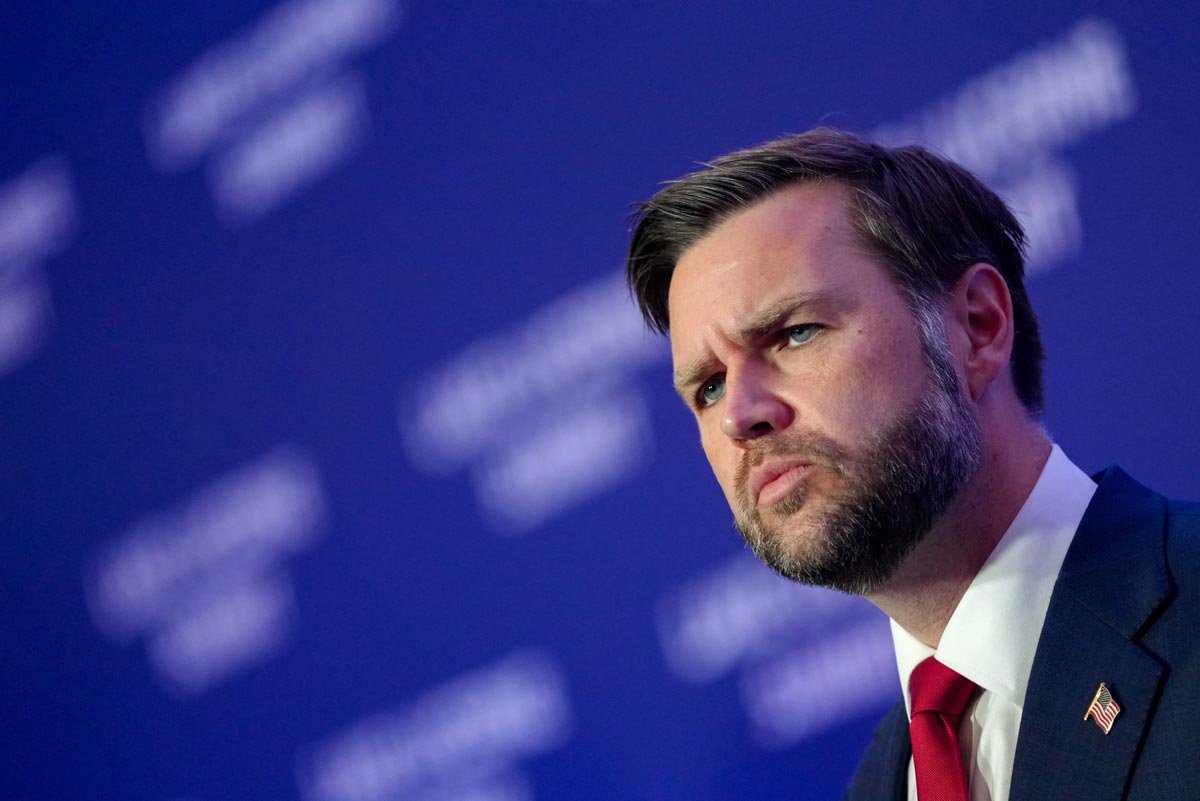
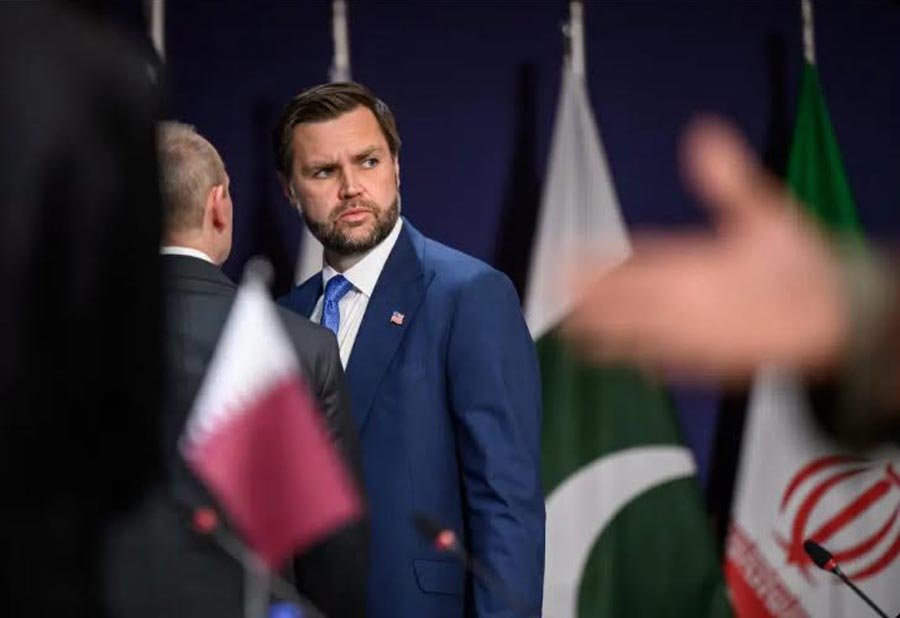
The US delegation is led by Vice President JD Vance, who arrived in the Pakistani capital on Saturday. He is joined by President Donald Trump’s special envoy Steve Witkoff and Trump’s adviser and son-in-law Jared Kushner.
Iran’s delegation is headed by parliament speaker Mohammad Bagher Qalibaf, who had already arrived in Islamabad ahead of the talks.
Both delegations met separately with Pakistani Prime Minister Shehbaz Sharif before negotiations began, though neither Iran’s team nor the Pakistani government released details of those discussions.
Before departing for Pakistan, Vance warned Tehran against attempting to mislead US negotiators, saying Washington would not tolerate what he described as attempts to “play” the United States during the talks.
The three-party meeting was reportedly made possible after several preconditions were met, including a reduction in Israeli strikes in southern Lebanon.
Competing proposals and key disputes
While negotiations are under way, the specific terms under discussion remain unclear.
Reports suggest Iran has drafted a 10-point proposal for a settlement, while the United States has circulated a separate 15-point plan. Neither proposal has been publicly released, though President Donald Trump described the Iranian plan as “a workable basis on which to negotiate”.
Several major issues are expected to dominate the talks, including economic sanctions on Iran, the status of the Strait of Hormuz, Iran’s nuclear enrichment programme, and Israeli military operations in Lebanon.
The United States has demanded that Iran reopen the Strait of Hormuz, one of the world’s most important shipping lanes. Tehran has effectively restricted passage since US and Israeli attacks on Iran on 28 February that triggered the current war.
Iran has proposed allowing ships to pass in exchange for transit fees and wants recognition of its authority over the narrow waterway. Washington has rejected the idea, arguing that the strait must remain open to international navigation.
Trump has floated the possibility of a joint US-Iran mechanism to impose tolls on shipping in the strait, a suggestion that has prompted concern in Europe.
A spokesperson for the European Commission said earlier this week that the Strait of Hormuz must remain open to all vessels, describing freedom of navigation as essential.
Distrust and ongoing violence
Iranian officials have said progress in the talks will depend on two conditions: a ceasefire in Lebanon and the release of Iranian financial assets that have been frozen abroad.
However, reports early on Saturday indicated that Israeli strikes were continuing in southern Lebanon, where at least three people were reported killed.
Iran’s foreign minister, Abbas Araghchi, said Tehran entered the talks with “deep distrust” following two attacks on Iran during earlier negotiations over its nuclear programme.
In a statement on social media, his office also warned that Iran would respond if further attacks were carried out.
Trump, meanwhile, used social media on Saturday to dismiss claims that Iran had gained the upper hand in the conflict. He said Iranian military capabilities had been heavily damaged during the war.
Heavy toll of the conflict
The war has disrupted trade throughout the Persian Gulf and driven up global oil prices as shipping routes have been restricted.
Regional infrastructure has also suffered damage across several Gulf states.
According to available figures, the conflict has killed at least 3,000 people in Iran. Israeli attacks in Lebanon have killed 1,953 people, while 23 deaths have been reported in Israel and more than a dozen in Gulf Arab states following Iranian strikes.
Negotiators in Islamabad now face the challenge of turning the fragile truce into a longer-term agreement capable of ending the fighting and restoring shipping through the Strait of Hormuz.


Join the discussion?

Already a member?


Adapted by ASEAN Now. Source 12 April 2026
webfact
webfact
Former U.S. Secretary of State John Kerry has sharply criticised threatening comments by President Donald Trump about Iran, saying the language used could amount to the “prelude to becoming one of the greatest war criminals in history”.

Get today's headlines by email

Kerry made the remarks during an interview with Jen Psaki on the programme “The Briefing”, where he said the president’s recent social media statements about Iran were among the most alarming he had seen from the administration.
Criticism of rhetoric
Kerry pointed to posts by Trump on the platform Truth Social, including one containing profanity earlier in the week and another warning that Iran’s “whole civilization will die”.
The former secretary of state said the wording left him “shocked”, adding that such statements were inconsistent with the international role the United States had historically played.
He said the country had long been associated with efforts to defend democratic values abroad, referencing the U.S. role in liberating Europe from fascism during the Second World War. Using language that suggested the destruction of an entire civilisation, he argued, risked undermining those principles.
“When you kill a civilization,” Kerry said, “you are doing something precisely against all of the international norms, standards, values and hopes and aspirations.”
References to past conflicts
Kerry also invoked his own experience during the Vietnam War. After serving as a lieutenant in the U.S. Navy during the war, he became an anti-war activist, a background he said shaped his views about the responsibilities of leaders during times of conflict.
Speaking in the interview, Kerry argued that political leaders must be transparent when discussing the prospect of war, particularly when decisions involve matters of life and death.
He also rejected claims from the Trump administration that Iran posed an imminent nuclear threat.
“There just wasn’t an imminent threat,” Kerry said, noting that officials had previously argued that recent strikes had already destroyed Iran’s nuclear programme.
Rising tensions before negotiations
Trump’s comments came as diplomatic efforts were under way to reduce tensions between Washington and Tehran. Talks between Iranian representatives and a U.S. delegation led by Vice President JD Vance were scheduled to take place in Pakistan.
In an interview with the New York Post, Trump said the United States was prepared to resume military action if negotiations failed.
“We’re going to find out in about 24 hours,” he said, adding that the U.S. military was preparing weapons and equipment in case a new round of strikes became necessary.
He said that if a deal was not reached, the United States would use those weapons “very effectively”.
Strait of Hormuz dispute
Earlier in the week, Trump had issued an ultimatum to Iran demanding a peace agreement and the reopening of the Strait of Hormuz, setting a deadline late Tuesday evening.
A deal was reportedly reached shortly before the deadline, leading to a two-week ceasefire and the reopening of the shipping route, a critical corridor for global oil supplies.
However, Iran closed the strait again the following day, citing Israeli military operations in Lebanon. Iranian officials and Pakistan’s prime minister Shehbaz Sharif have said the ceasefire should also apply to Lebanon.
That interpretation has been rejected by both the Trump administration and Israeli Prime Minister Benjamin Netanyahu, highlighting the continuing disagreements surrounding the fragile diplomatic effort.

Join the discussion?

Already a member?


Adapted by ASEAN Now. Source 12 April 2026
webfact
webfact
More than 500 people were arrested in central London after a demonstration opposing the government’s ban on the activist group Palestine Action, according to the Metropolitan Police.

Get today's headlines by email

The arrests took place during a protest in Trafalgar Square on Saturday, where hundreds gathered to express support for the organisation despite it being listed as a proscribed group under UK law.
Police said those detained ranged in age from 18 to 87.
Protest against proscription
The protest, titled “Everyone Day”, was organised by the campaign group Defend Our Juries. Organisers said the event aimed to highlight continued opposition to the government’s decision to outlaw Palestine Action.
Many demonstrators held placards reading: “I oppose genocide. I support Palestine Action,” a slogan that has appeared at earlier rallies connected to the group. Other signs expressed support for the right to protest and criticism of the United States and Israel.
Backing Palestine Action became illegal in July 2025 after the UK government banned the group under the Terrorism Act 2000. Authorities argued that the designation made it a criminal offence to express support for the organisation.
The ban was later ruled unlawful by the High Court in February, but the restrictions remain in force while the government pursues an appeal.
Police warning before demonstration
Ahead of the protest, the Metropolitan Police warned that anyone expressing support for the group could face arrest.
Commander Claire Smart, who oversaw police operations in London over the weekend, said officers would enforce the law if offences were committed.
“Those attending should be aware that showing support for a proscribed organisation is an offence under the Terrorism Act, and we will not hesitate to act where the law is broken,” she said.
Earlier in the year, the police had suggested arrests would be unlikely following the High Court ruling on the ban. However, in March they said enforcement would resume while legal proceedings continued.
Demonstrators accept risk of arrest
Several protesters said they were prepared to face arrest in order to challenge the ban.
Among those detained was Robert Del Naja, a founding member of the British band Massive Attack. Speaking before the protest, he criticised the decision to resume arrests.
He said he believed that if detained he would be able to contest the legality of the arrest in court.
Del Naja also defended the actions of Palestine Action, describing the group’s activities as intended to prevent the UK from being involved in alleged war crimes.
Other demonstrators echoed similar sentiments. One participant said she had attended because she believed the government was targeting people attempting to oppose what they described as genocide in Gaza.
Israel has repeatedly rejected accusations that its military operations in Gaza amount to genocide, stating that its actions are carried out in self-defence.
Arrests continue through evening
Police initially reported 212 arrests by late afternoon on Saturday as officers detained individuals displaying signs supporting the banned organisation.
By 23:07 BST, the Metropolitan Police said the total number of arrests had reached 523.
Authorities said they were grateful to officers involved in managing the demonstration.
More than 2,200 people have been arrested since Palestine Action was banned last year by then Home Secretary Yvette Cooper.
Trials involving hundreds of those accused of expressing support for the group have been paused while the legal challenge to the ban continues.


Join the discussion?

Already a member?


Adapted by ASEAN Now. Source 12 April 2026
webfact
webfact
The United States Navy has carried out a passage through the Strait of Hormuz as tensions with Iran remain high despite the start of ceasefire talks between the two countries.

Get today's headlines by email

Two U.S. destroyers transited the narrow waterway on Saturday in a maneuver that was not coordinated with Tehran, according to reports. The ships crossed from the Arabian Sea into the Persian Gulf before returning, marking the first such movement by U.S. naval vessels since fighting began six weeks ago.
U.S. Central Command confirmed the operation, saying the destroyers were beginning preparations for efforts aimed at clearing mines from the strait. The command said underwater drones would soon be deployed as part of the effort.
“Today, we began the process of establishing a new passage and we will share this safe pathway with the maritime industry soon to encourage the free flow of commerce,” said Admiral Brad Cooper, the commander of U.S. Central Command.
Iran disputes naval transit
Iran described the transit as a violation of the ceasefire. A source cited by Bloomberg said Iran’s Islamic Revolutionary Guard Corps launched a drone toward the U.S. vessels, prompting them to turn back.
The incident came as diplomatic discussions between Washington and Tehran opened in Pakistan in an attempt to stabilise the conflict.
The Strait of Hormuz remains a crucial global shipping route, previously carrying about one-fifth of the world’s oil exports before the current hostilities began. Iran moved to close the waterway during the conflict, sharply disrupting energy shipments.
Despite the restrictions, three oil supertankers passed through the strait on Saturday, representing the largest single day of oil departures since the closure.
Military build-up continues
Although President Donald Trump has paused military operations against Iran for two weeks to allow negotiations to proceed, hostilities have not fully subsided and Iran continues to exert tight control over shipping through the passage.
Meanwhile, the United States is reinforcing its military presence in the region. A third aircraft carrier group, along with thousands of Marines and paratroopers, is expected to arrive later this month. Additional long-range cruise missiles are also being deployed.
Energy analyst Bob McNally, founder of Rapidan Energy and a former White House energy adviser to President George W. Bush, said the U.S. military appears to be preparing for further confrontation if talks fail.
“I think we’re kind of getting ready for round two,” McNally told CNBC.
Efforts to weaken Iran’s leverage
McNally said the U.S. military has been working to reduce Iran’s ability to disrupt shipping in the strait. He described the process as similar to a “whack-a-mole” effort against multiple threats including anti-ship missile launchers, fast-attack boats, drones, submarines and long-range artillery.
He also said the United States has targeted Iran’s stockpile of underwater mines, which could be used to block the channel.
According to McNally, these operations are aimed at lowering Iran’s ability to interfere with shipping to what he called a “manageable level,” allowing insurance companies and naval escorts to help restore traffic through the route.
Dispute over shipping tolls
For now, however, the presence of Iranian missiles and drones has discouraged many ships from entering the strait. Only a limited number of vessels have been allowed through, and a transit fee of roughly $2 million has reportedly been required.
Iran is seeking to formalise this arrangement in ceasefire negotiations. Trump has suggested the possibility of a joint arrangement with Iran to collect transit fees, though details remain unclear.
Oil-exporting Gulf states that rely on the route have signalled they would oppose any attempt by Iran to control the strait.
Analysts warn that such a scenario could have wider implications for global trade and financial stability.
“It would be a breakdown in global order and trade and stability,” McNally said in an interview with India’s Times Now. “It’s hard to imagine the United States ending this conflict in a way that leaves Iran strengthened and able to impose tolls or extract concessions.”

Join the discussion?

Already a member?


Adapted by ASEAN Now. Source 12 April 2026
webfact
webfact
A nine-year-old boy has been rescued in eastern France after spending months confined inside his father’s utility van, where he was found severely malnourished and unable to walk, prosecutors said.

Get today's headlines by email

Police discovered the child on Monday in the village of Hagenbach after a neighbour reported hearing what sounded like a child inside a parked vehicle.
Officers forced open the van and found the boy lying naked in a fetal position beneath a blanket, surrounded by rubbish and near human waste, according to prosecutor Nicolas Heitz.
He was taken to hospital for treatment while his father was arrested.
Discovery after neighbour’s alert
Investigators believe the boy had been kept inside the vehicle since November 2024. Authorities say he was found extremely weak after spending prolonged periods seated inside the van.
According to the prosecutor’s office, the child had become so malnourished that he could no longer walk by the time police located him.
The case came to light after a neighbour reported hearing a child’s voice coming from the vehicle. The van had been parked in the village near France’s borders with Switzerland and Germany.
When officers opened it, they discovered the child in poor physical condition among piles of rubbish and excrement.
Father’s explanation questioned
During questioning, the boy’s father told investigators he had placed the child in the van “to protect him.” He said his partner had wanted the boy — who was seven at the time — to be admitted to a psychiatric hospital.
However, the prosecutor said there were no medical records indicating the child had any psychiatric condition before he disappeared. Officials also said he had previously performed well at school.
The boy told investigators he had struggled to get along with his father’s partner but believed his father had “no choice” but to lock him up. He also reported that he had not showered since 2024.
Charges and wider investigation
The father has been placed in custody and faces preliminary charges including kidnapping.
His partner has denied knowing the boy was being held in the van. She has been placed under judicial supervision and faces preliminary charges including failing to assist a minor in danger.
Authorities have also placed the boy’s 12-year-old sister and the 10-year-old daughter of the father’s partner in the care of social services.
Prosecutors said they are investigating whether other people may have known about the child’s confinement.
Family members and friends told investigators they believed the boy had been placed in a psychiatric institution. His teachers were informed that he had transferred to another school.
Officials have not released the identities of the child or his relatives.
Residents of Hagenbach contacted by reporters said they were shocked by the discovery and had been unaware of the boy’s situation. Prosecutors declined to comment further while the investigation continues.


Join the discussion?

Already a member?


Adapted by ASEAN Now. Source 12 April 2026
webfact
webfact
Hungary’s election campaign has entered its final hours with opposition challenger Péter Magyar claiming momentum as he attempts to unseat Prime Minister Viktor Orbán and end 16 years of rule by the governing Fidesz party.

Get today's headlines by email

Speaking to supporters at one of his final campaign stops, Magyar said he believed victory was within reach. “We’re at the gates of a two-thirds majority victory,” he told cheering crowds, urging voters to mobilise in the last stretch of campaigning.
Magyar planned to end his tour in the country’s second-largest city, Debrecen, while Orbán prepared to address supporters in the capital, Budapest.
Large rallies highlight growing political divide
The final days of campaigning have been marked by major gatherings across the country. On Friday evening, tens of thousands gathered in Budapest’s Heroes' Square for a concert opposing the government.
Among them was a first-time voter who travelled from a village several hours away with her mother. She said she believed change might be possible, even though she would not normally support Magyar under different circumstances.
Orbán’s challenge in the election stems from a wide range of voter dissatisfaction that has coalesced around Magyar’s opposition movement. The challenger is a former Fidesz insider who broke with the governing party and later formed the political movement Tisza Party.
International support and geopolitical stakes
Orbán has received backing from allies abroad during the campaign. JD Vance, the US vice-president, visited Hungary for two days, while US President Donald Trump pledged to use the “full economic might” of the United States to support Hungary’s economy if Orbán wins.
Although Hungary has a population of around 9.6 million, Orbán has played an influential role internationally. He maintains close ties with both Trump and Russian President Vladimir Putin, and his positions have frequently put him at odds with European Union partners and Ukraine’s leadership.
Orbán has warned voters that a change of government could threaten what his administration has built, calling for national unity during what he describes as a challenging period.
However, attempts by his campaign to frame the European Union and Ukraine’s president, Volodymyr Zelenskyy, as threats to Hungary have not significantly reduced Magyar’s lead in opinion polls.
Youth vote and shifting political landscape
Magyar has campaigned intensively across the country, delivering multiple speeches daily in towns, villages and cities. During one rally in Mosonmagyaróvár, he told supporters it was time for “regime change”.
Though ideologically a centre-right conservative, Magyar’s movement has drawn support from a wide range of voters, particularly younger Hungarians who have known no government other than Fidesz.
According to political analyst Zsuzsanna Végh of the German Marshall Fund, opinion polls indicate a clear shift among voters aged 18 to 29, with less than 10% backing Fidesz.
She also pointed to growing opposition support in smaller towns and rural areas that had previously been strongholds of the governing party.
Corruption concerns and competing narratives
Even if Magyar wins a parliamentary majority, analysts say dismantling Fidesz’s entrenched influence could prove difficult without a two-thirds majority. Orbán’s government has spent years reshaping institutions, including the judiciary.
Campaign battles have been particularly intense in traditional Fidesz strongholds such as Székesfehérvár, historically known as Hungary’s “city of kings”.
Voters there expressed sharply divided views. Some supported Orbán’s message warning against closer alignment with the EU and Ukraine, fearing Hungary could be drawn into conflict.
Others cited corruption and cronyism as reasons for seeking change. Critics have accused the government of awarding large public contracts to allies and consolidating control over sections of the media.
After more than a decade and a half in power, the election will determine whether Orbán’s long dominance of Hungarian politics continues or whether a new political movement succeeds in reshaping the country’s direction.


Join the discussion?

Already a member?


Adapted by ASEAN Now. Source 12 April 2026
webfact
webfact
US intelligence assessments suggest China is preparing to send new air defence weapons to Iran within weeks, according to three people familiar with the findings, raising concerns about renewed tensions following a fragile ceasefire between Washington and Tehran.

Get today's headlines by email

Officials believe the systems being prepared are shoulder-fired anti-aircraft missiles, known as MANPADS, which could pose a threat to low-flying aircraft if hostilities resume.
The potential transfer would come shortly after China said it helped facilitate the ceasefire that halted a five-week conflict between the United States and Iran earlier this week.
Intelligence points to covert routing
Two of the sources said there are indications that Beijing may attempt to route the weapons through third countries to conceal their origin.
US officials believe Tehran could be using the pause in fighting to replenish military equipment with support from foreign partners.
During the recent conflict, such portable air defence systems were seen as a particular risk to US aircraft operating at lower altitudes.
Trump warns of consequences
Asked about the intelligence on Saturday, US President Donald Trump warned that China would face repercussions if weapons were delivered to Iran.
“If China does that, China will have big problems,” he said while departing the White House for Florida.
Trump did not say whether he had raised the issue directly with Chinese President Xi Jinping.
The White House has confirmed that Trump is expected to travel to Beijing next month for talks with Xi, and officials said senior representatives from both countries were already in contact as ceasefire negotiations unfolded earlier in the week.
China denies the claim
A spokesperson for the Chinese Embassy in Washington rejected the allegation, stating that Beijing had not provided weapons to any party involved in the conflict.
“China has never provided weapons to any party to the conflict; the information in question is untrue,” the spokesperson said.
The embassy added that China had sought to help bring about an end to the fighting and urged the United States to avoid what it called “baseless allegations”.
Questions over Iran’s air defences
During a press conference on Monday, Trump said a US F-15 fighter jet shot down over Iran last week had been struck by a “handheld shoulder missile” that was heat-seeking.
Iran has said it used a “new” air defence system to destroy the aircraft but has not disclosed further details. It remains unclear whether that system was manufactured in China.
Direct delivery of weapons by Beijing would mark a significant shift in its involvement. According to sources, Chinese companies have continued selling Iran sanctioned dual-use technology that helps maintain its weapons development and navigation capabilities.
Strategic balancing by Beijing
One source familiar with the intelligence assessments said China does not see strategic benefit in openly entering the conflict against the United States and Israel.
Instead, analysts believe Beijing is attempting to maintain ties with Iran — a major supplier of oil to China — while publicly presenting itself as neutral in the conflict.
Chinese officials could also argue that air defence systems are defensive rather than offensive weapons.
Russia, meanwhile, has provided Iran with intelligence support during the conflict, which US officials say has helped Tehran target American forces and facilities in the Middle East.
Iran maintains long-standing economic and military ties with both Beijing and Moscow. It has also supplied Russia with Shahed drones used in the war in Ukraine and continues to export large volumes of sanctioned oil to China.

Join the discussion?

Already a member?


Adapted by ASEAN Now. Source 12 April 2026
webfact
webfact
The administration of Donald Trump has released new architectural renderings for a proposed 250-foot triumphal arch planned near Arlington National Cemetery, offering a clearer look at a monument tied to celebrations marking the United States’ 250th anniversary.

Get today's headlines by email

Images shared with the U.S. Commission of Fine Arts show the structure positioned on a traffic circle between the cemetery entrance and the Lincoln Memorial. The arch would be topped by a statue of a winged Lady Liberty holding a torch and shield, with two golden eagles placed beneath the statue’s wings.
The designs were prepared by Harrison Design, a Washington-based architectural firm.
Monument design
According to the renderings, the proposed monument would stand about 250 feet tall — more than 80 feet taller than the Arc de Triomphe. It would also be more than twice the height of the nearby Lincoln Memorial.
Gold features appear prominently throughout the design. Decorative trim lines the upper section of the arch, while additional accents appear inside the structure itself.
Two inscriptions are planned for the exterior. The side facing the Lincoln Memorial would read “One Nation Under God,” while the side facing Arlington National Cemetery would display the phrase “Liberty and Justice for All.”
The plans also show several lion statues placed on pedestals surrounding the monument.
Concerns over location
The administration has presented the arch as a way to commemorate the nation’s 250th birthday. However, the proposal has drawn criticism over its location and potential impact on nearby landmarks.
A veterans group has filed a lawsuit seeking to block construction, arguing that the monument would obstruct views toward Arlington National Cemetery and diminish the experience of visitors traveling through Memorial Circle and along Memorial Avenue.
Concerns have also been raised about the arch’s proximity to Ronald Reagan Washington National Airport, where critics say the height of the structure could pose aviation safety issues due to nearby flight paths.
Political criticism
Don Beyer, a Democratic congressman representing a district near the proposed site, criticized the plan and said the project was unnecessary.
Writing on the social media platform X, Beyer said the monument would “choke traffic, block our skyline, and tower over sacred ground where those who served our nation are buried.”
The proposal still requires approval from the U.S. Commission of Fine Arts before construction could move forward.

Join the discussion?

Already a member?


Adapted by ASEAN Now. Source 11 April 2026
webfact
webfact
Japanese Prime Minister Sanae Takaichi briefly stepped away from government duties on Friday to host members of the legendary British rock band Deep Purple at her official residence in Tokyo, greeting the musicians as a longtime admirer of their music.

Get today's headlines by email

The meeting, described as a courtesy visit ahead of the band’s upcoming tour dates in Japan, offered a rare glimpse of the prime minister’s enthusiasm for classic rock and heavy metal.
A Longtime Fan
Entering the guest room with visible excitement, Takaichi welcomed the musicians warmly, expressing disbelief that the group she had admired for decades was visiting her office.
“I have always admired Deep Purple,” she said as she greeted the band members.
During the meeting, she presented drummer Ian Paice with a set of Japanese-made TAMA drumsticks that she had personally signed. Paice responded warmly, telling her that as fellow drummers they shared a connection.
Takaichi has long spoken about her interest in hard rock music and previously revealed she was an enthusiastic drummer during her student years.
She told the band that her admiration dates back more than half a century. As a child in elementary school, she recalled listening to Machine Head, the group’s 1972 album that includes well-known tracks such as Highway Star and Smoke on the Water.
Musical Memories
The prime minister also recounted her own experience performing the band’s music while growing up.
In junior high school, she said she played keyboards in a Deep Purple cover band. Later, during her university years, she switched to playing drums.
Takaichi shared a lighthearted anecdote about her continued connection to the band’s music. When she argues with her husband, she joked, she sometimes plays the song Burn on the drums.
The track, she said, is one of her favourites because it helps clear her mind.
Cultural Diplomacy
The visit provided a brief pause from the pressures facing Japan’s government. Takaichi, the country’s first female prime minister, has been dealing with a demanding policy agenda that includes strained relations with China, economic challenges at home, and the wider diplomatic impact of the conflict in the Middle East.
Despite the informal tone of the meeting, she used the occasion to highlight the importance of cultural exchange between Japan and the United Kingdom.
Takaichi praised the band for their influence on rock music and for continuing to produce new work decades after their rise to international fame.
“I express my deepest respect for you for making rock history and continuing to take on new challenges and producing even more compelling music today,” she said.
She also wished the band success for their tour, which begins in Tokyo on Saturday.
The prime minister added that promoting cultural content forms part of her government’s broader economic growth strategy. She expressed hope that Deep Purple’s performances in Japan would excite audiences and help strengthen cultural ties between the two countries.


Join the discussion?

Already a member?


Adapted by ASEAN Now. Source 11 April 2026
webfact
webfact
Prince Harry is facing legal action from Sentebale, an African charity he helped establish nearly two decades ago in tribute to his late mother, Diana, Princess of Wales.

Get today's headlines by email

The organisation, which works with young people affected by HIV in southern Africa, has filed a defamation claim against the Duke of Sussex at London’s High Court, according to court records made public this week.
Sentebale said the case follows what it described as a “coordinated adverse media campaign” that it claims caused reputational damage and disrupted the charity’s operations.
High Court action
Online filings show that Prince Harry and his associate Mark Dyer are named as defendants in the lawsuit. The claim relates to alleged libel or slander, although detailed court documents have not yet been released.
In a statement published on its website, Sentebale said it was seeking the court’s intervention and protection after media coverage beginning on 25 March 2025 harmed the charity’s reputation, leadership and relationships with partners.
The case places the duke in an unusual legal position. In recent years, he has frequently appeared in court as a claimant, pursuing legal claims against British newspaper publishers over allegations of phone hacking and unlawful information gathering.
Charity founded in Diana’s honour
Sentebale was founded in 2006 by Prince Harry and Prince Seeiso. The organisation’s name means “forget me not” in Sesotho, the language of Lesotho.
The charity supports children and young people living with HIV in Botswana and Lesotho, continuing work closely associated with Diana’s public advocacy on HIV and AIDS awareness during the 1980s and 1990s.
Prince Harry remained closely involved with Sentebale for many years as a patron before stepping down from the role in March 2025.
Leadership dispute and resignations
Tensions within the charity had been building for some time before the legal action. Disagreements emerged in 2023 over changes to fundraising strategy and the organisation’s direction.
The dispute intensified in early 2025 when Prince Harry and Prince Seeiso resigned as patrons in solidarity with trustees who had left their positions.
At the time, the founders said the relationship between the board and its chair, Sophie Chandauka, had become irreparably strained.
Chandauka later accused Prince Harry of leading a campaign of bullying and harassment intended to force her to step down.
She also told Sky News that production activity linked to a programme for Netflix involving Prince Harry had disrupted a scheduled fundraising event for the charity. An incident involving his wife, Meghan, Duchess of Sussex, was also cited as a point of tension.
Regulator criticised both sides
The dispute drew the attention of the Charity Commission for England and Wales, which conducted an investigation into the organisation’s governance.
In August 2025, the regulator concluded that both sides had allowed the conflict to spill into public view, harming Sentebale’s reputation and potentially affecting its work.
The commission said it found no evidence of widespread bullying or misogyny within the charity.
Its chief executive, David Holdsworth, said the public nature of the dispute risked overshadowing the organisation’s achievements and undermining its ability to support the communities it serves.
Prince Harry’s spokesperson criticised the commission’s findings at the time, while Chandauka said she welcomed the report.
Requests for comment sent to the Duke of Sussex’s office on Friday were not immediately returned.

Join the discussion?

Already a member?


Adapted by ASEAN Now. Source 11 April 2026
webfact
webfact
Pressure is mounting on King Charles III and Queen Camilla to meet survivors of sex offender Jeffrey Epstein during their upcoming state visit to the United States, as campaigners and politicians urge the British monarch to address lingering questions surrounding the scandal.

Get today's headlines by email

Lisa Phillips, an American survivor of Epstein’s abuse, said victims had already contacted Buckingham Palace seeking a meeting. Speaking on BBC Radio 4’s Today programme, she said letters had been sent requesting an audience with the King during the visit later this month.
Her call echoes appeals from Democratic Congressman Ro Khanna and relatives of Virginia Giuffre, one of Epstein’s most prominent accusers. They want the royal couple to meet survivors who continue to raise questions about the involvement of the King’s brother, Andrew Mountbatten-Windsor, in the wider Epstein controversy.
Mountbatten-Windsor has denied any wrongdoing related to his association with Epstein. However, he has faced renewed pressure to testify in a congressional inquiry examining the case.
A visit already facing political tensions
The four-day trip to Washington, scheduled from 27 to 30 April, had already been expected to attract controversy.
King Charles is due to meet US President Donald Trump and deliver a major speech to Congress, seen as one of the most significant addresses of his reign. British officials hope the visit will help strengthen relations between the United Kingdom and the United States at a time when ties have become strained.
The visit comes amid broader geopolitical tensions, including uncertainty surrounding a ceasefire linked to the ongoing Iran conflict. Continued fighting could cast a shadow over ceremonial events planned in Washington.
There is also concern that remarks from President Trump about the UK government, the armed forces, or NATO allies could complicate the diplomatic tone of the visit.
Survivors seek recognition
Campaigners say survivors of Epstein’s abuse should not be overlooked during the trip.
Phillips suggested that Queen Camilla may be more likely than the King to meet victims. She pointed to the Queen’s longstanding advocacy on issues including domestic abuse and violence against women and girls.
“She has taken a stand for survivors,” Phillips said, expressing hope that the Queen might engage with them during the visit.
Queen Camilla has previously spoken publicly about supporting survivors of violence. During a reception at St James’s Palace, she told guests that victims who have struggled to tell their stories or to be believed should know they are not alone.
Buckingham Palace has previously said that the King and Queen’s “thoughts and sympathies” remain with victims of abuse.
Palace concerns about legal sensitivities
Despite the growing calls, a meeting between the royal couple and Epstein survivors is considered unlikely.
Officials are concerned that any public remarks or discussions could affect ongoing legal proceedings related to Mountbatten-Windsor following his arrest. Palace aides are reportedly wary that such engagement might complicate judicial processes.
Congressman Khanna has rejected those concerns, suggesting a meeting could occur without discussing specific details related to the King’s brother. He has written to the monarch urging engagement with victims, arguing the Epstein case has international implications.
The state visit also comes shortly after the anniversary of Virginia Giuffre’s death by suicide. Her relatives have urged the King to meet survivors and listen to their experiences.
A sensitive backdrop for both sides
The Epstein scandal could prove uncomfortable not only for the British royal family but also for the Trump administration hosting the visit.
First Lady Melania Trump has previously denied any connection to Epstein while expressing support for victims being able to testify before Congress.
President Trump, however, has publicly welcomed the royal visit, writing on social media that he looks forward to spending time with the King, whom he said he “greatly respect[s]”.
In the United Kingdom, public opinion appears divided. A recent YouGov poll found 49% of respondents opposed the visit, while 33% supported it.
State visits are typically carefully planned diplomatic events, with limited flexibility once arrangements are set. While the royals do not determine the political agenda, the renewed focus on Epstein and calls from survivors mean the issue is likely to remain part of the wider discussion during the trip.

Join the discussion?

Already a member?


Adapted by ASEAN Now. Source 11 April 2026
webfact
webfact
The European Union’s new digital border control system requiring travellers to provide fingerprints and photographs alongside passport scans is scheduled to be fully operational from Friday.

Get today's headlines by email

Known as the Entry/Exit System (EES), the scheme is designed to register the arrival and departure of non-EU citizens entering the Schengen Area. The deadline set by the EU aimed for the system to be active at all Schengen border crossing points across 29 participating countries.
However, while the rollout began in October, officials acknowledge that not every airport or border post will be fully using the system immediately because of technical and operational challenges.
Authorities have already reported long queues at several European airports, with warnings that delays could intensify during busy holiday travel periods.
What the new system does
EES is intended to digitally record when travellers from outside the EU — including those from the United Kingdom — enter and leave the Schengen Area. The zone includes 29 European countries where people can travel without internal border checks.
Popular destinations for British travellers such as France, Spain, Portugal, Italy and Greece are included in the system.
Under EES, travellers must register biometric information, including fingerprints and a facial photograph, while their passport is scanned. The system will eventually replace the traditional method of border officers stamping passports.
Once registered, the traveller’s details will remain valid for three years. On subsequent trips during that period, the system will verify the stored data.
Queues and technical issues
The gradual introduction of EES began on 12 October and was intended to be phased in over six months. During early trials, some locations experienced significant delays.
In one instance at Pisa Airport, two travellers arriving from Glasgow said they waited several hours to clear border checks. One of them, who holds an Irish passport, reported passing through within about an hour, while his partner queued much longer with other British passport holders.
According to travel specialists, IT issues and unfamiliar procedures have contributed to delays at some airports.
The European Commission has indicated that border authorities will be allowed to suspend EES checks temporarily during particularly busy periods until September in order to ease congestion.
Several airports, including those in Milan and Lisbon, will not activate the system immediately.
How travellers will register
The process will vary depending on how people enter Europe.
Air passengers will typically complete the registration after landing at their destination airport.
For those travelling from the UK by ferry, through the Channel Tunnel, or by Eurostar train, registration will be carried out before departure.
At border locations such as the Port of Dover or London’s St. Pancras station, travellers will use dedicated kiosks where passports are scanned and biometric data—fingerprints and photos— are recorded. Children under 12 will not be required to provide fingerprints.
Travellers may also be asked a short series of questions about their trip, such as their accommodation arrangements and whether they have sufficient funds.
Major infrastructure changes have been made at some border crossings to accommodate the system. At Dover, additional land has been reclaimed to create a separate processing area where passengers complete checks before boarding ferries.
Transport operators including Eurostar and Eurotunnel say the system will be introduced gradually to minimise disruption.
Next step: ETIAS travel authorisation
The EU is also planning a separate electronic travel authorisation programme called the European Travel Information and Authorisation System (ETIAS).
This scheme will require travellers from visa-exempt countries, including the UK, to apply online for permission before visiting the EU.
ETIAS is expected to launch toward the end of 2026, though an exact start date has not been confirmed.
Applications will cost €20 and remain valid for three years. Travellers under 18 or over 70 will still need authorisation but will not have to pay the fee.


Join the discussion?

Already a member?


Adapted by ASEAN Now. Source 11 April 2026
webfact
webfact
A 61-year-old man has gone on trial in Sweden accused of coercing his wife into having sex with more than 120 men over several years at their remote rural home.

Get today's headlines by email

Prosecutors allege the man arranged sexual encounters with men he contacted online and forced his wife to participate using threats, surveillance and drugs. The defendant denies the accusations, maintaining the encounters were consensual and that he merely helped organise them.
The trial opened on Friday in the coastal town of Härnösand in northern Sweden. Both the defendant and the alleged victim remain unnamed under Swedish reporting rules.
Allegations of coercion
According to prosecutors, the alleged abuse took place between 2022 and October 2025 at the couple’s isolated farm near Kramfors.
Authorities say the man arranged for men from across Sweden to travel to the property to have sex with his wife, sometimes in exchange for payment.
Prosecutors claim he exploited the farm’s remote location and the woman’s limited social contacts to control her. They also allege he used drugs to push her beyond her limits and ensure compliance during the encounters.
The indictment further states that surveillance cameras were installed inside the home, some of which recorded the sexual encounters. Investigators plan to present video footage as evidence during the proceedings.
Prosecutors say the activity continued until the woman reported the situation to police in October 2025. The couple have since divorced.
Threats and additional charges
The man faces multiple charges, including several counts of rape, attempted rape and assault.
According to the prosecution, he also threatened the woman with violence. Swedish broadcaster SVT reported that the indictment alleges he threatened to kill her, burn her with petrol and cut off her fingers.
Before the trial began, prosecutor Ida Annerstedt told the Swedish newspaper Expressen that the accused had taken advantage of his wife’s “particularly vulnerable situation.”
She said prosecutors would argue that fear and coercion were used to normalise the behaviour over time.
Other men investigated
Authorities say they have identified around 120 men who allegedly travelled to the property.
So far, 28 have been charged in connection with the case. Many have denied wrongdoing, saying they either did not have sex with the woman or did not pay for it.
Investigators are expected to rely on online chat records, payment information and calendar entries as part of their evidence.
Defence response
The defendant’s lawyer, Martina Michaelsdotter Olsson, told Swedish media that her client disputes the prosecution’s account.
She said the accused does not recognise “the same picture as the one the prosecutor presents”.
The trial is expected to last about 14 days. Parts of the proceedings will be held behind closed doors in order to protect the identity of the alleged victim.
The case has drawn attention internationally, with some observers comparing it to the trial of Dominique Pelicot in France, who was convicted of drugging his wife and allowing other men to rape her over several years.

oin the discussion?

Already a member?


Adapted by ASEAN Now. Source 11 April 2026
webfact
webfact
President Donald Trump has posted graphic surveillance footage of a fatal hammer attack in Florida, drawing renewed political attention to immigration policies after authorities charged a Haitian national with murder.

Get today's headlines by email

The incident occurred on 2 April outside a gas station in Fort Myers, where police say a man repeatedly struck a woman with a hammer. The suspect, identified as 40-year-old Rolbert Joachin, is now in custody and faces several criminal charges.
Authorities said the woman, who was working as a store clerk, died at the scene. Her identity has not been publicly released due to Florida’s Marsy’s Law, which protects victims’ privacy.
Arrest after manhunt
According to court records, police were alerted at around 7:19 a.m. after reports that a woman had been attacked with a hammer outside the convenience store.
Officers responding to the scene found the victim lying on the ground and not breathing. Witnesses told investigators they had seen a man striking a parked vehicle before turning on the woman and hitting her with what appeared to be a mallet.
Fort Myers Police Chief Jason Fields said Joachin was arrested later the same day following what he described as an extensive coordinated manhunt.
Police said the attack appeared to be targeted. Although the victim did not personally know the suspect, authorities said the two had previously encountered one another.
Joachin has been charged with murder, criminal mischief and property damage exceeding $1,000. He is being held without bond after a hearing in Lee County court and is scheduled to be arraigned on 4 May.
Graphic footage circulated online
Footage from surveillance cameras, later circulated online by the Department of Homeland Security, shows a man striking the hood and sides of a car in the gas station parking lot while holding an object believed to be a hammer.
A woman is then seen leaving the store and approaching the man. Moments later, he turns toward her and strikes her in the head, causing her to fall to the ground. The footage shows several additional blows before the attacker walks away.
Officials speaking at a news conference described the video as extremely disturbing. Micah McCombs, acting special agent in charge of Homeland Security Investigations in Tampa, said it was “a video you can never unwatch.”
A memorial has since been set up outside the gas station where the attack occurred. Friends and members of the local community described the victim as a devoted mother and person of faith.
Local Bangladeshi community members said the killing had deeply affected them. According to officials, the woman had immigrated to the United States about six years ago and later obtained citizenship.
Immigration status and political response
The case has also drawn attention to the suspect’s immigration history.
The Department of Homeland Security said Joachin entered the United States by boat in August 2022 and was initially detained by US Border Patrol in what authorities described as a maritime smuggling event.
Although a federal judge issued a final removal order that year, he later received Temporary Protected Status (TPS), a humanitarian program allowing certain foreign nationals to remain in the country if conditions in their home nation prevented a safe return.
According to officials, Joachin reapplied for TPS in 2024 after his status expired and remained protected until the current administration revoked it earlier this week.
Trump posted the surveillance footage on his Truth Social platform on Thursday, describing the killing as evidence of failures in immigration enforcement under former President Joe Biden. He repeated criticism of the TPS programme and called for tougher immigration policies.
The Trump administration has sought to end protections for more than 350,000 Haitians living in the United States. Earlier attempts were blocked by a federal judge after challengers argued the government had not properly assessed conditions in Haiti.
The administration has since asked the US Supreme Court to review the case.
Community mourning
Meanwhile, members of the Fort Myers community have gathered at a makeshift memorial near the gas station to honour the victim.
Residents and community leaders said the killing had shocked the area, while authorities pledged that the case would proceed through the courts.
Joachin’s lawyers have not yet publicly commented on the charges.


Join the discussion?

Already a member?


Adapted by ASEAN Now. Source 11 April 2026
webfact
webfact
The UK government has shelved legislation tied to a proposed agreement to transfer sovereignty of the Chagos Islands to Mauritius after the United States failed to provide formal confirmation backing the plan, amid rising tensions with US President Donald Trump.

Get today's headlines by email

Officials say the agreement has not been abandoned entirely, but the government has run out of time to pass the necessary legislation before Parliament is dissolved in the coming weeks. As a result, the measure is not expected to appear in the King’s Speech scheduled for mid-May.
US approval still outstanding
The deal, signed in May 2025, would see the UK hand sovereignty over the Chagos Islands—officially the British Indian Ocean Territory— to Mauritius. In return, Britain would pay an average of £101 million ($136 million) annually to lease back the joint UK-US military base on Diego Garcia, the largest island in the archipelago.
A formal exchange of letters from the United States confirming its support is required before the treaty can take effect. UK officials say that confirmation has not yet been received.
A government spokesperson said Diego Garcia remained a critical military facility for both countries and that protecting the long-term future of the base was the central objective of the agreement.
“We continue to believe the agreement is the best way to secure the long-term future of the base,” the spokesperson said, adding that the government would only proceed if the United States formally supports the arrangement.
Officials say discussions with both Washington and Mauritius are continuing.
Trump criticism complicates negotiations
The plan had previously received backing from the US, but uncertainty grew after Donald Trump criticised the agreement earlier this year.
In January, Trump described the proposal as an “act of total weakness”. In February, he again urged UK Prime Minister Sir Keir Starmer to abandon the plan, writing on his Truth Social platform that Britain should not “give away Diego Garcia”.
His remarks came despite the US Department of State having expressed official support for the agreement shortly beforehand.
The mixed signals from Washington have complicated efforts to finalise the treaty and move the necessary legislation through Parliament.
Political reaction in the UK
Opposition parties that had previously criticised the proposal welcomed the decision to shelve the legislation.
Conservative leader Kemi Badenoch said that if the plan was ultimately abandoned it would be because her party had opposed it from the beginning. She criticised the proposal to transfer British territory while paying to continue using the military base.
Reform UK leader Nigel Farage also supported the move, saying the government should now focus on enabling Chagossians to resettle on the islands.
Liberal Democrat foreign affairs spokesperson Calum Miller criticised the overall handling of the negotiations, describing it as chaotic across both the previous Conservative government and the current Labour administration.
He also said the shifting position from Washington highlighted concerns about the reliability of the United States as a partner.
Chagossian concerns
The proposed deal has also faced opposition from some members of the Chagossian community, many of whom were displaced from the islands decades ago to allow the construction of the military base.
Some Chagossians have argued that transferring sovereignty to Mauritius could undermine their prospects of returning to their homeland and have instead called for the UK to retain control while enabling resettlement.
For now, the future of the agreement remains uncertain as negotiations with both the United States and Mauritius continue.

Join the discussion?

Already a member?


Adapted by ASEAN Now. Source 11 April 2026
webfact
webfact
Diplomatic tensions between the United States and Iran intensified on Friday, just hours before delegations from both countries were due to meet in Pakistan for ceasefire negotiations related to the ongoing conflict involving the US, Israel, and Iran.

Get today's headlines by email

Officials from both sides confirmed their representatives had travelled to Islamabad for the talks scheduled on Saturday. However, new disagreements and strong rhetoric raised uncertainty about whether negotiations would proceed smoothly.
The ceasefire, announced earlier in the week, temporarily halted fighting between US- and Israel-aligned forces and Iran. Yet disputes over the terms of the agreement have emerged since its announcement.
Dispute over ceasefire conditions
Iranian officials say key provisions of the arrangement remain unfulfilled. Parliamentary Speaker Mohammad Bagher Ghalibaf stated that two commitments had not yet been implemented: halting Israeli military operations in Lebanon and releasing Iranian assets frozen abroad.
Writing on social media platform X, Ghalibaf said both measures had been agreed upon and must occur before negotiations could begin.
“These two matters must be fulfilled before negotiations begin,” he wrote.
Ghalibaf is expected to participate in the talks alongside Iranian Foreign Minister Abbas Araghchi. Iranian state media later reported that the delegation had already arrived in Pakistan, but reiterated that discussions would only begin if Washington accepted Tehran’s preconditions.
Iran’s military also issued a warning, saying its forces remained ready to respond because of what it described as repeated breaches of trust by the United States and Israel.
Trump renews military threats
US President Donald Trump adopted a confrontational tone ahead of the negotiations, warning that military action could resume if talks fail.
In an interview with the New York Post, Trump said the United States was preparing additional military assets.
“We’re loading up the ships with the best weapons ever made,” he said, adding that they would be used if a deal was not reached.
In separate posts on the social media platform Truth Social, Trump criticised Iran’s negotiating position, saying Tehran had little leverage apart from its control over key shipping routes such as the Strait of Hormuz.
“The Iranians don’t seem to realize they have no cards,” he wrote.
Fighting in Lebanon continues
Despite the ceasefire announcement earlier this week, violence linked to the conflict has continued in Lebanon.
The Trump administration has credited the ceasefire with preventing a wider escalation in the war. The agreement came shortly after Trump warned of massive destruction if hostilities continued.
However, the United States has not publicly confirmed the details of the ceasefire framework, maintaining that its version differs from the 10-point proposal published by Iran.
Analysts say the two sides remain far apart on several issues, including Iran’s role in the Strait of Hormuz, the future of frozen Iranian assets, Tehran’s nuclear programme, and the scope of Israeli military operations in Lebanon.
Washington and Israel have stated that halting Israeli operations in Lebanon was not included in the ceasefire arrangement, contradicting claims by Iran and Pakistan.
Israel’s military campaign has continued. On Wednesday, Israeli strikes reportedly killed at least 300 people across Lebanon, one of the deadliest days of the offensive.
Reports from southern Lebanon on Friday suggested that attacks had not slowed significantly.
Meanwhile, Kuwait said it had intercepted seven drones launched from Iran that entered its airspace over the previous 24 hours.
US signals cautious optimism
Despite the rising tensions, US Vice President JD Vance said he remained hopeful about the outcome of the talks as he departed for Pakistan.
Vance, who is leading the American delegation, said the United States was open to negotiations but warned that Washington would not accept bad-faith bargaining.
“If the Iranians are willing to negotiate in good faith, we are certainly willing to extend an open hand,” he said.
“But if they try to play us, the negotiating team will not be receptive.”
Vance’s role reflects his position within the more non-interventionist wing of Trump’s political movement. He was chosen to lead the delegation amid Iranian distrust of US envoy Steve Witkoff and Jared Kushner, who previously handled earlier diplomatic contacts.
Earlier negotiation efforts collapsed after Israeli and US military actions interrupted two separate rounds of talks on Iran’s nuclear programme in 2025 and earlier this year.
With both sides maintaining firm positions, the outcome of the Islamabad negotiations remains uncertain.


Join the discussion?

Already a member?


Adapted by ASEAN Now. Source 11 April 2026
webfact
webfact
At least four migrants have died while attempting to board a small boat for a Channel crossing from northern France to the United Kingdom, French officials said, as rescue teams pulled dozens of others from the water.

Get today's headlines by email

Authorities in the Pas-de-Calais region reported that two men and two women died during the incident on Thursday morning. Emergency services rescued 38 other people, including one person who required urgent medical treatment.
The operation was still underway at Equihen Beach when regional prefect François-Xavier Lauch confirmed the deaths.
Migrants Swept Away by Currents
Lauch said the migrants were trying to board a small motorised inflatable vessel when they were caught in strong currents.
The boats, often referred to by authorities as “taxi boats”, are used by people-smuggling networks to collect migrants from long stretches of coastline in northern France. These vessels typically depart from hidden launch points and then pick up groups of migrants waiting along beaches before beginning the crossing.
Officials said several people were carried away by the currents while attempting to reach the boat from the shore.
Equihen Beach, where the incident occurred, is a long stretch of sand backed by dunes and woodland. Migrants attempting to cross the Channel often shelter there for days while waiting for favourable weather and sea conditions.
Police patrol the area, sometimes using off-road vehicles and monitoring the coastline from the remains of World War Two-era bunkers. However, the length of the beach makes it difficult to prevent every attempted departure.
Rising Number of Crossings and Rescues
The incident comes amid a rise in attempted Channel crossings in recent days.
French maritime authorities said on Wednesday that 102 people were rescued during two separate operations involving migrants trying to reach the UK by boat.
Last week, two migrants died in another incident off the coast north of Calais.
Smugglers increasingly rely on “taxi boats”, which differ from small inflatable vessels that migrants launch themselves. Instead, these boats set out with few or no passengers and then collect migrants at predetermined points along the coast.
Dangerous Conditions During Boarding
Scenes along the northern French coast often involve migrants entering the sea to reach waiting vessels. Adults frequently carry children in their arms or on their shoulders as they wade toward the boats anchored offshore.
Depending on tides and weather conditions, migrants sometimes have to move far into the water — in some cases up to chest height — before reaching the vessels. This increases the risk of losing balance, being caught by strong currents, or moving into water that is too deep.
Campaign groups advocating for migrant rights say tougher measures by French police to stop departures from beaches may be contributing to the growing use of taxi boats. Officers have at times used knives to puncture inflatable boats to prevent them from being used.
Activists argue that such measures encourage smugglers to deploy offshore pickup vessels instead, a method they say can increase the risk of accidents, injuries and drownings during attempts to board the boats.


Join the discussion?

Already a member?


Adapted by ASEAN Now. Source 10 April 2026
webfact
webfact
Russia and Ukraine have agreed to a temporary ceasefire for the Orthodox Easter holiday after Russian President Vladimir Putin ordered his forces to halt combat operations over the weekend.

Get today's headlines by email

The truce is scheduled to begin at 16:00 local time on Saturday, 11 April, and last through Easter Sunday. Moscow said Russian troops had been instructed to cease fire “in all directions” during the period.
Putin also said Russian forces should remain prepared to respond to any “enemy provocations” or aggressive actions during the pause.
Ukraine signals readiness to reciprocate
Ukrainian President Volodymyr Zelensky said Kyiv was prepared to mirror Russia’s actions if the ceasefire is implemented.
Posting on X shortly after Moscow’s announcement, Zelensky said Ukraine was “ready for symmetrical steps”.
“People need an Easter free from threats and real movement toward peace,” he wrote, adding that Russia had an opportunity not to resume attacks after the holiday period.
Earlier in the week, Zelensky said he had asked the United States to convey Kyiv’s proposal for a holiday truce to Moscow as an initial confidence-building measure.
Fighting continues ahead of truce
If the ceasefire takes effect, it would provide a brief pause in a conflict that has continued along a lengthy frontline in eastern Ukraine, where soldiers are frequently targeted by drones and artillery fire.
Across Ukraine, civilians have continued to face missile and drone attacks as air raid sirens sound regularly.
In recent incidents, several people were killed when a drone struck a bus in the southeastern city of Nikopol. In Zhytomyr, west of Kyiv, a woman died after a missile landed near her home during the morning.
Air raid alerts were again reported in Kyiv shortly after the weekend truce was announced.
Ukraine has also intensified drone strikes against targets inside Russia, particularly infrastructure linked to energy exports. Russian authorities say some of the attacks have also damaged residential buildings.
Doubts over durability of pause
Despite the announcement, many in Ukraine remain doubtful that the ceasefire will hold.
Earlier this year, Russia declared what it described as an “energy truce”, saying it would halt attacks on Ukraine’s power infrastructure during winter. Ukrainian officials said the pause was brief before strikes resumed.
A similar unilateral pause declared by Russia last May to mark the 80th anniversary of the Soviet victory over Nazi Germany was also followed by numerous alleged violations. Ukrainian authorities said hundreds of breaches were recorded at the time.
Kyiv has repeatedly called for a comprehensive ceasefire as a first step toward negotiations aimed at ending Russia’s invasion.
Moscow, however, has insisted that any cessation of hostilities should follow the agreement of a broader peace settlement, leading Ukrainian officials to question whether Russia is genuinely seeking to end the war.
Several rounds of diplomatic talks have taken place, with the United States acting as a mediator, but the process has stalled after former US President Donald Trump shifted his attention toward developments in the Middle East.

Join the discussion?

Already a member?


Adapted by ASEAN Now. Source 10 April 2026
webfact
webfact
Plans to build a national memorial honouring Elizabeth II in central London have been approved by local councillors, clearing the way for construction in St James's Park.

Get today's headlines by email

The monument will be installed at Marlborough Gate, an entrance to the park close to Buckingham Palace. It will feature a statue of the late monarch, who died in 2022 after a 70-year reign, alongside a companion statue of her husband, Prince Philip, who died in 2021.
The proposal, submitted by the Cabinet Office, received unanimous backing from a planning sub-committee of Westminster City Council.
Changes to park structures
To accommodate the main statue, the Grade II-listed Marlborough Gate will be dismantled and reconstructed further south in a modified form.
The project also includes replacing the park’s Blue Bridge, which crosses the lake. The new structure will be wider and designed to resemble a tiara, a reference to royal symbolism. It has been designed by Foster + Partners, the practice behind the Millennium Bridge.
Additional features will include a memorial pathway running through landscaped gardens representing both the United Kingdom and the Commonwealth. These gardens will be designed by landscape architect Michel Desvigne.
A bronze wind sculpture dedicated to the Commonwealth will also be installed. The artwork, created by Yinka Shonibare, will incorporate plants and flowers representing each of the Commonwealth’s 56 member states.
Elsewhere in the park, a bust of Queen Elizabeth II will be placed at the Birdcage Walk entrance.
Additional features for visitors
The development plan includes a “discovery trail” aimed at children, featuring storytelling elements designed to help younger visitors learn about the Queen’s life and legacy.
Some existing park features will be relocated as part of the redesign. The Grade II-listed drinking fountain known as “The Boy” will be moved to the western side of the park, near the children’s playground.
Concerns raised by residents
Not everyone supported the proposal during the planning process. Representatives of the Queen Anne’s Gate Residents’ Association warned the memorial could significantly alter the character of the historic park.
Cathy Jones, speaking on behalf of the group, told councillors the development would “fundamentally change” the green space and divide it into separate zones.
While she said residents supported the idea of a national memorial to the Queen, she argued the scale and location of the project could harm the park environment.
A report prepared for Westminster City Council acknowledged that the scheme would lead to the loss of some trees and alterations to listed structures within the park.
However, the council concluded that the public benefits of establishing a national memorial to the late monarch would outweigh the potential harm to the historic landscape.

Join the discussion?

Already a member?


Adapted by ASEAN Now. Source 10 April 2026
webfact
webfact
Britain’s defence secretary has accused Russia of carrying out a covert submarine operation close to vital undersea cables and pipelines north of the United Kingdom, warning Moscow that any attempt to damage critical infrastructure would bring serious consequences.

Get today's headlines by email

John Healey said three Russian submarines had been operating in waters near the UK, prompting the Royal Navy to deploy ships and aircraft to monitor and deter the activity. He said there was no evidence that any British infrastructure had been damaged.
Speaking at a Downing Street press conference on Thursday, Healey said the UK had detected what he described as “malign” activity by Moscow and had tracked the vessels throughout their deployment.
“We see you,” Healey said, addressing Russian President Vladimir Putin. “We see your activity over our cables and our pipelines, and you should know that any attempt to damage them will not be tolerated and will have serious consequences.”
Russia’s embassy in London denied the allegations, according to the state news agency Tass. It said Moscow was not threatening infrastructure that is critical to the UK.
Submarine activity monitored
Healey said the Russian operation involved an Akula-class attack submarine as well as two vessels belonging to Russia’s secretive deep-sea intelligence unit, known as GUGI.
According to the defence secretary, the attack submarine acted as a diversion while the two GUGI submarines conducted surveillance of underwater infrastructure.
He said the Akula submarine later left UK waters and returned to Russia after being tracked, while the two spy vessels remained in the area.
The Royal Navy responded by deploying the frigate HMS St Albans, the tanker RFA Tidespring and anti-submarine Merlin helicopters to follow the submarines’ movements.
Healey said the monitoring operation made clear to Moscow that its actions had been detected.
“Our armed forces left [Russia] in no doubt that they were being monitored,” he said. “Their movements were not covert, as President Putin planned, and their attempted secret operation had been exposed.”
He added that sonar buoys had been dropped to signal to the submarines that they were under continuous observation.
Other countries also helped track the activity, though Healey mentioned only Norway by name.
Concerns over critical infrastructure
Undersea cables and pipelines form a crucial part of the UK’s communications and energy systems.
Around 60 submarine data cables reach the British coastline, particularly in areas such as East Anglia and south-west England. More than 90% of the country’s daily internet traffic passes through these cables.
Globally, more than 600 undersea cables stretch roughly 870,000 miles (1.4 million kilometres) across oceans and seas.
Britain also relies heavily on underwater pipelines for natural gas supplies from the North Sea and Norway. One of the largest is the 724-mile (1,166km) Langeled pipeline linking Norway to the UK.
About 77% of Britain’s imported gas arrives via pipelines from Norway beneath the North Sea.
Russian deep-sea capabilities
The Russian submarines involved are believed to belong to the Main Directorate for Deep Sea Research, known by its Russian acronym GUGI. The organisation is part of the Russian navy but reports directly to the defence minister and the president.
Specialists say GUGI focuses on deep-sea surveillance, reconnaissance and sabotage missions.
The unit operates miniature unmanned submarines capable of reaching extreme depths and performing tasks such as mapping infrastructure or potentially cutting communication cables.
Analysts say these mini-submersibles are often launched from larger support vessels or “motherships”.
Dr Sidharth Kaushal of the Royal United Services Institute said such submarines are designed to be difficult to detect by minimising noise, water displacement and magnetic signatures.
Even when monitored by naval forces, he said, they may still gather valuable intelligence on the layout of undersea cable networks.
Debate over Britain’s naval capacity
Healey said Russia remained the “primary threat” to UK security and suggested Moscow may have been seeking to exploit global attention focused on conflict in the Middle East.
Prime Minister Sir Keir Starmer said Britain would continue exposing what he called Russia’s destabilising actions.
The episode has also prompted criticism from opposition politicians about the state of the UK’s armed forces.
Conservative leader Kemi Badenoch urged the government to publish its defence investment plan, while Reform UK leader Nigel Farage said the situation highlighted concerns about the Royal Navy’s operational strength.
A former UK defence attaché in Moscow, John Foreman, told the BBC the threat from Russia was well known but questioned whether Britain had sufficient resources to respond effectively.
Hybrid warfare concerns
Western officials have increasingly warned about so-called hybrid warfare — covert actions that fall short of open military conflict.
These operations can include surveillance, sabotage or cyber attacks aimed at undermining infrastructure without triggering a direct military response.
British officials believe Russia may be mapping undersea cables and pipelines so that they could be disrupted quickly if a wider conflict were to occur.


Join the discussion?

Already a member?


Adapted by ASEAN Now. Source 10 April 2026
webfact
webfact
Shipping through the Strait of Hormuz has slowed to a near halt despite a ceasefire between the United States and Iran, raising fresh concerns about global energy supplies and sending oil prices back above $100 a barrel.

Get today's headlines by email

Data from ship-tracking services shows that only a small number of vessels have passed through the strategic waterway since the truce was announced. The slowdown suggests uncertainty remains over how and when normal maritime traffic can safely resume.
Traffic Through Key Oil Route Falls Sharply
According to MarineTraffic and analytics firm Kpler, just five bulk carriers passed through the strait in the first 24 hours after the ceasefire was announced. S&P Global Market Intelligence reported that a total of nine vessels transited the waterway across Wednesday and Thursday.
These figures mark a dramatic decline from normal levels. Before the conflict, more than 100 ships typically moved through the strait each day.
Exact numbers remain difficult to verify because some vessels disable or alter their GPS tracking signals while sailing through the area.
The Strait of Hormuz is one of the world’s most important energy corridors, previously carrying about 20% of global oil and natural gas shipments. During the conflict, Iran targeted several vessels and warned it would strike ships it believed were linked to the United States or Israel.
The disruption has already unsettled energy markets. Oil prices climbed again on Thursday as initial optimism following the ceasefire gave way to uncertainty about when shipping might fully resume.
Conflicting Signals Over Whether the Strait Is Open
Disagreement among governments and industry officials has added to confusion over the status of the waterway.
Iranian authorities say ships must obtain permission before passing through the strait and have suggested vessels could be charged a transit fee. A map released by Iran’s navy late Wednesday indicated potential minefields and specified routes ships should follow to move safely through the area.
Under the guidance, outbound vessels leaving the Persian Gulf are directed south of Larak Island, while ships entering must pass north of the island — both closer to Iran’s coastline than many prewar routes.
Large areas of the strait were marked as “hazardous” on the map.
Iran’s deputy foreign minister Saeed Khatibzadeh said authorities must ensure the security of vessels navigating the passage.
However, officials in Gulf countries dispute claims that the strait has reopened.
Sultan Al Jaber, chief executive of Abu Dhabi’s national oil company and a government minister in the United Arab Emirates, said the waterway remained restricted and under Iranian control.
Legal and Security Questions Over Iran’s Proposed Fees
Iran’s suggestion that ships could be required to pay for transit has raised questions among shipping and legal experts.
The proposal has been described by some analysts as a potential “tollbooth” system. Maritime specialists say charging ships to pass through an international strait would be highly unusual and could set a precedent affecting global navigation rights.
The International Chamber of Shipping warned that any reopening must respect established maritime law and the principle of free navigation.
Complicating matters further is the fact that Iran has not ratified the United Nations Convention on the Law of the Sea, which guarantees transit passage through key maritime routes.
Meanwhile, European officials say they are preparing a naval escort mission for commercial vessels once conditions allow. French Foreign Minister Jean-Noël Barrot said planning for such a deployment is nearing completion.
Seafarers and Shipping Firms Face Ongoing Uncertainty
Shipping companies and crews remain unsure how to proceed as negotiations over transit arrangements continue.
Analysts say dozens of ships are waiting for permission to leave the Persian Gulf, including vessels operated by Chinese companies.
Uncertainty has been compounded by shifting signals from Tehran about how ships might pay for passage, with reports suggesting Iran has considered both Chinese yuan and cryptocurrency.
Industry observers also note that paying Iran could expose shipping companies to international sanctions.
For many sailors stranded in the region during the conflict, the priority is simply leaving safely.
One seafarer who had been stuck aboard an oil tanker for more than a month described how ships waiting near the strait are eager to depart once conditions allow. Many crew members, he said, are simply hoping to return home after weeks of tension in one of the world’s most sensitive maritime chokepoints.


Join the discussion?

Already a member?


Adapted by ASEAN Now. Source 10 Ap
webfact
webfact
US government data shows a sharp shift in refugee admissions under President Donald Trump, with nearly all people resettled in the country since October coming from South Africa.

Get today's headlines by email

Figures from the Refugee Processing Center indicate that 4,499 refugees were admitted to the United States during this period. All but three were South African, with the remaining individuals arriving from Afghanistan.
The numbers reflect a significant change from the final full fiscal year of the administration of former President Joe Biden. During that period, which began in October 2023, about 125,000 refugees from 85 countries were resettled in the United States.
Policy changes introduced after Trump returned to the White House effectively halted most refugee admissions, including applications from people fleeing active war zones. However, the administration created an exception allowing Afrikaners — a white minority group in South Africa — to apply for resettlement.
Washington said the changes were aimed at strengthening national security and public safety.
Priority for Afrikaner Applicants
Under the revised policy, priority was given to Afrikaner South Africans and others described by the administration as victims of “illegal or unjust discrimination” in their home countries.
Trump has repeatedly argued that white farmers in South Africa face persecution, an allegation strongly rejected by the South African government.
Officials in Pretoria say claims of a campaign targeting white farmers or a so-called “white genocide” are unsupported by credible evidence.
The policy shift has contributed to worsening diplomatic relations between Washington and Pretoria.
Diplomatic Tensions
Relations deteriorated further last year when South Africa’s ambassador to the United States, Ebrahim Rasool, was expelled after accusing Trump of encouraging supremacist narratives and promoting the idea of white victimhood.
Tensions also surfaced publicly during a meeting in the Oval Office in May between Trump and South African President Cyril Ramaphosa. During the encounter, Trump reiterated claims that white farmers were being targeted and suggested they faced “genocide”.
Ramaphosa rejected the allegation. He was supported by John Steenhuisen, leader of South Africa’s Democratic Alliance and a member of the country’s governing coalition.
Steenhuisen told Trump that most South African farmers wanted to remain in the country and continue building their livelihoods there.
Criticism of Resettlement Programme
The South African government criticised Washington’s decision to prioritise Afrikaner refugees. Officials said the claims used to justify the programme had been widely discredited and lacked reliable supporting evidence.
Criticism has also come from within the Afrikaner community itself. An open letter signed by prominent Afrikaners — including academics, business leaders and descendants of figures from the apartheid era — rejected the narrative that white South Africans face systematic persecution.
Some signatories described the relocation initiative as discriminatory.
The first group of Afrikaner refugees, numbering 68 people, arrived in the United States in May last year. Admissions rose sharply early this year, with 2,848 South Africans resettled in February and March alone.
According to the data, refugees have been dispersed across several US states. The largest concentration, 543 people, is in Texas.

Join the discussion?

Already a member?


Adapted by ASEAN Now. Source 10 April 2026
webfact
webfact
The head of North Atlantic Treaty Organization has said Donald Trump expressed clear frustration over the refusal of US allies to take part in the recent conflict with Iran, following a private meeting in Washington.

Get today's headlines by email

NATO Secretary General Mark Rutte told CNN that the US president had voiced dissatisfaction with the alliance’s response to the crisis but described their discussion as open and direct.
“He clearly told me what he thought of what happened over the last couple of weeks,” Rutte said. “It is a nuanced picture.”
The meeting took place shortly after the United States and Iran agreed to a two-week ceasefire that includes reopening the strategically vital Strait of Hormuz.
Trump criticises NATO allies
Before meeting Rutte, Trump had sharply criticised the military alliance, calling it a “paper tiger” and questioning its reliability after member states declined to support Washington’s military actions in the Iran conflict.
After the talks, Trump repeated his criticism in a message posted on Truth Social.
“NATO WASN’T THERE WHEN WE NEEDED THEM, AND THEY WON’T BE THERE IF WE NEED THEM AGAIN. REMEMBER GREENLAND, THAT BIG, POORLY RUN, PIECE OF ICE!!!” he wrote.
Earlier in the week, Trump had also linked his frustration with the alliance to opposition among NATO members to his proposal for the United States to take control of Greenland.
Rutte declined to say whether Trump had raised the possibility of withdrawing the United States from NATO during their meeting, but said their conversation had been “very frank, very open” between “two good friends”.
Tensions over Iran conflict
The meeting occurred at a sensitive moment, less than a day after the ceasefire agreement between Washington and Tehran was announced.
The temporary truce followed rising tensions over access through the Strait of Hormuz, a key shipping route for global oil supplies. Trump had previously warned Iran that failure to ensure safe passage through the waterway by a deadline set by Washington could lead to severe consequences, including threats to Iranian infrastructure.
The closure of the strait during the conflict pushed global oil prices higher and increased pressure for international intervention to secure the passage.
Trump had argued that reopening the route should not be solely the responsibility of the United States, urging countries that rely heavily on energy shipments through the strait to take a more active role.
“Go to the strait and just take it,” Trump said last week.
Debate over NATO’s future role
The tensions have renewed debate about the United States’ commitment to NATO, a 32-member military alliance built around collective defence.
Under the organisation’s core principle, an attack on one member is treated as an attack on all. The clause has been invoked only once, following the September 11 attacks in 2001, when NATO allies supported the United States.
Despite that history, Trump has long criticised the alliance and has previously suggested the United States could withdraw. However, US lawmakers passed legislation in 2023 requiring congressional approval before any president can formally leave NATO.
Earlier on Wednesday, White House press secretary Karoline Leavitt acknowledged that the issue could come up in discussions between Trump and Rutte.
“I think it’s something the president will be discussing in a couple of hours with Secretary General Rutte,” she said.
Political reactions in Washington
Republican Senator Mitch McConnell defended the alliance, noting that NATO partners had supported the United States in past conflicts.
“Following the September 11 attacks, Nato allies sent their young servicemembers to fight and die alongside America’s own in Afghanistan and Iraq,” he said in a statement.
McConnell urged the administration to maintain clear and consistent support for the alliance, warning that disputes with partners could undermine efforts to counter global adversaries.
Separately, US Secretary of State Marco Rubio met Rutte at the US State Department earlier in the day. According to a department statement, the discussions covered the Iran conflict, diplomatic efforts related to the war in Ukraine, and cooperation with NATO allies.
The alliance has faced growing strain over the past year, including disagreements about support for Ukraine and Trump’s suggestion that the United States could seek control of Greenland, a territory belonging to Denmark.
Meanwhile, British Prime Minister Keir Starmer is expected to travel to Gulf states to support diplomatic efforts surrounding the ceasefire and plans for security in the Strait of Hormuz.


Join the discussion?

Already a member?


Adapted by ASEAN Now. Source 10 April 2026
webfact
webfact
First Lady Melania Trump has rejected claims tying her to convicted sex offender Jeffrey Epstein, saying she had no knowledge of his crimes and was never connected to him in any meaningful way.

Get today's headlines by email

In a statement released on Thursday, Trump said allegations linking her to Epstein were false and called for an end to what she described as misleading claims.
“The lies linking me with the disgraceful Jeffrey Epstein need to end today,” she said.
Her office did not immediately respond to questions about why she chose to address the issue publicly now. The White House also declined to comment.
President Donald Trump told a reporter he had not been aware in advance that the first lady planned to issue a statement.
Denial of relationship with Epstein
In her remarks, Melania Trump said she had never had any personal relationship with Epstein or his associate Ghislaine Maxwell, who was convicted of sex trafficking.
She acknowledged having once responded to an email from Maxwell but said the exchange amounted only to casual correspondence.
“My polite reply to her email doesn’t amount to anything more than a trivial note,” she said.
Trump also denied suggestions that Epstein played any role in her introduction to her husband. She said she met Donald Trump by chance at a New York party in 1998, an encounter she said is detailed in her memoir, Melania.
According to her statement, she first encountered Epstein in 2000 at an event she attended with Donald Trump.
“At the time, I had never met Epstein and had no knowledge of his criminal undertakings,” she said.
Response to circulating claims
The first lady said she decided to speak publicly because fabricated stories and manipulated images linking her to Epstein had circulated for years.
“Be cautious about what you believe,” she said. “These images and stories are completely false.”
She added that she has never been accused or convicted of any crimes connected to Epstein and said her name does not appear in court documents, depositions or victim statements related to the case.
Trump also said that some individuals and companies had previously withdrawn claims linking her to Epstein.
Call for congressional hearings
In her statement, Melania Trump called for public hearings in Congress on the broader Epstein scandal and urged lawmakers to allow survivors to testify.
“Epstein was not alone,” she said, arguing that the full truth should be examined through sworn testimony.
She said victims should have the opportunity to speak publicly before Congress if they choose, with their statements permanently recorded.
The issue has also drawn attention on Capitol Hill. Earlier this year, Representative Robert Garcia, the ranking Democrat on the House Committee on Oversight and Government Reform, suggested that both Donald and Melania Trump could be subpoenaed to testify if Democrats gain control of the House after November’s elections.
Garcia said the committee would seek testimony from anyone believed to have had ties to Epstein.
Following the first lady’s statement, Garcia said he supported her call for a public hearing and urged committee chairman James Comer to arrange one.
Democrats on the committee have already planned what they describe as a “shadow hearing” featuring Epstein survivors in Palm Beach, Florida, near the president’s Mar-a-Lago resort.
Ongoing scrutiny
Epstein, who died in custody in 2019 while awaiting trial on federal sex trafficking charges, remains the subject of ongoing scrutiny and investigations into his network of associates.
Melania Trump said allowing survivors to testify publicly would help bring greater transparency and clarity to the case.
“Each and every woman should have her day to tell her story in public, if she wishes,” she said.


Join the discussion?

Already a member?


Adapted by ASEAN Now. Source 10 April 2026
webfact
webfact

Account

Navigation

Search

Search

Configure browser push notifications

Chrome (Android)
  1. Tap the lock icon next to the address bar.
  2. Tap Permissions → Notifications.
  3. Adjust your preference.
Chrome (Desktop)
  1. Click the padlock icon in the address bar.
  2. Select Site settings.
  3. Find Notifications and adjust your preference.